



Abstract
Purpose
This study examined pre-service and in-service teachers’ perception of computational thinking (CT) education and their intention to integrate it in STEM education in Sub-Saharan Africa. The study used a theoretical approach to delve into an important educational context, as recent literature suggests the potential of developing learners’ problem-solving skills through CT education and the need to integrate CT into the classroom.
Design/Approach/Methods
The study developed a hypothesis to understand factors influencing teachers’ perception and intention to integrate CT in STEM education in Sub-Saharan Africa. Data from 476 respondents across the region were analyzed using structural equation modelling.
Findings
The study findings show that teachers’ attitudes, such as interest in CT, career development in CT, and comfort with teaching CT, significantly influence their intention to integrate CT into STEM classrooms. The study also revealed that teachers’ perceived knowledge of CT significantly influences their intention to integrate CT in the classroom. Furthermore, it was found that the in-service teachers are more influenced by their perceived knowledge of CT than their pre-service counterparts.
Originality/Value
Implications of these findings were presented, and the study contributes to the literature on CT education and teachers’ development for integration of new concepts in STEM classrooms.
Introduction
Pedagogical advances in STEM (Science, Technology, Engineering, and Mathematics) education continue to rise, with several studies that reveal significant contributions from different domains in terms of supporting how to teach complex topics in STEM for a better learning experience. One way to allow students to gain an understanding of complex topics in STEM is to facilitate their computational thinking abilities. Computational thinking (CT) refers to thought processes involved in solving a real-world problem (Agbo et al., 2019; Aho, 2012). The term “computational thinking” became popular after Jeannette M. Wing's talk, which was published in the Communications of the ACM (Wing, 2006). Since then, the definition of CT has remained thematically focused on applying several concepts to address problems, thereby gaining problem-solving skills. Whereas in CT, the ability to apply computational practices is required, problem-solving skills refer to one's ability to identify a problem, analyze possible solutions, and apply the best solution. For example, Barr and Stephenson (2011) describe these computational practices as involving the use of concepts such as problem decomposition, problem abstraction, algorithmic design, data representation, and simulation in addressing problems. Although CT is not necessarily coding, the understanding of how computers solve problems computationally is crucial to gaining 21st-century skills. Through CT, contemporary learners are able to develop critical thinking skills, logical reasoning, and design algorithms to address everyday problems. Over the years, CT education in K-12 has matured (Weintrop & Wilensky, 2017), whereas there is a gradual penetration of the approach to foster learning in the higher education context (Agbo et al., 2019).
Moreover, the integration of CT into STEM education in K-12 has witnessed growth mainly in Western countries (Sunday et al., 2025). On the other hand, studies have shown that the integration of CT in STEM education in the Sub-Saharan African context is just beginning to gain traction, suggesting that huge efforts are required for teachers’ professional development in this regard (Agbo, 2022; Ogegbo & Ramnarain, 2022). While the need for the integration of CT into STEM education to provide learners with the requisite skills for future job challenges remains crucial, the capacity of teachers and their attitude toward integrating the concept of CT in the classroom are more critical in the context of Africa (Agbo, 2022). It is not until educators embrace CT concepts as an approach to foster STEM education that efforts to develop 21st-century skills among K-12 learners from Sub-Saharan Africa may not yield the desired outcome. Therefore, this study is focusing on the viewpoints of in-service teachers and pre-service teachers as both are direct agents for transforming classroom teaching experience through the integration of CT education (Oyelere et al., 2022). If they do not buy into the initiative, efforts from other stakeholders may be frustrated. Besides, unravelling the intricacies surrounding CT integration by these teachers could provide roadmaps for developing resources for training and re-training of educators from this region.
Furthermore, studies that provide understanding regarding teachers’ CT knowledge, capacity, and attitude, as well as their professional development on CT skills in the context of Sub-Saharan Africa, are lacking. Therefore, there is a need to investigate these phenomena in the context in order to unravel how we can foster CT in STEM education and what factors influence teachers’ intention to integrate CT concepts in their classrooms. To this end, this study seeks to answer whether pre-service and in-service science teachers’ knowledge in CT and attitude toward computing influence their intention to integrate CT in STEM classrooms, and to what extent the effect of these factors differs significantly between in-service and pre-service teachers.
Theoretical background
This section focuses on the theoretical backgrounds that informed our study and hypotheses development. We specifically focus on three main constructs, namely: intention to integrate CT, perceived knowledge, and attitude toward computing. Attitude toward computing, however, comprises three variables, which include Interest, Comfort, and Career motivation as adopted from the study of Yadav et al. (2014). Our framework, as shown in Figure 1, was inspired by the theory of planned behavior (TPB) (Ajzen, 1991). This study employed TPB because the theory assumes that people act rationally based on factors such as attitudes, perceived knowledge, and intentions. In addition, TPB has repeatedly been used in studies that predicted teachers’ intentions and behavior to integrate concepts, programs, and teaching/learning approaches in their classrooms (Dunn et al., 2018; Kisbu-Sakarya & Doenyas, 2021; Wang & Tsai, 2022; Yan & Cheng, 2015). The TPB model has proven to be useful in understanding the behavior, with significant influences of the perceived behavioral control (PBC) factor (Klöckner & Matthies, 2009). Having the integration of CT in the classroom as the behavioral intention factor, we used the teachers’ perceived knowledge (PK) of CT and their attitude toward CT as predictor variables of intentions. Behavioral intention is the motivational factor that influences a particular behavior; the higher the intention to perform the behavior, the more likely the behavior will be performed (Fife-Schaw et al., 2007). We further describe the constructs of interest in this study.
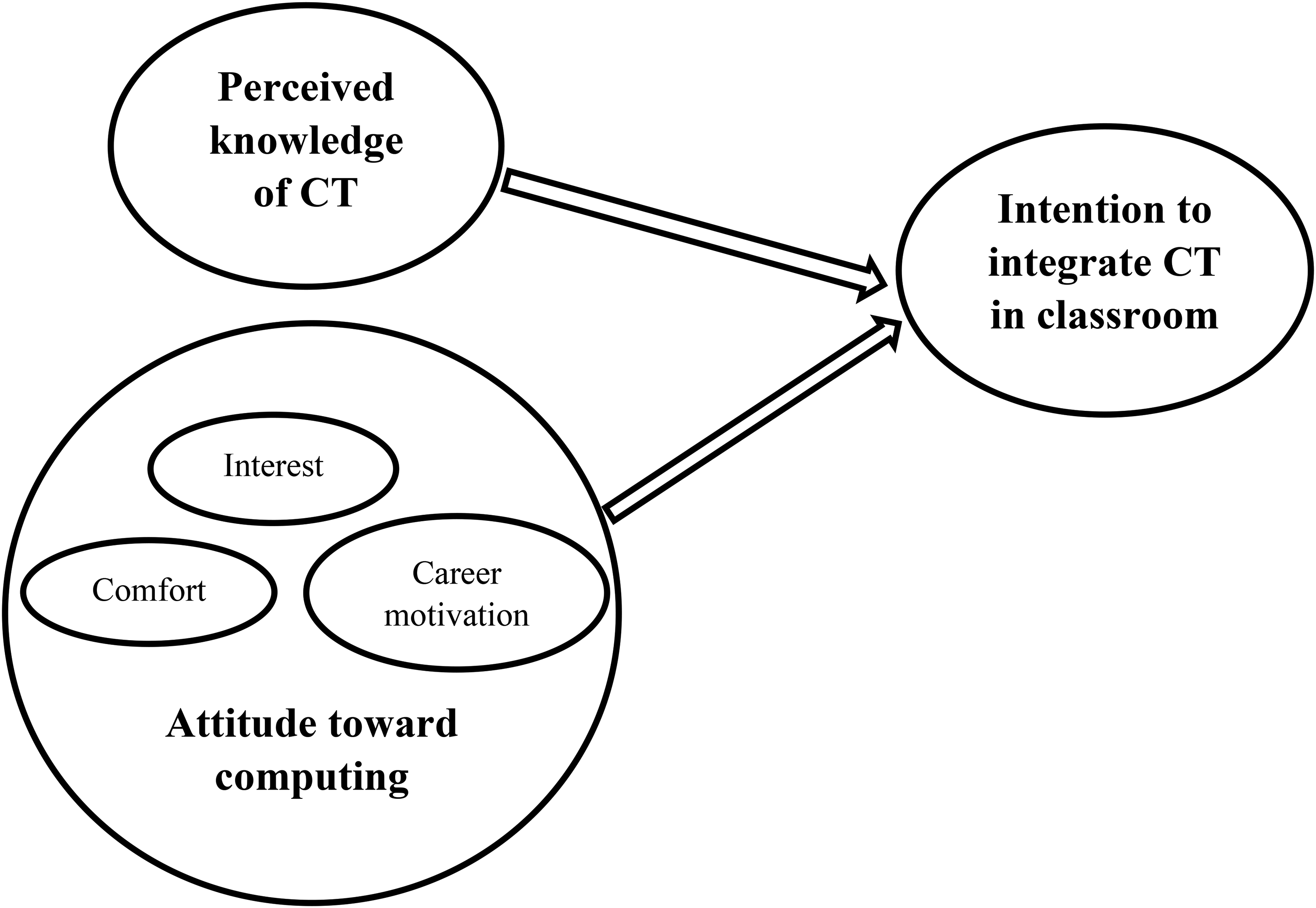
Proposed model for CT integration.
Intention to integrate CT
Teachers’ intention to integrate CT in classroom teaching can be better understood through the theory of planned behavior (TPB). The theory which was initially known as the theory of reasoned action (TRA) (Guo et al., 2007), became TPB when the perceived behavioral control (PBC) factor was added to the primarily behavioral intentions (BI), attitudes (AT), and subjective norms (SN) factors (Ajzen, 1991). According to TPB, people's AT toward a specific behavior, subjective norms indicating their perception of other people's view of such behavior, and PBC will determine their behavioral intentions, which may possibly lead to the performance of the behavior (Guo et al., 2007). As a TPB rule, the stronger the intention to engage in a behavior, the more likely it is to be performed (Ajzen, 1991). In the case of this study, the higher the teachers’ intention to integrate CT into the classroom, the more likely that CT will be integrated into the classroom.
Perceived knowledge
Perceived knowledge (PK) of CT is the seeming presence of the knowledge factors that may facilitate or hinder the performance of the behavior under question. Perceived knowledge of CT in this study is concerned with the teachers’ understanding of CT, particularly, with regard to what teachers think about their ability to teach CT and how much they know about CT to lead the discussion classroom. Scholars have argued that content knowledge, including pedagogical content knowledge, is necessary for teaching CT in schools (Mouza et al., 2017; Yadav et al., 2017). Based on the past studies on the importance of CT knowledge for its incorporation into school systems, we investigate the relationship between perceived knowledge of CT and intention to integrate in the classroom from teachers’ perspectives. This study, therefore, hypothesizes that:
Attitude toward computing
The attitudes factor explains the degree to which a person has a favorable or unfavorable evaluation of the behavior under question (Ajzen et al., 2018). The person's evaluation of the behavior under question necessitates a consideration of the outcomes of performing the behavior for or against. Depending on the teachers’ good or bad attitude toward CT, the likelihood of integrating it into the classroom would be directly proportional. Thus, the higher the good AT toward CT, the higher the intention would be to integrate CT in the classroom and vice versa. Attitudes are assumed to capture the career motivational factor that influences the intentions and subsequently the behavior (Ajzen, 1991); they indicate how hard people are willing to try and how much effort they are planning to exert to perform the behavior (Ajzen, 1991). Interest refers to a state of curiosity, engagement, or preference. Interest leads people to act in attitude-consistent ways when the outcome of the attitude-implicated behavior is judged important; attitudes are related to behavior, while interest moderates the relation between attitudes and intentions (Donaldson et al., 2016). Comfort holds that people act well when they feel at ease with something (objects or surroundings). For example, when people feel comfortable in an environment rather than uncomfortable, the environment impacts their attitude toward CT integration and ultimately their intentions (Yan & Cheng, 2015).
Interest: In this study, interest is concerned with understanding the educators’ interest in CT and computer science. Examining interest is important since existing research has established that interest in learning a specific concept has an impact on learning that concept (Mohd Shahali et al., 2019). Comfort: Comfort is conceptualized as understanding the educators’ comfort level with CT and computer science. Based on Yadav et al.'s (2014) study, comfort with learning these concepts is important in promoting CT in classrooms. Career motivation: Career is related to the educators’ view of how CT and computer science will influence their future career or future use. Educators seeing how computing plays a role in their careers and its relevance for their teaching practices is important for implementing the concept in schools.
While we recognize that existing research has attempted to examine these constructs and their relationship with learning CT in teacher education programs (e.g., Yadav et al., 2014), this study investigates whether teachers’ comfort, career, and interest in computing will significantly influence the intention to integrate CT in classrooms. Hence, we hypothesize that:
Methodology
This research uses a quantitative approach to investigate the perception of CT in education among pre-service and in-service teachers in Sub-Saharan Africa. This section provides information about the instruments adapted for this study, the study context and participants, the data collection process, and an overview of the respondents’ characteristics.
Instrument
The instrument used to collect data utilized in this study was adapted from the existing research. We specifically adapted a survey on teachers’ CT attitude questionnaires developed by Yadav and used in their paper entitled “Computational Thinking in Elementary and Secondary Teacher Education” published in ACM Transactions on Computing Education (Yadav et al., 2014). The survey is subdivided into five main sections, which include the definition and understanding of CT, comfort with CT, interest in CT, and career in CT. The items under each of these subsections were coded on a 5-point Likert scale of strongly disagree (with scale number 1) to strongly agree (with scale number 5). The connection between these items and the constructs motivated by TPB in this study is established from the fact that teachers’ understanding of CT can be directly linked to their perceived knowledge, their interest in CT can be a link to attitude toward computing, and their career in CT is a direct link to their intention to integrate CT.
Although Yadav and colleagues analyzed data collected from respondents descriptively, this study further validated the items to ensure that they are fit for the analysis.
Data collection
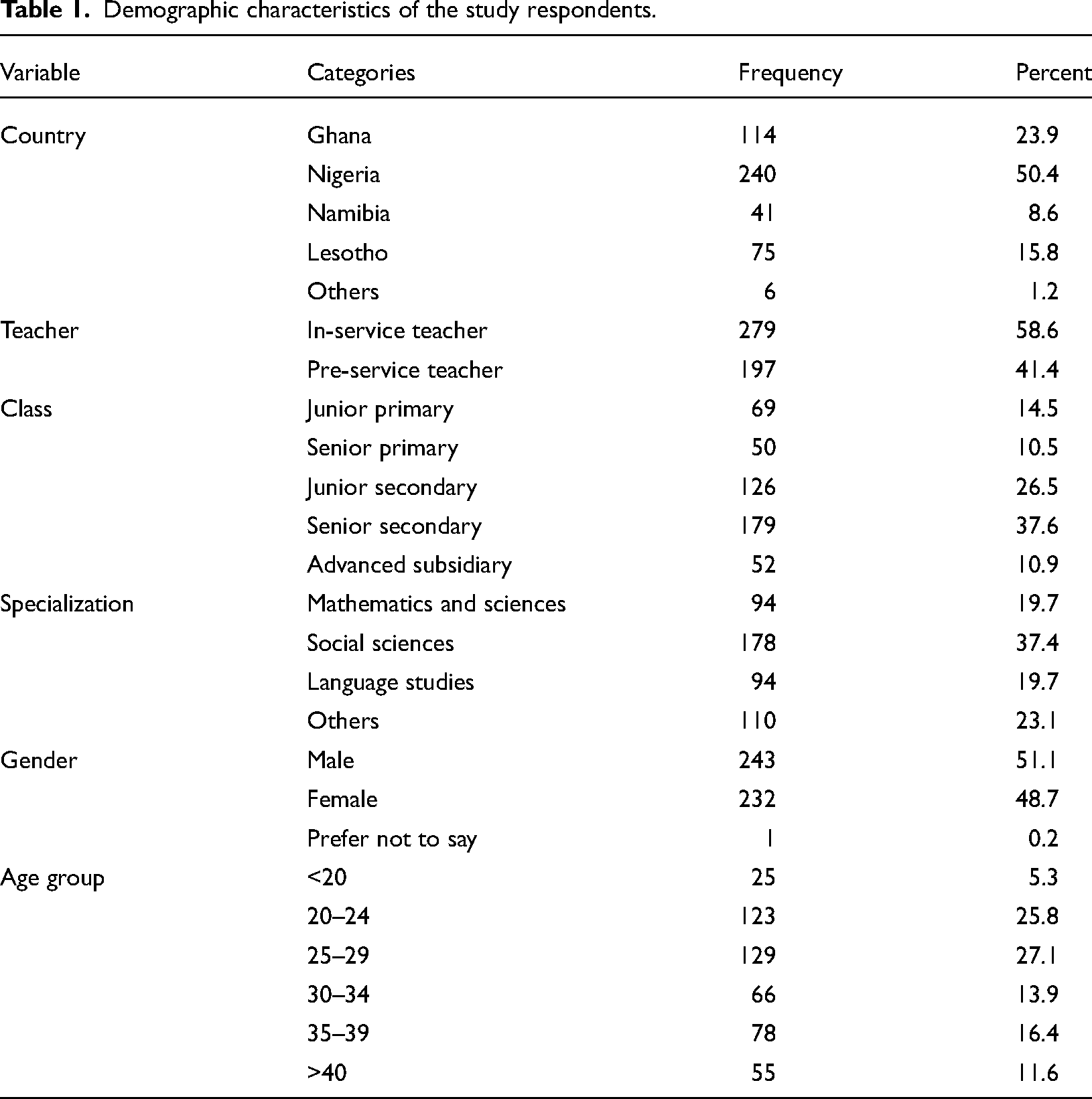
Data were collected using a structured questionnaire deployed on a browser-based software for creating web forms (Webropol) hosted by the first author's institution. A link to the online form was sent to several channels through the author's contact, and we encouraged folks to forward the same link to their contacts. Because of the scope of this study, the authors intentionally sent out the link to contacts in twelve (12) Sub-Saharan African countries. The survey was open for two months, during which the authors sent out reminders to the contacts to ensure that more responses were collected. From the list of countries we mapped out for the study, responses were obtained from only four (4), as shown in Table 1. Part of the data collected includes respondents’ country, their teaching portfolio (in-service or pre-service), classes they teach (junior school, high school, or college), what subject they are teaching, their gender, and age. Furthermore, we also collected their responses regarding their perceptions of CT education, their familiarity with CT concepts, its integration into the curriculum, and their views on the importance of CT in education. Because the research aimed to have a representative sample of Sub-Saharan African teachers, the sampling method was a combination of convenience and purposive sampling. This was done to ensure diversity in terms of geographic representation and teaching experience. The demographic variables in Table 1 played a crucial role in understanding the participants’ perspectives on CT education.
Demographic characteristics of the study respondents.
Participants
The participants in this study were pre-service and in-service teachers from various countries in Sub-Saharan Africa. A total of 476 participants completed the questionnaire, with varying demographic characteristics, as summarized in Table 1. Participants were selected through convenience sampling, targeting pre-service and in-service teachers in selected Sub-Saharan countries. The survey was shared with teachers through authors’ contacts, various social media, and educational institutions platforms targeted at the context of the study, and other networks that authors’ contacts may have in their respective countries. Participation in this study was voluntary, and respondents were informed in the introduction section of the survey that they could opt out of the study at any time if they wished. Therefore, all participants consented by clicking “yes” to the prompt before continuing to fill out the survey. The data collection for this study was conducted in compliance with the Finnish National Board on Research Integrity guidelines (TENK, 2019)—where the first author worked at the time, which does not require additional approval from the institutional ethical committee since the research involves adults who have consented to voluntarily participate in this study before filling out the survey.
Results
Table 2 presents descriptive statistics on constructs related to CT among a sample of 476 respondents. The mean score for perceived knowledge of CT is 18.347, with a standard deviation of 3.776. This suggests that, on average, respondents feel relatively knowledgeable about CT. However, the moderate variability indicates that while many respondents feel confident in their knowledge, some may not feel as assured. This variability suggests a need for additional training or resources to ensure a more uniform level of knowledge among all respondents.
Summary of descriptive statistics of the study constructs.
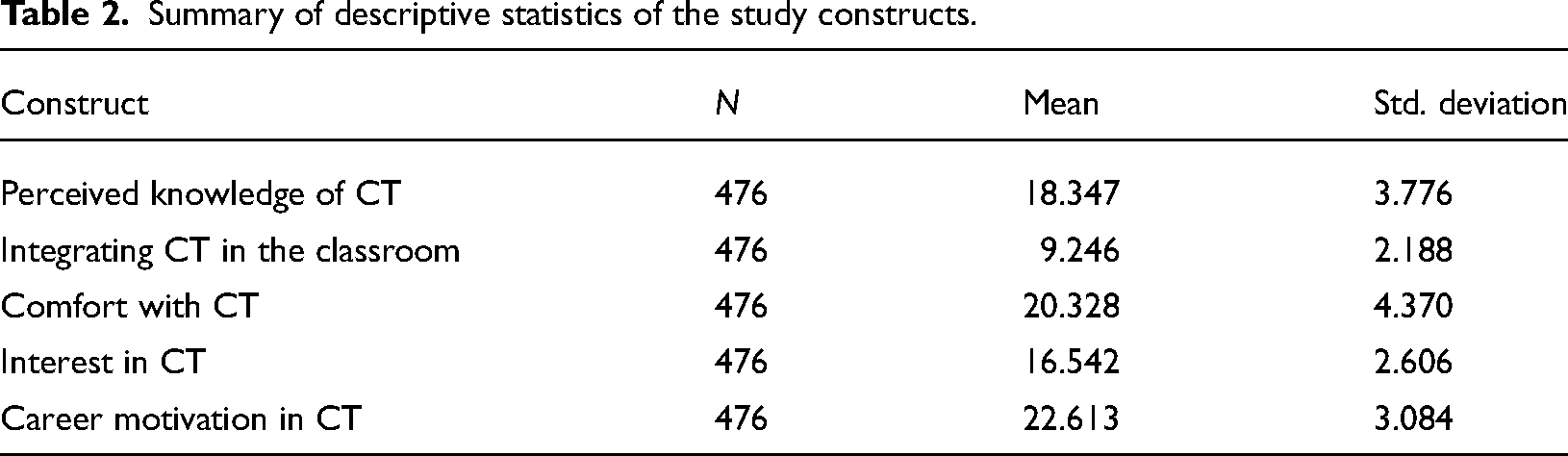
Regarding integrating CT in the classroom, the mean score is significantly lower at 9.246, with a standard deviation of 2.188. This indicates that respondents generally find it challenging or feel less confident about incorporating CT into their teaching practices. The low variability suggests that this is a common sentiment among the respondents. To address this, there may be a need for professional development programs or curriculum enhancements aimed at equipping educators with the necessary skills and confidence to integrate CT into their classrooms effectively. The construct of comfort with CT has a mean score of 20.328 and a higher standard deviation of 4.370. This indicates that, on average, respondents are comfortable with CT despite significant variability. Some respondents are very comfortable, while others are not as confident.
Interest in CT has a mean score of 16.542, with a standard deviation of 2.606. This indicates a moderate to high level of interest among respondents, with moderate variability. The generally positive interest is encouraging and suggests that there is a foundation of enthusiasm that can be built upon. Lastly, career motivation related to CT has the highest mean score at 22.613, with a standard deviation of 3.084. This indicates a strong motivation among respondents to pursue careers involving CT, though there is some variability. The high level of career motivation is promising for the future development of the workforce in this field.
Measurement model assessment
Partial least squares-structural equation modeling (PLS-SEM) involves two main stages: measurement and structural model assessment. The assessment of the measurement model focuses on lower-order constructs (LOC) and encompasses tasks such as establishing indicator reliability, construct reliability, and validity (convergent and discriminant). In terms of indicator reliability, the validity of items was confirmed through item loadings. For construct reliability, both Cronbach's α and Composite Reliability (CR) were used for the in-service teacher, pre-service teacher, and the overall sample dataset (see Table 3). The factor loadings for all items (in-service teacher = 0.66 to 0.90, pre-service teacher = 0.61 to 0.89, and overall = 0.65 to 0.89) were found to be higher than the recommended threshold of 0.60, as suggested by Hair et al. (2022), after removing items below this threshold. The constructs’ Cronbach α and CR values exceeded the recommended 0.70 thresholds across in-service teachers, pre-service teachers (except for perceived knowledge of CT- α = .52 and CR = 0.67), and overall samples.
Assessment of lower-order construct (LOC) validity and reliability.
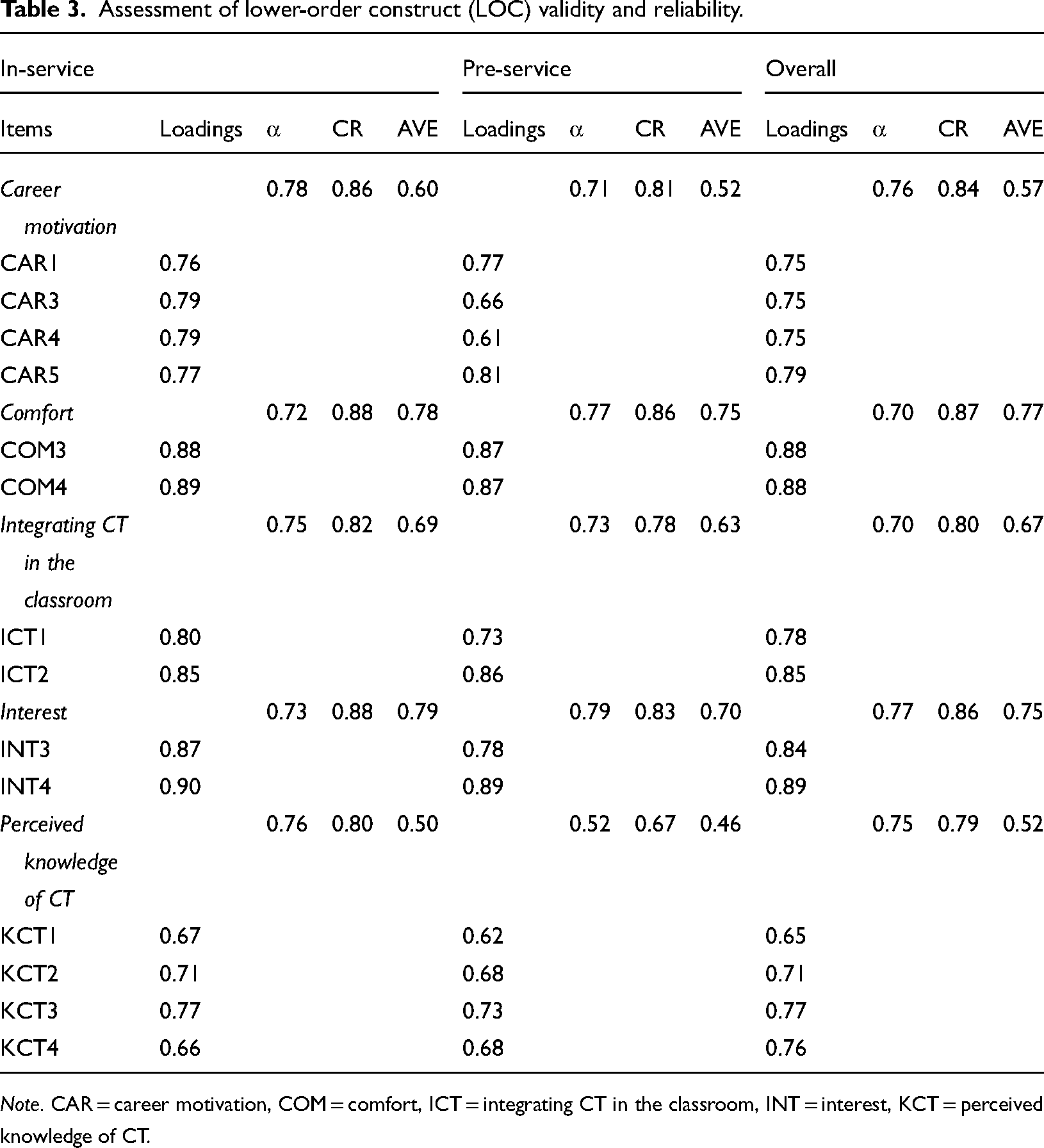
Note. CAR = career motivation, COM = comfort, ICT = integrating CT in the classroom, INT = interest, KCT = perceived knowledge of CT.
Similarly, convergent validity was assessed using average variance extracted (AVE), with values above 0.50 for in-service teachers, pre-service teachers, and the overall samples, indicating strong convergent validity. However, the perceived knowledge of the CT under the pre-service teacher sample displayed low reliability and lacked convergent validity. Comparatively, the in-service teacher dataset exhibited better quality characteristics than the pre-service teacher dataset and the overall datasets individually. To address multicollinearity concerns, variance inflation factor (VIF) statistics were employed for the in-service and pre-service teacher samples, as well as the overall sample. VIF values were presented in Table 4, demonstrating that all indicators had VIF values below 5, which aligns with the threshold defined by Hair et al. (2011). This indicates no significant multicollinearity issue for the teacher-specific and overall datasets.
Summary of variance-inflated factor (VIF) for the LOC.
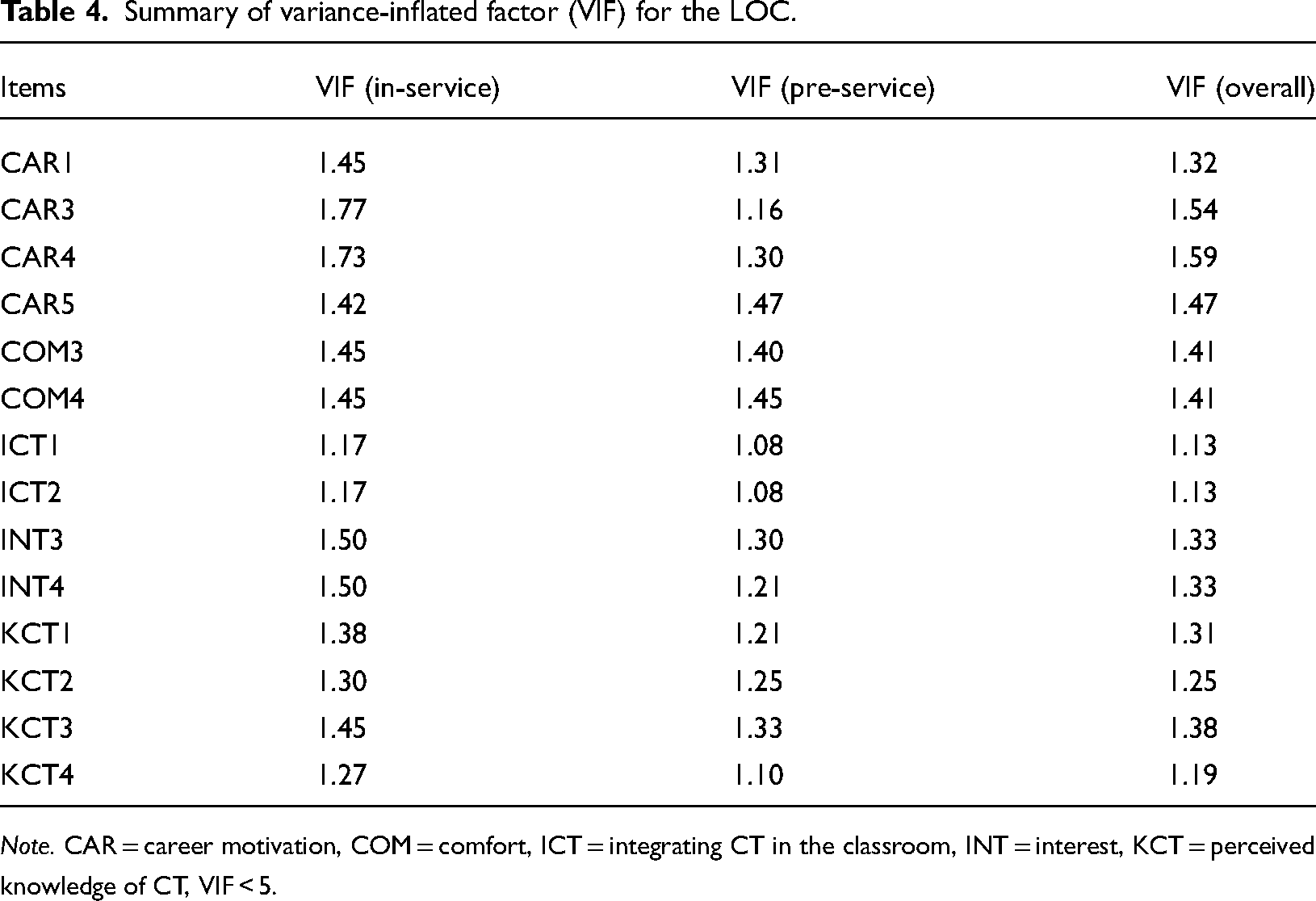
Note. CAR = career motivation, COM = comfort, ICT = integrating CT in the classroom, INT = interest, KCT = perceived knowledge of CT, VIF < 5.
Moreover, discriminant validity was evaluated using the heterotrait–monotrait (HTMT) ratio correlation. The results (see Table 5) showed that HTMT values for each dataset sample were below the 0.85 threshold, indicating satisfactory discriminant validity (Ayanwale et al., 2023a; Henseler et al., 2015). This suggests that the lower-order constructs in the model are distinct from one another and do not excessively overlap. Lastly, the model fit was evaluated through the Goodness of Fit (GoF) metric. The GoF values were 0.74 for the in-service teacher model, 0.53 for the pre-service teacher model, and 0.69 for the overall model. These values surpass the global criterion of 0.30 defined by Henseler and Sarstedt (2013), signifying that the model met the criteria for a good fit.
Discriminant validity of LOC heterotrait–monotrait ratio.
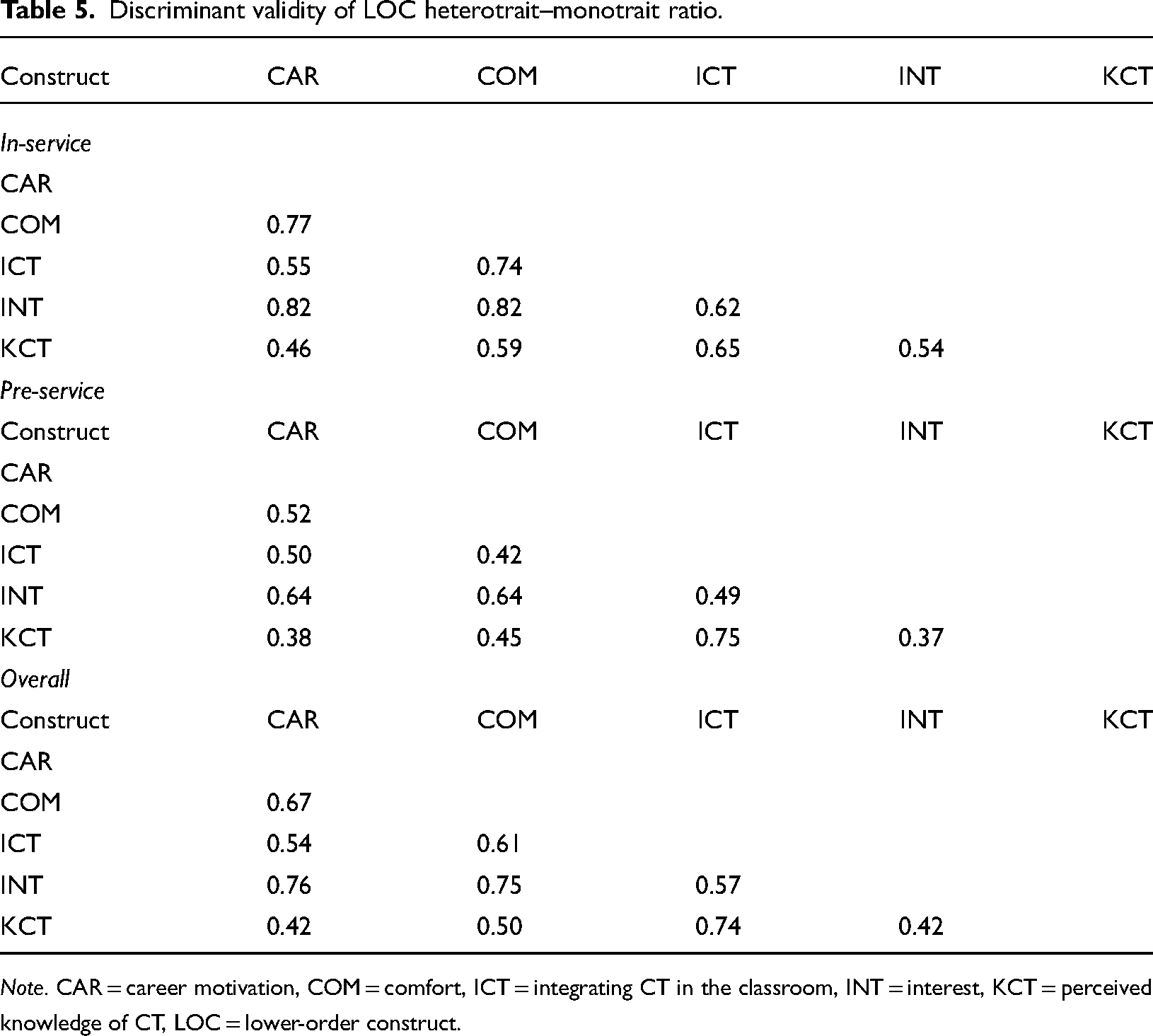
Note. CAR = career motivation, COM = comfort, ICT = integrating CT in the classroom, INT = interest, KCT = perceived knowledge of CT, LOC = lower-order construct.
Validating higher-order construct
In this study, the concept of “attitude toward computing” was conceptualized as higher-order constructs (HOC), which were formed by combining various lower-order constructs (LOCs), including career motivation (CAR), comfort (COM), and interest (INT). The validation of this HOC was conducted using outer loadings, α, CR, AVE, and the variance inflation factor (VIF) (Sarstedt et al., 2019), with the results summarized in Table 6.
Summary of higher-order construct validity.
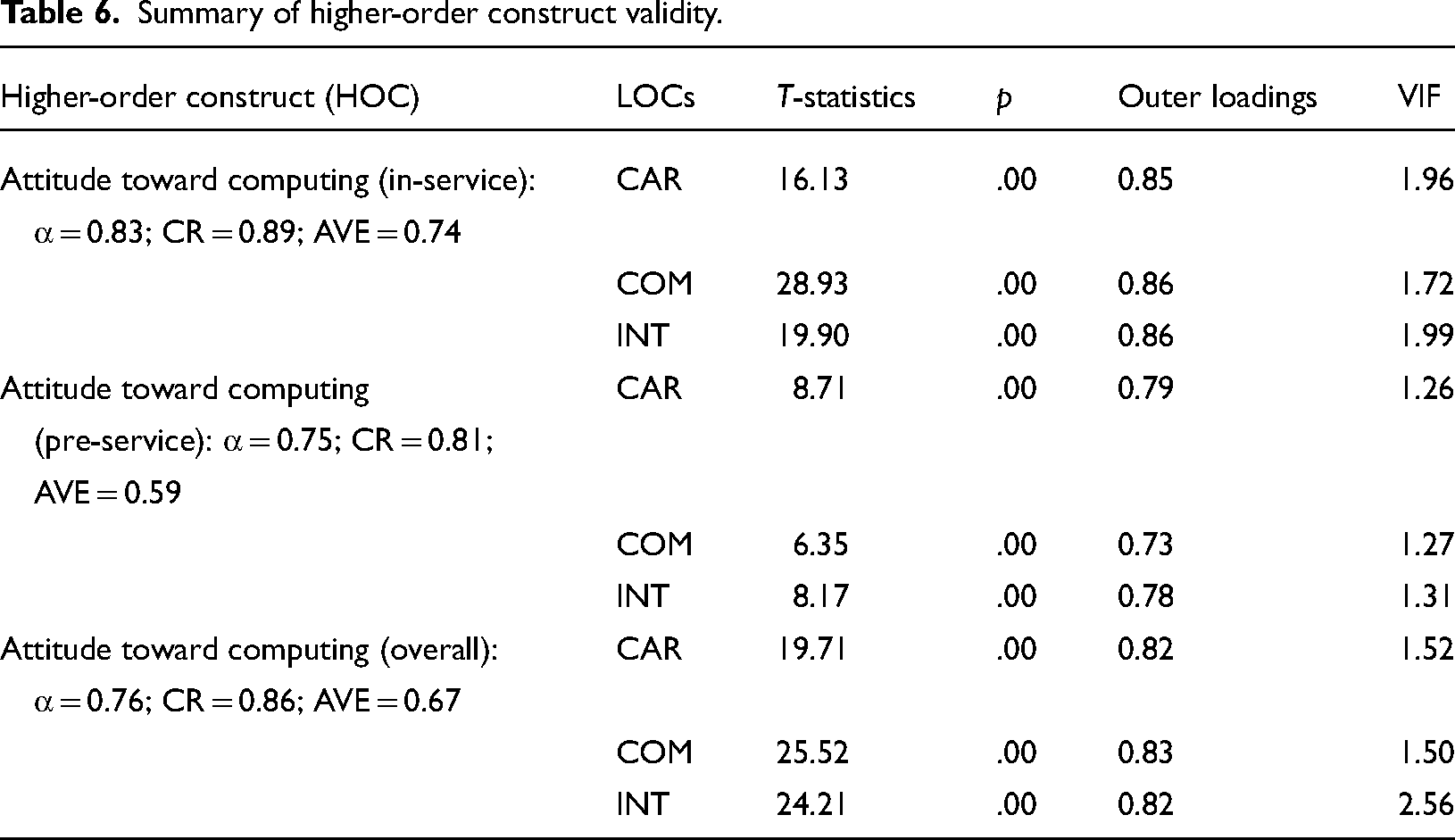
The outer loadings of the individual lower-order constructs were all above the 0.60 threshold, consistent with the findings of Sarstedt et al. (2019). Specifically, for attitude toward computing among in-service teachers, the values were: α = .83; CR = 0.89; AVE = 0.74. For pre-service teachers: α = .75; CR = 0.81; AVE = 0.59. For the overall sample: α = .76; CR = 0.86; AVE = 0.67. Furthermore, the potential for collinearity was examined through the assessment of VIF values. Importantly, all VIF values were below the recommended threshold of 5.0, indicating an absence of significant collinearity issues, as indicated by prior research (Ayanwale et al., 2023; Hair et al., 2011). As a result, the validation of the HOCs was effectively established, meeting these rigorous criteria. These findings instill confidence in the integrity of the measurement model and serve as a solid foundation for delving into further analysis of the relationships of the LOCs and HOC within the structural model.
Structural model assessing whether pre-service and in-service science teachers’ knowledge in CT and attitude toward computing influence their intention to integrate CT in STEM classrooms
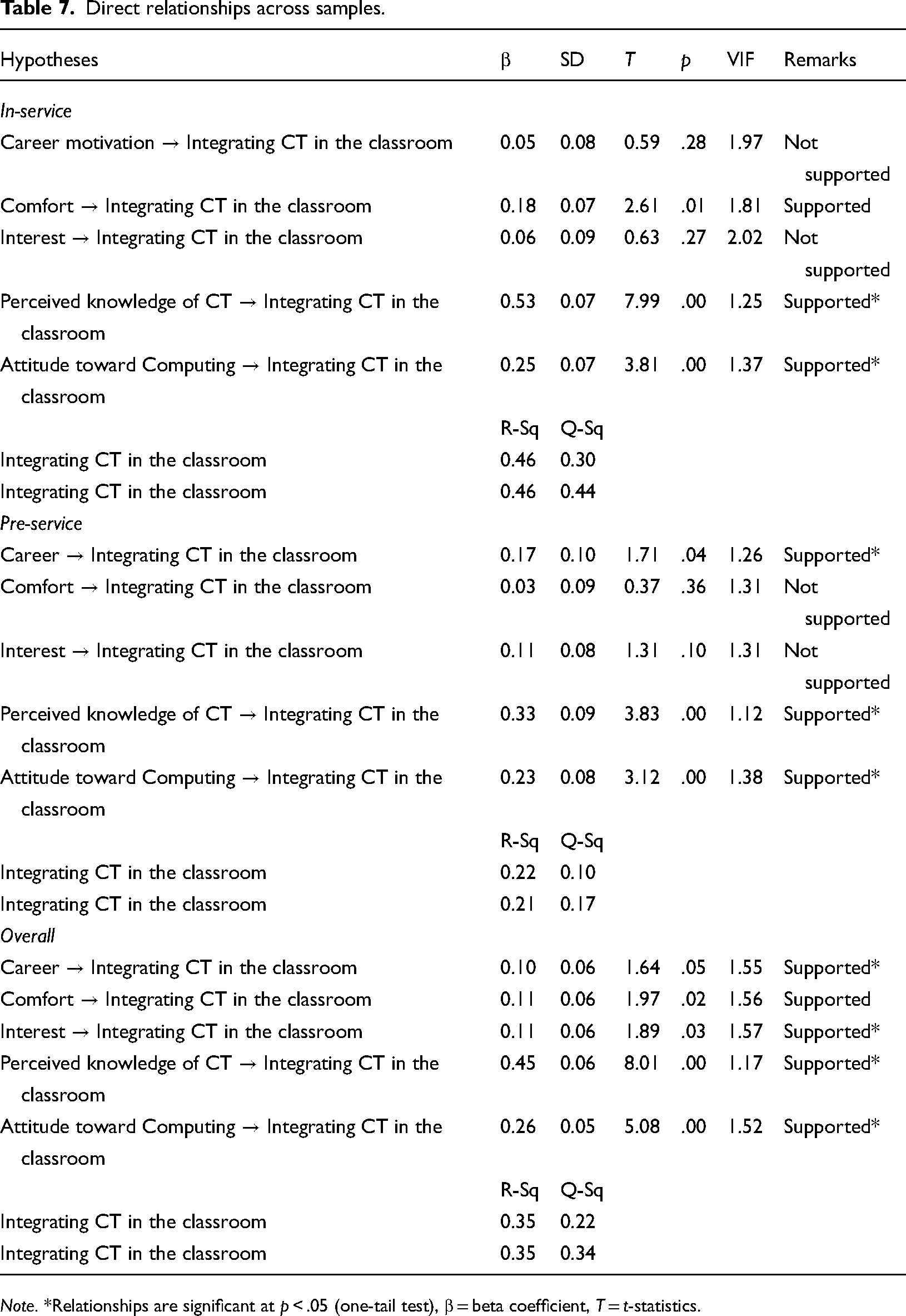
In the evaluation of the structural model, the initial step involved assessing multicollinearity through the use of the variance inflation factor (VIF). The results revealed that the VIF values were consistently below the recommended threshold of 5, both for the specific samples pertaining to teachers and for the entire dataset, indicating that concerns about multicollinearity were not present (see Table 7). Subsequently, the proposed hypotheses were examined (see Figures 2 to 4). The findings, as displayed in Table 6, underscore the confirmation of all hypotheses within the context of the overall sample. Moreover, a noticeable degree of alignment was observed between the results obtained from the teacher-specific samples and those from the broader overall sample. Nonetheless, several key discrepancies were identified: In the case of the in-service teacher sample, the hypothesis linking “Career motivation” to “Integrating CT in the classroom” was found to lack significance (β = 0.05, t = 0.59, p = 0.28), in contrast to its significance in the pre-service teacher and overall samples. The hypotheses connecting “Interest” to “Integrating CT in the classroom” were not substantiated in the in-service teacher and pre-service teacher samples, with coefficients of (β = .06, t = 0.63, p = .27) and (β = .11, t = 1.31, p = .10), respectively. However, they retained significance in the overall sample. Similarly, the hypothesis associating “Comfort” with “Integrating CT in the classroom” did not hold in the pre-service teacher sample, as indicated by an insignificant coefficient (β = .03, t = .37, p = .36). Nonetheless, it remained significant in both the in-service teacher and overall samples.
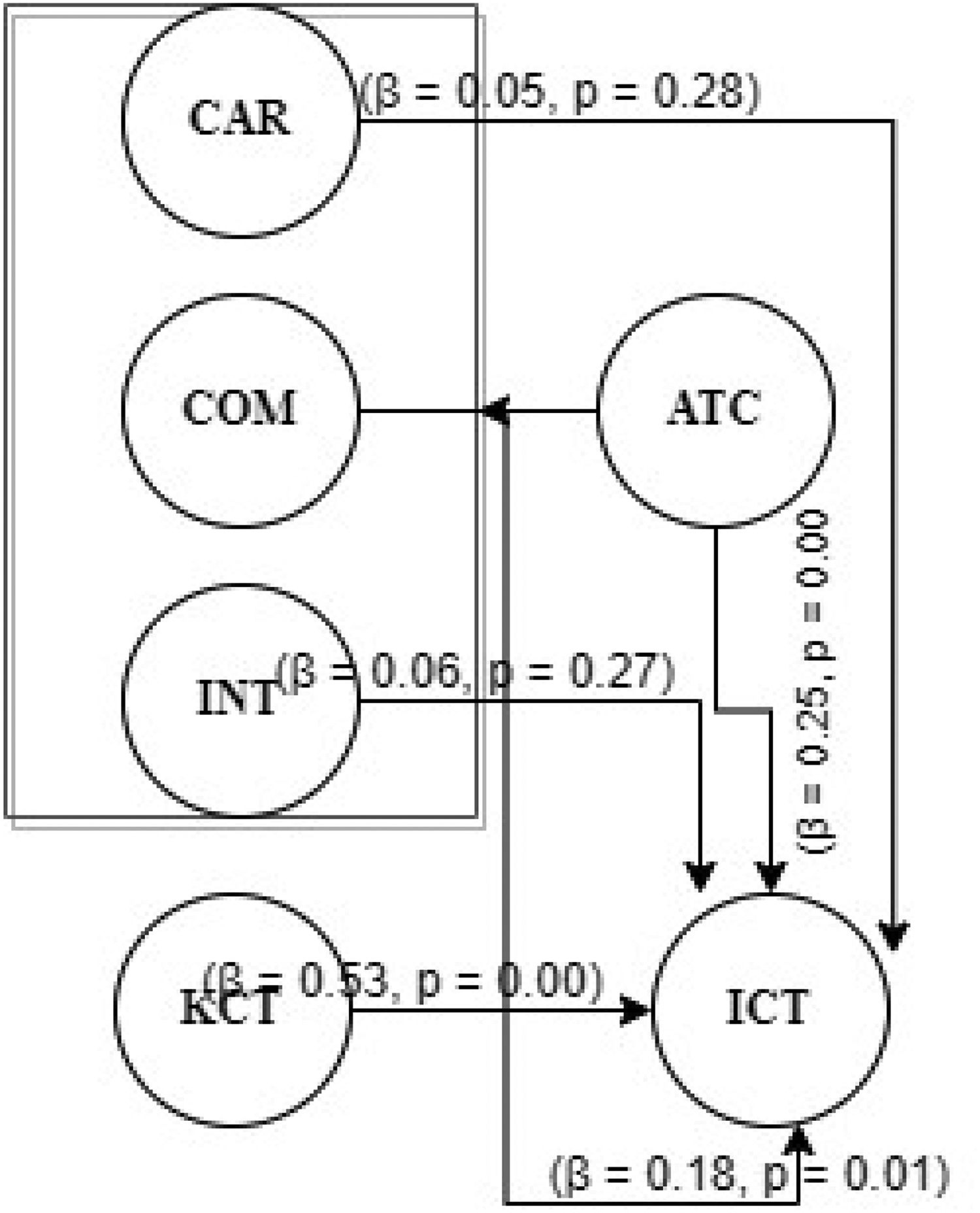
Structural model for the in-service teacher samples.
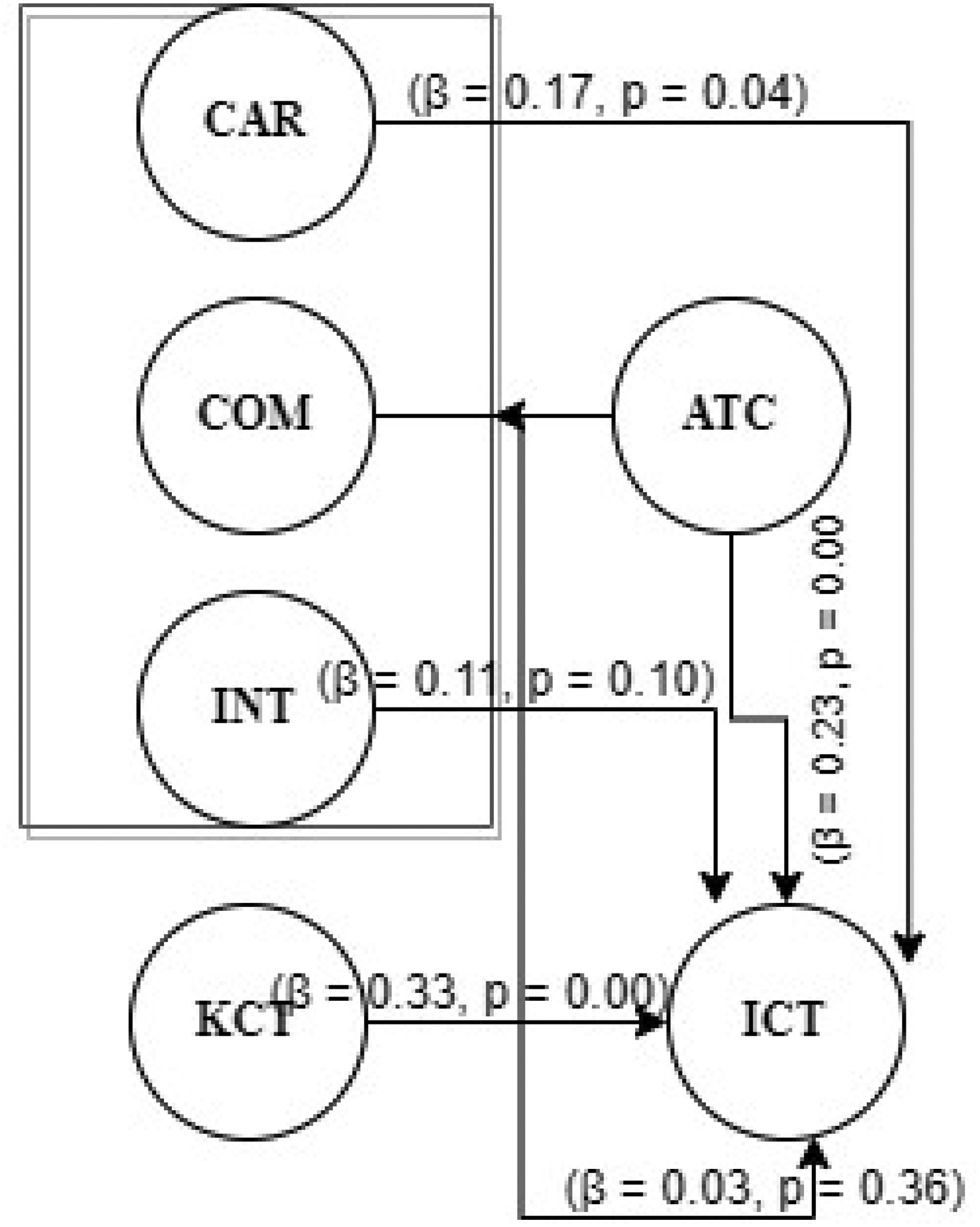
Structural model for the pre-service teacher samples.
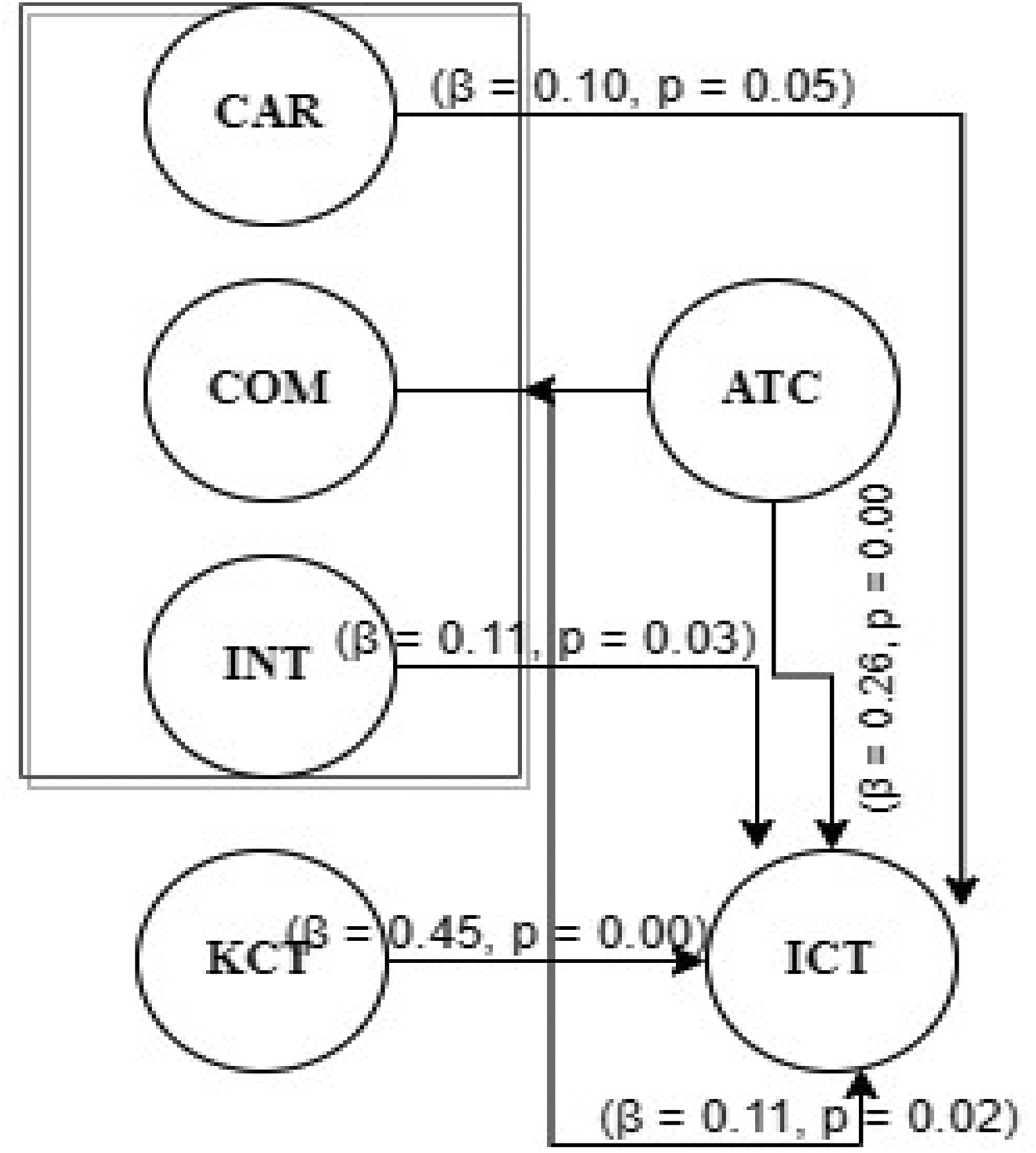
Structural model for the overall sample.
Direct relationships across samples.
Note. *Relationships are significant at p < .05 (one-tail test), β = beta coefficient, T = t-statistics.
Furthermore, the evaluation encompassed the assessment of the model's explanatory power. The R-Squared (R-Sq) values pertaining to the endogenous variable “Integrating CT in the classroom” ranged from 0.21 to 0.46 across distinct samples, namely, the in-service teacher, pre-service teacher, and overall datasets. These R-Sq values can be characterized as indicating a moderate level of explanatory prowess, in accordance with established benchmarks laid out by prior research (Hair et al., 2011, 2013). To ascertain the model's predictive efficacy, the examination turned to the Q-Square (Q-sq) value. This metric evaluates the model's predictive relevance, with values above zero signifying favorable predictive capacity. Across the various endogenous constructs, the Q-Square values spanned from 0.10 to 0.44. This suggests that the model adeptly reconstructs values and possesses predictive relevance, in alignment with insights derived from previous studies (Hair et al., 2013).
Further, the study conducted a comprehensive investigation into the incorporation of CT within educational settings, specifically focusing on comparing the viewpoints of teachers who are currently in service and those who are still in training (pre-service teachers). The primary objective of the analysis was to uncover potential connections between various factors and their role in influencing the adoption of CT in teaching practices. To achieve this, the researchers carried out a multigroup analysis to determine if the effects of certain predictor variables on the desired outcome variable (i.e., the integration of CT in the classroom) differed significantly between in-service and pre-service teachers. Upon analyzing the results, which are presented in Table 7, a noteworthy finding emerged. The study found that there were no statistically significant differences in how the variables of Career motivation, Comfort, Interest, and Attitude toward computing impacted the integration of CT in the classroom. This outcome suggests that these external factors had a similar level of influence on the incorporation of CT for both in-service and pre-service teachers. In other words, the contributions of these factors to the integration of CT in teaching practices were consistent across both groups of teachers.
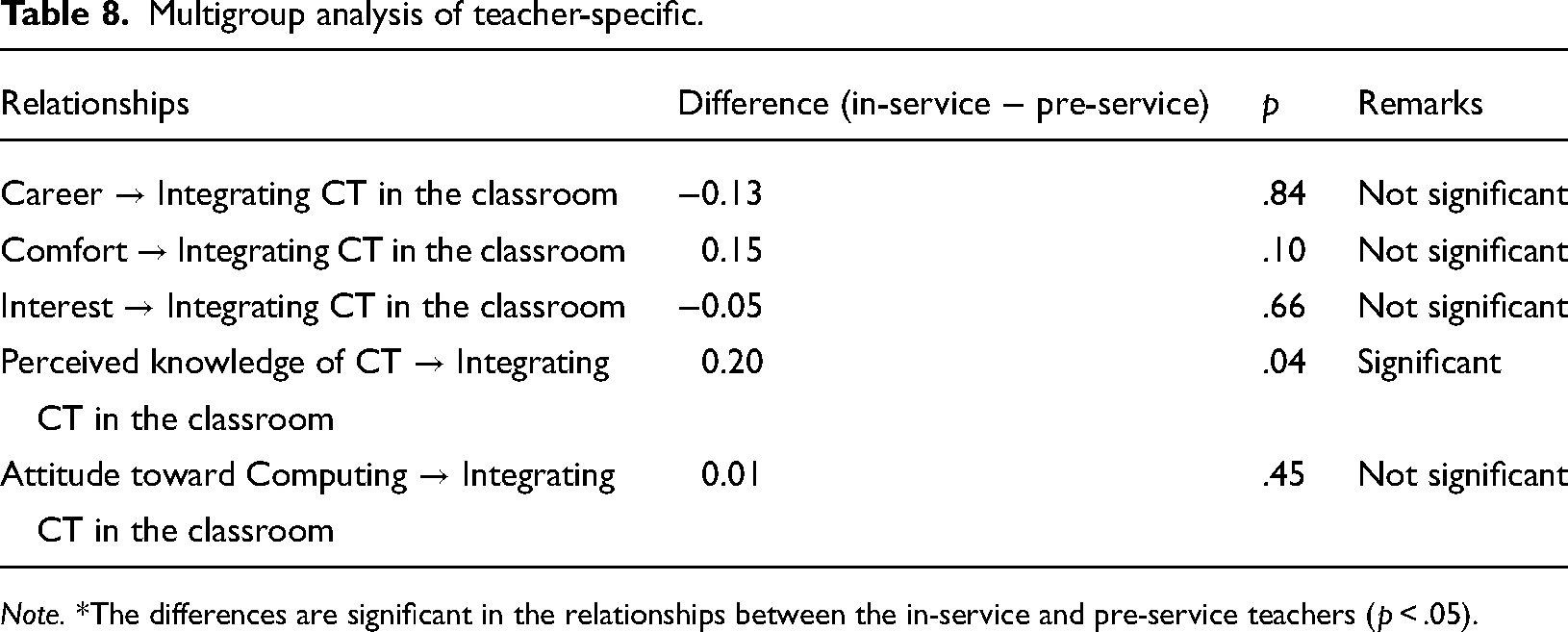
On the other hand, the multigroup analysis (see Table 8) revealed a significant difference when assessing the impact of perceived knowledge of CT on the integration of CT in the classroom. This effect was found to be stronger for in-service teachers compared to pre-service teachers. In simpler terms, teachers who were already working in the field appeared to be more strongly influenced by their perceived understanding of CT when it came to incorporating it into their classroom instruction. This difference in impact between the two groups implies that the level of perceived knowledge of CT is more influential for teachers who are already teaching (in-service teachers) than for those who are still in training (pre-service teachers). These findings have important implications for educational practice and policy. First, the similar effects of Career motivation, Comfort, Interest, and Attitude toward computing on CT integration for both in-service and pre-service teachers suggest that these factors should be addressed and supported across both groups to promote effective CT integration. Second, the higher impact of perceived knowledge of CT for in-service teachers underscores the significance of continuous professional development and training in this area for teachers who are actively engaged in teaching.
Multigroup analysis of teacher-specific.
Note. *The differences are significant in the relationships between the in-service and pre-service teachers (p < .05).
Discussion
This study examined the perception of in-service and pre-service teachers in Sub-Saharan Africa regarding their attitude and intention to integrate CT in their classrooms. Being a preliminary study in this context, our finding shows that teachers’ attitudes to CT in terms of career development and their comfort with teaching CT significantly influence their intention to integrate CT into STEM classrooms. The study also revealed that teachers’ perceived knowledge of CT significantly influences their intention to integrate CT in the classroom. Besides, it was found that the in-service teachers are more influenced by their perceived knowledge of CT than their pre-service counterparts.
This section discusses the findings based on the insights generated from the data, highlights the study implications, and concludes with limitations of the study and future research directions.
Insight from the study results
As a result of the increasing interest and need to implement CT in the curriculum of the 21st- century classrooms, and the need to engender skills in the STEM field, there has been increased connectivity and collaboration between STEM disciplines and CT to innovate and solve global problems, and this has repositioned the role of CT in STEM education (Law et al., 2021). According to Wing (2010), the expansion of the meaning of CT as a cognitive process which is able to facilitate the provision of solutions to problem, broadens the conception of skills in CT, thereby necessitating its incorporation into various disciplines, STEM in particular (Grover & Pea, 2018; Lee et al., 2020). This trans-disciplinary cooperation between CT and STEM for providing solutions to global challenges allows both to naturally intertwine (Li et al., 2020; Sırakaya et al., 2020). In other words, algorithmic thinking, cooperation, creativity, critical thinking, and problem-solving are some of the points of alignment between CT and STEM education (Doleck et al., 2017; ISTE, 2015; Korkmaz et al., 2017; Moore et al., 2021). This alignment has led to several efforts to integrate CT in classrooms in order to develop students’ CT skills. However, this requires that significant attention be paid to teachers who need to be professionally enabled and supported to take on the challenge of effectively training their students to acquire essential CT skills (Angeli & Giannakos, 2020; Barr & Stephenson, 2011; Yadav et al., 2014, 2017). Given the roles that teachers play as strong stakeholders in implementing educational policies in schools, it becomes imperative to examine their perceived knowledge, comfort in computing, career motivation, and interest in computing as they influence the integration of CT education in schools in Sub-Saharan Africa.
This study, therefore, examines pre-service and in-service teachers’ perceptions of CT education integration in STEM education in Sub-Saharan Africa. This becomes imperative because, while some studies have reported the integration of CT in STEM education in some nations in Sub-Saharan Africa, however, studies providing understanding concerning pre-service and in-service teachers’ perception of CT, capacity, attitude, and professional development skills in the area are lacking. The need therefore arises to examine teachers’ perceptions with respect to developing the required professional development programs for teachers (Agbo, 2022; Ogegbo & Ramnarain, 2022). This study further stresses the need for examining the capacity of teachers and their attitude toward the integration of CT with regard to Africa. Thus, our study contributes to the literature on the factors influencing teachers’ perception (Agbo et al., 2023) and intention to integrate CT education in STEM education in Sub-Saharan Africa.
Our study examined four hypotheses. We thereafter carry out a comprehensive investigation into the factors influencing teachers’ intention to integrate CT into STEM education, specifically focusing on a comparison of the viewpoints of in-service and pre-service teachers. Overall, the result underscored the confirmation of the four hypotheses within the context of the overall sample, and with a noticeable degree of alignment between the results obtained from teacher-specific samples and the combined sample. Primarily, the objective of the analysis was to uncover potential connections between the various factors and their role in influencing in-service and pre-service teachers’ adoption of CT in their teaching practices. To this end, our multigroup analysis results differed significantly between in-service and pre-service teachers. The results show no statistically significant differences in how career motivation, comfort in computing, interest in computing, and attitude toward computing influence teachers’ integration of CT in the classroom. This result suggests that these external factors (career motivation, comfort in computing, interest in computing, and attitude toward computing) had a similar level of impact on the integration of CT for both in-service and pre-service teachers. This implies a consistent contribution of the examined factors to the integration of CT in teaching practices of both the in-service and pre-service teachers.
Our findings also show that in the case of in-service teachers specifically, career motivation does not influence intention to integrate CT in STEM classrooms. However, this is in contrast to its significance among pre-service teachers and in the overall sample. Also, the hypothesis that interest influences intention to integrate CT in STEM classrooms is not significant among both samples (in-service teachers and pre-service teachers). However, interest does influence intention to integrate CT in STEM classrooms in the overall sample. In addition, while the hypothesis linking comfort as a factor for integrating CT in the classroom is not significant among pre-service teachers, it remains significant among in-service teachers, and also in the overall sample. In addition, the result from our multigroup analysis reveals a significant difference in the influence of perceived knowledge of CT on the integration in the classroom. This influence is, however, stronger for in-service teachers than for pre-service teachers. This connotes that in-service teachers have a stronger perceived understanding of CT integration in the classroom, compared with pre-service teachers. According to Li et al. (2020), some researchers have investigated what CT knowledge and skills are required by teachers themselves, and the skills that they may require for implementing CT education in their classrooms (Mouza et al., 2017; Yadav et al., 2017). Hence
Researchers have also argued that teachers need two sets of knowledge (TPACK-CT) to integrate CT into their classrooms, and these are the technology knowledge related to CT (TK-CT), and disciplinary content knowledge and pedagogical strategies (both general and content-specific) in relation to CT (Mouza et al., 2017). This therefore suggests, with respect to our finding, and the position of Mouza et al., (2017) that, teachers need well-rounded knowledge relating to the technological aspects of CT, in addition to specific tools and digital resources, as well as a sound understanding of their subject matter, coupled with efficient CT education-related pedagogical strategies, in order to be able to effectively integrate CT education into their classrooms. In essence, possessing both sets of knowledge will enable teachers to create a holistic, effective, and efficient CT educational experience for their students. Our study was carried out in Sub-Saharan Africa, and as a result of differences in educational policies, practices, and strategies, assisting teachers to learn about, and also implement CT education into their STEM classrooms via professional development (PD) programs could present diverse challenges in view of individual teacher's needs, and schools’ contexts. This is also because, as noted by Li et al. (2020), current research reporting on in-service and pre-service teachers’ preparation for CT education knowledge and integration is still at the exploratory stage. As such, the required efforts and commitment, and collaboration for researchers to understand the specific challenges faced by individual teachers and provide solutions to such challenges, are likely to take a longer period of time. However, setting up the proper professional development training programs for in-service teachers and relevant curricular upgrade for pre-service teachers could help in empowering and strengthening their CT education pedagogical skills and intention to integrate CT education into their STEM classrooms. This further suggests that stakeholders in education prioritize the timely provision of essential resources, equipment, and incentives to support STEM educators in delivering engaging and comprehensible STEM instruction that resonates with their students’ needs (Odufuwa et al., 2022). As the 21st century unfolds, the integration of CT within STEM disciplinary education emerges as an essential and evolving field. It not only addresses the educational needs of new generations of students but also invites inclusive and interdisciplinary research collaborations (Li et al., 2020).
Implications for policy and practice
Our findings have several implications for policy and practice. First, since it is evident that perceived knowledge of CT significantly and positively influences integration of CT in the classroom, effort should be channeled toward developing educators’ CT knowledge. For instance, teacher education programs within the African region should consider providing the teacher candidates with knowledge of CT by embedding CT content and activities across subject domains. For in-service teachers, professional development opportunities should be provided for them on CT. School leaders, such as the school principals, buy-in is also important since they act as primary gatekeepers and have some level of influence in determining what subjects are offered in schools. Second, attitude toward computing appears to be a significant factor in incorporating CT in the school system. This finding is an indication that psychological factors should be considered helpful in promoting CT in classrooms. What values do teachers attach to computing, specifically with regard to attitude, which in this study comprises three variables of career, comfort, and interest? Career is related to how the educators believe computing will help their teaching careers, Comfort is connected to their state of feeling about computing, and Interest is linked to curiosity or that feeling of wanting to learn more about computing. All these attitudinal-related factors can be influenced by developing innovative initiatives on computing education, such as creating tech hubs—school partnerships, among others. Lastly, our results show that both in-service and pre-service teachers agreed that knowledge of CT and attitude toward computing are critical to teaching CT in school education. This exposition suggests that preparing teacher candidates based on these identified needs will help them to promote CT learning in their future teaching career.
Limitations and future research
We identified some limitations in this study for future research. First, our study is based on quantitative data, which provides opportunities to reach a significant number of participants. However, the use of only a quantitative approach limits the rich information that can be retrieved from the participants in terms of probing them regarding their choices of options and their perceptions on the subject matter. Utilizing both quantitative and qualitative approaches to understand education stakeholders’ perspectives will generate valuable insight for CT education in Africa. Second, the thoughts of relevant stakeholders such as students, principals, program designers, including policymakers, were not considered in this study. Combining the views of these stakeholders and education gatekeepers is important for developing CT education in the study focus. While understanding the educator's perspective is valuable, it is important to engage the teachers with CT tasks and activities, thereby providing a basis for which a sophisticated and informed perspective could be retrieved. Future studies should develop an intervention program on CT education for teachers across disciplines.
Conclusion
This study contributes to the limited literature on CT education in K-12 education in Africa through the perspectives of educators. We specifically sampled 476 in-service and pre-service teachers across different African countries to understand the factors that contribute to effective integration of CT into schools in the region. Quantitative approach was adopted to address our study aim based on survey items of perceived knowledge of CT, attitude toward computing (career, comfort, and interest), and intention to integrate CT. Using the SEM analysis method, we gain insight into factors that are necessary for incorporating CT into the school system. Our findings indicate that knowledge of CT and attitudes toward computing are critical in implementing CT education in schools.
Footnotes
Authors' note
Contributorship
Friday Joseph Agbo contributed to the conceptualization, data collection, methodology development, and writing both the original draft, review, and editing. Ismaila Temitayo Sanusi was responsible for conceptualization, methodology development, and writing, including both the original draft and subsequent review and editing. Musa Adekunle Ayanwale handled data curation and data analysis. Owolabi Paul Adelana contributed to the conceptualization and writing, focusing on discussion section. Kehinde D. Aruleba contributed to methodology and writing. Cloneria Nyambali Jatileni conducted the literature review and contributed to writing, including the original draft.
Declaration of conflicting interests
The authors declared no potential conflicts of interest with respect to the research, authorship, and/or publication of this article.
Ethical statement
The authors of this study received informed consent from each participant before they voluntarily participated. The participants were informed that participation was voluntary and that there were no direct benefits or risks associated with their responses, which would be anonymized and analyzed solely for research purposes. They were also informed they could opt out of the study at any time without any risk or consequences. The study was conducted in compliance with the Finnish National Board on Research Integrity guidelines (Finnish National Board on Research Integrity TENK, 2019)—where the first and leading author worked at the time, which does not require institutional ethical committee approval or IRB since the research involves adult participants who have consented to voluntarily participate in this study before filling out the survey.
Funding
The authors received no financial support for the research, authorship, and/or publication of this article.
