



Abstract
Purpose
This study aimed to describe the knowledge and alternative conceptions of climate change in a group of Chilean science and non-science teachers with different teaching experiences.
Design/Approach/Methods
The study used a quantitative approach with an exploratory, descriptive, and transversal design, in which a Climate Change Questionnaire was applied to a group of 64 pre-service and in-service teachers.
Findings
The results demonstrated that the whole group of teachers had moderate knowledge about climate change, presenting some alternative conceptions, such as confusion about greenhouse gases, solar radiation, and the false relationship between ozone layer thinning and the greenhouse effect. There was no difference in climate change knowledge between science and non-science teachers or among teachers with different teaching experiences.
Originality/Value
This is the first research work published in an international journal on the knowledge of climate change by a group of teachers in Chile (and Latin America); therefore, it is an original contribution to the literature about climate change education. Furthermore, we tested hypotheses regarding the effects of experience and scientific background on teachers’ knowledge of climate change.
Keywords
Introduction
The World Scientists’ Warning of a Climate Emergency 2022 (Ripple et al., 2022) has stated that “Humanity is unequivocally facing a climate emergency” (p. 1149). This climatic emergency includes an increase in the temperature (T°) of the Earth's surface and a rise in sea level, its acidification, melting of glaciers, an increase in tree cover loss due to fire, and many other changes in the biosphere (IPCC, 2022). Thus, climate change accelerated by multiple human activities (e.g., overpopulation, deforestation, and livestock increase) has caused several harmful consequences and effects on biodiversity, ecosystem services, food security, human health, and quality of life (Harvey et al., 2023; Naheed, 2023; Pecl et al., 2017; Ripple et al., 2022). However, the last Intergovernmental Panel on Climate Change (IPCC) (2022) report states that all these climate change effects worldwide disproportionately affect those who have historically contributed less to the crisis, such as countries in South America. Within this region, Chile could be one of the countries most affected because areas with a Mediterranean climate are particularly vulnerable to the effects of climate change (IPCC, 2022; Meseguer-Ruiz & Olcina-Cantos, 2023), where the socioeconomic consequences are more notorious than in other regions of the world. In fact, the impact of climate change has been intensely felt in the Mediterranean climate region of central Chile (32–38° S) because of the significant rainfall deficit during the last decade (2010–2020) or mega-droughts (e.g., Boisier et al., 2016; Garreaud et al., 2017; Garreaud et al., 2019), which have been indicated to be the most severe in 700 years (Muñoz et al., 2020).
According to an IPCC (2022) report, there is an urgent need to increase climate change education through formal and informal channels to raise risk perception and prompt climate action. Climate change education is perceived as one of the most important tools to inform society about climate change decision-making and preparedness and protect and help local communities (Dillon & Herman, 2023; Filho & Hemstock, 2019). This education provides students with the knowledge and skills necessary for climate change adaptation, mitigation, and building resilience (Chopra et al., 2019). However, climate change education faces several challenges at both the curricular and teacher knowledge levels (Dillon & Herman, 2023; Plutzer et al., 2016). For example, Dawson et al. (2022), in a comparative analysis of six countries’ national curriculum documents, found that climate change is often presented as a context for other science concepts rather than as a discrete topic, and is scattered and spread over multiple educational levels. Similarly, Bhattacharya et al. (2021) noted that little time is devoted to teaching climate change because it is rarely mentioned in curricula globally, and there is a lack of curricular resources (see also Colston & Ivey, 2015; Plutzer et al., 2016).
Regarding teachers’ knowledge of climate change, broad and persistent alternative conceptions have been described, despite instruction in training programs (e.g., Bhattacharya et al., 2021; Chang & Pascua, 2016; Herman et al., 2017; Jeong et al., 2021; Plutzer et al., 2016). Teachers often use simple mental models of climate change (Drewes et al., 2017), poor knowledge, and alternative concepts (Arslan et al., 2012). In fact, Bhattacharya et al. (2021), in a systematic review of teacher knowledge, conceptions, beliefs, practices, and preparation, recognized alternative conceptions related to atmospheric gases, the transfer of energy and solar radiation, the role of the ozone layer in global warming and its relationship with greenhouse gases, the greenhouse effect and its enhancement, and many other issues. For example, in an empirical study about in-service teachers’ knowledge of climate change, Herman et al. (2017) surveyed 102 Florida (U.S.) and 118 Puerto Rico science teachers who indicated they teach climate change. They found that numerous surveyed teachers inaccurately identified ozone layer depletion as a primary cause of climate change and that heating and cooling of homes were not primary causes of climate change. Furthermore, most teachers inaccurately responded that, to be valid, climate change science must be based on controlled experiments. Similarly, Plutzer et al. (2016) collected data from 1,500 public middle- and high-school science teachers from all the 50 U.S. states. They demonstrated that one-third of the teachers delivered explicitly contradictory views on the causes of global warming, and almost the same proportion were unaware of the extent of scientific agreement about the anthropogenic causes of climate change.
However, it has been described that during the professional training of teachers, climate change is only taught in earth science courses for science teachers or geography courses for social science teachers; in other programs (e.g., elementary school teachers), its training is almost null (Chopra et al., 2019). Similarly, in their massive survey of middle- and high-school science teachers in the United States, Plutzer et al. (2016) found that fewer than half of the teachers reported any formal instruction in climate science in college. In fact, teachers in different studies state that they have not received adequate training to teach students about climate change and its impacts and that there is a lack of professional development programs on this topic (Colston & Ivey, 2015; Dillon & Herman, 2023; Plutzer et al., 2016; UNESCO, 2021).
According to some authors (Herman et al., 2017), this lack of training may explain the greater presence of alternative conceptions among teachers regarding climate change. The authors hypothesized that the difference in knowledge of the nature of climate science methods in their study group was related to teacher training, with teachers certified in general science demonstrating less knowledge than those certified in specific disciplines. Owing to this lack of knowledge, science teachers often lack confidence and do not feel prepared to teach students about climate change (Filho & Hemstock, 2019). Nonetheless, teachers also value climate change education (Bhattacharya et al., 2021) and recognize their responsibility and commitment to climate literacy (Monroe et al., 2013; Plutzer et al., 2016).
While these climate change preconceptions and attitudes toward the same have been studied in various contexts globally, both by in-service teachers (Drewes et al., 2017; Herman et al., 2017) and pre-service teachers (Bhattacharya et al., 2021; Jeong et al., 2021; Liu et al., 2015; Monroe et al., 2017; Nation & Feldman, 2021; Plutzer et al., 2016; Tolppanen et al., 2021), the literature does not provide information on the topic for teachers in Latin America and Chile (Bhattacharya et al., 2021). Considering the impact alternative conceptions may have on the achievement of the learning requested in the Chilean school curriculum (MINEDUC, 2015, 2019), this research primarily aimed to describe the preconceptions about climate change and personal dispositions toward its mitigation held by a group of pre-service and in-service teachers in Chile. Additionally, it aims to fill the information gap for one of the regions most affected by the consequences of climate change (Boisier et al., 2016; Garreaud et al., 2017; Garreaud et al., 2019; Muñoz et al., 2020).
In summary, several studies, primarily conducted in the United States and European countries (e.g., Greece, U.K., Germany, and Finland), indicate low knowledge of climate change among pre-service teachers and a similar number that demonstrates the same in in-service teachers (Bhattacharya et al., 2021). Nevertheless, few studies have analyzed this knowledge in both groups simultaneously (e.g., Lambert et al., 2012). The same is true for comparisons between elementary and secondary school science teachers (e.g., Herman et al., 2017). The research questions guiding this study were as follows:
- What alternative conceptions and knowledge of climate change are held by a group of Chilean teachers teaching this content at school? - What is the relationship among disciplinary knowledge, teaching experience, and knowledge of the climate held by this group of Chilean teachers?
Furthermore, based on the literature reviewed, two hypotheses are proposed:
- There is no difference in scientific knowledge about climate change between pre-service and in-service teachers (Bhattacharya et al., 2021). - Secondary science teachers have more knowledge of climate science than teachers without specific science training (e.g., elementary teachers) (Herman et al., 2017).
Methodology
Chilean context of science teacher education and climate change curriculum
Compulsory schooling in Chile comprises 8 years of basic or elementary education (ages 6–13) and 4 years of secondary education (ages 14–17) delivered in three types of institutions: public schools under municipal governance, privately owned but publicly subsidized schools, and wholly private schools. The system is clearly stratified, as students who attend municipal schools generally belong to low- or lower-middle-income groups. In basic and secondary classrooms, the average class size is 30 students (Cofré et al., 2015). In Chile, the Ministry of Education prescribes curricula for public and private schools. Scientific literacy has emerged since the end of the last century (Cofré et al., 2015; MINEDUC, 2019). However, in Chile, teacher education is only possible at universities, but programs for elementary and secondary teachers differ significantly. Elementary teacher programs for grades 1–8 typically require no more than two courses in natural science and one science methods course (Cofré et al., 2015). Nevertheless, many universities also include students who minors in natural sciences and usually have between three and six courses on science and science instruction. Nonetheless, most elementary teachers have minors in mathematics or language arts and least in natural or social sciences. In secondary programs for grades 9–12, pre-service science teachers have more extensive education in one or two scientific subjects (typically more than 15 courses over 4 or 5 years) and science teaching (typically two courses) (Cofré et al., 2015). Almost all programs for secondary science teachers have concurrent instruction—teachers in training take courses in pedagogy and discipline during their 4 or 5 years of instruction (Cofré et al., 2022).
Regarding climate change, the Chilean curriculum has weaknesses that have already been described in other countries (Dawson et al., 2022). For example, Salinas et al. (2022) found that only 5% of all learning goals in 15 Chilean science and general curriculum documents were explicitly connected to climate change, and most of them were related to science as a school subject. Further, climate action has been promoted only in the last 2 years of schooling in the science curriculum because the science for citizenship proposal is offered at this level. However, some positive traits can also be distinguished in documents, such as curriculum proposals in science explicitly connected to other school subjects. Thus, the Chilean curriculum demonstrates open possibilities for developing climate change education using integrated approaches (Salinas et al., 2022).
Nevertheless, although environmental education in the Chilean educational system has been recognized since the end of the 1990s, it is described as a pending task (Castillo-Retamal & Cordero-Tapia, 2019; Muñoz-Pedreros, 2014). Only 14.6% of primary and secondary schools in the Chilean system had active environmental certification status in 2019, and most schools participating in the program were public, accounting for 76% of all certified schools (Salazar et al., 2022). Something similar occurs with the training of teachers in this area, highlighting the lack of explicit courses on climate change or environmental education (Castillo-Retamal & Cordero-Tapia, 2019). Of the 31 science teacher education programs in Chile, none includes explicit courses on climate change or climatic sciences, and only eight include courses on environmental issues. Although all biology teacher programs include one or two courses on ecology, it is not possible to determine whether these courses really include climate change as an explicit theme. Nonetheless, chemistry and physics teacher programs do not include any courses on sustainability or climate change, and only one program includes a course on environmental chemistry. Therefore, even secondary school science teachers may have trouble addressing sustainability, environmental education, and climate change issues with their students. For example, in a qualitative study, 10 chemistry teachers stated that they connect chemistry education with sustainability; they focus on using resources and environmental protection but do not relate it to political and economic implications (Quiroz-Martinez, 2023).
Study design and participants
Research on the description of personal preconceptions and dispositions to climate change in a group of science teachers in training and service in Chile was quantitative, with an exploratory, descriptive, and cross-sectional study. The participants of the study corresponded to a total sample of 64 teachers, with some of them in the final stage of their training in science pedagogy at universities in the country (n = 18). Others were in-service teachers who teach climate change within the school system (n = 46). All teachers included in this study participated voluntarily and signed an informed consent form approved by the ethics committee of the university of the researcher responsible for the project. Table 1 provides additional information about the characteristics of the sample.
Demographic data of the total sample of teachers participating in this study.
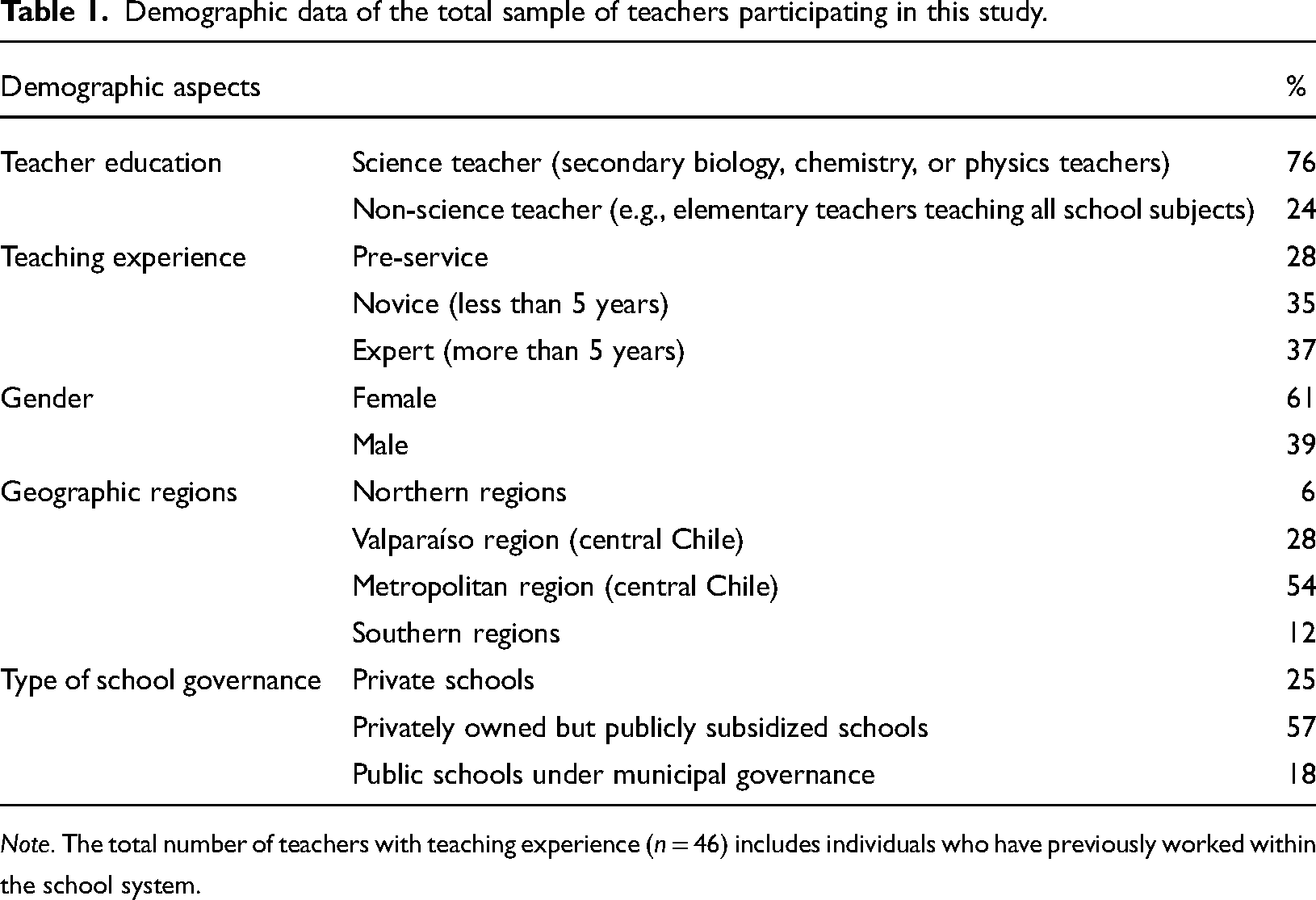
Note. The total number of teachers with teaching experience (n = 46) includes individuals who have previously worked within the school system.
Data collection and analysis
We adapted the Climate Change Knowledge Scale developed by Tolppanen et al. (2021) based on Libarkin et al. (2018). The original Tolpannen scale comprised 21 multiple-choice items. The scale was translated and 14 items were selected. We developed two additional items to better capture the common radiative forcing misconceptions. Sample items were as follows: “Which of the following is the best definition of a greenhouse gas?”; “Which of the following will occur if the amount of ice floating in the ocean decreases?” According to the literature (Bhattacharya et al., 2021), alternative conceptions of climate change are present in students and teachers, and six cognitive interviews were conducted with students, all aged 16, to examine the clarity and validate the 16 items. The scale was also piloted on a sample of 237 secondary school students aged between 15 and 18 years. The reliability of this scale was moderate (Cronbach's alpha = 0.60). Subsequently, the instrument was administered only once to 64 pre-service and in-service teachers. For the data analysis, the items of the categories of interest for this study were selected: demographic data of specialty and teaching experience; the 16-question section pertaining to knowledge of climate change, in which a question-by-question analysis was conducted considering correct and incorrect answers to determine the preconceptions of the teachers; and the variable “knowledge about climate change” (with a scale from 0 to 19 points) to calculate the total knowledge score of each participant.
Non-parametric statistical analysis was applied to study the relationship between knowledge and teachers’ specialties (Mann–Whitney U test) and teaching experience (Kruskal–Wallis test).
Results
Quantitative analysis of teachers’ knowledge about climate change
Following the analysis of the entire group of teachers, it was found that they had moderate-to-low knowledge about climate change according to the average score they obtained (M = 12.25; SD = 2.21; n = 64) on a scale ranging from 0 to 19 points (Figure 1). The Mann–Whitney U test (Z = −1.13; p = .25) demonstrated that there was no statistically significant difference between the knowledge scores of teachers without a science background (mostly elementary school teachers but also history and geography teachers) (n = 15) and those with a science major (n = 49) (Figure 2). However, the Kruskal–Wallis test (X = 0.25; p = .88) indicated that there was also no statistically significant difference between the scores of pre-service teachers (n = 18), those with less than 5 years of experience or novices (n = 22), and those with more than 5 years of experience (n = 24) (Figure 3).
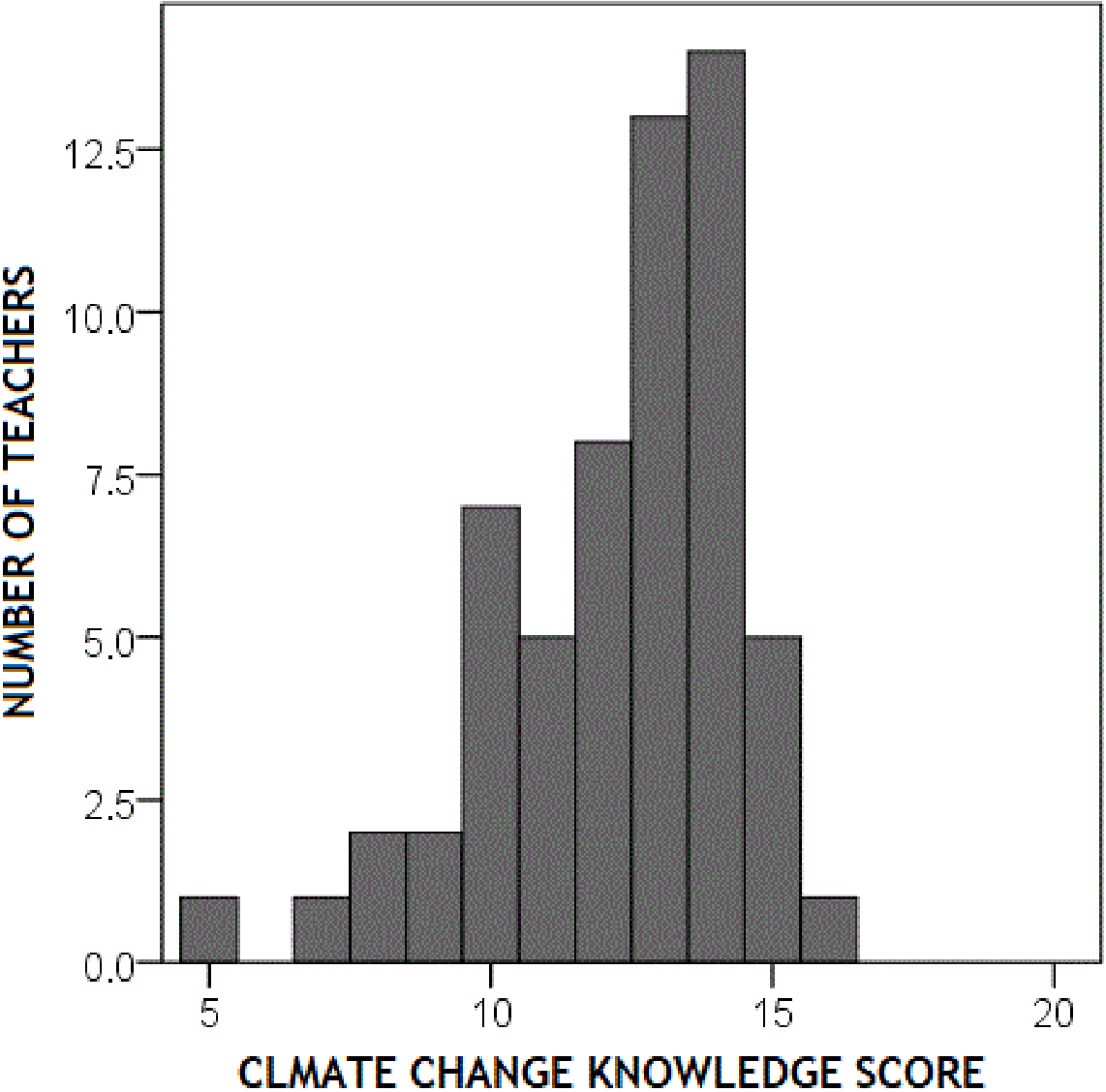
Distribution of the values of the variable: knowledge about climate change (score).
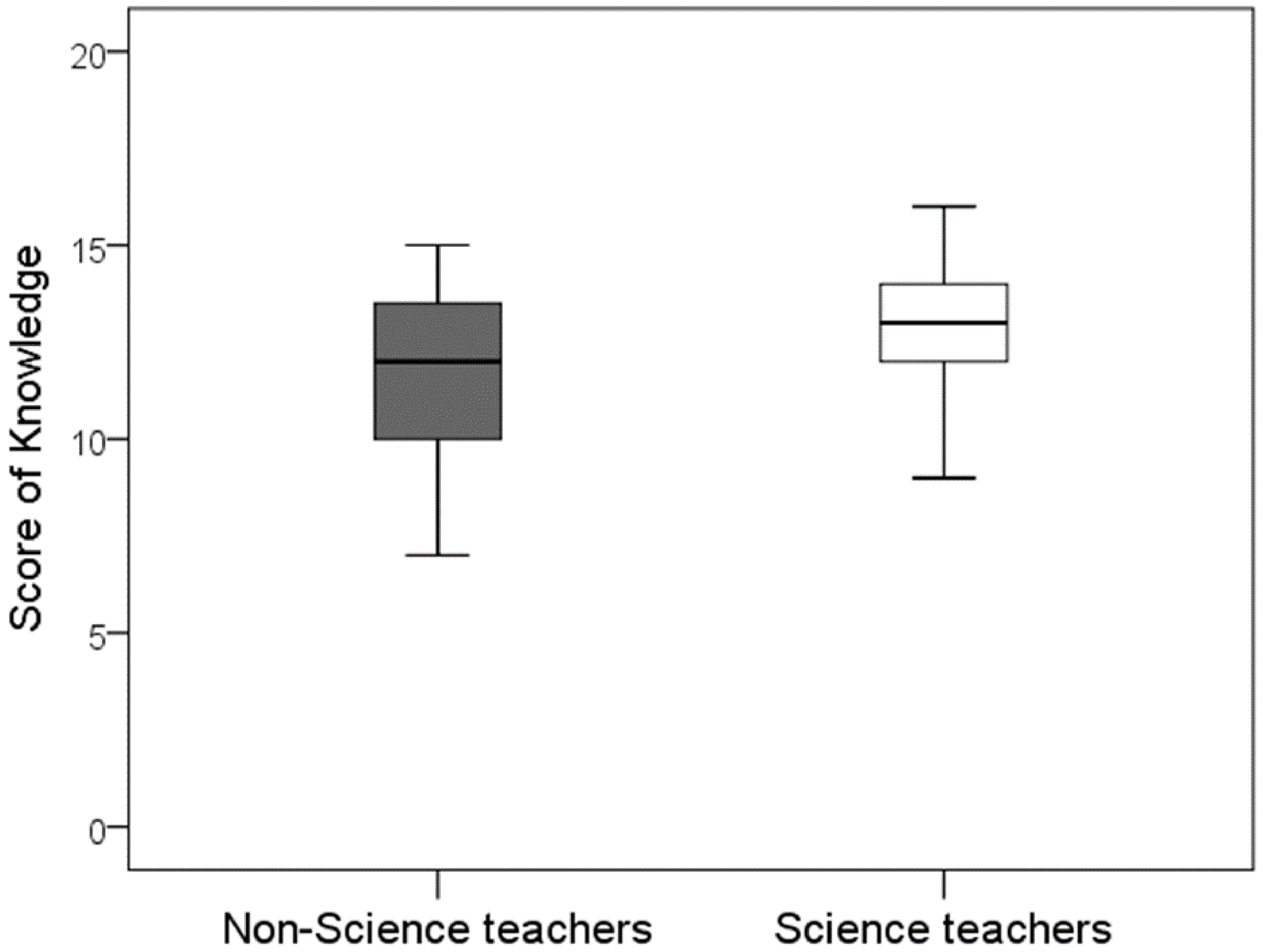
Mean value and standard deviation of climate change knowledge score in science teachers and non-science teachers (mostly elementary teachers).
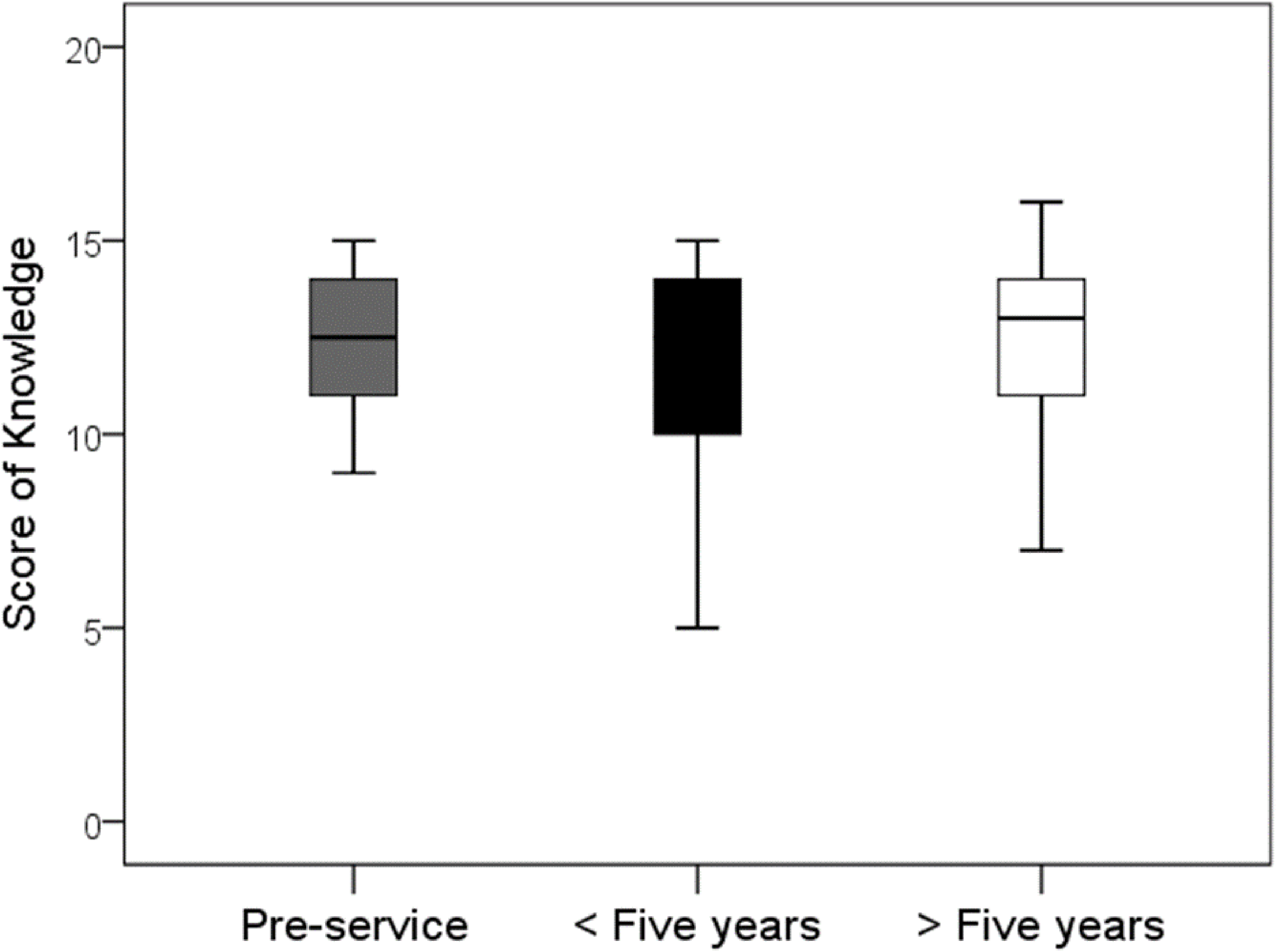
Mean value and standard deviation of climate change knowledge scores in pre-service teachers, novice teachers (with less than 5 years of experience) and experienced teachers (with more than 10 years of experience).
Descriptive analysis of teachers’ alternative conceptions about climate change
Regarding the alternative conceptions found in the total group (n = 64), the teachers recognized the scientific evidence that supports the idea of anthropogenic causes of climate change which is mainly related to the increase in atmospheric CO2 after the industrial revolution (Q2) and the distinction that anthropogenic causes have been mainly responsible for climate change in the last decades (Q3). They are aware of the aspects related to energy transfer, although there are some inaccuracies. They demonstrated an understanding of the aspects related to carbon capture and movement as assessed in the questionnaire: carbon dioxide sequestration by oceans (Q8) and plants (Q17). There is some confusion about greenhouse gases and a lack of knowledge about the type of radiation and amount of sunlight absorbed. Although most evaluated groups recognized water vapor as a greenhouse gas (Q10), there was some confusion regarding the definition of a greenhouse gas as one that absorbs infrared radiation and not ultraviolet radiation (Q9); most were unaware or confused that the amount of sunlight absorbed by these gases is minimal (Q11). There are inaccuracies regarding the radiation emitted by the sun and the Earth, especially ultraviolet radiation. A lack of knowledge about the nature of solar and terrestrial radiation, such as the alternative conception that the sun emits mainly ultraviolet radiation (Q12) or misinformation about the fact that the Earth emits mainly infrared radiation, is also evident in a significant part of the group (Q16). Finally, most teachers established a cause–effect relationship between the greenhouse effect and thinning of the ozone layer (Q13), and some of them were confused about the role of chlorofluorocarbons and general pollution and related it to global warming (Figure 4).
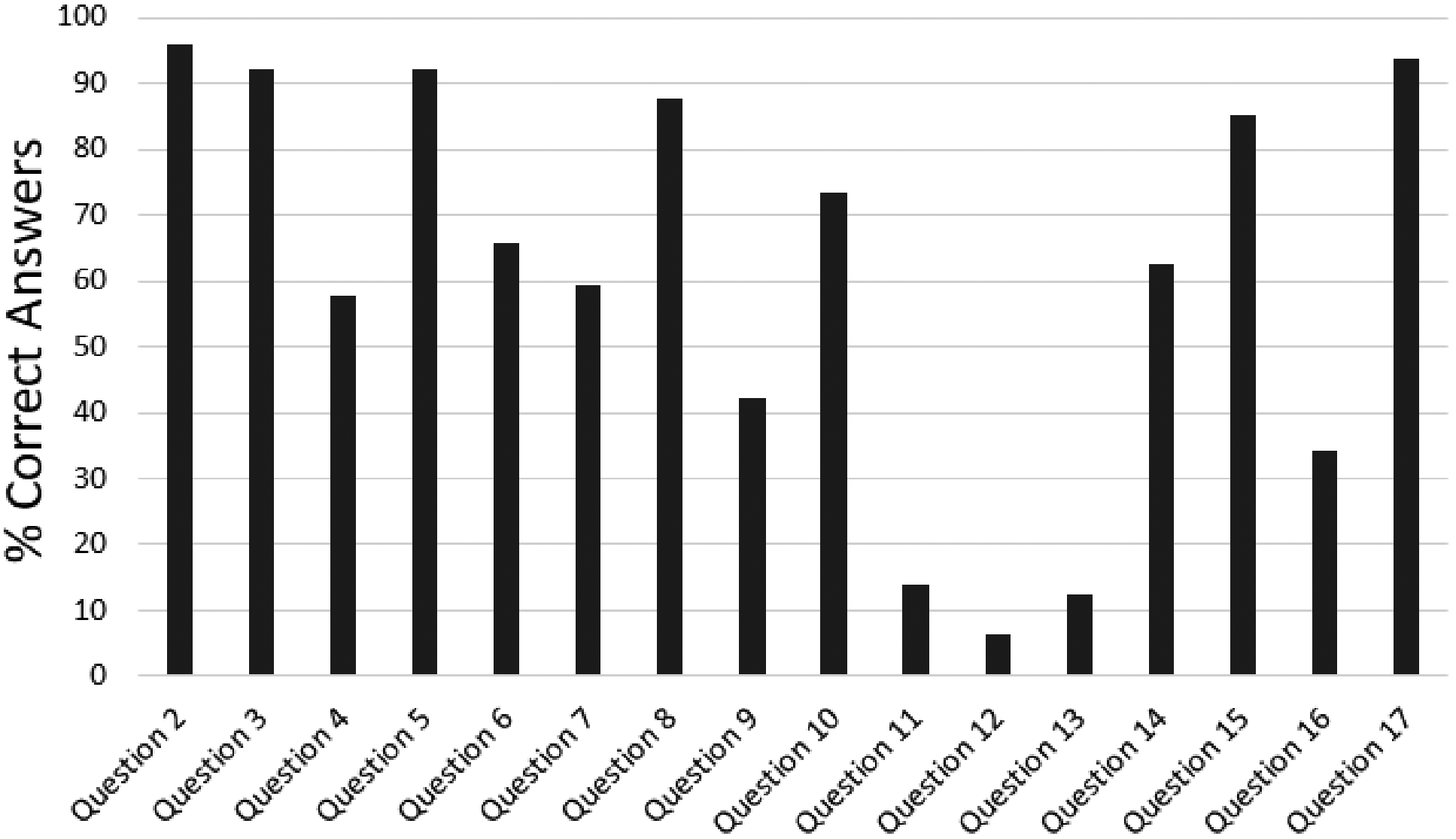
Percentages of correct answers for each of the 16 questions that were part of the instrument on knowledge of climate change.
Discussion and conclusions
The key results of this study illustrate that science teachers and non-science teachers possess moderate to low knowledge of climate change, as has been widely reported in recent literature regarding science teachers’ lack of knowledge regarding this topic (Arslan et al., 2012; Bhattacharya et al., 2021; Dillon & Herman, 2023; Drewes et al., 2017; Herman et al., 2017; Plutzer et al., 2016; Rousell & Cutter-Mackenzie-Knowles, 2019). Furthermore, as Bhattacharya et al. (2021) recently reviewed, this low level of knowledge is observed in pre-service and in-service teachers. However, the analysis of knowledge of climate change allows teachers to infer that scientific evidence supports the idea that recent climate change is produced by anthropogenic causes, which does not occur in other studies that document contradictory views on the causes of global warming and climate change (Herman et al., 2017; Plutzer et al., 2016) or a lack of knowledge of scientific support by teachers (Colston & Ivey, 2015; Drewes et al., 2017; Herman et al., 2017). Teachers in the analyzed sample also knew about the Earth's energy transfer and the phenomena that influence changes in the Earth's temperature. Regarding the understanding of carbon sequestration in its cycle, Bhattacharya et al. (2021) document that teachers have alternative conceptions of this topic. Nevertheless, in this study, teachers demonstrated knowledge of carbon dioxide sequestration. Contrary to the preconception described by Boon (2010) and Çimer et al. (2011) about only CO2 being a greenhouse gas, more than half of the group of teachers managed to identify water vapor as a greenhouse gas. The percentages of wrong answers obtained in the knowledge question about what a greenhouse gas can be associated with some of the preconceptions described in the literature relating acid rain (Çimer et al., 2011) or ultraviolet radiation (Aksan & Çelikler, 2013) to this phenomenon. Additionally, the widespread lack of knowledge about the amount of sunlight absorbed by greenhouse gases supports what was described by Bhattacharya et al. (2021) regarding the presence of preconceptions and lack of knowledge about the greenhouse effect in science teachers.
The high percentage of responses to the option that considers ultraviolet radiation as the primary type of solar radiation coincides with the preconceptions described in previous studies, which relate the problem of climate change to this type of radiation. This indicates that ultraviolet radiation is indeed a prevalent component in how teachers explain the occurrence of climate change. The lack of knowledge that the Earth's surface emits infrared radiation is also implicitly related to the teachers’ general lack of knowledge about climate change and its explanatory models (Bhattacharya et al., 2021; Drewes et al., 2017; Plutzer et al., 2016). Another preconception mentioned in the literature is the idea that polluting gases (Boon, 2010) or toxic wastes (Arslan et al., 2012) cause the greenhouse effect and global warming, which is also found in some of the responses of the teachers participating in this study.
One of the most documented preconceptions about climate change in the literature is the establishment of a false relationship between ozone layer depletion and the greenhouse effect (Aksan & Çelikler, 2013; Arslan et al., 2012; Bhattacharya et al., 2021; Çimer et al., 2011; Nyarko & Petcovic, 2021), including ideas that its thinning is a cause or a consequence of the greenhouse effect. In this research, this preconception was also found in the group of teachers analyzed, who mostly expressed the ideas that consider this false cause–effect relationship between both phenomena. Based on the above, it is possible to establish that some of the most common preconceptions about climate change described in various international studies are also found among pre-service and in-service teachers in the Chilean school system and that they have insufficient knowledge of the subject, as occurs in foreign studies.
The results of this study suggest that the knowledge of climate change possessed by the teachers in the sample was not related to their specialty, as both groups presented moderate to low results. These findings coincide with those described by Boon (2010) regarding low knowledge about climate change among future teachers, with and without a specialty. Çimer et al. (2011) also reports lack of knowledge on the topic in prospective teachers with the specialty of biology, while Colston and Ivey (2015) reports the same with high school science teachers. The lack of both initial and continuous teacher education on climate change (Colston & Ivey, 2015; Plutzer et al., 2016) explains why neither science specialists nor primary school teachers generally possess in-depth knowledge of the topic. Regarding knowledge of climate change and teaching experience, no differences were found between pre- and in-service teachers, as both groups knew little about climate change. In the literature, both studies conducted on pre-service teachers (Aksan & Çelikler, 2013; Arslan et al., 2012; Boon, 2010; Çimer et al., 2011; Nyarko & Petcovic, 2021) and in-service teachers (Colston & Ivey, 2015; Drewes et al., 2017; Plutzer et al., 2016) describe this lack of climate change knowledge. These results can be explained because, as Bhattacharya et al. (2021) indicate, although practicing teachers have more knowledge of some basic concepts, they find it difficult to bring them to a global scale. Additionally, they took older training plans that possibly did not consider climate change topics because this is a relatively recent topic in school education (Plutzer et al., 2016). In Chile, climate change is not a recurrent topic, but until late in the curriculum, it is mainly scattered in units of other topics that have recently been incorporated into the curricula (Ministry of Education of Chile, 2015, 2019; Salinas et al., 2022). This could explain why pre-service and in-service teachers, even specialists in science, do not have explicit and deep training on the subject of climate change, as occurs in international contexts. In summary, we can confirm only one of our hypotheses: There is no difference in scientific knowledge about climate change between pre-service and in-service teachers (Bhattacharya et al., 2021). We cannot confirm the hypothesis that secondary school science teachers have more knowledge of climate science than teachers without specific science training (Herman et al., 2017).
Limitations and implications
Although our results align with the studies in which large numbers of teachers have been investigated (e.g., Plutzer et al., 2016), the number of teachers who participated in this initial exploratory study in Chile was small. Therefore, further studies should be conducted in South America to confirm or refute the described patterns. However, while other studies have examined the relationship between teachers’ knowledge of climate change and other important variables, such as their knowledge of climate change mitigation or willingness to take action to mitigate climate change (e.g., Tolppanen et al., 2021; see also studies reviewed by Bhattacharya et al., 2021), these variables were not included in this study. Future research in our region should incorporate these variables and explore how they are related to and can affect teachers’ practices. Finally, our primarily quantitative and descriptive approach did not allow us to delve into why teachers lack this knowledge or their willingness to improve it. Future qualitative studies can also help us better understand this phenomenon.
We propose some implications based on our results that can be considered at both the local and global levels. At the local level, it is urgent to change teacher education in Chile, which currently does not include explicit courses on climate change, either in science or in elementary teacher programs. However, recently, new standards for teacher education have been established (MINEDUC, 2022), which explicitly include the topic of climate change in disciplinary and teaching content for science teachers. Unfortunately, this topic does not appear in the standards for elementary teachers. On a global scale, similar measures should be taken to train science teachers around the world (Van Zee et al., 2016). In most countries worldwide, the natural sciences that guide teacher education are not earth sciences but biology, chemistry, and physics (Cofré et al., 2022). Perhaps a good measure of initial training could be to offer specializations (or diplomas) in climate sciences for both science teachers and elementary teachers. Something similar should occur with in-service teachers. As Bhattacharya et al. (2021) and Plutzer et al. (2016) have proposed, more opportunities for professional development programs on climate change knowledge should be created. These programs should be interdisciplinary and bring together the efforts of different scientists and educators, as alternative conceptions about climate change are related to diverse aspects such as chemistry (nature of greenhouse gases), physics (difference between ultraviolet and infrared rays), geology (climate change over geological time), and even the nature of science (how valid scientific consensus is).
Footnotes
Contributorship
Verónica Abasto took care of the logistical aspects of the study, updated the references, conducted the data collection, and generated a first version of the full manuscript. Claudia Vergara contributed to the literature review on the Chilean curriculum and context and reviewed the first version of the manuscript. Antonia Larrain is the director of the project within which this research is framed. She generated the final version of the climate change knowledge assessment instrument, contributed to the development of the discussion and conclusions, and reviewed the first version of the manuscript. Hernán Cofré contributed to the literature review on climate change education and the introduction, and he reviewed the first version of the manuscript. He also contributed to the data analysis and contributed throughout the process.
Declaration of conflicting interests
The authors declared no potential conflicts of interest with respect to the research, authorship, and/or publication of this article.
Ethical statement
Teachers gave their own written permissions through an informed consent online form by a procedure approved on December 15th 2021, by the ethics committee of Universidad Alberto Hurtado, which is certified by the Chilean Ministry of Health.
Funding
The authors disclosed receipt of the following financial support for the research, authorship, and/or publication of this article: This study was funded by Fondo Nacional de Desarrollo Científico y Tecnológico (FONDECYT) (project numbers 1210264 and 1211920).
