



Abstract
Purpose
To analyze mathematics problem-solving (PS) procedures in Chinese (CH) and Canadian (CA) elementary mathematics textbooks that leverage computational thinking (CT) as a cognitive tool, which have evidently existed and been implemented.
Design/Approach/Methods
In this study, an analysis framework was developed to investigate the characteristics of CT tools for three PS steps—understand the problem, devise and conduct plans, and look back into textbooks—in four contexts: data practices, modeling and simulation practices, computational tools practices, and systemic thinking practices.
Findings
Our results demonstrate the tools (CT) employed in the PS process in CH and CA mathematics textbooks. The strong connections between the “look back” stage and CT tools were explored. During the “look back” stage, both countries required students to transfer their knowledge and perform generalization. In addition, CT is regarded as a basic skill analysis for students in mathematics education and has received significant attention at every stage of the PS process.
Originality/Value
This study brings a new perspective to CT research in education by regarding CT as a cognitive tool for students in mathematics PS.
Introduction
Computational thinking (CT), recognized as a cognitive skill set for problem-solving (PS ) (Wing, 2006), has been regarded as a fundamental capacity for students in the digital society (Wing, 2006). Wing (2006) proposed a broad definition, emphasizing the fields of computer science in human endeavors: According to Wing (2006), “computational thinking involves solving problems, designing systems, and understanding human behaviors, by drawing on the concepts fundamental to computer science.” Therefore, in this study, we define CT by relying on the applications of practice identified above in contexts distinct from computer science (Wing, 2006). Barr et al. (2011) emphasized on PS using computer science, defining CT as a process of recognizing various patterns in the world and applying tools from computer science to reason and understand the world, thus solving as well as learning to solve problems. Another important perspective of CT comes from Wing (2011), who proposes CT as “a form that can be effectively carried out by an information-processing agent” to present solutions. By transcending programming languages (Wing, 2006), CT might include problem abstraction and decomposition, reasoning skills, and knowledge of computer science concepts such as machine learning, computer modeling, and recursion (NRC, 2010). In this way, CT can be applied to tackle both simple and complex problems (i.e., complex questions whose solutions are novel and unmeasurable, and that need creativity and innovation). Grover (2021) highlighted that CT might thrive in a digital society with the power to assist humans in dealing with complex problems within artificial intelligence systems while fostering the process of learning and knowledge transformation (Shute et al., 2017). Considered a valuable cognitive competency in PS (Selby & Woollard, 2013), CT should be an educational core ability (Shute et al., 2017). In addition, the digital society needs informatically intelligent citizens to deal with complex problems in a rapidly changing world (Barr et al., 2011).
PS plays a key role in mathematics education (Ersoy, 2016; Hiebert et al., 1996; Polotskaia & Savard, 2018; Schoenfeld, 1985; Wilson et al., 1993). In classrooms, providing problems to solve helps students develop their abilities, such as reasoning, logical, and spatial skills. In this process, students have access to understanding and mastering mathematical concepts and strategies they must learn when solving problems (Lesh, 1981). Furthermore, PS processes can provide a meaningful environment in which students can improve their mathematical thinking skills (Lesh, 1981). A good PS process may motivate students to learn and understand mathematics better and deeper (Lesh & Harel, 2003), and other related disciplines (Blum & Niss, 1989). However, the main purpose of mathematics teaching is to prepare students to solve problems in mathematics and daily life (Ojose, 2011). Therefore, PS in mathematics education can be viewed as a process of understanding math and building a thinking process that leads to further abilities.
Over the decades, considerable research has been conducted on mathematics PS, including “exploring the representatives of problem-solving procedures in Mathematics Textbooks” (Fan & Zhu, 2007), “evaluating problem-solving in mathematics” (Charles, 1987), and “fostering understanding of mathematical relationships in word problem-solving” (Savard & Polotskaia, 2017). However, this does not imply that PS in mathematics education can be cultivated easily or that PS procedures can be deducted and stated clearly. Furthermore, considerable research that integrated CT into PS development has been conducted (Nordby et al., 2022). Yadav et al. (2014) integrated CT into elementary and secondary teacher education by designing and introducing CT models for preservice teachers. Barr et al. (2011) proposed that, when confronting problems in K-12, CT involves PS skills that can be effective and intelligent. Berland and Wilensky (2015) defined CT as “using computers as a tool to efficiently and accurately address challenges in the digital environment.” Echoing this definition of CT as computers, many researchers have made arguments that defining CT as a programming language can effectively promote students’ mathematical thinking and skills (Kaufmann & Stenseth, 2021). Such arguments include creating programming environments (Cui & Ng, 2021), such as Scratch (Resnick et al., 2009) or Alice (Cooper et al., 2000); connecting programming language to mathematics education directly, such as exploring programming in mathematics education (Kaufmann & Stenseth, 2021); cultivating CT and mathematics habits simultaneously (Pei et al., 2018); and exploiting the effects of computer programming on students’ mathematics skills (Psycharis & Kotzampasaki, 2017).
This article presents an exploratory study to identify cognitive tools available from CT that can be used to facilitate the PS process associated with Elementary Mathematics Learning and Teaching Strategies. The approach taken in this study was to investigate CT tools in mathematics textbooks that offered students the ability to solve problems at various stages. In addition, potential explanations for the similarities and differences in the CT tools used for the PS process between China and Canada are provided. Moreover, the study introduced a new perspective to CT research in education by regarding CT as a cognitive tool for students when solving mathematics problems.
Conceptual framework and research questions
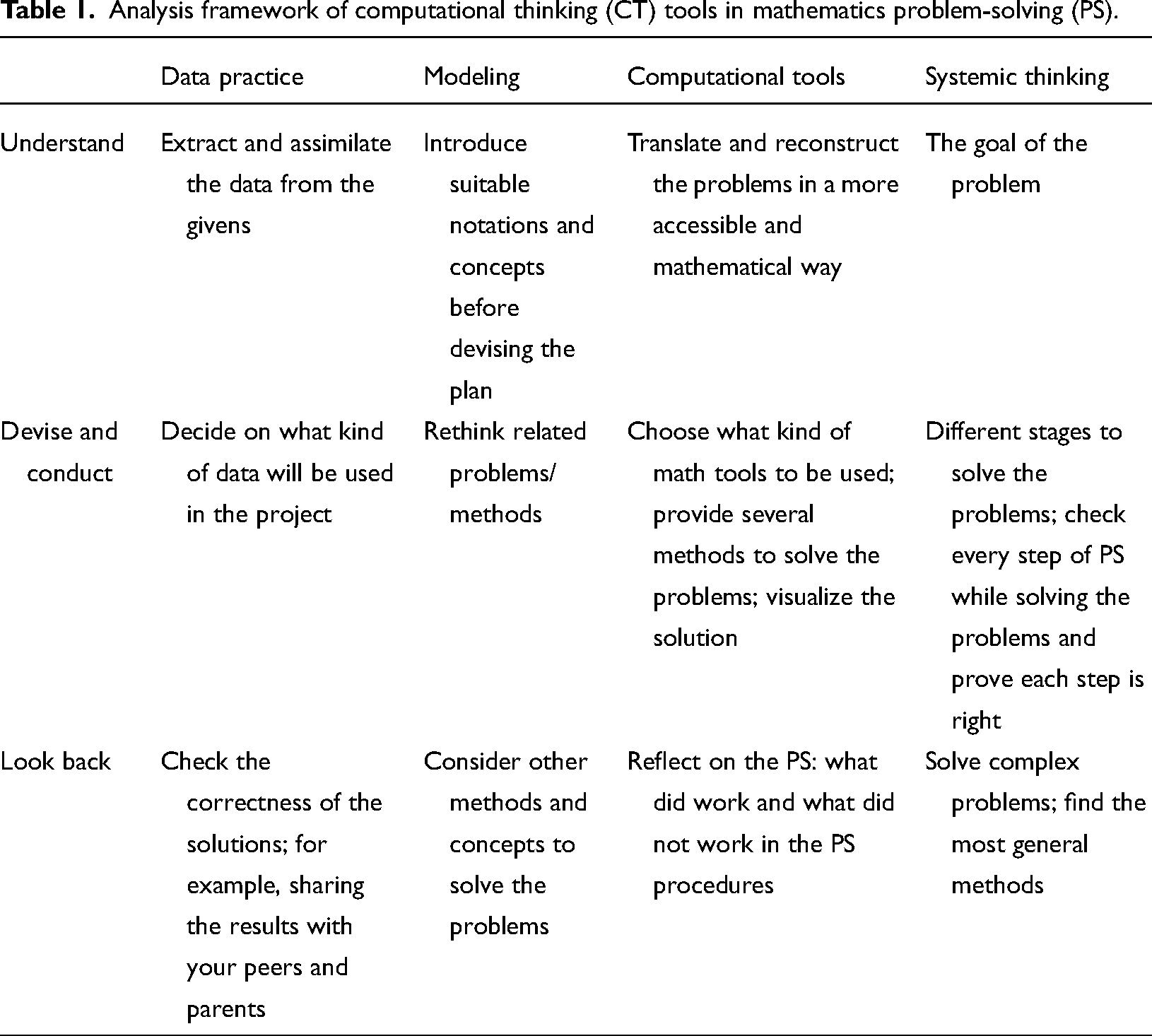
While establishing conceptual frameworks, it is necessary to consider several aspects, including “models for PS procedures,” “CT as cognitive tools,” and “textbook analysis.” Table 1 provides an overview of the study’s research framework. Finally, the research questions are as follows.
Analysis framework of computational thinking (CT) tools in mathematics problem-solving (PS).
Computational thinking (CT) tools in “look back” stage.
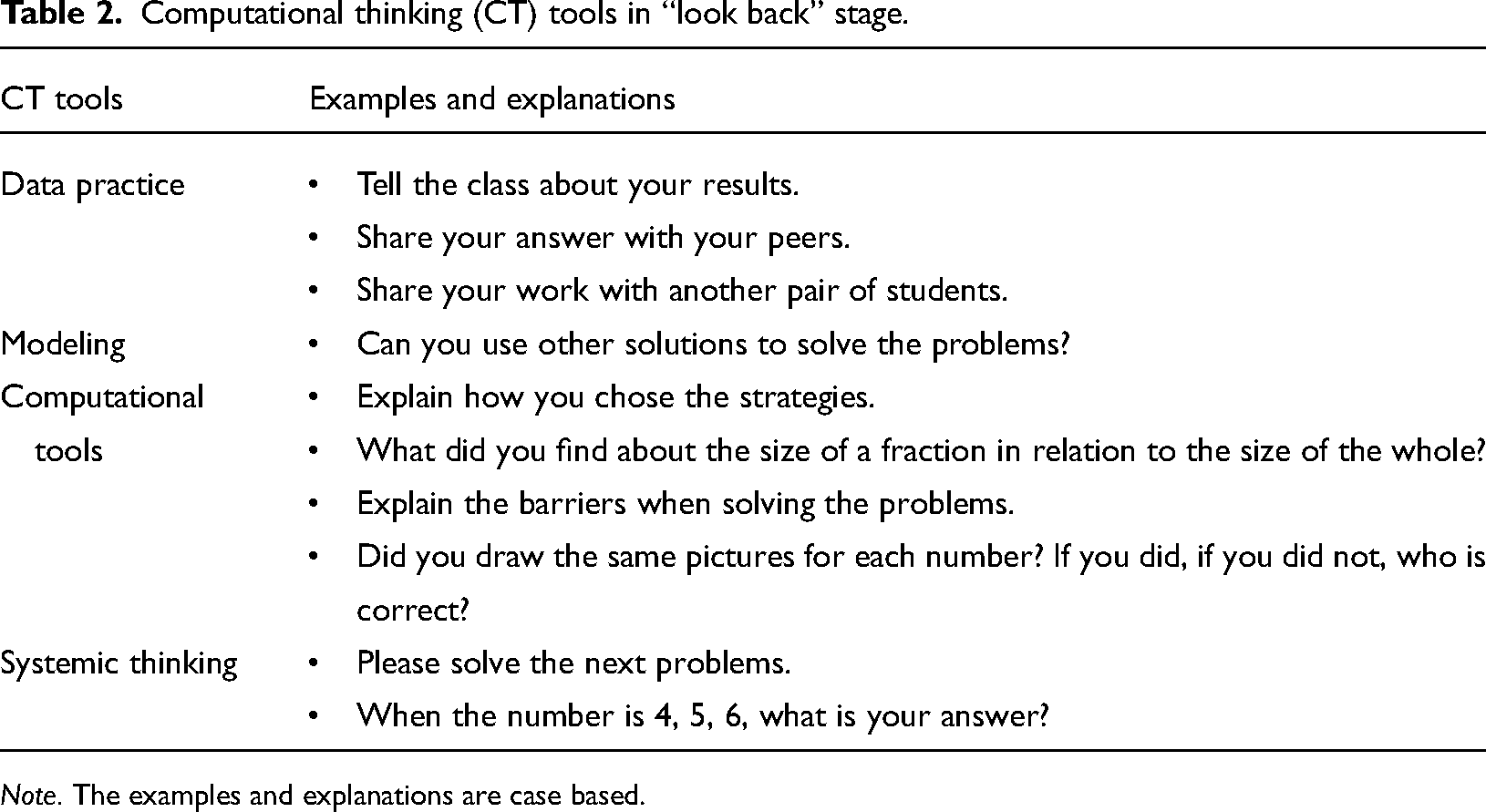
Note. The examples and explanations are case based.
Models for PS procedures
According to the National Council of Teachers of Mathematics (NCTM, 2010), the term “problem-solving” refers to mathematical tasks that have the potential to provide intellectual changes for enhancing students’ mathematics understanding and development. Generally, it includes understanding the problems, proposing solutions, and checking the results, which suggests that the PS model starts with a clearly defined goal for solving the task (Bruner, 1964), with a heavy reliance on relevant experiences that refer to understanding the problems based on previous experience and then generating feasible options and strategies to solve the problems (Poincaré, 1952). These solutions, steps, and options are evaluated through conscious evaluation to achieve the final goal (Dewey, 1933). PS is the process of deducing a solution based on the transferability of prior knowledge and then applying the knowledge acquired from prior PS procedures for complex problems. This is a generalization of the PS process and fosters creativity in future knowledge.
Various models have been developed to describe PS processes. Polya (1949) summarized a four-step process of PS in his book How to Solve It: understand the problem, devise and conduct a plan, carry out the plan, and look back. He stated that PS is a process that begins when a learner is confronted with a problem and ends when the problem is solved. Krulik and Rudnick (1989) proposed a five-step PS process: reading and thinking, analyzing and planning, organizing strategy, getting the answer, and confirmation of the answer. Schoenfeld suggests a six-step PS process: reading, exploration, planning, implementation, plan/implementation, and verification. These models aim to promote and motivate students to develop successful thinking habits (Lee, 2016), and provide general guidance for mathematics PS.
PS abilities are acquired through action-oriented learning and reflection on PS approaches (Liljedahl et al., 2016). As described above, each model’s final phase (e.g., confirm the answer and look back) is a manifestation of the complete PS process. Look back is the final stage of checking the answers and verifying the results. It might also be a generalization step for students for further PS encounters, which requires them to apply what they have learned from the PS process to solve complex/different problems. This is a significant step in verifying and transferring knowledge acquired from the PS process. Under most circumstances, it is easy to transfer the knowledge or strategies that are general enough to other disciplines, even in a completely unfamiliar context, because problem-solvers know how to utilize the previous knowledge, establish solutions, and then retrospect for better plans and future problems. In addition, the understanding that requires students to grasp the goal and information in the questions will encourage them to recall their previous knowledge, which is an important step. Therefore, in this study, to simplify and distinguish the important steps in PS, we used three PS stages that provide general guidance for solving mathematics problems. A description of the three PS stages is provided below:
Understand the problem—having a firm grasp on the goal and information contained in the questions. It is necessary to extract information, recognize the key points and contexts of the problems, reconstruct the problems as needed, and introduce appropriate notations and terminologies whenever possible for easy reference and manipulation. Devise and conduct the strategies to solve the problem—based on the first stage, clearly understand the relationships within problems and select a method, devise a plan that may be useful for solving the problems, and then practically calculate and compute the problems by yourself while keeping track of the correct answers. Confirm and reflect—review the entire PS process, verify the correctness of the results and solutions, reflect on key ideas and PS processes, and generalize and/or extend the methods or results that are important in the knowledge transformation of the look-back stage.
CT as cognitive tools
Weintrop et al. (2016) provided a taxonomy for mathematics and science classrooms, which is most relevant for our research because CT plays a direct role as a tool in mathematics education. This taxonomy includes four categories: data practices, modeling and simulation practices, computational PS practices (i.e., in our research, we named the tools CT), and systematic thinking practices. The following are the descriptions of the four practices, which were mainly adopted from Weintrop et al.’s (2016) taxonomy to define CT in mathematics and science classrooms.
Data analysis as CT tool
Data skills are part of scientific mathematics standards and classroom curricula (NGSS Lead States, 2013). It is critical to comprehend how to use data, enhance students’ comprehension of data when examining topics, and define the data. Furthermore, solving problems entails more than simply extracting the data or information contained in tasks; it includes methods to create, abstract, and finalize the data. In our study, the data practices in mathematics textbooks involve “collecting the data, creating the data, manipulating the data, and verifying the data.”
Modeling as a CT tool
To solve these problems, students must have a relevant prior-knowledge base. Therefore, it is important for students to investigate the relative contexts and prior knowledge that provide access to and facilitate the PS process. In other words, the CT tools in the process of PS can be classified as modeling and simulation practices, because each of them interplays between mathematics and the real world (Blum & Leiss, 2007).
Unplugged computational tools as a CT tool
We used the terminology “unplugged computational tools” in this study because we want to emphasize the computational techniques derived from the field of computer science for PS process rather than the entire PS practice. In addition, unplugged means that we focus more on mental activities rather than relying on technology integration. Furthermore, the original terminology “computational problem-solving practices” emphasizes the overall picture of mathematics and science classrooms rather than focusing on mathematics PS. Therefore, to avoid confusion between the big picture and our pointed research, we went with “computational tools.” Computational PS practices are implemented in computers to solve problems by either iterative solutions—repeated and stepwise—and applied with the assistance of computers or other educational technologies. However, considering the lack of educational technologies and assistance provided within textbooks, we focused more on unplugged tools at the cognitive level, which would fit into current mathematics teaching and learning for efficiency and accuracy.
Systemic thinking as a CT tool
Instead of looking at one object at a time, we must examine numerous diverse interconnected entities and observe their collective behavior under various conditions (Laszlo, 1996). Systematic thinking focuses on an inclusive examination of how systems and their components interact and relate to one another as a whole and how objects within the overall systems have changed over time (Forrester, 1968). Therefore, in this study, the students were given a comprehensive view of how to cope with these challenges. Thus, they have easy access to understanding and solving complex problems. For example, students are required to find the fastest way to return home from school. Possible goals the students must concern with the “understand” part, which represent systemic thinking, include (1) moving from school to home; (2) determining the rule on the route from school to home, which includes transportation, barriers, or road selection; and (3) finding the fastest road. Specifically, systemic thinking as a CT tool allows us to approach a problem as a system of related elements.
Moreover, many decades of research have been conducted on issues related to teaching and learning skills, behaviors, and concepts of CT. Considerable effort has been expended to create taxonomies, frameworks, and guidance to integrate CT into education. Regarding CT as a tool, several models are available in various disciplines. For example, Kotsopoulos et al. (2017) suggested pedagogical frameworks for CT that include four pedagogical experiences: unplugged, tinkering, making, and mixing. In this framework, unplugged experiences are those carried out without computers, tinkering experiences are involved in making changes to existing objects, making experiences involve the construction of new products, and remixing experiences involve mixing components of objects for other purposes. Brennan and Resnick (2012) presented frameworks to assess and evaluate CT, which consisted of three aspects: CT practice, concepts, and perspectives. Computational concepts in frameworks refer to concepts that designers engage with as they program and code, such as iteration and recursion. Computational practices refer to the practices that designers develop as they engage with concepts, such as debugging projects. Computational perspectives refer to the perspectives that designers describe as evolving understanding of themselves, their connections to others, and the digital world around them.
Textbook analysis
Textbooks play a direct role in what is providing instructions, resulting in students’ knowledge acquisition and learning outcomes (Haggarty & Pepin, 2002). Robitaille and Travers (1992) expressed the view that the content in textbooks and how such textbooks are used directly impact students’ learning. This means that students’ performance and outcomes will appear differently, according to the textbooks used; this is approved by several studies that found a strong correlation between the textbooks used and students’ mathematics performance (Tornroos, 2005; Xin, 2007). Recently, many recent studies have been conducted to examine the role of textbooks in cultivating students’ mathematics PS skills and knowledge (Fan et al., 2013). For example, textbook analysis has been applied to the didactic transposition of rational numbers (Putra, 2020) and distributive property in the US and Chinese (CH) elementary mathematics education (Ding & Li, 2010), and the integration of programming in elementary mathematics (Bråting & Kilhamn, 2022).
Researchers have developed various methods to analyze textbooks to disclose what content can be taught to students. The Third International Mathematics and Science Study (1995) (TIMSS) provides the foundation for research on mathematics and science textbook analyses. In TIMSS's framework for analyzing textbooks, textbook analysis focuses on investigating the content profiles of textbooks (Schmidt-Nielsen, 1997). The TIMSS analysis comprises five measurements (Valverde et al., 2002): classroom activities, content covered in textbooks, sequencing of content, and characterization of the complexity of the demands for student performance. In 2010, Charalambous et al. classified new approaches to textbook analysis into three categories, namely horizontal, vertical, and contextual. The horizontal analysis examines the general characteristics of textbooks, such as physical characteristics and the organization of the textbook content; vertical analysis is needed to address how textbooks present and treat the content; and contextual analysis focuses on how textbooks are used in instructional activities. Charalambous et al. (2010) argued that only the first two categories are appropriate for analyzing textbook characteristics. To summarize, both methods of textbook analysis focus on the content. Because we focused on the potential and evidence of CT in the PS steps, the primary requirement for textbook analysis in this research was from the example questions at the beginning of each unit.
Analysis framework
The analysis framework for three-step PS procedures was merged with the taxonomy of CT in mathematics and science classrooms. Two perspectives were considered when establishing this framework. A vertical analysis was designed to investigate the characteristics and employment of CT tools in the three stages. Horizontal analysis was used to define the PS stages, and each tool was directed at each stage. For this purpose, an analysis framework was developed to address CT tools in various PS phases (Table 1).
Research questions
This study is part of a large research project we have been working on to explore the various CT skills, practices, and perspectives used in the PS processes of diverse disciplines. In this study, we focus on identifying the CT skills used in the PS process in mathematics textbooks from China and Canada. Many countries are introducing new computing syllabuses in schools that make programming and CT as their core components. For example, the United Kingdom has overhauled the way computing subjects are taught in schools, with similar initiatives being introduced in many countries. Singapore introduced a computing curriculum to develop CT and programming skills from preschool to tertiary education. We focused our research in these two countries because CT as a core skill for students was included in new national curriculum standards or provincial standards in China and Canada, unlike other countries that are still at the junior level for introducing CT. In both countries, many practice and research educators have attempted to teach CT or integrate it into educational fields. For example, most primary schools in China have launched a compulsory course for students, called “basic information technologies,” in which Scratch language is used to introduce the basic CT concepts (Jiang & Li, 2021). In addition, considerable information in Canada shows the difference in CT integration by province, and in making CT an obligatory component of the curriculum to offering select courses and online resources in computer science. For instance, British Columbia, as one of the leading provinces in terms of CT and coding integration in education, introduced coding into the K-12 curriculum in 2016 (Silcoff, 2016).
Based on the analysis framework, we focused on two aspects: (1) the procedures of PS in mathematics education and (2) the employment of CT in “look-back.” Therefore, the following research questions were posed.
What are the characteristics and purposes of CT tools in the various PS processes? How are CT tools employed in “look-back” stage?
Methodology
To investigate the exposure and frequency of CT as a cognitive tool in mathematics PS procedures and compare the characteristics and purposes of CT tools in PS between China and Canada, we chose two mathematics textbooks at the elementary level from each country. We followed the PS stages and CT in Mathematics and Science Taxonomy to code and analyze CT tools in PS procedures.
Mathematics textbooks
Many types and grades of mathematics textbooks have been approved for classroom use in both China and Canada. We concentrated on Grade 4 mathematics textbooks to better answer the research questions. Grade 4 can be regarded as a relevant grade, as it prepares students to integrate mathematics into everyday life and develop their coding skills in PS (Government of Ontario, 2020). For instance, Grade 4 students in Canada are expected to apply a variety of social-emotional learning skills to support their use of the mathematics PS process while also cultivating their learning in writing and executing code, as well as read and alter existing code to solve problems and create computational representations of mathematical situations (Government of Ontario, 2020). It is a significant stage for students to grasp mathematics and computer science concepts, transfer their mathematics knowledge from simple problems to complicated ones, connect mathematics to daily life, and establish their CT skills at the cognitive level.
For the analysis of CH textbooks, we chose The Compulsory Education Grade 4 Mathematics Elementary School Textbooks (Semester 1), the sample published by the People’s Education Press (PEP). This is the most popular study conducted in China. In terms of Canadian (CA) mathematics textbooks, we selected the Math Makes Sense 4 textbook series for content analysis; this textbook is used throughout Canada. Furthermore, the authors of these textbooks claim that they will help students develop creative thinking and PS skills, and grasp mathematical concepts.
Procedures of textbook analysis
Following the analysis framework, we analyzed the textbooks from two perspectives: the PS process (horizontal analysis), and the characteristics and purposes of CT tools (vertical analysis). The PS process was investigated to provide guidance on the exposure and frequency of CT tools.
We collected data from the example questions at the beginning of each unit. In addition, we recorded the frequency and exposure of the tools at each stage of PS.
Data collection and analysis
We investigated and coded CT tools in PS offered by these two textbooks using the analysis framework (Table 1), which incorporated three-stage PS and CT tools in mathematics classrooms. More importantly, we chose questions that served as examples and labeled them as “Examples” at the start of each unit. These questions are recommended for teachers’ instructional purposes in the classroom (Love & Pimm, 1996). We did not include the exercise sets in this study because there were no illustrations of the PS process for these questions.
All the problems and solutions in these two textbooks were coded by the first author using the analytical framework shown in Table 1. The reliability and validity of the coding were checked by an additional coder who coded a random selection of 23% of problems with solutions, according to the analysis framework described earlier. The additional coding resulted in a Cohen’s kappa of 0.71 for data practices, 0.70 for modeling practices, 0.81 for computational tools, and 1 for systematic thinking practices. Thus, the results are reliable (Landis & Koch, 1977). In the coding process, the coders first determined what is involved in each step of PS—understand, devise and conduct, and look back—according to the contents provided in the solution part, and then determined the CT tools—data practices, modeling, computational tools, and systematic thinking—used in each PS step, according to Table 1.
Results and discussions
According to the analysis framework, 130 mathematics questions with solutions that were presented in the example part of the units, which students may display under the instruction of teachers in fourth-grade mathematics textbooks, were investigated. The problems and solutions in the textbook were examined in detail in terms of PS and CT stages as cognitive tools in the process. The coded PS in the CA textbook was determined to be numerically higher than that (i.e., coded PS) in the CH textbook (CA: n = 79, CH: n = 51). Tables 3 and 4 provide the gathered statistics on the frequency of use of CT tools as well as the specifics of CT tools. These two tables were created to compare the use of CT tools at three different stages of PS in the two countries. These are the answers to Research Question 1.
Frequency of computational thinking (CT) tools in problem-solving (PS).
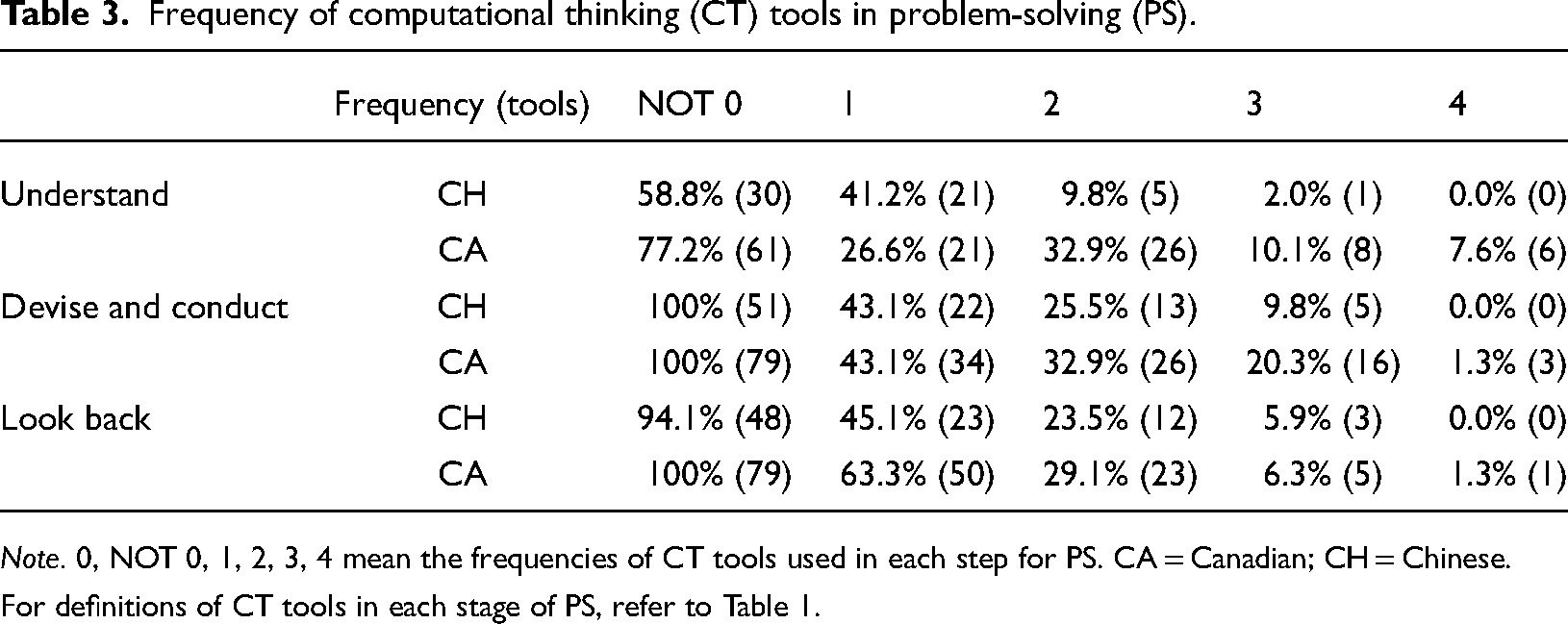
Note. 0, NOT 0, 1, 2, 3, 4 mean the frequencies of CT tools used in each step for PS. CA = Canadian; CH = Chinese.
For definitions of CT tools in each stage of PS, refer to Table 1.
Cognitive tools within the stage of problem-solving (PS) process.
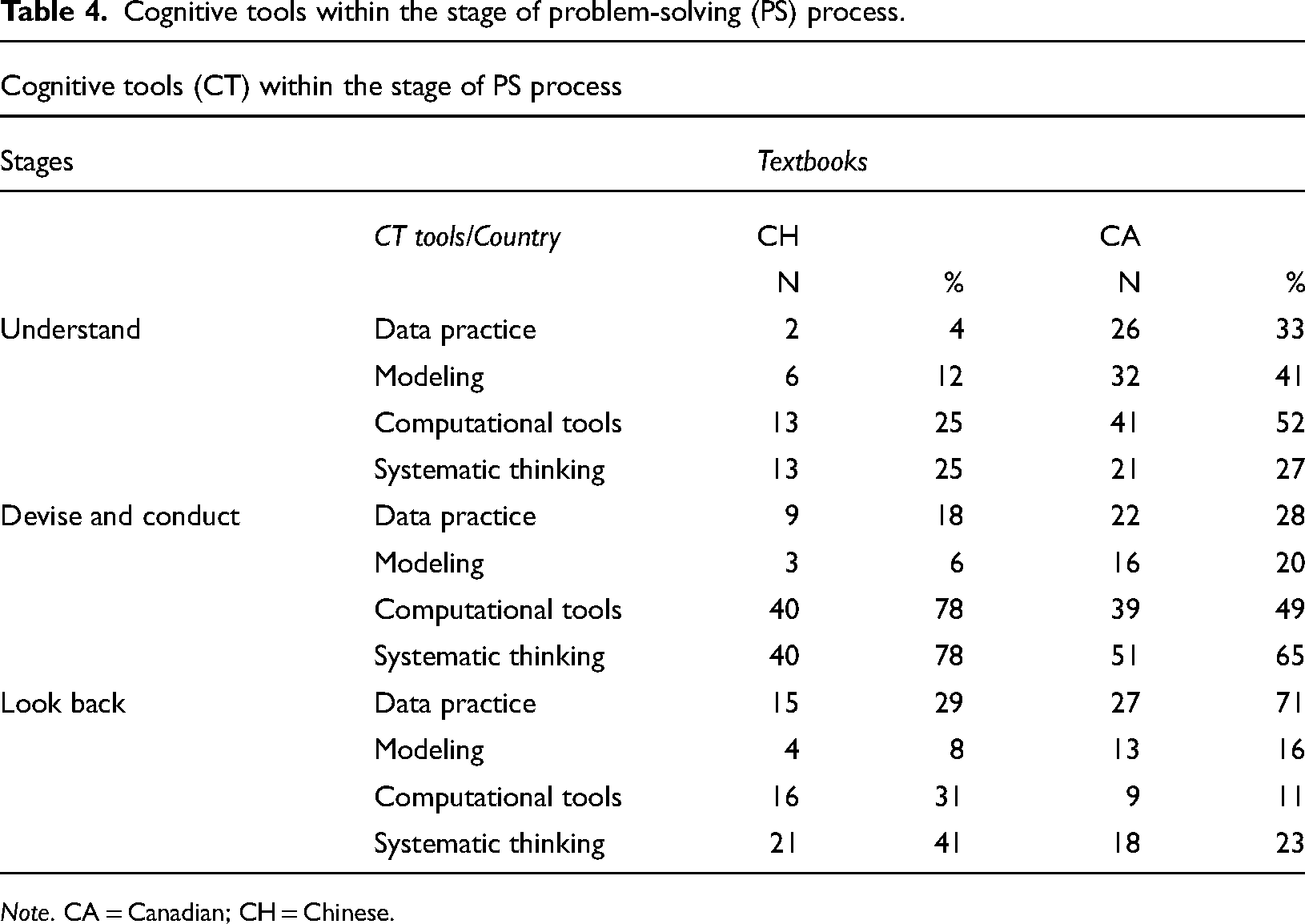
Note. CA = Canadian; CH = Chinese.
Characteristics and purposes of CT tools in PS
Table 3 shows the frequencies of the CT tools used in the PS. In the CH textbook, we found that 48 example questions used CT tools in the “look back” stage (94.1%), 51 used CT tools in the “devise and conduct” stage (100%), and 30 used CT tools in the “understand” stage (58.8%). The following table (Table 2) shows the PS process using CT tools in the “look back” stage. Furthermore, the examples and explanations are highly related to the metacognition described above. Therefore, more attention should be paid to this aspect in the following section.
At the same time, using these four tools did not occur in the CH textbook. However, in the CA textbook, at every stage of PS, there are some example questions that use the four tools simultaneously. In other words, there are six example questions using four CT tools at the same time in the “understand” stage, three example questions using four tools at the “devise and conduct” stage, and one example question using four tools at the “look back” stage. In the CA textbook, 79 example questions used CT tools to “look back” (100%), 79 used CT tools to “devise and conduct” (100%), and 61 used CT tools in “understand” (77.2%).
The results revealed that students in both countries were required to solve problems with CT tools. However, we discovered in the “understand” step that there are fewer CT tools present in both countries’ textbooks. It is not surprising that these two countries had fewer CT tools in the first stage. In CA textbook, there were two sections within each PS, and they were titled “explore” and “show and share” to represent the “devise and conduct” stage and “look back” stage, respectively, according to the analysis framework of CT tools in mathematics PS we proposed in Table 1. In the “explore” section, the reader examines a topic or problem, and then displays and discusses their findings with their peers in “show and share.” There is no explicit section for “understand.” In the CH textbook, the parts for each section are implicit; let alone “understand.” It appears that the “understand” stage might be conducted and implemented by teachers in the classrooms rather than being assigned to the textbooks. Therefore, the CT tools used in the “understand” stage were fewer than those used in the other two stages. It demonstrated that CT tools used in the “understand” stage were teacher-centered, as the teacher assumes the primary role in the classroom with textbook usage, presenting and interpreting information to students rather than the students embracing a more active role in their own learning owing to reduced presence of CT tools in both CA and CH textbooks.
Table 3 details the CT tools used in the PS procedures. The data revealed that systematic thinking and computational tools (in the “devise and conduct” stage) played a major role in the process when focusing on the occurrence of specific tools in PS stages listed in the analysis framework. Both in Canada and China, the PS process seemed to be visual and procedural—most solutions require students to think at diverse levels and to develop their procedural thinking skills (i.e., refer to the knowledge of how to perform a task) and visualization skills in mathematics. For example, the classic question in the CH textbook is “making pancakes”. When someone is asked to make a pancake in the fastest (i.e., mix flour and sugar, put milk, and fry a pan)/the most economical way (i.e., flour, eggs, and milk), the person needs to think about the steps/processes to do it. Consequently, the person learns about the learning process—learning skills and strategies to achieve the goals. It is consistent with the current research on implementing CT in mathematics education: Most of the CT tools are visualized (Selby & Woollard, 2013), and the concepts of mathematics are concerned with visualized objectivizing and representing abstractions (Bishop, 1989).
In the “understand” stage, the CA textbook adopted “computational tools” twice as frequently as the CH textbook. In mathematics education, it is important to convert word problems into mathematical forms. In other words, students must grasp the core of mathematics problems while understanding the structure of the problems. The CA mathematics textbook provides more opportunities for students to transfer and connect their prior knowledge to their daily lives. Contrarily, the problems in the CH textbook are shorter and more abstract to understand, which focuses on developing students’ grasp of abstract mathematics concepts and strategies rather than cultivating their understanding of mathematics in everyday life.
Further, in the “devise and conduct” stage, compared with the CA textbook, the CH textbook presented less frequent “modelling tools,” which referred to utilizing related problems/simple problems/prior knowledge for students. For the CH textbook, we think there might be three reasons to explain this: (1) Because the example question is novel and new for students, there is no need to apply related problems; (2) CH textbook developers focus more on igniting students’ interest in new knowledge by proposing simple questions. It can be seen in CH education systems that in elementary mathematics education, the cultivation of interest in mathematics is the most significant part (Correa et al., 2008). Encouragement and positive feedback from example questions are key points for students to build confidence; (3) they provided complex questions in the “look back” stage, which accounts for 38% of the total and ranks first in the “look back” stage as shown in Figure 1.
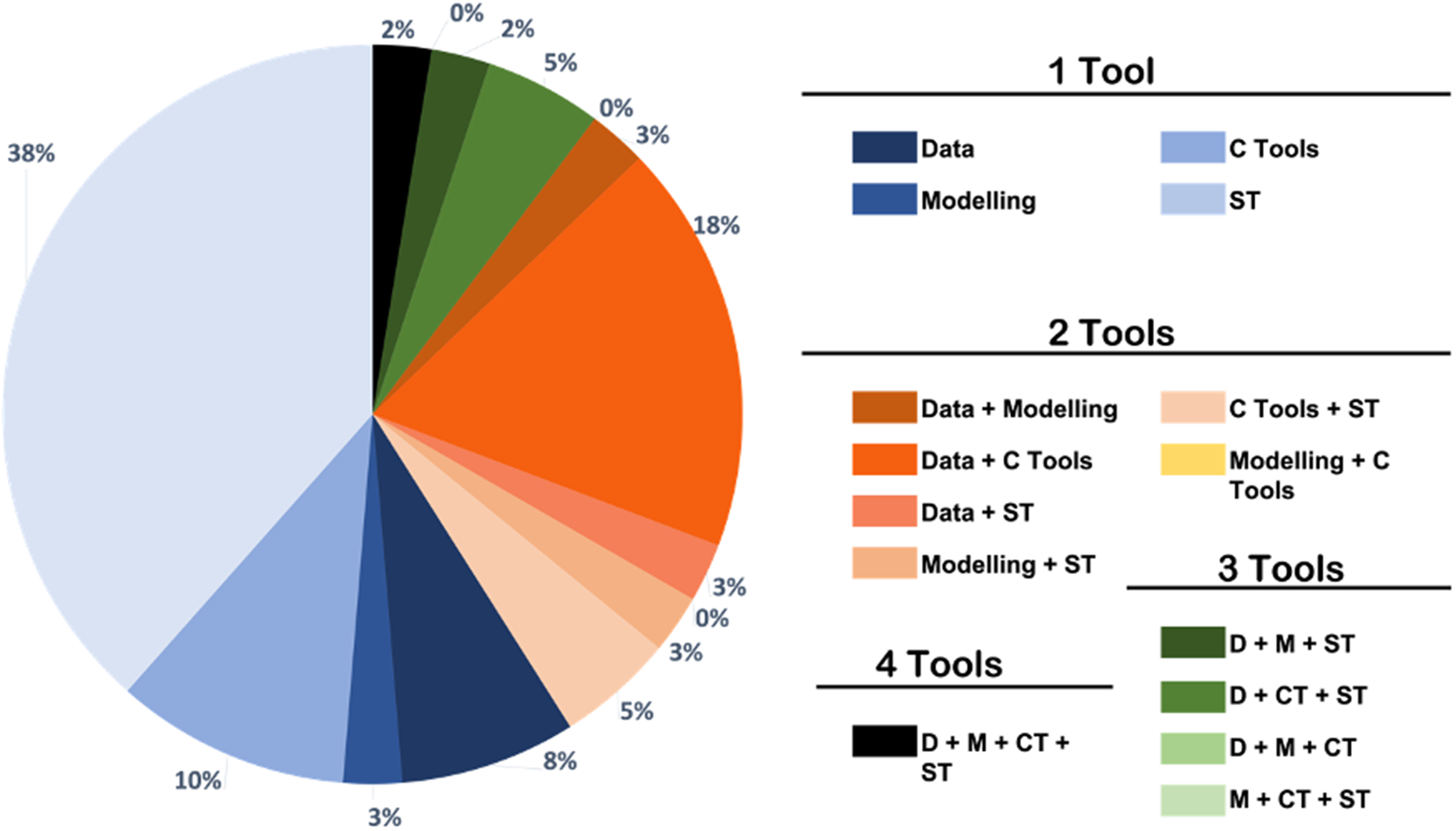
Computational thinking (CT) tools in the “look-back” stage (China's fourth-grade mathematics textbook).
When distributing various CT tools in the PS process, both countries had clear instructions on how to represent them at various stages. The CA textbook provides students with explicit guidance. Two facts reflect the characteristics of CT tools used in the PS process. First, the CA textbook provides tools in the form of words and labels, especially during the “look back” stage. Moreover, there are several instructional questions regarding the PS processes. For example, a question—“what does a unit cube represent”—was provided in the “devise and conduct” stage, when the students were asked to explore hundredths. This is consistent with the CH textbooks. This provided dialogues for guidance. For instance, in the “devise and conduct” stage, these narrative dialogues, including “choosing between Ming’s and Hong’s strategy,” “which method is the most effective one,” and “please see the following methods” were provided to instruct students.
Furthermore, the CA textbook provided tools in more explicit ways, such as making bulletins, whereas the tools in the CH were offered implicitly. This means that there is no evident division between different PS stages and different tools in CH, which is consistent with what we discussed before regarding the sections in the CH and CA textbooks. Thus, the differences in the existence of CT tools in the PS process reflect the different intentions and curricula of different education systems; that is, the CA textbook is more likely to connect students to real-world problems, while the CH textbook is more likely to focus on improving students’ skills in understanding abstract mathematical concepts and strategies.
Teachers in both countries must play an active role in the use of mathematics textbooks. We believe that although strategies and concepts in mathematics are important for students to master and improve their mathematics abilities for complex mathematics problems, the realization of the real world through mathematics teaching and learning should be given more attention, particularly in the digital era.
CT in the “look back” stage
As described above, there are strong connections between the CT tools and the “look back” stage. This answers Research Question 2.
In this stage, the CT tools that the students must master are “checking the results and correctness of the answer,” “considering using other results to solve the problems,” “reflecting on the PS process,” and “going solving complex problems.” It requires students to transfer the knowledge acquired from the PS to more complex problems while reflecting on the previous PS process to see “what did work” and “what did not work” for further improvement and efficiency. The CT tools in this stage share the same characteristics as metacognition, which is the process of reflecting on one’s thinking and learning. Metacognition is an intentional thinking process to think about how to “figure out the problems,” “what are the best steps that have been taken,” “what has already been considered,” and “where one got stuck when trying to solve the problem” (Martinez, 2006).
It is the process of becoming aware of oneself as a learner (Martinez, 2006), that is, knowing one’s learning strengths and weaknesses. In this process, one should explain their strengths and weaknesses while solving problems and the CT tools used to move forward with the process. Thus, the CT tools used in the “look back” are identical to the characteristics of metacognitions. In other words, metacognition is about planning activities, and looking back can be seen as mental activities carried out as planned, thereby assisting in transferring knowledge (Flavell & Wellman, 1977). As we carefully reviewed the curricula and educational practices in China and Canada, we believe that both countries have paid great attention to this aspect. In China, there have been many empirical studies on metacognition in education. This includes applying metacognition to EFL (i.e., English as a foreign language) writing instruction in CH classrooms (Xiao, 2007) and research on the relationship between metacognitive learning strategies and mathematics achievement (Areepattamannil & Caleon, 2013). In CA educational contexts, metacognitions have been widely and deeply promoted in several disciplines. For instance, the Ontario Education Government (2020) defines metacognition as a specific expectation for students to reflect on skills and strategies, including explaining the strategies that they found most helpful among the various strategies before, during, and after reading texts; evaluating the strength of the areas as readers; and identifying the steps they can take to improve their skills. Therefore, it is not surprising that CT tools in the “look back” stage in both CH and CA textbooks have many applications.
Therefore, we further investigated the frequency of CT tools in the “look back” stage. In other words, what is the significance and focus of the CT tools used in the “look back” stage in CH and CA? Here, we show two figures for CT tools in the “look back” stage from the CH and CA textbooks (Figures 1 and 2).
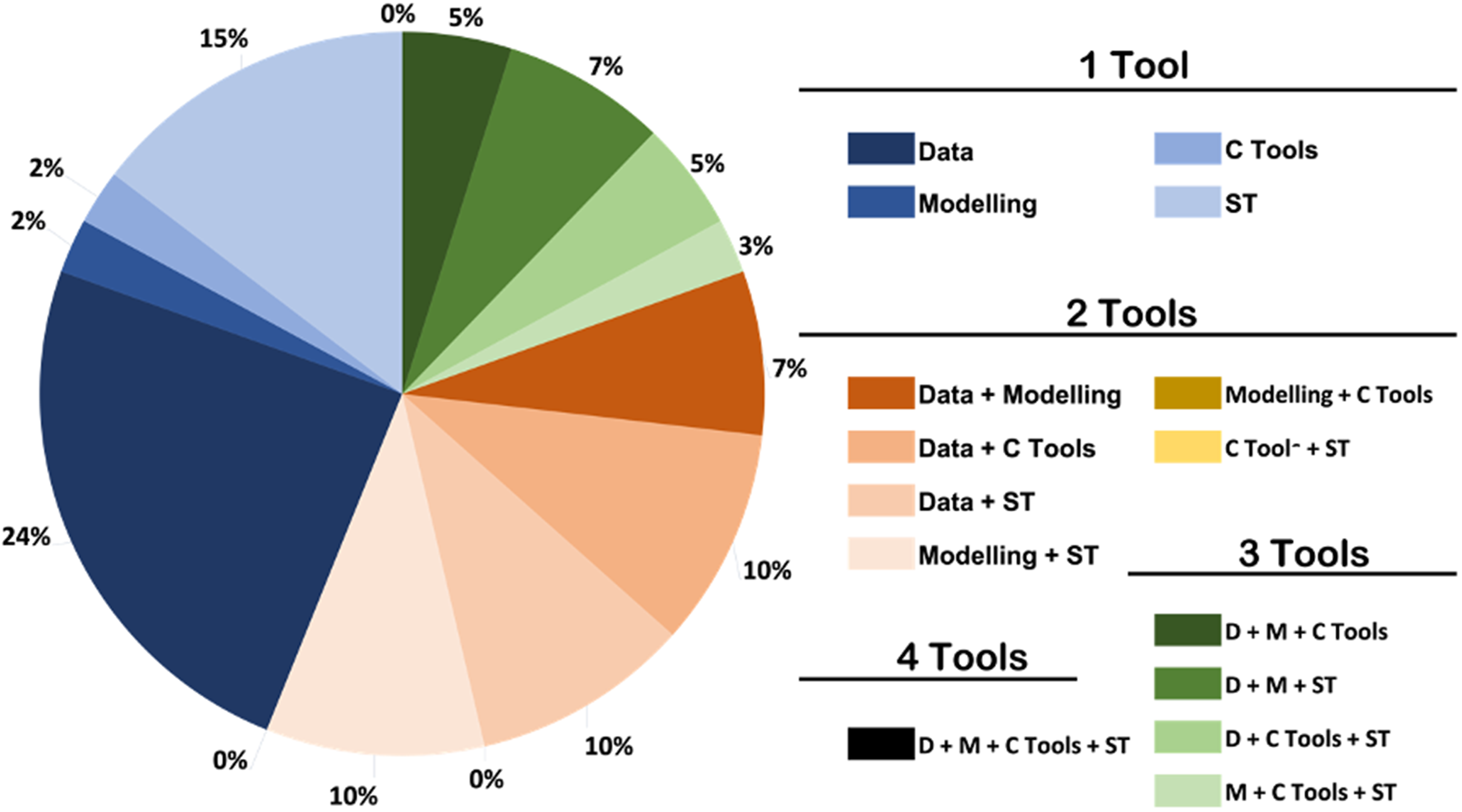
Computational thinking (CT) tools in the “look-back” stage (Canada's fourth-grade mathematics textbook).
We related the results of the frequency of CT tool usage to the details of the CT tools that students may use when solving the problems provided in Table 2. In almost one-third of the cases, the CH textbook focused on systematic thinking (45.1%), which refers to solving complex problems. In data practice, which refers to confirming the correctness of the result, CH preferred to associate the “Result Checking” (Data) with “Reflecting” (computational tools), rather than focusing solely on “Result Checking.” It appears that the CH textbook requires students to conclude the right answer associated with the right and efficient strategies or with worse strategies that need improvement. In other words, the CH textbook is not only concerned with the answers themselves, but also with the strategies, facilitators, and barriers to obtaining correct answers.
This type of learning instruction is consistent with human learning mechanisms, which allows us to accumulate knowledge of the constancies involved in variations (Gick & Holyoak, 1987). Knowledge in the process appears to be encoded in conditional rules: IF condition, then rules of the form “IF Condition 1 (the right answer), Condition 2 (the wrong answer), Condition 3 (the barriers in the problems), …, Condition n, THEN Action 1, Action 2 …” (Anderson, 1983). Similarly, computer science operations always use the conditional statement “if, then” that modifies how code is executed. Conditions are an important part of the decision making and PS processes of computers, as they allow various strategies and predictions to emerge. The knowledge gained during the PS process is saved in the form of “IF condition” procedures. CT tools may also proceed within the acquired information and knowledge; additionally, they can clearly specify the goals and characteristics of the PS stage for organizing mathematical knowledge. In CA textbooks, data practice, which refers to sharing results with peers, is the most common. It is a section in the textbook, labeled “Show and share,” and we know that the explanation under the rubric is about justifying the correctness of answers to problems. In comparison to the CH’s complex CT tools in the “look back” stage, the CT tools in CA textbooks are easier for students to apply. Examples of these two textbooks are as follows.
“
Share your results with another pair of classmates.
What patterns do you see in the table?
How do you use these patterns to solve the problems?
The CT tools in the “look back” stage, are straightforward and simple, focusing on the results and solutions of the problem itself. First, the students are required to check the correctness of the result by “sharing your results with another pair of classmates,” which refers to “Data Practice.” Then, they need to reflect on the solving process, including “what patterns do you see in the table,” “how do you use the patterns to solve the problems,” which refers to “Computational Tools.” There is no evidence showing “systematic thinking” and “modeling” in the “look back” stage, implying that students are not required to solve complex problems and transfer the knowledge acquired from PS.
Which strategy is the most efficient one?
What if we plan to make 4 pancakes, 5 pancakes, 6 pancakes?
What do you find?
The CT tools in the “look-back” stage are complex and varied because the students need to transfer the knowledge acquired from PS and then perform generalization. In this process, students first need to reflect on the most efficient methods and then solve complex problems. A complex CT toolkit should show that, at the end of the PS process, the students are asked not only to solve complex problems but also to generalize this type of problems by asking “what do you find?”
Summary
In this study, we regarded CT as an evident tool for determining its characteristics and purposes in the PS processes in CH and CA mathematics textbooks at the elementary level. The study was conducted within an analytical framework, which adopted the three-stage PS model and CT’s specific taxonomies in science and mathematics classrooms. The two-dimensional framework enabled us to evaluate the PS process not only qualitatively, but also from the perspective of the usage and existence of CT tools.
Two textbooks demonstrated the importance of visualization in the PS process through the high frequency of computational tools in “devising and conducting the plan,” which included tables, pictures, blocks, etc. This enables students to rebuild their math knowledge through visualization and develop their spatial skills. Furthermore, we saw great potential for implementing educational technology in mathematics data visualization for PS. Rather than relying on the imagination of the brain, the materialization of mathematics can help students deeply understand and acquire knowledge. We believe that CT tools displayed in PS procedures are visible and important in textbooks. However, there are flaws in the investigation of CT’s potential of CT and its existence in the PS process. We ignore students’ true thought in the PS processes, in which there will be many accidents. Furthermore, although CT as an unplugged cognitive tool is one aspect of CT in education, we should also consider how to apply CT in education to efficiently improve students’ PS skills in the real digital world by exploring the potential of CT in plugged contexts to identify the facilitators and barriers of CT in the PS process.
In addition, the results also revealed that the CH textbook neglected transferring semantic problems to mathematics forms because of the types of problems and the lower requirement of students’ connection between mathematics classrooms and daily lives.
Concerning the specific characteristics of the “look-back” stage, this study found that both countries provided opportunities for students to transfer their knowledge acquired from the PS process for complex problems. This demonstrates that they have incorporated metacognition into their textbooks. In the CH one, there was a high frequency in proposing “solving complex questions” (systematic thinking) and “checking the correctness & retrospection” (data + computational tools). In the CA one, the CT tools in the “look back” stage were comparably higher. The correctness and verification of results were most concentrated in CA; however, the CA textbook provided fewer marks to lead the students to transfer knowledge through the original PS process, as evidenced by the lowest marks for solving complex problems (systematic thinking) and reflecting on the process (computational tools). In addition, as shown in the “look back” stage, compared with the complex CT tools in the CH textbooks, the CT tools in the CA textbooks are easier for students to apply; thus, the CT tools in CH are better than those of CA in learning outcomes.
The results of this research could help teachers, educators, and pedagogues to use mathematics textbooks from different standpoints, considering the significance of connecting CT to PS procedures. Moreover, CT, which is regarded as a basic analytical skill for everyone in the world, should be explored in diverse disciplines rather than in mathematics textbooks alone. Therefore, our future work will include investigating the effectiveness of CT in various other educational disciplines.
Limitations
First, the analysis of the textbooks was restricted to two countries and the questions and solutions were limited to the fourth grade. Therefore, further studies should examine additional issues in other countries and grades to gain complete and well-researched conclusions on PS in mathematics.
Another limitation is that the analysis framework used in this study was restricted to the cognitive level of CT. Therefore, in future research, we will investigate and establish other frameworks to explore CT in various contexts, such as technologies, programming languages, and educational policies. Such research could contribute in distinguishing the significance of CT in education across various disciplines.
Finally, the real teaching and learning processes of the students were not fully illustrated in this study. Therefore, more research is needed on students’ actual performance in using CT tools during the PS process in mathematics education.
Footnotes
Contributorship
Yimei Zhang was responsible for writing the main body of the manuscript as well as analyzing and reporting the data. Annie Savard contributed by managing the paper as well as operating the question-asking and academic theories. Yimei Zhang and Annie Savard cooperated in responding to the reviewers and finalizing the manuscript.
Declaration of conflicting interests
The authors declared no potential conflicts of interest with respect to the research, authorship, and/or publication of this article.
Funding
The authors received no financial support for the research, authorship, and/or publication of this article.
