




Abstract
Purpose
This study evaluates China's Free Teacher Education (FTE) scholarship's effectiveness in attracting and developing high-quality teachers, focusing on scholarship enrollment, career choices, teaching effectiveness, and burnout experiences of scholarship recipients.
Design/Approach/Methods
Utilizing administrative and survey data from a leading normal university and the provincial Department of Education, the study compares FTE scholarship recipients with non-recipients across various metrics, including their pre-college backgrounds, job placements, in-service effectiveness, and job burnout.
Findings
Results show that FTE scholarships draw high-performing students who are more likely to end up as teachers. Despite experiencing slightly higher burnout, these scholarship recipients demonstrate superior teaching effectiveness.
Originality/Value
This study provides new insights into the role of service scholarships in enhancing teacher quality. Our findings underscore the potential of service scholarships for pre-service teachers as an efficient tool to address teacher shortage and enhance teacher quality.
Introduction
Teacher shortage is a tangible, pervasive, and escalating problem that has been persistently challenging worldwide (Ingersoll et al., 2018; Ingersoll & Tran, 2023; UNESCO, 2016). In PISA participating countries, about 20% of 15-year-olds are in schools where administrators report that a lack of qualified teachers hampers instruction, and in some areas this figure can get as high as 50% (OECD, 2018). While teacher shortage does not necessarily leave classrooms without teachers, it often leads to larger class sizes, higher student–teacher ratios, and assignments of teachers to subjects for which they are not fully qualified, thereby potentially degrading teaching quality and undermining student outcomes (Angrist & Lavy, 1999; Garcia & Weiss, 2019; Hoxby, 2000).
Moreover, the absence of qualified teacher shortage in a country does not guarantee high quality teaching workforce, especially when selection processes do not secure the best candidates (OECD, 2005). Research consistently shows that teacher quality is a crucial determinant of student success, which is influenced significantly by policies aiming at attracting, recruiting, and retaining competent teachers while supporting their professional development (Hanushek, 1987; Hattie, 2012; UNESCO, 2015). Countries with high-performing educational systems generally focus on proactively enhancing teacher training and support, which is more effective than reactive measures like reducing attrition or dismissing underperformers (OECD, 2005; Schleicher, 2011, 2012). This strategy is empirically supported by the positive impact of teachers’ cognitive skills on student performance (Hanushek et al., 2019; Meroni et al., 2015; Rockoff et al., 2011), highlighting the value of recruiting high-achieving high school graduates into teacher preparation programs.
Nevertheless, not all countries have been successful in attracting high-achieving students to pursue teaching careers. In some nations, teacher education programs enroll students with academic performance at or below average (Tatto et al., 2012). There is a concerning trend of declining cognitive abilities within the teaching workforce in some economies (Bacolod, 2007), compounded by a decreased interest in teaching careers among teenagers. PISA data shows a 20% drop in the proportion of 15-year-olds who anticipate choosing teaching as a career by the age of 30 over just 9 years (OECD, 2018). Additionally, in many countries, middle school students aspiring to be teachers exhibit poorer mathematics and reading skills than their peers (Hanushek et al., 2019). These trends highlight persistent concerns about the quality of the teaching workforce and the need to broaden the pool of candidates for teaching positions (OECD, 2005, 2012).
Among the policy choices to attract talented high-school graduates to the teaching profession, reducing entry costs for teacher training is a popular strategy around the world (McEwan, 1999; Steele et al., 2010). For example, in the United States, the federal government and more than forty states have implemented loan forgiveness programs and competitive service scholarships. These programs, including the TEACH Grant and Robert Noyce Teacher Scholarship Program at the federal level, as well as state-level initiatives like the North Carolina Teaching Fellow Program and the Florida Critical Teacher Shortage Program, aim to remove economic barriers to teacher training by covering all or part of the tuition fees in exchange for commitments from recipients to teaching for a specified period in designated areas (Feng & Sass, 2018; Henry et al., 2012; Liou & Lawrenz, 2011; Peyton et al., 2022).
Despite the widespread use of financial incentives to expand the teaching workforce, there are some limitations in current knowledge. Much of the quantitative research focuses on the United States, where the main challenge is filling positions due to high attrition rates, rather than recruiting top candidates (Podolsky et al., 2016; Schleicher, 2011). These programs, designed to alleviate teacher shortages, often do not target high-achieving individuals specifically but are available broadly to candidates from various educational backgrounds. Thus, the findings from the U.S. context may offer less direct insights for countries that prioritize improving teacher quality. Secondly, the effectiveness of financial incentives varies significantly depending on structures, eligibility criteria, monetary values, and contextual factors (Feng & Sass, 2018; Henry et al., 2012; Whitfield et al., 2016), which suggests that lessons from different models could improve our understanding about crafting more effective incentives.
To deepen our insight into this topic, this study provides a comprehensive analysis of the Free Teacher Education (FTE) scholarship in China. This merit-based service scholarship was initiated in 2007 through a collaboration between the Chinese Ministry of Education and six esteemed normal universities in China. 1 Selected teacher candidates receive financial support, including tuition remission, free housing, and monthly stipends during their 4-year undergraduate studies. After graduation, they are required to return to their home provinces and teach at local K-12 schools for 6 years or more, preferably spending at least 1 year in rural schools.
This policy aims at increasing high-quality teachers supply to underdeveloped regions and areas; however, some qualitative and survey studies have found that recipients are often reluctant to teach in these areas (Fu & Fu, 2011; Liao & Yuan, 2017; Qian et al., 2019; Shang, 2017; Youngs et al., 2017). Moreover, much of the existing empirical research, relying on small sample analyses, falls short in adequately demonstrating the policy's effectiveness in training teachers for underprivileged areas. This research seeks to furnish thorough and descriptive evidence regarding the broad-ranging impacts of the FTE scholarship on student enrollment, job market decisions, and teacher effectiveness, following the FTE students-to-teacher pipeline using comprehensive administrative and survey data from multiple sources.
The primary objectives of this research are to evaluate the effectiveness of financial incentives on teacher availability, quality, and teaching effectiveness. Using extensive administrative and survey data from one of the six state-level normal universities and its associated provincial Department of Education, this study explores the career pathways of FTE students during pre-service and in-service periods through four key research questions:
What are the individual characteristics of those who receive the FTE scholarships among students majoring in teaching? Are FTE students more inclined to pursue teaching careers compared to their non-recipient counterparts? If so, what types of schools do they serve? Do FTE teachers have higher teaching effectiveness? Do FTE teachers experience higher or lower levels of burnout compared to their colleagues?
These questions are framed within the context that teacher service scholarships like FTE function as career pathways programs, providing recipients with compensation, academic and occupational knowledge, and relevant employment preparation (Kalchik & Oertle, 2010; Stipanovic et al., 2017). A better understanding of early teacher pipeline about who enters and stays in the teaching force can provide insights into the desirability of teaching as a profession to individuals with various backgrounds, the supply and demand issue in the teacher labor market, and the capacity of teacher preparation to address teacher staffing needs at and beyond program graduation (DeAngelis et al., 2013; Goldhaber et al., 2022). Factors influencing teachers’ decisions to enter, stay in, or leave the profession and high-need schools include preparation and cost to entry, hiring and personnel management, salary and compensation, induction and support, and working conditions (Podolsky et al., 2016).
Specifically, Research Questions 1, 2, and 3 align closely with policy objectives aiming at attracting high-performing high school graduates into the teaching profession, especially to serve in low-performing schools with severe teacher shortages. The final question addresses teacher retention and turnover. Prior research indicates that monetary incentives alone do not guarantee higher retention rates (Steele et al., 2010), unless the amounts are significant (Feng & Sass, 2018). Similarly, some qualitative studies suggest that FTE graduates may not consistently fulfill their service commitments (Liao & Yuan, 2017; Wang & Gao, 2013), raising concerns about retention. High turnover rates among scholarship recipients could diminish the long-term benefits of these programs. This study conducts a preliminary analysis of job burnout among FTE teachers, a significant predictor of turnover intentions (Li & Yao, 2022), serving as a proxy where direct data on retention or turnover is lacking.
This comprehensive analysis of the FTE scholarship program in China enriches the global discussion on teacher quality and shortages. Firstly, unlike the locally targeted programs frequently studied in the United States, the FTE program's national scope and partnership with a prestigious university provide a unique context for assessing the impact of financial incentives on recruiting the most competent teacher candidates. This study, set within the Chinese context, broadens the international understanding of service scholarships and offers insights useful for designing similar initiatives elsewhere. Secondly, despite over 15 years since the establishment of the program, rigorous quantitative evidence on the FTE scholarship remains scarce. By analyzing extensive administrative and survey data from various periods of career pathways, this research illuminates the FTE program's overall efficacy, enhancing knowledge regarding educational policies that address teacher shortage and improve teacher quality, particularly during the crucial early stages of educators’ careers.
The remainder of this paper is structured as follows. In the next section, we provide an overview of the FTE scholarship within its policy context, and review the existing literature. We then present the data employed in the analyses, and an introduction to the methodology. Following that, we present a summary of the findings, and the conclusion section discusses the implications and significance of the study's findings.
Previous studies and policy background
Previous studies about teacher service scholarship
A major proportion of existing quantitative research on teacher service scholarships is situated in the U.S. context (Podolsky et al., 2016), which provides guidance on important aspects to examine in our study. In the U.S. context, financial aids similar to FTE are offered at various levels, ranging from federal grants like the TEACH Grant (Barkowski et al., 2018; Peyton et al., 2022) and the National Science Foundation Robert Noyce Scholarship (Liou & Lawrenz, 2011) to community-based Grow-Your-Own (GYO) teacher initiatives (Gist et al., 2018).
A prominent example of a service scholarship program is the North Carolina Teaching Fellows program, which awards scholarships to 20% of applicants from both public and private teacher training institutions. This highly competitive initiative selects students based on pre-college achievements, such as high school GPAs and SAT scores. Recipients receive $6,500 support annually for a 4-year duration, contingent on their commitment to serve in North Carolina public schools for 4 years. This program has demonstrated its efficacy by yielding higher retention rates among scholarship recipients and enhancing their teaching effectiveness, as evidenced by improved student test scores. However, scholarship recipients were less inclined to choose placements in low-performing schools, in contrast to other programs such as Teach For America (TFA), conventional teacher preparation pathways, and international visiting teacher initiatives (Henry et al., 2012).
Likewise, the Governor's Teaching Fellowship program in California, which operates on a merit-based system, offers recipients a $20,000 scholarship in exchange for a 4-year service commitment in low-performing schools. This program notably elevated the probability of its recipients choosing to serve in high-need schools. However, when assessing the long-term effects and the retention rates of scholarship recipients over 4 years, no statistically significant differences were discerned (Steele et al., 2010).
Some scholars have also explored the impact of payment size. For instance, Feng and Sass (2018) evaluated Florida's Critical Teacher Shortage program and found that fully waiving loans for hard-to-staff subjects reduced teacher attrition by approximately 10%, while a partial underwritten approach rendered the program ineffective.
In summary, the landscape of service scholarships and loan forgiveness programs for prospective teachers in the United States is marked by both promise and complexity. The impact of these programs can vary depending on the specific outcomes under consideration, the sizes of the financial incentives, and the institutional contexts of teacher preparation, which we take into consideration when developing our current research.
Policy context of the FTE scholarship
China's teacher training system is uniquely characterized by specialized institutions—normal universities—dedicated to preparing K-12 educators. Government reforms in the 1980s and 1990s facilitated flexibility, allowing these normal universities to offer a broader range of career paths, a development similar to earlier changes in the United States (Hagin, 2012; Herbst, 1989). Consequently, becoming a teacher is no longer the only career choice for students at these institutions. 2 Meanwhile, China contends with significant regional disparities in educational development and teacher distribution (Li et al., 2020; Peng et al., 2014; Wei & Zhou, 2019). In response to the pressing issue of teacher shortage and sorting, the Chinese central government initiated the FTE policy in 2007, targeting six top-ranked national-level normal universities. 3 The FTE scholarship aims to attract high-achieving high-school graduates into teaching, encouraging them to remain in the profession and help alleviate the sorting challenges in underdeveloped provinces and rural areas (Youngs et al., 2017).
Differing from many service scholarships in the United States that offer partial or full tuition coverage (or loan forgiveness), the FTE scholarship is notably generous. All six participating institutions provide similar benefits. At our sample university, FTE students received tuition remission and free dormitory that cost between 4,500 and 6,000 Chinese Yuan (CNY) depending on their teaching subjects, and a monthly stipend of 600 CNY for 10 months. Overall, the scholarship provides each recipient over 10,000 CNY annually, approximating 30% of China's annual per capita disposable income in 2020.
Recipients of the FTE scholarship are committed to teaching in their home provinces for at least 6 years, with encouragement to serve in rural areas for at least 1 year. Those who do not fulfill this commitment must repay the financial aid received plus an additional 50% penalty. While the policy is national, funding responsibilities fall on the Departments of Education in the recipients’ home provinces. Non-compliance with the service requirement, such as teaching outside the designated home province, triggers penalties.
Unlike U.S. financial incentive programs, where aid is applied during college, the FTE application process in China occurs before college entry, following the national college entrance exam (NCEE). Admissions decisions to FTE programs are based solely on students’ rankings in NCEE relative to all FTE applicants in their respective home provinces. This process can be exceptionally selective, admitting only students with strong academic qualifications and resulting in admission rates as low as 2% in some provinces (Youngs et al., 2017).
Existing literature on the FTE pathways
While the FTE policy has been in place for more than 15 years, comprehensive research on its effect on FTE students throughout their pathways remains limited. First, regarding the policy's impact on enrollment, Han and Xie (2020) observed that the FTE policy has generally increased selectivity among education majors, attracting students with higher NCEE scores, both within and outside the FTE program. However, studies examining the psychological and behavioral traits of FTE students suggest that economic incentives and prospects for upward social mobility have overtaken intrinsic passion for teaching as the primary motivators for participation in FTE programs (Wang et al., 2013; Wang & Gao, 2013; Zhou, 2010).
According to the motivation crowding-out theory (Frey & Jegen, 2001; Frey & Oberholzer-Gee, 1997), such external incentives might dilute intrinsic motivations, potentially leading to diminished performance and job persistence in public service professions (Banuri & Keefer, 2016; Besley & Ghatak, 2018; Christensen & Wright, 2018; Perry, 2000). In effect, some research suggests that FTE students lack intrinsic motivation to learn and their sense of purpose and meaning regarding the teaching profession tend to fall into certain extents of identity dilemma (Jia et al., 2012; Shi, 2010), although findings remain inconclusive due to the small-size survey samples (Zhong & Li, 2010).
Moreover, this dissonance might affect their in-service behaviors. FTE students are found to demonstrate conflicts between their thoughts and actions regarding their career choice. In a survey of 1,800 FTE students, 80% of them expressed a strong tendency toward breaking their FTE contracts to seek other career paths (Zhou, 2010). Nonetheless, qualitative studies suggest that the FTE policy's generous financial incentives, long-term teaching commitments, and location preferences still manage to retain most graduates within the teaching profession (Liao & Yuan, 2017). However, there are concerns about FTE students’ commitment to serving in underperforming rural schools (Liao & Yuan, 2017; Wang & Gao, 2013; Youngs et al., 2017).
In summary, existing empirical research has yet to provide compelling evidence regarding the FTE policy, with many studies offering only indirect insights, such as analyses of psychological traits. Most research has been based on surveys or interviews, featuring limited sample sizes and lacking comparisons with other teacher candidates. Furthermore, quantitative research utilizing administrative data is notably rare. Leveraging a rich and comprehensive administrative dataset, our study addresses these gaps by delivering a detailed examination of the FTE scholarship's impact on various critical aspects of FTE students’ career pathways, including enrollment, employment, effectiveness, and intention to retain.
Data and measures
This study employs data from two primary sources for pre-service teacher candidates and in-service teachers, respectively. The first source is one of the six national-level normal universities offering FTE programs. The second source is the provincial Department of Education in the sample normal university's home province. These sources provide a range of administrative databases and survey data. All survey respondents were informed that participation was voluntary and that there were no direct benefits or risks associated with their responses. No interventions were conducted.
To address the first two research questions regarding pre-service teachers—enrollment and job placement—we primarily utilize datasets from the sample university. These datasets include essential information about pre-service teachers, including academic transcripts and placement details sourced directly from the university's administrative office. Additionally, during the fall semester of 2021, we conducted a survey among currently enrolled students. These surveyed students were linked to the administrative transcript dataset by their unique student IDs, which allowed us to augment the learning performance analysis with additional background information. However, it is important to note that this approach did not cover graduated students for the purposes of placement analysis.
Concurrently, the provincial Department of Education supplies datasets concerning in-service teachers, encompassing primary and secondary educators across the ten counties in the sample province. This dataset incorporates student test scores at the school level. We use the in-service dataset to understand FTE teachers’ effectiveness and their experience of burnout. Descriptive statistics for the variables used in our analyses, categorized by the data sources, are presented in Table 1.
Descriptive statistics by data source.
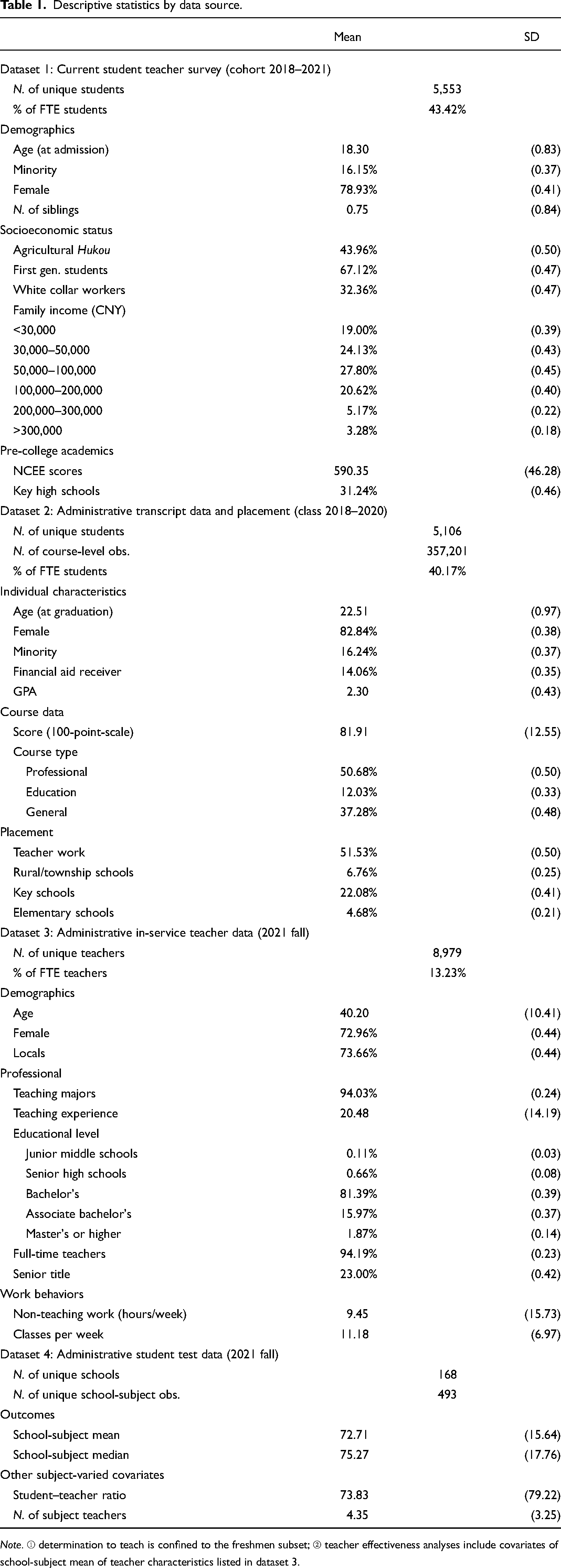
Note. ① determination to teach is confined to the freshmen subset; ② teacher effectiveness analyses include covariates of school-subject mean of teacher characteristics listed in dataset 3.
Survey of current student teachers
To gain a deeper understanding of FTE program enrollees, we conducted a survey administered by the university administrative office during the fall semester of 2021. The survey targeted teacher candidates who started university between 2018 and 2021 and were registered on campus in the 2021 fall. Approximately 85% of the targeted students responded to the survey, 4 providing valuable insights into their pre-college characteristics and variations among different programs.
Certain covariates in the survey require further clarifications. Hukou refers to the household registration system in the Chinese mainland, impacting individuals’ social welfare benefits and educational opportunities (Cheng & Selden, 1994; Xu & Wu, 2022), and agricultural hukou is considered a disadvantaged indicator for those from underdeveloped rural areas. First-generation student status indicates that neither of a student's parents possesses a tertiary or higher education degree. Additionally, we identified whether at least one of the student's parents is a white-collar worker. To address variations in the NCEE scores, we standardized them into zero mean and one standard deviation Z scores based on the student's home province, cohort, and high-school track of science or humanities. The binary variable of key high schools indicates the rating of a student's high school.
Placement data
The placement information is recorded at the student level and pertains to their first employment after graduation. This dataset includes not only employment details but also essential demographic and socio-economic characteristics of the students. With this dataset, we determined whether students pursued careers as K-12 teachers as their first job and what types of schools they were employed in. These institutional characteristics encompass affiliation levels, such as county, city, province, or national affiliations, as well as educational levels, public or private status, and key school designations. In total, our sample consists of 5,106 unique student teachers who graduated between 2018 and 2020, in ten departments 5 that provided FTE scholarships.
In-service teacher survey
The provincial Department of Education provides in-service teacher data, including background information of teachers employed in ten underdeveloped counties within the province. This mandatory survey covered all primary and secondary school teachers in these counties and was conducted in the fall of 2021. The survey comprehensively captures essential information related to teachers’ demographics, socio-economic backgrounds, professional attributes, and relevant measures of occupational workload, including the variable of interest for the last research question, the experience of in-service teacher burnout. 6 It encompasses responses from a substantial cohort of 8,979 educators teaching across 168 public primary and secondary schools.
School effectiveness data
The provincial Department of Education supplies student assessment data, which includes standardized test scores in three core subjects (Chinese literacy, math, and English) from the 168 sample schools where the teacher questionnaires were conducted. These assessments involved approximately 20,000 students from two cohorts, specifically Grade 5 in primary schools and Grade 9 in middle schools. The dataset provides average and median scores as indicators of academic achievement at the school level. Out of the total teacher population of 8,979, a subset of 1,106 educators were responsible for instructing students from the sampled cohorts and subjects.
Methods
Research question 1: FTE enrollment
The first research question aims to identify the factors influencing enrollment in the FTE programs among students majoring in teaching. To empirically explore this, we propose a linear probability model (LPM) represented by Equation (1):
In Equation (1), Ci represents a vector of pre-college predictors, encompassing individual demographic attributes, socioeconomic status indicators, and academic predictors from the current student survey data (see Table 1). To mitigate bias arising from unobserved features specific to students’ home provinces and cohorts, we incorporate the fixed effects of province δi and cohort dummy variables ξc.
Research question 2: Labor market decision
The second research question seeks to explore whether FTE students have a higher likelihood of pursuing a career in teaching and whether they are more inclined to work in schools with relatively higher needs compared to their peers without financial incentives. Despite our analytical sample being limited to one normal university, focusing on graduates from the same institution can still yield valuable insights since they have received equivalent quality of training and possess the same “sheepskin” (or signaling) effect of the college's reputation in the job market (Hungerford & Solon, 1987; McGuinness, 2003). In other words, they offer the least amount of variation for meaningful comparisons. The empirical Model (2) is as follows:
Research question 3: Teaching effectiveness
Shifting the focus to the questions regarding in-service teachers, our third question revolves around whether in-service FTE teachers possess a similar or higher level of teaching effectiveness compared with their colleagues. To address potential sorting issues that FTE teachers may be more likely to serve high- (or low-) performing schools, we leverage a cross-subject model in light of prior studies on teacher effectiveness. This model posits that students’ performances across different subjects are indicative of a consistent underlying ability, and assumes that student–teacher sorting is uniformly distributed across subjects (Clotfelter et al., 2010; Xu et al., 2011).
7
Given the limitation in our dataset that prevent direct linking of students to teachers, we exploit subject-level variations at higher education levels, following the approach of Hanushek et al. (2019) to estimate the returns on school-subject clusters of having FTE teachers using aggregated measures.
In Model (3), PERsk is the performance measures of the Subject s of School k. We have three main subjects’ test performance
8
for students in Grade 5 or Grade 9. Sftesk denotes the proportion of FTE teachers in the given subject;
Cross-subject models also assume that scores by subject are comparable, which might be questioned. To address this concern, we use six different outcome measures, including raw mean (median) scores, ranking by mean (median) scores, and percentiles based on mean (median) scores. The incorporation of ranking measures, including percentiles, serves to mitigate the challenges of incomparability issues of test scores arising across different subjects. Moreover, these measures offer an intuitive means to comprehend how the proportion of FTE teachers can influence school achievements in comparison to other schools within the regions.
Research question 4: Job burnout

Model 4 aims to estimate the variations of teacher burnout, BOst, for teacher t in school s. FTEst, the core predictor, denotes whether teachers were FTE recipients. For this analysis, we incorporate the full sample of the teacher population to enhance the analytic power. Thus, in addition to the teachers’ characteristics presented in Model (3), CTst also includes the subjects the teachers teach and the cohorts they work in.
Findings
FTE enrollment
Figure 1 illustrates Model (1) regression results and reveals that FTE students often hail from less privileged backgrounds but exhibit higher pre-college academic prowess. A tendency to enroll in FTE programs is noted among students with more siblings and from rural areas, indicating that financial incentives play a crucial role in attracting students with these demographic characteristics to teaching. The findings align with and expand on Han and Xie's (2020) research, showing that students with higher NCEE scores are more inclined to join FTE programs, thus confirming the scholarship's success in drawing high-achieving candidates.
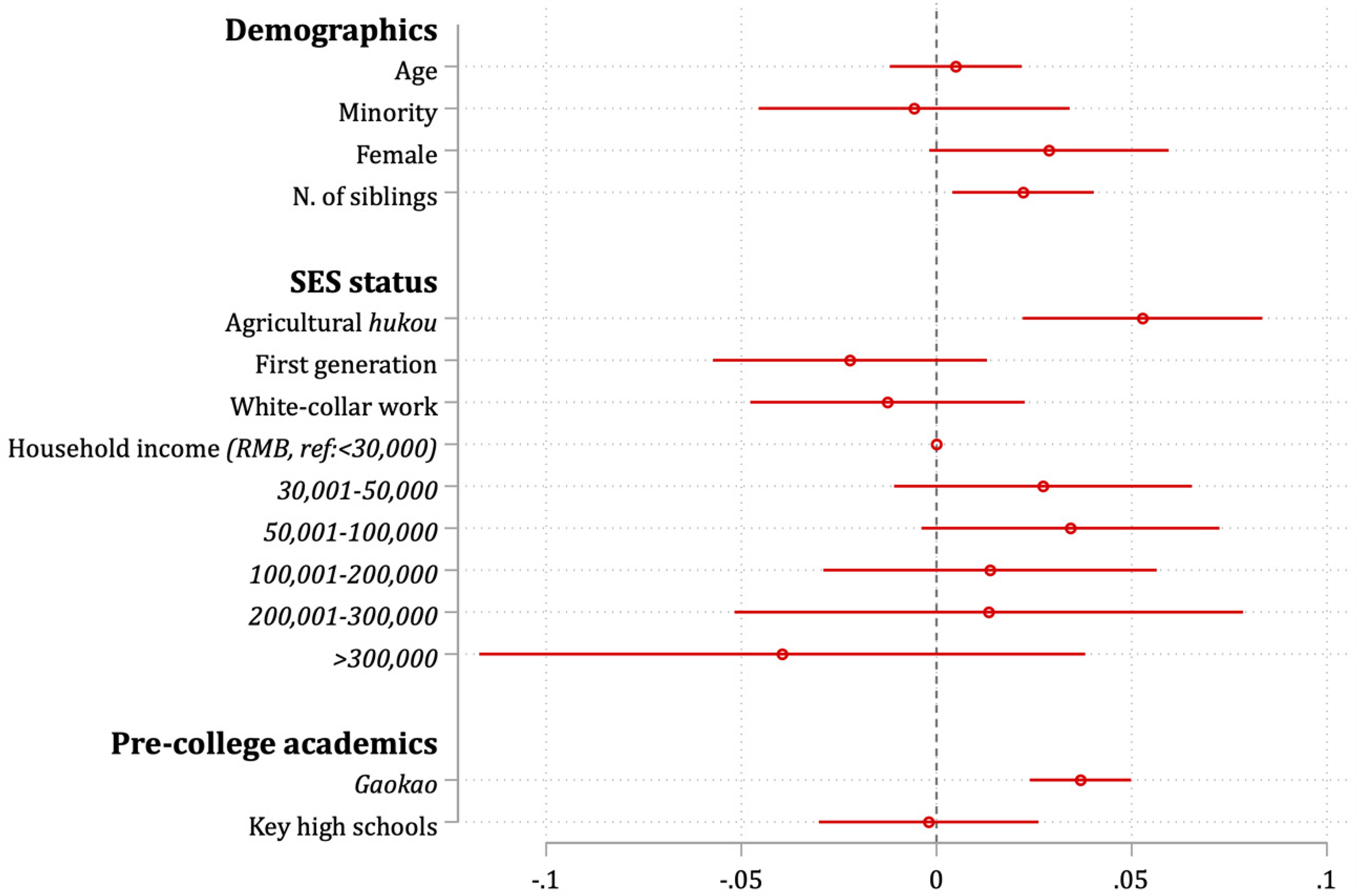
Regression coefficients and 95% confidence intervals of FTE take-up (A-R2 = 0.202).
Job placement
Working as a teacher
The second question pertains to job market decisions. As the primary aim of the FTE program is to address the teacher shortage, especially in high-need areas, it is crucial to understand whether FTE students are more inclined to pursue careers in teaching and if they are more likely to work in rural or town schools facing chronic staffing challenges in China.
Notably, almost all the FTE students fulfilled their commitments and entered the teaching profession. In the sample university, merely 38 out of 2,052 (1.54%) FTE students failed to adhere to their obligations from 2018 to 2020. In contrast, only 20.21% of non-recipient graduates chose teaching immediately after completing their undergraduate programs.
Figure 2 presents the regression results of their labor market decisions (refer to Table A2 in the appendix for full results of regressions). After accounting for student demographics and academic characteristics, we found that FTE graduates had an over 75% higher likelihood of becoming teachers, with a similar pattern observed for STEM major graduates, who were particularly in demand in many countries. We also found that FTE students were 20% more likely to go to the less developed Midwest China, even after accounting for the students’ hometowns, compared with non-FTE student teachers.
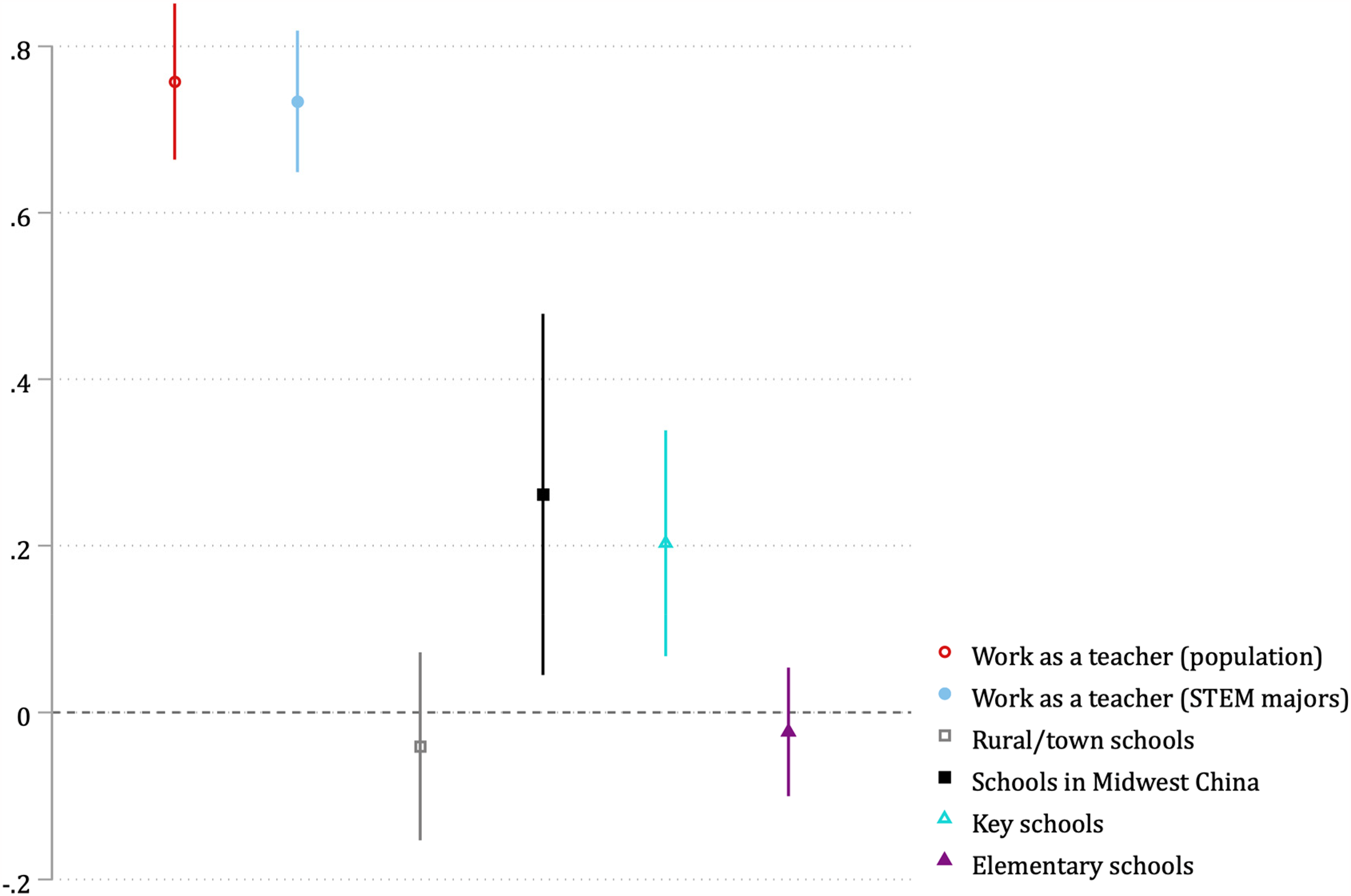
Coefficient plots of FTE students on placements. Note. All the regressions are conditioned on individual demographic (age, gender, ethnicity, financial aid receiver, and home province), 4-year GPA, and their departments.
However, FTE teachers did not demonstrate a higher probability to serve in high-need rural and town schools as expected; instead, they intended to work in key schools with rich promotion opportunities and excellent academic performance. In other words, most FTE graduates went to the high-need Midwest China, where most of them were from, but did not teach at schools in the most-needed rural and remote areas. It resonates with the findings of Liao and Yuan (2017) that underdeveloped provinces have a very scarce supply of teachers from leading normal universities, and FTE graduates do not really have to serve in the low-performing schools.
College learning and placement decisions
Regarding the distinct employment patterns observed between FTE and non-recipient students, a pertinent question emerges: Do FTE students inadvertently take away employment opportunities for non-recipients, as the latter may struggle to secure teaching positions due to their comparatively lower competitiveness? In response, we present further comparisons of their job market decisions, particularly among non-recipient students, as shown in Table 2. If non-FTE recipients who became teachers after graduation performed significantly better during college than those who did not, it might suggest that FTE students could be crowding out some teaching job opportunities.
College performance by placement of non-recipients.
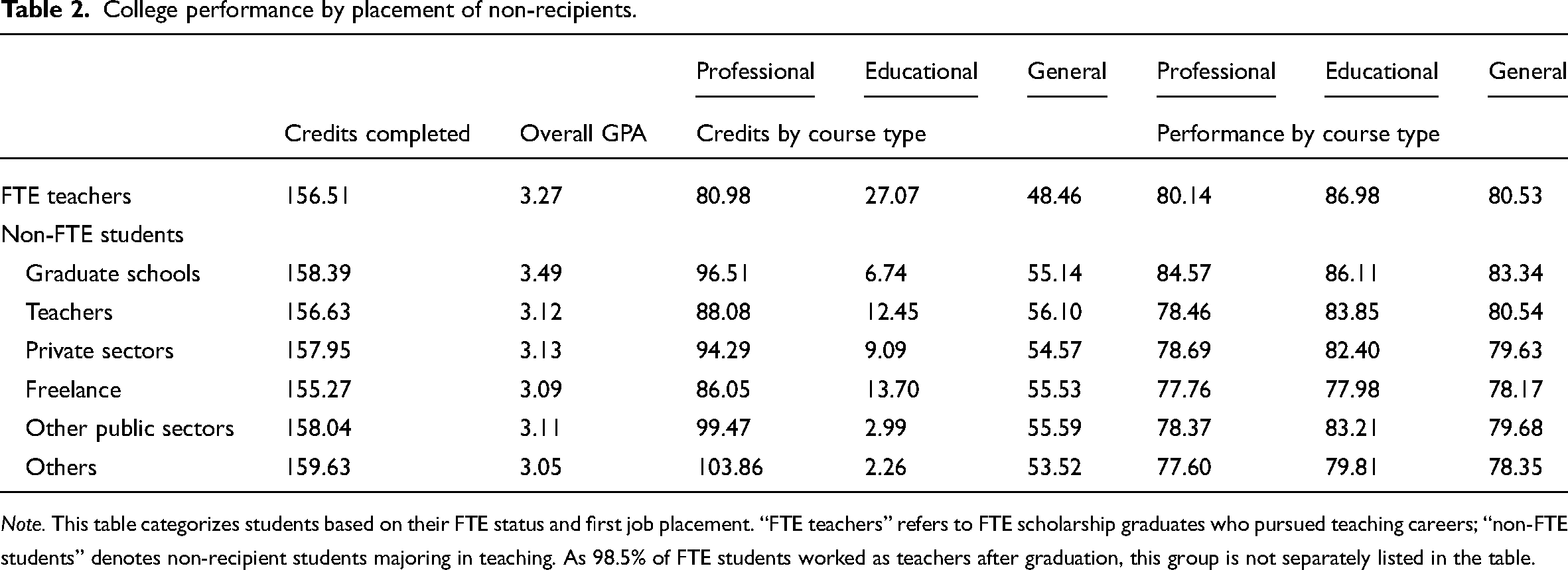
Note. This table categorizes students based on their FTE status and first job placement. “FTE teachers” refers to FTE scholarship graduates who pursued teaching careers; “non-FTE students” denotes non-recipient students majoring in teaching. As 98.5% of FTE students worked as teachers after graduation, this group is not separately listed in the table.
Firstly, 53.78% of students without FTE scholarships did not immediately pursue teaching after graduation and opted for graduate studies. This group represents the largest proportion and demonstrates the highest academic performance based on GPA 9 across all course types among non-FTE recipients. In contrast, non-recipient graduates who pursued a teaching career displayed relatively lower academic performance during college compared to those who attended graduate school, showing no significant difference from graduates entering other professions. This suggests that the shift away from teaching among non-recipient students might not be due to lower competitiveness but possibly due to more attractive opportunities elsewhere, particularly in graduate schools.
However, it is also noteworthy that non-recipients who ended up as teachers completed, on average, more educational courses compared to their peers. These courses may enhance their teaching abilities and confer an advantage during job searches and interviews. Nevertheless, this difference is relatively minor compared with the gap between non-recipients and FTE recipients. FTE students, on average, completed more than double the educational curriculum during college, which likely contributed to their success in securing teaching positions post graduation.
Despite these observations, the significance of this educational training in the job market is uncertain, given that the Chinese education system allows graduates from any higher education institution to become teachers by passing teacher certification tests (Guo, 2005; Shi & Englert, 2008). Particularly in recent years, teacher candidates who demonstrate strong cognitive skills are increasingly sought after in China's metropolitan areas, despite the fact that many lack rigorous teaching training (Shi et al., 2022; Zheng et al., 2024). Given that our sample originates from a leading normal university, it might be challenging for some graduates to enter top-rated K-12 schools, but securing a teaching position in general may not be as difficult, considering non-recipient students who became teachers did not excel significantly in college performance compared to their peers working in other professions.
In this context, given the notably high proportion of FTE graduates who entered the teaching profession post graduation, coupled with their above-average GPAs and the rigorous training received during college—as demonstrated by their outstanding performance in educational curricula and the greater number of educational courses completed—it appears that financial incentives have played a role in retaining high-potential prospective student teachers within the teaching profession.
Teaching effectiveness
Observations from the previous section indicate that FTE students have completed more educational courses, which have been previously identified to enhance teacher candidates’ educational skills and knowledge (Lorente-Catalán & Kirk, 2016; Willemse et al., 2017). Consequently, it is reasonable to anticipate a corresponding improvement in their teaching effectiveness. Table 3 presents the results of the regression analyses on their teaching effectiveness as measured by student test scores, illustrating how the proportions of FTE teachers relate to school performance conditioned on other teacher characteristics and subjects. By using school-fixed effects, we can see that a higher percentage of FTE teachers tend to correlate with better student test results.
Regression results of FTE teachers on school performance.
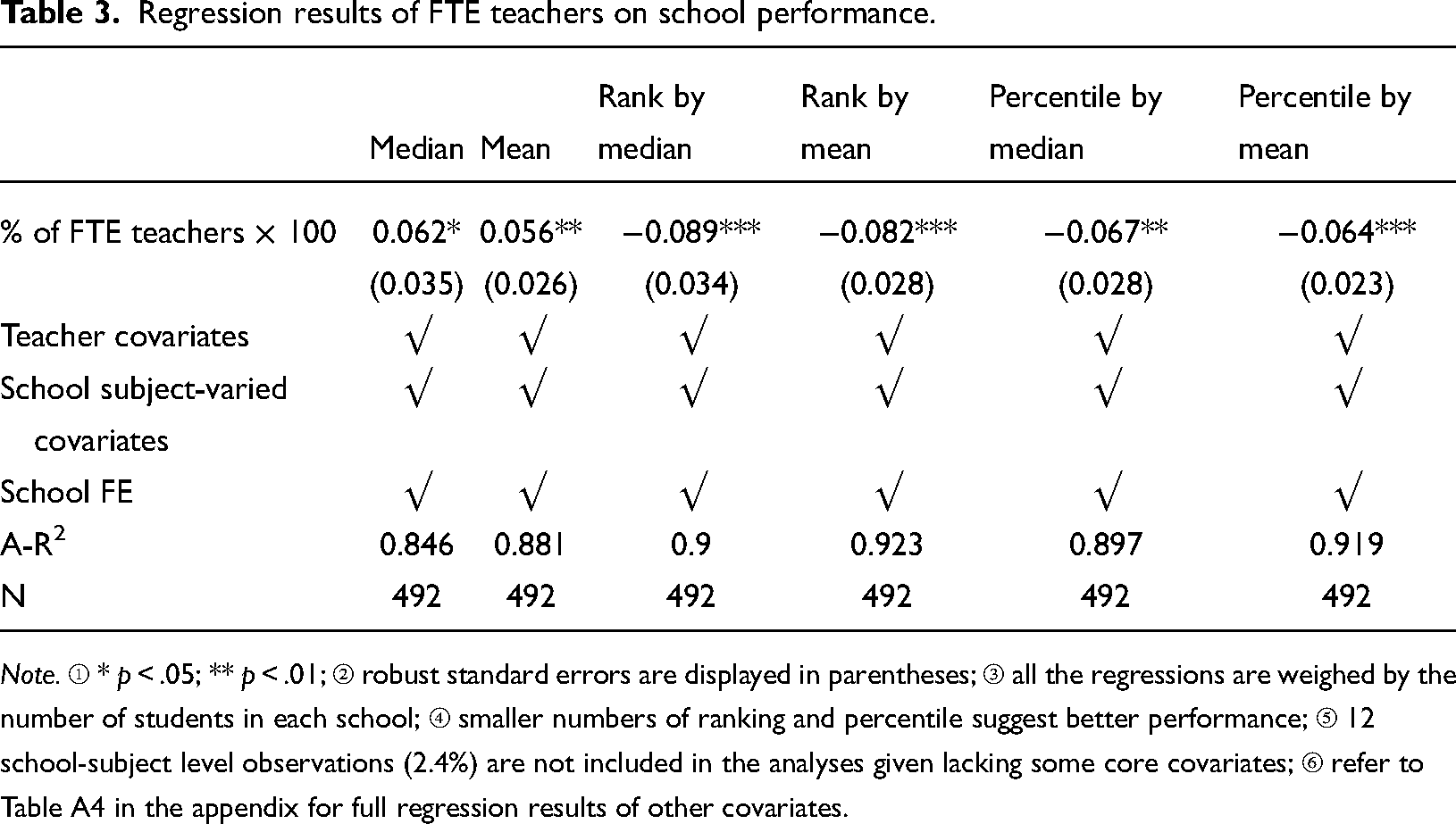
Note. ① * p < .05; ** p < .01; ② robust standard errors are displayed in parentheses; ③ all the regressions are weighed by the number of students in each school; ④ smaller numbers of ranking and percentile suggest better performance; ⑤ 12 school-subject level observations (2.4%) are not included in the analyses given lacking some core covariates; ⑥ refer to Table A4 in the appendix for full regression results of other covariates.
Specifically, a higher count of FTE teachers correlates significantly with enhanced school mean or median values, superior ranks compared with other schools, and higher percentiles in terms of performance for the given subject. This suggests that a 10% increase in FTE teachers within a school for a given subject corresponds to an approximate improvement of 0.6 scores in either median or mean test scores, 0.8–0.9 ranks higher, and around 0.7% elevation in percentiles, which are indeed substantial. It should be noted that due to data limitations, we were not able to directly link students to teachers and recognized that mean or median values might not fully reflect the benefits of having FTE teachers, especially in the presence of heterogeneous effects. Future research could provide a more detailed analysis by directly linking students with their teachers.
Teacher burnout
Regression results on teacher burnout.
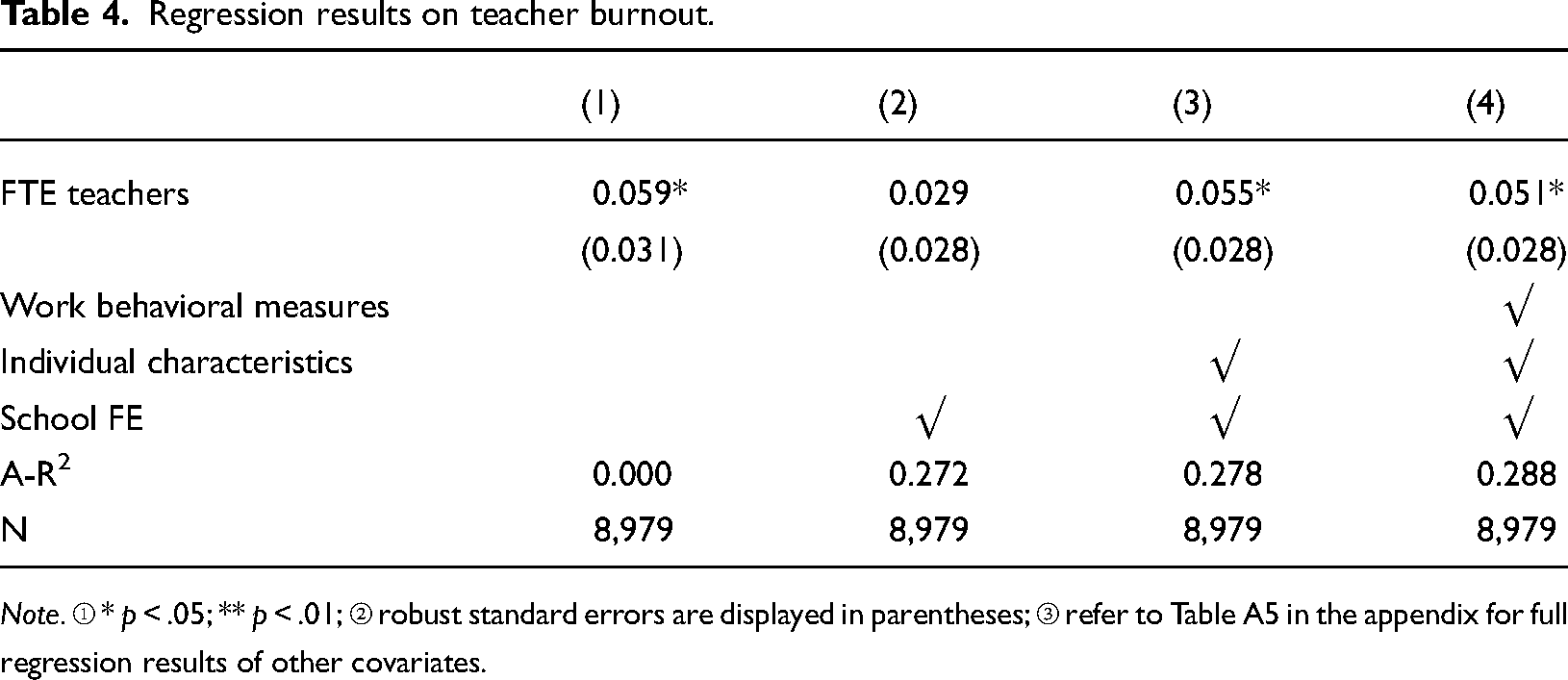
Note. ① * p < .05; ** p < .01; ② robust standard errors are displayed in parentheses; ③ refer to Table A5 in the appendix for full regression results of other covariates.
Lastly, Table 4 summarizes the outcomes related to teacher burnout using data from a sample of 10 schools. The results show that, on average, FTE teachers experience slightly higher levels of burnout, about 0.05 standard deviations more than their colleagues, after considering other individual teacher characteristics. This finding is significant because burnout often predicts whether teachers will leave their jobs (Li & Yao, 2022). Although many FTE recipients remain in the teaching profession upon graduation, this could be largely due to the policy mandates. Once their required service period is fulfilled, it's possible that their likelihood of seeking other opportunities could surpass that of other teachers.
Discussion and conclusion
Our study offers comprehensive descriptive evidence on the effectiveness of the FTE scholarship by tracing the career pathways of FTE students—from their enrollment in the program, postgraduation employment, to teaching performance and (dis)satisfaction. Our results confirm the significance of the FTE scholarship in recruiting and retaining high-quality teachers, while also highlighting critical issues for policymakers and practitioners at various levels.
The analysis reveals a significant insight: FTE scholarships have attracted more talented candidates who scored higher in NCEE and have successfully kept them in the teaching profession. Without the FTE scholarship, these top student teachers from elite teacher training institutions may not necessarily gravitate toward a teaching career. The actual rate (20.2%) of non-recipient students entering teaching roles immediately after graduation is much lower than that of FTE graduates. Given the stringent admission criteria at the six national normal universities, which typically enroll the top 5% of NCEE performers, it is not surprising to observe that over half (53.78%) of teacher candidates without the FTE scholarship pursue graduate studies post-graduation. While some may eventually enter the teaching profession, notable attrition is evident. This highlights the significant role of financial incentives in retaining top-tier pre-service teachers. This impact becomes even more pronounced with the finding that FTE teachers, though driven by policy mandates, demonstrate stronger teaching effectiveness. School-subject clusters with a higher proportion of FTE teachers significantly outperform others, showing better student performance as evidenced by both raw scores and rankings. This underscores the high quality of FTE teachers.
However, the FTE scholarship, while beneficial, is not without its limitations. First, we did not observe a higher likelihood of FTE teachers teaching in underrepresented rural schools, contrary to the original policy expectations (Liao & Yuan, 2017; Wang & Gao, 2013). Additionally, in-service FTE teachers tend to experience early burnout compared to their peers. This phenomenon, persisting even when accounting for other professional characteristics, indicates an increased level of burnout among FTE teachers upon entering the workforce. This trend may originate from their pre-service training period. Recent research by Zhang et al. (2023) suggests that although FTE students have higher NCEE scores and initially outperform their peers academically in their freshman year, by their junior years, their coursework performance does not significantly surpass that of non-FTE students in the same course sessions.
Our findings subtly suggest that the burnout could be linked to FTE (student) teachers lacking a steadfast commitment to pursuing a teaching career, potentially resulting in a diminished sense of dedication to the profession. As indicated by our placement data, non-recipient students, who have some disparities but share more similarities with FTE students, are notably much less likely to pursue teaching careers upon graduation, especially the high achievers among them. FTE students who have altered their career aspirations but are obligated to remain in the teaching field due to the policy regulations might perceive a misalignment between their career goals and their professional training, possibly contributing to job burnout. Unfortunately, we have no direct evidence to substantiate this hypothesis. Future research could benefit from exploring the mechanism behind why FTE teachers experience early job burnout, which may help alleviate potential turnover concerns.
Given the widespread adoption of financial incentives globally as a policy strategy to tackle teacher shortages and enhance quality (Feng & Sass, 2018; Henry et al., 2012; McEwan, 1999), our findings have important implications for policymakers and university teacher educators to develop better ways to nurture and support FTE recipients in their pathways to become high-quality teachers. While the FTE policy has demonstrated overall success in recruiting and retaining high-quality teachers to schools in need, there is still room for improvement to address FTE recipients’ potential career goal misalignment and burnout, which can happen throughout FTE recipients’ career pathways including but not limited to pre-enrollment orientation, undergraduate training, and ongoing professional development. With more FTE recipients joining the teaching profession each year, it may also be worthwhile to develop better teaching placement mechanisms, especially in less developed areas, to have FTE teachers teach in less privileged schools to better support the students in need while still having access to continuous professional development and growth.
While our study provides valuable insights, it should be noted that the findings are primarily descriptive, highlighting correlations rather than establishing causality. Future research could provide a more nuanced understanding of how FTE scholarships influence these dominants using more advanced designs and higher-quality data. Nevertheless, the significance of our findings should not be undermined. With strong evidence of disparities between FTE recipients and other student teachers in terms of becoming educators, and assessments showing the positive association with FTE teachers and overall school effectiveness, our study supports the FTE scholarship as a viable model for bolstering the supply of high-quality K-12 teachers.
Furthermore, the higher school effectiveness does not necessarily imply that the FTE scholarship must be beneficial at every step of teacher preparation. For instance, a recent study finds that the FTE scholarship has moderate negative impacts on academic performance during college (Zheng & Shi, 2024). The favorable outcomes may arise from specific stages, such as attracting and retaining student teachers with strong academic abilities. Even if there are minor negative effects at certain stages or in specific cases, the overall benefits of the FTE scholarship substantially outweigh these drawbacks. With a deeper understanding of the causality and the stages at which the FTE scholarships might have reduced effects, policymakers and educational practitioners could develop more targeted interventions to enhance the overall impact of the FTE scholarship.
In summary, this research capitalizes on the FTE program and the availability of comprehensive administrative and survey data in China to present novel insights into the efficacy of the service scholarship within a distinctive context that diverges from the prevailing discourse in the existing literature. Our study enhances the understanding of service scholarships by examining their potential impact across the career pathways of educators, both during pre-service and in-service periods. These insights cover a wide range of critical questions, providing a deeper understanding of how service scholarships can function effectively in various settings. The findings suggest that while service scholarships have their challenges, they remain a promising approach for policymakers seeking to address teacher shortage and improve teaching quality.
Supplemental Material
sj-docx-1-roe-10.1177_20965311251345498 - Supplemental material for Recruiting High-Quality Teachers With Service Scholarships: Descriptive Evidence From China's Free Teacher Education Scholarship
Supplemental material, sj-docx-1-roe-10.1177_20965311251345498 for Recruiting High-Quality Teachers With Service Scholarships: Descriptive Evidence From China's Free Teacher Education Scholarship by Yan Shi (石艳), Qi Zheng (郑琦), Xinliang Zhang (张新亮), Xiaoyang Ye (叶晓阳) and Xin Xie (谢欣) in ECNU Review of Education
Footnotes
Acknowledgments
We extend our heartfelt appreciation to Kathryn Boostra for her valuable expertise and insightful suggestions, which were crucial in initiating this research. We are also grateful to two anonymous reviewers and the editors for their feedback, which significantly enhanced the quality of this article. Our thanks go to colleagues and individuals who provided comments and feedback during conferences, enriching this work. Special acknowledgments are due to Olivia Chi, Minseok Yang, Brendan Bartanen, Paul Bruno, and Jared Colston.
Contributorship
Yan Shi contributed to the conceptualization, data collection, and writing, including review and editing. Qi Zheng was responsible for conceptualization, methodology development, data analysis, and writing, including both the original draft and subsequent review and editing. Xinliang Zhang handled data curation and data analysis. Xiaoyang Ye contributed to the conceptualization, methodology development, and writing, focusing on review and editing. Xin Xie conducted the literature review and contributed to writing, including the original draft and review and editing.
Declaration of conflicting interests
The authors declared no potential conflicts of interest with respect to the research, authorship, and/or publication of this article.
Ethical statement
This study uses de-identified administrative and voluntary survey data provided without any personal identifiers. All survey respondents were informed that participation was voluntary and that there were no direct benefits or risks associated with their responses. No interventions were conducted. As such, the study posed minimal ethical risk and did not require IRB approval under the guidelines of the sample institution.
Funding
The authors disclosed receipt of the following financial support for the research, authorship, and/or publication of this article: This research is supported by the National Natural Science Foundation of China (NSFC) [Grant No. 72274033], received by Dr. Yan Shi.

Notes
Supplemental material
Supplemental material for this article is available online.
References
Supplementary Material
Please find the following supplemental material available below.
For Open Access articles published under a Creative Commons License, all supplemental material carries the same license as the article it is associated with.
For non-Open Access articles published, all supplemental material carries a non-exclusive license, and permission requests for re-use of supplemental material or any part of supplemental material shall be sent directly to the copyright owner as specified in the copyright notice associated with the article.
