




Abstract
Purpose
In this article, we report on the findings of an investigation into the observations of two primary mathematics teachers during and following classroom teaching. Our focus is on teachers’ noticing of student mathematics learning in the classroom.
Design/Approach/Methods
Two teachers, each with 18 years of teaching experience, were recruited for this study. Qualitative analyses were conducted to explore what the teachers noticed about student learning, how they interpreted their noticing, and what decisions were made in accordance with their noticing in their teaching practices.
Findings
The findings revealed that both participating teachers were attentive to their students’ mathematical challenges and offered a range of interpretations regarding student learning. Additionally, the teachers adapted their practice to generate instruction that aligned with students’ learning difficulties.
Originality/Value
This study provides empirical evidence for better understanding the noticing practices of experienced Chinese primary school mathematics teachers.
Keywords
Introduction
Previous research has suggested that effective teacher noticing during classroom teaching can promote teachers’ professional development, improve their quality of teaching and learning, and support students’ learning (Jacobs et al., 2010; Sleep & Boerst, 2012). Teachers who can better observe students’ behaviors and infer students’ thinking processes are more able to reshape challenging mathematics tasks in productive ways, such as increasing task complexity and/or providing immediate guidance to promote students’ learning (Choppin, 2011). On the other hand, effective teacher noticing is also seen as an approach to teacher learning, as reflections on what teachers have noticed or not during classroom teaching allow teachers to learn from their own actions and experiences (Lee & Choy, 2017). However, in practice, it is always difficult to observe everything that happens during teaching, making effective noticing and selective attention to students’ mathematics learning more crucial (Brodie, 2011).
Recent studies indicate that teacher noticing is a learnable skill that can be enhanced through support. For instance, Yang et al. (2021) proposed that there is a linear relationship between teachers’ working experience and their noticing competency. Santagata and Yeh (2016) discovered that teachers can improve their noticing by drawing on their knowledge and beliefs in teaching practice. These studies underscore the importance of investigating noticing in teachers’ teaching practice to comprehend how teacher noticing is constrained. Dindyal et al. (2021) recommend exploring teacher noticing in conjunction with teacher decision making during teaching practice as a viable method to gain a comprehensive understanding of the broader implications and mechanisms underlying teacher noticing, which is also a facet of teachers’ competence. This current study endeavors to contribute to this line of inquiry.
The international Learning from Lessons (LfL) (Chan et al., 2018) research project was dedicated to understanding how teachers learn in situ by observing their daily classroom practices. Instead of focusing on the pre-existing knowledge teachers should possess to teach proficiently, by asking what teachers have noticed and learned from their classroom teaching, this project examined what teachers might learn through daily teaching activities in terms of, for example, planning lessons, classroom teaching, and moment-by-moment reflections after lessons. The project intentionally expanded the research to include three nations with distinct cultures, educational settings, and teaching approaches—Australia, China, and Germany—to discern both the variances and shared aspects of teacher development across different educational systems (Damrau et al., 2022). The Eastern–Western differences in teachers’ roles and their noticing in mathematics classrooms have been noticed in the literature (Clarke et al., 2006; Leong & Chick, 2011), however, most studies investigated teacher noticing in class are still based in Western classrooms.
In this present study, we concentrate on two primary school mathematics teachers from China who engaged in the project. Our objective is to examine in detail what these teachers noticed regarding their students’ mathematics learning within the context of daily mathematics instruction. We seek to answer the following research questions:
What did the mathematics teachers notice in the mathematics classroom? What decisions about instructions (adaptations in practice) were made in accordance with the teachers’ noticing?
The conceptualization of mathematics teachers’ noticing
In the area of mathematics education, the conceptualization of teacher noticing evolves as various facets of teaching practice are taken into account (Yang et al., 2021). The current widely accepted conceptualization of teacher noticing posits that it encompasses two components—attending and interpreting (van Es & Sherin, 2021). van Es and Sherin (2021) explicated that attending involves identifying salient features of classroom interactions while disregarding other selected features. Interpreting refers to how teachers make sense of the attended aspects within the classroom. When teachers interpret their observations, they usually draw on their personal knowledge to comprehend the occurrences in the classroom (Taylan, 2017). During the interpretive process, teachers may employ certain strategies. van Es and Sherin (2021) conceptualized interpreting as utilizing both knowledge and experience to comprehend and adopt an investigative stance. These stances include descriptive, evaluative, and interpretive positions (van Es & Sherin, 2021). In practice, teachers may transition between these stances when interpreting various classroom events, suggesting that their observation of classroom events is context-dependent and dynamic (Mason, 2009). Beyond attending and interpreting, research on teacher noticing also alludes to a third component, the boundary of teacher noticing, which addresses how teachers respond to their observations. For instance, Jacobs et al. (2010) investigated how teachers determined their responses based on children's understanding of knowledge in class.
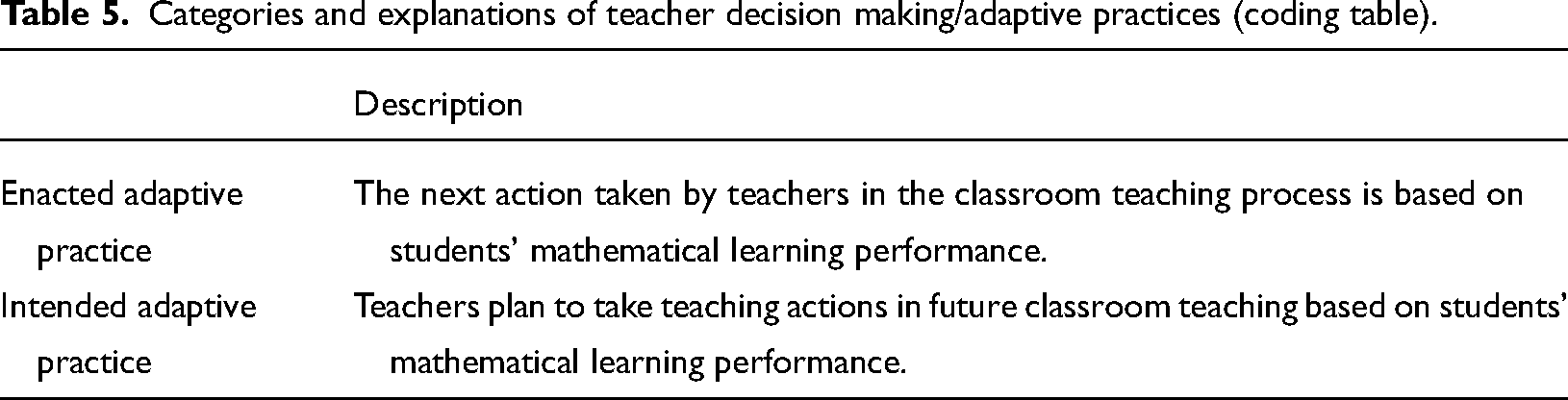
In the current study, we build on Jacobs et al.'s (2010) conceptualization of teacher noticing. We examine teachers’ noticing through three components—attending, interpreting, and decision making. Teachers’ decision making is characterized as two types of adaptive practice changes. The first type is teachers’ intended adaptive practice, which refers to the situation where a teacher decides to undertake actions in future practices without having yet implemented them. The second type is teachers’ enacted adaptive practice, which pertains to the moments when a teacher notices something and decides to implement specific actions in response, such as when a teacher says, “I realized … and I quickly decided to …” (Chan et al., 2020).
Teacher noticing of students’ mathematics learning
A variety of research on noticing suggests that teachers can manifest various noticing competencies. For instance, Jacobs et al. (2010) analyzed three groups of teachers with differing levels of experience. They found that experienced mathematics teachers exhibit a higher level of noticing ability concerning students’ mathematics thinking compared to their preservice counterparts. Guner and Akyuz (2020) investigated one preservice middle school mathematics teacher's noticing of students’ mathematical thinking during a teaching practicum course. They also found that through collaborative work with other teachers, the participant developed her noticing skills. However, in their study, the development of high-level noticing skills, particularly in terms of connecting teaching and learning theories with students’ thinking, was limited. This raises questions regarding what should be done to enhance preservice teachers’ noticing competency levels.
Numerous studies have demonstrated that preservice teachers’ noticing abilities in both primary and secondary schools can be enhanced through consistent intervention (van Es, 2011). For instance, teachers can alter their noticing stance from evaluative to interpretive by utilizing specific evidence and materials (van Es, 2011). Furthermore, such interventions empower teachers to focus on students’ mathematics learning promptly and provide effective information for subsequent decision making (Hoth et al., 2016). Kalinec-Craig et al. (2021) employed a sentence-frame intervention that is to aid preservice teachers in developing their noticing competency. The intervention provides preservice teachers with sentence frames to describe students’ mathematical thinking. They found that this intervention enabled preservice teachers to detect mathematical evidence in their noticing statements. Nevertheless, to guarantee the quality of teachers’ professional development regarding noticing ability, more targeted curriculum and contextual interventions within the classroom are required (Lesseig et al., 2016).
Researchers have categorized various aspects that teachers notice about students’ mathematics thinking (e.g., Colestock, 2009; Sherin et al., 2008). Colestock (2009) explored a mathematics teacher's noticing through interviews and revealed that teachers may notice multiple facets of students’ thinking, such as students’ justification of problem-solving strategies, students’ difficulties, students’ thoughts about the problem, and more. In another study, Taylan (2017) examined a highly accomplished third-grade teacher's noticing of students’ mathematical thinking during multiplication and division instruction. The study demonstrated that teachers can provide rich interpretations of students’ thinking. The participating teachers noticed that students’ thought processes encompassed five aspects: students’ strategies, students’ understanding, students’ difficulties, making connections, and providing explanations. In her study, an analytical framework was developed to describe teachers’ interpretations of students’ mathematical thinking. Such studies offer valuable insights into how teachers notice students’ mathematics thinking in class and how they integrate noticing into their instructional plans.
In the current study, we diverge from most previous research focusing on preservice teachers’ noticing and instead concentrate on two in-service teachers’ noticing in practice. In a recent study, Yang et al. (2021) examined how teachers’ noticing evolved in relation to their work experience. Their findings indicate that preservice and early career teachers, as well as experienced teachers (with more than 15 years of experience) exhibit significant differences in terms of noticing ability. Preservice and early career teachers demonstrated strengths in aspects related to working with open-ended tasks, identifying features of cooperative learning, and mathematical modeling tasks. By contrast, experienced teachers demonstrated strengths in perceiving students’ thinking, evaluating teacher behavior, and analyzing students’ mathematical thinking. While large-scale quantitative studies can provide a foundation for future research, they also have limitations in uncovering the nuances of teachers’ notices of students’ thinking. The current literature lacks detailed insights into how Chinese in-service mathematics teachers notice students’ mathematical thinking in practice.
Methods
Participants and data collection
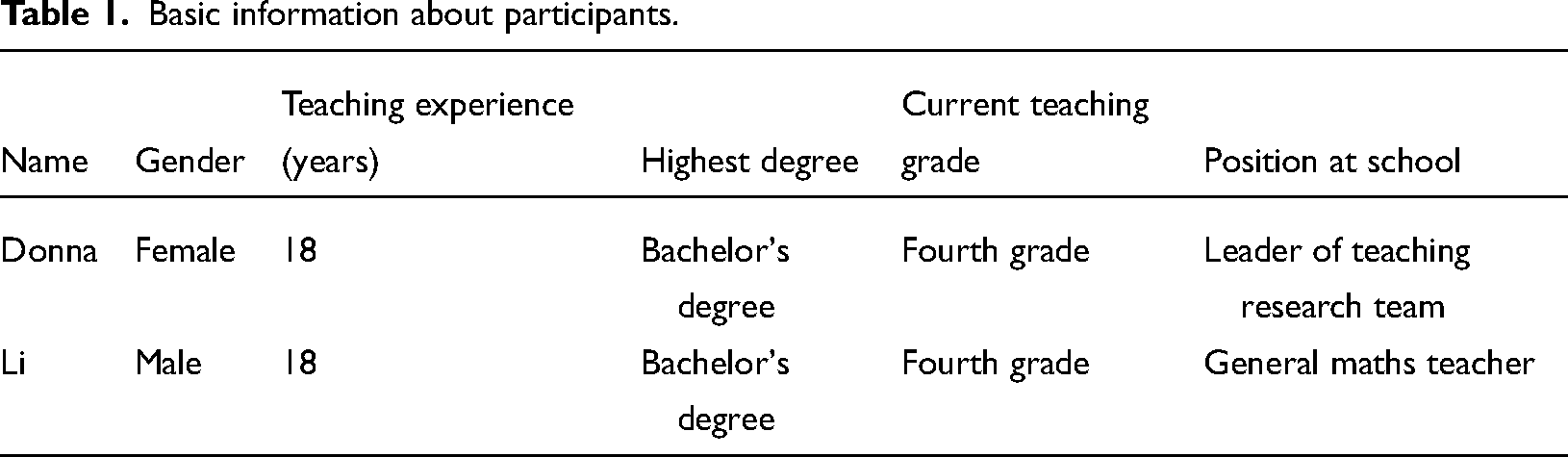
Among the 12 teachers from China who participated in the project, two primary mathematics teachers were selected for the current study. Written informed consent was provided by all the participants. For the purpose of comparison and contrast, two teachers with similar backgrounds were purposefully selected as case studies. Both teachers taught the same given lesson plans for the first and second topics. These two teachers participated in all stages of the project, including three pairs of lesson observations, as well as pre- and postlesson interviews. There are several reasons for the selection of these two participants in the current study. First, the two teachers had 18 years of teaching experience and were considered experienced teachers at their respective schools, as attested by references from educational research specialists. Therefore, it was assumed that their noticing of mathematics learning in the classroom could provide more implications for future teacher learning. Additionally, based on the researcher's (first author) interview experiences with them, these two teachers actively engaged in the project and were open to sharing their insights and perspectives during interviews. The teachers’ active engagement in the project suggests openness to their own perspectives and practices. Table 1 provides some basic information about the two participants.
Basic information about participants.
To accurately capture what the teachers notice and how they engage with the content during their daily instruction, the research team developed specialized lesson plans that were given to the teachers for them to adapt according to their specific classroom needs. Initially, the team selected a specific teaching topic and generated corresponding lesson plans for distribution among the participating teachers. These teachers were then tasked with integrating the provided lesson plans into their regular teaching routines. Following the delivery of the adapted lesson plans to their class, the teachers were requested to create a subsequent lesson plan built upon the initial session. This follow-up plan was based on a predesigned template and was intended to be taught to the same group of students during the subsequent class period.
Within the context of the current investigation, two distinct topics were chosen as the focal points for instruction: “Calculation Division” and “Parallel and Perpendicular” relationships (refer to Table 2 for details). The research methodology necessitated that each teacher develop and execute two lessons per topic, resulting in a comprehensive total of four lessons being documented and analyzed in the study. Additionally, pre- and postlesson interviews were conducted with each teacher to gain further insight into their thought processes and teaching strategies following each instructional period (see Figure 1 for an illustration of the data collection process). The teachers were also given the Teacher Education and Development Study in Mathematics (TEDS-M) beliefs questionnaire at the beginning of the project (Tatto et al., 2012). They were given the TEDS-M assessment of mathematical content knowledge and pedagogical content knowledge after completing their lesson teaching in the project.
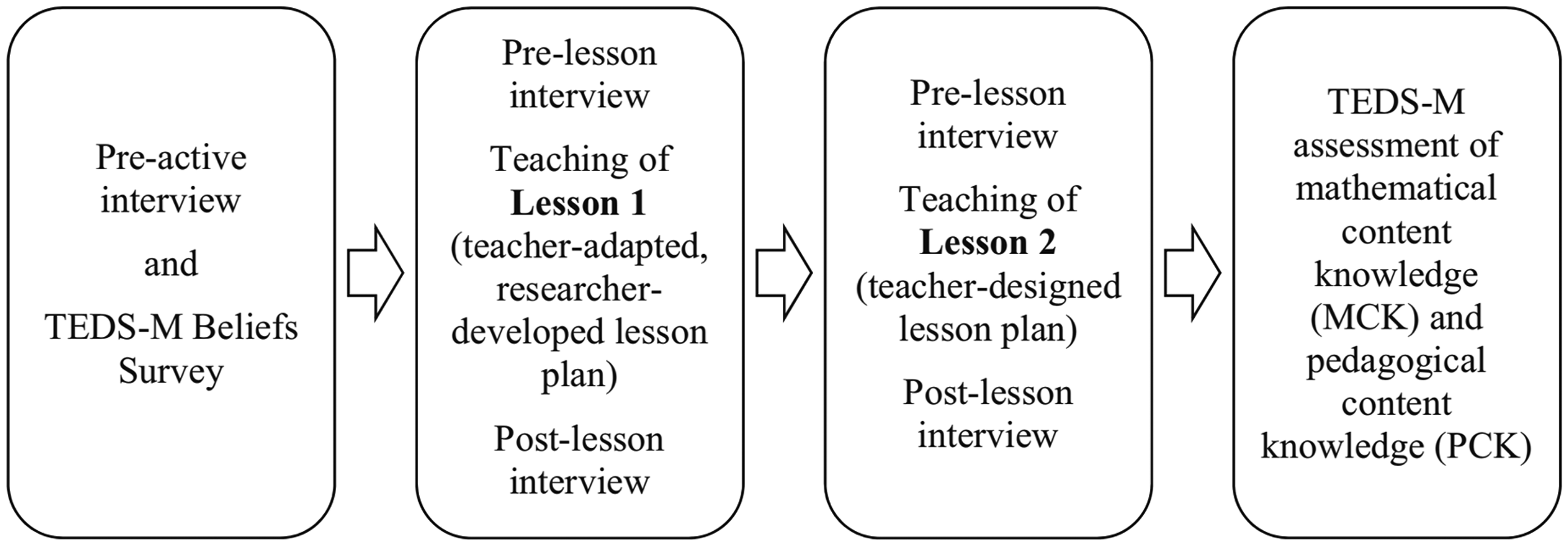
Learning from lesson project design (Chan et al., 2018).
Taught lesson topics.

To identify what the teachers noticed and claimed to learn through the planning and teaching of the LfL lessons, the project was designed to generate data on the teachers’ adaptation of the provided lesson plan, the teachers’ reflective thoughts about the lesson and their actions during the lesson, and the respective consequences for the planning and teaching of the follow-up lesson. Throughout the project, other than the provided lesson plan and template, the research team provided minimal guidance to the teachers regarding their teaching. In cases where the teachers asked for teaching suggestions, these were offered but also documented. By doing so, the project aims to portray how the teachers notice and learn from their daily teaching. In the current study, we specifically focused on the responses teachers provided in the pre- and postlesson interviews of each lesson.
In the pre-lesson interviews, the teachers were asked about their plans and their expectations of students’ learning and behaviors. As the project team observed and recorded each lesson, video stimulation was used in the postlesson interviews to prompt the teachers about what they noticed and their decisions during the lesson. Questions that were asked at the postlesson interviews included: Was there anything that happened during the lesson that was unexpected for you? Which moments in the lesson do you think provided learning opportunities for you? and What did you learn?
Data analysis
Analytical process and the unit of coding
In order to capture the teachers’ noticing, the study conducted the analysis by looking into the foci of the teachers’ postlesson interview responses. Coding was carried out based on the so-called “idea unit,” which forms the unit of coding in this study. According to Jacobs (1997), an idea unit describes the shift in focus or change in topic in statements.
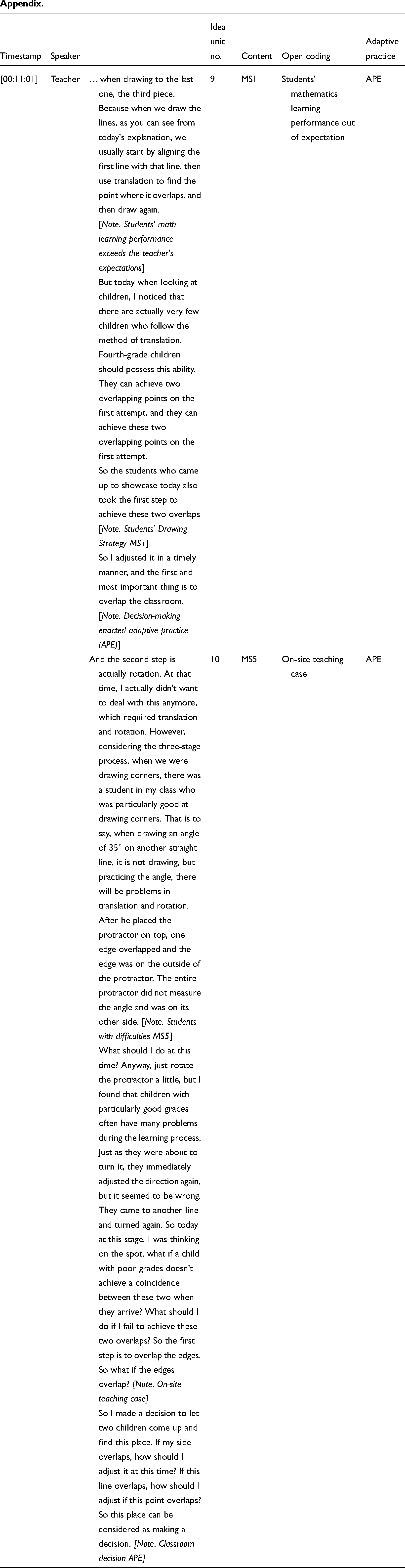
In the current study, to answer the research questions, the researchers first coded the content of noticing based on the coding scheme. The second coding regards teachers’ interpretation and their decision making was open coding, with the codes generated from the data. The first author first went through the transcripts and partitioned the utterances into idea units based on the topics and focus in the teachers’ speech. She wrote down notes about the ideas or topics. Then she coded the content of the teacher noticing and their interpretation of the noticing (open coding). If the teacher explicitly mentioned adaptive practice either in the future or in the past, then it would also be coded. The coding, except for the open coding of interpretation, was done independently in parallel by the second author, with any disagreements between the two researchers discussed until a final consensus was made. For the open coding, the first author conducted the analysis first, and the second author checked if the open coding made sense. An excerpt from the analytical protocol is provided in the Appendix.
What did the teachers attend to?
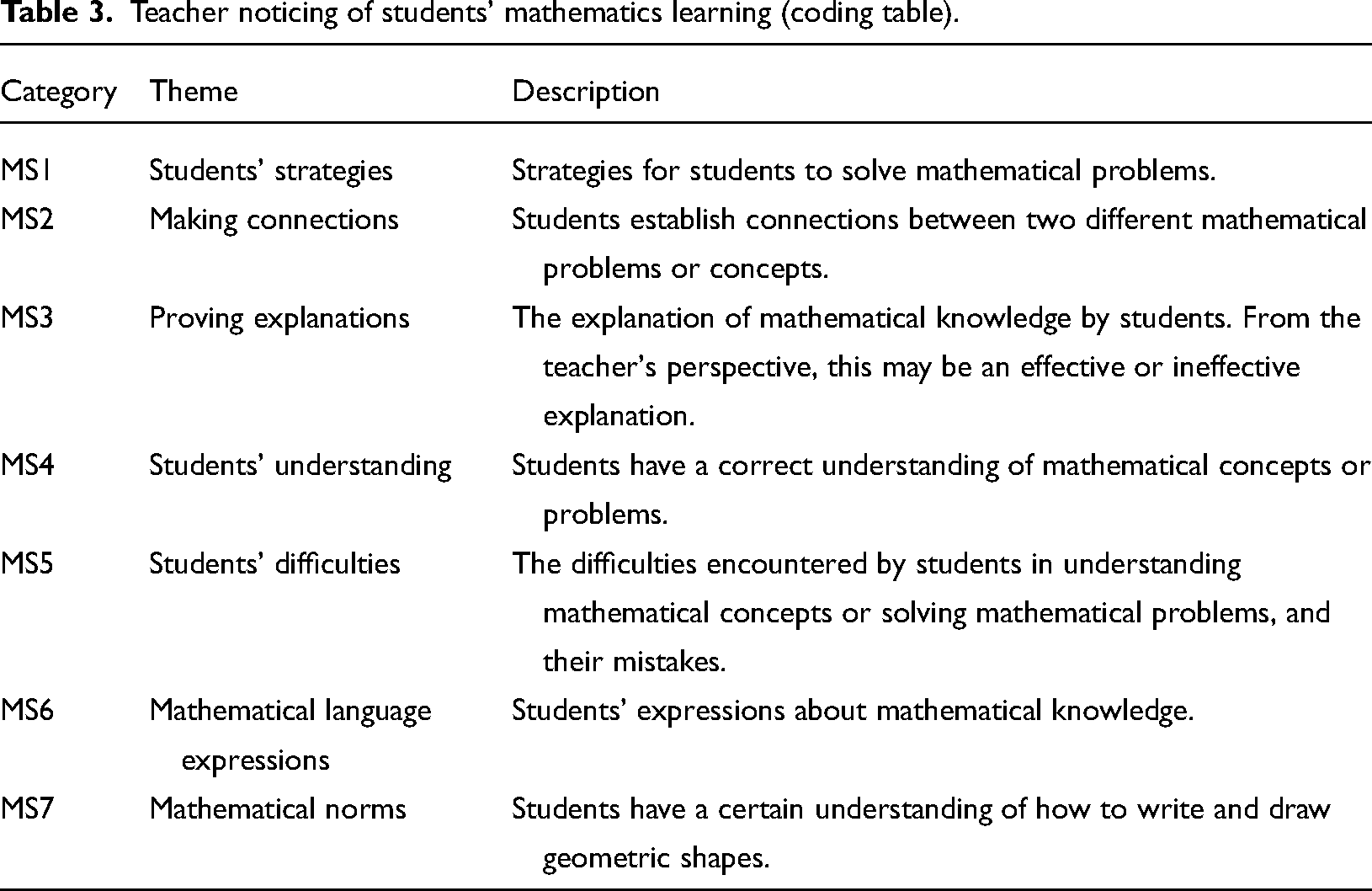
To analyze the content and objects of teacher noticing, we initially examined what the teachers noticed regarding students’ mathematics learning based on the teachers’ pre and postlesson interviews. In Taylan (2017), the researcher showed that five facets of students’ mathematical learning, namely, students’ strategies, students’ understanding, students’ difficulties, making connections, and providing explanations, were noticed by teachers during instruction. In the current study, conducted within the Chinese context, we took into account the national curriculum standards. The national curriculum emphasizes students’ mathematical language expressions and mathematical norms. For instance, students are expected to “appreciate the elegance and beauty of mathematical language and learn the norms of using mathematical language” (Ministry of Education of the People's Republic of China [MOE], 2022, p. 81) and to “describe real-life situations through mathematical language” (p. 38). Consequently, seven aspects were determined as the content for teacher noticing. Table 3 illustrates these aspects.
Teacher noticing of students’ mathematics learning (coding table).
How teachers interpreted their noticing
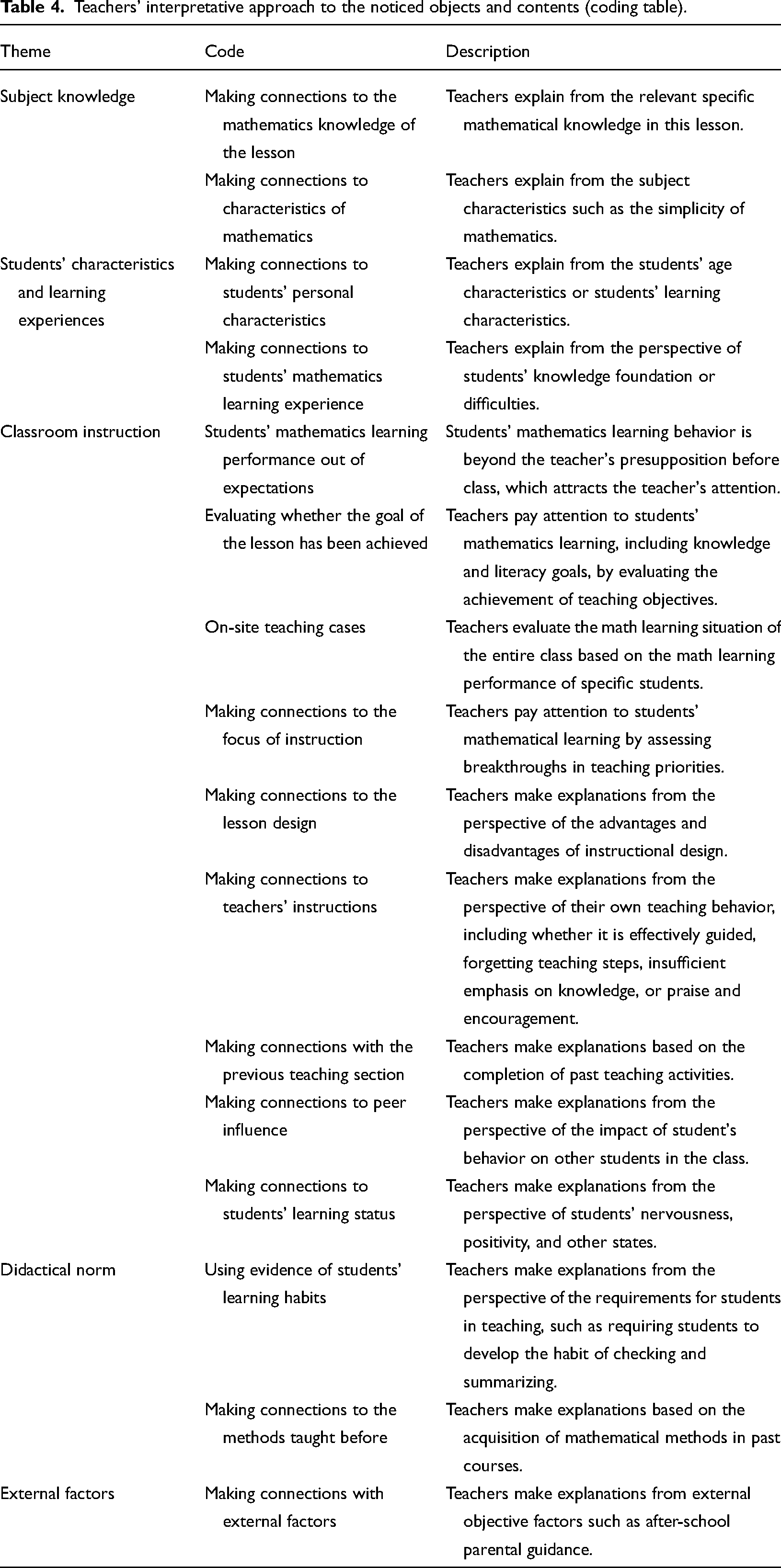
To understand how teachers interpreted their noticing of students’ mathematics learning with reference to their teaching practice, the researchers first noted how the teachers explained what they saw, and how they thought of students’ mathematics learning. For example, if they make explanations based on the specific subject matter (mathematical knowledge), they may make connections to the mathematics knowledge of the lesson, make connections to prior learned knowledge, or make connections to characteristics of mathematics; these three interpretations would be coded separately. These three codes all relate to the subject knowledge, which would also be generated as a theme to describe teachers’ interpretations. A coding scheme was finally developed to describe all the explanations based on all the codes and themes. Table 4 provides an overview of the final analytical coding table.
Teachers’ interpretative approach to the noticed objects and contents (coding table).
What decisions (adaptations) were made in practice?
We adopted a coding process to analyze how teachers decide to respond to their noticing in practice, that is, their adaptive practices. Two types of adaptions were coded: the enacted adaptions and the intended adaptions. Table 5 provides illustrations for the two adaptive practices.
Categories and explanations of teacher decision making/adaptive practices (coding table).
Findings
Attending to students’ difficulties and mathematics understanding
Based on the responses from each teacher about their objects of noticing, a total of 79 idea units were noted for teacher Donna and a total of 25 idea units were noted for teacher Li. Figure 2 illustrates the frequency with which each teacher referenced various aspects of students’ mathematics learning across different categories. The data reveal that the two teachers most commonly discussed students’ mathematical difficulties (MS5), preceded by their understanding of mathematical knowledge (MS4). Furthermore, the teachers demonstrated a focus on enhancing students’ comprehension and proficiency in mathematical knowledge.
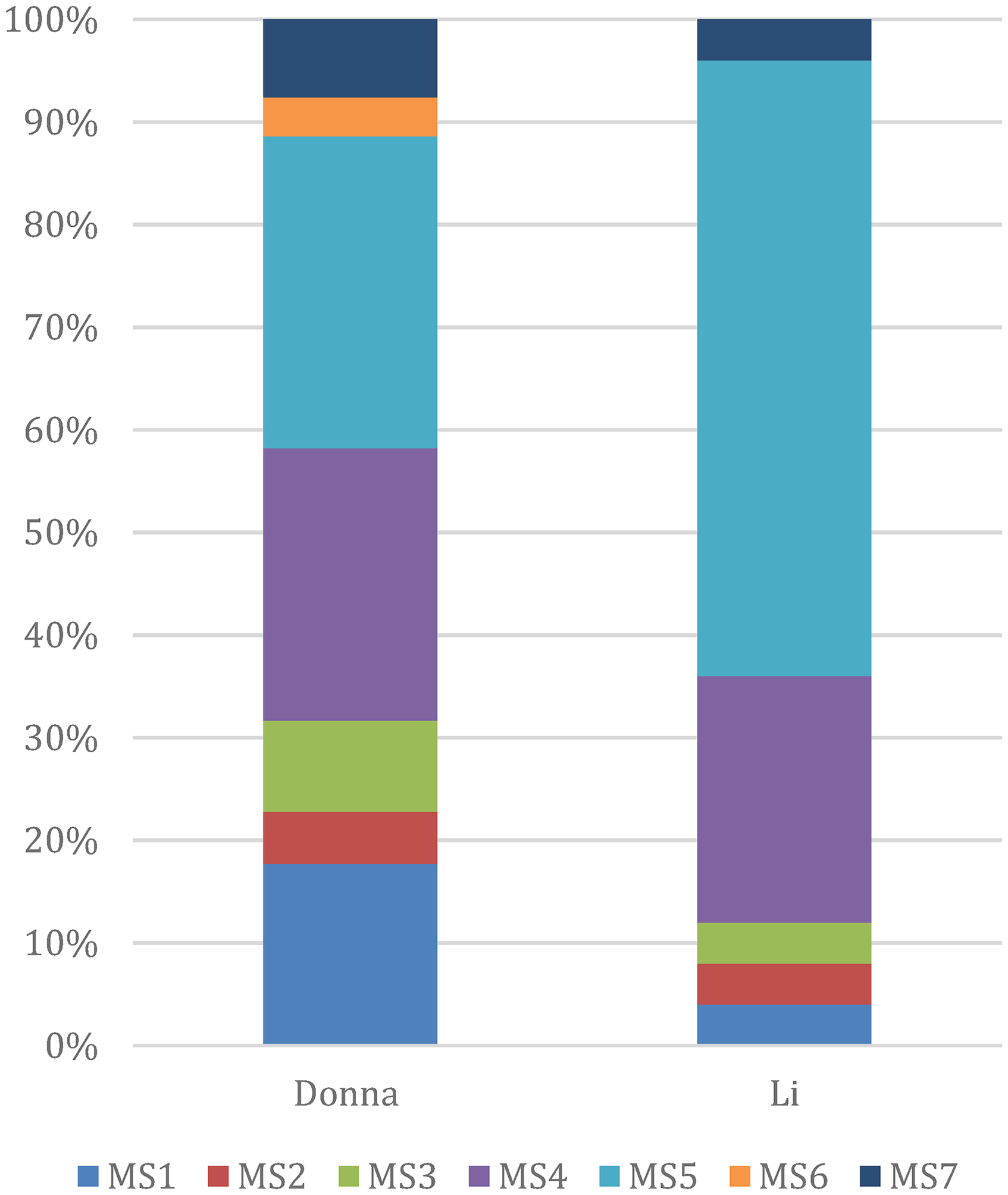
Statistical chart of the results of two teachers’ object of noticing.
Comparatively, the two teachers devoted less attention to students’ mathematical language expression (MS6) and mathematics writing standards (MS7). Specifically, Li did not explicitly address students’ mathematical language expression (MS6) during classroom instruction; however, during one of the postlesson interviews, he emphasized the importance of students’ ability to articulate their thoughts and ideas about mathematical problems during discussions with their peers.
Both teachers also emphasized problem-solving strategies and the development of mathematical connections among students. In the interviews, Donna enumerated various strategies students might employ to solve problems, including calculating with estimation, verifying solutions through division or multiplication, drawing lines that are both parallel and perpendicular, employing origami techniques, and assessing parallelism. Additionally, she noted that students could establish connections between mathematical concepts, such as relating the concept of quotient to remainder, applying estimation methods learned in prior lessons to current instruction, and comparing previously acquired knowledge with newer concepts (e.g., comparing remainders). In contrast, Li appeared to give less emphasis to proving explanations (MS3) and making connections (MS2). In the postlesson interview of the first lesson on calculation and division, he stated, “Today's topic did not have many connections with the one we learned previously about single-digit calculations …,” explaining the limited integration of concepts in his teaching.
Both educators discussed the importance of students’ mathematical explanations; Donna referred to it seven times, while Li mentioned it once. Regarding this, Donna provided an example from the lesson, stating, “I asked students why the digit in the tenth position is not written. One child responded that it is necessary to use the first two-digit number to perform the division, hence the digit is placed in the single-digit position.” This illustrates the teachers’ practice of posing questions to assess whether students can offer explanations for their computational steps.
Interpretation of students’ mathematics learning
Overview of teachers’ interpretations of students’ mathematics learning
According to Table 4, the thematic analysis of the teachers’ interviews yielded five key themes concerning their interpretations of their noticing regarding students’ mathematical learning: subject knowledge, students’ characteristics and learning experiences, classroom instruction, didactical norms, and external objective factors.
Both teachers primarily interpreted students’ mathematical learning through the lens of classroom instruction. They concurred that certain instructional behaviors could either facilitate or impede students’ learning. For instance, they highlighted that effective instruction and repetition facilitate learning, whereas failing to seize opportunities for follow-up questions, insufficient time for error correction, or inadequate instructional time could hinder it. Additionally, both teachers underscored the utility of posing appropriate questions to facilitate learning. For example, Li reflected that in a lesson, his failure to ask a specific question prevented students from grasping his intended meaning. Donna similarly noted that, in a lesson, students were bewildered by the term “互(Hu)相(Xiang)” in Chinese, which denotes a reflexive relationship between two objects, such as lines that are parallel or perpendicular. She promptly asked the students in class, “In your daily lives, can you think of any situations where you use the words ‘互(Hu)相(Xiang)’?”
Moreover, beyond instructional behaviors, teachers are expected to discern the focus and complexity of the topics taught in their lesson designs. In interviews, teachers consistently assessed students’ mathematical learning in terms of how well the focus and difficulty of the topic were addressed. For instance, in a postlesson interview, Li commented, “The students view perpendicularity, parallelism, and intersecting lines as three separate relationships. They can deliberate on each relationship and persuade one another, which is more effective than simply announcing these relationships as distinct. In this way, the lesson's difficulty can be surmounted.”
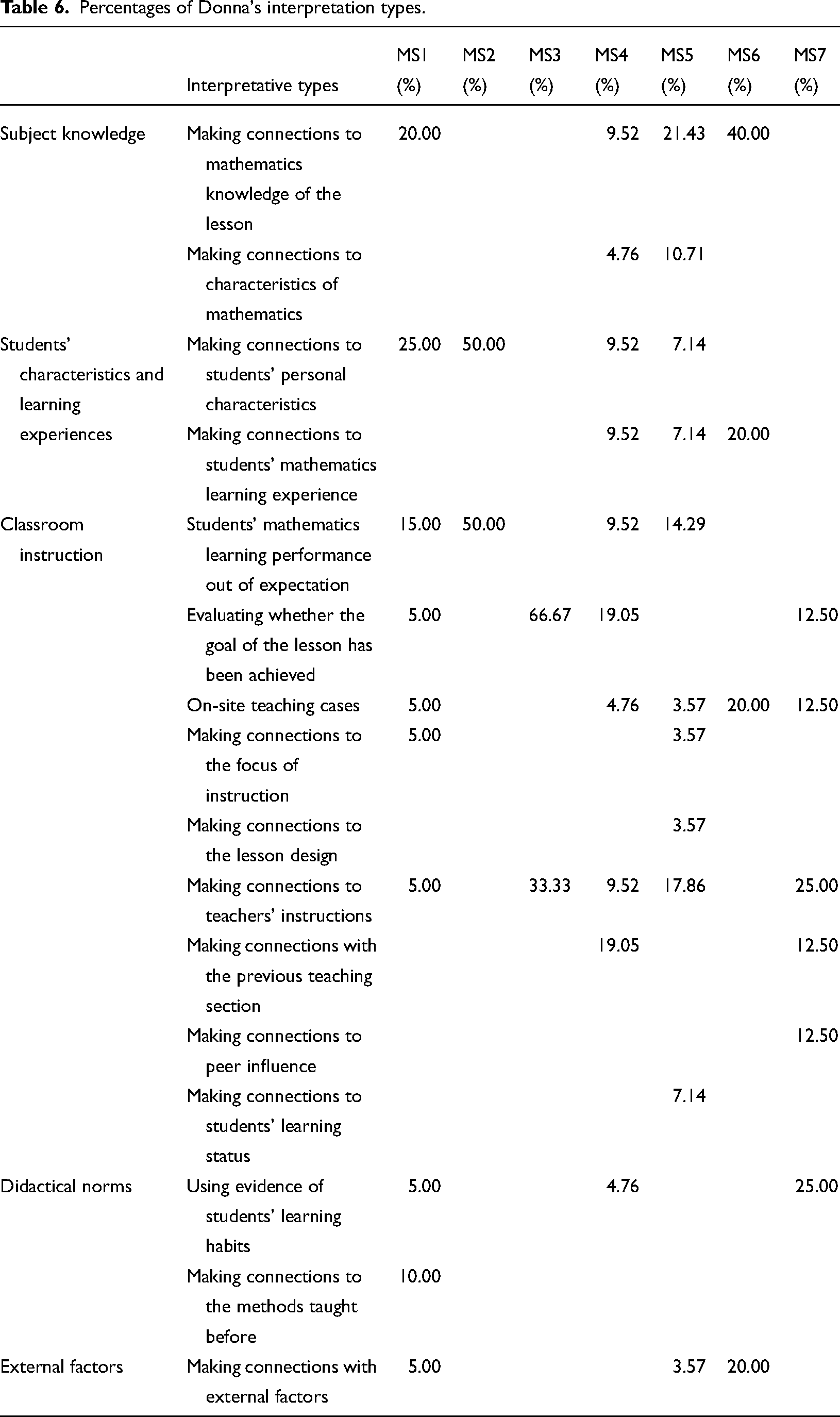
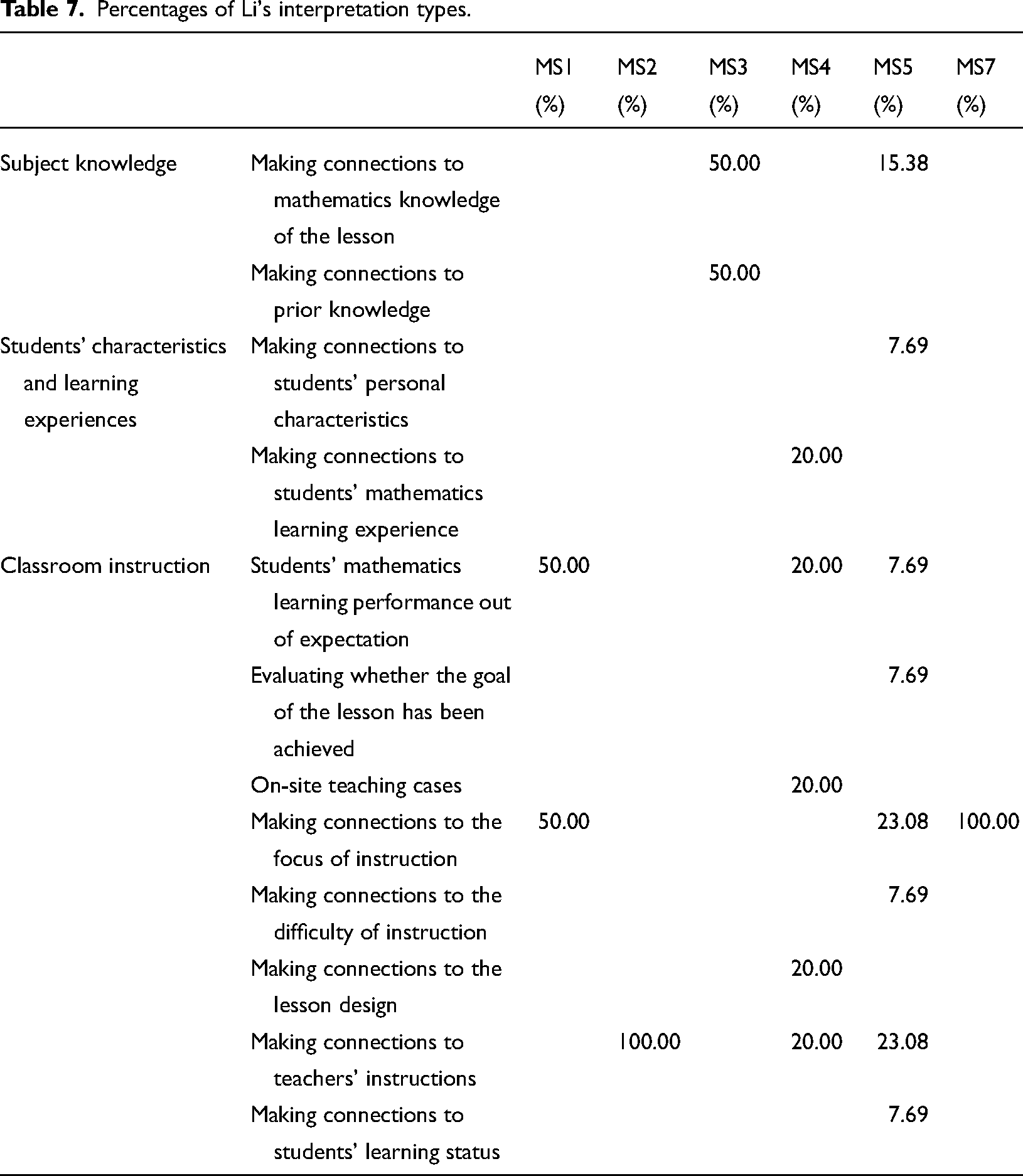
When interpreting students’ learning, their characteristics are also a crucial focus. Two categories were identified: individual student's characteristics and learning experiences. Individual student's characteristics encompassed learning habits, in-class listening and speaking behaviors, and whether a student was seen as intelligent, imaginative, or adept at summarizing. The following section describes each teacher's interpretation of students’ mathematical learning based on the frequency of occurrence for each type of interpretation, aligning with the noticed content from the teachers. The percentage of each interpretation type in each noticing content for each teacher was calculated and displayed in Tables 6 and 7.
Percentages of Donna's interpretation types.
Percentages of Li's interpretation types.
How teachers interpret students’ learning?
Teacher Donna's interpretation of students’ mathematics learning
Table 6 listed Donna's interpretation of students’ mathematics learning based on the frequency of each interpretation type, in accordance with the content that the teacher noticed.
Donna's interpretation of students’ mathematical difficulties. As indicated in Table 6, Donna frequently identified students’ learning difficulties when their classroom responses deviated from her expectations. Specifically, she noticed that students did not achieve the anticipated level of understanding when new concepts or methods were introduced. Initially, the teacher expects that the content will be grasped effortlessly and seamlessly by the students. However, during class, this expectation is not always met.
In addition to observations, Donna drew upon her subject matter knowledge to elucidate the nature of students’ learning obstacles. She provided insights into how knowledge is acquired and why certain aspects of learning may prove challenging for students. Furthermore, Donna acknowledged that learning challenges can arise from her own instructional strategies or pedagogical approaches. For instance, she recognized that the clarity of her questions may be lacking or that she may not emphasize specific knowledge frequently enough.
Donna's teaching approach was characterized by a strong emphasis on the distinctive nature of mathematical language. She highlighted the simplicity of mathematical symbols and the abstract nature of mathematical discourse, which sets it apart from the language used in everyday life. Students are required to master and apply these forms flexibly within mathematical contexts, both in writing and speech. During the interviews, Donna discussed students’ behaviors related to the incorrect labeling of mathematical signs and the misuse of mathematical terminology, often repeatedly. An example of this is evident in the postlesson interview for the lesson on “Parallel and Perpendicular,” where she notes the students’ challenges in correctly writing the right-angle symbol and their tendency to incorrectly represent two right angles as totaling approximately 180°.
Donna's interpretation of students’ understanding of mathematics knowledge. Donna assessed the achievement of the teaching goal by observing whether students comprehended the knowledge. In her interviews, she delineated how she discerns when students have gained an understanding of mathematical knowledge; for instance, she elucidated the purpose of each instructional command and how these diverse instructions supported and built upon one another. During an observation, she noted that students were able to effortlessly solve the division problem 178 ÷ 30 “because of a question posed in the final exercise of the second module, 140 ÷ 30, which provides a solid foundation for this particular problem,” and she underscored the importance of such interconnections among different instructions. These connections are central to her teaching objective, which is to assist students in mastering the technique of division when the first two digits are insufficient.
Donna's interpretation of students’ mathematics strategies. When interpreting students’ problem-solving strategies in mathematics, Donna referred to a variety of connections, primarily including students’ prior learning experiences and content knowledge. For instance, in the second lesson of “Calculation Division,” she observed that when students calculated division, they utilized estimated calculations. She subsequently explained, “The students believed that if 500 minus 10, the resulting number could be divided. However, if the scenario evolved to require adding 10 to 500 for division, the students might render an incorrect judgment.” Additionally, she commented that relating to their learning experiences was significant because “they are in the fourth grade, and thus, their numeracy develops quite thoroughly.”
Donna's interpretations of students’ mathematical problem-solving strategies also exhibited consistency with past teaching and students’ learning experiences and habits. In one lesson, she noted that some students could imitate the methods used for three-digit numbers divided by one-digit numbers to tackle new situations involving three-digit numbers divided by two-digit numbers. She then commented that students were employing knowledge acquired previously to resolve the new problem, that is, a transformation of problem-solving strategy. She further explained why students could execute such a strategy, emphasizing that throughout her teaching, she consistently asked students to reflect on and review their problem-solving processes once she completed a lesson to verify the absence of errors; hence, students retained a more profound understanding of the strategies.
Teacher Li's interpretation of students’ mathematics learning
Table 7 lists Li's interpretation of students’ mathematics learning based on the frequency of each interpretation type, in accordance with the content that the teacher noticed.
Teacher Li tended to interpret his observations of students’ learning difficulties by referencing both teachers’ instructions and the characteristics of the subject knowledge. For instance, in the second lesson on “Parallel and Perpendicular,” Li noted that when students answered a question incorrectly, he would clarify by explaining that, when a clock displays a specific time, are the lines on which the hour and minute hands lie perpendicular to each other? In the postlesson interview, he elaborated, “Determining whether the hour and minute lines are perpendicular to each other at a given time can actually be a challenging question for students; my instructional preparation was slightly inadequate during the lesson because if I could have demonstrated the clock's position and rotation, it would have been more intuitive for students to answer the question.” His explanations demonstrate that he interpreted students’ learning difficulties from various perspectives.
Additionally, Li proposed nuanced interpretations of students’ understanding of mathematical knowledge. In his interviews, numerous connections were identified when assessing students’ grasp of mathematical concepts.
Teachers’ decision making (adaptive practices) in relation to noticing
Based on the teachers’ explicit suggestions for modifying teaching practices in response to their noticing of mathematics learning, we coded the teachers’ intended adaptive practices and their enacted adaptive practices. Figure 3 illustrates the frequency of each adaptive practice and its associated content. For each idea unit of the notice content, teachers may or may not propose adaptive practices. In total, teacher Donna proposes 35 adaptive practices with 28 enacted ones and seven intended ones, and teacher Li proposes thirty adaptive practices, with nine enacted ones and four intended ones.
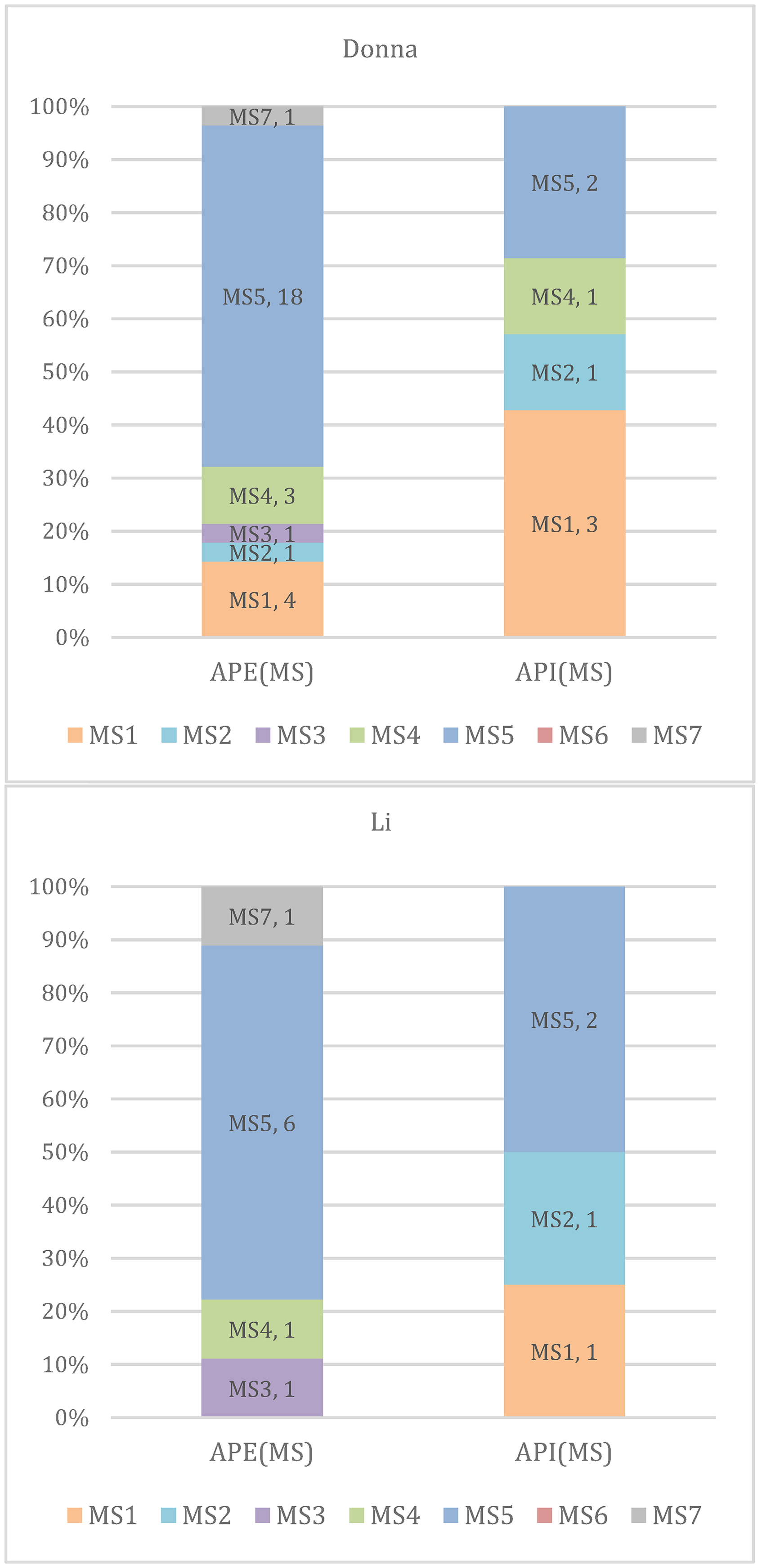
Two teachers’ adaptions in relation with noticed content.
Teachers’ intended and enacted adaptations in relation to students’ mathematical difficulties
As depicted in Figure 3, both teachers are most likely to implement adaptive changes in their practice when they notice that students encounter learning difficulties. For instance, Donna identified that students were struggling with the concept of “mutual” in the context of perpendicular lines, prompting her to alter her questioning strategy in order to guide students toward a better understanding of this term. Similarly, Li recognized that students were having difficulty determining the positional relationship between the hour and minute hands on a clock. In his postlesson reflections, he posited that for complex clock-related problems, instructors should proactively prepare physical models to assist students in overcoming these learning obstacles.
In their instructions, both educators have made a concerted effort to pay heed to students’ errors and have tailored their instruction accordingly. Donna articulated her approach in an interview, stating, “I aim to identify students’ mistakes and present them for discussion in front of the entire class.” When Donna observed that certain students were confused and unable to complete exercises, she adopted a strategy of facilitating group discussion before providing an explanation.
Li also has adopted a method of utilizing class interaction to address and rectify errors. He delightfully engages his students in problem solving and derives instructional insights from their mistakes. For instance, Li observed that some students erroneously perceived mutual verticality, ordinary intersection, and parallelism as distinct and unrelated concepts. In response, he decided to engage in repeated dialogues with these students, inquiring as to the rationale behind their beliefs. “By doing so,” he proclaimed, “let them arrive at their own realizations through recurring contemplation.” Furthermore, Li underscored the importance of students’ self-convincing, maintaining that this method is preferable to his own direct intervention. This scenario has recurred frequently and Li is resolute in his approach, contending that when a consensus of errors emerges among students, it is advantageous to assign a student with strong communication skills and influence to reiterate the issue, thereby correcting misconceptions promptly.
Teachers’ intended adaptations based on students’ problem-solving strategies and their connections building among different knowledge
Upon observing students’ problem-solving strategies and their ability to form connections between various pieces of knowledge, both teachers identified targeted adaptations to their practice. Donna pointed out that while students employed estimation strategies for division, they developed a keen sense of numbers; however, they may not fully grasp the underlying reasoning. She suggested that she could sometimes present tasks that would steer students toward formulating certain laws and principles and to speculate within alternative tasks, as opposed to solely proposing procedural exercises.
Li noted a lack of integration between the concepts of “dividing three digits by two digits” and “dividing three digits by one digit,” which he attributed to a potential paucity of transformative thinking within the instructional process. Consequently, Li intended to delineate the similarities and distinctions between these two areas of knowledge in the upcoming session, thereby assisting students in forging connections between the two division methods and enhancing their arithmetic comprehension.
Teachers’ enacted adaptations from students’ understanding of mathematical knowledge
Figure 3 illustrates that when students comprehend mathematical concepts, teachers are able to engage in both intended and enacted adaptive practices. For instance, Donna remarked that certain students perceived a difference in the concept of “larger remainder” within the context of the current lesson, as opposed to their prior learning experiences. Consequently, she promptly altered her teaching sequence and expanded the coverage of “smaller remainder than the divisor” in her lesson.
During a postlesson interview, she reflected on her students’ understanding of mathematical knowledge (grasp of mathematical concepts), asserting that learners should be afforded ample time and opportunities to deliberate in order to achieve a profound understanding of the process by which mathematical knowledge is derived and to develop their summarization skills. She provided an example, indicating that students were led by the teacher to articulate the concepts of parallel and vertical lines, upon which she concluded that her fourth-grade students were capable of independently formulating these concepts. This unforeseen scenario, where students autonomously generated concepts, prompted Donna to engage in extensive pedagogical contemplation. Subsequently, she arrived at a resolution: “Henceforward, in my teaching practice, I continue to deem it crucial to extend invitations to students to engage in learning, not merely for the acquisition of conclusions, but rather to concentrate on the learning process that leads to these conclusions. I anticipate this approach will persist as a cornerstone in my future teaching method.”
Conversely, Li also monitored his students’ grasp of mathematical knowledge and adjusted his teaching strategies accordingly. In one instance, after assessing students’ presentations and receiving peer feedback, he stated, “I am aware that the majority of students comprehend the logic underpinning division and its associated arithmetic principles; they also comprehend how to articulate their understanding proficiently.” In such instances, he permitted four students, whom he believed to be at varying stages of learning, to present, thereby enabling him to gauge the class's collective understanding of the division logic.
Discussion
The present study explores the commonality and differences of two experienced Chinese primary mathematics teachers’ noticing of students’ mathematics learning, specifically, the students’ difficulties in learning mathematics and their understanding of the subject matter. The two cases may have practical implications informing professional development initiatives.
The experienced teachers’ interpretations of noticing in class
The findings revealed that the two teachers had distinct focuses when interpreting their students’ mathematical learning experiences. Donna's interpretations exhibited a wider range of variety, with her focus spread across diverse content areas. Specifically, she paid close attention to students’ academic performance and the instructions provided by the teacher. On the other hand, Li's interpretations were less diverse compared to Donna's, but he seemed to focus more on understanding the mathematics knowledge being taught and how the objectives of each lesson could be accomplished. However, in his interviews, he appeared to overlook certain aspects, such as the mathematical expressions used by students. Both teachers implemented a series of adaptations in response to their noticing of students’ mathematics learning. When it came to addressing students’ difficulties, both teachers engaged in practical adaptations to assist their students in overcoming these challenges.
Previous research has demonstrated that teachers’ noticing of students’ challenges and their strategies for addressing these difficulties can significantly affect the quality of instruction. Typically, students’ struggles may be overlooked or teachers’ perceptions of these challenges may be superficial (Xue & Hao, 2009). In the current study, we identified shared characteristics in the approaches of two teachers toward addressing students’ challenges in learning and their possible misconceptions. Neither teacher exhibited impatience or dismissed the students’ mathematical struggles or errors; instead, they demonstrated a commitment to understanding and engaging with students’ problems, aiming to foster a classroom atmosphere where students feel safe to make mistakes. The study shows that both teachers could provide a range of interpretations in terms of understanding students’ mathematical learning. Particularly, they noticed students’ learning in class and interpreted that in different ways in terms of subjective matter, students’ characteristics and learning experiences, classroom instruction, didactical norms, and so on. This suggests that through looking at different aspects of students’ mathematics learning (MS1, MS2, etc.), the teachers can reflect on their teaching practices and potentially learn from their own practices from multiple entry points (Chan et al., 2018; Lee & Choy, 2017).
Teachers’ noticing and adaptive practice
Li et al. (2016) investigated the types of teacher feedback provided for students’ difficulties, utilizing video clips of teachers, and found that feedback encompassed asking for explanations from peers and offering teacher-led explanations or cues. In line with this research, our investigation reinforces and extends the existing body of work on Chinese mathematics teachers’ noticing of students’ learning in practice. The findings reveal that the Chinese primary school mathematics teachers are not only capable of identifying students’ challenges but also of consciously offering interpretations, and particularly, implementing adaptive strategies in their practice. These results illustrate how the teachers tailor their instruction and foster students’ learning in response to in-class dynamics, which aligns with the contextual and sustained nature of teacher noticing in improving teaching effectiveness (Damrau et al., 2022; König et al., 2022).
In the current study, drawing on Chan et al. (2020), teachers’ adaptive practices were categorized into two types, the intended adaptive practice and the enacted adaptive practice. Such a lens in terms of looking at how teachers respond to their noticing of students’ learning contributes to understanding teachers’ practices in a meaningful and practical manner. On the one hand, studies about teacher noticing are usually concerned about what they noticed, and detailed investigation in terms of how they react to their noticing in practice was lacking (Yang et al., 2021). The two categories used in this study focus on how teachers react to (enacted) and what teachers think of (intended) about their noticing in practice. On the other hand, it was suggested that teachers may be reluctant to make changes in their practices when becoming mature teachers (Guskey, 2002). This study revealed that both of the experienced teachers were willing to make changes. Notably, Donna was observed to have implemented more adaptations than Li, particularly the enacted adaptions. As shown in Figure 3, both teachers mainly adapted their instructions when noticing students’ learning difficulties (MS5) and their adaptations of other aspects were relatively rare. This finding allows us to further think about to what extent a teacher should enact their adaptations and their intended adaptations in practice, so as to improve teaching.
Concluding remarks
In conclusion, this study offers valuable insights into the process of noticing by examining the observations of two Chinese primary school mathematics teachers in relation to their students’ learning. The findings underscore the teachers’ attention to their students’ mathematical challenges and their grasp of mathematical concepts, as well as the nuanced interpretations and adaptations they employ in response. However, the research is based on retrospective data from interviews and postlesson reflections. While these sources provide a wealth of teachers’ perspectives, they may not entirely capture the moment-to-moment noticing that takes place during actual classroom instruction. Incorporating video observations or think-aloud during teaching could enrich the research with additional depth. Moreover, the study primarily focuses on the teachers’ interpretations and adaptations in relation to their noticing. Future research might investigate the effects of these interpretations and adaptations on students’ learning outcomes to clarify the effectiveness of teachers’ noticing practices in fostering students’ learning. Lastly, this study was conducted within a specific cultural context, and comparative research across diverse cultural and educational settings could offer a more comprehensive understanding of the factors influencing teacher noticing. Additional research is necessary to address these limitations and to further explore the implications of teacher noticing for improving students’ learning.
Footnotes
Contributorship
All authors contributed to the writing of this article. Shu Zhang and Rui Zhang contributed equally to this work and are co-first authors. Shu Zhang was in charge of the study conception and design. Shu Zhang and Yiming Cao were involved in the collection and analysis of the data. Shu Zhang, Rui Zhang, and Man Ching Esther Chan were involved in the analysis of the data. The first draft of the manuscript was written by Rui Zhang and Shu Zhang, and all authors commented on previous versions of the manuscript. All authors read and approved the final manuscript.
Declaration of conflicting interests
The authors declared no potential conflicts of interest with respect to the research, authorship, and/or publication of this article.
Ethical statement
Research data were collected under the Australian Research Council's Discovery Projects (DP170102540). Written informed consents were provided by all the participants in the project.
Funding
The authors disclosed receipt of the following financial support for the research, authorship, and/or publication of this article: This study was funded by Guangdong Planning Office of Philosophy and Social Science [Project number: GD21YJY18].

Appendix. An example excerpt from the analytical protocol.
| Timestamp | Speaker | Idea unit no. | Content | Open coding | Adaptive practice | |
|---|---|---|---|---|---|---|
| [00:11:01] | Teacher | … when drawing to the last one, the third piece. Because when we draw the lines, as you can see from today's explanation, we usually start by aligning the first line with that line, then use translation to find the point where it overlaps, and then draw again. [Note. Students’ math learning performance exceeds the teacher's expectations] But today when looking at children, I noticed that there are actually very few children who follow the method of translation. Fourth-grade children should possess this ability. They can achieve two overlapping points on the first attempt, and they can achieve these two overlapping points on the first attempt. So the students who came up to showcase today also took the first step to achieve these two overlaps [Note. Students’ Drawing Strategy MS1] So I adjusted it in a timely manner, and the first and most important thing is to overlap the classroom. [Note. Decision-making enacted adaptive practice (APE)] |
9 | MS1 | Students’ mathematics learning performance out of expectation | APE |
| And the second step is actually rotation. At that time, I actually didn’t want to deal with this anymore, which required translation and rotation. However, considering the three-stage process, when we were drawing corners, there was a student in my class who was particularly good at drawing corners. That is to say, when drawing an angle of 35° on another straight line, it is not drawing, but practicing the angle, there will be problems in translation and rotation. After he placed the protractor on top, one edge overlapped and the edge was on the outside of the protractor. The entire protractor did not measure the angle and was on its other side. [Note. Students with difficulties MS5] |
10 | MS5 | On-site teaching case | APE |