




Abstract
Purpose
This study analyzes the contributions of the Healthy Waters educational program to the awareness and understanding of environmental issues related to water to generate changes in attitudes in the community.
Design/Approach/Methods
A community school intervention was conducted in a public school in Paredes, Porto, Portugal. Using a participatory research approach, 35 participants were recruited from the seventh and eighth grades. A retrospective pretest/posttest questionnaire was used to assess the influence of the intervention. A thematic analysis of the tutors’ logbooks was performed to ascertain the relevant domains of change for students during the intervention.
Findings
Results showed statistically significant changes in proenvironmental attitudes and behaviors at the end of the intervention. The effect sizes of the statistical analyses showed that the intervention generally had a positive influence on the environmental awareness of the participants. The tutors’ evaluations of the intervention indicated a diversified gain in students’ environmental learning.
Originality/Value
The results of this study demonstrate that this type of intervention increases students’ knowledge of and involvement in environmental issues while reinforcing their environmental citizenship.
Keywords
Introduction
Water is one of humanity's most vital resources. However, climate change poses increasing challenges to the availability and quality of this resource. Certainly, Portugal is facing various risks due to the impact of climate change on water bodies (Almeida et al., 2018; Quinteiro et al., 2019), with droughts, heat waves, and floods predicted to increase in frequency and intensity in the next decade (Campos et al., 2017; Rebelo et al., 2020). Given the threat of such challenges to our survival, it is necessary to develop solutions at different scales, both collectively and individually. One solution involves increasing individual knowledge regarding environmental issues, including the correct use and treatment of available water, and empowering citizens to act in their communities to make these activities more sustainable (Khatibi et al., 2021). This can be achieved by expanding the opportunities available to communities and citizens for environmental education (EE) or education for sustainable development (ESD) (McKeown & Hopkins, 2005). However, this requires developing specific pedagogical dynamics for different target audiences and, to ensure that such initiatives achieve the desired social impact, integrating several of the United Nations’ Sustainable Development Goals (SDGs 4, 6, 11, and 13). In Portugal, the “Healthy Waters” (HW) project was implemented with the specific mission of better educating young students about their water usage and common problems related to this resource, while sharing social, civic, and scientific tools to enable students to take a more proactive role in the detection and resolution of environmental problems in their local communities.
Literature review
Environmental education
The field of EE has existed since the 1960s (Gough, 2016), with increasing global concern for environmental issues emerging in different biophysical domains, including air, land, and water (Greenall & Womersley, 1977). In 1972, a United Nations (UN) conference in Stockholm, Sweden, brought several countries together to debate urgent environmental issues. In 1975, the Belgrade Conference—organized by the UN Educational, Scientific and Cultural Organisation and UN Environment Programme (UNESCO-UNEP)—issued the “Belgrade Charter,” which outlined guidelines for EE. The field of EE was subsequently formalized through the 1977 Tbilisi UNESCO-UNEP Intergovernmental Conference on Environmental Education (UNESCO, 1978). The objective of EE is to make all citizens aware of environmental threats and encourage them to think and reflect on the social and biological components of these threats. EE should also dissuade people of the assumption that such threats can be mitigated by scientific and technological advancement alone (Boyden, 1970). Significantly, Stapp (1969) defined EE as “aimed at producing a citizenry that is knowledgeable concerning the biophysical environment and its associated problems, aware of how to help solve these problems and motivated to work toward their solution” (p. 34).
EE was initially dominated by a positivist liberal framework, with research and education focused on individual behavior and how expanding people's awareness and knowledge, both technical and theoretical, could cultivate proenvironmental behaviors (Robottom & Hart, 1993; Schild, 2016). However, the 1990s saw the emergence of new frameworks for EE influenced by interpretative, critical, and postmodern perspectives (Hart & Nolan, 1999; Lotz-Sisitka et al., 2013). Among the various goals that these perspectives attempted to bring to EE was a greater focus on the central role of the student in the construction of knowledge, giving rise to pedagogies associated with participatory action research (Gough & Robottom, 1993; Rickinson, 2001). Inspired by the postmodernist movement, this trend facilitated the diversification of the field of EE, particularly insofar as it sought to give a voice to marginalized social groups (Lotz-Sisitka et al., 2013; Palmer, 1998), who are as relevant to the issue at hand as the hegemonic majority, and to complement the positivist vision that preceded it.
Current perspectives on EE incorporate five significant conceptual elements (Stevenson et al., 2013). First, EE is greatly influenced by the critical discussion about values and norms that prevail in society. Second, EE is interdisciplinary in nature, involving scientific, social, political, and economic dimensions in a continuum of “people-society-environment.” Third, in line with the 1977 Tbilisi UNESCO-UNEP Intergovernmental Conference on Environmental Education (UNESCO, 1978), EE focuses on the development of individual and collective agency toward environmental issues within a normative/valuative framework. Fourth, EE extends beyond the classroom as the intended learning largely occurs in more informal contexts, namely, through direct contact with or immersion in real community spaces or nature. Lastly, EE can consider both local and international issues, allowing for a wide range of debates and actions among students. These elements resonate with UNESCO's expert review of ESD, which listed key processes such as “collaboration and dialogue (including multistakeholder and intercultural dialogue),” engagement of the “whole system,” innovation at the level of “the curriculum as well as teaching and learning experiences,” and “active and participatory learning” (Tilbury, 2011).
Environmental education in Portugal
Portugal was slow to introduce EE. Indeed, the first formal mention of the topic only occurred in 1986, during a political debate (Pinto, 2006). The delay was mainly due to the dictatorship, which was introduced in 1926 and only came to an end following the Carnation Revolution on April 25, 1974. The new democratic regime soon saw the need to improve access to and quality of education. Thus, despite receiving international attention since the late 1960s, significant developments in the integration of EE into Portugal's educational curriculum occurred in 1975, when EE was institutionalized through the National Service for the Participation of Populations (Callejas & Freitas, 2007). However, its generalization into the Portuguese education system only occurred in the 1990s (Agência Portuguesa do Ambiente, 2017). In 1996, Portuguese schools began implementing the “EcoEscolas” program—an initiative spearheaded by the Foundation for Environmental Education that promoted the quality of EE projects in schools. Nevertheless, the first evaluation of EE implementation concluded that there was a lack of teacher preparation, resources necessary for full implementation, institutional cooperation, and an integrated vision for continued educational efforts (Martinho et al., 2003).
Examining different EE projects in Portugal from 2005 to 2007, Schmidt and Guerra (2014) noted that local governments were the leading proponents of these EE projects, associated with approximately 60% of them, followed by environmental NGOs, and then the central government through different public institutions (p. 200). Analysis of the target audience for EE projects revealed a clear tendency to focus on younger students. Most EE projects were developed for elementary school students (64.1%), with only a few projects for older students. Only 28.5% of students who participated in such projects were from vocational schools. Therefore, EE does not appear to have been a priority for older age groups. Regarding other audiences, 51.2% of EE projects targeted teachers, while school assistants participated in 31.7% of the EE projects. Only 33.6% of projects targeted local communities (p. 201). At the time of the study, EE projects focused mainly on the central actors in education—that is, students and teachers—with little involvement in or collaboration with the community. Schmidt and Guerra's (2014) study demonstrated a slight regional difference in the number of projects, with schools in the Lisbon region (Capital of Portugal) evidencing a higher number of EE projects per school. Nevertheless, the mean number of EE projects for each of the regions analyzed was >1, demonstrating the widespread presence of EE projects in Portugal's schools (p. 204).
Further analysis of the environmental topics explored in these EE projects identified that the three most prominent topics were waste treatment (e.g., recycling), the use of water (e.g., the pollution and consumption of water), and nature conservation (e.g., species at risk, forest conservation) (Schmidt & Guerra, 2014). Climate change was identified as a subtopic of interest in projects that addressed air and atmosphere, constituting 22% of these projects (p. 206). However, Schmidt and Guerra (2014) did not detail the approaches adopted in these projects. The study concluded that EE is strictly bound to schools and rarely involves the community; highlighted the lack of partnerships with relevant institutions, noting that the majority of partnerships were between the environmental offices of the local and the central government; and pointed out that these projects lacked a connection to the “real world.” With respect to the latter, Schmidt and Guerra (2014) underscored the wealth of relevant local or regional environmental realities that could be used as mobilizing agents to construct such knowledge in a more impactful manner. The absence of this connection relates to another of Schmidt and Guerra's (2014) conclusions, namely, that there was an imbalance between the civic and ecological spheres, with a tendency to favor the latter. According to Schmidt and Guerra (2014), the impact of individuals via civic participation, on both an individual and collective basis, on society's capacity to respond to current and impending environmental problems was relatively submerged in these projects. These findings align with those of Carvalho et al. (2014). Observing that most Portuguese people feel that they lack essential information about climate change, Carvalho et al. (2014) argued that this perception influences people's ability and willingness to modify their behavior in response to climate challenges.
In a more recent study, García-Vinuesa et al. (2021) analyzed how climate change knowledge is taught in Portugal. In doing so, García-Vinuesa et al. (2021) concluded that the curriculum prioritizes the biophysical dimension of climate change while overlooking the social implications of these phenomena. They also highlighted the positivist premises and reductionist concepts of scientific literacy taught in schools. Their findings demonstrated a growing gap in knowledge of climate change between students enrolled in strictly technical and scientific disciplines (e.g., chemistry, physics, and biology) and those in the humanities or social sciences. This detachment was related to the curricular content, which focused on the biophysical aspects of climate change. In this respect, the curriculum appears to devalue the social, ethical, and cultural aspects of climate change, exacerbating disinterest among students in the humanities and social sciences and cementing a significant discrepancy in society over time. Given the urgency of current challenges, this direction is counterproductive, particularly insofar as everyone needs to be equally informed, involved, and aware of these phenomena. García-Vinuesa et al. (2021) identified several avenues of improvement that our project also sought to explore. First, it is necessary to change from a passive to active paradigm of education, whereby students act in and transform their surroundings in a meaningful way by creating relevant links with the local community and its social agents. As suggested by approaches like experiential learning (Kolb, 2014), this shift should contribute to individual and collective mobilization for an effective response to climate change. Second, it is necessary to provide students with diversified and relevant knowledge about climate change, thereby better preparing to meet current and future challenges.
In a recent study, Suárez-López and Eugenio-Gozalbo (2022) compared the official sustainability curricula of primary and secondary education in Portugal and Spain. They found that although the Portuguese curriculum was developed in 2018, after the agreement on the 2030 Agenda, it did not present any significant difference from the official Spanish curriculum, which was implemented in 2012, before the new international agenda. This finding is consistent with Guerra et al.'s (2023) exploratory survey of EE practices in Portugal. Despite the methodological limitations identified by the authors, the findings suggested that the most popular approach in EE was normative, with a focus on transmitting sustainability values to students to cultivate committed citizens able to adapt their behavior and create a more sustainable society. The popularity of this approach is followed by the pluralistic and fact-based traditions, demonstrating a shift beyond the mere transmission of scientific facts to a strategy in which democratic and citizenship values are instrumentalized to address environmental issues. Both these studies and the recent recommendation by the National Council of Education (2020) suggest that EE in Portugal would benefit from a more sound theoretical and methodological foundation that incorporates recent debates in the field and that there is a long road to travel in terms of stimulating more critical, politicized, and hands-on approaches in EE.
Participatory research methodologies
Growing environmental problems have impacted multiple societal dimensions. Amid such social and environmental vulnerability, there is an urgent need to find ways to mobilize repair and transformation and address these problems in terms of both their causes and spheres.
At the educational level, investigative, participatory, and critical learning strategies—also known as participatory research methodologies—have gained attention in guidance documents on studies related to EE (Derr et al., 2018; UNESCO, 2012). This approach deals dynamically with real-life situations valuing collective and democratic work, the participation of different actors in decision-making processes, a sense of belonging to a territory, and the empowerment of individuals in transformative actions. Participatory research methodologies are also characterized by the construction of knowledge through collaborative and participatory work with the community. This research process involves data collection and the construction of meaning. Also relevant is the sharing and communication of results to stimulate both individual and collective reflection on the processes experienced and the development of personal, civic, and scientific skills (Cornwall & Jewkes, 1995; Sohng, 1996). In other words, the process involves several stages, including conceiving the project, planning and developing the actions that need to be taken, evaluating the process, and reviewing and improving the practices. This is a collective experience in which participants assume the role of protagonists in constructing common knowledge together with different actors and decision-makers in the community.
In Portugal, EE projects such as the Water Circle (Marques et al., 2020), HW, and those described in Rios et al. (2022) have used participatory methodologies as a learning strategy for children and young people to promote EE and citizenship (Marques et al., 2020). They promote actions aimed at identifying local environmental problems, investigating their primary causes, and developing proposals to solve them in collaboration with different actors and decision-makers. The steps of this process constitute what Menezes and Ferreira (2014), Francescato et al. (2002), Hawtin and Percy-Smith (2007), and Love et al. (2007) refer to as community profiling.
Community profiling
Community profiling involves participation, inquiry, and local action. It has emerged in the field of urban planning and has been used in community intervention (Francescato et al., 2002) and, more recently, in the fields of citizenship and EE (Cruz et al., 2019; Menezes & Ferreira, 2014; Rios et al., 2022). Community profiling begins by identifying the current challenges faced by a particular territory while recognizing the potential for community transformation in the face of these problems. This process occurs through the community's active participation (Hawtin & Percy-Smith, 2007). The goal is to identify the different dimensions that make up the profile of each community, such as the territorial, demographic, economic, institutional, anthropological, psychological, or future dimensions (Francescato et al., 2002; Gelli et al., 2004), but can easily involve others, such as the political, social, or environmental dimension. As such, this type of strategy favors the construction of popular knowledge in education that goes beyond the school walls, that is, the realization of learning “with” and “for” the community, offering participants the opportunity to work in a collaborative, negotiated, and active way. In short, this strategy generates conditions for the promotion of citizenship with emancipatory potential and agency (Menezes & Ferreira, 2014).
Research objectives
The main goal of this study was to analyze the effect of the HW educational program on middle school students’ concern with and understanding of water problems to augment community attitudes toward this issue. This study focused on the role of emotions in relation to EE, which has been recognized as having an important function in proenvironmental behaviors, including the need to turn negative emotions into positive ones and combat apathy and powerlessness among young people (Dunlop & Rushton, 2022).
To meet this research goal, the following questions were defined:
RQ1: How did the HW program influence the participants’ local environmental concerns? RQ2: How did the program influence the participants’ emotions regarding environmental issues? RQ3: How did the participatory research methodology change participants’ information search behavior? RQ4: How did the HW program encourage participants’ civic engagement regarding environmental causes? RQ5: How did the HW program tutors evaluate its effect on students’ learning about environmental issues?
Methodology
Research approach
This study was carried out under the scope of the Norte 2020 project “Healthy Waters: Identification, Elimination, Social Awareness and Education of Water Chemical and Biological Micropollutants With Health and Environmental Implications.” The HW project sought to contribute to society's knowledge and awareness of water-related issues by applying an educational program that involved the community in the identification and problematization of water concerns, using an innovative combination of participatory research methods. The intervention design (Figure 1) was based on previous work conducted by our research group (Menezes & Ferreira, 2014) including the Water Circle Project (Marques et al., 2020) in which young students were invited to participate in the project as environmental researchers and take an active role in all stages of the participatory research process, from data collection to the dissemination of the results.
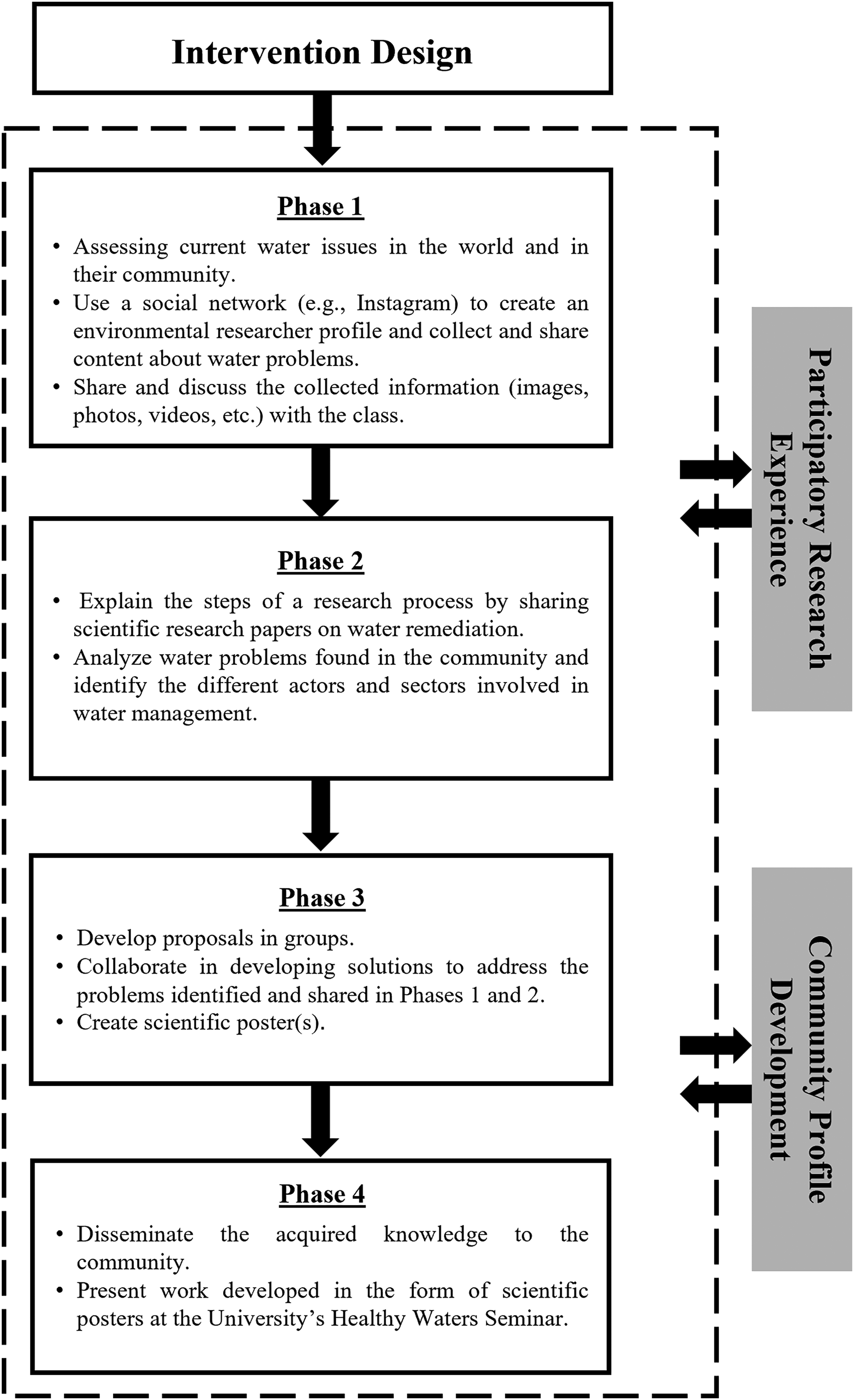
Intervention design used in the Healthy Waters educational program.
The intervention was implemented by four university students, identified as tutors, in two different classes (i.e., two university students per class) in collaboration with class teachers. Together, tutors and class teachers worked to achieve the following main objectives: (i) to discuss environmental issues considering their scientific and sociopolitical nature, mainly based on research related to water quality/pollution; (ii) to lead pupils in the process of identifying water problems and solutions in their community, following the stages of the research process; and (iii) to encourage young students to take the role of active agents in their local community. The HW program comprised six classroom sessions over 3 months.
Research context
The public school hosting the HW project was located in a rural area of northern Portugal. Since 2016, this school has been part of “Referenciais de Integração Curricular” (Curriculum Integration Benchmarks), a pilot project for pedagogical innovation intended to inspire a new pedagogical approach based on flexible curriculum management and with a strong emphasis on experimental teaching and creativity. This public school has participated in different projects, including projects related to the environment (e.g., ECO-Schools, “Ciência Viva,” and “Clube Das Escolas Do Parque Das Serras Do Porto”).
Participants
This intervention involved 35 students from two classes in the seventh and eighth grades. The pupils’ ages ranged from 12 to 16 years, with most participants being 13 years of age (19 of 35 participants). In terms of gender, 14 participants were male, 20 were female, and one student preferred not to respond. Most participants had a low or medium socioeconomic status, with 31 of the participants responding that they had fewer than 50 books at home. Regarding educational expectations, 17 of the participants desired a higher education degree.
Data collection
Participatory research
Data collection was the first step in the process of promoting environmental citizenship using a participatory community profile (Phase 1, Figure 1). Accordingly, students started by identifying environmental and water problems in their community using photographs and videos taken on their routes from home to school or walking about in their daily lives. The collected materials were then shared with the class via the environmental researcher profile explicitly created for the HW project (Phase 1, Figure 1). Collecting these data was crucial for the students, as it allowed them to discover the fundamental problems of their community, propose solutions, and even attempt to solve them. Using data obtained via the participatory research process, participants organized and presented their findings in a scientific poster format.
Quantitative study
Retrospective pretest/posttest
A retrospective pretest/posttest questionnaire was used for quantitative data collection. At the end of our intervention at the school, the participants were asked to complete a questionnaire that required them to give two answers per item: one regarding how they evaluated themselves in that category or topic before they participated in the HW project and the other regarding their evaluation at the moment they were filling out the questionnaire, which happened after they participated in the project. This questionnaire design allowed us to assess the impact of our intervention, avoiding common pretest overestimation (Little et al., 2020; Pratt et al., 2000), which frequently occurs because of a lack of a baseline level of knowledge regarding the concepts that are central to the intervention, limiting the accuracy of self-evaluation in self-report methods (Davis, 2003). The students took approximately 15 min to complete the questionnaire.
Variables collected
The questionnaire was anonymized, and no data were collected to identify the participants. Its structure was adapted from Marques et al. (2020) and presented in Portuguese. The questionnaire comprised four sociodemographic questions concerning the participants’ age, gender, and number of books at home, which served to assess the socioeconomic level of the participants, and an item to evaluate the academic level they intended to achieve. After these sociodemographic questions, the rest of the questionnaire was divided into three parts. Part A included a mix of multiple-choice open-ended questions related to environmental issues. Participants were asked to identify specific environmental problems related to water on three scales: community, country, and planet. Part B included a scale for the dimension of concerns about local environmental issues (Marques et al., 2020) and a scale to measure emotions concerning environmental issues (adapted from Van Zomeren et al., 2008). Part C comprised a scale to measure participants’ engagement with the environment (adapted from Emler, 2011; Torney-Purta et al., 2001), a scale to measure the use of different media as sources of environmental information (adapted from Emler, 2011), and a scale to measure participants’ civic and environmental engagement activities (adapted from Lyons, 2008).
Questionnaire data analysis
Quantitative results obtained from the retrospective questionnaires were analyzed using Statistical Package for the Social Sciences (SPSS), version 27. OriginPro software (version 9) was used to create the graphics presented in the results section. The questionnaires collected from the participating students measured their experiences at two moments in the project: at the beginning of and end of the HW project. Paired-sample t-tests were performed for the entire sample to verify the differences in the means recorded for the different dimensions studied in the questionnaire. A repeated-measures analysis was performed to further explore potential differences in average participant responses through the categorical variable of gender. No statistical analysis of the age variable was carried out because participants were enrolled in the seventh and eighth grades with almost no age variation. Similarly, the socioeconomic categorical variable, which was measured by asking how many books participants had at home, was not analyzed because, despite the six initial categories being merged into three more extensive ones, the distribution of the sample was unequal, limiting possible statistical comparisons.
Qualitative study
Tutor logbooks
Data were collected from tutors’ logbooks, which were created within the scope of assessing subject X from Faculty Y of University Z. The tutors had a grid of questions to answer throughout the school intervention. These questions ranged from an analysis of the context to an examination of the implementation process and their opinions on the impact of the intervention.
Tutor logbook data analysis
This study used thematic analysis to explore qualitative data collected from tutors’ logbooks, in which they recorded their experiences during HW program interventions. Thematic analysis was used to identify and examine the themes present in the texts of interest (Braun & Clarke, 2006). This analysis was conducted by three members of the research team who created a set of categories based on the tutors’ answers to each of the questions in their logbooks. Each of research team members then read all of the logbooks individually, carefully analyzing the content. Finally, the three members shared the categories created in their respective analyses, accompanied by excerpts capturing these categories, and agreed on the creation of a final category tree.
This approach allowed for the systematic and in-depth exploration of tutors’ views and opinions within logbook data, providing valuable insights regarding the impact of the HW program on participating students.
Results and discussion
Findings of participatory research
After analyzing the community's environmental problems and proposing solutions based on the research process, each class organized the results in the form of scientific posters. Figures 2 and 3 show examples of the posters produced by the seventh-grade students.
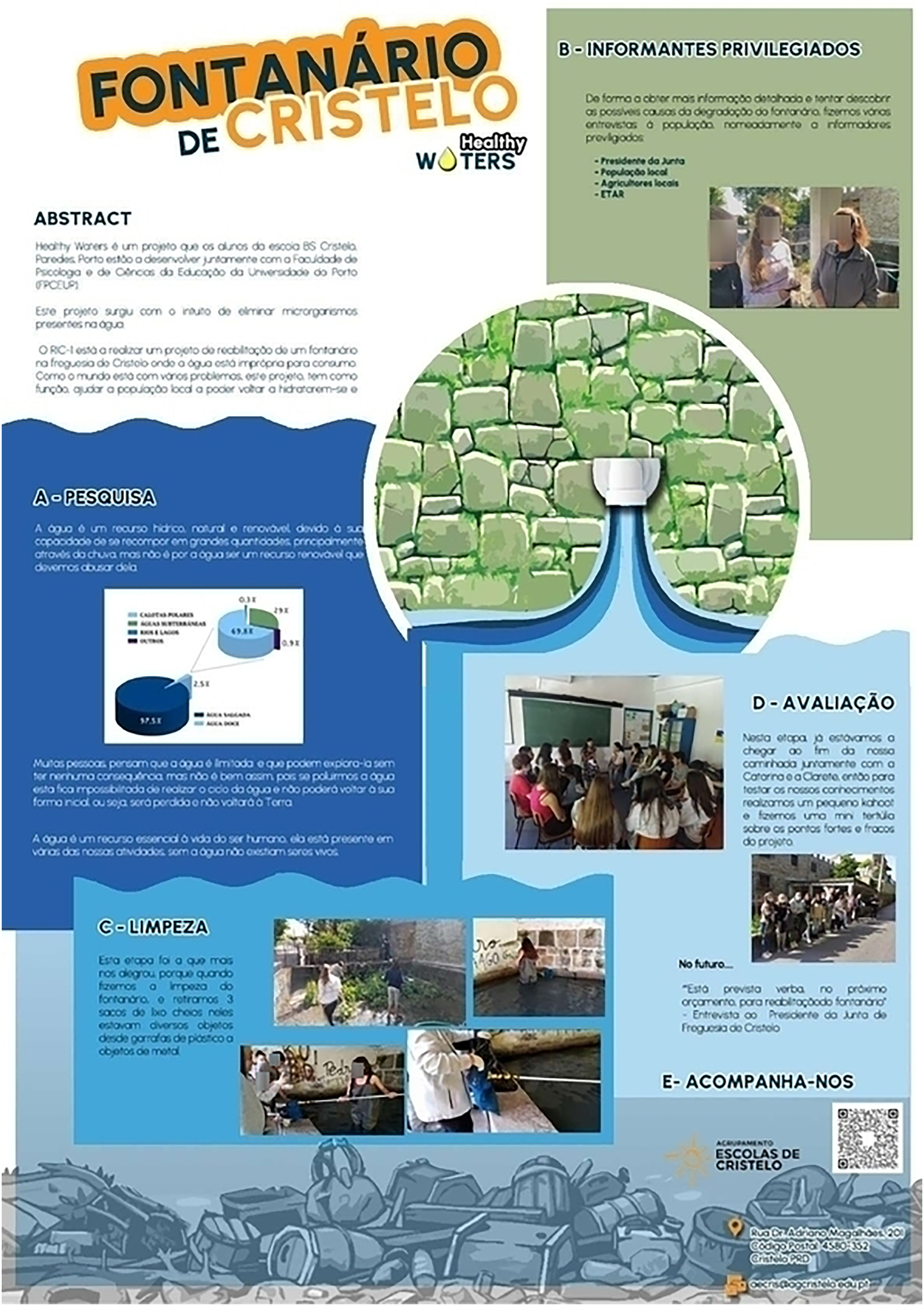
Poster produced by the students of the seventh-grade class entitled “Cristelo’s Fountain.”
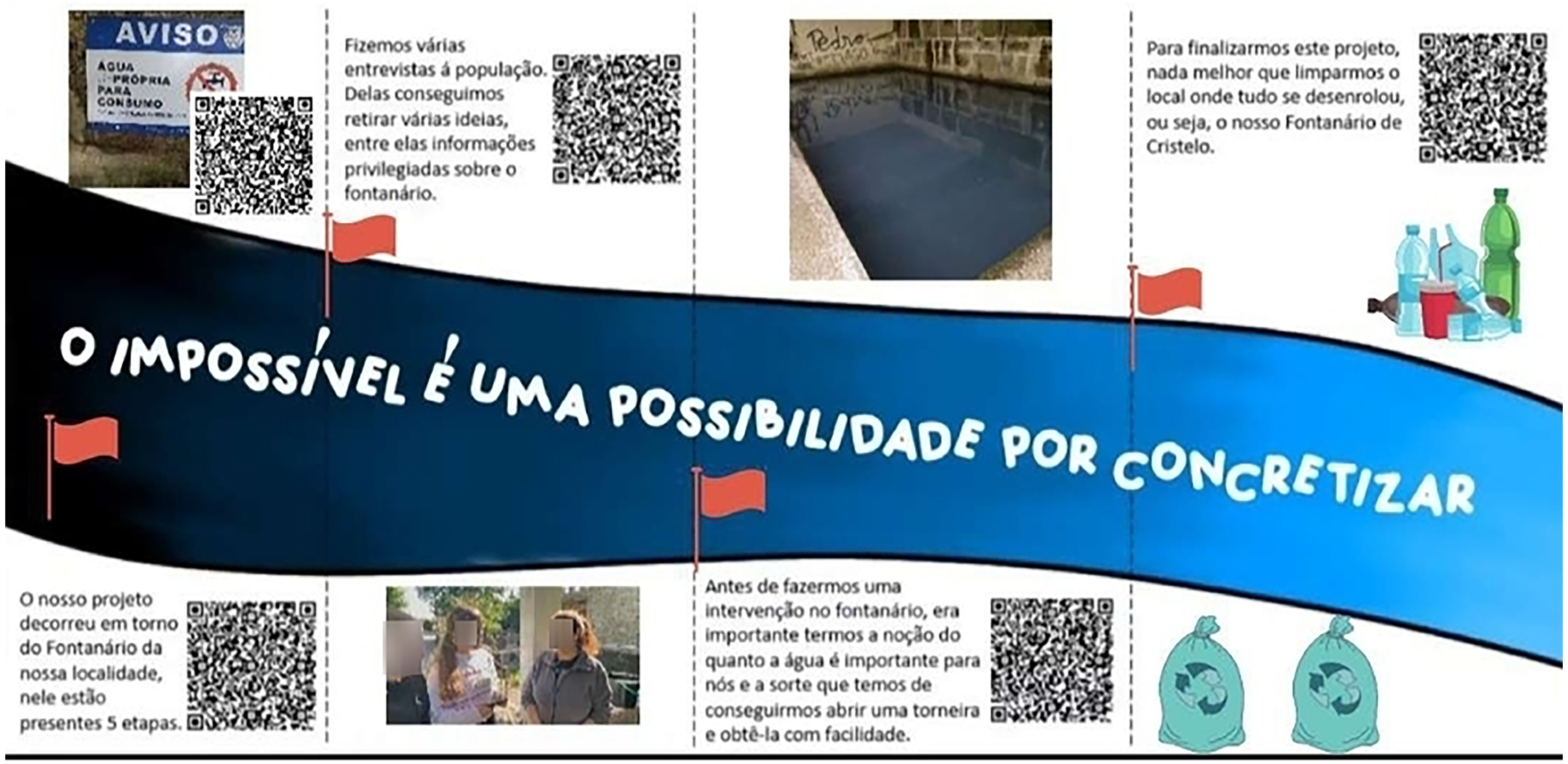
Poster produced by the students of the seventh-grade class entitled “The impossible is an unrealized possibility.”
Students presented two findings from their research work: (i) the community environmental problem identified as significant, namely, the pollution of the public fountain, rendering it unusable by the local population, and (ii) the actions performed by the students to solve the problem, such as interviews with privileged informants, the exposure of the situation to policymakers, and the cleaning of the fountain carried out by the class (Figure 4).
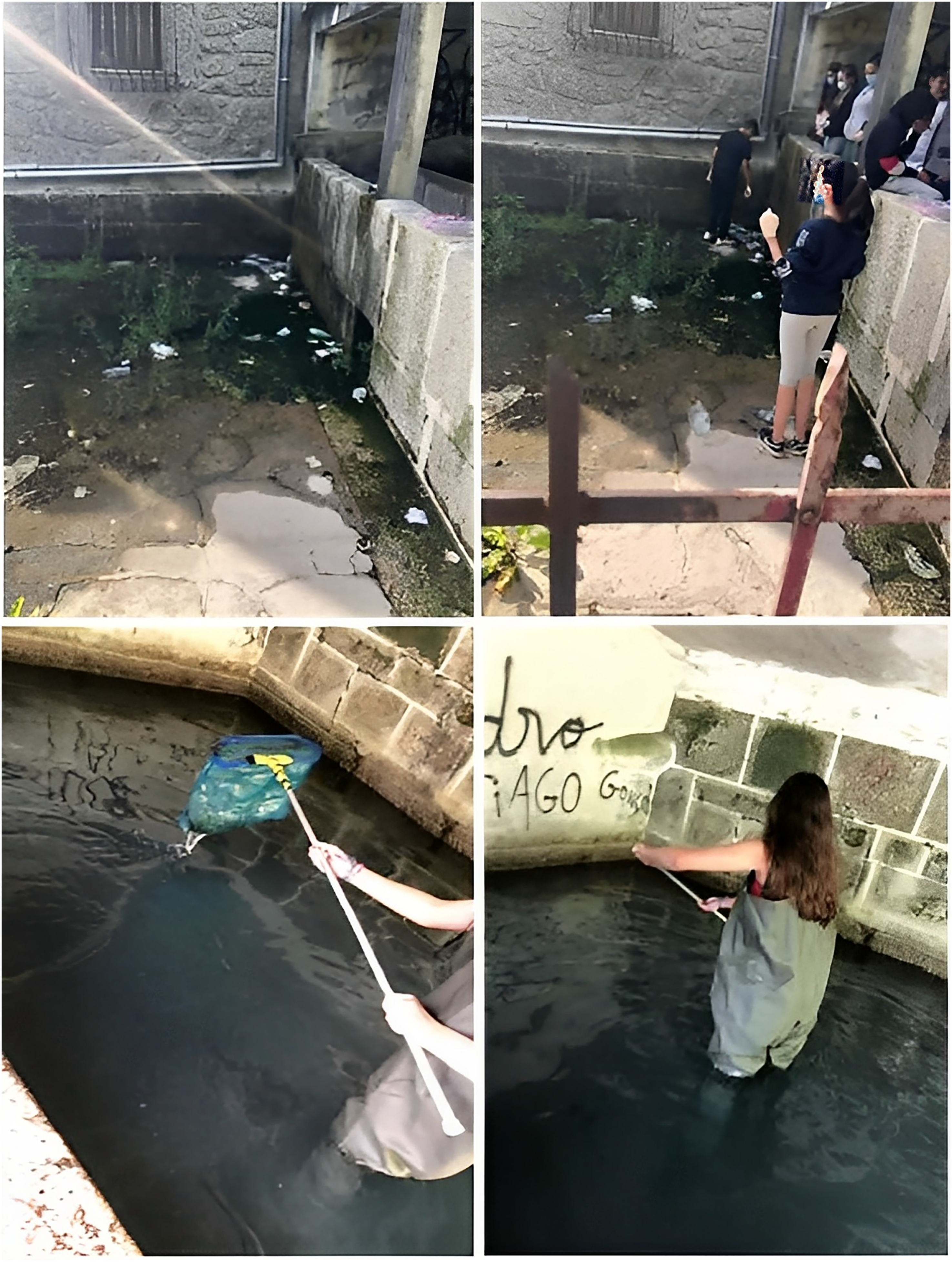
Photographic record of the public fountain cleaning initiative performed by the seventh-grade students.
The eighth-grade class conducted a different project focused on another local problem: the lack of a basic sanitation network in some areas of this rural region. Figure 5 presents one of the posters designed by the students to present the results of this research.
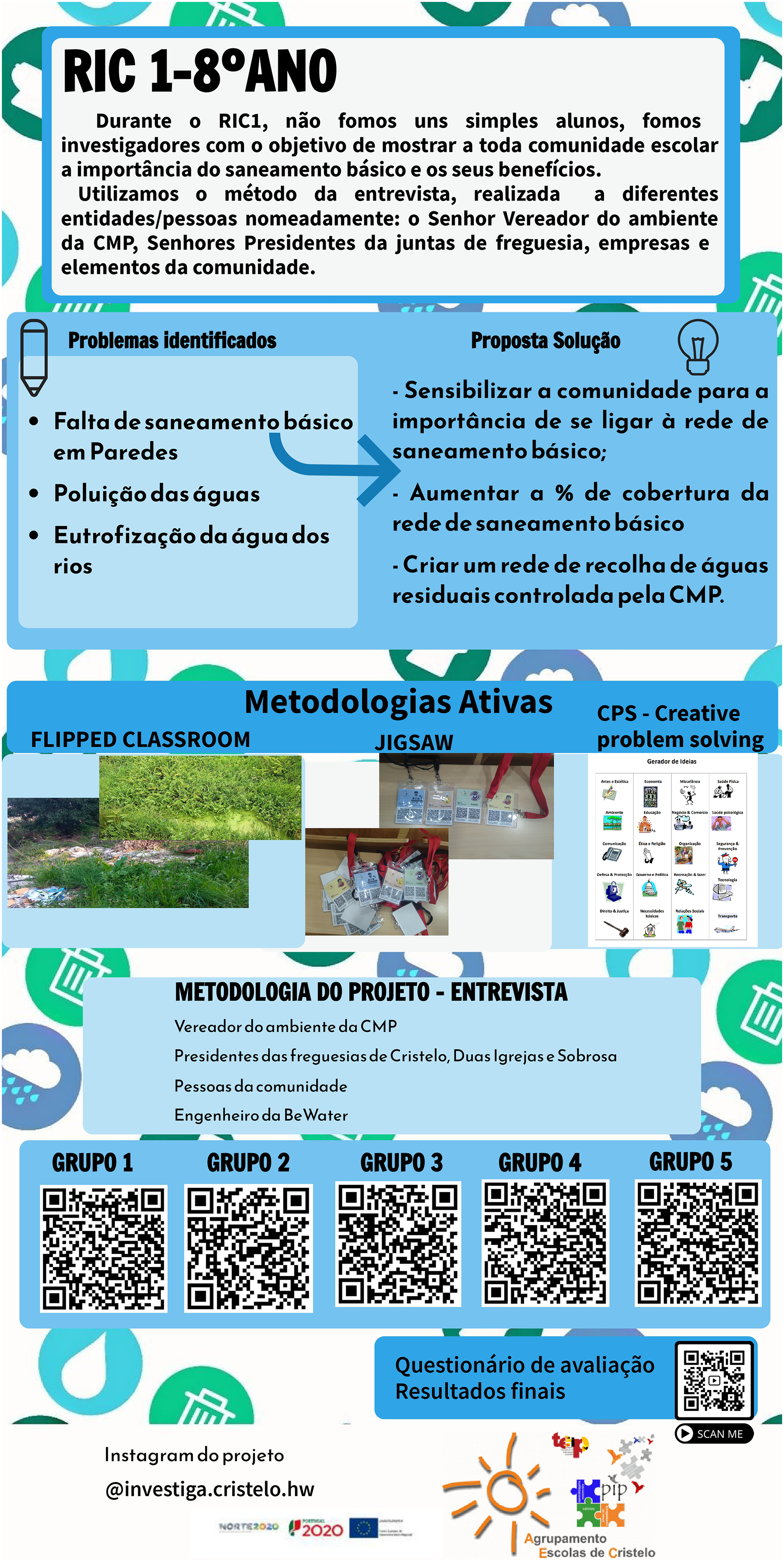
Poster produced by the students of the eighth-grade class.
The students aimed to raise awareness among the local population about the importance of access to sanitation networks and to alert policymakers to this concern. To this end, they interviewed people in the community with and without access to basic sanitation, including an engineer from a water management company and political representatives from the region.
The participatory process culminated in an event at the university, the HW Seminar, in which all the students presented and discussed the results of their research with their teachers, tutors, and classmates, as well as researchers and university students, among others. The seminar proved to be an essential component in fulfilling the central objective of the HW program, namely, prompting students to identify themselves as researchers, the real protagonists of this process. In this way, it was possible for students to recognize the impact they could have on their community and their capacity to make a difference through active citizenship. Several studies have found similar advantages when applying this methodology to involve individuals, communities, and other actors in dealing with environmental problems (Marques et al., 2020).
Quantitative study
Concerns about environmental issues
Questionnaire data were used to evaluate the effect of the HW intervention on the participants’ concerns regarding several local environmental issues. As Table 1 shows, there was a statistically significant increase in concerns about environmental issues. More specifically, a paired-sample t-test was conducted to compare responses to the following topics before and after participation in the project: (i) pollution of local forests (before—M = 3.38, SD = 1.02; after—M = 4.00, SD = 0.92), t(33) = 3.36, p = .002 (two-tailed); (ii) undifferentiated garbage disposal (before—M = 3.29, SD = 0.93; after—M = 4.00, SD = 0.84), t(34) = 4.28, p < .001 (two-tailed); (iii) the level of local housing without basic sanitation (before—M = 3.06, SD = 1.11; after—M = 4.20, SD = 0.87), t(34) = 5.08, p < .001 (two-tailed); and (iv) the pollution of local streams and rivers (before—M = 3.66, SD = 0.87; after—M = 4.49, SD = 0.74), t(34) = 4.98, p < .001 (two-tailed). Cohen's d statistics presented in Table 1 indicate medium to large effect sizes (0.58–0.87) (Cohen, 1988).
Healthy Waters (HW) participants’ concerns about local environmental issues.
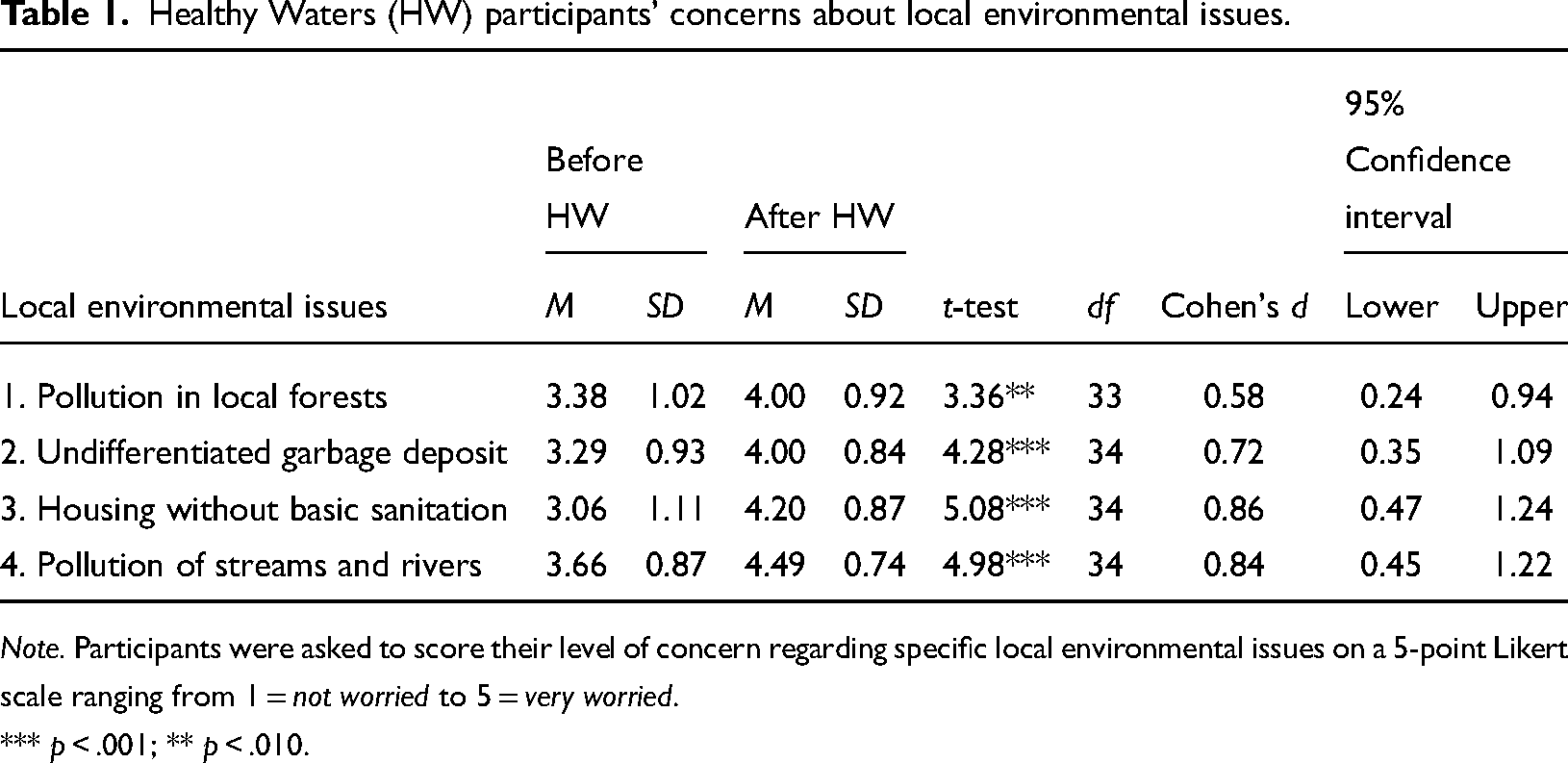
Note. Participants were asked to score their level of concern regarding specific local environmental issues on a 5-point Likert scale ranging from 1 = not worried to 5 = very worried.
*** p < .001; ** p < .010.
As such, the school intervention seemed to heighten participants’ concerns about local environmental issues. As Figure 6 shows, when asked to rate their concerns about local environmental issues—namely, the pollution of municipal forests, disposal of undifferentiated waste in containers, the existence of housing without basic sanitation, and the pollution of the water courses in their municipality—on a scale of 1–5 (1 = not at all concerned and 5 = very concerned), their degree of concern increased for all issues after the intervention. However, considering that these variables evaluated environmental concerns directly linked to the projects developed by the participants during the intervention, the results may not be transversal, indicating a possible link between the participatory methodologies used in the intervention and the increase in participants’ concern about specific environmental issues.
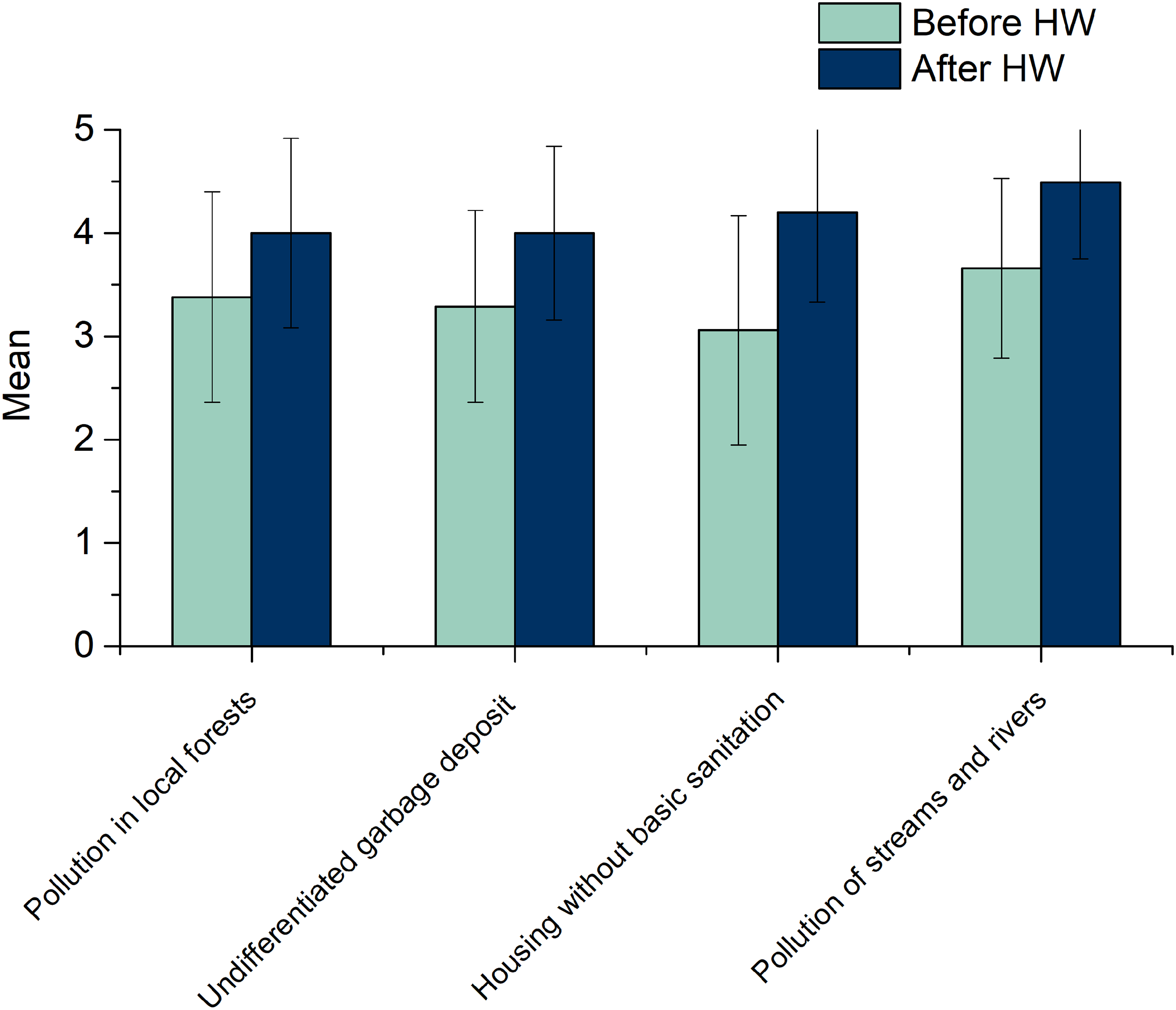
Healthy Waters (HW) participants’ concerns about local environmental issues.
Water issues like the lack of basic sanitation and pollution of streams and rivers generated slightly higher levels of concern, which is hardly surprising given that the intervention was focused on water quality/pollution. Despite the short intervention period (i.e., approximately 3 months), the increase in participants’ concerns for environmental issues suggests that interventions based on a participatory approach may have a positive impact on young people, heightening their awareness of environmental issues. Similar outcomes have been reported in several studies (Rios & Menezes, 2017).
This study also analyzed the effect of the HW intervention on participants’ concerns about several local environmental issues according to their gender. As Table 2 shows, there were statistically significant differences in participants’ concerns about the following topics according to their gender: (i) the pollution of local forests (before: male—M = 2.69, SD = 1.03; female—M = 3.80, SD = 0.77; after: male—M = 2.91, SD = 1.04; female—M = 4.20, SD = 0.83), F (1,31) = 9.79, p < .001 (two-tailed); (ii) undifferentiated garbage disposal (before: male—M = 2.86, SD = 0.54; female—M = 3.50, SD = 1.00; after: male—M = 3.57, SD = 0.94; female—M = 4.25, SD = 0.64), F (1,32) = 8.99, p < .001 (two-tailed); (iii) housing without basic sanitation (before: male—M = 2.79, SD = 1.19; female—M = 3.15, SD = 0.99; after: male—M = 4.21, SD = 0.80; female—M = 4.15, SD = 0.93), F (1,32) = 0.33, p = .554; and (iv) the pollution of local streams and rivers (before: male—M = 3.00, SD = 0.78; female—M = 4.10, SD = 0.64; after: male—M = 4.21, SD = 0.89; female—M = 4.65, SD = 0.59), F (1,32) = 17.21, p < .001 (two-tailed). The eta square statistics presented in Table 2 indicate large effect sizes (0.22–0.35) (Cohen, 1988).
Gender differences related to local environmental concerns in Healthy Waters (HW) participants.
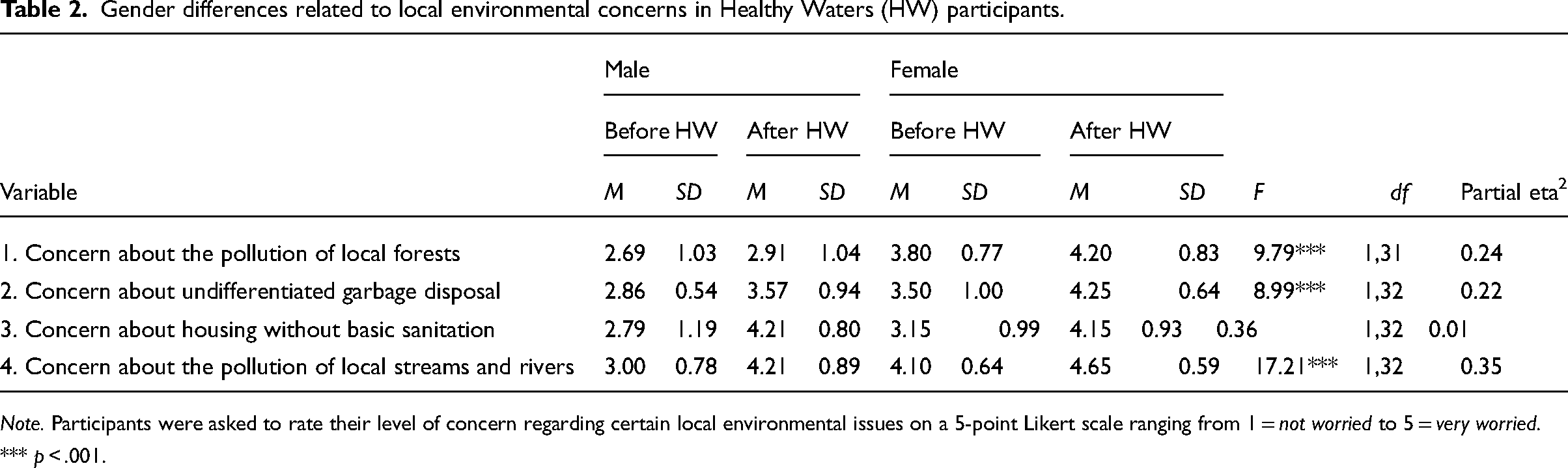
Note. Participants were asked to rate their level of concern regarding certain local environmental issues on a 5-point Likert scale ranging from 1 = not worried to 5 = very worried.
*** p < .001.
Comparison of the survey responses of male and female participants revealed differences in three of the four concerns (Figure 7). Both before and after the HW intervention, male participants generally exhibited less concern than their female peers. Similar behavior was recently reported in a Portuguese study involving children between the ages of 9 and 12 (Rios & Menezes, 2017), which found that female students were more sensitive to climate change and showed greater willingness to learn more about the subject.
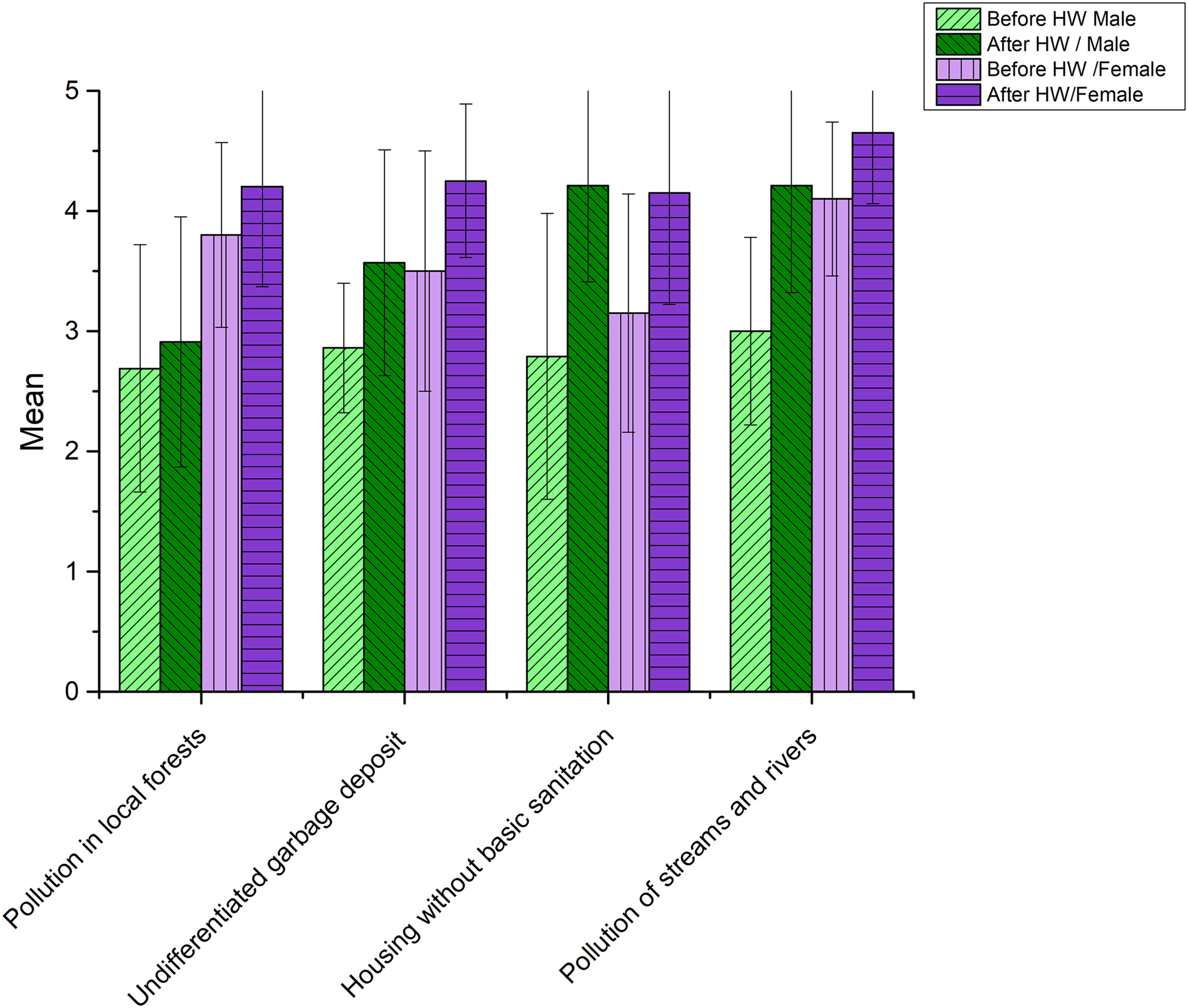
Gender differences related to local environmental concerns in Healthy Waters (HW) participants.
Intensity of emotions about environmental issues
As Table 3 and Figure 8 show, analysis using a paired-sample t-test revealed no statistically significant differences in participants’ emotional intensity toward environmental issues during the program.
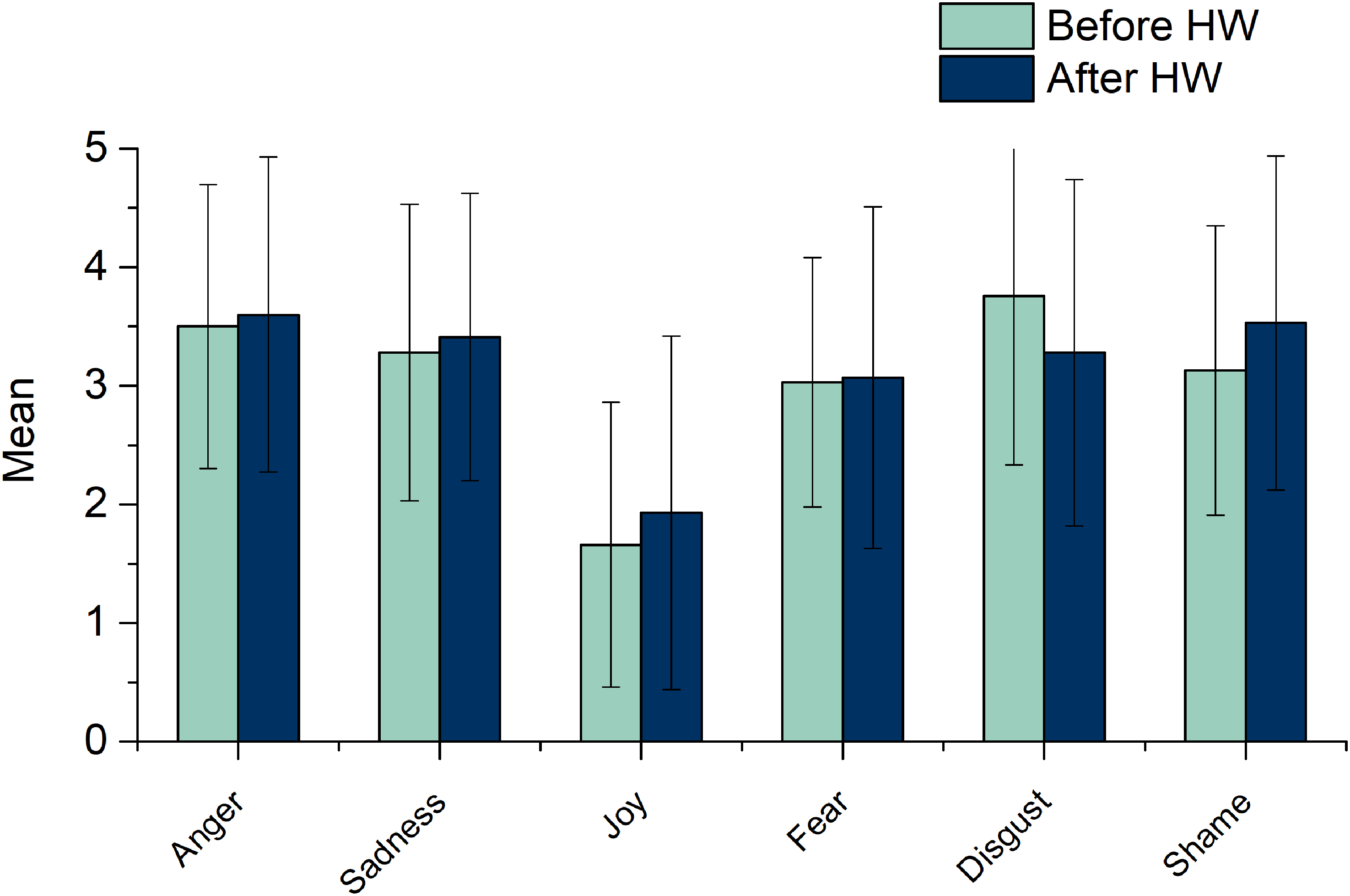
Healthy Waters (HW) participants’ emotional intensities elicited about environmental problems.
Healthy Waters (HW) participants’ emotional intensity regarding environmental issues.
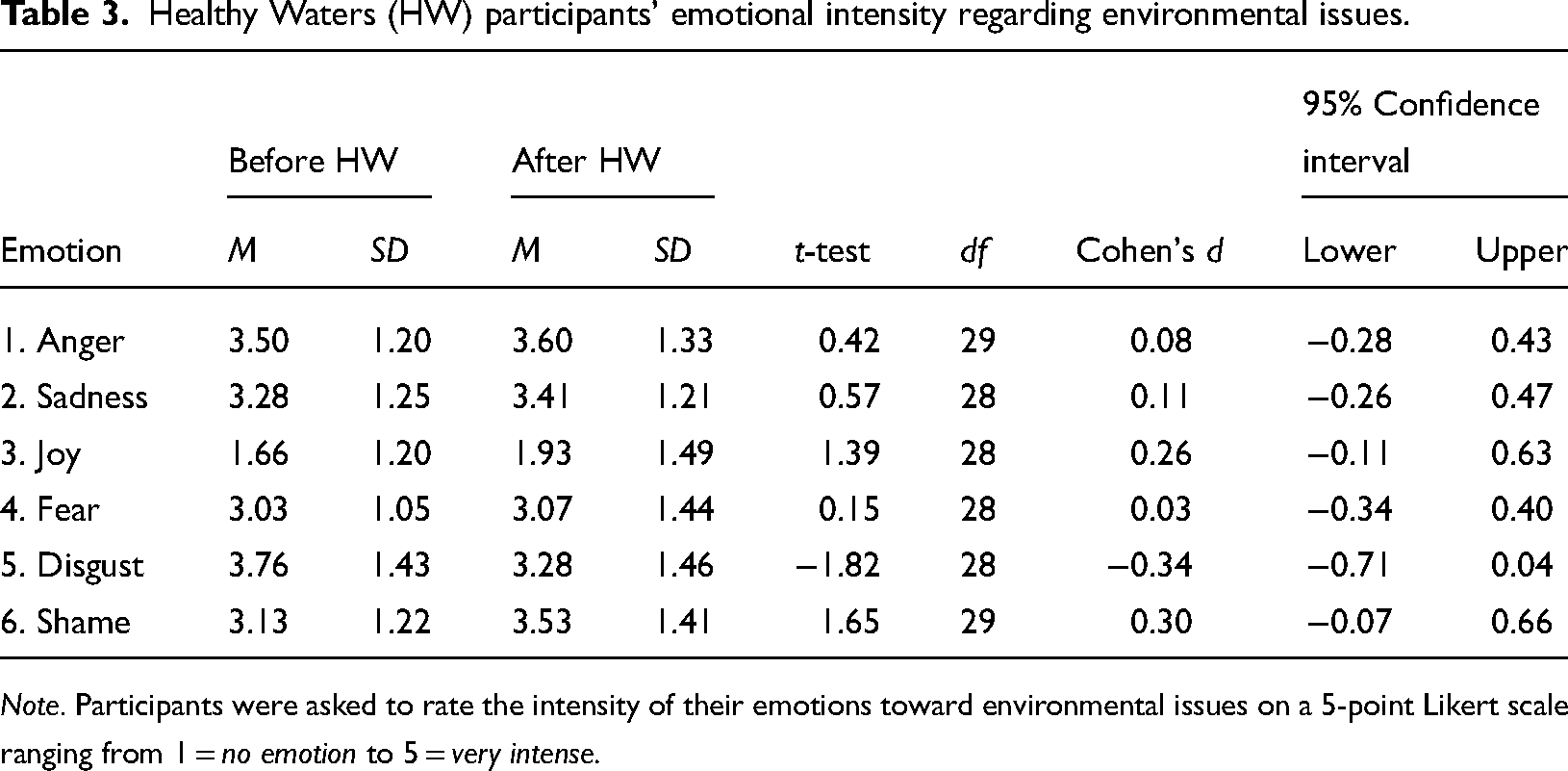
Note. Participants were asked to rate the intensity of their emotions toward environmental issues on a 5-point Likert scale ranging from 1 = no emotion to 5 = very intense.
Such differences might be anticipated given participants’ growing awareness of various environmental problems and the program's attempt to cultivate proenvironmental attitudes and behaviors. Emotions have an essential relationship with environmental attitudes and behaviors. As shown by Carrus et al. (2008), while positive emotions play an important motivational role, negative emotions hinder the modification of behavior and habits in individuals. However, other studies indicate that negative emotions like worry (Bouman et al., 2020) and sadness (Schwartz & Loewenstein, 2017) can actually promote proenvironmental action. Research on the emotional intelligence (EI) construct has demonstrated the importance of emotions in environmental attitudes and behaviors. Aguilar-Luzón et al. (2014) found that adults with higher levels of emotional attention (i.e., who more easily recognize their own emotions) and emotional clarity (i.e., capacity to comprehend their emotions) have higher levels of proenvironmental attitudes and behaviors. However, Robinson et al. (2019) did not observe the same correlation among adolescents, because the Emotional Recognition and Expression dimensions analyzed in the study were unrelated to proenvironmental attitudes and behaviors. In this respect, this study has methodological limitations. The participants may not have correctly understood the requested task or, at the time the questionnaire response was collected at the end of the intervention, may have had difficulty assessing the intensity of their emotions felt about environmental problems before and after the intervention.
Media sources for environmental information gathering
Questionnaire responses were used to assess the effect of the HW program on the participants’ use of different media sources to obtain new information about environmental issues. Table 4 and Figure 9 present the results of a paired-sample t-test comparing responses before and after the intervention. Results revealed a statistically significant increase for the following items: (i) newspapers and magazines (before—M = 2.94, SD = 1.01; after—M = 3.47, SD = 1.08), t(33) = 4.66, p < .001 (two-tailed); (ii) television and radio (before—M = 2.88, SD = 0.98; after—M = 3.44, SD = 0.93), t(33) = 4.63, p < .001 (two-tailed); and (iii) the Internet (before—M = 3.18, SD = 0.87; after—M = 3.91, SD = 0.75), t(33) = 5.18, p < .001 (two-tailed). Cohen's d statistics presented in Table 4 indicate large effect sizes (0.80–0.89) (Cohen, 1988).
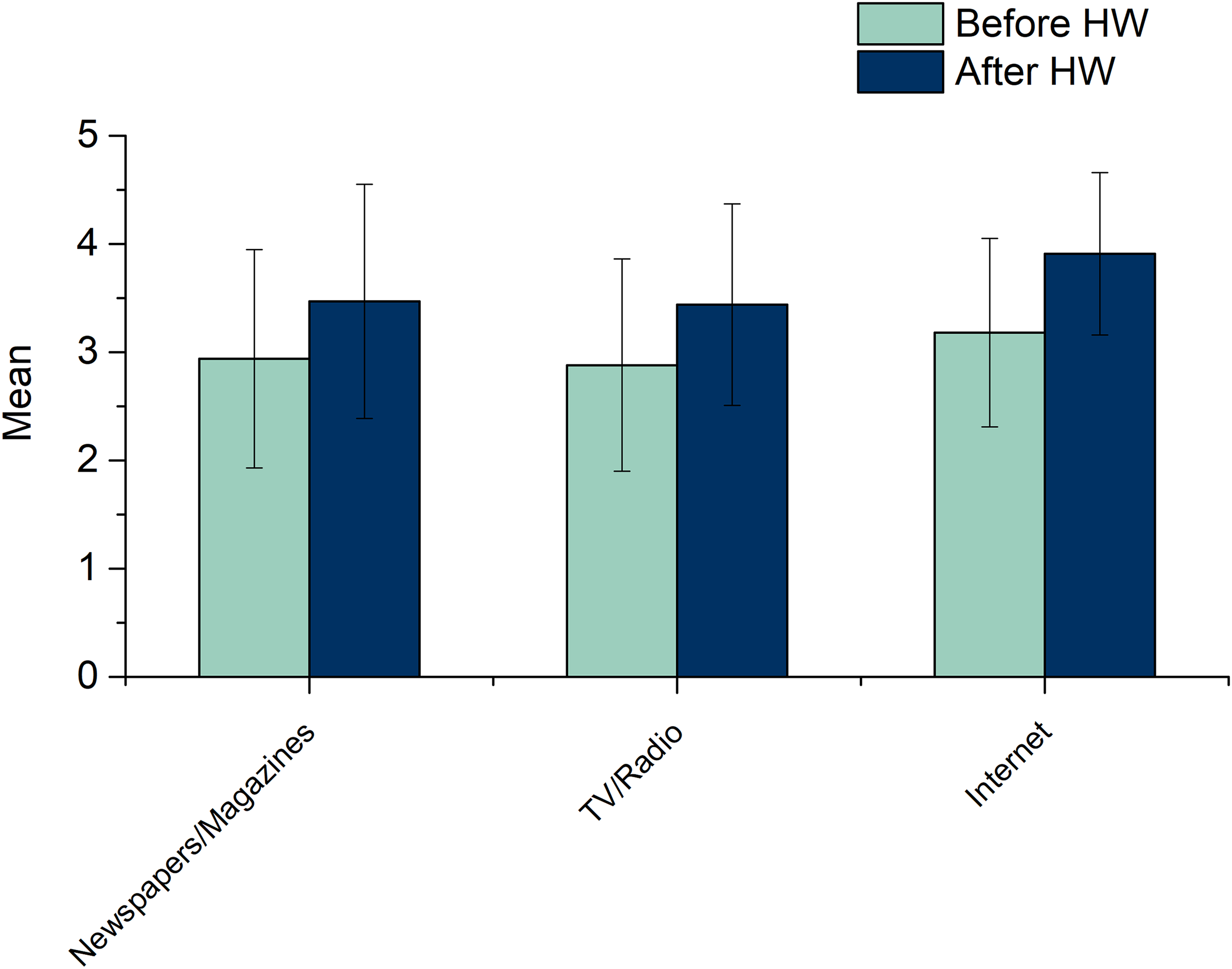
Healthy Waters (HW) participants’ frequency of media used for environmental information.
Healthy Waters (HW) participants’ frequency of media use for environmental information.
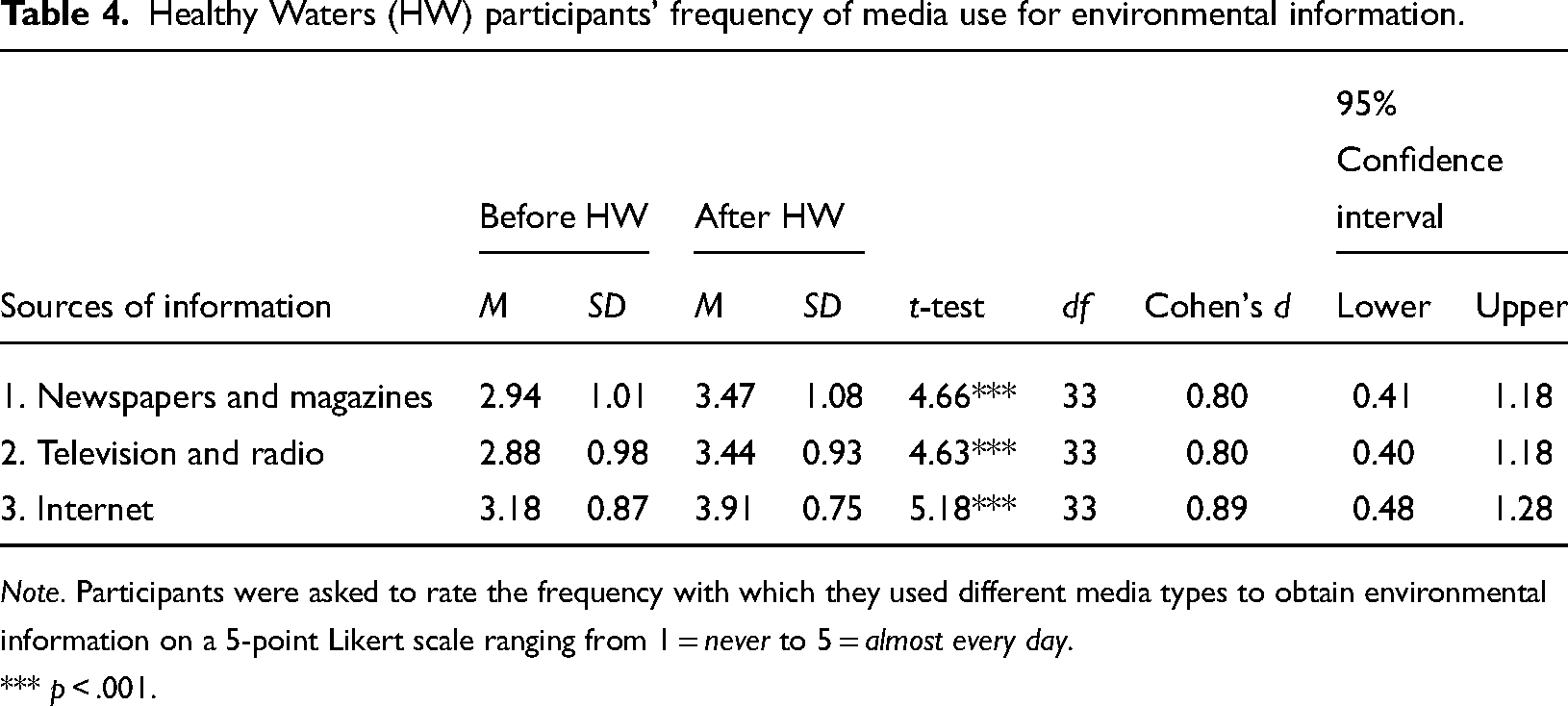
Note. Participants were asked to rate the frequency with which they used different media types to obtain environmental information on a 5-point Likert scale ranging from 1 = never to 5 = almost every day.
*** p < .001.
As such, the Internet was the preferred medium for gathering information about environmental issues. This came as no surprise given the fact that participants were required to present and discuss online news that addressed environmental issues. Scholars disagree on the importance of mass media such as newspapers, television, and the Internet for disseminating environmental knowledge and climate crisis-related information (Ojala, 2015). Depending on the dominant position on climate change conveyed by national mass media, traditional media, which typically excludes the Internet, can help enlighten citizens about the impacts and risks of climate change (Islam et al., 2013) or reinforce climate denialism (Whitmarsh, 2011). According to the Special Eurobarometer 516 (European Commission, 2021), young people mainly use online and social media resources to gather scientific information, including that related to climate change. Rubin et al. (2022) analyzed Portuguese mass media coverage of climate change. Similar to observations in other European countries, respondents found the information to be poor in quality, claiming that most news stories were sensationalist and focused on the negative aspects of climate change, with little attention to positive developments. Rubin et al. (2022) also found that climate change is a prevalent topic in all types of media, suggesting that such information is easily available. Nonetheless, expanding society's knowledge of this topic remains necessary (Rubin et al., 2022). Overall, results suggest that using these means of communication can contribute positively to the development of environmental knowledge, which was strengthened by this intervention program.
Civic engagement regarding the environmental cause
The participants were asked about their civic engagement with environmental issues, before and after their participation in the HW program. Considering the environmental issues under study, the results showed changes in their engagement. However, more relevant results can be seen in some actions, such as: (i) “sharing environmental content,” (ii) “visiting the website of an environmental group,” and (iii) “joining an online environmental group.” All participants used digital tools to carry out their respective actions.
In Table 5 and Figure 10, the results of a paired-samples t-test comparing responses before and after the intervention show a statistically significant increase in civic engagement activities: (i) distributing flyers (before—M = 1.97, SD = 0.73; after—M = 2.91, SD = 1.04), t(32) = 5.59, p < .001 (two-tailed); (ii) green consumption, that is, making purchase decisions based on environmental issues associated with the product (before—M = 2.52, SD = 0.83; after—M = 3.33, SD = 0.85), t(32) = 6.89, p < .001 (two-tailed); (iii) writing about the environment (before—M = 2.45, SD = 0.91; after—M = 3.24, SD = 0.94), t(32) = 5.07, p < .001 (two-tailed); (iv) attending concerts or fundraisers for environmental causes (before—M = 2.21, SD = 0.99; after—M = 2.73, SD = 1.10), t(32) = 3.40, p = .002 (two-tailed); (v) sharing different types of content about the environment (before—M = 2.16, SD = 1.11; after—M = 3.03, SD = 1.26), t(31) = 6.24, p < .001 (two-tailed); (vi) visiting the official website of an environmental organization (before—M = 2.52, SD = 0.79; after—M = 3.52, SD = 1.00), t(32) = 6.93, p < .001 (two-tailed); and (vii) joining an environmental group on social media (before—M = 2.15, SD = 1.03; after—M = 3.00, SD = 1.35), t(32) = 4.58, p < .001 (two-tailed). The Cohen's d statistics presented in Table 5 indicate large effect sizes (0.80–1.21). Although there were statistically significant increases in all of the activities analyzed, the mean values after the intervention approached the center of the scale (close to the value of 3), indicating the need to adopt these behaviors on a more permanent basis.
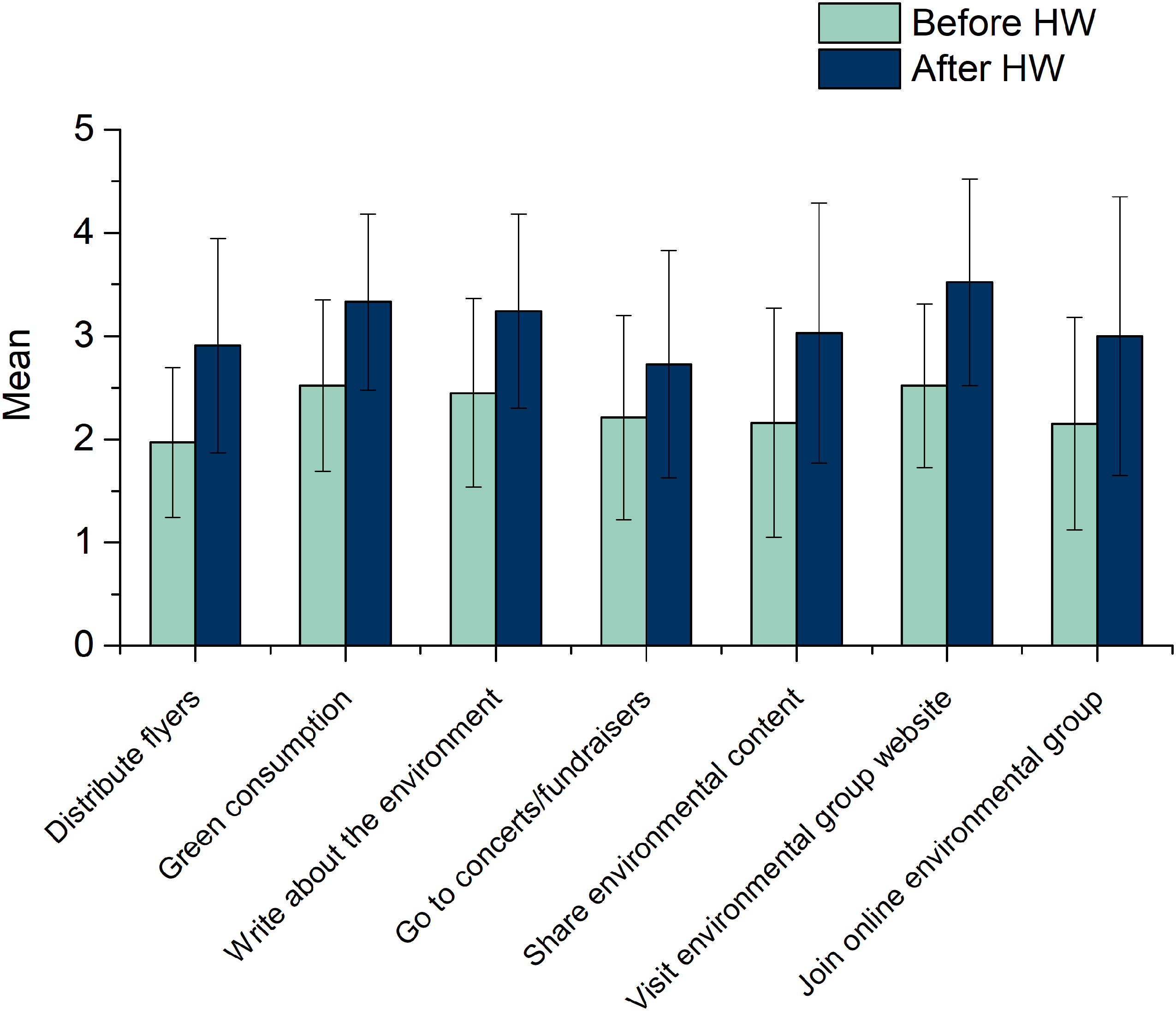
Healthy Waters (HW) participants’ frequency of civic proenvironmental activities.
Healthy Waters (HW) participants’ frequency of engaging in civic proenvironmental activities.
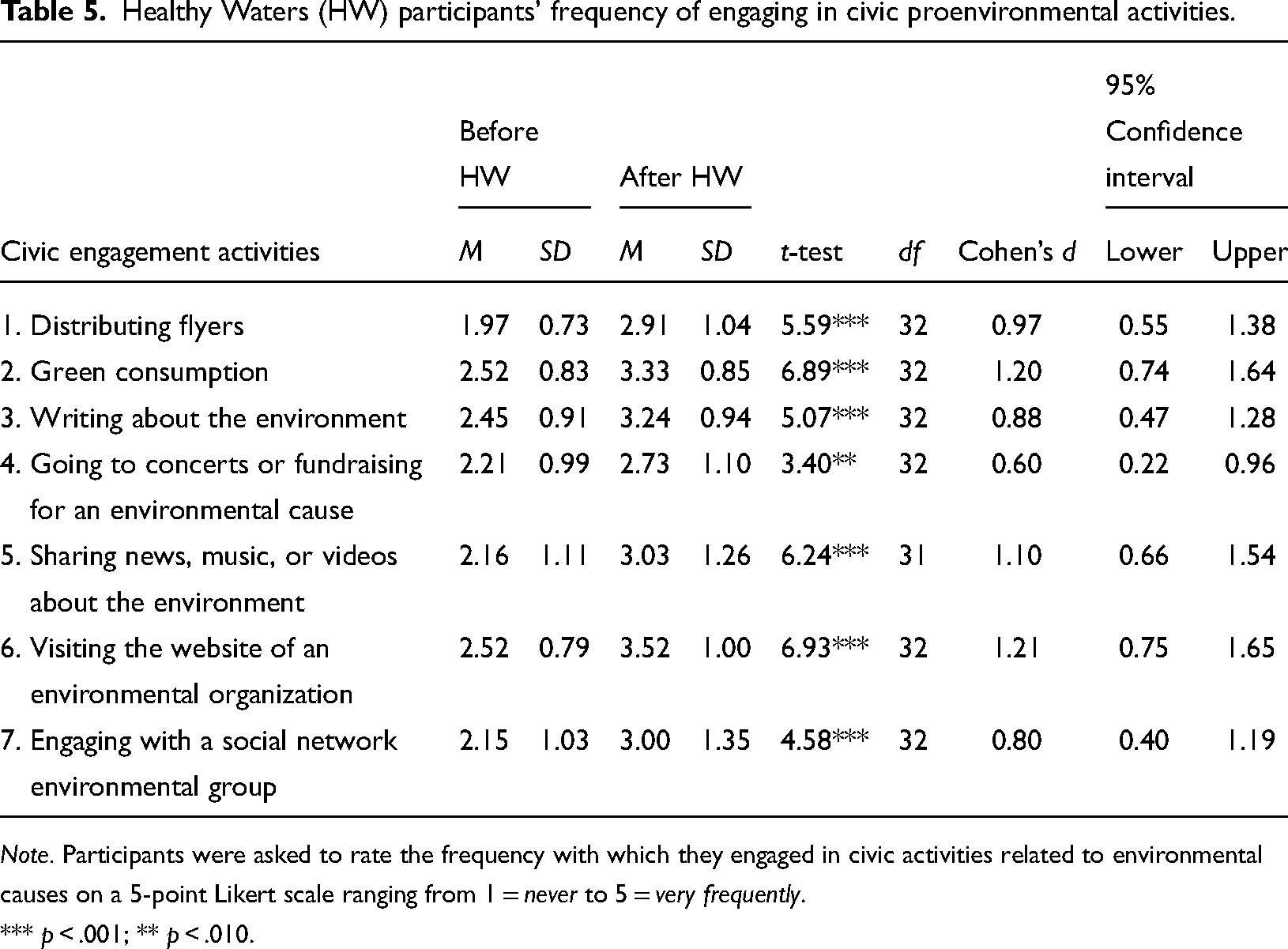
Note. Participants were asked to rate the frequency with which they engaged in civic activities related to environmental causes on a 5-point Likert scale ranging from 1 = never to 5 = very frequently.
*** p < .001; ** p < .010.
As Campos et al. (2016) noted, the virtual space has emerged as a showcase for the explanation of discourse, projects, and causes, as well as the transfer of information and knowledge. Moreover, digital media allows for the creation of parallel circuits of information, empowering those with less of a voice or platform in the public sphere. The use of digital tools as a form of civic engagement among young people appears to be related to their context. According to Lenhart (2009), young people recognize that blogs or social networking sites are places for political and civic engagement and participation. Social media can be used to reach those who are not well served by other informal environmental literacy efforts. Social media thus serves as a means of informal learning insofar as they provide spaces for sharing information, reflection, and discussion about various issues, including environmental issues. Severo et al. (2019) confirmed that social and environmental awareness positively influenced individuals exposed to information (i.e., videos, photos, and texts) about social responsibility and environmental sustainability. Therefore, using digital tools in activities related to environmental issues in the HW program not only served as a research strategy but promoted environmental and social awareness among the participants.
Qualitative study
The HW intervention facilitates the creation of important connections between the students and their community. This was repeatedly pointed out by the tutors. For instance, tutor A noted that the intervention “raised awareness of being active and involved citizens in their own community,” while tutor C concluded that, “so far it has been very satisfactory; the students have demonstrated through the debate that, after the interviews and research (…) they learned a lot about (…) what the population thinks, whether it would be interesting to clean and disinfect the water so that the population can use it again.” As seen in Marques et al. (2020) such links between students and the community help them recognize their ability to promote important changes in their community.
Another relevant dimension of the HW intervention is its collaborative approach. The tutors identified several gains through this approach's emphasis on collaboration. As tutor C asserted, “The group of students showed they have many potentialities in terms of autonomy and cooperative work; they were very participative in the activities that we proposed.” As evidenced by the work of Portman and Teff-Seker (2017), this group-based approach facilitates the environmental learning process and may influence students’ environment-related attitudes.
The HW intervention also promoted the capacity of the students to develop their critical thinking, an essential quality for active citizens. In this respect, tutor A noted, “Our role as professionals has gone a long way toward making them reflect, think outside the box,” while tutor B concluded that “I feel that they feel comfortable in making mistakes, in questioning and reflecting, when they are shown they have this space.” Critical thinking is essential to deal with several contemporary challenges. With the rise of denialist movements, students must be able to navigate available resources and make the best possible choice, individually or collectively, based on the information available (Mogensen, 1997).
The HW intervention also had a positive influence on students’ perspectives on their role in addressing environmental issues and the environmental health of their community. For instance, tutor A noted: “I confess that I felt fulfilled when I heard certain young people say that they believe that it is through small gestures that they can change the health of the planet.” Similarly, tutor B asserted, “they brought us very pertinent issues and problems that they would like to see worked on in their region, to promote the well-being of all.” This is the actual objective of EE projects, which should instill knowledge, motivate change, and have a real impact.
Study limitations
This study has several limitations, including a small sample size and a short intervention period. The sample size is related to the availability of university students to carry out interventions in schools within the scope of the service-learning methodology adopted by the HW project. The intervention period depended entirely on the project's funding and the availability of schools able to integrate the sessions into their curriculum. A similar observation was made in the Water Circle project (Marques et al., 2020), conducted by our research group, indicating that future studies should focus on assessing the impact of educational approaches used in such initiatives. Moreover, the school community's commitment to such projects depends on several factors, including their predisposition to work on these topics, prior knowledge of participatory methodologies, engagement of the participants, and availability of sufficient time in the curriculum to carry out the activities. In this case, the school's interest and involvement were highly positive. Another limitation is the use of a retrospective pretest/posttest questionnaire design, as this method is prone to recall bias and social desirability (Geldhof et al., 2018), which may have affected results. These limitations notwithstanding, this study provides an important starting point for understanding and demonstrating the impact of these interventions on young adults and their communities.
Conclusions
In conclusion, the HW program had a significant impact on several of the dimensions examined in this study. As expected, the participatory methodology and community profile approach of this program reinforced the participants’ concerns about local environmental issues because they were the focus of discussion and action during the intervention (RQ1). Results did not reveal any differences in the intensity of emotions felt by the students during their participation in the program, which was surprising given the fact that environmental problems tend to have a significant emotional impact on younger generations (RQ2). Results confirmed that participants’ use of media, particularly social media networks, increased over the program. This was to be expected given that one of the components of the program methodology involved collecting information on environmental problems through different media, particularly online media (RQ3). With its local and interventional focus, the HW program educated participants on different forms of civic participation, allowing them to act proactively in their local context. The results of this study demonstrate that there was a significant increase in participants’ civic engagement (RQ4). The tutors similarly indicated that the HW program had a positive impact on participants. Bringing young people closer to their community reinforces their capacity for and willingness to engage in democratic action, facilitating the resolution of environmental problems or other situations in their context. Additionally, the reinforcement of collaborative and critical thinking skills through the HW program, as observed by the tutors, provided students with the essential learning necessary to face complex situations, such as those presented by climate change (RQ5).
In summary, the results of this study suggest that the HW program promoted EE among young people and reinforced their sense of individual and collective agency in matters pertaining to their local community and environmental issues. In other words, the HW program managed to enhance civic, political, and scientific skills, which are valuable in confronting environmental challenges facing the world at multiple levels, both now and in the future. The finding resonates with current perspectives on EE, highlighting the potential of interdisciplinary, participatory, and dialogic approaches.
Footnotes
Acknowledgments
The authors would like to acknowledge the host school, teachers, and university students involved, particularly the students who participated in this study.
Contributorship
Isabel Menezes was responsible for the Conceptualization, the Supervision, and the Funding Acquisition. Norberto Ribeiro was responsible for the Investigation. Isabel Menezes and Norberto Ribeiro were responsible for the Methodology, the Resources, and reviewing and editing the draft. Diogo Filipe Prada da Silva, Joel Bruno Silva, and Marta Oliveira Barbosa were responsible for data analysis and writing the original draft.
Declaration of conflicting interests
The authors declared no potential conflicts of interest with respect to the research, authorship, and/or publication of this article.
Ethical statement
The questionnaire used in this study was approved by the Ethics Committee of the Faculty of Psychology and Educational Sciences of the University of Porto, and all participants provided informed consent authorizing data collection. Given the age of the student participants, their legal guardians were involved in the consent process. Nonetheless, the students themselves were informed about the study and asked to provide consent.
Funding
The authors disclosed receipt of the following financial support for the research, authorship, and/or publication of this article: This work was financed by the “Healthy Waters: Identification, Elimination, Social Awareness, and Education of Water Chemical and Biological Micropollutants With Health and Environmental Implications” Project (NORTE-01-0145-FEDER-000069), co-financed by the Programa Operacional Regional do Norte (NORTE 2020), Portugal 2020, and FEDER. This work was also supported by national funds from the Portuguese Foundation for Science and Technology, IP (FCT), under multiyear funding awarded to CIIE (Grant No. UIDB/00167/2020 and Grant No. UIDP/00167/2020). Norberto Ribeiro also acknowledges FCT funding for his contract, established under the Scientific Employment Stimulus Individual Program (Grant No. CEECIND/02115/2018).
