



Abstract
Purpose
With climate change education becoming more prevalent in schools around the globe, it is increasingly important that we understand parental perspectives on this topic. Children cross the boundaries between home and school culture every day, and their parents’ attitudes, beliefs, and practices can influence their academic engagement in all content areas. In the 2022–2023 academic year, New Jersey (NJ) adopted climate change education standards across grade levels and subject areas. We seek to understand parental perspectives on this curriculum change.
Design/Approach/Methods
In October–November 2022, a survey was distributed to parents of children attending public (state) school in NJ to identify how they discuss, support, and question their children's education about climate change. A total of 83 parents responded to the survey.
Findings
Survey results revealed that parents talk to their children about climate change with the support of various tools and strategies. However, parents expressed concerns about teachers’ preparedness to introduce climate change topics appropriately and their own readiness to support this instruction at home. Furthermore, several respondents voiced concerns about how to approach climate change discussions in a way that is mindful of children's developmental and mental health needs.
Originality/Value
Little is known about the way in which parents view educational innovations affect their implementation. This study examines parents’ perspectives on a novel approach to integrating climate change instruction across subject areas and grade levels.
Introduction
In June 2020, the First Lady of New Jersey, Tammy Murphy, announced that the state would spearhead the integration of climate change standards across grade levels and subject areas in U.S. schooling in the 2022–2023 academic year (State of New Jersey, 2022). In 2014, New Jersey adopted the Next Generation Science Standards (NGSS), which stipulate the introduction of climate change topics to middle school students from around the age of 11 years. This new initiative expands the scope of climate change education to include all subjects as early as Kindergarten, that is, for students from the age of about five. Therefore, the adoption of these new standards represents a significant expansion in the way in which the topic of climate change is addressed in New Jersey schools (New Jersey Department of Education, 2022). In order to better understand how New Jersey parents and children discuss climate change at home in view of this change, a survey was developed and distributed electronically to parents across the state between October and November 2022. A total of 83 parents from 12 of the state's 21 counties responded to the survey, providing a broad snapshot of perspectives from across New Jersey.
Climate change education
Climate change education has gained global traction over the past few decades. Climate education—which encompasses diverse initiatives like making school buildings more energy efficient and influences individual and community decisions—may serve as the impetus for large-scale action on climate change. Indeed, a 2020 study published in PLOS ONE found that a year-long community college course on carbon emissions and climate change decreased the students’ individual yearly CO2 emissions by 2.86 gigatons (Cordero et al., 2020). Accordingly, Cordero et al. (2020) suggest that the similar application of climate change education programs at scale (i.e., more universal application with students across the globe) could have an effect on carbon emissions equal to that of widespread rooftop solar technology or electric vehicle use. These impressive potential outcomes can be attributed to the universal nature of education: Simply put, education about climate change affects student actions across various sectors. In Cordero et al.'s (2020) study, reported changes in participants’ transportation decisions (i.e., using a more fuel-efficient vehicle) accounted for 40% of the reduction in carbon emissions, with waste reduction, food choices, and home energy use accounting for 33%, 13%, and 12% of the decrease in emissions, respectively. In addition to motivating schools to green the operation of their facilities, climate change education increases the resilience and adaptive capacities of students (Winthrop & Kuwak, 2021). Therefore, climate change education can have an outsized effect by encouraging students to take action on climate change in many different ways.
Moreover, public school systems are conveniently scalable entities to enact larger mitigation strategies. In this respect, research by the Brookings Institution suggests that the “sweet spot” for climate action is 10,000–100,000 people, whereby reforms remain locally relevant while having measurable effects on mitigation (Winthrop & Kwauk, 2021). Research also shows that children can have a significant influence on their parents’ views (Lawson et al., 2019), inferring that information and suggestions for climate action proposed in the classroom can reach far beyond the students, effectively scaling mitigation measures (Winthrop & Kuwak, 2021).
Climate change education in public schools is relatively underexplored, particularly in view of the purposeful inclusion of climate change in middle and high schools under the NGSS. However, research indicates that climate change education may be a highly effective mitigation strategy. Evidence shows that education can decrease individual carbon emissions across various sectors, and schools represent perfectly scalable entities for broader adaptation of climate change education (Cordero et al., 2020). New Jersey's decision to start climate change instruction as early as kindergarten offers further potential avenues for exploration. Indeed, given their wide reach, schools are an ideal site for generating a virtuous cycle of climate action.
Parent–child communication
Just as children can be agents influencing their parents’ views about climate change, parents can significantly shape their children's thought processes and learning about climate change—particularly insofar as parents are the first learning partners in their children's lives. Parent–child communication occurs in all interactions that parents and children engage in together; such interactions are often mediated through language. In the field of psychology, there is a vast body of research examining the nature of parent–child interactions and their impact on children in a variety of areas, including the health, social, emotional, and academic domains (Munz, 2015). Summarizing this research, Gelman (2009) elaborated on how language mediates children's concepts through implicit and explicit cues, underscoring the importance of language in imparting knowledge, beliefs, and cultural values from one generation to the next. From the perspective of child development, the socio-cultural framework based on Vygotsky's theory of social development focuses on the social, historical, and cultural context of learning. According to Rogoff (2003), development happens in the everyday interactions between adults and children in a given community, with adults passing down tools of thinking through cultural, historical, and social activities and practices. These everyday interactions shape children's thinking and learning processes. In their chapter on how parents influence children's achievement, Pomerantz et al. (2005) situate parental influence within the socialization process, which in turn is influenced by social and cultural factors. In other words, it is important to focus on the triad of the child, parent, and social context in order to understand children's development and learning. Therefore, examining how these three elements intersect within the broader scope of climate change and education is important.
The nature of the interactions, messages, and home environment influences children's motivation, learning, and success in school. Research has demonstrated the importance of the role parents play in their children's academic success and motivation in various academic subjects. In science education and learning, there is emerging evidence that parents play an important role in shaping their children's scientific literacy in informal settings. Children's understanding of science begins early through everyday interactions and conversations about the natural world, well before they learn science in the formal context of schooling. For example, Callanan and Jipson (2001) explored everyday activities in which parents and children engage in discussions about how and why things work and happen in their environment, and the cultural messages that parents subsequently convey regarding what is valued within their family, community, and culture. Their findings highlight the importance of parents’ meaningful responses to spontaneous questions from children in positively influencing their scientific literacy. Crowley et al. (2001) examined how parents help shape children's scientific thinking in informal settings, namely, the museum setting. This emphasized the importance of joint and spontaneous interactions between parents and children in developing children's scientific thinking skills. In doing so, Crowley et al. (2001) propose the concept of explanotiods, defined as “kinds of brief, sketchy and somewhat mundane explanations that parents introduce into everyday collaborative exploration” (p. 729) that aid children's scientific learning and reasoning.
As children's attitudes toward science are influenced from a young age, exploring how their attitudes are shaped by familial experiences and interactions is imperative. For example, Booth et al. (2020) discussed the specific nature and content of parental talk in influencing children's scientific literacy. Booth et al. (2020) elaborated that when parental explanotiods invite children to focus on specific aspects of the scientific phenomenon and develop their own causal explanations, they are critical in influencing young children's emerging scientific attitudes and knowledge. Moreover, these explanotiods are only effective when developmentally appropriate (Booth et al., 2020). In their study, Callanan et al. (2017) elucidated the specific nature of parents’ talk when engaging in an informal scientific activity (e.g., museum exhibits) that impacted their children's learning. Their findings underscore the importance of parents’ making personal connections, using evidence, and inviting children to give their own explanations as the most effective means of stimulating children's interest in and engagement with the scientific activity.
In terms of parent–child interactions about the topic of climate change, an emerging body of literature suggests the need to pay attention to the content and implications of these interactions. In her seminal book, How to Talk to Your Kids About Climate Change (2020), Shugarman emphasizes the need for children to seek information from trusted messengers, such as parents, other adult family members and friends who can provide clear messages about complex topics. Hu and Chen (2016) found that conversations between older adults and adolescents regarding specific historical extreme weather events resulted in greater interest in climate change mitigation actions in the younger generation. Meanwhile, Lawson et al. (2019) found that child-to-parent intergenerational learning between adolescents and adults can lead to shifts in parents’ concerns about climate change. However, according to Kamenetz (2019), although more than 80% of U.S. parents believe that climate change should be taught in schools, teachers identified parents as an obstacle to integrating climate change into their instruction. Parent groups, such as the National Parent Teacher Association and Mothers Out Front, have created toolkits to assist parents in making home–school connections in discussions about climate change (This Is Planet Ed et al., 2023). Moreover, research indicates that news media may be coloring parents’ perspectives of climate change activism among youth. Arguing that the way in which youth climate activism is portrayed in the media may result in a defensive stance, Benoit et al. (2022) offered suggestions on how to hold more productive discussions with children to address the legitimate threats of climate change. Taken together, these studies suggest that a better understanding of intergenerational family discussions about climate change can be used to support school-based instruction on the topic.
Methodology
Participant selection and description
We conducted a survey between October and November 2022, to better understand parents’ perspectives on the rollout of the New Jersey Climate Change standards (New Jersey Department of Education, 2022). Participants were randomly recruited via social media and emails using professional listservs and asked to provide consent for their responses to be analyzed. Participants were parents of children enrolled in public schools in New Jersey, grades K–12 (approximate ages 5–18 years). In the U.S., public schools are state-funded and required to implement state learning standards. As there are no such requirements in private schools in the U.S., which are funded by parent-paid tuition, parents of children attending private schools were excluded from this study. In an effort to limit the scope of analysis to focus on elucidating parent and child interactions, and thus the relationship between home and school culture, no survey questions addressed demographic information (e.g., parent age, gender, race/ethnicity, religion, or socioeconomic status) beyond the grades in which the respondents’ children were enrolled and county in which they lived.
The survey gathered responses from the parents of children enrolled in K–12 public schools in New Jersey. Of the total respondents, 45% had children in grades 3–5, 24% had children in grades 6–8, 19% (i.e., about one in five) had children in grades K–2, while 15% had children in grades 9–12. Of New Jersey's 21 counties, 12 were represented in the survey sample: namely, Mercer County (41.5%), Camden County (9.8%), Burlington County (8.5%), Gloucester County (6.1%), Sussex County (6.1%), Cumberland County (4.9%), Essex County (4.9%), Monmouth County (3.7%), Morris County (3.7%), Middlesex County (2.4%), Atlantic County (1.2%), and Warren County (1.2%).
Survey items
The survey included both open- and closed-ended items designed to ascertain whether and how parents and children discuss climate change. The survey began with questions regarding the grade(s) in which respondents’ children were enrolled and the county in which they lived. Next, the survey included a series of closed-ended questions prompting respondents to provide information regarding:
Climate change topics discussed at home, Tools used to talk to children about climate change, Strategies for helping children answer questions about climate change. Do you respond to children's questions about climate change differently based on their age? Why or why not? Climate change standards will be implemented in all grades and subjects starting this school year (2022–2023). What are some ways you anticipate talking with your children about these school activities at home? What questions or concerns do you have about climate change instruction in the upcoming school year? What kinds of support or tools would you like to have related to climate change education?
The survey then asked the following open-ended questions:
Finally, the survey included a space for respondents to write any additional comments or questions.
Data analysis
This study reported trends in the demographic closed-ended survey items descriptively as percentages responding to each of the questions. For the open-ended questions, an inductive qualitative process (Thomas, 2006) was used to code responses. This inductive approach allowed us to create a framework for understanding and interpreting the responses to each question. The entire pool of responses to each question was read by two coders, 1 who noted the general trends that emerged. Through discussion, the two coders came to a consensus on a coding scheme, reducing the overlap among categories. The coders then returned to the dataset and assigned codes to each response independently. The coders agreed on the final code assignment.
Findings and discussion
This section provides an overview of the trends and responses to each question, along with a brief explanation and interpretation.
Do parents and children discuss climate change?
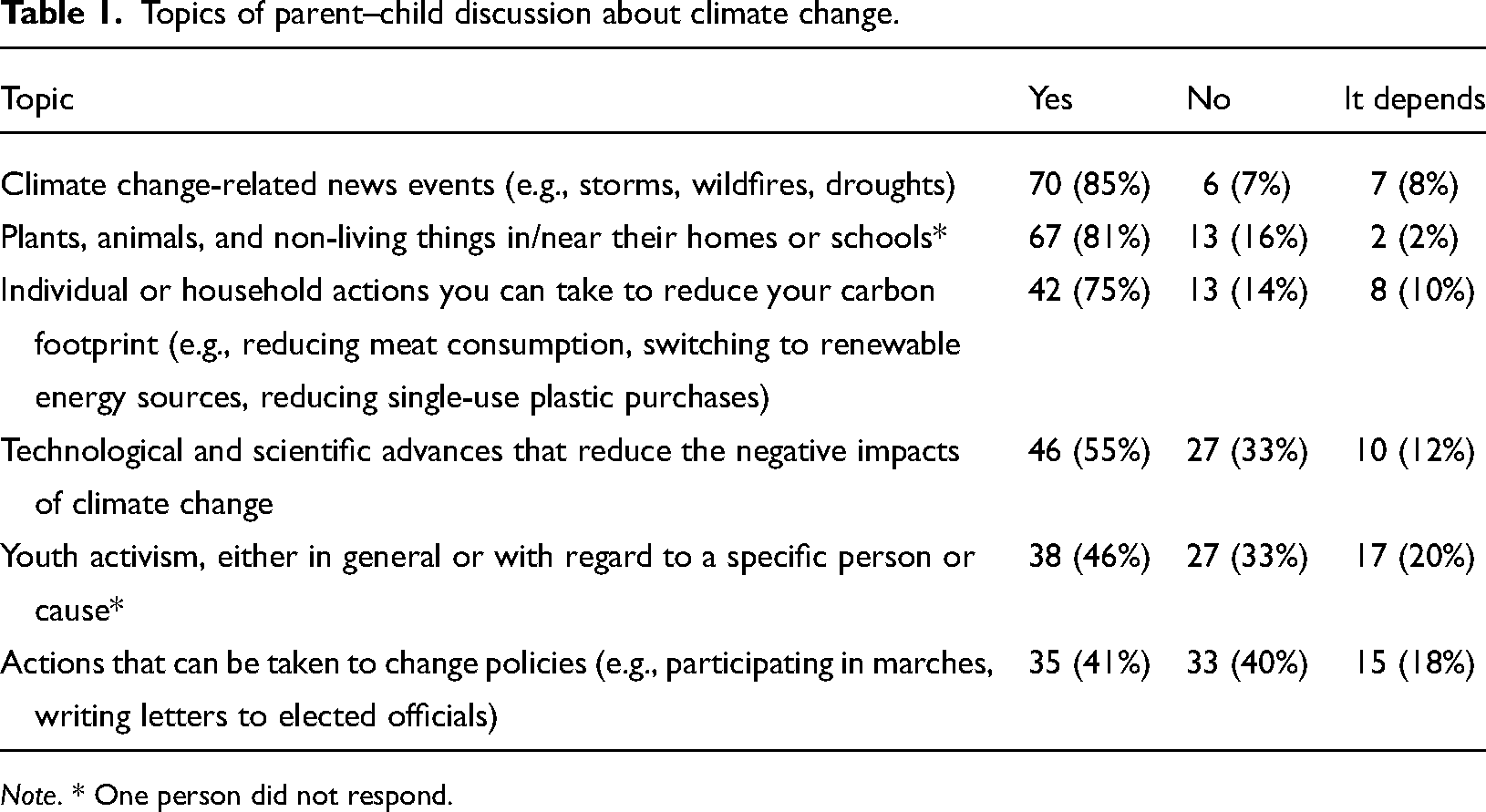
According to the survey results, 85% of parents discuss climate change with their children. This finding is not particularly surprising, given Kamenetz's (2019) report that more than 80% of U.S. parents support climate change discussion in schools. Our survey questions disaggregated the data according to specific climate change topics that parents discuss with their children. For each topic, respondents indicated whether they did or did not discuss the given topic; respondents were also able to indicate that “it depends” and provide clarification. Table 1 presents the topic-by-topic results.
Topics of parent–child discussion about climate change.
Note. * One person did not respond.
It should be noted that for each topic, the largest number of responses were in the “yes” category; however, the distribution of responses varied considerably across topics. In this respect, “Climate change news events,” “Plants, animals, and non-living things in or near home or school,” and “Individual actions you can take to reduce your carbon footprint” were by far the most popular topics for discussion, with a vast majority of respondents (85%, 81%, and 75%, respectively) indicating that they talked about these climate change topics with their children. Other climate change topics listed on our survey instrument offered more divergence in terms of popularity for discussion. When it came to discussing “Technological and scientific advances that reduce the negative impacts of climate change,” a slimmer majority (55%) indicated that they discussed the topic, while 33% did not discuss it and 12% said “it depends.” Similarly, 46% of respondents discussed youth activism, with 33% answering “no” and 20% responding “it depends.” Finally, 41% of respondents indicated that they discuss “Actions that can be taken to change policies (e.g., participating in marches, writing letters to elected officials),” while 40% of respondents did not discuss this and 18% said “it depends.”
Overall, these results indicate that parents are more likely to discuss climate change topics with their children that are visible to them and connected with their daily life (i.e., plants, animals, or nonliving things near home or school). In accordance with the literature, these topics, which can be discreet and also closely connected to children's everyday lived experiences, can serve as explanotiods to help children make sense of the complex issue of climate change within the scope of their own perspective and family culture (Booth et al., 2020; Callanan & Jipson, 2001). Topics that might not be relevant to their everyday lives are less likely to be discussed with their children. In particular, topics such as scientific and technological advances or concrete policy action may be harder for parents to discuss regularly because they tend to require a certain degree of prerequisite knowledge.
Notably, for each climate change topic addressed on the survey, most respondents indicated that they discuss it with their children. While the margins varied, we found that the majority of parents had already begun discussing climate change topics with their children. If we combine the percentages that responded “yes” and “it depends,” most parents were at least open to discussing these climate change topics with their children. These findings are promising, particularly insofar as research suggests that children's scientific knowledge can be enhanced when parents make personal connections, use evidence, and push for child-created explanations (Callanan et al., 2017). In this respect, Shugarman (2020) cautions that complex topics like climate change must be introduced by trusted messengers, like parents. Therefore, that most parents in New Jersey are open to discussing climate change suggests that these home-based child–parent conversations can support school-based instruction on the topic.
Some of those who responded that “it depends” elaborated on their answers. Analysis of such feedback revealed several trends, including the notion that nature is complex and change is inevitable, that conversation topics should be age appropriate, and that they would only discuss such topics in a positive manner in order to reduce their children's anxiety. In respect to the latter, respondents explained that they tried to discuss climate change topics in a positive way so as to avoid adding additional stressors to their children's lives, with one noting, “We try not to stress our children out into immobility” (Table 2).
Differences in climate change discussions based on children's age.
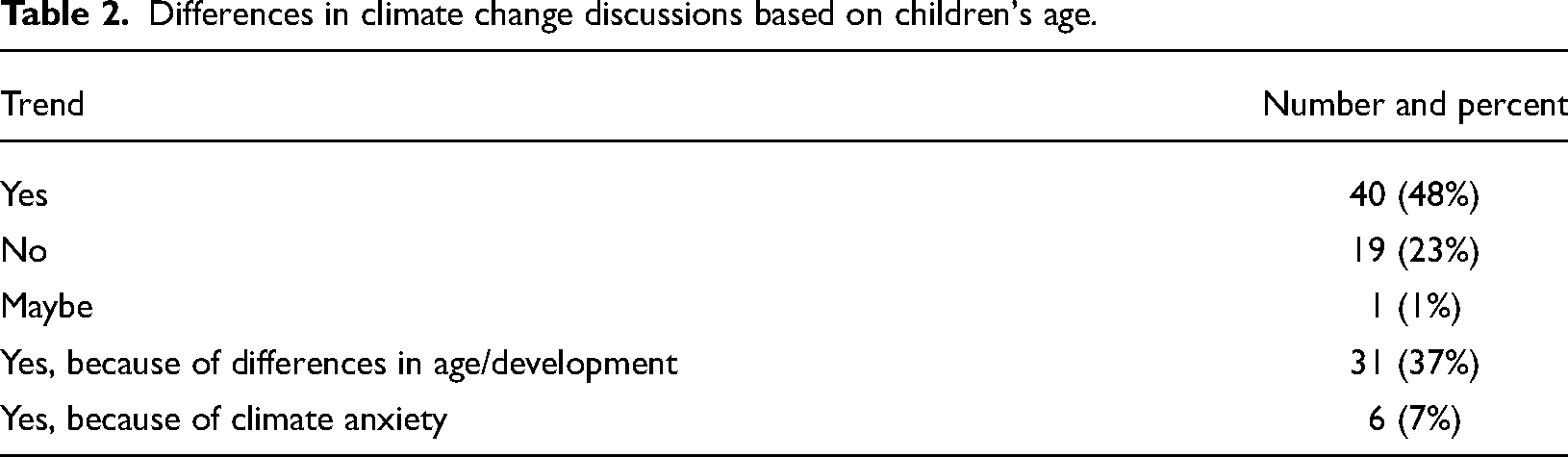
In response to the question, “Do you respond to children's questions about climate change differently based on their age? Why or why not?,” 60% responded in the affirmative, while 28% of respondents claimed that they did not modify their answers based on age. Of the former, 46% said that they change their responses to ensure that climate change conversations were appropriate for their child's age and development, including having appropriate background knowledge to understand responses, while 9% said that they did so in an effort to avoid inducing or worsening climate anxiety. Many of the respondents who said that they do not discuss climate change differently based on their child's age held similar sentiments, namely, that they did not want to “sugar-coat” the situation or “shield” their children from it “because they need to know the facts, regardless of age.” Therefore, we found that parents may be concerned that their children are too far removed from the reality of climate change.
Of respondents who replied that they speak to their children differently about climate change based on age due to differences in development, many noted that they made changes in terms of broadening vocabularies and incorporating more detail into their responses as their children get older. For example, one parent noted, “My answers have become more detailed as my daughter has aged.” This trend indicates that many parents feel that a certain educational background is necessary to discuss climate change appropriately with their children, implying that teachers and schools should prioritize teaching students good communication skills so that they are better able to absorb complex concepts like climate change. Respondents who mentioned climate anxiety explained that they were nervous that they might scare their children, especially those who were very young, by giving them more information than they could reasonably absorb at their age. One respondent asserted that they also focus on proactive actions that their children can take in order to give them a sense of empowerment and mitigate climate anxiety. This finding resonates with Booth et al.'s (2020) argument that parental conversations about scientific concepts significantly influence children's scientific literacy, but only when these conversations are developmentally appropriate.
Tools for discussing climate change
Respondents were asked to identify which tools they used to discuss climate change with their children from a list of four tools; Table 3 presents the survey responses.
Tools for discussing climate change.
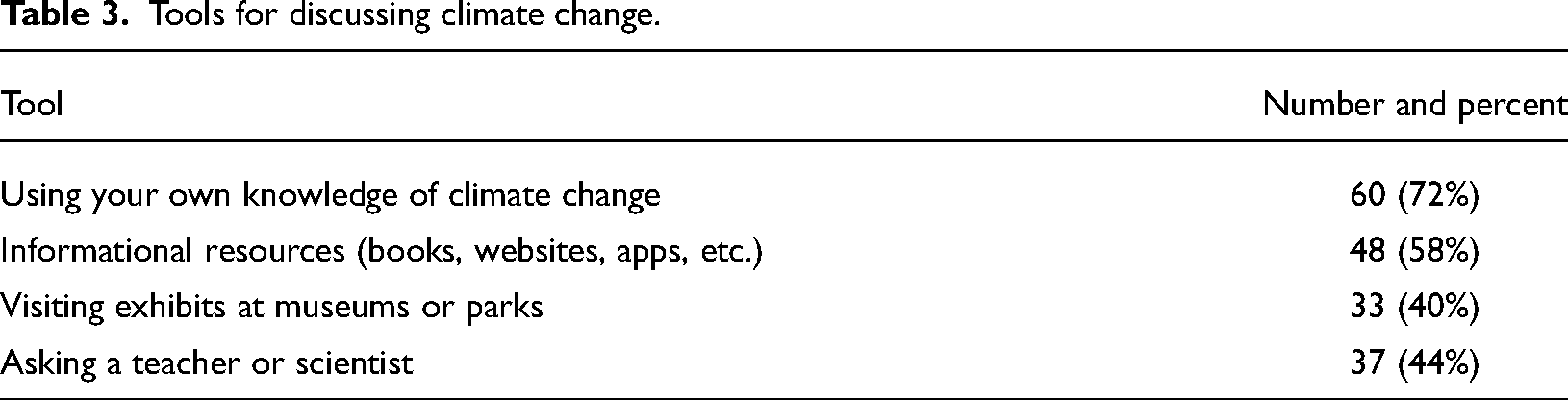
Among respondents, 60 (72%) reported using their own knowledge of climate change to guide discussions with their children, with many claiming to use outside resources to supplement these discussions. The majority (58%) of respondents also used informational resources, while a smaller proportion selected “Asking a teacher or a scientist” (44%) or “Visiting exhibits at museums” (40%). This is consistent with studies demonstrating how parents shape their children's scientific literacy through informal scientific activities such as museum exhibits (Callanaan et al., 2017; Crowley et al., 2001). These findings also demonstrate that parents access a variety of tools available at home in order to explain such phenomena, reflecting what Rogoff (2003) described as social activities and practices in which adults utilize cultural tools when interacting with children in a given community. Survey respondents were also asked to identify what strategies they use to help their children answer their own questions about climate change. Respondents were provided with a list of four strategies to choose from; Table 4 presents the responses.
Strategies for helping children answer their own questions about climate change.
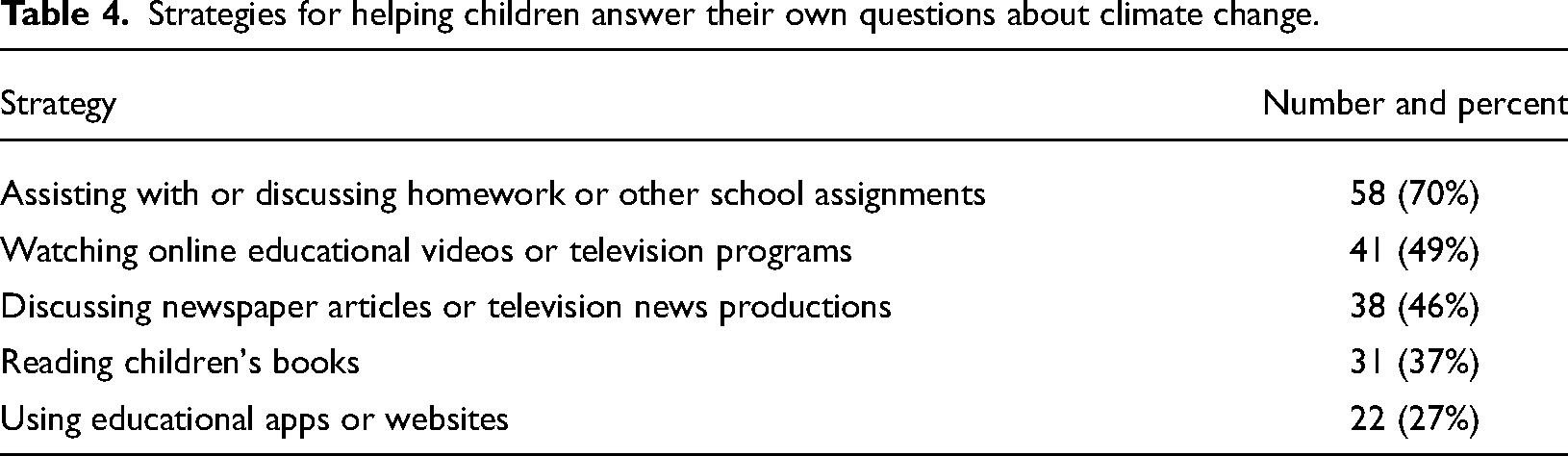
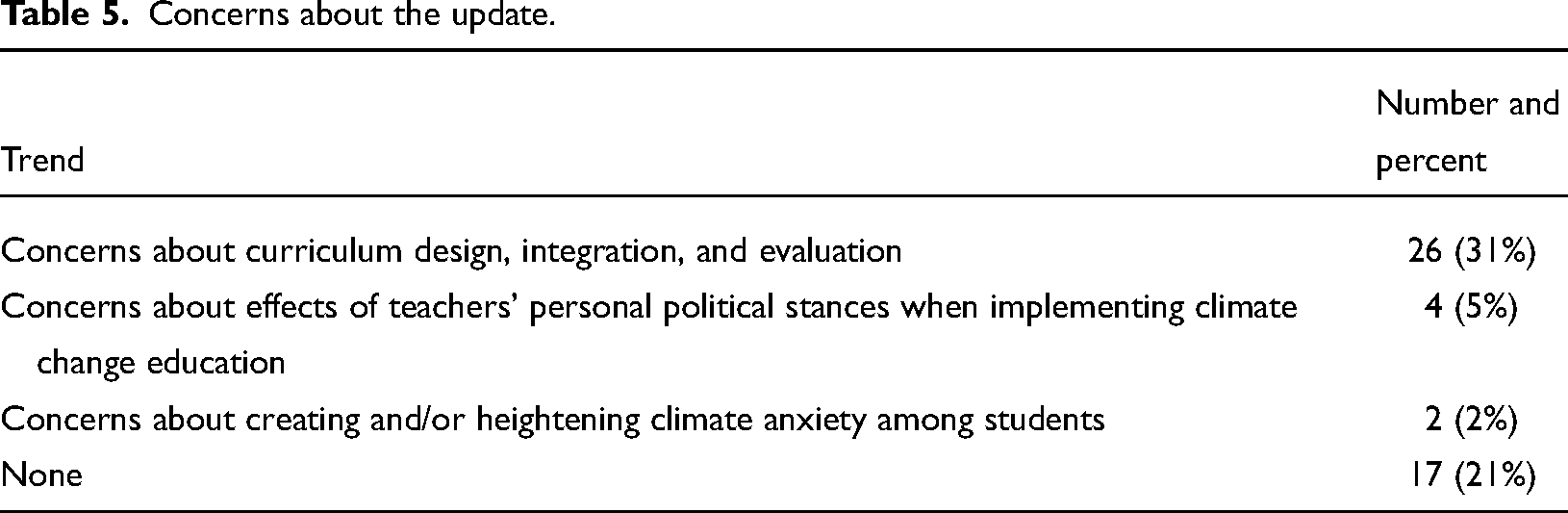
Most respondents (70%) indicated that they assisted their children with homework and other school assignments. A large proportion of respondents also reported “Watching online videos or television programs” (49%) and “Discussing newspaper articles and television news productions” (46%), while fewer respondents selected “Reading children's books” (37%) or “Using educational apps or websites” (27%). Several respondents opted to write their own answers to this question, with one stating that it was “not applicable” and another that they simply talked to their children about their concerns. These results indicate that parents use a broad array of strategies and tools to guide discussions with their children about climate change, and that they depend on various external resources in doing so. Improving the quality of and access to resources for parents will encourage more in-depth discussions about climate change at home (Table 5).
Concerns about the update.
How will New Jersey's 2020 student learning standards (which require climate change to be taught in all grade levels and subjects) affect the ways in which parents discuss climate change with their children?
In view of Kamenetz's (2019) U.S. survey findings, which indicated a disconnect between parent- and teacher-perceptions of climate change instruction at schools, it is unsurprising that many of our survey respondents had concerns regarding the updates to the Student Learning Standards, and thus the curriculum. Indeed, 59 respondents (71%) left a comment revealing their concerns with the update. In this respect, “Concerns about curriculum design, integration, and evaluation” encompassed a wide range of concerns centered on educational strategies, that is, how the standards will be implemented and how their effectiveness will be ensured. Parents expressed concerns regarding curriculum design and pedagogy, namely, that climate change issues would not be taught in developmentally appropriate ways. As one noted, “It is tricky to find authentic ways to discuss the big ideas about climate change with primary students.” Respondents also underscored the importance of hands-on, project-based, and experiential learning to ensure the retention of climate change lessons. For instance, one respondent questioned how they might motivate kids to take action, while another asserted that in-school modeling appeared the most effective approach. Another parent simply asked, “Why teach it if it's not being practiced?” Finally, some wondered if teachers would have “adequate training” or be given “specific examples of how each student can help, [e.g.,] use reusable water bottles, recycle.” Respondents also worried that the standards would not be integrated into existing subject curricula in an effective manner. Indeed, one respondent bluntly admitted, “My main question is if it will in fact be implemented.” Others were confused about the interdisciplinary nature of the changes, with one asking if it was intended to be “a whole new instruction period or part of science.” A few respondents also wondered how the implementation of the standards would be evaluated.
These findings suggest that parents are worried that climate change education curricula will not be designed or implemented in a way that maximizes impact. These findings also appear to correspond to responses to the survey question about whether parents discuss climate change differently based on children's age. Respondents who claimed not to modify discussions based on their children's age said they wanted to ensure that their children knew the facts regardless of the scariness of the situation. Here, responses to both questions suggest that parents want to make sure that teachers are being authentic with their students in terms of addressing the scope of climate change, while also giving them ideas on how to take action.
Another category of concern comprises responses about the political nature of climate change. One respondent directly stated that they were “worried about conservative teachers not doing a good job with this.” Others responded more generally, asserting that they were nervous that teachers may not be “adept in handling the material with the sensitivity that it will require.” Such concerns touch on a key aspect of climate change, one especially relevant to education insofar as a public school class may not cohere around particular political views. These concerns highlight the need for teachers to ensure that materials on climate change reach all students, regardless of personal or family political affiliation. Nonetheless, it is important to recognize that, across the political spectrum, both parents and teachers value the importance of climate change education (Kamenetz, 2019; Shugarman, 2020).
It is worth noting that several respondents cited concerns about climate anxiety. As one respondent asked, “How do you teach them that the climate crisis is a crisis without creating youth eco-anxiety?” These findings echo Benoit et al.'s (2022) study, which observed significant concerns about inciting ecological anxiety. Drawing on tenets of social-emotional learning in each subject can ensure that climate change education inspires action rather than despair. Moreover, holding clear, personal, and accurate conversations about climate change will help keep parents in tune with children's actual social-emotional states, mitigating assumptions about inducing anxiety (Benoit et al., 2022) (Table 6).
Shifts in discussions at home.
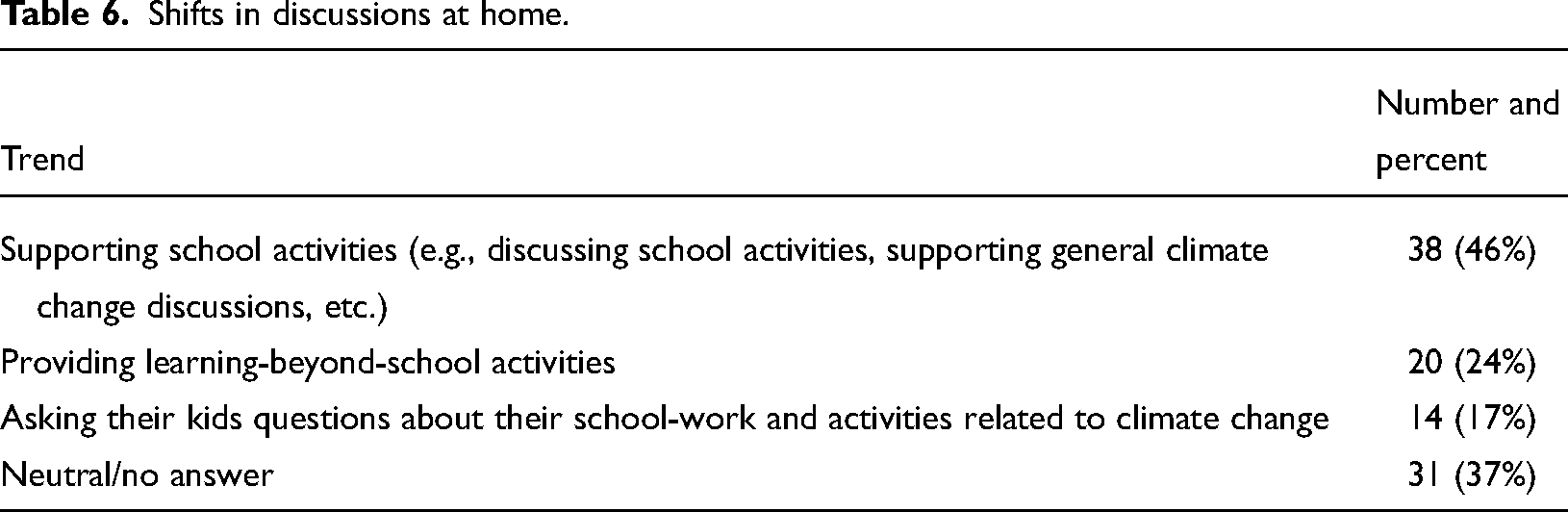
Among respondents, 68 (82%) elaborated on how they anticipated discussing the school activities included as part of the standard update (i.e., activities about climate change) with their children. Many indicated that they would support school activities by discussing their children's learning and schoolwork that related to climate change. A number of parents appeared to use the curriculum to guide their discussions at home, with one respondent asserting, “As activities come home, we will work with our kids to discuss the issues.” Many parents conveyed general support for incorporating climate change into the curriculum more broadly, with one expressing pride that New Jersey is “a leader in this effort.”
Parents who indicated that they would like to provide learning-beyond-the-classroom activities mentioned utilizing media resources (e.g., social media, websites, YouTube videos, and apps), opportunities to engage in project-based learning (e.g., a community watershed stream cleanup), and outdoor activities such as guided nature walks.
Another frequent response was that they would ask their children questions about what they were learning in school. Considering this response as distinct from those that mentioned discussing school activities, we categorized this response as “supporting school activities.” This distinction was based on the use of specific language in the response; for instance, “Asking about what they’ve been learning” indicates that the respondent actively intended to ask questions rather than simply engage in such discussion should their child choose to do so.
These findings suggest that, following the introduction of the updated standards, climate change discussions at home will center on school activities rather than focus on broader topics such as news events. Similar to the results of our initial inquiry regarding how parents discuss climate change at home, we found that respondents tend to emphasize action. That the popular trend of discussing “individual actions you can take to reduce your carbon footprint” features across findings suggests that parents are interested in providing learning beyond school activities and are looking for local environmental action projects (Table 7).
Types of support that parents need to have better climate change discussions at home.
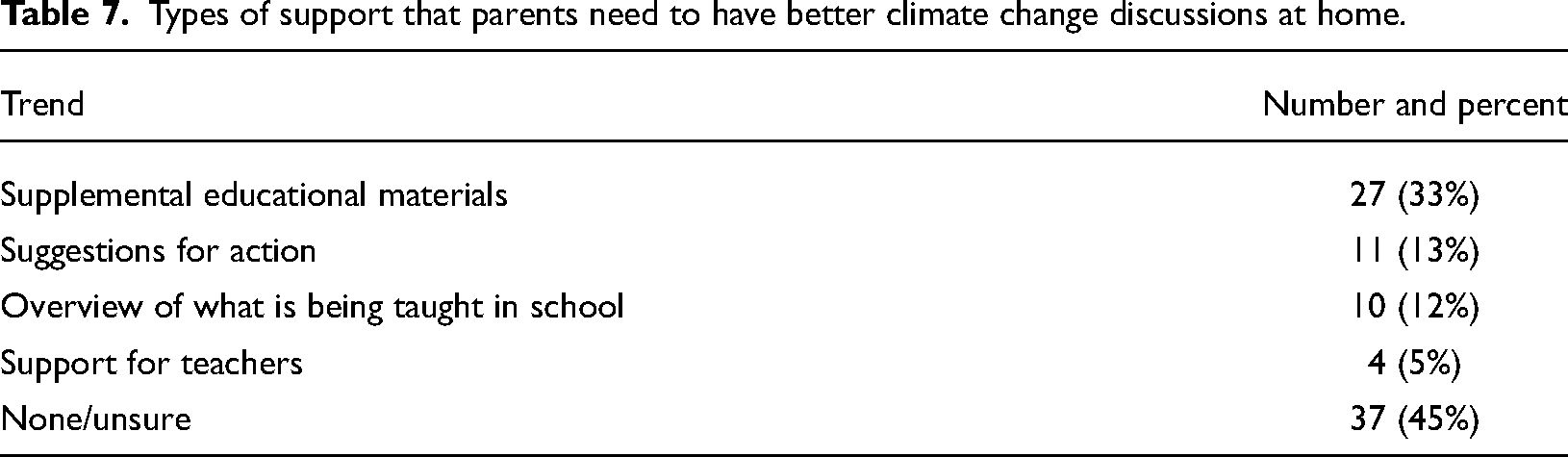
A total of 56 parents (67%) responded to this question. A number of respondents wanted suggestions for supplemental educational materials, such as reference materials or scientific studies, websites, apps, videos, books, quick reads (i.e., social media posts or accounts), and ideas for field trips. As one respondent noted, “We are all essentially learning together.” Essentially, parents will need access to credible resources able to help them guide and support their children, possibly in ways that go beyond their schoolwork. Respondents also mentioned a desire for suggestions for action, such as community service projects or weekly tips for living more sustainably at home. Taking action and working on local climate issues will likely enhance the understanding and retention of climate change education taught in school, as students will feel a personal connection to the information and understand the urgency of climate change as they see how it affects their communities. Some noted that a weekly or monthly newsletter outlining what students have been learning about climate change would be helpful, particularly insofar as this might help parents supplement their children's lessons and select opportunities for action that align with in-class learning. Finally, a few respondents reiterated that their principal desire was for teachers to have the adequate support and professional development necessary to integrate climate change education effectively.
These findings reveal a general concern among parents that the climate change education their children receive will not be as in-depth or effective as they hope. More specifically, these findings are consistent with responses to the questions about the types of tools parents use to discuss climate change with their children, which indicated the use of numerous external resources to guide discussions. In this respect, respondents’ desire for support and resources responses is hardly surprising. These findings will be helpful for prioritizing the types of resources available to parents.
Conclusion
Our findings indicate that general discussions about climate change between parents and children are already occurring at home. However, home conversations might be enriched by providing resources and updates to parents based on school activities related to climate change, while in-school climate change education can be enhanced by bolstering connections with local agencies addressing issues related to climate change. Home discussions center on climate change topics that are highly visible and/or related to daily life. As Shugarman (2020) argues, these conversations with trusted adults can help children clarify their own voices and experiences as they begin to understand the nuances of climate change and its effects. In this study, the majority of surveyed parents answered children's queries about climate change differently depending on age, and tended to rely on their personal knowledge of climate change as well as external resources (i.e., books, apps, videos) to guide discussions at home. The majority of respondents also expressed some degree of concern about New Jersey's updated Student Learning Standards, including significant skepticism regarding whether climate change education would be implemented effectively. In fact, compared to concerns about inducing climate anxiety, more parents expressed concern about whether climate change education would effectively convey the severity of the issue. In this respect, parents indicated that following the implementation of the standards update, they intended to shift discussions about climate change at home to support climate change-related activities taking place at school, with many expressing their desire for supplemental resources to guide these discussions. In this regard, conversations at home about climate change applications in daily life and climate change in the news are similar to the explanotiods that Crowley et al. (2001) identified as influencing children's scientific thinking processes. This trend aligns with Callanan and Jipson's (2001) findings that meaningful spontaneous informal conversations between parents and children about science and events happening in and around their environment and nature convey the values they hold within their household and culture. To encourage more conversations between parents and children on climate change topics that are less intricately connected with everyday life (i.e., scientific and technological advances), school curricula and outside organizations (i.e., local environmental nonprofits or advocacy groups) could focus on providing the necessary background to discuss these topics. Additionally, the popularity of discussing climate change topics that are relevant to daily life indicates that when teaching about climate change, educators would benefit from emphasizing ways in which climate change topics relate to students’ lives. It is also interesting to note that the surveyed parents modified their discussions based on the developmental age and readiness of their children. As Booth et al. (2020) note, explanotiods are only effective in influencing children's scientific literacy when the topics are discussed in developmentally appropriate ways.
Parents will need educational resources to enhance and deepen their discussions about climate change with their children while ensuring that they are aligned with child development. It may be beneficial for schools to provide additional resources to parents to aid them in these efforts. While many parents already use outside resources to instigate and guide climate change discussions with their children, we need to ensure that they use high quality, credible, and up-to-date resources. Incorporating social-emotional learning will help quell concerns about developmental appropriateness and climate anxiety. This study's findings also emphasize the importance of school–parent transparency and exposing parents to curricula, as discussions about climate change at home are set to shift toward discussions about the school curriculum and many parents are learning about climate change alongside their children. There is already a heavy reliance on the school curriculum to guide discussions at home—after all, parents want to know what happens in school so that they can help their children learn beyond the classroom and generally support them if they have any questions about what they learn. In this regard, a monthly newsletter to parents with suggestions for resources based on in-class lessons might be helpful for parents to ensure that discussions at home mirror and reinforce the climate change concepts being taught in school.
Survey respondents also voiced various concerns about teacher preparedness and the adequacy of climate change instruction in school. Such concerns echo the sentiments of Kamenetz (2019) that although most parents want their children to learn about climate change, many teachers are ill-prepared to integrate this topic into the classroom. The surveyed parents were only somewhat concerned about climate anxiety, with the far more expressing concern that climate change education will fail to impress the consequences of climate change upon children. To address both of these concerns, pedagogical strategies should focus on teaching about climate action so that students can face the reality of climate change while feeling empowered to do something about it. Creating a monthly newsletter for parents could help quell these concerns by showing parents how climate change education is being implemented and helping them understand how it is being taught across subjects and grade levels.
The findings from this study highlight a salient opportunity to connect community-based partners with the school community (including parents) to provide possibilities for local action using the socio-cultural framework developed by Vygotsky (Rogoff, 2003) together with Pomerantz et al.'s (2005) notion that the close working between the triad of adults, children, and social context are essential for socialization of children, including their scientific literacy. As noted above, suggestions for action can be included in newsletters to parents, while schools can actively foster partnerships with local organizations and prioritize field trips during the school day to engage in action-oriented climate change learning. This would spark interest in local efforts to mitigate climate change that will likely spill over from school into home discussions and activities, and help children feel empowered to take action. Schools could also host events for families to learn about climate change together. Indeed, schools themselves can become a site of action. In this respect, the toolkit published by This Is Planet Ed et al. (2023) suggests ways parents can motivate their school district to prioritize climate change and sustainability. The Inflation Reduction Act is currently pouring money into climate change efforts, and schools will likely be eligible to receive some of these funds to green their facilities (specifically, there is a big push for electric school buses). The Aspen Institute provides a guide on the implications of this act for K12 education entitled, “K12 Education and Climate Provisions in the Inflation Reduction Act” (Akopian et al., 2022).
Much of this study's data remains presumptive, as the implementation of the updated standards has only recently begun (i.e., respondents were predicting how their discussions will shift and anticipating possible issues with the standards). Further research in this field should be conducted to examine the impact of the updated New Jersey Student Learning Standards on climate change discussions at home following their implementation. Results of such research may reveal more specific needs from parents in terms of the tools and resources that will best serve them as they navigate discussions about climate change with their children, as well as examples of resources that parents find particularly helpful. Further research should also examine the partnerships that already exist between schools and local climate change agencies and offer more specific suggestions for ways to deepen such partnerships.
Footnotes
Contributorship
Lauren Madden led direction of this paper including the climate change education literature review, drafting the first round of the survey, and data analysis. Arti Joshi contributed to the parents perspectives piece of the literature review and data analysis. Margaret Wang and Julia Turner led the development of the discussion and conclusions and contributed to data analysis. Samantha Lindsay handled logistical aspects of the study, updated references, and contributed throughout the process.
Declaration of conflicting interests
The authors declared no potential conflicts of interest with respect to the research, authorship, and/or publication of this article.
Ethical statement
The institutional review board at our institution deemed that this study was exempt from review. Respondents to the surveys provided consent to use their data in this work.
Funding
The authors received no financial support for the research, authorship, and/or publication of this article.
