




Abstract
Purpose
This study aims to develop a transdisciplinary informal curriculum for climate change education (CCE) to increase the adaptive capacity of the small-farm milk-producing sector in Encarnación de Díaz, Jalisco, México.
Design/Approach/Methods
A sustainable rural livelihood framework assessing six types of capital (animal, financial, human, natural, physical, and sociocultural) in a sequential exploratory method design was used to determine the adaptive capacity of 61 milk producers to climate change. Several interrelated aspects of capital are associated with milk producers’ vulnerability to climate change.
Findings
Dairy farmers’ knowledge is based on traditional, historical, and cultural ways of interacting with their environment. Respecting this knowledge allowed us to use their experiential knowledge to co-jointly develop a CCE model to decrease the vulnerability of each of the six identified types of capital, with financial, human, and sociocultural capital being the most vulnerable.
Originality/Value
Using local knowledge to cultivate adaptive actions for climate change and reducing the vulnerability of affected communities is essential when developing an informal CCE curriculum.
Climate change as a socioenvironmental problem
Climate change (CC) is a leading environmental problem and one of the most significant challenges today (Forster et al., 2023; Frumkin, 2016). We use the definition of CC from the Intergovernmental Panel on Climate Change (IPCC, 2022): alterations in the climate resulting from human activity that directly or indirectly affect the composition of the Earth's atmosphere and have far-reaching implications for the global climate system (IPCC, 2022).
Among the multiple threats or impacts of CC are those related to food production and global livestock systems, which impact feed, water resources, animal health, production, and the entire supply chain of livestock products (e.g., Cheng et al., 2022). Additionally, there are several substantial threats to food security and nutrition due to the effects of current and projected CC, with a particular focus on extreme weather events and weather patterns associated with global warming, such as droughts, floods, and changes in precipitation patterns (e.g., Mirzabaev et al., 2023).
Meteorologists, oceanographers, atmospheric scientists, geologists, and glaciologists involved in studying CC recognize that strategies to address CC, whether for mitigation or adaptation, should be linked to human action and knowledge (Crate & Nutall, 2016). One implication is that the climate system's characteristics and relationship with social systems are constantly being transformed. We propose that an analysis of CC and its impact should include a sociocultural perspective (Polsky & Eakin, 2012). Specifically, how people make sense of the world and their experiences is critical when designing contextually appropriate and relevant adaptation strategies (Adger et al., 2013).
In this study, we offer the results of a transdisciplinary study on the importance of using local knowledge to cultivate adaptive actions to CC and reduce the vulnerability of affected communities. The case analyzed was that of a small community of cow milk producers in Jalisco, México.
México is considered one of the world's most vulnerable countries because of its geographical characteristics, socioeconomic conditions, degree of susceptibility, and inability to mitigate the impacts of CC (Instituto Nacional de Ecología y Cambio Climático [INECC], 2016). Complicating economic activities is the intersectionality of parallel sociocultural conditions, such as traditions or perceptions of CC, which can increase vulnerability. Even though CC occurs worldwide, we emphasize that not all countries or regions have the same sociocultural determinants as México and thus are not affected by CC in the same manner. A society's sociocultural elements are related to the relationship between people's actions and their impact on the climate (Barnes et al., 2020).
Understanding people's conceptions of CC and their social contexts allows for gaining deeper insight into how participants make sense of and use their worlds. Worldviews influence individual and community decision-making. In this sense, the diagnosis of local communities in the face of CC is essential when designing adaptation strategies to reduce vulnerability. Developing a contextually situated understanding assists in enacting fundamental changes that can alter dominant environmental relationships and create new or future systems (Barnes et al., 2020). As such, when designing adaptation strategy studies, identifying and understanding sociocultural indicators is especially critical in countries such as México, where culture plays a significant role in people's actions related to climate-dependent activities such as agriculture and livestock and is part of the traditions handed down for decades (Barnett et al., 2021; Wannewitz & Garschagen, 2023; Yohe & Tol, 2002).
The study
This study aimed to understand how milk producers from Encarnación de Díaz, Jalisco, México, perceive the effects of CC on their adaptive capacity. To understand milk producers, we examined their knowledge of CC and the measures they took to increase their adaptive capacity in measurable ways. To this end, we incorporate two activities:
Using the sustainable rural livelihood framework, we assessed six types of capital that determine the adaptive capacity of milk producers. Using a transdisciplinary approach, we developed informal educational activities on CC focusing on reducing vulnerability and, thereby, increasing adaptive capacity.
Intersectionality of sustainable livelihoods, adaptive capacity, and vulnerability
A sustainable livelihood approach highlights the complex and dynamic portfolios of capital (forms of assets) tempered by climatic, political, economic difficulties and uncertainties (Clay, 2018). The sustainable livelihood framework emphasizes that developing capital is an agentic action necessary to challenge or change the rules governing resource control, use, and transformation (Giddens, 1979). “Like all frameworks, it is a simplification of the full diversity and richness of livelihoods that can be understood only by qualitative and participatory analysis at a local level” (Department for International Development [DID], 2001, p. 3).
At the local level, it is critical not to assume homogeneity in populations or households. Relevant social divisions may include those related to class, caste, age, ethnic origin, and gender, which can only be defined and agreed upon through an iterative process of participatory inquiry at the community level. The following definition captures the broad notion of livelihood used in this study.
A livelihood comprises the capabilities, assets (including both material and social resources), and activities required for the means of living. A livelihood is sustainable when it can cope with and recover from stresses and shocks and maintain or enhance its capabilities and assets both now and in the future while not undermining the natural resource base (DID, 2001).
Adaptive capacity and vulnerability
Regarding CC impact, adaptive capacity is “the ability of a system, institutions, humans, and other organisms to adjust to potential damage, to take advantage of opportunities, or to respond to consequences” (IPCC, 2022, p. 2899). Socioculturally, adaptation refers to changes in beliefs or behaviors that arise in response to particular circumstances and can improve the living conditions of a person or community (Fiske et al., 2018). We interpret this to mean that human beings adapt to natural and social dynamics through cultural orientations. This implies that adaptive actions are based on knowledge rooted in cultures and generations of experience that guide different responses and decisions (Oliver-Smith, 2020). How people respond to environmental changes such as CC is driven by how they manage their adaptive capacity. Developing adaptive behaviors requires minimizing and recovering from the consequences of CC and taking advantage of new opportunities (Barnett et al., 2021). Understanding how sociocultural, political, and economic determinants position vulnerable populations is essential for adaptation.
In this study, a community was considered vulnerable to CC if it depended on economic activities, such as the ranching of milk-producing cattle, and lacked sufficient assets to adjust economically to extreme CC. As such, we define vulnerability as the combined influence of exposure and sensitivity within and between capital types (IPCC, 2022). Assets (understood as capital) represent the means of resistance that people can mobilize and manage to face difficulties and adapt (Moser, 1998). Therefore, the development of adaptive capacity by understanding multiple aspects of vulnerability (Clay, 2018) is crucial for determining the impact of CC (Vincent, 2007) and developing a sustainable livelihood.
Capital and developing adaptive strategies
Capital is a concept coined by Pierre Bourdieu as “the totality of potential or actual resources associated with the possession of a lasting network of more or less institutionalized relationships of mutual knowledge and recognition” (2001, p. 148). Extending Bourdieu's and sustainable livelihoods’ notion of capital, we incorporated Nelson et al.'s (2010) work on rural Australian communities. Initially, we use Nelson et al.'s (2010) five forms of capital (financial, human, natural, physical, and social) as lenses to document milk producers’ adaptive capacity. However, we found this to be lacking and turned to Bebbington's (1999) notion of having a broad conception of resources. Thus, we made two slight modifications: (a) social capital became sociocultural to include not only networks and work relationships but also customs and traditions, and (b) animal capital was added due to the vulnerability of cows to increases in temperature. We used six capital types: animal, financial, human, natural, physical, and sociocultural. In Figure 1, the six forms of capital constitute a property of the set of adaptive capacities explored in this study.
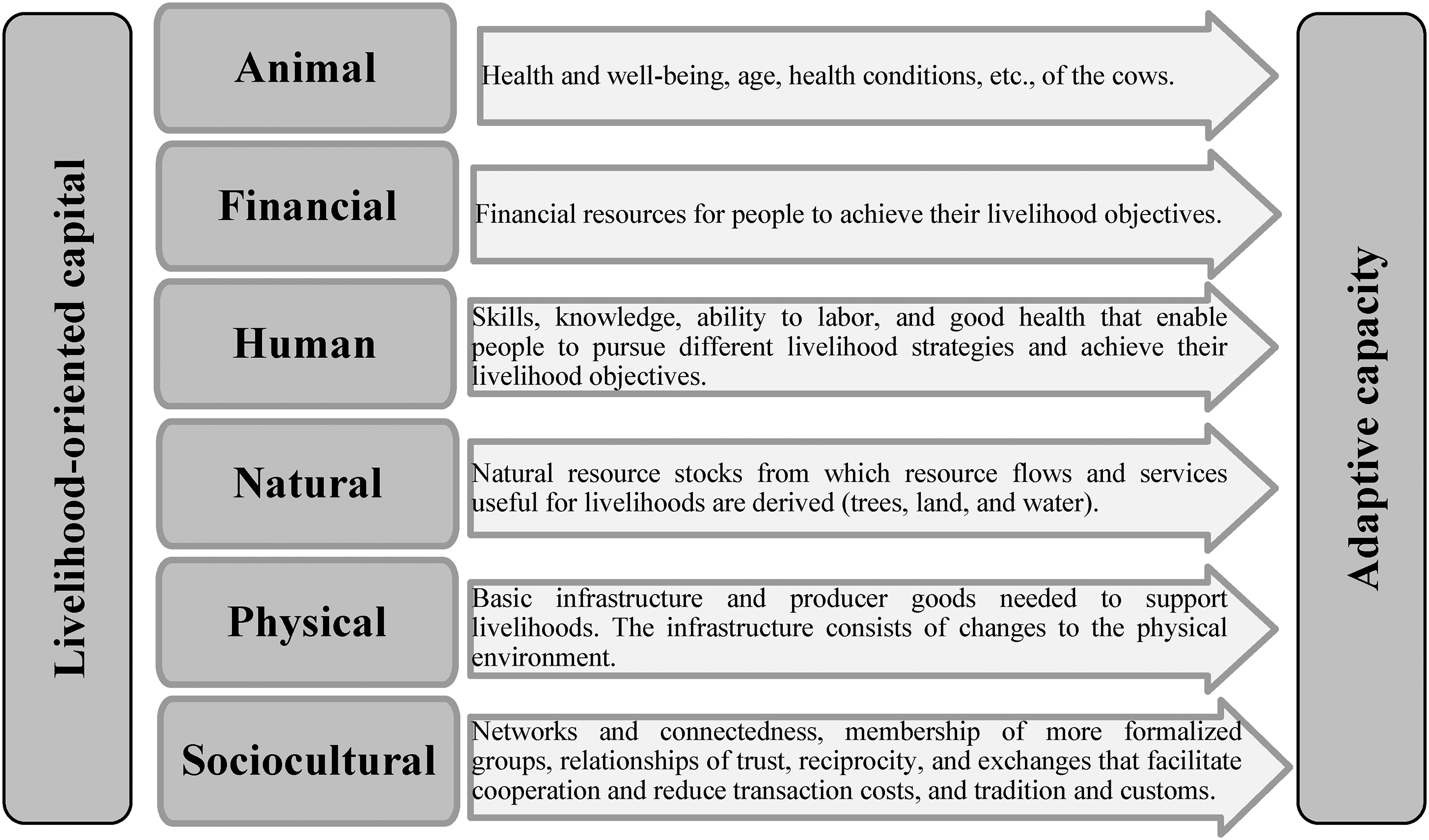
Adaptive capacity and livelihood-oriented capital.
CC education as a strategy to improve the adaptative capacity of sustainable livelihoods
According to Anderson (2010), successful CC adaptation strategies require timely and local diagnoses that make it possible to identify specific risks and offer appropriate knowledge, skills, and behaviors to reduce vulnerability. Education enables individuals and communities to make informed decisions and implement responsible and appropriate actions in light of the risks associated with CC.
Given the complexity of CC, we consider that climate change education (CCE) must consider a transdisciplinary and holistic approach such as that advocated by Kolenatý et al. (2022) who recognizes that CC knowledge has recently been viewed as a complex, multidimensional, and dynamic system rather than a collection of climate science facts and concepts. This implies that CCE is a composite of knowledge, skills, and values/attitudes/behaviors that should enable learners to view and understand CC from multiple perspectives and help them apply sociocultural and spiritual intelligence from a transmissive model to transformative learning (Kagawa & Selby, 2010).
For example: Education is also an essential component of learning sustainable livelihoods as a strategy for adapting to climate change. Ensuring appropriate education for developing new climate-friendly and climate-resilient livelihoods for youth and adults is an important way in which education policy can help climate change adaptation and mitigation (Anderson, 2010, p. 10).
UNESCO and UNEP have incorporated into the international agenda basic approaches to help schools and communities integrate CCE into their curricula. However, the majority of these efforts have been made in formal education, leading to incomplete or alternative conceptions related to CC and resulting in knowledge gaps regarding the causes of CC, global warming, and the greenhouse effect (e.g., Österlind, 2005; Schreiner et al., 2005; Shepardson et al., 2009).
We recognize global efforts to advance formal education in CC. We could not identify any empirical research on informal education strategies for CC in rural communities in México. This may be because the most vulnerable communities and members are not in formal education spaces but, rather, are employed in the agriculture and livestock industries. Nevertheless, this does not preclude the need for research that represents the needs of rural communities regarding CC and the development of an informal CCE curriculum focused on CC adaptive strategies to lessen the vulnerability of rural communities. This could be accomplished by conceptualizing a CCE model that integrates local knowledge of the natural and social sciences and assessing the transdisciplinary construction of knowledge in addressing socio-environmental problems (Klenk & Meehan, 2015).
Methodology
Our study was conducted in Encarnación de Díaz, Jalisco, México (Figure 2) with dairy livestock farmers. INECC ranks Encarnación de Díaz 28th among the most vulnerable municipalities in Jalisco, owing to drought conditions that lead to water stress (INECC, 2022). Most of the municipality has a semi-arid, semi-warm climate, with an average annual temperature of 15.2 °C. The minimum and maximum temperatures range between 5.3 °C and 29.1 °C (Instituto de Información Estadística y Geografía [IIEG], 2021). The climatic scenarios in Encarnación de Díaz project increasingly higher average annual temperatures, with an increase in temperature from 17.9 °C to 21.5 °C expected for the period 2051–2060 (Ruíz et al., 2011).
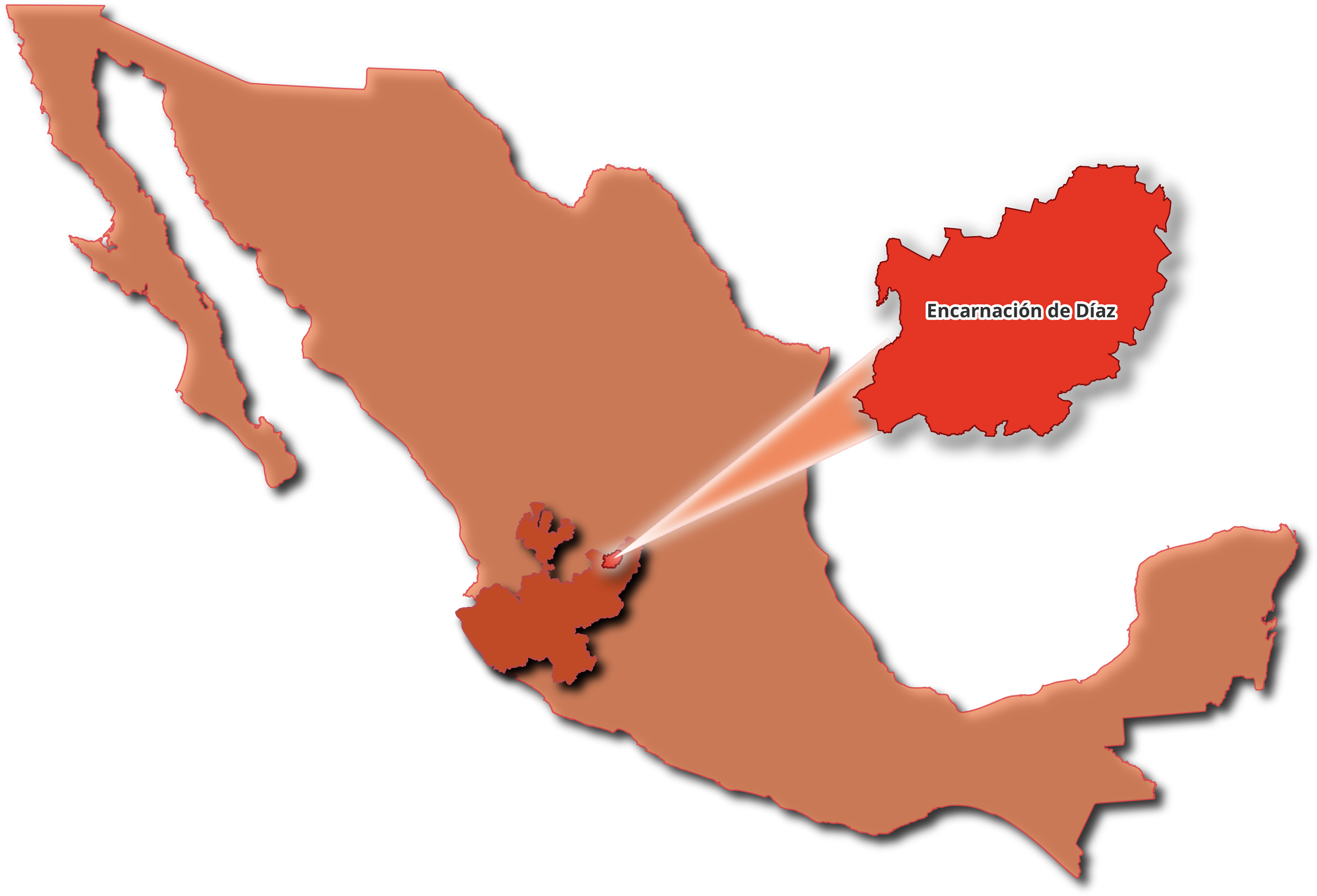
Study area.
Participating population
The president of the Livestock Association of the municipality of Encarnación de Díaz assisted us with the initial selection of participants. We presented this project and obtained his collaboration to conduct this study. He provided us with a list of the association members. Invitations to participate were sent to each individual on the list and 61 consented to participate. These 61 participants, all small dairy producers, represented 8.5% of the municipality's livestock production units (UPPs). A UPP is the area where the producer conducts dairy cattle breeding.
All but one of the 61 adult participants were male. The average age of producers ranged from 50 to 80 years old. More than 50% of the participants graduated at the primary level (34%, n = 21), and 19.6% (n = 12) did not complete primary school. Twenty-four percent (n = 5) did not finish high school. Among the remainder, two did not complete their undergraduate degrees, four received an undergraduate degree, and one received a postgraduate degree.
In México, consent from adults to participate in research can be verbal or written. Verbal consent was obtained from each participant to complete the survey or interview. Seeking verbal consent for this study was purposeful. Personal data with names and signatures could not be collected for security reasons. Each survey and interview was assigned a number to ensure anonymity.
Framework for collecting and understanding our data
Frameworks such as the sustainable livelihood approach influenced our data collection efforts. Additionally, Klenk and Meehan (2015) explained that effective adaptation to CC requires research paradigms to evolve toward the integration of natural and social science approaches and local knowledge. Klenk and Meehan's ideas allowed us to recognize the need to build bridges between universities and dairy farmers. To accomplish this, we applied basic transdisciplinary principles as an epistemological framework. Transdisciplinarity is a reflexive, integrative, method-driven approach to producing normative knowledge and policy-relevant solutions to societal problems such as CC using non-academic knowledge (Lang et al., 2012). Implementing a transdisciplinary approach requires diluting disciplinary boundaries and incorporating local knowledge into problem-solving.
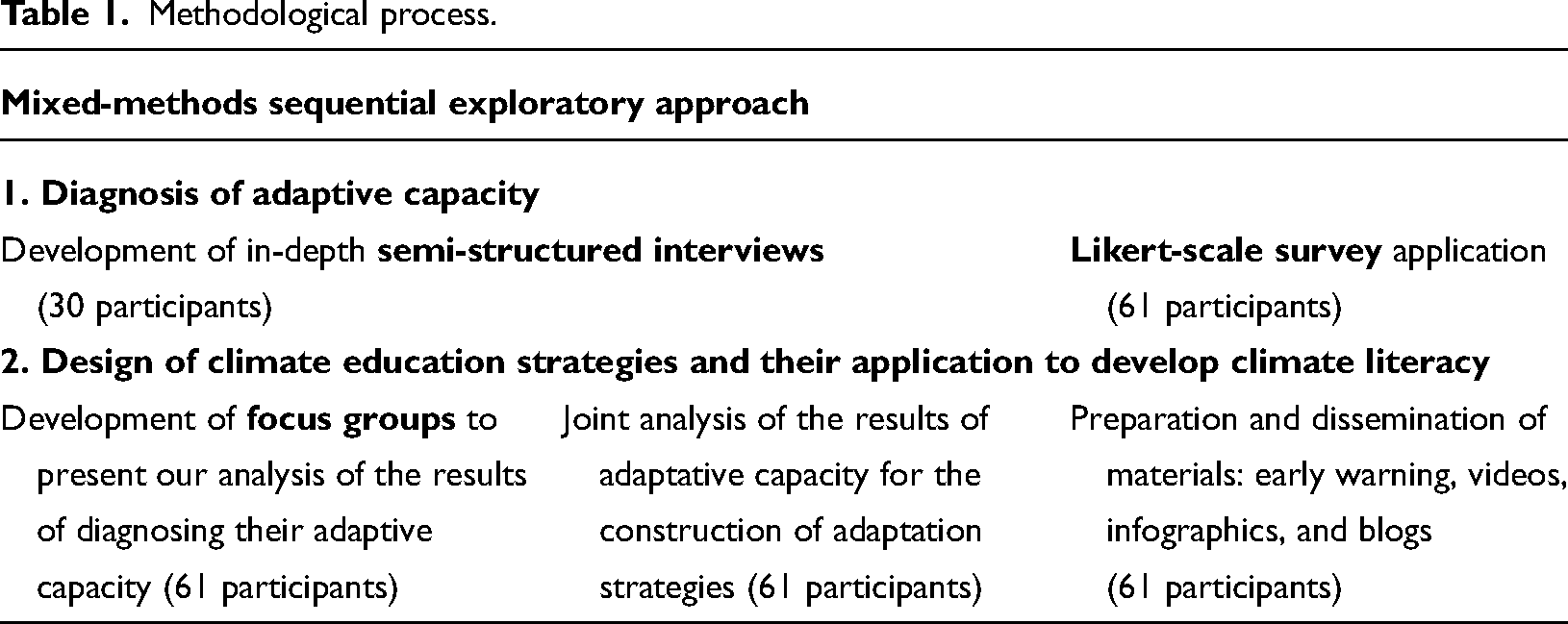
A mixed research method was used in this study. According to Creswell and Plano Clark (2018), mixed approaches have gained relevance, especially in studies with social implications, as their complexity demands an understanding of reality using the strengths of both qualitative and quantitative approaches. In our study, quantitative and qualitative data were collected from milk producers using a sequential exploratory design (Creswell & Plano Clark, 2018). In this design, we first collected data through semi-structured interviews to guide the development of a Likert scale survey. We started with what people know and perceive and used this knowledge to develop our survey instrument and CCE curriculum. Combining the data generated through the interviews and survey instrument served as the basis for developing the CCE curriculum, in which producers and university researchers worked together using focus groups to develop contextualized educational materials.
Semi-structured interviews
During phase one, we elected to interview the first 30 of the 61 milk producers (Henry, 1998). Each semi-structured interview was conducted individually, recorded, transcribed, and analyzed. For each interview, individuals were asked about aspects related to the six types of capital, such as the health and well-being of cattle, financial resources, skills, knowledge, producers’ health, natural resource stocks, infrastructure, networks, traditions, and customs. In total, we collected over 30 hours of transcribed data. Following transcription, we analyzed the 30 interviews and determined that further interviews would provide information of little additional relevance (Glaser & Strauss, 2017).
Coding
Codes are slices of social life recorded in the data: participant activities, perceptions, and the tangible documents and artifacts produced by them (Saldaña, 2013). A descriptive coding method was applied to summarize in a word or short phrase—most often as a noun—the primary topic of a passage (Saldaña, 2013). The codes were associated with the six types of capital (Figure 1). For example, the following transcript narrative referred to experiences of customs and traditions and was coded as sociocultural capital: Oooooh, well, that's a romance that started when I was a kid. … I knew the background, the lineages, the fathers, the mothers, and my games were around the cows…
1
Survey
In phase two, our analysis of the semi-structured interviews became the basis for designing a Likert scale (1–5, with five being the highest) to measure the vulnerability and adaptive capacity to CC related to each of the six types of capital. This instrument was applied to all 61 participants. The results were averaged for each component, considering two vulnerability factors for each type of capital: sensitivity and exposure (IPCC, 2022). Exposure refers to the presence or level of human or natural systems in an area that can be affected by location-related factors. Sensitivity indicates the degree to which a system is affected by the availability of resources for coping with adverse conditions.
Focus groups with the milk producers
Both the semi-structured interviews and the survey allowed us to develop an understanding of the adaptive capacity of milk producers to respond to CC. Thus, the first step in phase three was to create four focus groups (15 participants per group) comprising professors (agronomists, psychologists, science educators, and meteorologists) and milk producers. During the four initial meetings, we shared the results of our data analysis with the attendees, including the most vulnerable type of capital we identified. Each session consisted of a question-and-answer period. After each meeting, we debriefed to discern their educational needs and strengthen their adaptation strategies. After the fourth meeting, the CCE curriculum was developed. We presented our CCE curriculum to participants during the fifth collective meeting. This was followed by the creation of different discussion groups to determine the final CCE strategy.
Table 1 shows the flow chart of our methodological process.
Methodological process.
Results
In this section, we present the analysis results of the interviews, followed by the survey results. Both data-gathering methods allowed us to construct a contextualized diagnosis of milk producers’ adaptive capacity and vulnerability.
Cow's milk production: What the dairy farmers had to say
The information obtained from the interviews indicated that the adaptive capacity of milk producers has different vulnerability conditions associated with each form of capital. These forms of capital are animal, financial, human, natural, physical, and sociocultural. Figure 1 shows the results for each form of capital.
Animal capital
Animal capital is defined by the health, age, health conditions, and well-being of cattle. One of the most relevant aspects of animal capital is a cow's vulnerability to regional temperature and humidity levels. Adult dairy cows prefer environmental temperatures between 2 °C and 21 °C (Hahn, 1985), while lactating cows prefer 5 °C to 25 °C (Roenfeldt, 1998). Generally, the temperature of environmental comfort (thermoneutral zone) in dairy cattle fluctuates between 5 °C and 24 °C.
Milk producers have expressed the effects of heat stress on their dairy cattle. They confirmed that heat causes respiratory diseases, abortions, early embryo death, changes in the productive cycle, anorexia, and decreased milk production. They also indicated that increased temperatures lead to water and food scarcity: “They bear the cold well, but they can’t bear the heat very much; heat stress affects them, so solar radiation and all that … gives them some … some undesirable calm, but that's a lot … you see … without anyone herding them or anything, the animals outside at 12–1 in the afternoon, he finds them under a tree or lying down …” (Interview 1). It should be noted that most of this municipality, including Encarnación de Díaz, has a semi-arid, semi-warm climate, with an average annual temperature of 15.2 °C; the minimum and maximum temperatures range between 5.3 °C and 29.1 °C (IIEG, 2021). In addition, 66% of participants do not have shade near the barn for their cattle.
Financial capital
Financial capital refers to the financial resources that people use to achieve their livelihood objectives. The financial capital of the producers in Encarnación de Díaz is widely affected by situations related to CC, particularly heat stress and drastic changes in climate variability. One can make this a more global argument; however, this study refers to small-farm milk producers with modest financial resources. Their small profit margins are affected by price increases due to CC, which decreases their adaptive capacity and increases their vulnerability.
This situation is worrying because economic impacts are essential for maintaining milk production. For example, 73% of the milk producers affirmed that productivity was affected by the need to access more medicines to maintain healthy cattle. Consequently, food prices have increased: “… in the area, there have been many deaths due to lack of food and sometimes lack of water as well” (Interview 6). Milk producers also commented that there is a monopoly in the food production sector because nobody regulates prices or production: “Look at the food; there are many, many people who … hoard and then later want to sell at … at a price at which production sometimes doesn’t … it doesn’t allow you, eh …” (Interview 1). Despite producers’ experiences regarding the aforementioned financial effects, 77.4% lack insurance for their herds, and none of the milk producers who grow crops to feed their livestock have access to insurance for crop failure.
Another issue that increased their vulnerability was the relationship between small producers and the government. Ninety-three percent (93%) were members of the municipality's Livestock Association. Although membership allowed them to receive official support from the government, they indicated the absence of support networks to strengthen their production processes in the face of competition with large producers. Participating producers had fewer than 200 cows, with an average of 83 cows per barn: Sometimes, we as small producers cannot compete with the big ones or with the market; you see that they are putting a lot of powdered milk, that is, I don’t know if it has to do with the companies or the government or I don’t know to what extent that is what is “hitting the tower” to the farmer. We must unite among the small producers. (Interview 5)
Human capital
Human capital represents the skills, knowledge, ability to work, and good health that enable people to pursue different livelihood strategies and achieve their objectives. Most producers report being in good health and only feeling tired, especially when work shifts are long (sometimes more than 8 hours). It is important to recognize that the average age among producers was 50–80 years and that, even though they felt healthy, their physical strength greatly diminished.
Regarding CC, 17% (n = 10) of the participants said they had never heard of it. Those who had heard of CC (13.3%, n = 8) stated that they were aware of the issue but unsure about its consequences: “When… I have already seen the heat more, stronger the last… what will be ten years, and yes, I have noticed how the more we have, the more heat…” (Interview 2). Regardless of whether they had heard of CC, 82% (n = 50) commented on the impact of CC by noting changes in meteorological events in the region: “Older people who have been doing this for many more years and living here in the area tell us there had never been a drought like the one this year, referring to 2011” (Interview 6). Although most participants noticed a pattern of CC, only slightly more than one-third (36%) of the producers affirmed perceiving changes in animal and plant behavior, such as heat stress in cows and an increase in some pests.
Dairy farmers implemented actions to adapt to CC, thus decreasing their vulnerability level. For example, they improved the infrastructure of their production areas by using water more efficiently and providing shade for livestock by planting trees: “… a lot of people here because there are few ranches that have shade that has water sprinklers to keep the cows cool and all that …” (Interview 5). Another action was to reduce costs by selling cattle and, as a consequence, care costs were reduced and short-term extra income was increased: “… well, pretend that I had 47 or 50 cows, but there were 18 calving heifers; hmm, I think there are 17 because one died, but I sold them; if I hadn’t sold all those to buy pasture today I would have 60–70 …” (Interview 27).
Natural capital
Natural capital is the term used for natural resource stocks from which resource flows and services useful for livelihoods are derived. There is wide variation in the resources that make up natural capital, from intangible public goods such as the atmosphere and biodiversity to divisible assets used directly for production (trees, land, etc.).
The natural capital of milk producers in Encarnación de Díaz is vulnerable to the increased occurrence and intensity of extreme events resulting from CC. In their one-on-one interviews, slightly more than one-third of the participants (33%) cited increased heat, 32% a decrease in rainfall, and 29% an increase in the frequency and intensity of droughts: “Well, I remember those years; ‘57 was a very dry year, and, like, ‘68, too, and right now, from year to year … not anymore … the drought is much more drastic than what is remembered from those years” (Interview 29).
Drought had the most significant impact on livestock production. The effect of droughts varies among producers because they have different vulnerability conditions, and water supply is the main challenge. For example, only 30% of the participants had several water supply sources, such as deep wells, “bordos” (holding ponds to capture rainwater), and municipal water hauling capability. Of the 30% with water supply sources, 50% only had “bordos”: “… I don’t have a well at the ranch. I only have ‘bordos’” (Interview 2). Moreover, 15% only had deep wells. The other 5% had access only to the drinking water they received at home and had to carry water to support their livestock because their land lacked access to this resource. However, there is cooperation among milk producers with wells: “… then a man on the other side of the highway has a well, and my dad asked him if he gave him a chance to pipe the water from his well so he could pour it into the ‘bordo,’ and that's what they did; the pipes was quite a distance …” (Interview 5).
Physical capital
Physical capital comprises the basic infrastructure and producer goods needed to support one's livelihood. This infrastructure consists of changes to the physical environment that help people meet their basic needs and be more productive, while producer goods are the tools and equipment people use to function more productively.
The physical capital of the producers in Encarnación de Díaz includes monitoring and measuring their infrastructure, particularly barns that require cooling systems to cope with high temperatures, 96% of which do not have. Milk producers also lack the tools and means necessary to measure and stabilize temperature and humidity in their stables. The only option available to producers is to cool cattle in the shade and sheds, which are scarce resources. However, over two-thirds (66%) of the producers in this study did not have shade for their cattle near their barn: “… a lot of people here … because there are few ranches that have shade that has water sprinklers to keep the cows cool and all that…” (Interview 5).
Few producers have taken preventive measures for their physical capital. For example, only 6% of producers claimed to have a thermometer in their barns, which is the same percentage as those who said they were aware of the weather conditions reported by the municipality. Only 2% had a humidity meter in the barn, and 6% reported being aware of municipal humidity reports: “Well, no, we did not receive the information on temperature and humidity from the municipality; I think the weather station is not working. We would have to measure it ourselves” (Interview 22).
Sociocultural capital
Sociocultural capital refers to the resources that people draw on in pursuit of their livelihood objectives. We changed social capital to sociocultural capital because we recognized that the strong traditions and customs that characterize livestock farming in México needed to be accounted for. Sociocultural capital is developed through (a) networks and connectedness; (b) membership in more formalized groups; (c) relationships of trust, reciprocity, and exchange; and (d) Mexican traditions and customs.
Bovine milk production in México began after the conquest when the Spanish brought the first cattle to the country. This element did not exist in pre-Hispanic cultures. In principle, livestock keeping is developed as empirical knowledge of breeding and exploitation based on locally produced experience. Over time, the use of this resource began to be transmitted from one generation to another.
Oooooh, well, that's a romance that started when I was a kid. Um … well … I was a boy. I think I was 3 or 4 years old, … there were cows in the house, and I was interested in everything related to them; my father took me, and I was a sea of questions daily, and this and the other, and I knew them all. I knew the background, the lineages, the fathers, the mothers, and all that, 3–4 years old, and my games were around the cows … (Interview 1).
The transmission of knowledge was labeled cultural capital because all producers in this study from Encarnación de Díaz carried out milk production from a historical heritage perspective. Their comments indicate that they decided to dedicate themselves to the practices of their ancestors due to tradition, attachment to where they lived, and their roots.
Globalization and technological advances have increasingly influenced milk production in this region and in México broadly. This has resulted in the steady abandonment of dairy livestock by new generations. The milk producers in this study were aware of this phenomenon and they identified it as a significant challenge in passing the practice to modern generations: “… but I ask a … a very interesting question to many … How many of your children from the new generations are involved in the business? And you will see that they can be counted on the fingers of your hands …” (Interview 1).
Vulnerability as determined by survey results
The Likert scale results were weighed for each component and type of capital using two vulnerability factors: sensitivity and exposure (IPCC, 2022). Table 2 shows the levels of vulnerability of the different types of capital.
Level of vulnerability of the types of capital.
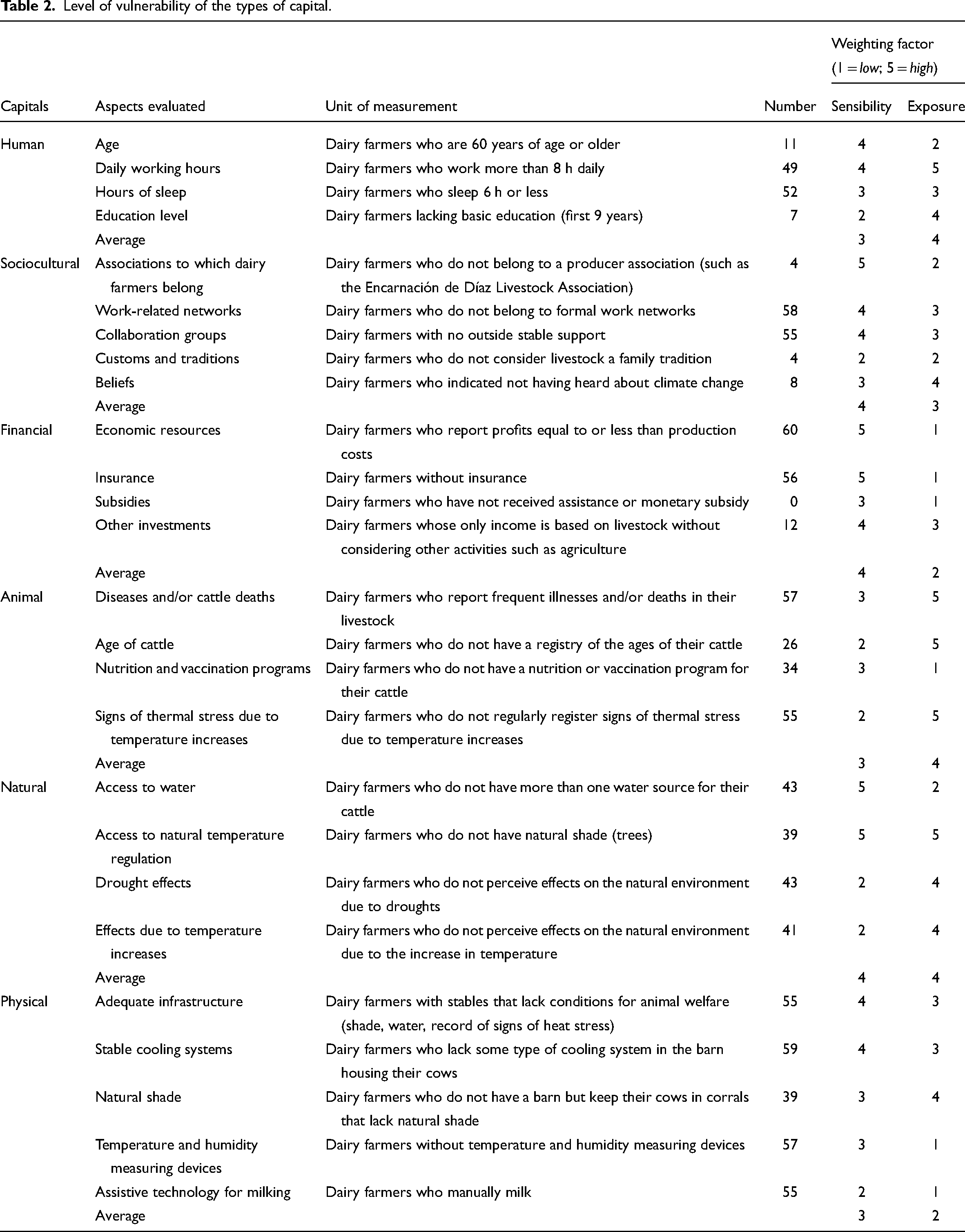
Additionally, Figure 3 was developed using data from Table 2 to provide an overview of capital according to the level of sensitivity and exposure (SE). Four types of capital remained at a high vulnerability level, with averages of 4 and 4 (natural), 4 and 3 (sociocultural), and 3 and 4 (human and animal).
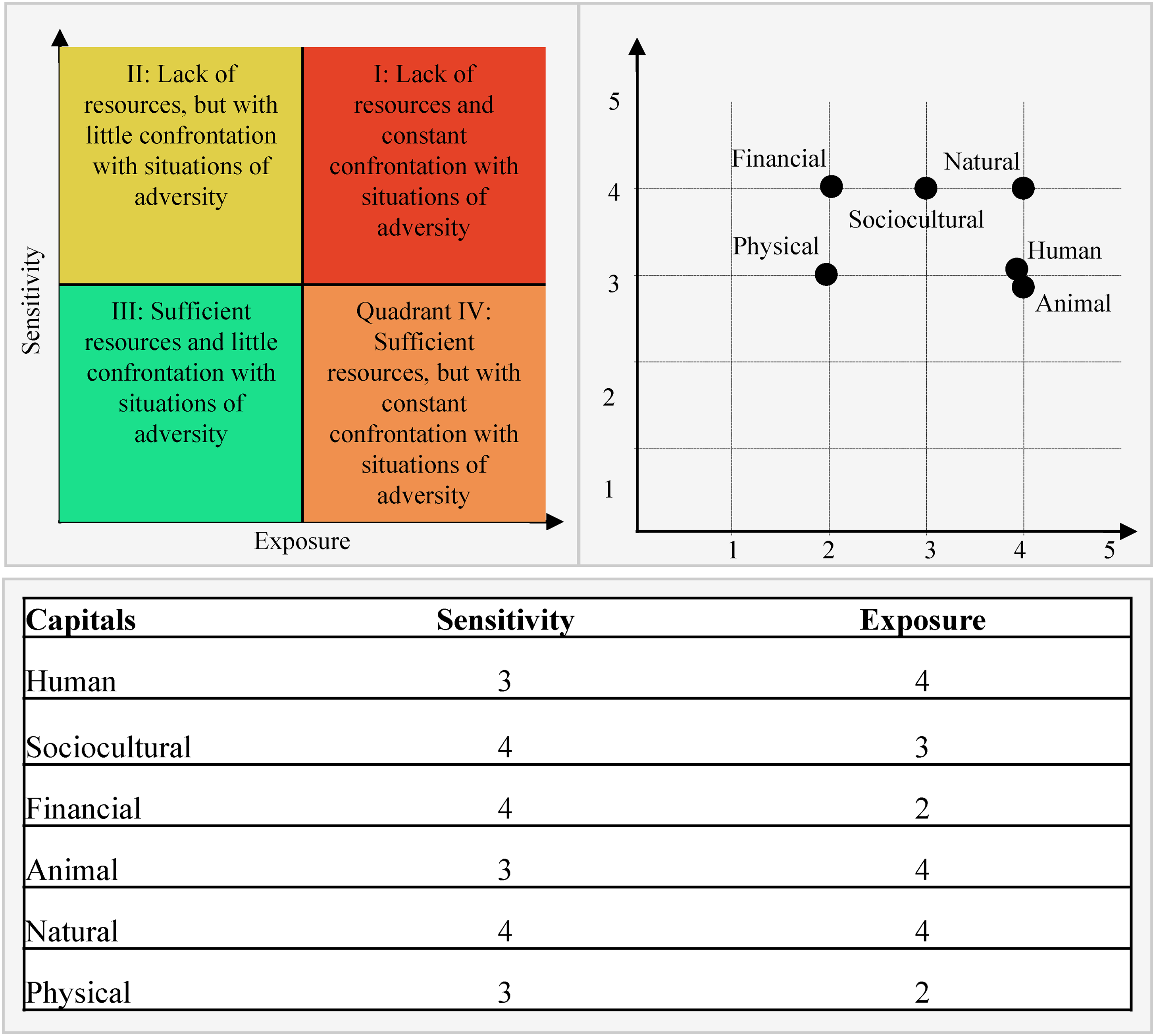
Vulnerable capital associated with cow-milk production of cow's milk.
Central aspects of the education strategy to strengthen the adaptability of the milk production sector in Jalisco.
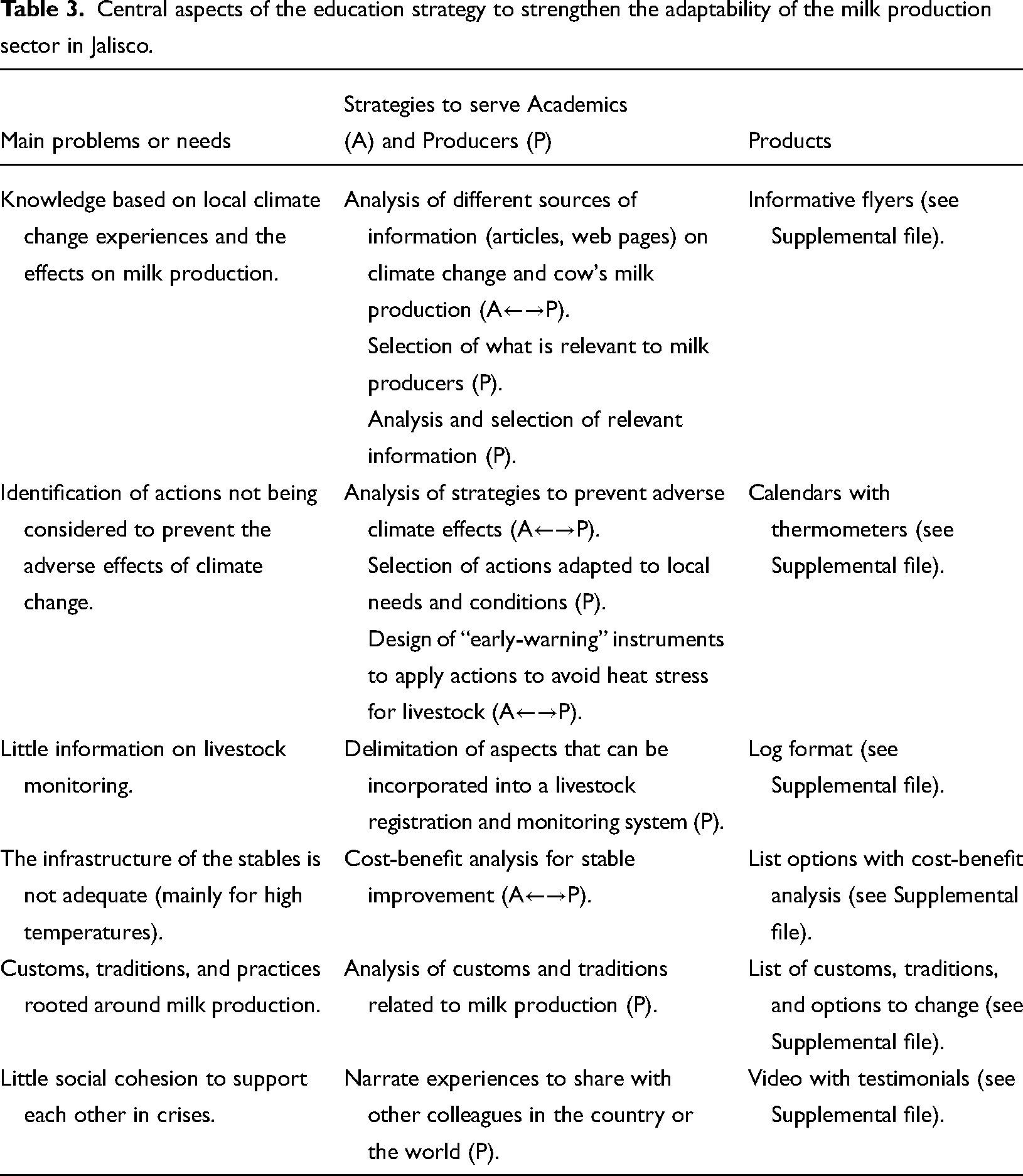
Combining both interview and SE data, we began to develop an education strategy for CC through collaborative work in focus groups.
Increasing the adaptative capacity of milk producers through CCE
The work of anthropologist Mary Douglas indicates that societies use a series of categories to understand and classify the world around them. More than reflections of reality, these categories are linked to cultural perceptions and the social structures in which people live (Douglas, 1992). Accordingly, scientific understanding, technical narratives, and discourse on CC can clash with people's different beliefs, which sometimes have little or nothing to do with the adaptation schemes promoted by institutions (Adger et al., 2013). When addressing CCE, we consciously sought a sociocultural approach to document how various social groups face the effects and adversities of CC. The researcher's standpoint (Harding, 2004) was that a contextually situated method that is mindful of how people observe and perceive change is necessary to unearth explicit narratives, explanations, and discourses that guide lifestyles, social agreements, and cultural practices.
To address the problems associated with CC, a formal and informal educational process that helps people make better decisions and engage in better actions to mitigate CC and decrease their vulnerability can be implemented through CCE (Leicht et al., 2022).
The final CCE curriculum was framed and developed within (1) what dairy farmers know about their environments and CC and (2) the augmentation of local knowledge with CC research. We underscore the word augmentation. Specifically, we did not use scientific knowledge to justify or dismiss local knowledge. During the workshops, we created spaces for dairy producers to select what forms of academic CC-related information worked best for them, which became the basis for developing a CCE strategy that was developed through focus group sessions.
Klenk and Meehan (2015) suggested the following essential steps in creating a CCE model:
Climate science projects are often positioned at the confluence of science, policy, and practice. Including different stakeholders and disciplines in knowledge; production is often a high priority. Effective adaptation to CC requires informed policymaking (integrating natural and social science approaches as well as local knowledge). The blurring of disciplinary lines and the involvement of non-scientists in the process of societal problem-solving.
Based on these principles, we proposed co-production strategies for a CCE model for milk producers. Focus group sessions were conducted to analyze the initial CCE curriculum, identify problems, and generate different educational materials (Table 3) to increase their adaptive capacity. As noted in Table 2, various interactions were conducted between academics and milk producers for each type of problem.
In each focus group session, different forms of knowledge negotiation arose, depending on the agency of each participant. For example, for topics such as the analysis of customs and traditions and the enrichment of social cohesion between producers, the multiple exchanges consisted of minimizing the participation of academics because the producers saw them as “unfamiliar” with cultural practices: “It is many things we already know how to do, and we can share them with you (the academics) or other fellow producers from other places. The government people always come to tell us what to do, but they don’t know what we are already doing. Maybe now is the time to share” (Producer 6, Session 4 of focus group).
Local producers insisted on marking what they conceived of as their territory and the need to legitimize their knowledge: “We have a lot of affection for our lands, even though they are dry … part of why you don’t change one of your territories is because of the affection that you have for our land …” (Interview 6). Initially, this was perceived as resistance to change: “You are so involved in this. That's why it is so difficult to change professions; what do you do?” (Interview 5). Nonetheless, the participants justified their resistance with tradition and the activity's family heritage, leading us to acknowledge that it was not resistance but a form of agency they were invoking: “The thing is that here, we are very stubborn … we want pints (Holstein cows), and we want this and …, but in reality, the area is semi-desert” (Interview 3).
As the individuals in the sessions, as well as producers, developed confidence in designing educational activities, there was evidence that they valued the materials. For example, the producers wanted to make a video in which they provided their testimony to spread knowledge of the problem and gain confidence. For this video, they searched the Web for similar testimonies from food producers affected by CC in Latin America. They created the video to share with other local producers as a means of strengthening their support networks.
A valuable lesson was learned: It is not sufficient to introduce new content related to CC without instilling new values and formal or informal methodologies that are participatory, experimental, critical, and open (United Nations Educational, Scientific and Cultural Organization [UNESCO], 2010). In this manner, the diversity of knowledge and the different epistemologies that support it are valued, and the developed CCE products are grounded in local voices of expertise.
Discussion and conclusions
Chambers (1997) argued that vulnerability has both external and internal aspects. External aspects refer to the risks, shocks, or stress that an individual or household faces from outside forces. In contrast, the inner aspect deals with defenselessness, which is attributed to a lack of assets to cope without suffering damage. In the case of developing a CCE program, this implies the need to understand a community's emic (inside-contextualized) view rather than an etic (outside-empirical) view of CC.
The foundation of the developed CCE curriculum was built through data collection, which allowed us to develop an insider understanding of the milk producers and the types of capital that constitute their adaptive capacity and define the vulnerabilities in terms of their livelihood. This aligns with other studies that have identified the importance of capturing the perceptions, knowledge, and experiences that guide producers’ adaptive capacity (e.g., Amamou et al., 2018).
Identifying and considering dairy farmers’ experiential knowledge was essential to the educational materials designed through the negotiation of what CC academic findings would and would not work for the participants. The strategy used to develop a CCE curriculum aligns with studies that include the knowledge and voices of population groups to identify and evaluate adaptation strategies for diagnosis (e.g., Hendricks et al., 2022). Additionally, others have designed adaptation strategies to implement knowledge within specific groups (e.g., Gori et al., 2022). Furthermore, researchers such as Ojo et al. (2021) have underscored the existence of social and political determinants in adaptation processes.
A contextually situated transdisciplinary process approach was used to encourage the development of CCE curricula and strategies. The designed educational strategies were the participants’ responses to the complexity of the problems experienced in the territory. Thus, the design of educational strategies for CC was based on the critical aspects of small milk producers’ vulnerability and adaptive capacity. For example, it is essential to understand that the adaptive capacity of producers is based on reactive responses and not on prevention. With attention to and a greater understanding of the attributes of the six types of capital, it is expected that, in the future, they will promote the conditions for the sustainability of livelihoods in the cow milk production sector for both the present and future generations.
How we approached CCE in this project could add value to educational efforts grounded in socioenvironmental problems, participants’ knowledge bank, and scientific content. For us, the critical decision in implementing our project was not to allow scientific content to justify or override the local knowledge of dairy farmers—their traditional, historical, and cultural ways of interacting with the environment. Instead, we suggest treating all knowledge as legitimate, which helps alleviate the gap between schools (institutions), social reality, and real-world problems. Rather than using scientific knowledge to legitimize local funds for knowledge, we could learn to collaborate with different social groups, especially the most vulnerable, by asking what we can learn from them.
Adaptation strategies for CC should consider behavioral changes as one of their purposes. In our study, we identified some changes among milk producers, such as the incorporation of logs to record temperature and livestock health data. Some producers also established support networks and began to disseminate information to other producers. However, we believe that there is a need for a longitudinal study documenting the evolution of these behavioral changes over time to evaluate their efficiency and continue to improve them based on needs.
We are also mindful that although the theoretical framework on adaptive capacity helped us to carry out a very precise diagnosis to assess vulnerability through capital, we recognize the importance of considering additional information that participants can provide to improve their understanding of the situation they are experiencing.
In conclusion, this study found that developing a valuable and practical CCE program in an informal setting must be contextualized by understanding local knowledge. Recognizing this led to a mutually negotiated CCE curriculum respecting local and scientific knowledge, resulting in a viable and practical program to increase the capacity of the milk-producing sector of Encarnación de Díaz to adapt to CC. This work suggests value in advancing CCE and adaptation research by valuing different types of knowledge when people intend to commit themselves to a process of gradual change in the development of adaptation actions. Specifically, it is crucial to include the multiple voices of all participants when developing a CCE curriculum. As researchers, we learned to recognize the value of transdisciplinary work by learning from others. Although adaptive capacity as a theoretical framework helped us diagnose and assess vulnerability through capital, we recognize the importance of considering the additional information that participants can provide to improve their understanding of the situations they are experiencing.
This study found that developing a valuable and practical CCE program in an informal setting must be contextualized by understanding local knowledge. Recognizing this led to a mutually negotiated CCE curriculum respecting local and scientific knowledge, resulting in a viable and practical program to increase the capacity of the milk-producing sector in Encarnación de Díaz to adapt to CC.
Supplemental Material
sj-docx-1-roe-10.1177_20965311241240785 - Supplemental material for Climate Change Education as an Adaptative Strategy for Dairy Farmers: A Sociocultural Perspective in Teachers’ Internalizing Symptoms Over Time
Supplemental material, sj-docx-1-roe-10.1177_20965311241240785 for Climate Change Education as an Adaptative Strategy for Dairy Farmers: A Sociocultural Perspective by Silvia Lizette Ramos de Robles, Xochitl Barbosa Carmona, Alejandro José Gallard Martínez, Juan Alberto Gran Castro in ECNU Review of Education
Footnotes
Contributorship
Silvia Lizette Ramos de Robles was responsible for the development and general supervision of the research, provided the initial theoretical and methodological frameworks as well as the educational approach of the project, participated in the collection of a portion of the data and the analysis, and wrote important sections of the manuscript. He was also responsible for the focus groups in which the climate change education strategy was developed. Xochitl Barbosa Carmona developed the project and conducted all data collection (interviews and surveys) and qualitative analysis of the data based on the theoretical framework of adaptive capacity through capital. She reviewed the literature on adaptive capacity in sustainable rural livelihoods. She participated in workshops with dairy farmers and developed part of the methodology. Alejandro José Gallard Martínez contributed to the sociocultural vision of the project by incorporating key concepts. He supervised the academic and English writing and contributed to the analysis of the observations in the first review as well as the replies to the reviewers’ responses. He reviewed the congruence of documents using theoretical and methodological approaches. Juan Alberto Gran Castro provided the theoretical framework related to vulnerability from the components of exposure and sensitivity as well as the vision of the sociocultural elements involved in the local problematization of the effects of climate change. The results were analyzed using a Likert scale. He also wrote important sections of the document and edited the tables and figures. All of the authors have read and agreed to the final version of this manuscript.
Declaration of conflicting interests
The authors declared no potential conflicts of interest with respect to the research, authorship, and/or publication of this article.
Ethical statement
The two options for obtaining consent for adults to participate in research are verbal or written. Verbal or written consent was sufficient for this study on the perceptions and experiences of participants regarding climate change. In this case, no survey or interview was conducted without express verbal authorization from the respective participant. Seeking verbal consent for this study was purposeful. Personal data with names and signatures could not be collected for security reasons. Each survey and interview was assigned a number to ensure autonomy.
Funding
The authors disclosed receipt of the following financial support for the research, authorship, and/or publication of this article: Consejo Nacional de Ciencia y Tecnología.

Notes
References
Supplementary Material
Please find the following supplemental material available below.
For Open Access articles published under a Creative Commons License, all supplemental material carries the same license as the article it is associated with.
For non-Open Access articles published, all supplemental material carries a non-exclusive license, and permission requests for re-use of supplemental material or any part of supplemental material shall be sent directly to the copyright owner as specified in the copyright notice associated with the article.
