



Abstract
Purpose
In Korea, private tutoring is considered a social evil that damages the capacity of public schooling and undermines social justice. Although the government has implemented various policies to reduce private tutoring, ranging from improving the quality of education to providing “quasi-private tutoring” programs and regulating the shadow education market, total spending on private tutoring has continued to increase. This study examines a little noticed but important cause of institutionalized private tutoring in Korea.
Design/Approach/Methods
The study employed a socio-ecological perspective to analyze both education and socio-structural factors. An extensive review of the government's private tutoring reduction policies and related literature was conducted.
Findings
Private tutoring functions as a means by which parents can help their children compete for admission to prestigious universities and pass on wealth and social status to their children. Participation in private tutoring has become a social norm that is taken for granted. The root causes of institutionalized private tutoring lie in both educational and socio-structural factors.
Originality/Value
The study suggests that government policies, when ignoring the long-established “grammar” of parents about children's education, may either end in failure or produce unintended consequences.
Introduction
In 1979, the Economic Planning Board announced that national private tutoring expenditures for elementary and secondary school students were 82.3 billion Korean won (KRW), equivalent to 170 million USD at 1979 exchange rates. At that time, the Korea Educational Development Institute (KEDI) provided a parallel estimate of the country's total private tutoring expenses at about 119 billion KRW. Averaging the two, the estimated average of the total household expenditure for private tutoring may have been approximately100 billion KRW. On July 30, 1980, Korea's National Security Emergency Council (NSEC) announced a ban on private tutoring. In 2019, the National Statistical Office (NSO) surveyed the nation's private tutoring expenditures and found that they were 21 trillion KRW: 1.8 billion USD at 2019 exchange rates, which is more than a third of the 59 trillion KRW national government budget for elementary and secondary education in the same year. According to NSO, from 1979 to 2019, consumer prices rose about 6.1 times. Taking inflation rates into account, the nation's total spending for private tutoring has increased by 34 times compared to 40 years ago.
As shown in the statistics above, private tutoring has continued to grow in Korea. As the metaphor of the term “shadow education,” insightfully coined by some scholars and popularized worldwide by Mark Bray in this field implies (Bray, 1999), private tutoring has become an educational institution that follows all forms of public education. In Korea, such tutoring has attracted great attention from society since reducing household private tutoring expenses became one of the main agendas in the Economic, Social and Labor Committee (ESLC), in which businesses and industries, labor unions, and the government participated (ESLC, 2004).
How private tutoring is being perceived in today's Korean society can be seen through the social discourse related to applying the “Pandemic Quarantine Pass” to students attending hagwons, for-profit institutes that provide after-school supplementary tutoring. According to TV news (Seoul Broadcasting System, 2021), the government announced that teenagers should be vaccinated before they go to a hagwon. In response, some parents argued that it was not reasonable to force students to be vaccinated only when they went to hagwons while having them attend schools unvaccinated, where many students also gather. This debate illustrates that to Korean parents, hagwons are an educational institution on the same level as schools. Similar to attending schools, parents take going to a hagwon for granted. Moreover, it seems that the public and the media are also conceding to this social trend. In this sense, it may be argued that private tutoring is now at the stage of “institutionalization” in Korea (Bae & Jeon, 2013; Powell & DiMaggio, 1991). To varying degrees, private tutoring has become a common social and educational phenomenon in almost all countries (Bray, 1999; 2017; Byun et al., 2018; Entrich, 2020; Mori & Baker, 2010; Zhang & Bray, 2020).
The problem is that private tutoring plays a significant role in aggravating educational inequality and impeding social cohesion (Kim & Whang, 2009). It has become an educational means for students from wealthy families to enhance test scores and provides them with greater advantages to gain admission into prestigious universities. Hiring tutors who can effectively raise children's grades has become a “family reproduction” strategy used by upper- and middle-class people who desire to pass on their wealth and social status to their children. Private tutoring has also become a political issue in that it increases the economic burden on parents and widens educational inequality.
Accordingly, the Korean government has been actively implementing diverse policies to resolve the widespread after-school tutoring problem. Among them, the policy that the government believes is the most basic and effective seems to be increasing the quality and competitiveness of public education by improving the educational environment and conditions of public schools. These efforts include enhancing school facilities by expanding public investment in education and improving classroom conditions by reducing the number of students per teacher. The government's efforts also include providing after-school programs that replace private tutoring. Previous research (Bae, Kim, Lee et al., 2010; Kim, 2014) has shown that the government's provision of after-school programs contributes to narrowing the gap in educational opportunities among social groups. High-quality after-school programs offered by schools have also been shown to reduce the demand for private supplementary tutoring. For this reason, the government has invested a considerable amount of public money in providing after-school programs, particularly for low-income students. Moreover, government policies directly regulate the shadow education market. For example, when a new hagwon is opened, they must report to the local education office, and all private tutors must register with the education authority. The same is true for limiting hagwon operating hours. Specifically, in accordance with the “Act on the Establishment and Operation of Hagwons,” the Superintendent of Education, considering the impact on school classes and students’ health, may limit tutoring hours of hagwons. Currently, the Superintendent of Education in Seoul regulates the tutoring hours of hagwons from 5 a.m. to 10 p.m.
Unfortunately, however, spending on private tutoring at the national level has not significantly decreased. According to Korean Statistics Information Service (KOSIS), such spending fluctuated slightly but increased during the period 2010−2018, and the policies promoted by the government did not have a discernable effect (Figure 1). Why then, despite the government's policy efforts, has the problem of chronic private tutoring not been resolved at the national level? Have policies been developed and implemented based on an incorrect understanding of the cause of pervasive private tutoring or wrong assumptions? Have socio-cultural factors, instead of education factors, had direct and fundamental influences on the increase in private tutoring? This study was conducted with these questions in mind.
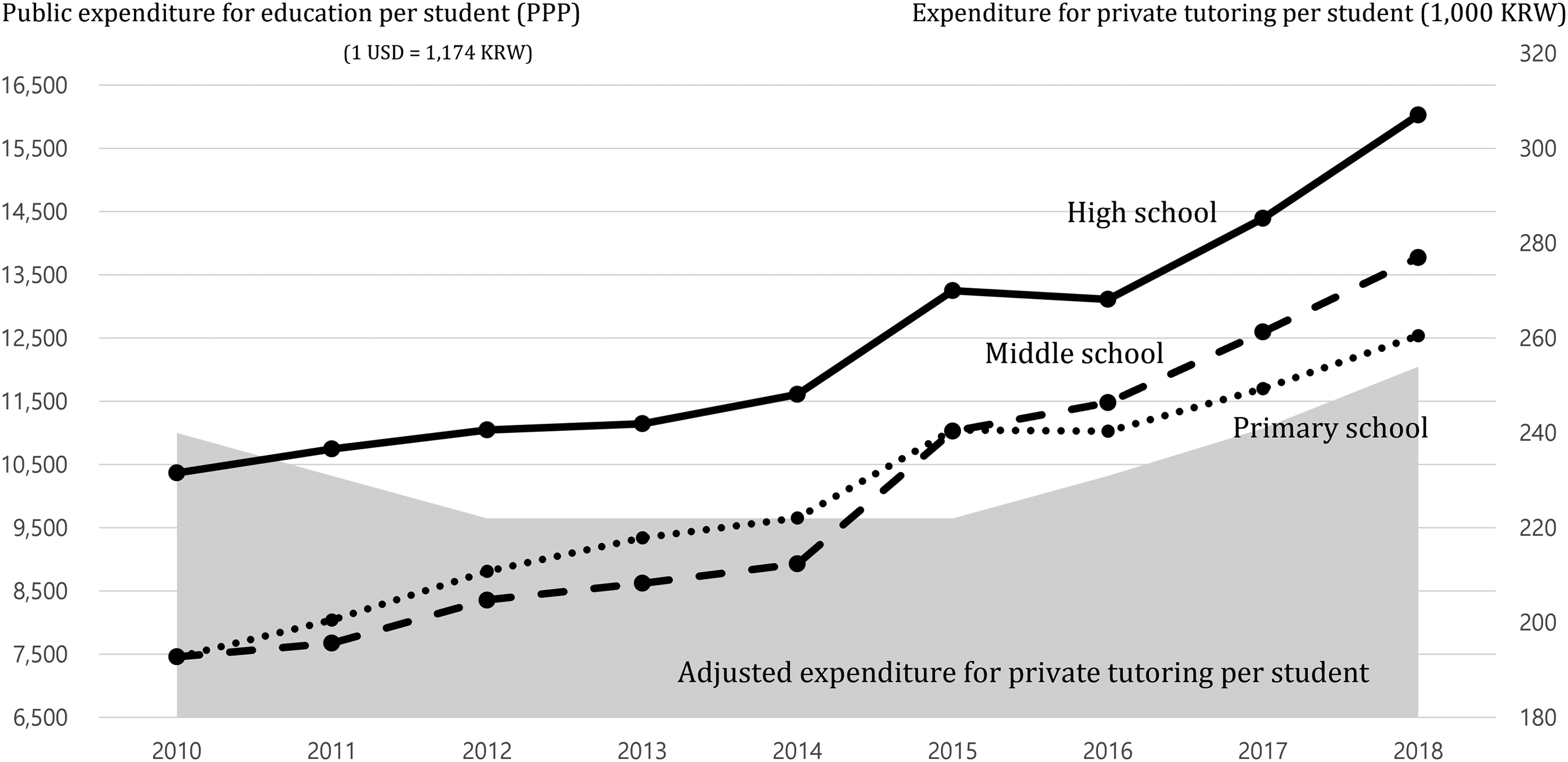
Public expenditure for education and private expenditure for tutoring during 2010−2018.
Research purposes and approaches
This study aimed to explore the reasons why, despite the considerable efforts of the government, the total amount of private tutoring expenditure increased at the national level. In addition, it attempted to examine whether the basic assumptions the government had in mind while implementing private tutoring reduction policies were valid. With such a purpose, it also explored the effectiveness and unintended consequences of government policies. The following approaches were employed to conduct the current study.
First, the study applied an ecological perspective, which states that human behavior is influenced by the environment of society and the behavior of others. Conversely, it suggests that an individual's actions shape the environment and affect others’ behavior. This perspective may also be supported by the field theory of behavior (Lewin, 1935) and social systems theory (Getzels & Guba, 1957), which state that an individual's behavior is a function of the interaction between the individual and the social environment.
Student participation in private tutoring can then be understood in two ways. One is a micro-level approach that employs the economics of education theory or the results of educational productivity studies (Walberg, 1982). According to this approach, participation in tutoring is the product of rational decisions that are determined by calculating costs and benefits and may be regarded as a type of educational investment. For example, a student attends supplementary tutoring with the belief that tutoring can improve test scores and thus increase the chance of being accepted into a certain university. In this case, the unit of analysis is usually an individual. The second approach is a macro-level analysis applying the sociology of education theories (Getzels & Guba, 1957), which explores the structural factors affecting the widespread use of private tutoring at the social level. According to this view, individuals constantly interact with and are influenced by social environments, determining their behavior. In the context of this study, the environment may include changes in conditions of public schools, increased educational and social stratification, and subsequent perpetuation of class structures. This perspective is related to the social reproduction theory (Bowles & Gintis, 1976). Faced with growing social stratification or mobility, parents are more likely to find effective means to pass on their wealth and status to their children, which could involve signing their children up for tutoring. From an ecological and sociological perspective, this study intended to explore the hidden causes of ever-growing private tutoring in Korean society. The relationships between environmental factors (i.e., educational conditions, government policies, widening social gaps, and social stratification) and private tutoring expenditures were examined at the national level.
Second, this study applied the method of historical research (Leedy & Ormrod, 2005), which aims to help understand current social phenomena by examining past events. In doing so, emphasis is placed on the meanings and causes of past events and their effects on present behaviors. The study goals include revealing whether the government's policies were effective in reducing private tutoring; thus, it is essential to review past events and the results.
Third, the study employed the new institutionalism perspective (Powell & DiMaggio, 1991), which states that individual decisions and behaviors are influenced by long-established social norms. This perspective is useful in understanding why individual behaviors persist, even if they seem irrational or difficult to understand from an economic point of view, and is particularly helpful in explaining the phenomenon in which private tutoring has not decreased but rather increased, despite the improved conditions of public education and various government policies to reduce private tutoring.
To conduct the study, a comprehensive review of related literature, including government documents, reports, and newspapers related to private tutoring and government policies, was performed. In addition, we analyzed national-level longitudinal data related to the economy, education, social stratification, and private tutoring provided by the NSO, the Bank of Korea, KEDI, and related organizations.
Review of private tutoring reduction policies
Successive Korean governments have actively promoted policies to reduce students’ reliance on private tutoring and decrease parents’ spending on tutoring. Policy efforts can be classified into four categories, as follows.
Promoting the quality of public education
The government has primarily emphasized improving the quality and conditions of public schooling to reduce private tutoring. Politicians and many others believe that enhancing the competitiveness of public education is the most effective way to solve the private tutoring problem, simply based on the assumption that students are not satisfied with the quality of public education and therefore rely on private tutoring services. According to this view, students have no choice but to attend hagwons because schools fail to meet the diverse educational needs of students. For example, when the number of students per class is large, it may be difficult for teachers to provide individualized learning to each student while considering their previous learning experiences, learning strategies, and achievements. Therefore, students either hire tutors who pay more attention to what they lack or attend hagwons after school. To solve these problems, some argue that the government should reduce the number of students per class and provide student-centered education.
Expanding investment in education usually takes a long time to achieve policy results. However, it can be argued that most education policies can contribute to reducing private tutoring by improving the quality of public education. Additionally, one may insist that the government only needs to promote policies to strengthen public education, but there is no need to implement any special policy to reduce private tutoring. However, in this case, the government may be criticized for being irresponsible because it does not take special measures to decrease private tutoring. Moreover, education data and trends over the past decade show that the pattern of student participation in private tutoring has not followed the government's intention or expectation. Figures 1 and 2 illustrate that the environment and conditions of public schooling, as presented by the two variables—the number of students per teacher and the government's investment in education per student—have continuously improved. While private tutoring expenditures per student fluctuated during the period, they overall did not decrease as much as the government had anticipated. As shown in Figure 3, it seems that the decrease in private tutoring expenditure since 2010 can be attributed to the decrease in that of elementary students, who presumably suffer less competition to advance to upper secondary school and are provided with many after-school programs that can substitute for private tutoring. In addition, as shown in Table 1, although difficult to prove statistically, the global financial crisis triggered by the subprime mortgage crisis in the United States after 2008, which caused slowdown in the growth of real per capita gross national income might have led to a decrease in household spending on private tutoring. Also, as shown in Figure 4, the rebound in private tutoring expenditures since 2015 has been mainly driven by middle- and high-income families, supporting the proposition that private tutoring is one of the major causes of widening the educational gap among different social groups. Given this empirical evidence, it may be argued that improving the quality of public education does not necessarily lead to a decrease in students’ dependence on private tutoring. These longitudinal statistics suggest that students’ participation in private tutoring may not be solely due to poor educational conditions or dissatisfaction with public education.
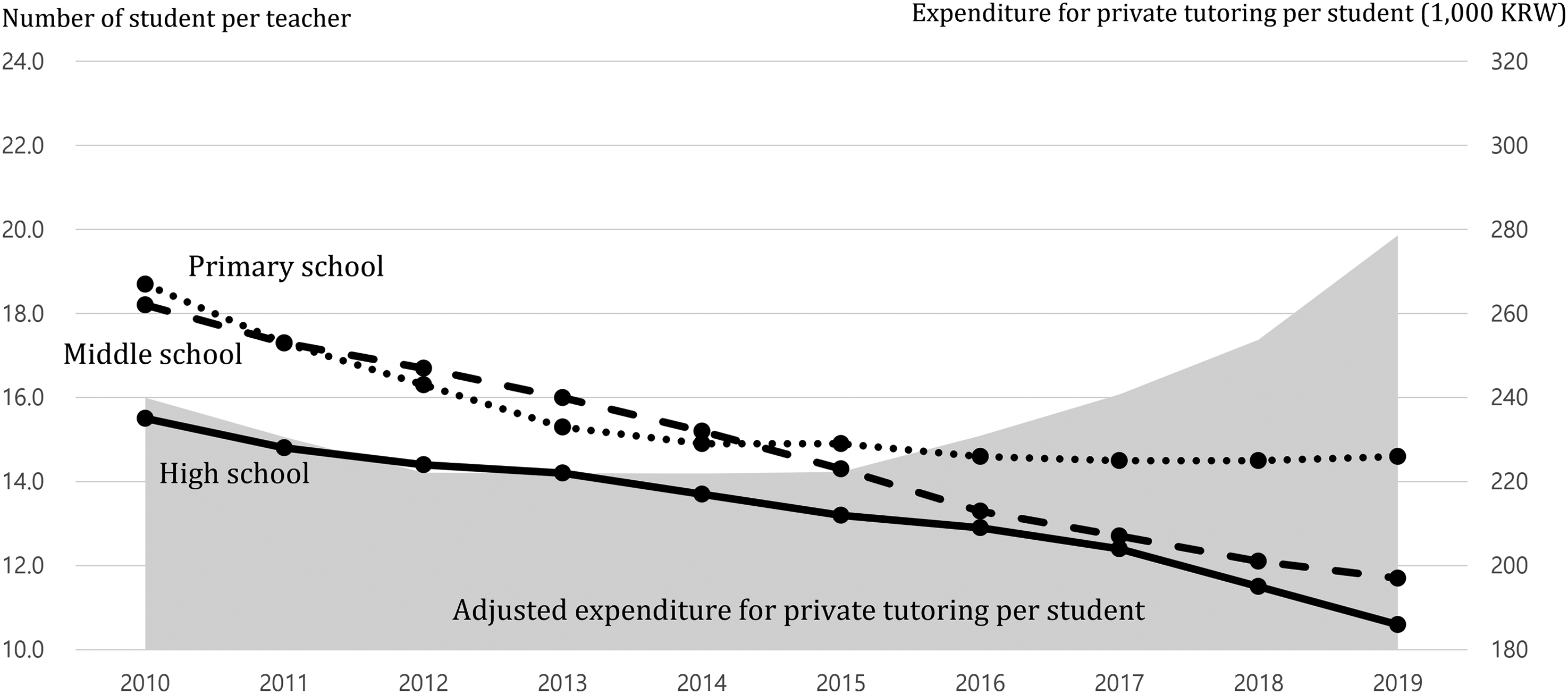
Number of students per teacher and private tutoring expenditure during 2010−2019.
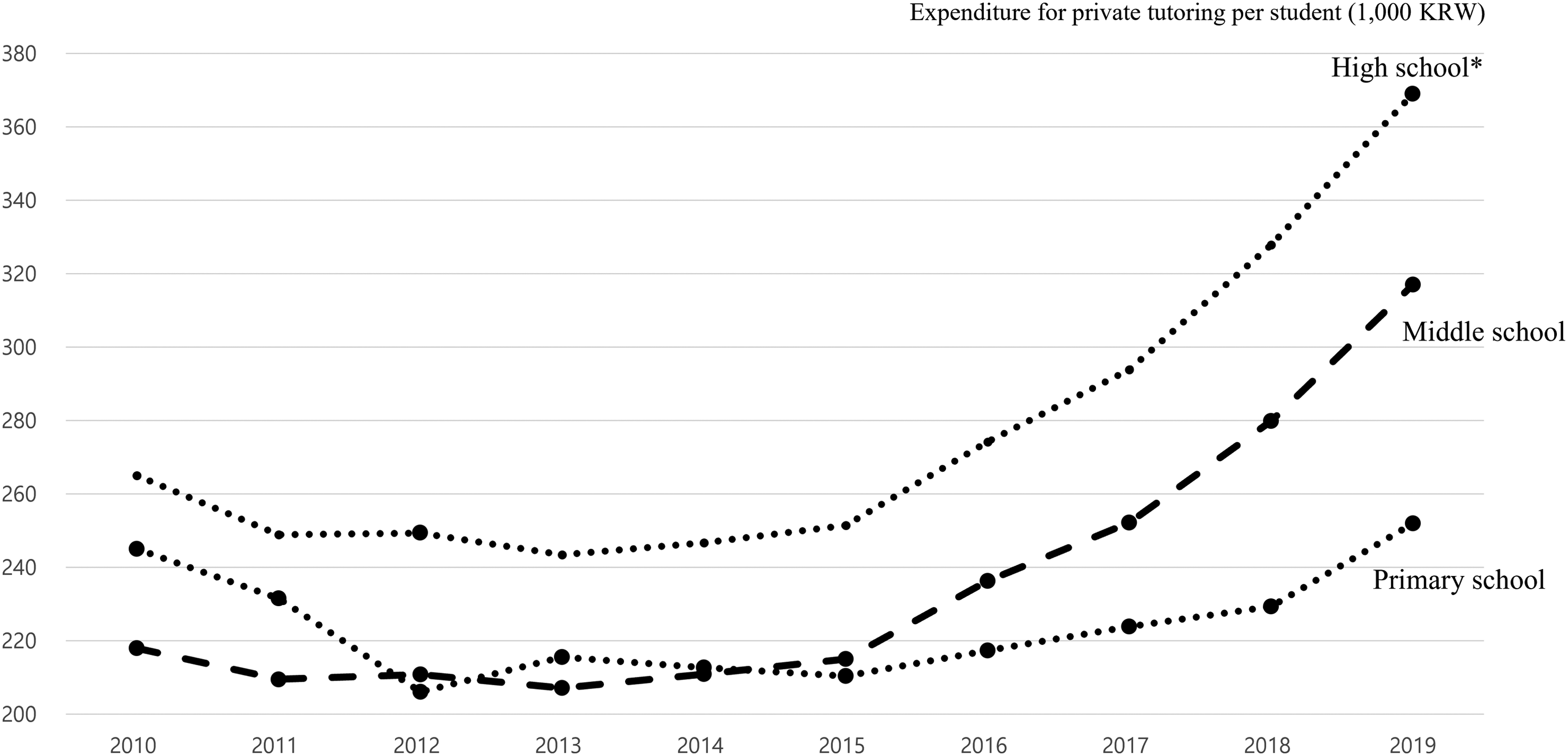
Private tutoring expenditure by school level during 2010–2019.
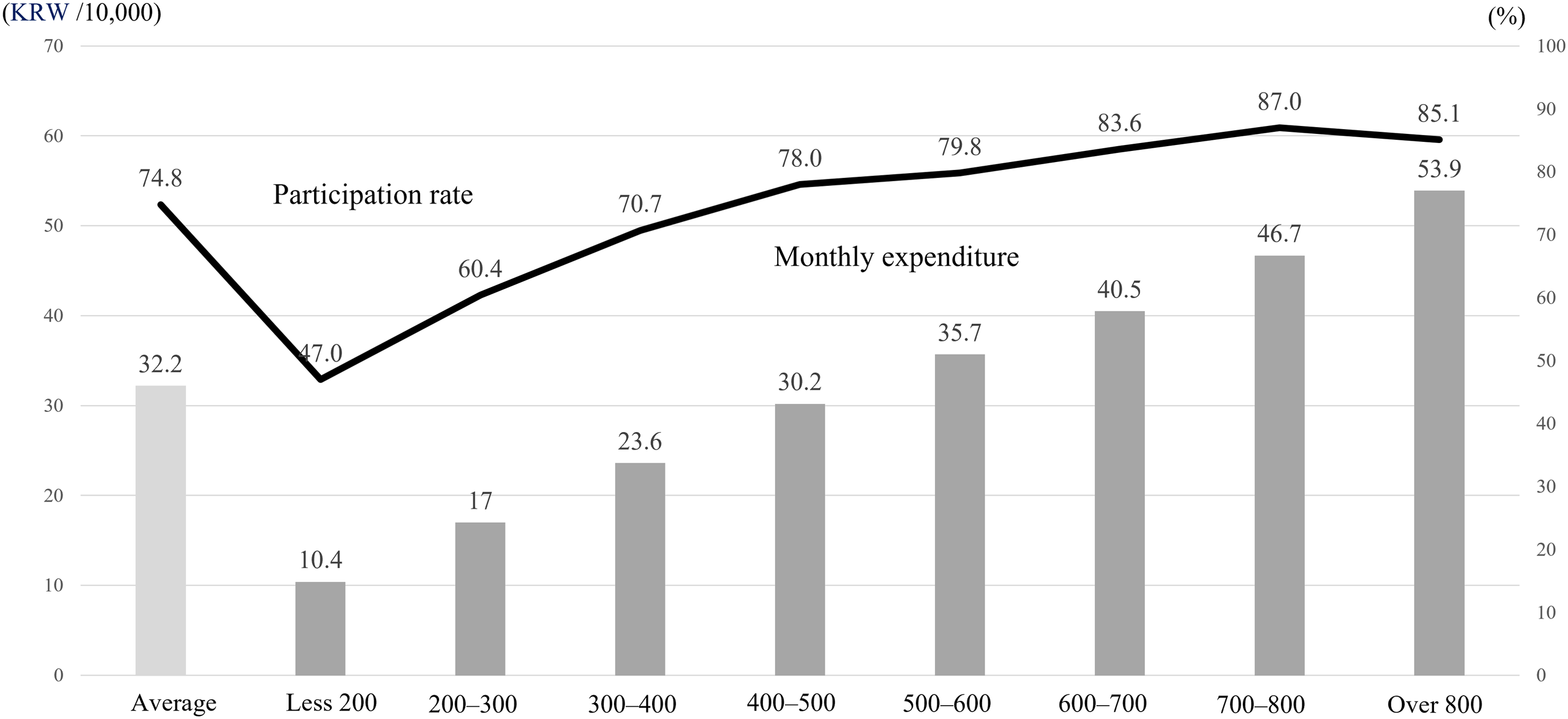
Private tutoring participation rate and monthly expenditure by income level in 2019.
Real gross national income per capita and consumer price index by year during 2007–2019.
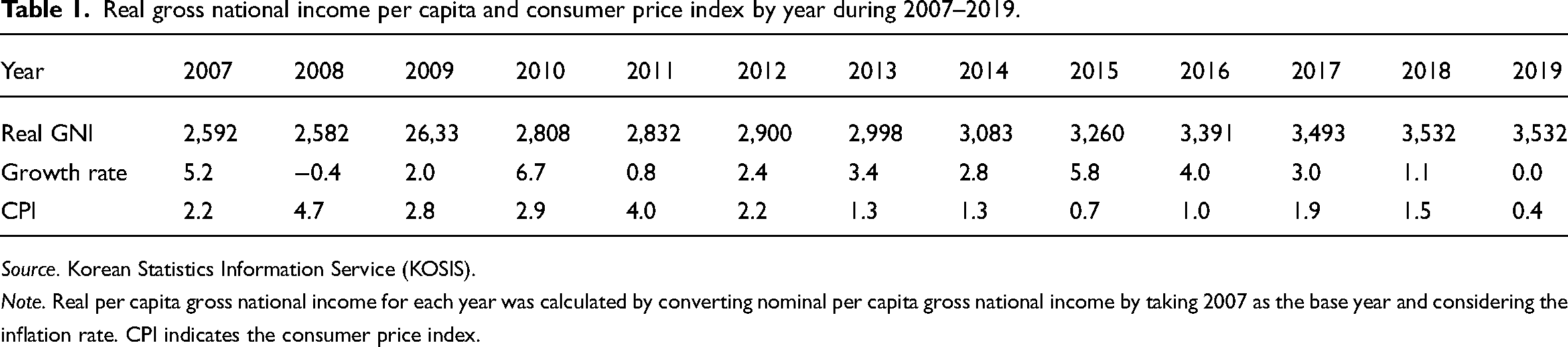
Source. Korean Statistics Information Service (KOSIS).
Note. Real per capita gross national income for each year was calculated by converting nominal per capita gross national income by taking 2007 as the base year and considering the inflation rate. CPI indicates the consumer price index.
Providing quasi-private tutoring as a substitute
Another effort undertaken by the government to reduce the demand for private tutoring is to offer educational programs that can absorb or replace students’ need for it. These programs include Korean SAT (K-SAT) lectures from the Educational Broadcasting System (EBS), Internet-based education lectures and tutoring services from the Korean Education and Research Information Service (KERIS), and after-school programs provided by various educational institutions and professionals. This policy attempt was originally suggested in the “5.31 Education Reform” presented by the Kim Young-Sam administration on May 31, 1995.
The provision of these programs does not fall within the traditionally expected and therefore legitimate roles played by public education authorities. For example, when EBS K-SAT lectures were first introduced, some criticized that the role of the state was to promote public education not to spend taxpayer money to provide quasi-private tutoring that could threaten public education. Some people even ridiculed EBS and K-SAT lectures as a “national hagwon” and “national tutoring.” However, the government policy to promote educational equality by utilizing public resources, especially broadcasting systems, has a long history. From the policy point of view, a meaningful case dates back to the “specialized tutoring program” broadcasted by the Korean Broadcasting System (KBS), a public broadcaster in Korea. To solve the increasingly prevailing private tutoring, KBS started broadcasting “home-based high school” as one of the radio channels in 1980. After gaining great popularity, this program developed into a TV-based educational broadcast. Additionally, the government has sought to reduce the nationwide spread of private tutoring by having nationally well-known lecturers appear in this program. As will be explained later, this effort was a part of the policies that the Chun Doo-hwan administration developed while banning all private tutoring outside of schools. Although criticism emerged that the government was misusing broadcasting resources to provide supplementary tutoring, it was evident that many high school students watched this channel and that this program succeeded in quelling the private tutoring craze to some extent (Lee et al., 2015). With the support of students and parents, in February 1981, KBS 3TV and FM radio channels were launched as independent educational broadcasting platforms of KBS. Ten years later, they developed into one educational broadcasting station called EBS in 1990. The Internet-based K-SAT lectures began under the Kim Dae-jung administration in 2000. Another ten years later, the Lee Myung-bak administration attempted to reduce national private education expenses by directly linking K-SAT to EBS K-SAT lectures. This policy was again criticized for subordinating school classes to K-SAT broadcasting.
After-school programs blossomed owing to the Roh Moo-hyun administration's attempts to reduce private tutoring and to promote education welfare for students from low-income families or underprivileged areas. These programs were considered to be part of a national policy to promote educational equity by providing free or low-cost programs to students from low-income families and received widespread support from parents and the public (Bae & Kanefuji, 2018). However, the government was again criticized for providing a form of private tutoring (albeit within a public school) instead of strengthening public education.
These policies are noteworthy in that the government and Korean society started to employ a practical approach that could substantially reduce the demand for private tutoring and the economic burden on parents rather than being bound by the ideal of “almighty schools,” which only shifts all educational responsibilities onto schools and teachers. In fact, these policies were found to substantially reduce private tutoring expenditures (Bae, Kim, Lee et al., 2010; Bae, Kim & Yang, 2010; Yoon, 2017). However, the public notion is that the quality of these programs, particularly the government-subsidized after-school programs, are not good. Accordingly, many people feel that these programs cannot replace expensive, but seemingly effective, private tutoring.
Reforming entrance examination systems
During the past decades, one of the most frequently proposed policies to reduce private tutoring has been to reform the high school and college admission systems. These reform policies rely on the assumption that most students participate in private tutoring to gain an edge in the competition for high entrance exam scores. Indeed, the remarkable growth of the shadow education market is related to the belief that private tutoring participation, which keeps students focused on the practice of finding answers, enables students to score higher on the entrance exams, thus outshining their peers.
Until recently, two directions of reforms of college admission systems have been pursued. One was to increase the quota that determines admission based on test scores that appear to be objective. This has been politically welcomed as it supposedly reduces the influence of others, such as parents, in admission decisions. The public also believed that this approach could encourage students to focus solely on examination preparation in schools. The other was to expand the use of the evaluation results of school records and self-introductions that describe academic achievements and career-related activities at schools in making admission decisions. This approach was considered to encourage students to focus more on school classes and activities than private tutoring outside the school.
In relation to the admission system's reform at the high school level, two important policies were at odds—the high school equalization policy and the policy of high school diversification (Byun et al., 2012). The reforms of admission systems have gone back and forth, like the pendulum's swing. Right-wing governments tended to believe that the high school entrance system affects private tutoring of middle school students because there is a limit to the number of admissions to high schools that are known to send a considerable number of students to prestigious universities, and thus students want to attend hagwons (Lee, 2004). Accordingly, such governments have promoted the diversification of high school types to pursue the education excellence and enhance the competitiveness of public education. They granted some high schools, such as “special-purpose high schools” and “autonomous private high schools,” autonomy in curriculum operations and the right to select students. An example is the 2008 “High School Diversification 300” policy of the Lee Myung-bak government, which aimed to create 300 high schools operating a different curriculum from general high schools. At that time, the government argued that the more schools that autonomously operate curricula and provide customized education for students, the higher the student satisfaction with public education, leading to the excellence of education and reduction of private education. Conversely, left-wing governments have intended to maintain “high school equalization,” which deprives each school of the right to select students based on the supposition that schools with autonomy in curriculum and student selection could become prestigious schools for which admission competitions would intensify, leading to an increase in private tutoring. In 2019, the Moon Jae-in administration revised the law to eliminate high school types with more autonomy than general schools. However, neither policy has shown a significant effect on the decrease in private tutoring. The high school equalization system began in Seoul and Busan in 1974 and has continued to expand. Since then, many researchers have examined the relationship between the implementation of the high school equalization system and household private tutoring expenditures. Although the data and research methods differ, most studies (Chae, 2006; Kang, 2016; Kim, 2004, 2008; Kim & Park, 2008) have found no empirical evidence that high school equalization has led to a decrease in private tutoring expenditures. For example, Kim and Park (2008) analyzed Korean Education & Employment Panel data and found no significant impact of the high school equalization policy on private tutoring expenditures for middle school students. Kang (2016) analyzed the longitudinal panel data of the Korean education longitudinal study during 2005−2010, which can track changes in private education expenditures for the same students using the difference in difference method. The study found the same results for high school students. Most studies have found that parents’ socio-economic status has the most significant impact on private tutoring expenditures. Similarly, the number of autonomous private high schools has increased significantly under the Lee Myung-bak administration as private tutoring expenses continued to increase. Nevertheless, the Korean government has routinely presented the reduction of private tutoring expenditures as one of major goals in most education policies, sometimes without academically proven foundations or evidence. This is because the skyrocketing spending for children's private tutoring is a social and politically important issue in Korea.
Reforming the college admission system is a complicated matter. Until recently, governments changed the university admission system for several reasons. First, when the national curriculum was revised, the subjects and contents of the university entrance examination had to change; accordingly, the government had to overhaul the admission system. Second, when social events occurred, the government had to change the admission system, which revealed problems with the existing system. Third, as public opinion grew for universities to improve the fairness of admission standards and procedures or to expand the universities’ autonomy in selecting students, the government responded by changing the university admission system. Lastly, governments have reformed the college entrance examination system to solve the problem of skyrocketing private tutoring expenses. For example, the Lee Myung-bak administration introduced an admission officer system in 2008 that qualitatively evaluated academic achievement and career-related in-school activities so that students who had done their best at school would have little difficulty in being admitted to university. Policymakers expected the system to contribute to increasing student participation in school activities and reduce the demand for private tutoring. However, contrary to their expectations, there has been an increasing number of cases in which students hired expensive consulting services to receive a good evaluation from admission officers by writing the school records in a more attractive manner. Moreover, the problem was raised that only wealthy students can afford these expensive consulting services. To sum up, although the admission officer system was introduced to reduce tutoring in preparation for the K-SAT and to strengthen public schools, it was found to trigger another type of tutoring and consulting. This is an example of how the shadow education market responds intelligently to changes in government policy and survives.
In 2013, when the Park Geun-hye administration took office, the government recognized these problems and changed the entrance exam system again. The purpose was to simplify the contents in students’ school records. Policymakers expected that the simplified system would contribute to reducing the information costs for admission systems as well as increasing the fairness of student selection. This policy was also welcomed by students from low-income families and local areas who were unable to afford high-cost consulting and could only participate in limited school activities.
However, as shown in Figure 5, the overall private tutoring expenses have not decreased despite the reform of the entrance examination system. On the contrary, private tutoring expenditures have increased significantly since 2015 compared to the previous years. It is argued that this phenomenon can be attributed to the fact that the Park Geun-hye administration maintained the school record-based college admission system and students participated in various extracurricular activities outside the school to make their school records stand out (Ahn, 2017). Neither emphasizing students’ diverse school activities in the selection process nor simplifying the entrance examination system by increasing selection based on K-SAT scores managed to reduce private tutoring. Whenever the university entrance system changed, the clever shadow education market expanded by exploiting the worries and anxieties of students who had to prepare for the changed system and provided high-priced consulting services with detailed information about the new system.
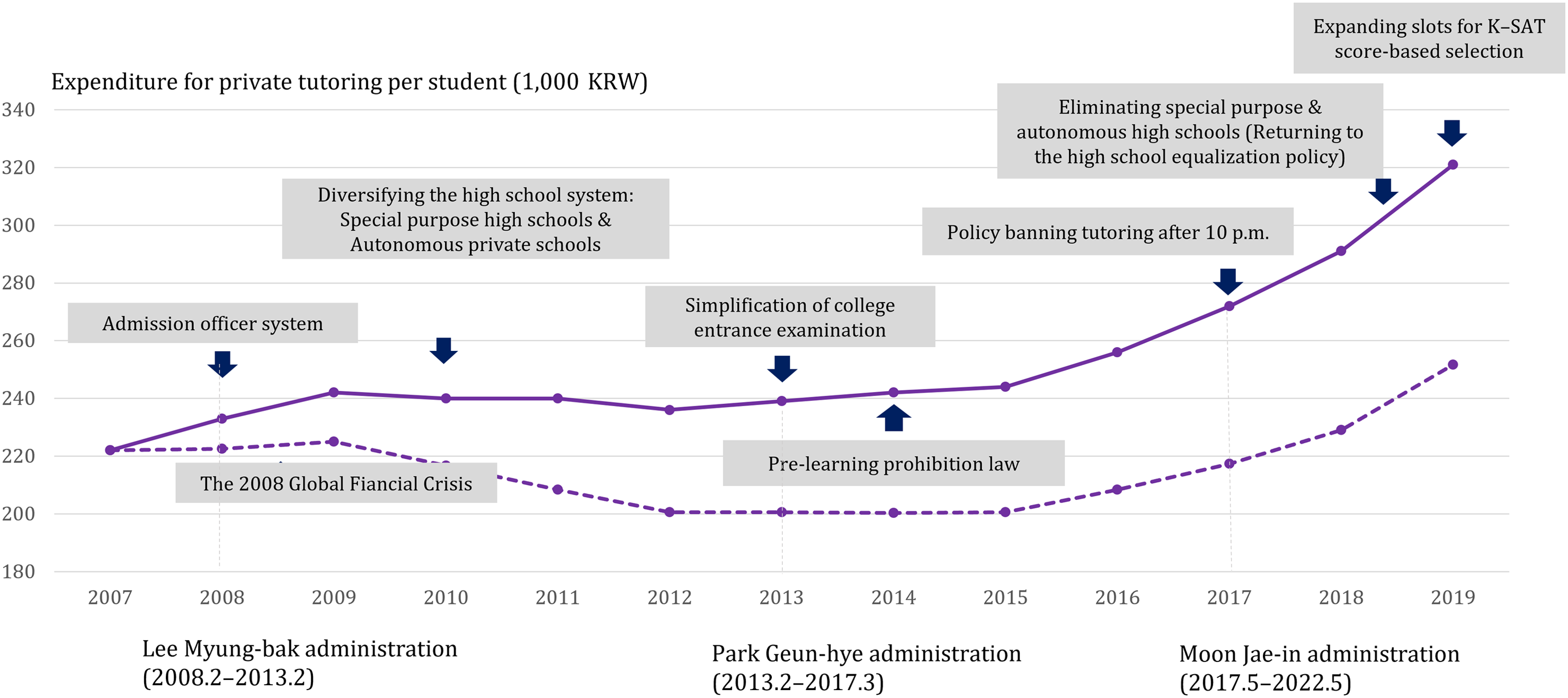
Policies to reduce private tutoring and the trend of private tutoring expenditures.
In conclusion, regardless of the direction in which the admission system was changed, students had to compete fiercely to gain admission to the university and parents were prepared to pay for any tutoring if it helped. In this sense, the true cause of the increase in private tutoring may not be the entrance exam system itself but rather the competition among students. The question then arises as to why the competition for admission to top universities has not disappeared in Korean society. As aforementioned, the cause could be found in society rather than the education field.
Regulation of the shadow education market
The last and most dramatic strategy is to strictly regulate the shadow education market, which has been recently implemented by the Chinese government (Ministry of Education of the People's Republic of China, 2021; Zhang, 2019, 2021). While the abovementioned policies aim to reduce and/or replace students’ reliance on private tutoring, regulatory policies are aimed at harassing providers of private tutoring and constraining their business. Recently, in terms of economic policy, the shadow education market is implicitly perceived as one of the education service markets and even recognized as a field that is difficult to overlook in terms of job creation. However, at least in Korea, private tutoring is still recognized as a social problem that widens the education gap, and strong regulation on the market is both politically correct and popular.
In Korea, the most powerful policy to regulate private tutoring market was A Plan to Take Public Education Back to the Normal Stage and Resolve the Overheated Problem of Private Education, announced by the Chun Doo-hwan administration on July 30, 1980 (NSEC, 1980), in which the authoritarian government banned all tutoring outside of schools. The strict prohibition of private tutoring of social leaders’ children, such as public officials, businessmen, doctors, and lawyers, was particularly emphasized. According to the announcement (NSEC, 1980), if children of socially influential people violated this order, the parents’ list would be disclosed, public officials would be expelled from public office, and businessmen would be subjected to a tax investigation. Although these prescriptions may be considered extreme, they received great support from the public.
However, the problem was that such a ban had no legal basis. Accordingly, in April 1981, the government amended the law. The revised law stipulated the principal prohibition of private tutoring, except in special cases, such as night school tutoring for working youth and tutoring for relatives. In the case of hagwons, a registration system was introduced, and all private tutors were required to report their tutoring lessons to the education authorities.
Interestingly, while there was a penalty for tutors who violated the law, parents and students were not subject to punishment. This is because it was considered unreasonable to criminally punish students or parents for studying. Instead, the government warned that students who violated the tutoring ban would be disciplined at school, parents would be fired from their jobs, and businesses would be subject to tax audits. Therefore, a social atmosphere was created in which everyone was careful about observing the ban on private tutoring.
However, despite strong warnings and law enforcement, parents’ desire to send their children to top universities could not be completely suppressed. Expensive private tutoring began to spread in secret places, such as the Gangnam District of Seoul, where wealthy people resided. To avoid crackdowns, anonymous tutoring, such as “in-car tutoring,” where students and tutors met in cars, came into existence. In addition, there were complaints that it was difficult for college students to continue studying at university because they could not earn money from tutoring, which increased social sympathy.
In 1989, the Rho Tae-woo administration changed the Private Education Institute Act to the Act on the Establishment and Operation of Hagwons and made exceptions to the complete ban on private tutoring. College students were permitted to provide tutoring and students were allowed to attend hagwons during after school hours. However, considering the negative public opinion on private tutoring, the principle of prohibiting private tutoring in general was maintained.
The rapid development of information and communication technology in the 1990s triggered a remarkable change in the fields of shadow and public education. In 1995, a company called “Sky Education” launched an education service in which paid subscribers used personal computers (PCs) to ask questions about subjects and tutors hired by the company provided answers. The problem was the company tutors’ visits to the members’ homes and tutoring. The prosecution indicted the company's CEO in 1998, judging that private tutoring at home violated the Act on the Establishment and Operation of Hagwons, which stipulates that only college students and registered hagwons can provide tutoring. However, the court that proceeded with the lawsuit suspected that Article 3 of the Act, which comprehensively bans private tutoring, and Article 22(1) of the Act, which stipulates punishment for violators, violated the Constitution. Therefore, at the request of the court, the Constitutional Court initiated a trial to determine whether the law was unconstitutional.
On April 17, 2000, the Constitutional Court made a historic decision that Article 3 and Article 22(1) of the Act on the Establishment and Management of Hagwons violated the Constitution. The dam of the general ban on private tutoring, which the government had constructed while ignoring the desires of students and parents, suddenly burst. The decision of the Constitutional Court is summarized as follows: The upbringing and education of children is fundamentally a natural right of parents and a duty imposed on them. Although the “right of parents” to guide their children's education is not stipulated in the Constitution, it is an indispensable human right for all human beings. This comes from Article 36(1) of the Constitution that guarantees marriage and family life, Article 10 of the Constitution that guarantees the right to pursue happiness, and Article 37(1) of the Constitution that the people's freedom and rights should be guaranteed even if they are not listed in the Constitution. Therefore, parents have the right to make an overall plan for their children's education and independently shape their children's education according to their views on life, society, and education, and the right of parents to educate their children in relation to other educational entities have a principled advantage.
Parents’ rights must be respected in all areas of education in the upbringing and education of their children. As far as school education is concerned, the state, by being given the independent educational right, which is, in principle, independent from the parent's right to education according to Article 31 of the Constitution, is in charge of the education of children along with the parents’ right to education. However, in the field of education outside of school, in principle, parents’ right to education takes precedence.
A notable phenomenon in the 1990s was that hagwons began to flourish across the country. Indeed, the number of hagwons nearly doubled in 10 years from 28,862 in 1990 to 57,935 in 2000. The majority of new hagwons were small-sized tutoring institutions located in neighborhoods within easy reach of students’ residences. The history of small-sized hagwons can be traced back to private tutoring institutions that ran secretly under the total ban of the Chun Doo-hwan government. However, as the policy environment changed, the number of small-sized tutoring institutions for supplementary learning dramatically increased. Such changes include the revision of laws in the direction of deregulating the establishment of hagwons, the increase in public demand for private tutoring, and the Constitutional Court's decision that the total ban on private tutoring is unconstitutional. For example, the law was amended in 1989, making it possible for students to attend hagwons during vacation, and from the early 1990s, students were allowed to attend hagwons during the school semester.
On September 22, 2006, the Act on the Establishment and Management of Hagwons was amended, allowing the Superintendent of Education to set the teaching hours of hagwons. In October 2009, amendments to the ordinance were passed in all cities and provinces to limit the class hours of hagwons. For example, for the health and safety of students, the Seoul Metropolitan Office of Education imposed a curfew on hagwons in 2017, forcing hagwons to cease operations at 10 p.m. The education authorities also regulated excessive marketing that tricks parents into sending their children to hagwons. However, to properly implement these regulatory policies, considerable administrative capacity is required. In addition, what history tells about the government's ban on private tutoring is that it eventually led to the unexpected result of expensive, small, and secret tutoring. Such illicit black markets tend to take place out of the reach of administrative authorities.
Thus, the lesson to be learned from the past is that the government's suppression of private tutoring was neither legally justified nor practically effective. Past experiences also show the difficulty of government policy attempts to fully eliminate parents’ desire for their children's education. Although governments have implemented various policies to curb private tutoring and reduce parents’ tutoring costs, shadow education is constantly evolving in Korean society. There are even mothers who organize a small number of students and connect them with the hagwons and tutors who do the best on their exams. The media calls these mothers, who have a strong influence on the tutoring market, “pig mothers.”
Social environments that sustain shadow education 1
Past experiences show that one of the true causes of the prevalence of shadow education could be fierce competition among students for admission to prestigious universities. Students’ private tutoring participation should be understood as a very realistic decision because graduating from a prestigious university significantly impacts one's employment, income, marriage and housing choices, and expansion of social capital. Therefore, to find the root cause of the prevalence of shadow education, it is essential to examine the socio-structural factors beyond the education domain from an ecological perspective. These may include widening social and economic gaps between “haves” and “have nots” caused by educational stratification, the effect of university degrees on social mobility and reproduction, and the relationship between participation in private tutoring and opportunities to gain admission to a prestigious university.
Overview of the development of Korean society and the rise of a new class system
To better understand private tutoring with persistent vitality and scalability, it is important to understand what “education” means to Koreans and how it affects the upward mobility of an individual as well as the development of society as a whole. Over the past century, Korean society has undergone dramatic structural changes. In the early 20th century, Korea endured the long dark period of Japanese colonial rule. The feudal system that valued familial bonds disappeared with the fall of the Joseon Dynasty. While a new class structure was born around the pro-Japanese group, it collapsed with liberation in 1945. In 1950, the Korean War broke out and completely devastated the country. Many people had to leave their homes and start a new life in a new place. Economic development was urgently needed to rebuild the country, as was a rapid and substantial supply of labor. Public education effectively and sufficiently produced the manpower necessary for export-led economic growth. In 1995, Korea joined the OECD Development Assistance Committee (DAC) and became the only country in the world to change from a recipient country to a DAC member state, that is, a donor country. In other words, it transformed itself from being a poor country with a per capita income of only $120 in 1962 to becoming a developed country with a per capita income of $33,790 in 2020 (see Figure 6). The country's per capita wealth has increased 400 times over the last 60 years.
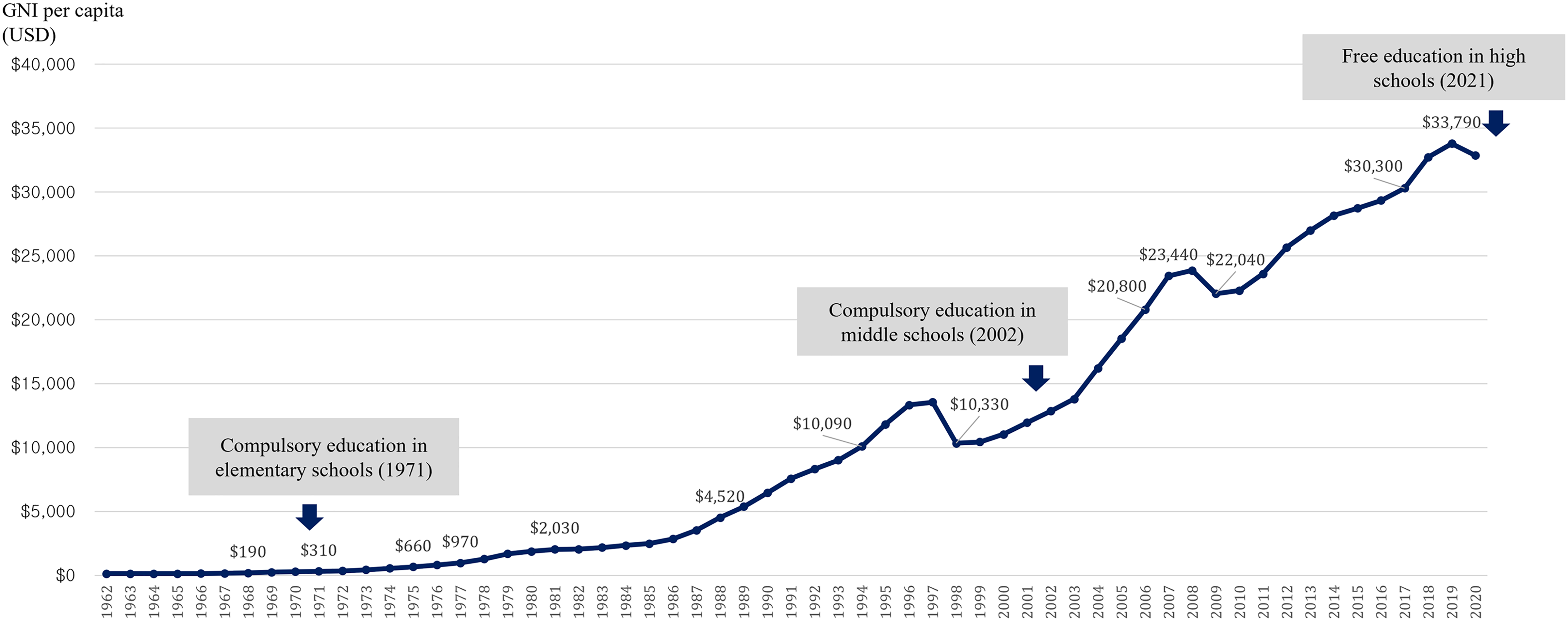
Growth of the Korean economy and the development of education.
Education played the most important role in national development. With limited resources, a sequential education investment strategy was effective. Compulsory education was implemented at the elementary school level in 1971 and the middle school level in 2002, followed by free high school education in 2021. This step-by-step investment in education coincided with the demand for skilled manpower as the industry developed (Bae, 2007). Korea has become a country that has empirically proven the “endogenous growth theory” (Lucas, 1988; Romer, 1994), which purports that the formation of human capital through education significantly contributes to national economic development. Even former US President Barack Obama supported this view by mentioning, “In Korea, teachers are nation-builders” (Loewus, 2011). More importantly, the so-called “education fever” of Korean parents (Seth, 2002) may be described as the most contributing factor to the development of Korean education, along with the government's strategic educational investment and the quality of teachers. However, as will be described later, parents’ passion for their children's education became the seed that gave birth to shadow education.
Collapse of the middle class and the emergence of shadow education
As stated earlier, Korean society has undergone fundamental changes in its social class structure over the past century. The feudal aristocracy, where family ties were important, collapsed as the era of “meritocracy” arrived. The time appeared to have come when anyone, regardless of birth, could, with talent and achievement, move to positions of economic wealth and political power. Moving stories of “born in a stream and rising into a dragon” spread across the country. In most cases, “education” was central to success. As such cases became more widely known among Koreans, the education fever deepened (Seth, 2002).
At the end of the 1970s, the college advancement rate was less than 10%. Higher education contributed to producing elites in all areas of society. Even persons born into poor families could attend a prestigious university if they scored high on the examination; after graduation, they could become a leader in various fields such as politics, economy, society, and culture. Public education, which values effort and achievement, was perceived as a fair system that could replace the aristocratic system that only concerned blood ties. Meritocracy became a belief and culture among Koreans.
Over time, however, a new ruling class began to form as those who had graduated from prestigious universities assumed wealth and political power. As seen in Figure 7, the so-called “SKY” (an abbreviation of the three top universities, Seoul National University, Korea University, and Yonsei University) graduates began to rise to the top in most fields of society, including politics, business and industry, and government. For instance, in 2020, 34.3% of all National Assembly members were from SKY universities. The combination of “meritocracy” and “academicism” further deepened this tendency. Consequently, “human capital” became linked to “social capital” and began to exert greater power. This social phenomenon solidified and perpetuated the new social class structure formed by meritocracy. Accordingly, the preference for prestigious universities deeply penetrated Korean society.
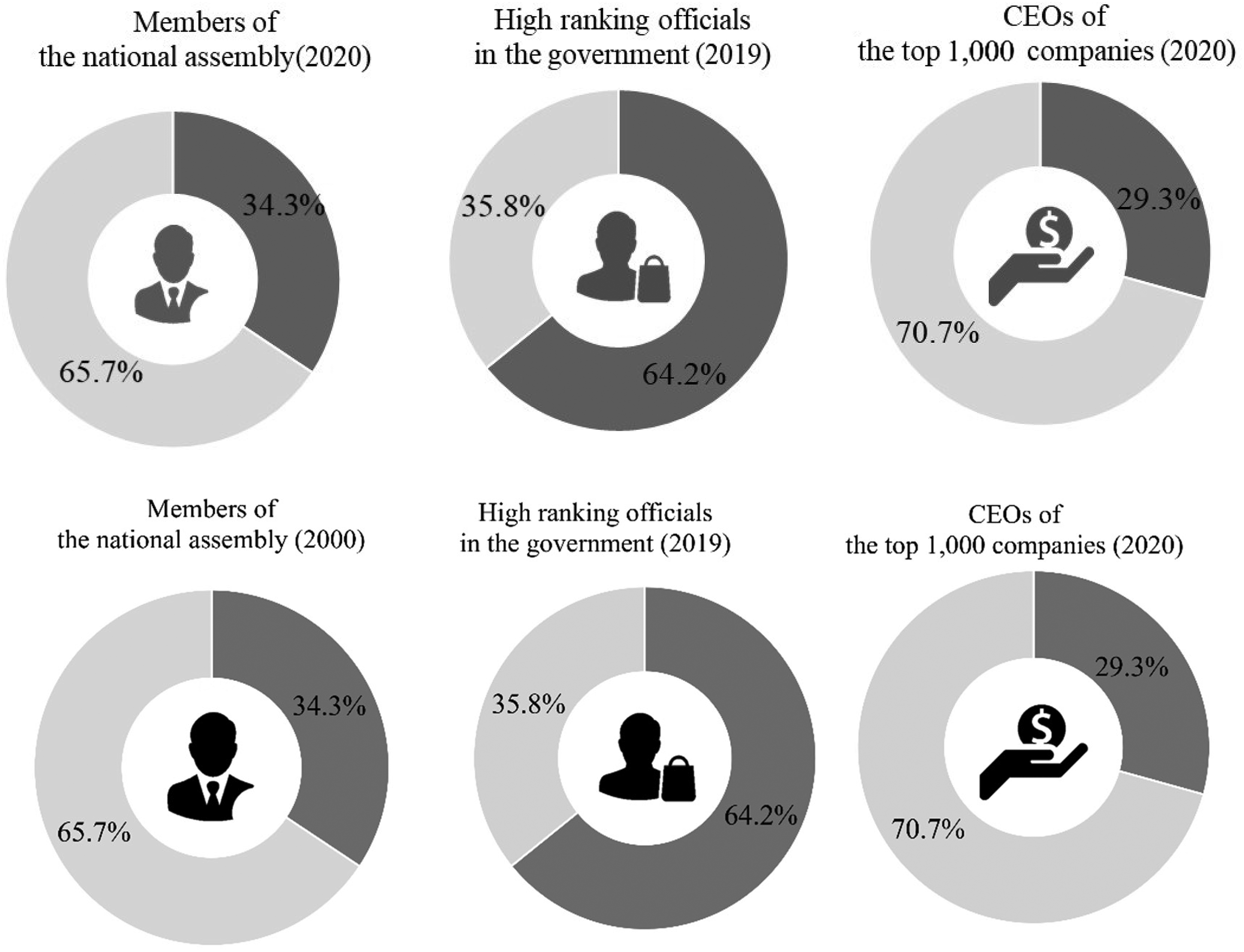
SKY (Seoul, Korea, and Yonsei) graduates as a power elite.
In the past, education was generally perceived as the fairest and most effective social institution that significantly contributed to the development of the nation and the establishment of a meritocratic society. Korean people considered education an effective means for individuals’ upward mobility. However, education gradually shifted into a system that contributed to social stratification and the perpetuation of the hierarchical structure of the class.
Shadow education played a key role in changing the role of education. It paved the way for wealthy students to achieve higher scores, outshine their peers, and attend prestigious universities to become elites. As shown in Figure 8, of the students who entered Seoul National University in 2015, 88.5% had received private tutoring, and 48.1% indicated that it was of great help in preparing for the college entrance examination. Taken together, private tutoring has emerged as a key means of educational stratification and social reproduction.
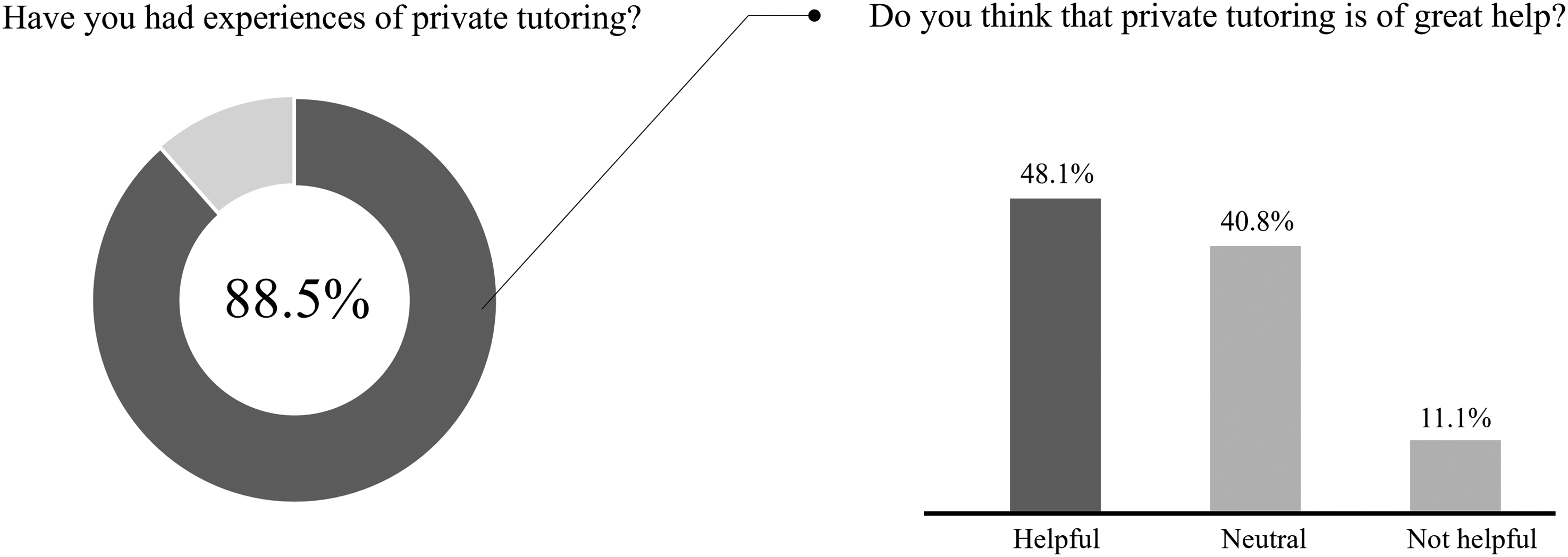
Private tutoring and admission to Seoul National University in 2015.
Widening inequality and increased private tutoring
Faced with widening income gaps and social inequality, it is no wonder that parents want their children to become members of the upper class whenever possible. For them, the best strategy to make this a reality might be for their children to gain admission into a prestigious university that has already produced people who belong to the upper class and expanded social capital among them. In addition, admission to a prestigious educational institution, such as the SKY universities, functions as “positional goods” (for more information, see Hirsch, 1977) symbolizing honor and higher social status in Korean society. Accordingly, many parents would do anything to send their children to these universities with a strong belief that private tutoring could help achieve this goal. The drama “SKY Castle,” which was aired in 2018 and gained remarkable attention from Koreans, best demonstrates this social phenomenon. In the drama, a couple of doctors who live in a village hoped that their children would follow in their footsteps and attend a prestigious university to obtain higher social status and wealth, that is, social reproduction. To make this dream come true, the parents hired a professional admissions consultant who coached students in both their studies and their daily lives. At the end of the drama, the children, who were tired of the cruel private tutoring and dehumanizing competition, became disillusioned with such a lifestyle and their families faced crises. In the drama, the father who had forced his children to attend private tutoring to go to a prestigious university explained as follows: Friendship and loyalty are not important in life. It's important where you guys are in the pyramid. If you’re at bottom, you’ll be crushed. If you are at the top, you’ll enjoy it. Face the reality. Do you know the goal of Korean education? It's to make the student do well on the test. Once you get good grades, you are supposed to work harder. The memory of success, it motivates you. It's the role of parents to make that.
The increasing economic inequality among social groups in Korean society widened in the 1990s. Until the 1997 Asian financial crisis, the Korean economy grew at a phenomenal rate of approximately 10% per annum. However, it started to decline with low growth. The 2008 Global Financial Crisis once again brought the Korean economy and society to the breaking point. Since then, the income gap and social inequality have steadily increased. The middle class has shrunk, the working class has been getting poorer, and economic wealth has continued to be concentrated in the upper class. The percentage of people who considered themselves the middle class fell from 75% in 1989 to 42% in 2019. The Piketty Index, a widely used inequality index that represents the sum of households’ net assets and the government divided by the net national income, increased from 7.4% in 2010 to 8.8% in 2019 (see Figure 9).
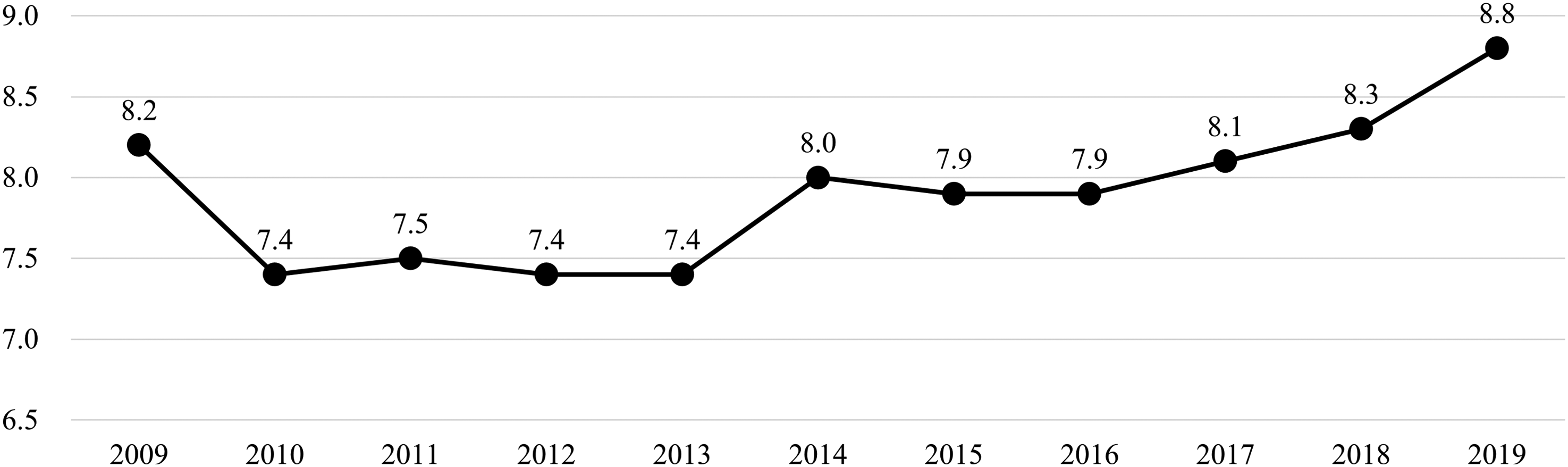
Change in the Piketty Index, 2009−2019.
On the education side, the problem is that economic inequality has led to unequal educational opportunities among social groups. In particular, the type and degree of private tutoring participation has differed according to parents’ income levels. As shown in Figure 9, the higher the household income, the greater the children's participation in private tutoring. According to a 2019 statistics, on the one hand, the private tutoring participation rate of children from families with an average monthly income of 2 million KRW or less was 10.4% and the average monthly expenditure for private tutoring was 470,000 KRW. On the other hand, in the case of the group with an average family income of 8 million KRW or more, the children's participation rate in private tutoring was 53.9% and the average monthly private tutoring expenditure was 539,000 KRW. As in other societies, wealthy families can inherit their wealth and social status in a variety of ways other than investing in their children's education, including private tutoring. However, for them, ensuring their children are admitted to a prestigious university means having symbolic capital as a “status good” beyond investment in human capital. It also means forming social capital that plays a crucial role in staying or moving into the upper classes. Figure 10 shows that the average monthly private tutoring expenditure of the middle- and high-income families is significantly higher than that of the low-income groups across all years.
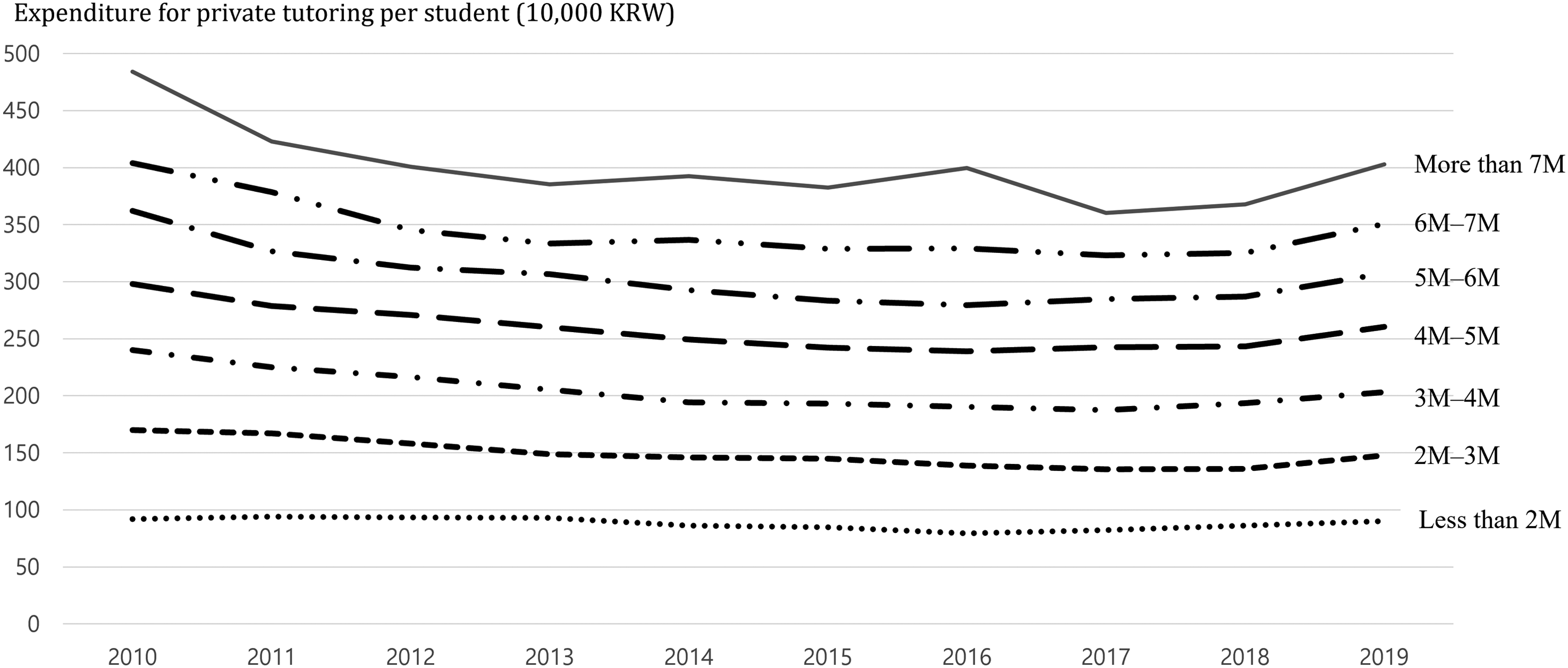
Private tutoring participation rate and monthly expenditure by income level, 2010–2019.
Research results are inconsistent by grade and subject. However, a majority of empirical studies have shown that participation in private tutoring positively affects student performance (e.g., Bang & Chung, 2018; Ha & Park, 2015; Lee & Kwon, 2011; Park et al., 2008). More importantly, much anecdotal evidence demonstrating that private tutoring helps students achieve higher test scores exists. With this situation, one may argue that students from affluent families would have a greater chance of being admitted to prestigious universities compared to their economically poorer counterparts. This seemingly unjust situation and social inequality were well addressed in an editorial of Kyunghyang Shinmun on November 17, 2015: If the future is determined by the wealth of the parents, and the inequality thus formed is passed down, Korean society must be entering a new class society. The fact that “dirt spoons,” i.e., young people who have little or no inheritance, can't get out of this state no matter how hard they try, shows that Korean society is a new class society. “Efforts in vain,” which appeared newly along with “dirt spoons,” is a sarcastic expression for a society in despair where individuals cannot move up to the upper class no matter how hard they try. Following the “3 po
2
” generation,” young people who gave up three things (dating, marriage, and childbirth), the “5 po” generation; that is, those who gave up five things (the first three plus home and personal relationships) appeared. Finally, the term “n-po generation,” which had to give up almost everything emerged.
It seems obvious that for parents who want to pass on wealth and social status to their children, private tutoring has become a means of educational differentiation. Although it was once banned entirely, parents who have witnessed the tremendous effects of obtaining a diploma from a prestigious university on their children's future lives cannot give up this means. As American sociologist Richard Reeves (2017) suggests in his book, The Dream Hoarder, upper-class parents make various efforts to create thick “glass floors” to keep their children from falling into the lower classes. However, the “glass floor” they construct is probably also a “glass ceiling” for the children of the lower classes. The stronger these glass floors or ceilings are, the more likely they are to perpetuate existing social classes. Indeed, private tutoring certainly contributes to creating and reinforcing such a glass floor in Korean society. While public schooling has maintained its function as a “great equalizer,” shadow education, which favors students from affluent families, has clearly exacerbated educational inequality.
Summary, discussion, and conclusions
Over the past few decades, Korean society has witnessed many moving stories of success through hard work and achievement. In particular, improvements in education and parents’ sacrifices have played key roles in the success of the children. Therefore, Koreans in general react very sensitively to anything that undermines equality in educational opportunities. To provide equal educational opportunities to all students, the Korean government has spared no expense in investing in public education (e.g., creating a special education tax and a special account to improve the educational environment of schools). In this context, private tutoring has long been considered one of the major causes of creating gaps in learning opportunities that deteriorates education equality among social groups. Accordingly, private tutoring participation, the degree of which is primarily determined by the level of parents’ wealth and residential location, has been regarded as one of the most problematic educational and social problems to be solved by the Korean government. In this context, successive Korean governments have implemented various policies to reduce the scale and impact of private tutoring. Above all, policymakers strongly believed that the enhanced quality of public schooling and educational environments of schools would promote student satisfaction, thereby decreasing the need for extracurricular tutoring. Unfortunately, longitudinal education data over the past decade do not support this assumption.
Realizing that the major purpose of private tutoring is to gain admission into selective schools or prestigious universities, the government has attempted to reform the admission system. Their policies include the high school equalization policy at the high school level, simplifying complicated admission systems, and employing the admission officer system to get students more involved in school classes. Nevertheless, as explained above, these policy efforts have not led to a significant reduction in private tutoring expenditures as the government had hoped. The last approach was to impose a curfew on hagwons, restricting their operating hours. However, this only generated illegal, high-priced, and secret tutoring and did not have a significant effect on the reduction of hours and expenditures spent on private tutoring (Choi & Choi, 2015).
The discussion and conclusions of the study are as follows. First, the national longitudinal statistics reveal that the nation's total spending on private tutoring has been steadily increasing every year. Although differences exist in the degree of participation, students from almost all income groups were found to have experienced private tutoring. It may thus be argued that private tutoring in Korea has undergone the process of institutionalization. In other words, private tutoring participation has now become a social norm and is unconsciously taken for granted. Sending children to hagwons has become an unwritten social rule among Korean parents and even the culture of the society. As Powell and DiMaggio (1991) explain, social norms are invisible but exert very powerful influences on people's behavior. The culture of a society develops over a long period of time (Schein, 1985). Pervasive private tutoring may be understood as a product of the history of Korean society.
Second, at the student level, participation in private tutoring may be understood as a rational choice based on cost–benefit calculations. The expected benefits include improved test scores and higher chances of being admitted to prestigious universities. Furthermore, having realized that a degree from top universities will be of great help in getting a decent job and enjoying a happy life, students might have no other choice but to attend hagwons. In other words, they consider private tutoring an effective vehicle for upward mobility.
Third, as Korean society is becoming a more “testocratic society” (Reeves, 2017), where test scores determine one's destiny, including admission to a preferred university and what occupation and social status may be attained, parents’ preference for private tutoring might persist for some time. For Korean parents, the goal of public education is to ensure equal educational opportunities for all students. However, public schools do not offer learning opportunities that are advantageous only to their children. In this regard, private tutoring functions as a means by which parents can help their children compete for admission to prestigious universities and therefore pass on their wealth and honor to their children. Furthermore, having seen the increasing social and economic gaps between the “haves” and “have nots” in Korean society, parents, particularly wealthy individuals, are getting more used to employing private tutors for their children's academic and career success. In this sense, chronic private tutoring in Korean society may shed light on social reproduction and social stratification. In addition, coupled with “familism” (Tilland, 2017), in which admission to a top university is regarded as glorious and family and parents make sacrifices for children's success, private tutoring has become a part of the culture of Korean society. In this sense, the root causes of institutionalized private tutoring may be sought both from educational and socio-structural factors. Parallel to Reeves’ (2017) observations of the United States, private tutoring in Korean society is used to strengthen the “glass floor” that upper-class families build to help their children maintain an advantageous position in the situation of fierce competition for top grades and admission to universities.
Fourth, at the policy level, the current study suggests that, regarding the reduction of private tutoring expenses, the improvement in the quality of public education is only a “necessary” rather than a “sufficient” condition. Longitudinal education statistics support this argument, showing that improved quality of public education does not necessarily lead to reduced private tutoring. So long as the belief exists that private tutoring leads to higher scores and paves the way toward prestigious colleges, reforming public schooling will not be enough to fix the chronic problem of private tutoring. Blaming public schools without fixing social problems and addressing the winner-takes-all culture created by a distorted meritocracy may result in decreased morale and cynicism among educators. Tyack and Cuban (1995) insightfully coined the term “grammar of schooling” (i.e., the established institutional forms of schooling) to describe aspects of public schools that have maintained institutional continuity despite ongoing educational reforms. To use the term, Korean parents have developed their own “grammar of parenting,” which persists despite government intervention.
From a policy point of view, investigation into the education systems and phenomena of other countries can help avoid unnecessary trial and error in designing policies and improving practices. Lessons from Korea's experiences of private tutoring reduction policies and policy outcomes are significant both for policy and practice. The reason parents send their children to hagwons is to either improve their academic achievement or compensate for their learning deficits. However, the more practical goal may be to provide their children with a more advantageous position as they navigate through the harsh jungle world. Such a natural desire of parents is bound to become more evident, especially as the gap among different income groups widens and solidifies. The study results suggest that policies that lack an understanding of the grammar of children's education shared by parents will either fail or produce unintended consequences. A case in point is that imposing the strict ban on private tutoring while ignoring parents’ desire for their children's academic success and family reproduction led to illegal, high-priced, secrete private tutoring. As shown in Choi and Choi (2015), the hagwon curfew policy implemented to reduce private tutoring expenses and increase educational equality could lead to favorable results only for wealthy families who can find other alternatives.
In conclusion, policies to reduce the reliance on private tutoring require a multifaceted approach. Above all, policymakers should have an in-depth understanding of why parents send their children to hagwons at the cost of enormous sacrifices. Policies that fail to consider the long-established social norms and “grammar of education” may paradoxically entail unintended consequences, which can be called government failure. In addition, greater efforts should be made to both improve the quality of public education and reduce economic and social disparity among different social groups.
Footnotes
Contributorship
This article aims to collect, analyze, and organize policy documents, literature, and statistical data on shadow education to explore academic and policy implications. Sang Hoon Bae, as the principal investigator, initiated the research topic, designed the structure, and took on the primary writing role. Kee Ho Choi contributed to the paper's comprehensiveness by assisting with data collection, creating visuals, and engaging in discussions about the findings. Bae authored the conclusion, engaged in discussions with Choi, and together, we conducted revisions for the final version of the paper.
Declaration of conflicting interests
The authors declared no potential conflicts of interest with respect to the research, authorship, and/or publication of this article.
Funding
The authors received no financial support for the research, authorship, and/or publication of this article.
