




Abstract
Purpose
New philanthropy develops new forms of policy “problem-solving” through the influx of private actors’ money and ideas. It adopts singular configurations across different policy spaces, with implications for education governance. We address this phenomenon by analyzing the Varkey Foundation's (VF) “landing” and “expansion” in Latin America. VF is a global philanthropic organization registered in the United Kingdom in 2011 with a main hub in Argentina, where it landed in 2017.
Design/Approach/Methods
We use network ethnography to examine the influence of new philanthropy on education governance as this phenomenon demands new methods to grasp the “realities” of governing beyond conventional ways and understanding policy mobilities.
Findings
Results indicate how VF “landed” in a little pro-market space via productive uses of policy networks. The second phase of data collection and analysis presents further consolidation of VF in Argentina, its expansion into Latin America, and its establishment as a legitimate education policy actor.
Originality/Value
This study provides new evidence and insights into how policy networks enable new philanthropy to land and consolidate within national boundaries and, later, across the region as a legitimate actor in education.
Introduction
In recent decades, nonstate actors have increased their participation in education policy through arrangements such as contracting, partnerships, networks across provision, financing, regulation, and management (Srivastava & Baur, 2016). This has had implications for the sector and state boundaries, as new actors and conceptions about education have influenced national education systems, making education policies more fragmented, multiscalar, and multisectoral (Robertson & Dale, 2013). New formal and nonformal spaces for networking and for- and non-profit partnerships between state and nonstate actors are reshaping education governance both nationally and globally (Cortina & Lafuente, 2018). This is part of a broader transformation of the state, producing significant shifts in government and power relations, extensively referred to as the “governance turn” (Jessop, 1998). New actors “do” policy in new ways and places connected in complex and evolving policy networks (Junemann et al., 2018) that entail a move from hierarchical to networked forms of governance based on “heterarchical” structures and polities formed through the interplay of the local, national, and global sites (Ball & Junemann, 2012).
Philanthropic foundations have not only increased their influence in this arena but also mutated into what has been called “new philanthropy.” Rather than following traditional forms of charitable practices or fund transfers from the private to the public sector, “new philanthropy” involves a direct connection between giving and outcomes (McGoey, 2012). It establishes new forms of partnerships based on policy “problem-solving” through the influx of private actors’ money and enterprise models as an alternative to the “failing” state (Ball & Olmedo, 2011). Instead of passive giving, the “new” in new philanthropy involves an explicit influx of ideas, values, and actors embedded in private sector practices and logic, in addition to financial resources. Despite the philanthropic character of these organizations, financial resources may not only mobilize from donors to education systems and particular beneficiaries but also from states and international organizations to philanthropic actors rooted in private entities. Scholars (Ball et al., 2017) and advocacy organizations (Oxfam International, 2022) have addressed examples of this type, such as Bridge International Academies operations in India, Kenya, Liberia, Nigeria, and Uganda; Chan Zuckerberg Initiative; Trilogy Education Services; and Varsity Tutors (Brakman Reiser, 2020; Patil & Brakman Reiser, 2021). New philanthropists circulate in complex networks across different scales and sectors, mobilizing policy ideas and animating partnerships (Junemann et al., 2016). These ideas are frequently influenced by the logic associated with for-profit organizations, entrepreneurship, and New Public Management. Therefore, new philanthropy tends to hybridize actors’ motivations, arrangements, and operations, raising new questions about how it reconfigures education governance.
Global interdependencies and hybridity across states, business, and philanthropic actors entail particular challenges for research and policy analyses, as “global flows are reconstituting the assumption that there is differentiation among local, regional, national, supranational, and global geographical sites” (Hogan et al., 2015, p. 6). Hence, nation-state and regional perspectives face particular limitations in understanding the influence of new philanthropy on different policy sites. However, research on new philanthropy in education has increased during the last two decades, generally focused on North America, Europe, and Global South contexts across the Middle East, India, and sub-Saharan Africa (Ball et al., 2017; Ridge et al., 2016; Srivastava & Baur, 2016). The growing influence of the private sector within public education in Latin America has also been widely documented (Gentili et al., 2009; Verger et al., 2017). The emergence of new philanthropy and its intertwined embracement with new formal and informal policy spaces have received growing research attention (Avelar & Ball, 2019; Matovich & Cardini, 2019), although studies are still scarce and limited in scope.
This study adopts network ethnography to investigate the case of the Varkey Foundation (VF) in Argentina and its further expansion in Latin America, to understand how new philanthropy influences education policy. The VF is a global philanthropic organization whose mission is to ensure “every child has a good teacher” (Varkey Foundation, 2022a). Registered in the United Kingdom in 2011, the VF has operations in all five continents through policy advocacy, program implementation, or research (Varkey Foundation, 2022a), and landed in Argentina in 2017 (Matovich & Cardini, 2019). Rather than using geographic boundaries to define particular spatialized limitations, network ethnography is used as a starting point to move away from a structured and static community analysis to understand mobility and the practices and mechanisms involved in the flows of policy (Junemann et al., 2018, p. 460). Network ethnography allows us to analyze how preexisting policy networks shaped VF operations in the country in 2017, and to examine how boundaries between the private and public sectors are reconfigured by actors and resource circulation while identifying expansion opportunities for VF derived from these first operations. Furthermore, this methodology enabled us to “follow policy” (Ball, 2016) by analyzing how members of this global community work together, hold ties, and share affiliations, values, and ideas across nations.
Although previous research has provided initial evidence on the role of particular actors in the organization's first activities in Argentina (Esper, 2020; Matovich & Cardini, 2019), the current study examines motivations, rationale, and tactics underlying the VF's influence while acknowledging the constantly evolving, expanding, and mutating nature of policy networks as an architecture of relations that connect the local and the national (Peck, 2011). Thus, we address the following research questions: (1) What rationale underpinned and what tactics were used by local and global policy actors for the arrival of VF in Argentina? (2) What are the mechanisms and practices that facilitated the landing and legitimization of VF in Argentina and its subsequent expansion across Latin America?
The growing influence of new philanthropy
Philanthropic actors have become increasingly influential in global education policy not only through the influx of financial resources but also through “new” and more sophisticated ways of participating in the policy arena. Global foundations, such as the Bill & Melinda Gates Foundation or the Walton Family Foundation, among many others, have prioritized education within their portfolio, investing large sums to reform education globally. The term “invest” is not naively chosen, as these international foundations operate like transnational corporations, many of which are their founders.
The adoption of a business mentality within its operations as an organization is new to philanthropy (Ball & Junemann, 2012). Donations are steered as investments, and the pressure to achieve results has become the equivalent of returns (Ball & Olmedo, 2011). Furthermore, new philanthropists play a central role in reshaping the state and advancing the governance turn. These foundations have either entered into direct public–private partnerships (PPPs) with governments for the provision of education services (teacher-training services and low-fee private schools) or founded other nongovernmental organizations (NGOs) for the same purpose, such as the global network of Teach for All (Straubhaar & Friedrich, 2015). Large philanthropic foundations have also spread and grown within national boundaries in Latin America, such as the Fundación Carlos Slim in Mexico, Empresarios por la Educación in Colombia, and the Lemann Foundation in Brazil. However, philanthropic influence across this region remains understudied; thus, the case of the VF's landing in Argentina and further regional expansion offers analytical insights into the development of new philanthropy through different policy spaces.
The Argentine context: Between growing privatization and political opportunities
In Argentina, privatization has grown constantly through different pathways over the last 40 years; yet, it has remained reluctant to adopt traditional market-based reforms in education (Beech & Barrenechea, 2011). Until the mid-1970s, Argentina's federal government was the main actor in the education system; but under the authoritarian military government (1976–1983), began a decentralization process of primary education to the provinces that was ended, by a democratically elected government, in 1992, including the transfer of secondary schooling and tertiary education (Ruiz, 2020). Simultaneously, the country started a process of economic impoverishment, and the deterioration of the material capacities of the state to respond to education demands, which also fostered the migration of upper- and middle-income sectors from state to private schooling (Narodowski et al., 2017).
In recent years, Argentina has witnessed the proliferation of NGOs and philanthropic foundations. This is not a new phenomenon in the country; for example, Fundación Bunge & Born was established in 1963, followed by Fundación Conciencia in 1982 and Fundación Arcor in 1991. In the 1990s and early 2000s, a new wave of policy-oriented foundations became particularly influential, such as Fundación FIEL (1964), Fundación CIPPEC (2000), and Fundación Pensar (2005). In this manner, nonstate actors’ participation in education policy discussions and development of activities proliferated during the 2010s. These involved actors from the private sector, such as corporate foundations, family foundations, and corporate social responsibility areas, including the VF and Cambiar es posible. 1 Although these foundations have been very active in the country in implementing different initiatives at the national and provincial levels, their linkages with the state have been scarce. This fact adds to Beech and Barrenechea's (2011) claim of Argentina being reluctant to traditional market-based reforms in education.
The VF: An emerging global actor
In a decade, the VF has become a global leader in the field of teacher policies. Founded in 2011 and registered as a charity in the UK (Ridge et al., 2016), VF “partners with governments, policymakers, and local experts to provide teachers with the skills they need to improve educational standards” (Varkey Foundation, 2022a). The Foundation's main projects are the Global Teacher Prize where “the year's best teacher in the world” is awarded, and the Global Education and Skills Forum, held annually in Dubai since 2013. Furthermore, it funds Teach for Uganda and Teach for Ghana, and implements programs for teachers’ and principals’ leadership in several countries (Varkey Foundation, 2022a). The VF is one of many organizations depending on the Varkey Group Ltd (registered in the British Virgin Islands) and is one of the two not-for-profit organizations within the conglomerate (the other is the Everonn India Foundation). The Varkey Group Ltd is an interconnected web of organizations that provides a wide range of services, especially in the United Arab Emirates (UAE). In particular, GEMS MENASA Ltd. (registered in Cayman) is the most important organization within the group and is based in the UAE. GEMS holds large private school chains, a school management and consulting company, and transportation companies (Ridge et al., 2016). According to its latest publicly available financial statement, GEMS MENASA (Cayman), Ltd.'s revenue was $602.6.1 million in 2018 compared to $550.4 million in 2017 (Ernst & Young, 2018 in Matovich & Cardini, 2019).
Analyzing interpersonal relationships among key actors contributes to understanding their importance to explain VF's landing in Argentina. As previously mentioned, other local and international foundations and NGOs have run operations in Argentina for many years, yet none were able to establish such a direct relationship with the state as the VF. Understanding such unique partnerships between the state and this emerging actor is of critical importance to scrutinizing education policy mobilities in Argentina.
Methodology
Network ethnography aims to assemble social network analysis (SNA) as a mapping tool with an ethnographic account of the social interactions among participants (Ball, 2016). First coined by Howard (2002), network ethnography emerged as a way to address “a range of methodological challenges in studying essentially the same social phenomena, physically decentralized social networks made up of individuals who form a community but are not members of the same formal organization” (p. 553). Thus, network ethnography is an attempt to overcome the limitations of traditional qualitative methods of inquiry, designed to examine social phenomena within a bounded territory (Howard, 2002), and to provide researchers with a more flexible approach to “follow policy” (Peck & Theodore, 2012).
Globalization has posed a new set of challenges for understanding how education policy is crafted, as reforms, actors, and organizations have become more deterritorialized in nature (Hogan et al., 2015). This is reflected in an understanding of global policy mobilities as multiscalar, transjurisdictional, and translocal spaces (Savage, 2020; Wilkins & Olmedo, 2018). Increasingly, policy is thought of, designed, and shaped in unconventional policy spaces such as international conferences or global events that reunite a variety of heterogeneous actors such as business owners, philanthropists, advocacy groups, and government officials (McCann & Ward, 2012b). Thus, network ethnography involves “close attention to organizations and actors, and their relationships, activities, and histories, within the global education policy field” (Ball, 2016, p. 552). It makes a “distended” use of SNA as a theoretical and methodological device to simultaneously depict the interrelationship of actors and organizations and capture the mobile and fixed nature of social networks (Ball, 2016). Thus, network ethnography helps us unpack the “whos,” “whats,” and “wheres” of policy (McCann & Ward, 2012b, p. 48). The location of actors and organizations in the network helps the researcher demonstrate their centrality in the phenomenon or policy under study. At the same time, it entails an ethnographic approach of “awkward scale” (Ball, 2016), although the essence of ethnographic studies remains as it is “useful in capturing and categorizing community symbols since in-depth interviews and community membership allow a researcher to probe for meaning and watch symbolic communities interact and evolve” (Howard, 2002, p. 557). Network ethnography constitutes a hybrid research method “formed of cyber ethnography, multi-sited ethnography, and traditional ethnography,” which involves internet searches, qualitative interviews, and even networking with the actors being the object of the research (Junemann et al., 2018, p. 461). At some point, this method imitates the hybridities and blurring that characterize global policy networks (Ball & Junemann, 2012). As explained later, actors’ close ties, shared epistemics, and mobilization within policy communities hybridize boundaries between the public and private sectors, as well as scalar notions of the subnational, national, and global.
Numerous scholars have refined Howard's initial use of network ethnography (2002) to understand transnational policy communities and how these mobilize certain reforms and reshape education governance. In particular, Ball (2016) led this new group of scholars to explore global policy networks, how they move, and the growing role of businesses in education based on network ethnography. Studies have included Ed-Tech companies (Santori et al., 2015; Williamson, 2019), edu-businesses such as Pearson (Hogan et al., 2015), global philanthropic foundations (Reckhow & Snyder, 2014), or the global chain Teach for All (Olmedo et al., 2013). Furthermore, network ethnography has also served scholars researching more intricate phenomena like the advancement of neoliberal forces within education (Au & Ferrare, 2015; Ball, 2016). However, network ethnography has mainly been used to investigate global policy mobilities within an Anglo-Saxon context, with few exceptions such as Avelar and Ball's (2019) study on the role of the Lemann Foundation in Brazil's education reform. Furthermore, Avelar and Ball (2019) argue that, in contrast to more formal spaces for networking characteristics of the Global North, “meetingness opportunities are less frequent, less populated, and less diverse in the Global South,” making room for informal networks and parapolitical spheres to influence education policymaking more promptly (p. 58). Therefore, this study seeks to contribute to the further development of this cutting-edge research method and understanding of how new philanthropy is reshaping education governance by exploring the mechanisms and practices that facilitated the landing and legitimization of VF in Argentina.
Our research questions address VF's strategies and activities in Argentina and, in particular, the role played by preexisting policy networks to ensure landing and drive “policy boosterism” in key stages (McCann & Ward, 2012b). Thus, network ethnography was used to collect and analyze data by concentrating on the development of the policy networks in terms of connections, sites, and the mobilization of values and policy ideas; these were traced through events, activities, social media, actors’ perspectives, and documented agreements majorly set between 2015 and 2017. This data collection complements previous efforts oriented toward understanding how VF managed to start operations in this country (Matovich & Cardini, 2019). However, this organization has considerably enlarged its activities portfolio nationally and regionally between 2018 and 2021. Therefore, a second phase of data collection is used to provide further evidence of VF's regional expansion. These new data are expected to illuminate the subsequent effects of new philanthropy “landing” in this particular policy space.
As a qualitative method of inquiry, network ethnographic research involves interviewing key policy actors and tracing events, creating a graphical representation of the resulting social network (Junemann et al., 2018), following policy, and accounting for informal spaces where education policy is being crafted (McCann & Ward, 2012a). This also allowed us to investigate a new topology of policy mobilities that stresses relational spaces forged among actors rather than geographical proximity to explain the development of new phenomena (Savage, 2020). Thus, to answer our research questions, we used four sources of data: (i) qualitative interviews with key actors from VF, 2 (ii) internet keyword search from the three most influential newspapers in Argentina (Clarín, La Nación, Página12), (iii) publications related to events, conferences, and public meetings attended by actors involved, and (iv) analysis of five cooperation agreements between VF, the Ministerio de Educación y Deportes de la Nación (National Ministry of Education and Sports), and five provincial Ministries of Education between 2016 and 2017: Buenos Aires, Corrientes, Jujuy, Mendoza, and Salta (Ministerio de Educación y Deportes de la Nación, 2016a, 2016b, 2017a, 2017b, 2017c).
Qualitative interviews are a key component of the ethnographic approach to social networks as they enable one to gain a deeper and more comprehensive understanding of the actor's views, motivations, and ideas around the object of inquiry (Seidman, 2013). First, we conducted semistructured interviews with Agustín Porres, the former VF Director in Argentina and current Regional Director, and Fernando Giménez Zapiola, the former VF Academic Director: Interviews were non-anonymous given that VF's referred positions were related to very specific individuals by the time of data collection. Interviewees signed the corresponding consent forms in this regard. Interviews allowed us to grasp the inner narrative behind VF initial operations in Argentina, exposed the role of informal relations, and shared affiliations and “meetingness” opportunities across policy sites. Second, we reviewed the three most influential newspapers in Argentina and conducted a keyword search to trace people, events, and ideas surrounding VF's landing in 2017. La Nación, Clarín, and Pagina12 were selected as they are right-wing, center, and left-wing newspapers, respectively. For this search, we used a list of keywords, including: “Esteban Bullrich,” “Fundación Varkey,” “formación docente,” “Global Teacher Prize,” “Global Education and Skills Forum,” “el Davos de la educación,” “Sunny Varkey,” “Vikas Pota,” “reforma educative,” “filantropía,” and “fundaciones.” We searched for articles in their respective search engines between 2015 and 2017. We retrieved a total of 37 articles, from which we looked for events, people, or organizations that were linked to the arrival of VF in 2016. Third, we searched events, conferences, meetings, and their respective online materials, that is, reports, YouTube videos, and news outlets. We created a database including the people and organizations involved, retrieving the information from our three sources of data, while examining the different types of shared affiliations such as political party, academic membership, and events attended. Gephi software was used to display actors’ network and affiliations accounting for VF's landing in Argentina in 2016. Finally, we retrieved and reviewed the cooperation agreements signed between the National Ministry of Education (NMoE), four provinces (Salta, Jujuy, Corrientes, and Mendoza) and the VF, with special attention to the mobilization of financial resources from the public sector to VF to “follow the money” across sectors and governance levels. These agreements revealed an important shift after 2019 when a new coalition took office. Once the original agreements were completed, the NMoE stopped funding the projects, and each province established new direct agreements with the VF to continue working from 2020 to the present.
To explore consolidation within Argentina and expansion throughout the region, we further expanded our cyber-ethnographic (Møller & Robards, 2019) search for the VF. Its official webpage, Twitter account, Facebook webpage, and LinkedIn profile were scanned to trace actors, partnerships, and program delivery across different Latin American countries. In addition, we retrieved 69 new articles that relate to the VF from the same newspapers in 2018–2021, using the same keywords. Such cyber-ethnographic work provided more accurate information about the organization's activities regarding its regional expansion after the initial landing period, both by its official accounts and its partners’ posts. These sources granted access to unpublished information in other formal sources such as official documents or annual reports.
Findings: How did the VF “land” in Argentina?
VF's first and most important program in Argentina was introduced in 2016 through an agreement with the NMoE. In its initial version, it was a six-week intensive training initiative called Programa de Liderazgo e Innovación Educativa (PLIE) (Leadership and Innovation in Education Program). It was launched in Jujuy and Mendoza provinces and expanded to Salta and Corrientes in 2017 and 2018. According to its official website, more than 10,000 school principals and teachers participated in this program (Fundación Varkey Argentina, 2021). Findings reveal the importance of policy network development before VF's landing in Argentina, the organization's constituency as a legitimate actor, and its further expansion across Latin America.
Political shifts, networks movement, and landing runways
Argentina endured important political shifts in December 2015. Cambiemos, a center-right-wing coalition integrated by two parties, PRO and Unión Cívica Radical, renewed its administration in Buenos Aires City (taken in 2007) and took office of the national presidency and Buenos Aires province governorate. In addition, this coalition took office in two other provinces, Jujuy and Mendoza. This political expansion pushed PRO to relocate many of its members working in the Buenos Aires City government to other positions at the national level. In this move, Minister of Education of Buenos Aires City, Esteban Bullrich, was appointed National Minister of Education. Amid a transition with significant “momentum” for Cambiemos, the coalition widened its operational capacity at national and subnational levels. This multilevel expansion would prove relevant in a federal country with a decentralized education system.
Network ethnographic analysis reveals the extent to which global policy networks contributed to ensuring VF's landing in Argentina, especially by nodal actors’ influence and their shared policy communities. These are actors with power positions within a social network who hold significant transnational and local mobility, characterized by their ability to connect different sectors (carry ideas between them), initiate policy conversations, advocate for specific solutions, and articulate discourses of crisis and reform (Ball, 2016). Cambiemos’ arrival in office acted as the trigger for Varkey's landing, as the president and his Minister rapidly engaged in a series of conversations with the foundation. From our newspaper search, we found evidence of close ideological ties between President Macri and Sunny Varkey, president of the VF, who met during the Davos Forum in January 2016 and discussed the need for educational change (Feldfeder, 2019). This closeness was confirmed by other media appearances and interviewees, as shown later on. Hence, the domestic political shift created “tailwind” conditions for VF to begin operations in a scenario with little penetration of global philanthropy in education through productive uses of policy networks. As depicted by the resulting network analysis presented in Figure 1, Bullrich (National Minister of Education) and Agustín Porres (VF Country Director at that time) became the nodal actors of this process, being located at the center of the network and connecting the different actors involved.
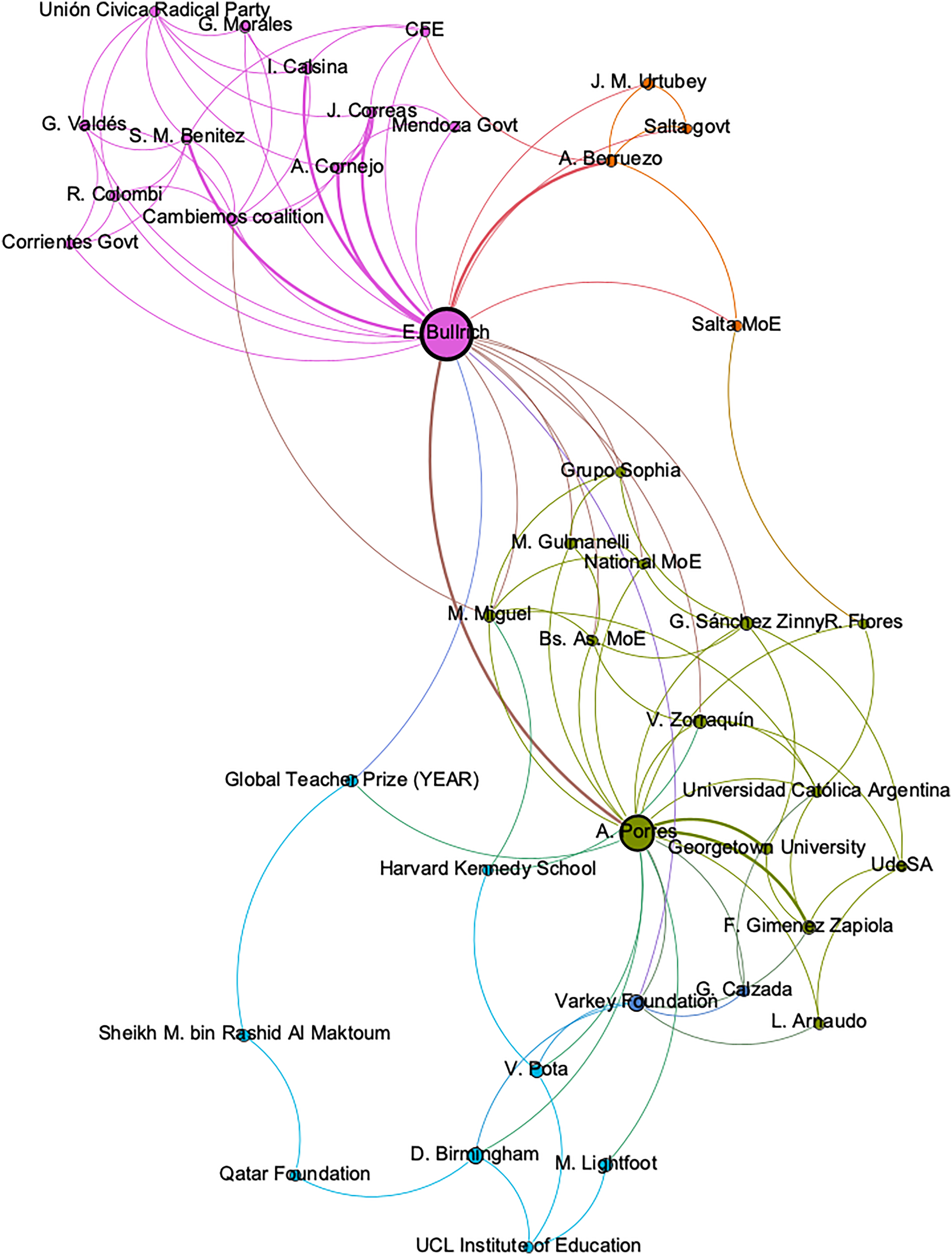
Varkey Foundation's network development before landing in Argentina.
Evidence indicates Porres and Bullrich share social relations, backgrounds, and an epistemic homophily, that is, the predisposition to develop ties between “similar” people (McPherson et al., 2001) in their forms of explanatory discourses. In this case, discourses focused on the (in)efficacy of the state, an adherence to “causal and success stories,” and “silver bullets” (Ball & Olmedo, 2011) that offer evidence-based solutions to these failures (Ball, 2016; Ball & Olmedo, 2011). All these elements had a key role in the VF landing in Argentina. By putting such shared policy networks to work, these nodal actors move through them as solution carriers based on an enterprise model with an entrepreneurship logic and profit facilitation. Although the former dimension refers to the use of innovation, creativity, and individual championing to “fix” social problems, the latter relates to these actors’ capacity to establish PPPs in which the public sector transfers financial resources to organizations. Porres and Bullrich had a shared history prior to Varkey's arrival; Porres worked as Institutional Relations Coordinator for two and a half years at the Ministry of Education of Buenos Aires City (2010–2012), while Bullrich was Minister of Education of Buenos Aires City. Porres’ connections stand out as an asset, due to his closeness to Bullrich, former Minister of Education, and for his management experience both in the public and non-profit sectors. In particular, Bullrich's previous interest in VF's activities and his active engagement with this organization while being the Education Minister of Buenos Aires City, as well as his later role as National Education Minister, demonstrates key aspects for understanding how landing conditions for VF were created through this global policy network.
Bullrich and Porres work as “policy network animators” (Ball & Junemann, 2012). Their social relations enable the circulation of particular forms of policy solutions across local and global scales and different sectors. Boundaries between the public, private, and non-profit sectors are blurred, and the creation of these networks allows language and practice to converge. Actors’ connections before VF's landing in Argentina are illustrated in Figure 1; Bullrich and Porres move across a shared network aimed at creating necessary conditions to ensure VF's landing in Argentina based on an agreement with the NMoE. On the one hand, Bullrich's role as National Minister of Education opens political opportunities, especially in those provinces aligned to the Cambiemos coalition, to have the PLIE program initially implemented. This allows not only political consent to be gained but also to mobilize resources from the NMoE to those provinces politically aligned through funding to VF's operations. On the other hand, Porres operates as a nodal actor by bringing together his connections with hierarchical public sector members, VF executive leaders, and potential service providers locally (Edúcere) and internationally (Michael Lightfoot Associates). The convergence of these connections ensured the rapid outsourcing of technocratic capacities to respond to Bullrich's demand for prompt program launching.
Interviews and public appearances on social media provide further evidence of how these actors created enabling conditions for VF landing. The turning point for the VF landing in Argentina occurred in March 2015, during Bullrich's participation in the Global Education and Skills Forum and the Global Teacher Prize in Dubai, both organized by VF. When interviewed at the forum, Bullrich manifested his close relationship with VF and particular admiration for the organization: I want to thank VF for inviting me […] We believe we need more of this. […] I think giving the Global Teacher Award [Prize] has been a great idea. I hope we have Argentine teachers next year (Global Education Series, 2015). Bullrich got to know the foundation when he came to Dubai in March [2015] and he liked it […] He came in December [2015, just after taking office at the National Ministry] and he told us [VF members] “It's now your turn.” We sent a team to understand how VF could contribute and we identified this: school principals. I highlight the speed and support of the Ministry. You wouldn’t find this in other places (A. Porres, research interview). Everything was very fast. They called me to say they liked my application [to attend the Global Education and Skills Forum] and that they had a program in Argentina they would like me to join […] Two days later, I received a call asking me to travel to Argentina. I went without knowing what it was about. I met with Bullrich, with whom I had worked before. The next day we met Macri, and we presented a proposal that VF had already elaborated. We went from the presidential office to Jujuy and the governor approved the agreement (A. Porres, research interview).
Resource mobilization across sectors and scales within this policy network provides further understanding of VF's landing in Argentina. A documentary review of legal agreements between the NMoE and VF evidenced that the ministry disbursed USD 5.3 million to the foundation in the first contract for services in Jujuy province for October 2016–December 2019. Similar contracts were signed between VF, provincial governments, and the NMoE funded by the latter all ending in December 2019: 5.4 million USD contract for services in Mendoza (January 2017–December 2019), 5.4 million USD for services in Corrientes (April 2017 and December 2019), 5.4 million USD for services in Salta (April 2017–December 2017), and 2.0 million USD for services in Buenos Aires province.
4
Some of these agreements were also mentioned in Página12, the only newspaper that published articles about them, having a critical standpoint on Varkey's work and their relationships with Cambiemos (Feldfeder, 2019). As shown, Bullrich acted as an enabling node within an evolving policy network to ensure resource flow through connected actors. When interviewed, Porres reinforced the importance of the national view behind the provincial implementation by claiming that VF's program was a service provided by the national government to provinces. There is no way we can think about this program without a close relationship between Ministries [national and provincial]. For example, to start working in Jujuy, we signed an agreement between VF, the National Ministry of Education, and the Ministry of Education of Jujuy. We wouldn’t be able to work without this (A. Porres, research interview). It is convenient not to be the state when delivering the training because you don’t receive recriminations […] Principals manage to separate “my employer,” who has to respond to my requests, from these people who are working with us now [VF]” (Academic Director, research interview).
Network ethnography also enables further understanding of VF's landing through its partnerships with other nonstate actors within this policy community. These partnerships allow policy solutions to be mobilized and catalyzed through “improvement products”; these are solutions “which are marketed to educational institutions by education services companies [or another type of organizations like foundations, charities, not-for-profit organizations]” (Ball, 2007, p. 135). When mobilizing across policy networks, these are not linearly replicated as “prepackaged solutions,” “but through a complex socio-spatial process of emulation and transmutation” (McCann & Ward, 2012b, p. 20). This is the case of Edúcere, a central organization in PLIE's implementation, and the founder and Executive Director, Victoria Zorraquin. Edúcere is a not-for-profit civil association registered in Argentina that has been delivering training and counseling programs to teachers and school principals since 1998 (Edúcere, 2021). However, as shown by Página12, Zorraquin was not only the leader of Edúcere but also worked in Cambiemos administration, first as National Director of Rural Secondary Education and later in the Province of Buenos Aires in the Directorate of Professional Development at the Ministry of Education (Lukin, 2019). Edúcere counted on previous connections with key actors within this policy network owing to its activities with the Ministry of Education of Buenos Aires City (Figure 1). This organization made a significant contribution to accelerating VF's work and responding to national authorities’ urgent demands. The organization is described as an external actor “catalyzing” the program, although it has worked from inside in many of the program's dimensions by translating, adapting, and contextualizing the syllabus, and also by providing all the trainers to deliver the first version of the program in Jujuy. Furthermore, Edúcere provided support services to VF to develop the program in its kick-off phase. This is not a minor detail, for as noted, the program's capacity to develop a quick launching had a key role in responding to Bullrich's demand.
This quick launching was also boosted by “foreign partners.” Michael Lightfoot Associates is an “International consultant for education and personal development” (LinkedIn, 2021) led by Michael Lightfoot since June 2014 based on his trajectory in this field. The preexisting connection between this organization's leader and VF's former Executive Director is presented in Figure 1. Its role addressed the adaptation of the original program syllabus, both as “improvement producer” and “supervisor,” and plays a fundamental role in VF's landing by providing a previously designed version of the program and supervising its adaptation to a specific context. This practice could be related to what McCann refers to as “policy boosterism,” that is, “a subset of traditional branding and marketing activities that involves the active promotion of locally developed and/or locally successful policies, programs, or practices across wider geographical fields as well as to broader communities of interested peers” (McCann, 2013, p. 5). VF members distinguish Lightfoot's key role in mobilizing policy solutions between the local and the global by describing this process as one where the syllabus designed in London was “Argentinized.” These words exemplify how policies flow through networks at the same time they are adapted. Such movements and adaptations involve different actors coming from diverse areas and with different interests and influences, assembling a discourse that is permanently legitimated by the network itself. This landing process and the participation of nonstate partners are clearly interrelated.
Varkey Foundation's establishment and regional expansion
A subsequent collection and analysis phase of this landing process reveals that VF was established as a relevant education policy actor nationally and regionally. In 2021 (as depicted in Figure 2), VF counts with anchored development both in Argentina and the region. According to its official website, “the senior leadership team are based at our UK Headquarters and in South America” (Varkey Foundation, 2022a). Nationally, the PLIE program reached 7,700 school principals and teachers (Varkey Foundation, 2022a). The organization developed a new partnership with Mendoza province's Ministry of Education and Emesa (energy sector) to deliver the Aprender con Energía Sostenible program (Learning with Sustainable Energy) in 200 schools (Fundación Varkey, 2021a). Through this initiative, the foundation fostered Project-Based Learning, one of the pedagogical flagships of PLIE. The newspaper La Nación gave coverage to this initiative, highlighting Porres’ work as Varkey's Regional Director, who stated: “some governments (as Mendoza's) have begun implementing powerful initiatives as Project-Based Learning, supporting the leaders in the school to design high-quality experiences, having the student at the center” (Mannino, 2019).
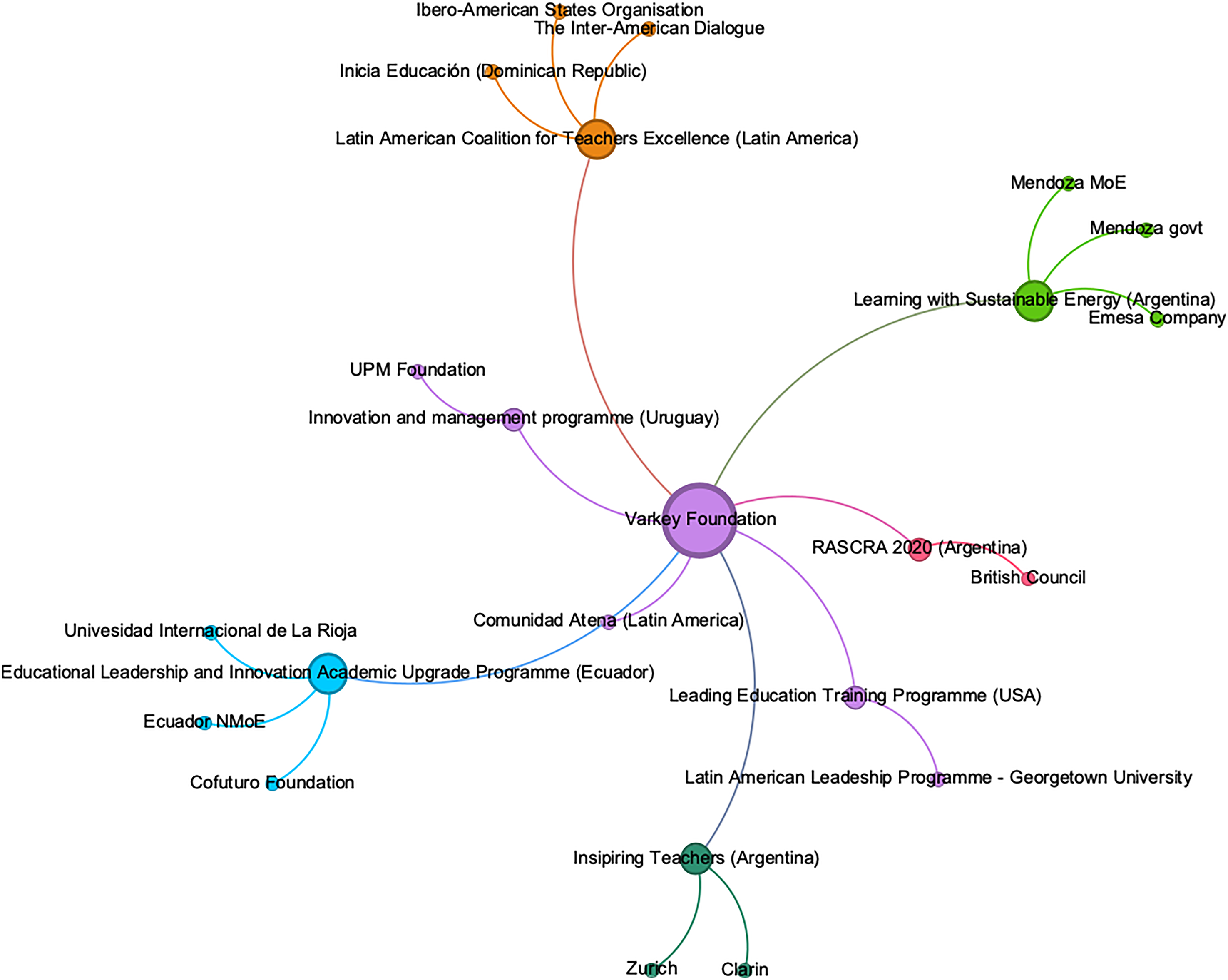
Varkey Foundation's operations expansion in Latin American network development before landing in Argentina.
In 2019, the Cambiemos coalition, the key political ally of VF, was defeated by the Peronist coalition in national elections. This new political shift could have negatively affected VF, as the winning coalition was formed by unions and other educational figures who opposed the role of new philanthropy in education (Feldfeber et al., 2018). Moreover, the NMoE did not renew the agreement with the VF. Nevertheless, each of the four provinces decided to “provincialize” the agreements establishing direct PPPs with the VF for sustaining the PLIE without the involvement of the NMoE. In a second interview conducted in 2021, Porres explained that agreements were renewed with all provinces after political shifts at the national level in 2019, except for the Buenos Aires province. Interestingly, this is the only province in which the Cambiemos coalition could not renew its position in office. In this sense, it could be argued that policy networks contributed to the generation of stable political conditions for VF at the provincial level. When asked about the financial conditions for agreement renewal, Porres explained how VF managed to generate funding strategies to ensure program continuity: We have provincialized the agreements and have slightly changed them. They are not all signed yet, but we have different funding sources; therefore, projects and different working lines are moving forward. We have always had funding from the Foundation [VF Headquarters], our own sources [VF Argentina], and multilateral partners. We have a partner in Ecuador who has also provided resources, and Peru's government hired us in 2018. All of these sources generate resources.
The foundation has also developed at the regional scale. VF landed in Ecuador in January 2020 based on a partnership with the country's NMoE, Universidad Internacional de La Rioja
5
and Fundación Cofuturo,
6
to implement the Programa de Actualización Académica en Liderazgo e Innovación Educativa (Educational Leadership and Innovation Academic Upgrade Program) (Varkey Foundation, 2020). Similarly, it delivered an innovation and management program for school principals and teachers in Fray Bentos, Uruguay, based on a partnership with Fundación UPM, a local foundation related to forest-industry aimed at “improving education access, stimulating entrepreneurship spirit, and enhancing networks”
7
(Fundación UPM, 2021). Porres had already anticipated VF's intention to expand regionally: The challenge I have set for myself is to grow in Latin America because we see that this could have a big impact […] There is a gap to fulfill […] We are in conversations with Colombia and Peru. The government of Peru asked for a proposal. The same in Panama, Ecuador, and Chile […] My current objective is to set foot in these countries […] In March [2017] we organized a meeting with Latin American Ministers of education in the conference at Dubai (A. Porres, research interview).
Such regional expansion has also increased by developing research activities. VF Argentina and the British Council published a research report on education responses on school closures due to COVID-19 (British Council & Varkey Foundation, 2021); in 2017, it had already implemented a global survey on parents’ views on education (Varkey Foundation, 2018). In 2018, the Atlantis Group, a VF-built network that gathers former Ministers of Education, presented policy recommendations to the G20 Education Working Group when Argentina held the G20 presidency. Furthermore, the Global Teacher Prize maintained and enlarged its local and regional advocacy activities through a growing number of Argentine and Latin American candidates among top-ten and top-fifteen selections since 2017 (Global Teacher Prize, 2021), as well as the new Global Student Prize based on a partnership between VF and Chegg, an American company oriented to the Ed-Tech industry (Chegg.org, 2021). 11
Finally, Porres’ public visibility and move from Country to Regional Director not only reflects the organization's expansion but also this actor's particular influence within this policy space. Although evidence demonstrates how he “put to work” policy networks to ensure VF's landing in Argentina and responded to the former Minister's request for a “quick-launching,” Porres has become a public figure as a legitimate actor in education policy discussions, public opinion, and “expert” networks. For example, our search of the two most prominent national newspapers in Argentina, La Nación and Clarín, reveals a total of six and 12 opinion articles, respectively, authored by Porres between 2018 and 2021. Porres’ views on education were captured in these pieces using a well-known formula of framing a large societal problem that can be addressed by transforming education. Some pieces focused on the problem-framing, using headlines as “Education as the vaccine” (Porres, 2020) or “The need to ‘recycle’ education” (Porres, 2021b), while others pulled from Varkey's initiatives to provide solutions such as “School leadership in educational transformation” (Porres, 2018) or “A different education is possible: 10 clues” (Porres, 2021a). During the pandemic, Porres arguably gained momentum as an educational reference, leveraging initiatives such as Comunidad Atenea and the Coalición Latinoamericana para la Excelencia Docente while “using” the media as a reform advocacy platform; “With the return to classes, Argentine experts ask for reforms so that teacher training ‘is of excellence’” (Cassese & Filipuzzi, 2021 and Braginski, 2021 respectively). These are some examples of a total of 106 articles published by Clarín, La Nación, and Página12 addressing VF's initiatives such as the Global Teacher Prize or the Global Student Prize, as well as affiliated members’ opinions.
Clearly, Porres stands as a policy entrepreneur who embodies a particular epistemic, the experts and practitioners’ community (Peck & Theodore, 2012), and delivers a particular network laboring to create the conditions for policy change (Cook & Ward, 2012 in Junemann et al., 2018). This labor is produced not only by both the informal and “shadow” practices involved within policy networks but also by exploiting this nodal actor's public identity and making different uses of his legitimate belonging to this policy community. By following a similar logic to the Global Teacher Prize of linking personal identity to goal-championing, VF has entailed a process of legitimization by orienting its communication and public image toward its Regional Director (former Country Director). In recent years, he has also joined “expert” boards and juries in educational initiatives, and in 2021, he published a book interviewing former ministers of education (many of them, Atlantic Group members 12 ) prologued by Andreas Schleicher, Director for the Directorate of Education and Skills at the OECD. In summary, Porres epitomizes the expansion work of the VF, as well as the use of a multiplicity of strategies, such as knowledge mobilization, advocacy, and networking, to advance the foundation role as a regional leader in Latin America.
Conclusion
Although nonstate actors’ engagement in Latin America has gained growing importance in the research agenda in comparative education (Cortina & Lafuente, 2018; Srivastava & Walford, 2018), new philanthropy development remains barely explored in the region (Avelar & Ball, 2019; Matovich & Cardini, 2019). Amid the increasing influence of philanthropic organizations and other institutionalized forms of “social investment” in the region, this research analyzes recent forms of new philanthropy development by studying VF's landing in Argentina. Examining the particular forms by which this type of actor managed to begin operations, imply particular academic interest, as this country has been characterized as one with little penetration of pro-market reforms (Beech & Barrenechea, 2011) and an education quasi-market (Narodowski et al., 2017), while it still exhibits little participation from “big global philanthropy.” This contribution is expected to provide new evidence regarding the particular forms adopted by new philanthropy in divergent policy spaces and their implications for education governance.
Using network ethnography, our analysis establishes that policy network development and nodal actors within them played a substantial role in ensuring sociomaterial conditions for VF's landing in Argentina. This network(ed) landing is based on connections and a shared epistemic community that precede VF's operations in this country. Based on this preceding network, the organization's landing counts on central support to receive public funding from the Argentine state, political support at a subnational scale, and local and international partners rapidly aligned. It is noteworthy that this preexisting network contributes to ensuring “fast” actioning between state and nonstate actors to enable a quick launching amid national and subnational political shifts. Subsequent data collection and analysis reveals such “rapidness” and played a central role in regard to the volatile political and economic context, as VF counted on considerable time to establish and gain relative autonomy before new political shifts (Peck & Theodore, 2015). Although there are limitations to representing how networks evolve across a particular period of time, this study provides further evidence to understand how global policy networks find new ways of self-reshaping to adapt to policy spaces and introduce new philanthropy as a legitimate form of education policy.
This study demonstrates network ethnography as a productive methodological tool to evidence the blurring of sector boundaries. By following actors, resources, and meanings across actors’ connections and affiliations, it is possible to identify how policy networks introduce new actors, and epistemic and institutional arrangements, wherein limits between public and private, profit and non-profit, and giving and investing, rest in “foggy boundaries.” This could be an alternative expression of what Ball and Olmedo (2011) have conceptualized as “philanthrocapitalism.” Similarly, this methodology questions binaries implied in analyzing policy spaces and helps to overcome the limitations imposed by focusing on nation-state approaches to education policy. Local–global binaries are questioned, specifically the subnational, national, and global categories. VF's landing in Argentina demonstrates how policy spaces become increasingly detached from “place” by revealing how nodal actors establish connections within and across governance scales (subnational, national, and global) and sectors (state and nonstate) that produce and reshape those conditions through which these actors gain legitimate relevance. Further research is needed to better understand how new philanthropy reconfigures education governance in Argentina and other regional countries, as new questions arise in regard to states’ configuration and federal government bureaucracies toward education systems and nonstate actors’ engagement in education policy.
Footnotes
Contributorship
Iván Matovich and Tomás Esper were responsible for writing the abstract, developing the bulk of the main manuscript's content addressing the national landing and regional expansion of the Varkey Foundation (VF), finalizing the paper, and responding to reviewers' comments. Iván Matovich was involved in various aspects of data collection and analysis, such as accessing cooperation agreement documents, designing networks, and theorizing on the results uncovered by the networks analysis. Apart from contributing to the majority of the study's results, Tomás Esper wrote the main versions of the methodological section and the literature review on new philanthropy, constructed the presentation of VF and developed the historical description of neoliberal reforms in Argentina.
Declaration of conflicting interests
The authors declared no potential conflicts of interest with respect to the research, authorship, and/or publication of this article.
Ethical statement
Ethical considerations call for reflexivity around our own social and ideological positions on education policy, governance, and social justice. Issues of power relations and privatization in education are sensitive topics in Argentina. We are aware that individuals and organizations' profiles, contacts, and partners are sensitive issues for research. Participants were informed that their participation was voluntary and that they could withdraw from the research at any time and for any reason. Written informed consent for participation was obtained in an explicit form. It was made clear that interviews would be used to provide data on the influence of philanthropy in education governance in Argentina. Participants were informed about their right to withdraw from the study and there were no attempts made to define participants' conceptions or potential effects by pre-existing categories. Interviewees had control over the recording and were free to ask to stop or to add “off-record” testimonies. Data were stored securely for a minimum of five years. Digital data were password-protected in secure storage and files were only available to ourselves. Full conformity with the British Psychological Society (2009) Code of Ethics and Conduct, and (2014) Code of Human Research Ethics was ensured.
Funding
The authors received no financial support for the research, authorship, and/or publication of this article.
