




Abstract
Purpose
Stress is a risk factor for poor educational achievement and health. Mindfulness-based programming (MBP) is a viable technology for reducing stress, and Mindful Stress Buffering theory suggests that the benefits of MBP will be most pronounced during periods of high stress. This research details a replication of the MBP “Learning to BREATHE” in a racially diverse urban public high school during a period of relatively low stress (i.e., absence of high-stakes testing).
Design/Approach/Methods
Five classrooms (n = 66) were randomly assigned by classroom to MBP or typical educational programming. Socioemotional attributes were measured pre–post-intervention. Data were contrasted with results from the initial project that occurred during a period of high stress (i.e., the presence of high-stakes testing).
Findings
Results indicate a failure to replicate significant intervention effects of MBP on socioemotional attributes. Results indicate that the original Felver et al.’s (2019) sample had higher self-reported stress than the current study's sample.
Originality/Value
These findings provide the first empirical data in support of the Mindful Stress Buffering theory among an adolescent sample, and this has implications for clinicians and researchers interested in utilizing MBP to support the wellbeing of student populations during other periods of high contextual stress (e.g., COVID-19 pandemic).
Stress is considered a multifaceted construct that is commonly defined as a bidirectional process involving an individual perceiving, appraising, and coping with threatening, harmful, or adverse stress exposure (Lazarus & Folkman, 1984; Sinha, 2001). Stress exposure varies in terms of type, chronicity, and expectedness (Keyes et al., 2011), and the totality of one's stress exposure is considered a major risk factor for short- and long-term health. Indeed, heightened stress exposure has been causally linked to an array of negative health outcomes, including problematic substance use (Sinha, 2001; Sinha, 2008) and poor physical and psychological health outcomes (Dickerson & Kemeny, 2004; Schneiderman et al., 2005). Given the serious long-term implications of heightened stress, researchers and clinicians are interested in identifying populations who are at-risk for experiencing harmful levels of stress so that preventative and effective intervention can be delivered to mitigate these deleterious effects of stress. Adolescents experiencing acute stress represent one such population who are at risk for experiencing high-level stress exposure.
Adolescent stress
Adolescence is a developmental period widely characterized by generally heightened stress levels (Casey et al., 2010; Copeland-Linder et al., 2011). Developmentally typical changes in physical and cognitive maturity, coupled with normative life stressors (e.g., romantic relationships, assuming adult responsibilities), create ideal conditions for increased stress during adolescence (Compas, 1987; Shapero & Hankin, 2009). The general increased stress burden in adolescence is implicated in specific long-term negative outcomes, such as the development of psychopathology (Grant et al., 2006). Stress is also implicated in the problematic development of executive functioning deficits and academic functioning difficulties (Agoston & Rudolph, 2016; Suldo et al., 2009). Thus, researchers and clinicians are highly interested in understanding the implications of stress during adolescence, and in developing strategies to mitigate the deleterious effects of stress exposure.
Given the serious health implications of heightened stress and the developmentally typical stress burdens faced by adolescents, youth who experience any additional acute stress represent a particularly high-risk population. One source of acute stress comes in the form of high-stakes standardized testing. Student achievement and aptitude are universally measured with high-stakes testing, and the contextual stress to perform on these tests can result in great stress for many students, including maladaptive patterns of physiological, cognitive, and behavioral responses to the stressful context (Nicaise, 1995). Indeed, one-third of U.S. students report heightened levels of anxiety resulting from the stress incurred from high-stakes testing (Sena et al., 2007). Further, these symptoms of psychopathology are known to become more severe during adolescence (Dan et al., 2014). Adolescents faced with the additional acute stress of high-stakes standardized testing thus represent a common at-risk population in need of support.
Unfortunately, stress exposure is difficult to mitigate given its heterogeneity (e.g., frequency and type of historic adverse life events) and scale (e.g., pervasive societal racial biases and discriminatory attitudes, generational and community poverty). Given these external challenges, clinical scientists have instead focused on targeting the malleable individual characteristics relating to how one responds to stressors, and not the stressor itself. Foremost among novel approaches to alter responses to stress exposure are mindfulness-based programs (MBP). Because youth spend much of their time in school environments, effective school-based interventions to reduce stress (e.g., MBP) offer a unique setting in which to deliver universal prevention services to the majority of this population. Implementing such interventions in schools particularly increases access to services for underserved and disadvantaged populations (Bartlett et al., 2017). Often, such underserved groups face numerous health and academic disparities, rendering such populations with the greatest need for additional resources or effective interventions (e.g., resiliency promoting or stress reduction interventions) (Shonkoff et al., 2009). There is a growing body of empirical literature indicating that MBP delivered in school-based settings is beneficial for youth (Felver et al., 2016), including recent data exploring the effects among underserved adolescents (Felver et al., 2019).
Mindfulness-based programming in schools
Bishop et al. (2004) put forth a two-component definition of mindfulness involving both the regulation of attention and adopting curiosity and acceptance when experiencing the present moment. A growing body of research indicates that MBP may be an effective way to promote positive outcomes in school environments (Felver et al., 2016). Indeed, several studies have demonstrated positive MBP outcomes related to academics, behavioral problems, mental health, and resiliency (Felver et al., 2019; Mendelson et al., 2010; Rempel, 2012).
Recent theoretical developments in the mindfulness literature discuss potential mechanisms by which mindfulness buffers against the effects of stress. The Mindfulness Stress Buffering theory (Creswell & Lindsay, 2014) posits a dual model of stress-buffering that involves both top-down and bottom-up mechanisms. Creswell and Lindsay (2014) hypothesize that mindfulness interventions influence health outcomes by strengthening cognitive stress regulation pathways (i.e., top–down mechanism) and decreasing physiological reactivity to stress (i.e., bottom–up mechanism). This theory also discusses the evidence that mindfulness effects on health will be most pronounced in populations that are under the increased stress, including those with large stress general burdens (e.g., unemployment or poverty) and those under acute stress (e.g., during periods of performance evaluation, such as high-stakes testing). Despite the broad implications of this theory for understanding the unique intervention effects of MBP, this theory has not been applied in any intervention research conducted with adolescent populations.
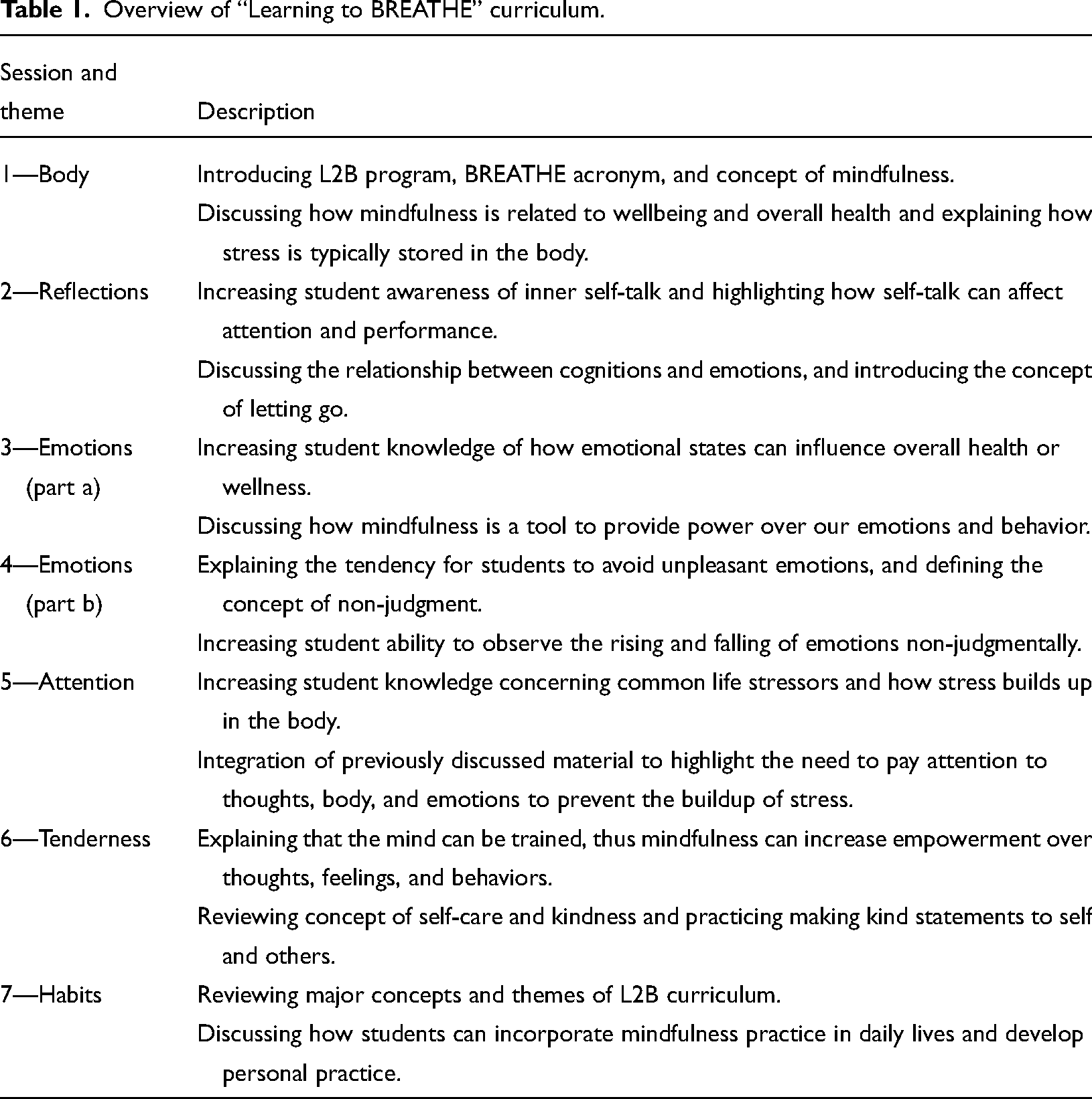
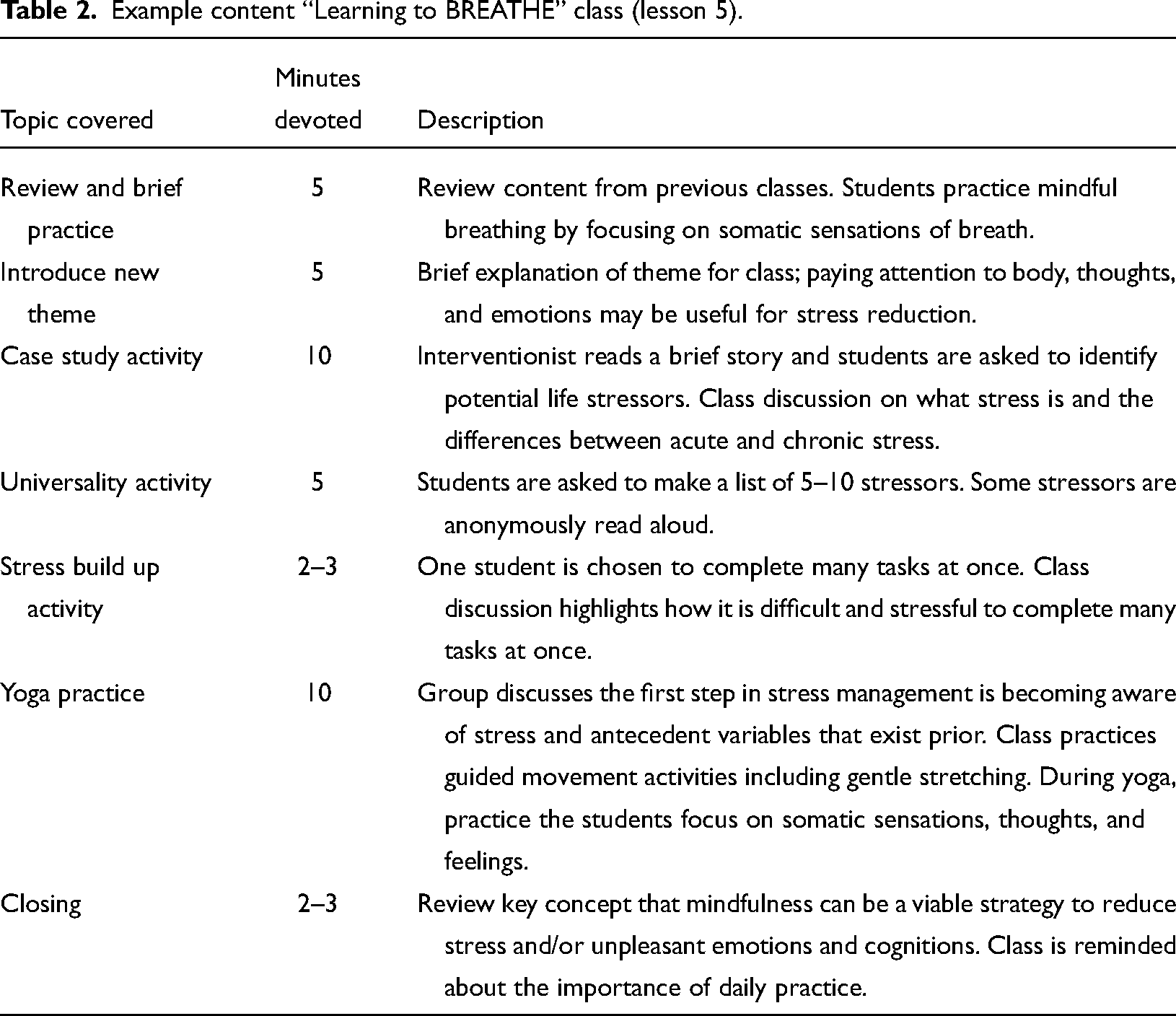
A commonly implemented MBP curriculum is Learning to BREATHE (L2B; Broderick, 2013), which has both 6-week and 18-week versions and encompasses a variety of practices. The curricular content follows the acronym BREATHE; each week consists of a different theme and has specific accompanying practices. For example, during the initial sessions the theme “B” stands for “Body” and students practice becoming mindfully aware of their bodily sensations (e.g., sound, taste, touch) as the assigned mindfulness practice. This curriculum was specifically developed for adolescents and has been successfully implemented in underserved urban school settings (Eva & Thayer, 2017; Felver et al., 2019; Mendelson et al., 2010). L2B was designed specifically for the adolescent developmental period, and it teaches distress tolerance and emotional and behavioral regulation through mindful awareness (Broderick & Jennings, 2012). Descriptions of L2B sessions and an example outline of an L2B session are included in Tables 1 and 2, respectively.
Overview of “Learning to BREATHE” curriculum.
Example content “Learning to BREATHE” class (lesson 5).
L2B has demonstrated positive pre- to post-intervention effects in school settings for several indicators of mental health and well-being, including reductions in attention problems, internalizing and externalizing problems, and perceived stress (Fung et al., 2019). When compared to control group participants, L2B participants have also reported reductions in psychosomatic symptoms and decreases in negative affect (Broderick & Metz, 2009; Metz et al., 2013). Moreover, research has demonstrated that L2B increases emotion regulation (Fung et al., 2019; Metz et al., 2013), which is one of the mechanisms that is thought to confer mental health benefits from MPB (Chiesa et al., 2013; Waters et al., 2015). One previous study examining the benefits of L2B also demonstrated beneficial socioemotional effects after 7 weeks of the intervention; an extra week was dedicated to the “E” (i.e., emotions) theme due to the amount of content and class period time limits (Felver et al., 2019). In this study, the L2B curriculum was delivered in the spring months at the end of the academic school year within an underserved urban school. Two health education classrooms of high school students were randomly assigned to receive the mindfulness intervention or treatment-as-usual (i.e., regularly programmed health class). Pre- to post-intervention resilience scores indicated that positivistic socioemotional assets in the mindfulness group remained stable but significantly declined in the treatment-as-usual group, indicating that the MBP may have conferred protective benefits (Felver et al., 2019). Another study similarly demonstrated protective benefits for depression and somatic symptoms, such that participants in the L2B group reported stable levels of depression and somatic symptoms, whereas the control group reported significant increases in these symptoms (Gómez-Odriozola & Calvete, 2021).
Of particular relevance to this current work, the Felver et al. (2019) study's implementation of L2B was in the spring months of the academic year during a time period of acute stress in the form of high-stakes standardized testing that determined whether or not they would be able to graduate from high school. Indeed, participants in this study endorsed feeling acutely stressed during specifically in response to this period of high-stakes testing (Felver et al., 2019). Felver et al. (2019) concluded that L2B may have specifically bolstered the resilience of this population and that this resilience may have buffered against the deleterious effects of high stress experienced in this population at that time in-line with Mindful Stress Buffering theory. However, further replication of these reported results (Felver et al., 2019) is needed to better understand whether MBP confers any stress-buffering effects on socioemotional attributes when adolescents are not under high contextual stress.
Summary and study aim
Adolescents are generally at-risk for experiencing heightened levels of stress, and such stress exposure is associated with a host of negative long-term outcomes. MBP in schools has been successful in promoting positive health and resiliency, and previous research has demonstrated that MBP may confer protective effects on socioemotional outcomes during periods of high contextual stress (i.e., high stakes standardized testing). Mindfulness Stress Buffering theory would predict that the benefits of MBP would be most pronounced among populations encountering high acute stress and that conversely, populations with relatively low-stress may not demonstrate as much, or any, benefits following MBP intervention.
The aim of the current study was to replicate the findings and procedure described by Felver et al. (2019) utilizing the L2B mindfulness curriculum among adolescent students during a different time of the academic school calendar. Specifically, this study conducted the replication of L2B during the fall months at the beginning of the academic school year. This time period is characterized by relatively (compared to the spring months) lower acute stress due to the absence of high-stakes standardized testing. Applying the Mindful Stress Buffering theory, the a priori hypothesis of this replication study would be that there would be less benefit of MBP among a comparable sample of adolescents due to the absence of acute stress because there were not high-stakes standardized testing during the time period this study took place.
Methods
Study design
This study replicates the procedures described in Felver et al. (2019). Adolescent student participants were randomly assigned, by classrooms, to receive the L2B (Broderick, 2013) mindfulness curriculum, or a control condition consisting of typical health and wellness educational programming. Students were assessed via self-report questionnaires pre- and post-intervention. Five classrooms of students were recruited for participants (n = 126) and were assigned to study conditions randomly at the classroom level.
Setting
At-risk ethnically diverse adolescents were recruited from health education classes in an urban high school in an underserved community. This public high school was located in an urban neighborhood of a small city located in the northeast United States. According to publicly available school demographic data (New York State Education Department & Services, 2017), the school enrolled 1,906 students across grade levels 9 through 12; the 4-year graduation rate was 61%; 17% of students were identified as having a disability; and 72% of the students were classified as economically disadvantaged (e.g., receiving free or reduced-price lunch). The racial composition of this school was 2% American Indian, 43% African American, 12% Hispanic, 10% Asian, 31% White, and 2% other racial group.
Participants and recruitment
Five classes of approximately 25 students per class were recruited for this study. All available adolescents were approached for recruitment by a single in-class presentation briefly explaining the purpose of the study to students, followed by distributing to students’ consent documents explaining the study purpose to be signed by their parent or legal guardian. After obtaining consent from legal guardians, adolescents were asked for their assent to participate in the study.
Measures
Socioemotional attributes
Students completed the 12-item short-form version of the Social-Emotional Assets and Resilience Scales (SEARS-SF; Nese et al., 2012). This self-report scale yields a single total score index of student social and emotional strengths, assets, and positivistic dispositional psychological characteristics. Items on the SEARS-SF include a variety of positivistic socioemotional statements, such as “I stay in control when I get angry.” Evidence of scale reliability and validity has been reported (Nese et al., 2012), including good test-rest reliability (r = .80). The Cronbach's alpha coefficient for the total sample at the pre-intervention timepoint in this study was 0.78, indicating satisfactory internal consistency reliability (Bland & Altman, 1997).
Stress
To measure stress, students completed the 10-item Perceived Stress Scale (PSS; Cohen et al., 1983). This scale yields a total score of perceived stress in the past month, indicated by responding to a five-point Likert scale. An example question from this scale is “How often have you been upset because of something that happened unexpectedly?” Evidence of scale reliability and validity has been reported (Lee, 2012). The Cronbach's alpha coefficient for the total sample at the pre-intervention timepoint in this study was 0.70, indicating satisfactory internal consistency reliability (Bland & Altman, 1997).
Conditions
Students assigned to the intervention condition were delivered the briefer curricular version of L2B over the course of the 7 weeks, replicating methods used in Felver et al. (2019). The briefer curriculum was selected because it better matched the participating school's limited availability for scheduling programming. Table 1 provides an outline of the L2B curriculum, and Table 2 provides the content details of a single example session; more details of L2B can be found in the published manual (Broderick, 2013).
L2B was delivered by trained graduate students (third author Adam J. Clawson and fourth author Melissa L. Morton), both of whom were trained in the delivery of MBP to youth and supervised by the study's senior author, who has been practicing and delivering MBP for over a decade. To assist with building rapport, interventionists elicited personal experiences from adolescents that related to the material (e.g., practicing mindful breathing when feeling stressed during an exam). In replicating Felver et al. (2019), the third session “Emotions” was delivered over two sessions, meaning that the entire curriculum was delivered over seven sessions. The content was delivered during a single 48-min class period once per week. The intervention condition was delivered normal health education programming during the days of the week when they were not receiving the L2B curriculum, and during these non-L2B days, they listened to a brief 5-minute audio recording of a mindfulness practice that corresponded to the L2B curriculum. Students were instructed to practice mindfulness exercises between sessions per the L2B manual and were asked to report their home practice frequency at the end of intervention.
The control condition received normal health education programming delivered by the general education health teacher (seventh author Pamela Janack).
Data analysis plan
First, in a replication of the procedures detailed in Felver et al. (2019), we tested for intervention effects of MBP on student's socioemotional attributes (i.e., SEARS-SF scores) using a 2 × 2 repeated measures ANOVA exploring the interaction between within student data (two levels: pre- and post-intervention timepoints) and between student data (two levels: L2B and control conditions). Second, to determine if the current study's population was comparable demographically to the Felver et al. (2019) student sample, these samples’ demographic characteristics were compared using t-tests and chi-square tests. Third, to test whether the participants in the Felver et al. (2019) sample did experience higher levels of stress, the current study's sample and the Felver et al. (2019) sample were compared on self-reported stress (i.e., PSS scores) at the pre-intervention timepoint using an independent sample t-test. Fourth, to explore any potential effects of the time-period during which this replication study took place, a 2 × 2 × 2 repeated measures ANOVA was implemented exploring the three-way interaction between within student data (two levels: pre- and post-intervention timepoint), between study conditions (two levels: L2B and control conditions), and between the time periods (two levels: fall months and spring months).
Results
Participant sample characteristics
Figure 1 details the participant flow in this study. Of the five classrooms of students recruited for this study (n = 126), about half (n = 66) were consented for participation in this research. Among those recruited participants who were not included in the research: 37 parents did not return the study consent forms; 12 parents returned consent forms but indicated non-consent to the research; six parents indicated consent however their adolescent child did not assent to participate; and five adolescents were identified by the classroom teacher as English language learners with very low reading comprehension skills. This yielded a final sample size of 66 adolescent participants distributed evenly across the five classrooms. Classrooms were then randomly assigned to the MBP condition (k = 2; n = 33) and control conditions (k = 3; n = 33). Table 3 details the demographic information. Demographic characteristics did not statistically significantly differ across study conditions on variables of age, race, or gender (ps > 0.05). Independent sample t-tests indicated that participants did not differ on pre-intervention self-reported measures of socioemotional attributes (i.e., SEARS-SF score) or stress (i.e., PSS score). Missing values analysis indicated that there was no missing data at the pre-intervention timepoint and 11% to 12% missing data at the post-intervention timepoint, and Little's test of Missing Completely at Random (MCAR) was not statistically significant, (X2 (5, n = 66) = 3.28, p = 0.66) suggesting that data were missing at random.
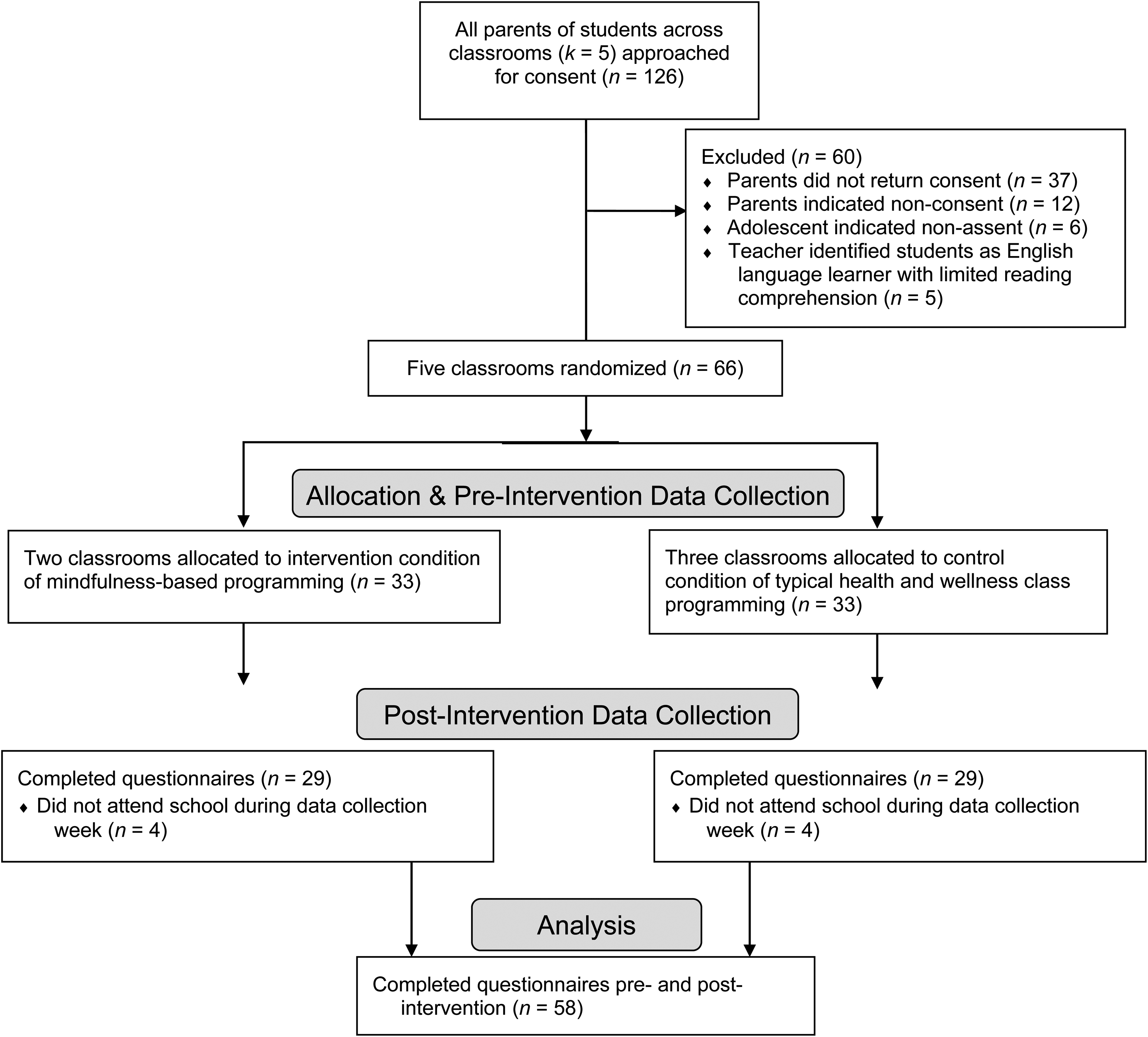
Flowchart of participant enrollment, intervention allocation, and data analysis.
Participant demographics.
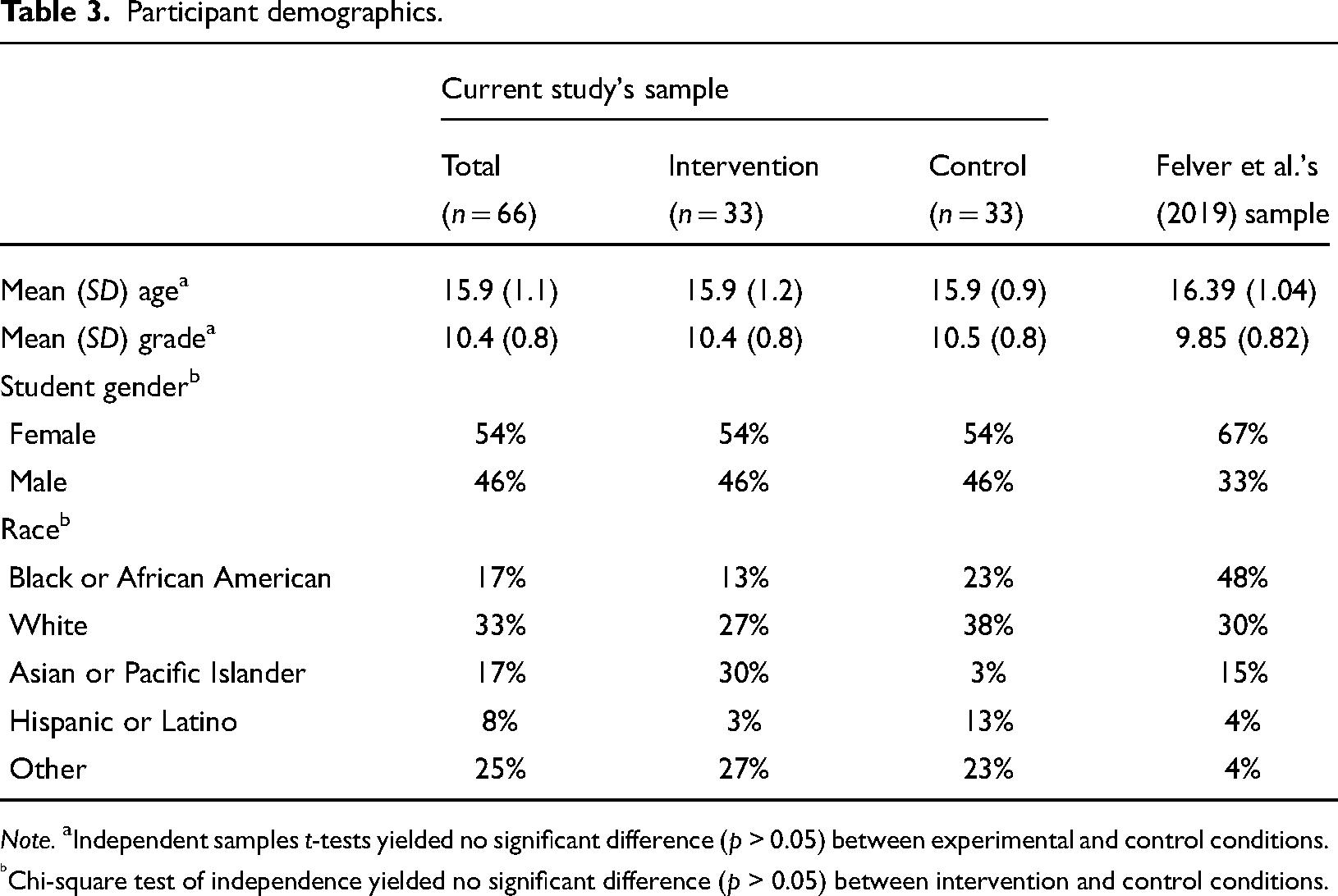
Note. aIndependent samples t-tests yielded no significant difference (p > 0.05) between experimental and control conditions.
Chi-square test of independence yielded no significant difference (p > 0.05) between intervention and control conditions.
MBP intervention effects on socioemotional attributes
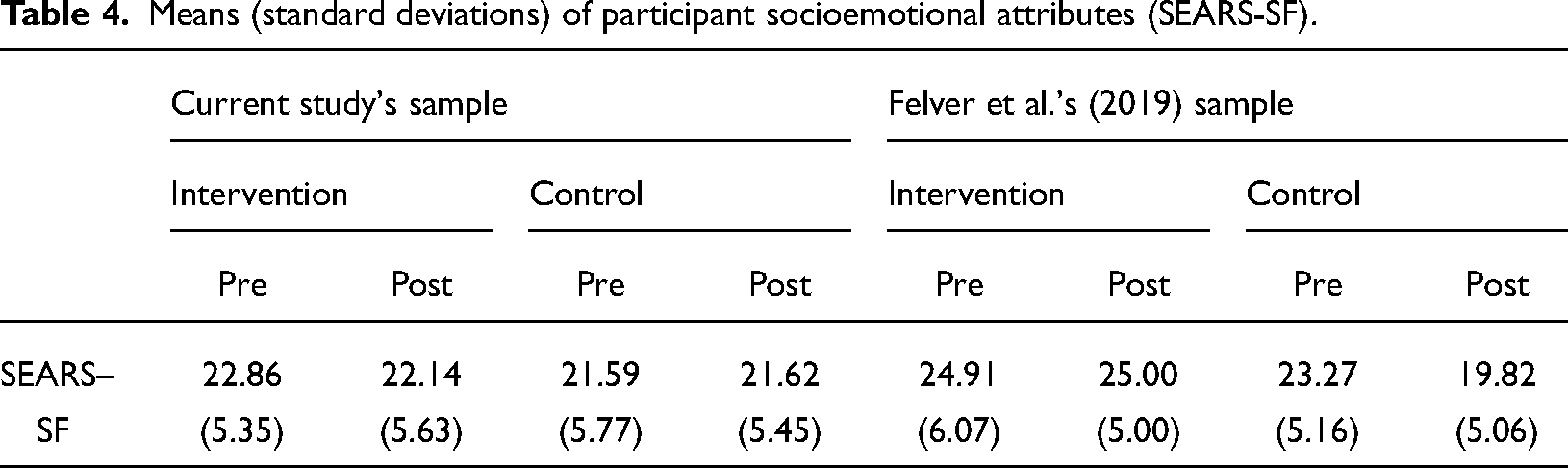
Mindfulness-based programming intervention effects were examined on student's socioemotional attributes (SEARS-SF) scores. Table 4 displays the current study participant sample's SEARS-SF scores. A repeated-measures ANOVA was conducted to examine potential intervention effects across time (two levels within subject: pre- and post-intervention) and between conditions (two levels between subjects: L2B and control) on socioemotional wellbeing. Results indicated that there was not a statistically significant interaction between time and condition, F(1, 56) = 0.63, p = 0.43, ηp2 = 0.01.
Means (standard deviations) of participant socioemotional attributes (SEARS-SF).
Participant demographic equivalence between study’s sample and Felver et al.’s (2019) sample
To contrast the current study's participant sample with the participant sample in the Felver et al. (2019) study, the study's sample demographic characteristics of age, race, and gender were compared using independent sample t-tests (participant age in months) and chi-square tests (racial and gender composition). Given the small number of participants in several of the racial minority groups, all non-White racial groups were combined for the purposes of this analysis. Table 1 displays the current study's and Felver et al.'s (2019) participant demographics. Results indicated that there were no statistically significant differences in demographic characteristics between these two study samples (ps > 0.05).
Participant stress differences between study's sample and Felver et al.'s (2019) sample
Adolescent participants in the Felver et al.'s (2019) study reported feeling stressed due to the presence of high-stakes standardized testing, a key contextual stressor that was not present during the time period that this current study took place. To empirically test for differences in participant stress levels, baseline (i.e., pre-intervention timepoint) scores on the PSS were contrasted between the current study's sample and Felver et al.'s (2019) sample. PSS scores were higher in the Felver et al.'s (2019) sample (M = 18.45, SD = 6.62) than in the current study's sample (M = 16.27, SD = 7.25). Raw PSS scores in the Felver et al.'s (2019) sample were positively skewed and were not normally distributed; PSS scores in the current study's sample were normally distributed. PSS scores in both samples were thus log-transformed (i.e., log10), and the newly transformed PSS scores were normally distributed across both participant samples.
Given that the two participant samples contained unequal sample sizes, we used Welch's unequal variance t-test (Derrick et al., 2016; Ruxton, 2006) to compare the log-transformed PSS scores across participant groups. Pre-intervention log-transformed PSS scores were statistically significantly higher in the Felver et al.'s (2019) participant sample than in the current study's sample, t(79.87) = 2.06, p = 0.04, indicating that students in the Felver et al.'s (2019) group had higher levels of stress at pre-intervention timepoint.
Comparison of MBP intervention effects to socioemotional attributes between study's sample and Felver et al.'s (2019) sample
The current study took place during a time period notable for the absence of high-stakes standardized testing, a feature which may have caused heightened stress in the participant sample. To explore how the timing of this current study may have influenced the aforementioned lack of MBP intervention effects to socioemotional attributes, a second repeated-measures ANOVA was conducted that included the Felver et al.'s (2019) participant scores in the analysis. Student's socioemotional attributes (SEARS-A short form) at pre- and post-MBP intervention timepoints were used as the dependent outcome (within subject), and condition assignment (L2B and control) and study samples (current study and Felver et al. (2019)) were used as the between subject variables. Thus, this analysis was specifically testing for the presence of a statistically significant three-way interaction between intervention timepoint (two levels within subject: pre- and post-intervention), condition assignment (two levels between subjects: L2B and control), and time period (two levels between subjects: spring months in Felver et al. (2019), and fall months in the current study). Table 4 displays the current study's and Felver et al.'s (2019) scores on the SEARS-SF across conditions and intervention timepoints. Results indicated that there was a significant three-way interaction, F(1, 76) = 5.48, p = 0.02, ηp2 = 0.07.
To further interpret this three-way interaction, SEARS-SF change scores were created by subtracting the post-intervention values from the pre-intervention values for all study groups. Figure 2 depicts these change scores as a bar graph including 95% confidence interval error bars. As seen in this graph, there was minimal change in socioemotional attributes for either condition in the present study sample, and only in the MBP intervention condition in the Felver et al.'s (2019) participant sample. There were however substantial declines in socioemotional attributes in the control condition of the Felver et al.'s (2019) participant sample.
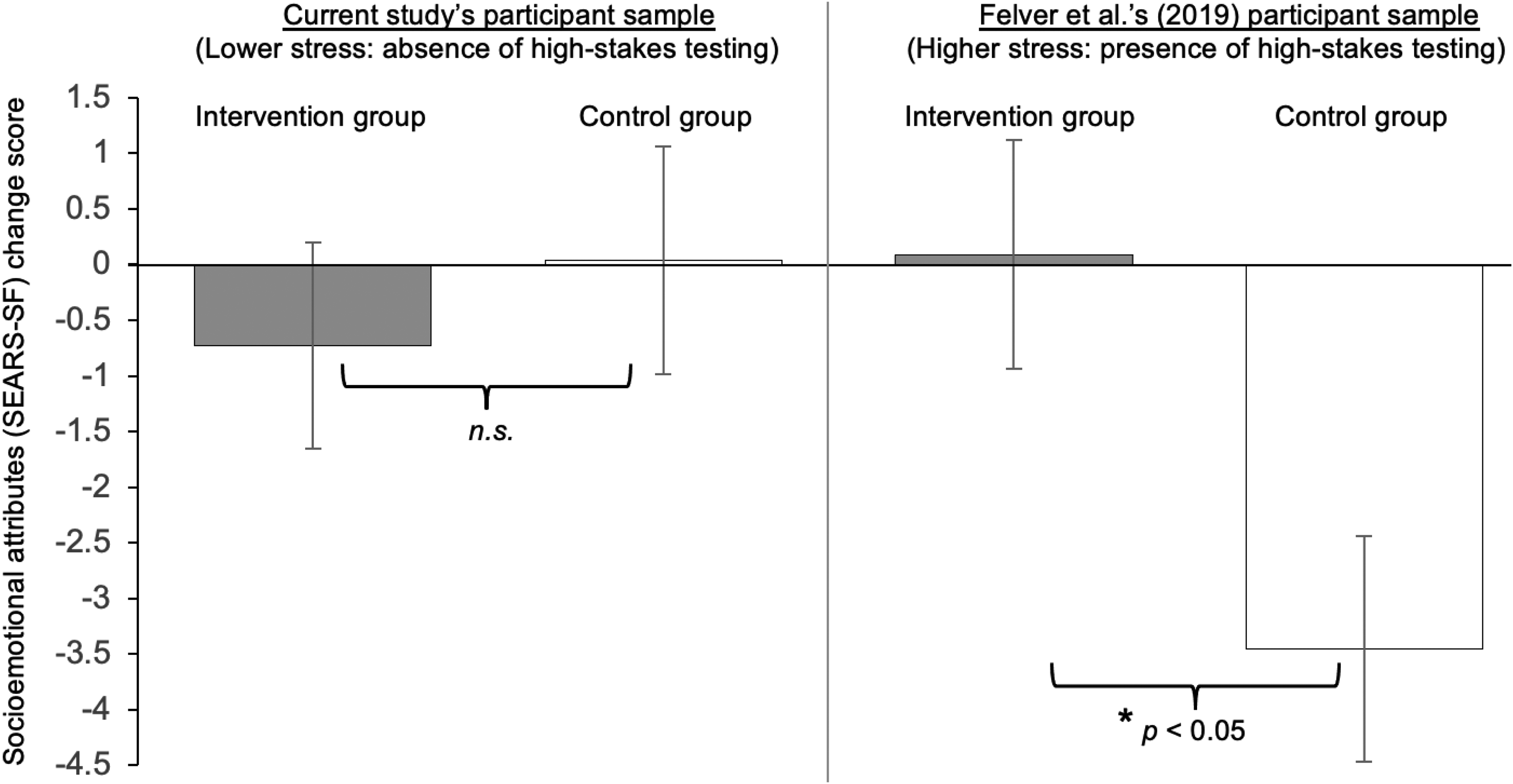
Change scores for intervention (mindfulness-based programming) and control groups.
Discussion
This study was unable to replicate the results from Felver et al. (2019). In this current sample, the selected MBP did not alter student's socioemotional attributes relative to a control condition, despite equivalence of study procedures and participant demographic characteristics. To explore these findings through the lens of the Mindful Stress Buffering theory, these samples were contrasted for their levels of self-reported stress. Students in the Felver et al.'s (2019) study indicated significantly higher baseline stress relative to students in the current study's sample. This finding lends support to student's anecdotal report from the Felver et al.'s (2019) sample that these adolescents were experiencing heightened stress related to ongoing high-stakes standardized testing. In contrast, students in the current study's sample did not anecdotally report any significant contextual stressors and there was not high-stakes testing occurring during the time period this study took place. The final analysis conducted modeled the interaction between condition assignment, temporal time period, and within student self-reporting of socioemotional attributes, and found that indeed there was a significant interaction between these three terms. Post-hoc analysis of socioemotional attribute scores indicated that students in the Felver et al.'s (2019) control group sample experienced significant declines in their scores, which may have been attributed to their heightened stress. This finding is in-line with the Mindful Stress Buffering hypothesis which would predict that MBP may buffer any deleterious effects of stress that may have been experienced by adolescents in the Felver et al.'s (2019) study, and that these stress buffering effects would be absent for students in the current study's sample who were not experiencing heightened contextual stress from high-stakes testing.
This study included several strengths, notably that it replicated a previous intervention and study design and recruited a racially diverse student sample in-line with recommendations for school-based MBP research (Felver et al., 2016); however, there are several limitations that should be considered when interpreting these results. This study was implemented in one school rather than multiple schools, which may limit the generalizability of these findings outside of this particular school context (e.g., perhaps acute stress from high-stakes testing was more salient in this school relative to others). This study was only able to consent about half of the students available for recruitment, which may represent a non-representative participant sample. Future research should seek to consent of a higher percentage of students in order to address this limitation. It is worth noting that the low-consent numbers are directly attributable to student school attendance rates (i.e., adolescents who didn’t attend school were not able to receive the parent consent documents), and low school attendance and chronic absenteeism are highly-prevalent in urban high-poverty racially diverse schools (Lara et al., 2018) and are a common challenge noted by other community-based researchers (Balfanz & Lefters, 2004; Steward et al., 2008). Another limitation is that the interventionists for the MBP were new to the students, while the control condition programming was provided by a teacher that whom the students were familiar with. If students were more familiar with the interventionists from the start, MBP in schools may be more effective. For this reason, future research should include training in MBP delivery for teachers whom students would assumably already established rapport with. Moreover, research has demonstrated the importance of interventionist experience on MBP outcomes (Ruijgrok-Lupton et al., 2018). While the interventionists in this study were trained by an experienced MBP practitioner, they may have also benefitted from additional training specific to the L2B curriculum.
Although these data and the Mindfulness Stress-Buffering hypothesis (Creswell & Lindsay, 2014) support our interpretation of these outcomes, future research is needed to confirm the conclusions drawn. Research that systematically manipulates acute stress levels may be able to provide stronger evidence for the ability of MBP to buffer the deleterious effects of contextual stressors faced by adolescents. Additional replication studies that specifically examine the stress incurred by high-stakes testing would support the anecdotal reports of adolescence about the degree of stress felt by students in response to test-taking. Importantly, these results refer to the groups as a whole. It is possible that there were individuals in the 2019 study that reported low stress and did not benefit much from the MBP; conversely, there may have been individuals in the current sample that reported high stress and did benefit from the intervention. Future research examining within-person stress patterns and incorporating more nuanced measurements of stress (e.g., stress reactivity patterns, physiological markers of autonomic nervous system over activation) would help elucidate the relation between L2B and adolescent stress patterns, in-line with recent theoretical conceptualizations of the mechanisms underlying MBP (Creswell & Lindsay, 2014).
The relation between stress and poor health, education achievement, and socioemotional wellbeing is well established. These results suggest that MBP may buffer the negative effects of such acute stress and are thus worth considering in future educational programming. Student populations that face stressors, such as the global SARS-CoV-2 pandemic, may be at particularly great risk for experiencing negative outcomes. It is thus incumbent upon school-based professionals to provide supports for these vulnerable youth to mitigate the impact of these stressors on their development. School-based MBP may offer a unique solution to meeting the needs of today's youth facing such stressors and should be considered as a universal support offered to all students.
Footnotes
Contributorship
Emily C. Helminen contributed to major manuscript writing, data collection, and study conceptualization. Xiaoyan Zhang contributed minor writing, data collection, and data analysis. Adam J. Clawson, Melissa L. Morton, Emily L. Cary, Samantha E. Sinegar, and Pamela Janack contributed to minor manuscript writing, data collection, intervention delivery, and study conceptualization. Joshua C. Felver contributed to major manuscript writing, data collection, data analysis, study conceptualization, and research oversight.
Declaration of conflicting interests
The authors declared no potential conflicts of interest with respect to the research, authorship, and/or publication of this article.
Ethical statement
The Institutional Review Board at Syracuse University approved the research protocol (IRB# 18-260). Participant's legal guardians gave written consent for their child to participate in this research, and adolescent participants gave written assent for participation in this research.
Funding
The authors disclosed receipt of the following financial support for the research, authorship, and/or publication of this article: This work was supported by a Mind and Life Institute 1440 Award to the senior author Joshua C. Felver.
