



Abstract
Purpose
Leadership is a valuable skill for young people to navigate transformations in modern societies and find solutions to overcome global crises. However, gender stereotypes regarding leadership persist, potentially limiting female students’ leadership aspirations, experiences, and opportunities in schools. This study explores student perspectives on gender and leadership through the conceptual lens of student voice.
Design/Approach/Methods
Interviews were conducted with students (n = 93) from 12 Round Square secondary schools in 11 countries: Australia, Argentina, Chile, China, India (two schools), New Zealand, the United States, Korea, Switzerland, Tanzania, and South Africa.
Findings
The findings demonstrate how interest in developing and practicing leadership transcends gender. The students exhibited a deep conviction in their ability to initiate change through leadership in their schools and communities. However, female students were more cognizant of gender stereotypes regarding leadership and how this represented a barrier to realizing leadership opportunities.
Originality/Value
This study presents students’ perspectives on leadership and gender in contexts that appear favorable for student leadership. Primarily, it argues that although schools may seek to promote equality in leadership opportunities, female students often remain comparatively sensitive to and aware of gender stereotypes. Overall, the study highlights the complex and deeply entrenched barriers to female leadership.
Leadership is a valuable skill for young people to navigate transformations in modern societies and find solutions to complex global crises. Over the past few decades and across many societies, women have experienced increasing academic attainment, higher education participation, and degree completion rates, often outperforming their male counterparts (e.g., DiPrete & Buchmann, 2013; Goldin, 2020). However, negative gender stereotypes of leadership persist, potentially limiting female students’ leadership aspirations, experiences, and opportunities at school. Against this background, this study investigates the potential for increasing female representation in leadership positions through equal and early access to leadership experience in the secondary school years. Specifically, it explores the role of “student voice” through leadership opportunities for secondary-school-age female students. Student voice refers to providing students with the opportunity to form and express their opinions and participate in decision-making that influences their lives, with the highest form being “leadership,” in which students assume most of the decision-making authority (Mitra, 2018). This study considers leadership both within and outside the confines of schools, focusing on how leadership experiences can help prepare young people for the future and contribute to local and global communities.
The research context was a global network of Round Square schools. These schools are distinctive for their Kurt Hahn-inspired educational philosophy, which includes a commitment to character education and experiential learning to build skills such as leadership (Round Square, 2023). Through in-depth interviews with 93 students across 12 secondary schools in 11 countries, this study investigated the perspectives of a diverse group of students on student voice through leadership and the role of gender. This study sought to answer the following research question: How do gender roles in student voice persist in Round Square schools? The main argument is that although a majority of students from Round Square schools may have equal ease of access to leadership resources and opportunities to practice student voice, female students often remain comparatively sensitive to gender biases and nuanced societal pressures owing to cultural/societal factors. The key contribution of this study is that it underscores the complex and deeply rooted barriers to female leadership that can persist in educational contexts that are assumed to promote equal opportunities.
The need for leadership
Recent discourse has indicated the emergence of the “polycrisis” (Tooze, 2021) to highlight how global crises have become increasingly intertwined in a highly integrated world. The upshot is that crises “happen less and less in isolation; they interact with one another so that one crisis makes a second crisis more likely and deepens their overall harms” (Lawrence et al., 2022, p. 3). According to the most recent report of the World Economic Forum (2023), the world is encountering a series of risks that “feel both wholly new and eerily familiar” (p. 5). On the one hand, there has been the re-emergence of “older” crises ranging from a cost-of-living crisis to social unrest to geopolitical confrontations. On the other hand, there is deglobalization after decades of progressive global integration, the escalating pressure of climate change already taking its toll on millions of people worldwide, and rapid technological developments (e.g., AI) with unknown implications. This is occurring as the world begins to recover from the economic and social devastation caused by the COVID-19 pandemic. In sum, the report contends: “Together, these are converging to shape a unique, uncertain and turbulent decade to come” (World Economic Forum, 2023, p. 6). The potential for coordinated global action to tackle interconnected global crises, such as pandemics, climate change, and inequality, has been complicated by rising geopolitical tensions among nations worldwide.
In this context, effective global leadership is needed not only for young people to thrive in the face of the rapid transformations that modern societies are undergoing, but also to provide solutions to interconnected crises for the betterment of humanity. Such leadership requires a new generation of young people with the capacity to drive global change, including envisioning, strong operational codes, environmental sense-making, the ability to instill values, inspiring, empowering, building and maintaining organizational networks, interpersonal skills, pattern recognition and cognitive complexity, and hardiness (Osland, 2017).
As a core part of children's socialization, schools are key in cultivating the next generation of leaders. However, there are concerns regarding the direction of education policy and types of teaching and learning in many education systems. In particular, the prevalence of teaching and learning for high-scores in standardized assessments continues to attract the attention of policymakers, a trend that is underscored by the rise in the influence of international assessments, such as the Programme for International Student Assessment (e.g., Sahlberg, 2016). According to Zhao (2018), preoccupation can have “side effects” that hinder or stymie the development of other “soft” skills associated with leadership. Consequently, many students worldwide do not have the opportunity to develop or experience leadership during their school years. As discussed below, barriers to leadership can be particularly prominent for girls in schools, and this phenomenon has significant societal implications for cultivating the next generation of leaders.
Gender and leadership
This study focuses on gender and leadership. A significant gender gap remains in access to decision-making and leadership opportunities. Globally, men account for 75% of parliamentarians, 73% of managerial positions, and 70% of climate negotiators (United Nations Women, 2021). Women frequently face a “glass ceiling” in leadership roles due to societal norms that ascribe higher leadership status and worthiness to men (Ridgeway, 2001). In a recent meta-analytic review, Netchaeva et al. (2022) found that, apart from discrimination and bias in the workforce, women display lower leadership aspirations than men and this gap has not narrowed over time.
Schools play a crucial role in the socialization of young people, and their role in leadership development, particularly for girls, is a crucial piece of the puzzle. One way to understand young women's leadership development is through the impact of “gender typicality,” which refers to stereotypically linked attitudes, behaviors, and competencies. Feminine gender identities are often linked to diligence, compliance, and academic achievement. In contrast, masculine gender identities are often associated with characteristics linked with leadership, such as assertiveness and authority (e.g., Jones & Myhill, 2004; Vantieghem & Van Houtte, 2018; Yavorsky & Buchmann, 2019). If left unchallenged, these stereotypical beliefs may enhance leadership aspirations and opportunities for men, while simultaneously limiting them for girls through everyday interactions with parents and teachers. For example, Hoyt and Kennedy (2008) found that girls were reluctant to perceive themselves as potential leaders or to identify themselves with leadership, which was questioned after taking a leadership program. Furthermore, Alan et al. (2020) found that, from childhood to adolescence, leadership willingness among girls dropped, owing to a significant decline in social confidence. They noted that “the dramatic gender gap that emerges in social confidence in favor of boys may largely be responsible for the concurrent gender gap in leadership willingness in adolescence” (p. 255).
To address these challenges, early interventions at the school level that promote and provide leadership experiences to students can help bridge the gender gap in leadership among future generations. If schools fail to empower girls with leadership aspirations and opportunities, they may contribute to reproducing societal gender inequality. Therefore, this study adopts student voice as a framework to understand how gender makes a difference in how students experience leadership and explores whether schools operate as drivers of change to enhance the leadership of female students.
Student voice
Student voice is a tool used by schools to empower student leadership. It can be interpreted as something as basic as listening to students’ opinions and concerns to drive change in schools or local communities (Mitra, 2018). Similarly, practicing of student voice can involve consultations with students regarding school matters that affect them (Fielding & Bragg, 2003), or can entail active positioning of students at the center of the action as “critics and creators of educational practice” (Cook-Sather, 2018, p. 17). Such “choice and voice” may not only increase student agency, but also inspire reflection and reform in classroom practice and/or school practice (Moses et al., 2020). Furthermore, student voice can pave the way for students to insist on accountability, shape agendas, and assert themselves as powerful actors (Conner et al., 2013).
Accordingly, student voice is synonymous with students having presence, power, and agency through their voice, that is, having the opportunity to speak one's mind, being heard and counted by others, and perhaps influencing outcomes (Cook-Sather, 2006). In student voice literature, familiar signifiers such as “respect,” “rights,” “involvement,” and “listening” are common, but their meaning and context are subject to the users underlying convictions of that term (Robinson & Taylor, 2007). In this way, student voice calls for altering traditional dominant power imbalances between administrators/teachers and students and aims to lay the foundation for these individuals to develop into active, engaged, and responsible adults in society. At the core of the concept are respect and value for young people's opinions beyond tokenism. In terms of impact, Voight and King-White (2021) found that students participating in student voice initiatives developed social and analytical skills, and the process produced a more positive school climate. Bass’s (2019) study found that students perceive that teachers “care” for them if they value their individuality and opinion. She used student voice to ascribe meaning to the ethics of care from the student perspective. In addition, student voice has broader implications for students’ long-term leadership beyond school; therefore, it is an indispensable resource for improving their school experiences and overall development.
At the same time, it is important to understand that student voice is not a uniform and united entity. Differences exist among students, and their perceptions and needs also vary. To avoid the risk of giving a voice to a selected few, these differences must also be represented (Cook-Sather, 2006; Finneran et al., 2023; Perry-Hazan, 2021). Furthermore, as students’ needs change rapidly with time, it is crucial to include them in conversations involving them. To ensure authentic and sustainable student voice in schools, research has raised concerns about the lack of diversity of gender (Groundwater-Smith, 2011), ethnicity (Cook-Sather & Felten, 2017), and the ability for a more inclusive and broader understanding of student voice to help empower marginalized groups. As a political concept, student voice is connected to equality and justice and linked to questions of knowledge and power, exclusion and inclusion, and being advantaged and disadvantaged (Thomson, 2011). Considering that girls have been disadvantaged in terms of leadership opportunities as adults, the perspectives of young people of all genders can provide new insights into matters that adults may overlook.
Framework
The framework for this study that links student voice to leadership is Mitra's (2018) “pyramid of student voice,” which draws on earlier typologies (see Bahou, 2011; Fielding, 2001; Lee & Zimmerman, 1999). This three-level structure illustrates the pathways for increasing student voice (see Figure 1).
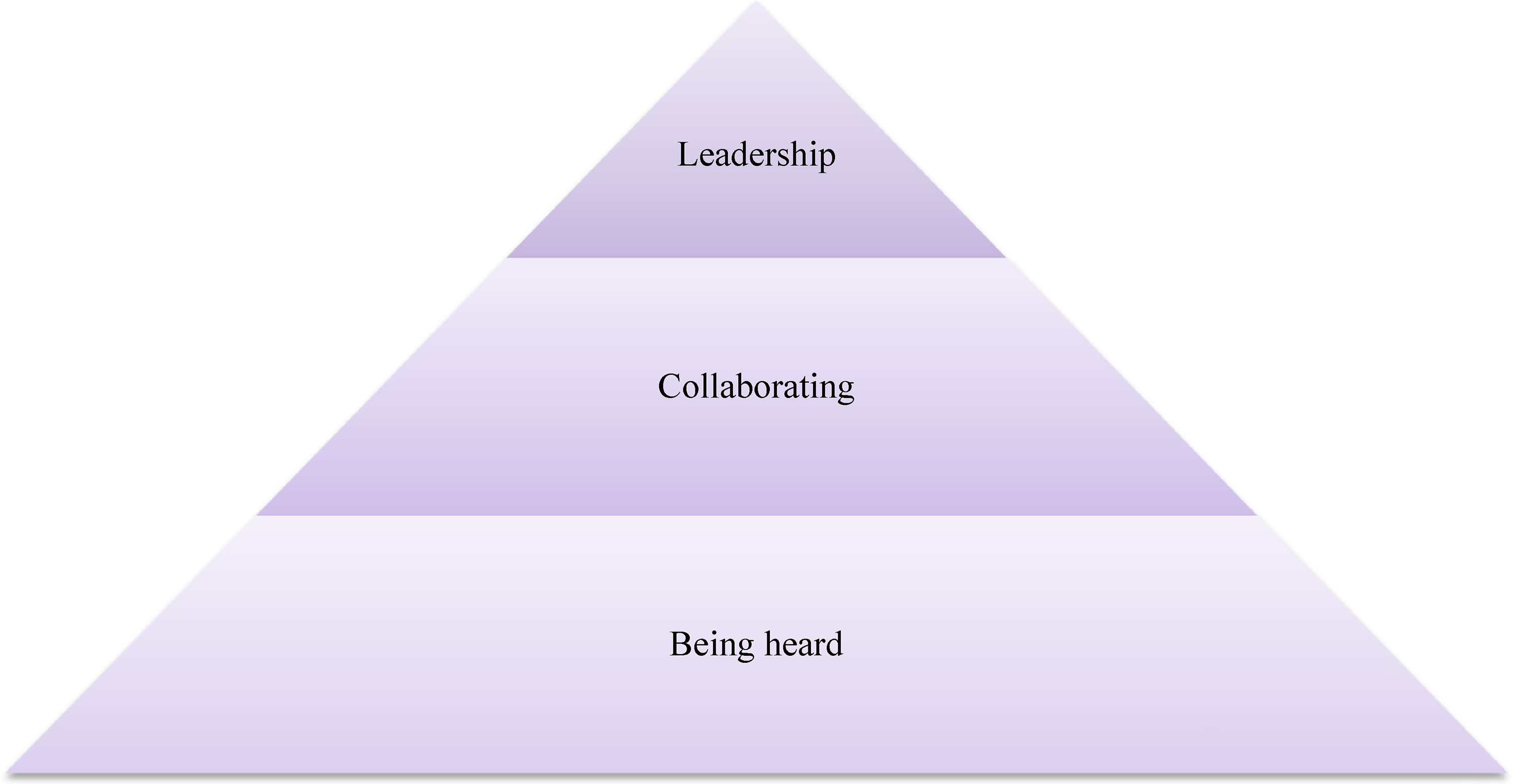
Student voice pyramid.
At the base of the pyramid, “being heard” refers to school personnel providing opportunities for student voice and putting systems in place that foster constructive dialogue between administration/teachers and learners. Therefore, “being heard” not only refers to students’ voices being heard but implies that their opinions and input carry weight when it comes to decision-making. The middle tier of the pyramid, that is, “collaborating” with adults, is about power sharing. This level calls for students to hold some decision-making power in collaboration with school adults. This encompasses identifying problems in school and becoming partners in finding and implementing solutions. The highest level of building capacity for “leadership” encapsulates enabling students to spearhead student voice initiatives and even take action independently with minimal supervision. Although this is the rarest type of student voice, it involves the highest level of student autonomy. This study's findings are discussed with reference to these levels of the student voice pyramid to understand how these ideas align with students’ experiences in schools.
Context of the study: Round square
The research context was the Round Square school network, and the data used in this study are part of a larger project that explored how students articulate, perceive, and build leadership. Round Square is a network of more than 200 “like-minded” schools located across 50 countries worldwide (Round Square, 2023). In the Chinese mainland, there are six Round Square schools, which are either international schools (e.g., the Keystone Academy) or affiliated with leading universities (e.g., the Affiliated High School of Peking University's Dalton Academy). Round Square schools are not “typical” and offer an informative site to investigate student voice. They share common pedagogical principles drawn from the educationalist Kurt Hahn's theories. This includes a commitment to promoting six “IDEALS”: internationalism, democracy, environmental stewardship, adventure, leadership, and service. In particular, the schools purport to promote student empowerment by developing and structuring holistic programs that build character, competencies, and life skills among students (Round Square, 2023). They also share a pedagogical commitment to experiential and character education, and by placing students at the center of learning, they intend students to be well-informed and active members of their society and good global citizens. A further contextual feature of the Round Square schools in this study is that they are mainly “elite schools” in their communities in terms of selective intake, ample resources, high prestige, and admission to leading universities (e.g., Higham & Djohari, 2018; Howard, 2022). Indeed, a high proportion of Round Square schools are fee-paying private schools that serve students from families with high socioeconomic status. The purpose of elite schools, according to research, has been “to advantage the advantaged across the generations and, in so doing, to adapt to ensure that the schools keep pace with changing social conditions and groupings in order to stay ahead of the game” (Kenway & Fahey, 2014, p. 177). Importantly for the current research, one of the features of attending an elite school is being cultivated to become the next generation of leaders (e.g., Howard & Maxwell, 2023), meaning that elite schools are key sites to investigate student leadership experiences. In sum, therefore, Round Square schools represent a case in which girls may experience high leadership aspirations and ample leadership opportunities.
Methods
This research aimed to bring forward the opinions, experiences, and perceptions of students regarding leadership. To achieve this, semi-structured interviews were conducted with students aged 14–18 years at 12 Round Square schools. Before the research, student committees in all Round Square schools were invited to submit applications for participation in the project. From these applications, 12 schools were purposely selected using “maximum variation sampling” (Patton, 2002) to provide a geographic spread and cross-cultural diversity. The schools were located in Australia, Argentina, China, Chile, India (two schools), New Zealand, the United States, Korea, Switzerland, Tanzania, and South Africa.
Each school proposed a Research Ambassador team consisting of two students and one teacher. We worked with these teams on research planning, interviews, and data analysis. In preparation, the students completed online interview training led by a research team. These sessions began with an overview of qualitative research and interviews. Second, the sessions provided practical guidance for conducting interviews, including sampling, participant recruitment, and interview strategies. Third, the sessions provided an opportunity to underline the importance of research ethics by ensuring that all the participants understood the research and their rights as participants.
Although unconventional in educational research, adult researchers and collaborations with students have significant potential as methods. Cook-Sather (2020) contend that involving students in research “not only ensures that educators, researchers, administrators, and policy makers are better informed, but it also provides youth with the opportunity to experience empowerment and agency and be part of necessary change” (p. 186; see also Fielding & Bragg, 2003). On the one hand, the students had a detailed understanding of their context, which was valuable for discussing leadership in their school. On the other hand, students had the opportunity to gain leadership experience by taking responsibility in conducting the current research project.
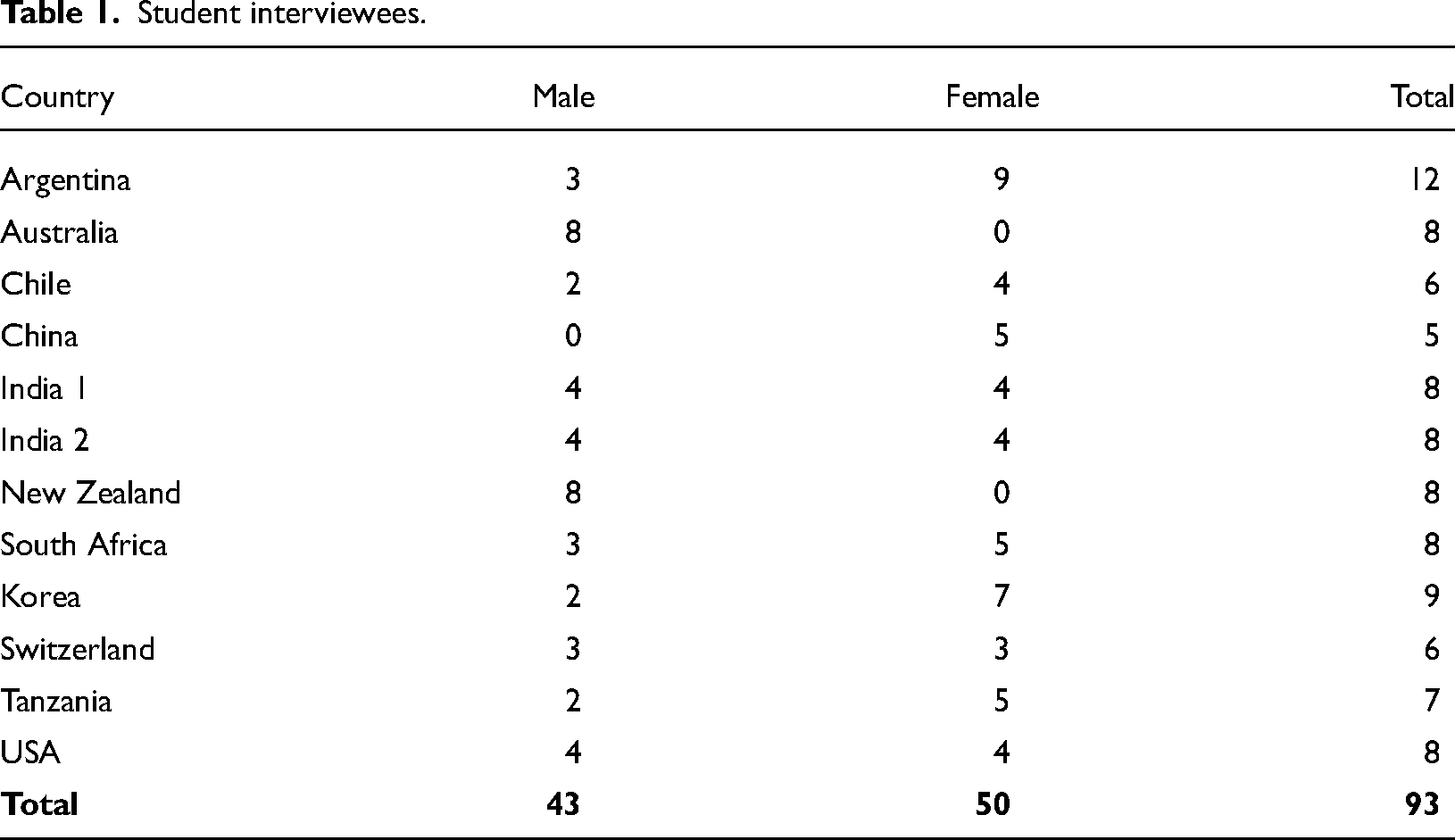
Before data collection, the research team obtained ethical clearance from their host university. All participants were informed about the purpose of the research and their rights as participants, including the voluntary nature of their participation, the right to refuse to participate or withdraw from the research, the confidentiality and anonymity of the data, and the fact that the interviews were audio-recorded. Subsequently, the students were tasked with coordinating and conducting interviews with fellow students over the age of 14 in their school. They were asked to recruit a diverse range of participants according to age, gender, and leadership experience. The interview protocols were constructed collaboratively. The questions focused on the qualities that make an effective leader, views on adult leaders, experiences that help build leadership, barriers to student leadership, recommendations for schools to support student leadership, and the power of young people to effect positive changes. In total, the Research Ambassador teams conducted interviews with 93 students, ranging from 5 to 12 in each school, including 53 male and 61 female participants (see Table 1).
Student interviewees.
Before data analysis, we held meetings with the Research Ambassador teams to gather student insights into the most significant findings. This involved an open forum for students to share their viewpoints on student leadership in their own contexts. Based on the discussions, we created analytical memos, which directly informed our subsequent analyses. Following this, all interviews were transcribed verbatim and uploaded to the qualitative data analysis software NVivo (version 12). We then applied thematic analysis to the data. Thematic analysis aims to identify the underlying issues relevant to the research questions from a large amount of qualitative data (Miles et al., 2014). To start, “first-cycle coding” involved a line-by-line reading of the interview transcripts and assigning codes as labels that gave symbolic meaning to chunks of data. We then conducted “pattern coding” to group the codes into smaller number of analytical units based on themes that tied different parts of the data together. Given that the schools in our sample were all part of a Round Square network, we focused on common findings across schools rather than cross-cultural differences during the analytical process. Focusing on gender, student voice, and leadership in schools, we report the findings in the next section. Pseudonyms are used to protect participants’ identities.
Findings
Student leadership is a key issue for students of all genders
Student participants of all genders emphasized the importance of building leadership skills at a young age. They believed that classroom and extracurricular activities offered at school helped them develop teamwork, interpersonal skills, and decision-making skills, all of which were viewed as key to effective leadership. On a broad level, interviewees shared that student voice and leadership can take different shapes and range from students “getting their voices heard” (Jacky, Australia) to “students taking first steps to solve their own problems” (Soo, Korea). Discussing the importance of student voice and working alongside adults in schools, Nathan (New Zealand) asserted, We are what the school is, so we are the ones that have to bring about positive change, and we have to make sure we are taken seriously, which means being treated as equals by teachers when decisions are being made about our education.
Doing many group class projects and presentations helped me with my internship interviews. Like the Q and A sessions and overall interpersonal skills, how I answered questions, and how I articulated my words before starting to speak, I think it was a major contributing factor in me landing that position.
Furthermore, participants distinguished between formal and informal channels of building leadership. For example, group class work, team assignments/projects, and presentations were viewed as informal leadership-building experiences. In contrast, holding formal leadership roles as student councils, sports team captains, class prefects, and/or attending leadership seminars/workshops were regarded as formal leadership-building experiences.
A few students shared that their path to leadership was “accidental,” meaning that they were initially hesitant to try a new activity/adventure/hobby; however, after experiencing it, they were surprised to discover that they “had it in them” to lead. For instance, Jia (China) shared how she believed that she was “socially awkward.” However, upon taking on the role of interviewer during a research project at her school, she felt confident and open to trying new experiences. I think I am an accidental leader; I resisted and came into a school project with a lot of self-doubts and experienced imposter syndrome only to find out that I was capable and had great listening skills and good interpersonal skills in general, which boosted my confidence in myself and shattered some self-limiting beliefs.
Impact of student voice in school and beyond
This section explores how students believe that student voice can improve their school experience and positively impact their communities.
Student voice impact in school
Many students believed that “having a say” in day-to-day school matters was integral to a positive school experience. It was widely viewed as the “right” of students to be “taken seriously” by the school administration and teachers on academic and non-academic issues concerning them. Some students even shared how they felt it was their responsibility toward other students and considered their efforts as “favor” to their juniors. One participant explained how they were able to improve school lunches and bring flexibility to school uniforms. These changes were perceived as beneficial for both the current and future students. Our school has a long legacy of the same food menus and a strict dress code for boarding houses, and we collectively organized a campaign to make improvements that better suit the needs of students today. That is something that we and future students will surely benefit from (Harriot, Australia).
I feel like adults work in companies, and these companies have hierarchies and their positions matter. However, for the students, with student councils, despite there being a head chair or deputy chair, they all have equal power and are free to express their opinions. (Kai, Korea)
A hierarchical and structural outlook of leadership was despised as being “outdated” and “old-fashioned” and deemed non-progressive to the point of being a hurdle to achieving a higher level of student voice. Students expressed how these limitations prevented them from becoming increasingly involved in decision making.
Student voice impact beyond school
Students expressed confidence in their ability to initiate positive changes beyond school using the skills they believed they had developed through leadership experiences at school. Many students shared how leadership activities, such as sports, classroom presentations, and group activities, helped them develop skills that they applied outside school. Danna (United States) shared how a school beach cleaning campaign encouraged her to initiate a similar cleaning campaign in her neighborhood: I thought if the kids liked going out and cleaning the beach on a Saturday for a couple of hours, then we could surely do it for the beach near my house, and so I was able to gather support from other kids in my town and we made this a monthly activity. Compared with the older generation, “Gen Z” is much better. We are not just open to women leadership, but other genders who may not identify within this binary, something that is not so widely accepted worldwide.
Furthermore, some students highlighted that not all voices were equally respected and valued. Fareena (India) shared her concerns about favoritism and nepotism and how they damage student voice: Some students are treated like royalty, such as high achievers of the class, who are mostly selected to represent the class, or are sent to represent the school in events/conferences. Their opinions are valued more than for students who are not doing too well in their subjects.
Gender bias against female student leadership presents challenges to equality
Most students (both male and female) were positive about their educational experiences at school. They often recognized and commented on their privilege of attending schools with ample resources, including opportunities for leadership, which may be less present in other schools within their societies. Significantly, female students were quicker in identifying how gender was a limiting factor in leadership opportunities. In other words, they were more acutely aware of gender and leadership barriers than their male counterparts. Their concerns mostly focused on gendered barriers outside schools, although some noted how these could also seep into school contexts.
The students commented on how leadership aspirations were created and enhanced by taking “inspiration” (Farida, India) from people who served as role models in leadership. These leadership role models ranged from immediate family members (e.g., parents, grandparents, and siblings) to youth activists, sports celebrities, and other public figures. Katherine (Chile) shared how her mother inspired her to develop leadership skills by never shying away from leadership opportunities. My mother has always set a positive example for us by stepping up to offer solutions for any big or small problems we face, and this inspires me to do the same and not shy away from leading when and where needed. Negative bias and examples are all around us even as open and inclusive as our school is; I still witnessed how a male teacher got a promotion even though our female teacher was the one working overtime and it just seemed unfair, but that's the reality of the society we live in. (Salena, Chile)
Further, students shared how negative gender stereotypes and gender roles could prevent girls from realizing their full potential, as people holding on to traditional gender roles could stifle girls’ access to leadership. One of the students noted that: Some adults hold stereotypes that men can be better leaders than women. They are clueless in that the world around them is changing, but they are not. Their views on gender roles are stagnant, and this is something to worry about because they can be someone's parents/guardians or teachers. (Kayla, USA)
Many female students were critical of “sexist behavior” and comments regarding female leadership, and believed that they were unfairly discriminated against and criticized more than the male leaders. Maria (Chile) shared an example of how her mother managed their family business without a college degree, while being told that she could not do it: My mother had no formal training or even a bachelor's degree, and people laughed when she said she could take charge of the family business. Many talked behind her back about how she was a fool for taking interest in the work, but she kept going without anyone's support. Today, there are dozens of people working under her supervision.
Moreover, students shared the perception that people and institutions often pay lip service to women's empowerment but fall short when it comes to taking action. One student shared her concerns about people portraying support for female leaders, which seemed disingenuous when not practiced: My worry is that in the community in which we live, people can easily portray that they support women's empowerment, but it is only limited to hashtags and for show. Women are not given many leadership roles or higher positions such as those seen in our school, which are mostly assigned to men. They talk about female leadership, but we do not see female figures in those positions. This has been a problem for many years, requiring years of consistent action on a global level, beyond just talking. (Flora, Korea)
As discussed above, most students’ concerns regarding gender and leadership extended beyond the school gates. In other words, it encompassed the wider community. However, some have also highlighted how stereotypes about gender and leadership could permeate schools, often in a subtle way. This could in turn impede girls’ leadership aspirations, opportunities, and experiences. Lerato (South Africa) described how girls feel the need to be “extra special” to obtain the same leadership opportunities as boys: I feel that my school is trying to promote leadership opportunities for everyone. However, you know, as a girl, I still feel and witness the kind of expectation that it will be a boy who is likely to be the perfect leader, and girls need to be extra special to get the same chance.
Way forward
Students discussed the persistence of challenges to equality in leadership. They offered ways to counter such challenges in the hope of ending perceived stereotypes and biases against female leadership. A commonly cited cause of bias and gender stereotypes is the generational gap.
Many students stressed the importance of open communication channels to dismantle what they believed to be “outdated and non-progressive” gender biases held by the older generation about gender roles. Students felt that schools played a major role. As Cherry (China) stated: “schools are the reflection of the society at large, so that's where we should see positive examples of leadership.” In addition, the students believed that female role models should be amplified in schools, and female leadership should be discussed regularly in classrooms and not reserved for special days.
Finally, the students shared the importance of having conversations among themselves to strengthen student voice and believed that collective action support among students holds the key to combating negative gender stereotypes within school premises. This is best reflected in the following comment made by Tahima (South Africa) about perceived power in an internal dialogue among students before they reach out to adults. Gender biases certainly exist, but if we work hard to limit their influence in our environment, we can influence the people in charge, and make them realize that their approach is wrong. If we have our own voices, we do not even have to speak to them. We just have to speak amongst ourselves, to ensure the next generation brings that change and becomes more open and accepting of female leadership.
Discussion
Schools have a vital role to play in nurturing the next generation of leaders who can thrive in the face of social transformation and identify solutions to complex global crises. To achieve this, it is crucial that all students develop leadership aspirations and are presented with opportunities to experience leadership during their school years. The findings of this research demonstrated that interest in developing and practicing leadership through student voice in schools differs across genders. All the students exhibited a strong conviction regarding their rights and ability to initiate change in their schools, local communities, and globally. Furthermore, the students underscored the value of their collective action in eliminating gender stereotypes and improving equality in student voice. However, compared with male students, female students were more acutely aware of subtle gender stereotypes about leadership and how this represented a barrier to realizing leadership opportunities. Below, we highlight three implications that arise from our findings: (1) the value and importance that students place on building leadership early in life; (2) how students of different genders perceive gender stereotypes and barriers to leadership; and (3) how nuances exist in student voice, particularly how some voices are more readily heard than others.
The first implication is to identify the value and importance that students place on building leadership skills early in life. The findings offer insights into how young people perceive leadership, what motivates them to build leadership skills, and how they believe that they can build their leadership skills. Applying the “pyramid of student voice” framework (Mitra, 2018), student voice in schools is a form of leadership that can take multiple forms and has different levels, which depend on how much power students have in terms of influence and decision-making in their school life. Most students reported that they had platforms and shared positive experiences of shared decision-making with school adults. They often cited this as the privilege of attending an elite school, which had ample resources and a progressive educational philosophy that aimed to provide holistic learning opportunities (Higham & Djohari, 2018; Howard, 2022). However, others believed that “bigger problems” that they considered important seldom got resolved, with their participation potentially being “tokenistic” (Mitra, 2018). This point further aligns with Skerritt et al. (2022), who found that student voice customs can be rhetorical, even exaggerated by some school staff members, and peripheral to others, and that positions on student voice are often determined by positions in the school hierarchy. In our study, on the one hand, many students shared empowering examples of how they initiated positive, measurable changes in their schools that directly improved the school experience. On the other hand, some researchers have highlighted the limitations of opportunities to build leadership skills in schools and to apply leadership to make a positive impact.
This leads to the second implication: How do students of different genders perceive leadership limitations and gender stereotypes? Many believed that adults viewed leadership in a “hierarchical” manner in which the leader has a “boss” mentality, and the attributes associated with leadership tend to be masculine, such as assertiveness and authoritative (see Jones & Myhill, 2004; Vantieghem & Van Houtte, 2018; Yavorsky & Buchmann, 2019). In contrast, the students viewed leadership differently and were fiercely against the idea that a leader must lead in a certain way or have a certain type of personality. Female students, in particular, shared how society in general and the communities they belong to often “look down” on female leaders that inspire them. Therefore, schools were viewed as “safe spaces” (Mansfield, 2014a, 2014b) where they felt encouraged and heard. However, it is overly simplistic to claim that all students felt supported in their leadership in school. There were reports of negative gender stereotypes within school leadership, which were perceived as “unfair” and an indirect barrier to female students’ leadership aspirations and opportunities. Importantly, these stereotypes were often subtle and reflected the permeation of more dominant stereotypes regarding gender and leadership beyond the school gates. Hence, this study sheds light on previously unknown or “invisible” challenges that may persist in arguably the most well-resourced schools. In other words, cultural and societal gender biases were reported, indicating that deeply ingrained gender stereotypes may lead to the underrepresentation of women in leadership. Some students attributed this to the “generation gap” and believed that school leaders must “do more” to lead by action rather than words, and that women's representation in school leadership roles would motivate girls to become leaders. This underscores the significance of female role models in breaking down gender stereotypes (see Asgari et al., 2012; Riegle-Crumb & Morton, 2017; Rosenthal et al., 2013).
The third implication relates to nuances in student voice, particularly how some voices are heard more readily than others. These nuances can exacerbate gender barriers to leadership by intersecting gender with other factors. For example, quieter students may be overlooked in leadership opportunities (see Finneran et al., 2023), while other students may avoid participating in student voice (Perry-Hazan, 2021). This research found that female students shared their concerns about discrimination and bias against female leaders in schools and communities. They also indicated how academic performance, certain personality traits, and favoritism could pose challenges to their leadership in school. Coupled with teachers’ resistance to certain principles and practices of student voice, these challenges are amplified. As much as teachers may be willing and enthusiastic about student voices, some teachers remain uncertain and resistant (Black & Mayes, 2020). In certain cultures where gender stereotypes and discrimination against women are prevalent, the challenge of female leadership can be even more pronounced. In this study, female students often complained of hypocrisy in their schools and society in general regarding those who wanted to be perceived as champions of women's empowerment through social media and in their lives, but their actions did not match their words.
These findings provide avenues for further inquiry into the emerging student voice arena. Future studies should investigate how adults in schools perceive student voice in the context of gender and whether school staff members of different genders have varying perspectives. To fully comprehend how student voice is being enacted in schools, researchers should incorporate the voices of different school staff members. Researchers should also investigate potential gendered differences in how students perceive student voice and leadership, for example if female students aspire to become different types of leaders than their male peers. Finally, this study considered student voice within the Round Square school network as a group of schools that share common characteristics. However, research on the cross-cultural differences in students’ experiences of student voice in schools across national contexts would provide deeper insights into gender and leadership.
Concluding remarks
Overall, there is growing recognition that leadership is a valuable skill for young people. However, negative gender stereotypes of leadership persist, which might shape female students’ aspirations, experiences, and opportunities for leadership in school. Applying the conceptual lens of student voice, this study explored student perspectives on gender and leadership in Round Square schools, focusing on ways to promote equitable access to leadership for all students. The findings demonstrated how interest in developing and practicing leadership cuts across genders. All the students felt strongly about their rights and ability to initiate change in their schools, local communities, and globally. The students underscored the value of their collective action in eliminating gender stereotypes and improving equality in student voice. Yet, female students were more acutely aware of subtle gender stereotypes regarding leadership and how this represented a barrier to realizing leadership opportunities. This study contributes by presenting young people's perspectives on leadership and gender in school contexts that are favorable to student leadership opportunities. The main argument is that although schools promote equality in leadership opportunities and provide equal access to leadership resources, female students remain comparatively sensitive to and aware of gender stereotypes. In sum, this study highlights the complex and deeply rooted barriers to female leadership.
Footnotes
Contributorship
This study was conceptualized by Ewan Wright. In addition, he took the lead in writing the following sections of the paper: abstract, introduction, need for leadership, and methods. Kanwal Hassan wrote the majority of the sections on student voice, framework, context of the study, and the findings. The co-authors contributed equally to writing the sections on gender and leadership, discussion, and concluding remarks.
Declaration of conflicting interests
The authors declared no potential conflicts of interest with respect to the research, authorship, and/or publication of this article.
Ethical statement
Before beginning the study, the research team obtained institutional ethical approval from the Education University of Hong Kong (reference number: 2019-2020-0253). The research team distributed an information sheet to all participants to explain the research procedures, its objectives, and rights of the participants. The information sheet also described the study's voluntary nature and participants’ right to withdraw at any time. The information sheet further stated that the data collected would be kept confidential and that the identities of the participants would be made anonymous in the research outputs. The participants signed an informed consent form if they agreed to the terms.
Funding
The authors disclosed receipt of the following financial support for the research, authorship, and/or publication of this article: This work was supported by Round Square.
