




Abstract
Purpose
This study investigates the degree to which students’ participation in out-of-school activities promotes their curiosity and creativity. In doing so, this study addresses the question of whether various out-of-school activities function differently in the development of students’ curiosity and creativity.
Design/Approach/Methods
This study sampled 3,647 students for the younger cohort and 3,621 students for the older cohort from the city of Suzhou, China.
Findings
Both younger and older students who participated in artistic activities and sports consistently rated their creativity and curiosity higher than those who did not. After controlling for family socio-economic status and gender, students’ participation in outdoor socially-oriented activities (e.g., meeting with friends outside school) and indoor activities (e.g., reading books) contributed to the development of creativity and curiosity. In contrast, participation in Internet-based activities negatively predicts adolescents’ creativity and curiosity.
Originality/Value
Creativity and curiosity are related to students’ academic performance and future success. Therefore, cultivating students’ creativity and curiosity should be of interest to educators and policymakers. This study examines the roles of different out-of-school activities on students’ creativity and curiosity, revealing a potential path for educators.
Creativity and curiosity are topics of growing interest in the educational environment (e.g., Barbot et al., 2016; Cheung, 2016; Huang & Wang, 2019). Several studies have demonstrated that creativity and curiosity are related to students’ academic performance and influence their future success (Du et al., 2020; Huang & Wang, 2019; Ramly et al., 2022). With respect to the cultivation of students’ creativity, scholars have examined how instructors can teach creativity directly and how parents and teachers can foster creative environments (Fasko, 2001; Scott et al., 2004; Simonton, 2012). For example, children's creative potential—including divergent thinking—has been found to benefit from teachers who are more playful and open, possess elaborative teaching styles, and adopt less-structured interaction styles (De Kruif et al., 2000; Lee & Kemple, 2014). Additionally, parental attitudes, such as respect for their child and stimulation of their independence, can support or hinder the development of creativity (Kemple & Nissenberg, 2000).
How students spend time outside school is frequently claimed to influence their social and academic development (Hofferth & Jankuniene, 2001). However, there is scant research on how adolescent engagement in out-of-school activities contributes to the development of their creativity. Moreover, how different out-of-school activities relate to aspects of students’ creativity and curiosity is unknown. This gap is particularly glaring given the role of out-of-school learning contexts in adolescents’ cognitive and social adjustment (e.g., Fuligni & Stevenson, 1995; Larson & Verma, 1999; Meltzoff et al., 2009).
Creativity and curiosity development
Creativity is defined as “the production of novel and useful ideas by an individual or small group of individuals working together” (Amabile & Pratt, 2016). A widely accepted standard of creativity is “novel and useful” (Mumford, 2003; Walia, 2019), where originality is labeled “novelty” and effectiveness is referred to as “usefulness” (Runco & Jaeger, 2012). As this definition indicates, creativity is a complex concept involving multiple levels, including creative potential and creative achievement (Kim, 2020) as well as creative self-concept, the latter of which is typically measured through individuals self-rating their own creative attitude and efficacy. This study uses the Chinese dataset of the Social and Emotional Skills Survey (SSES) administered by the Organisation for Economic Co-operation and Development (OECD), which included a measure of students’ creative self-concept (i.e., “I sometimes find a solution that other people don’t see”) (OECD, 2021).
Irregular patterns have been observed across the stages of children's creative development. In their review, Barbot et al. (2016) concluded that the development of creativity in childhood and adolescence is asynchronous but constantly increasing. Depending on the environmental factors and task characteristics, any age group may experience peaks, declines, or bumps in creative development. However, Chinese children exhibit different patterns of creative development, with a steady decline in creativity observed among Chinese students aged 10–15 (Yi et al., 2013). In this respect, researchers observed a slump in students’ verbal originality and figural elaboration after entering junior school. Such a decrease in students’ creativity development may be attributable to academic pressure and overemphasis on the test-taking skills required for examinations and higher grades in the Chinese educational system (Niu, 2007; Wang, 2013). This raises the question of what factors contribute to these differences between Western countries and China.
Curiosity is defined as the desire to search for new information and experiences through exploratory behavior (Berlyne, 1950), and higher curiosity is generally correlated with greater creativity (Hagtvedt et al., 2019; Schutte & Malouff, 2020a, 2020b). Schutte and Malouff (2020a) found a meta-analytic association of 0.52 between self-reported curiosity and creativity. Indeed, several studies have demonstrated that curiosity is paramount for children's school readiness and related to various outcomes, including cognitive exploration and development (Hagtvedt et al., 2019), learning and job performance (Tang & Salmela-Aro, 2021; Vracheva et al., 2020), and personal well-being (Kashdan et al., 2004). Curiosity is considered ubiquitous in early childhood. Unfortunately, research indicates that children's curiosity levels decline with age. This prompts the question of how to promote, or at least sustain, children's curiosity (Engel, 2011, 2013; Engelhard & Monsaas, 1988).
With respect to the question of what is required to nurture student creativity and curiosity, the following section discusses how out-of-school activities affect children's creative and curious development.
Creativity, curiosity, and out-of-school activities
Several theories contend that children's participation in out-of-school activities promotes the development of creativity and curiosity. According to the ecological systems theory, child development is shaped by activities and experiences across different ecological contexts (Bronfenbrenner, 1989). Out-of-school activities that adolescents participate are often less structured, and may have a greater influence on their creativity and curiosity development than their experiences within the school context. Ecological systems theory also holds that adolescent development is influenced by the broader cultural context. People in the same cultural context usually share common beliefs, concepts, values, and behaviors (Birenbaum & Nasser-Abu Alhija, 2020). As such, different cultural contexts create different cultural logics for members (Leung & Cohen, 2011). Previous studies have illustrated the interaction between culture and creativity or curiosity (Birenbaum & Nasser-Abu Alhija, 2020; Kim, 2009; Rudowicz & Ng, 2003). For example, Kim (2009) explored the impact of Asian culture, namely, Confucianism, on creativity and found that some elements of Confucian culture—such as unconditional obedience, gender role expectations, and suppression of expression—inhibit the development of creativity. Similarly, Birenbaum and Nasser-Abu Alhija (2020) found that people in collectivist cultures exhibit less curiosity than those in diverse and individualistic cultures.
Cultural values, norms, and beliefs significantly affect the types of activities available and encouraged within a particular community or society. In other words, cultural influences shape the opportunities available to individuals to explore their creativity and curiosity in out-of-school pursuits. Delany and Cheung (2019) found that, similar to Western children, approximately one-third of Chinese students spent at least 3 h a day on academic out-of-school activities such as socializing and other fun activities. Where Chinese students were more likely to participate in personal nonacademic activities (e.g., watching TV and playing video games), their American counterparts were more likely to engage in both academic (e.g., working on a group project) and nonacademic (e.g., playing sports with friends) social activities. However, it is not known whether different types of out-of-school activities function differently in predicting the development of students’ creativity and curiosity in China.
Researchers frequently employ an education production function with an input–output framework to explain the relationship between educational inputs and outputs (Brewer et al., 2010). All human activities occupy time and the time allocated to specific out-of-school activities influences child development (Bergmann, 1992). In this regard, every hour that a child spends on out-of-school activities can be seen as an educational input, while their cognitive and non-cognitive skill development can be regarded as educational outputs. Research indicates that children, particularly girls, who spend an hour more on physical activities and an hour less in front of screens develop better noncognitive skills (Jürges & Khanam, 2021). Therefore, out-of-school activities are a major arena of adolescent development (Lam & McHale, 2015).
Empirical research has consistently demonstrated that out-of-school activities influence the development of children's creativity and curiosity. Out-of-school activities such as sports, arts, and clubs provide a rich and diverse environment outside the traditional classroom setting, stimulating curiosity and encouraging creative thinking (Bobdey et al., 2021; Feraco et al., 2022; Heath, 2001; Nagy et al., 2022). However, research on the impact of different out-of-school academic activities on child development has yielded inconsistent results. For instance, Cotter et al. (2016) found that participating in high school art clubs had a positive effect on students’ self-reported creativity in college, whereas participation in academic clubs negatively affected students’ divergent thinking. Meanwhile, Delany and Cheung (2019) observed a positive relationship between the time spent on out-of-school academic activities and divergent thinking.
Overall, it can be assumed that adolescent participation in out-of-school activities contributes to the development of creativity and curiosity. Moreover, the impact of out-of-school activities on creativity and curiosity can be both beneficial and detrimental depending on several variables, including the type of out-of-school activity and cultural background.
The present study
The aim of this study is twofold. First, this study identifies the level of curiosity and creativity among both younger and older Chinese school students. Second, it investigates whether participating in a variety of out-of-school activities promotes students’ curiosity and creativity. In doing so, this study addresses the question of whether different out-of-school activities function differently in the development of students’ curiosity and creativity.
Method
Participants
This study sampled a representative population in Suzhou City, China, from the 2019 OECD Study on Social and Emotional Skills (OECD, 2021). This large-scale, internationally representative survey covered two cohorts, namely, 10- and 15-year-old students, referred to as the “younger” and “older” cohort, respectively. This study's sample comprised 3,647 students (45.4% girls) in the younger cohort and 3,621 students (48.5% girls) in the older cohort from Suzhou, China. Participants were randomly selected via stratified cluster random sampling. Students, one parent for each student, and teachers were required to complete an online survey at school. Participation was entirely voluntary. The survey was approved by the ethics committee and institutional review board, and the dataset is currently available for academic research.
Measures
Out-of-school activities
Students were asked if they participated in a number of out-of-school activities, including environmental protection, community service, social activities, arts, and sports. Participants were asked to select 1 (“No”) or 2 (“Yes”) in response to all items. For this study's sample, the reliability estimates for the out-of-school activities were acceptable: Ωw = .71 and .75 for the younger and older cohorts, respectively. As Figure 1 shows, for both the younger and older cohorts, students were most likely to report that they engaged in sports (62% on average), and less likely to participate in community service (36% on average). Compared to the older cohort, younger students were more likely to report participating in the arts (62% vs. 43%) and environmental protection (58% vs. 34%). Both student cohorts were moderately likely to participate in social activities (45% on average).
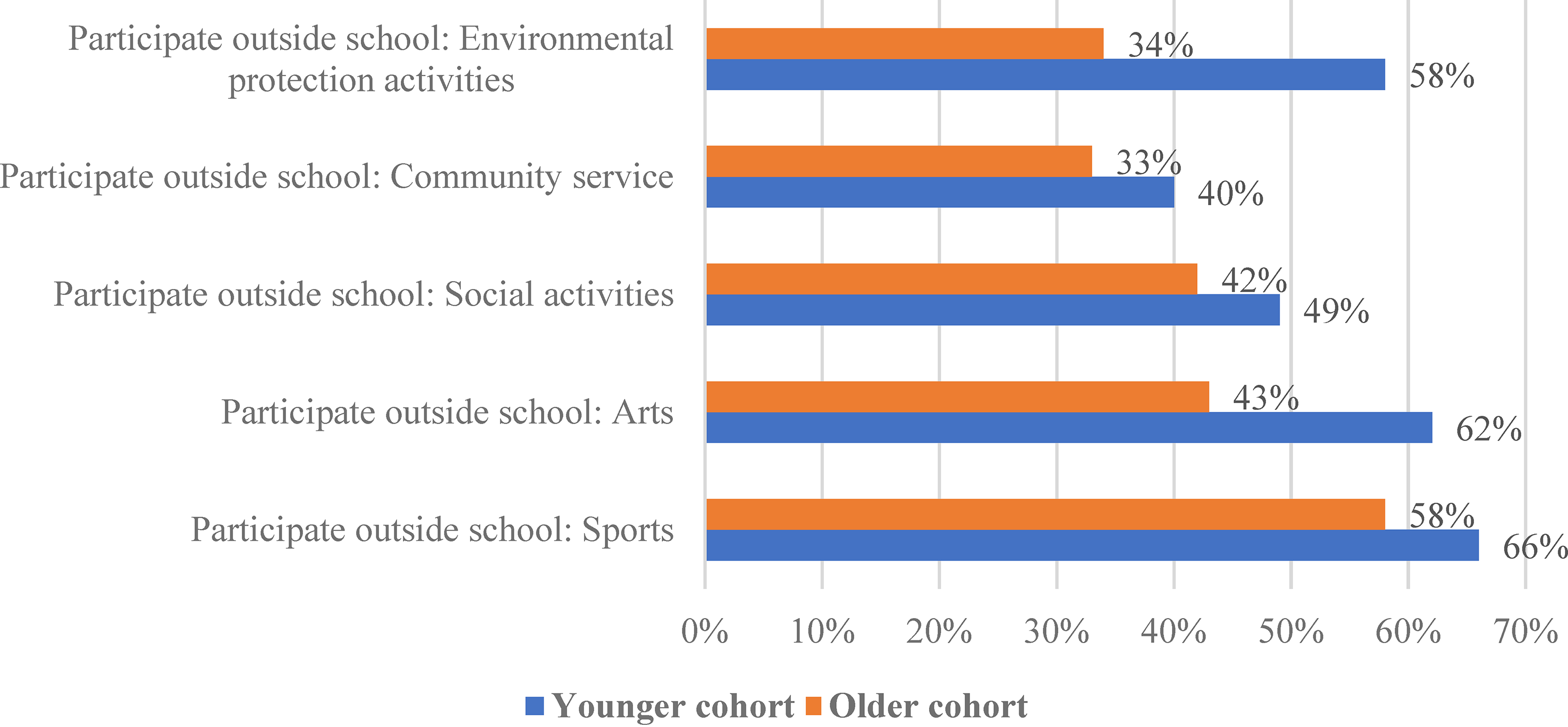
Percentage of students participating in out-of-school activities.
Daily out-of-school activities
Students were asked how much time they spent on a typical weekday doing the following activities (Activity 1–12): doing homework, watching TV programs, reading a book/newspaper/magazine, talking to parents, working in the household or taking care of family members, playing online games, chatting online, participating in social networks, browsing the Internet for fun, browsing the Internet for information, exercising or practicing sport outside school, and meeting with or talking to friends outside school. Students were required to rate all activities on a 4-point Likert-type scale ranging from 1 (“No time”) to 4 (“More than 4 h per day”). In this study's sample, the reliability estimates (Ωw) for daily activities outside school were acceptable: Ωw = .83 and .87 for the younger and older cohorts, respectively (Revelle & Zinbarg, 2009; Zinbarg et al., 2005).
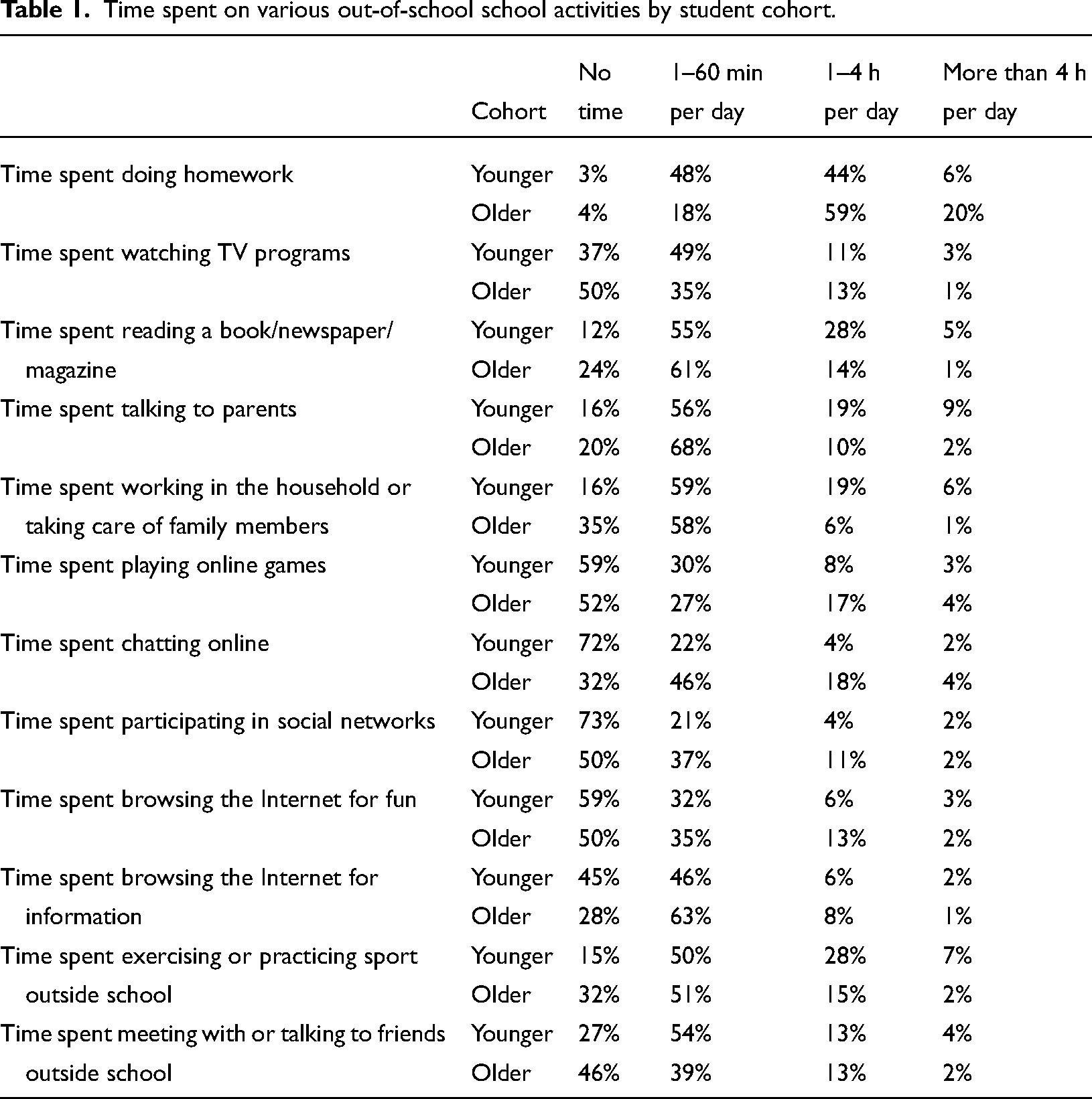
As Table 1 shows, students were more likely to spend 1–4 h or more per day doing homework and less than an hour on other indoor activities (i.e., watching TV programs, reading a book/newspaper/magazine, talking to their parents, working in the household or taking care of family). On average, more than 50% of the students, especially those in the older cohort, reported that they barely had time for or spent 1–60 min per day on Internet-based activities (i.e., playing online games, chatting online, browsing the Internet for fun, and browsing the Internet for information). Around 50% of the students reported that they likely spent 1–60 min engaging in activities outside school (i.e., participating in social networks, exercising or practicing sports outside school, meeting, or talking to friends outside school).
Time spent on various out-of-school school activities by student cohort.
Students’ self-rated creativity and curiosity
Students’ self-rated creativity and curiosity are the two subskills of the “open-mindedness” domain in the SSES Study. In the SSES, the skill of “creativity” represents a cognitive component (imagination, ingenuity, and fantasy), while “curiosity” represents an affective component (love of learning, interest, and intrinsic motivation). It is worth noting that the SSES measure of “creativity” measures students’ creative self-concept, while “curiosity” measures students’ general (self-reported) dispositions toward learning new things. Although these measures do not directly assess creative potential or achievement, they have been shown to predict creative achievement across a wide range of artistic and scientific domains (OECD, 2021). Each sub-skill was measured using eight items, examples of which are presented in Table S1. Participants were asked to rate all of the items on a 5-point Likert-type scale from 1 (“Strongly disagree”) to 5 (“Strongly agree”). In this study, the reliability estimates for all two skills were acceptable for both the younger and older cohorts: Ωw = . 78 and .83 for curiosity, and Ωw = . 78 and .85 for creativity, respectively.
Statistical analyses
First, this study conducted the descriptive statistics and bivariate correlations among the studied variables using R (R Core Team, 2012). Second, this study conducted a series of multiple linear regression analyses using the two facets of open-mindedness (curiosity and creativity) as separate criteria. In each of these analyses, socio-economic status (SES) and student gender were included as control variables because several studies have indicated that SES can strongly predict children's creativity (Castillo-Vergara et al., 2018; Yi et al., 2013). Children born to families with higher SES often have a higher level of creativity than those born to families with lower SES. Self-report measures based on student questionnaires were used in all analyses. For clarity, the aforementioned out-of-school activities were coded into three mutually exclusive categories: indoor (doing homework, watching TV programs, reading a book/newspaper/magazine, talking to parents, and working in the household or taking care of family members), outdoor (participating in social networks, exercising or practicing sport outside school, and meeting with or talk to friends outside school), and online (playing online games, chatting online, browsing the Internet for fun, and browsing the Internet for information) activities. Raw scores for the measures of daily out-of-school activities were used for data analyses. However, for creativity and curiosity, rather than raw scores, adjusted weighted likelihood estimate scale scores with a mean score of 500 and a standardized deviation of 100 were used for further data analyses (for detailed information, see the OECD_SSES technical report).
Results
Preliminary analysis
To explore the role of out-of-school activities in the development of students’ creativity and curiosity, this study calculated descriptive statistics to evaluate the differences in students’ creativity and curiosity. As Figures 2 and 3 show, the students who reported participating in out-of-school activities consistently rated their creativity and curiosity higher than those who did not. The levels of creativity and curiosity were significantly lower among older cohort students than younger cohort students, suggesting that their creativity and curiosity decline after they entered adolescence. Furthermore, larger differences in creativity and curiosity were observed among younger than among older cohort students.
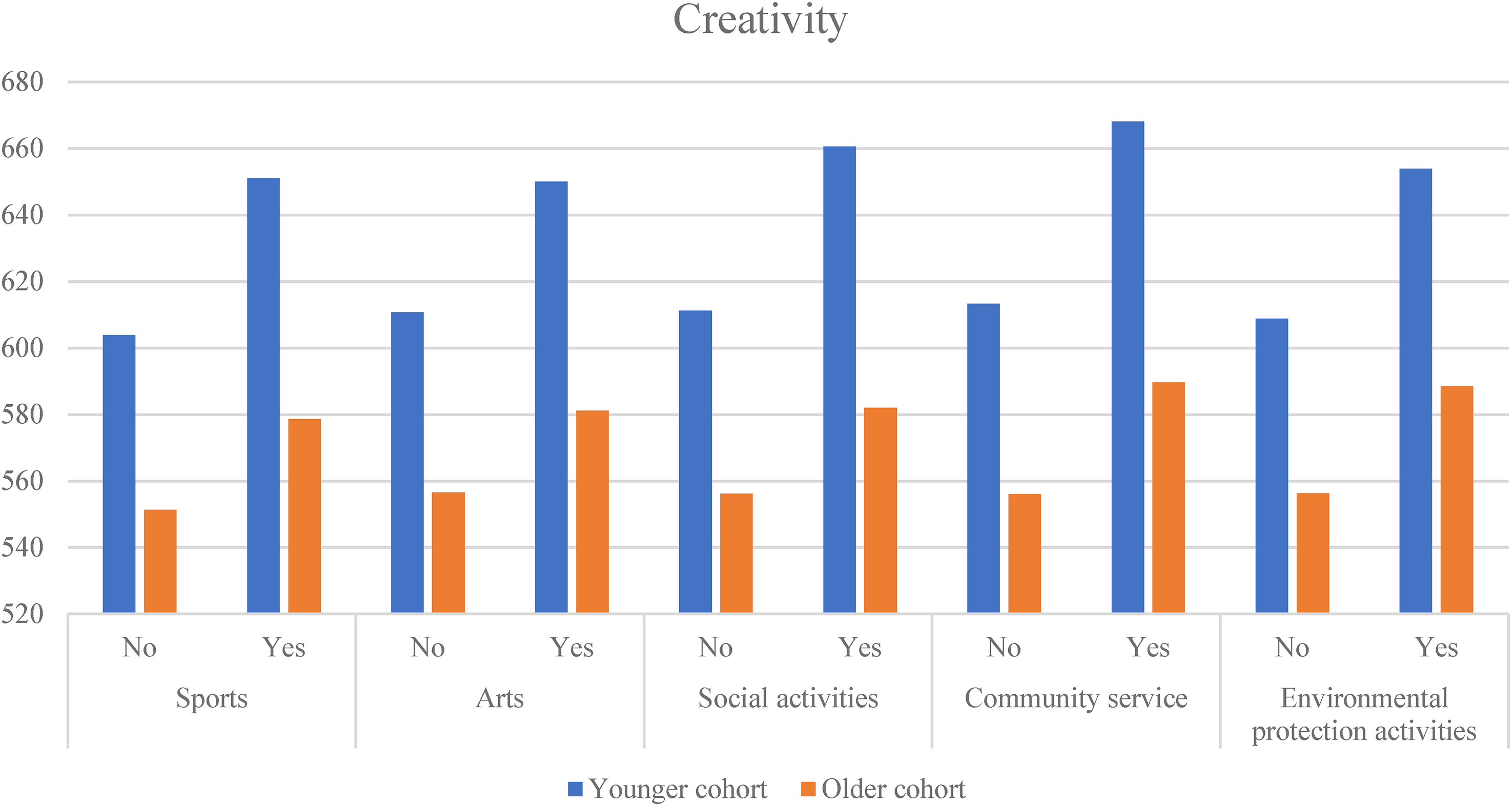
Differences in creativity scores for both younger and older cohort students by participation in out-of-school activities.
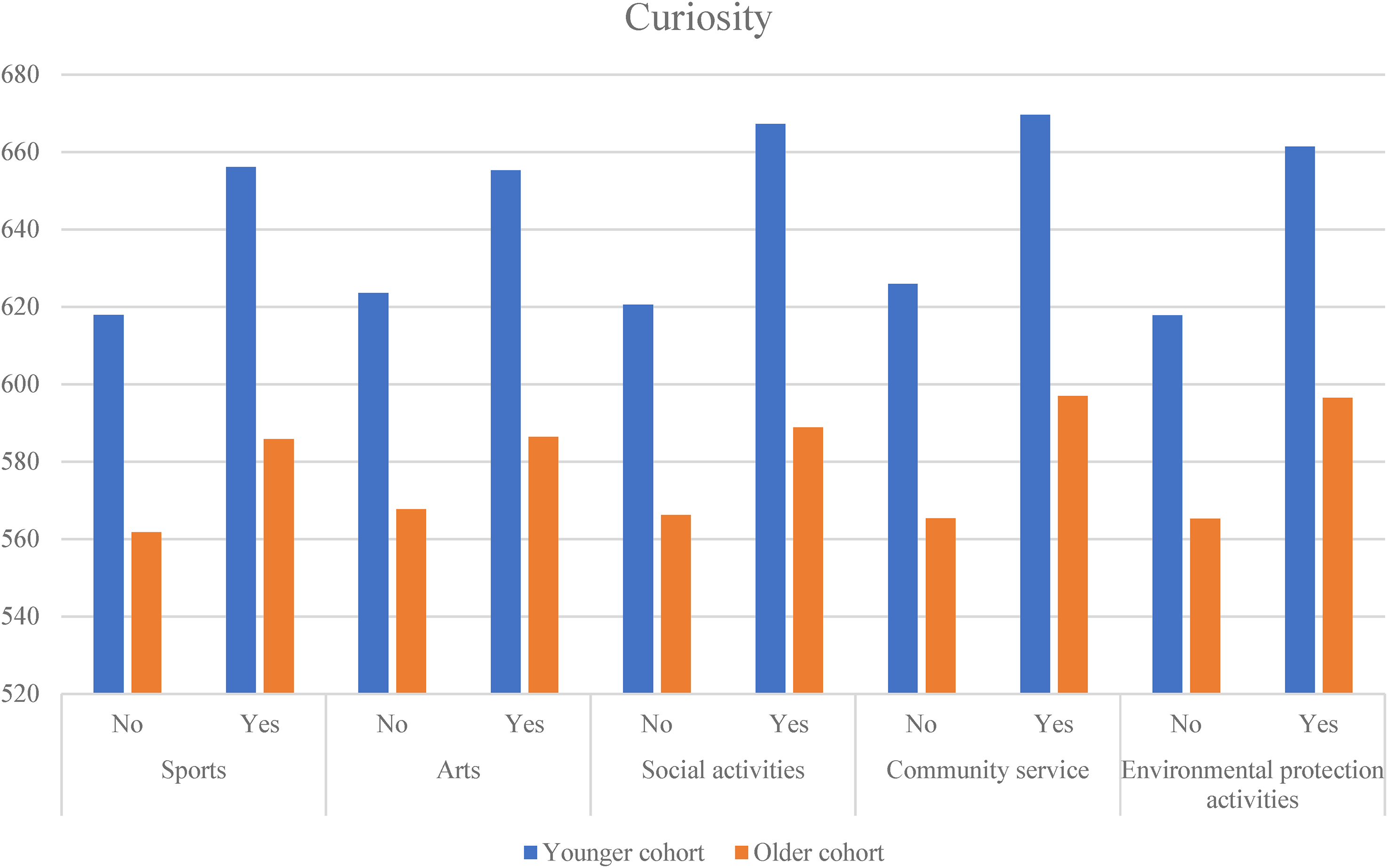
Differences in curiosity scores for both younger and older cohort students by participation in out-of-school activities.
Daily participation in out-of-school activities
This study investigated whether different daily out-of-school activities play different roles in promoting students’ creativity and curiosity. Table 2 presents the zero-order intercorrelations between 12 daily out-of-school activities and curiosity and creativity for both the younger and older cohort students. As Table 2 shows, the largest positive correlation with students’ curiosity and creativity was exercising or practicing sport outside school, followed by reading a book/newspaper/magazine, talking to parents, working in the household or taking care of family members, and browsing the Internet for information. However, to a lesser degree, online activities—namely, playing online games, chatting online, watching TV programs, and browsing the Internet for fun—were negatively correlated with curiosity and creativity.
Means, standard deviations, and correlations among the studied variables.
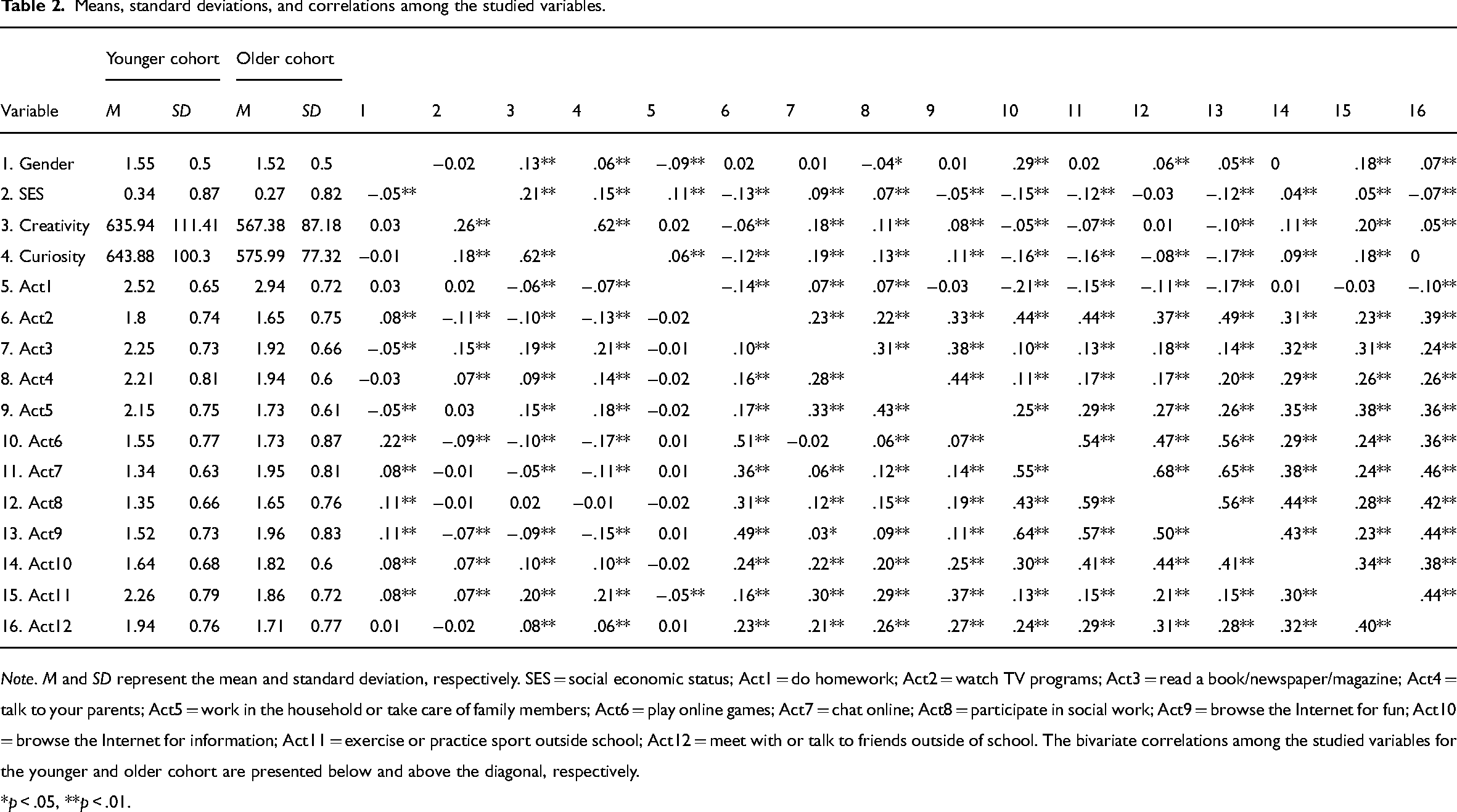
Note. M and SD represent the mean and standard deviation, respectively. SES = social economic status; Act1 = do homework; Act2 = watch TV programs; Act3 = read a book/newspaper/magazine; Act4 = talk to your parents; Act5 = work in the household or take care of family members; Act6 = play online games; Act7 = chat online; Act8 = participate in social work; Act9 = browse the Internet for fun; Act10 = browse the Internet for information; Act11 = exercise or practice sport outside school; Act12 = meet with or talk to friends outside of school. The bivariate correlations among the studied variables for the younger and older cohort are presented below and above the diagonal, respectively.
*p < .05, **p < .01.
Coding the 12 daily activities into three categories—indoor, outdoor, and online—produced similar results: Students’ creativity and curiosity were positively related to both indoor and outdoor daily activities but negatively related to online daily activities. Taken together, analysis confirmed that student participation in out-of-school activities is important in predicting the development of creativity and curiosity.
Regression analyses
Table 3 presents the results of the multiple linear regression analysis for creativity and curiosity in the younger and older cohorts. Regarding creativity, 11% (adjusted R2) of the variances could be explained by three kinds of daily out-of-school activities after controlling for students’ gender and SES. Results indicate that outdoor daily activities were the most significant predictor of creativity (younger cohort: β = .20, p < .001, 95% CI [0.16, 0.24]; older cohort: β = .19, p < .001, 95% CI [0.15, 0.24]), followed by indoor daily activities (younger cohort: β = .05, p < .001, 95% CI [0.02, 0.09]; older cohort: β = .09, p < .001, 95% CI [0.06, 0.13]). Interestingly, online daily activities strongly and negatively predicted creativity (younger cohort: β = −.17, p < .001, 95% CI [−0.21, −0.13]; older cohort: β = −.19, p < .001, 95% CI [−0.23, −0.15]). For curiosity, daily out-of-school activities explained 10% (adjusted R2) of the variances, with significant predictors being daily outdoor (younger cohort: β = .21, p < .001, 95% CI [0.17, 0.25]; older cohort: β = .18, p < .001, 95% CI [0.14, 0.23]), indoor (younger cohort: β = .10, p < .001, 95% CI [0.06, 0.13]; older cohort: β = .16, p < .001, 95% CI [0.12, 0.19]), and online activities (younger cohort: β = −.25, p < .001, 95% CI [−0.29, −0.22]; older cohort: β = −.29, p < .001, 95% CI [−0.33, −0.24]).
Regression analysis using the two open-mindedness indicators as the criterion for younger and older cohorts.
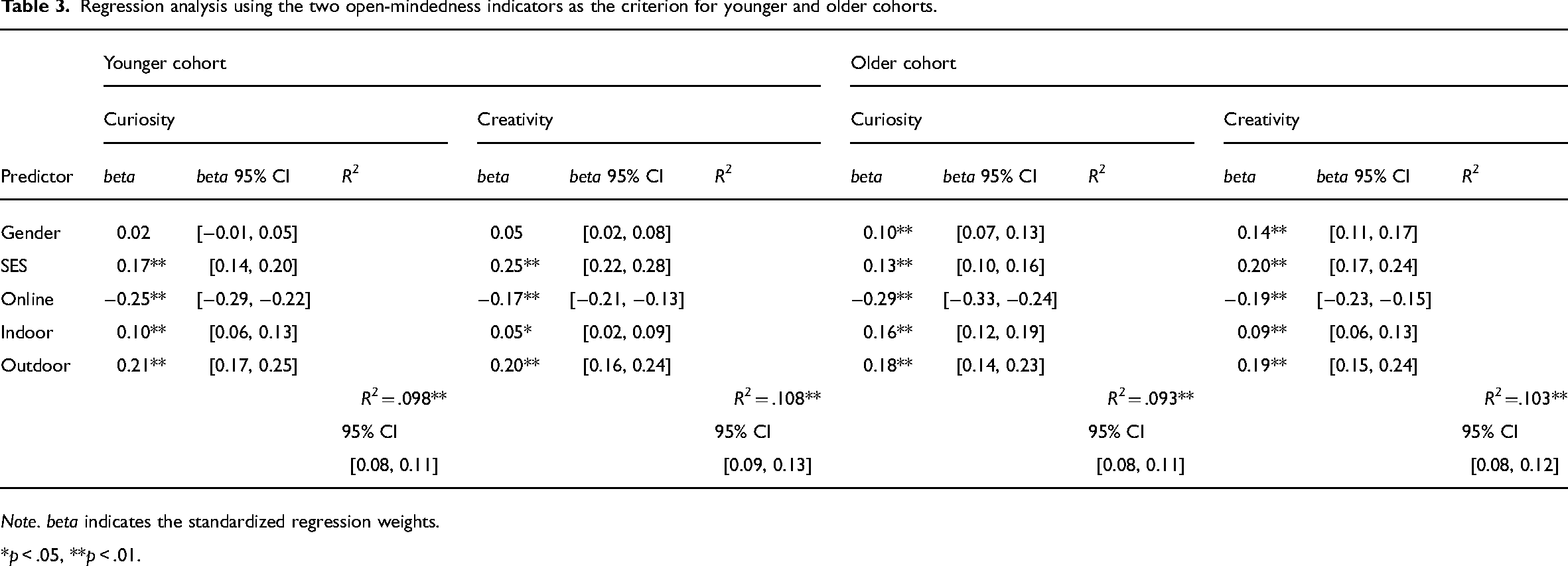
Note. beta indicates the standardized regression weights.
*p < .05, **p < .01.
Discussion
Creativity promotes the development of social, physical, psychological, and intellectual skills (Durlak et al., 2010; Simonton, 2012). Given its role in academic performance and future success, cultivating student creativity is increasingly viewed as an educational imperative. Many educators and scholars have attempted to explore the factors that influence students’ creative development. Participation in out-of-school activities has become a prevailing developmental context among Chinese adolescents and is associated with beneficial outcomes (Fredricks & Eccles, 2006; Lam & McHale, 2015).
This study examined whether adolescents’ engagement in out-of-school activities influences their creativity and curiosity, focusing on variations across younger and older cohorts. Results indicated that, compared to older cohort students, younger cohort students participated in more arts and environmental protection activities. With respect to daily out-of-school activities, younger and older Chinese adolescents spent a similar amount of time (approximately 1–60 min) reading a book/newspaper/magazine, working in the household or taking care of family, playing online games, and exercising or practicing sport outside school. Compared to their older peers, those in the younger cohort barely spent time chatting online, participating in social networks, browsing the Internet for fun, or browsing the Internet for information. Rather, they spent 1–60 min per day watching TV programs. This is consistent with previous findings that Chinese students are more likely to participate in personal nonacademic activities, such as watching TV (Delany & Cheung, 2019).
Analysis also revealed that most younger and older Chinese adolescents spend 1–4 h or more a day doing homework. These findings are consistent with those of previous studies, suggesting that parents in Eastern cultural contexts tend to encourage their children's participation in academic activities (e.g., doing homework) rather than those that cultivate social competencies and interpersonal skills (Chao, 1996; Delany & Cheung, 2019; Parmar et al., 2004). In recent decades, the family size in major Chinese cities has shrunk dramatically and most households have just one or two children (Hesketh et al., 2015; Zhang, 2017). Consequently, Chinese adolescents tend to watch and play online games alone (Cameron et al., 2013). Given the possible undesirable outcomes of Internet addiction (e.g., Yen et al., 2007), mobile phones are forbidden in Chinese schools. Internet-based activities like playing video games and chatting online are also not valued in Chinese households, particularly with respect to older adolescents. Similarly, the amount of time spent watching TV programs is usually limited and sometimes considered a reward for when children do something well. This cultural context elucidates the low engagement of Chinese adolescents in such activities.
The levels of creativity and curiosity were significantly lower among older cohort students than younger cohort students, suggesting a decline in creativity and curiosity as children entered adolescence. This finding is aligned with those of previous studies demonstrating that the development of students’ creativity and curiosity declines with age, which may be attributable to academic pressure and the overemphasis on test-taking skills required for examinations and higher grades in the Chinese educational system (Niu, 2007; Wang, 2013). Additionally, students who rated themselves as highly creative tended to describe themselves as curious about and eager to learn new things (i.e., curious) because of their moderate associations (Schutte & Malouff, 2020a, 2020b).
Significantly, this study explored the degree to which adolescents participated in out-of-school activities is related to their curiosity and creativity. In doing so, this study sought to answer the question of whether different out-of-school activities function differently in this relationship. Results indicated that both younger and older cohort students who reported participating in arts and sports activities consistently rated their creativity higher than students who did not. This finding aligns with previous research conducted in the United States, which found that creative self-efficacy was significantly higher among middle and high school students who participated in arts and sports activities outside of school (Beghetto, 2006). This may be because the arts, as a creative medium, stimulate cognitive development, encourage innovative thinking and creativity, engender an understanding of the importance of cultural diversity, and reinforce the behavioral patterns underlying social tolerance (Meleisea, 2005). Art promotes openness toward different ideas and cultures and helps children thrive in a diverse and culturally rich world. Similarly, sports, particularly team sports, provide opportunities for students to absorb and process substantial amounts of information in a short time. To succeed, they must pay attention to new and often unexpected sensory impressions, evaluate their environment, make decisions, and seek original solutions. Furthermore, research suggests that participating in a number of different sports and games is an ideal medium for the creative development of players (Memmert, 2006). Young athletes seem to benefit from the different tactical situations encountered during the sports games they played in their childhood.
According to findings from both the younger and older cohorts, students who reported engaging in community service and social activities consistently rated themselves higher in terms of curiosity and creativity than those who did not engage in such activities. These results are consistent with those of the qualitative study conducted by Jones and Abes (2004), who found that service learning promotes students’ openness to new people, experiences, and ideas. According to Vygotsky's (1978) social constructivism, community engagement and active participation in social interactions are crucial for cognitive development, particularly for fostering creativity. Creativity can be viewed as a collaborative process in which community members collectively generate innovative and valuable outcomes—such as ideas, understanding, or solutions—for the betterment of the group or wider community (Hämäläinen & Vähäsantanen, 2011). When participating in community service and social activities, students are confronted with societal challenges requiring innovative solutions. In addition to contributing to community advancement, involvement in such activities prompts students to explore interdisciplinary work and cultivate adaptability in their creative pursuits, thereby enhancing their creative potential (Pereira & Costa, 2019). Engaging in community and social activities also exposes students to novel circumstances and societal environments, which can spark their curiosity toward diverse perspectives, values, and behaviors (Van Goethem et al., 2014).
Regression analysis further demonstrated that, even after controlling for the effects of SES and gender, students’ daily participation in different out-of-school activities was related to their creativity and curiosity. In this respect, different relationship patterns emerged. Students’ participation in outdoor socially-oriented activities (e.g., participating in social networks, meeting with or talking to friends outside school) was positively associated with their creativity and curiosity. This predictive nature may be due to the social nature of these activities, which allow adolescents to be more confident in expressing and exploring new ideas, especially in a peer group setting. Similarly, adolescent engagement in indoor activities was predictive of creativity and curiosity. However, this study did not differentiate between the types of indoor activities, which may obscure the possible effects of certain types of indoor activities. For example, it is conceivable that adolescents’ engagement in indoor socially-oriented activities (e.g., talking to parents, working in the household or taking care of family members) may have different influences on their creativity and curiosity than their engagement in other indoor academic (e.g., doing homework or reading a book) or nonacademic activities (e.g., passively watching TV).
In contrast, adolescents’ participation in Internet-based activities negatively predicted their creativity and curiosity. The Internet is an important means by which to search for and obtain various types of information and exposes users to the ideas of others. Finding and retrieving relevant information provide the stimulus required to generate ideas, which is critical for stimulating thinking and enhancing creativity. However, these benefits are premised on the assumption that students are capable of distinguishing between relevant and irrelevant information, using keywords to retrieve information on the creativity topics to facilitate “thinking outside the box.” Therefore, students may be overly reliant on Internet-based information, limiting opportunities for imagination and creativity, which may be detrimental to the development of creativity and curiosity.
Overall, this study found evidence of the relationship between adolescents’ engagement in out-of-school activities and their creativity and curiosity. Adolescents participate in indoor and outdoor social activities, which provide a rich and diverse environment, stimulate curiosity, and encourage creative thinking (Feraco et al., 2022; Nagy et al., 2022). In line with ecological systems and input–output theories, adolescents were not only simply shaped by their involvement in academic pursuits but by the time allocated to out-of-school activities.
Limitations and future directions
This study has several limitations, which need to be kept in mind when interpreting the findings. First, in the SSES, “creativity” was evaluated using a measure of students’ perception of their imagination, while “curiosity” was primarily measured based on students’ self-reports on their love and interest in learning new things. Although both measures relate to the broader concept of creativity, they do not directly assess creative achievement or potential. Therefore, future research adopting distinct divergent thinking tasks (e.g., Alternative Uses Test [Guilford, 1967]) or the Inventory of Creative Activities and Achievements (Diedrich et al., 2018) is needed to directly assess adolescents’ creative potential and achievement in specific domains.
Second, the sample of adolescents in Suzhou may not be representative of the general Chinese population. For instance, the sample had a higher proportion of students of a lower SES than most of the surveyed Chinese schools. Moreover, SES influences the degree of participation in out-of-school activities (Fredricks & Eccles, 2008), which contributes to the development of curiosity and creativity. In addition, diverse family structures in China may play a role in adolescents’ engagement in out-of-school activities. Future research should consider whether differences in the number of siblings influence the relationship between participation in out-of-school activities and adolescent creativity and curiosity.
Third, the current SSES investigation was cross-sectional. Research indicates that as children progress through adolescence, their engagement in out-of-school activities can contribute to gains in curiosity and creativity. Given such theoretical perspectives (e.g., Cheung, 2016; Simonton, 2012), creative inclinations may lead adolescents to become more open-minded and seek new experiences, prompting them to engage in more social academic activities. In this regard, it is reasonable to assume that participation in out-of-school activities and creativity contribute to each other. Therefore, a longitudinal study may be beneficial for exploring the bidirectional relationship between out-of-school activities, creativity, and curiosity.
Fourth, this study focused on the potential contribution of Chinese adolescents’ out-of-school activities to the development of their curiosity and creativity. However, there may be additional personal-, family-, and school-level factors—such as personality traits, parents’ attitudes, teachers’ teaching styles, and school resources (Barbot et al., 2016; Cheung, 2016; Kemple & Nissenberg, 2000; Lee & Kemple, 2014)—that affect adolescents’ participation in out-of-school activities and the development of their curiosity and creativity. Future research should consider these factors as potential moderators to understand the interplay between adolescents’ participation in activities during their free time and the development of their creativity and curiosity.
Conclusion
In summary, this study found that levels of creativity and curiosity were significantly lower among older cohort students than among younger cohort students, suggesting a decline in creativity and curiosity as children enter adolescence. More importantly, this study demonstrated that students’ participation in out-of-school activities can be beneficial or detrimental to the development of their curiosity and creativity, depending on the type of activity. More specifically, indoor and outdoor academic and socially-oriented out-of-school activities facilitate adolescents’ curiosity and help develop their creativity. In contrast, participation in online academic and socially-oriented out-of-school activities has a detrimental impact on students’ curiosity and creativity. Therefore, to foster curiosity and creativity, teachers and educators should focus on developing programs to increase adolescents’ engagement in out-of-school activities.
Footnotes
Acknowledgments
We would like to thank the school principals, teachers, and students whose support made this study possible.
Contributorship
Jing Zhang conceived of the study, performed the statistical analysis, drafted the manuscript, and responded to the reviewers’ comments; Shuming Fan participated in searching for the literature on the relevant theories and empirical research and summarized the main ideas. Zhongjing Huang participated in the interpretation of the data and provided suggestions to refine the manuscript. All authors read and approved the final manuscript.
Declaration of conflicting interests
The authors declared no potential conflicts of interest with respect to the research, authorship, and/or publication of this article.
Ethical statement
The database used in the present study is a part of an international survey by OECD, which has already undergone ethical review and is publicly available. According to OECD, all participants included in this database provided informed consent. The researchers have no access to any information that could identify individual participants during or after data collection.
Funding
The authors disclosed receipt of the following financial support for the research, authorship, and/or publication of this article: This work was sponsored by the National Social Science Fund of China (Grant Number CEA210260).
