




Abstract
Purpose
Research of mindfulness-based programming/interventions (MBP) for youth has proliferated in recent years; however, heterogeneity of MBP for youth impede determination of optimal programmatic structure across developmental periods.
Design/Approach/Methods
Expert MBP scientists and instructors were iteratively surveyed using the Delphi method to assess optimal MBP session structure across developmental periods.
Findings
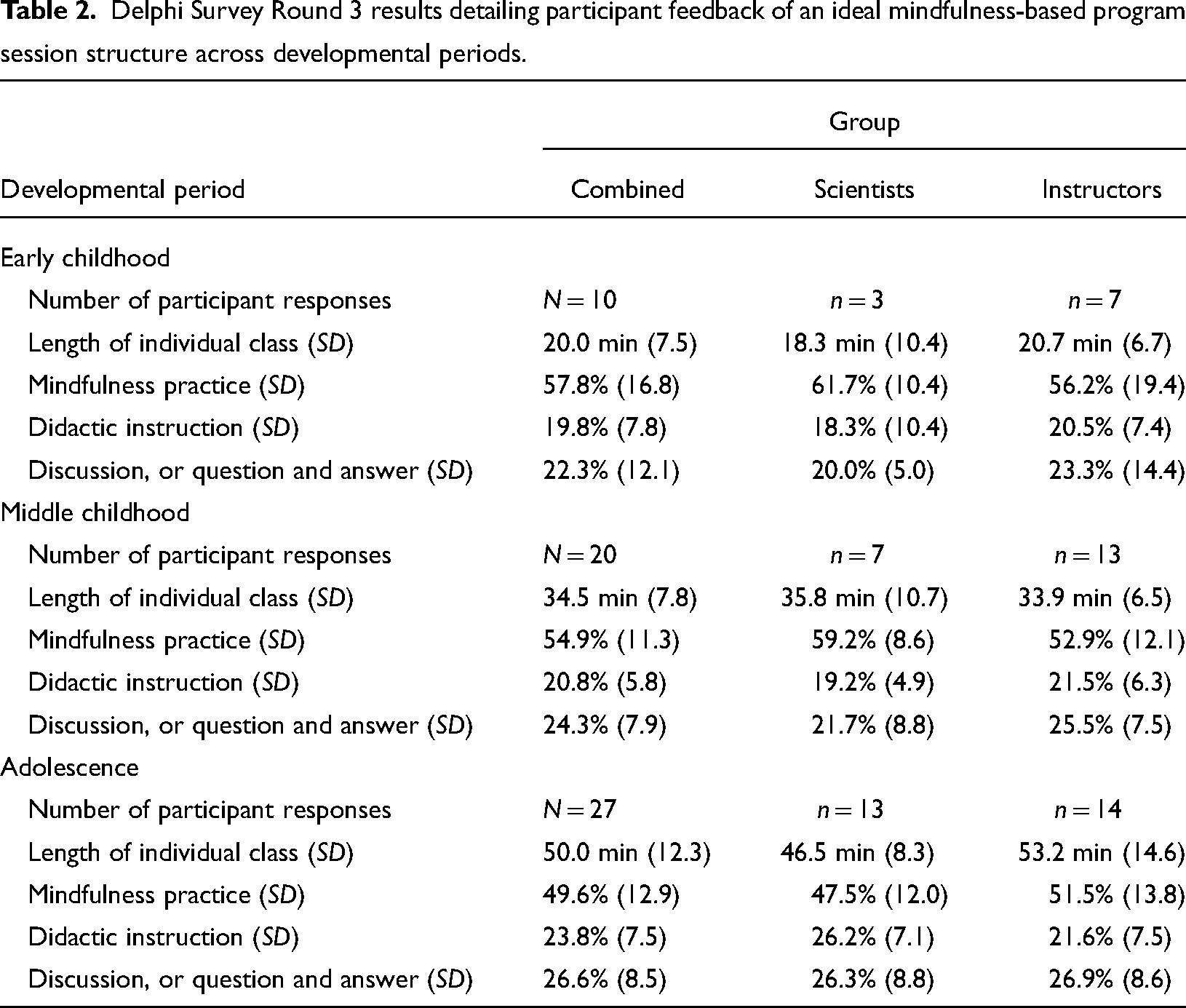
Survey Round 1 defined the participants’ perspective of ideal structure across early childhood, middle childhood, and adolescence. In Survey Rounds 2 and 3, participants considered the preceding Round's results (means and SDs) and indicated what they believed was the ideal structure of a single MBP class. Final results following the Round 3 survey indicated that MBP session period should be progressively longer relative to the developmental time period (early childhood mean = 20.0 min; middle childhood mean = 34.5 min; adolescence mean = 50.0 min); that roughly half of a youth MBP session should be dedicated to mindfulness practice; and that progressively more time should be allocated to didactic instruction and discussion, relative to mindfulness practice, as youth become older.
Originality/Value
These findings are the first to report expert feedback on the ideal structure of a youth MBP session, and results have significant implications for future youth MBP evaluation, implementation, and curriculum development.
Western scientific interest in mindfulness has increased during the past 30 years (Baminiwatta & Solangaarachchi, 2021; Zhang et al., 2021). This interest is spurred largely by intervention outcomes following programming designed to enhance dispositional mindfulness and mindfulness-based skills (e.g., mindful breathing, yoga practices, compassion) for various adult populations, broadly termed mindfulness-based programming/interventions (MBP). In more recent years the study and application of MBP for youth has gained increased interest (Schutt & Felver, 2020). Reviews of youth MBP publications conclude that although feasible and conceptually promising, enthusiasm for MBP should be tempered by significant methodological limitations, including highly variable and poorly defined interventions and little consideration of developmental implications (Baelen et al., 2023; Burke, 2010; Felver et al., 2016; Greenberg & Harris, 2012; Roeser et al., 2022).
With the accrual of MBP research generally, multiple research teams have conducted systematic reviews and meta-analyses of the extant literature focused on MBP for youth specifically (see Dunning et al., 2019; Schutt & Felver, 2020 for reviews). Most existing reviews conclude that MBP for youth appear to be effective for various clinical outcomes (e.g., ADHD symptoms; Chimiklis et al., 2018), and that the scientific rigor of this emerging field has improved in recent years (e.g., increasing use of RCT study designs). However promising, meta-analyses also consistently indicate that the heterogeneity amongst youth MBP curricula (i.e., limited similarity between interventions that are all categorically labeled MBP) continues to be a major limitation in the field that hinders the ability to draw meaningful conclusions about the effectiveness of MBP for youth (Baelen et al., 2023; Dunning et al., 2019; Felver et al., 2016; Gould et al., 2016; Kallapiran et al., 2015; Zoogman et al., 2015). The heterogeneity among MBP for youth calls into question the external validity of the research syntheses to date, as the actual programming categorically labeled as MBP may include very different programmatic elements across developmental time periods, which in turn affects the ability to compare programs that may not be comparable due to significant programmatic differences.
One notable area of heterogeneity in MBP for youth concerns the amount of MBP that is delivered, also known as dosage (Baelen et al., 2023; Durlak & Dupre, 2008). Dosage can be further subdivided into the number of sessions offered, the intensity of sessions, and the length of time of each individual session. The earliest review to characterize the dosage heterogeneity in MBP for youth examined the extant K-12 school-based mindfulness intervention literature before 2015 (Felver et al., 2016). This systematic review found significant dosage heterogeneity in the literature, with the total amount of MBP dosage ranging from 75 to 2,160 min of programming (mean = 396.7, SD = 412.5), and the average length of a single MBP session ranging from 5 to 120 min (mean = 36.8, SD = 26.9). Unfortunately, the variability of MBP dosage in the published literature has continued to exist since the Felver et al. (2016) review. A more recent review of youth MBP literature (Roeser et al., 2022) noted significant variability in the MBP dosage, with approximately 25% of MBPs providing less than 6 hr, 50% offering 6–15 hr, and 25% delivering more than 15 hr of programming. Of note, none of this prior research investigated variability across different development time periods. This heterogeneity in youth MBP dosage contributes to the challenge of understanding and comparing MBP, as well as providing concrete recommendations for dosage for those interested in developing novel MBP programming at different developmental time periods, underscoring the need for more careful examination of dosage as a quantifiable attribute.
Another area of significant heterogeneity concerns the essential aspects of MBP, or the core program components, that includes the practices, processes, pedagogical methods, and principles that are hypothesized to be causally linked to outcomes (Baelen et al., 2023; Domitrovich et al., 2008). This variability may be reflective of different theoretical underpinnings, intervention objectives, or needs of the target population (Felver et al., 2023). On examination of MBP curricular materials, independent of the specific topical content (e.g., instructing and practicing mindful breathing exercises), there is also variability in the general session structure of MBP for youth. Session structure can be decomposed into mindfulness practice (e.g., facilitator leading youth through a focused attention exercise), didactic instruction (e.g., facilitator presenting information about the relation between stress and health), and discussion and questions and answer segments (e.g., facilitator leads discussion concerning mindfulness practice without any specific agenda or topical focus). Although recent research has endeavored to articulate the core program components of MBP for youth (Felver et al., 2023), there is still lack of clarity for how this more general MBP session structure should be optimally designed to balance across practice, instruction, and discussion.
In addition to optimal dosage and session structure hampering the investigation and application of MBP for youth, to date there has also been limited consideration of child and adolescent developmental periods related to the study of MBP for youth. Although a broader investigation of how human development should be considered across the field of contemplative science is beyond the scope of this research (see Roeser et al., 2023), it is worth noting that there are currently no empirically based recommendations for how MBP should be differently implemented during unique developmental time periods. Understanding MBP dosage and session structure during developmental time periods would be useful for future MBP program development and scientific inquiry as there are significant differences in how mindfulness practices are learned and applied (Montero-Marin et al., 2022); unfortunately, there are no current empirically based recommendations available.
The Western scientific study of MBP has been hampered by the heterogeneity of MBP. This challenge is well-known and current, articulated in the following quote: “We still know relatively little about which kinds of programs and practices, for which kinds of outcomes, for which students, at which ages, work best” (Roeser et al., 2022, p. 13). Without a clear understanding of the optimal amount and delivery format of MBP across different developmental periods, the field will continue to struggle with developing high-quality programming that is developmentally appropriate and in line with empirical evidence, thus impeding future research and implementation efforts. One approach to determining an optimal dosage and delivery format is to elicit and aggregate perspectives of individuals with content expertise in the study and delivery of MBP for youth using an established research methodology called the Delphi approach (Hasson et al., 2000). The aim of the current research is to support the reduction of this heterogeneity by facilitating a consensus building process among experts in the field to identify an optimal dosage and session structure of MBP for youth across different developmental periods. The specific a priori research questions were to quantify the optimal recommended dosage and session structure of MBP for youth across three developmental time periods (i.e., early childhood, middle childhood, and adolescence). This work intended to establish areas of consensus and specificity in order to facilitate future research and application of MBP with youth.
Methods
Participants
Purposive and snowball sampling was used to recruit expert scientists and instructors as participants in a Delphi approach study (Hasson et al., 2000) involving three iterative “Survey Rounds” of questionnaires. Survey Round 1 was administered to expert scientists with expertise in conducting clinical trials of MBP for youth. The decision to only survey scientists for Survey Round 1 was made because more objective criteria (e.g., scholarly impact metrics) could be applied to support identification of participants. Survey Rounds 2 and 3 included scientists as well as expert youth MBP instructors to gather an MBP implementation perspective.
To identify initial expert scientist participants for Survey Round 1, we created and reviewed a list of potential scholars that included objective measures of their scholarship. First a literature review was conducted to determine leading scholarly contributors in the field of MBP for youth. In March 2020, the first author conducted a search of the PsycINFO and PubMed databases using the keywords of “mindfulness,” “contemplative,” “compassion,” “yoga,” and “meditation.” PsycINFO returned 16,444 results, which were subsequently restricted to journal articles and the youth age range yielding 1,033 articles for review. PubMed returned 43,224 results, which were subsequently restricted to clinical trials and the youth age range yielding 718 articles for review. The abstracts and full-texts of the 1,751 articles were reviewed to determine if: (1) the clinical trial utilized a mindfulness or contemplative (e.g., yoga, compassion, or ACT) intervention, (2) the target of the programming was youth aged 18 years or younger, (3) it was not a duplicate clinical trial, (4) it was not a pre-registration for a forthcoming clinical trial. This process reduced the potential articles down to 432 publications of clinical trials of MBP for youth, which were subsequently coded for authorship. A list of all contributing authors of the 432 publications was created that included their total number of publications (regardless of authorship), their publications as first author, their publications as senior (last) author, and a commonly used metric of scholarly productivity and impact (i.e., h-index; see Measures).
This list of contributing authors and their scholarship metrics were disseminated to this study's advisory panel (Drs. Laura F. Gould, Mark T. Greenberg, and Robert W. Roeser) who, in addition to the first author (Dr. Joshua C. Felver), independently nominated scholars for recruitment into the study in a first wave of purposive recruitment. Scientist participants who consented to the study from this first wave of recruitment were also able to nominate peer scientists for inclusion in the study, which after review by the advisory panel, yielded a second wave of snowball recruitment. The target number for initial recruitment was determined based on an a priori recruitment aim of approximately 35 participants typically included in Delphi studies (Whitehead et al., 2016).
There is no objective measurement to constitute an expert youth MBP instructor. We therefore elected to identify instructors by asking the recruited scientist participants (all of whom had significant experience conducting clinical trials of MBP for youth and were thus acquainted with MBP instructors) to nominate “instructional experts in the delivery of mindfulness-based programming (MBP) in youth” for study recruitment. Thus, to identify expert instructor participants for Survey Rounds 2 and 3, in a first wave of purposive sampling, scientist participants were asked to identify expert youth MBP instructors during Survey Round 1. In a second wave of snowball recruitment, expert instructors who consented to the study were then asked to nominate peer instructors. The target recruitment for expert instructors was also approximately 35 participants based on conventions of Delphi research (Whitehead et al., 2016).
Identified scientists (n = 36) were sent recruitment emails and Survey Round 1 in May and June of 2020. A total of 19 scientists consented to the study and completed Survey Round 1. Scientist participants identified 41 expert youth MBP instructors who nominated 22 additional instructors for recruitment. A total of 63 identified instructors were sent recruitment emails and Survey Round 2 in January and February 2021. Of those recruited, 21 expert instructors consented to the study and completed Survey Round 2. Survey Round 3 was disseminated in June 2021, and was completed by 16 scientist participants (84.2% retention) and 17 instructor participants (81.0% retention). Participants were not financially compensated for their time. Demographic characteristics of the participants at each survey round are detailed in Table 1, and recruitment and participant flow is depicted in Figure 1.
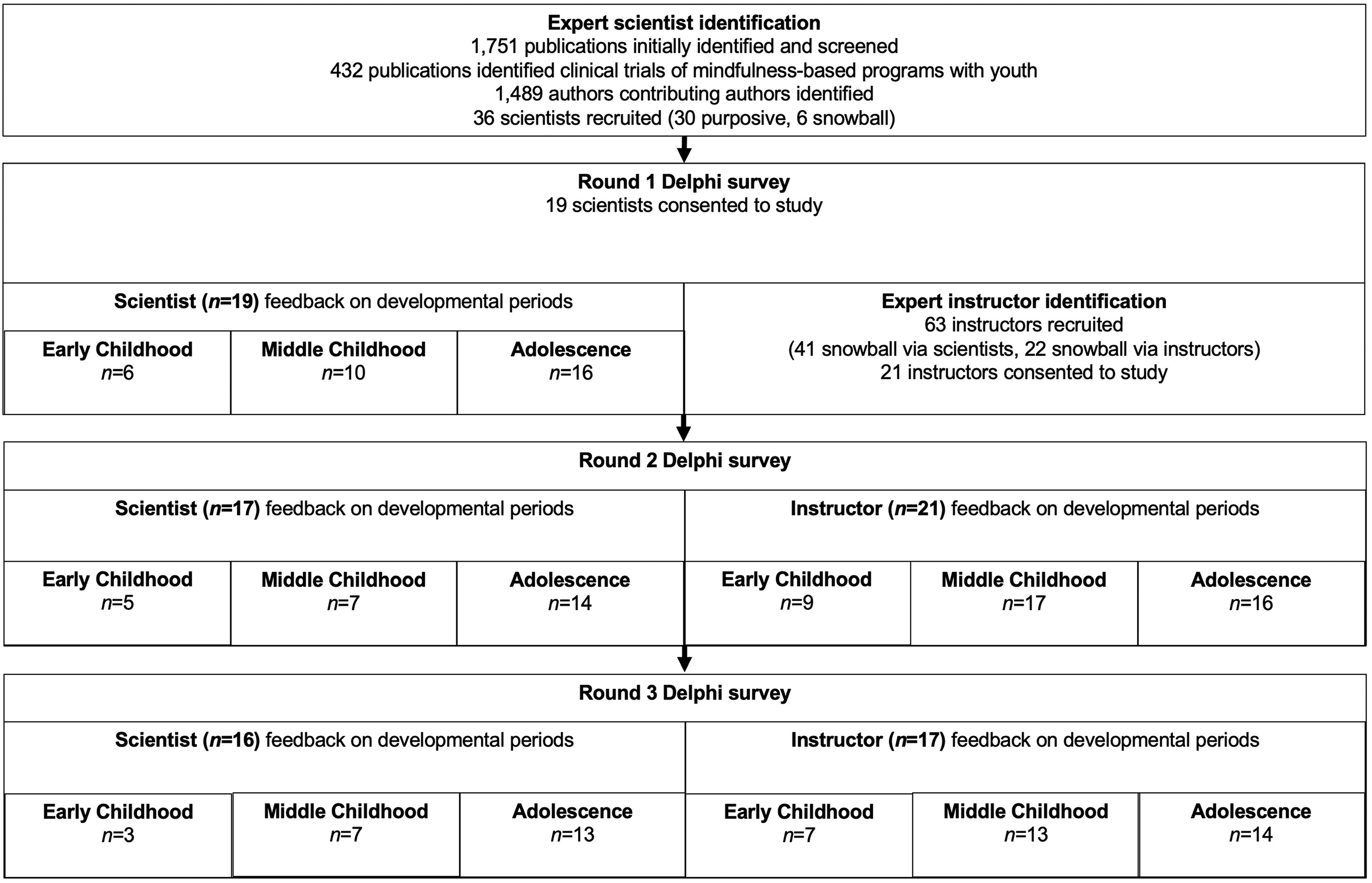
Participant flow diagram of specifying youth mindfulness-based program session structure across developmental periods.
Demographic characteristics of participants across each Delphi Survey Round.
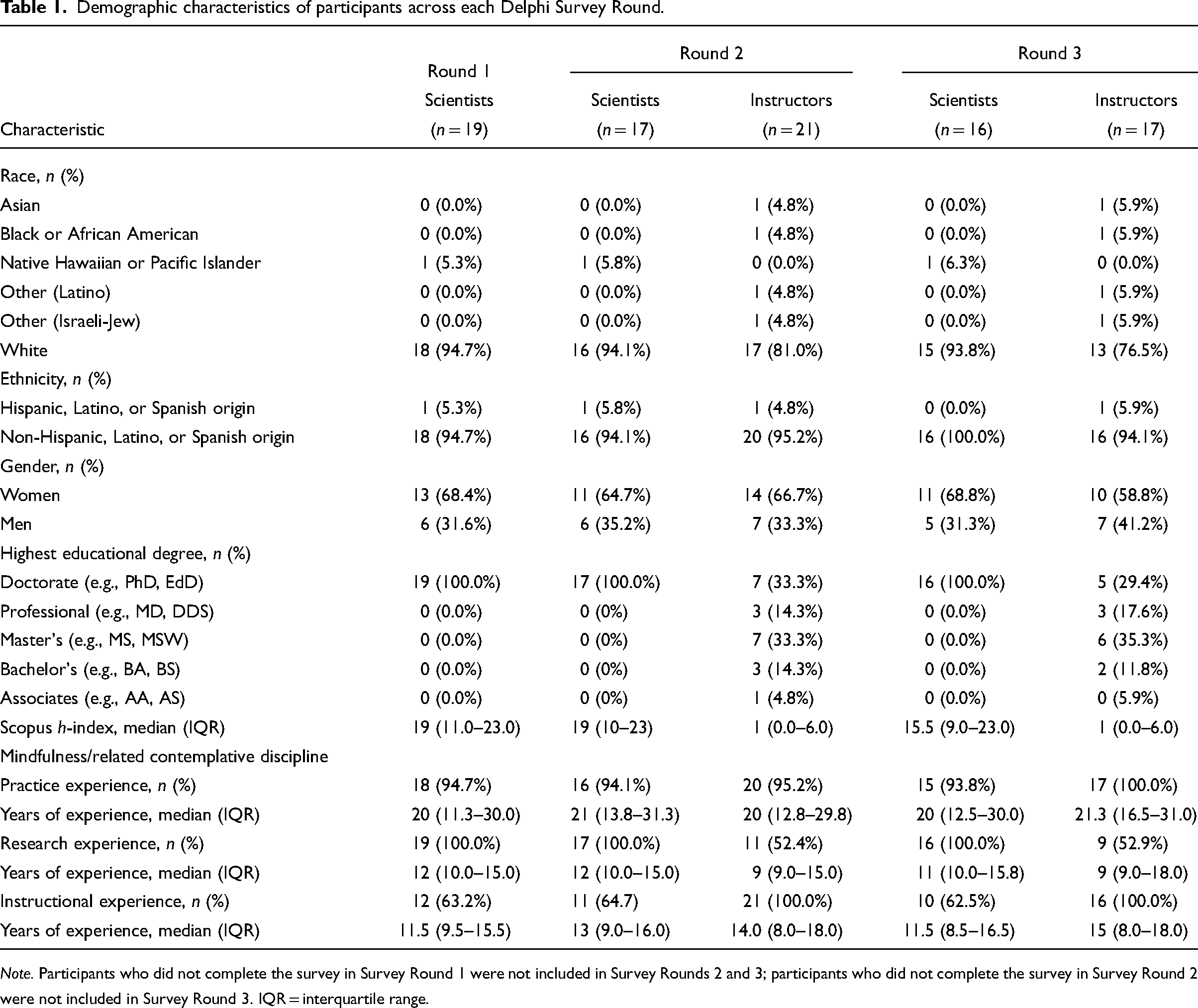
Note. Participants who did not complete the survey in Survey Round 1 were not included in Survey Rounds 2 and 3; participants who did not complete the survey in Survey Round 2 were not included in Survey Round 3. IQR = interquartile range.
Procedure
A multistage modified Delphi approach (Hasson et al., 2000; Whitehead et al., 2016) was used to identify the recommended dosage and session structure, across developmental periods, of MBP for youth (see Figure 1 for graphical depiction). The Delphi approach is an established methodology widely used across disciplines to gather and consolidate expert consensus opinion on a given topic. A critical feature of a multistage Delphi approach is that it employs an iterative series of questionnaire “Rounds” whereby participants are allowed to adjust their responses during each round based on consolidated group results of the previous round.
The Delphi approach includes anonymity between participants to reduce influence based on personal characteristics (e.g., perceived reputation in the field) and to facilitate free expression of ideas. Responses are collected asynchronously and individually so that any one participant may not dominate or influence the consensus building process. The a priori decision was made to use three rounds of surveys as this is the common number of rounds utilized in Delphi methodology when consensus is reached across participants (Whitehead et al., 2016).
Sampling procedure
Data were collected via online surveys administered to study participants. Participants were given one month to complete each of the three survey rounds; however, extensions were granted to participants on request. In the event that a participant did not complete a given survey round, they were not administered the subsequent survey and were considered removed from the study and counted toward attrition figures.
During each survey round, participants were asked if they had experience with youth across three developmental periods: early childhood (i.e., 3–5 years of age, pre-school or pre-Kindergarten); middle childhood (i.e., 6–11 years of age, elementary school, Kindergarten through 5th grade); and adolescence (i.e., ages 12–18, middle and high school, 6th through 12th grade). If a participant identified that they had experience in any of these developmental periods, they were then asked a series of questions specifically about the target developmental period. For each development period, if a participant reported that they did not have “substantive experience with MBP during (developmental period) to inform any recommendations,” then they were not asked any further questions for that specific developmental period. The number of participants at each round who answered survey questions is presented in Figure 1.
Survey Round 1
In line with Delphi approach methodology, Survey Round 1 included an online questionnaire containing demographic questions, and open-ended questions concerning their perspectives on the ideal dosage and sessions structure for youth MBP at each specific developmental period to gather data necessary to formulate subsequent focused questions (Whitehead et al., 2016).
Survey Round 2
In Survey Round 2, all participants were sent an email that contained the summary demographic details about peer participants who completed Survey Round 1 (i.e., expert scientists only) and this group's aggregate responses to Survey Round 1. In this email, each expert scientist participant was also provided with their unique individual responses to Survey Round 1. Expert instructor participants were asked personal demographic questions at this time. Expert scientists were instructed to consider both their previous responses and the collective group's responses to Survey Round 1 as they formulated their new responses to Survey Round 2; expert instructors were only asked to consider the collective group's responses to Survey Round 1 as they were not included in Survey 1 and thus had no previous responses to reference at this time.
Survey Round 3
In Survey Round 3, all participants were sent an individually tailored email that contained the summary demographic details about their peer participants who completed Survey Round 2 (i.e., expert scientists and instructors), their unique individual personal responses to Survey Round 2, and the collective participant group's aggregate responses to Survey Round 2. Participants were instructed to consider both their previous responses and the collective group's responses to Survey Round 2 as they formulated their new responses to Survey Round 3.
Measures
Demographics
In addition to basic demographic information (e.g., race, gender), participants were asked targeted questions about their past experience with mindfulness or related contemplative disciplines, including their years of experience with personal practice, research, and instructional delivery. Participant's h-index (Hirsch, 2005) was also collected from the Scopus database (Elsevier, n.d.). The h-index (Hirsch, 2005) is the most utilized indicator of research productivity and citation impact for higher education faculty. The h-index is a scalar index that is defined as the number of papers with citation numbers equal to or greater than h.
Survey Round 1
Scientist participants were asked to report three aspects of what they believe an ideal dosage of an MBP curriculum is at each specific developmental period.
Curriculum duration
This was operationally defined as the length of time between when a formal MBP begins and ends, that is from the start of the delineated MBP curriculum implementation to when a youth completes the curriculum. Participants were asked to identify the ideal duration in weeks.
Session frequency
A session was operationally defined as a structured time during which prescribed MBP curricular content is delivered. Participants were asked to identify the ideal number of sessions across the course of an MBP curriculum.
Session duration
This was operationally defined as the length of a single MBP session. Participants were asked to identify the ideal duration in minutes.
Scientist participants were also asked to report their perspective of an ideal session structure of an MBP for youth at the specific developmental period in question. Participants were specifically asked to identify what they felt should be the ideal balance in a session between three different facets of an MBP session by reporting the relative allocation percentage within a single session (with the total equaling 100%).
Mindfulness practice
This facet refers to engaging with distinct mindfulness or contemplative activities (e.g., focused attention on the somatic sensations of breathing).
Didactic instruction
This facet refers to prescribed delivery of curricular content via direct teaching (e.g., defining the term “acceptance” and providing examples; providing explicit instructions for how to practice mindful breathing).
Discussion/question and answers
This facet refers to a semi-structured or unstructured conversation related to curricular content or the direct experience of mindfulness (e.g., discussion of how last week's home practice went; discussion of experiences that occurred during a concluded mindfulness practice).
Surveys Rounds 2 and 3
Participants (scientists and instructors) completed a questionnaire that contained most of the questions from Survey Round 1. Interim analysis of Survey Round 1 data (including open-ended question about their experience as a research participant) found that many participants reported that youth MBP should not be limited in terms of curriculum duration and sessions frequency (e.g., MBP should be embedded within and across all school-based programming), and as such these questions were not asked in subsequent rounds due to these differences of opinion and lack of usable data. In addition to repeating the same questions regarding participants’ perspectives of an ideal session duration and session structure allocation across the aforementioned facets, participants were instructed to specifically consider the structure of a single stand-alone MBP class that is part of a larger MBP curricular sequence during the developmental period in question. Participants were provided the prior Survey Round's summary data (means and standard deviations) for each of the questions in the prior round, as well as their own personal responses. Participants were asked to consider both the average opinion of their peer participants and (when applicable) their responses to the prior Survey before answering questions.
Data analyses
After each round and for each developmental period, participants’ (scientists and instructors) responses were summarized by calculating means and standard deviations for a single MBP session's duration in minutes, and the mean percentage for each structural facet that should be allocated within an MBP session.
Results
Table 2 details the final results following Survey Round 3. Retention was over 80% in both the scientist and instructor groups. Fewer participants provided feedback recommendations for early childhood (n = 10) relative to middle childhood (n = 20) and adolescence (n = 27) time periods. Scientists’ and instructors’ responses were similar (see Table 2); parametric (t-tests) and non-parametric (Mann–Whitney U tests) analyses indicated no statistically significant differences between these two groups across all reported outcomes (ps > 0.05). Expert participants reported that the length of time for an individual MBP class should become progressively longer across developmental time periods, with the average session duration being 20.0 min during early childhood, 34.5 min during middle childhood, and 50.0 min during adolescence. Regarding individual session MBP structure, expert participants reported that across all developmental time periods, roughly half of the session should be allocated to mindfulness practice relative to didactic instruction or discussion. This identified ideal session time allocation also followed a general developmental trend of slightly less time being allocated to mindfulness practice (relative to didactic instruction and discussion) as youth become older. For example, participants reported that an ideal MBP session should allocate 57.8% of time to mindfulness practice in early childhood, but only 49.6% of time to mindfulness practice during adolescence. Participants also reported that slightly more time should be spent in discussion (range 22.3% to 26.6% across developmental periods) relative to didactic instruction (range 19.8% to 23.8% across developmental periods).
Delphi Survey Round 3 results detailing participant feedback of an ideal mindfulness-based program session structure across developmental periods.
Discussion
This research represents the first attempt to systematically identify the optimal MBP session structure, across developmental periods, for youth. The Delphi approach facilitated this identification process among an expert sample of scientists and instructors. Given the extant heterogeneity in the field of mindfulness and contemplative science, it may be useful for peer colleagues to consider these findings to facilitate future work, collaboration, and MBP implementation replication. Results of this study describe an expert group's opinion for how to optimally structure an MBP session during different developmental time periods. As such, these identified elements may be useful in future theory development, clinical trial development, and implementation research, as they may be considered an important basis from which to create, define, and evaluate MBPs for youth.
These findings may be very useful for those interested in developing new MBP for youth as it provides some concrete recommendations based on the reported ideal MBP structure collected from a group of experts in the field. For example, using the aforementioned results (see Table 2), one may easily calculate what a recommended MBP session may look like for youth during different developmental periods. Table 3 details this arithmetic, providing how much time should ideally be allocated during an MBP session to different facets of programming. Leveraging these findings, future research could empirically evaluate whether the optimal duration and session structure detailed herein yield superior outcomes relative to other MBP formats. It is worth noting that this reported structure for a youth MBP program should be considered as the ideal recommended dosage (i.e., what is provided to recipients), and is not analogous to uptake (i.e., what is received and practiced by recipients; see Baelen et al., 2023). It is also worth noting that dosage of a psychosocial intervention does not consider other critical implementation aspects, such as the competency of the instructor, the quality of the instruction, or the quality of the actual program, any of which may significantly affect the outcomes obtained.
Delphi Survey Round 3 results detailing time allocation for an ideal mindfulness-based program session structure across developmental periods.
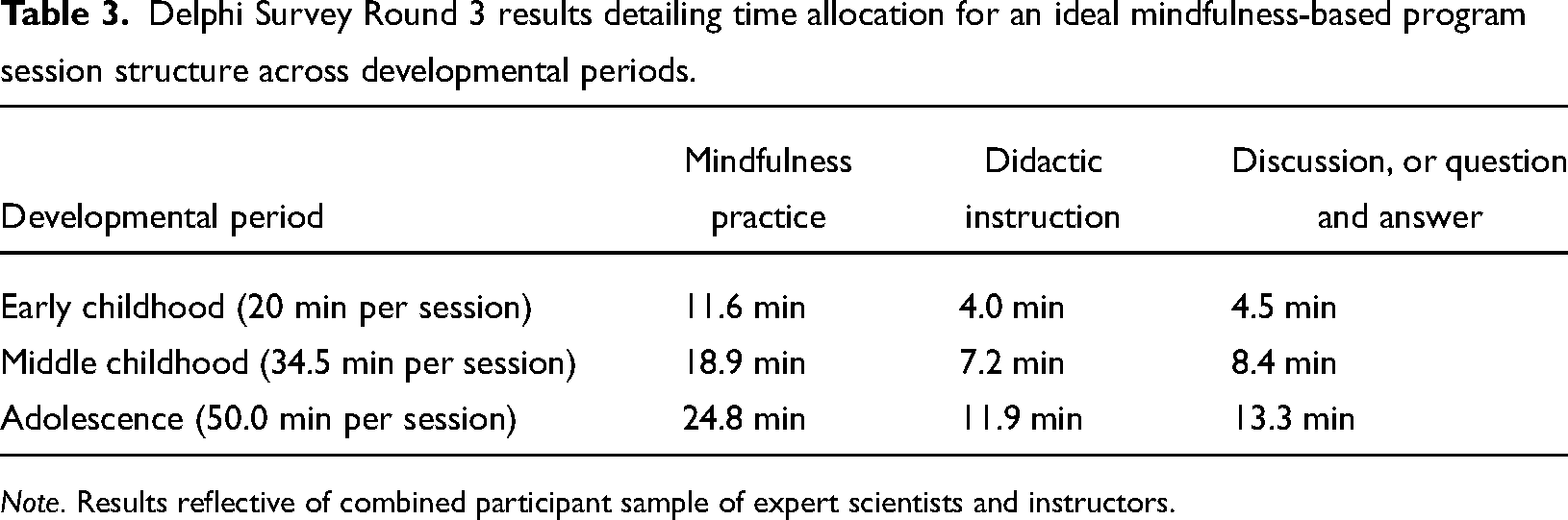
Note. Results reflective of combined participant sample of expert scientists and instructors.
Limitations and future directions
There are limitations for the current research that should be considered in interpreting and applying these findings in future work. Although the process used to identify the group's opinion regarding expert MBP session structure was successful, it was clear that based on how scientist participants responded to the initial questions in Survey Round 1 that there are significant differences of opinion for how youth MBP should be implemented. Most youth MBP occurs in school settings, and participants reflected their diverse perspectives by indicating that an ideal MBP for youth should not be limited in curriculum duration and session frequency; rather, that programming should be embedded across the entire school organizational structure and within all instruction. We did not expect such a response and revised latter rounds to specify that we were specifically interested in the structure of stand-alone MBP and not about MBP embedded within organizational cultures or existing non-mindfulness programming (although we value this perspective and believe it is important to consider for MBP delivery). Future research should make this distinction between stand-alone MBP and embedded MBP at the outset of their work to bring precision to their methodological processes.
This research imposed, a priori, a categorical distinction in facets of MBP session structure (i.e., practice, instruction, and discussion). This decision was made to avoid any discussion of MBP content, or core program components (see Felver et al., 2023) in order to facilitate identification of basic elements that were hypothesized to be categorically ubiquitous across MBP. In doing so, it is possible that we may have inadvertently limited a full exploration of what other facets may be important in MBP for youth, and future research may consider exploring whether our imposed categories are actually reflective of the diverse array of MBP. This research also didn’t explore what core program components are specifically important at different developmental time periods. Future research should thus consider applying these findings in conjunction with others related to MBP implementation science (Baelen et al., 2023; Felver et al., 2023; Roeser et al., 2023) to explore what recommended components are most essential at different developmental time periods.
Although the participants in this research had a great deal of expertise in the science and application of MBP for youth, and the overall sample size is commensurate with other studies employing the Delphi method, not all participants were familiar with youth at different developmental periods. In the final Survey Round 3 participant sample, there were relatively fewer participants who endorsed expertise in early childhood (n = 10) relative to middle childhood and adolescence (n = 20 and n = 27, respectively). This finding is reflective of the relatively little attention the application of MBP to younger children has received in the field. Future research should consider exploring how MBP may be useful in younger developmental periods to provide novel insights into this lesser explored topic of inquiry.
As with any study sample, the results obtained in this research may not be generalized beyond the individuals who contributed, and thus these outcomes should be considered representative of only this sample and may not be representative of the much larger and diverse field of MBP for youth. Considering the demographic representation of the sample, both the scientist and the instructor subgroups were predominantly White (93.8% and 76.5%, respectively) and women (68.8% and 58.8%, respectively), which may have inadvertently introduced sampling bias into the results obtained. The demographic characteristics of our sample may also be reflective on the methods utilized to identify expert scientists and instructors. Future research should attempt to replicate the findings in a more diverse participant sample, with alternate methods to identify expert participants, to validate whether the results obtained herein are also found in other participant samples. Participant attrition may have introduced another potential source of bias into the results. Although over 80% of recruited participants completed the study, those who dropped out of the study but offered initial input into earlier Delphi survey rounds may have introduced systematic error into the results obtained from latter rounds when their perspectives were not included.
Future evaluation research into MBP for youth may consider the MBP session structure identified in this study. Measurement of youth MBP implementation fidelity may be improved by assessing how youth across these identified developmental time periods receive programming that is categorically practice, instruction, or discussion; and the dosage of these three facets. Used in conjunction with identified core program components (Felver et al., 2023) and recommendations for implementation reporting (Baelen et al., 2023), this may assist the field in further identifying and empirically evaluating optimal dosage elements to best deliver MBP at different developmental time periods, and to explore the relation between dosage and programming structure and outcomes. In light of these findings, future research should also consider that specific mindfulness practices are not necessarily equally effective across different developmental time periods. For example, typical developmental changes to metacognitive ability affect youth's ability to learn and apply mindfulness skills (Montero-Marin et al., 2022).
Instructors and clinicians may also consider the utility of these findings in their future efforts. Those seeking to develop novel MBP for youth might consider explicitly including MBP dosage that is in line with the expert recommended ideal MBP dosage for different developmental levels articulated herein. Future research should also consider the contextual variability of MBP implementation in their efforts. For example, MBP for youth delivered in school contexts have myriad implementation factors that should be considered in program delivery and evaluation (Baelen et al., 2023).
Footnotes
Acknowledgments
The authors would like to express gratitude for all members of this study's Delphi panel who contributed their wisdom and time to this collaborative group effort. Panel members who elected to be de-identified and acknowledged include: Vernon Anthony Barnes, Mark Bertin, Karen Bluth, Ravid Bogaire, Matthew Brensilver, Patricia C. Broderick, Brian Galla, Andres A. Gonzalez, Matthew Goodman, Susan Kaiser Greenland, Sat Bir Singh Khalsa, Siri Krishna Kaur Khalsa, Molly Stewart Lawlor, James K. Luiselli, Catherine Malboeuf-Hurtubise, Jacqueline Maloney, Helen Marsh, Tamar Mendelson, Moriya Rosenberg, Randye J. Semple, Nirbhay N. Singh, Ricardo Tarrasch, Katleen Van der Gucht, & Betsy L. Wisner.
Contributorship
Joshua C. Felver conceptualized, designed, and executed the study; analyzed the data; and wrote the paper. Emily C. Helminen, Mary Katherine A. Schutt, and Emily L. Cary assisted with the data analyses and editing of the final manuscript. Laura F. Gould partnered on the original conceptualization and design of the study, served as an advisory board, and assisted with editing the final manuscript. Robert W. Roeser served as an advisory board, collaborated with the study design, and assisted with editing the final manuscript. Rebecca N. Baelen and Deborah L. Schussler assisted with conceptualization of the draft manuscript and editing the final manuscript.
Declaration of conflicting interests
The authors declared no potential conflicts of interest with respect to the research, authorship, and/or publication of this article.
Ethical statement
This research was approved by the Syracuse University Institutional Review Board (IRB# 20-043). Informed consent was obtained from all individual participants included in the study. Research data in this study are not shared publicly because participant's written responses to open-ended questions could lead to de-identification of participants and thus violate expectations for confidentiality as described in the consent document.
Funding
The authors received no financial support for the research, authorship, and/or publication of this article.
