




Abstract
Introduction
Keloid scars are therapeutically challenging and although many treatment options exist, there are no specific guidelines, and few reports have discussed keloids in the umbilical region.
Methods
Here, we present a successful treatment of a 31-year-old female with a history of a recurrent keloid in the umbilical region. The keloid was treated using intralesional cryotherapy followed by intralesional onabotulinumtoxinA and triamcinolone acetonide injections.
Discussion
The patient expressed high satisfaction, minimal side effects, and no recurrence.
Conclusion
Overall, due to the low rate of side effects, high patient satisfaction, and absence of recurrence, this treatment modality should be considered as an option for umbilical keloids.
Lay Summary
Introduction
Keloids are fibrous overgrowths that occur following trauma to the skin. 1 Common causes include burns, acne, piercings, surgical procedures, and vaccinations. 1 The formation of keloids is around 15 times more likely for those with darker pigmentation. 2 In addition to cosmetic concerns, patients can experience pain and pruritus. 3 As a result, keloids can have physical, psychological, and social consequences. Umbilical keloids are becoming more prevalent with the increase in laparoscopic surgery and piercings; however, they can be more complex to treat since there is an increased chance of producing inclusion cysts that can become infected. 4 Although many treatment strategies exist, there have been few studies investigating umbilical keloids and treatment remains challenging due to lack of specific guidelines as well as high recurrence rates and variability in outcomes.3,5,6 This case study reports a complete resolution of a pedunculated umbilical keloid, treated with intralesional (IL) cryotherapy followed by IL corticosteroid and onabotulinumtoxinA injections.
Case report
A 31-year-old woman of Fitzpatrick skin type IV presented with an over two-year history of a large 2 cm thick pedunculated keloid located in the umbilical region following a piercing (Figure 1). The patient's mother was known to develop keloids. Past medical history revealed that the keloid was surgically excised two years prior followed by IL triamcinolone acetonide injections; however, the keloid grew back to twice the original size. Detailed information regarding the previous treatment of the umbilical keloid is not available as it was completed at a different clinic. The patient did not recall the timing or number of sessions of IL triamcinolone acetonide injections. The recommended treatment for this patient included IL cryotherapy (CryoShape™; Etgar Group International Ltd, Kfar Saba, Israel) followed by IL triamcinolone acetonide and onabotulinumtoxinA injections (Botox® Cosmetic; Allergan Inc., Markham, Canada). However, this treatment is contraindicated if an umbilical hernia is present due to potential adverse consequence of damage to the underlying bowels. Therefore, prior to determining a treatment plan for the keloid, the treating clinician should perform a thorough physical examination and review of the patient's medical history to exclude the presence of a hernia. An ultrasound scan is recommended if there is any suspicion of a hernia. If an umbilical hernia is present, the patient should be referred to a general surgeon for hernia management prior to keloid treatment.

Pre-treatment umbilical keloid.
The patient provided written consent to the publication of patient information and images. The patient took acetaminophen 500 mg 1 tablet one-hour prior to the procedure and one-hour post-procedure for pain management. On the day of the procedure, the patient was given 25 cc consisting of lidocaine 2% and bupivacaine hydrochloride 0.5%. A disposable single-use cryoprobe was inserted through the keloid (Figure 2). The proximal part of the probe was connected via an elongation tube to the cryogun, which when activated allowed the cryogen to enter the cryoneedle. The cryoneedle was withdrawn after 34 mins when complete freezing of the keloid was achieved. A complete freezing is achieved when the keloid and 0.5–1.0 cm of the surrounding skin is indurated and frozen. The entire process generally takes between 5 to 60 mins. 7 Post-procedure, the patient was prescribed codeine/acetaminophen 30 mg/300 mg 1–2 tablets every four hours as needed for pain management. Docusate sodium 50 mg 1–2 tablets twice daily was prescribed alongside the codeine/acetaminophen to counteract opioid-induced constipation. Sodium fusidate 2% topical was provided for the patient to apply twice daily for 14 days for infection prophylaxis. The patient was asked to send photos documenting the keloid healing process during the first month post-procedure (Figures 3 and 4). Desonide ointment 0.05% was prescribed for inflammation noted by the clinician in patient-provided photographs 18 days post-procedure to be used daily for 10 days then every third day. The patient was seen for a follow-up 28 days post-procedure (Figure 5).
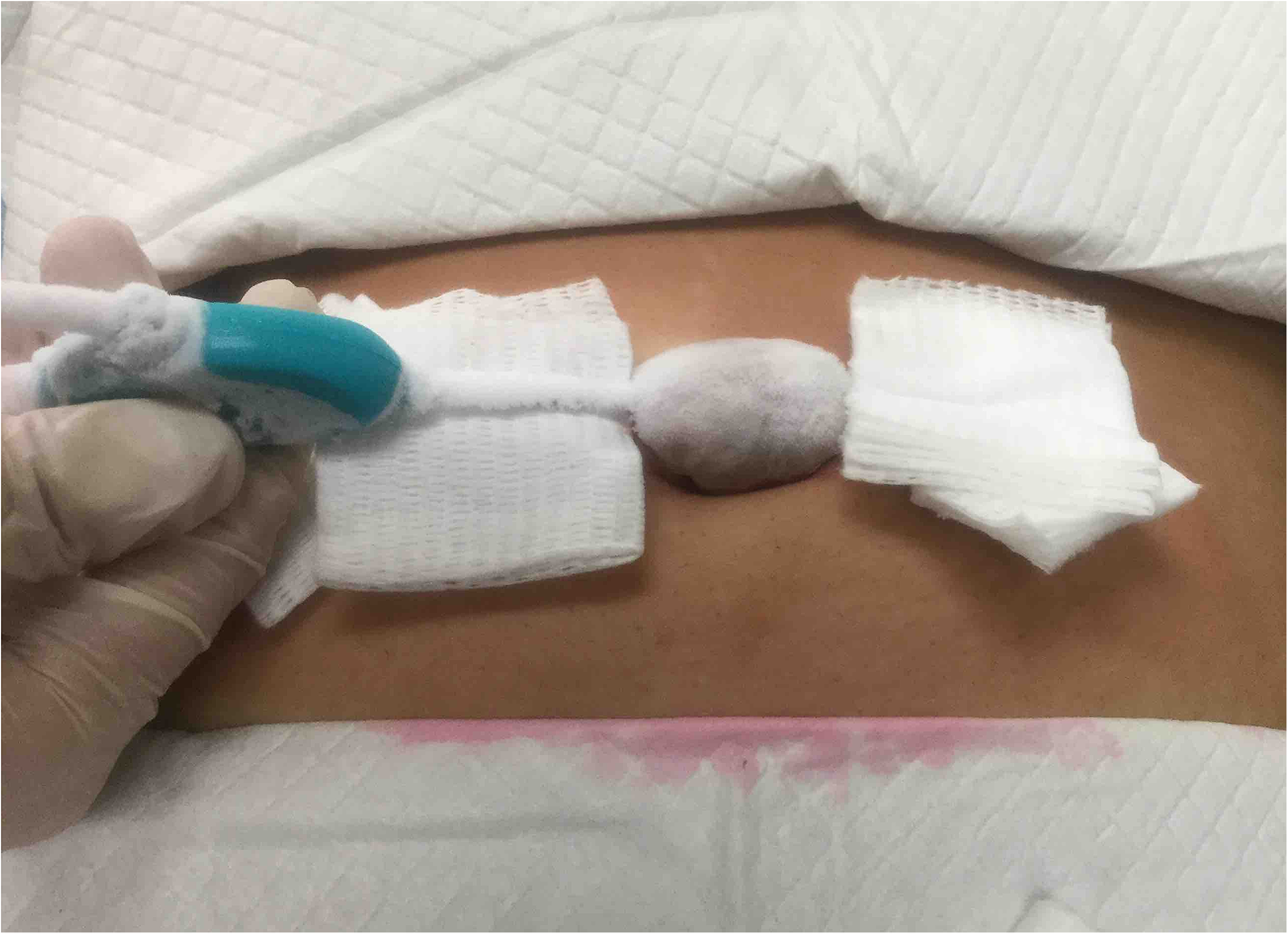
Keloid treatment with intralesional cryotherapy.

Keloid 1 day post-intralesional cryotherapy.
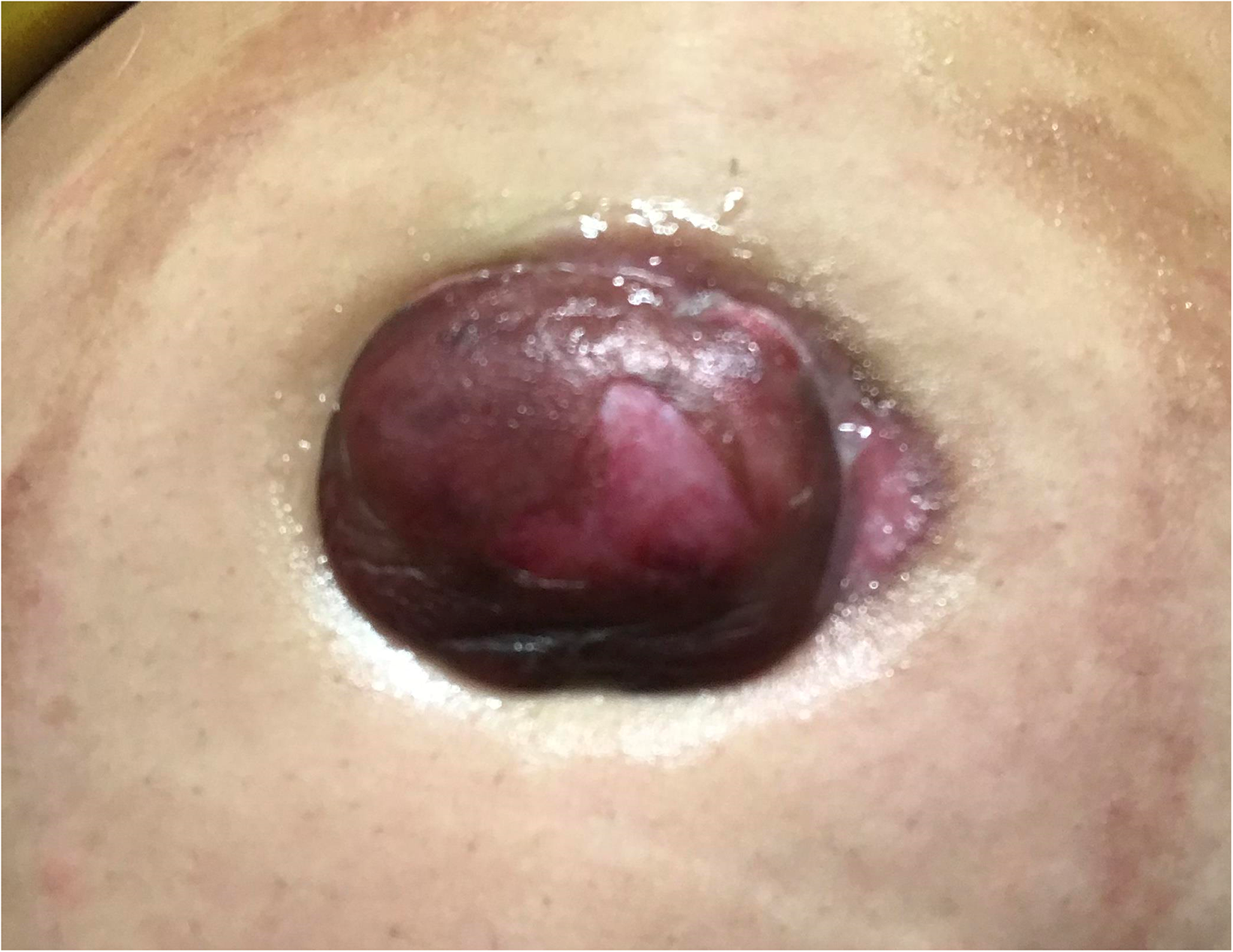
Keloid 19 days post-intralesional cryotherapy.

Keloid 28 days post-intralesional cryotherapy.
After 63 days post-procedure, the patient started using a twice daily topical treatment consisting of niacinamide, tranexamic acid, 1,4-diaminobutane dihydrochloride, bisabolol and kojic acid for hyperpigmentation and hypertrophic scarring (Figure 6). The patient reported being very happy with the results. After 104 days post-procedure, the patient had mild keloid reformation and started injections of 40 mg IL triamcinolone acetonide and 5–10 units of onabotulinumtoxinA (Figure 7). The patient received this same treatment three times with an average of 39 days between treatments. After 223 days post-procedure, the concentration of triamcinolone acetonide was decreased to 10 mg due to the reduction in size of the keloid (Figure 8). The patient was satisfied with the response and elected to stop treatment 273 days post-procedure as she was pregnant. The patient tolerated treatments well and did not report pain during treatments. The patient experienced post-procedural pain, which was alleviated with codeine/acetaminophen 30 mg/300 mg as needed. The total length of follow-up was 273 days since the IL cryotherapy procedure or 50 days post-IL injections. The patient was informed to contact the clinic if any sign of recurrence appears. After 864 days post-IL cryotherapy, at the time the case was reviewed, there had been no further contact with the patient.

Keloid 63 days post-intralesional cryotherapy.

Keloid 104 days post-intralesional cryotherapy.
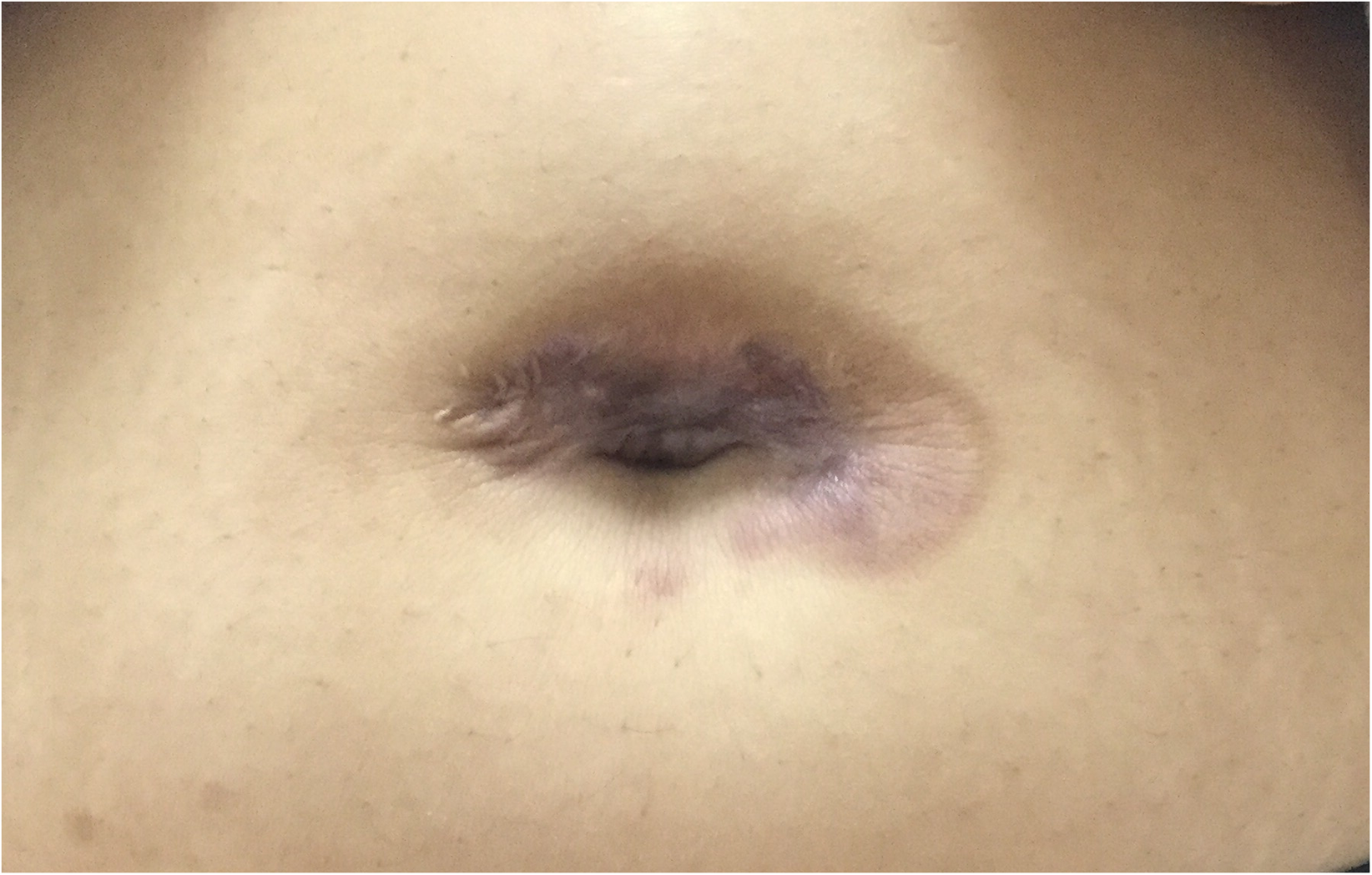
Keloid 223 days post-intralesional cryotherapy as well as three sessions of intralesional triamcinolone acetonide and onabotulinumtoxinA injections.
Discussion
Keloids have several well-studied treatment options such as occlusive dressings, compressive therapy, topical imiquimod, topical mitomycin C, IL and topical 5-fluorouracil, interferons, bleomycin, surgical techniques, cryotherapy, radiation therapy, pulsed-dye laser, ablative laser, laser-assisted drug delivery, platelet-rich plasma, and IL steroids. 8 IL steroids, in particular triamcinolone acetonide, serve as first-line treatment options for keloids. IL triamcinolone acetonide as a monotherapy has reduced keloid recurrence to an average of 50 percent after surgical excision.9–12 Corticosteroids suppress inflammation and mitosis as well as increasing vasoconstriction within the scar. 13 The effects and efficacy of IL onabotulinumtoxinA for keloid resolution are not as well-known due to lack of clinical trials or case reports; however, studies support the role of botulinum toxin for scar management through modulation of fibroblast activity and alleviation of muscular tension. 14 Through paralyzing the neighbouring muscle mass, botulinum toxin reduces the tensile forces involved in the wound healing process, which can decrease the inflammatory response involved in scar hypertrophy and keloid formation. 15 Botulinum toxin also decreases levels of transforming growth factor β1 and connective tissue growth factor causing inhibition of fibroblast overproliferation of the keloid, modulating fibroblast cell cycle, changing the expression of genes involved in keloidogenesis, and preventing fibroblast-to-myofibroblast differentiation. 14 A six month double-blinded comparative study evaluating the effects of IL botulinum toxin versus IL corticosteroid therapy on keloid scars showed that there were non-significant differences between results; however, IL botulinum toxin showed greater improvement in itchiness, pain, tenderness, patient satisfaction, and no post-study side effects in comparison to IL corticosteroids. 16 Other clinical trials have shown that the results of keloid resolution of IL corticosteroids versus combination of IL botulinum toxin and corticosteroid is minimal; however, the latter has higher tolerance, aesthetic results, and patient satisfaction.
Contact liquid nitrogen or cryotherapy, which is applied directly to the skin, has been effective at treating keloids; 17 however, this method has been associated with multiple side effects, such as hypopigmentation, blistering, swelling, and infection.18,19 Although management of keloids using contact cryotherapy has led to significant improvement or complete regression of keloids, it can require up to 20 treatments.18,19 Due to these limitations of contact cryotherapy, IL cryotherapy has been recently recognized as a more effective method to treat keloids. 20
IL cryotherapy targets the deeper aspect of the keloid and spares the surface epithelium, which reduces the incidence of blistering, hypopigmentation, and other surface reactions.20,21 Additionally, IL cryotherapy maximizes keloid freezing compared to contact cryotherapy, enhancing volume decrease as new scar tissue forms without keloidal characteristics. 21 IL cryotherapy effectively destroys a keloid through two types of injuries: physical and vascular. Rapid freezing results in direct irreversible cellular injury and cell dehydration due to production of intracellular ice crystals. Damage and failure of microcirculation results in endothelial cell injury due to vascular stasis. 21 Freezing the keloid prevents recurrence through the absence of scar-inducing wound contractions and differentiation towards a normal non-scarring fibroblast phenotype. 21 There are multiple studies illustrating IL cryotherapy as a superior treatment to contact cryotherapy due to improved efficacy and safety while requiring fewer treatments.17,20–23 Overall, these studies show IL cryotherapy to be an efficacious treatment with acceptable side effects and recurrence rates.23–26
We encountered a large keloid in the umbilical region that was effectively minimized through IL cryotherapy treatment followed by IL triamcinolone acetonide and onabotulinumtoxinA injections. The patient was predisposed to keloids as the patient is of Fitzpatrick skin type IV and has familial history of keloids. This case is in line with studies showing genetics and ethnicity play a factor as individuals with darker skin pigmentation are at a greater risk of development of keloids. 27 Keloid formations in the umbilical region are rarely discussed; there have been multiple studies and case reports, however, two case reports in the 1990s and a 2020 case series involving 34 patients did not investigate cryotherapy as a treatment option.4,28,29
Although there are various treatment options for keloids, this treatment modality should be considered as there was a complete resolution (Figure 7) of the keloid using IL cryotherapy with post-procedure IL triamcinolone acetonide and onabotulinumtoxinA injections. The patient also described no side effects during the procedure. The patient reported mild side effects post-procedure including moderate pain and hyperpigmentation. This low rate of side effects supports other research showing IL cryotherapy offers less pain, blister formation, and hypopigmentation than contact cryotherapy. 23 The patient's pain post-procedure was effectively managed with codeine/acetaminophen 30 mg/300 mg. Topical formulations containing niacinamide, tranexamic acid, kojic acid, 1,4-diaminobutane dihydrochloride, and bisabolol were provided for hyperpigmentation and hypertrophic scarring; several clinical trials have supported the use of these ingredients for hyperpigmentation and hypertrophic scarring as they are effective and well-tolerated.30–36 Post-procedure, IL triamcinolone acetonide and onabotulinumtoxinA injections of the treated keloid minimized the chance of recurrence. This supports other studies that have shown that IL triamcinolone acetonide injections combined with onabotulinumtoxinA injections provide scar improvement and symptomatic control on keloid recurrence. 37
However, each patient's case must be reviewed prior to pursuing this treatment as other factors should be considered, such as cost of treatment and size of keloids as this treatment is most effective on large or pedunculated keloids. In conclusion, we encountered a pedunculated umbilical keloid that was effectively treated with IL cryotherapy followed by IL triamcinolone acetonide and onabotulinumtoxinA injections. Overall, due to the low rate of side effects, high patient satisfaction, and absence of recurrence, this treatment modality should be considered as an option for umbilical keloids.
Footnotes
Acknowledgements
We would like to thank our patient for their interest and permission to describe this case report. We would also like to thank Lesley Monterroso RPN for her involvement in the treatment and patient care management.
Declaration of Conflicting Interests
The author(s) declared no potential conflicts of interest with respect to the research, authorship, and/or publication of this article.
Funding
The author(s) received no financial support for the research, authorship and/or publication of this article.

How to cite this article
Tran JVH, Lultschik SDJ, Sapra S, Dong K, Gusic K and Goldstein M. Intralesional cryotherapy with triamcinolone and onabotulinumtoxinA injections for umbilical keloid: A case report. Scars, Burns, & Healing, Volume 7, 2021. DOI: 10.1177/20595131211049040.