



Abstract
This study aims to enhance socio-emotional awareness and regulatory processes in small ensemble rehearsals through the design and implementation of a macro-level collaboration script. Developed using design-based research principles, the script is grounded in the cyclical model of regulated learning ( Hadwin et al., 2018; Zimmerman & Campillo, 2003) and incorporates prompts adapted from Näykki et al. (2017) for ensemble contexts. Five student ensembles from a higher music education institution in Norway participated in the study. Ensembles using the script (n = 3) were compared with baseline ensembles without it (n = 2). Data from video recordings and focus group discussions were analyzed using qualitative content analysis. The findings indicate that the script effectively supports socially shared regulation of learning by fostering collaborative planning, shared task and emotional monitoring, and reflective dialogue. Scripted ensembles consistently engaged in all regulated learning phases (planning, monitoring, and reflection) and exhibited greater socio-emotional awareness through more equitable participation. Notably, both conditions spent less than half of the rehearsal time on actual performance, highlighting the central role of verbal interaction in ensemble rehearsals. These findings suggest the collaboration script serves as an effective scaffold for enhancing socio-emotional dynamics and group-level regulation, offering valuable insights for improving student-led ensemble rehearsals. Further research is needed, however, to refine its design, particularly in balancing structured guidance with the fluid, creative dynamics essential to musical collaborations.
Keywords
Introduction
The organizational structure of a small ensemble within higher music education (HME) mirrors other collaborative learning environments, where students work toward shared goals by exchanging diverse perspectives and expertise (Pennill & Breslin, 2021; Rumiantsev et al., 2023). Similar to these environments, ensemble rehearsals are underpinned by collective goals, interdependence, and co-construction of knowledge (Gaunt & Treacy, 2020; Gilboa & Tal-Shmotkin, 2012; Järvenoja et al., 2024). As Gaunt and Treacy (2020) note, “teamwork and collaborative learning are ubiquitous in the arts, central to what is often termed ‘ensemble’ activity” in which musicians utilize a comprehensive “set of kinaesthetic, cognitive, imaginative, and emotional skills” (p. 421).
Unlike traditional classroom settings that tend to rely on direct teacher involvement, ensemble rehearsals often require students to engage in self-directed group work. Over an academic semester, rehearsals provide opportunities for students to develop cohesive musical interpretations, address performance challenges, and learn through peer interactions (Ginsborg, 2017; King, 2021; Nielsen & Johansen, 2021). These interactions are shaped not only by verbal communication but also by non-verbal cues such as gestures and glances that influence performance dynamics (Biasutti et al., 2016; Bishop et al., 2023; King & Gritten, 2017; McCaleb, 2017; Pennill & Timmers, 2022).
A defining characteristic of small ensembles is their self-managed structure, which is inherently imbued with a strong socio-emotional component (Hakkarainen, 2016; Kokotsaki, 2007; Timmers et al., 2021). In contrast to large ensembles with designated leadership, self-managed groups negotiate internal dynamics by balancing individual autonomy with collective goals; this necessitates a higher degree of consensus building and effective communication (Gilboa & Tal-Shmotkin, 2012; Pennill & Breslin, 2021; Volpe et al., 2016). Although small ensemble participation fosters musicianship, technical skills, and social belonging (Sætre & Zhukov, 2022; Slette, 2019; Tahirbegi, 2023b), these benefits do not automatically guarantee effective collaboration (Brandler & Peynircioglu, 2015; Creech & Hallam, 2017). The absence of formal leadership and the reliance on peer interactions make small ensembles particularly vulnerable to challenges such as misaligned expectations, conflicting personalities, and priorities (Davidson & King, 2004; Hill et al., 2018; Tahirbegi, 2023b). Although some disagreements can foster group cohesion and stimulate creativity (e.g., Murnighan & Conlon, 1991), without effective strategies to manage these dynamics, such conflicts can disrupt collaboration and hinder productivity.
Previous studies have identified various ways to facilitate small ensemble work; however, most focus primarily on the teacher's role—often depicting the teacher as, for example, a gatekeeper who controls the flow of rehearsals or a fellow traveler who collaborates alongside students (Creech & Hallam, 2017). Because many ensemble rehearsals occur without continuous teacher involvement, there is a heightened need for self-directed facilitation. However, little is known about how students can autonomously use scaffolding tools to navigate rehearsals and collaborate effectively on their own.
To address this gap, it is pertinent to draw on insights from the broader literature on collaborative learning, which highlights the importance of structured support mechanisms in fostering productive group interactions (Järvenoja et al., 2020). One key construct is regulated learning, defined as “intentional, goal-directed metacognitive activities where learners and groups strategically control their cognitive, behavioural, and affective actions within dynamic social interactions” (Miller & Hadwin, 2015, p. 574). Applying this framework to ensemble rehearsals offers a promising avenue for enhancing various aspects of student-led rehearsals. The current study presents a theoretically guided collaboration script designed to support regulated learning and socio-emotional awareness in small ensemble rehearsals, providing a novel framework for enhancing student-led collaborations.
Small Group Dynamics: The Intersection of Regulation and Emotions
Small group work in educational settings often serves as a catalyst for emotional expression, shaping both individual self-perceptions and group dynamics (Bakhtiar et al., 2018). Such groups have even been described as epicenters of emotional activity (Van Kleef & Fischer, 2016), a characterization that resonates strongly with ensemble settings, where artistic identity is deeply intertwined with the sense of self (Hargreaves et al., 2018). In these contexts, the intensely personal nature of musical collaboration amplifies socio-emotional dynamics, complicating the negotiation between individual agency and group cohesion (Gilboa & Tal-Shmotkin, 2012; Schiavio et al., 2024). As a result, sustaining collaboration in small ensembles, requires not only cognitive regulation but also attending to interpersonal and emotional dynamics (Tahirbegi, 2023b).
Emotions influence collaboration both before and during group activities (Järvenoja et al., 2024) and they are expressed through socio-emotional interactions (Mänty et al., 2020). Positive interactions, such as encouragement and inclusion have been found to facilitate collaboration (Järvenoja et al., 2019; Rogat & Adams-Wiggins, 2015), whereas negative interactions, like judgment, may hinder it (Linnenbrink-Garcia et al., 2011; Näykki et al., 2014). Emotion regulation (ER) is essential for productive collaboration, involving not only the ability to manage one's own emotional responses but also attunement to the emotional states of peers and the collective needs of the group (Järvenoja et al., 2024). In collaborative settings, metacognitive processes support ER by helping students detect when emotional disruptions, particularly negative affect, interfere with task focus or group cohesion (Sobocinski et al., 2020). Crucially, the shared recognition of emotionally salient moments often serves as a trigger for group-level regulation to emerge (Järvenoja et al., 2024; Mänty et al., 2023; Törmänen et al., 2023). These dynamics underscore the importance of equipping learners with the skills to monitor, interpret, and adapt to socio-emotional cues in real time, laying the groundwork for emotionally attuned and productive collaborative learning (Järvenoja et al., 2024).
Modes of Regulation
Researchers have identified at least three types of regulation in collaborative learning contexts: self-regulation, co-regulation, and socially shared regulation of learning (Hadwin et al., 2018; Järvenoja et al., 2024).
Self-regulation of learning involves individuals actively regulating their cognition, behavior, motivation, and emotions during group tasks, thus taking responsibility for their engagement and learning. It is characterized by its metacognitive and agentic nature (Hadwin et al., 2018; Zimmerman & Campillo, 2003). Co-regulation of learning is a dynamic process where regulation is facilitated by interactions and resources, such as peers, tools, and the learning environment, promoting individual self-regulation or transitioning towards shared regulation. It encourages strategic planning, execution, reflection, and adaptation (Bakhtiar & Hadwin, 2022; Hadwin et al., 2018). Lastly, socially shared regulation of learning occurs when groups collectively manage the task through negotiated adjustments to their cognitive, behavioral, motivational, and emotional states (Järvenoja et al., 2015). This form of regulation is transactive, highly metacognitive, and collectively agentic, with regulation jointly constructed by group members (Hadwin et al., 2018).
Although these regulatory processes are critical in collaborative learning contexts, students often lack the skills to apply them effectively in practice (Järvenoja et al., 2024; Miller & Hadwin, 2015; Törmänen et al., 2023). Inadequate regulation can lead to conflicts and lead to a decline in the group's socio-emotional climate (e.g., Koivuniemi et al., 2018; Mänty et al., 2023). While instructional tools supporting regulation have shown promise in broader educational contexts (e.g., Järvenoja et al., 2020; Miller & Hadwin, 2015; Näykki et al., 2021), their application in HME remains limited—a gap the current study seeks to address.
Supporting Collaboration with Scripts
Collaboration can be enhanced through scripts that support learners in acquiring domain knowledge and regulatory skills (Miller & Hadwin, 2024). These scripts offer structured guidance for task engagement and help reduce potential disruptions during group work (Weinberger et al., 2005). Earlier scripts mainly targeted cognitive processes, such as fostering argumentation skills (Scheuer et al., 2014), more recent approaches increasingly incorporate prompts that support the regulation of affective aspects of group work (e.g., Järvenoja et al., 2020; Näykki et al., 2021; Rojas et al., 2022).
Collaboration scripts vary in design, educational objectives, and granularity (Kobbe et al., 2007). Micro-scripts provide detailed, step-by-step instructions using targeted prompts (e.g., “My theory is…”) to guide specific learning activities and outcomes. Macroscripts, in contrast, serve as flexible frameworks that broadly shape interactions and communication patterns while emphasizing the learning process over predetermined outcomes (Wang et al., 2017). This adaptability makes macroscripts particularly well-suited for dynamic learning environments like small ensemble rehearsals.
Structured approaches that resemble collaboration scripts have been used to support self-regulation of learning in music education (e.g., McPherson et al., 2019; Miksza et al., 2018; Miksza & Brenner, 2023; Osborne et al., 2021). For example, the self-regulation microanalysis approach is implemented to heighten learners’ metacognitive monitoring and planning through real-time reflections (Cleary & Callan, 2018). Research in instrumental practice has leveraged such methodologies: McPherson et al. (2019), for example, used interviews and practice diaries to identify self-regulation profiles among piano students, while Miksza & Brenner (2023) and Osborne et al. (2021) demonstrated that practice diaries enhance metacognitive monitoring and regulation through goal setting.
While these studies focus on individual processes, the current study extends these principles to collaborative contexts. It introduces a novel adaptation of a collaboration script to small ensemble contexts, addressing both individual and shared regulation within rehearsals. The following research questions guide the inquiry:
RQ1: How do ensembles engage in collaborative interactions during rehearsals?
RQ1.1: In what ways did ensembles differ in their collaborative interactions during rehearsals? RQ1.2: In what ways were socio-emotional aspects evident in ensembles’ collaborative interactions during rehearsals? RQ2: How did the macroscript influence group members’ collaborative interactions related to aspects of socially shared regulation of learning?
Methodology
This study employs design-based research (DBR) principles to design, implement, and evaluate a macroscript intervention aimed at enhancing regulated learning and socio-emotional awareness in small ensemble rehearsals. As a meta-methodology, design-based research integrates design and research methods through iterative cycles of design, enactment, analysis, and refinement, generating practical interventions and theoretical models grounded in authentic learning contexts (Collective, 2003; Sandoval & Bell, 2004).
The macroscript intervention builds on a larger project investigating ensemble rehearsals, with a specific focus on emotion regulation, collaboration, and small ensemble dynamics. Preliminary findings from the first phase of this project highlighted the need for structured support to foster regulated learning and socio-emotional awareness during student-led rehearsals (see Tahirbegi, 2023a, 2023b). In response, the macroscript was designed to support key phases of regulated learning—planning, monitoring, and reflection—while providing an adaptable framework that would allow students to address socio-emotional dynamics as they emerge within the rehearsal process.
The development of the macroscript was guided by the DBR framework outlined by Easterday et al. (2018), following a recursive process of focusing, understanding, defining, conceiving, building, testing, and presenting. Rather than adhering to a rigid sequence, these phases were applied flexibly to accommodate the dynamic nature of ensemble rehearsals. Table 1 provides an overview of the macroscript's development, evaluation, and refinement as part of this design-based intervention.
Phases of design adapted from Easterday et al. (2018).

A Note on the Pilot Phase
An initial pilot phase tested and refined the macroscript. A Western classical trio integrated the original script into their rehearsal and provided feedback on its practicality and usability. They noted that the script’s middle section was too long, disrupting collaborative flow. Additionally, there was a concern about not fully understanding what constituted a socio-emotional challenge. Based on this feedback, a brief explanatory definition was included, and the middle section was shortened with a dropdown menu.
Participants and Context
Five chamber music ensembles from a HME institution in Norway participated in this study: three engaged with the macroscript intervention, while two served as baseline comparison groups. All ensembles performed Western classical repertoire and were newly formed through self-selection at the start of the academic year in late August. They rehearsed weekly in preparation for semester-end performances.
Participants’ prior experience with reflective rehearsal techniques was not explicitly controlled or assessed. Rather, the macroscript was specifically designed as a structured intervention to scaffold key regulatory processes (e.g., goal setting, monitoring, and reflection) and to encourage deliberate socio-emotional engagement. This design allowed ensembles with potentially varied levels of prior reflective experience to benefit uniformly from a structured approach. Script Ensembles: Data collection occurred between October–November 2023. Rehearsals lasted 85–120 min each. The researcher provided initial instructions for using the macroscript (via iPads and notepads), left the room to allow autonomous rehearsal, and returned midway and at the end for additional script-related guidance (see Table 2). Non-Script (Baseline) Ensembles: Data from October 2022 were repurposed. Rehearsals lasted approximately 60 min, with the researcher setting up cameras and leaving the room for undisturbed rehearsals. A total of 7.5 h of rehearsal video data was collected, supplemented by macroscript entries from iPads and insights from focus group discussions.
Macroscript intervention overview for a single rehearsal session.

Macroscript for Regulated Learning in Small Ensembles
Based on the regulated learning framework, the macroscript was structured into three phases: Plan, Spot-check, and Reflect (see Appendix I). The prompts were inspired by Näykki et al.'s (2017) approach. Each phase is detailed in Table 3 and its application illustrated in Figure 1.

Example images from script rehearsals.
Macroscript, presented in three script phases.

The Plan phase aimed to prompt goal setting and enhance socio-emotional awareness within groups. This phase involved two main tasks: individual idea generation, followed by group discussion to compile ideas and establish rehearsal goals (see Figure 1). The Spot-check guided groups in monitoring their progress towards these goals by incorporating two components: self/group-control and self/group-observation, encouraging students to make necessary adjustments, particularly regarding the socio-emotional climate. The Reflect phase prompted students to self-assess their rehearsal experience and share reflections with peers, fostering greater awareness of both individual and group dynamics. Rehearsals followed a consistent structure while allowing flexibility in duration to accommodate students’ needs, ensuring that the macroscript could be integrated effectively within diverse rehearsal contexts.
Qualitative Content Analysis of Video Data
The video data were analyzed using qualitative content analysis, which systematically codes and identifies patterns within the data (Hsieh & Shannon, 2005). Unlike thematic analysis, qualitative content analysis allows for the quasi-quantification of interaction frequencies while preserving the richness of qualitative context (Vaismoradi et al., 2016). This made it particularly suitable for comparing interaction patterns across ensembles in this study.
We adopted a summative content analysis framework, which involved identifying and quantifying interaction categories before interpreting their contextual significance (Hsieh & Shannon, 2005). Guided by Erickson (2006), we treated the video data as a resource for meaning-making, with analytical decisions informed by our research questions. This inductive process began with broad observations, progressively narrowing to specific patterns related to group dynamics and regulatory processes.
Rehearsals were segmented through open coding
Analysis of Focus Group Discussions
To complement the video data, we conducted focus group discussions to explore participants’ experiences with the macroscript and its perceived impact on collaboration and socio-emotional dynamics. Facilitated by the first author, these sessions encouraged spontaneous reflections and interactive dialogue, leveraging the group setting to elicit diverse perspectives (Kvale & Brinkmann, 2015). Focus groups were held within 3–4 days after rehearsals to capture participants’ fresh recollections of their rehearsal. Discussions covered topics such as ensemble dynamics, collaboration, emotional regulation, and the integration of the macroscript into rehearsal practices. Each session lasted 40–60 min and was both video- and audio-recorded. While the discussions contributed to a broader research project, the analysis presented here focuses specifically on macroscript-related experiences (see Appendix II for the interview guide).
The focus group data were analyzed using a directed qualitative content analysis approach (Hsieh & Shannon, 2005), which allows for both validating and extending the theoretical framework underpinning the macroscript (Cobb et al., 2003). This approach was chosen to examine how the macroscript supported socio-emotional awareness and regulatory processes, guided by established theories on emotion regulation and collaborative learning.
The analytical process involved: (1) verbatim transcription of the focus group discussions; (2) iterative coding, starting with broad categories informed by the intervention's goals (e.g., group affect awareness, self-awareness, emotional regulation); (3) refinement of categories to capture nuanced participant experiences, particularly regarding how the macroscript influenced interpersonal dynamics and collaborative strategies.
In addition to addressing the study's primary research questions, insights from the focus group data will inform future iterations of the macroscripts, contributing to the ongoing refinement of the design (Collective, 2003).
Findings
In response to the RQ1 (How do ensembles engage in collaborative interactions during rehearsals?), the analysis identified seven qualitatively distinct types of interaction, which were then organized into three overarching categories. These categories include regulatory phases linked to the macroscript (plan, spot-check, and reflection), regulatory reactions to challenges (challenge with emotional monitoring, challenge with musical problem solving, and solution/adaptation), and active performance phase (play) (see Table 4).
Interaction categories emerging from data.
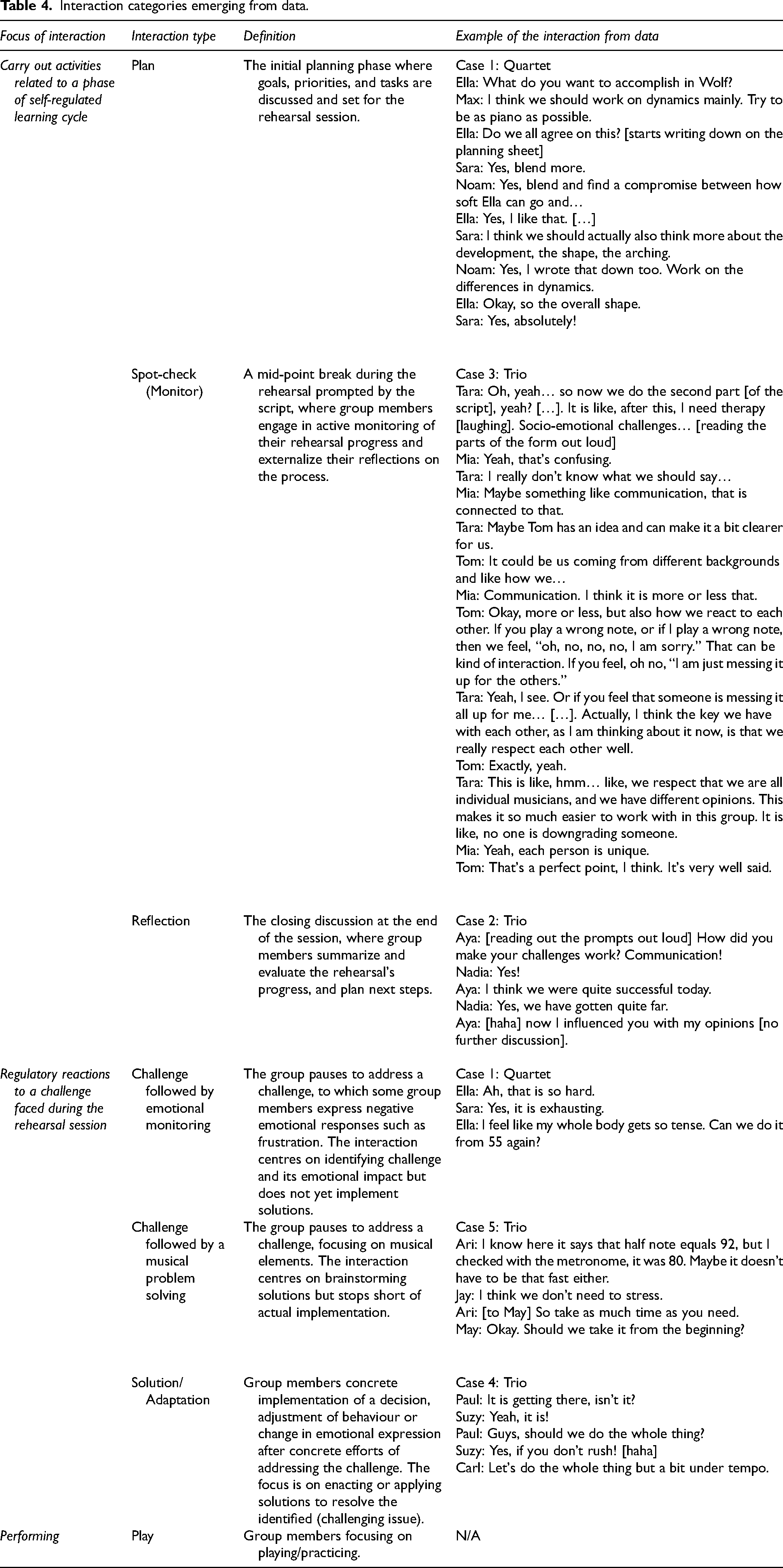
The plan refers to the initial segment of rehearsals where ensembles set goals and outline strategies. Script ensembles engaged in structured planning, guided by the macroscript prompts, dedicating between 11–13% of their total rehearsal time to this phase. Non-script ensembles typically omitted formal planning or relied on implicit, informal routines. The spot-check phase involved mid-rehearsal evaluations aimed to monitor progress. While such reflections could occur spontaneously, they appeared exclusively as structured activities prompted by the macroscript in script ensembles, accounting for 6–8% of rehearsal time. No equivalent structured evaluations were observed in non-script ensembles.
The reflection phase, occurring at the conclusion of rehearsals, provided an opportunity for ensembles to assess their performance, evaluate goal attainment, and discuss collaborative dynamics. This phase was explicitly facilitated by the macroscript, with script ensembles dedicating between 4–11% of their rehearsal time to reflective activities. These structured reflection activities did not spontaneously occur in non-script ensembles, further highlighting the macroscript’s specific impact.
Beyond the macroscript-driven phases, all ensembles exhibited regulatory responses to rehearsal challenges, categorized into three types. The most frequent, challenge with musical problem solving, involved discussions addressing technical, expressive, or coordination difficulties, occupying 20–56% of total rehearsal time. These interactions were predominantly task-focused, with minimal emotional expression. In contrast, the challenge with emotional monitoring category captured instances where performance difficulties elicited emotional reactions, such as frustration, accounting for approximately 4–14% of rehearsal time.
The solution/adaptation category involved moments when ensembles expressed satisfaction with performance outcomes, often deciding to move to the next section of the rehearsal. This adaptive response occurred consistently across ensembles, representing 1–6% of rehearsal time and marked a transition from problem solving back to engaging with the musical material. Finally, the play category included continuous performance segments, making up a significant portion of rehearsal time, typically between 32–44% across different ensembles.
While each ensemble exhibited a unique interaction profile, notable differences emerged between script and non-script conditions. As illustrated in Figures 2 and 3, these conditions differed significantly in the time allocated to regulated learning phases—planning, monitoring, and reflection. Ensembles in non-script conditions dedicated less than 10% of their rehearsal time to these phases, whereas script ensembles allocated nearly 40% to these strategic activities. Despite these differences, similarities were observed across both conditions, particularly regarding the proportion of time spent on play.

Visualization of interaction profiles in script conditions.

Visualization of interaction profiles in baseline conditions.
The plan phase of the macroscript notably increased the time that ensembles in script conditions spent on proactively structuring their work. In contrast, ensembles in non-script conditions adopted a more spontaneous “play-as-you-go” approach, with minimal pre-planning. These ensembles dedicated an average of 2 min (3%) of their total rehearsal time (∼60 min) to pre-planning. In comparison, ensembles in script conditions allocated significantly more time to initial planning. One group spent 8 min (∼10%), representing the least active engagement, while the other two groups dedicated approximately 14 min (∼13%) before enacting the repertoire.
While the macroscript enhanced engagement in strategic learning phases, it did not substantially alter the relative time spent actively performing. Play time averaged 20 min (34%) in non-script conditions, closely matching script ensembles, which dedicated approximately 27–38 min (32–38%) of total rehearsal time to repertoire enactment. Case 1 spent slightly more time on performance (∼40%, 53 min), although this difference was modest.
Importantly, all ensembles dedicated substantial portions of rehearsal time to discussions and reflective exchanges, emphasizing that ensemble rehearsals involve significant amounts of conversation, negotiation, and collective meaning-making beyond active performance (see Figure 4).

Distribution of interaction types in script versus baseline rehearsals.
In response to RQ2 (How did the macroscript influence group members’ collaborative interactions related to aspects of socially shared regulation of learning?), the analysis revealed that the macroscript also influenced the content and quality of interactions. Subsequently, these qualitative differences were examined category by category. The two examples shown in Table 5 illustrate these differences. The first presents an episode of active, engaged planning in a script condition, while the second demonstrates the beginning of a rehearsal in a non-script condition.
Rehearsal openings—Case 1 and Case 5.

In the first example, the ensemble's engagement with the orientation phase of the script demonstrates a strong instance of shared regulation within their collaborative decision-making process. The students engage in transactive actions as they actively solicit each other's input, discuss their preferences, and collectively draft their rehearsal plan. The orientation phase of the macroscript facilitates the ensemble's ability to move from individual ideas to co-constructed plans. It demonstrates how scripting the planning encourages individual contributions and sharing of goals, increases socio-emotional awareness, preparing the group to face anticipated challenges in advance, such as the repertoire’s vulnerabilities. In contrast, the non-script condition (Case 5) demonstrated a more spontaneous and informal approach to planning. The initial conversation lasted about two minutes, with limited focus on goal setting or strategic preparation. The dialogue shifted quickly from casual remarks to brief decisions about which section of the repertoire to rehearse. The differences highlight how the macroscript influenced the organization and focus of collaborative interactions. Additionally, the focus group discussions provided additional insights into the perceived utility of the macroscript.
The planning phase was consistently identified as beneficial across ensembles. Participants emphasized that this phase contributed to a more organized and less chaotic rehearsal environment, creating space for all members to voice their opinions. Several students noted that planning facilitated a clearer structure and helped align the ensemble's goals. As shown in Table 6, participants highlighted how the planning phase influenced factors such as group coordination, the articulation of personal and collective goals, and the development of shared understanding within the ensemble.
Students’ accounts of plan phase in the script.

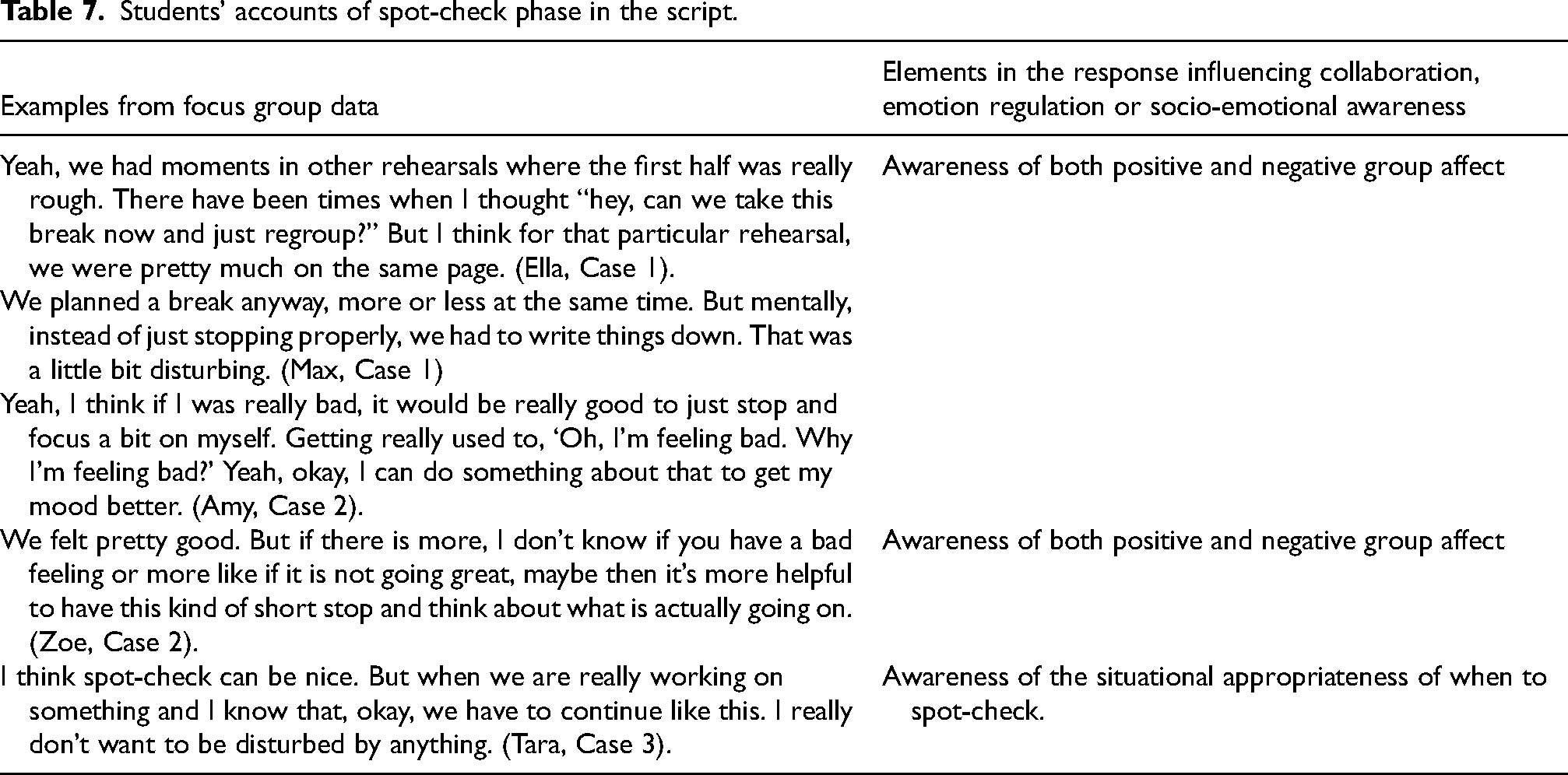
In contrast, the spot-check phase was generally perceived as disruptive. This perception was consistent across all participating ensembles. The disruption was particularly noticeable during rehearsals that were already progressing smoothly, as participants felt that structured interruptions broke their momentum and focus. Many described the process of disengaging from active rehearsal to record observations on iPads as jarring. Some expressed a preference for this type of monitoring to occur more organically rather than through structured pauses. However, participants acknowledged that spot-checks could be valuable in less cohesive rehearsals. Some students reflected on past experiences, noting that such pauses might have helped overcome initial rehearsal difficulties or facilitated a return to shared understanding during challenging moments. Overall, while the spot-check phase was seen as intrusive during productive rehearsals, its potential value in situations requiring recalibration was recognized. These responses are detailed in Table 7.
Students’ accounts of spot-check phase in the script.
The reflection phase of the macroscript involved individual documentation on iPads, with minimal group discussion. This structure appeared to be influenced by practical constraints, such as the need to conclude rehearsals and pack away instruments after 1.5-h sessions. Despite the limited collaborative reflection, focus group discussions revealed that participants generally valued the reflective process. Perspectives on its timing and effectiveness varied. Some students found it challenging to articulate meaningful reflections immediately after rehearsal, expressing a need for more time to process their experiences. Others appreciated the opportunity to capture emotions in real-time, although they described the process as challenging and occasionally unstructured. As shown in Table 8, students’ reflections highlighted both the benefits and difficulties associated with immediate post-rehearsal reflection. While individual reflection was seen as meaningful, the absence of group dialogue raised questions about the depth and impact of this phase. Some participants suggested that incorporating optional group discussions or adjusting the timing of reflections might enhance their effectiveness.
Students’ accounts of reflection phase in the script.

Overall, the planning phase emerged as the most valuable component of the macroscript, contributing to structured, goal-oriented rehearsals. The spot-check phase was perceived as disruptive in smoothly functioning rehearsals but was recognized as potentially beneficial for facilitating real-time adjustments when needed. The reflection phase posed challenges related to timing, with students expressing mixed feelings about the immediacy of post-rehearsal reflections.
Discussion
This study employed DBR principles to design, implement, and evaluate a macroscripts intervention aimed at enhancing regulatory processes and socio-emotional awareness in small ensemble rehearsals. It adopted a dual approach by examining the impact from two different perspectives: the actualized interactions during the rehearsals and subjective interpretations on the perceived usefulness of the macroscript. The study comprised five ensembles (n = 3 script and n = 2 nonscript-conditions), enabling detailed analyses and deepening our understanding of the macroscript's potential impact on collaborative dynamics.
Preliminary analysis identified seven qualitatively distinct interaction types. Three of these, plan, spot-check, and reflection, were directly linked to the macroscripts. Three others, emotional monitoring, musical problem solving, and solution/adaptation, represented regulatory actions in response to rehearsal challenges and the active performance phases were categorized as play. A key finding was that ensembles spent less than half of their rehearsal time on actual play, emphasizing the need to further explore the role of verbal interaction in rehearsal settings. While the non-verbal communication, such as gestures, has been extensively studied as a primary channel for conveying tempo, expressivity, and coordination (e.g., Bishop et al., 2023; King & Ginsborg, 2016; McCaleb, 2017; Pennill & Timmers, 2022; Schiavio & Høffding, 2015; Schiavio et al., 2021; Timmers et al., 2021), this study underscores the significance of verbal communication in fostering consensus building, shaping the socio-emotional climate and supporting group-level regulation. Moreover, the self-managed, student-led structure of small ensemble rehearsals demands a higher degree of consensus building (Gilboa & Tal-Shmotkin, 2012), where students must balance individual autonomy with collective goals. The macroscript effectively facilitated these processes by providing structured prompts that encouraged open dialogue and collaborative decision-making, enabling ensembles to negotiate both musical and interpersonal dynamics with greater clarity (Miller & Hadwin, 2024).
Similar to other learning contexts and domains, the role of verbal communication cannot be underestimated in the context of learning and performing music. The significance of examining group members’ verbal communication has been extensively studied in the field of collaborative learning (Järvelä et al., 2015), particularly concerning its role in regulation processes (e.g., Bakhtiar & Hadwin, 2020; Järvenoja et al., 2018). Although not all regulation is verbal, much of the metacognitive activity and shifts in thinking during collaboration become visible through spoken dialogue (Bakhtiar & Hadwin, 2020).
In this study, verbal communication served as a key mechanism for externalizing regulatory processes, enabling ensemble members to articulate thoughts, refine strategies, and collaboratively negotiate decisions. Macroscript prompts encouraged transactive dialogue, fostering shared decision-making around rehearsal plans and musical interpretations. This aligns well with the concept of socially shared regulation emphasizing that shared regulation is a dynamic, negotiated process reliant on continuous interaction (Hadwin et al., 2018; Järvenoja et al., 2015; Miller & Hadwin, 2024).
While this study advances our understanding of how different interaction modes support learning in ensembles, further research is needed to explore the connections between interaction quality, learning, and performance outcomes. Shared regulation, as a process-oriented construct from rehearsal to performance, warrants further empirical attention.
The macroscript did not significantly affect the time ensembles spent in active performance. On average, ensembles allocated 34% of their rehearsal time to play, with no notable differences between conditions. However, the distribution of the remaining rehearsal time varied considerably depending on the presence of the script. Ensembles using the script dedicated more time to structured learning phases, such as spot-check and reflection, whereas non-script ensembles adopted a more spontaneous approach, with minimal pre-planning and increased time spent addressing challenges as they arose. For example, the time ensembles spent on musical problem solving differed notably. Those using the macroscript appeared better equipped to anticipate and prevent challenges through proactive planning and monitoring. In contrast, non-script ensembles spent over half of their rehearsal time engaged in problem solving. This pattern aligns with self-regulation of learning research, which suggests that effective instrumental practitioners engage in strategic activities as part of their initial task analysis (Miksza & Brenner, 2023; Nielsen, 2004). Our findings suggest that the macroscripts similarly facilitated rehearsal orientation through explicit goal setting, proactive problem anticipation, and collaborative focus, all well-established factors successful regulation of learning in collaborative contexts (Järvenoja et al., 2024; Linnenbrink-Garcia et al., 2016; Mänty et al., 2023; Näykki et al., 2021; Törmänen et al., 2023). While the structured rehearsal interactions introduced by the macroscript theoretically imply enhanced rehearsal processes, this study did not empirically assess whether such improvements directly translate into enhanced performance outcomes in final performances. Future research should directly investigate how macroscript-supported rehearsal interactions impact measurable performance quality, and concert preparedness.
Finally, the macroscript aimed to increase socio-emotional awareness, facilitating moments of reflection and turn-taking to support regulation of emotions. The analysis of both the video data and the group discussion data supported the conclusion that this goal was achieved. Students stated that the script promoted equal participation by enabling all partners to share their opinions, not only on aspects of the repertoire like interpretation, but also on individual preferences within the group work. This is promising, as prior studies have shown socio-emotional challenges often arise from unequal leadership roles, overruling ensemble partners, or different artistic choices (Ginsborg, 2017; Murnighan & Conlon, 1991; Sætre & Zhukov, 2022; Tahirbegi, 2023a).
Furthermore, while the reflection phase was the least utilized component of the macroscript during rehearsals, focus group discussions revealed that students engaged in reflective thinking beyond the immediate rehearsal context. This suggests that the macroscript may have a sustained impact, acting as a trigger for ongoing socio-emotional reflection. In addition, the focus group discussions themselves provided valuable opportunities for students to explore these issues in depth, highlighting the importance of creating dedicated spaces for dialogue outside of rehearsals. Facilitators might consider incorporating regular opportunities for ensemble members to reflect on both cognitive and socio-emotional aspects of their collaboration, which could further support group cohesion and learning.
Prompting ensembles’ awareness of such processes through scripts seems to be a functional way to reduce challenges and ensure a socio-emotionally pleasant atmosphere for goal-oriented learning and rehearsing. In this study, this was evident in the way the script ensembles proactively addressed their challenges through well-organized rehearsals that established mutual understanding of the repertoire in advance. The orientation phase facilitated higher-level cognitive processes associated with learning and performance within an enhanced socio-emotional context (Näykki et al., 2017; Rojas et al., 2022). Additionally, previous studies have also emphasized the significance of maintaining positive socio-emotional interactions early in the collaborative process (Linnenbrink-Garcia et al., 2011). The script as a whole offered students opportunities to reflect on their emotional experiences at different rehearsal stages, prompting them to assess and adjust as needed (Miller & Hadwin, 2015).
Limitations and Future Directions
The dynamic nature of ensemble rehearsals presents inherent challenges when analyzing interaction patterns. The ‘amount, type and purpose’ of verbal interaction in small ensembles was found to be ‘idiosyncratic and subject to change over time within and across rehearsals’ (Pennill & Timmers, 2022, p. 2). This suggests that relying solely on a single session macroscript intervention may present a limitation in this study, as the interaction profiles presented are likely to evolve over time. Moreover, this study was qualitative and included only five ensembles, which should be considered especially when comparing script versus nonscript-conditions. Part of the differences between the conditions are most probably due to natural situational variation in the interaction. Future research should include longitudinal interventions with larger samples and mixed-methods approaches to deepen understanding of the macroscript’s effects over time.
Despite these limitations, this study bridges theory and practice by applying regulated learning frameworks in the music domain. Given that many rehearsals occur without a teacher, such a framework could serve as a roadmap for nurturing regulated learning in ensemble collaborations.
Furthermore, the DBR approach proved effective in integrating theory with practice, enhancing ecological validity while adapting to evolving rehearsal dynamics (Easterday et al., 2018). Future studies should explore how to balance structure and spontaneity in ensemble rehearsals as overly rigid script designs may constrain creative collaboration (Wang et al., 2017).
Footnotes
Action Editor
Elaine King, University of Hull, School of Arts.
Peer Review
J Murphy McCaleb, York St John University, School of the Arts.
One anonymous reviewer.
Declaration of Conflicting Interests
The authors declared no potential conflicts of interest with respect to the research, authorship, and/or publication of this article.
Funding
The authors received no financial support for the research, authorship, and/or publication of this article.
Ethical Approval
This study protocol underwent review and approval by the Sikt—Norwegian Agency for Shared Services in Education and Research (formerly NSD). Informed consent was obtained, and students were provided with a modest gift card as a token of appreciation for their involvement.

Data Availability Statement
The focus group data supporting the findings of this study are available from the corresponding author upon reasonable request.
Appendix I: Macroscript in Three Parts
.
.
.
Appendix II
.
Appendix III: Sample Video Data Analysis
.