




Abstract
This study examines blog coverage (October 2018 to October 2019) and its engagement with citizens regarding internally displaced persons in Nigeria. Approximately 85 stories of internally displaced persons were covered on Naija.com. This study found a significant difference in the appearance of internally displaced persons’ stories on the blog, appearance of the stories in the headline, length of stories used in describing internally displaced persons and the tone used. Most of the internally displaced persons’ stories appeared in the blog’s headlines, suggesting that blogs in Nigeria give prominence and importance to the stories of internally displaced persons. A large number of the stories were described in 400–600 characters, and most of such stories described the internally displaced persons’ situations via a negative tone. Surprisingly, there were very few stories of governmental support, but stories that demonstrate the internally displaced persons in a vulnerable state and exposed to various diseases, prone to attacks, raped, fed inadequately and in need of humanitarian assistance were predominant. As such, a significant association between the frames used and users’ comments and views online was found. Stories that framed the internally displaced persons in a vulnerable state had a greater number of views and comments and those that had more realistic still/graphic images attracted more comments and views.
Introduction and background
Nigeria is the most populous country in Africa, with a total population of over 200 million and 250 ethnic groups, and the country is marked by diversified religions and political fault lines characterized by frequent violence. This has resulted in numerous internally displaced individuals since the return of democracy in 1999 (Apuke & Tunca, 2019). This situation has been exacerbated by the emergence of the Boko Haram insurgency in the north-eastern part of the country, heightening the number of internally displaced persons (IDPs; Ibrahim & Gujbawu, 2017). Boko Haram has been described as a Jihadist radical group that is predominantly found in the north-eastern region of Nigeria, but also extends to northern Cameron, Chad and Niger (Kwaghtser, 2019; Chandler, 2015). On the contrary, a displaced person is regarded as either internally displaced or a refugee. Intrinsically, internally displaced individuals are those residents who have been (a) forcefully removed by a denial of human rights, war, insurgency, or artificial or natural disaster, (b) but remain in the confines of their countries (c) under the protection of their government. However, refugees are those who have crossed over into another country to seek refuge (Internal Displacement Monitoring Centre, 1998; Tajudeen & Adebayo, 2013).
Accordingly, Lenshie and Yenda (2016) stated that Boko Haram attacks have led to more than 300,000 people becoming refugees in neighbouring countries, with more than 3 million persons across Nigeria being displaced. Similarly, a recent survey showed that in Taraba, Gombe, Bauchi, Adamawa, Borno and Yobe, 1,934,765 IDPs were being hosted in several camps and residential areas as well as in neighbouring states (Sambo, 2017). Hence, it is pertinent for the IDPs to raise their voices to obtain humanitarian assistance for survival since they have lost their primary means of support. For them to receive such assistance, their situations need to be presented to the world through various media in order for the general public to provide the aid they require. Therefore, the issue of media representation and reportage now has considerable importance. The news media are meant to demonstrate an important role (agenda-setting and framing of issues) so as to solicit aid for the IDPs through continually and objectively covering the actual situation that is occurring (Ibrahim & Gujbawu, 2017). Thus, as the central ‘interpretative system’ of advanced societies (Peters & Heinrichs, 2005:2), the news media play a key role in informing the public about events that transpire around the world, particularly in those countries in which audiences do not have direct knowledge or experience (Harper & Philo, 2013). Omoera and Ogah (2016) recommended that since the rise of Boko Haram has developed into a particularly disturbing phenomenon, there is a need for a counter-terrorism strategy that entails the deployment of the media. Unfortunately, the penetration and functioning of the contemporary Nigerian media seem weaker, meaning that collective efforts that lead to citizen journalism are of paramount importance.
Thus, some Nigerians believe that the mainstream media are not completely informing the public about the true conditions of the IDPs. For instance, as documented in Irennews (2015), through the various conventional media channels such as Nigerian Television Authority, African Independent Television and Channels Television, the Nigerian authorities declared that Boko Haram has been driven out of most of the north-east region by the Nigerian military; therefore, people were free to move back to their houses. Nonetheless, the daily attacks on both people and property continued unabated. As such, Ate (2011) observed that Nigerian democracy is threatened by various security challenges, including kidnapping, armed robbery, ritual killings, ethnic skirmishes, bombing and unwanted destruction of lives and properties, among others. Nevertheless, most traditional Nigerian media channels appear not to report the actual occurrences, leading many Nigerians to turn towards alternative/new media and digital journalism, such as blogs. This is not surprising as a survey conducted in Nigeria showed that most of the respondents reported they receive information about the herdsmen and farmers’ conflict via the Internet (Alphonsus, 2018).
Consistent with this notion, a recent study has shown that blogs are now competing with broadcast journalism due to breaking news in a timelier manner (Graber & Dunaway, 2017). As such, the advent and popularization of blogging have generated wide discussion of the meaning of blogs to interpersonal relationships, and popular culture, exposing the ills in society. Users have adapted blogs to a vast array of uses, resulting in a diverse set of practices subsumed under the rubric of ‘blogging’ (Nelson et al., 2018). Because blogs have become integral parts of the changing face of journalism, an analysis of its coverage of Nigeria’s IDPs is imperative. Therefore, it is necessary to confirm to what extent the issues of IDPs are covered by blogs.
Aim and objectives
This study examines blog coverage and its engagement with citizens regarding IDPs in Nigeria from October 2018 to October 2019. To achieve this, the study’s objective is to (a) demonstrate the frequency of the coverage of the IDPs by Naija.com; (b) determine the level of prominence given to the coverage of IDPs by alternative media in Nigeria; (c) determine the message tones used in the representation of IDPs in a Nigerian blog; (d) outline the news and visual frames applied in the alternative (blog) coverage of IDPs; and (e) examine the link between users’ engagement with the blog (comments and views) with the frames used in describing the stories of IDPs.
Review of the literature
Setting the scene: IDPs in Nigeria
IDPs in this study are considered as people in Nigeria who have been forced to leave their homes as a result of the incessant attacks on their lives and properties by the terrorist group called Boko Haram (Enwereji, 2008). By the end of 2014, there were approximately 38.2 million IDPs worldwide and the number of IDPs in Nigeria had increased to about 3.3 million due to Boko Haram’s constant attacks. Sambo (2017) found that most of the internally displaced individuals in Nigeria find the condition of the camps to be inadequate due to a lack of support, medical attention, accommodation, food, inadequate living conditions, exposure to violence and sexual abuse as well as government policies and corruption.
Only a limited number of studies have analysed the issues of IDPs in developing countries using content analysis. For instance, Ibrahim and Gujbawu (2017) examined the coverage and reporting of IDPs in Nigeria in the Daily Trust and Nation newspapers in 2016, using the assistance, security and vulnerability frame. Essentially, the study found that IDPs were portrayed in the newspapers as those who need assistance; the study demonstrated that the newspapers adequately portrayed and proffered solutions to the various situations found in IDP camps in Nigeria. However, as reported in the study, the Daily Trust newspaper gave more prominence to the stories of IDPs than the Nation newspaper. This shows that each media outlet has its own philosophy and interests. Similarly, Hussain (2016) examined the media’s treatment of IDPs in Pakistan in three daily newspapers, namely Daily the Nation, Daily the News and Daily Dawn Newspapers. The study revealed that themes that supported the government appeared more frequently in the newspapers. Thus, supporting the issue of the limited content analysis studies on IDPs, Hussain (2016, p. 3) remarked that ‘the literature published on the displacement of people has not found too much rich or theoretically exact’. This is because the humanitarian community focuses more on the delivery of aid than on the documentation of research.
Correspondingly, a blog is used in war-torn areas like Iraq to convey the worsening power shortages, travel restrictions, major human rights abuses, rising fundamentalism, political disputes, declining female rights, political uncertainty and ongoing sectarian bloodshed (El-Nahhas, 2021). In Syria and Lebanon, blogs are typically utilized to challenge authoritarian regimes or during conflict and unstable times by youths, activists, religions and political bloggers (Taki, 2011). Relatedly, other waves of studies paid attention to the IDPs’ problems covered by the traditional electronic media such as television and radio in Nigeria. Studying two broadcasting outlets, Channels TV and the Nigeria Television Authority (NTA), Apuke and Tunca (2019) examined news coverage of IDPs in Nigeria. Their findings showed that the private media (Channels TV) paid more attention to IDPs by placing the stories in the first two headlines. This indicates that traditional media, which are regulated and mostly owned by the Nigerian government (Hamid & Baba, 2014), could be reluctant in covering IDPs to hide the vulnerability of the IDPs and possible weaknesses of the governments. However, in comparison to traditional media, emerging studies on online media coverage of IDPs (Apuke & Tunca, 2019; Onuegbu & Salami, 2017) demonstrate a shift from the presentation of IDPs by the traditional media. Apuke and Tunca (2019) reveal that blog presents a wide array of latitude for journalists to cover and audience access IDPs’ issues, as Internet connectivity continues to allow wider media accessibility (Nelson et al., 2018; Okoro et al., 2013).
New media representation and selection of IDP accounts
As stated earlier, the current study aims to demonstrate blog representation of IDPs, because there has been considerable debate on the issue of media representation in Nigeria. Consequently, this article focuses on analysing blogs (new media) work in the representation of vulnerability news of IDPs in Nigeria. Vulnerability news is any news in the media on people exposed to or are possibly to be exposed to disadvantaged situations physically or emotionally such as news on IDPs. It has been observed that sections of Nigerian society perceive that the mainstream media are biased when framing and covering the factual situation surrounding the vulnerability of internally displaced individuals because they perceive that the stories are misrepresented and have a significant bias. As such, their experiences are sometimes neglected (Irennews, 2015; J. U. U. Jacob et al., 2016). Why then should it be concluded that the mainstream media in Nigeria may not entirely and objectively cover the issues of IDPs and that the new media has made considerable efforts to increase the awareness of the public? In response to this question, studies have noted that the mass media in Nigeria have not been timely in their reportage and have not effectively played a surveillance role, nor have they displayed a high level of objectivity in their reporting (Afolabi, 2010; Hamid & Baba, 2014), and this can partly be attributed to the fact that most media organizations in the country are owned by the state (sub-national) governments and individuals, and as such, they are primarily used to promote the interests of their owners.
Intrinsically, Nigerian media is characterized by manipulation and distortion to suit the ideology or political agenda of the nation, as well as the media house or prominent individuals (Awobamise & Aderibigbe, 2015). Consequently, this affects the actual stories of IDPs, as they are not adequately covered and disseminated and are usually lost amid statistics and reports of humanitarian responses (J. U. U. Jacob et al., 2016). It could also be said that the media, particularly the government media, might decide not to cover the issues of the IDPs objectively in order not to implicate those in power. Indeed, portraying the issues of the IDPs more truthfully would inform the public regarding the extent to which the government is intervening, and in turn, will demonstrate the competence or incompetence of the government. Sadly, the government-owned mainstream media are largely sceptical when it comes to criticism of the government in power (Apuke, 2017), while the private media who rely mostly on profit through various financers, advertisers and special interest groups, would not be far from unbiased reporting (Cissel, 2012). This situation has led many to turn to new media such as blogs and Facebook for information as well as to disseminate information. Thus, it has been claimed that the new media, which has given rise to citizen journalism, has been more helpful in demonstrating the issues of IDPs, which the current study seeks to validate.
Blog usage in Nigeria
The network of blogs is known as the blogosphere. The phrase suggests that blogs function as a single linked community, as a group of connected communities or as a social networking platform where regular people may express their thoughts. One advantage of the blogosphere is that the blog websites allow individual users to follow a discussion as it travels from blog to blog while the bloggers are communicating (Nelson et al., 2018). This draws attention to the nature and different types of audience engagement, as well as the nature of media, framing the audience and their stories (Marty et al., 2017). Over half of the 241 million Nigerians use the Internet (Sasu, 2022) and millions of them have utilized blogs to share their unique perspectives, information and ideas online. Although insufficient electricity provision and lack of knowledge on how to use and handle blog technology were the primary obstacles to the usage of blogs in Nigeria, researchers claim that undergraduates’ awareness of blogging was quite high (Chukwusa, 2020), with a proportionate gender ratio utilize blogs for educational learning (Daramola & Aladesusi, 2022). It should be noted that the use of blogs to cover the issues of IDPs is rendered possible because the new media is a shift from the hypodermic needle assumption of one-way communication (Tsegyu, 2016). Thus, individuals in Nigeria now use blogs to deliver news almost at the speed of light, unlike broadcast media. Through blogs, news can spread like wildfire in a split second, because the word does not need to wait for an editor to process it, and feedback is prompt. The public could respond to the news instantly and even contribute to the content. This could be helpful in the reportage of Boko Haram activities and the IDPs in general (Okoro et al., 2013). Therefore, due to the new media content source and distribution, which could even permit those in the IDP camp to post their issues, it is believed that it provides more advantages than the mainstream media in Nigeria (Downing, 2001). Blogs promote non-commercial journalism that propagates the interests and yearnings of those excluded from the mainstream (Atton, 2002), and examples of such online open publishing journalism in Nigeria are Naijapals.com, Naija.com and Naija Community (Apuke & Dogari, 2017). Since blogs are independent of corporate control, the reporting of stories has been made easier (Apuke & Dogari, 2017), suggesting that the stories about IDPs may be disseminated to the public in a more factual state.
Message tone
Generally, message tone shows how people are feeling or what they mean by a particular thing in writing or speech. This means message tone indicates the way journalists feel about IDPs’ issues; the issue of message tone in IDP setting does not appear to have been addressed by the previous studies. Veer and Pervan (2008) emphasized the instant impact that message tone may have on customer feedback. This feedback is either from the emotional or informational appeal, either of which could be positive or negative. Thus, the nature of the messages of IDPs communicated by blogs, which is the case in the current research, could have a discernible impact on overall societal attitudes, which in turn could have a bearing on behaviour (McAuliffe & Weeks, 2015). This implies that the manner in which news media or blogs represent the issues of IDPs influences the way the public thinks about and evaluates the situation surrounding the IDPs (Branton & Dunaway, 2008). Alemoh and Ishima (2013) concluded that the events the mainstream media omits can easily be captured by citizen journalists through the new media. Thus, blogs provide an avenue for the public to create and disseminate news content on IDPs, which in turn may attract more humanitarian responses. Overall, through blogs, Facebook, Twitter and so on, citizen journalists could disseminate breakthrough information on political oppression, corruption, economic theft and IDPs at large.
Framing theory
Conceptually, ‘to frame is to select some aspects of a perceived reality and make them more salient in a communicating text, in such a way as to promote a particular problem definition, causal interpretation, moral evaluation, and/or treatment recommendation’ (Entman, 1993, p. 52). Therefore, a frame is the selection, emphasis and presentation of the content feature of news composed of parts fitted together because of their similarity. Nonetheless, framing is based on the premise that the media can influence how an audience accepts or interprets realities (Dimitrova & Strömbäck, 2005, p. 404). This entails selecting some aspects of stories or events and then making them more salient through communication text (Katende, 2012). In other words, it entails packaging and displaying the information in the form of headlines, photos and video footage (Wisniew, 2011). However, it does not only focus on the issues the audiences think about but extends beyond to guide them on how they should think about these issues (Craft & Wanta, 2004). Hence, the way an issue is portrayed in the media, such as blogs, can have an influence on how it will be perceived and inferred by the audience (Scheufele & Tewksbury, 2007). This suggests that frames influence people’s emotions, attitudes and behaviours towards issues such as IDPs (De Vreese & Boomgaarden, 2003; Scheufele & Iyengar, 2012).
Thus, the issues of IDPs and refugees could be covered by adopting different frames (Van Gorp, 2005), and such frames arouse the audience’s emotions towards the aspirations and yearnings of internally displaced individuals and refugees (Lecheler et al., 2015). Consequently, the manner in which IDPs’ stories are portrayed on blogs goes a long way in influencing the public towards the situation surrounding them. For example, the human-interest frame (Steimel, 2010), which puts a human face and inserts emotions in the presentation of the event/issue (Constantinescu & Tedesco, 2007), the victimization frame, which focuses on the plight of refugees or IDPs, portraying them as in need of help because of circumstances that lie beyond their own control and actions (Horsti, 2008b; Van Gorp, 2005), as well as providing detailed insights into the background, motivation and living conditions (KhosraviNik, 2009), has been used to shape and influence the public perception. Furthermore, security risk frame which looks at the secureness (the state of being free from fear or danger), assistance/humanitarian frame, which covers stories that show how the IDPs need support and are experiencing bad conditions, and the background information frame (Greussing & Boomgaarden, 2017), which provides detailed information about those in troublesome situations, such as refugees and IDPs, as well as the responsibility frame, which attributes responsibility to either the society or individual (Yu et al., 2015), have also been adopted by the news media and new media outlets such as blogs.
Another notable frame that could be adopted by the media is visual framing (Greussing & Boomgaarden, 2017), which entails the visual illustration of refugees and internally displaced people, and proper visual representation could arouse the attention of the audience to understand how adverse the situation of IDPs is. Bushehri (2017) reiterated that visual framing is a potent instrument used to depict the level of a particular event. Moreover, when utilized appropriately, it can influence the public. For instance, if an article or telecast is supported by photos of ‘innocent’ refugees or internally displaced children, people are more likely to be sympathetic than the portrayal of strong and vibrant young men with smartphones, information processing systems and laptops (Van Schaik, 2016).
The news media framing and portrayal of IDPs could also take a thematic or episodic shape (Iyengar, 1994). The thematic framing occurs when the media covers the issue of IDPs in a broader context (Elsamni, 2016), which focuses on tracks over time, as well as highlighting contexts and environments (Laryea, 2015). Conversely, Baysha and Hallahan (2004) argued that episodic framing occurs when the media portrays IDP issues as concrete events or specific events that result from the actions of people. While adopting a thematic framing, the media covers issue at a more abstract level as a kind of general outcome (Ngwu et al., 2015). Why then is the thematic or episodic framing important in the issues of IDPs? It has been shown that in general, thematic framing will provide only background and contextual information on the IDPs, while episodic framing provides exemplars and specific stories (Iyengar & Simon, 1993), which could assist the public in understanding the issues confronting the IDPs. Thus, if the media use thematic stories, it will promote public discussion on the issues of IDPs; however, the more episodically the stories are framed, the less likely it is that governments will be held accountable (Benjamin, 2007). Therefore, the media adopt episodic frames to focus on the individual, discrete accounts, and personal stories (Laryea, 2015). Additional frames that could be employed by the media on social events that influence a handful of individuals in a society could be generic frames, which entail responsibility, human interest, consequences, morality and engagement. On the contrary, Price et al. (1997) suggested the conflict, human-interest and personal consequence frame, which influences the audience’s cognitive responses. All these frames could be adopted to demonstrate the issues surrounding the IDPs and the frame used in a particular circumstance may or may not evoke public attention.
Thus, framing theory provides a foundation for this study, because blogs have multiple choices regarding how to cover the issues of IDPs, adopting different frames so as to influence and inform the public. For example, they may frame and emphasize certain aspects of the IDPs and disregard others, suggesting that they could have a high frequency of coverage, prominence, captivating tone and realistic visuals. All these factors have an impact on the public perception of IDPs. It should be noted that factual and balanced representation of the IDPs could enable people to understand their living conditions, such as their clashes with the authorities, cases of death in the camps, the humanitarian responses, the hardships, the rape cases as well as other events. This theory is important to the research objectives because it helps understand the role blogs play in framing issues, especially as it concerns IDPs. Therefore, expanding the framing theory arguments, the general assumption now is framing IDPs’ stories by the examined blog significantly varies in the provision of opportunities for the representation of IDPs. In this way, framing theory forms the basis of the current investigation which informed the formation of the following hypotheses:
H1. There is no significant variation in the message tones used in the representation of IDPs in the Nigerian blog.
H2. There is no significant variation in the positions of the stories on the headline of the blog.
H3. There is no significant variation in the length of stories used in describing IDPs.
H4. There is no significant variation in the tones used in describing the IDPs.
H5. There is no variation in the news and visual frames applied in the alternative (blog) coverage of IDPs.
H6. There is no association between the frames used in describing IDPs’ stories and the comments and views regarding the posted stories.
Methodology
Research design and focus of the study
To determine how IDPs news was covered on alternative media, a quantitative content analysis approach was adopted. The focus was on Naija.com which is a news and entertainment blog created in Nigeria in 2012 with the sole aim of featuring daily aggregated news content from the diverse public (Alexa.com, 2015). This blog was selected because it is a news blog and one of the most popular blogs that cover politics, issues of IDPs, herdsmen and farmers conflict, Boko Haram, general conflict and daily news happening in Nigeria, with less entertainment news. Moreover, the blog has a high number of subscribers and viewers. It is rated as the seventh overall most visited website in Nigeria with 13 million readers (Alexa.com, 2015), connected to several social media such as Twitter and Facebook which allows social media users to post comments online. The coverage period examined was from October 2018 to October 2019. The basis for selecting this period is that research has shown that Boko Haram had incessant attacks on the lives and properties of innocent citizens and the rate of displacement shoot up (Apuke & Tunca, 2019).
Selection criteria for news reports
Naija.com website (http://naija.com) was searched to retrieve and select the news accounts. The researchers searched ‘IDPs’ and ‘refugees’ from the archives. The rationale for using ‘refugees’ as a search term is that it is possible that there are stories that might have used this term in their texts. Articles that used this term were verified to determine their relevance. These searches yielded various stories and their dates of reporting. Thus, stories that were not directly related to IDPs were excluded. For example, stories of other crimes, general Boko Haram attacks, and insurgency that did not result in IDPs were not considered. The total search on the blog outlet yielded an initial number of 214 possible stories. The manual review, which means scanning through each level to ascertain its headline, pictures and content that are related to IDPs, led to 129 exclusions and 85 inclusions. Therefore, 85 stories were retrieved for the analysis.
Units of analysis
The unit of analysis is the ‘news stories’ of IDPs found on Naija.com. Priority was also given to the pictorial (blog) illustrations adopted. IDPs’ stories were defined as those in (blog) that covered any of the following broad topics: problems arising in the IDP camps, frequent attacks on camps, government interventions and distribution of relief materials, donations by humanitarian organizations, provision of health facilities and any form of logistics donated to the IDPs. It also included stories on the lack of care for the IDPs, the introduction of training and skills in the IDP camp and any other stories regarding the IDPs in Nigeria.
Manual coding of the television and blog stories
The coding was achieved using the emergent coding technique, which establishes categories after a preliminary examination of the data instrument (Wimmer & Dominick, 2013). The categories were operationalized as follows:
Media type: This refers to the type of media, which is Naija.com.
Frequency of coverage: This refers to the level of importance ascribed to the IDPs’ stories. This implies determining the number of times IDPs’ stories were covered in a month and a year.
Length of the stories: For the blog, the researchers determined the placement of the stories on the blog page (i.e., 1st, 2nd and 3rd headline). The length of the stories was also determined as long, short, or medium. For example, news stories that included 400–600 words long were considered long, while stories with 200–399 words were considered medium, and those that fell into the 1–199 category were considered short. The reason for using this scale is because the Naija.com blog stories largely do not exceed 1000 words. This is based on the author’s observation when scanning through all the IDPs accounts.
Frames: The frames used in the present research were adopted from the prior literature (Constantinescu & Tedesco, 2007; Hussain, 2016; Ibrahim & Gujbawu, 2017; Steimel, 2010) and modified to fit into the context of this research. However, the government financial/physical support frame was added by the researchers in order to achieve the aim of this investigation. Thus, the frames used in this study are:
Assistance/humanitarian frame: This covers stories that show how the IDPs need support and are experiencing bad conditions. These stories portray the IDPs as in need of urgent help or assistance from humanitarian organizations or the government. This has certain similarities to the human-interest frame, but in this case, the stories categorically call for help from other organizations. Hence, they depict IDPs in a pitiable condition, covering stories related to IDPs’ suffering and need for assistance, as well as their plight and general well-being. Thus, stories that demonstrate that the IDPs need support and assistance from private individuals, organizations or the government for survival fall under this frame.
Vulnerability frame: This includes stories that show that the IDPs are in a vulnerable state and prone to attack. Stories that fall under this category demonstrate that the IDPs are in a vulnerable state and susceptible to various diseases, and unwanted pregnancies. It also covers stories that demonstrate that the IDPs are in a vulnerable state due to a general lack of care and insufficient medical attention.
Security risk frame: Safety is related to secureness (the state of being free from fear or danger). Thus, stories that show the IDPs are at risk and are in an unsafe condition, as well as prone to attacks such as assaults or molestation by soldiers or external forces, fall under the security frame. These stories show the lack of provision of safety in the camps for IDPs and protection from hostile forces. They extend beyond physical security and also cover food security and emotional security.
Human-interest frames: This frame entails stories that humanize the subject and inserts emotions in the presentation of the event/issue of IDPs; it enables people to perceive issues as serious, urgent, or dangerous. These stories show the actual suffering, aspirations and yearning of individuals in the IDP camps. Hence, they stimulate emotions and exaggerate the evaluation or perception of the issue in a significantly more negative light than a different frame might.
Government financial/physical support frames: This demonstrates stories that portray governmental support and aid to the IDPs in various camps. Stories that do not show the aspirations, suffering, security and vulnerability of the IDPs in various camps are not categorized under this frame. They show IDPs that are being supported by the government.
Tones: The tone refers to the stance of the media outlet, as well as the manner in which the IDPs are portrayed, which could be positive, negative or neutral. In this study, a positive tone entails describing the IDPs in a favourable condition, while a negative tone entails describing the IDPs in an unfavourable condition. However, the tone will be considered neutral when there is no clear distinction in regard to whether the reportage is favourable or unfavourable. In other words, it consists of purely straightforward news and is considered to have a middle-of-the-road position.
Pictorial coding
In this study, visual frames were also determined. The manual coding of the pictorial segments was performed by two coders. Although the blogs adopted still images, the coders determined whether the images were stock photos (i.e., archived photos) or realistic still/graphics images that showed a real photograph depicting IDPs in various camps.
Establishing coding reliability
According to Wimmer and Dominick (2013), intercoder reliability is reliable when a repeated measurement of the same material results in similar decisions or conclusions to the levels of agreement among independent coders who code the same content using the same coding instrument. To ascertain the coding reliability, two master’s students were trained for a period of 1 week on the coding protocols. Adopting the coding instruction, they coded 20% (n = 17) of the sampled stories. No article was coded twice. Using Holsti’s formula for calculating the coefficient of reliability in the measurement of percentage agreement, intercoder reliability was established at +0.85 across all categories. Holst’s formula is 2A/(Na + Nb), where ‘2’ indicates the number of coders, ‘A’ represents the number of agreements or decisions made in each content category by coders, while ‘Na’ and ‘Nb’ stand for the number of units (stories) analysed by each coder. The results are presented in Table 1.
Intercoder reliability.
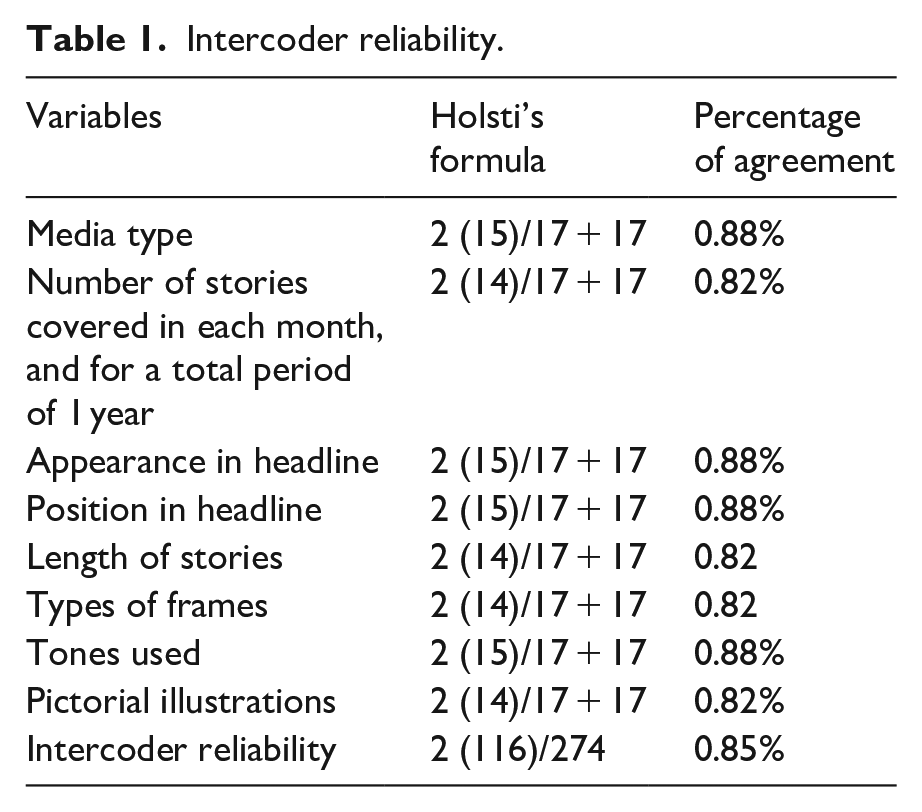
Wimmer and Dominick (2013) presented Neuendorf’s (2002) guidelines for the interpretation of intercoder reliability as follows: coefficients of 0.90 or greater are nearly always accepted, values of 0.80 or greater are acceptable in most situations and 0.70 is appropriate in some exploratory studies. It can be inferred from these guidelines that the percentage agreement between the two independent coders for this study was acceptable.
Data analysis
The data collected were entered into SPSS (Statistical Package for Social Scientists) version 25. Data were analysed using inferential statistics. One-way chi-square analyses were carried out to test for differences between categories in each of the variables investigated. The findings were then presented in the form of frequency tables and graphs.
Results
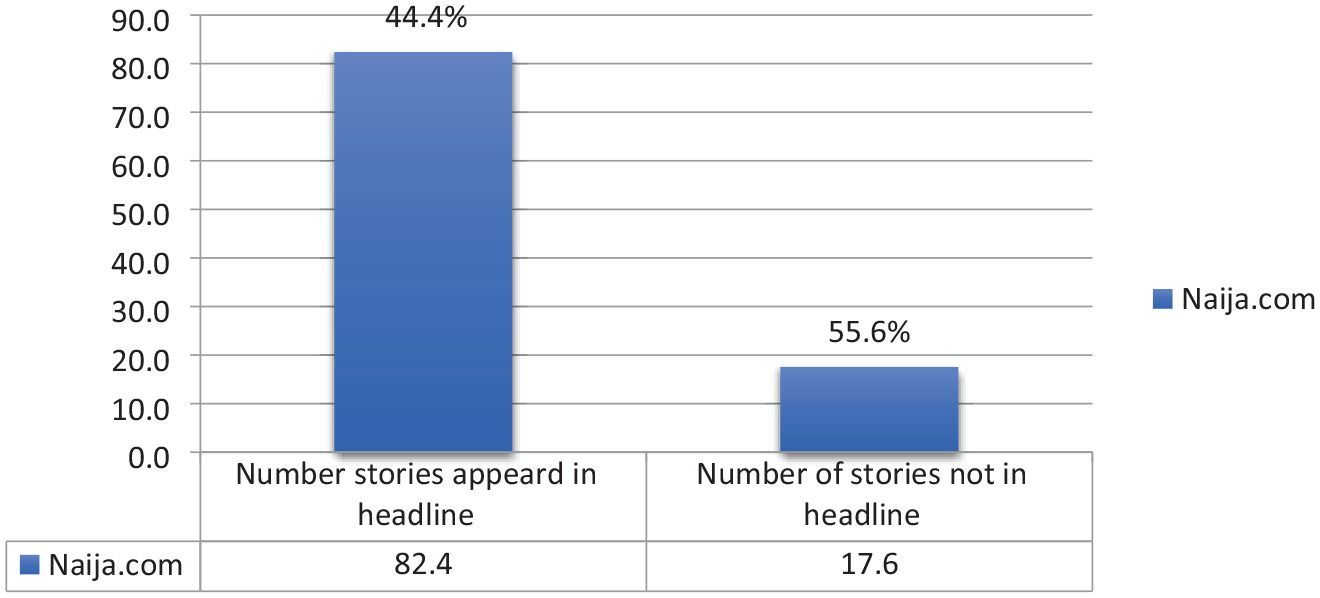
In this study, Figure 1 depicts IDPs’ stories appearing on the blog headlines. This is linked with the first hypothesis of this study which states that: H0 There is no variation in the message tones used in the representation of IDPs in the Nigerian blog. A one-way chi-square analysis showed a significant variation in the appearance of IDPs’ stories on the blogs, χ2(df = 1) = 5.857, p = 0.000, suggesting that the null hypothesis is rejected in place of the alternative. As such, more stories were appearing as headlines on the blog (M = 3.666667, SD = 1.037749).
A graph illustrating IDPs’ stories on Blog headlines.
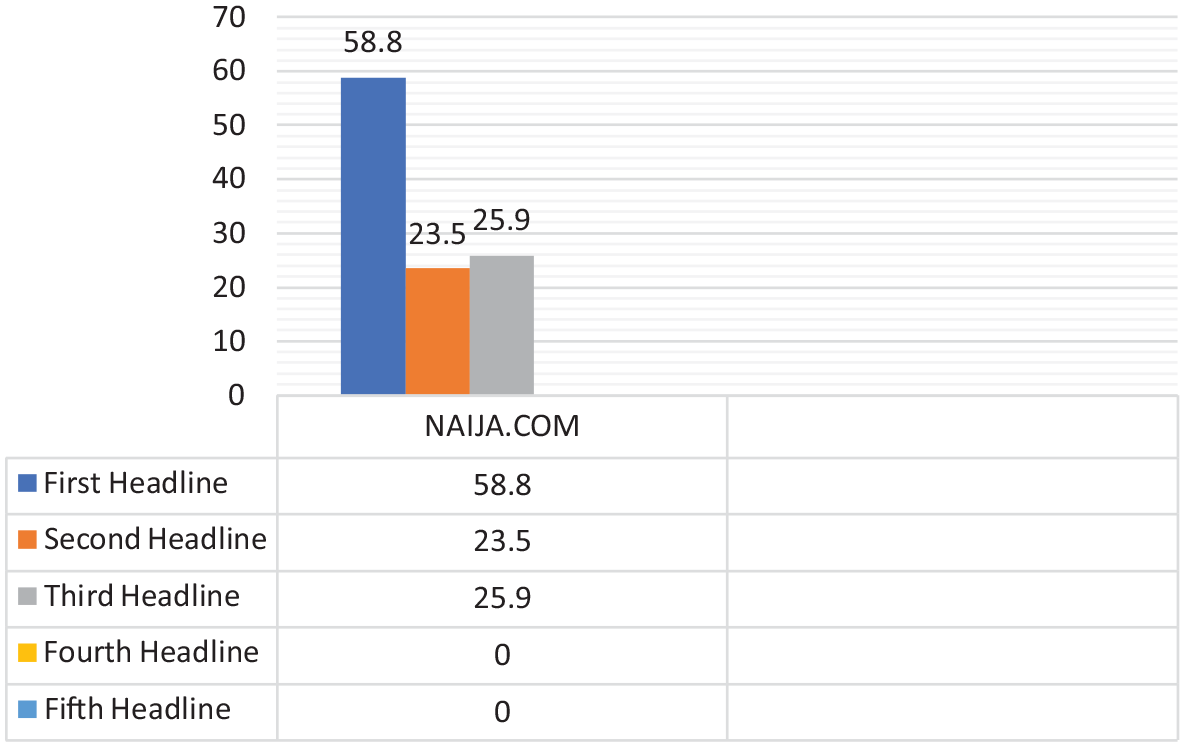
This implies that Naija.com gave prominence and importance to the stories of IDPs in Nigeria. Figure 2 is linked to the second hypothesis which states that: H0 There is no significant variation in the positions of the stories on the headline of the blog. The result rejected the null hypothesis in place of the alternative. Therefore, we found a significant difference in the appearance of the stories in the headline, χ2(df = 4) = 26.000, p = 0.000. More stories appeared in first (M = 4.6429, SD = 0.678467) and second headlines (M = 4.437500, SD = 0.759350). Overall, these results suggest that the new media (Naija.com) allocate prominence to the issues of IDPs in Nigeria as it places most of its stories (58.8%) as the first priority.
The position of IDPs’ stories in the headlines.
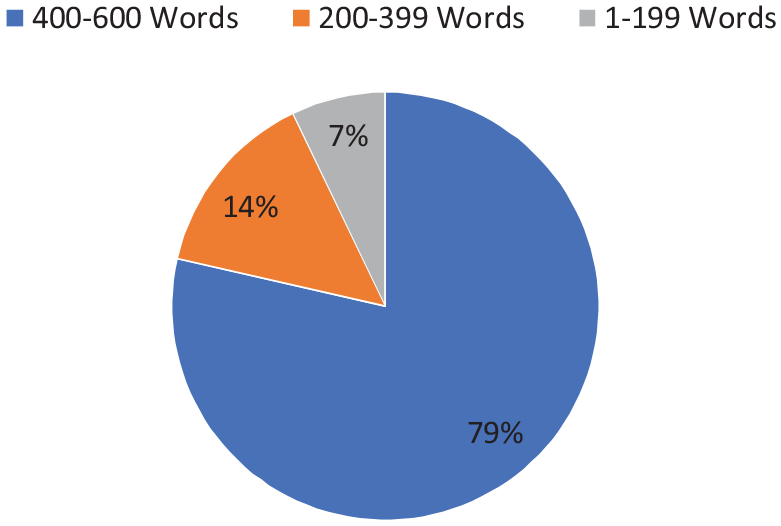
The third hypothesis states that: H0 There is no significant variation in the length of stories used in describing IDPs. A one-way chi-square with the data in Figure 3 demonstrates a significant variation, χ2(df = 27) = 79.902, p = 0.000, in the length of stories used in describing IDPs. Therefore, the null hypothesis is rejected. It was observed that a large number of the stories were described in 400–600 characters (M = 4.906250, SD = 1.613639), 14% were between 200 and 399 characters (M = 2.592593, SD = 1.083416) and only 7% were between 1 and 199. This indicates that Naija.com allocated a considerable number of words to the stories of IDPs.
Demonstrating the length of news stories (i.e., number of characters) in Naija.com.
Furthermore, Figure 4 which is linked with the fourth hypothesis which states: H0There is no significant variation in the tones used in describing the IDPs reveals that there was a significant variation with regard to the tone of the stories, χ2(df = 4) = 22.143, p = 0.000, of IDPs on the Blog. Suggesting that the null hypothesis is rejected, more negative tones (64.3%) were used in describing the issues of IDPs across the camp.
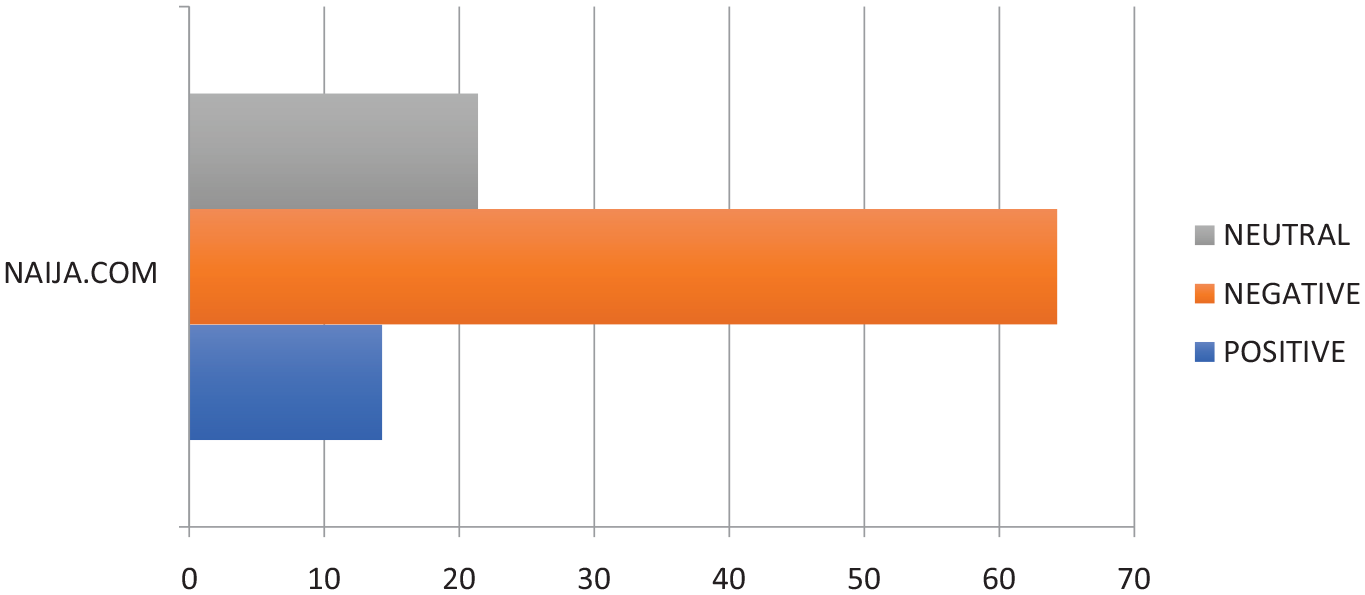
The tone adopted in the coverage and portrayal of IDPs in the various camps in Nigeria.
With regard to the news and visual frames used in the coverage and portrayal of IDPs, the fifth hypothesis which states: H0There is no variation in the news and visual frames applied in the alternative (blog) coverage of IDPs was computed. The results were in favour of the alternative hypothesis; as such, the null hypotheses were rejected. First, a variation was found in the news framing of IDPs stories, χ2(df = 17) = 29.475, p = 0.003. In particular, about 28.6% of Naija.com stories of IDPs portrayed them in a vulnerable state, 25% of stories infused human interest in the portrayal of IDPs in various camps and approximately 21.4% of stories focused on security risks and 17.9% focused on aid/humanitarian assistance (Figure 5). Only a few stories were framed to suggest government financial/physical support (7.1%).
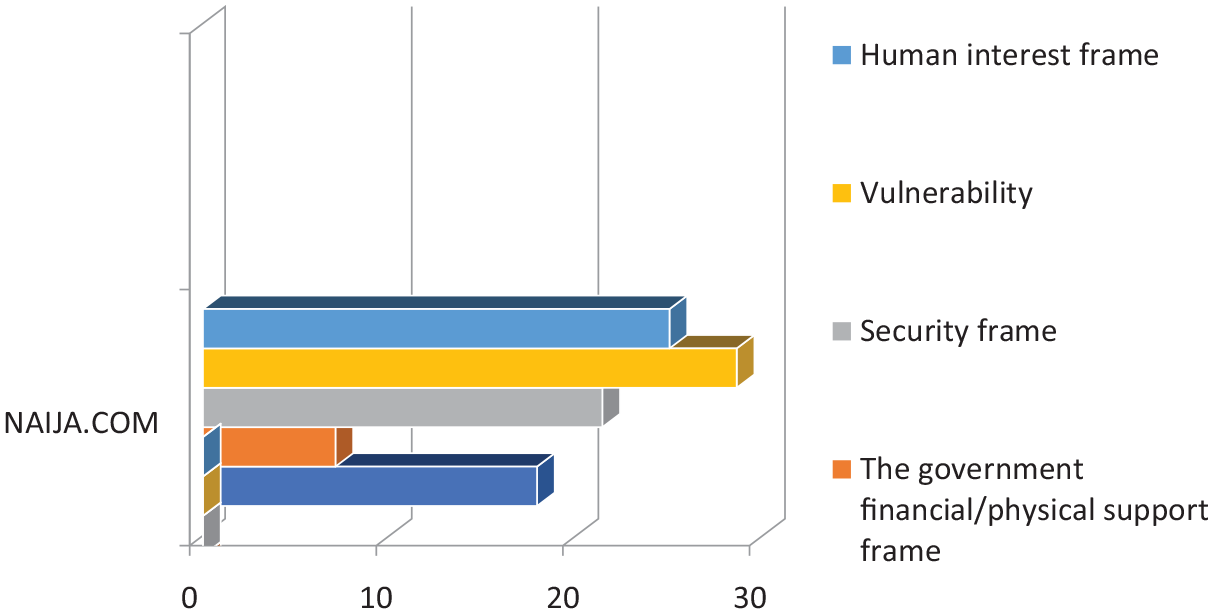
Evidencing the news frame used in the coverage and portrayal of IDPs in the various camps in Nigeria.
Unlike most conventional media, especially government that might concentrate on governmental support and framed stories to portray the IDPs being supported by the government, Naija.com only had a minimal number of stories (7.1%) depicting governmental intervention, while most of its stories depicted the IDPs in a vulnerable state and exposed to various diseases, portrayed them in a place that aroused human interest and conveyed that they were in a security prone situation. Hussain (2016), who examined the media’s treatment of IDPs in Pakistan in the Daily the Nation, Daily the news and Daily Dawn newspapers found that the themes that supported the government appeared more in the government newspapers. In addition, a significant variation in visual frames used in the blog, χ2(df = 3) = 8.092, p = 0.004, was found. Most of the stories on IDPs (85.7%) incorporated realistic still/graphic pictures (M = 4.437500, SD = 0.759350), which showed photographs of IDPs in various camps. These pictures vividly showed the IDPs in a vulnerable state, prone to attacks, raped, fed inadequately and in need of humanitarian assistance (see Figure 6). Congruently, 14.3% of the stories carried stock and archive photos (M = 2.592593, SD = 1.083416); however, this was sparingly employed in governmental support stories, human-interest reports and reports showing the vulnerable state of the IDPs (see Figure 6).
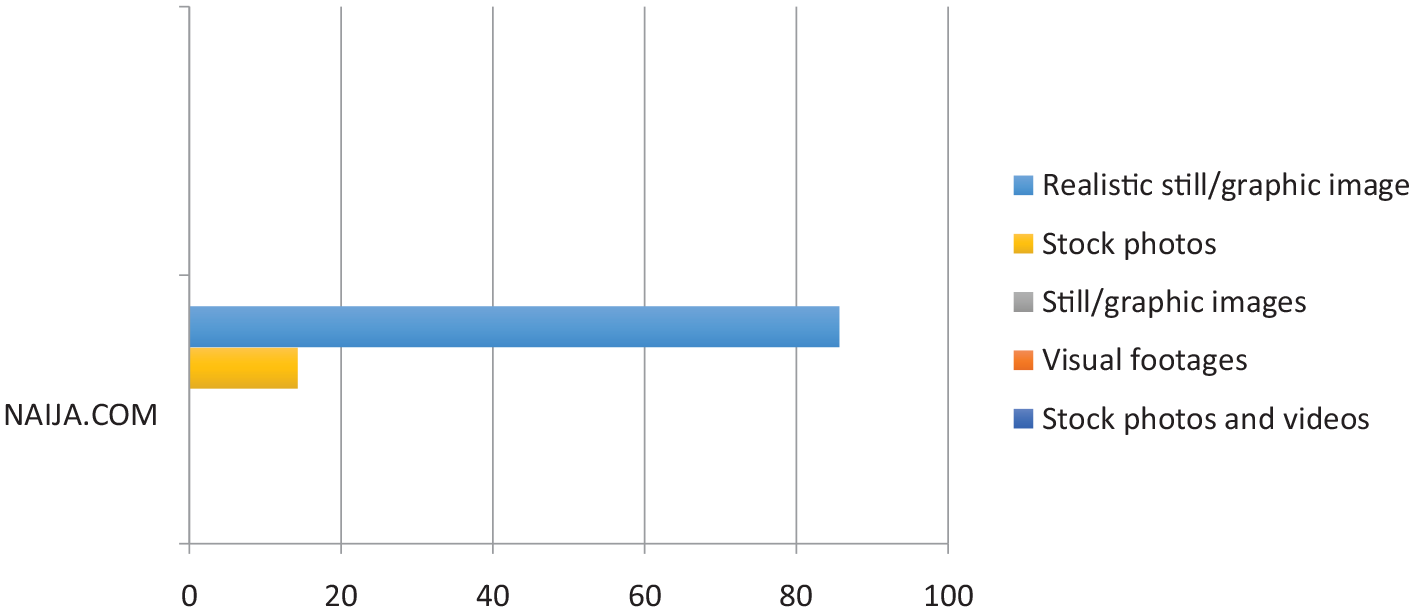
The visual framing adopted.
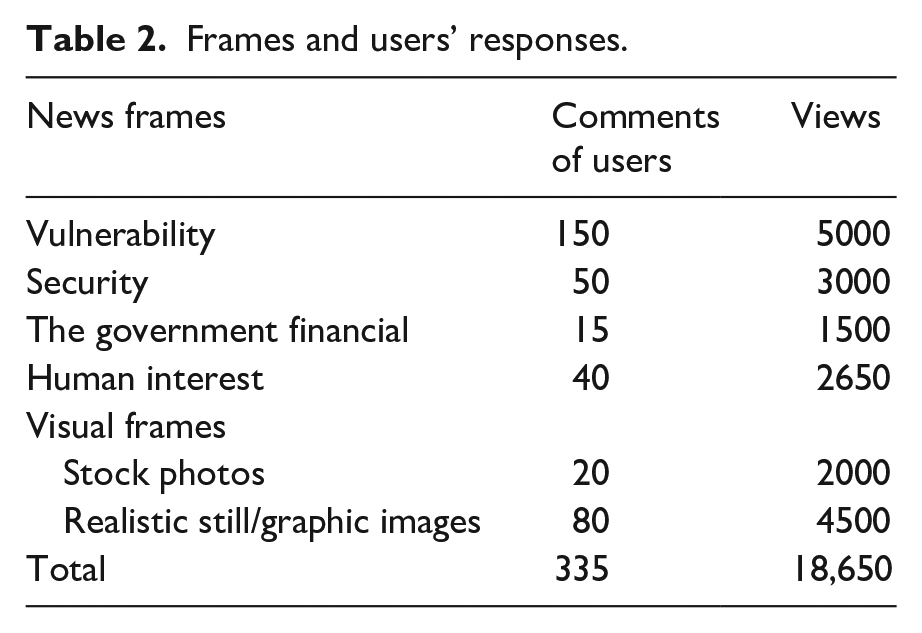
Having realized the frequency of IDP coverage and frames used, the sixth hypothesis which states: H0There is no association between the frames used in describing IDPs stories and the comments and views regarding the posted stories was computed. A significant association between the news frame and comments, χ2(df = 3) = 23.472, p = 0.000 as well as news frames and the views, χ2(df = 3) = 29.475, p = 0.000 was found. Stories that framed the IDPs in a vulnerable state had a greater number of views (M = 4.906250, SD = 1.613639) and comments. (M = 2.592593, SD = 1.083416). In addition, a significant association was found between the visual frames and comments, χ2(df = 2) = 22.956, p = 0.000, as well as views, χ2(df = 2) = 33.471, p = 0.000. The realistic still/graphic images attracted more comments (M = 4.905250, SD = 1.613639) and views (M = 3.592593, SD = 1.083416) than the stock photos (M = 2.666667, SD = 1.037749). Therefore, null hypothesis 6 was rejected in place of the alternative (Table 2).
Frames and users’ responses.
Discussion
This study looks at how blogs covered IDPs in Nigeria between October 2018 and October 2019 and how they engaged with readers. About 85 IDP-related stories were published on Naija.com. Conclusively, the study discovered a substantial difference in how often IDPs articles appeared on blogs, how often they appeared in headlines, how long they were used to describe IDPs and how they were written. Specifically, a total of 85 stories on IDPs were covered by Naija.com from October 2018 to October 2019, which is way higher than the combined coverage of Television and blog as reported by Apuke and Tunca (2019). This implies that the blog gave prominence to the coverage of IDPs’ stories. Evidence has shown that through the framing and the agenda-setting process, media coverage influences public attention towards a particular issue (Kitzinger, 2004).
On the contrary, evidence has shown that the positioning of news stories within the first three headlines is indicative of the level of importance a media outlet assigns to it and this plays a role in agenda-setting (Wang & Gantz, 2007; Yorke, 2013). Thus, the new media provides an opportunity for the IDPs’ stories to be heard. Overall, there is a substantial relationship between the length of a news report and its perceived importance (Cissel, 2012). The allotment of time and article length can influence the readers’ and viewers’ perceptions regarding the importance of an event. According to Patel (2017), a longer post addresses the topic with a level of depth that is simply impossible with a shorter post. Evidence has indicated that the amount of coverage media allocate to a particular topic can influence public opinion; the media can emphasize certain attributes of an issue to make it more salient (Facchini et al., 2009). Naija.com, which is an alternative media and an offshoot of the new media, seems to allocate a considerable number of words in describing the issues of IDPs.
Furthermore, findings on the variation of tones used in describing IDPs suggest that the suffering, hunger, rape and crises faced by IDPs in various camps in Nigeria (Raji et al., 2021) to a large extent is exposed by the sampled blog. Similar to other developing countries such as India (Nasir et al., 2022), generally media in Nigeria identify the deepening crisis of the vulnerable persons and portray their plight. However, from these findings, it can be deduced that the alternative media made a superior portrayal of the aspirations and yearnings of IDPs (see Figure 7). As such, evidence from prior studies has proven that an actual and realistic visual representation of issues could attract the attention of the audience to understand the adversity of a situation (Greussing & Boomgaarden, 2017). Thus, visual framing is a powerful tool in the hands of journalists and editors who use it to depict the severity of a particular issue (Bushehri, 2017). Finally, consistent with this result, a prior study found an association between political posts on blogs and users’ engagement (Nelson et al., 2018). This implies that blogging is now an asset in the current information society driven by remarkable advancements in the development of information and communication technologies.
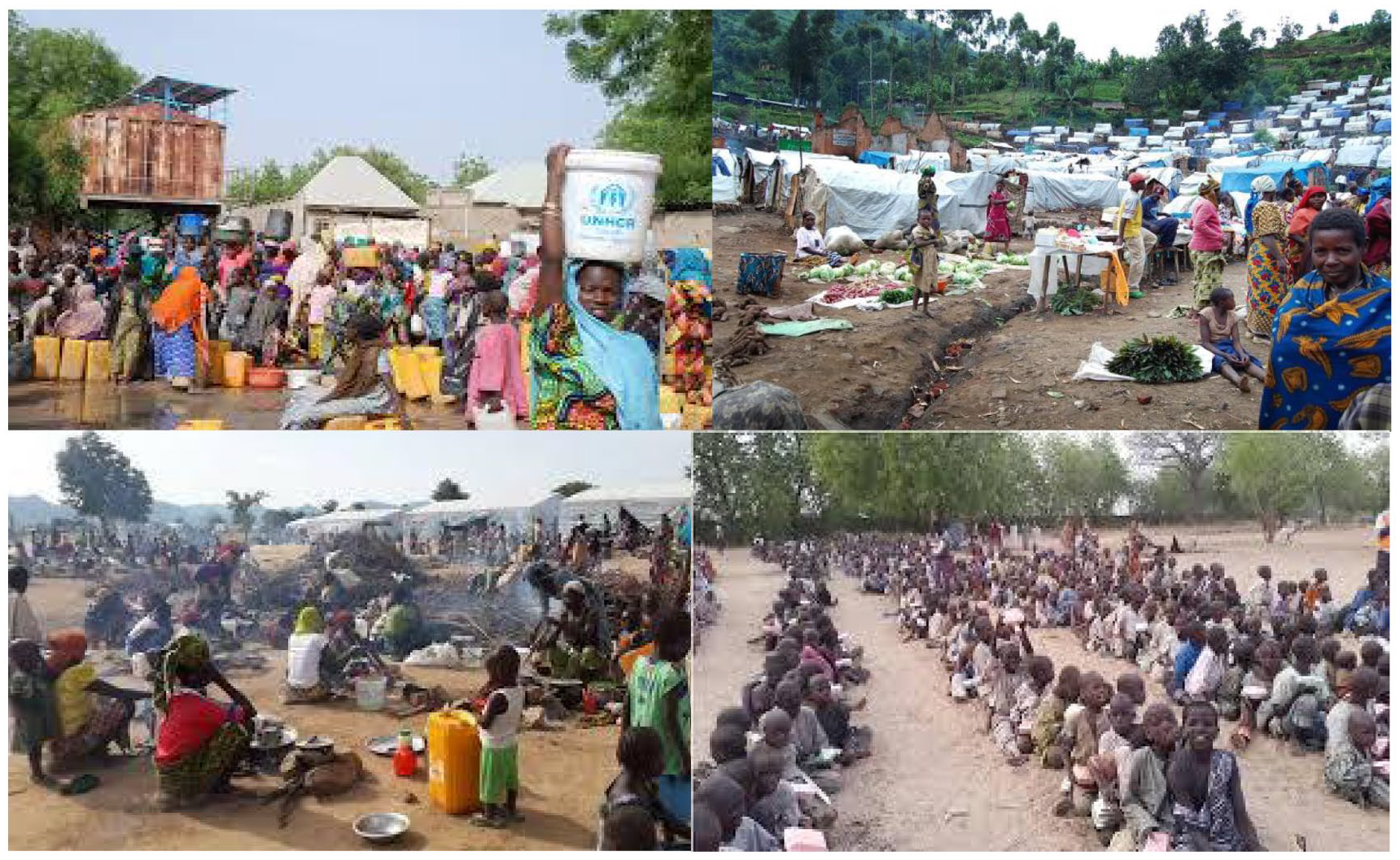
Pictorial illustration of IDPs’ living conditions in Nigeria (Naija.com).
Conclusion
From the data collected and examined by the researchers, it was apparent that blog sites are a functional medium for the dissemination of information. Approximately 85 stories on IDPs were covered in the sampled blog. All the alternative hypotheses were accepted in which a significant difference in the appearance of IDPs’ stories on the blogs, appearance of stories in the headline, length of stories used in describing IDPs, the tone used and frames were found. Also, a significant association between the frames used and users’ comments and views online were found. Stories that framed the IDPs in a vulnerable state had a greater number of views and comments and those that had more realistic still/graphic images attracted more comments and views. Most of IDPs’ stories covered in the blog appeared on its headlines, suggesting that blogs in Nigeria give prominence and importance to the stories of IDPs.
In terms of story length, a large number of the stories were described in 400–600 characters, indicating that Naija.com allocated a considerable number of words to the stories of IDPs. Most of such stories describing the issues of IDPs across the camps in Nigeria were in a negative tone. In this regard, more stories portrayed them in a vulnerable state and infused human interest, and only a few stories were framed to suggest government financial/physical support. This implies that Naija.com focused very little on governmental support stories, and posted more stories that demonstrate the IDPs who are in a vulnerable state and exposed to various diseases, a situation that arouses human interest, and stories that depicted them in a security-prone situation. As such, most of the stories on IDPs used realistic still/graphic pictures. These pictures vividly showed the IDPs in a vulnerable state, prone to attacks, raped, fed inadequately and in need of humanitarian assistance. Drawing from the premise of the framing theory, which is the bedrock of this research, it can be seen that blog coverage influences how the public will understand and react to issues of IDPs. The portrayal and representation of IDPs by Naija.com, which is a form of new media to a large extent, depicts them in a bad condition and this information guides the public on how they should think about these issues.
Indeed, the blog has been able to facilitate the public’s understanding of the living conditions of IDPs, such as clashes between them and authorities, instances of deaths in the camp, the humanitarian responses, the hardship, the cases of rape as well as other events related to the IDPs. Thus, the issues of IDPs have been shown by the present study to be covered using different visual and news frames, by implication arousing the public’s emotions towards the aspirations and yearnings of internally displaced individuals. As the framing theory suggests, the way and manner in which IDPs’ stories are portrayed on blogs go a long way in influencing the public towards the situation surrounding them. Past studies reported that the mass media in Nigeria are not timely in their reportage and have not effectively played a surveillance function, neither have they displayed a high level of objectivity in their reports (Afolabi, 2010; Hamid & Baba, 2014). They are primarily used to promote the interests of their owners and are characterized by manipulation and distortion to suit the ideology or political agenda of the nation, as well as the media house or prominent individuals (Awobamise & Aderibigbe, 2015).
The claim that the new media, which has given rise to citizen journalism, could be more helpful in demonstrating the issues of IDPs has been brought to the fore in this study. It should be noted that the use of blogs to cover the issues of IDPs is made more possible because the new media represents a shift from the hypodermic needle assumption of one-way communication and through blogs, news spreads like wildfire in split seconds, because the word does not need to wait for an editor to process it, and feedback is prompt. The public receives the opportunity to respond to the news instantly and can even contribute to the content. This has been helpful in the reportage on IDPs, as demonstrated in the current research.
It can be learned from the case of Nigeria that blog is an important medium that could be used to report and frame cases that the mainstream media fail to report, and it could also be used to demonstrate the suffering, yearning and aspiration of displaced people, thereby attracting humanitarian responses. This is consistent with the claim of Alemoh and Ishima (2013), who suggested that the factors that are omitted by the mainstream media could easily be captured by citizen journalists through the various new forms of media. Indeed, blogs promote non-commercial journalism, which propagates the interests and yearning of those excluded from the mainstream. Thus, blogs provide an avenue for the public to create, frame and disseminate news content on IDPs, which in turn may attract more humanitarian responses, because the actual stories of IDPs in Nigeria seem to be adequately covered and disseminated by blogs, and are not just lost in statistics and reports of humanitarian responses. Consequently, blogging has become an asset in the current information society, which has been driven by remarkable advancements in the development of information and communication technologies. Consistent with this inference, a recent content analysis found that the issues of political conflict were prominently placed, usually on the front page of Nairaland (blog in Nigeria), and it was observed that the subject matter with the highest amount of coverage, as well as participation, was the conduct, comportment, and activities of elected political officials in Nigeria (Nelson et al., 2018). This implies that blogs are a newly adopted medium in Nigeria used to expose the ills in society. Thus, its adoption should be encouraged and used appropriately.
Practical and theoretical implications
This study contributes practically as it reinforces the essence of blogs in journalism practice. Media practitioners and journalists could integrate blog usage to extend journalism practice that encourages people to participate in discussions generated or initiated by the stories that are uploaded, thus, it is easy and convenient for users to participate in discourse and express their views regardless of geographical location, class, or other societal barriers and distinctions. Equally, journalists reaching audiences through blogs should stop focusing so much on tales about how the government is helping IDPs and instead utilize more visual videos to report on their security, danger, illness and poor condition. This reinforces the need for media practitioners dealing with blogs to recognize the effect of, and when to use, a message with a positive tone about IDPs.
Theoretically, this study insinuates that framing theory has guided in revealing the nature through which different blogs framed IDPs’ issues in Nigeria. The research demonstrates how blogs connect certain news frames to the way news is socially constructed as a routine production in which the newsworthiness of a given event or story depends on how it meets the time and space needs of the news organization. This demonstrates once more how both the quality of the IDPs’ news and the independence of the individual journalist frame events. Accordingly, this study contributes to the formation of frames as it introduced an additional frame, the governmental financial/physical support frame, which could guide future researchers who desire to explore the media portrayal of refugees and IDPs. It has also introduced a different application of the framing theory. Most studies that have applied this theory have been on either newspaper or television coverage. Hence, this extends the framing theory to show how it could also be applied to blog coverage as well as citizen journalism media outlets. Likewise, this study contributes to knowledge as it is one of the first to demonstrate blog coverage of IDPs in developing countries and validates the benefits of new media in information dissemination, which could be particularly advantageous in developing countries.
Limitations and suggestions for further research
Although this article contributes to the limited studies on the coverage of IDPs in a developing country such as Nigeria, only adopting a content analysis approach was not sufficient, as this could generate biased results and conclusions. In addition, using only one blog might not be sufficient. This study would have generated a richer result if more samples are added. Nevertheless, the present research set a stage for the importance of a blog in the coverage of displaced persons.
