




Abstract
The suspension of the micro-blogging platform, Twitter, by the federal government of Nigeria on 5 June 2021 for ‘consistent non-removal of inciting and divisive contents’, undoubtedly generated mixed feelings among social media users in and outside the country. Hinging on Ball-Rokeach & DeFleur’s Media Systems Dependency theory, this study adopts a combination of text mining, sentiment analysis and survey approaches to make evident social media users’ reactions to the Twitter ban in 2021. Of the 3885 social posts that were sampled across three platforms (Facebook, Twitter and Nairaland) between 5 June and 16 July 2021, 73% decry while just 27% extol the Twitter ban action. The Nvivo word frequency results showed that the top five keywords used across the sampled posts were: ‘end’, ‘#twitterban’, ‘unlawful’, ‘suspension’ and ‘Nigeria’ (n = 11,925; 24%), suggesting that majority of users were unhappy with the shutdown. The complementary opinion sampling conducted on students of Nile University of Nigeria revealed that the majority of the 319 sampled respondents (264; 83%) responded to VPNs to access and use Twitter despite the ban. Among the daily Twitter habits of the respondents most affected by the shutdown were Trending Topics Search (22%), Social Engagement (20%), Daily News Search (20%), Product Search (13%), Product Marketing (10%), Customer Relations (9%), Jobs Search (4%) and others (2%). The study recommends the consideration of better sanctioning means for erring social media companies that will not stifle the exchange of ideas online in this democratic age.
Introduction
In a rather unanticipated move on 5 June 2021, the federal government of Nigeria put an indefinite halt to Twitter’s operations in the country, leaving many users either perplexed, in protest, in accord with the decision, or in search of a VPN-route to illicitly access and use the now essential social site. Although several reports, such as Maclean (2021) and Princewill and Busari (2021), suggested that the shutdown was in reaction to the deletion of the president’s abstruse Twitter post by Twitter management, the president’s official spokesperson, Mr Garba Shehu, clarified in a press briefing that the move was necessitated by the unchecked use of the platform by divisive agents to propagate falsehood and hate speech, secession, disunity, civil unrest and disorder (Daily Trust, 2021).
Twitter, established in 2006 by Jack Dorsey, has grown exponentially since its inception, becoming one of the most popular social media platforms in Nigeria. As of October 2019, it boasted an estimated 39.6 million users (NOIPolls, 2019). This figure, although faulted in (Okpi, 2021), gives an indication of the level of adoption of the platform by Nigerians. The platform is not only popular among ordinary Nigerians but also widely used by government officials, politicians, and government agencies to disseminate information and keep the public abreast of issues and policies of importance (Mohammed, 2021).
The 2021 Nigerian Twitter ban marks a significant and unprecedented event in the realm of social media regulation in Nigeria. Historically, the media in Nigeria, particularly during the military regime, witnessed harsh government restrictions including censorship of contents; assault, battery and unlawful detention of media practitioners; seizure of media equipment; razing and demolition of media houses. The transition to democracy and the advent of social media platforms ushered renewed hope for freedom of speech and inclusive governance. However, the ban on Twitter in Nigeria in June 2021 signalled the government’s willingness to extend its restrictive arms to regulate social media use in the country.
Although the surge in falsified media contents on Twitter is a genuine problem, many spectators believe governments are increasingly using ‘fake news’ as pretence to consolidate their control over information and suppress dissent (Shahbaz, 2018). Similarly, the Nigerian Twitter ban was rationalized by the government as necessary to counter the use of the platform for promoting secession, disunity, civil unrest, and disorder (Daily Trust, 2021). A narrative the government hesitates to acknowledge, however, is that the ban was a response to Twitter’s deletion of the president’s cryptic post about the Nigerian civil war as well as the platform’s instrumental role in driving the nationwide #EndSARS protests in Nigeria (Elega et al., 2023).
The ban was eventually lifted in January 2022 (7 months later), but it came with conditions. Twitter had to register with Nigerian authorities, pay taxes, and comply with local media regulations–conditions that stirred public criticism because several controversial and questionable media laws that apply to local mainstream media will now apply to Twitter. Rights activists fear that the implication of the 2021 Twitter ban ‘success’ could mean eventual regulations for other equally dominant social media platforms in Nigeria like Instagram, Facebook, WhatsApp, YouTube, Snapchat and Tiktok. This fear materialized further when the Nigerian federal government laid bare its intention to see to it that these laid down conditions for Twitter will equally apply to ‘all other top social media platforms in Nigeria’ (Erezi, 2022).
At the heart of this study lies a critical research gap that warrants exploration. While existing literature has explored various aspects of social media regulation in Nigeria, much of it has focused on hypothetical scenarios or the anticipation of government actions. This is because, until June 2021, there has never been a prior instance in Nigeria where any social media platform was actually shut down. This leaves a void in our understanding of how users adapt, resist, or circumvent such bans and how these actions shape the landscape of online communication and information dissemination. This study uniquely addresses the ban by examining user reactions to unravel the complexities of how individuals and communities respond when a vital communication tool, such as Twitter, is abruptly restricted. Through an in-depth analysis of user-generated content, sentiment patterns and survey responses, our research aims to contribute to a deeper understanding of the consequences of the ban on everyday Nigerians. Furthermore, we seek to extend the theoretical understanding of media systems dependency, by assessing the theory’s applicability in the context of government-imposed platform suspensions.
Literature review
The Nigerian Twittersphere: benefits and excesses
The uniqueness of Twitter as a micro-blogging platform in Nigeria has been appraised by a number of scholars. Abdulrauf-Salau (2013) emphasized that Twitter complements the roles of conventional media and other corporate institutions in Nigeria by ensuring greater access to information and audience engagement through frequent, valuable feedback. The platform equally enables Nigerians to develop professional networks, find jobs and market their brand and themselves (Ganiyu & Akinreti, 2011). Oladapo and Ojebuyi (2017) cited how the hash-tag and retweet features of Twitter during the #NoToSocialMediaBill protest functioned effectively as collective framing tools in drawing global media and human rights activists’ attention to resist attempts to restrict free speech. Similarly, Chiluwa and Ifukor (2015) found that the #BringBackOurGirls on Twitter was not only fruitful in the global campaign for the release of the kidnapped Nigerian schoolgirls kidnapped by Boko Haram in 2014 but equally helped campaign for the rights of female children and girls to formal education in Nigeria. A reason why many of these Twitter campaigns are able to attract international attention is because of the impressive number of Nigerians on the platform. The Twitter platform ranks fifth among the most used social media platforms in Nigeria as of the third quarter of 2022 (Sasu, 2023), with an estimated 39.6 million Nigerian users as of 2019 (NOIPolls, 2019).
Beyond activism and political discourse, Twitter has found relevance in diverse sectors of Nigerian society. Research has illustrated its potential to bolster civil society, build social capital, and support public health education efforts (Armstrong & Butcher, 2018; Odlum & Yoon, 2015). For instance, during the Ebola outbreak of 2014, Twitter played a pivotal role in raising awareness, surveillance and attitude monitoring among Nigerians. Researchers recognized the platform’s utility in collecting valuable data for public health education (Odlum & Yoon, 2015).
Twitter has also proven effective in promoting library services within Nigeria (Fasola, 2015). It complements research and learning efforts among Nigerian students (Okpadah, 2018). Khadiri et al. (2020) explore the nuances of political engagement on Twitter during the 2019 pre-presidential election campaigns. They found that Nigerians often engaged with topics using sarcasm, reflecting the way citizens express their frustration when faced with challenges they feel powerless to change. This view resonates with research by Okunloye et al. (2023) which demonstrated the importance of linguistic and message features in driving information diffusion on Twitter during political activism events, shedding light on the significant role Twitter plays in shaping political discourse. In a study of Twitter use by electric power companies in Nigeria, Opesade (2021) finds that power companies appear to leverage the information-sharing ability of Twitter, while customers appear to perceive the medium as a tool for accessing improved service delivery, thus recommended a further adoption and incorporation of Twitter into customer service operation by every power company in Nigeria.
Summarily, studies have been able to justify how Twitter benefits the Nigeria information ecosystem by enabling users to reach a large number of people instantaneously through tweets and retweets, keep up-to-date with the latest information and developments, nurture and maintain relationships with experts in their fields; access a vast amount of natural data for research; and helps users reach out to businesses and corporate institutions, government officials and institutions directly through their handles.
As pivotal as Twitter has become within Nigeria’s digital ecosystem, it has not been without challenges. Instances of cyberbullying, fake news, hate speech, incitement of violence and unrest have marred its potential for positive impact. Users have faced issues related to privacy invasion, bullying, misinformation and character assassination. The platform’s open nature allows individuals, including government officials, politicians and opposition party members, to express grievances, criticize government actions and engage in heated political discourse. This often occurs with minimal interference from Twitter moderators, even when interactions involve bullying, hate speech, misinformation, or incitement of violence (Mohammed, 2021).
Likewise Obi-Ani (2020) pointed to the inefficiency of Twitter in preventing the abuse of the mediums by individuals who hide under anonymity to spread fake messages and instigate panic among members of the public. Udanor and Anyanwu (2019) found that Twitter was devoid of automated monitoring systems for hate speech detection, often relying instead on human judgement, which can be inherently subjective.
The excesses of Twitter have, on several occasions, ignited conflicts and mass uproar in Nigeria. For example, the dissemination of a graphic image of a mutilated baby, falsely attributed to an ethnic group, led to reprisal attacks and communal violence (Apuke & Omar, 2020). In another instance, the spread of fake news suggesting that drinking saltwater could prevent Ebola infection resulted in deaths and hospitalizations (Eribake, 2014). Instances like these underscore the platform’s susceptibility to malicious and incendiary content, which can exacerbate tensions and misinformation within Nigerian society. A thematic analysis of social media abuse during the 2015 general elections identified unchecked abusive comments on Twitter, ranging from spurious information to false accusations and violence incitement (Adelakun, 2018). Asides the issue of hate speech and falsehood, Amoo et al. (2013) have equally raised concerns about adolescents’ exposure to obscene sexual content and habits through Twitter, highlighting the need for vigilant monitoring and regulation of online content in the country.
Theoretical framework
Drawing from the media system dependency theory developed by Ball-Rokeach and DeFleur (1976), this study seeks to elucidate how individuals’ reliance on various communication mediums shapes the influence of those mediums on them. The interestingly polarized reactions that trailed the suspension of the micro-blogging platform, Twitter, in Nigeria on 6 June, prompt the adoption of a theory that can explains why it appears that there are as many Twitter users in support of the suspension as there are against it. Amid the chorus of criticisms directed at the federal government for suspending Twitter, there existed a segment of users who remained indifferent.
Media systems dependency theory
Simply put, the media system dependency theory argues that the more a person depends on having his or her needs gratified by media use, the more important will be the role that the media play in the person’s life and, therefore, the more influence those media will have on that person. Consequently, as more individuals become dependent on media, the overall influence of media in society escalates. Baran and Davis (2003, pp. 261–263) in their book on Mass Communication theory provided a comprehensive overview of the four key assertions outlined by Ball-Rokeach and DeFleur that underpin this theory. In the context of this study, we explore each of these assertions in relation to how Nigerian Twitter users reacted to the platform’s suspension.
First, the theory posited that the ‘basis of media influence lies in the relationship between the larger social system, the media’s role in that system and audience relationships to the media’. This is to say that media influence is connected to realities of the larger social system. An instance is the recently concluded 2023 Nigerian general, where Twitter users, driven by their civic responsibility and a desire to stay informed, immersed themselves in discussions, following live election updates, engaging in debates, and seeking diverse perspectives on the candidates and the issues at stake by leveraging the platform’s popularity in enhancing political mobilization and participation as the country’s future direction hanged in the balance. Times such as this confirm the aforementioned assertion that events of the larger social system greatly define media influence and role as well as audience relationship with media. Second, the theory holds that ‘the degree of audience dependence on media information is the key variable in understanding when and why media messages alter audience beliefs, feelings or behaviour’. This second assertion holds significant relevance to the topic of this research. Notably, not all Twitter users rely on Twitter information to the same extent. Some maintain Twitter accounts but use the platform infrequently, meaning that news and information from Twitter may not substantially impact their beliefs, emotions or behaviours. Consequently, the suspension of the platform might not evoke the same level of protest from these users as it did from heavy users who heavily depend on Twitter for information and engagement.
The third assertion reads that ‘in our industrial society, we are becoming increasingly dependent on the media to understand the social world, act meaningfully and for fantasy and escape’. This theory, in general, looks at ‘audience dependency’ from an active and rational point of view, as opposed to the varying views suggested by earlier theories of powerful media effect. Baran and Davis (2003) put it that ‘we use media to make sense of the social world; we permit media to shape our world’ (p. 320). In relation to this discourse, this suggests that as much as there are Twitter users who depend on the platform to understand the world and make better life choices, there are equally those who use the platform simply for ‘fantasy and escape’. These categories of individuals never really had a need for the platform and will expectedly be less likely to find faults in the federal government’s decision to keep Twitter shutdown in Nigeria. Those who rely on Twitter for information and meaningful engagement may be more inclined to critique the shutdown, recognizing its impact on their ability to access valuable content and participate in important discussions. Conversely, individuals who use Twitter primarily for entertainment or escape may be less likely to view the shutdown critically, as they may not perceive a significant disruption to their primary use of the platform. The fourth and last assertion reads that ‘the greater the need and consequently the stronger the dependency . . . the greater the likelihood’. As earlier established, Twitter users depend on Twitter information to meet certain objectives and achieve certain goals; thus, not every user will be affected by the shutdown.
Methodology
Mixed methods were adopted to generate and analyse relevant data that ensure empirical justification for the central focus of this study. Qualitative approach was employed for the content analysis design, while quantitative approach satisfied the survey analysis aspect. This study adopts the sentiment analysis research design within the purview of content analysis. Ncapture tool by Nvivo was employed to curate narratives about the Twitter shutdown, by systematically retrieving user comments from the web pages of two social media websites ‘Twitter.com’ and ‘Facebook.com’ as well as from Nairaland.com’, which is regarded as one of Nigeria’s most popular and most visited web forums (Sasu, 2022).
Given that this inquiry is geared towards understanding the perception of everyday people and not the position of news outlets, this study focused on user-generated discussion sites only. The choice to include Twitter.com as a sample, despite the shutdown at the time, was because a good number of Nigerians resulted in several VPNs accessing and using Twitter illicitly. Contents gathered with Ncapture were then imported into Nvivo12 for three analyses: First, a sentiment analysis aimed at identifying and categorizing opinions expressed in each comment in relation to the poster’s attitude towards the suspension of Twitter in Nigeria, which could either be positive or negative. Second, to identify and diagrammatically represent the most frequently used words in the posts retrieved. Third, to generate visualizations that give a sense of how the top three words emanating from Twitter discussions were being used across the multiple discussion sites.
For the survey, the study population was limited to undergraduate and postgraduate students. Systematic random sampling was used to select the sample respondents from 5171 students of Nile University of Nigeria. The standardized Taro Yamane formula (n = N/1 + N (e) 2) was used to arrive at a sample size of 371. Structured online questionnaire links were sent to all the chosen 371 respondents via Microsoft Outlook in a bulk email. The total number of responses was 319, amounting to 85% of the original sample size. Both Excel and SPSS computer applications were used in the analysis of the retrieved responses, and data were presented in simple tables and charts.
Data presentation and interpretation
RQ1: How did social media users react to Twitter suspension in Nigeria?
To observe public reactions that trailed Twitter suspension in Nigeria, our study made use of the Nvivo computer application to run a sentiment analysis on natural datasets (social media comments) captured from Twitter, Facebook and Nairaland. The set timeline for the search was 6 weeks (5 June to 16 July 2021). Figure 1 summarizes our findings:
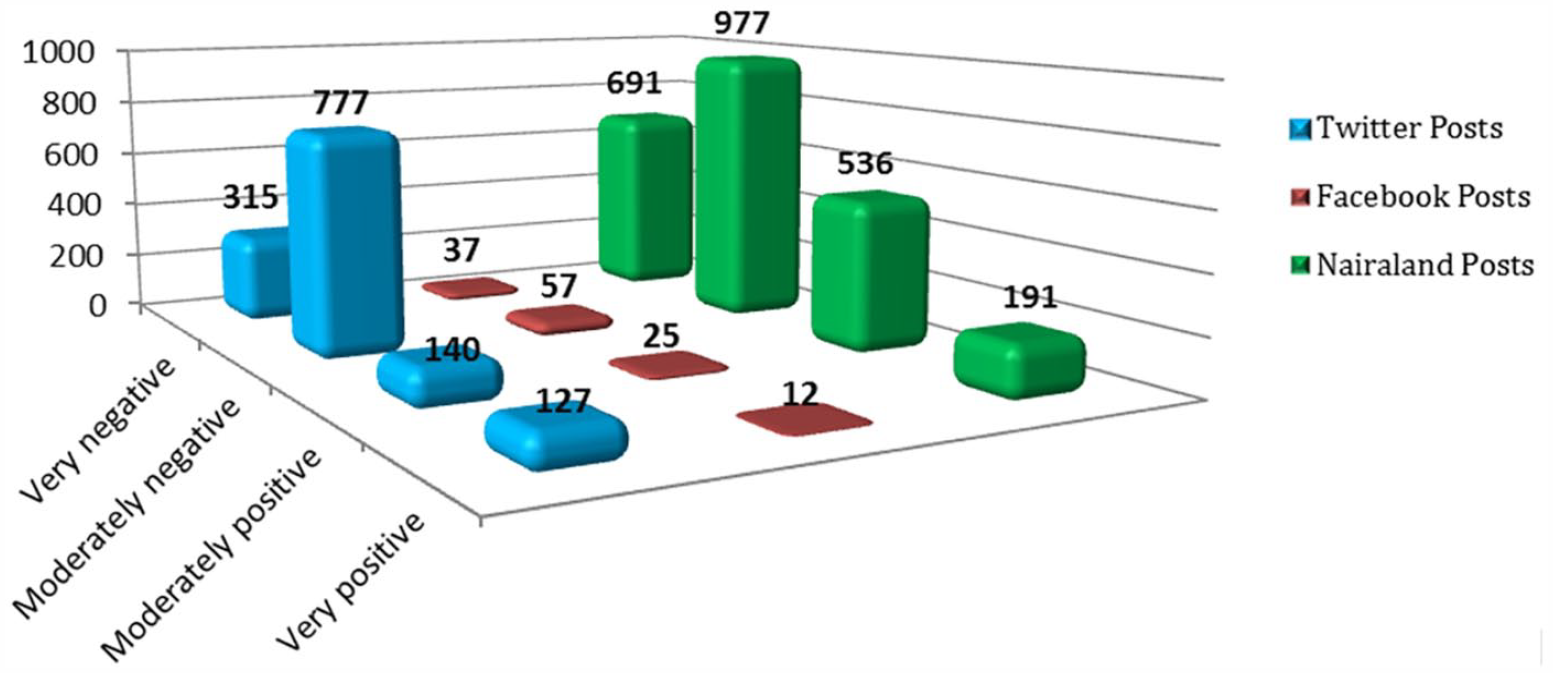
Sentiment Analysis of Social Media Users.
As can be seen above, a total of 3885 posts were sampled across three platforms, and 2854 (73%) fell under the categories of ‘very negative’ and ‘moderately negative’, while the 1031 (27%) others fell under the categories of ‘very positive’ and ‘moderately positive’. Results of the sentiment analysis equally showed that there were fewer negative comments from Facebook (3%, n = 94) compared to Nairaland (58%, n = 1668) and Twitter (38%, n = 1090).
This is most likely a result of the fewer samples retrieved from the search on Facebook. Overall, the majority of the reactions to Twitter suspension in Nigeria were negative. Figure 2 provides better insight into the word choices used by users in their reaction to the development.
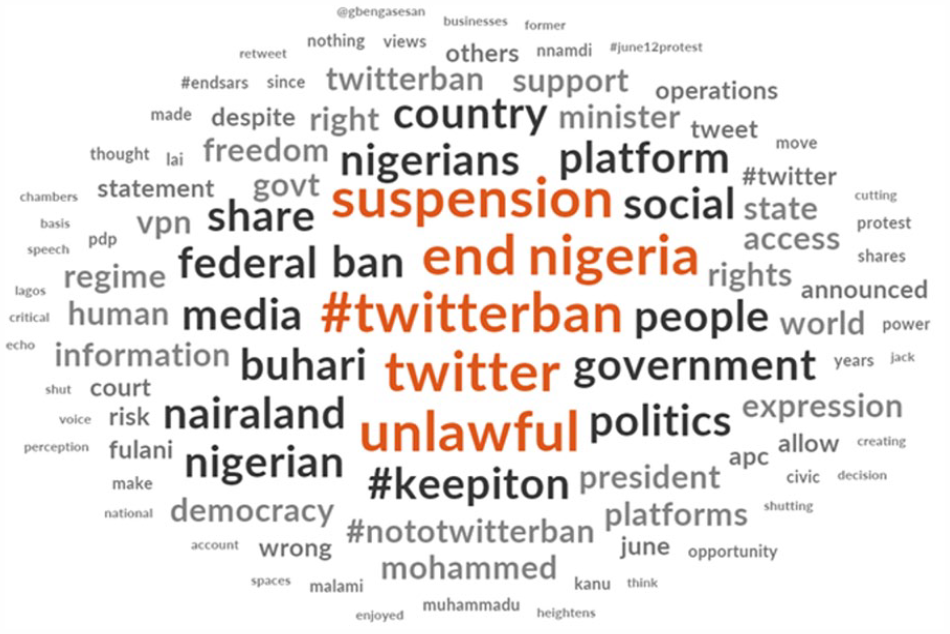
Word-cloud diagram of keywords across sampled posts.
The above word cloud diagram was generated after a word frequency search was run on the datasets obtained from Facebook, Twitter and Nairaland using the Nvivo software. The results display the top 100 most frequently occurring words across the 3885 sampled posts, with the largest words being the most dominant. Among the top 5 words were ‘end’, ‘#twitterban’, ‘unlawful’, ‘suspension’ and ‘Nigeria’ (n = 11,925; 24%). These keywords on their own suggest that the majority of users were unhappy with the shutdown. Furthermore, we generated ‘Word Trees’ on Nvivo to enable us to trace discussions in the datasets and understand the different contexts within which catchy keywords like ‘unlawful’, ‘social media’ and ‘government’ were used. Our findings indicated that posters who used the term ‘unlawful’ mainly made reference to how the move to shut down Twitter by the presidency was unconstitutional, inconsiderate and tyrannical (see Appendix 1).
Posters that used the word ‘media’ used it in relation to terms like ‘silence’, ‘squash’, ‘gag’, ‘regulate’ and ‘block’ (See Appendix 2). Some Posters that made mention of the term ‘government’ made use of very harsh and foul language to express how they feel the government is ‘bent on infringing on fundamental human rights of Nigerians’ (see Appendix 3).
As referenced in the earlier discussions on media dependency theory, the effects of a medium, in this case Twitter, stems from the interactions between that medium, its audiences and the social systems. In industrialized and information-based societies, which Nigeria counts as individuals tend to develop a dependency on the media to satisfy a variety of their needs. In the case of Twitter, these needs range from everyday communication to product marketing and promotion or news search. This result reveals the extent of the dependency on Twitter in Nigeria, especially after its abrupt shutdown in 2021, as it shows that the top 100 most frequently occurring words in the sampled collection of posts about the ban were objecting, dissenting and rebellious even.
The media dependency theory further posits that three types of effects (cognitive, affective, and behavioural) result from audience members’ dependency on media (Ball-Rokeach & DeFleur, 1976, 1979). Cognitive effects, which involve changes brought about by media in audiences’ attitudes, beliefs and values, are evident in the discourse of Twitter use in Nigeria, as the platform is commonly used for political agenda setting by several actors. The affective effects on the other hand connotes the fears by many users that a ban on a platform like Twitter will hinder unmitigated opportunity to air political opinions, criticize the government, speak truth to power or give room for opinion moulding, ultimately leading to an increase in the feelings of alienation as provided by the theory.
The behavioural effects of media dependency, which is likened to "activation", involve audience members "doing something they would not otherwise have done" as a consequence of media dependency (Ball-Rokeach & DeFleur, 1976, 1979), which was the case of many Nigerians who resulted to illegally using VPNs to access Twitter as confirmed in the survey results presented in RQ3.
RQ2: What daily Twitter habits were most affected by the suspension?
For a better understanding of how the shutdown affected the daily Twitter habits of our respondents, we provided a multiple-response table that allowed our respondents to tick as many of the likely effects of the shutdown which they think apply to them. The results, as can be seen in Figure 3, indicated that the concerns of the respondents were more centred on the hindrances to their daily tweet engagements, news, and trends search (62%) compared to product marketing, search and customer relations (32%). At least 4% indicated that the inability to use Twitter for job search, as a result of the shutdown, was a concern for them. Despite this VPN route, the damning effects of the shutdown were still evident among Twitter users. Statista.com estimates that around six million U.S. dollars may be lost daily as a result of the shutdown. In a report by Africanews (2021), Nigeria lost at least $243 million in the first 51 days of the Twitter shutdown. These losses may be attributed to the inability of local users to market their products or engage their customers, as indicated above by our respondents.
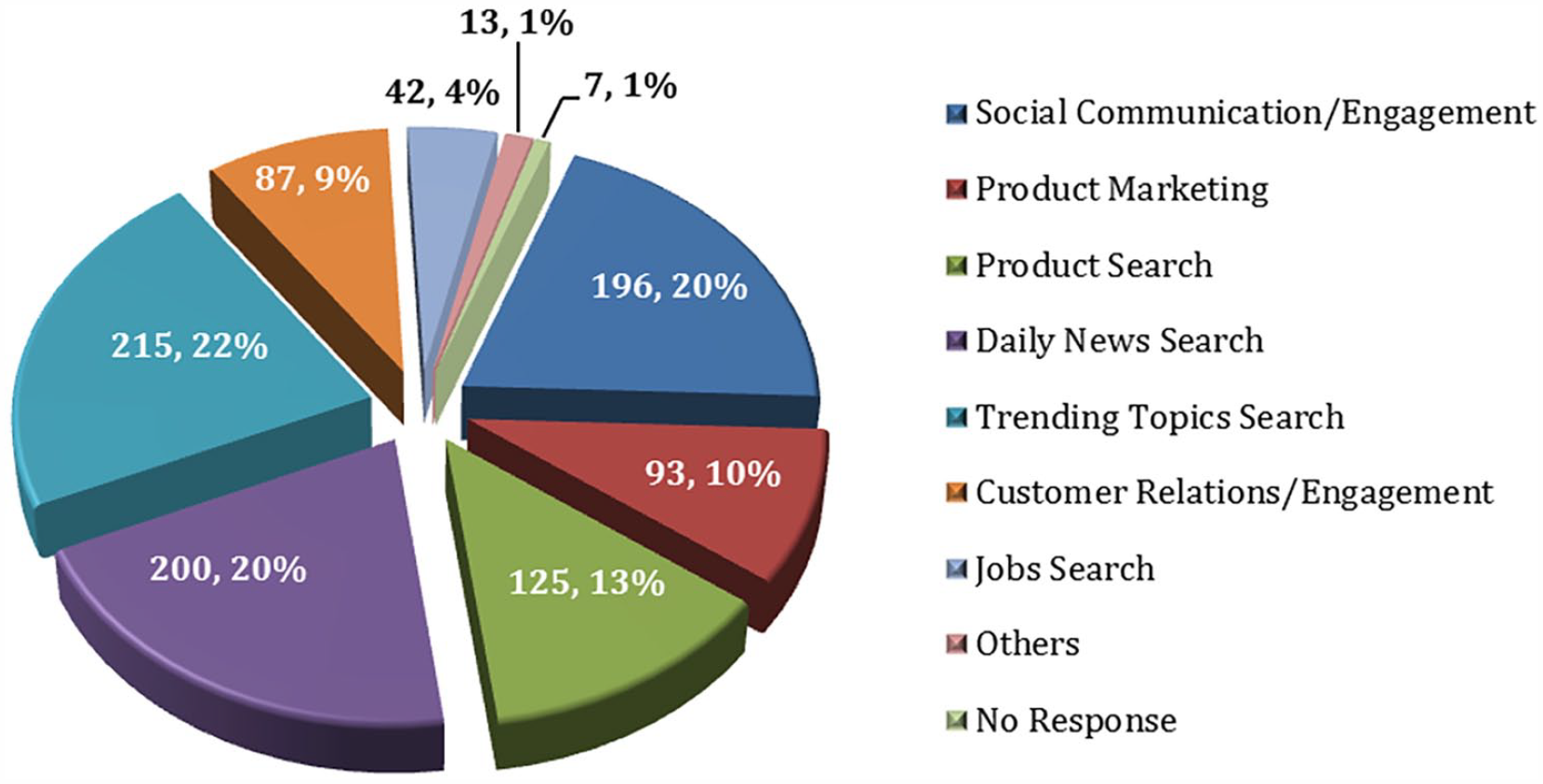
Which of your daily Twitter habits were most affected by the suspension? Tick as many as applicable.
RQ3: How did the suspension affect the interest levels to use Twitter?
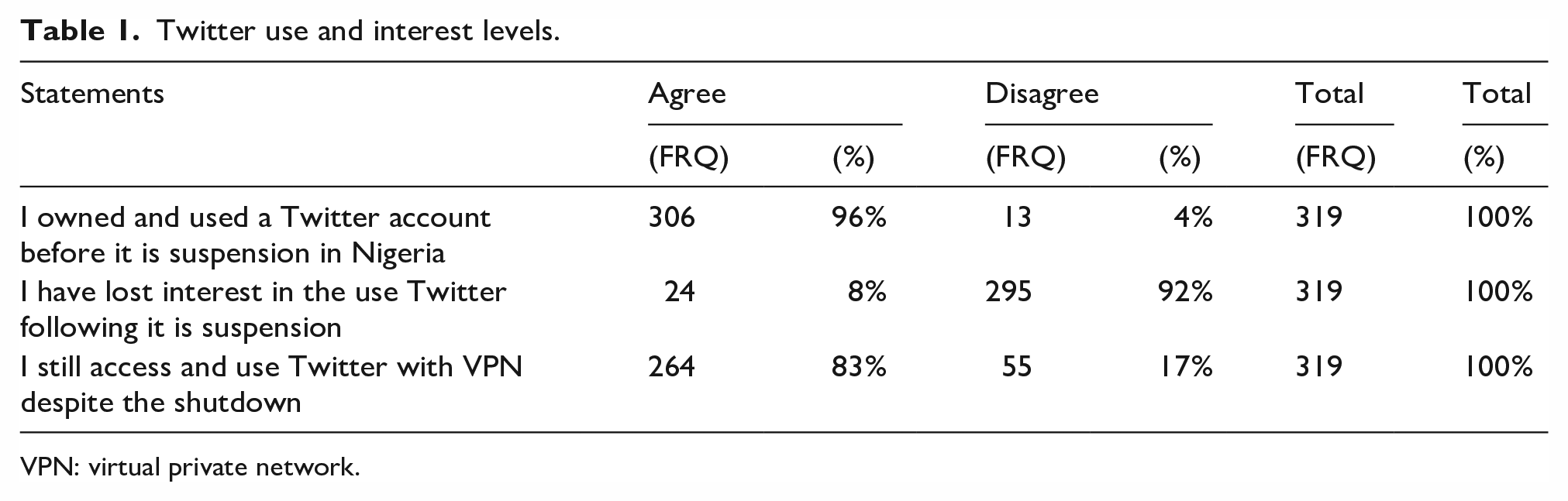
To find out how the shutdown on Twitter has affected the interest level of Twitter users since 5 June 2021, we considered responses provided by twitter users among Nile University of Nigeria students, as indicated in Table 1.
Twitter use and interest levels.
VPN: virtual private network.
As can be seen above, only 4% of our 319 respondents did not own or use a Twitter account prior to the shutdown. The majority of those that did (n = 306, 96%) were not deterred by the suspension. During the shutdown, many Nigerians resorted to using VPNs to access and use twitter, and this fact has been confirmed by 83% of our respondents. VPNs, when installed on computers or mobile devices, serve as encrypted connections that disguise the online identities of users, thus making it possible for Nigerians to access Twitter while posing as foreigners.
As disclosed by the vice president of Express VPN, one of the most commonly used VPNs by Nigerians, the Express VPN saw a 200% increase in web traffic from Nigeria since the shutdown on 5 June (John, 2021). This finding indicates that despite the ban, the interest levels to use twitter were still high among a good number of Nigerians.
Discussion
The findings of this study provide valuable insights into the complex interplay between digital rights, public sentiment and politics in contemporary Nigeria. The study’s sentiment analysis results, which overwhelmingly revealed negative public sentiment surrounding the Twitter suspension, shed light on the importance of digital rights and freedom of expression. In a digital age where social media platforms serve as essential channels for citizens to voice their opinions, share information and engage in public discourse, government actions that curtail access to these platforms were met with resistance. The survey results indicated the resilience of Nigerian Twitter users in the country who turned to VPNs as a way to get around the restriction. This phenomenon reflects not only the deep-seated desire for unrestricted digital access but also the limitations of government-imposed restrictions in an increasingly globalized world. The negative sentiment expressed by users and the subsequent legal challenges against the government’s actions emphasize the significance of digital rights as a fundamental aspect of modern democracy. Governments worldwide face the challenge of balancing national security concerns with safeguarding citizens’ freedom of expression online, and this study highlights the consequences of failing to strike that balance effectively.
Furthermore, the economic fallout that trailed the ban underscores the interconnectedness of digital platforms and economic prosperity. Social media platforms are not just spaces for personal expression but also critical tools for businesses to connect with customers, promote products and drive economic growth. The government’s decision to suspend Twitter inadvertently disrupted these economic activities, revealing the delicate balance between digital rights and economic stability in the country.
The sentiment and textual analysis results reveal that users often framed the suspension as unconstitutional and tyrannical. These narratives resonate with broader concerns about the state of democracy and governance in Nigeria. While prior research has explored the impact of social media regulations in various contexts, the Twitter suspension in Nigeria represents a distinct case study. Therefore, the novelty of these findings lies in their examination of the sentiment of Nigerian Twitter users, shedding light on their reactions and sentiments in response to the government’s actions. By doing this, the study uncovers the depth of public opinion and the framing of the suspension by Twitter users as unconstitutional and tyrannical.
Limitations and suggestions for future research
Data collection for this study covered a period of 6 weeks following the Twitter suspension. While this timeframe allowed for capturing immediate reactions, it did not suffice for the long-term consequences and other evolving narratives that surrounded the suspension in the months that followed. In addition, the sentiment and textual analyses relied on data from Twitter, Facebook and Nairaland. Though popular, these platforms may not fully represent all online conversations about the suspension. Furthermore, the study primarily focused on undergraduate and postgraduate students from a single university in the federal capital, which may equally not represent the diverse demographic and socioeconomic backgrounds of the entire Nigerian population.
Future research could benefit from a more diverse and representative sample. In addition, examining changes in sentiment and user activity over an extended period can provide valuable insights into the long-term effects of such actions. To complement the quantitative measures adopted in this study, future research could delve deeper into qualitative investigations, such as interviews and focus groups, to provide a richer understanding of the motivations, emotions and perceptions of individuals affected by social media suspensions. Similarly, analysing the government’s perspectives on the matter can contribute to a holistic understanding of why Twitter was banned in the country.
Conclusion
This study set out to unravel public reactions to Twitter shutdown in Nigeria. Textual and sentiment analysis was employed to analyse natural datasets (comments and posts) from social media sites and web forums. Analysis of the 3885 posts recorded showed that 73% were negative reactions, while 27% were positive. Complimenting this finding were the survey results of Nile University of Nigeria students, which showed that 83% of respondents accessed and used the Twitter platform during the period of the ban with the help of VPNs.
The primary reasons cited by the federal government for the shutdown of Twitter in Nigeria revolved around the irresponsible use the platform for unchecked propagation of violence and falsehood. Given that human irresponsibility is a pervasive trait, this study recommends the consideration of fairer sanctioning means that will not stifle the exchange of ideas online in this democratic age. It is not uncommon for countries to create laws to fine social media companies that fail to identify and remove harmful content on their platforms within a specified time period. In Germany, the 2017 Network Enforcement Act, otherwise called the ‘NetzDG law’, functions to oblige social media platforms to remove harmful content within 24 h or face fines if they default. Rather than outright shutdowns, the Nigerian government should consider adopting similar measures to incentivize social media companies to take a more active in content moderation.
As indicated in the findings from this study, the shutting down of social media sites as a response to online misconduct will only yield economic losses for Nigeria while still hindering vital social communication and online engagements in Nigeria. This is confirmed in this study as respondents reported that the ban affected their abilities to interact as usual (196; 20%), carry out their daily product marketing (93; 13%) or engage with their customers (87; 9%) or carry out product search (125, 13%). Therefore, it is clear that alternative strategies must be explored to address the challenges posed by online misconduct while preserving the benefits of digital communication in Nigeria.
Footnotes
Appendix 1
Appendix 2
Appendix 3
