




Abstract
This article explores coronavirus-related internet memes in the Nigerian WhatsApp space, to examine how multimodal elements are used for evaluation and intersubjective positioning. The theory utilises Kress and van Leeuwen’s visual grammar and Martin and White’s appraisal theory. The data, which comprise 147 purposively selected internet memes, were analysed qualitatively. The findings indicate that the meme producers employ verbal and non-verbal elements that show negative affect, judgement and appreciation of things. Using multimodal concepts, the represented participants are able to engage with the public through resources of disclaimers, entertainment, pronouncement and attribution. The study concludes that meme producers engage their addressees through appraisal resources to achieve their communicative goals of complaining about the negative effects of the pandemic on the people, evaluating the behaviour of different agents during the pandemic as well as providing support for people.
Introduction
The coronavirus (COVID-19) pandemic has posed a huge threat to public health worldwide since its emergence in China in late 2019. In Nigeria, 266,598 had contracted the disease while 3155 had died from the disease as at 10 March 2023 (John Hopkins University, 2023). Owing to COVID-19’s highly contagious nature, lack of vaccines and appropriate drugs to treat the disease as at the beginning of the pandemic, many nations of the world had to issue stay-at-home and lockdown orders. These directives led to the shutdown of businesses, recreational centres and schools across the globe. A number of countries, especially in the developed world were able to manage the situation by providing relief funds and materials for people and businesses. However, in developing countries such as Nigeria, there were inadequate relief funds and materials, which led to negative situations such as hunger, insecurity and inadequate health and social amenities, even though the rate of infection and fatalities were low compared to many other developed countries (see Onwujekwe et al., 2020; Unuabonah & Oyebode, 2021). All these factors created avenues for the people to evaluate the government and other citizens on their attitude towards the pandemic as well as the management of the pandemic. With the lockdown, many Nigerians resorted to different social media platforms, such as WhatsApp, Twitter, Facebook and Instagram, to express their opinions about the way the crisis was being handled in the nation. This was more so as the social media had made the expression of opinions and evaluation of situations easy without any fear of arrest (Kushin & Yamamoto, 2010). Today, through different social platforms, citizens express their judgements of other people and situation and seek to ‘to influence the attitudes and behaviours of others’ (Halliday, 2007, p. 184).
Evaluation, as opined by Hart (2014, p. 43) is concerned with ‘the way speakers code or implicitly convey various kinds of subjective opinion in discourse and by so doing attempt to achieve some inter-subjective consensus of values with respect to what is represented’. While expressions of evaluation and intersubjective positioning may be expressed through verbal means, such evaluations may also be expressed through non-verbal means such as the use of memes. Memes are digital items which share common features such as content, form and/or stance and are ‘circulated, imitated, and transformed via the internet by multiple users’ (Shifman, 2014, p. 341). Internet memes can be described as communicative artefacts that are social and cultural in nature (Wiggins & Bowers, 2014), which are used to communicate different messages within the digital space. They are conceived as ideas laden with socio-cultural loads used as signifiers within a particular social context of use. Thus, Shifman (2011, p. 189) stresses the place of human agency as an integral part of the conceptualisation of memes, describing them as ‘dynamic entities that spread in response to technological, cultural, and social choices made by people’. Although memes have their origin in Dawkins’ study on evolution long before the emergence of digital culture (Wiggins & Bowers, 2014), their proliferation in modern communication arose due to the nature of the internet. The social media, in particular, have changed the ways in which memes are transmitted or spread and they have provided the most fertile environment for their replication (Du Preez & Lombard, 2014). According to Du Preez and Lombard (2014), any internet user can create a meme on a meme-generating site and memes created on such a site can be altered slightly while they are still traceable to the meme family. Memes may take the form of images, videos or texts (Milner, 2012; Segev et al., 2015).
As important as memes are in projecting evaluative and intersubjective positioning, there are limited studies that discuss their roles in projecting attitudinal and engagement choices, particularly during a health crisis. Rather, linguistic studies on memes have examined multimodal critical discourse features in political contexts, especially as a tool for lament or protest. For instance, Adegoju & Oyebode (2015) examine how internet memes are appropriated by netizens to express their positions and anxieties concerning certain political issues in the Nigeria’s 2015 presidential election. The study is significant as it shows the patterns of humour evidenced in the deployment of internet memes in the online campaign discourse of a presidential election in an African setting. Al Zidjaly (2017) discusses how the Omanis deployed WhatsApp memes via the instrumentality of intertextuality for political protest. She demonstrates how political dissent is negotiated and mitigated by conceptualising memes as cultural tools.
There are also linguistic studies that have explored memes in an epidemic situation by examining their roles in creating health awareness in relation to the Ebola epidemic (Chimuanya & Ajiboye, 2016) or forms of political protest during the COVID-19 lockdown (Unuabonah & Oyebode, 2021). Others have investigated multimodal voicing, intertextuality and echoing as resources in humorous COVID-19 mask memes (Dynel, 2021), explored intertextuality in memes that deal with quarantine humour which are created through connections between quarantine practices and popular texts (Aslan, 2021), and metaphors in religious memes on COVID-19 (Oyebode & Unuabonah, 2022).
Most studies that explore appraisal choices in multimodal texts have investigated them in artworks (Macken-Horarik, 2004), movies (Toh, 2014) and educational textbooks (Teo & Zhu, 2018), with a few which explore intersubjectivity in COVID-19 memes. For example, Anapol (2020) examines the three functions that make online memes the ideal social semiotic resource to communicate about COVID-19, which include expressions of intersubjectivity, disaster jokes and political commentary. The study is relevant to the present article as it connects the creation of memes with the behavioural changes that occurred during the pandemic. Vicari and Murru (2020) expatiate on how Italians utilised irony in memes, multimedia remixes and jokes to temporarily background the rising feelings of bewilderment and uncertainty during the initial phase of COVID-19 in Italy. This study is related to this study, which also discusses how Nigerians deal with the COVID-19 pandemic. Paz et al. (2021) investigate how memes are used to contribute to the schism and fragmentation of the digital public, reflecting the existing ideological positions within the Spanish society. They show that rhetorical and expressive resources used within the memes echo the confrontations that already exist in the society. The research is linked to this study, which also shows how COVID-19 memes echo the confrontations within the Nigerian society.
In a different cultural context, Al Zidjaly (2022) examines how Omani citizens deploy personalised COVID-19 WhatsApp sticker memes as social lament and position themselves as agentive participants in charge of their own lives. They identify six functions of COVID-19 WhatsApp stickers, which include expressing political dissent, creating public signs, promoting religious agenda, indexing frustration, expressing levity and constructing counter-discourse. Some of these strategies are found also in the COVID-19 memes used in this study. Similarly, Al Zidjaly and Al Barhi (2023) utilise interpersonal pragmatics and visual semiotics in exploring the interaction between textual and visual modes in Omani COVID-19 sticker memes. They identify three types of sticker memes, which include advisory stickers, disseminating knowledge stickers and warning stickers, which strike a culturally imperative balance between preserving traditional customs while committing socially unpleasant acts. This article connects with some of the memes used in this study, which are used to warn interactants about the effects of the pandemic on their lives. However, these studies do not explore appraisal choices used in Nigerian WhatsApp memes, and this limits the knowledge and understanding of how Nigerians utilise appraisal choices within COVID-19 memes to evaluate interactants’ management of the pandemic. Hence, in order to fill this gap, this study explores coronavirus-related internet memes in the Nigerian WhatsApp space, to examine how multimodal elements are used for evaluation and intersubjective positioning. This study is important because the memes serve as alternative media through which citizens criticise both the public and government’s actions and policies towards the management of the crisis, as exemplified in Figures 1 and 2. Moreover, the memes serve as avenues through which such positioning and evaluations can influence how other users would react to the disease, the government and other citizens. The study is significant because it combines the theories of multimodality and appraisal system in investigating Nigerian WhatsApp memes on the COVID-19 pandemic.

A family under lockdown.

Checking on NCDC.
Figures 1 and 2 are examples of coronavirus-related internet memes shared by Nigerians to express their opinions on different issues that were important to the citizens during the pandemic. For example, Figure 1 depicts the Biblical story of Noah and his family who had to stay in an ark in order to be saved from a flood. The story was used to encourage other citizens to stay at home during the lockdown so that they could avoid contracting the disease. Figure 2 is used to negatively evaluate the actions of the National Centre for Disease Control (NCDC) in providing daily updates during the lockdown, as the masses were more concerned about dealing with hunger and insecurity during the pandemic (Unuabonah & Oyebode, 2021), rather than listening to the number of persons who had been affected by the virus.
Theoretical framework
The theoretical framework for this study is provided by Martin and White’s (2005) appraisal system and Kress and van Leeuwen’s (2006) concept of visual grammar. The integrated approach is necessary for this study as the internet memes portray varying degrees of expressions of (inter)subjective opinions about COVID-19, which resonate with Nigerians. Since the data are multimodal in orientation (verbal and visual), Kress and van Leeuwen’s (2006) grammar of visual design is appropriate in studying memes because it offers a list of empirically observable indicators that can be used to infer attitudes and engagement.
Kress and van Leeuwen’s (2006) visual grammar
Kress and van Leeuwen’s (2006) visual grammar appropriates the metafunctional roles other modes of communication perform with language in the meaning-making process of visual texts. These three metafunctions are representational (experiential) meaning, interactive (interpersonal) meaning and compositional (textual) meaning. They are operationalised by appropriating them in the analysis of multimodal texts. There are two kinds of images for representational meaning which are narrative images and conceptual images. While narrative images have four processes: action process, reactional process, speech and mental process and conversion process; conceptual images involve three kinds which are: classificatory process, analytical process and symbolic process. Moreover, three ways are proposed for examining interactive meaning of images. These are contact (demand or offer), social distance (intimate, social or impersonal) and attitude (involvement, detachment, viewer power, equality and representation power). Similarly, three interrelated systems are given as a means of doing compositional (also known as functional) meaning of images: information value (given or new, ideal or real, important or less), salience (achieved through size, colour, tone, focus, perspective, overlap and repetition) and framing. All these are realised through semiotic resources for the representation of socially and culturally motivated meanings. Figure 3 is a graphical representation of Kress and van Leeuwen’s (2006) concept of visual grammar.
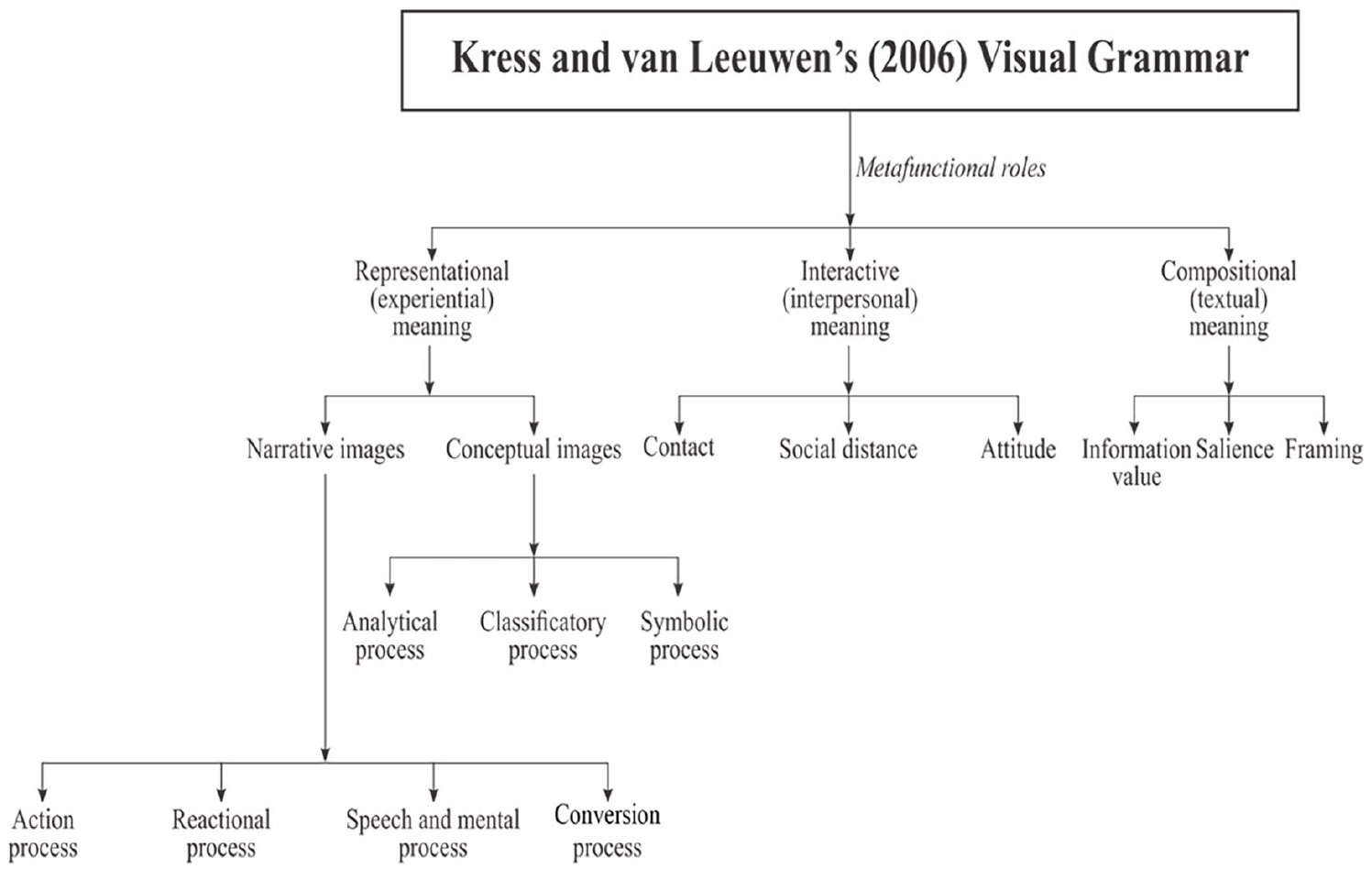
Graphical representation of Kress and van Leeuwen’s (2006) visual grammar.
Martin and White’s (2005) appraisal system
Martin and White’s (2005) appraisal system, which focuses on evaluation and intersubjective positioning, comprises three categories: attitude, engagement and graduation. Attitude addresses positive and negative evaluation of texts and includes three sub-categories: affect, judgement and appreciation. Affect deals with positive and negative evaluations of emotions such as (un)happiness, (dis)satisfaction and (in)security (White, 2011). Judgement deals with positive and negative evaluations of people’s behaviour which may be approved or disapproved based on social norms. Such evaluations are expressed under resources of normality, capacity, tenacity, veracity and propriety. Appreciation deals with the evaluation of things based on reaction, as well as the composition and value of such things.
White (2011, p. 20) opines that engagement addresses the way resources such as modality and concession are used to position the textual voice towards a ‘current proposition with respect to actual and potential alternatives to that proposition’. It is based on the assumption that all language use is dialogic, as expressions are made in response to prior, actual or potential expressions (Bakhtin, 1981). Thus, through language use, addressers may align or disalign with alternative positions. Engagement comprises dialogic expansion and contraction. Martin and White (2005) argue that dialogic contraction deals with the sub-categories of disclaim (deny and counter-expectation) and proclaim (concur, pronounce and endorse) while dialogic expansion deals with the sub-categories of entertain and attribute. Attribute deals with the sub-categories of acknowledge and distance while entertain focuses on linguistic options such as modality and evidentiality which provide space for other possibilities or ‘dialogic alternatives’.
Martin and White (2005) aver that graduation, which comprises the sub-categories of force and focus, deals with the gradability of the degree of an evaluation. Force focuses on the intensity or quantity of an evaluation. Modes of intensification include quality and process which may be isolating or infusing while quantification deals with number, mass and extent. Focus addresses the linguistic choices through which the textual voice indicates the preciseness of its formulations (White, 2011); it is used in relation to non-scalable items. Focus can be used to sharpen or soften the degree of evaluation. While the framework has been largely applied to verbal texts, we apply the theory to memes, which contain both verbal and non-verbal texts. Figure 4 is a graphical representation of Martin and White’s (2005) appraisal system.
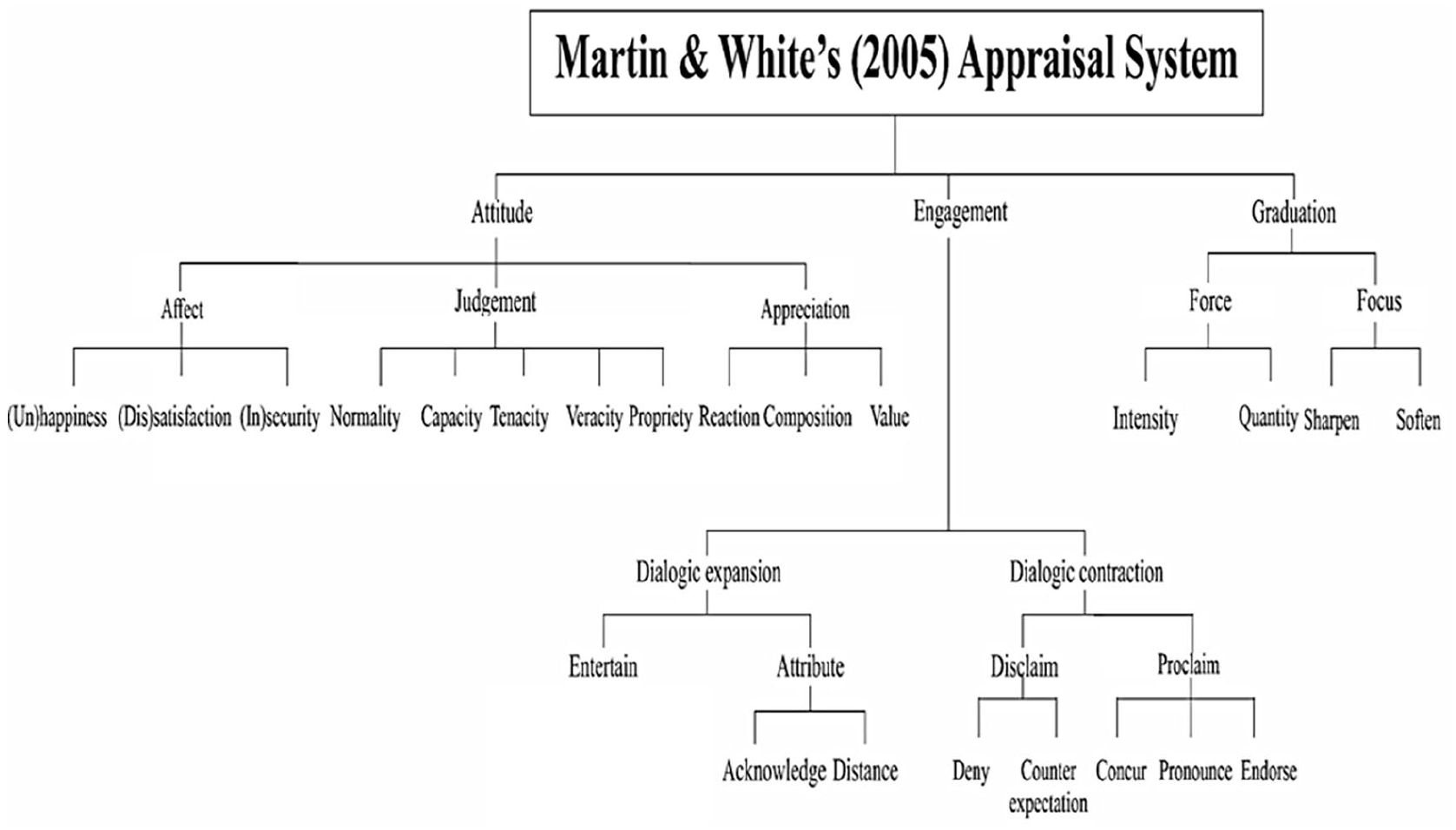
Graphical representation of Martin and White’s (2005) appraisal theory.
These two theories are combined in the study to fully examine how multimodal resources in the memes are used to express attitudinal choices and intersubjective positioning, as shown in Figure 5.
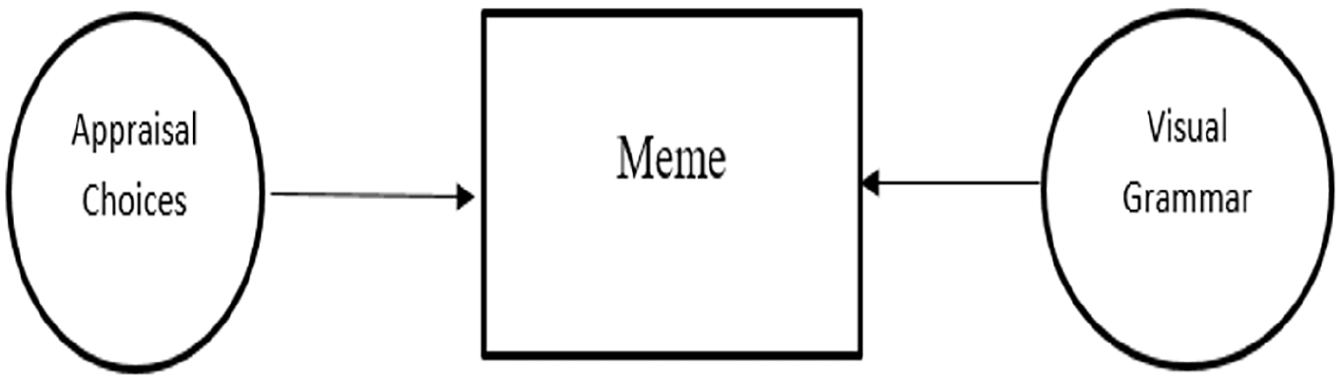
An integration of appraisal system and visual grammar in the analysis of the memes.
Data and method
The data for this study included 147 purposively selected internet memes, collected between February and May, 2020 from Nigerian WhatsApp users during the COVID-19 pandemic. Memes were selected because they included non-verbal content through which citizens could express their attitude and intersubjective positioning towards the disease, as well as the stance of other citizens and the government towards the management of the disease. WhatsApp memes were also selected because many Nigerians use WhatsApp, as 94% of Nigeria’s 27 million active social media users are on WhatsApp (Kemp, 2020). Therefore, the broadcast messages on this platform had a wider coverage than other social media platforms in Nigeria. Some of the memes were initially circulated on other social media platforms such as Facebook and Twitter; however, these were later shared on WhatsApp. The memes were initially collected from unsolicited memes received by the authors on their WhatsApp platforms, both from individuals and WhatsApp groups that the authors belonged to. Later, the authors sent requests to friends and colleagues to share with the authors, the WhatsApp memes they had received and sent out from their WhatsApp platforms. Altogether, the authors received 147 memes.
The period from February to May was selected because February was the month in which Nigerians started becoming fully aware of the spread of the virus to other countries and the possibility that it could spread to Nigeria. In particular, memes about the virus started spreading from that month. The period also covered the actual entry of the disease into the country in March and the issuance of lockdown and stay-at-home orders in many states of the federation. It was during this stay-at-home/lockdown period that Nigerians had a lot of time to create and circulate most of these memes to cope with the boredom of the lockdown as well as the fear of the disease. By early May, there was a gradual easing of the lockdown and by June, a number of businesses and offices had started operations. It appeared that this had an effect on the number of COVID-19 memes that were circulated, as the number of COVID-19 memes received by the authors on WhatsApp decreased. The memes were purposively selected based on the fact that these were the data that could be retrieved through WhatsApp during the period.
The memes were then grouped and analysed based on the different appraisal resources: attitude (affect, judgement and appreciation) and engagement (disclaim, proclaim, entertain and attribute), as indicated by Martin and White (2005). Appraisal resources of graduation were discussed alongside the other two resources. In some cases, some memes involved the use of more than one appraisal resource; however, in categorising the memes, the dominant appraisal choice was used. The data were coded according to a codebook that comprised 19 appraisal sub-categories (as seen in Figure 6). This helped in realising the frequencies of appraisal choices used in the data.
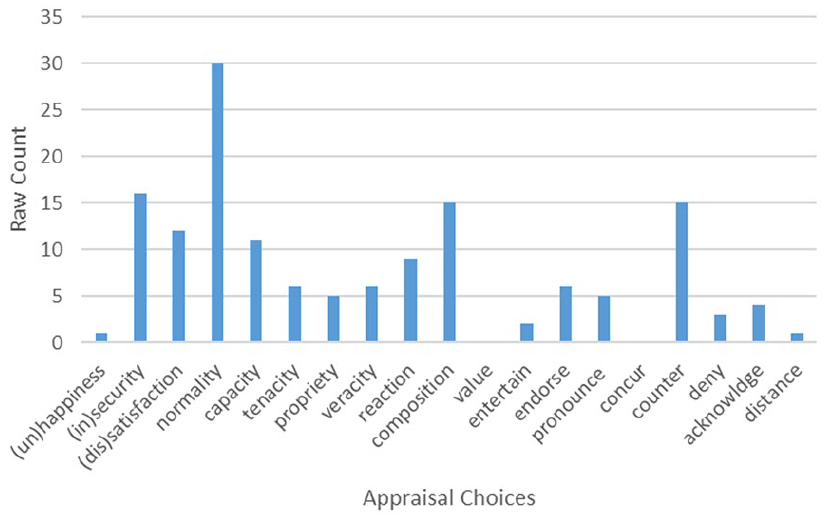
Distribution of appraisal choices across COVID-19 WhatsApp memes.
To achieve the objectives of this study, both verbal and non-verbal elements in the memes such as comments, facial expressions and dressing were examined. This was done to see how these depicted appraisal choices of attitude, engagement and graduation, for example, facial expressions could depict feelings of fear or anger, while images, comments and quotations could indicate the external voice whose position the meme creator had adopted to engage the viewers.
Analysis and discussion
The analysis indicates that the memes employ verbal and non-verbal elements that show attitudinal choices of affect, judgement and appreciation of things. Through the use of multimodal concepts such as action process, reactional process, speech and mental process, offer and salience, among others, the meme producers are able to create important narratives in the memes that indicate dialogic engagement through the resources of disclaimers, entertainment, pronouncement and attribution, which signal intersubjective positioning about the pandemic. The distribution of these appraisal choices across the memes are shown in Figure 6.
Figure 6 shows that the attitudinal resource of normality, which is one of the sub-categories under judgement had the highest frequency among all the appraisal choices used across the memes. Normality focuses on the evaluation of (ab)normal or (un)usual behaviour of humans. This particular resource is used to negatively evaluate the behaviour of the government and other citizens as abnormal in their management of or reaction towards the pandemic. These range from memes that depict abnormal behaviour of the populace towards other people who they may suspect of contracting the disease to government officials whose behaviour changed suddenly during the pandemic, as shown in Figure 9. Normality is followed by the affective resource of (in)security where people largely exhibited fear of contracting the disease as shown in Figure 7. As the memes show, fear influenced people’s behaviour and made them act in abnormal ways. The prevalent appraisal choices are discussed in the following sub-sections:
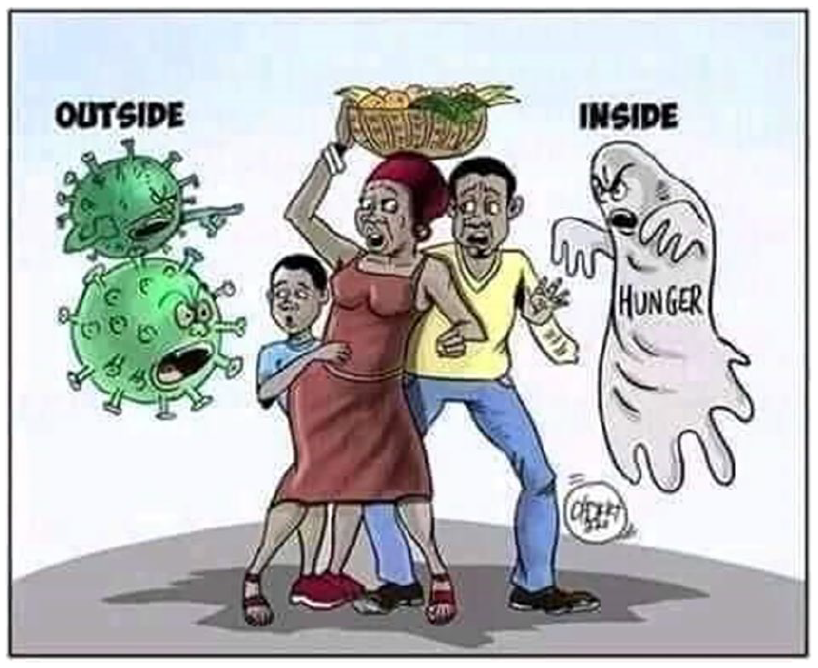
Outside and inside.
Expression of negative emotions
The analysis of the memes reveals that some of the memes are utilised to express negative emotions of fear (insecurity) and dissatisfaction, as exemplified in Figures 7 and 8:

Leave.
Figure 7 is an action image that is realised by both human and non-human represented participants (RPs). While the human RPs include a man, a woman and a young child, who possibly are members of a single family, the non-human RPs are the visual representations of coronavirus, a mysterious spiky fuzz-ball, and hunger, a ghost-like form. The RPs are connected by vectors, which are created diagonally by the outstretched heads and hands of the non-human RPs and the gestures of the human RPs in the visual text. The vectors, which begin from the two corners of the visual text (the image of coronavirus and that of the hunger) and stop at the centre (middle) of the text indicate the kind of threat the two monsters (coronavirus and hunger) pose to the human RPs. The vectors place emphasis on the central message of the text which is fear and threat, and create action and narration in the text. Through the vectors, we can infer that the human RPs who technically represent Nigerians that are poor are threatened by two major enemies during the COVID-19 pandemic – the virus itself and hunger.
Using the action process, the meme succinctly displays the fate and emotional state of helplessness Nigerians faced during the COVID-19 crisis. The dressing of the human RPs and the fact that the woman is carrying some food on her head indicate that the family is poor. Their facial expressions and gestures also depict their attitude which is fear. The captions, OUTSIDE and INSIDE over these two threats indicate the attendant effect of the pandemic which led to the partial or total lockdown of cities and nations. Government health authorities recommended that people should stay indoors to avoid contracting the disease; however, this order posed a lot of problems for poor people in Nigeria who relied on daily wages. This is depicted by the woman who is carrying fruits in a basket on her head, possibly to sell these to earn some money to feed her family. Thus, while daily sellers face the fear of the virus outside, they also face the threat of hunger, if they remain inside the house. The use of visual images to express this emotional state makes the affective message of the text resonate well. While the issues of hunger and poverty have been highlighted in these memes, they have also been highlighted in other memes examined elsewhere (Mpofu, 2019). Figure 8 indicates the affective choice of (dis)satisfaction.
Figure 8 uses both verbal and non-verbal resources to express a subjective opinion about the work condition at different workplaces in Nigeria after the COVID-19 lockdown. The woman in the text who is the RP engages the viewers of the text through her gaze to interrogate the idea of going on vacation after the lockdown orders had been revoked. Since most people were at home due to the stay-at-home order given by the government at the time, this meant that companies were running at a loss. This had a negative implication on the economies and growth of these companies (Kazeem, 2020). Using the reactional process through the eyelines, the RP vents her anger at any worker who would want to apply for his or her leave. It would give the HR (human resources personnel) the opportunity to fire such workers to reduce headcounts in companies for maximum profit. The negative opinion is reiterated in the verbal text The HR of every company is waiting for the first mumu that will apply for LEAVE after this #COVID-19 pandemic. The word ‘mumu’ means a stupid or gullible fellow in Nigerian Pidgin (borrowed from Yoruba). Through the use of demand contact, the RP sounds a note of warning to Nigerian workers to let them know that such a request may cost them their jobs, since many companies had been crippled by the health crisis. Although the leave is the workers’ entitlement, the RP places a demand on the workers to be ready to forfeit it in order for them to keep their employment. The use of both verbal and non-verbal resources in the meme emphasises the negative attitude of the RP towards the stay-at-home order. For example, businesses had to lay off workers during the pandemic (Adesoji, 2020; Oyebode, 2020) which meant that it would be insensitive to ask for any annual leave.
Negative evaluation of people’s behaviour through the memes
The memes are also used to portray negative evaluation of people’s behaviour involved in the pandemic, such as government agencies and ordinary citizens, as depicted in Figures 9 to 11. Figure 9 depicts the judgement resource of normality:
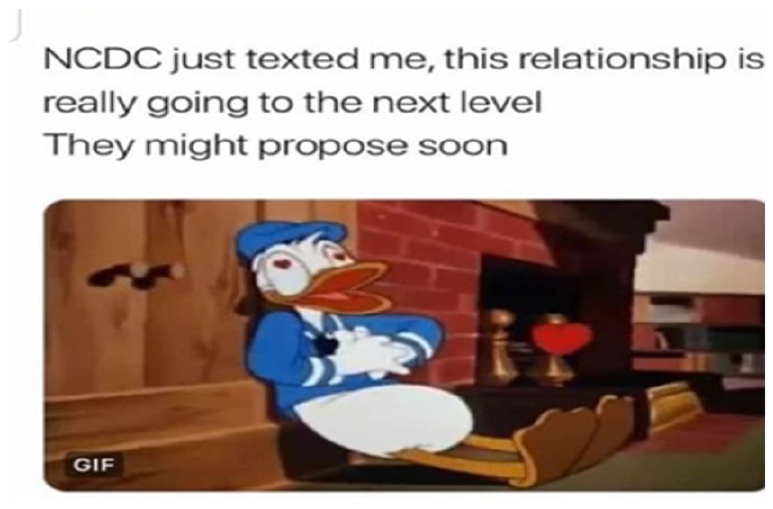
NCDC just texted me.
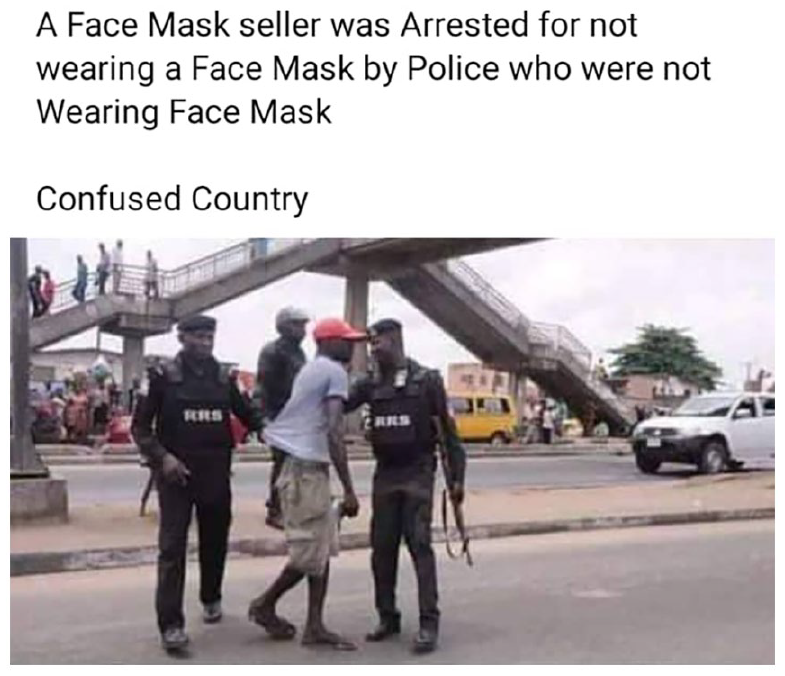
Face mask.
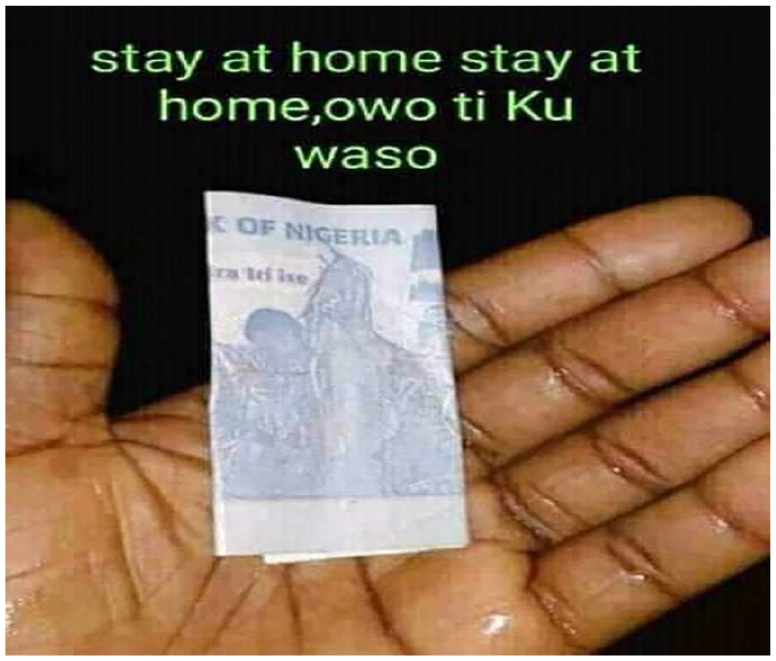
Waso.
Figure 9 combines verbal and visual resources to convey the attitude of the government towards Nigerian citizens during the pandemic. The RP is a cartoon character known as Donald Duck in the popular children’s cartoon entitled, Mickey Mouse Clubhouse, who represents Nigerians who have been receiving text messages from the NCDC, the national regulatory body in charge of disease control in Nigeria. Unlike previous epidemics where the institution did not send text messages to the populace, the Centre sent regular text messages to the Nigerian citizenry to provide them with advisories on the pandemic. Although this constitutes a responsible act from the government, the RP considers this an abnormal situation since this had never happened. Thus, the RP humorously compares the receipt of such text messages with text messages that one would regularly receive during a love relationship. In addition, by stating that the text messages from NCDC might develop into a marriage proposal indicates that the RP considers the action an abnormal one since receiving text messages may not translate into a marriage proposal. The statement made by the RP indicates the use of the speech and mental process, which shows that the image is a narrative image. Figure 10 captures the judgement resource of propriety.
Figure 10 is a mix of a photo and verbal texts, where the RPs are two police officers holding a young man. The verbal text gives us the correct interpretation of the image. The meme producer informs viewers that the young man is a face mask seller who was arrested for not wearing a face mask by police officers who were not wearing face mask. In this statement, the meme producer negatively evaluates the characters of both the face mask seller as well as the police officers whose actions are deemed improper. This captures Martin and White’s (2005) judgement of propriety under the appraisal system. While it is hypocritical for the seller to sell face masks without using a face mask, it is equally hypocritical for the police officers to arrest the seller when they themselves are not wearing the face masks. Thus, the meme producer highlights both governmental and individual inadequacies in dealing with, not only the use of face masks, but also with the general management of the coronavirus in Nigeria. For example, it has been reported in the newspapers that a number of Nigerians flouted some orders such as the ban on interstate travel. In addition, the meme also highlights the roles of some security agents who became brutal in a bid to enforce the lockdown order given by the government as a means to curtail the spread of the virus. The case of police brutality became a very serious issue which led to protests in the country in October 2020 (Orjinmo, 2020). In addition, the meme producer negatively evaluates the country when s/he states, Confused Country which captures Martin and White’s (2005) appreciation based on reaction. Figure 11 interrogates the judgement resource of capacity.
Figure 11 is a combination of both visual and verbal resources. The meme deploys these two resources to evaluate the situation during the stay-at-home/lockdown order put in place by the government to contain the pandemic. Using the symbolic process, the meme producer presents a fifty Naira note ‘waso’ to depict the deplorable living conditions of Nigerians during the stay-at-home order. This is depicted in the verbal text, stay at home stay home, owo ti ku waso (Waso is the money left). Waso is a slangy term used by the Yoruba to refer to the Nigerian fifty Naira note, which is so small that it cannot be used to buy a meal. This indicates that the stay-at-home order had impoverished Nigerian citizens who had been restrained from going out to seek their livelihood. The visual representation of the fifty Naira note is symbolic, as the text producer deploys it as an evidentiality property (Hart, 2014) to appraise the Nigerian government’s response to the pandemic in terms of how it caters to the welfare of its citizenry during the stay-at-home order. The visual representation of a fifty Naira note as the remaining money the RP depends on for survival indicates the deplorable condition of living of average Nigerians during the stay-at-home order and strengthens the reason why many Nigerians failed to comply with the directive. Through the visual representation, the meme expresses a negative judgement of capacity as s/he shows that the government is incapable of providing for the people during the lockdown. At the same time, the meme signals the people’s dissatisfaction towards the way the Nigerian government has managed the health crisis, thereby evoking a negative reaction from the viewers.
Negative evaluation of things through the memes
Apart from the expression of negative emotions and negative evaluation of people’s behaviours, the memes are also used to portray negative evaluation of things during the pandemic, as depicted in Figures 12 and 13:

Not our portion.
NEPA.
Figure 12 is also a mix of verbal and visual resources. Viewers are presented with a figurine that has a very heavy weight. What links the image to COVID-19 is the linguistic resources which involves a prayer that this kind of body shape will not be the portion of both the meme producer and the viewers after the initial 2-week lockdown order. In other words, the meme negatively evaluates the lockdown order instituted by the government because of its possible negative effects on some people. One of such effects for some people could be weight gain since they would not be able to go to the gym or go out for exercises in spite of their tendencies to eat more. However, this weight gain may only apply to some people, particularly the rich as other memes, that is, Figure 7 show that many other people will experience hunger and will in fact lose some weight because of the lockdown (Unuabonah & Oyebode, 2021).
Figure 12 involves the use of a symbolic conceptual image, as the RP is a figurine that symbolises a person with a very heavy weight. There is no eye contact between the figurine and the viewers, and there is an attitude of detachment between them since the figurine is shown from an oblique angle. Moreover, the vertical angle, which signals power relationship between the RP and the viewers, shows that the RP is at a low angle. Thus, the RP holds less power in relation to the viewers. In addition, the social distance indicated in the meme is the far social distance which is suggestive of helplessness, loneliness and lack of any form of social interaction (predicated by the lockdown), as there is the whole figure of the figurine with some space around it (see van Leeuwen, 2005). All these indicate that the possible weight gain that some might experience due to the lockdown is certainly not a desired situation by both the meme producer and the viewers. Moreover, these also indicate that the lockdown puts people at a less powerful status as they may not be able to fight against some of the negative effects of the lockdown. To further reiterate this and sound a note of warning on the matter of weight gain, the meme producer centralises the image of the RP in the meme to give focus to the intended message. The meme deploys large size and focus, which are aspects of compositional meaning to give salience to the main message of the meme and create some kind of mental picture of the ripple effects of the lockdown, if not managed properly by the people (especially the rich). Figure 13 is also used to negatively evaluate other situations during the pandemic.
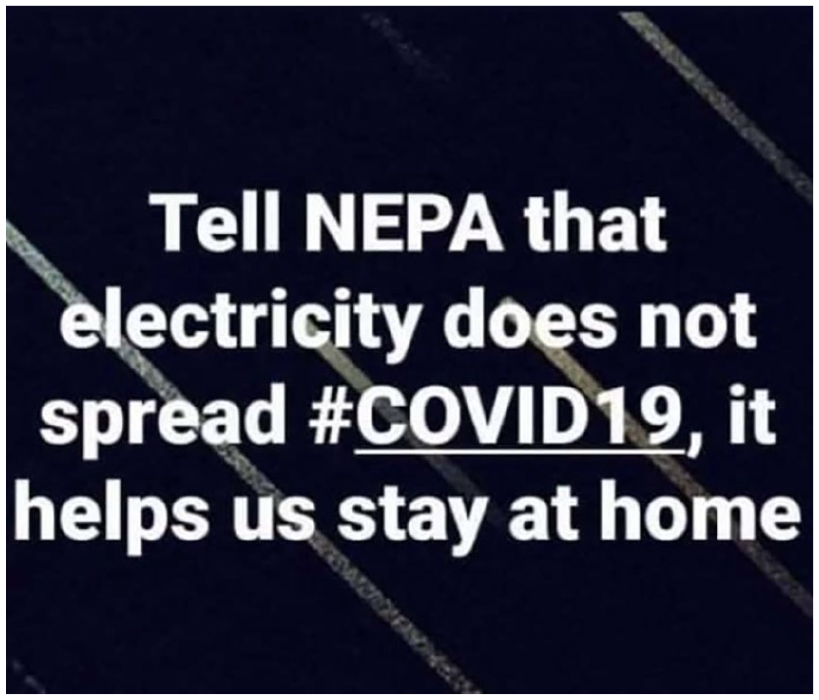
Figure 13 is mainly made up of linguistic resources. However, the use of white and black colours in the text is instructive for meaning. The meme producer implicitly reacts negatively towards the lack of electricity which makes the stay-at-home order given by the government a difficult one to follow. By using white and black as colour contrast in the meme, the meme places salience (Kress & van Leeuwen, 2006) on the import of electricity in obeying COVID-19 stay-at-home order by the people. Since power generation is one of the major national problems in Nigeria among others (Adegoju & Oyebode, 2015), the meme, through the colour contrast, negatively evaluates the state of affairs by projecting that there was no power supply in many homes during the lockdown order. They subtly express their opinion in the meme, by using white as a metaphor for electricity supply that Nigerians would need to make them observe the stay-at-home order by the government. This is seen in the request that s/he makes to NEPA (National Electric Power Authority, which is the former name for Power Holding Company of Nigeria). The statement, tell NEPA that electricity does not spread #COVID19, it helps us to stay-at-home, is an expression of frustration to project to the world the lack of basic amenities of life that Nigerians were battling with during the pandemic. The meme uses a detachment attitude (Kress & van Leeuwen, 2006) to express a major problem common to average Nigerians during the health crisis. This is achieved by failing to show any image representation in the text. In many memes, people had complained of inadequate social amenities, which made the sit-at-home order a difficult one. Thus, the meme attempts to present one major national issue that may not make the stay-at-home directive effective in Nigeria.
Disclaiming alternative propositions through the memes
Memes also disclaim alternative propositions through the memes by exploring the disclaim resource of counter-expectation, in which the meme is used to supplant certain propositions held by others on the coronavirus, as presented in Figure 14:

Heading out immediately after quarantine.
Figure 14 is mainly made up of a text with the image of a man’s face showing someone who is thinking. Using the speech and mental process under representational meaning (Kress & van Leeuwen, 2006), the RP in the first part of the verbal text makes an allusion to the Biblical story of Noah who escaped the flood with his family and who sent out a dove to check the environment when the rain had stopped. The reference to Noah’s ark has been alluded to in other memes where Noah’s stay in the ark is compared to the lockdown that Nigerians and many people across the world had had to undergo to save them from the pandemic (Oyebode & Unuabonah, 2022). The RP recognises the proposition in the Federal Government’s directive that the lockdown had been lifted but counters this proposition by stating that people should be careful in leaving their homes. This depicts the disclaim resource of counter-expectation (Martin & White, 2005). He then wishes them good luck, which probably indicates that he would not be heading out of his house on Monday. Thus, the proposition of the RP in this text further reiterates the notion of taking responsibility as an individual since the way in which people respond to the lockdown directive and the pandemic in general is more or less personal. The use of religious tropes in internet memes depicts the religious nature of Nigerians and this has been shown in other African memes (Mpofu, 2019).
Attributing participants’ positions to external voices
In the memes, the meme producer may present his or her proposition as the subjective view of an external voice, which may be one out of a number of different opinions. An example is shown in Figure 15:

Quarantine is Godly.
Figure 15 is a religious text meme in which the meme producer presents his or her proposition as the subjective view of the Bible, which is an external voice; this captures the appraisal resource of attribute (Martin & White, 2005). Using the speech and mental process under Kress and van Leeuwen’s (2006) representational meaning, the meme producer subtly persuades and encourages the people to adhere to the lockdown instruction issued by the government. S/he attempts to achieve this by alluding to the Book of Isaiah 26:20, where the Bible commands that people should hide themselves in their homes until the anger of the Lord has passed. We can then deduce that the position of the meme producer is that the coronavirus pandemic is seen as some sort of punishment from God. This religious sentiment is used to encourage the Nigerian citizens who are aggrieved with the way the government has managed the pandemic, and to force them to continue to take-shelter-in-place until the government rules otherwise. This subjective view is upscaled through emojis, which are non-verbal elements that show that the RP is in tears, since the pandemic is an unpalatable event. Thus, by attributing or making reference to the Bible, the meme producer rules out alternative propositions, such as hunger and insincerity on the part of the government among others, that may influence people not to adhere to the lockdown instruction.
Entertaining dialogic alternatives in the memes
Some memes may also entertain dialogic alternatives in the memes, as depicted in Figure 16:
Side chicks.
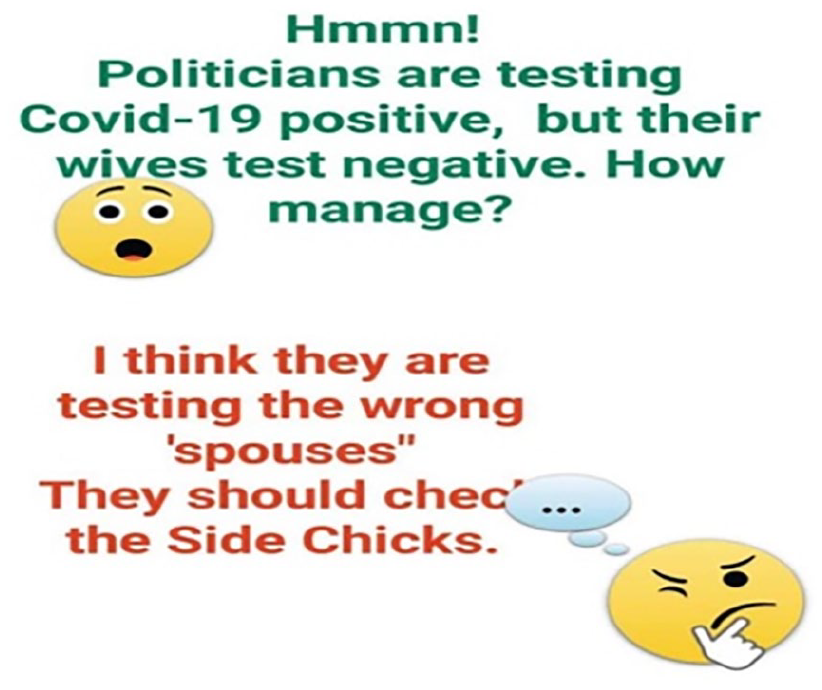
Figure 16 is another text meme that uses verbal resources to evaluate different occurrences during the pandemic. Using the speech and mental process under representational meaning, the two RPs in the form of emojis critically appraise the realities of Nigerian politicians and show surprise and thoughtfulness. In the first part of the text, the RP presents a proposition that politicians, are testing positive to COVID-19 and then wonders why their wives test negative. In the second part of the text, the RP suggests that the wrong ‘spouses’ are being tested. The ‘right spouses’ are referred to as side chicks, which is a Nigerian slangy term for female lovers outside one’s marriage. This is to insinuate the level of morality among some Nigerian politicians. It is believed that based on the way the disease spreads, it would be difficult for their wives not to contract the disease, which is why the second RP subtly indicts these politicians by negatively evaluating their moral conduct. The RP prefaces his or her comment with the comment clause, I think, which indicates that the proposition is the addresser’s own subjective viewpoint and thus, s/he expands the dialogic space for alternative viewpoints, as there might be other reasons why the wives did not contract the disease. This subjectivity is further reiterated through the use of different colours (green and red) for each of the RPs’ comment to indicate their personal opinions about the matter being interrogated in the meme.
Pronouncing dialogic alternatives in the memes
Pronounce, which is a sub-category under proclaim, involves linguistic items that deal with ‘authorial emphasis or explicit authorial intervention’ (Martin & White, 2005, p. 127). This resource is also utilised by some memes, as presented in Figure 17:
NEPA bills.
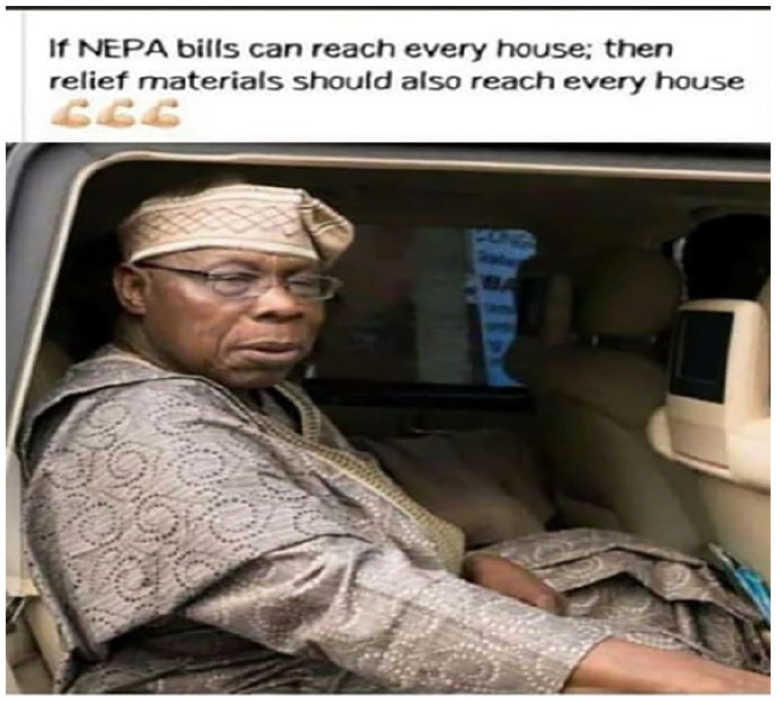
Figure 17 also combines both text and image. Using the speech and mental process, the meme producer makes a proposition that states that if NEPA bills can reach every house; then relief materials should also reach every house. Using the image of a former Nigerian President, Olusegun Obasanjo as the human RP in the meme (although it cannot be ascertained whether Obasanjo made this statement or not), the meme producer creates authorial emphasis for the proposition in the meme. This is done to totally condemn the way the relief materials were handled during the lockdown and to rule out alternative propositions or claims that relief materials could not get to every house due to non-accessibility. The implication is that if people’s houses could easily be located by the Power Holding Company of Nigeria to distribute electricity (NEPA) bills, their houses should not be too remote for the Ministry of Humanitarian Affairs, Disaster Management and Social Development to reach when distributing relief materials, since people could not work during the lockdown. Thus, the deployment of the image of the past president of Nigeria as the RP in the meme gives salience to the matter of unfairness, which is interrogated in the text. His image as the former president of the nation gives credence to the message of the meme that Buhari’s administration did not manage the health crisis properly as far as the citizenry’s welfare was concerned. This statement was made to subtly cast an aspersion on the Nigerian government as regards the way the ministry in charge of the distribution of relief materials for the citizens managed the situation and the resources. The statement was made to counter the claims that many people did not benefit from the relief materials provided by the government perhaps, due to inadequate records of some houses or as a result of the inability to reach some of them. The government’s inability to reach the poor during the lockdown was not positively disposed to by many Nigerians and this evoked negative reactions from them.
Conclusion
The study has shown how Nigerians combine multimodal resources (verbal and non-verbal modes) within the Nigerian WhatsApp space to evaluate the state of affairs and express different layers of intersubjective meanings about the management of the coronavirus pandemic in Nigeria. Using Kress and van Leeuwen (2006) concept of visual grammar and Martin and White’s (2005) appraisal theory as the theoretical framework, the study reveals that the meme producers employ both verbal and non-verbal elements to express negative affect, judgement and appreciation of things. Through the use of multimodal concepts such as action process, reactional process, speech and mental process, offer and salience, among others, the RPs are able to create important narratives in the memes that indicate dialogic engagement through the resources of disclaimers, entertainment, pronouncement and attribution, which signal intersubjective positioning about the pandemic. The verbal elements are graded/upscaled through the non-verbal elements such as the representation of important individuals in the Nigerian society, postures, facial expressions, dressing and different colours in the memes. These are deployed to give credence to some of the propositions made in the memes.
Generally, the use of these internet memes in evaluating and criticising government policies and actions can be compared with internet memes shared in other African societies where they are used as a medium of political commentary and critique in Zimbabwe (Siziba & Ncube, 2015) and to resist and mock the excesses of the ruling class in South Africa (Mpofu, 2019). This study has focused on appraisal choices used in COVID-19 memes that were shared in the Nigerian WhatsApp space, without comparing these to appraisal choices used in similar memes in other African countries. Thus, future studies may compare and contrast findings from this study with the use of appraisal choices used in Covid-19 memes that are shared in other African societies. This will help in revealing similarities or differences in the use of appraisal choices in the memes, considering that a number of these societies share similar cultural conceptualisations or face similar situations during the pandemic. Moreover, this study has focused on memes that are largely macros, cartoons, screenshots and texts, without examining other kinds of memes such as video memes, which incorporate voices and sounds in their depiction of different attitudes. Thus, future studies may also investigate the use of video memes in capturing people’s attitude towards the pandemic. Arguably, the study has shown that meaning does not reside in verbal elements alone but that other communicative ensemble – colours, images, sizes, gestures among others – are important aspects of meaning-making process through which a comprehensive and empirical interpretation of text could be achieved. It has also evinced that multimodal resources are viable communicative artefacts through which people can express different layers of intersubjective meanings and opinions during a health crisis.
Footnotes
Declaration of conflicting interests
The authors declared no potential conflicts of interest with respect to the research, authorship and/or publication of this article.
Funding
The authors received no financial support for the research, authorship and/or publication of this article.
