



Abstract
This article discusses the potential of generative artificial intelligence (AI) to revolutionize contract thinking and design. Experience and research tell us that most contracts focus on the wrong things—failure rather than success—and are presented in a way that is inaccessible to many people. Using the principles of proactive contracting and contract design, AI-powered writing assistants such as ChatGPT can help change the contracting paradigm by facilitating the transition from drafting to design and from reaction to proactive action. They can help transform the content, language, structure, and presentation of contracts, simplifying the tedious parts and increasing stakeholder empowerment and choice. This exploratory article presents examples of using AI tools to generate ideas and clauses for commercial contracts and to support contract redesign. This facilitates the creation of easy-to-read explanations, headings, and layered layouts that make contracts more effective, transparent, and sustainable, leading to better business and societal outcomes.
Keywords
Introduction
Contracts can help organizations make things happen and put their plans into practice, potentially enabling better business and a better society. But most contracts do not do this well. Instead, they focus on the wrong things—failure rather than success 1 —and are presented as a wall of text that alienates people. 2
The problems of contract content and presentation are not new. In fact, they are well-researched and well-documented. 3 Most people would agree that creating accessible and user-friendly contracts is critical to effective communication and understanding between parties. However, the ways in which this can be achieved are currently underexplored.
This article looks at strategies and tools that can help make contracts easier to read and write. We are challenging the current content, language, and style of contracts and are not interested in tools that replicate them more effectively. Instead, we want contracts that better serve contracting organizations and the people who work with contracts, helping them to achieve their goals. We also expect future contracts to address the growing emphasis on environmental, social, and governance (ESG) objectives in business. Our research strongly suggests that contract redesign, prioritizing plain language and information design, is an essential step toward stakeholder empowerment and choice.
The article is structured as follows: first, we introduce the problems with current contract thinking and design, highlighting the need for a paradigm shift in both areas. In the “Rethinking commercial contracts” section, we illustrate how today's mainstream contracts are not what organizations and negotiators would want them to be. Contracts need to be rethought: their current focus on protecting against failure makes them ill-suited to fostering good relationships and advancing ESG goals. After examining the existing shortcomings, in the “Redesigning contracts” section, we propose proactive contracting and contract design as a solution and explore the potential of using ChatGPT, a language model developed by OpenAI, to support the necessary redesign. Our experiments show that ChatGPT can help both contract readers and contract writers in many ways. For readers, it can provide easy-to-understand explanations of complex information. For writers, it can suggest topics, alternatives to legalese, headings, summaries, and layered layouts that follow information design principles. In this way, ChatGPT can help to communicate contractual information in a clear and accessible way. After presenting our experiments, which show great potential, we conceptualize our findings, assess the risks and pitfalls, and look to the future of AI-assisted contract design. Section “Conclusions” concludes the article with some future prospects.
Rethinking commercial contracts
A shift from problem-focused to goal-supportive contract thinking
Almost 90 years ago, Fred Rodell, a Law Professor at Yale University, observed: “There are two things wrong with almost all legal writing. One is its style. The other is its content.” 4 This criticism still applies to much of legal writing today. It also applies to contract drafting. What is worse is that our legal system seems to support this: many administrative and legislative processes, even those intended to protect consumers or investors, seem to ignore the imperative to communicate meaningfully. 5
While some see contract drafting as a subset of legal writing, we are not alone in arguing that there are significant differences between the two. 6 Contracts contain not only legal but also financial, operational, and technical information. Companies make contracts not just for their legal teams or for future disputes and litigation: they make contracts to achieve their goals.
The vast majority of contract readers do not have law degrees. Yet a legal writing style dominates contracts as if they were written by lawyers just for other lawyers. Newcomers to the world of contracts may question this style at first, but then adopt it as part of the culture; newcomers also want their contracts to look “professional” and “legal.” 7
When we ask what is the purpose of contracts, or what are their key provisions, there may be differences of opinion within organizations and between different members of the negotiating teams. The legal department may have a different view of corporate goals and priorities than, say, the engineering or commercial departments. World Commerce & Contracting (WorldCC) surveys of negotiators around the world reveal how this tension is reflected in contract negotiations: the terms that are negotiated most frequently (“Most Negotiated Terms”) are very different from the terms negotiators consider most important (“Most Important Terms”). The results of the WorldCC 2022 survey are shown in Table 1. 8
World Commerce & Contracting (WorldCC) most negotiated versus most important terms 2022.
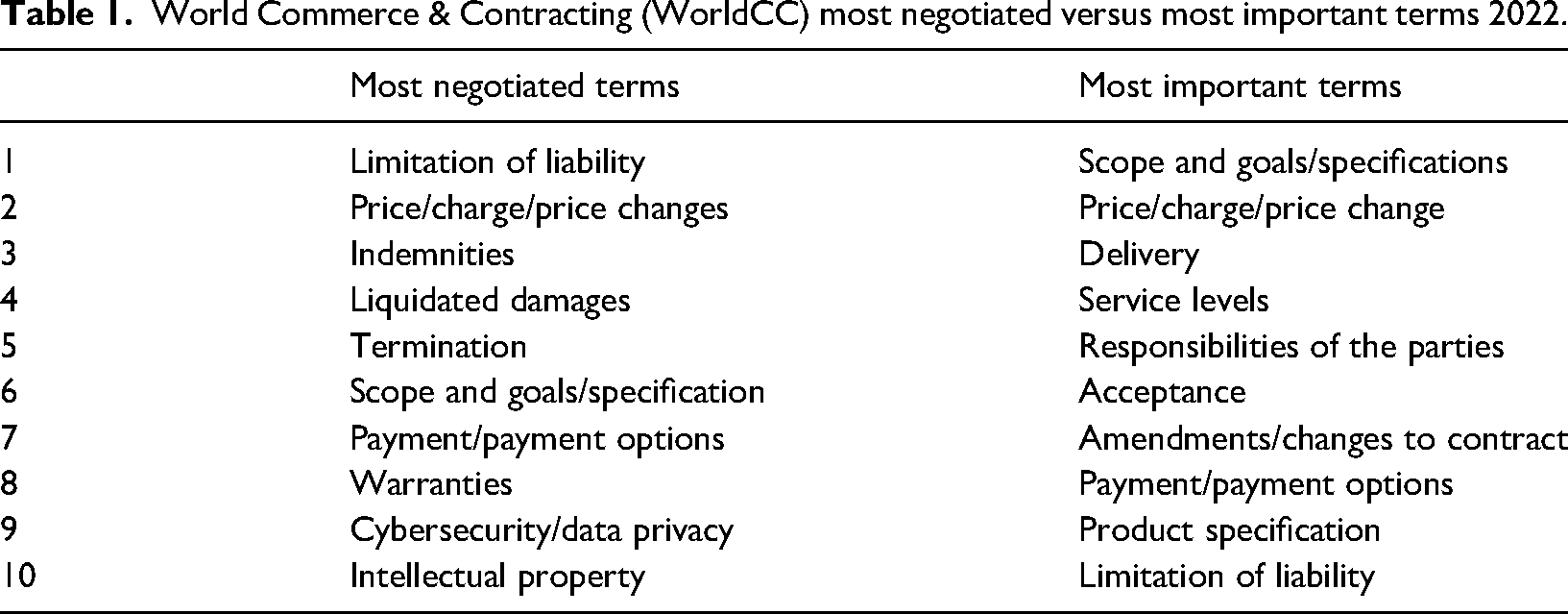
World Commerce & Contracting (WorldCC) most negotiated versus most important terms 2022.
The left column in Table 1 illustrates that limitation of liability is negotiated with the greatest frequency. In WorldCC's annual surveys, year after year, limitation of liability has retained its top position, with indemnities following as either 2 or 3. This shows that negotiators spend much of their time preparing for failure and conflict rather than securing success. The list of Most Negotiated Terms continues to be dominated by clauses dealing with the consequences of failure, claims, and disputes. As noted by Tim Cummins, the President of WorldCC, contracts have often become “a battleground, in which the parties abandoned the search for mutual ground or interests and instead became focused on relative power and the ability to allocate risks.” 9 Contracts—and the most frequently negotiated terms—seem to focus on the legal issues that will be important in a courtroom, rather than tackling the underlying causes of claims and disputes. 10 Yet in light of these surveys, disagreement over contract scope is the number one cause of claims and disputes, and “material disagreement over scope and goals is several thousand times more likely to occur than litigation.” 11
What the left column of Table 1 shows is not what the negotiators would want to spend their time on. When WorldCC asked participants to describe where they think negotiating time should be focused in the future, they responded what the Most Important Terms listed in the right column of Table 1 show. Their responses indicate that negotiators see a need to change their current agenda. They see more value in negotiating terms related to scope and goals, price, delivery, and service levels than terms such as liability and indemnities. The latter “occupy the place they should—as last-resort fall-backs in the event that well-crafted intentions become derailed.” 12
The documents that are being negotiated do not necessarily represent a true statement of the parties’ expectations and understanding. Instead, they may reflect what the participating companies’ lawyers typically find necessary to protect their clients in a dispute. So, the focus of contract negotiations may be guided by a template rather than the parties’ true intent and discussions. If the templates focus on the wrong things, automating them will only make things worse. 13 Where legal objectives dictate the drafting and design choices, they may be so strong that the business side becomes alienated. 14 In the words of Thomas D. Barton, one recurring barrier to successful contracting is the “exaggerated and largely unnecessary separation between the business goals that clients seek to achieve, and the legal methods by which contractual relationships are created and managed.” 15 Put more bluntly, in the words of Irene Etzkorn, a simplification expert, it is a common mistake of companies to “allow the Legal department to tyrannize the rest of the company.” 16
Traditionally, contract drafters and scholars have primarily addressed the needs of the legal community. The emphasis has been on using contracts reactively after a conflict or dispute has already arisen. 17 Even management scholars and economists have viewed contracts primarily as tools for safeguarding the interests of the parties (often just one of them). 18 Although essential for commercial contracts, this narrow focus has overshadowed other important functions of contracts, including facilitating communication and coordination, clarifying expectations, guiding behavior, and promoting shared understanding. 19
While some contracts may need to be used as evidence in court, most contracts do not. Instead, their primary function is to serve as effective business tools that enable the parties involved to achieve their desired outcomes. However, most contracts are still primarily drafted by lawyers for lawyers, with the aim of creating legally functional and airtight agreements that will provide the winning argument in a legal dispute. 20 Most lawyers are trained to protect their client, their side, rather than thinking in terms of protecting the collaboration or relationship. Instead of focusing on the happy path, they focus on the opposite. 21 In the world of software development and testing, the “happy path” refers to the desired software execution path where everything goes as expected. 22 This, we argue, should be the guiding principle for contract design as well: successful outcomes without ever having to go to court.
In contrast to the traditional view, we propose viewing contracts as proactive tools that are designed and used to help parties to (a) achieve their objectives and promote mutual success, (b) advance ESG goals, and (c) prevent problems from arising and conflicts from escalating into legal disputes and litigation. This, in a nutshell, is the essence of Proactive Contracting. 23 Initially, the approach focused on using contracts to promote better business. In recent years, it has expanded to also include the promotion of societal goals, and responsible and sustainable contracting has become a topic of growing interest in research and practice. 24
A proactive contract has been described as one that is “crafted for the parties, especially for the people in charge of its implementation in the field, not for a judge who is supposed to decide about the parties’ failures.” 25 In what follows, we propose a proactive approach to contracts and contract design: one that focuses on the business, ESG, and operational needs of contracting organizations and the people who work with contracts. Our aim is to strike a balance that accommodates business and legal users as well as society at large. Rethinking contracts leads to the need to redesign them. Otherwise, they will not be fit for the purposes we expect them to serve.
Redesigning contracts
Moving from drafting to design: Plain language and information design
Existing contracts have been criticized for their poor design or lack of design. Proponents of Proactive Contracting have suggested that we should move from drafting contracts to designing them. 26 The principles of information design can help us make this transition.
The aim of information design is to make communication as effective and understandable as possible. Hayhoe defines information design as the process of identifying, selecting, organizing, synthesizing, and presenting information to an audience in such a way that the audience can use it effectively and appropriately to achieve a particular goal. 27
Language is an important part of information design. Contracts are traditionally text-based, and the language used plays a central role in contract design. Some might say that language is the contract designer's most important tool. We argue that text and language are critical for contract designers and that writing and design must go hand in hand for contract design to be successful.
The principles of plain language can be useful to contract designers. Plain language is not just about the choice of words, it is also about relevance, findability, understandability, and usability. According to the International Plain Language Federation, “a communication is in plain language if its wording, structure, and design are so clear that the intended readers can easily find what they need, understand what they find, and use that information.” 28 The International Organization for Standardization (ISO) recently adopted this definition in its standard on the governing principles of plain language. 29 A follow-up standard on legal writing and drafting 30 is under development. These standards can also help to shape the drafting and design of contracts.
Contract design can mean different things to different people. While some people use contract design as a synonym for drafting choices, others understand it to mean how the content is presented. For the purposes of this article, contract design refers to both the content of a contract and the way in which it is presented. Our approach combines contract content and presentation, drafters, and designers, recognizing the importance of audience and purpose to successful communication. 31 For us, contract design is about content, language, structure, and document design, as well as user-centered relevance, findability, understandability, and usability—all to achieve the parties’ objectives.
Exploring the potential of AI-assisted contract design
In the following, we explore the potential of using ChatGPT to support the (re)design of contracts. We discuss our observations with examples of contract design in anticipation of forthcoming new legislation that will force many organizations to review their existing contracts to ensure compliance and may require updating or adding new provisions to meet the new requirements. The ideas presented in our examples are also applicable to other contexts of commercial contracting, whether the purpose is to advance business or societal goals.
We have chosen our examples from an area that will be subject to significant change as a result of the proposed EU Regulation setting out ecodesign requirements for sustainable products, 32 not only because of our interest in the topic, but also to illustrate a scenario where those responsible for preparing contracts do not necessarily have access to precedents or clauses used in previous contracts, and those responsible for implementation need to understand what is expected. These EU requirements apply to products intended for the EU market and will also affect non-EU manufacturers and suppliers of such products. The examples are intended to be generic, cross-jurisdictional, and cross-industry, affecting organizations of all sizes, whether they are suppliers or purchasers, manufacturers or distributors.
As mentioned above, contract drafters rarely start from scratch; the language of a contract is usually based on existing contracts, templates, or pre-approved clauses in clause libraries. 33 These templates and clauses could greatly benefit from a redesign to improve their content, language, structure, and presentation, and we find that our examples are particularly useful for people responsible for redesigning templates and clause libraries. The principles and findings can be applied to any contract, as well as to other contexts and documents beyond contracts.
Figure 1 shows a summary of our experiments with ChatGPT and how the interactive work between us (the human contract designer) and ChatGPT (the AI assistant) progressed at different stages of our experiment.
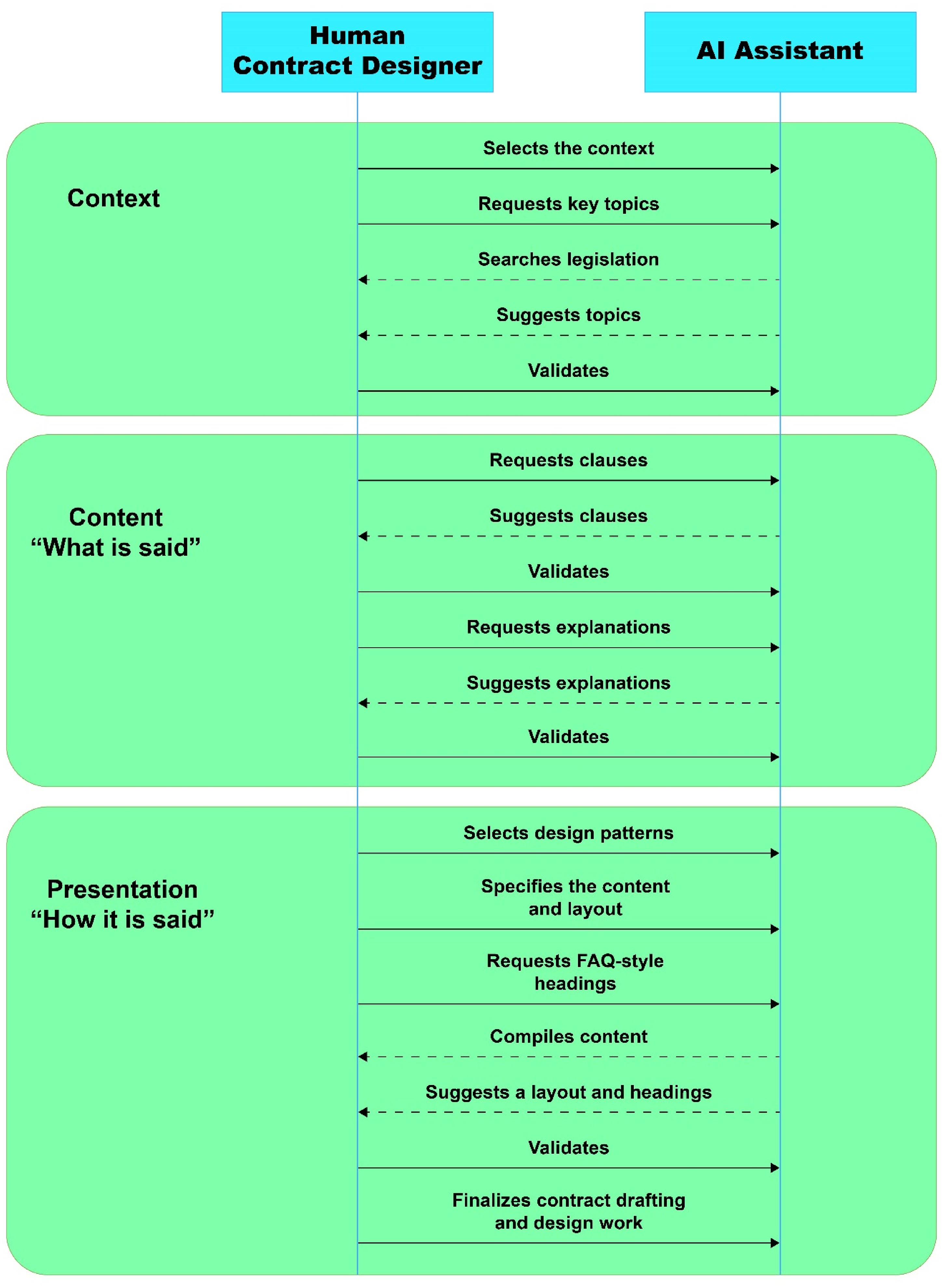
A summary of our experiments with OpenAI's ChatGPT to help us plan and design the content, language, and presentation of contract clauses in the context of the proposed EU Ecodesign Regulation. Our experiments are described in the sections “Content design,” “Language design,” and “Presentation (layout and structure) design,” and extracts and results from our conversations with ChatGPT are shown in Figures 2–5. © 2024 The Authors.
Our experiment started with the context phase, where we instructed ChatGPT to use its browse function to search for requirements in relevant EU legislation. ChatGPT provided us with summarized results, from which we selected the clause topics that we found most useful for the purposes of our experiment. This was followed by the content phase, where we moved from the selected clause topics to the actual contract language: we requested and received suggestions for clauses and clause explanations, which we validated. In the presentation phase, we selected the design patterns we wanted to test. We instructed ChatGPT to apply them and present the selected clauses and explanations in a table with a layered layout and frequently asked questions (FAQ)-style headings, all representing design patterns we had found helpful in other contract (re)design work.
In the following sections, after a brief overview of the basics of generative AI and ChatGPT, we present examples of our experiments with ChatGPT in the context of contract design for the proposed Ecodesign Regulation.
Generative Pretrained Transformer (GPT) is a large language model developed by OpenAI. 34 GPT is made commercially available to third-party developers via the OpenAI application programming interface. 35 For the general public, GPT features are available as different versions of ChatGPT web applications. Like other similar generative AI applications, GPT is based on several advanced technologies that are combined and run on servers with enormous computing power to process huge amounts of data at lightning speed. The core technology of these applications is based on a complex neural network architecture, a form of technology we now call artificial intelligence (AI). 36 A neural network is a series of algorithms, often called nodes, linked together to mimic the way the human brain and neurons work. An algorithm 37 is a small software procedure containing a finite sequence of rigorous instructions to perform data processing simplified into a form of computational problem.
ChatGPT (and similar applications) can be categorized as autoregressive, multimodal, generative, and large language models. 38 Autoregressive means that the application produces content, for example, text, based on previous observations of how words are related together in the large amount of data on which it has been trained. 39 Multimodal refers to the ability to produce a variety of content, including text, audio, tables, images, and code. Generative means that the application can create content. A large language model means that the application has been trained on a large amount of data and is capable of bi-directional natural language processing; both receiving and producing. 40 Although large language models are very powerful, it is important to note that there are several limitations related to their capabilities and that there are many risks associated with their use, not only due to the data on which they have been trained, 41 but also due to their limited trustworthiness. 42 This needs to be taken into account when applying generative AI such as ChatGPT to the world of contracts.
Content design
By content design, we mean the design of the content—the actual substance—of contracts. This includes both commercial terms, which may be technical, financial, or operational, and legal terms. These all vary from context to context and are influenced by the purpose and type of the contract, the objectives of the parties, their roles, rights, and obligations, and the legal framework. Put simply, in our context, content design is about “what to say,” as opposed to presentation design, which is about “how to say it” in a contract.
Our first experiment 43 was to see how ChatGPT could help with content creation. We asked it to suggest topics that contracting parties should pay attention to and agree on in light of the proposed Ecodesign Regulation that will replace and expand the scope of the existing Ecodesign Directive. Our goal was to test ChatGPT's ability to search for information and to identify and suggest reliable and relevant content from a variety of sources.
We first tasked ChatGPT, equipped with browsing functionality, with searching for information related to existing and proposed EU ecodesign legislation. The experiment focused on ChatGPT's ability to navigate through different types of sources, including official EU databases, to ensure a wide range of information. We then observed how it approached these queries, where it looked for information and its effectiveness in selecting sources. Emphasis was placed on ChatGPT's ability to identify and prioritize sources that were authoritative and relevant to the context. ChatGPT demonstrated a remarkable ability to identify a range of sources and to effectively filter and suggest content that was closely aligned with our experimental goals.
These suggestions give the person responsible for preparing a contract a good starting point for planning its content. As shown in Figure 2, ChatGPT's suggestions included references: the official website of the European Union 44 on ecodesign for sustainable products, and the website of the law firm Bird & Bird 45 describing their insights into the proposed new Regulation.
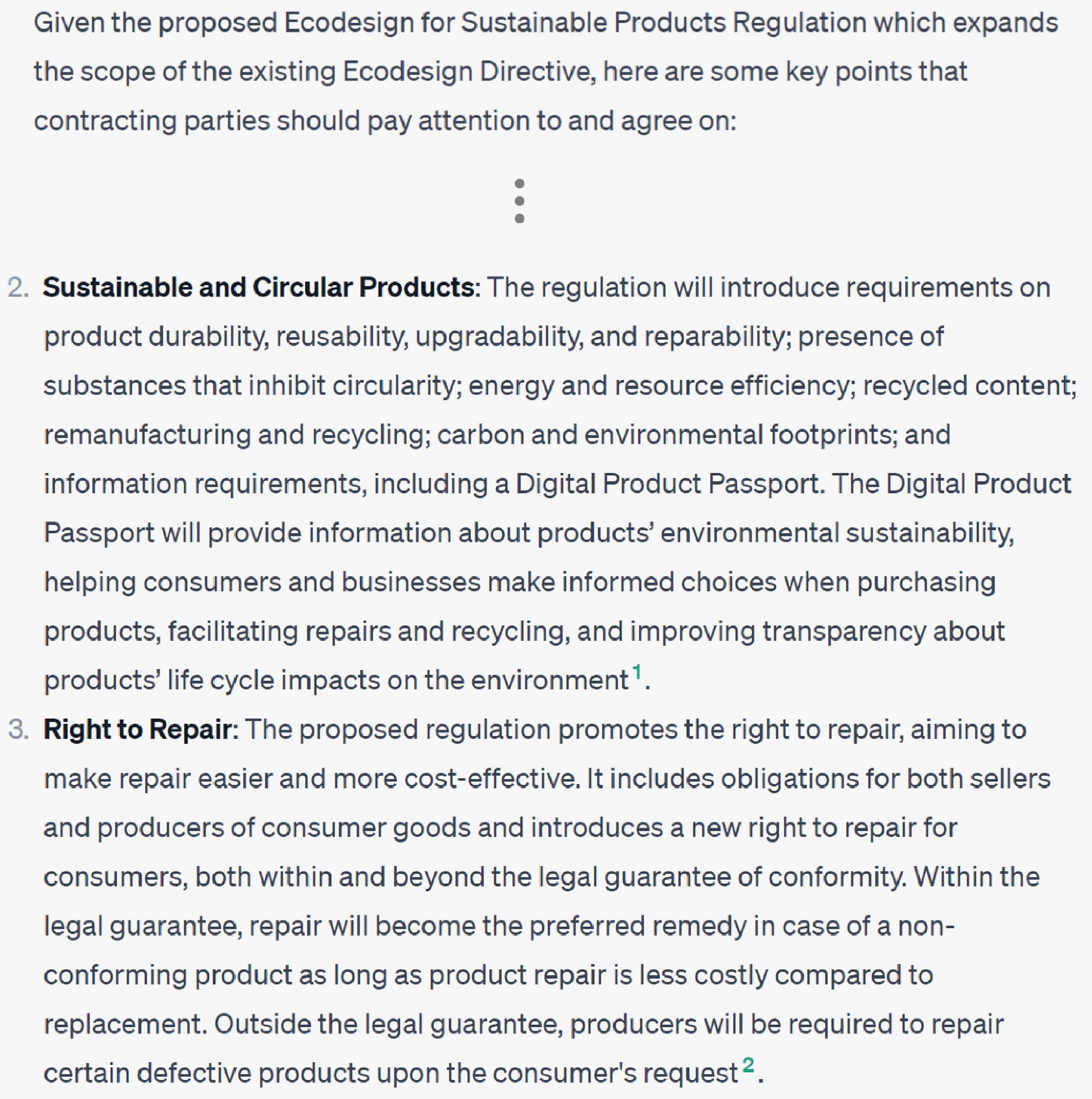
ChatGPT suggesting contract topics. Extract from a conversation with OpenAI's GPT-4, using Browse with Bing (beta), accessed via the ChatGPT interface (May 24 2023 version).
Rob Waller, a pioneer of information design, has identified criteria for good documents. For content, he has identified four: relevance, subject, action, and alignment: how relevant the content is to the recipient; whether it is clear what the communication is about; what action is required of the user; and consistency with the organization's intended goals and values. 46 Waller's four criteria have also been applied to contracts. 47
Measured against Waller's criteria, the content provided by ChatGPT seems to succeed—it is what we asked for. It should be relevant in that it indicates (as we asked) topics that the contracting parties should pay attention to and agree on. It gives a quick overview of the proposed EU legislation which is not easy to read. Obviously, the contract designer would need to dig deeper and find out more details—here the references could be helpful as far as new legal requirements are concerned. ChatGPT's text does not contain irrelevant material: it gets to the point. It also clearly states the subject and purpose of the communication (“… here are some key points that Parties should note and agree on”). However, for someone new to the field, the vocabulary may not mean much and it may not be clear what the requirements are, what actions are required of the parties, let alone which party is responsible for what: more information is needed to translate the text into actionable contract terms and specifications. Which brings us to our next experiment: how might ChatGPT help us to create actual contract language and clauses?
Our second experiment builds on and goes beyond the first: from the initial ideation to the actual suggestion of a first draft of contract clauses. We continued our earlier discussion with ChatGPT regarding the proposed Ecodesign Regulation and asked ChatGPT to suggest contract clauses. In a matter of seconds, it generated four clauses, covering the topics it had listed in our first experiment: 1. Expanded Scope of Product Groups; 2. Sustainable and Circular Products; 3. Right to Repair; and 4. Digital Product Passport. Figure 3 shows an unedited extract from the outcome of our conversation, items 2 and 3 on the list of topics suggested by ChatGPT.
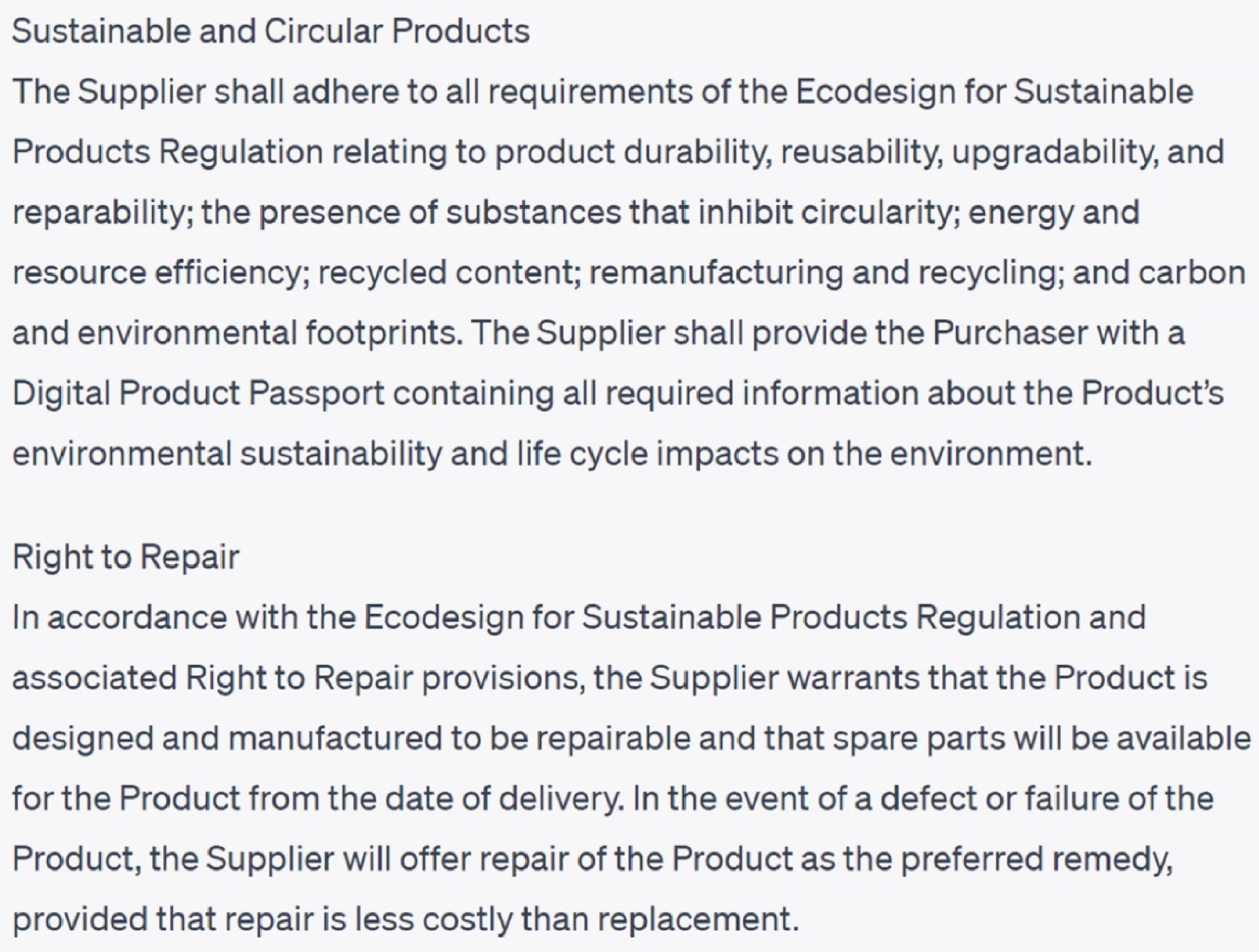
ChatGPT suggesting contract clauses. Extract from a conversation with OpenAI's GPT-3, accessed via the ChatGPT interface (May 24, 2023 version).
ChatGPT's suggestions can make it easier to get started without having to start from scratch. Depending on the context and the organizational goals and values, it can be used as a first draft by the contract designer, for review by subject matter experts and for further development. In terms of content, we found that the clauses proposed by ChatGPT were rather one-sided in favor of the buyer, with obligations only binding the supplier—no obligations binding the buyer, and no shared responsibilities. 48 If the contract drafter was working on the buy side, this might be normal—but working for the sell side, would not be desirable.
In terms of language, we found ChatGPT's proposal rather jargony and not very user-friendly. So, we continued our experiment by asking ChatGPT if it could explain these two clauses in ordinary language to an engineer responsible for developing new products and product information. Figure 4 shows the output.
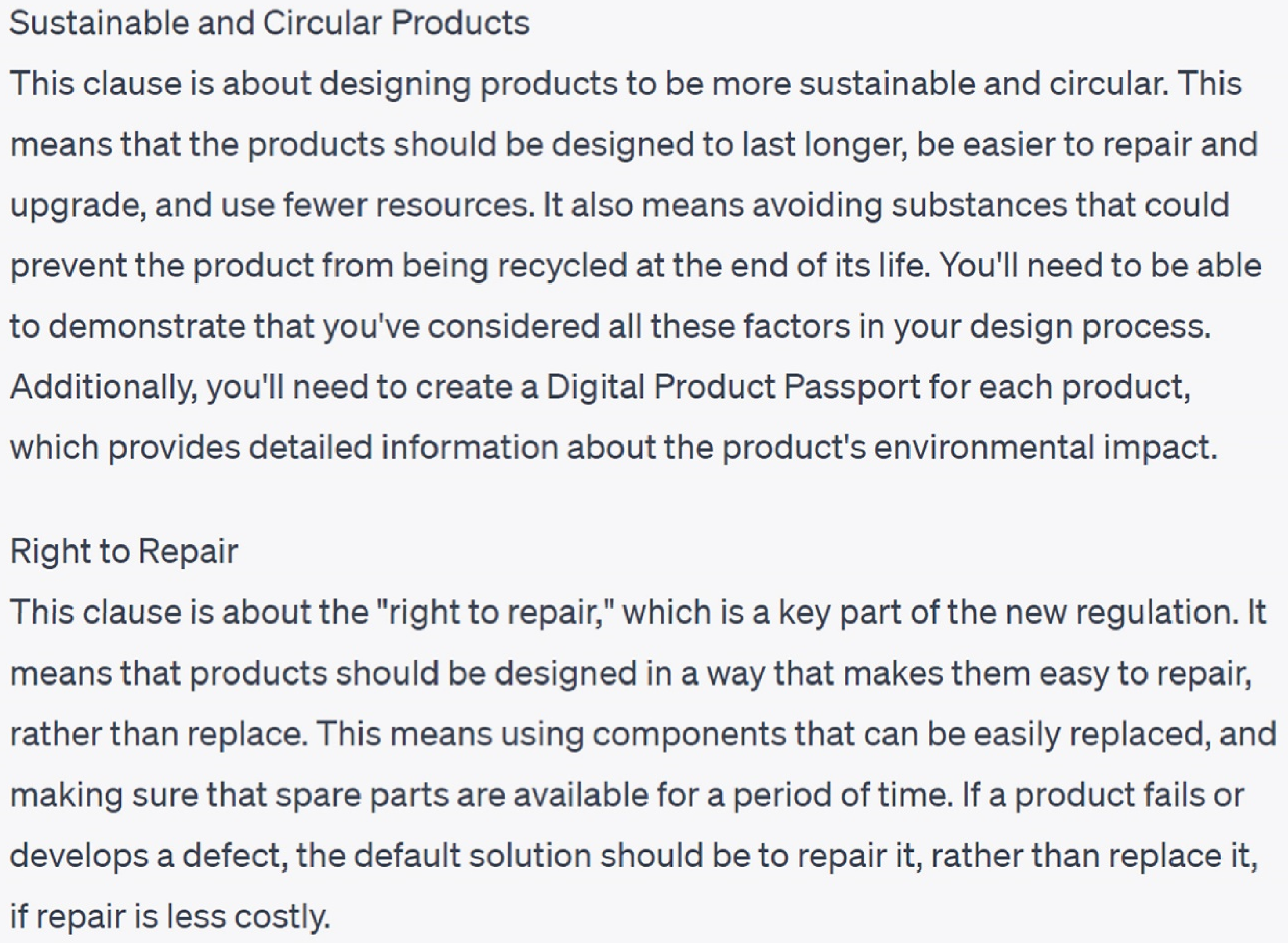
ChatGPT explaining contract clauses. Extract from a conversation with OpenAI's GPT-3, accessed via the ChatGPT interface (May 24, 2023 version).
In this experiment, ChatGPT successfully explained some of the jargon in a clearer language that should be understandable to a wider audience. It explained the meaning and background of the text and gave instructions to the engineer directly, addressing the engineer as “you.” It improved the sentence structure and did not use expressions such as “shall.” This should make it easier for the intended reader to understand the content. In many ways, this text meets Waller's criteria for good documents better than the earlier version. Obviously, this is only the beginning, as the engineer needs to know more about the requirements for the products and related information and how to design them to meet regulatory ecodesign requirements.
Language models such as ChatGPT have already revolutionized language processing by generating human-like text. There are also other AI-assisted applications that can be used as language tools for contract designers, such as DeepL Translate or Google Translate. ChatGPT, too, can translate between languages—and translate legalese to understandable language. In addition, it can summarize, paraphrase, refine, and structure language. DeepL 49 can be used to translate from one language to another using the Translation feature, as well as to improve spelling using the Write 50 feature. Whole files can be translated with DeepL Translate. Google Translate can not only translate text from one language to another, it can also pronounce written text and translate web pages directly.
We then moved from content and language—what is said—to presentation: how it is said. Layout and structure play an important role in presentation. Layout refers to organizing the content so that it is easy to find, read, and understand. A well-executed layout expresses at a glance the content, the hierarchy of the content, and its overall order. This makes it easy for readers to find the information they need, understand what they find, and use that information. 51 Contracts are typically dense with information, and it is often necessary to extract only parts of them for reading, so the layout should be designed to support strategic reading. The WorldCC Contract Design Pattern Library, for example, provides a range of tools to support strategic reading. 52
The WorldCC Contract Design Pattern Library goes beyond tools and guidance by incorporating real-world examples from various companies. This is particularly evident in the layout and layering sections. Companies such as Airbus and Shell have provided practical examples of how they have successfully implemented these patterns in their contract designs. By showcasing these real-world applications, the Library not only provides a resource for learning and inspiration, but also demonstrates the tangible impact of these patterns in the business world.
Layering is an approach to presenting information in a way that gives more relevance to key points and less to extraneous details. This approach creates a hierarchy of information that helps readers avoid information overload. It makes it easy to find the important information and allows the reader to skip the extraneous details if necessary. This approach also works for a more motivated reader who can read the details. 53 The different layers for different reader needs might include: (a) an action layer for quick skim reading; (b) an explanation layer for a deeper understanding, containing clear text written from the user's perspective; and (c) the full text. 54
The Creative Commons (CC) licensing system is an early example of a layered layout. CC provides standardized copyright licenses with three layers of information: a human-readable summary with plain language and icons, the full text of the license, a lawyer-readable “legal code,” and a machine-readable version. “Taken together, these three layers of licenses ensure that the spectrum of rights isn’t just a legal concept. It's something that the creators of works can understand, their users can understand, and even the Web itself can understand.” 55
Structure is an important part of contract design, especially if the aim is to avoid the wall-of-text effect. Organizing patterns helps to structure content so that it is logical, meaningful, and relevant to the readers. They help to organize and present information in a way that maximizes clarity and comprehension. Organizing patterns can help contract designers make the core content and meaning of the contract visible so that people who read strategically can find the answers they need. These patterns can be used to illustrate how different parts relate to each other, or in which document(s) or clause(s) particular content is presented. They can also be used to clarify what is and is not part of the contract. Examples of organizing patterns include accordion (used online), icon system, tables, and skimmable headings. 56 FAQ-style skimmable headings allow the reader to move quickly through a document to understand its structure and access its content. To work well as a layered explanation, there should be one for each clause or paragraph. 57
AI can also help with layout design and layering. Some research and testing has already been done in this area. Corrales Compagnucci, Fenwick, and Haapio present an example of using a GPT-3-generated explanation and merging it with the layering approach. The authors envision “a future where computable language models such as GPT-3 will enable and empower both contract readers and writers, allowing writers to provide their readers—whether humans or machines—with a new genre of operationally and legally functional and understandable contracts.”
58
In our final experiment, we asked ChatGPT to suggest a contract clause in which the information it had generated in our previous experiments was presented in a layered layout format, with the original clause text in the right-hand column, the explanation in the middle, and related FAQ-style headings in the left-hand column. Figure 5 shows the outcome.
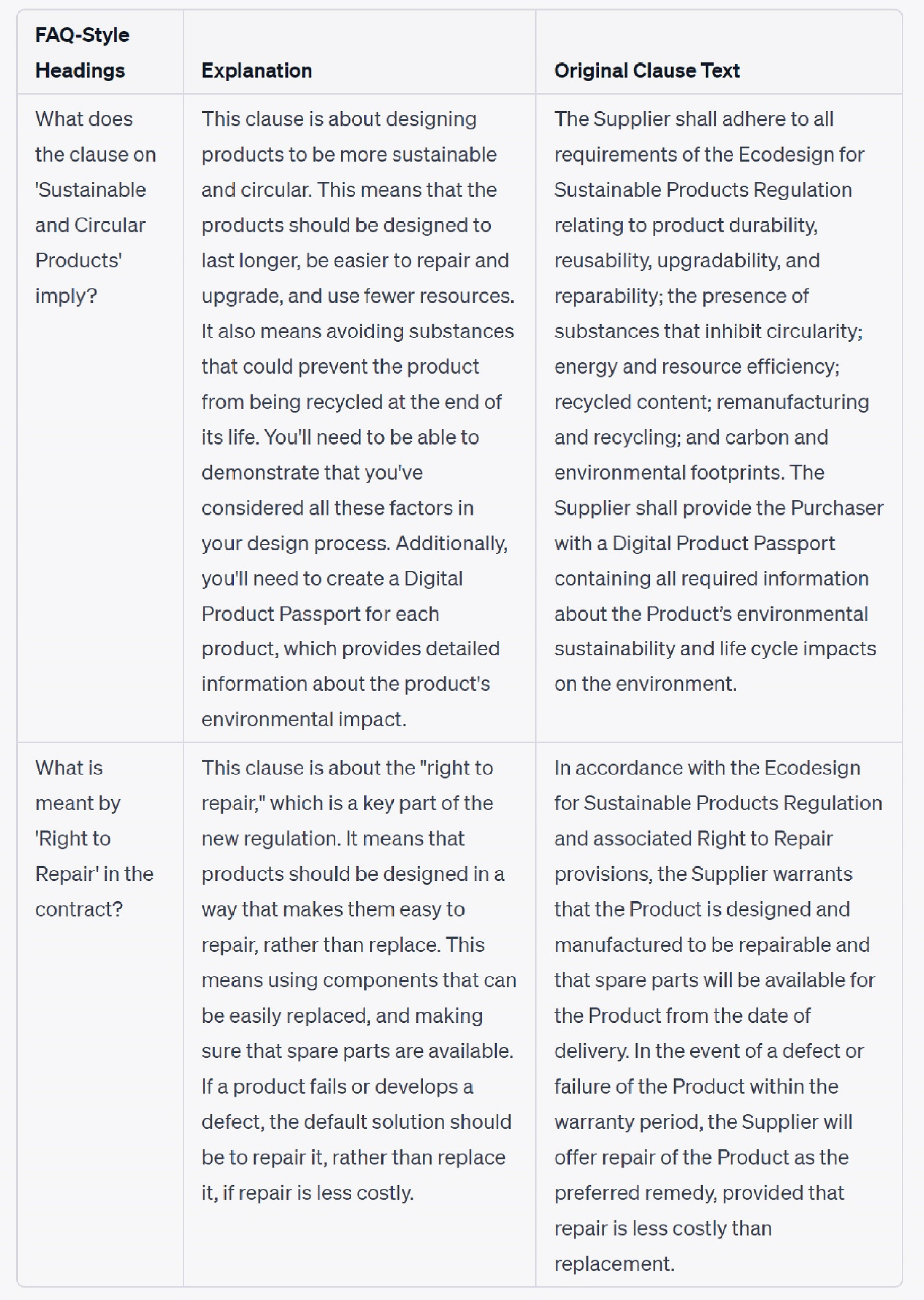
ChatGPT suggesting a layered layout and FAQ-style headings for previously generated content. Extract from a conversation with OpenAI's GPT-3, accessed via the ChatGPT interface (May 24, 2023 version).
This experiment was about both content and how content is presented. The experiment was successful: ChatGPT produced the content and implemented the requested presentation, a layered layout that included not only the full text and its explanation, but also FAQ-style headings that it was able to generate based on the earlier conversations. The different sections were separated by columns. For the FAQ-style headings, ChatGPT suggested “What does the clause on ‘Sustainable and Circular Products’ imply?” and “What is meant by ‘Right to Repair’ in the contract?” The Explanation section contains the human-friendly version of the contract clause generated earlier in our third experiment and the Original Clause Text section contains the full text generated in our second experiment.
This conversation shows that ChatGPT is able to pick up ingredients for its output from previous sessions. This experiment also shows that ChatGPT is capable of producing elements other than text, including tables, columns, and bolding. The entire output can be copied into a word processor, so that the contract designer can easily continue work and add other desired elements, such as visuals, which we excluded from our experiments but plan to explore later. 59
Our experiment described above is practice-oriented, exploring the possibilities of an AI assistant in contract design. As our theoretical contribution, we present a conceptual model of an AI-assisted contract design process that serves as a generalization of our findings for different contexts. The conceptual model is illustrated in Figure 6.
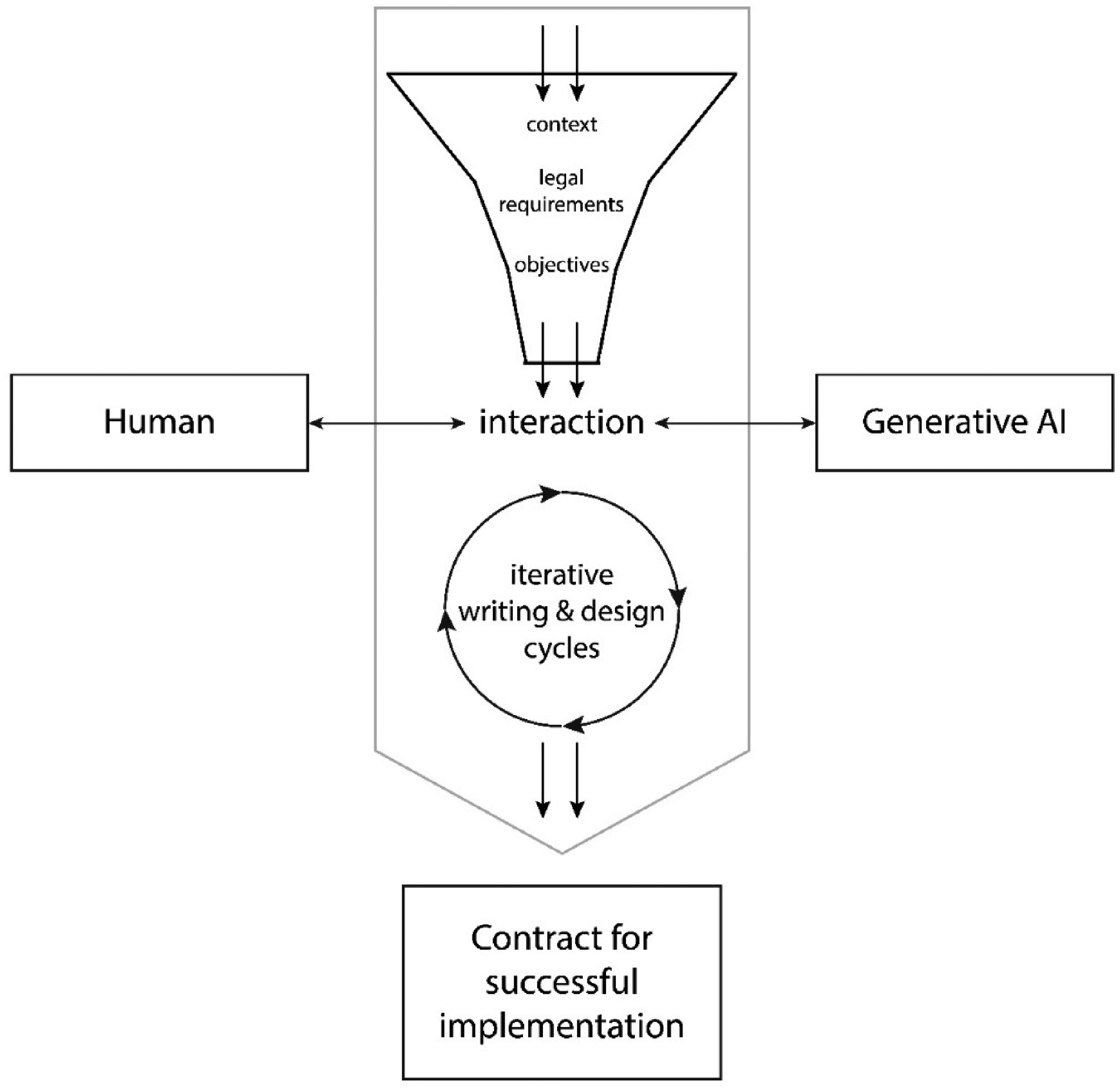
Conceptual model of an artificial intelligence (AI)-assisted contract design process. © 2024 The Authors.
The contract design process starts within the business and legal context, reflecting the legal requirements and business objectives for the particular contractual arrangement. The design process (with or without AI) is iterative and often includes several design cycles. The cycles typically include stakeholder reviews to ensure the legal and business relevance of the designed contract. Generative AI can be used by the human contract designer in multiple tasks through interactive sessions with the AI: contextualizing the contract in the legal framework, gaining more information on the topic, and optimizing the content, language, and presentation of the contract. Based on our research, these tasks can be performed with generative AI regardless of the context of the contract. Next, we discuss the future potentials and risks of AI-assisted contract design.
Our experiments focused on identifying and filtering sources for and generating ideas, suggestions, and first drafts of contract clauses. We found that ChatGPT can suggest contract topics, content, and language as well as navigation and organization aids (using different font sizes, boldface, FAQ-style headings) and layering (using skimmable headings, explanations, and text in a layered layout). In this way, ChatGPT can help us break out of old templates by giving us ideas on what the contract could say and how it could be presented.
We discovered the same thing as many other ChatGPT users: engineering (or designing) a well-working prompt is a prerequisite for using AI tools successfully. The more carefully one thinks through the prompt, with the desired outcome in mind, the better the AI tool will produce. For example, if we want columns and text in them, it is a good idea to express precisely what we want in each column. If the prompt is carefully crafted, ChatGPT can be a great help in a variety of ways, including brainstorming and contract drafting. It is important to emphasize the usefulness of ChatGPT specifically as an assistant to the contract designer, rather than as a stand-alone tool. ChatGPT output should always be reviewed and verified by a qualified professional.
Based on our findings, we can highly recommend using ChatGPT as a contract design assistant, but under close human supervision. By default, it interacts with its users in a conversational way, which is a good starting point. However, there are also some factors that undermine its usefulness and raise serious concerns.
Because large language models are trained on massive amounts of data, they are biased by the content and language used in their training data. 60 If they are trained on the most common contracts, which contain one-sided clauses and are written in legalese, they will reflect that. When asked to suggest contract clauses in our experiment, ChatGPT automatically started to produce typical legal language, even though it was otherwise good at colloquial speech. In order to get it to help simplify contracts or move from unilateral contracts to shared responsibility, it needs to be specifically prompted to do so.
We experienced a few other setbacks during our research. In the middle of our experiments, OpenAI disabled the Browse with Bing beta feature, stating that this was done “out of an abundance of caution while we fix this in order to do right by content owners.” Now OpenAI has re-enabled Browse, which is essential for contract designers to create and review content. Hopefully, formatting slowdowns such as the GPT-4 limit of 25 messages every 3 h will soon be removed; this currently slows down the use of ChatGPT as a contract design assistant.
ChatGPT and generative AI in general have other risks and limitations. ChatGPT is known for generating incorrect answers sometimes. 61 It does not ask clarifying questions when the user provides an ambiguous query, but simply guesses what the user intended. 62 It may also respond to harmful instructions or give inaccurate or biased answers. 63 These affect its usability as a contract design assistant. ChatGPT is not free from the biases of existing contracts, so it may suggest clauses that only work to the advantage of one party (and thus do not represent a proactive, shared-responsibility approach favored in this article).
According to a recent WorldCC report, the quality of data output is not the biggest barrier to the adoption of AI in organizations’ contracting processes: security and privacy are. 64 AI tool vendors, including OpenAI, are aware of this and are actively working to improve the privacy and security of their offerings. On its Security & privacy page, 65 OpenAI states that it complies with the General Data Protection Regulation (GDPR) 66 and the California Consumer Privacy Act, 67 adding that OpenAI can execute a Data Processing Agreement if the user's organization or use case requires it. 68
In the context of contract design projects, one of the biggest concerns is the handling of sensitive information, such as trade secrets such as customer data, and the issue of confidentiality. 69 For example, OpenAI's terms of use 70 do not secure the confidentiality of user input. 71 However, after investing $1 billion in OpenAI, Microsoft is now moving quickly to integrate ChatGPT and other AI products into Microsoft Azure Cloud Computing Services. 72 This will improve the current situation for the users of Azure OpenAI services: these are run in a customer-specific virtual space and the data is not available to third parties. 73 The approach is similar to how emails, files, and other data are stored when using outsourced cloud services. This approach of dedicated virtual spaces seems to be the current market trend. Other major players, including Amazon 74 and Google, 75 have also announced the availability of a similar implementation. The use of generative AI in the secure cloud space will remove many concerns related to sensitive information and enable efficient operations in contract design. In this case, AI is used within the organizational boundaries of the using party, which also makes it easier to comply with data protection laws.
There is an emerging debate on the role of intellectual property rights in the process of training AI and generative AI products. 76 Most generative AI products are trained on publicly available data from the Internet, including also copyrighted content. 77 For this reason, the generated output of AI may in some cases produce content that, if used, will lead to copyright infringement. 78 Contract designers need to be aware of this risk and consider it carefully when using the output.
In the EU, many of the risks related to privacy 79 and other concerns of generative AI are addressed in the recently agreed upon AI Act 80 . For example, privacy risks related to data crawlers and scrapers 81 are recognized as well as the commercialization of private data without consent on social media. 82 The European Parliament's position, 83 adopted in June 2023, includes so-called foundation models in the Act. It imposes specific obligations on providers of generative AI, with the aim of ensuring transparency and preventing the generation of illegal or infringing content. Providers of these models are responsible for ensuring the protection of fundamental rights, health and safety, and the environment. They are also required to assess and mitigate risks, comply with design and information standards, and register with the EU database. In this way, the AI Act aims to make generative AI more accurate and safer and to foster an environment in which AI tools can be used responsibly and effectively. However, the role of users remains crucial.
Conclusions
Experience and research, including studies by WorldCC, have highlighted the need for a new way of thinking about contracts. It is time to move away from seeing them as a mere formality, containing over-legalistic terms and dense legal jargon—time to focus more on the business and commercial terms at their heart. Elements such as scope and goals, specifications, delivery, and acceptance should be at the forefront, defining the operational relationship between the parties. But we should not stop there. With the increasing global focus on ESG and sustainability, related objectives and commitments should also be included and clearly communicated in our contracts.
When contracts are rethought, it becomes clear that they need to be redesigned. Redesigned contracts, in turn, open up a possible new way to change mindsets, refocus and reframe contract content, and improve the operational functionality and usability of contracts. In this exploratory article, we investigate the potential of generative AI tools to improve contracts and facilitate the generation of their content, language, structure, and presentation. 84 We use the example of the proposed new EU Regulation on Ecodesign for Sustainable Products, which will require many organizations to review their contracting practices and possibly develop new contract content without the help of existing templates or models.
We hope that the practical applications of AI, together with observations from our AI experiments, will provide inspiration and insight into the possibilities of using AI in contract design. While recognizing the opportunities and benefits, we have also highlighted the importance of addressing the challenges and ethical considerations involved. Those using these AI tools should be aware of their limitations: the tools need to be used responsibly, and their outputs need to be reviewed by a qualified professional. In our experiments, some of ChatGPT's suggestions proved to be affected by biases such as one-sided contract terms and the legalistic language typical of traditional contracts. However, these can be overcome by human oversight.
Richard Susskind, Professor Emeritus of Law, who has been studying AI and the law since the 1980s, recently said that ChatGPT is the most remarkable development he has seen in AI in over 40 years. 85 Like him, we see the future of generative AI in law and contracts as very promising, especially as these tools undoubtedly evolve and become more powerful and accurate. When they do, we believe they will revolutionize the creation and design of contracts, streamlining the process and ensuring legal soundness. We share Professor Susskind's view that AI's greatest potential lies in dispute avoidance. 86 But we also see a proactive, promotive dimension, where generative AI can be used not only to prevent the causes of problems from arising, but also to promote what is desirable and to help parties find and stay on the “happy path.” However, as we move toward this future, ethical and legal issues such as privacy and confidentiality will need to be addressed.
Overall, our results from the experiments are promising and argue for further exploration of ChatGPT in contract design, both in terms of content and presentation. While further research and solutions are needed to protect sensitive information and third-party rights, we are confident that harnessing the power of AI-assisted contract design will spearhead the development of more efficient, transparent, and sustainable contracts. Such innovation promises not only improved business outcomes, but also a more positive societal impact.
Footnotes
Declaration of conflicting interests
The authors declared no potential conflicts of interest with respect to the research, authorship, and/or publication of this article.
Funding
The authors disclosed receipt of the following financial support for the research, authorship, and/or publication of this article: This work was supported by the Research Council of Finland, (grant number 332819).
