



Abstract
Introduction
Pregnancy is a vital period during which maternal conditions and physiological processes may significantly influence the long-term health outcomes of the child. Therefore, optimal health education is necessary to enhance knowledge, attitudes, and behaviors during pregnancy.
Objective
This study aims to develop a model of various factors—such as facilitating condition, social influence, trust in the app, e-health literacy, innovative personality, perceived system quality, and perceived information quality—that affect both the intention to use and the actual usage of mobile apps for pregnancy education among pregnant women in Indonesia.
Methods
The research employed a survey using an online questionnaire, involving 206 pregnant women who were users of a mobile-based pregnancy education application, recruited from three community health centers in South Tangerang, Indonesia, between January and April 2024. Of the total participants, 130 pregnant women met the inclusion criteria. Data analysis was conducted in three stages: respondent profile analysis, measurement model analysis, and structural model analysis. Partial Least Squares-Structural Equation Modeling was utilized to test the proposed model.
Results
The findings indicate that the model is a good fit, valid, and reliable. The data supported eight hypotheses proposed in this study, and two were rejected. Facilitating conditions were found to have a direct positive impact on actual use rather than the intention to use a mobile-based pregnancy education application. Trust in the app mediates the positive effect of social influence, perceived system quality, and perceived information quality on the intention to use the app. Additionally, innovative personality and e-health literacy both have a positive influence on usage intention. The coefficient of determination (R2) values show that intention to use and facilitating conditions explain 61% of the variance in usage behavior, while facilitating conditions, innovative personality, trust in the app, e-health literacy, and social influence collectively explain 63% of the variance in intention to use. Moreover, social influence, perceived system quality, and perceived information quality together account for 64% of the variance in trust in the app. Despite the possibility of other unmeasured factors influencing these constructs, the findings suggest that the proposed model offers a reasonable and robust explanation of user behavior in the context of mobile-based pregnancy education applications.
Conclusion
This study offers valuable insights for the development of future applications and addresses a significant gap in the literature regarding the usage behavior of mobile-based pregnancy education applications.
Introduction
Background
Pregnancy is a physiological process that entails significant psychological and physiological changes in both the mother and fetus. 1 It is a critical period in a woman's life, during which maintaining optimal health is essential. Inadequate nutrition can result in stunting and impair a child's growth and development.2,3 Furthermore, complications during pregnancy or childbirth may contribute to a higher Maternal Mortality Rate (MMR). 4 According to the World Health Organization, the global MMR in 2020 was 223 maternal deaths per 100,000 live births. 5 In Indonesia, the MMR reached 173 per 100,000 live births, making it one of the highest in Asia. 5
In parallel, child stunting remains a major global concern. In 2022, an estimated 148 million or 22.3% of children under the age of five worldwide were affected by stunting. 6 The majority of these children live in Asia (52%) and Africa (43%). 6 In Indonesia, while the prevalence of stunting has declined in recent years, it remains alarmingly high, with a national average of 21.5%. 7 To mitigate these risks, several health-promoting behaviors are recommended during pregnancy, such as maintaining a balanced diet, practicing good personal hygiene, engaging in physical activity (e.g., prenatal exercises such as yoga and pilates), 8 taking iron supplements provided by healthcare professionals, and attending regular prenatal check-ups.9–11
Health education plays a vital role in promoting healthy behaviors among pregnant women. 12 However, traditional approaches, such as group counseling or one-way health talks, often adopt a “one style fits all” approach that does not fully address the diverse needs of expectant pregnant women. 13 Evidence from educational research shows that adaptive learning environments can significantly improve learning outcomes compared to conventional methods. 13 Applying this concept to maternal health, mobile-based adaptive education allows learning materials to be personalized according to each woman's stage of pregnancy, health status, and level of knowledge.
Technological advancements, particularly in mobile applications, have provided innovative solutions to support education and self-care during pregnancy. As a result, various mobile health applications are now available for this purpose. These applications allow pregnant women to access information and services related to self-care and infant care14–16 that are essential for maintaining their health and preventing complications throughout the pregnancy.
However, the successful implementation of mobile health interventions depends heavily on user acceptance, which is an important prerequisite for any technology to deliver its intended benefits. 17 Therefore, understanding the acceptance of these mobile health applications among pregnant women, along with the factors that influence it, is essential for designing more effective and practical applications.
Although some studies have highlighted potential negative impacts of mobile phone use during pregnancy on maternal health,18,19 the existing evidence remains inconclusive, and further research is needed to confirm these findings. Consequently, this study does not address those concerns and focuses instead on the use of mobile applications as educational and self-care tools. Nevertheless, caution and prudence in mobile phone use during pregnancy are still advised.
Research gaps and objectives
Numerous empirical studies have investigated the use of health education application technology. These studies encompass general health education applications20–22 and those targeting specific health issues such as diabetes,23–25 chronic diseases, 26 cardiac diseases,27,28 and pregnancy.29,30
The Unified Theory of Acceptance and Use of Technology (UTAUT) is frequently employed to elucidate the behavior and factors influencing the use of health education applications.22,24,25,29 The UTAUT is widely regarded as a comprehensive and important framework for explaining information technology (IT) adoption.31,32 It provides a better understanding of the variance in behavioral intentions compared to other theories and models.33,34
Although the UTAUT has been widely employed to examine technology adoption, its original framework has often been deemed inadequate in fully capturing the complexity of users’ utilization behavior of health education applications. To overcome these limitations, researchers have extended UTAUT by incorporating additional factors such as system quality, information quality, service quality, and interaction quality.35,36 Other enhancements include personal innovativeness,29,35 trust,24,35 e-health literacy (EL),37,38 attitude,29,37 self-efficacy,22,35,37 perceived disease threat,24,26 and perceived risk.25,29 In addition, several studies have sought to enhance the explanatory power of UTAUT by integrating it with other theories.
Despite these efforts, empirical findings remain inconsistent. For instance, Arfi et al. found that performance expectancy did not affect behavioral intention, contrary to other findings. 38 Nisha et al. and Candra et al. found that social influence (SI) did not significantly affect behavioral intention.35,39 These variations are likely due to varying contextual factors across studies, including the specific purposes of health education applications and the regional contexts in which studies are conducted. Thus, applying a specific model across different contexts requires adjustments and further testing. 39

This search yielded a total of 13 distinct articles (see Appendix 1). However, a closer content review revealed that only five of these articles specifically addressed mobile applications for pregnancy or postnatal health education. Importantly, none of the articles examined the factors that influence user's adoption or continued use of such applications. To address this gap, the research aims to investigate the factors influencing the behavioral intention to use mobile-based pregnancy education applications among pregnant women in Indonesia. The research develops a conceptual model that integrates UTAUT, the Information Systems Success (ISS) model, and Social Cognitive Theory (SCT), addressing UTAUT's lack of personal factors. 41 In health behavior research, SCT is one of the most extensively used theoretical frameworks. 42 It is commonly applied in explaining individuals’ health-related behaviors, including health technology use behavior (UB),43,44 and elucidates the reciprocal cause-and-effect relationship between personal factors, environmental factors, and behavior. 45 The ISS model was developed to measure the success and effectiveness of information systems. Given these considerations, all three models are suitable for examining the acceptance of mobile-based pregnancy education applications, which are a form of health IT.
The proposed model includes system quality, information quality, SI, trust in the application, EL, innovative personality (IP), and facilitating conditions (FCs) as influencing factors. This study seeks to identify the determinants of the use of mobile-based pregnancy education applications in Indonesia, providing insights to guide the development of future applications. Data collection was conducted online using an internet-based survey (Google Forms), and its reporting followed the Checklist for Reporting Results of Internet E-Surveys (CHERRIES).
Theoretical background and hypotheses
Various models are utilized in the literature to elucidate technology acceptance by introducing influencing factors. Among these models, the UTAUT stands out as the most prevalent in technology adoption research, 46 particularly in studies on the use of health education applications.22,24,25,29 The UTAUT is recognized as a comprehensive framework for understanding IT adoption,31,32 highlighting four key determinants: performance expectancy, effort expectancy, SI, and FCs.34,47 Additionally, UTAUT includes various control variables, such as gender, age, experience, and voluntariness of use, to moderate these relationships34,47 (see Figure 1).

UTAUT model.
Furthermore, SCT, developed by Bandura in 1986, 48 is widely used in health behavior research, including the exploration of health technology utilization.43,44,49 The SCT elucidates the reciprocal relationship between personal, environmental, and behavioral factors. 45 Those factors operate as determinants that mutually influence each other bidirectionally 49 (see Figure 2).

SCT model.
Another noteworthy model is the ISS model, developed by DeLone and McLean, 50 which evaluates the success and effectiveness of information systems. According to this model, system quality, information quality, use, user satisfaction, and individual and organizational impacts collectively contribute to system success. In 2003, this model was updated by replacing individual and organizational impacts with net benefits. 51 This change was made because net benefits are considered the most important measure of information system success. 52 Furthermore, the updated model delineates three critical dimensions of quality: information quality, system quality, and service quality, while also proposing the adoption of “intention to use” as an alternative metric to “use” in specific contexts. 51 “Intention to use” represents an attitude, while “use” refers to a behavior. 51 Figure 3 presents the updated ISS model.
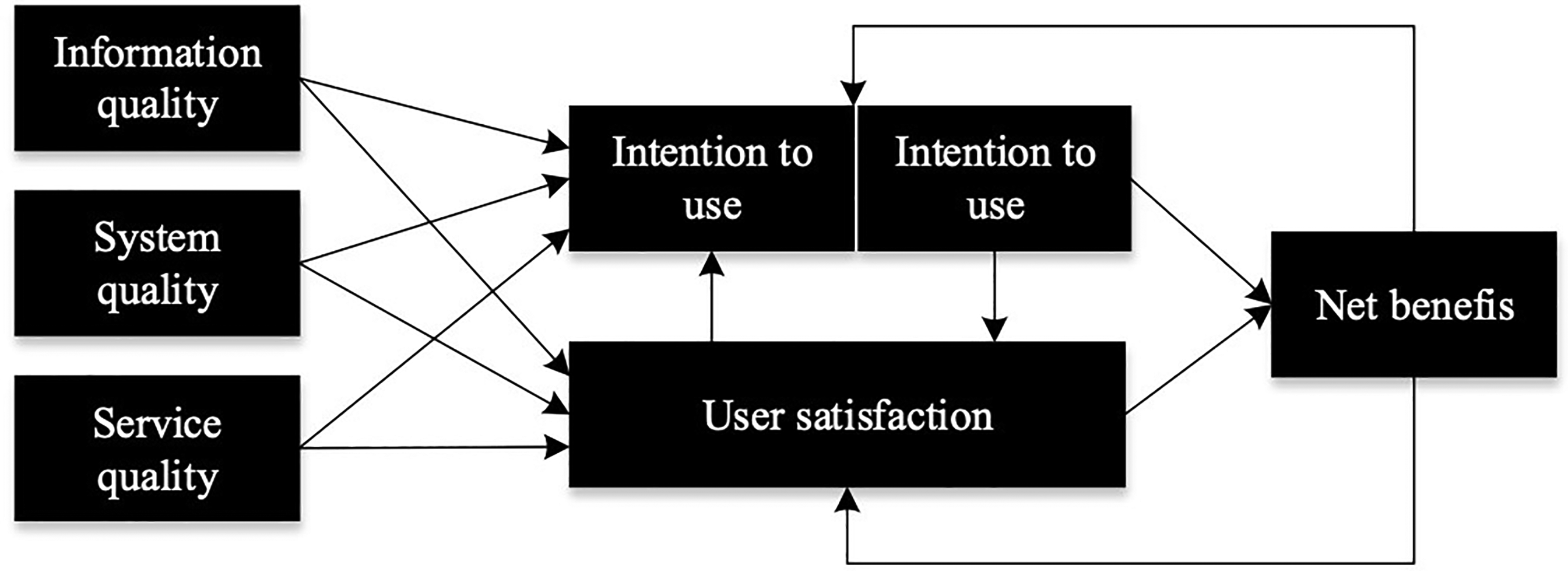
The updated ISS model.
Technology use behavior (UB) and intention to use technology (IU)
In the context of mobile applications, behavior encompasses the user's involvement in performing exercises and engaging with the application. 53 This goes beyond mere intention, encompassing the actual practical use of the application. Behavioral intention reflects the degree to which a person has consciously decided to perform or refrain from performing a specific behavior in the future. 34 Regarding a mobile application, intention to use shows a person's conscious plan to use the app.
The UTAUT contends that technology usage behavior is determined by behavioral intention. 34 When an individual intends to engage in a certain behavior, the probability of performing that behavior increases. A stronger intention is associated with a greater likelihood of the intended behavior being carried out. Conversely, a lower intention diminishes the possibility of realizing the behavior. 54
Previous research in technology contexts has verified the association between behavioral intention and system usage.
53
55–58 This relationship is likely applicable to mobile-based pregnancy education applications. Thus, the first hypothesis proposed in this study is:
Facilitating conditions(FCs)
According to Sampat et al. and Venkatesh et al., FCs refer to the user's perception that organizational and technological infrastructure is available to support system use.29,34 In other words, FCs indicate consumers’ perceptions of the availability of resources and support to perform a behavior. 59 In m-Health, Lee et al. define FCs as users’ belief that technical support will be available to help and solve technical problems, making it easier for them to use the m-Health application. 46 The FCs reflect a person's perception of control over behavior.60,61 Based on these definitions, this study defines FCs as people's perceptions of the availability of resources to use mobile-based pregnancy education applications.
In line with UTAUT2 (further development of UTAUT), FCs influence intentions and behaviors. FCs positively contribute to the development of behavioral intentions and their subsequent enactment. Conversely, the absence of FCs diminishes intention and hinders the implementation of behaviors. Prior studies on technology support a positive and direct effect of FCs on the intention to use
58
62–64 and usage behavior.24,53,56 This influence is also very likely to exist in the context of mobile-based pregnancy education application technology. Given the arguments above, the proposed hypotheses are as follows:
Innovative personality (IP)
Innovative personality, also known as personal innovativeness in some literature, is defined by Agarwal and Prasad as an individual's conviction in their favorable inclination toward embracing new technologies. 65 From an IT perspective, it reflects a person's willingness to try new technology. Innovative personality represents a person's proclivity to adopt a product or service earlier than others. A person with an IP has a positive tendency toward using new technologies and is open to experimenting and discovering new and innovative things. 65 Such individuals are more likely to be early adopters or innovators, as highlighted by Cheng. 66 Those with higher innovativeness tend to perceive innovation more favorably and express a greater intention to employ new technologies. 67
Previous empirical studies on medical apps have proven the influence of IP on usage intention.62,68 They indicated positive effects of IP on the intention to use (UI). In addition, according to SCT, personal factors form and direct behavior. Therefore, we expected that IP would also increase the intention to use mobile-based pregnancy education application technology. Consequently, the formulated hypothesis is as follows:
Trust in the apps (TA)
Trust refers to a person's belief that others with whom they interact will act according to their promises, be honest in negotiations, and not exhibit pragmatic behavior, even in uncertain cases.69,70 Rajanen and Weng elaborate on trust in the context of wearable devices, defining it as the extent to which individuals believe in the quality and reliability of these devices. 71 For mobile payment applications, trust denotes the extent to which consumers perceive the application to be reliable. 72 In the e-health environment, trust reflects users’ attitudes toward their mobile health app and its service providers. 73 Based on those definitions, this study defines trust in the mobile-based pregnancy education app as the user's belief that the app is of high quality and can be relied upon to provide necessary information or other resources related to pregnancy and that it will deliver what it promises.
Trust is crucial to any relationship.
74
The influence of trust in the interaction between humans and technology has been widely studied.53,55,58,73,75,76 The studies demonstrated that consumer trust in technology influences technological acceptance. Individuals who trust technology are strongly inclined to use it, whereas those lacking trust tend to avoid it and prefer alternatives they find more trustworthy. The influence of trust is highly likely to extend to women's intentions to utilize mobile-based pregnancy education apps. Thus, the next hypothesis of this study is as follows:
Electronic health literacy (EL)
According to Norman and Skinner, EL is the ability to search, locate, understand, and assess health information from electronic sources and apply the knowledge gained to address or solve health problems. 77 E-health literacy incorporates traditional literacy skills, health literacy, information literacy, media literacy, scientific literacy, and computer literacy. 78 E-health literacy skills are necessary to understand and use m-health applications effectively, while a lack of such literacy may hinder adoption.56,79 The current body of research emphasizes the positive impact of increased EL levels on consistent and frequent online information-seeking behaviors. 80 Users with higher EL are expected to have greater intention to use mobile apps because finding reliable health information online is easier than someone with low EL. 81
In the context of healthcare technology, empirical studies56,79,82 have demonstrated the positive influence of EL on the IU technology. According to SCT, personal factors include knowledge or literacy that impact behavior. This trend is projected to continue in mobile-based pregnancy education apps, where individuals with good EL will be more likely to use these apps, while those with low EL will have a lower propensity to do so. Hence, the following hypothesis is proposed:
Social influence (SI)
Venkatesh et al. define SI as the extent to which consumers perceive that important others (e.g., family and friends) believe they should use a particular technology. 59 Social influence can originate from individuals such as peers, friends, and family members, referred to as interpersonal influence, and from mass media. 83 In health management service applications, SI indicates the extent to which a person perceives that important others believe they should use a personalized health management service application. 34 For m-Health, SI refers to how much influence important people (friends, family, colleagues, and superiors) have on a user's decision to use m-Health services. 46 In this study, SI is defined as the extent to which someone perceives that people who are important to her believe she should use a mobile-based pregnancy education app.
Before using technology, people tend to gather information through those around them. Social interaction is an active means of gathering information and helps reduce uncertainty about the use of technology. 84 The reaction of the social environment to technology influences attitudes and behaviors related to technology adoption. 34 Social influence strongly impacts behavioral intentions because individuals are often swayed by the opinions of others, such as family, friends, coworkers, and colleagues. The UTAUT 34 and UTAUT2 59 stated that SIs subtly change our thoughts and behavioral intentions. Social opinions on reliability, usability, ease of use, and compatibility can shape the intention to use or avoid a particular service.85,86
Additionally, SI is crucial in forming initial trust.
87
Positive social feedback about technology can enhance trust; conversely, negative feedback can diminish it. Previous research provides evidence that societal influence plays a significant role in individuals’ decisions to IU
53
56–5863,68,79,88 and in building trust in technology.58,84,85 Therefore, we expect SI to positively influence users’ intention to use a mobile-based pregnancy education app. Therefore, based on the information provided, the hypotheses are as follows:
Perceived system and information quality (PSQ and PIQ)
Perceived quality illustrates a product or service's overall quality, superiority, or excellence based on customer perception.89,90 It is an important aspect of product success, as is technology, because because the customer is the end user. The ISS model divides the quality of information systems into two categories: system quality and information quality. 50
The Perceived System Quality (PSQ) is context-specific. In e-commerce, it relates to system performance, including usability, usefulness, responsiveness, reliability, and flexibility. 91 Meanwhile, in the internet context, PSQ features comprise usability, availability, reliability, adaptability, and response time. 55 It encompasses expected system characteristics such as ease of operation, system flexibility, system reliability, ease of learning, intuitiveness, sophistication, and response time. 52 On the other hand, Perceived Information Quality (PIQ) refers to expected information characteristics, encompassing timeliness, consistency, relevance, format, and correctness of information delivered by applications. 92 For mobile banking applications, emphasize that quality information must be accurate, timely, complete, and up-to-date. 55
Previous studies have shown that perceived system quality significantly affects trust.73,93–95 Users tend to trust applications with high-quality systems, while lower quality reduces trust. The PIQ has also been found to influence the trust of technology users.76,93,94,96 Thus, the following hypotheses are proposed:
Figure 4 illustrates the conceptual model of this study, in which ten hypotheses are proposed and tested. This study does not include sociodemographic factors (such as age, gender, or education level) as moderating variables. The model emphasizes constructs from UTAUT, the ISS model, and SCT, which theoretically focus on cognitive and social processes rather than demographic characteristics as the primary focus of this study. Moreover, including sociodemographic moderators may not be relevant in a relatively homogeneous population, such as pregnant women, and may increase model complexity.97,98 Nevertheless, future studies may explore the moderating role of sociodemographic factors to better understand differences across user groups.

Conceptual model.
Research methods
Research instrument, variable, and measures
A questionnaire was used to collect data. It consisted of two sections: the respondent profile and the main questions. The respondent profile section gathered personal data, the mobile-based pregnancy education applications used, and the usage characteristics of those applications. The main questions focused on user perceptions related to the nine research variables: PIQ, PSQ, TA, EL, SI, FC, IP, IU, and UB. These nine variables were selected based on theoretical constructs drawn from UTAUT, the updated ISS Model, and SCT, as well as findings from prior empirical studies. Table 1 presents the theoretical foundations supporting the inclusion of each variable in this study.
Research variables and their theoretical foundations.

To ensure content validity81,99 and improve the comparability of our findings with prior research 100 measurement indicators for each variable were adapted from existing literature. Respondents rated their perceptions using a 5-point Likert scale, where a score of 1 indicated “strongly disagree” and 5 indicated “strongly agree.” Table 2 presents the nine variables, their operational definitions, and the corresponding observed variables (measurement indicators).
Variables and measures.

To control for potential bias in perception among respondents using different mobile-based pregnancy education applications, the questions were designed to be generic and applicable across platforms. They were not related to the unique features of any specific application, but instead focused on the general experience of using mobile-based pregnancy education applications. Additionally, in cases where participants used more than one application, they were instructed to base their answer on the application they used most frequently.
Data collection
This study is cross-sectional research conducted from January to April 2024. The study was conducted at three community health centers supported by the Health Department of South Tangerang City, Banten, Indonesia. These centers serve over 100 pregnant women daily and represent the highest antenatal visit rates in South Tangerang City. Additionally, the selected health centers are located in three different subdistricts, which rank first, second, and fourth in terms of population size in South Tangerang. Based on these considerations, the selection of the three centers is expected to adequately represent the characteristics of pregnant women in the region. The selection of only three centers for data collection is deemed methodologically appropriate, given that relevant prior studies have similarly been conducted within certain institutional setting.106–108
The study participants were pregnant women who attended prenatal check-ups during the study period and were selected through purposive sampling. The inclusion criteria were willingness to participate until the end of the study, signing an informed consent form, and adhering to the study rules. The exclusion criteria were subjects who were referred to a hospital for further examination. To recruit participants, the researchers collaborated with midwives at three community health centers. The midwives briefly explained the study to potential participants and asked whether they were willing to take part. For those who agreed, the researchers provided an informed consent form and requested their signature. Participation was entirely voluntary. No incentives were provided to participants, and they were free to withdraw at any time, even after signing the consent form. This research has received ethical approval from Universitas Esa Unggul with ethical number 0923-12.023 /DPKE-KEP/FINAL-EA/UEU/I/2024. This research also followed the ethical principles of the Declaration of Helsinki.
A total of 206 pregnant women participated in this study. However, given the study's specific focus on the use of mobile-based pregnancy education applications, only those who reported using such applications were included in the final analysis. Participants were excluded if the application they used did not meet the operational definition of a mobile-based pregnancy education application as defined in this study. The study was not restricted to any particular application, allowing for variation in the types of applications used. Of the total participants, 130 pregnant women met the inclusion criteria by reporting the use of a qualifying application, while the remaining 76 did not and were therefore excluded from further analysis.
The final sample of 130 participants met the recommended minimum sample size for the Partial Least Squares Structural Equation Modeling (PLS-SEM) method, which was employed as the analytical approach in this study. According to the rule-of-thumb for PLS-SEM, the sample size should be at least 10 times the maximum number of formative indicators of a latent construct. 109 Since each variable in this study was measured using three indicators, the minimum recommended sample size is 30. Additionally, a power analysis, as suggested by Hair et al., was conducted using G*Power to calculate the minimum required sample size. 110 With α = 0.05, power = 0.90, an effect size (f²) of 0.15 (medium), and five predictors (the highest number of predictors for a single construct), the minimum required sample size is 116.
Data were collected via an online survey (Google Forms), and responses were validated through follow-up phone calls with each subject. For pregnant women who were willing to participate but faced limitations or difficulties in completing the online questionnaire, assistance was provided by an enumerator via telephone. The enumerator read each question, recorded the respondents’ answers, and entered the responses into the Google Form on their behalf. To ensure that the process runs smoothly and consistently, and to minimize potential bias introduced by the enumerators, those involved received briefings and training on the standardized data collection procedures to be followed.
Statistical analysis
Data analysis: demographic profile, measurement model, and structural model analysis
The data analysis includes three main components: respondent profile analysis, measurement model analysis, and structural model analysis. Respondent profile analysis involves examining the demographic and usage characteristics of the respondents regarding mobile-based pregnancy education applications. Measurement model analysis tests the relationship between observed variables (measurement indicators) and latent variables (constructs). It includes convergent validity, discriminant validity, and reliability tests. The convergent validity and discriminant validity tests evaluate the suitability of the indicators used to measure the constructs. The reliability test evaluates the level of consistency of the measurement model. The criteria for assessing convergent validity, discriminant validity, and construct reliability are shown in Table 3. The measurement model is valid and reliable if it meets those criteria.
Criteria for validity and reliability analysis.

The structural model analysis examines the nature and magnitude of the relationship between constructs.114,115 In other words, this analysis aims to test hypotheses. In this study, 10 hypotheses need to be tested based on the proposed relationships between the constructs. Structural model analysis begins with goodness of fit testing, where various criteria are assessed to determine whether the model adequately fits the data. The criteria and their respective cutoff values, as outlined in Table 4, serve as benchmarks for evaluating the model fit. If all the criteria in the table are met, the structural model and the data used are fit for each other. 115
Criteria for the goodness of fit testing.

Notes: *According to Tenenhaus’ GoF criteria, a PLS-SEM model is considered to have a global fit if its GoF value falls into one of the following categories: ≥0.10: Small fit, ≥0.25: Medium fit, and ≥0.36: Large fit (Mahmud et al., 2023). This study adopts the criterion that the model can be considered a “good fit” if its GoF value is at least 0.25. A higher GoF value (especially ≥ 0.36) reflects a better global model fit.
The PLS-SEM method has garnered significant interest among researchers due to its ability to estimate complex models with numerous constructs, indicator variables, and structural paths without imposing strict distributional assumptions on the data.73,100,116 The PLS-SEM offers solutions with small sample sizes when the model consists of many constructs and a large number of items.73,116 For this study, WrapPLS 5.0 was used to implement the PLS-SEM approach.
In this study, we did not conduct a multi-group analysis to compare new and experienced users, as our primary goal was to analyze general patterns and relationships across the entire sample. This study aimed to provide a comprehensive understanding of the phenomenon rather than explore differences between groups.
Results
Respondent demographic profile
This study focuses on pregnant women who utilized mobile-based pregnancy education applications during their pregnancies. Table 5 shows the demographic characteristics of the respondents. Based on the data collected, the respondents were between 18 and 39 years old, with the majority (82 individuals) aged between 18 and 28. Most of the respondents were high school graduates (61 individuals) and primarily identified as housewives (86 individuals). On average, respondents reported using their smartphones for 7.4 h per day for various purposes. All participants stated that they used mobile-based pregnancy education applications throughout their pregnancies.
Demographic profile.

Measurement model analysis
The results of the reliability and convergent validity tests are shown in Table 6. With all constructs exhibiting Composite Reliability and Cronbach Alpha scores exceeding the threshold of 0.6, and all factor loadings and Average Variance Extracted (AVE) values surpassing 0.5, the convergent validity of the model is confirmed to be satisfactory. Additionally, the square roots of AVEs for each construct, as highlighted in bold in Table 7, being greater than their correlations with other constructs, indicate adequate discriminant validity. Consequently, it can be confidently concluded that the measurement model is both valid and reliable.
Construct reliability & convergent validity.

PIQ: Perceived Information Quality, PSQ: Perceived System Quality, SI: Social Influence, TA: Trust in the Apps, EL: E-Health Literacy, FC: Facilitating Conditions, IP: Innovative Personality, IU: Intention to Use, UB: Use Behavior.
Discriminant validity.

Notes: The square roots of average variances extracted (AVE) values are presented on the diagonal and highlighted in bold font, PIQ: Perceived Information Quality, PSQ: Perceived System Quality, SI: Social Influence, TA: Trust in the Apps, EL: E-Health Literacy, FC: Facilitating Conditions, IP: Innovative Personality, IU: Intention to Use, UB: Use Behavior.
Structural model analysis
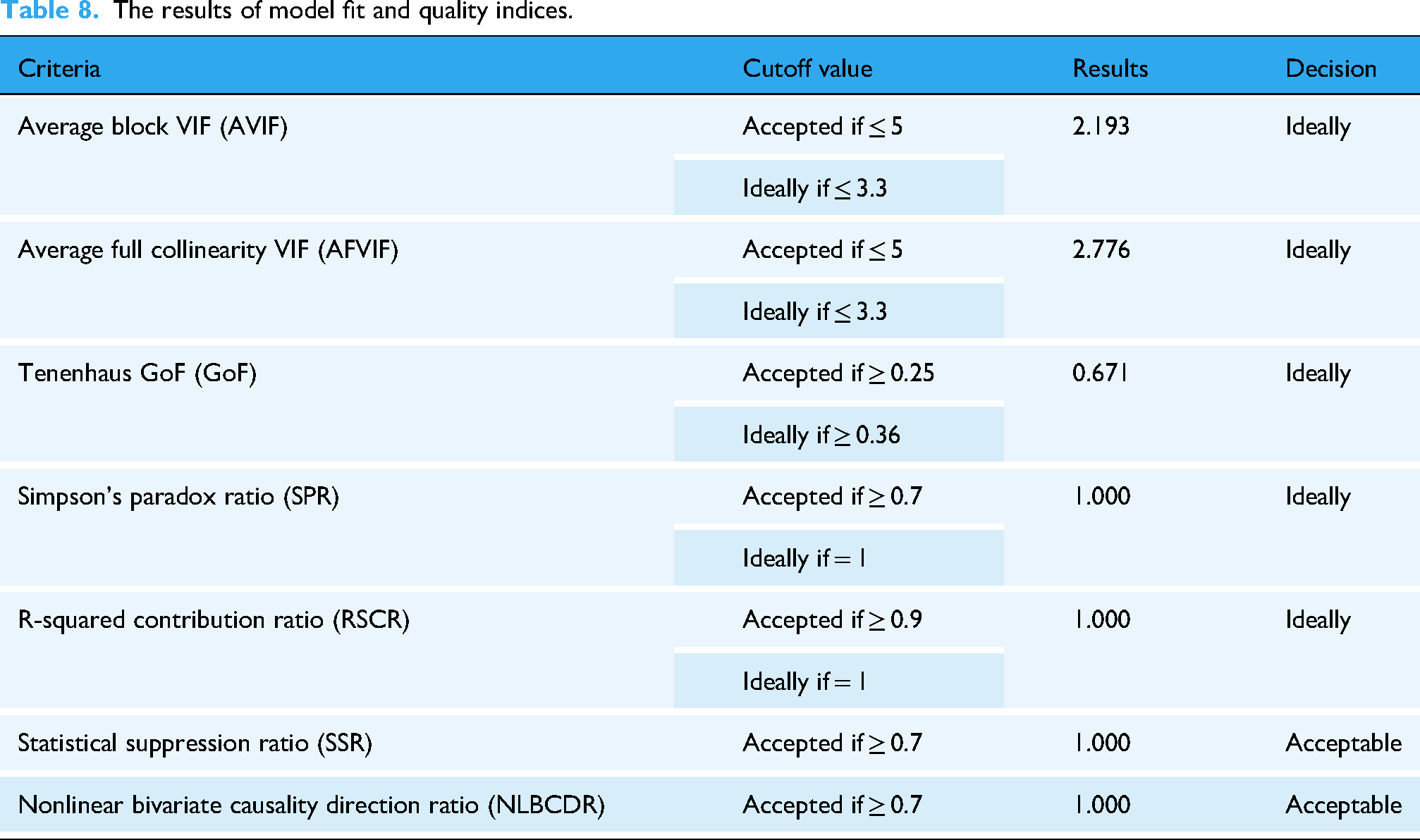
The fit and quality index models presented in Table 8 indicate that the model fits well with the data, suggesting the absence of multicollinearity issues between the indicators and variables. 117 Moreover, no causality problems were identified within the model. Given these results, the model utilized in this study is deemed suitable for further testing.
The results of model fit and quality indices.
The results of the hypothesis testing are presented in Figure 5. Based on output path coefficient and p-values shown in the figure, hyphotheses H1 (β = 0.58, p ≤ 0.01), H2 (β = 0.30, p ≤ 0.01), H4 (β = 0.25, p ≤ 0.01), H5 (β = 0.19, p ≤ 0.01), H6 (β = 0.43, p ≤ 0.01), H8 (β = 0.55, p ≤ 0.01), H9 (β = 0.14, p ≤ 0.05), and H10 (β = 0.21, p ≤ 0.01) are supported, while H3 (β = 0.09) and H7 (β = 0.10) are not supported. This implies that in using mobile-based pregnancy education apps, usage behavior is directly and significantly influenced by intention to use and FCs. A higher intention or the presence of supportive facilities encourages application usage, while lower intention and FCs may diminish application usage.

Hypotheses testing result.
Furthermore, the intention to use mobile-based pregnancy education apps is determined by IP, TA, and EL; all of which positively and significantly influence intention. This suggests that higher levels of innovativeness, trust, or EL correspond to a greater intention to use the application.
Moreover, this study found that SI, perceived system quality, and perceived information quality influence trust in mobile-based pregnancy education applications. Higher levels of these factors correspond to higher trust in the application, and vice versa. As these factors increase, so does TA, while decreases may lead to diminished trust. Lastly, the analysis indicates that neither FCs nor SI impacts the intention to use mobile-based pregnancy education apps. In this study, the presence or absence of FCs and SI does not significantly affect individuals’ intention to use mobile-based pregnancy education applications.
The coefficient of determination (R2) indicates the variance of endogenous (dependent) variables that can be predicted from exogenous (independent) variables or the extent to which the independent variables in the model can account for changes in the dependent variables.73,115,118 R2 illustrates how much the dependent variable can be influenced by the independent variable. 119 A higher R2 value signifies a greater degree of variance in the dependent variable that the independent variables in the model can elucidate. As illustrated in Table 9, the R2 values for usage behavior, intention to use, and TA are 0.61, 0.63, and 0.64, respectively. This indicates that the effect of intention to use and FCs can explain 61% of usage behavior, and the rest can be explained by other factors not considered in this study. Moreover, FCs, IP, TA, EL, and SI collectively explain 63% of the variance in intention to use. Lastly, SI, perceived system quality, and perceived information quality together account for 64% of the variance in TA. Although other factors may influence usage behavior, intention to use, and TA that were not included in the study, the coefficient of determination shows that the research model could reasonably explain the three variables. In other words, the research model could provide a reasonable explanation of the usage behavior of mobile-based pregnancy education applications.
Coefficient of determination.

Discussions and implications
Discussion
This research investigates how various factors, such as FCs, IP, TA, EL, SI, perceived system quality, and perceived information quality, impact the intention to use and actual usage of mobile-based pregnancy education applications. This study integrates several theories, namely the UTAUT, SCT, and ISS models, to explain factors influencing the intention and actual usage of mobile-based pregnancy education applications. The findings indicate that while these factors significantly predict both intention and usage, the observed relationships differ from those posited in the underlying theories. This suggests that the adoption of mobile-based pregnancy education applications should be understood from a perspective distinct from existing theoretical frameworks. The following section discusses these findings in detail.
In line with the hypothesis, this study found that the actual usage of mobile-based pregnancy education applications is significantly influenced by two key determinants—intention and FCs. This result aligns with the UTAUT model, which posits these factors as central drivers of technology adoption behavior. More spefically, this study shows that the intention to use mobile-based pregnancy education applications positively and significantly influences actual usage. This finding is consistent with previous research, indicating that the higher the level of intention, the greater the likelihood of the behavior being performed. In this context, pregnant women who strongly intend to use a specific mobile-based pregnancy education application tend to use that application ultimately.53,55–58 Furthermore, the positive and significant impact of FCs on actual usage behavior was also found in previous studies.24,53,56
Regarding the determinants of intention to use mobile-based pregnancy education applications, this study found that intention was directly and significantly shaped by three antecedents: IP, trust in the application, and EL. This finding supports SCT, which emphasizes the central role of cognitive and personal factors in shaping technology adoption behavior. These results also corroborate previous research, suggesting that higher levels of innovation, TA, and EL correspond to a stronger intention to use these applications.56,79,82 This can be attributed to the inclination of individuals with an IP to embrace new technologies. Trust in the application significantly influences the intention to use it because mobile applications frequently require users to input personal data during registration. Moreover, given the health-related nature of these applications, the accuracy of the information they provide is crucial. Consequently, TA's capacity to deliver precise information plays a pivotal role in determining users’ intention to utilize the application. Additionally, EL emerges as a predictor of intention to use, likely because it facilitates effective navigation and utilization of application content. Individuals with higher EL are better equipped to find reliable information within mobile applications, underscoring its significance as a determinant of usage intention.
Interestingly, regarding the determinant of the intention to use mobile-based pregnancy education applications, this research found that SI and FCs do not directly influence the intention to use these apps. This finding diverges from UTAUT, which highlights the role of SI and FCs, and from SCT, which emphasizes the importance of environmental factors, such as SI and FCs, in shaping technology adoption behavior.
The analysis reveals that SI does not directly influence the intention to use these apps, diverging from earlier research results.53,56–5864,68,79,88 This finding suggests that pregnant women may prioritize their own judgment over external opinions when deciding to use such applications. This could also be attributed to the specific nature of these applications, tailored for a particular audience, so it may be rare for people around them to know, use, and have views about the applications. Moreover, the lack of influence may result from the absence of active encouragement from people in their social circles. Therefore, the influence of others rarely has a significant impact on their intention to adopt mobile-based pregnancy education applications.
Furthermore, the surprising lack of influence of FCs on intention to use mobile-based pregnancy education applications contrasts with previous studies, which often confirm a direct relationship between FCs and technology adoption intention.53,58,62,64 However, since FCs were found to directly and significantly affect actual usage behavior, these findings suggest that FCs impact usage behavior directly, without being mediated by intention. This implies that the usage behavior is determined by the presence or absence of FCs, irrespective of whether these conditions influence the intention to engage in the behavior. In this context, FCs function as enabling rather than motivational factors, which consistent with the UTAUT model, where FCs are theorized to influence behavior more than intention. Additionally, this may be attributed to nature of mobile-based pregnancy education applications, which are generally easy to access and use, and therefore may not require extensive support or resources.
Lastly, TA is determined by SI, perceived system quality, and perceived information quality. This finding is in line with the ISS model which reveals the important role of system quality and information quality in technology acceptance. In the context of our research, this finding is understandable as the use of mobile-based pregnancy education applications is driven by the necessity to access vital information and supportive resources for maintaining the health of both the mother and the baby. Hence, quality aspects, encompassing both the application system and the information presented, significantly impact pregnant women's trust in the application. Besides their evaluations of the quality of the application, recommendations and opinions from people around them also influence trust in the application, as pregnant women are cautious and seek the best for themselves and their babies. In other words, SI has a direct effect on the TA, which then affects their intention to use it.
The findings of this study carry both academic and practical significance. Theoretical implications are elaborated in the following section, while managerial implications are presented thereafter.
Theoretical implications
This research formulates and evaluates a framework for gauging the acceptance of mobile-based pregnancy education applications among expectant mothers. This model was carefully constructed, drawing from pertinent theories and prior research. The empirical examination demonstrated that the model is fit, valid, and reliable. While most hypothesis tests corroborated previous findings, a minor fraction did not align. Moreover, this research furnishes explanations elucidating why certain results diverged from those of earlier studies.
The theoretical implications of this study can be summarized in several key points. Firstly, it addresses a significant gap in the literature regarding the usage behavior of health education applications, particularly in pregnancy education, which has been relatively underexplored. By shedding light on this area, the study contributes to a deeper understanding of how individuals engage with mobile-based pregnancy education applications. Secondly, by integrating constructs from the UTAUT with SCT and the ISS Model, this research offers a comprehensive model that provides insights into the factors influencing the intention and actual usage of mobile-based pregnancy education applications. The inclusion of additional components enhances the predictive power of the model, offering a more nuanced understanding of user behavior in this context. Thirdly, the implementation of this model to mobile-based pregnancy education applications represents a novel contribution to the literature, as previous research in this area has been limited. This opens up opportunities for further exploration and refinement of the model in other relevant contexts, as well as potential extensions to improve its predictive accuracy. Lastly, the model incorporates internal constructs relating to the user, environment, and product, emphasizing their interconnectedness. The model provides a holistic framework for understanding the complex dynamics involved in adopting and using mobile-based pregnancy education apps.
Managerial implications
User acceptance plays a crucial role in technology development. The responsible innovation framework highlights the importance of involving stakeholders at every stage of the innovation process to ensure its acceptability. 120 Therefore, customer feedback should be taken into account during both the development and refinement stages of any technology. It is essential to carefully consider the factors that influence users’ acceptance and adoption of technology. In this context, the acceptance model of the mobile-based pregnancy education application developed and tested in this study offers valuable insights for practitioners in developing successful pregnancy education apps.
This research underscores the importance of intention and FCs as pivotal factors influencing acceptance, significantly impacting actual usage behavior. Therefore, application developers should prioritize enhancing compatibility and supportiveness in their applications. Additionally, attention should be given to factors affecting intention, such as TA, EL, and IP traits.
To this end, application developers should focus on maintaining high levels of system and information quality. User-friendly design principles should be implemented to ensure a seamless experience, while reliability with minimal errors is equally crucial. Apps must be developed with careful attention to protecting the personal data of pregnant women. Furthermore, the application must provide comprehensive, accurate, credible, and up-to-date information. To do so, developers can collaborate with healthcare professionals (e.g., midwives, doctors) to ensure the content to be provided is valid and compliant with health standards. Additionally, leveraging word-of-mouth marketing strategies, such as positive reviews or user comments, can significantly cultivate TA through SI. By addressing these factors effectively, developers can enhance the acceptance and, ultimately, the effectiveness of mobile-based pregnancy education applications.
The Indonesian government, particularly the Ministry of Health and the local health offices, is currently undertaking various intervention programs to address stunting, one of which involves the provision of health education. Given the increasing accessibility of the internet and the widespread use of smartphones in Indonesia, mobile application technology presents a promising medium for delivering health education initiatives. The findings of this study can serve as a valuable reference for the Indonesian government in developing new applications or improving existing ones to ensure these tools are effective in achieving their intended educational outcomes.
In addition to application development, the findings of this study can also inform government efforts to promote the use of health applications among pregnant women in at least three ways. First, the government can play a key role in fostering SI. This can be achieved by involving midwives, doctors, and family members in communicating the importance of using the developed application. Second, considering the significant role of FCs, the government should ensure the availability of supportive infrastructure to enable easy access to health applications. For instance, efforts should be made to provide widespread and affordable internet connectivity. Third, in light of the important roles of perceived system quality and perceived information quality, the government could introduce a certification system for health applications. Such certification may serve as a publicly recognizable signal of quality, particularly for pregnant women.
Limitations and further research
In addition to the theoretical and practical contributions, this study has limitations in sampling techniques. Due to the unknown characteristics of the population of pregnant women using the mobile-based pregnancy education application and limited access to the population, this study only took data using purposive sampling from three community health centers. These centers—located in three most populous subdistricts and recommended by the Health Department of South Tangerang City—serve over 100 pregnant women daily and record the highest antenatal visit rates in South Tangerang City. Although the selected centers are expected to adequately represent the characteristics of the target population, the sample may not be fully representative. Future research should consider increasing the sample size and expanding the sampling area to improve the generalizability of the results.
Furthermore, the R² value of the conceptual model in this study is 61% for UB and 63% for intention to use mobile-based pregnancy education applications. These values indicate that the model is capable of explaining more than half of the variability in both behavioral usage and intention to use the application. However, they also suggest that some influencing factors have not yet been captured by the model. One potential factor not included in this model is external intervention, such as government support or policy initiatives. These may include digital health campaigns, educational outreach through healthcare facilities, or integration of the application into public service systems. Such interventions may significantly influence technology adoption, particularly in the public health sector. Furthermore, these educational interventions can influence various factors that mediate the relationship between the interventions and outcomes, such as trust, intention, and usage behavior. Among these mediating factors are knowledge and attitude. Therefore, knowledge and attitude may serve as additional mediators beyond those previously examined. Accordingly, future research should consider incorporating these factors to enhance the R² value and provide a more comprehensive understanding of what drives the effective use of mobile-based pregnancy education applications.
Conclusion
This study aims to develop a model that statistically elucidates how various factors—such as FC, SI, TA, EL, IP, perceived system quality, and perceived information quality—affect both the intention to use and the actual usage of mobile apps for pregnancy education. The model is constructed by integrating several variables from the UTAUT model, the ISS model, and SCT to provide a comprehensive explanation of user behavior in the context of mobile-based pregnancy education applications.
By conducting PLS-SEM on data collected from 130 pregnant women who used a mobile-based pregnancy education application in three community health centers in South Tangerang, Indonesia, this study found that FCs have a direct impact on actual use rather than the intention to use a mobile-based pregnancy education application. Furthermore, TA mediates the effect of SI, perceived system quality, and perceived information quality on the intention to use the application. Internal characteristics, such as IP and EL, influence app usage intentions. The findings indicate that the model is a good fit, valid, and reliable.
Based on the findings, increasing the adoption of mobile-based pregnancy education applications requires stakeholders, including developers and government agencies, to monitor and address the critical factors identified in this study. Stakeholders should design programs that foster favorable conditions related to these factors. In particular, the government can play a pivotal role by, for example, implementing a certification program to signal system and information quality, thereby enhancing user trust. In addition, the government can strengthen FCs by improving supportive infrastructure, such as providing free Wi-Fi to ensure wider access to health applications.
Footnotes
Acknowledgements:
The authors would like to thank the National Research and Innovation Agency (BRIN), Indonesia, for collaborating in this research. During the preparation of this work, the authors used ChatGPT to improve the readability and language of several sentences and enhance communication quality. After using this tool/service, the authors reviewed and edited the content as needed and take full responsibility for the content of the publication.

Ethical approval
This research has received ethical approval from Universitas Esa Unggul, Health Research Ethics Commission, Jakarta in the form of Ethical Approval Statement with number 0923-12.023 /DPKE-KEP/FINAL-EA/UEU/I/2024. This research also followed the ethical principles of the Declaration of Helsinki.
Contributorship
Conceptualization S.S., T.R., S.D., I.G.M.Y.B and E.Y.M; investigation E.Y.M., T.R. and S.D; data analysis IG.M.Y.B, S.S, and T.R.; writing—original draft T.R., S.D., I.G.M.Y.B and E.Y.M.; validation T.R., S.S; supervision S.S.; revising manuscript – S.S., E.Y.M, T.R. and S.D.; project administration E.Y.M. and S.D. All authors have read and agreed to the submitted version of the manuscript.
Funding
This research is fully funded by Universitas Esa Unggul, Jakarta, Indonesia [No. 012/LPPM/KONTRAK-INT/PNT/VIII/2023]. The views in this study are expressed by researchers and do not reflect the views of Universitas Esa Unggul, Jakarta, Indonesia.
Declaration of Conflicting interests
All authors declare that there is no conflict of interest.
Data availability statement
The participants of this study did not give written consent for their data to be shared publicly, so due to the sensitive nature of the research, supporting data is not available.
Guarantor
All authors are guarantors.