




Abstract
Background
Musculoskeletal (MSK) disorders, affecting billions of people worldwide, pose significant challenges to the healthcare system and require effective management models. The rapid development of digital healthcare technologies (DHTs) has revolutionized the healthcare industry. DHT-based interventions have shown promising clinical benefits in managing MSK disorders, alleviating pain, and improving functional impairment. There is, however, no bibliometric analysis of the overall trends on this topic.
Methods
We extracted all relevant publications from the Web of Science Core Collection (WoSCC) database until April 30, 2023. We performed bibliometric analysis and visualization using CiteSpace, VOSviewer, and R software. Annual trends of publications, countries/regions distributions, funding agencies, institutions, co-cited journals, author contributions, references, core journals, and keywords and research hotspots were analyzed.
Results
A total of 6810 papers were enrolled in this study. Publications have increased drastically from 16 in 1995 to 1198 in 2022, with 4067 articles published in the last five years. In all, 53 countries contributed with publications to this research area. The United States, the United Kingdom, and China were the most productive countries. Harvard University was the most contributing institution. Regarding keywords, research focuses include artificial intelligence, deep learning, machine learning, telemedicine, rehabilitation, and robotics.
Conclusion
The COVID-19 pandemic has further accelerated the adoption of DHTs, highlighting the need for remote care options. The analysis reveals the positive impact of DHTs on improving physician productivity, enhancing patient care and quality of life, reducing healthcare expenditures, and predicting outcomes. DHTs are a hot topic of research not only in the clinical field but also in the multidisciplinary intersection of rehabilitation, nursing, education, social and economic fields. The analysis identifies four promising hotspots in the integration of DHTs in MSK pain management, biomechanics assessment, MSK diagnosis and prediction, and robotics and tele-rehabilitation in arthroplasty care.
Keywords
Introduction
The rapid development of digital information technology has contributed significantly to the emergence and rapid growth of digital healthcare technologies (DHTs) in recent years. DHTs include but are not limited to mobile health, e-health, wearable sensors, telemedicine, social media, virtual reality (VR) and augmented reality (AR), artificial intelligence (AI), and machine learning (ML).1,2 As a new healthcare service model, it uses digital and network communication technology to comprehensively monitor, analyze, manage, and intervene in patients’ health. Healthcare practitioners, patients, and social insurance benefit from DHTs, including improving physician productivity and quality, providing patients with more urgent, convenient, and personalized care, improving diagnostic accuracy and treatment outcomes, and reducing patients’ healthcare expenditures, thereby reducing additional social insurance costs.3–7 The COVID-19 pandemic has accelerated the adoption of DHTs as they offer a safer and more convenient alternative to traditional in-person medical services, and avoid the risk of exposure to the virus.8–10 Hence, the use of telemedicine, virtual consultations, and remote monitoring has increased significantly, and it has become even more essential in providing timely and effective healthcare services to patients. 11
Musculoskeletal (MSK) disorders are among the most prevalent and disabling conditions, affecting billions worldwide. 12 The World Health Organization (WHO) states that 1.71 billion people suffer from MSK diseases. 13 MSK diseases affect the bones, muscles, tendons, ligaments, and nerves. They encompass a wide range of conditions, including osteoarthritis (OA), rheumatoid arthritis (RA), back pain, and other related disorders. 14 The severity of these diseases varies greatly, and they can significantly impact a patient's quality of life, mobility, and ability to perform daily activities. In addition to increasing the financial burden on individuals, MSK disorders have substantial societal and economic implications; thus, there is an urgent need for an effective MSK health management model. 15
As internet and communication technologies have gained much attention recently, DHT-based interventions are expected to effectively address the healthcare system challenges posed by MSK disorders. 16 Studies have reported favorable clinical benefits of digital health interventions in managing MSK disorders that lead to pain and functional impairment.17,18 One prominent example of DHTs used in MSK disease research is the use of wearable devices, such as activity trackers and smartwatches. These devices can collect data on patient activity levels and mobility, which can then be used to track the progression of conditions such as OA and RA and to evaluate the effectiveness of treatment options.19–22 Another example is telemedicine, which can also provide remote consultations and monitoring, allowing patients to receive timely and personalized care, particularly beneficial for patients with mobility issues or those living in rural areas.23–25 DHTs, including VR and AR, can also be applied in rehabilitation and pain management.26,27 VR and AR can provide patients with immersive, interactive experiences that can help them better understand and manage their conditions and improve their physical and cognitive function.28,29 It has led to a more patient-centered approach to rehabilitation and pain management. 30 Moreover, AI and ML can be used to analyze large amounts of data, helping to identify patterns and predict outcomes. These interventions have improved patient outcomes, reduced healthcare costs, and increased patient satisfaction.
The rapid accumulation of knowledge in the field makes it challenging for researchers to fully comprehend the landscape. Bibliometric analysis offers a valuable statistical and analytical approach to illuminate the current state of research, identify emerging trends, and visualize the contributions and relationships of various countries, institutions, journals, and researchers. 31 To the best of our knowledge, no bibliometric studies provide a comprehensive evaluation of DHTs in managing MSK diseases. This paper uses bibliometric analysis to describe the research on DHTs for MSK disease management over the past two decades, elucidating the main themes and trends, and predicting future research directions and hotspots.
Materials and methods
Data source and search strategies
The Web of Science Core Collection (WoSCC) database is a comprehensive, authoritative database of scientific literature from around the world, widely used for bibliometric analysis. In the present study, publications related to DHTs in MSK diseases were searched on the WoSCC until April 30, 2023, to ensure the acquisition of the most comprehensive data while downloading and to prevent bias caused by database updates. The initial search strategy was based on (“musculoskeletal disease” OR “musculoskeletal disorder” OR “bone health” OR “arthritis” OR “osteoporosis” OR “back pain”) AND (“digital health” OR “ehealth” OR “telemedicine” OR “mobile health” OR “wearable technology” OR “telemonitoring” OR “app” OR “AI” OR “virtual reality” OR “machine learning”). However, to ensure greater accuracy of the obtained data, we included a comprehensive range of digital health technologies (DHTs) as well as key types of musculoskeletal (MSK) diseases in this study. These terms were used as the primary search criteria (see Supplementary Methods for details). Moreover, we did not restrict the publication type too much, only excluding corrected or retracted articles. For language, we selected only those articles published in English. All papers obtained from the WoSCC were saved as “plain text” in the “Full Record and Cited References” format.
Data extraction
These files included the journal, publication date, article title, author names, affiliated institutions, countries or regions, abstracts, keywords, publication sources, funding agencies, H-index, and citation frequency. Then, we imported all the documents to Microsoft Excel 2021, CiteSpace 6.2.R2, VOSviewer 1.6.19, or R software for further bibliometric analysis and data visualization. These tools are a practical resource for bibliometric research and aid researchers in uncovering meaningful insights from large datasets.
The H-index is defined as the number of H papers published, each of which has been cited at least H times. To assess the performance of journals in their respective fields, we used the most recent version of the Journal Citation Report (JCR) to acquire the impact factor (IF) and quartile of the journal category (Q1, Q2, Q3, and Q4). In order to ensure the accuracy of the data, two qualified authors (Z M and Z L) independently screened and extracted key information from the final included articles. Any discrepancies during the review process were resolved through negotiation between the experienced corresponding authors.
Bibliometric and visualized analysis
The number of annual publications and average citations were analyzed using the intrinsic function of WoSCC, and we also examined each country's total and annual volume of articles. A world map of the global distribution was constructed using the online platform in accordance with previous studies. 31 The Bibliometrix and Biblioshiny packages in R were used for collaboration network analysis among countries.
VOSviewer is a widely used software for creating and visualizing bibliometric networks that enables researchers to explore scientific literature and recognize important trends, patterns, and connections. 32 It facilitates several types of analyses, including co-authorship among countries, organizations, or authors, co-citation, and keyword co-occurrence analyses. It generates user-friendly visualizations to facilitate the interpretation used in this study. Nodes in the maps represent parameters such as countries, institutions, or keywords, and the size and color of nodes indicate weight and cluster membership, respectively. The line thickness between nodes in the network maps indicate the strength of collaboration or co-citation relationships, and the total link strength (TLS) was used to measure the overall strength of co-authorship and co-citation links between countries, institutions, or authors.
CiteSpace is another authoritative tool that allows researchers to analyze and visualize complex bibliometric networks; the software is capable of performing a wide range of analyses, such as co-citation analysis, dual-map overlay, and citation burst analysis, among others.
33
The CiteSpace settings were as follows: time span (1995–2023), years per slice, links (Strength: Cosine, Scope: Within slices), the selection uses a modified g-index in each slice:
Results
An overview of annual growth trend
A total of 6810 eligible publications (Figure 1) from the WoSCC database were included in this study until April 30, 2023, including 74% ARTICLES, 8% MEETING ABSTRACTS, 8% REVIEWS, 7% PROCEEDING PAPERS, and 3% other types (Figure 2a). As shown in Figure 2b, the annual number of publications had increased drastically from 16 in 1995 to 1198 in 2022, especially since 2014–2015; there has been an accelerating publication trend until now, with 4067 articles published in the last five years (accounting for 60% of all publications). The publications have been cited 117,520 times, and each paper has been cited 17 times on average.

Flowchart of the data screening process.
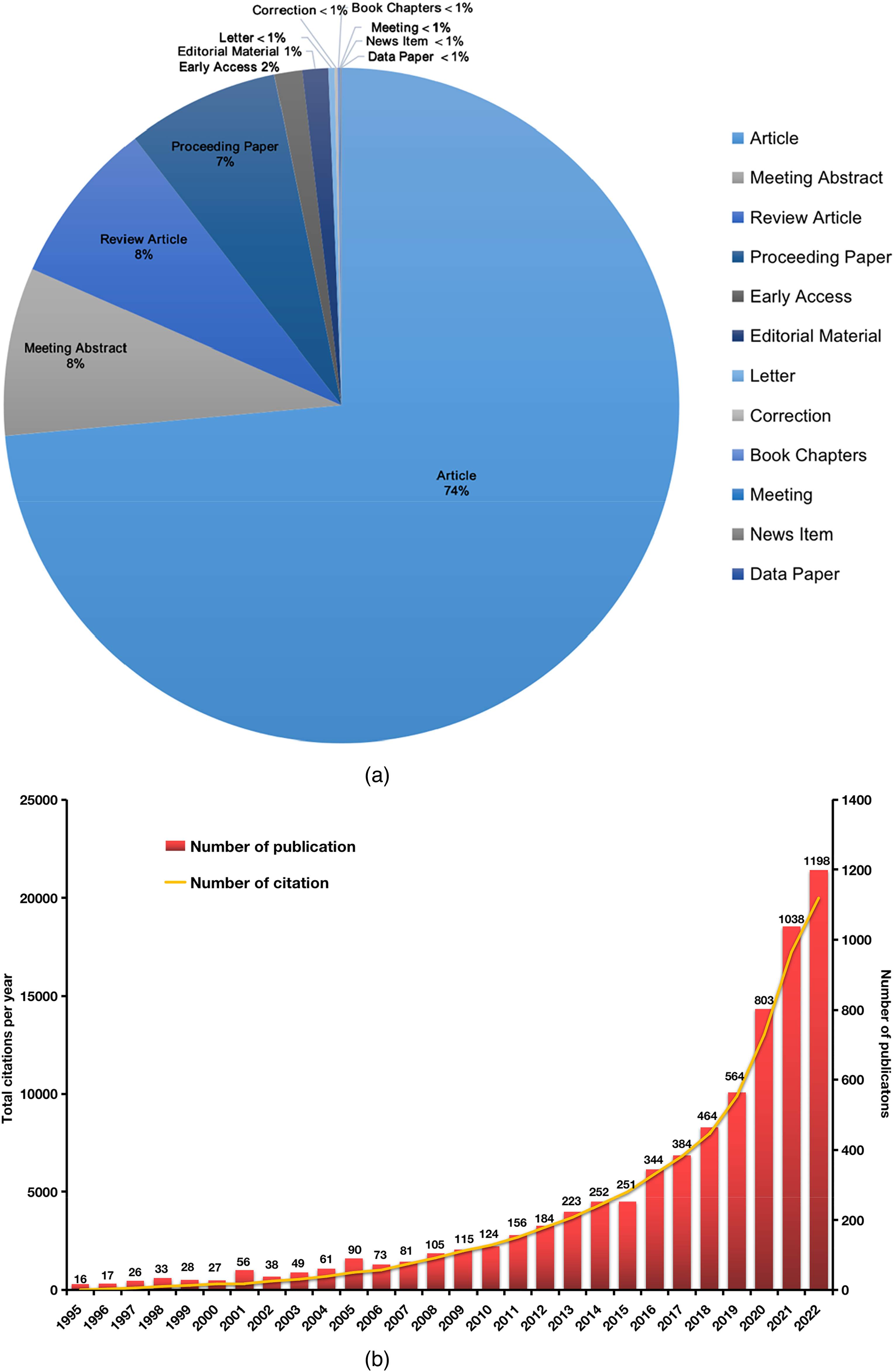
(a) Publication type of in this field. (b) Global trend of annual publications and citations on the use of DHTs in MSK diseases.
Distribution of countries/regions and funding agencies
In all, 53 countries/regions contributed with publications to this research area. Since 1995, developed countries such as the United States (USA, 2327, 34.17%), the United Kingdom (UK, 904, 13.27%), Canada (567, 8.32%), and Australia (482, 7.07%) have been the most dominant output countries. The annual publication numbers for the top five countries are as follows: the USA leads with the highest number of publications, followed by the UK, China, Canada, and Australia. (Figure 3a–b). After 2018, China (629, 9.23%) exhibited the highest increase in publication number, China became second only to the USA in terms of annual publications in 2022.
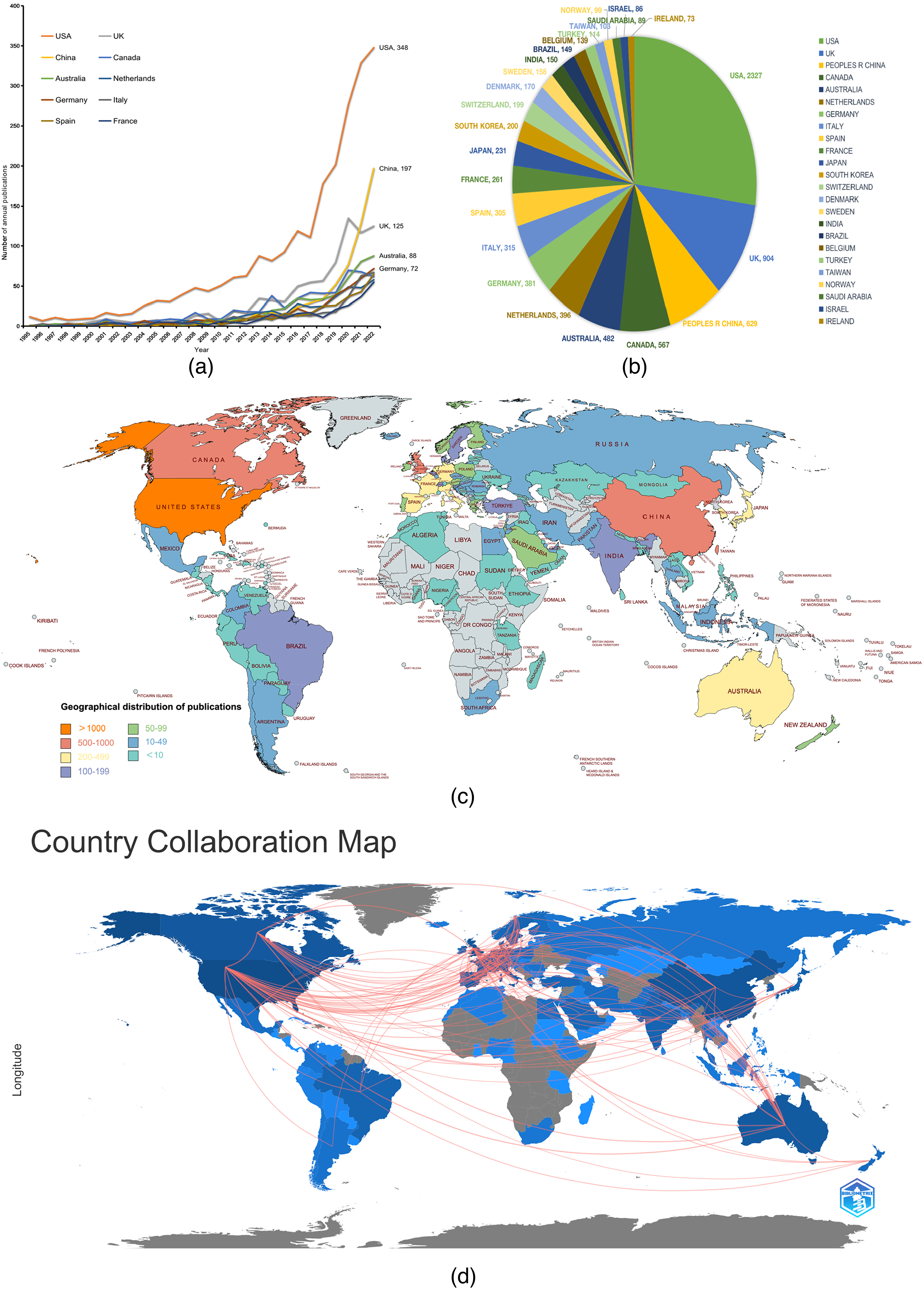
(a) Annual number of publications in the top 10 most productive countries from 1995 to 2022. (b) Top countries/regions in terms of total publications (>70 total publications). (c) World map of the global distribution. (d) World map of the global collaborations among countries in the field of the application of DHTs in MSK diseases (The thicker the red line, the more frequent the collaboration).
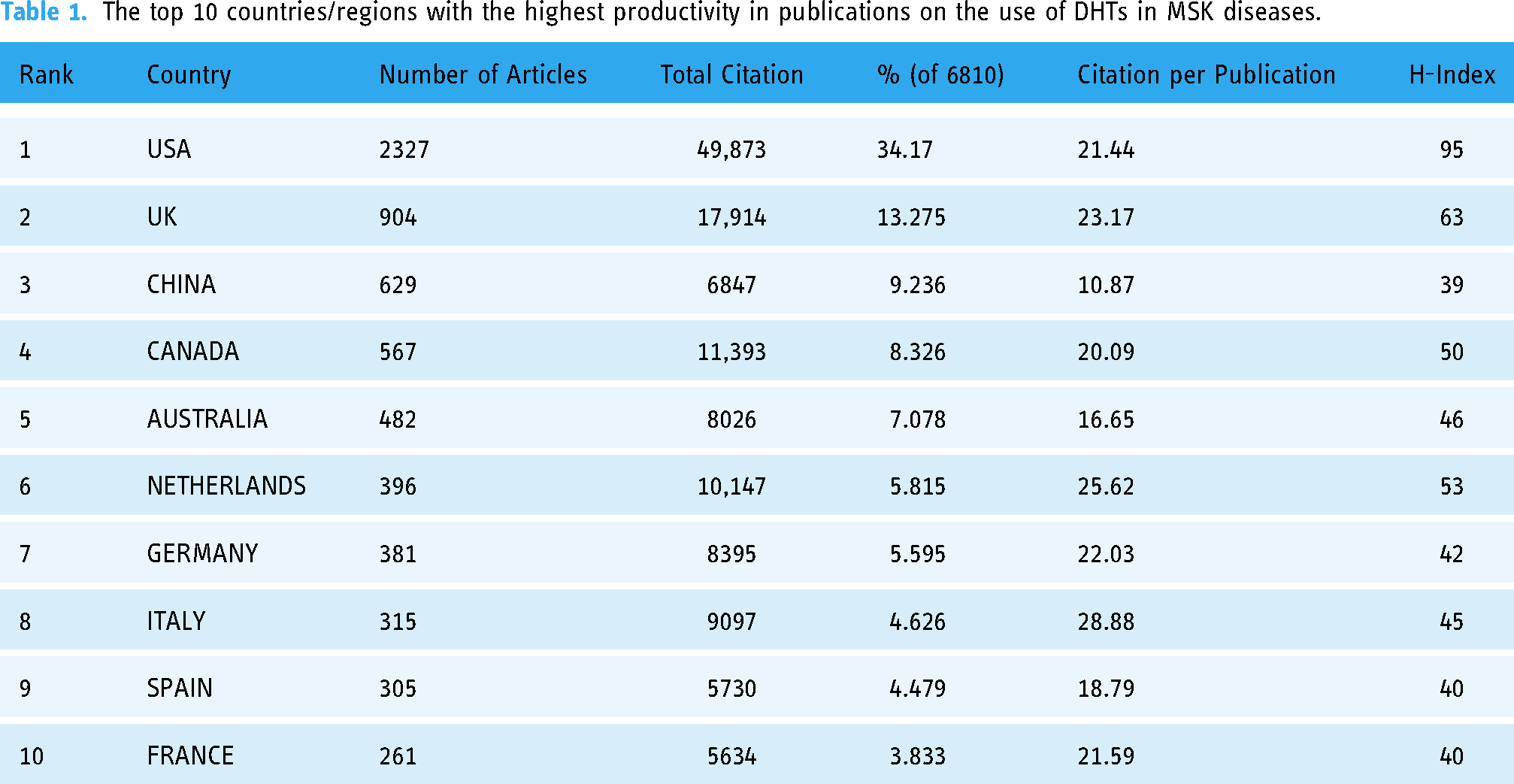
The geographical distribution map of global publications shows that this topic has been mainly published in North America, Western Europe, and East Asia (Figure 3c). The top 10 most productive countries/regions in DHTs research in MSK diseases are listed in Table 1, and the USA and the UK accounted for approximately 50% of total publications, far exceeding any other country/region. Additionally, the USA and the UK remain the first and second most cited countries, while Canada surpassed China to become the third most cited country in total citations. Italy, the Netherlands, and the UK are in the top three for the average citation frequency. Regarding the H-index, the USA had the highest H-index (95), while the UK (63) and the Netherlands (53) had the second and third highest H-index, respectively.
The top 10 countries/regions with the highest productivity in publications on the use of DHTs in MSK diseases.
The international network map (Figure 3d) and country collaboration map (Figure 4) demonstrated close cooperation among countries or regions. As the most significant contributor, the USA collaborated closely with English-speaking countries such as Canada, Australia and the UK; moreover, European countries, mainly Germany, Spain, Italy, Netherlands, Norway, Denmark, and Belgium, had the most frequent international collaborations. Besides, Asian countries like China actively cooperated with the USA, Singapore, South Korea, and Australia. The overlay visualization map shows that in addition to China, India, Turkey, and Malaysia have been the more active countries in this field in recent years (Figure 4). In general, interest in this field is emerging in developing countries, but the overall gap is still relatively large compared to developed countries.

Collaboration networks among countries or regions based on VOS viewer. Link: VOSviewer Online.
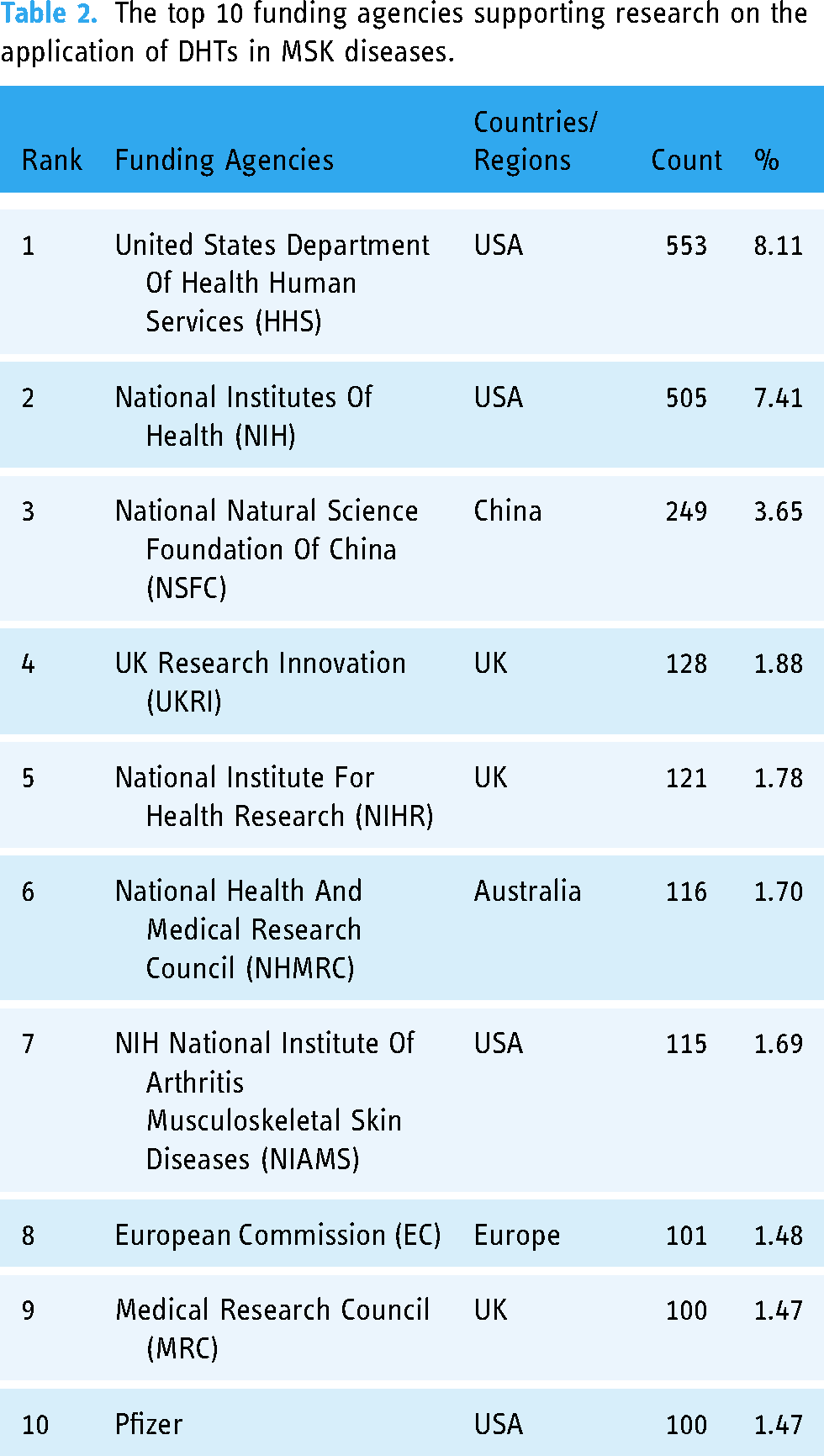
The top 10 funding agencies supporting research on the application of DHTs in MSK diseases.
Contributions of institutions
Table 3 lists the top 10 contributing institutions (or organizations) based on total publication ranking in the field. Harvard University is the most productive institution (251 publications, 7148 citations), followed by the University of California System (224 publications, 6212 citations) and the US Department of Veterans Affairs (146 publications, 2887 citations). Based on the H-index, the top three institutions were Harvard University (47), the University of California System (35), and Brigham Women's Hospital (34). University of London (45.95) had the highest average number of citations per publication, followed by the University of Toronto (31.15) and Brigham Women's Hospital (30.82). Figure 5 shows the institutional cooperation visualization analysis generated by VOSviewer, which includes 40 nodes, and every node represents a different institution. The 40 institutions formed four different clusters with different colors, in addition to the connecting lines, which indicate closer cooperation. Moreover, density visualization and overlay visualization web-side versions are also provided as links.

A visual map of institutional collaboration analysis. Link: VOSviewer Online.
Top 10 organizations that contributed publications on the application of DHTs in MSK diseases.

Analysis of journals and co-cited journals
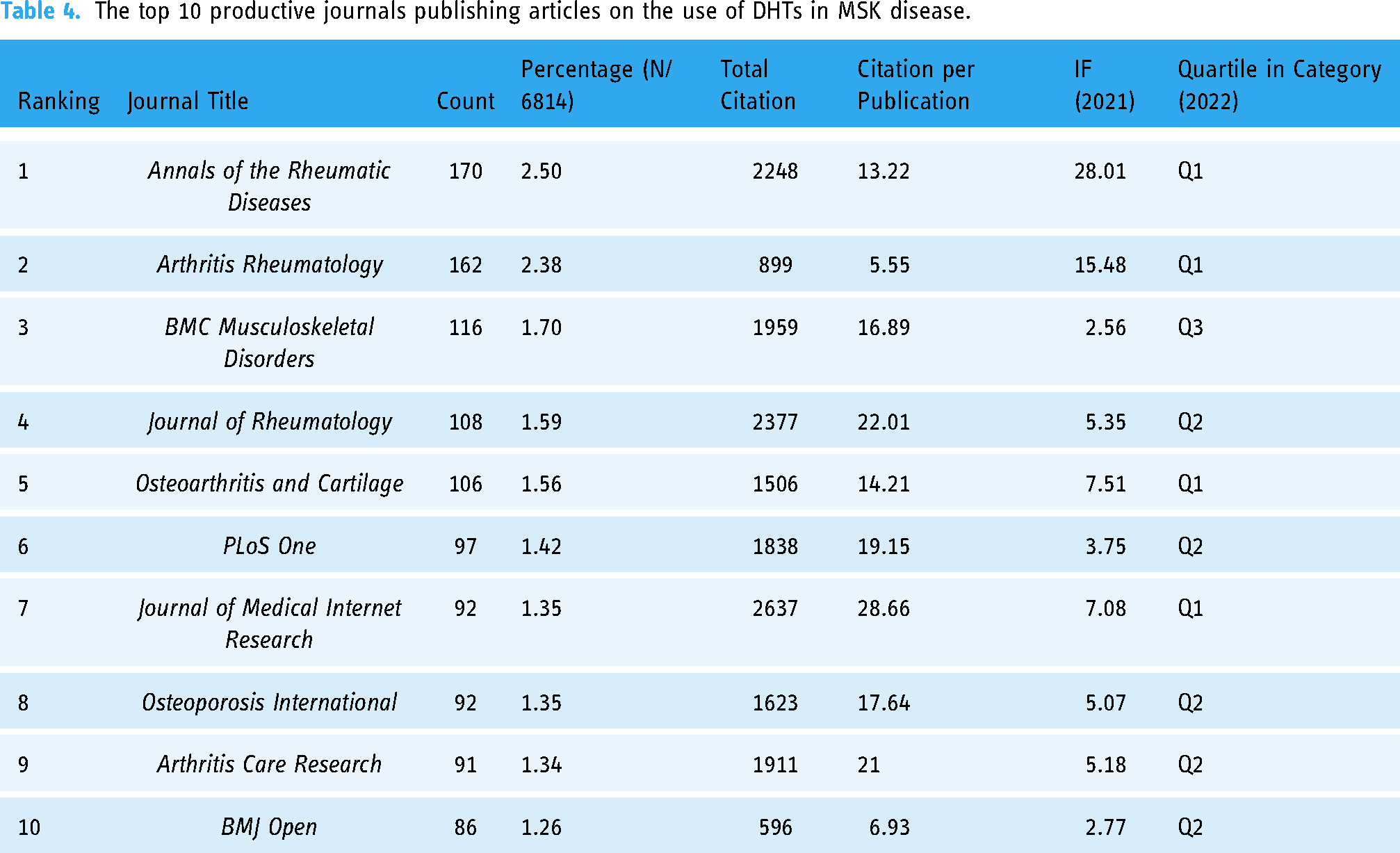
The top 10 most productive journals regarding the research area are shown in Table 4. The results indicate that these journals published 1120 papers, accounting for 16.44% of all publications. Annals of the Rheumatic Diseases published the most publications in this field (170 publications, 2.5%), followed by Arthritis Rheumatology (162 publications, 2.38%) and BMC Musculoskeletal Disorders (116 publications, 1.7%). A total of seven journals had IF > 5, of which the Annals of the Rheumatic Diseases had the highest IF of 28.01, followed by Arthritis Rheumatology with an IF of 15.48 and Osteoarthritis and Cartilage with an IF of 7.51. The top three highest-cited journals were the Journal of Medical Internet Research (2637, IF = 7.08), Journal of Rheumatology (2377, IF = 5.35), and Annals of the Rheumatic Diseases (2248). According to the JCR 2021 criteria, four of the top 10 most productive journals were classified as Q1 and five as Q2.
The top 10 productive journals publishing articles on the use of DHTs in MSK disease.
The co-citation relationship among different journals was visualized by VOSviewer, and 46 journals were visualized (Figure 6). A dual-map overlay visualization of journals is displayed in Figure 7, which shows the citation relationship between journals. The left and right parts represent the cited journals and the citing journals, respectively, which are connected by different colored paths. It can be seen that the green line is the most important citation path, which represents papers published in the fields of medicine/medical/clinical research that are cited by articles in several areas, including health /nursing /medicine, sport(s) /rehabilitation, psychology /education /social and economic(s)/political studies. These results demonstrate the profound impact of DHTs not only within the clinical domain but also across diverse fields, showcasing the broad-ranging connections and significant interdisciplinary nature of this topic.
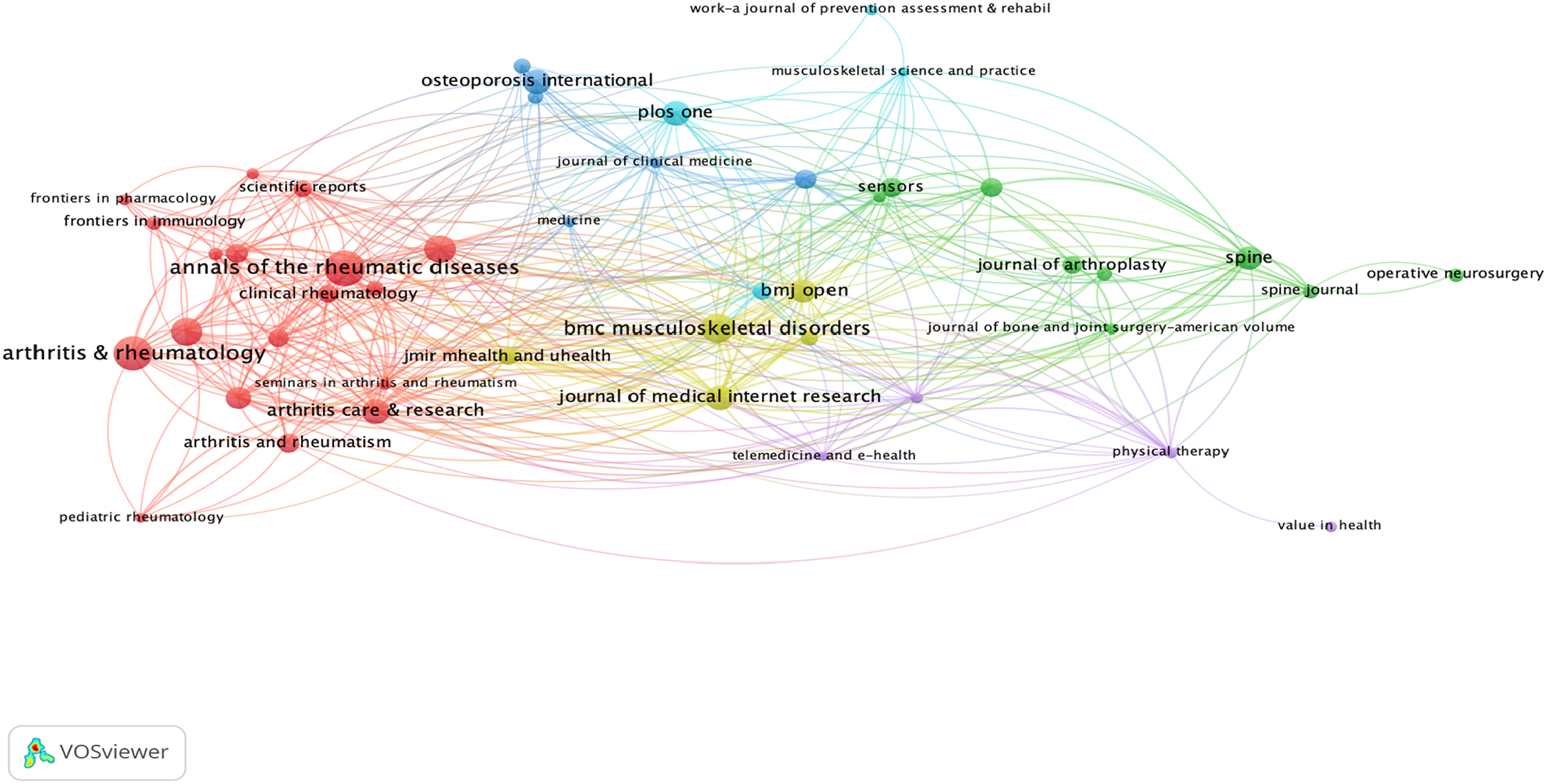
The network visualization of journals co-citation relationship. Link: VOSviewer Online.
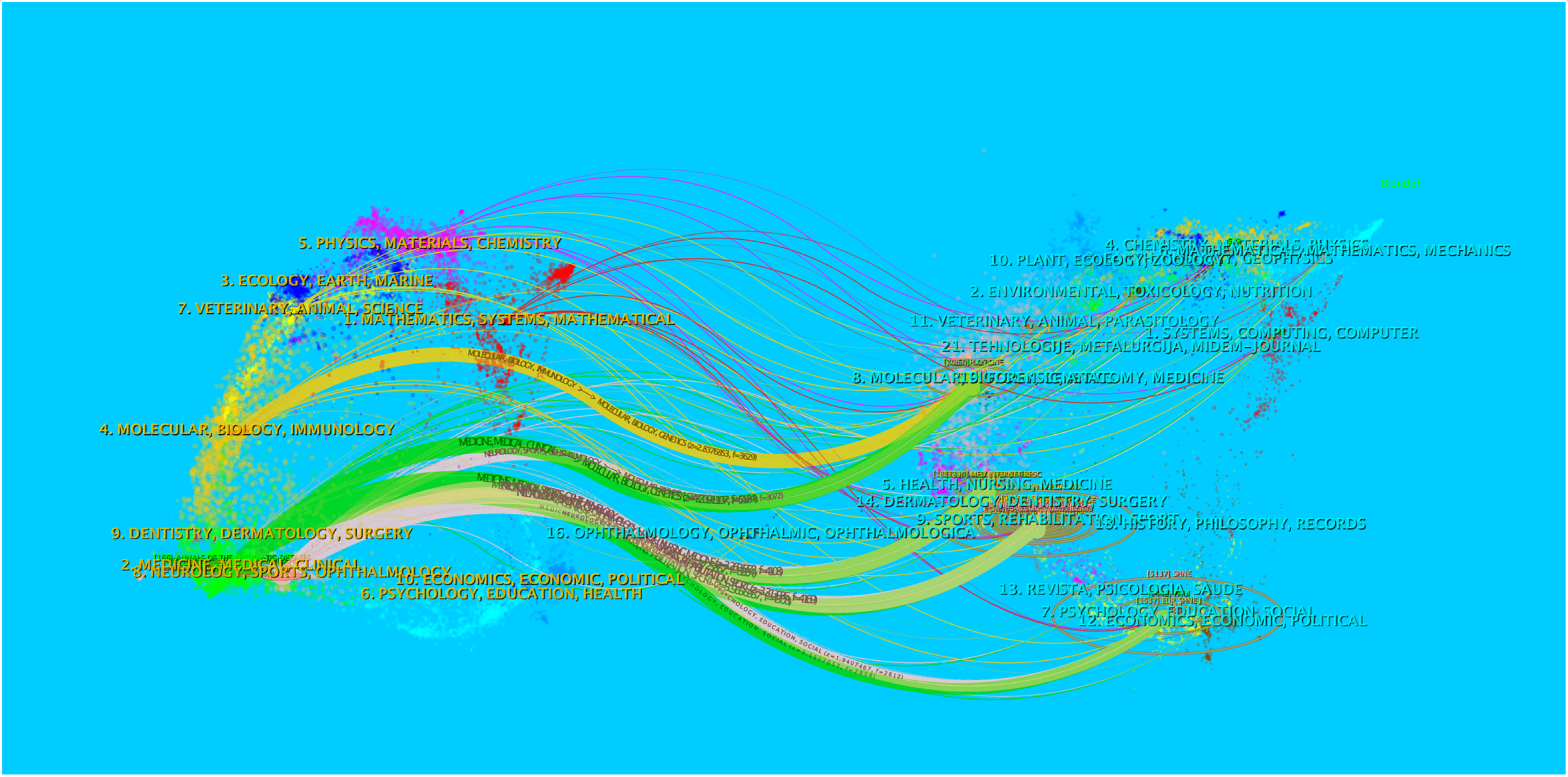
A dual-map overlay of journals depicting citation relationships between cited and citing journals.
Contributions of authors
The 10 most productive authors, their publications, citations, and H-index are listed in Table 5. All authors are from English-speaking countries, including four from the USA, three from Australia, two from the United Kingdom, and one from Canada. Bennell KL from the University of Melbourne contributed the most publications (35), followed by Curtis JR (28) from the University of Alabama Birmingham, Hinman RS (28) from the University of Melbourne, Cooper C (21), and Prieto-Alhambra D (21) both from University of Oxford. Professor Cooper C from the UK contributes the highest total citation with 1137 (citation per publication 54), and his H-index (167) is also the highest. Moreover, to better visualize the co-cited authors, we selected the top 100 authors who had at least published 10 papers and analyzed them by VOSviewer (Figure 8). Same colors represent the same cluster, which indicates close collaborations between authors in the same cluster. The node size represents the number of co-citations, while the colors indicate the different years of publication. The top three co-cited authors were Bennell KL, Curtis JR, and Prieto-Alhambra D, located at a central position.

Top 100 most productive authors in the field (T ≥ 8).
The top 10 productive authors in the field of using DHTs in MSK diseases.

Analysis of cited references
The top 15 co-cited references related to DHTs in MSK disease are listed in Table 6. All the top 15 documents were co-cited at least 163 times, especially four of which were co-cited over 300 times. Highly co-cited publications were mainly published after 2010, with 14 studies. The most co-cited reference was an article written by Yang et al. 34 with 445 citations and published in Nature Biotechnology (IF = 68.16) entitled “A laser-engraved wearable sensor for sensitive detection of uric acid and tyrosine in sweat”; authors used a wearable sweat sensor to continuously test biomarkers in gout patients and found higher levels of uric acid in sweat than in healthy people. It was followed by “Treatment of Low Bone Density or Osteoporosis to Prevent Fractures in Men and Women: A Clinical Practice Guideline Update From the American College of Physicians,” which was published by Qaseem et al. 35 in Annals of Internal Medicine (IF = 51.59) with 409 citations. The paper by Åkesson et al. 36 ranked third and was published in Osteoporosis International with 360 citations.
Top 15 co-cited articles and reviews related to the application of DHTs in MSK diseases.

We performed visualization analysis using VOSviewer to better visualize the co-cited references network (Figure 9a

Visualization mapping of co-cited references. (a) Network map of co-cited references. Link: VOSviewer Online. (b) Top 25 references with the strongest citation bursts. (c) Timeline visualization from 1995 to 2022, the position of the nodes on the horizontal axis indicates the time when the reference first appeared, the more yellow the color means closer to 2022, the 12 clusters are marked and color coded on the right side, the nodes are large and dense indicating which were the hot topics in that time period, and the lines between the nodes represent co-cited relationships.
Keywords analysis of research hotspots
The keyword analysis is an essential part of the bibliometric analysis that uncovers shifting research trends and hotspots in academic fields, providing valuable insights into the past and present focus areas of study.
38
The top 100 author keywords are shown in Figure 10a and b. As depicted in Figure 10a, all keywords can be clustered into six categories: cluster #1, labeled as “DHTs in MSK pain management” (colored red), contained 27 keywords, cluster #2, labeled as “DHTs enhancing treatment, adherence, and quality of life in MSK conditions” (colored green) contained 24 keywords, cluster #3 focused on “DHTs applications in biomechanics, kinematics and ergonomics assessment” (colored blue) had 19 keywords, cluster #4 denoted as “harnessing artificial intelligence or machine learning for osteoarthritis and osteoporosis diagnosis and prediction” (colored yellow) contained 18 keywords, cluster 5# “in-depth understanding of inflammatory arthritis through DHTs” (colored purple) contained 13 keywords, and cluster #6, centered around “innovations in robotics and tele-rehabilitation in the care of arthroplasty and patient-reported outcomes” (colored pink) contained ten keywords. Additionally, the top 10 most frequent keywords in order of occurrence were “rheumatoid arthritis” (428 times), “machine learning” (417 times), “osteoarthritis” (329 times), “osteoporosis” (291 times), “low back pain” (259 times), “artificial intelligence” (170 times), “telemedicine” (125 times), “rehabilitation” (118 times), “scoliosis” (115 times), and “pain” (111 times). Furthermore, “machine learning,” “artificial intelligence,” “deep learning,” “eHealth,” “covid-19,” “telemedicine,” and “mhealth” represent the recent hot topics in this research field (Figure 10B
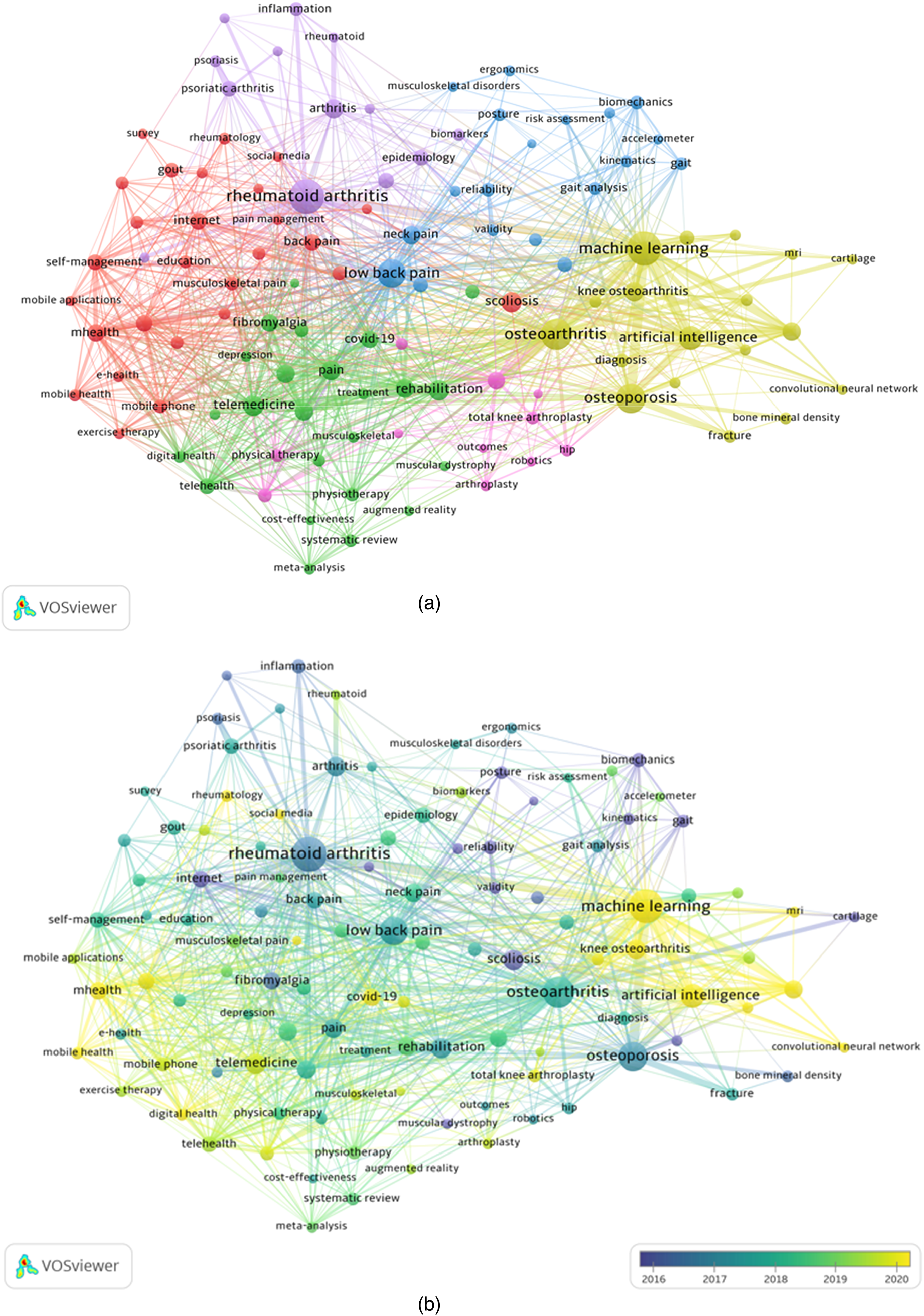
The visualization map of keywords. (A) Network visualization of keywords based on VOS viewer. Link: VOSviewer Online. (B) The overlay visualization map of keywords based on VOSviewer. (C) The top 25 keywords with the strongest citation bursts from 2010 to 2022 based on Cite Space. The red bars represent the strongest citation bursts time period.
Keyword bursts are detection of a burst topic, which can last for multiple years. As the early development of DHTs was slow, we decided to choose their high development time period for analysis. The top 25 strongest burst keywords from 2010 to 2022 were detected by CiteSpace and are displayed in Figure 10C. The most recent burst keywords are “deep learning” (2020–2022, strength =8.33), “electronic medical record” (2020, strength = 6.76),” “smartphone app” (2020, strength = 6.76), and “artificial intelligence” (2021–2022, strength =16.22) . The bursts of keywords “artificial intelligence” and “deep learning” are still ongoing. Notably, these topics have garnered significant attention from researchers and are anticipated to be potential research hotspots in the near future.
By integrating the co-occurrence analysis of keywords, strongest burst analysis, and 12 main clusters of co-cited references, we identified four hot directions in this field: “DHTs in MSK pain management & enhanced MSK care,” “DHTs in biomechanics & kinematics assessment,” “AI & ML in MSK diagnosis & prediction,” and “robotics & tele-rehabilitation in arthroplasty care.”
Discussion
General information and trend overview
The rapid development of DHTs has brought about significant changes in the management of MSK diseases. Previous studies have shed light on the development of digital medicine and demonstrated the positive effects of digital health interventions on other fields,39–42 however, a comprehensive macro-scale analysis of the relevant research in the MSK domain is yet to be conducted. Bibliometrics is a valuable approach for the quantitative analysis of literature. Therefore, we used the WoSCC core database and selected publications from 1995 to 2022 and performed a comprehensive bibliometric visualization analysis. This analysis will inform scholars of significant developments, identify literature gaps, and enable informed predictions about the future directions of this topic.
Our study revealed that the average number of publications per year on DHTs in MSK diseases exhibited relatively slow growth in early years. However, there was a remarkable surge in the number of publications after 2015, with particularly significant growth observed in the last three years. Notably, the onset of the COVID-19 pandemic further expedited the adoption of DHTs, as they provided a safer alternative to in-person medical services. North America and Western Europe are among the more active regions in this field. The USA has a substantial lead over the second-place UK in total publications, with the number of US publications approximately equal to the sum of the rest of the top five countries. The USA holds a significant advantage, evident in its strong presence among the top funding agencies, with four of the top 10 funding agencies originating from the country. Being the most productive nation, the USA demonstrates a remarkable lead in publication count, total citations, and H-index compared to other countries. These findings suggest that the USA will likely maintain its dominant position in the field. Additionally, China has shown a robust growth trend in recent years, especially in the last two years when the annual number of publications has surpassed that of the UK. China is expected to hold an important position in this field.
The top 10 active institutions are from six countries: four from the USA, two from the UK, and one each from Australia, Canada, France, and the Netherlands. Harvard University ranks first, followed by the University of California system and the US Department of Veterans Affairs. The University of London ranked first with a 45.95 average citation rate, followed by the University of Toronto (31.15) and Brigham Women's Hospital (30.82). The network of collaborative links between research institutions indicates closer collaboration among top research institutions within the same country. In the USA, cooperation is particularly frequent among Harvard Medical School, the University of Pennsylvania, Stanford University, Duke University, the Mayo Clinic, and Brigham Women's Hospital. These findings suggest that the field of DHTs in MSK diseases is not yet globally developed, with research predominantly involving institutions and researchers from developed countries. Collaborations are mainly focused on prestigious domestic organizations. While economically strong nations provide better funding and policy support, it is essential to recognize that MSK diseases are a global health concern. Advanced technologies and products can benefit a larger population. Therefore, it is crucial for research institutions in developed countries to increase collaborations with those in underdeveloped regions. This would advance scientific knowledge and contribute to the well-being of individuals worldwide, ensuring that the benefits of cutting-edge research are more equitably distributed.
The top three most productive journals in the field of DHTs research in MSK diseases are Annals of the Rheumatic Diseases (Q1, IF = 28.01), Arthritis Rheumatology (Q1, IF = 15.48), and BMC Musculoskeletal Disorders (Q3, IF = 2.56). Journal of Medical Internet Research (Q1, IF = 7.08) is the most cited journal, followed by the Journal of Rheumatology (Q2, IF = 5.35) and Annals of the Rheumatic Diseases (Q1, IF = 28.01). Most articles related to this topic are published in journals categorized as JCR Q1/Q2 divisions and high-IF journals. The impact factor is a measure of the average number of citations received by articles published in a particular journal, indicating the journal's influence in the field. In this case, the top two productive journals have IFs greater than 15, suggesting that articles related to the topic are highly favored by leading journals in the present scientific landscape. However, it is worth noting that the average impact factor of journals ranked third to tenth is around 5. This implies that most publications in this field are found in journals with slightly lower IFs. Nonetheless, these journals still maintain a respectable standing within the scientific community.
An interesting observation from the dual-map overlay visualization of journals is that papers published in the field of medicine and medical and clinical research are being cited by multiple disciplines. This indicates that DHT research in MSK diseases has gained substantial interest across various fields, making it a hot topic of interdisciplinary relevance. Among the top 10 prolific authors, four were affiliated with institutions in the USA, three were from Australia, and the remaining were from the UK and Canada (Table 5). Notably, Bennell KL and Weber Hinman RS from the University of Melbourne ranked first and third, respectively, while Curtis JR from the University of Alabama Birmingham held the second position in terms of publication count. Regarding citations, Cooper C from the UK had the highest total citations, with 1137, followed by Cai TX (817) and Liao KP (748). Cooper C, Martel-Pelletier J, Hunter DJ, and Bennell KL were the authors with the highest H-index, showcasing their significant contributions to the field.
The top 15 most co-cited articles are listed in Table 6. A highly co-cited article is typically regarded as exemplary research that is pioneering or influential in its respective field, garnering substantial recognition from fellow experts in the discipline. 31 Most highly cited articles were published after 2010, and only one study was published in 2003. The most co-cited article was published by Nature Biotechnology (445 total citation times) in 2020, which study was authored by Yang et al. Wearable sweat sensors have the potential to provide continuous measurements of valuable biomarkers, but current sensors lack multimodal sensing or are challenging to fabricate at a large scale. In this study, the authors report an entirely laser-engraved sensor for simultaneous sweat sampling, chemical sensing, and vital-sign monitoring and demonstrate its ability to continuously detect low concentrations of uric acid and tyrosine associated with diseases such as gout and metabolic disorders. 34 The second co-cited article written by Qaseem et al. provides a clinical practice guideline update; this guideline's target audience includes all clinicians, and target patient populations have men and women with low bone density and osteoporosis. 35 It is worth mentioning that the authors used machine learning methods to update the guideline, which indicates that DHTs are gradually playing an essential role in developing and updating clinical guidelines.
The third most cited article published in 2013 by Akesson et al. 36 highlights the significance of the International Osteoporosis Foundation's Capture the Fracture Campaign, which focuses on the global implementation of Fracture Liaison Services (FLS). The campaign's primary focus is to address the care gap in secondary fracture prevention. The authors emphasize that by developing internationally endorsed standards and providing resources through their website, the campaign enhances awareness and promotes the adoption of FLS. This initiative plays a pivotal role in improving patient care, reducing fracture-related costs, and effectively addressing the challenges an aging population poses. The fourth one is a review by Martinez-Perez et al., published in 2013, titled “Mobile Health Applications for the Most Prevalent Conditions by the World Health Organization: Review and Analysis.” 43 The study examined mobile applications dedicated to the eight most prevalent health conditions. It found that while conditions like diabetes and depression had a significant number of apps and research, there was a lack of apps specifically related to conditions like OA, anemia, hearing loss, and low vision. This highlights the importance of further developing and utilizing DHTs in managing OA and other conditions. Giggins et al. 44 published the fifth co-cited paper in 2013. This paper comprehensively reviews biofeedback methods used in physical rehabilitation, focusing on their application in MSK conditions and cardiovascular accident rehabilitation. Additionally, further research and systematic reviews are needed to explore the full potential of biofeedback across different clinical populations and applications in rehabilitation. Various devices, including inertial-based sensing and VR, have shown promise in improving balance and exercise techniques.
All five highly cited articles were focused on various DHT topics in healthcare research. They included studies on wearable sweat sensors for biomarker monitoring, the implementation of FLS for secondary fracture prevention, the role of mobile health applications in prevalent health conditions, and the application of biofeedback methods in physical rehabilitation. These articles emphasized the importance of DHTs, guideline development, awareness campaigns, and further research to improve patient care and address healthcare challenges.
Research hotspot evaluation and future trends
In our study, we performed multiple methods to analyze the research hotspots, including keyword co-occurrence analysis, strongest keyword burst analysis, and the identification of twelve main clusters of co-cited references. These different analytical methods yielded similar results, corroborating the current hotspots and research trends in this field. Based on the keyword co-occurrence analysis, the research hotspots and trends were divided into four main groups: “DHTs in MSK pain management & enhanced MSK care,” “DHTs in biomechanics & kinematics assessment,” “AI & ML in MSK diagnosis and prediction,” and “robotics and tele-rehabilitation in arthroplasty care.” The decision to merge these topics is based on their overlapping themes and relevance to the use of DHTs in various aspects of MSK disease management and research.
DHTs in MSK pain management and enhanced MSK care
Clusters #1 and #2 both focus on the integration of DHTs in MSK pain management and enhancing treatment, adherence, and quality of life in MSK conditions. In this part, highly occurrence keywords were “MSK pain,” “pain management,” “back pain,” “mhealth,” “digital health,” “telemedicine,” “treatment,” “rehabilitation,” “augmented reality,” “e-health,” “mobile applications,” and “physiotherapy”.
MSK conditions have a significant impact on individuals, societies, and economies worldwide, being a leading cause of global morbidity. 15 These conditions are a primary reason for seeking medical consultation, especially in primary care settings. 45 With the aging population, the burden of MSK disorders is expected to rise substantially in the near future globally.46,47 Among MSK conditions, low back pain stands out as a particularly prevalent issue, supported by substantial evidence regarding its management.48,49 Valentijn et al. reviewed the effectiveness of DHTs for individuals with MSK pain conditions, and they demonstrated that DHTs positively impacted pain reduction, improved functioning, and enhanced self-management. 50 Compared to traditional single-management approaches, DHTs offer significant advantages and significance in managing MSK conditions. They provide accessible, cost-effective, and scalable solutions for patient education, self-management, and improving treatment outcomes, ultimately enhancing the quality of life for individuals with rheumatic and MSK pain conditions.18,51,52
DHTs in biomechanics and kinematics assessment
Cluster #3 focused mainly on applying DHTs in capturing and analyzing movement patterns, joint mechanics, and ergonomic factors related to musculoskeletal (MSK) conditions. Keywords such as “wearable sensor,” “gait analysis,” “kinematics,” “ergonomics,” “biomechanics,” and “accelerometer” highlight the significance of utilizing DHTs in biomechanical, kinematic, and ergonomic assessments.
Wearable sensing and feedback devices are already used in everyday life or clinical settings for human gait analysis. 53 Shull et al. indicate that wearable technologies, such as inertial measurement units and goniometers, have shown promise in various clinical applications, including identifying movement disorders, assessing surgical outcomes, improving walking stability, and reducing joint loading. 54 Donisi et al. reviewed the potential of combining wearable sensors and artificial intelligence in physical ergonomics research. 55 By analyzing data obtained from sensors and applying machine learning or deep learning techniques, these methods offer diagnostic, prognostic, and preventive perspectives, especially in MSK disorders. The findings suggest that these combined approaches can improve understanding of human limits, aid in sustainability thresholds, and contribute to the ergonomic design in various work settings, with further growth prospects in signal detection and processing, expanded study applications, and enhanced risk assessment systems. Future directions in wearable sensing and feedback include improving signal detection and processing, exploring broader applications in different populations and work settings, and advancing human factors engineering for lightweight and adaptable designs.54,56 These advancements can enhance the understanding, diagnosis, and treatment of MSK disorders, improving patient care and promoting ergonomic design across diverse work environments. Furthermore, by integrating wearable sensors with artificial intelligence, these technologies can offer personalized, real-time feedback and intervention strategies, thus significantly reducing the risk of injury and enhancing overall workplace health and productivity.
DHTs in MSK diagnosis and prediction
Clusters #4 and #5 focus on the utilization of DHTs, especially AI and ML techniques for diagnosing and predicting OA, and the positive role of DHTs in inflammatory arthritis. Both in terms of focus and attention, the keywords “osteoarthritis” and “rheumatoid arthritis” in the MSK category, and “machine learning (ML),” “deep learning,” and “artificial intelligence (AI)” are almost the core keywords of this study.
OA is a slowly progressive joint disease that primarily affects the elderly population, affecting mobility, quality of life, and increased mortality. 57 OA predominantly affects the hands, hips, and knees, and it is characterized by joint pain, stiffness, and limited motion, which can eventually lead to complete joint damage with pain and disability. 58 Therefore, proper diagnosis and prediction of OA are crucial in disease prevention and control, diagnosis, and treatment. Ashinsky et al. evaluated the ability of ML algorithms to classify in vivo magnetic resonance images of human articular cartilage for the development of OA, and the results of the study showed that ML algorithms applied to T2 maps have the promise of providing important prognostic information for the development of OA. 59 Xue et al. trained a deep convolutional neural network model based on 420 hip X-ray images to diagnose hip OA automatically, and the results showed good sensitivity and specificity, and its performance was comparable to experienced physicians. 60 The rapid development of AI/ML systems based on image processing is expected to enable better assistance to orthopedic surgeons in diagnosing OA, especially in the early stages soon.61,62 In addition, a recent meta-analysis has demonstrated that digital self-management interventions can improve pain and physical function among individuals with OA. 63 DHTs have positively impacted OA by empowering patients to manage their condition through self-monitoring and education, improving adherence to treatment plans, and promoting a healthier lifestyle. 64 Additionally, DHTs enable remote monitoring and virtual consultations, facilitating timely interventions and personalized care for individuals with osteoarthritis.65,66
RA is the most common chronic autoimmune disease, which leads to joint destruction and tendon and ligament laxity and disintegration, and it can severely impair physical function and quality of life.67,68 DHTs technologies such as electronic health records, virtual visits, mobile health, wearable technology, digital therapies, and AI have been developed and innovated over decades and applied to multiple aspects of RA management. 1 DHTs are critical in improving the early detection of RA disease, remote monitoring of disease activity, medication adherence tracking, patient education and self-management support, and telemedicine consultation.69–72 While the benefits of applying these DHTs will improve disease management, enhance medication adherence, improve patient engagement, and facilitate access to care, there is still a long way to go to change the management of RA substantially.
Most current studies on DHTs in MSK disease focus on RA and OA. However, DHTs are expected to be or have been used in remote monitoring, symptom tracking, and personalized interventions to monitor and manage diseases such as fibromyalgia, gout, tendinopathy, and MSK injuries. The use of DHTs in these MSK diseases can improve diagnosis, treatment, and overall management of patients, offering personalized care and facilitating remote monitoring and interventions.
Robotics and tele-rehabilitation in arthroplasty care
Cluster #6 discusses innovations in robotics, tele-rehabilitation, and the utilization of DHTs in arthroplasty care and patient-reported outcomes. In the field of joint arthroplasty, DHTs have been applied in various ways, including preoperative planning software, robotic-assisted surgery, tele-rehabilitation, remote patient monitoring, and data analytics for outcome analysis.73–75 Their positive impact can be seen in improved surgical precision, enhanced patient outcomes, increased accessibility to care, and advancements in research and data collection.
Robotics has emerged as a significant application in joint replacement surgeries, transforming the way procedures are performed. Robotic-assisted surgery enhances precision and accuracy, enabling surgeons to achieve optimal implant positioning and alignment. 76 By improving surgical outcomes, robotics in joint replacement surgeries can lead to better functional outcomes, increased survivorship, and reduced complications. 77 Another transformative aspect is the integration of tele-rehabilitation and remote monitoring in arthroplasty care. 78 Tele-rehabilitation offers a convenient and accessible platform for patients to receive postoperative rehabilitation remotely. Jiang et al. conducted a meta-analysis that suggests telerehabilitation demonstrates superior outcomes regarding extension range and quadriceps strength compared to face-to-face rehabilitation. 79 Therefore, tele-rehabilitation is recommended as a viable option for total knee arthroplasty patients due to its comparable pain control and superior functional recovery outcomes. Data analytics in arthroplasty contribute to research efforts, clinical decision-making, and quality improvement initiatives. By analyzing large datasets, healthcare providers can identify trends, optimize treatment protocols, and improve patient outcomes, ultimately leading to more efficient and effective care.
Overall, the application of DHTs, particularly robotics, and telemedicine, in arthroplasty has transformed the field, benefiting patients, surgeons, and researchers alike. The ongoing advancements in technology and the integration of these technologies are expected to further enhance patient care, improve surgical outcomes, increase accessibility, and drive innovation in arthroplasty.
Limitations
Our study has several limitations that should be acknowledged. Firstly, the search was restricted to English-language publications in a single database, which may have excluded relevant works in other languages and databases. Although we carefully selected relevant search terms, there is still a possibility of bias introduced by the keyword search strategy. Secondly, using different analysis software and tools with varying algorithms may present a certain degree of bias. Additionally, we regret not being able to discuss and cite several excellent articles in the field due to space constraints. Future research should consider including multiple databases, incorporating more powerful software, and allowing for temporal data visualization to address these limitations and provide a more comprehensive analysis.
Conclusion
Our study offers a comprehensive bibliometric and visualized analysis of DHTs in MSK disease management, highlighting research status and trends over the past three decades. Our findings show a growing global interest, with the USA leading in research output. Keyword and co-citation clustering analyses reveal key research directions in DHT applications. These insights are valuable for researchers and healthcare practitioners to explore the potential of DHTs in developing personalized and effective MSK interventions. By leveraging digital technologies, we can enhance patient care, improve outcomes, and reduce the burden of MSK diseases on individuals and societies. Despite the significant potential, the field currently shows weak intra-field collaboration, underscoring the need for further research and development to fully utilize DHTs for better diagnosis, treatment, and management of MSK conditions.
Supplemental Material
sj-docx-1-dhj-10.1177_20552076241269613 - Supplemental material for Ortho-digital dynamics: Exploration of advancing digital health technologies in musculoskeletal disease management
Supplemental material, sj-docx-1-dhj-10.1177_20552076241269613 for Ortho-digital dynamics: Exploration of advancing digital health technologies in musculoskeletal disease management by Zulipikaer Maimaiti, Zhuo Li, Zhiyuan Li, Jun Fu, Chi Xu, Jiying Chen, Wei Chai and Liang Liu in DIGITAL HEALTH
Footnotes
Acknowledgements
We are grateful to all who participated in this study.
Contributorship
ZM designed the study. ZM and ZL were responsible for data collection. ZM, ZL, Z-YL, JF, CX, L-BH, J-YC, WC, and LL analyzed the data and drafted the manuscript. WC and LL revised and approved the final version of the manuscript. All authors reviewed and approved the final manuscript.
Declaration of conflicting interests
The authors declared no potential conflicts of interest with respect to the research, authorship, and/or publication of this article.
Funding
Supported by Beijing Luhe Hospital Youth Incubation Program (Grant number: LHYY2024-JC04).
Consent statement
Patient consent was not required for the present manuscript, as it was a bibliometric study with data obtained from the Web of Science Core Collection
Guarantor
Liang Liu

Supplemental Material
Supplemental material for this article is available online.
References
Supplementary Material
Please find the following supplemental material available below.
For Open Access articles published under a Creative Commons License, all supplemental material carries the same license as the article it is associated with.
For non-Open Access articles published, all supplemental material carries a non-exclusive license, and permission requests for re-use of supplemental material or any part of supplemental material shall be sent directly to the copyright owner as specified in the copyright notice associated with the article.
