




Abstract
Objective
This study evaluates Artificial intelligence and the Internet of Things-based older adults' healthcare programmes (AI·IoT-OAHPs), which offer non-face-to-face and face-to-face health management to older adults for health promotion.
Methods
The study involved 146 participants, adults over 60 who had registered in AI·IoT-OAHPs. This study assessed the health factors as the outcome of pre- and post-health screening and health management through AI·IoT-OAHPs for six months.
Results
Preand post-health screening and management through AI·IoT-OAHPs were evaluated as significant outcomes in 14 health factors. Notably, the benefits of post-cognitive function showed a twofold increase in older female adults through AI·IoT-OAHPs. Adults over 70 showed a fourfold increase in post-walking days, a threefold in post-dietary practice, and a twofold in post-cognitive function in the post-effects compared with pre via AI·IoT-OAHPs.
Conclusions
AI·IoT-OAHPs seem to be an effective program in the realm of face-to-face and non-face-to-face AI·IoT-based older adults' healthcare initiatives in the era of COVID-19. Consequently, the study suggests that AI·IoT-OAHPs contribute to the upgrade in health promotion of older adults. In future studies, the effectiveness of AI·IoT-OAHPs can be evaluated as a continuous project every year in the short term and every two years in the long term.
Keywords
Introduction
In the Corona era, many older adults have weak immune systems and are vulnerable to infectious diseases. Older adults need to strengthen their self-health management capabilities and efficiently expand health management services for older adults in the community. Therefore, older adults need to be offered non-face-to-face and face-to-face health management for health promotion through artificial intelligence and the internet of things-based older adults healthcare programmes (AI·IoT-OAHPs). These programmes use various health apps and devices to provide health screening and health management services as health factors for older adults.1–5 As the primary health programme evaluation of AI·IoT-OAHPs, our most significant concern is the effect on older adults’ health promotion programmes. However, there is little evaluation of the effectiveness of health screening and health management for health promotion in older adults through AI·IoT-OAHPs. Therefore, older adults’ health effects can be evaluated, including health screening and health management services as health factors to health promotion among older adults through AI·IoT-OAHPs.
Due to the convergence of artificial intelligence (AI) and internet of things (IoT) technologies, network-linked biomedical devices with software applications advance older adults’ health factors. 2 The health promotion of older adults can be evaluated by various health factors, including weight, body mass index, grip strength (GS), equilibrium, systolic and diastolic blood pressures (SBP and DBP), blood sugar (BS), physical activity, and cognitive function through AI·IoT-OAHPs. These health factors can serve as effective indicators that contribute to the progress of strategies aimed at health promotion among older adults.6,7
Research on AI·IoT-OAHPs has been conducted in various countries.8–13 However; the health factors influencing health promotion among the older population remain unclear.14–17 In particular, a retrospective analysis of AI·IoT-OAHPs can contribute to a better understanding of health promotion within older adults, facilitating the identification of the most significant determinants of health factors.18–20 However, the application of IoT in healthcare remains insufficient. 21
Recently, in studies, IoT-based systems have been pivotal in ensuring effective and equally accessible rehabilitation for older adults. 22 Furthermore, IoT was used in stroke medical care to develop and implement a medical cloud computing system for systematic stroke intervention. 23 In addition, an IoT framework for monitoring and controlling human heartbeat rates has been explored. 24 However, there are few research results on health factors for improving the health of older adults through AI·IoT-OAHPs.
Several studies estimating health factors among older adults across various countries between 2020 and 2023 have revealed the weight, GS, and SBP in the context of health promotion of older adults.25–27 In particular; the increase in GS was linked to improved health among older adults.25,27–29 Certain studies have explored the impact of blood glucose levels on complications.30–31 In other areas, they studied the relationship between older adults’ health factors and meal frequency, cognitive function, equilibrium and frailty.32–33 However, these health factors in health screening and management factors via AI·IoT-OAHPs have rarely been evaluated.
While the determinants of health factors are well established, it remains unclear whether ageing health promotion can influenced by health factors through AI·IoT-OAHPs.1,34–36 In particular, research on the components of health factors via AI·IoT-OAHPs concerning the health promotion of older adults can be limited. However, health promotion in older adults can be predicted by measuring health factors through AI·IoT-OAHPs, including health screening and health management.25,37–40
The primary hypothesis presented in this study posits that as health factors can be influenced through AI·IoT-OAHPs, health promotion among older adults will be correspondingly improved.10,34,41 This study assesses potential health factors for health promotion among older adults, using several health indexes through the AI·IoT-OAHPs that encompass health screening and health management as health factors at the individual level.18–20,30–32,42 Consequently, in this study, health factors will be assessed for effect on the health promotion of older adults with various health indicators via AI·IoT-OAHPs.
Therefore, the study observes the pre- and post-checkup of health factors from a health screening and management perspective via AI·IoT-OAHPs. These programmes use various health apps and devices to provide health screening and health management services as health factors for older adults in 6 months. Furthermore, the study has investigated post-checkups in age and gender via AI·IoT-OAHPs. Overall, this study assessed the potential of health factors for health promotion in older adults through AI·IoT-OAHPs.
Methods
The framework of this study
The framework proposed in this study depicts the evaluation of health factors for the health promotion of older adults through AI·IoT-OAHPs. Health promotion among older adults can be assessed in AI·IoT-OAHPs by the various health factors. As a conceptual framework, the health promotion of older adults via AI·IoT-OAHPs may differ in performance in health factors. This study proposes a healthy ageing framework focusing on health factors, including health screening and health management, as targets for promoting health among older adults.20,43–45 The study assumed that appropriate prevention and promotion of health factors via AI·IoT-OAHPs resulted in changes in health promotion of older adults, such as health factors from a health screening perspective and health factors from a health management perspective.
This study hypothesized that the process [Inputs] and [Progress] predict [Outputs] to assess health factors in older adults (Figure 1). The study set the health factors as follows: (a) [Inputs] is the registration in older Adults who hope to participate in the AI·IoT-OAHPs; (b) [Progress I] is performed pre-health screening evaluation as first face-to-face; [Progress II] involves input health factors executing health management via AI·IoT-OAHPs with non-face-to-face as the distribution of device and APP; [Progress III] is performed post-health screening evaluation as second face-to-face; (c) [Outputs] include post-measurement of all health factors after 6 months, and Evaluation of Pre- & Post-health factors in health screening and health management via AI·IoT-OAHPs (Figure 1). In addition, [Inputs], [Progress], and [Outputs] focus on short-term considerations of all health factors but encompass both short and long-term effects on health promotion in older adults.20,46 Health promotion of older adults via AI·IoT-OAHPs includes improving self-health management ability, delayed frailty, and improved quality of life as a specific objective. 47

The framework of this study.
These assessed effects can explained as variations in health factors. Consequently, the study presented two distinct constructs: A conceptual process model in the evaluated method of health factors via AI·IoT-OAHPs execution and a framework comprising health promotion of older adults linked to these health factors.20,48 Furthermore, it is worth noting that this study is building upon older adults over 60 as face-to-face and non-face-to-face via AI·IoT-OAHPs. Consequently, the [Outputs] were averaged across individuals and subjected to comparison using standard statistical methods.6,18,20,49
Data and ethical consideration
The age distribution of the sample is those aged 60–69, 81 people, and 70–83, 65 people. Adults over 70 are a total of 65. The sample of this data evaluated health factors for each health screening and health management performance with 146 older adult participants (males 72 people, female 74 people) in a population group over 60 in AI·IoT-OAHPs registered after consented to presentation and research; consent was obtained from all the subjects. This study has been approved by the Wonkwang University Institutional Review Board (IRB-202212SB-188).
Data collection and health factors
The information and data derived from AI·IoT-OAHPs can be used to estimate and compare the health factors of older adults. This study used health factors from Jeongeup Public Health Center statistical data and databases on pre- and post-health screening and health management executed from November 2022 to April 2023 through AI·IoT-OAHPs. 47
Health factors are controllable indexes in health screening and health management for health promotion in older adults. These factors can be used to compare health disparity in either personals or groups. Such comparisons inform health promotion of older adults’ policy decisions contingent on changes in health factors.6–7,18,20,50–52
Health factors can be health promotion for older adults by AI·IoT-OAHPs. Health factors that affect healthy ageing have multifactorial traits composed of various indicators.16,18,20,53 Healthy ageing entails overall health free from disease with functional capacity and experiencing an active life in society.19–20,54–55 Therefore, health factors for healthy ageing should include comprehensive attributes.18–20 However, the study did exclude addressing heredity factors related to health promotion in older adults. Instead, the study focused on upgrading health promotion for older adults as vivid and practical health factor indicators through AI·IoT-OAHPs.
Study design and area of the data
The models used in the design and area of this study assess health factors for each variable to explore the health factors for health promotion among older adults in AI·IoT-OAHPs. These advantages of models can yield a comprehensive framework encompassing various components of the health promotion perspective for older adults.18–20,48–51 Two categories of health factors have developed in health screening and health management within the context of the health promotion of older adults. Based on these categories, this study presented the following five models.
[Model 1] of health screening assesses variations in weight, body mass index, GS, equilibrium, SBP and DBP, and BS. [Model 2] of health management evaluates differences in walking days for 30 min, moderate-intensity activity days, strength exercise days a week, dietary practices, overall and social frailty, and cognitive function. [Model 3] assesses differences by classified age 60–69 vs 70–83 of pre- and post-health screening and management via AI·IoT-OAHPs. [Model 4] of health screening and management evaluates the effects of post-SBP and post-cognitive function on the gender of older adults who participated in AI·IoT-OAHPs. Last, [Model 5] assesses disparities by classifying adults over 70 of pre- and post-health screening and management via AI·IoT-OAHPs.
Data analysis
Appraising health factors in AI·IoT-OAHPs induced the five models from health screening and management perspectives. These variables reflect the health factors that promote the health of older adults. The assessment of pre and post-health factors for health promotion among older adults within these models in AI·IoT-OAHPs is assessed using Paired T-tests to estimate the paired difference and interval pot models. The significance level is evaluated based on p < 0.01 and 0.05. Furthermore, the binary logistic regression analysis is used to assess pre and post-health factors for the health screening and management models in AI·IoT-OAHPs.
The 6-step process of AI·IoT-OAHPs
AI·IoT-OAHPs are co-developed by the Ministry of Health and Welfare, the Korea Health Development Promotion Institute and the Korea Social Security Information Service in South Korea. 47 The AI·IoT-OAHPs execute a step-by-step service process from Step 1 to Step 6 (Figure 2).

The 6-step process of artificial intelligence and the internet of things-based older adults’ healthcare programmes (AI·IoT-OAHPs).
In 1 Step, one hundred forty-six older adults over 60 living in Jeongeup-gun participated in AI·IoT-OAHPs. In Step 2, after initiating the programmes, pre-measuring health factors of health screening is implemented for two weeks as the first face-to-face. In step 3, the devices are distributed and APP executed, such as a wrist activity metre, Bluetooth scale, · blood pressure and BS metere, and general type AI speaker—older adults living alone and frail.
In Step 4, as non-face-to-face healthcare management, such as health information monitoring once a week, a mission is given and input and checking: walking and exercising, measuring blood pressure and BS daily and dietary practice over 5 days a week. In the non-face-to-face step, the healthy group received monthly monitoring and messages, and the previously frailed group underwent weekly monitoring when biometric abnormalities (SBP ≥ 140 mmHg, DBP ≥ 90 mmHg, fasting BS ≥ 126 mg/dL) via using the devices distributed. 47 In addition, the missions of health factors in health management included assessing dietary practices of more than 5 days a week, measuring BS and blood pressure, and walking and exercise evaluation. In Step 5, the second face-to-face follow-up is the post-health screening and management assessment. The post-post-health screening and management of health factors in 146 older adults are measured for two weeks after 6 months after participating in the AI·IoT-OAHPs programmes. Health screening, health management, and frailty evaluation as a measure of health factors are as follows (Figure 3) 47 :

Pre & post-health factors as a measure of artificial intelligence and the internet of things-based older adults’ healthcare programmes (AI·IoT-OAHPs).
Results
Characteristics of health factors of older adults who participated
(Table 1) describes the health factors of older adults who participated in AI·IoT-OAHPs. The average age of participants was approximately 70, and the average BMI was 25.06, indicating stage one obesity, which falls within the range of 25–29.9. 47 The average GS was 53.8 (standard deviation 8.03), which was weak based on age. The balance measure average of the current participating group is 9 s. Average SBP and DBP were 136.8 mmHg (standard deviation 15.02) and 83.38 mmHg (standard deviation 9.10), respectively, indicating prehypertension.
Characteristics of health factors of older adults who participated in artificial intelligence and the internet of things-based older adults’ healthcare programme (AI·IoT-OAHPs) (N = 146)
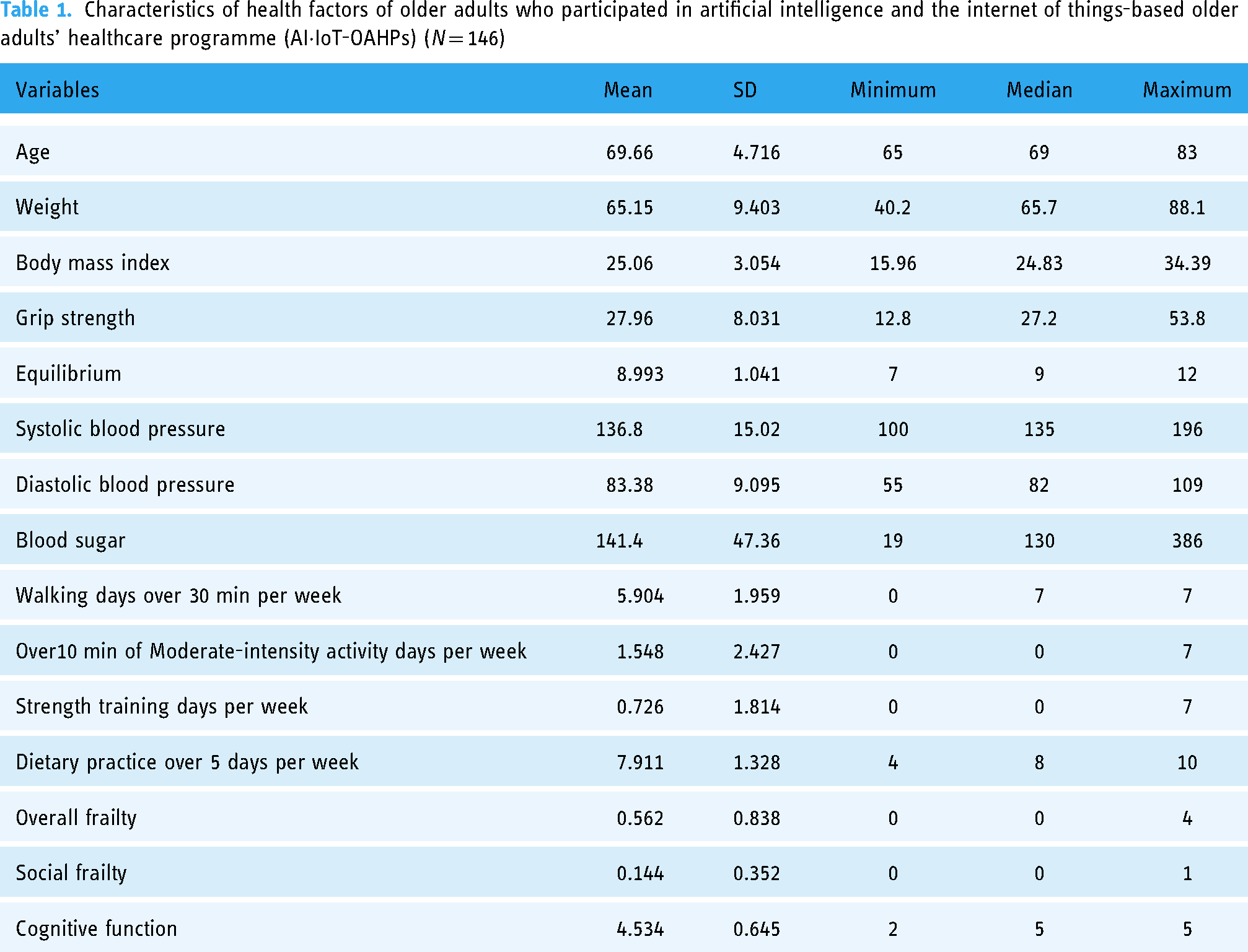
Furthermore, the mean BS level was 141.4 mg/dL (standard deviation 47.36). Moreover, the average cognitive function of the participants was 4.534. The overall (regular < 2.5) and social fragility (standard = 0) were 0.562 and 0.144, respectively. Therefore, the infirmity and cognitive function, aside from social fragility, were almost normal. Dietary practice of more than 5 days a week was unexceptional. In addition, the average levels of blood glucose were low.
Evaluation for health screening in Al·IoT-OAHPs
The evaluation of Model 1 health factors in health screening for older adults who participated in Al·IoT-OAHPs is presented in (Table 2).
Estimation for health screening of older adults who participated in AI·IoT-OAHPs (N = 146).

CI: Confidence Interval; AI·IoT-OAHP: artificial intelligence and the internet of things-based older adults’ healthcare programme; BMI: body mass index.
A significant difference was observed between the pre-health screening checkup and the 6-month post-checkup through Al·IoT-OAHPs. It was GS (p < 0.001), equilibrium (p < 0.001), SBP (p < 0.001), DBP (p < 0.001), BMI (p < 0.014), weight (p < 0.019), and BS (p < 0.046).
Body weight and BMI decreased, whereas GS increased except for Equilibrium indicators (Figures 4–7). SBP and DBP diminished, while BS levels were also reduced (Figures 8–10). Therefore, the health screening of older adults who participated in AI·IoT-OAHPs proved effective in health promotion among older adults.
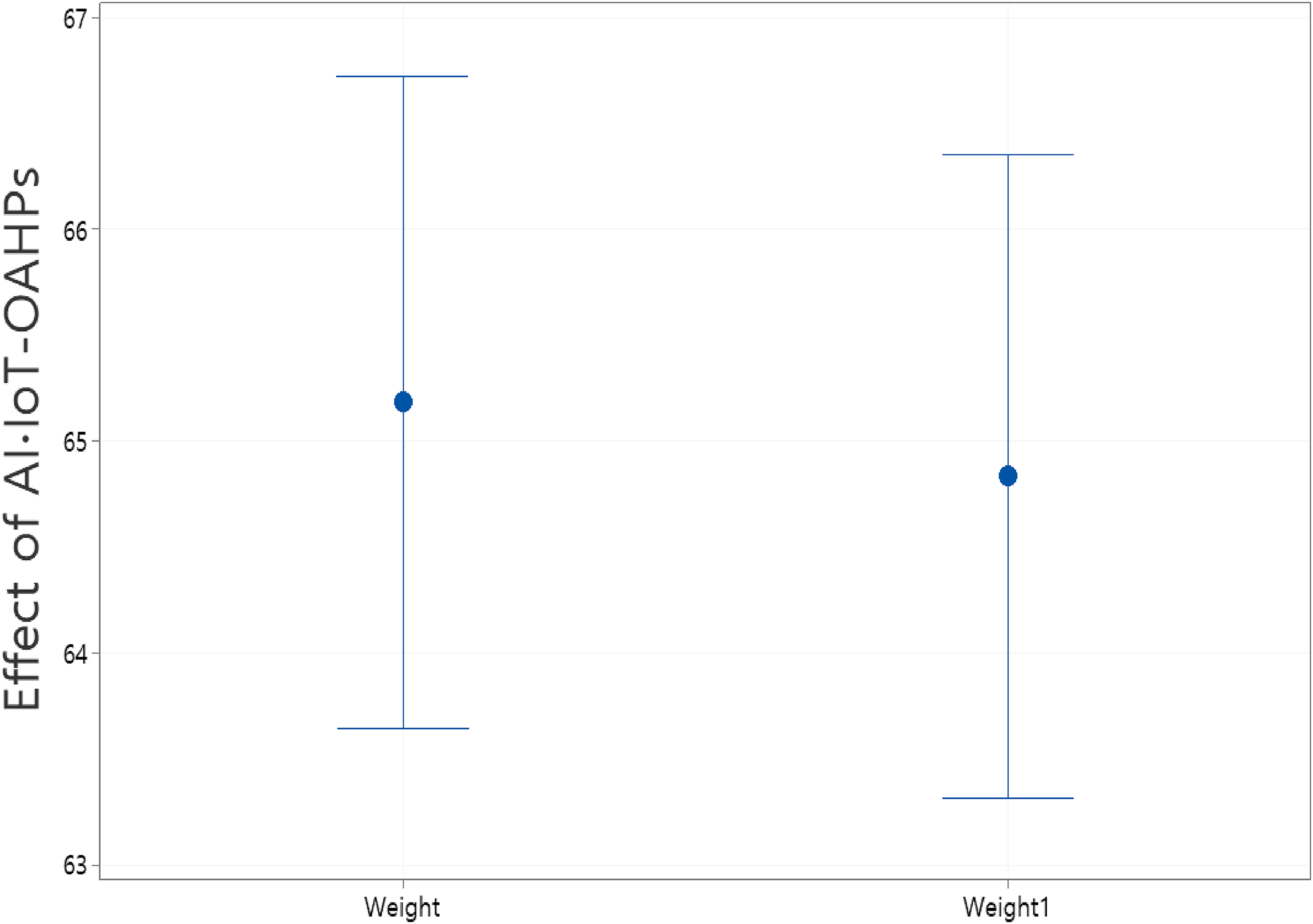
Weight & Weight1.

Body mass index and body mass index1.

Grip strength and grip strength1.

Equilibrium and equilibrium1.
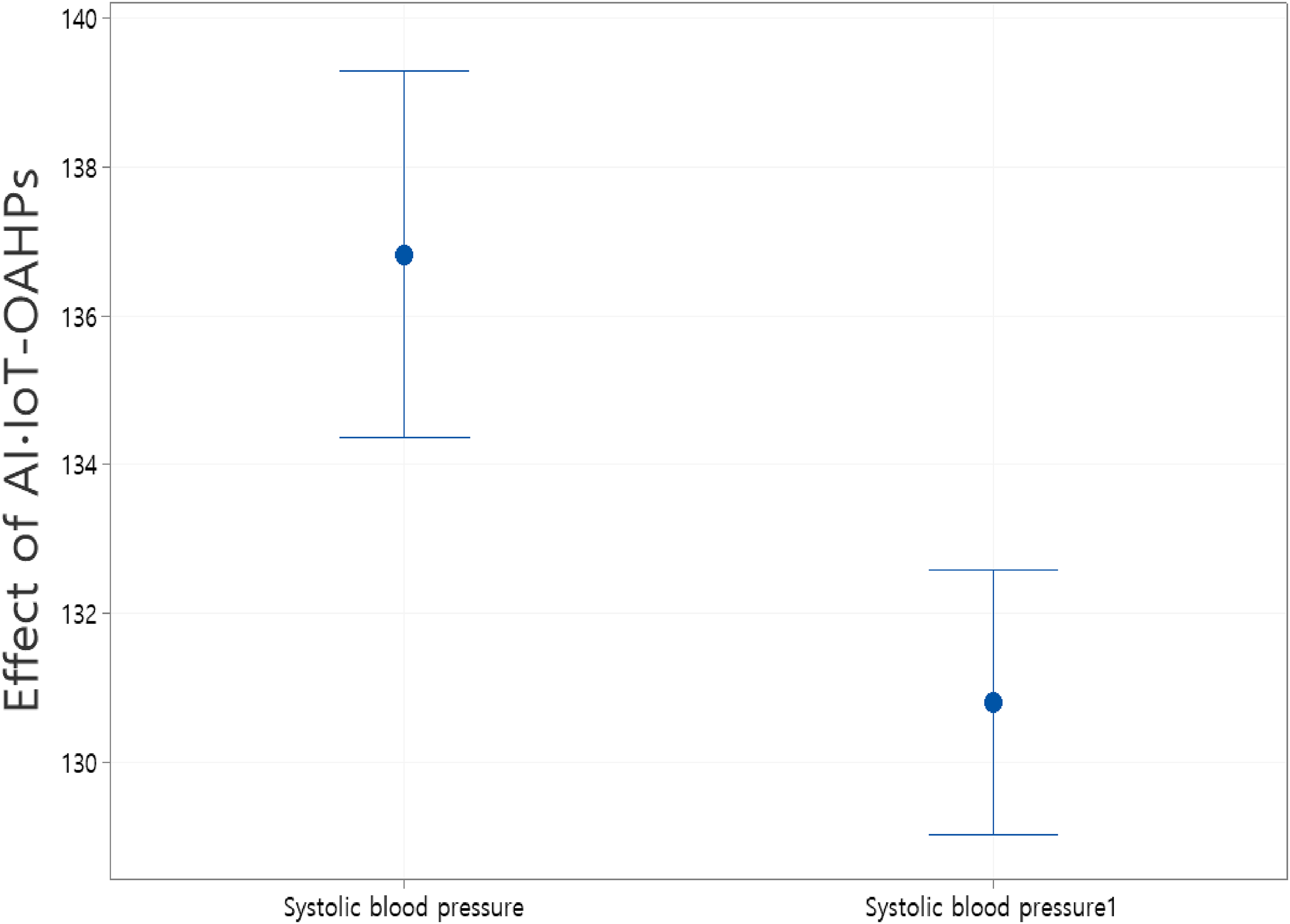
Systolic blood pressure and systolic blood pressure1.

Diastolic blood pressure and diastolic blood pressure1.
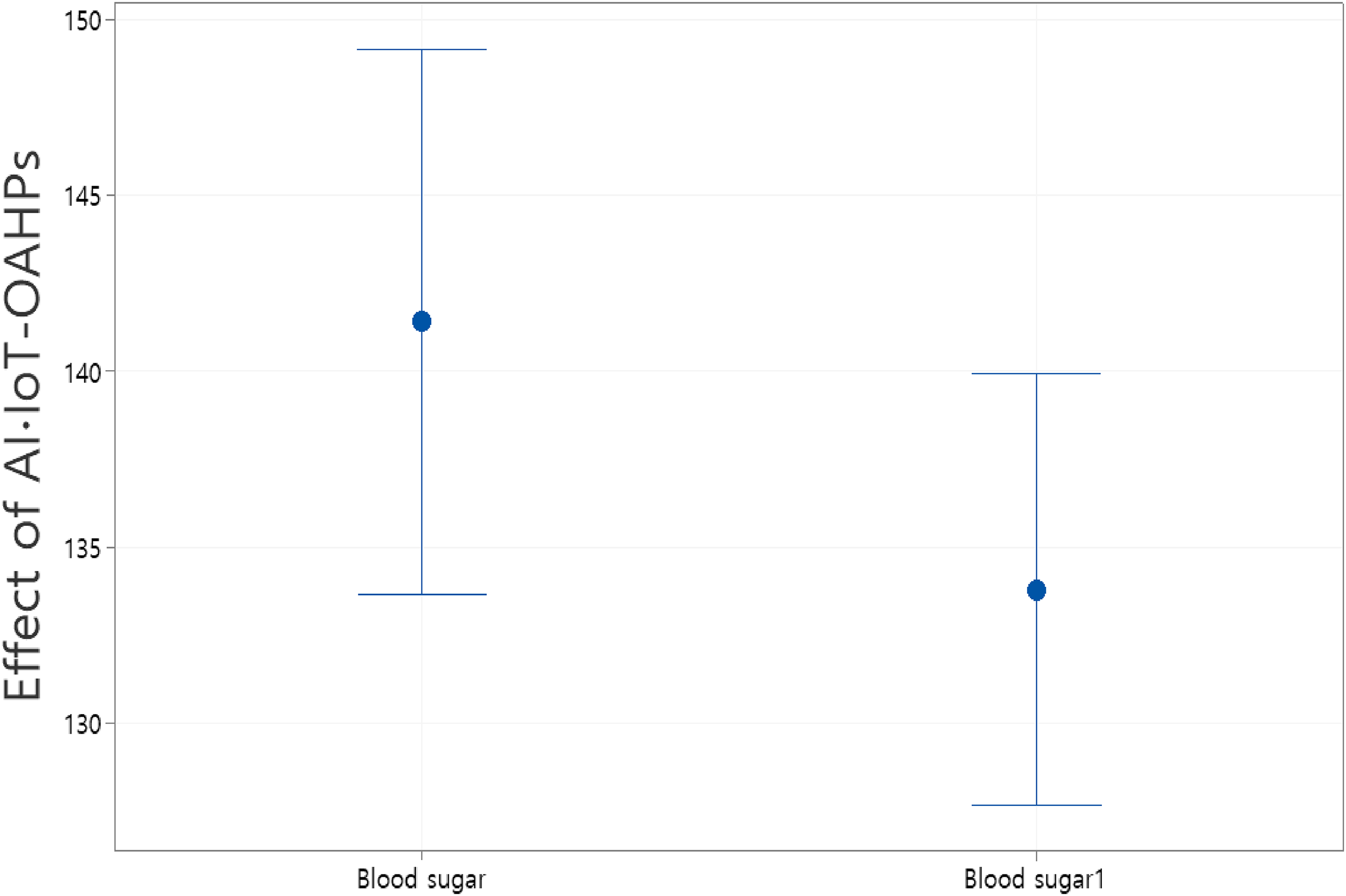
Blood sugar and blood sugar1.
Assessment for health management in Al·IoT-OAHPs
The assessment of Model 2 health factors in health management among older adults who participated in Al·IoT-OAHPs is described in Table 3. In summary, a significant difference was observed between the pre-health management checkup and the 6-month post-checkup health management period.
Estimation for health management of older adults who participated in AI·IoT-OAHPs (N = 146).

CI: confidence interval.; AI·IoT-OAHP: artificial intelligence and the internet of things-based older adults’ healthcare programme.
The number of days with walking for more than 30 min per week, engaging in moderate-intensity exercise for 10 min or more per week, participating in strength training days per week, and practising dietary habits for more than 5 days per week all significantly increased (Figures 11–14).

Walking days for 30 min and walking days for 30 min1.
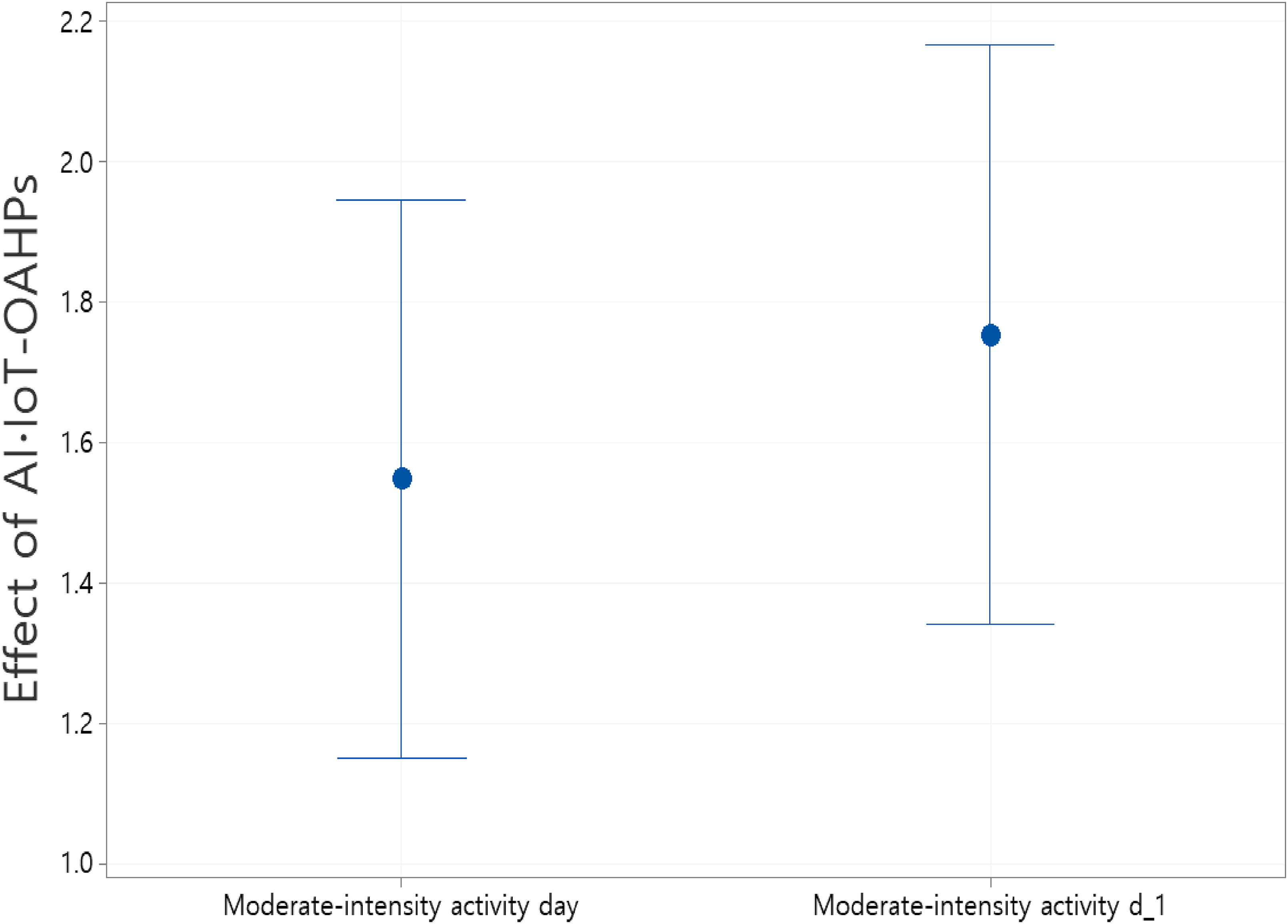
Moderate-intensity activity and moderate-intensity activity1.

Strength training of days and strength training of days1.

Dietary practice and dietary practice1.
Furthermore, there was a decrease in overall frailty and social fragility, with an increase in cognitive function (Figures 15–17). As a result, the health factors of health management programmes for older adults who participated in AI·IoT-OAHPs proved effective in promoting healthy ageing.

Overall frailty and overall frailty1.

Social frailty and social frailty_1.

Cognitive fuction and cognitive fuction_1.
Assessment for health screening and health management by age
The evaluation of Model 3 of health factors in pre- and post-health screening and health management by age of older adults who participated in Al·IoT-OAHPs is described in (Table 4). In summary, a significant difference was observed between pre-and post-health screening and between pre-and post-health management by age.
Estimation for health factors of older adults who participated in AI·IoT-OAHPs (N = 146).

CI: confidence interval; AI·IoT-OAHP: artificial intelligence and the internet of things-based older adults’ healthcare programme
The age distribution of the sample is those aged 60–69, 81 people, and 70–83, 65 people.
GS increased (p < 0.001) for all those aged 60–69 and 70–83, equilibrium indicators decreased (p < 0.001), and SBP and DBP diminished (p < 0.001). Therefore, the health screening of all ages of older adults who participated in AI·IoT-OAHPs proved effective in health promotion among older adults.
Pre and post-walking for more than 30 min per week and practising dietary habits for over 5 days increased significantly for all those aged 60–69 and 70–83 (p < 0.001). Furthermore, there was an increase in cognitive function for all those aged 60–69 (p < 0.001) and 70–83 (p < 0.032). As a result, the health factors of health management programmes for older adults who participated in AI·IoT-OAHPs seem adequate in healthy ageing.
Predicting health factors using logistic regression in AI·IoT-OAHPs
The study conducted logistic regression analyses to assess health factors for health promotion in older adults who participated in AI·IoT-OAHPs presented in Models 4 and 5 (Tables 5 and 6).
Logistic regression for health factors of older adults who participated in AI·IoT-OAHPs (N = 146).

*CI: Confidence Interval; AI·IoT-OAHP: artificial intelligence and the internet of things-based older adults’ healthcare programme.
Males 72 people, Females 74 people.
Logistic regression for health factors of older adults who participated in AI·IoT-OAHPs (N = 146).

CI: confidence Interval; AI·IoT-OAHP: artificial intelligence and the internet of things-based older adults’ healthcare programme.
*CI: Confidence Interval; ** Adults over 70 are a total of 65.
Model 4 in Table 5, the effects on the Exp (β) for females and males were estimated as health factors for the health promotion of older adults. In comparison to male older adults, female older adults were significantly more likely to have an effect with a nearly two times post-cognitive function (Exp (β) = 2.019, p = 0.045), and female older adults were significantly more an effect 0.5 times post-SBP (Exp (β) = 0.508, p = 0.048) through AI·IoT-OAHPs.
Lastly, Model 5 (Table 6), in comparison to adults under 70, adults over 70 predicted significantly more likely to have effects of post-health factors such as post-SBP (Exp (β) = 0.303, p = 0.036) and more an effect 0.3 times post-BS (Exp (β) = 0.346, p = 0.032), an effect 0.4 times post-equilibrium (Exp (β) = 0.431, p = 0.006) and more effectiveness four times post-walking days (Exp (β) = 4.179, p = 0.038), and an effect three times post-dietary practice (Exp (β) = 3.238, p = 0.029) and more an effect two times post-cognitive function (Exp (β) = 2.161, p = 0.028) via AI·IoT-OAHPs.
Discussion
As a result of the study, findings suggested the substantial impact of health factors on health promotion among older adults in AI·IoT-OAHPs. The discussion focuses on the effect of AI·IoT-OAHPs as determinants of health factors for health promotion among older adults in Models 1, 2, 3, 4 and 5.
The results of Model 1 indicated that older adults undergoing pre- and post-health screening had higher GS and lower BS, weight, BMI and SBP and DBP after the screening through AI·IoT-OAHPs. The transition from pre- to post-health screening through AI·IoT-OAHPs showed significant improvement in the health promotion of older adults over 6 months. Notably, the indices for BS, weight, BMI and SBP and DBP did not increase in the post-health screening phase for older adults.
A recent case study reported that higher GS is associated with a lower incidence of carotid atherosclerosis in older adults, 27 and patients with weak GS have reduced survival compared to patients with high GS. 56 Therefore, the health factors were proven as health prevention service factors for health promotion among older adults. Health factors of health screening in the study have been assessed to remain healthy and stable through AI·IoT-OAHPs despite ageing over 60. Meanwhile, a recent case study reported a positive association between body weight and GS in men. 57 Additionally, weight and GS exhibited a positive relationship, with GS potentially being influenced by the force of weight. Therefore, if a study investigates additional health factors associated with GS, it is suggested that it be considered a healthy longevity factor in the health promotion of older adults through AI·IoT-OAHPs. 20
The results of Model 2 were that older adults with pre- and post-health management had a higher difference in health factors such as walking, dietary practices, and cognitive function. Specifically, there was a noteworthy increase in the frequency of walking for more than 10 min, engaging in moderate-intensity exercise, participating in daily strength training, and adhering to dietary guidelines more than 5 days a week. In particular, in comparison to adults under 70, adults over 70 predicted significantly more effects four times in post-walking days and an effect three times in post-dietary practice via AI·IoT-OAHPs (see Model 5). These findings suggested that AI·IoT-OAHPs over 70 age health management services for the health promotion of older adults were effective.
Model 3 showed that GS increased for all those aged 60–69 and 70–83, Equilibrium indicators decreased, and SBP and DBP diminished; walking and practising dietary increased significantly for all those aged 60–69 and 70–83. Furthermore, there was an increase in cognitive function for all those aged 60–69 and 70–83 (Table 4). As a result, older adults who participated in AI·IoT-OAHPs proved that programmes for all older ages adequately promote healthy ageing.
The results of Model 4 showed that older female adults undergoing pre- and post-health screening and management had lower SBP and higher cognitive function after the screening than older male adults through AI·IoT-OAHPs (Table 5). These findings underscore that females maintain healthy ageing via AI·IoT-OAHPs.
The results of Model 5 were that adults over 70 years older undergoing pre- and post-health factors screening had lower SBP and good equilibrium and more effectiveness four times walking days, three times dietary practice, and two times cognitive function compared with those under 70 via AI·IoT-OAHPs (Table 6). These findings underscore shortcuts to adults over 70 maintaining healthy ageing via AI·IoT-OAHPs.
AI·IoT-OAHPs services could evaluated as key to playing a role in the non-face-to-face Corona era. In a recent study, walking, eating habits, and walking with a companion prevent disease and alleviate loneliness.58–60 Overall, both recent studies and this study have recognized that physical activity and a healthy diet play a favourable role in reducing frailty and that increased physical activity improves physical fitness and cognitive function in older adults.61–63 Furthermore, this study showed a decrease in overall frailty and social infirmity, an increment in cognitive function and an accretion of physical activity via AI·IoT-OAHPs. It indicates the success of the health management approach for health promotion for older adults in AI·IoT-OAHPs.
Additionally, older adults dietary practices throughout their life through AI·IoT-OAHPs that the consumption of fish has reduced frailty in older adults, no-skipping meals lead to nutrition, sharing information about healthy food choices, and considering rich dietary habits among older adults.64–66
In addition, frailty had worse cognition, and older adults with cognitive impairment suffered from falls.67–68 A recent study improved the cognitive functions of older adults relating to frailty through exercise programmes.69–70 Cognitive function is one of the most important health factors in older adults. Furthermore, in older adults, brain decline and cognitive function reduce to dementia and the quality of life. 71 Therefore, conducting multilateral studies to improve cognitive function in older adults is necessary.
Therefore, these findings encourage and promote non-face-to-face physical activity through AI·IoT services during the coronavirus disease 2019 (COVID-19) pandemic. AI·IoT-OAHPs services are due to their significant role in improving physical activity, adopting healthy dietary habits, and enhancing cognition in older adults.
Specifically, maintaining SBP can serve as a preventive measure against complications, lowered blood pressure and diabetes.72,73 Notably, this reveals that decreased SBP is associated with normal blood pressure levels.61,74 Therefore, in essence, this study on effective management of SBP suggests the potential to prevent various health conditions among older individuals via AI·IoT-OAHPs.
Therefore, the study's results further confirm this AI·IoT-health service effect, revealing increased cognitive function and decreased SBP in female older adults and those over 70. Notably, adults over 70 have two times more cognitive function than those under 70. These insights highlight the role of AI·IoT-OAHPs as a significant health factor in preventing chronic diseases and promoting the overall health of older adults.
Overall, as a result of pre and post-health screening and health management through AI·IoT-OAHPs, the evaluated proved effects of health factors for non-face-to-face and face-to-face health promotion of older adults.
Conclusions
This study assessed the health factors as the outcome of pre- and post-health screening and health management through AI·IoT-OAHPs for 6 months. Pre- and post-health screening and management through AI·IoT-OAHPs were evaluated as significant outcomes in 14 health factors. Notably, the benefits of post-cognitive function showed a twofold increase in older female adults through AI·IoT-OAHPs. Adults over 70 showed a fourfold increase in post-walking days, a threefold in post-dietary practice, and a twofold in post-cognitive function in the post-effects compared with pre via AI·IoT-OAHPs. AI·IoT-OAHPs have proven to be an effective programme in the realm of face-to-face and non-face-to-face AI·IoT-based healthcare initiatives for older adults in the era of COVID-19. The study suggests that AI·IoT-OAHPs can contribute to the upgrade in health promotion of older adults.
Footnotes
Acknowledgements
The authors thank Chief Son Hee-Kyung of the Jeongeup City Public Health Center and related officials for their cooperation in the data research.
Author note
Jong In Kim is currently affiliated with Faculty of Health and Welfare, Wonkwang University, Republic of Korea.
Contributorship
JIK researched literature and conceived the study. JIK and GK were involved in protocol development and data analysis. JIK wrote the first draft of the manuscript. All authors reviewed and edited the manuscript and approved the final version of the manuscript.
Declaration of conflicting interests
The authors declared no potential conflicts of interest with respect to the research, authorship, and/or publication of this article.
Ethical approval
This study was approved by the Wonkwang University Institutional Review Board (IRB-202212SB-188).
Funding
The authors received the following financial support for the research, authorship, and/or publication of this article: This research is supported Basic Science Research Programme through the National Research Foundation of Korea (NRF), funded by the Ministry of Education (2022R1I1A1A01069140).
Informed consent
All participants gave written informed consent in accordance with the Declaration of Helsinki.

Guarantor
JIK.