




Abstract
The COVID-19 pandemic precipitated a shift to online learning in many institutions-as a standard practice. Factors influencing its efficacy affect student behavior and future intentions. A cross-sectional study in Vietnam over 2 years assessed changes in student attitudes towards online learning from 2020 to 2021. Data gathered through online surveys, included 161 participants in 2020 and 395 in 2021 (total of 556 students), and were analysed using structural equation modeling. Results indicate perceived enjoyment (PE) as the primary factor influencing online learning intentions, with perceived usefulness (PU) gaining significance from 2020 to 2021. This shift suggests a transition in student mindsets towards online learning. Hence, institutions should adapt courses to optimize both enjoyment and utility, embracing technological evolution.
Keywords
Introduction
Learning environments have undergone significant evolution over time. Initially, education was centered on individual memorization, followed by mass learning concepts in the 1900s. The integration of computers into education began in the 1970s with the emergence of the internet, paving the way for knowledge dissemination. Distance learning emerged in the 18th century and gained popularity in the 1990s with advancements in communication technology. Education 4.0, a novel stage, incorporates technology, computers, and the internet, offering vast opportunities for the digital generation (Boca, 2021). E-learning and online learning have become predominant methods recently (Ratten, 2022). E-learning employs web-based tools or digital media, while online learning occurs outside traditional classrooms via digital channels (Lee, 2017; Singh and Thurman, 2019). However, the emergency context of online learning during the COVID-19 pandemic differs from meticulously designed online education. Hodges et al. (2020) coined the term Emergency Remote Teaching (ERT) to delineate pandemic-induced teaching methods.
Numerous factors influence online learning effectiveness, including student behaviors, institutional support, technical aspects, and course design (Boca, 2021; Edu et al., 2021; Maheshwari, 2021; Makokha and Mutisya, 2016; Persada et al., 2021; Rohleder et al., 2008). The Technology Acceptance Model (TAM) by Davis (1989a) and Davis et al. (1992a) is a widely used model to understand technology adoption by users. TAM comprises Perceived Usefulness (PU), Perceived Ease of Use (PEU), and Perceived Enjoyment (PE). PU reflects users’ belief in technology’s performance enhancement, while PEU signifies ease of use in using technology. PE indicates users' enjoyment without considering performance consequences. Various studies employed TAM to explore online learning behaviors (Casey et al., 2021; Dibra et al., 2022; Lee, 2010; Liu et al., 2010; Maheshwari, 2021). In Vietnam, online learning evolved from distance learning, but its integration into formal education remains limited due to regulatory constraints (Pham and Ho, 2020).
The COVID-19 outbreak prompted Vietnam to adopt online education in March 2020 (Ho et al., 2021). Despite challenges, educational institutions improved infrastructure and teacher skills (Maheshwari, 2021). Investigating students’ online learning intentions amid the pandemic’s first and fourth waves is crucial, given the widespread adoption of online education (Ho Chi Minh City Department of Education and Training, 2021). Understanding the factors influencing students' intentions can guide educational institutions in preparing for future uncertainties (Tran et al., 2021).
While global studies on online learning exist (Bazelais et al., 2018; Liu et al., 2010; Zhang et al., 2008), Vietnam lacks extensive research in this area. Recent studies focus on students’ attitudes and satisfaction during emergencies (Dinh and Nguyen, 2020; Ho et al., 2021; Landrum et al., 2021; Thach et al., 2021). Few studies investigate Vietnamese students' intentions toward online courses (Doan, 2021; Maheshwari, 2021). Past literature emphasizes technology-related factors’ impact on online learning engagement (Branchu and Flaureau, 2022). This study examines the online learning intentions of Vietnamese students during the COVID-19 pandemic using modified TAM, considering Computer and Internet Self-efficacy (CIS) and PEU. Hence, this study aims to fill gap in current research by analyzing data across two time periods in Vietnam.
As nations navigate educational challenges during the pandemic, adapting to new management practices is essential (Ratten and Jones, 2021). Educational institutions must embrace online learning approaches and equip instructors with the necessary skills to ensure effective content delivery (Maheshwari, 2021). Understanding students’ intentions toward online learning is crucial for institutions to prepare for future uncertainties (Tran et al., 2021). This study explores Vietnamese university students' online learning intentions during different phases of the COVID-19 pandemic, focusing on CIS, PEU, PU, and PE factors and their relationships.
The paper is structured as follows: the next section presents a literature review, discussing the theoretical framework and hypotheses development. This is followed by the research methodology, results, and analysis section, and finally, the discussion and conclusion section, which includes theoretical and practical contributions, limitations, and avenues for future research.
Literature review
Theoretical framework
Identifying factors influencing students’ Online Learning Intentions (OLI) is crucial for improving their learning experiences, especially in online mode where challenges may arise. Various models have been employed in prior studies to explore e-learning intentions. The Innovation Diffusion Theory (IDT) by Rogers (1995) and the Unified Theory of Acceptance and Use of Technology (UTAUT) by Venkatesh et al. (2003) have been widely utilized (Abbad, 2021; Chao, 2019; Duan et al., 2010; Pinho et al., 2021; Shaqrah, 2015; Zhang et al., 2010). Additionally, Social Cognitive Theory by Bandura (1986), Theory of Reasoned Action by Ajzen and Fishbein (1980), and Theory of Planned Behavior by Ajzen (1985) have been employed (Buabeng-Andoh, 2018; Chen and Chen, 2006; Chu and Chen, 2016; Knabe, 2012; Tagoe and Abakah, 2014; Wang and Lin, 2021; Zhang et al., 2012). This study adopts TAM as the grounding framework, a prevalent model for understanding technology adoption and satisfaction in online educational systems (Arbaugh, 2010; Straub et al., 1997). It incorporates elements such as Perceived Ease of Use (PEU), Perceived Usefulness (PU), and Perceived Enjoyment (PE) as predictors of students' OLI. Additionally, Computer and Internet Self-efficacy (CIS) is integrated into the theoretical framework (Doan, 2021; Kim and Park, 2018; Kuo et al., 2014; Lim et al., 2016; Punjani and Mahadevan, 2021). The study’s hypotheses are developed based on a literature review involving obstacles in online learning, aiming to assist educational institutions in identifying challenges and supporting effective online course delivery to adapt to changing circumstances. As online learning becomes a necessity rather than a choice, insights from this study are pertinent (Maheshwari, 2021; Nayak et al., 2022).
Hypotheses development
Influence of computer and internet self-efficacy (CIS) on perceived usefulness (PU) and Perceived Enjoyment (PE)
Self-efficacy is defined as the confidence of an individual in their ability to perform actions necessary to succeed in a particular situation (Bandura, 1977). In the technology context, computer self-efficacy refers to a person’s belief in his or her capacity to use computers to accomplish tasks (Compeau and Higgins, 1995). Similarly, internet self-efficacy relates to a perception that an individual can successfully utilize the internet to undertake a required course of action (Eastin and LaRose, 2000). Regarding the online learning perspective, Computer and Internet Self-efficacy (CIS) implies learners’ belief in their capacity to use computers and the internet in the online learning environment. Perceived Usefulness (PU), as defined by Davis (1989b), is the degree to which the users believe that using technology will increase their productivity. Perceived Enjoyment (PE) is the level at which users think that using technology is enjoyable, not considering the performance consequences (Davis et al., 1992a). PE is considered a form of intrinsic motivation (Lee et al., 2005), defined as the satisfaction and pleasure achieved from a particular behavior performance (Doll and Ajzen, 1992).
Igbaria and Iivari (1995) found a positive relationship between self-efficacy and PU in a computer usage context. Therefore, it is anticipated that CIS has a positive impact on PU. Previous studies have also supported this relationship (Al Kurdi et al., 2020; Doan, 2021; Hussein et al., 2007; Mallya et al., 2019). According to self-efficacy theory (Bandura, 1977, 1982), self-efficacy can increase perceived enjoyment towards a certain activity, which implies that students will feel more enjoyable studying online when they have more confidence in using computers and the internet. Punnoose (2012) found that computer self-efficacy positively affected PE of Thailand students to study their intentions to use e-learning.
Nevertheless, Wang et al. (2010) stated that computer self-efficacy had no significant impact on PE when investigating the intention to use blogging systems in Taiwanese. Similarly, intrinsic components (PEU and self-efficacy) were proven to have no correlation with PE in the study of Maheshwari (2021), of which the reason might be that students felt unsure about online learning as the study was conducted during the first wave of the pandemic in Vietnam. The following hypotheses are postulated to further investigate the relationships of the aforementioned factors:
CIS is positively related to PU.
CIS is positively related to PE.
Influence of perceived ease of use (PEU) on perceived usefulness (PU) and perceived enjoyment (PE)
Perceived Ease of Use (PEU) refers to how users perceive how easy it is to use a certain technology (Davis, 1989a). The relationship between PEU and PU has been explored in various studies related to users’ adoption and perceptions towards technology. The significant positive influence of PEU on PU has been confirmed by previous research (Mailizar et al., 2021; Farahat, 2012; Liu et al., 2010; Saadé et al., 2008; Davis, 1993). Furthermore, PEU is expected to have a positive effect on PE as based on self-efficacy theory (Bandura, 1977, 1982), it is implied that the more self-competence that students have, the more effortless and enjoyable they will perceive towards using technology (Lee et al., 2005). Prior research also supports the positive relationship between PEU and PE (Lee et al., 2005; Punnoose, 2012). However, the studies of Maheshwari (2021) found that intrinsic factors, including PEU and self-efficacy, do not have a relationship with PE because, at the beginning of the COVID-19 pandemic, students were not familiar with studying online, hence not sure about the experiences they would gain from online learning compared to face-to-face learning. Thus, this study will explore the relationship between PEU and PU and find the correlation between PEU and PE for students when adopting to online learning. Based on these rationales, two hypotheses are proposed as follows:
PEU is positively related to PU
PEU is positively related to PE
Relationship of computer and internet self-efficacy (CIS) and perceived usefulness (PU) on online learning intentions (OLI)
Online Learning Intentions (OLI) relates to an individual’s willingness to undertake online learning (Doan, 2021). According to TAM (Davis, 1989b), PU directly affects behavioral intention to use. An individual will form a positive intention to use a certain technology if he or she perceives it is useful. In the online learning context, it is anticipated that when students find using computers and the internet useful for their academic activities, their intentions towards online learning will increase. The study of Mallya et al. (2019) confirmed that PU positively affected the attitudes and behavioral intentions of Indian students towards Internet usage for academic purposes.
Moreover, Internet self-efficacy was also proven to influence PU positively. The authors concluded that Internet self-efficacy had a significant positive impact on the intention to adopt the internet into students’ learning, and that self-efficacy indirectly motivated the technology usage intention through TAM factors such as PU. The result was also consistent with various studies (Al Kurdi et al., 2020; Park, 2009), in which technology self-efficacy indirectly influenced students' behavioral intentions through PU. However, in the research of Humida et al. (2021), the mediating effect of PU in the relationship between self-efficacy and behavioral intention of students in Bangladesh is not significant. In recognition of these relationships, the following hypotheses are constructed to study the effects on Vietnamese students further:
PU mediates the relationship between CIS and OLI
PU positively influences OLI of students
Relationship of computer and internet self-efficacy (CIS) and perceived enjoyment (PE) on online learning intentions (OLI)
Past research found that PE had an important influence on the behavioral intentions of individuals towards technology adoption. Davis et al. (1992a) first proved that PE was one of the most considerable factors explaining users’ intentions. Findings from the studies of Lee et al. (2005), Chesney (2006), Teo and Noyes (2011), Maheshwari (2021) also supported that the higher degree of enjoyment, the more intentions users will get towards using a particular technology. According to Punjani and Mahadevan (2021), CIS had a positive impact on intentions to study online of students in the COVID-19 scenario, which is consistent with the findings of Fianu et al. (2020), Alenezi and Karim (2010). Higher self-efficacy may enhance the behavior of individuals by increasing their PE (Lewis et al., 2016). However, to our knowledge, there has been no study exploring the mediating effect of PE in the relationship between CIS and OLI. Therefore, we incorporated the following hypotheses in the study:
PE mediates the relationship between CIS and OLI
PE positively influences OLI of students Based on the above discussion, the proposed conceptual framework of this study is presented in Figure 1.
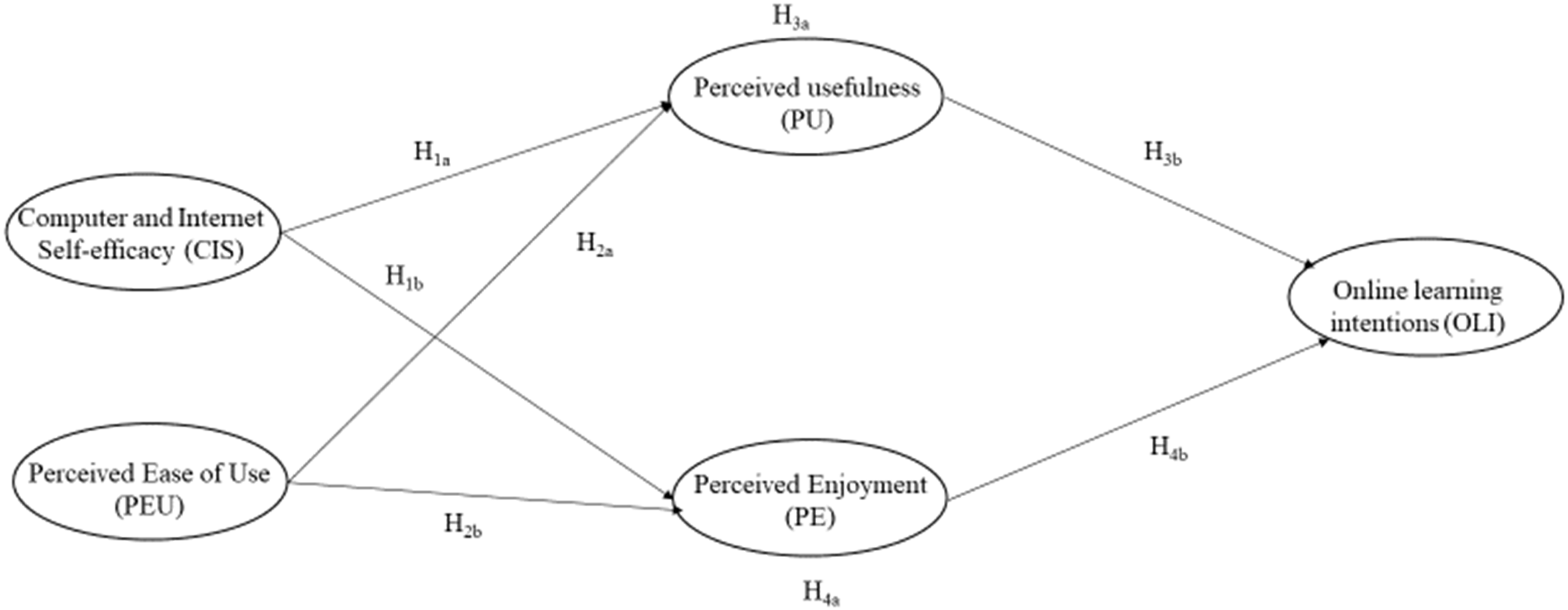
Proposed research model.
Research methodology
Study design and setting
This pooled cross-sectional study is conducted in Vietnam on university students who studied online during the COVID-19 pandemic in 2020 and 2021. The purpose of using a pooled cross-sectional study is to understand if there are any differences in online learning intentions at different periods.
Data collection and samples
The data for this study has been collected during two phases using an online survey. The data was collected from students enrolled in undergraduate and post-graduate programs in two biggest cities of Vietnam: Ho Chi Minh City and Hanoi. The first phase of data collection was conducted in the fourth quarter of 2020, when most of the students undertook online learning for the first time due to the pandemic. The second phase of data collection was done in the fourth quarter of 2021 when online learning was not new for the students.
Descriptive Statistics of participants.
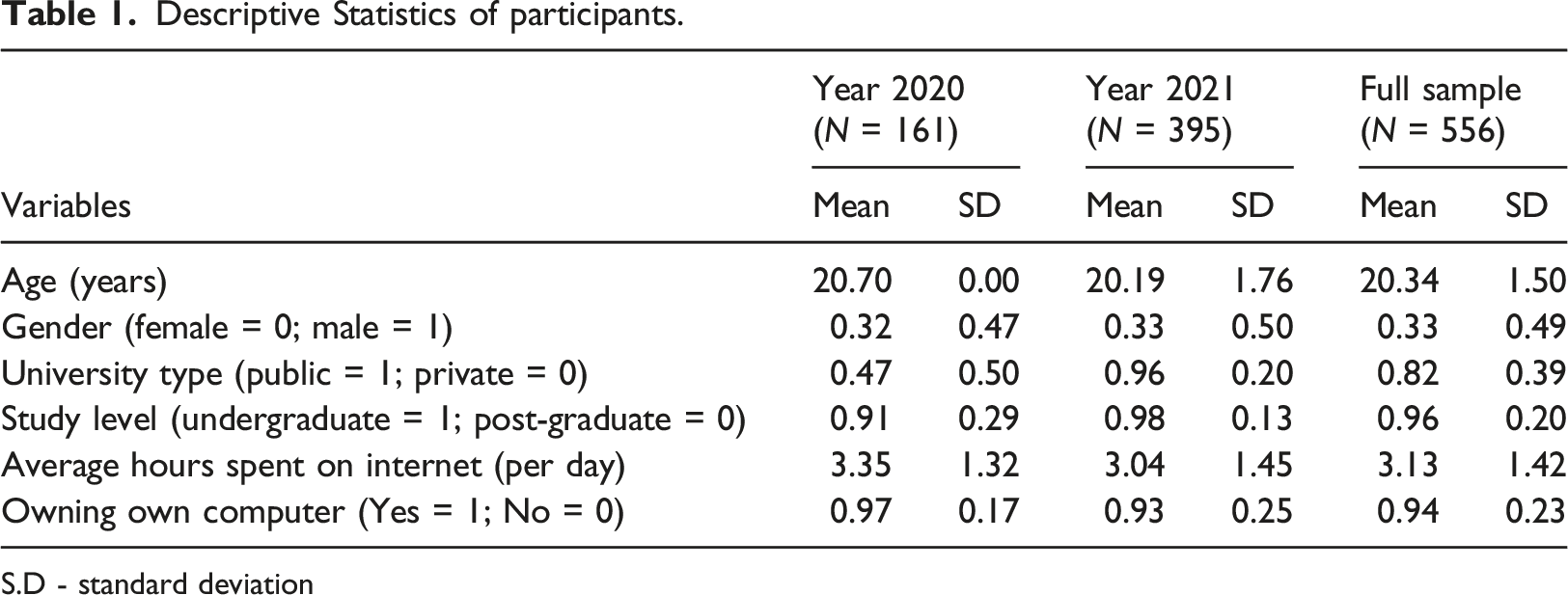
S.D - standard deviation
Survey instrument and construct items
Measurement model with mean, standard deviation, skewness, kurtosis, factor loading, reliability, convergent validity and divergent validity
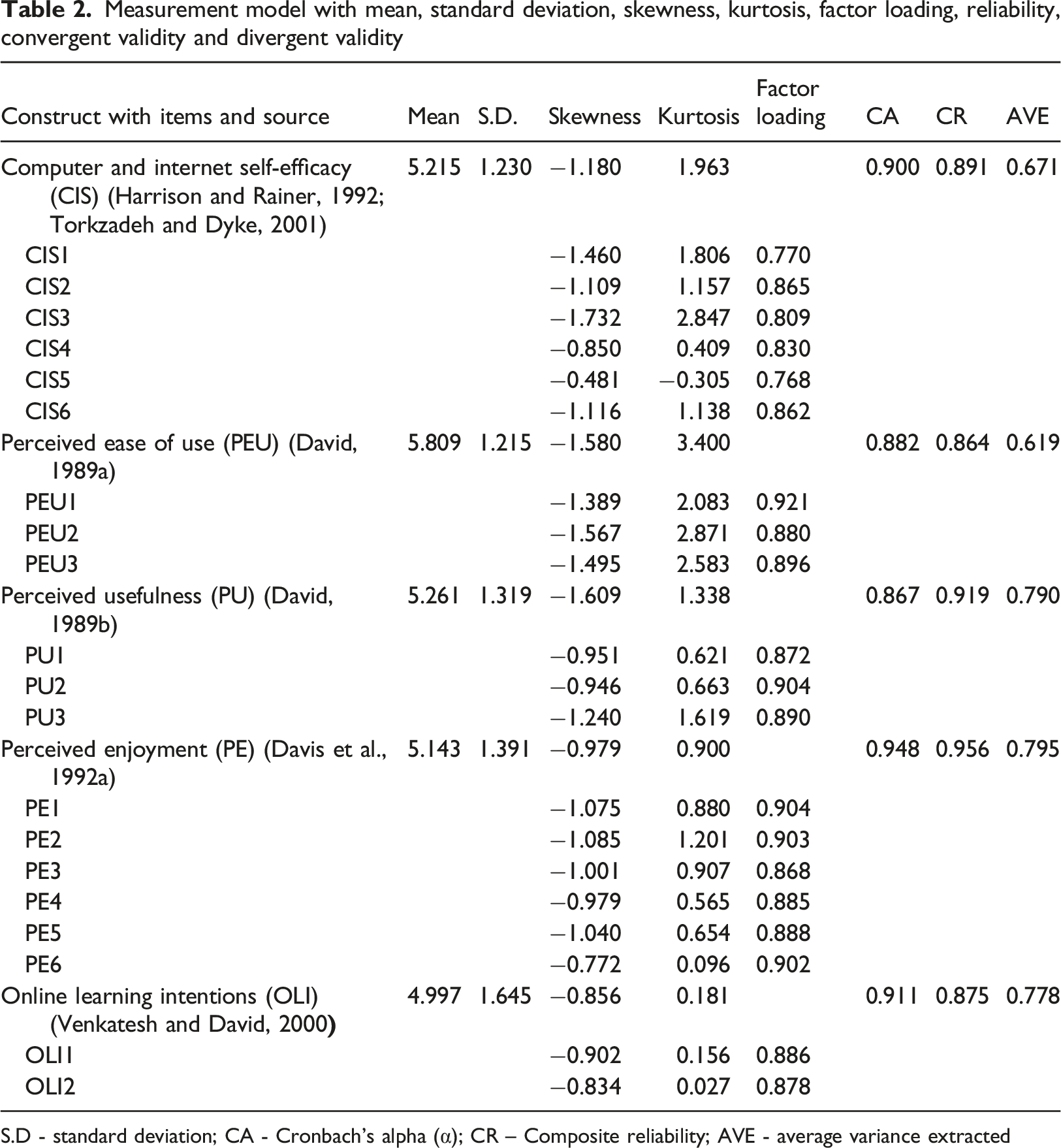
S.D - standard deviation; CA - Cronbach’s alpha (α); CR – Composite reliability; AVE - average variance extracted
Results and analysis
Measurement model validation and assessment of variables (normality, multicollinearity, validity, and reliability)
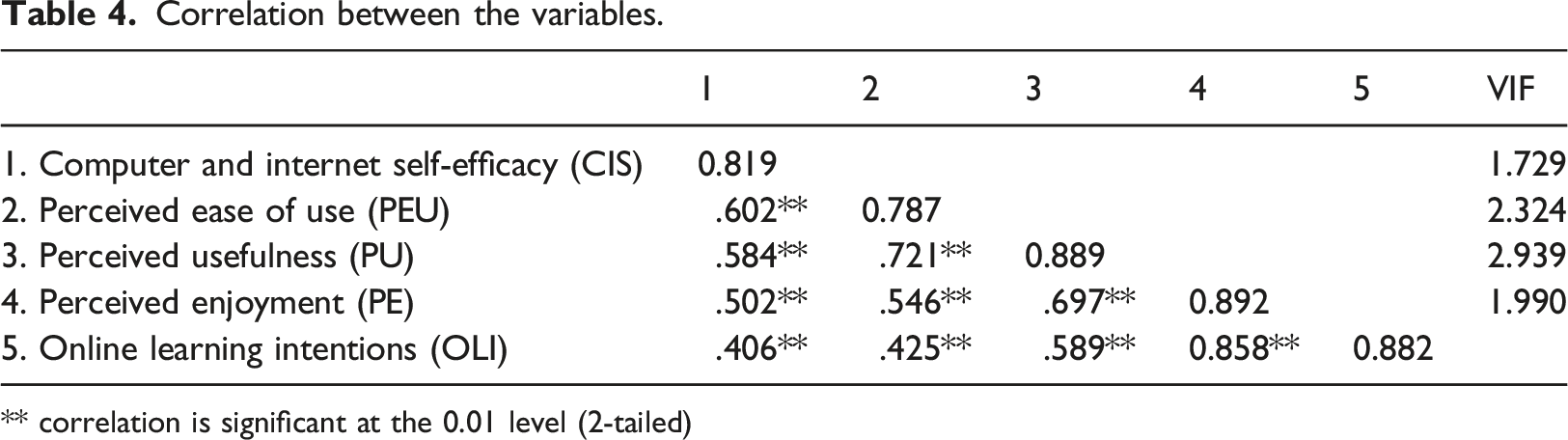
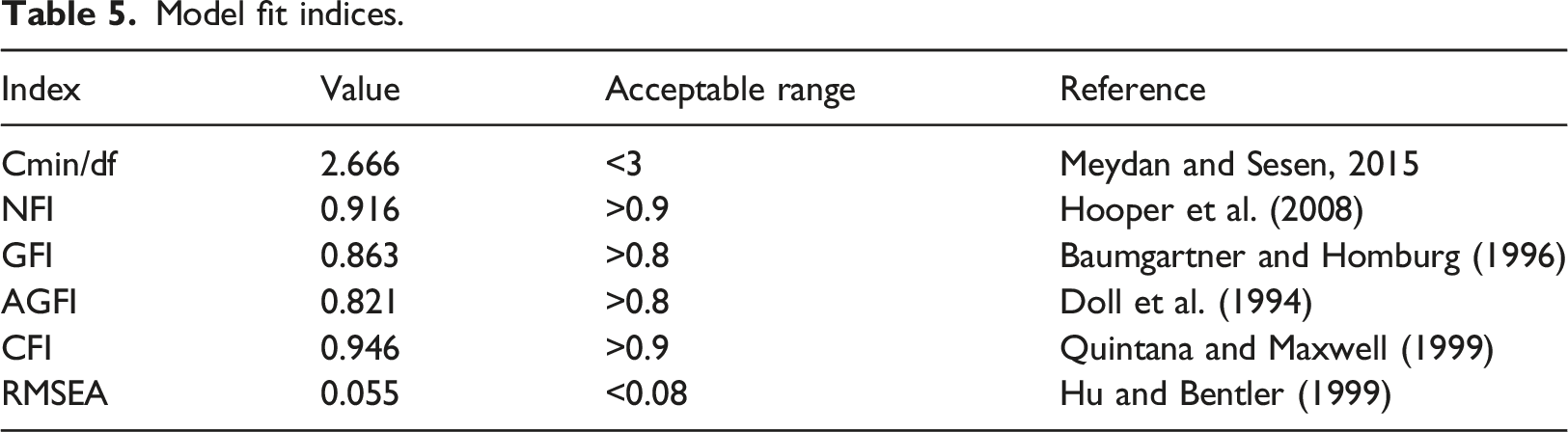
To validate the measurement model, the confirmatory factor analysis (CFA) using AMOS, version 26 was conducted and the model fit indices (CMIN/DF = 2.97, CFI = 0.962, GFI = 0.909, AGFI = 0.879, NFI = 0.947, TLI = 0.955, RMSEA = 0.64) (Hair et al., 1998) of the measurement model were all found to be within the suggested threshold levels (Hair et al., 1998). Further, the data normality of the variables was confirmed by testing the skewness and kurtosis of independent and dependent variables. The skewness and kurtosis were respectively found to be between the cut-off values of 2 to +2 and −7 to +7, which indicated the normal distribution of the data (Hair et al., 2010) (as in Table 2). To test the multicollinearity, the variance inflation factor (VIF) was calculated, and the VIF of all the constructs was below the threshold value of 5 (Hair et al., 2020), hence there was no issue of multicollinearity found in the dataset (Table 4). Further, the reliability and validity of the model were tested. The internal reliability was tested using Cronbach’s alpha (CA), composite reliability (CR) for constructs was also tested, and discriminant validity was tested by undertaking the square root of average variance extracted (AVE) (Gonzalez-Tamayo et al., 2024). The value of CA for the variables ranged between 0.88 and 0.95, which was above the threshold value of 0.7 (Maheshwari, 2022) (Table 2). The CR of the constructs was between 0.86 and 0.96, which was higher than the cut-off value of 0.7, and AVE for all the constructs was found to be above 0.5 (Gonzalez-Tamayo et al., 2023) (Table 2). The square root of AVE for the discriminant validity test was found to be higher than the respective correlations of each construct horizontally and vertically (Diagonal in bold in Table 4)
Common method bias
It is found that self-reported surveys are prone to common method bias. Hence, the procedural and statistical approach was adopted to reduce this bias (Olarewaju et al., 2023). The participants were informed about the anonymity and confidentiality of data and were encouraged to provide honest answers to the survey questions. Further, some of the questions were reverse-coded. As a statistical test, Harman’s one-factor test was conducted, and the single factor accounted for 42.5% of the variance explained, which was below the threshold of 50% (Podsakoff et al., 2012).
Descriptive statistics and correlation between the constructs
Descriptive statistics of constructs.
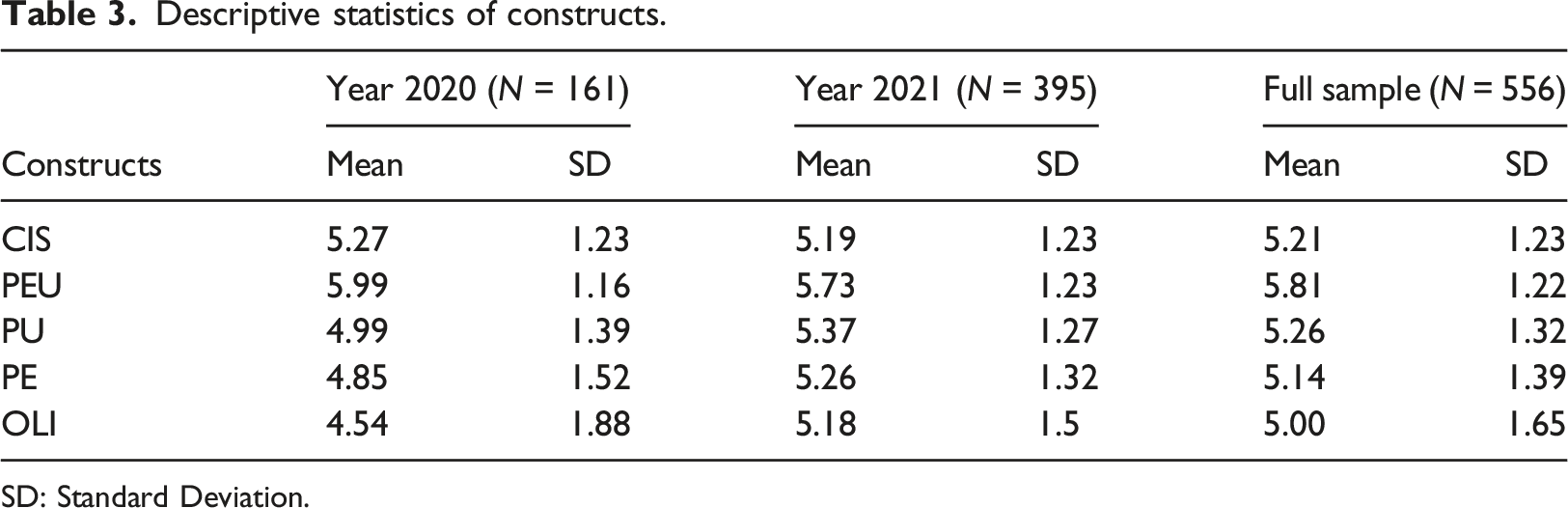
SD: Standard Deviation.
Correlation between the variables.
** correlation is significant at the 0.01 level (2-tailed)
Multi-group analysis using structural equation model
Model fit indices.
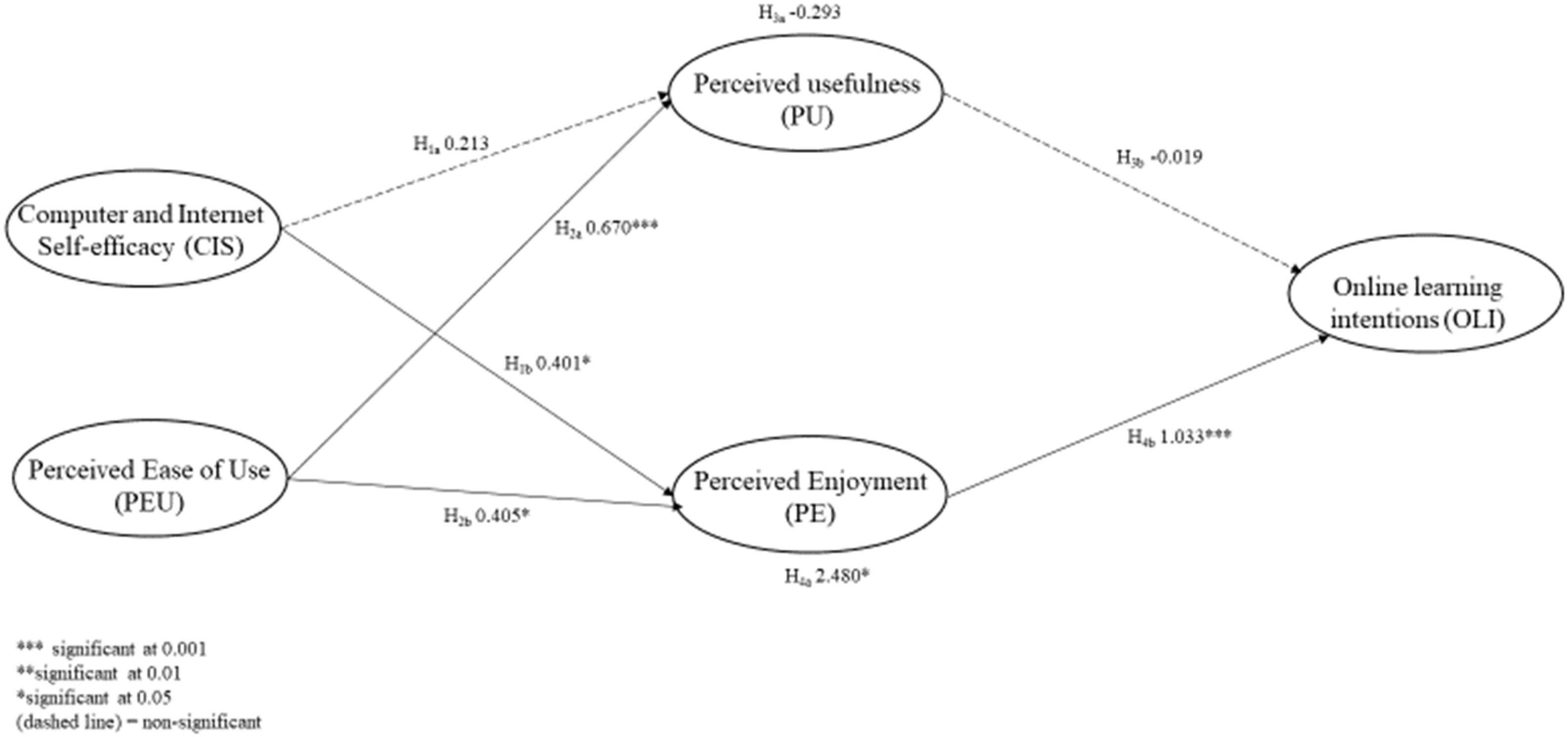
Results from SEM of the proposed research model (2020).
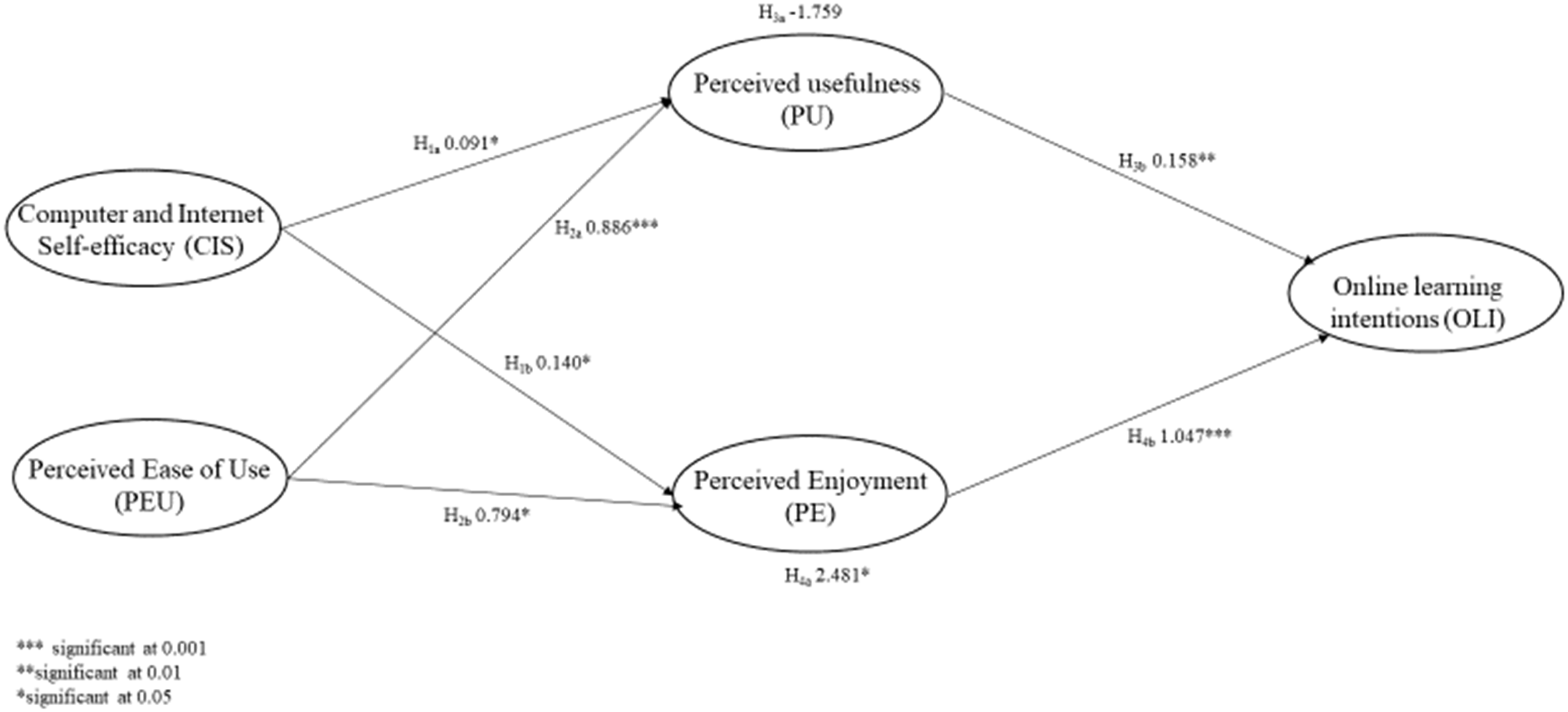
Results from SEM of the proposed research model (2021).
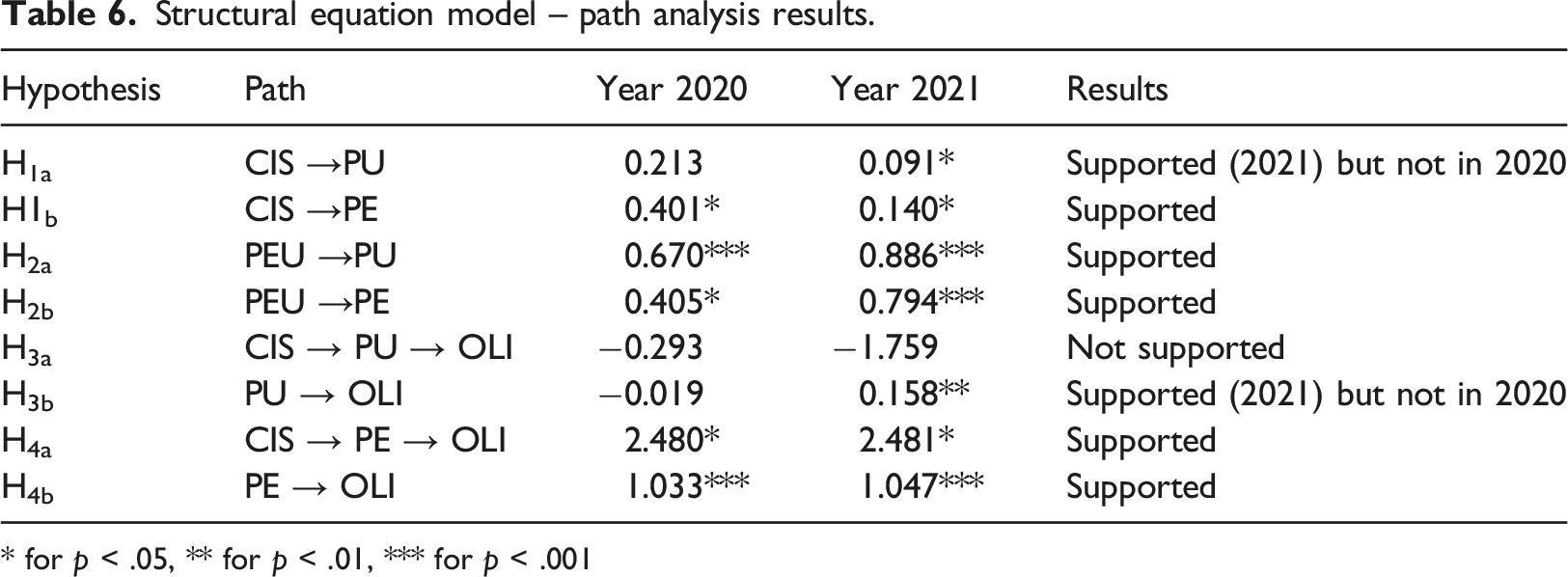
Structural equation model – path analysis results.
* for p < .05, ** for p < .01, *** for p < .001
The following hypothesis of the study (H2a and H2b) was to test whether PEU had any association with PU and PE, and this hypothesis was supported. This suggested that the higher the PEU of students; the higher was their PU and PE; however, the effect of PEU on PU and PE was higher in the year 2021 (β = 0.886 and β = 0.794) as compared to 2020 (β = 0.670 and β = 0.405).
The next hypothesis of the study was to test an indirect effect of CIS on OLI (H3a) and the direct effect of PU on OLI (H3b). There was no indirect effect of CIS on OLI mediated by PU, but PU had a direct significant effect on OLI of the students in the year 2021 (β = 0.158), while it was insignificant in the year 2020.
The last hypothesis of the study tested the indirect effect of CIS on OLI mediated by PE (H4a) and the direct effect of PE on OLI (H4b) of students. This fourth hypothesis was supported for both years wherein the effect was seen higher in the year 2021 as compared to 2020 for both H4a (β = 2.480 and β = 2.481 respectively) and H4b (β = 1.033 and β = 1.047 respectively).
Hence, the study’s analysis suggested that the students’ online learning intentions were most impacted by their computer internet self-efficacy mediated by perceived enjoyment with online learning, as supported by hypothesis H4a. This was followed by the direct effect of perceived enjoyment effect on online learning intentions as supported by hypothesis H4b. Perceived usefulness had the least effect on OLI of the students (H4a), with no effect found in the year 2020.
Discussion, conclusion, and implications
Amidst the ever-evolving global situation, understanding the transformation of student learning environments, particularly since the pandemic’s onset, is paramount. Universities have diversified their learning modes to include face-to-face, hybrid, and fully online approaches, accommodating synchronous and asynchronous learning (Zhao and Watterston, 2021). It is crucial to explore factors influencing students’ decisions to engage in online learning to prepare for future uncertainties. This study examines changes in online learning intentions from 2020 (the pandemic’s onset) to 2021 (post-preparation phase). Notably, this research employs a unique pooled cross-sectional approach, contrasting with previous single-point cross-sectional studies. Results reveal significant positive relationships between Computer and Internet Self-efficacy (CIS) and Perceived Ease of Use (PEU) with Perceived Usefulness (PU) and Perceived Enjoyment (PE), aligning with prior studies (Doan, 2021; Lee et al., 2005; Liu et al., 2010; Punnoose, 2012). PE directly influences Online Learning Intentions (OLI) and mediates the relationship between CIS and OLI, corroborating earlier findings (Davis et al., 1992b; Chesney, 2006; Teo and Noyes, 2011; Maheshwari, 2021). Notably, PU’s influence on OLI became significant in 2021, indicating a shift in students' perception towards online learning’s usefulness compared to traditional methods, signaling a promising future for online education.
Theoretical contribution
Many universities recognize the importance of post-pandemic digital and flexible methods, necessitating reinvestment in e-learning platforms. Understanding factors influencing students’ online learning intentions is crucial. This research aims to explore these factors and assess changes in Vietnamese university students' online learning intentions from 2020 to 2021. It uniquely collects data at two time points during pandemic-affected periods (2020 and 2021), contributing significantly to the growing literature. Using modified TAM, the study focuses on Computer and Internet Self-efficacy (CIS) and Perceived Ease of Use (PEU), extending existing TAM applications in Vietnam. This research aids universities in navigating uncertainties and guiding efforts to promote future online learning. Although specific to Vietnam, the findings may have broader applicability, considering the global prevalence of online learning and its associated benefits.
Practical contribution
Online learning is still at the infancy stage in developing countries like Vietnam, and the results from the study suggest that the online learning intentions of the students are affected by their computer and internet self-efficacy and how they enjoy and find the learning useful. The COVID-19 pandemic has given opportunities to various universities to expand the learning modes, and hence this study offers few practical implications for educational institutions and government. As the pandemic accelerates, it is important that the country’s learning environment makes the transition into Education 4.0 (Boca, 2021), and thus it is important for governments and educational institutions to recognize the necessity of online learning and understand the intentions of students towards online education adoption to well prepare for any incoming uncertainty. The pandemic is also an opportunity for schools and universities to embed online learning into the educational system. Considering this, schools and universities should emphasize the simplicity of the online learning environment and improve learners’ computer and technological skills. Students will perceive online education as valuable and enjoyable, hence further increasing their intentions to study online. With good preparation, universities and governments will feel more accessible and more flexible when shifting to a new stage of learning mode as well as confronting any emergency in the future.
Limitations and suggestions for future research
Conducted in Vietnam, this study’s findings are specific to a developing country context, where many students are second-language learners and may prefer face-to-face learning over online methods. Comparative studies between developed and developing nations could reveal differences in factors affecting online learning intentions. As online learning continues to evolve, future studies could conduct similar research in 5 years, potentially uncovering shifts in influencing factors. Currently focused on university students, expanding to include school students in future studies could illuminate distinctions in online learning intentions between adults and teens. Additionally, cross-country comparisons among Asian nations with similar cultures could offer valuable insights for future research endeavors.
Footnotes
Declaration of conflicting interests
The author(s) declared no potential conflicts of interest concerning the research, authorship, and/or publication of this article.
Funding
The author(s) received no financial support for the research, authorship, and/or publication of this article.
