




Abstract
While online education has been increasingly adopted in different educational systems across the world, it is still a recent phenomenon in developing countries such as China. Various factors could affect learners’ adoption of technology, including their online learning. In this study, we took the Technology Acceptance Model as the theoretical framework and extended the Model by including extra external variables and one perceived variable to explore factors influencing learners’ intention to use an online education platform. A total of 276 college students from a university in mainland China participated in the study. Results showed that 9 of the 12 hypotheses proposed were supported. External variables such as Online Course Design, Perceived System Quality, and Perceived Enjoyment, along with an extra perceived variable (Perceived Interaction) have been identified as effective predictors of learners’ intention to use the education platform. Implications of the findings are discussed and suggestions for future research are provided.
Introduction
With the advancements in information and communication technologies (ICT), an increasing number of people are participating in learning activities based on the Internet. Compared with the traditional classroom-based learning, online learning is more flexible and expands the educational territories without time and space limitations (Cheng, 2012). However, online learning is not without limitations. For example, students may feel lack social presence while learning online such that their learning motivation and learning outcomes may be affected (Tang & Hew, 2019). Despite its drawbacks, however, online learning is deemed as a potential alternative to conventional classroom-based learning (Liu et al., 2010). Particularly, online learning has taken on renewed salience since the outbreak of COVID-19 (Anderson, 2020).
Technology Acceptance Model (TAM; Davis, 1986, 1989), as one of the most influential frameworks for the exploration of issues regarding technology acceptance and rejection, has been increasingly used in teaching and learning contexts (Al-Emran et al., 2018). The strength of TAM has been confirmed by numerous studies and the model has evolved to become the common ground theory in understanding predictors of user intention toward the usage of a technology (Granić & Marangunić, 2019). Although the TAM model is being widely used to examine users’ willingness to adopt a technology, only a few empirical studies have been conducted pertaining to Chinese learners’ technology acceptance (Hao et al., 2017; Huang et al., 2019; Teo et al., 2019; Yang et al., 2017). Particularly, little is known about the factors driving students’ adoption of technologies for learning purposes (Zhou, 2016).
While various educational systems supported with ICT have become popular in the Western countries such as the United States, online learning is still in its infancy in many developing countries (Cakır & Solak, 2015). In terms of the situation in China, since 2012, the Chinese government has promoted the access to the Internet in each school and ICT-supported education. However, there exists a gap between policy and reality (Xue & Churchill, 2019). Specifically, only prominent Chinese universities, such as Tsinghua University and Peking University, have launched the Internet-based programs to enhance teaching and learning (Huang et al., 2019). Since early in 2020, online teaching has been promoted by Ministry of Education of the People’s Republic of China (2020) for higher education institutions. As a result, various online education platforms were designed and used for the first time. However, simply providing learners with an online learning system does not guarantee a successful online learning process. Evaluation of successful learning based on ICT should take different dimensions into consideration, such as system components, course development, and users (Persico et al., 2014). Hence, learner-related factors should be investigated while online learning is widely adopted in order to implement remote education during emergencies.
To this end, adopting the TAM as a framework, this study aims to explore factors that may affect students’ intention to use an Online Education Platform at a Chinese university, with the purpose to extend the original model of TAM and identify potential antecedents of technology use from the perspective of learners. The findings of this study could draw practical implications for both practitioners and researchers in terms of the implementation of online education. These implications may not only be applicable for the situation of China but also other Asian cultures. Meanwhile, the study could provide research-based evidence for policy makers to address the “why it works” instead of simply determining “whether it works” (Teo et al., 2019). Moreover, the results of this study may provide insights for improving the design and development of online education platforms in order to enhance learners’ adoption of online learning.
Research Model and Hypotheses
Technology Acceptance Model
Adapting the Theory of Reasoned Action (Fishbein & Ajzen, 1975), Davis (1986) proposed the Technology Acceptance Model (TAM) to predict user acceptance of any specific technology (see Figure 1). According to Davis (1986), a user’s Intention to Use is the major determinant of his or her ultimate usage of a technology. However, such intention is hypothesized to be positively influenced by a user’s overall attitude toward using a technology. This attitude, in turn, is determined by two specific beliefs: Perceived Usefulness and Perceived Ease of Use. Perceived Usefulness can be defined as “the degree to which a person believes that using a particular system would enhance his or her job performance” whereas Perceived Ease of Use refers to “the degree to which a person believes that using a particular system would be free of effort” (Davis, 1989, p. 320). Perceived Usefulness directly impacts attitude toward using a technology and behavioral intention to use the technology whereas Perceived Ease of Use directly impacts Perceived Usefulness and attitude toward technology use such that it generates indirect impact on behavioral intention to use a technology. Likewise, both beliefs are hypothesized to be directly influenced by external variables such as objective system design characteristics and learners’ self-efficacy in terms of using the technology (Davis, 1986).

Technology acceptance model (Davis, 1989).
However, TAM only provides general information about whether or not users are willing to accept a technology and thus more potential factors that may affect a user’s technology adoption is needed when it comes to context-based understanding of the usage of a specific technology (Liu et al., 2010; Padilla-Meléndez et al., 2013). Despite such limitations, TAM has been proved to be one of the most effective models in investigating users’ technology acceptance and usage behavior (Granić & Marangunić, 2019). In particular, the Model has been increasingly applied to predict learners’ acceptance of learning with technology by researchers (Al-Emran et al., 2018). These studies extend and modify the initial constructs of TAM by including different variables that primarily fall into two categories: external variables and perceived variables.
External Variables
Perceived Usefulness and Perceived Ease of Use could be affected by a variety of external variables (Almaiah & Alismaiel, 2018; Venkatesh & Bala, 2008). Different potential motivational factors that may affect learners’ technology acceptance have been examined in the context of education, including Computer Self-Efficacy (Al-Azawei et al., 2017; Cakır & Solak, 2015; Cheung & Vogel, 2013; Yeou, 2016), Learner Experience (Liu et al, 2010; Ros et al., 2015, Learning Styles (Al-Azawei et al., 2017), Technical Support (Cheung & Vogel, 2013; Sánchez & Hueros, 2010), Perceived Convenience (Chang et al., 2012), Subjective Norm (Song et al., 2017), and cultural factors (Sang et al., 2010).
Literature shows that Perceived Ease of Use and Perceived Usefulness positively affect acceptance of learning with technology (Granić & Marangunić, 2019; Persico et al., 2014). For instance, investigating learner perceptions of a blended e-learning system, Al-Azawei et al. (2017) found that Perceived Usefulness and Perceived Ease of Use were predictors of Intention to Use and positively impacted learner satisfaction. Similarly, both Perceived Ease of Use and Perceived Usefulness have been proved to be antecedent factors that influence college students’ adoption of English mobile learning. Particularly, Perceived Usefulness has been identified to have positive impact on the learners’ Intention to Use in a long run (Chang et al., 2012). Furthermore, a positive relationship between Perceived Ease of Use and Perceived Usefulness has been identified (Nagy, 2018; Song et al., 2017). For example, Chow et al. (2012) assessed medical students’ Intention to Use virtual reality technology such as Second Life and identified that Perceived Ease of Use was the most significant factor that directly affected Perceived Usefulness and behavioral intention. Likewise, Yeous (2016) found that Perceived Ease of Use had a direct effect on Perceived Usefulness of Moodle by university students. Based on these findings, we propose the following hypotheses:
Online course design
Course quality can be defined as “knowledgeability, authority of course content, and lecturers’ teaching attitudes” (Yang et al., 2017, p. 1200). Online Course Design has been reported as a crucial factor that determines the success of online learning and directly affects learning efficiency (Mohan et al., 2020; Salloum et al., 2019). Studies show that the quality of learning content have direct effect on Perceived Usefulness of a learning system (Almaiah et al., 2016; Khor, 2014). For example, Liu et al. (2010) extended the TAM by adding Online Course Design to explore students’ Intention to Use an online learning community. The results showed that Online Course Design was the most significant determinant of Perceived Usefulness and largely impacted the Perceived Interaction with the learning system. Also, Lee and Lehto (2013) point out that content richness, which refers to the learning resources accessible to users to enrich their learning activity, is a significant predictor of Perceived Usefulness. Compared to traditional learning method that is paper-based, the medium for online learning is Web-based. Thus, Online Course Design in terms of content and quality will play a vital role for learners during the process of online learning and may affect their perceptions of using the online learning platform (Kim & Lee, 2016). Such impact may even be more obvious in the present research, where online learning was implemented for the first time within the research context. Therefore, in this study, we also attempt to explore the relationship between Online Course Design, Perceived Usefulness, and Perceived Interaction. This leads to the following hypotheses:
Perceived system quality
Perceived System Quality can be defined as the desired characteristics provided by an information system (Petter et al., 2008). These characteristics may include reliability, security, convenience of access as well as user interface design (Calisir et al., 2014). A positive relationship between Perceived System Quality and Perceived Ease of use has been confirmed by literature (Almaiah & Alismaiel, 2018; Yang et al., 2017). Meanwhile, system quality, such as user-interface design, could also produce direct impact on Perceived Interaction (Liu et al., 2010). Specifically, when a system is designed in a user-friendly way, it will bring users more comfort and ease during the adoption of a system so that they would like to interact more with the system. Particularly, system quality could enhance learners’ participation while learning with an online learning platform (Yang et al., 2017).
Ros et al. (2015) adopted TAM to evaluate students’ willingness to use the third-generation learning management systems and found that structural components such as container design was the most important determinant that affected Perceived Ease of Use and directly determined students’ Behavioral Intention to the systems. Concerning the present study, since it was the first time for many schools and teachers in mainland China to apply an online learning platform for teaching and learning in a comprehensive and sustainable way, the selection of the platform could be a key issue. Specifically, the perceived quality of the selected platform may affect users’ perceptions of using it. Thus, we propose the following hypotheses:
Perceived enjoyment
Learners have different characteristics. TAM model failed to account for user and cultural differences or their impact on technology adoption (Al-Azawei et al., 2017). For instance, TAM did not explicitly include users’ intrinsic motivation (Venkatesh, 2000). A conceptualization of system-specific intrinsic motivation is Perceived Enjoyment. According to Venkatesh (2000), Perceived Enjoyment refers to the extent to which “the activity of using a specific system is perceived to be enjoyable in its own right, aside from any performance consequences resulting from system use” (p. 351). Literature shows that Perceived Enjoyment positively affects both Perceived Ease of Use and Perceived Usefulness for e-learning (Abdullah et al., 2016; Chang et al., 2017; Teo & Noyes, 2011). Particularly, Perceived Enjoyment is one significant determinant of Perceived Ease of Use when users’ experience with the new system increases (Sánchez-Prieto et al., 2016; Venkatesh & Bala, 2008). If a learner finds using a learning system to be enjoyable, he or she is more likely to have a positive attitude toward the system and a greater Intention to Use the system (Cheng, 2012; Esteban-Millat et al., 2018; Padilla-Meléndez et al., 2013). According to Kim and Lee (2016), learners’ technology adoption is significantly affected by Perceived Enjoyment. These findings lead us to put forward the following hypotheses:
Perceived Variables: Perceived Interaction
There are two variables in the original TAM that are used to explore technology acceptance, including Perceived Ease of Use and Perceived Usefulness (Davis, 1986, 1989). In this research, a third variable is included, Perceived Interaction (Liu et al., 2010; Ros et al., 2015), in the proposed model to evaluate its relationship with and effect on each of the other variables and to examine whether or not it has impact on the Intention to Use an Online Education Platform.
Learning is interactive (Akhras & Self, 2002). Knowledge building of learners is enhanced through communication and interaction with others. Given that the Platform tested in this study served mainly for the purpose of online instruction, the Perceived Interaction hereby refers to learners’ interaction with instructors and peers. If learners are willing to interact with their teachers and peers, they may build on their knowledge construction (Liaw et al., 2007). Empirical studies have demonstrated the relationship between Perceived Ease of Use, Perceived Interaction, and Intention to Use (Kim & Lee, 2016; Liu et al., 2010; Ros et al., 2015). For instance, Liu et al. (2010) explored factors affecting students’ use of an online learning community and found that Perceived Ease of Use of a system could promote the Perceived Interaction of learners, not only with their peers and instructors but also with the system. Moreover, Perceived Interaction significantly impacted users’ Intention to Use the system. Similar findings were also identified by other researchers (Ros et al., 2015), who reported that interaction among learners was a significant determinant of their Intention to Use a learning management system. Thus, the following hypotheses have been presented for our model:
Based on the above theoretical variables and hypotheses, we develop our research model and explore the relationships between all the factors that may affect students’ intention to use an Online Education Platform. The proposed model is presented in Figure 2.

The proposed research model.
Methodology
Research Context
The Platform utilized in this study was an integrated Online Education Platform based on the combination of multiple existing educational applications and platforms. The Platform could not only be used for online instruction by the instructors through live streaming but also support students’ learning after the class. The components for online instruction consisted of Tencent Classroom and Superstar. As a mobile learning application, Tencent Classroom mainly served as a channel of course delivery, through which interactions between the teacher and learners could be realized such as Q&A and group discussion; whereas Superstar, as another mobile learning application, was used by the teacher for learning management such as registering students’ attendance and releasing assignments. The teacher could also apply Superstar to initiate activities such as group discussion during his or her instruction and all the interactions could be simultaneously reflected on the computer screen through Tencent Classroom. The integration of these two components could help the teacher to achieve both knowledge delivery and learning assessment. In terms of after-class learning, WeChat groups were created as learning communities for discussion and inquiries about the course content. Students could raise questions to and discuss topics with the teacher or between each other through the affordance of synchronous communication of WeChat. Besides, China University MOOC, a free online education platform in China for higher education, was deployed as supporting learning resources to supplement the online instruction, where learners could access to the relevant learning videos shared by the teacher after class and continue to learn by themselves. The construct of the Online Education Platform is illustrated in Figure 3.
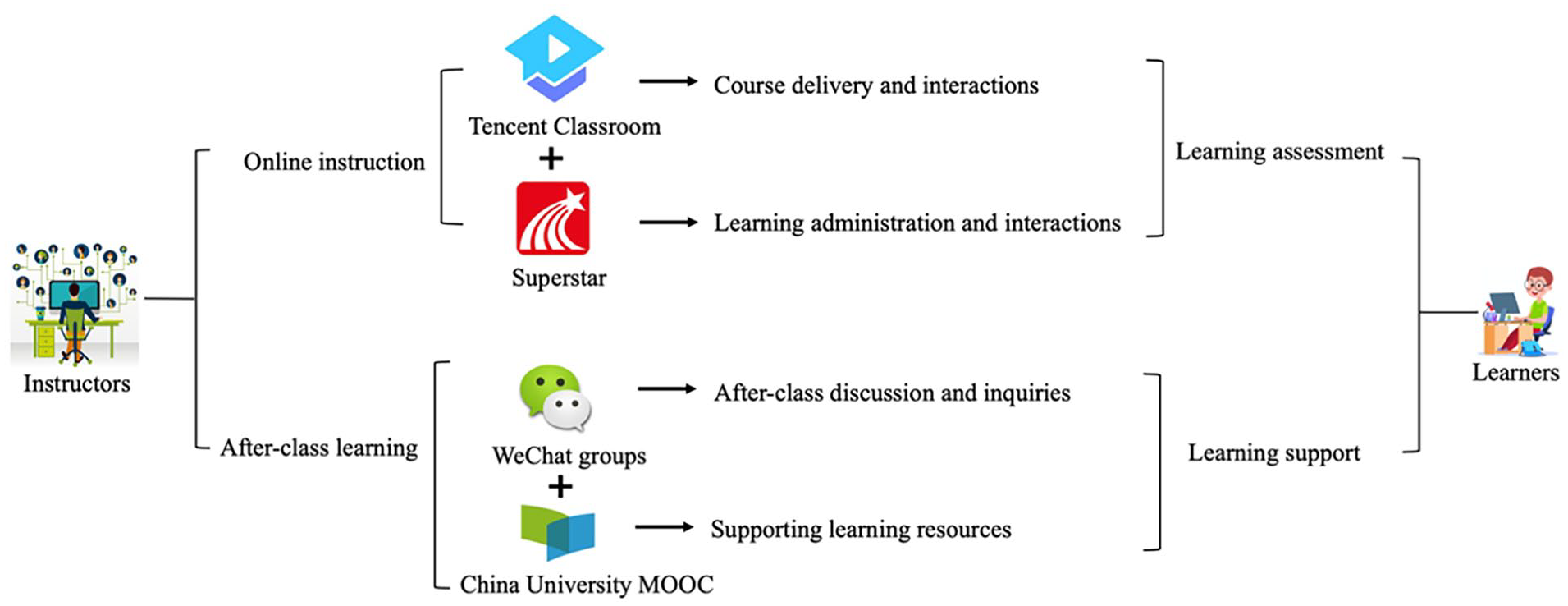
The online education platform used in this study.
Instrument
Prior studies using the TAM model were extensively reviewed to develop the instrument for this research. A survey questionnaire containing 26 items was developed through adapting items of constructs from previously validated instruments (Abdullah et al., 2016; Calisir et al., 2014; Davis, 1989; Lee et al., 2009; Liu et al., 2010, Ros et al., 2015; Teo & Noyes, 2011; Venkatesh & Bala, 2008). The adapted items were carefully modified to suit the context of this study. Seven variables were included in the instrument: Online Course Design (items 1–4), Perceived System Quality (items 5–8), Perceived Enjoyment (items 9–11), Perceived Ease of Use (items 12–15), Perceived Usefulness (items 16–19), Perceived Interaction (items 20–23), and Perceived Intention to Use (item 24–26). A -point Likert-type scale ranging from (1) “strongly disagree” to (5) strongly agree was used to measure the variables. Th instrument was developed in English first and then was translated into Chinese by an experienced EFL teacher who was part of the research team. To ensure the clarity and readability of the questions, a pilot test with 20 students was conducted and several items were refined before formally provided to the subjects. These 20 respondents were also invited for face validity to establish the validity of the questionnaire. Details of the questionnaire items and the references for each construct are listed in Appendix.
Subjects and Data Collection
The University that designed and adopted the Online Education Platform introduced above was selected as the research site for this study. In total, 297 students enrolled in an elective course provided by a School of the University were randomly selected as subjects. The questionnaire was delivered through WeChat groups to the students when they had learnt with the Platform for 2 months. Only students who had enrolled the course and been confirmed by the teacher could join the groups and complete the questionnaire. The survey was available for 1 week. The students could take it at any time but only once. A total of 276 students completed the questionnaire and all of the responses were valid (a valid response rate of 92.9%). The gender split was 68 male and 208 female students. Their average age was 20. Among the respondents, 197 students had online learning experience prior to the study but all of them used the Platform in this study for the first time. All the respondents participated in the study voluntarily and ethical approval was obtained prior to the study.
Data Analysis
To verify the model, a two-step procedure developed by Anderson and Gerbing (1988) was followed. First, the reliability and validity of the model was measured and then hypotheses were tested. The analyses were based on SPSS 22.0 and SmartPLS 3.
Results
Measurement Model: Analysis of Reliability, Validity, and Model Fit
The descriptive statistics for each of the construct in the proposed model are listed in Table 1. The means of all constructs scored above 3.00, with Online Course Design scoring the highest. As indicated by the results, respondents expressed generally positive perceptions of online learning with the Platform. Particularly, they were most satisfied with the course contents designed for teaching and learning with the Platform even though Perceived Usefulness scored lower compared with other constructs.
Descriptive Statistics.

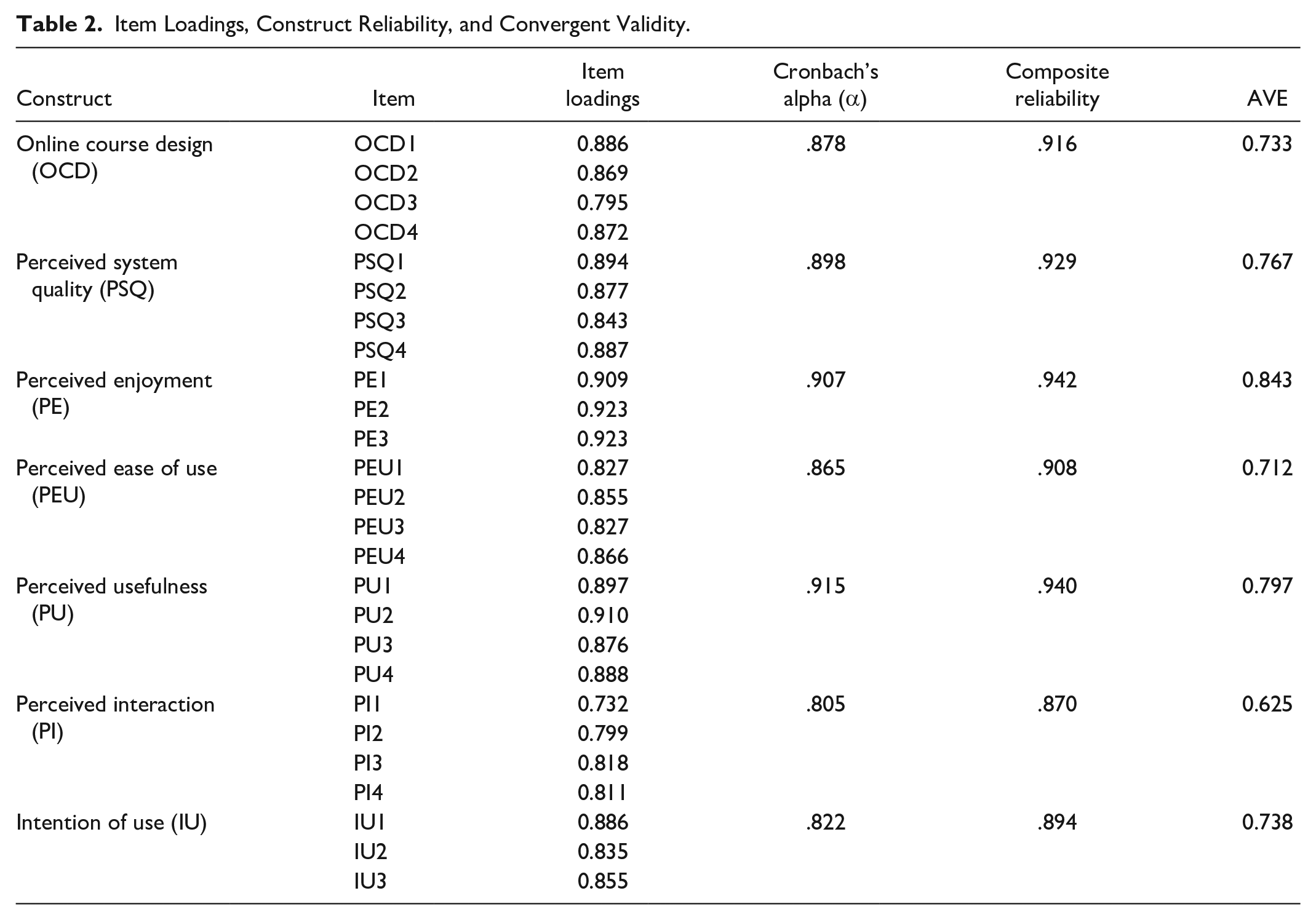
To examine the construct reliability, we used the Cronbach’s alpha measurement of inner consistency with .7 threshold, above which reliability is considered acceptable (Nunnally, 1978). The values were calculated with SmartPLS 3. Table 1 shows the value of Cronbach’s alpha and all constructs generated satisfactory values for composite reliability (values vary from .79 to .90). Meanwhile, all the constructs exceeded .7 in terms of Cronbach’s alpha. To assess the validity, both convergent validity and discriminant validity were tested. As shown in Table 2, the average variance extracted (AVE) value of each construct is greater than 0.5, which means all the construct items correspond to one and the same underlying construct. Thus, the condition of convergent validity is fulfilled (Fornell & Larcker, 1981). For the examination of discriminant validity, the Fornell and Larcker (1981) test was conducted. As presented in Table 3, all constructs satisfactorily passed the test as the square root of AVE values is greater than the off-diagonal values. To give perfectly reliable detects for discriminant validity issues, we also used Heterotrait-Monotrait Ratio (HTMT) to test the discriminant validity (see Table 4). The value of HTMT ratio is below 0.90 between two constructs (except for IU-PU relationship), hence, the discriminant validity is confirmed in this study.
Item Loadings, Construct Reliability, and Convergent Validity.
Discriminant Validity of the Constructs.

Note. PSQ = perceived system quality; OCD = online course design; PE = perceived enjoyment; PEU = perceived ease of use; PI = perceived interaction; PU = perceived usefulness; IU = intention to use.
Heterotrait-Monotrait Ratio (HTMT) Test for Discriminant Validity.
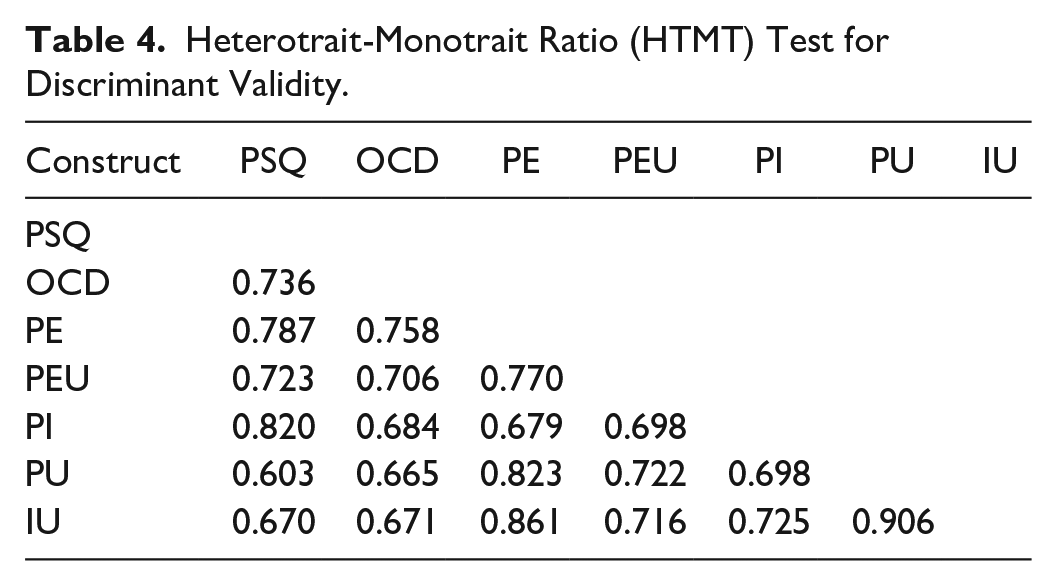
Table 5 further represents the results of model fit. We confirm that the data fit the model well, as the SRMR is lower than 0.08 (Hu & Bentler, 1999).
Model Fit.

Hypothesis Testing and Analysis
We further evaluated the structural model before testing the hypotheses. The structural model was assessed by analyzing the R square (R2) and Stone-Geisser Q2. As shown in Table 6, the structural model explains 68.6% of the variance of IU, 58.4% of PEU, 44.4% of PI, and 60.6% of PU. According to Henseler et al. (2015), Q2 values > 0 suggests that the model has predictive relevance, and this was obtained by using the blindfolding procedure in SmartPLS 3. The Q2 measures predictive relevance by analyzing each construct predictive relevance through the omission of selected inner model interactions and then calculates changes in the criteria estimates (Hair et al., 2013). The blindfolding results showed that IU (Q2 = 0.494), PEU (Q2 = 0.407), PI (Q2 = 0.260), PU (Q2 = 0.475) had acceptable predictive relevance. The effect size (f2) for each path model was calculated. The f2 analyses of model quality have shown satisfactory results.
Structural Model.

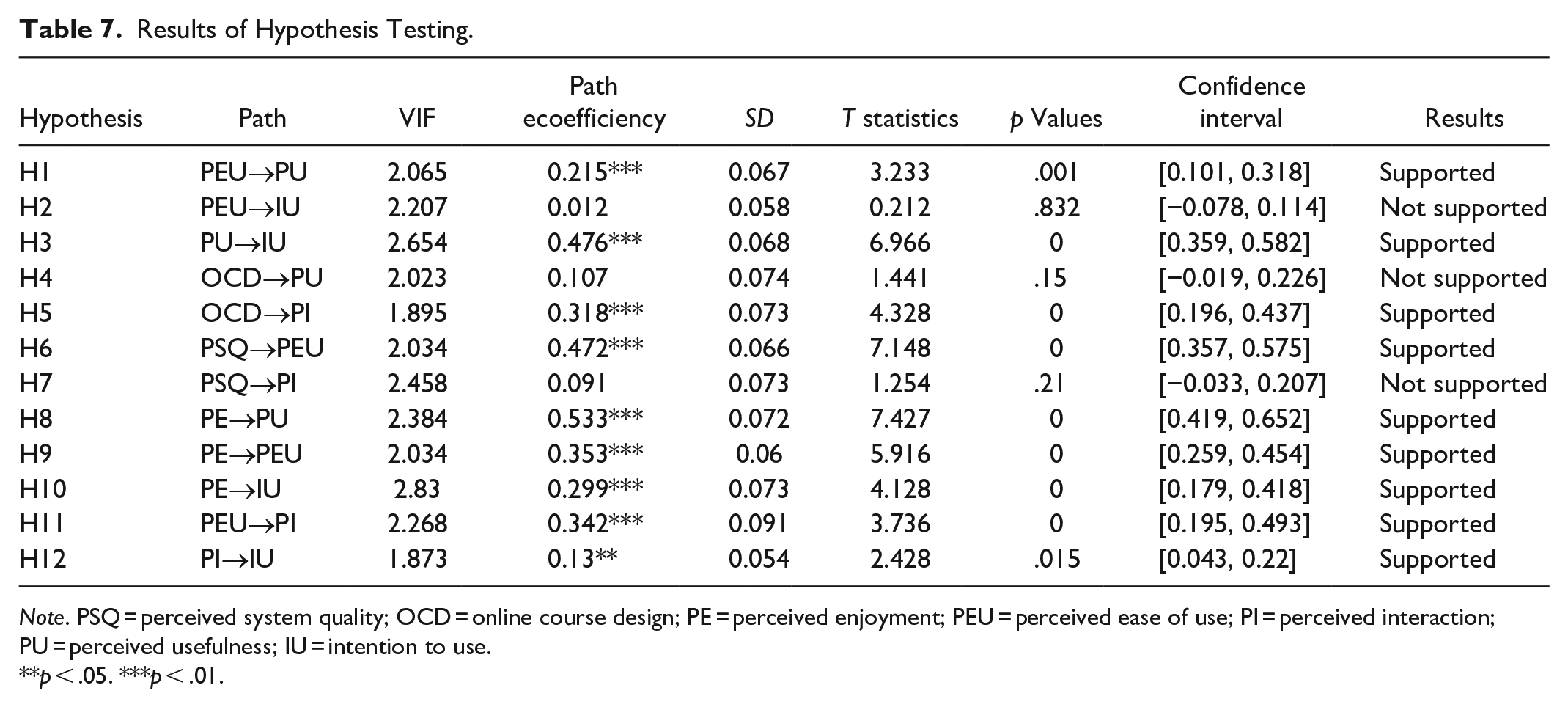
To eliminate the threaten of multi-collinearity, we also calculated the values of variance inflation factors (VIF). Relevant results are displayed in Table 7. Given the highest values of VIF is below 3, multi-collinearity can be avoided in our study. Hypotheses testing was performed through a bootstrapping process, with a resample amount of 5,000, and using a 95% bias-corrected confidence interval (CI).
Results of Hypothesis Testing.
Note. PSQ = perceived system quality; OCD = online course design; PE = perceived enjoyment; PEU = perceived ease of use; PI = perceived interaction; PU = perceived usefulness; IU = intention to use.
p < .05. ***p < .01.
The results of hypothesis testing are also listed in Table 7 and resulting path coefficients between the constructs are illustrated in Figure 4. As indicated by the results, of the 12 proposes hypotheses, 9 were confirmed by the statistics. It is shown that perceived ease of use had a direct effect on perceived usefulness (β = .215; p < .01) and perceived interaction (β = .342; p < .01). Thus,

Testing the hypotheses of the structural model.
Data show that online course design positively affected perceived interaction (β = .318; p < .01) but had no significant effect on perceived usefulness (β = .107; p > .1). Therefore,
It also can be seen from the results that perceived system quality positively affected perceived ease of use (β = .472; p < .01). Thus,
Results indicate that perceived enjoyment had a positive direct effect on perceived usefulness (β = .533; p < .01), perceived ease of use (β = .353; p < .001), and intention to use (β = 0.299; p < .01). Thus,
Moreover, it is shown by the data that perceived usefulness had positive influence on intention to use (β = .476; p < .01). Hence,
Discussion
The results of the current study imply a few relationships that determine learners’ intention to use an Online Education Platform. First, two hypotheses related to the original TAM were supported. Specifically, perceived ease of use positively impacts perceived usefulness and perceived usefulness significantly affect users’ intention to use the Platform. These findings align with the previous studies (Chang et al., 2012; Nagy, 2018; Song et al., 2017), indicating that when learners find the Platform is easy to use, they feel it is more useful. At the same time, when learners believe the usage of the Platform is conducive to their learning, they are more willing to use it in practice. However, no direct relationship between perceived ease of use and intention to use was identified in our study. This finding corresponds to the existing studies (Lee et al., 2005; Park, 2009; Saade et al., 2007), which suggests that perceived ease of use does not significantly influence users’ attitudes toward technology use. Based on the data collected on the respondents’ background information, 71.3% of the students (197 out of 276) had certain types of online learning experience prior to the study. This may explain that for most learners, no challenge was involved in operating the Platform and ease in the operation of an online learning platform could not directly drive them to use it. By contrast, what the students focused on was whether the use of the Platform could improve their learning performance and increase their learning efficiency and outputs.
Online course design was identified to be a major predictor of perceived interaction in this study. This echoes the literature (Liu et al., 2010), suggesting that when interactive components are added into the online course design such as message board and discussion room, learners will be able to apply these communication channels to engage in an interaction learning environment and thus their perceived interaction with peers will be enhanced. However, online course design did not significantly affect perceived usefulness in this study. This means that although learners were satisfied with the course contents designed for online learning that were not too hard and could meet their needs, they were still suspicious of the usefulness of the Platform for their learning.
The results of this study supported the extant literature (Calisir et al., 2014; Ros et al., 2015; Yang et al., 2017) by identifying a positive relationship between perceived system quality and perceived ease of use. The findings indicate that the user-interface design and functionality of the Platform, as well as its reliability and stability in terms of operation significantly impact how easy it will be used by learners. However, these characteristics of the Platform did not directly affect students’ interaction with others using the Platform as no significant relationship was identified between perceived system quality and perceived interaction. As indicated in the literature (Yeou, 2016), the impacts of system quality may be important during the initial application of a learning system but diminish over time, particularly as users are becoming used to deploying it.
Consistent with the previous studies (Abdullah et al., 2016; Chang et al., 2017; Teo & Noyes, 2011), results of this study proved that perceived enjoyment was an important determinant of both perceived ease of use and perceived usefulness. Besides, it is shown in this study that perceived enjoyment had a direct effect on intention to use, which supports the existing studies (Cheng, 2012; Esteban-Millat et al., 2018; Padilla-Meléndez et al., 2013). These findings suggest that when students find their experience of learning with a new platform enjoyable, they will have positive perceptions about the ease of the use and usefulness of the platform. Meanwhile, they are more likely to develop positive attitudes toward the application of the platform and will show strong intention to use it. Thus, learners’ intrinsic motivation should be taken into consideration for the adoption of a new learning system (Esteban-Millat et al., 2018).
Also, in line with the findings by other researchers (Liu et al., 2010; Ros et al., 2015), this study identified a positive relationship between perceived ease of use and perceived interaction, and found that perceived interaction significantly impacted learners’ intention to use the Platform. This indicates that ease for the operation of an education platform facilitates the interaction among learners using it. The more opportunities are given to learners for interaction such as discussion and sharing information, the stronger intention they develop to learn with the platform.
Implications
Several implications can be drawn from the results of this study. To begin with, teachers should focus on their course design when teaching with an online education platform. Course quality may affect the continuance intention of students toward ongoing participation in online learning (Salloum et al., 2019). Thus, course information should be clear, comprehensible, and relevant. For example, teachers should provide course outlines that include objectives, course materials, and time schedules. Moreover, rich multi-media contents could be included and various online activities, such as discussion, could be designed in order to promote interactions with students (Yang et al., 2017). However, to increase the overall acceptance of an online education platform by students, the platform should be developed to target changes in perceived usefulness. Specifically, teachers should demonstrate how the platform would benefit the learners and facilitate the course learning (Yeou, 2016).
Moreover, the platform should be designed and developed to facilitate the perceived ease of use of learners, not only in terms of user-interface and functionalities but also concerning the reliability and stability in operation. Thus, education platform designers should consider how to make the operation of their platforms more stable while developing more practical functionalities, in order to ensure a satisfactory service for users (Koranteng et al., 2020).
Furthermore, teachers could pay more attention to their curriculum in ways that promote enjoyment for students. Specifically, teachers should endeavor to engage students in more activities online for the pleasure that these activities provide for learners and focus more on the interaction with learners through the education platform used (Esteban-Millat et al., 2018). In other words, an enjoyable online learning environment should be created for learners, in which interactions could be promoted. To sum up, the success of the adoption of an online education platform should take three dimensions into account, including the course contents, the system used, and the learners (Persico et al., 2014).
Theoretically, this study proposes a comprehensive model that integrates external variables to the original TAM and uses an extra Perceived Variable to investigate students’ use of an online learning platform. The empirical findings contribute to the extant literature by identifying perceived enjoyment and perceived interaction as critical factors influencing users’ continuous learning intention in the context of online learning. These findings could help cover the shortage of the original TAM model that it failed to account for users’ intrinsic motivation.
Conclusion and Future Directions
This study examined factors that affected learners’ intention to use an online education platform at a university in China. Nine of the twelve hypotheses proposed in this study were supported and a significant relationship was identified between the following variables:
Perceived Usefulness and Intention to Use
Perceived Ease of Use and Perceived Usefulness
Online Course Design and Perceived Interaction
Perceived System Quality and Perceived Ease of Use
Perceived Enjoyment and Perceived Usefulness
Perceived Enjoyment and Perceived Ease of Use
Perceived Enjoyment and Intention to Use
Perceived Ease of Use and Perceived Interaction
Perceived Interaction and Intention to Use
Inconsistent with the existing literature, this study found no significant relationship between the following constructs:
Perceived Ease of Use and Intention to Use
Online Course Design and Perceived Usefulness
Perceived System Quality and Perceived Interaction
However, this study is not without limitations. First, this study only examined the impacts of three external variables on learners’ intention to apply an online education platform. There might be more variables that affect their acceptance of the platform. Thus, future research could investigate the relationship between other variables and learners’ technology acceptance, particularly when a new learning system is used for the first time. Second, this study was conducted when the Platform had been adopted for 2 months. Students’ perceptions about ease of use and usefulness of a technology may change over time as their using experience increases (Abdullah et al., 2016). Hence, longitudinal research could be conducted to examine the results of this study, allowing for the changes in learners’ perceptions and behaviors over a period of time.
Footnotes
Appendix
Measurement Items Used in This Study

| Questions related to online course design | References | |
|---|---|---|
| 1 | The course content is interesting. | Lee et al. (2009) and Liu et al. (2010) |
| 2 | The course content meets my needs. | |
| 3 | The level of difficulty of the course content is appropriate. | |
| 4 | In general, I am satisfied with the course content and quality. | |
| Questions related to perceived system quality | ||
| 5 | The user-interface design of this Platform makes it easy to use. | Liu et al. (2010) and Calisir et al. (2014) |
| 6 | The functionality of the Platform meets my needs. | |
| 7 | The operation of the Platform is stable and reliable. | |
| 8 | In general, I am satisfied with the overall design of the Platform. | |
| Questions related to perceived enjoyment | ||
| 9 | I find learning is more interesting with this Platform. | Abdullah et al. (2016) and Teo and Noyes (2011) |
| 10 | The actual process of using the Platform is pleasant. | |
| 11 | I like learning with this Platform. | |
| Questions related to perceived ease of use | ||
| 12 | Learning with this Platform would be easy for me. | Davis (1989) |
| 13 | I find it easy to get the Platform to do what I want it to do. | |
| 14 | My interaction with the Platform is clear and understandable. | |
| 15 | In general, I feel it is easy for me use this Platform. | |
| Questions related to perceived usefulness | ||
| 16 | Using this Platform would improve my learning performance. | Davis (1989) |
| 17 | Using this Platform would enhance my effectiveness in learning. | |
| 18 | Using this Platform would increase my productivity in learning. | |
| 19 | I find this Platform useful in my learning. | |
| Questions related to perceived interaction | ||
| 20 | I discuss topics and answer questions raised by the teacher with others on the discussion board. | Liu et al. (2010) and Ros et al. (2015) |
| 21 | I engage in simultaneously learning interaction with others via this Platform. | |
| 22 | Using the Platform enables me to share information related to the learning of the course with others. | |
| 23 | In general, I think this Platform provides good opportunities for interaction with other users. | |
| Questions related to perceived intention to use | ||
| 24 | I would like to use this Platform for the learning of other courses in the future. | Lee et al. (2009) and Venkatesh and Bala (2008) |
| 25 | I will recommend others to use this Platform. | |
| 26 | I prefer learning with this Platform to traditional learning. | |
Declaration of Conflicting Interests
The author(s) declared no potential conflicts of interest with respect to the research, authorship, and/or publication of this article.
Funding
The author(s) disclosed receipt of the following financial support for the research, authorship, and/or publication of this article: This study was supported by New Century Teaching Reform Project of Heilongjiang Province, China: “A Study on Cultivation of Innovative Accounting Talents from an International Perspective” (Project ID: SJGY20190334).
Ethical Approval
This study complies with ethical standards.
