




Abstract
Digital education has been growing worldwide in recent years. However, derived from the intensive use of hybrid and distance modalities during the pandemic and to capitalize on what has been learned, several questions arose: What should the digital education strategy in higher education institutions be? How can digital education enrich the teaching-learning process throughout the student’s journey? Derived from these questions, the need arises to understand the attributes of the hybrid and distance modalities that are more important for the students attending to two main differentiators: career or School and employment status. A survey instrument was adapted and applied to students from 26 Campuses of a Higher Education Institution, Tecnologico de Monterrey. Students were asked about their perception of 24 aspects of digital learning. In addition, they were asked to select which ones they considered most important and which ones they considered less important. A total of 2933 surveys were collected in 3 weeks. Analyses of correlation and descriptive statistics were applied to the learners’ tendencies. The results show that personalized learning is one of the most critical dimensions for students of the new generations.
Keywords
Introduction
In March 2020, education systems faced drastic challenges after the COVID-19 outbreak started in Wuhan, China (d’Orville, 2020). One of these consisted of adopting digital education environments to attend and give continuity to students who, at the time, saw their higher education classes truncated (Chatziralli et al., 2021). Studies demonstrated that students improved or maintained performance during remote learning during the pandemic’s lockdown (Iglesias-Pradas et al., 2021; Rincon-Flores and Santos-Guevara, 2021; Said and Refaat, 2021). Nonetheless, opinions differed depending on the field or study area. For example, a study comparing the acceptance of digital classes versus traditional face-to-face learning during the COVID pandemic indicated that 64.4% of medical students believed they learned more in face-to-face courses, 42.6% found difficult clarifying doubts through digital means, and 40% found difficulty understanding digital reading material (Kumari et al., 2021).
In 2021, more Universities re-open their classrooms to their students starting what it has been called a new normality (Tesar, 2020). In the new normality, digital education has received more attention than in previous years (Bozkurt and Sharma, 2020; Hew et al., 2020; Rapanta et al., 2021; Xie et al., 2020). Before pandemics, online education used to attract mostly older students with full-time jobs (Hamann et al., 2021). However, today many students are including both online and in-person courses in their schedules, blurring the lines between the two categories (Hamann et al., 2021). In this regard, better support, emphasis on competencies, innovation, and interactive content inclusion have been suggested to increase the learning value of digital education environments (Sitar-Taut and Mican, 2021). Given the noticeable rise in the popularity of digital education, it is therefore significant to investigate the characteristics of digital education modalities and their effects on students’ experiences.
Theoretical framework and literature review
Digital education began with the development of information and communication technologies. There must still be a consensus on its specific date and place of appearance. However, it is considered that its bases are found when the sending of printed texts by correspondence began at the end of the 20th century and the beginning of the 21st century; subsequently, the means that facilitated this work were incorporated (García Aretio, 2012). The growth of digital education has been attributed by (Wavle and Ozogul, 2019) to two factors: it helps some at-risk populations complete degrees, and digital natives prefer virtual learning environments. However, come works has found that at-risk students with limited financial capacity may struggle in online learning environments due to a lack of necessary gadgets and internet connectivity (Alibudbud, 2021). Furthermore, the broad generalization that today’s students are digital natives should discuss the extent to which this is true for students of all ages, backgrounds, and levels of academic preparation (Smith et al., 2020).
In fact, there are some divergencies regarding the digital education definition. For example, digital education may refer to any teaching-learning interaction done remotely or to the use of cutting-edge technological tools to facilitate student learning (McLaughlin, 2018; Tripathi, 2020). The present article will adopt the last concept to refer to digital education. In this way, digital education is deployed at different times in the student’s life. In the context of traditional on-campus courses, students are provided with state-of-the-art technological tools that serve to enhance and streamline their learning experience. These tools are designed to facilitate a more efficient and effective approach to the acquisition of knowledge and skills and are an integral component of modern educational practice.
According to the Modes of Learning Spectrum (MLS) from the Canadian Digital Learning Research Association (2021), digital education can be categorized into different modalities. On one hand, distance learning is defined as all learning that takes place at a distance. Online learning (where the learning experience is delivered via the Internet either synchronously or asynchronously), whether emergency or intentional, is its predominant mode, but also includes offline distance learning. On the other hand, in-person learning refers to attending classes physically in a classroom with an instructor and peers, where the technology may be used to support learning, requiring the use of digital resources or computational systems for coursework. Hybrid learning (blended learning) is a learning experience that combines both online and in-person instruction. This last term is an umbrella term that captures other types of learning (i.e., flipped).
As higher education is undergoing significant changes due to climate-change-related adverse effects, an every time more diverse student body, emerging pedagogies, and advancements in technology, Higher Education Institutions (HEIs) are facing greater responsibility for ensuring quality in their digital educational offer (Haleem et al., 2022; Hamann et al., 2021). Analyzing the positions of different groups on quality issues can enhance understanding and strengthen conclusions in matters of quality assurance.
In this regard, (Okogbaa, 2016) mentions the framework provided by (Harvey and Green, 1993), about the perceptions of quality in tertiary education by different stakeholders and summarizes the thoughts about this concept into five: efficiency, high standards, excellence, value for money, fitness for purpose and/or customer focused. The author highlights that collecting feedback from students has become a central element in quality assurance and enhancement processes in tertiary institutions, recognizing students as principal stakeholders and making them accountable for their own learning. This can be seen as a transformative process, where the learner gains more value and where both the student’s identity and the education system must change (Okogbaa, 2016). Thus, understanding the opinions of learners about the digital education that was offered during the COVID-19 pandemic can support the implementation of transformative changes in the HE of the new normality.
Student satisfaction is a familiar indicator of quality in HE (Okogbaa, 2016). According to (Martin and Bolliger, 2023), the interaction between learners and course content significantly impacts students’ satisfaction with online courses. Online learners may become disengaged if they cannot easily navigate the course. Online instructors must provide clear instructions on beginning and accessing course materials. Design online courses with HE learners in mind must also consider their prior knowledge, time constraints, and desired competencies (Martin and Bolliger, 2023).
The literature focus on the features that digital education should possess to allow successful and satisfying designs. For example, (Salas-Pilco et al., 2022) mentions that to ensure engagement among students, digital education should focus on five specific characteristics across behavioral, cognitive, and affective dimensions. These characteristics include transforming higher education, providing sufficient professional training, improving Internet connectivity, ensuring quality online learning in higher education, and providing emotional support. These findings are valuable for teachers, educational authorities, and policy makers of Latin America, as they can use them to make informed decisions and employ effective strategies to support online learning in higher education institutions.
According to a report by (Rivera-Vargas et al., 2021), the Open University of Catalonia has a digital educational model that is based on four key elements. These include promoting a collaborative relationship between students and teachers, encouraging student autonomy and self-regulation, providing human support for students (pedagogical and subject matter support on a course-by-course basis, institutional support throughout the students’ enrolment, and technical support and accompaniment), and utilizing digital technologies for resources and content. Furthermore, the university emphasizes evaluative flexibility and creates a learning environment that encourages interaction and cooperation between students and the institution. The overall focus is on enabling students to be active participants in their learning processes (Rivera-Vargas et al., 2021).
It is also essential for universities to prioritize investing in the professional development of their faculty, whether they involve online technologies (Khtere and Yousef, 2021). An examination of the standards used to measure the quality of online instructors reveals that there is a discrepancy between the expectations for creating, developing, and implementing online courses, which are not typically required for in-person courses (Khtere and Yousef, 2021). According to (Leary et al., 2020), there is a need for research into professional development programs and instructors in online learning. They suggest that there is a lack of consistency in design and delivery, and recommend future research to guide programs, instructors, and institutions towards greater satisfaction and success for online students. They emphasize the importance of considering participants, the type of development, and tailoring the program to meet individual needs. At the institutional level, attention should be paid to a broad range of aspects, including student outcomes, financial needs, and institutional support, in order to create sustainable professional development (Leary et al., 2020). The existing literature contains several studies on measuring the quality of teaching and learning courses by adopting some standards of course design, curriculum, and assessment tools. These are focus on aspects such as high-quality mentoring activity online, intuitive feedback, contextualization, incremental innovation, practical outcomes, new learning needs, and effective teaching, facilitation, and support (Khtere and Yousef, 2021).
The COVID-19 pandemic forced many tertiary institutions to shift from in-person to online lectures, causing different impacts on students’ satisfaction with online learning (Fiorini et al., 2022). A study from Fiorini et al. (2022) focused on adult part-time students and found that satisfaction levels were generally high, despite challenges like technology issues and lack of interaction. Students expressed a desire for online lectures to continue even after in-person classes resumed. Fiorini et al. (2022) recommended that academic programs adopt a blended approach and provide more support for attending lectures from home.
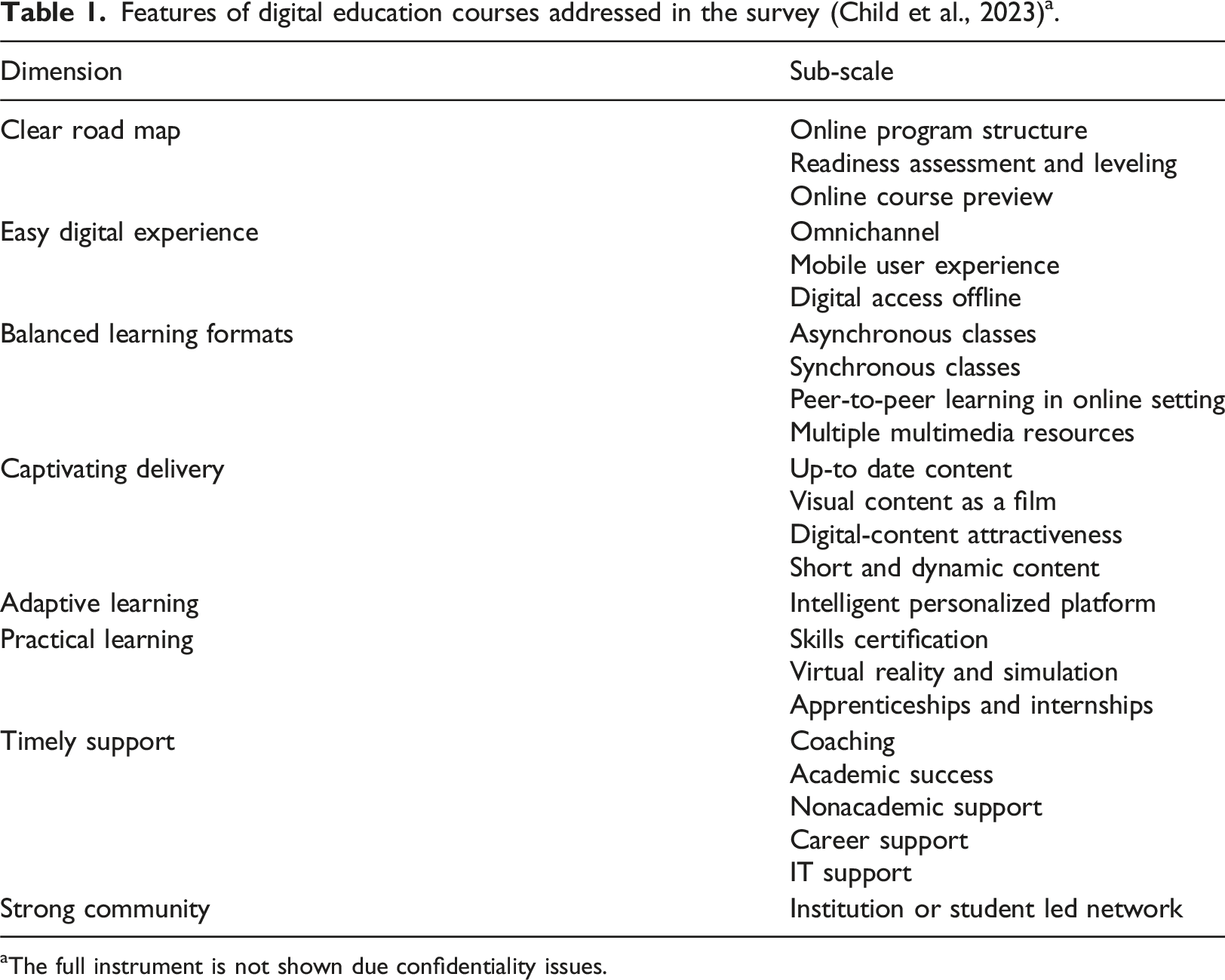
In (Child et al., 2023), there is a list of 24 features of online higher education, grouped in 8 dimensions, that has been studied in more than 17 countries worldwide. According to them, a university’s online program can be successfully developed by identifying what students like about all the programs offered. In their study, they found that timely content, course structure, and faculty relevance are very important for students in every country. Expensive features like VR and simulations are not highly valued by most students. Student age and program type do not significantly influence the perception of online learning experiences’ quality. The consistency of perceptions across groups within each geography can guide institutions as they develop learning experiences (Child et al., 2023). For Mexico, the two most important features were up-to-date content and skills certification while the least important were peer-to-peer learning and institution-led or student-led networking. The features in Child et al. (2023) give an overview of e-learning without requiring much prior knowledge of e-learning system effectiveness measures.
There is not much information in literature regarding the opinion of students who work, regarding the educational offer of HEIs (Fiorini et al., 2022). In this work, we analyze the importance of 24 features of higher education, as perceived in a private HEI in Mexico, considering the constructs of the Child et al. (2023) work. We analyzed the opinions of learners regarding their experience in remote learning during the lockdown due to COVID-19. Because of the high demand for online courses after the return to normality, this study’s objective is to know students’ opinions regarding various aspects of digital learning to the enrichment of the teaching-learning process. This manuscript addresses the need to understand the key factors contributing to the success of digital learning modalities, particularly concerning students’ school and employment status. The research question that we are intending to answer is: what are the attributes of digital learning that are offered by Tecnologico de Monterrey according to students from different schools and with different employment status, and which are the most important to them?
Methodology
Sample
An electronic survey was sent to all 46,852 HE students from the different Schools (Architecture, Art, and Design, Social Sciences and Government, Humanities and Education, Engineering and Science, Medicine and Health Sciences and Business) of Tecnologico de Monterrey, considering 26 Campuses nationwide.
Instrument
Features of digital education courses addressed in the survey (Child et al., 2023) a .
aThe full instrument is not shown due confidentiality issues.
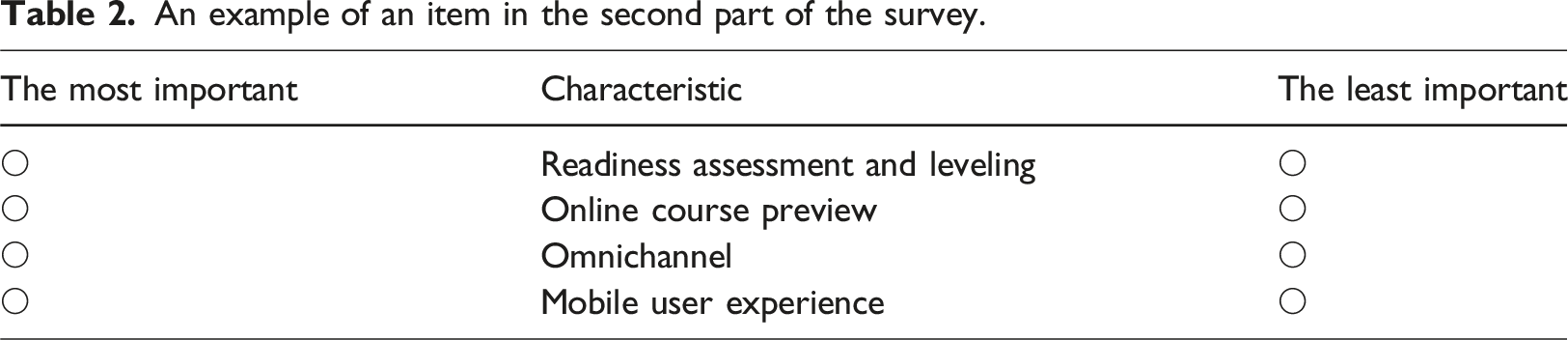
An example of an item in the second part of the survey.
Procedure
The invitation to participate was made via email, and each student received a personal link redirecting to the Qualtrics platform. The survey was active for 3 weeks to be answered once. The survey was designed so the answers could be collected in an anonymous way. The procedure was conducted by the Director of Digital Education from the Vice Rectory for Academic Affairs and Educational Innovation of Tecnologico de Monterrey, according to all institutional requirements.
Data analysis
For the first step of the survey, descriptive statistics were shown as mean and standard error of the collected data, ordered by School and by employment status. Cronbach’s alpha was calculated for instrument consistency. As the sample was big and with normal distribution, one-way ANOVA was used to compare among groups (Schools and employment status) (Norman, 2010). The null hypothesis was that all groups have the same perception of the digital education offer of Tecnologico de Monterrey. Post-hoc analysis was done using the Tukey test.
To analyze the second part of the survey, we employed the Heo et al. (2022) approach. Briefly, the occurrences of the most important and the least important selections for each attribute were tabulated into Most and Least frequencies from each set. In the 18 choice sets, each attribute can be selected either as Most item three times or as Least item three times. The Most/Least (ML) score is regarded as the total least score subtracted from its total most score, ranging from +3 to −3. The next estimated value is the Average ML (AML) score calculated by dividing the total ML scores by the number of respondents and the frequency of replication. The rankings of attributes are generated according to the ML and AML scores in the tables. The formula of AML is as follows:


Where a is the frequency of replication of each attribute (3) and n is the number of total respondents.
To notify choice probability of each attribute, the ratio scores of attributes for relative importance can be calculated by setting the most important attribute among listed attributes as the benchmark of 100%. To avoid dividing by zero, 0.5 is added to the least score, and the value of relative importance interprets the percentage that an attribute is likely chosen as the most important. The formula for relative importance is shown below.
The RI for all attributes is scaled by a factor such that the most important attribute with the highest RI becomes 100 (Cohen, 2009). All attributes can then be compared to each other by their relative RI. The calculated RI for the 24 features, were pooled for the 8 dimensions, ordered, and shown in a bar graph. All calculations were done in Excel® and all statistical analysis were performed using Minitab®.
Results
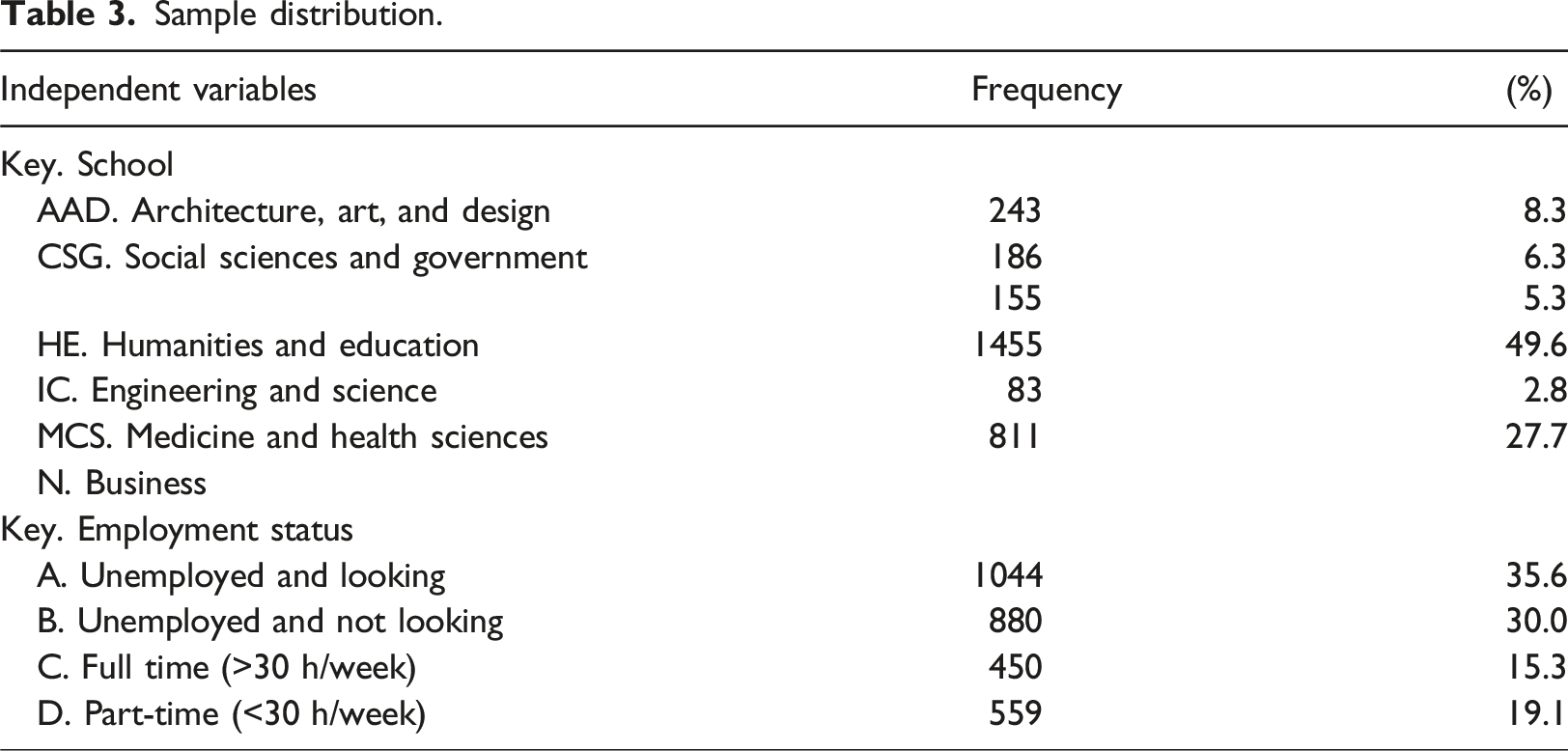
Sample distribution.
Regarding the instrument’s reliability, the calculated Cronbach’s alpha was 0.927, implying that the instrument is reliable and replicable. The overall result of the responses perception regarding the digital education offer of Tecnologico de Monterrey is shown in Figure 1. Perceptions of Tecnologico de Monterrey students about the digital education offer during COIVD-19. Students were asked to answer the next question: Does your educational program offer you the following feature? Students answer in a scale from 1 to 5. The figure shows the average per feature. The line segments at the end of the bars indicates the standard error. The dotted line is the average of all the features (Average = 4.2).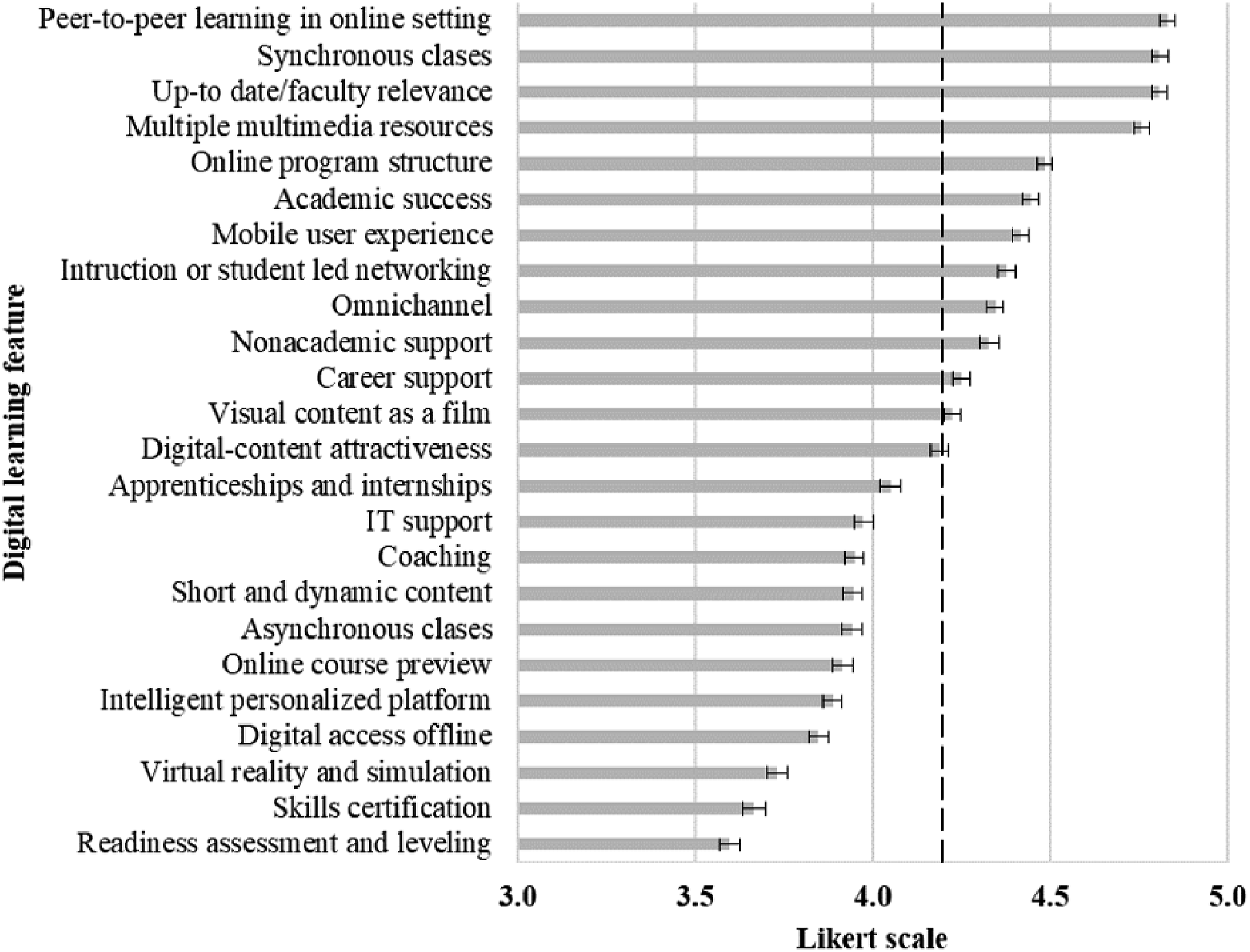
The overall Likert scale average of all respondents was 4.2 on the scale. As can be seen, students perceive that the university offers them a digital education in which they can have peer-to-peer learning, synchronous classes, and up-to-date content. However, the characteristics that are least observed are those of virtual reality and simulation, certificate of skills, and readiness assessment and leveling. This information is valuable on a large scale to improve the general digital educational offer at the institution, or at least the perception of the students regarding this.
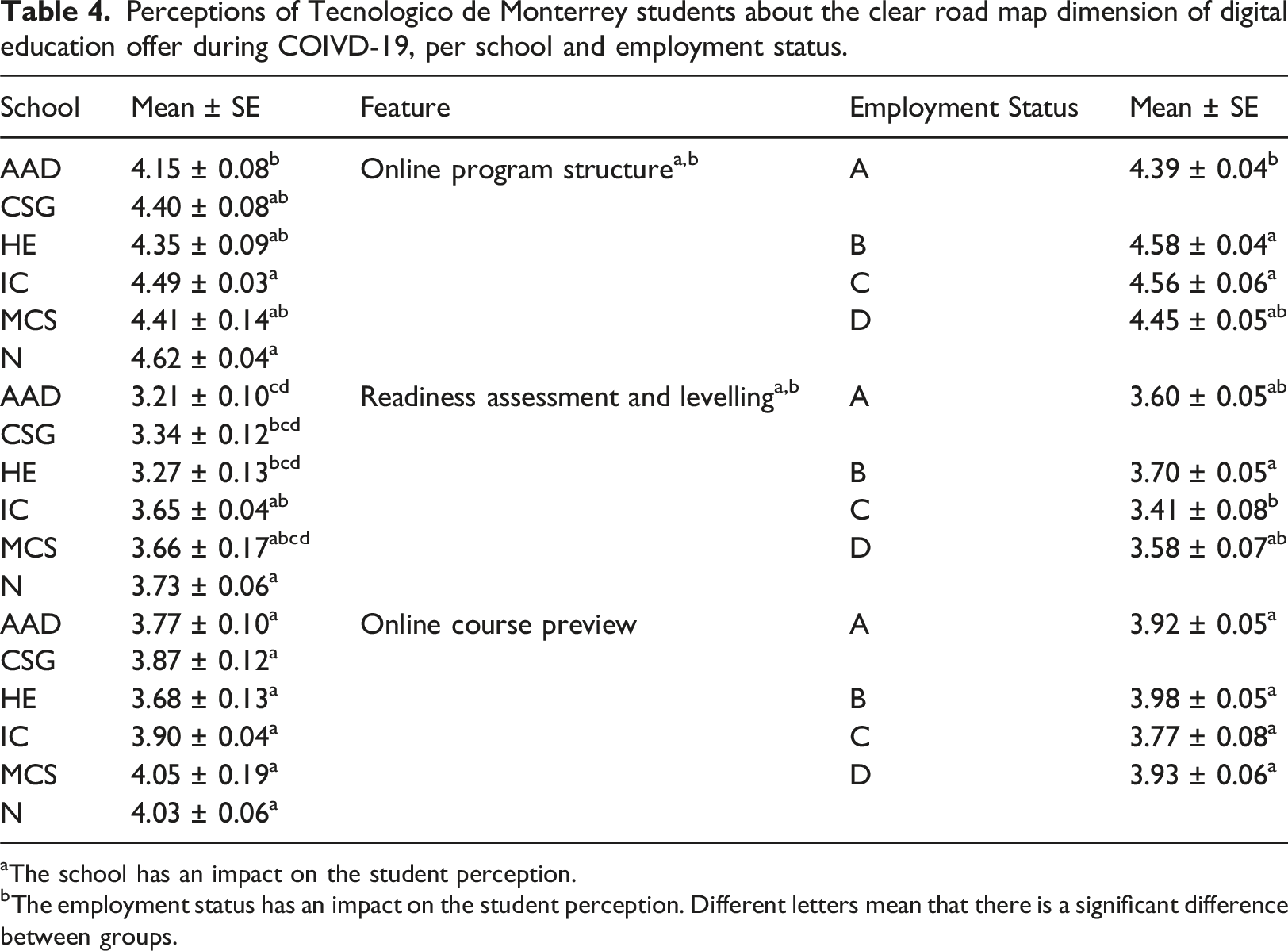
Perceptions of Tecnologico de Monterrey students about the clear road map dimension of digital education offer during COIVD-19, per school and employment status.
aThe school has an impact on the student perception.
bThe employment status has an impact on the student perception. Different letters mean that there is a significant difference between groups.
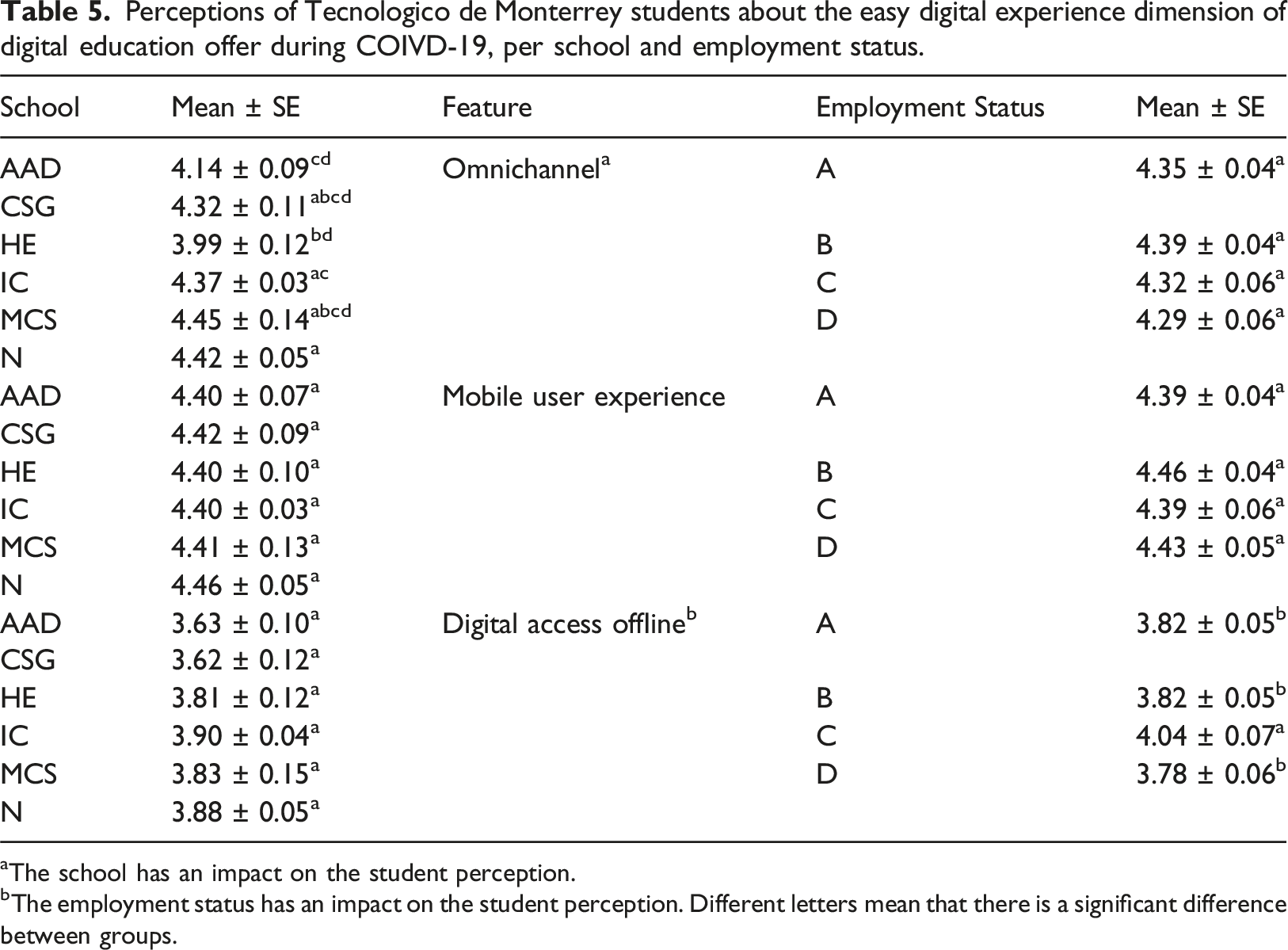
Perceptions of Tecnologico de Monterrey students about the easy digital experience dimension of digital education offer during COIVD-19, per school and employment status.
aThe school has an impact on the student perception.
bThe employment status has an impact on the student perception. Different letters mean that there is a significant difference between groups.
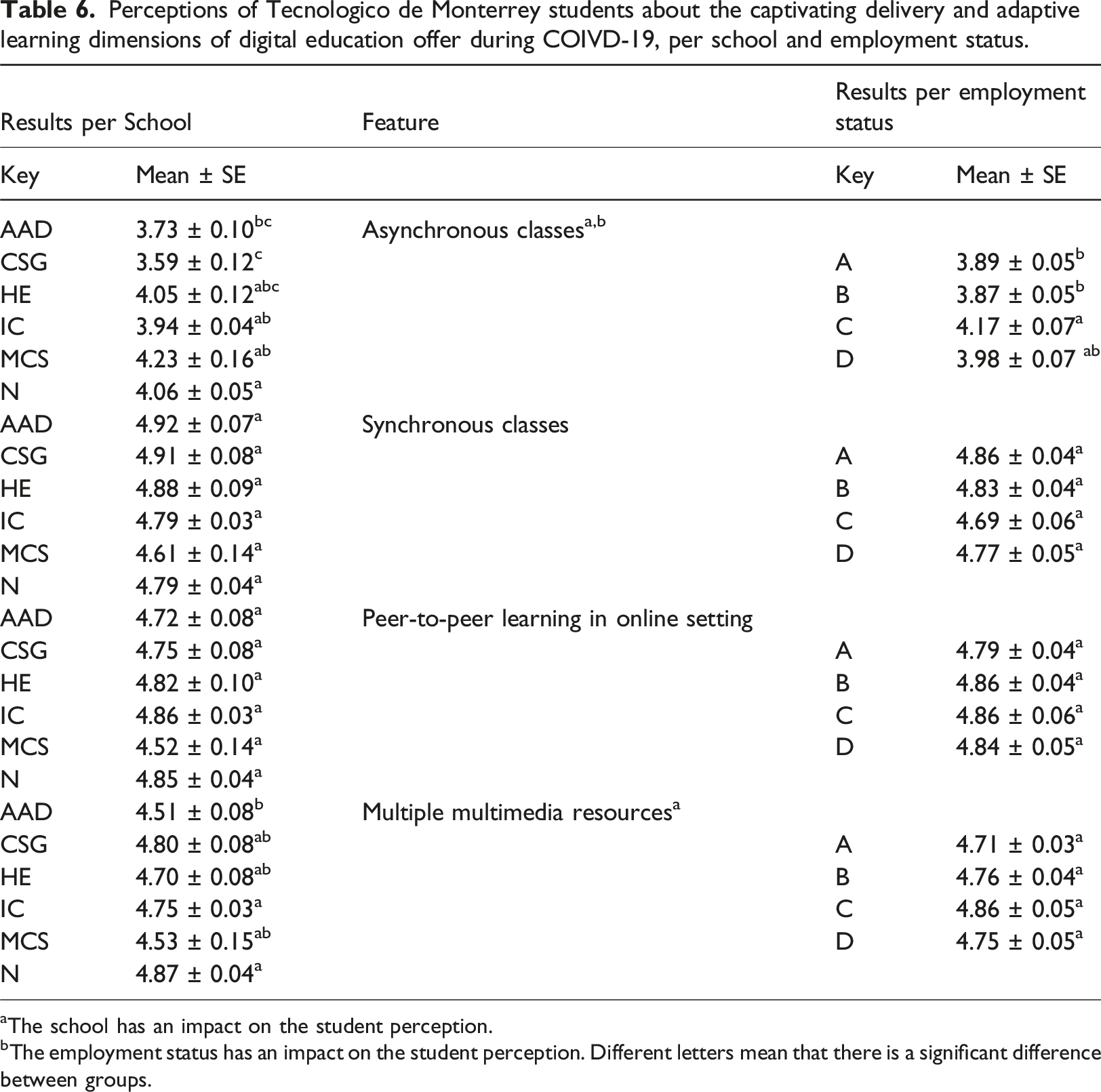
Perceptions of Tecnologico de Monterrey students about the captivating delivery and adaptive learning dimensions of digital education offer during COIVD-19, per school and employment status.
aThe school has an impact on the student perception.
bThe employment status has an impact on the student perception. Different letters mean that there is a significant difference between groups.
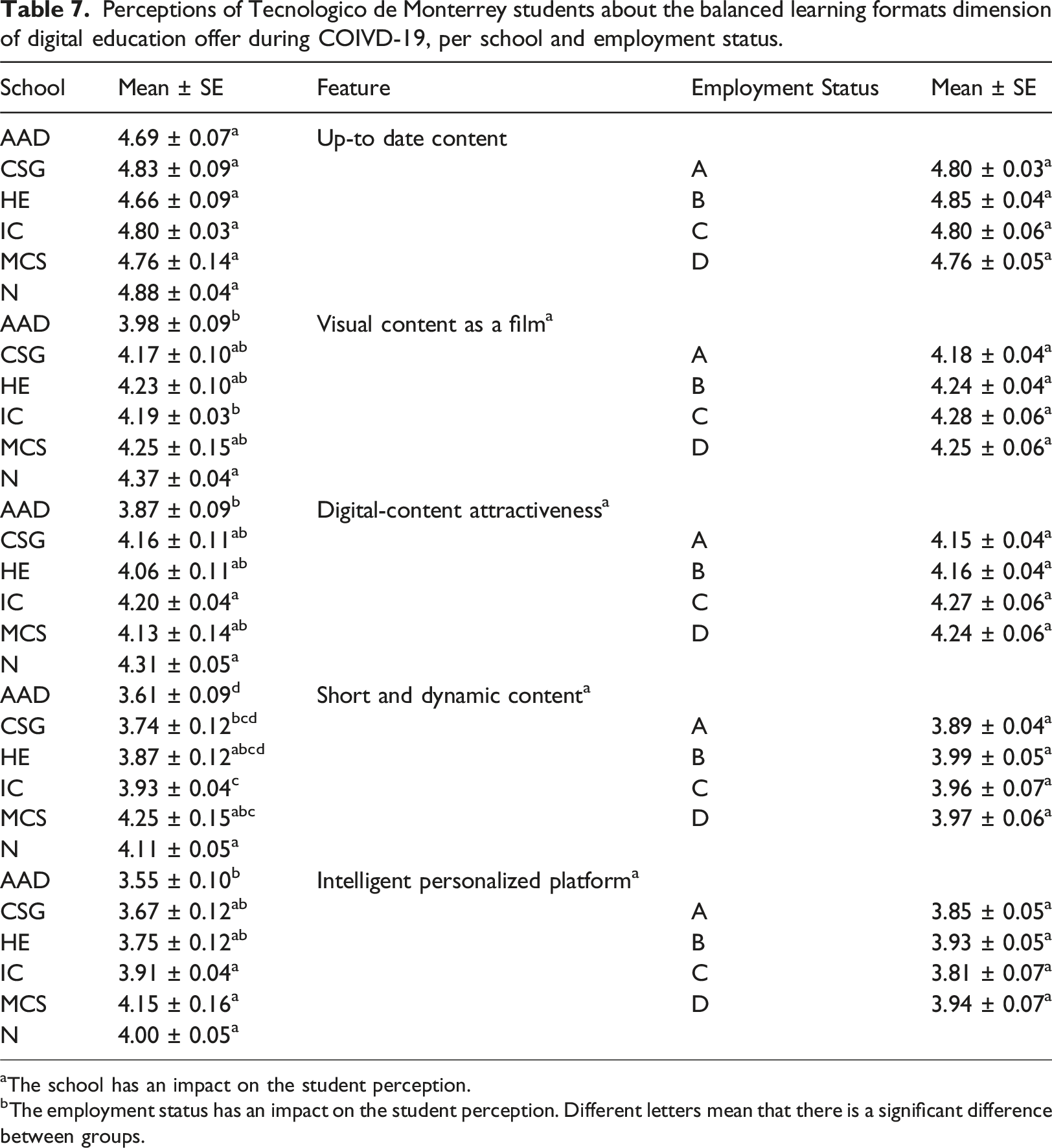
Perceptions of Tecnologico de Monterrey students about the balanced learning formats dimension of digital education offer during COIVD-19, per school and employment status.
aThe school has an impact on the student perception.
bThe employment status has an impact on the student perception. Different letters mean that there is a significant difference between groups.
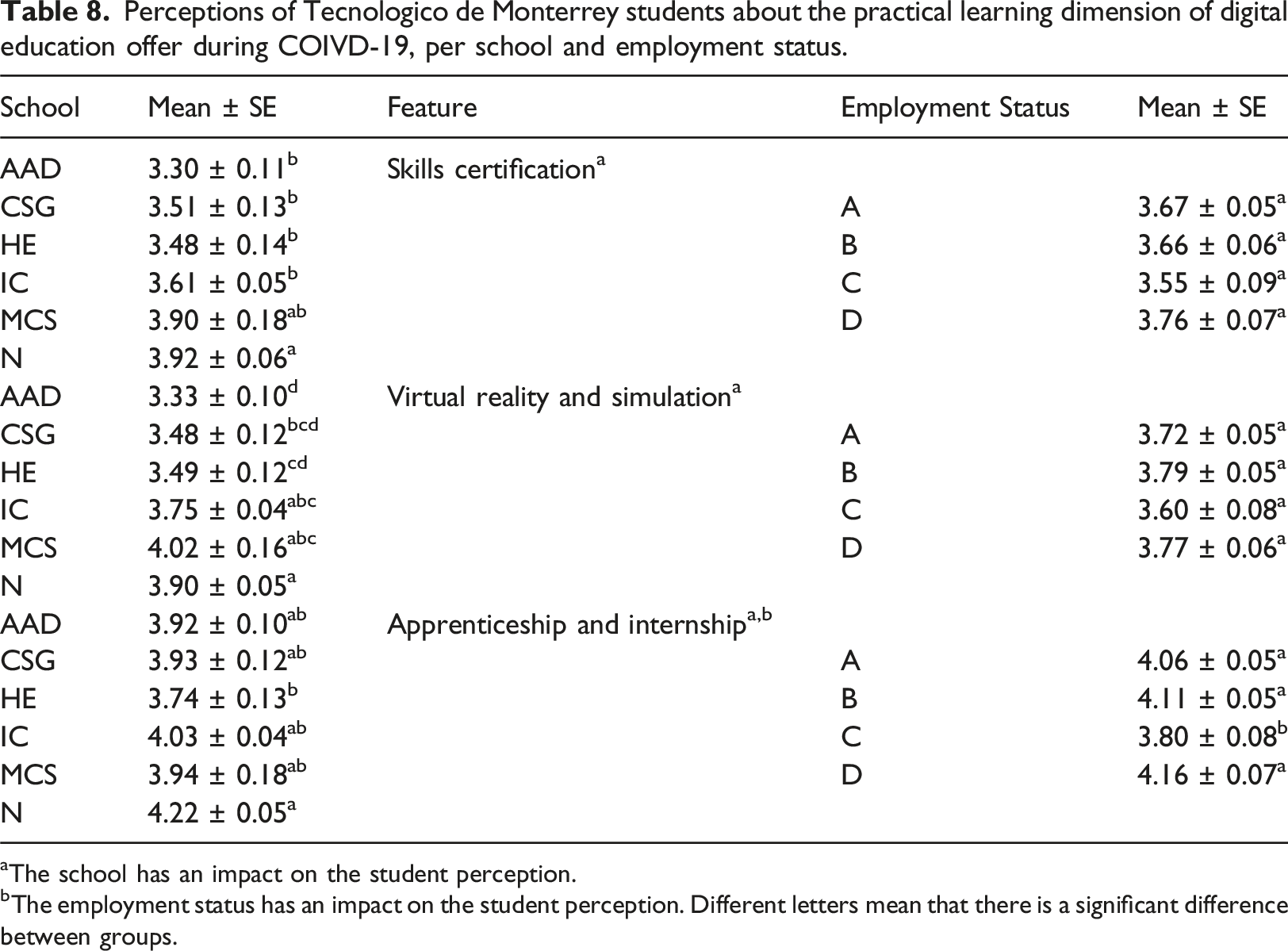
Perceptions of Tecnologico de Monterrey students about the practical learning dimension of digital education offer during COIVD-19, per school and employment status.
aThe school has an impact on the student perception.
bThe employment status has an impact on the student perception. Different letters mean that there is a significant difference between groups.
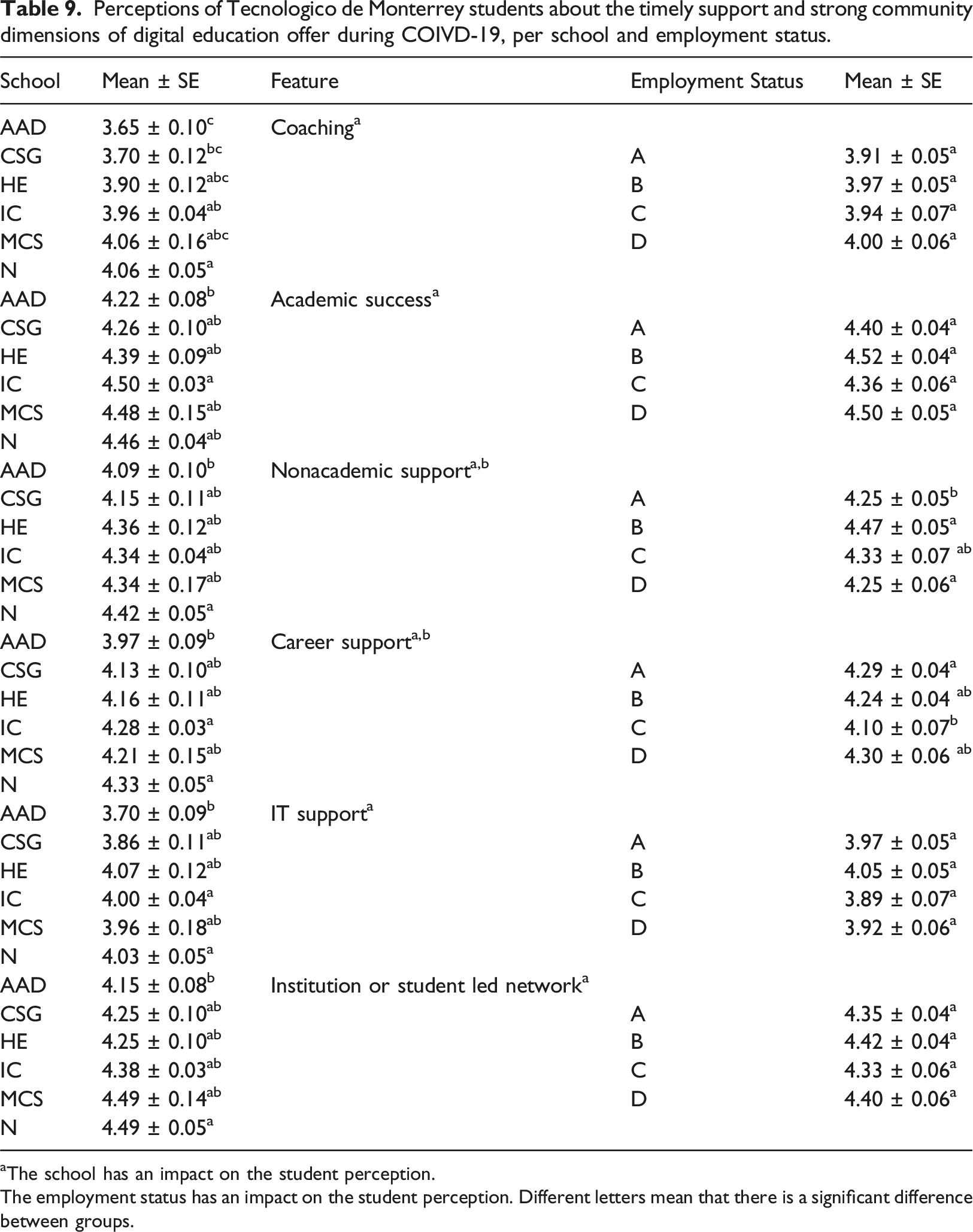
Perceptions of Tecnologico de Monterrey students about the timely support and strong community dimensions of digital education offer during COIVD-19, per school and employment status.
aThe school has an impact on the student perception.
The employment status has an impact on the student perception. Different letters mean that there is a significant difference between groups.
Table 4 shows the results over the clear road map dimension. Each feature of this dimension is situated in the middle of the table. At the left side, the means of the Likert scale are arranged by School, while at the right hand, the same is arranged grouping students by employment status. A number was assigned to each Feature (I and/or II) if a significant difference was found between groups through the statistical analysis. This is the same for Tables from 5 to 9. As observed, there were no differences between groups regarding the Online course preview, indicating that this feature is offered to all academic programs at the Institution. In the other two cases, students on the Engineering and Sciences and Business Schools scored better the online program structure and the readiness assessment leveling, than the rest of the students. Similarly, better scores were granted to these two features by unemployed students that are not looking for work.
Table 5 shows the results of the features of the easy digital experience dimension.
In this case, the score means of the mobile user experience were statistically the same for all school and employment status groups. In the case of the omnichannel feature, the students of the Business school gave better scores to this feature, compared to other schools. And in the case of the Digital access offline, the Full time employed students group gave statistically significant better scores to the program.
Table 6 presents the results for two dimensions: captivating delivery and adaptive learning.
In this case, Synchronous classes and Peer-to-peer learning in online setting received the same score. Which were above 4.5 in the Likert Scale. Regarding the Asynchronous classes features, again, better scores were assigned by students for the Business School and the students working full time. For the Multiple multimedia resources feature, better scores were given by the students of the Engineering and sciences and the Business schools. Until here, a tendency can be observed, that these two schools may offer more features to their students in a digital modality, than the other schools, and that the students that work full time, appreciate more those features than those who does not work, work part time or are looking for job.
Table 7 shows the results for the balanced formats dimension.
Regarding this dimension, there were no statistically significant differences on the opinion of students, according to their employment status. Neither was a difference for the Up-to-date content, regarding school. However, students of the Business school gave better scores to the following features: visual content as a film, digital content attractiveness, short and dynamic content, and intelligent personalized platform. Lower scores were obtained from students of the Architecture, Art, and Design School. Students from the Engineering and sciences school and the Medicine and Health sciences school also gave better scores in the intelligent personalized platform feature.
Table 8 shows the perceptions of students about the practical learning dimension of digital education.
In this case, the students from the Business School also gave better scores to the skills certification, the virtual reality and simulation, and the apprenticeship and internship features. Regarding employment status, only the results of the apprenticeship and internship feature were statistically significant, being the lowest score the one assigned by students that work full time.
Table 9 shows the results of the timely support and strong community dimensions.
There were statistical differences in all the features. The Business school students gave better scores in all features, but the students of engineering and sciences school also gave higher scores to the academic success, career support and IT support features. Regarding employment status, nonacademic support and career support show statistical differences. While unemployed and not looking for work students and part time working students gave higher scores to the nonacademic support feature, the unemployed and not looking for works students gave better scores to the career support feature.
These results correspond to the first part of the survey. Regarding the second part of the survey, the full set of results are shown in Appendix A. Figure 2 shows the results of the calculation of the Average Most/Least (AML) score for the features of digital education by students grouped by schools. Average Most/Least (AML) score for the features of digital education, according to students of six different schools. The features are grouped by dimensions. (A) Clear road map. (B) Easy digital experience. (C) Balanced learning formats. (D) Captivating delivery. (E) Practical learning. (F) Timely support and (G) Adaptive learning and strong community.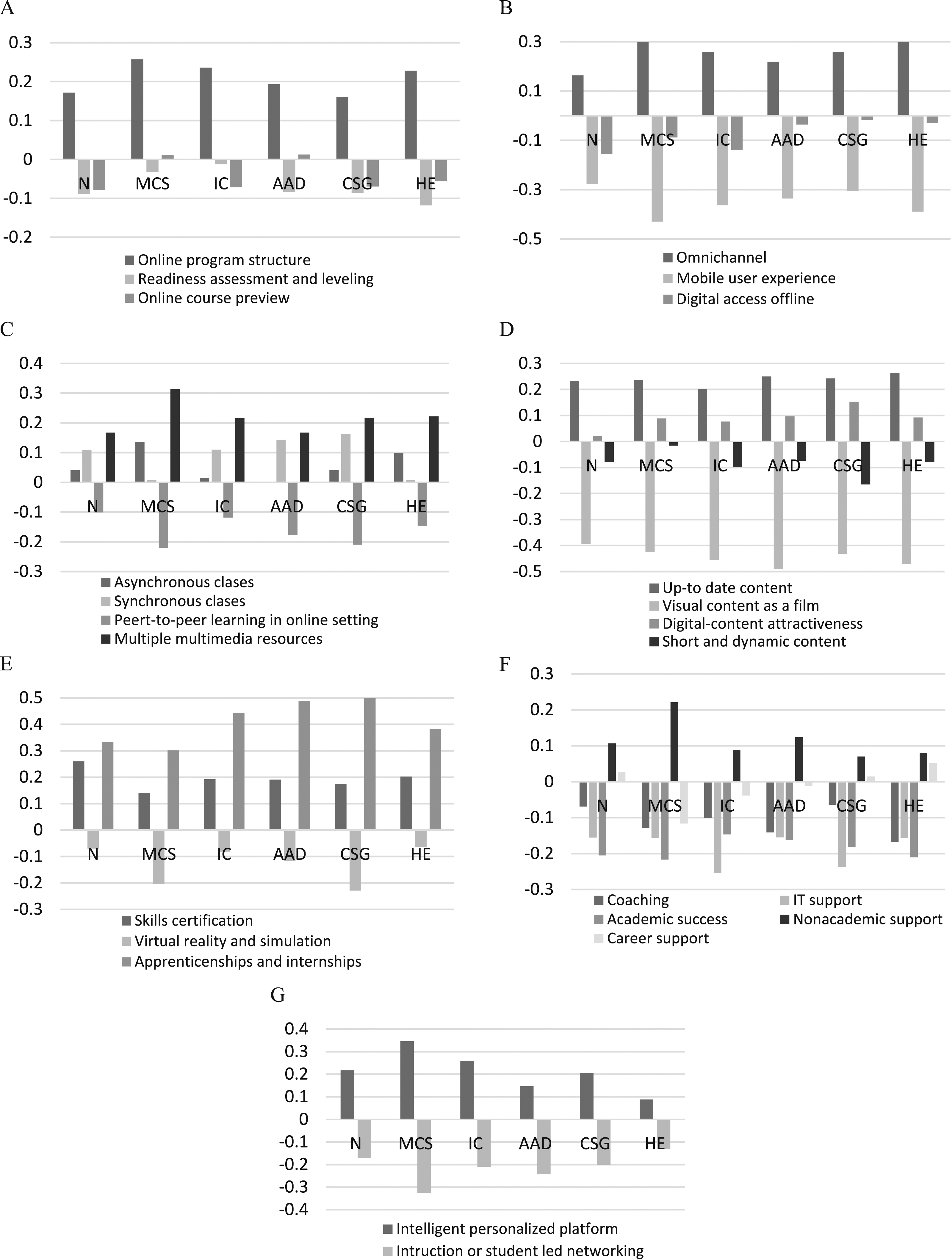
As observed, all AMLs have similar distributions. This figure shows that students give more importance to some of the features in each dimension. For example, in the dimension of Clear road map, online program structure hade a higher AML than the other two features. The same for the Omnichannel, multiple multimedia resources, up to date content, apprenticeships and internships, nonacademic support, and intelligent personalized platform, for the rest of the dimensions.
In Figure 3, these results are shown for the students grouped by employment status (A to D). Average Most/Least (AML) score for the features of digital education, according to students of six different employment statuses. The features are grouped by dimensions. (A) Clear road map. (B) Easy digital experience. (C) Balanced learning formats. (D) Captivating delivery. (E) Practical learning. (F) Timely support and (G) Adaptive learning and strong community.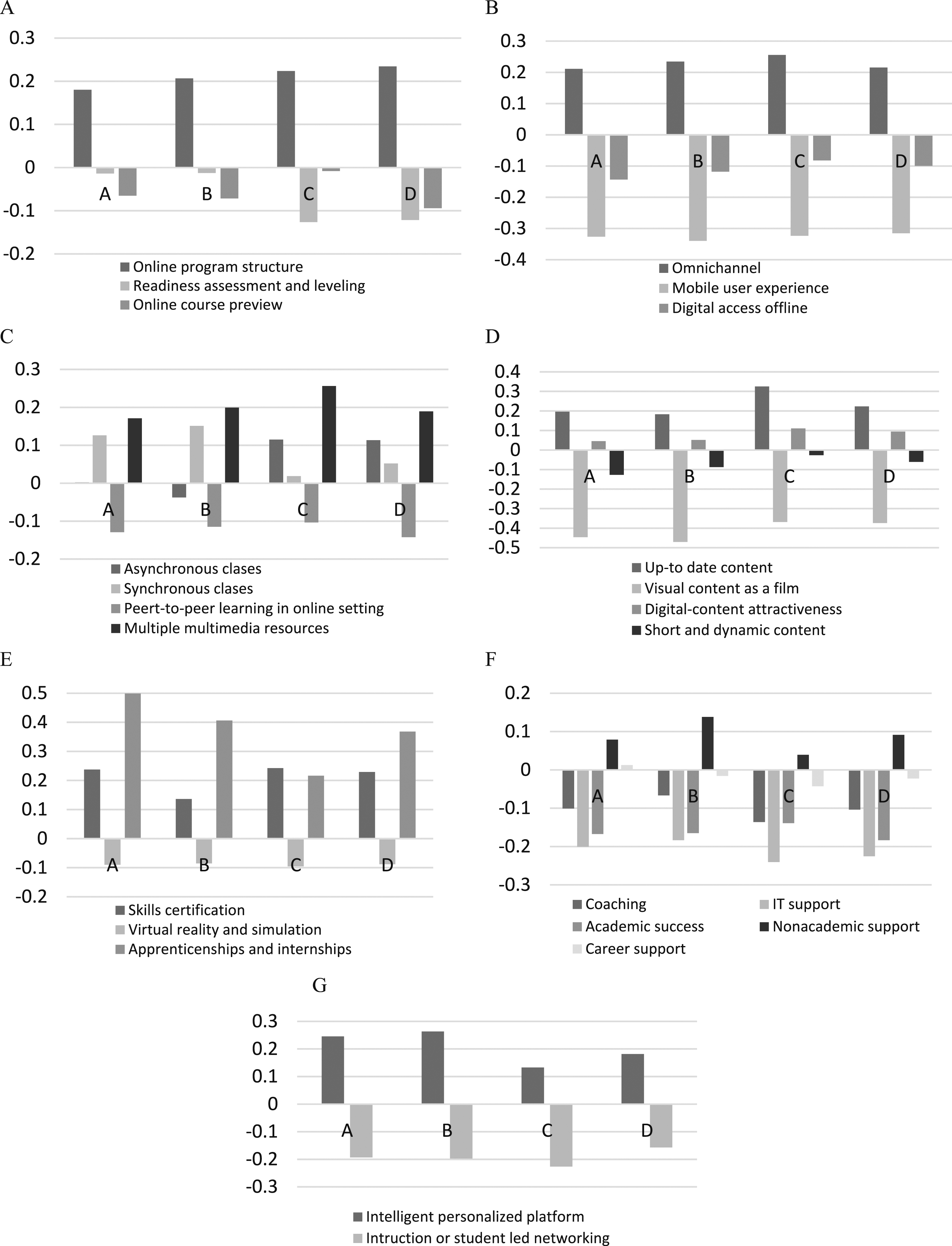
Similar results were observed as in the case of the students grouped by schools. However, in the balanced learning formats dimension, the synchronous classes feature also stood out for the students not working, while the pee-to-peer learning in online setting also was important for students working part and full time. In the practical learning dimension, the skills certification feature was important for all sets of students. These results are grouped in Figure 4. Comparison of the Likert scale results (bars) of the first part of the survey with the AML score (AMLS) (line) of the second part of the survey, considering the 24 features of digital education studied in this work.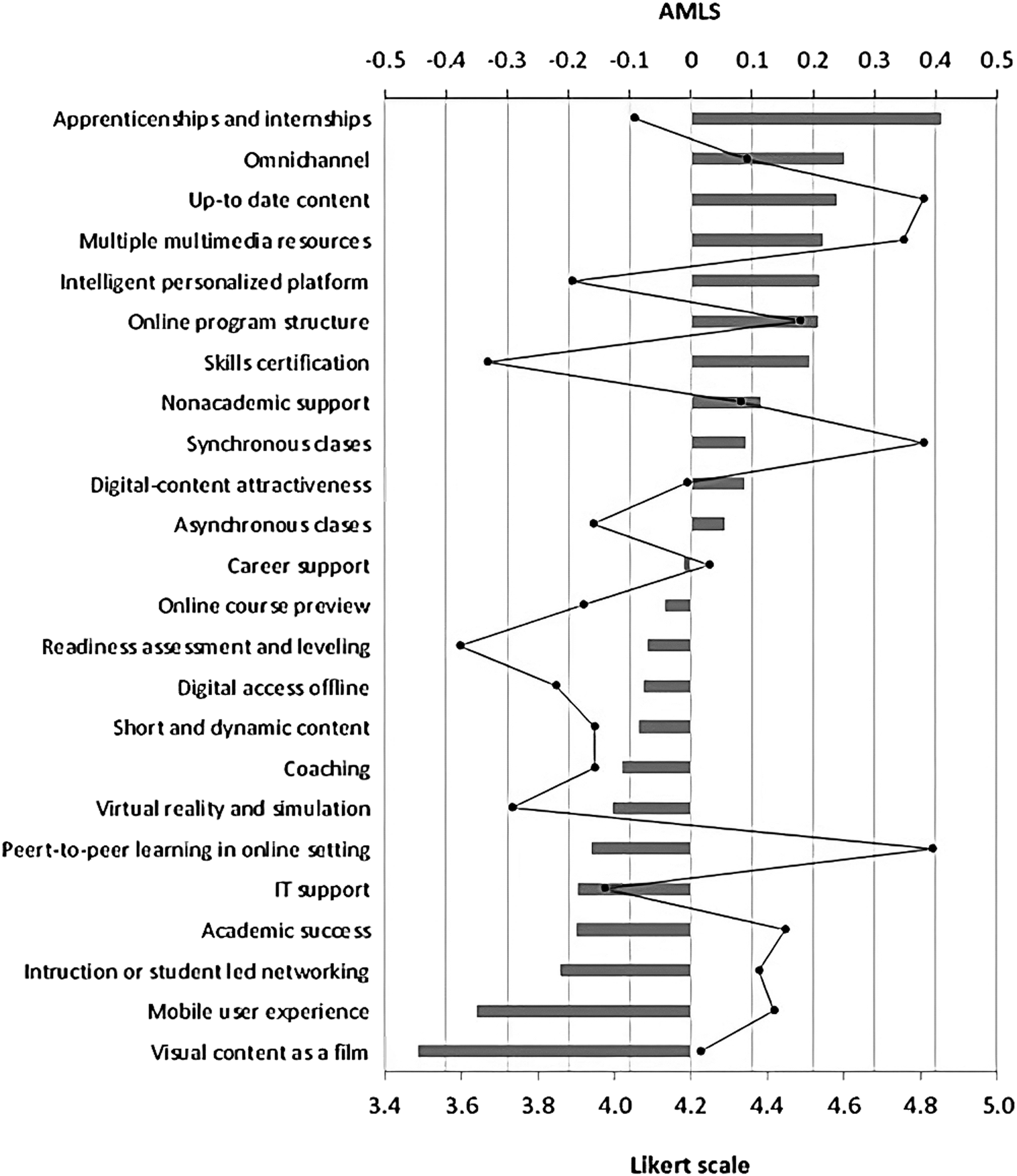
The most important and least important aspects of digital education versus the perception of higher education students of whether these features are offered by the university.
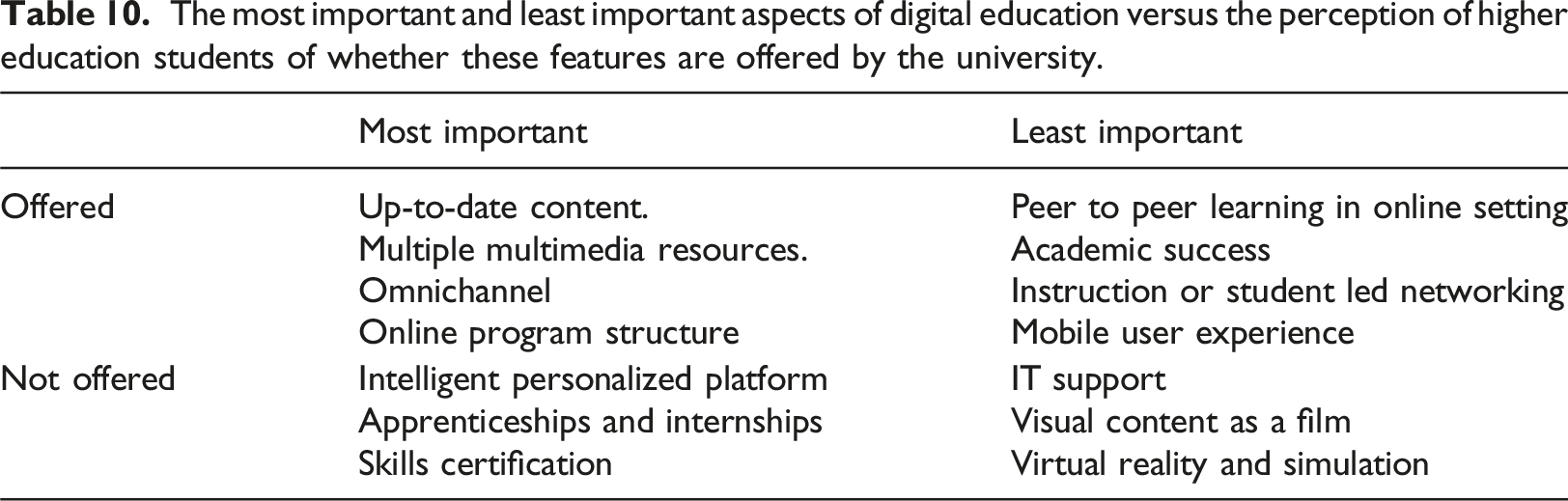
In this case, the comparison is made in a general way, regardless of School or employment status. This allows us to visualize what for students is less important and what is currently offered in the university so as not to invest in it but to give more importance to what is not provided in the study programs, being the most important for the students, in this case, an intelligent personalized platform, apprenticeships and internships and skills certifications. Personalization in terms of content during university life and the employment opportunities the university provides students to carry out professional practices digitally.
Discussion
Before pandemics there were plenty of studies that investigated the quality aspects to evaluate distance education, using different features and dimensions for this purpose (Rogers et al., 2009; Tarasov et al., 2020; Tseng et al., 2011; Zare et al., 2016). Conversely, the present work centers in the experience of students during the lockdown and moreover, considers the new reality of higher education students. Considering the Child et al. (2023) work, this study agrees with the finding that two of the most important features for students were up-to-date content and skills certification and two of the least important features were peer-to-peer learning and institution-led or student-led networking.
As can be seen in Figures 4, most of the features obtained scores between 4 and 5 on the Likert scale. This shows that the digital education opportunities provided to them by the institution regularly contained most of the elements in Table 1. The results indicated that students may want to know the program’s content previously to decide whether to take it. Once in the course, they want to obtain a record that validates the knowledge acquired, either by taking the course or presenting exams that validate the knowledge without having to carry it. This is very important when it comes to employability. On the other hand, elements such as interactive games or simulations are usually absent in the digital education offerings in the curricula. Regardless of both situations, personalization plays a significant role.
Derived from the diversity of answers found in this work emerges an orientation of digital education that has yet to be addressed, the personalization of education. This marked trend can be explained as part of the changes in higher education systems, which is caused by various factors such as the expansion of the internet, the incursion of information technology, and the growing number of non-traditional students who are attending the University (Sharma et al., 2017). These non-traditional students (30% in the case of this work) are characterized by attending school while working and being digital natives by birth. Students undoubtedly demand new ways of learning specific skills (Sharma et al., 2017).
Personalized learning is fundamental when the teacher cannot efficiently monitor the student (Iyer et al., 2022) and can be an alternative to provide a better experience to all their students. This is also related to contextualization; defined as the “set of proposals, strategies, resources, and actions aimed at connecting learning with the interests, decisions, projects, and experiences of the learner, with the ultimate purpose that the learner can give meaning and personal value to what is learned” (Esteban-Guitart et al., 2020). In this sense, learning has personal meaning and value when it helps the student to review, reconstruct and understand past experiences and present situations and project themselves into the future in various aspects: personal, civic, social, academic, or professional (Esteban-Guitart et al., 2020).
Customization or personalization (Hsieh and Chen, 2016) strategies for digital learning have been discussed previously. Studies involving personalized learning have enhanced higher education learners’ motivation and engagement (Alamri et al., 2020). Flexibility in deadlines and course assignments, self-monitoring, and peer-based methods of learner feedback are some of the main alternatives (Bonk et al., 2018). Learning analytics provides insights into how and what students learn to support customization and the design and development strategies for personalized learning (Chatti and Muslim, 2019). However, even when adaptive systems exist, their use is not widespread. For this reason, studies suggest more research in standardization, modular frameworks, data mining, machine learning techniques, and device adaptation (Somyürek, 2015).
In some continuing education classes, artificial intelligence could be a key element in achieving some of this learning personalization in the future (Klašnja-Milićević and Ivanović, 2021). However, it is also an area of opportunity due to the insufficient knowledge of faculty about all these tools and the possibilities of personalized learning (Iglesias-Pradas et al., 2021). Open educational resources offer a potential environment for learners to choose materials that meet their needs. Micro-learning platforms are becoming more popular, but their effectiveness depends on contextual factors. The use of technology to tailor learning experiences and have had a positive outcome for student efficacy, achievement, and well-being (Qushem et al., 2021).
Implications of the study
To provide concrete suggestions for how the digital education program at the university should be improved or changed, the result of the research highlights the following elements to be taken into consideration when defining or redefining the digital education strategy of the institution: 1. Maintain a permanent offer of courses in digital modalities for all programs, which meets the needs of flexibility in time and space that students need either because they work, live far from the Campus, or require extra-curricular activities. That is, to ensure that teaching models in digital modalities include an adequate mix of synchronous courses and asynchronous courses in order to meet the needs of those who require flexibility in time and space (students who work), as well as students who prefer more teacher accompaniment. 2. Evaluate the possibility of offering complete programs in digital mode. However, it will be necessary to consider the orientation of the institution (face-to-face), the profile of the student, and the acceptance of the market in the context of the institution for this type of program. 3. Relevance of maintaining an updated faculty and prepared for the digital modality. 4. Ensure that the didactic strategy of the courses includes peer work, the use of multiple multimedia resources, as well as updated and attractive content. 5. Offer apprenticeships and internships in digital modalities. 6. Intentionally incorporate virtual reality resources. 7. Personalize learning throughout the student journey and within courses.
These lessons learned might generalize to other institutions of higher education and findings may influence the design and delivery of digital education in higher education more broadly. Although it is impossible to recommend actions regarding the findings that different students have different needs in ways that are not conflicting, unfeasible or undesirable, customization is a key part of e-learning, and personalized learning support is necessary for tailored instruction.
Study limitations and future work
This study’s limitations include that the analyzed data is general, and no more profound insights into the differences among groups of students were performed. For example, interviewing students with different employment statuses might provide a better understanding of the differences in importance ratings. Future studies may focus on validating statistical differences and finding correlations with the learning for each knowledge area or School requirement. For example, to know why SAAD students prefer adequate and interactive content rather than personalization or why SMHS prefer easiness rather than support. Another limitation is that the research was conducted considering the returning to the classrooms, so the perception of students in the surveys could be influenced by the experience gained during the pandemic. Although the sample is significant, the results are from a private educational institution with a specific context and with a student population with particular characteristics, the results may vary according to the educational institution, the profile of its students and its context. On the other hand, exploring the faculty and institutional readiness may help to explain many of the tendencies observed in the present research about digital education. Additional future work will be conducted to implement strategies to offer students the features that were not offered by the Institution, according to their responses. The last, in order to provide more opportunities for students development.
Conclusion
Studies have reported that student satisfaction with online instruction depends on convenience, and these studies help reinforce student retention (Cole et al., 2014). The findings of this work undoubtedly will contribute mainly to re-planning digital education in Tecnologico de Monterrey for the following years, having a better learning objective.
In this work it was found that higher education students agree that their programs provide them with distance classes in real-time in a participation environment with content appropriation and increased interaction. However, they disagree that the platform allows them to identify weaknesses, obtain knowledge certificates and minor degrees, explore courses early, and access simulations and active games. Similar tendencies were found by employment status. Opportunity issues to improve online education were centered on a personalized platform. The results of this survey offer a panoramic about online virtual education in Tecnologico de Monterrey. This work provides valuable insights into the attributes of digital education that can enrich the teaching-learning process throughout the student’s journey.
Supplemental Material
Supplemental Material - The new reality in digital teaching implies the inclusion of personalized digital education as an essential element for the future
Supplemental Material for The new reality in digital teaching implies the inclusion of personalized digital education as an essential element for the future by Patricia Vázquez-Villegas, Maribel Reyes-Millán, and Jorge Membrillo-Hernández in E-Learning and Digital Media.
Footnotes
Acknowledgements
The authors would like to acknowledge the financial support of Writing Lab, Institute for The Future of Education, Tecnologico de Monterrey, Mexico, in the production of this work.
Declaration of Conflicting Interests
The author(s) declared no potential conflicts of interest with respect to the research, authorship, and/or publication of this article.
Funding
The author(s) received no financial support for the research, authorship, and/or publication of this article.
Ethical statement

Data availability statement
The datasets presented in this article are not readily available because the consent of the participants was obtained under the statement that the information collected during the study would be anonymized and kept confidential. Requests to access the datasets should be directed to
Supplemental Material
Supplemental material for this article is available online.
Author biographies
References
Supplementary Material
Please find the following supplemental material available below.
For Open Access articles published under a Creative Commons License, all supplemental material carries the same license as the article it is associated with.
For non-Open Access articles published, all supplemental material carries a non-exclusive license, and permission requests for re-use of supplemental material or any part of supplemental material shall be sent directly to the copyright owner as specified in the copyright notice associated with the article.
