




Abstract
In university education, we aim for students to master the course materials, practice with transferable skills, have meaningful discussions, learn from each other, and be active members of the academic community. These goals are especially important for first-year students, who are new to academic education. At the same time, teaching methods should be aimed at career development and labour market opportunities. This study aims to evaluate the success of an education method that attempts to incorporate this broad range of learning goals into one course. The aim of this study is to evaluate, by means of a ‘mixed-method’ data analysis, the effectiveness, quality and sustainability of the Activating Podcast Method (APM) in student’s learning experience, a blended learning approach that uses a flipped classroom method tailored to these goals. An online survey (N = 30) and an interview (N = 8) measured a 2022 cohort first year BA Film and Literary Studies students’ experiences of the effectivity of the Activating Podcast Method in their academic learning and performance. After first conducting quantitative research, qualitative research was conducted to further explain the generated data. Results suggest that the Activating Podcast Method enhances and improves the students’ learning experience, efficiency and performance, by conveying theoretical knowledge and context through online independent learning in advance of on campus classes that focus primarily on in-depth discussion. The feedback of students as well as our own experiences as the lecturer of and student assistant to this course, indicate the overall benefits of APM as a learning method. Finally, this article explores how APM can be integrated into university education.
Keywords
Introduction
In university education, making the most of our weekly classes with students proves to be a Herculean task. We aim for students to master the course materials, to practice with a variety of transferable skills, 1 have meaningful discussions, and learn from each other. We additionally seek to motivate them, improve their self-reliance, and engage them as active members of the academic community. These different goals are especially important for first-year students, who are new to academic education and whose academic skills are often still limited. The conventional teaching method of lecturing, however, does not sufficiently encourage student engagement or stimulate an active learning attitude. As Caulfield warns, traditional methods involve numerous risks, including one-directional knowledge transfer, creating dependency of student comprehension on teacher instructions, and limited interaction between teacher and student, and amongst students (2011: 4). Having to concentrate on long stretches of academic content during lectures, moreover, can be difficult for students.
The various challenges of lecturing became even more pronounced during the COVID-19 pandemic (Salta et al., 2022: 116–117). Suddenly confined to the digital classroom, we struggled to effectively engage a group of over 60 Film and Literary Studies students. During the first lockdown we therefore decided to transform our traditional lectures into an educational podcast series. This first attempt we consider to be the pilot of the APM. The results were so promising that we were determined to continue with this project, even when on-campus classes returned, resulting in a second, improved series and the development of the Activating Podcast Method (APM), which we elaborate on below. Educational podcasts are now a permanent element in our teaching.
We feel that although university education should not be transformed into mere entertainment, it is nonetheless important to actively engage students as active members of an academic community and to create an enjoyable and motivating learning experience. The task of lecturers is not solely to convey expertise, but also to create meaningful learning environments directed at the academic and personal growth of students (Slyusarenko et al., 2022: 169–171). Our teaching methods should therefore be aimed at transforming the classroom into a vibrant online and offline space in which students share ideas, ask questions, practice skills, collaborate, and contribute to meaningful discussions. They should help to improve students’ academic competencies, but also benefit their career development and labour market opportunities. This study aims to evaluate the success of the APM, an education method that attempts to incorporate the above-mentioned learning goals into one course.
This study evaluates the quality and effectivity of the APM and considers how the APM can be integrated in university education. It aims to gain insight into how integrating activating exercises in preparatory material improves students’ self-reliance and engagement with course material. We first elaborate on the context in which the APM was developed and on our method of evaluating the students’ experience. We then consider the APM as a blended and active learning method. Finally, we elaborate on the practicalities of how the APM was designed and implemented. We conclude with some remarks on the benefits and limitations of our method.
Literature review
In university teaching, one-directional knowledge transfer is no longer the norm. Blended learning plays an increasingly important role in higher education, most notably since the COVID-19 pandemic, an increase of research interest on the topic seems to suggest (Tonbuloğlu and Tonbuloğlu, 2023). The term “blended learning” refers to effectively combining traditional face-to-face interaction with digital teaching methods. Its composition and implementation in education varies widely according to its position on the blended learning continuum, varying from basic ICT usage, for example of PowerPoint, to E-intensive usage, such as incorporating extensive online modules (Garrison and Kanuka, 2004: 97; Jones and Lau, 2010: 407). A variety of studies in different fields of education suggests that blended learning methods may contribute to improved knowledge attainment, student engagement, student confidence, motivation to study, depth of knowledge and understanding, all depending of course on the implementation, method and design of the course and on the students’ cooperation (Buhl-Wiggers et al., 2023: 156, 163; Castro-Rodríguez et al., 2021: 494; Condie and Livingston, 2007: 342; He et al., 2016: 70).
Following the interpretation of Staker and Horn (2012) and Chen et al. (2014), “flipped learning” is a subset of blended learning. This method integrates digital components into learning methods to redistribute elements of traditionally preparatory or at home learning activities, and in-class activities to increase interaction (Chen et al., 2014: 17; Pierce and Fox, 2012: 1). In traditional teaching, course materials are introduced to students and discussed in class. Flipped learning approaches reverse this model. Aided with digital tools, students work with the course material before class with the help of, for example, podcasts, video’s or (group) assignments (Freeman and Schiller, 2013: 62). Students are thus introduced to new knowledge through course materials in a variety of media formats before class, creating more time for in-depth explanations or discussions in class (He et al., 2016: 61). In addition to positive blended learning results, research also suggests that flipped classroom methods improve student engagement, student interaction, student-teacher interaction, problem solving abilities, and taking in information, control over classroom management for lecturers, overall student performance, student satisfaction, independent learning and collaborative learning (Chen et al., 2014: 25–26; Kazanidis et al., 2019: 2025; Peterson, 2016: 13). Moreover, the flipped classroom method promotes students’ autonomy by assigning part of the responsibility and ownership of learning that is traditionally held by the teacher to the students, as students work on their own pace and schedule and decide themselves on what topics they do more research and how to best prepare for their participation in the group assignments and class discussions (Bouwmeester et al., 2016: 56–59; Bergman and Sams, 2012: 67–8; Pierce and Fox, 2012: 1).
So-called “active learning” presents an additional departure from traditional teaching methods. Active learning is an instructional method specifically designed to effectively engage students in a learning process through meaningful learning activities that emphasize reflection, higher-order thinking and comprehension, as opposed to passively receiving information (Freeman et al., 2014: 8413–4; Prince, 2004: 223). Examples of active learning include collaborative learning (in which students work together in groups towards common goal), cooperative learning (students work together in groups but are assessed individually) and problem-based learning (problems are introduced to provide context and motivation for the study material) (Prince, 2004: 223). Additionally, the principle of ‘deliberate practice’ requires students to first “demonstrate knowledge” to which they then receive feedback with which they can improve their earlier knowledge, all the while processing the course material (Kosslyn, 2021: 61). A variety of studies suggests that active learning methods may contribute to students’ improved comprehension and performance, their attitude towards course work, their motivation, their graduation rates, fewer dropout rates and a reduction of achievement gaps (Cleveland et al., 2017: 4; Freeman et al., 2014: 8413; Haak et al., 2011: 1215; Misseyanni et al., 2018: 7; Schmidt et al., 2009: 216–7).
Educational podcasting, in which students listen to an audio broadcast as part of the curriculum, increasingly gains interest in e-learning practices (Evans, 2008: 492). Educational podcasting implements blended learning and active learning practices in a way that increases students’ engagement and satisfaction (Drew, 2017a; Evans, 2008: 496–7; Hanafi et al., 2022: 603; Shantikumar, 2009: 537). Studies further suggest that educational podcasting may improve understanding of the study material as well as student confidence, making students more assured of their knowledge (O’Connor et al., 2020: 3, 9). The medium conforms to the learning styles of the current student generation that has an ‘always on’ (and, perhaps, always online) mentality (Baird and Fisher, 2005: 10; O’Connor et al., 2020: 9). Augmenting traditional lecture materials, educational podcasting not only allows students to personalize their learning strategy, by following their own schedule and pace (Baird and Fisher, 2005: 10, 24), but also takes into consideration the diversity in backgrounds and learning preferences among students. Students can pause or rewind content as many times as preferred, which is beneficial for those who might have less prior knowledge or have difficulties with text comprehension (Bergman and Sams, 2012: 14; Cebeci and Tekdal, 2006: 49–50). Compared to traditional teaching methods, then, students gain more control over their learning process, which encourages forming an active relation to the material (Evans, 2008: 496).
For teachers, educational podcasts prove to be beneficial due to their relative accessibility in terms production costs and time: equipment is inexpensive and mastering audio editing is generally not extremely time-consuming (King and Gura, 2008: 7, 12). In addition to the traditional audio-only podcast, podcast may be supported by supplementary visual material, such as a limited selection of slides with relevant images or a hand-out. In the APM, too, audio functions as the main knowledge conveyer. Educational podcasts supported by visual material present a fruitful middle ground between audio-only podcasts and video knowledge clips that require extensive production processes on the other.
Methods
This study is based on the experiences of the first cohort of Film and Literary Studies students to work with the APM, during the first semester of the 2021–2022 academic year, implemented in a course on realism and symbolism in literature taught at the Faculty of Humanities at Leiden University. In order to collect representative and functional information from these students about the effectiveness, quality and durability of the APM, our evaluation method consisted of a questionnaire and interviews. The questionnaire students completed after they finished the course. Of the 48 first-year students who followed and finished the course, the number of students who completed the form and subsequently qualified for the data collection is N = 30. The questionnaire was administered online through Google Forms. 2 Data collection was voluntary and anonymized to ensure impartial, safe and sincere circumstances for evaluation. Before participation, students were informed of the purpose of the questionnaire and interview. Obtained data from student interviews is anonymized and not tracible to participants. Data collection took place over a 3-month period (January to March 2022).
The questionnaire consisted of 21 closed and 4 open questions. 15 Likert-scale questions assessed to what extent students agree with specific statements, with scores ranging from 1 to 10 (1 expressing a negative response and 10 a positive response). The remaining closed questions accounted for multiple choice and multi-select answers. In the 4 open questions, students were asked to explain their answers to closed questions and to provide general feedback and suggestions for improvement, which provided part of our qualitative data. The questionnaire was divided into the following categories: perceived importance of digital learning, students’ experience with the APM, impact of the APM on learning process and results, effectiveness of the APM, students’ assessment of the APM as a flipping the classroom and blended learning methods.
We also conducted (and audio-recorded) an in-depth interview with 8 students in March 2022, after the students completed the course. This interview was semi-structured in order to guarantee that a selection of relevant pre-determined questions was answered, but also to create an open conversation in which the interviewees were free to express opinions and thoughts beyond prepared questions. All data were in Dutch, which the authors have transcribed, translated and paraphrased in English for the purpose of this study. Data was stored in accordance with the Leiden University policies of data security. The open-ended questions were analysed by categorising in accordance with the categories of the closed questions, and by interpreting the individual answers with a four-eye principle by both authors. Another source of data was provided by reflection reports that students handed in via de Leiden University LMS, Brightspace, in which they detailed their experience with podcasting during the course. This data was subjected to the same method of analysis as the open-ended questions.
Data was analysed using the ‘mixed method.’ Following Creswell (Creswell and Creswell, 2018: 52), this approach integrates both quantitative and qualitative data, as the combination of both data sets results in insights that extend beyond what can be extracted from isolated quantitative or qualitative data research. Applying the ‘explanatory sequential mixed method,’ the research was executed according to the following staggered phases: the authors first conducted the quantitative research, then analysed the results. Informed by these results, the qualitative research was conducted and analysed with the aim to further explain the quantitative data (Creswell and Creswell, 2018: 63). To ensure reliability, the authors reviewed all data sets independently, and later compared interpretations of data.
Process and development of the APM
The APM was developed as part of a first-year Literary Studies course on Realism and Symbolism within the Film and Literary Studies Bachelor programme at the Faculty of Humanities of Leiden University. A substantial part of the original course content was created by fellow colleagues in this programme, so that the educational podcast series should emphatically be considered a collaborative effort. The educational podcasts are part of a teaching innovation trajectory in this programme that aims for students to practice different ways of communicating scientific knowledge to a broader, non-academic audience. Next to using podcasts as a teaching method, we also instruct students on how to make a podcast themselves, as an exercise in science communication. We intended for this assignment to stimulate students to position themselves as autonomous scholars, who make their own decisions on what is relevant to include in their podcasts and who independently conduct the relevant research for this, and to tap into their “digital” skills. Lee, McLoughlin and Chan underline that the “high levels of agency” of creating podcasts in an educational context prevents students from positioning themselves as “passive recipients of knowledge” (2008: 517). Adding such 21st century transferable skills to the more traditional academic skills of writing papers and making exams, helps to prepare students for their professional careers (Succi and Canovi, 2020). Moreover, more creative types of assessment enhance the learning of students (Cherif et al., 2016). The APM correspond to the Teaching and Learning Vision of Leiden University, which outlines the ambition to stimulate educational and technological innovation by creating and implementing activating learning methods, making efficient use of contact hours, employing digital resources, and enhancing students’ employability by developing transferable skills (Leiden University, nd). Our aim was not simply to improve the learning experience for one single course, but to develop a course-transcending method that lends itself to a variety of course types in higher education that similarly rely on limited contact hours and independent learning. The APM relies on activating exercises that are integrated in the narrative of an educational podcast. We use the educational podcast genre of the narrative (Drew, 2017b: 206–207). We expect, therefore, that the APM can be used in courses that use narrative to transfer knowledge, such as art history, literary studies, psychology, or sociology.
In our experience, conveying academic content in alternative media requires a fundamental reconfiguration of method and form. Our initial podcast lectures that were part of the APM pilot during the first lockdown still mimicked traditional lecture methods. Realising that by transforming a 45-min lecture into a 45-min podcast we did not fully benefit from the possibilities the medium has to offer, we decided to develop the APM method by incorporating conventions from both academic teaching and podcasting. We adjusted the contents, methods, assignments and assessments of the course to create an integrated learning experience.
The APM method requires students to work according to the “3B” steps of “bestuderen, beluisteren, bespreken” (“studying, listening, discussing”). In preparation for each class, they independently read the literary texts and study the scholarly material. Then, they listen to the podcast. While listening, they complete several short individual exercises and quizzes that give context to, elaborate on, and let students practice with the course materials. The podcast concludes with instructions for a group assignment students prepare before coming to class, stimulating them to learn with and from each other. The exercises, quizzes and group assignments turn the podcasts into an ‘active learning’ method. As an extra incentive to come to class prepared, part of the exercises and assignments are graded. In the classroom students participate in group discussions with their peers and their lecturer, on the basis of their preparations.
The APM thus combines traditional face to face interaction with online and offline learning materials in a variety of formats: readings, podcast supported by visual material, individual exercises and group assignments. We aimed for our method to provide support for students with different backgrounds and personal learning styles by using multiple learning formats, which we hoped would allow for individually managed learning time and pace.
In a previously conducted questionnaire following our pilot during COVID-19, students had suggested the podcasts could be improved by adding different voices to the voice of the lecturer. To create a more varied listening experience, in the revised podcast series we included different audio fragments (documentaries, interviews, music) and invited colleagues to share their opinions and expertise in interviews or debates. We also asked enthusiastic students from previous cohorts to record part of the content as well as the various student assignments. The idea was to give students the sense of an academic community of lecturers and students of which they are part themselves.
In the questionnaire following our pilot students had expressed that most of them listened to the podcasts at their desks taking notes, as opposed to listening to the podcasts while doing activities such as walking or commuting, as we had hoped. We decided to take advantage of this desk-bound listening experience by including supplementary visual material in the shape of simple videos to add complementary visual material (such as quotes, images, questions and assignments). We aimed for the visual material to be in service of comprehension, clarification and illustration, as opposed to adding entertainment elements that potentially bring about distracting stimuli. The medium of video allowed us to add visual content when relevant. Visual material in the videos included: quotes students could read along to improve comprehension, animations to illustrate the different assignment types, text transcripts of open questions and quizzes, and images of discussed art works. The resulting podcasts were embedded in Leiden University’s digital learning environment (DLE) using the learning management system (LMS) Brightspace. 3 The medium of video has the disadvantage that students with weak internet connections at home can encounter problems running them. (Digital) hand-outs offer an alternative if video-editing is too time-consuming.
For many of our students, the course in which we integrated the APM is their first introduction to academic skills, so that their research and writing abilities are still limited. We used the interactive document tool in FeedbackFruits to integrate short exercises in the narrative of the podcasts, allowing students to practice with skills that they will need and further develop throughout their academic career, such as researching, analysing, writing or reflecting. Students are asked to pause each podcast a few times and answer open and multiple-choice questions (“Time for a Quiz!”) or to do an academic exercise. These assignments are introduced with different animations to help students distinguish between the different types of exercise and makes them more aware of which particular skill they are practicing (see Figure 1). Selection of images, accompanied by animations in podcast supplementary video, from left to right: “STOP AND REFLECT,” “STOP AND FIND,” “STOP AND ANALYSE,” “STOP AND LOOK UP,” “STOP AND EXPLAIN,” “TIME FOR A QUIZ.”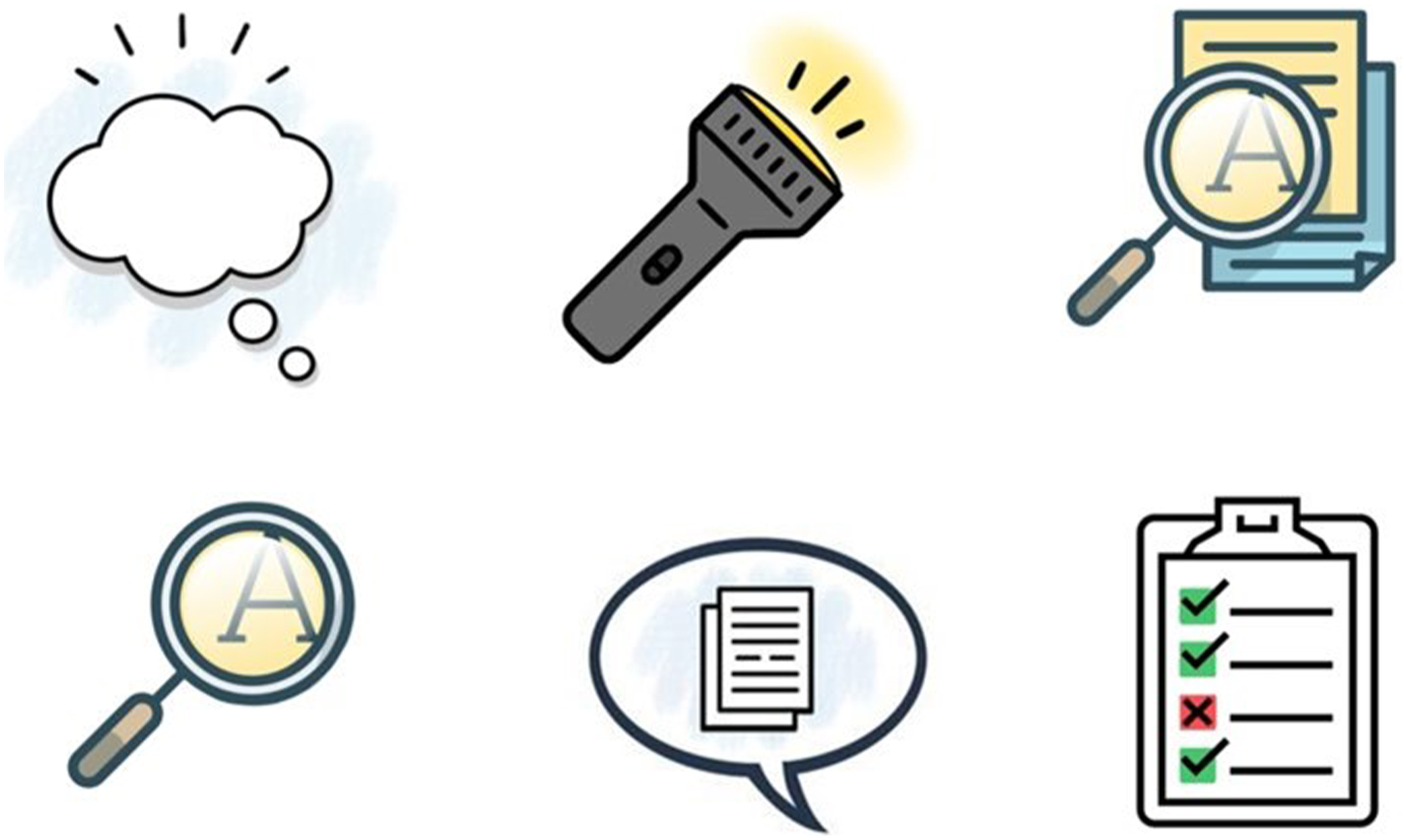
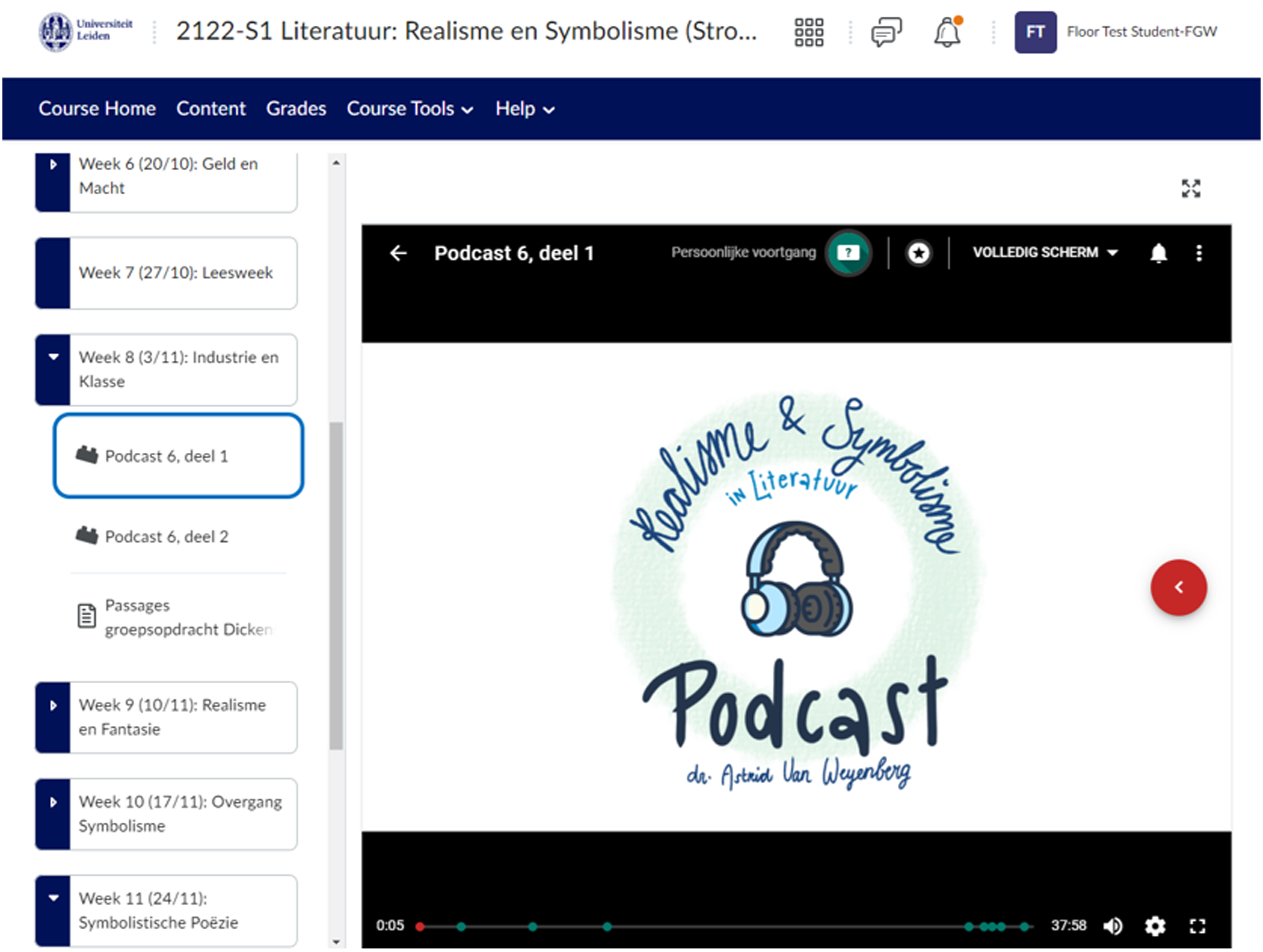
The questions and exercises help students process, reflect on and practice with the material discussed and allow them to check whether they have understood the material correctly. FeedbackFruits helps to make this practical element interactive: when the podcast pauses, students type their answer directly in a text field the tool provides (see Figure 2). The podcasts in FeedbackFruits were embedded in Brightspace (see Figure 3). The advantage of this is easy access for students (who use one platform that holds all course material) and the protection of the intellectual property of lecturers (as the settings in FeedbackFruit allow for disabling the download option for the podcasts). Screenshot of podcast in FeedbackFruits (demonstration of a student answering a question). Screenshot of podcast in FeedbackFruits, embedded in brightspace.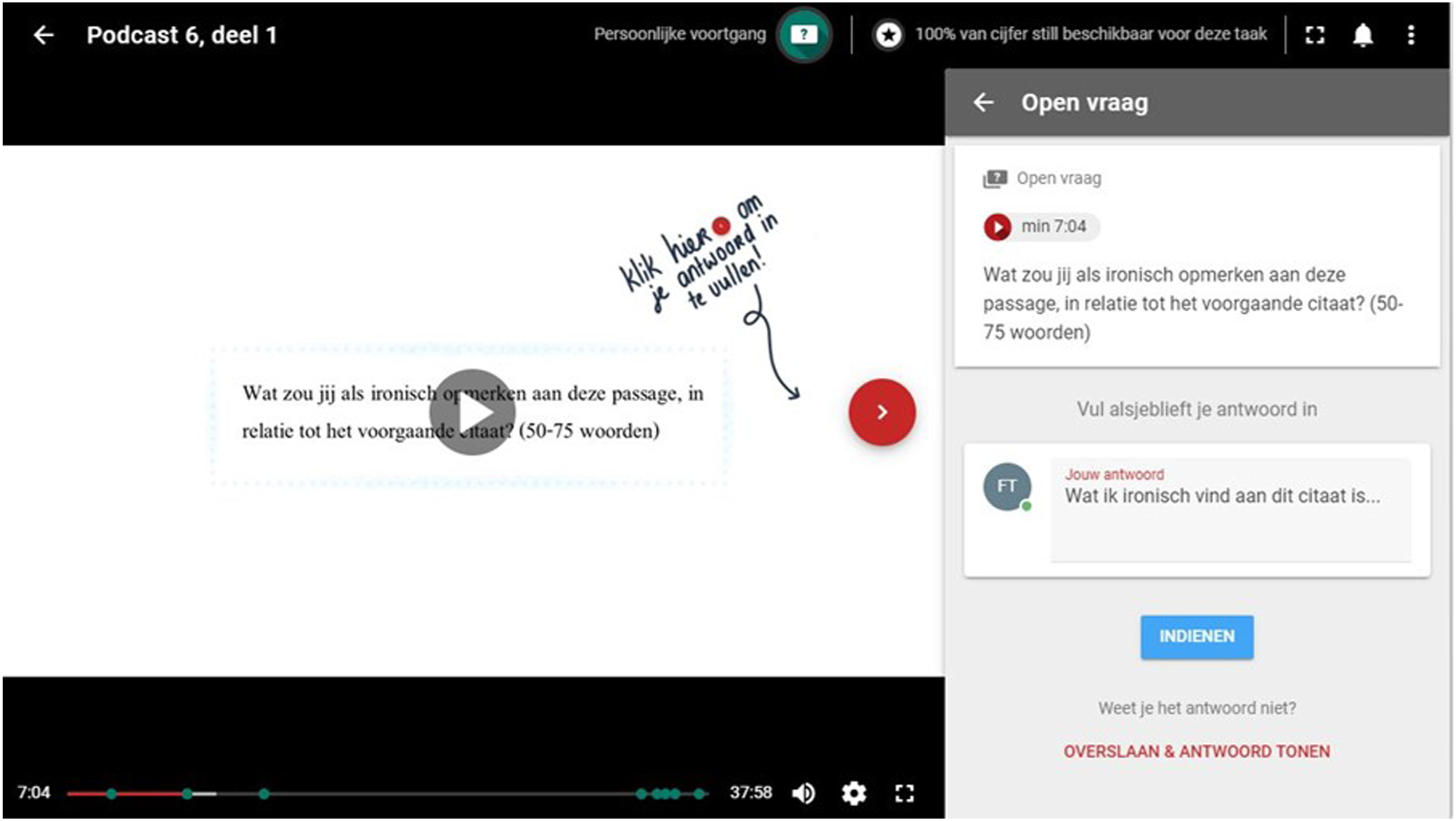
Materials
To record audio, Audio-Technica (AT2035) condenser microphones with Devine (Vocube) vocal isolation chambers and a Focusrite Scarlett (2i2) audio interface were used. Audio files were edited in Audacity. Visual material (supplemental texts, images, assignment animations, logo, opening animation), designed by Nathalie Muffels, was created in IbisPaint and ProCreate, and then edited into a video format with DaVinci Resolve and VN Video Editor. Integrated in Brightspace (LMS), the podcasts were uploaded in the interactive video tool of FeedbackFruits, where text questions were added to create interactive text fields for activating assignments that were ‘locked,’ automatically pausing the podcasts at each assignment and preventing students from continuing the audio until they submitted their answer. FeedbackFruits converted students’ answers into an Excel spreadsheet.
Procedure
We used the educational podcast genre of the narrative, in which we made use of the storytelling techniques of signposting and cross-linking (Drew, 2017a: 206–207). We broke up the podcast narratives with questions and assignments, to help students maintain their concentration, process the discussed topics, and reflect on and practice with the material. We sought to inspire students to do further research if they felt their knowledge of a particular topic was lacking, and to formulate questions to ask to the lecturer in class. It was our intention that by reading the students’ responses in preparation for class, the lecturer could tailor her instructions to the students’ needs.
At the end of each podcast, students were given a group assignment to prepare before coming to class, intended to encourage them to collaborate and further engage with the course materials. Group members were assigned randomly, and every 3 weeks new groups were formed to help students get acquainted and create an overall even distribution for fair conditions. The groups assignments had a dual purpose: they were designed to let students practice with academic skills, such as researching, analysing and reflecting, and to provide the opportunity for peer learning. The assignments aimed to improve teamwork skills (such as time management, coordination, accountability and collaboration) and to create an academic community in which students get to know each other and develop their social skills.
As their final group assignment, students made their own podcasts, as an exercise in science communication. They were instructed to choose one of the novels discussed in the course and to integrate what they had learned, but also to add new material based on their own research. The content of their podcast had to be academic, but the form needed to be directed at a general audience. They were stimulated to be creative. Students were given instructions on how to prepare a script and how to record their podcast at home using their personal recording devices and editing programs. Students were also given the possibility to record their material in the lecturer’s podcast studio on campus. The purpose of the podcast assignment is to allow students to experiment with 21st century ways of expressing academic expertise.
The podcast assignment presents the challenge of striking the right balance between safeguarding academic weight and providing an activating and enjoyable learning experience for students. For this reason, the grading criteria for this assignment were partly academic and partly practical. We evaluated the clarity of the topic, the analysis of the primary (literary) work, the integration of the knowledge that was acquired throughout the course and the use of new material based on the students’ own research, and we looked at the podcast’s structure and composition, the students’ presentation skills, their use of supporting audio material, and their editing skills. We also asked the groups to submit the script for their podcasts, as well as a logbook in which they elaborate on their planning, organization and division of tasks.
Finally, we asked each student to hand in a reflection report, in which they were asked to answer questions about their individual evaluation of and contribution to the podcast, such as: “Describe the division of tasks. Were the tasks divided evenly, in your view? Why (not)?”; “How would you evaluate your individual contribution to this assignment?”; “Did you learn or discover new personal skills during this assignment?”; “Which of your peers would you like to give a bonus point? Why?” The reflection rapport allowed insight into the overall process of creating the group podcast, as opposed to assessing only the final product. It was aimed at having students think actively about the process of collaborative work, about their own role in this process, about the competences they could draw on, and about the skills they practiced and/or learned.
After consultation with a staff member of the university’s Education Advice and Quality Assurance team, we decided on the use of bonus points to be able to differentiate between individual students (rewarding those who showed some exceptional skill, in the opinions of their peers, e.g. in terms of organisation or editing), but also to involve the students in the assessment of their peers and to motivate them to take responsibility and do their part. Adjusting group grades to individual scores based on peer ratings to evaluate individual performance can increase the validity of group assessments (Zhang and Ohland, 2009: 305–6). Research on group assessment suggest that keeping a logbook, as well as using peer evaluations reduce chances of students free loading (Aggarwal and O’Brien, 2008: 262). Further, studies suggest that grading group project based on a combination of different perspectives, such as peer evaluation, instructor observation, reports, logs and final product, allows the instructor to evaluate a team’s process, rather than exclusively a final product, which is beneficial to the quality of the evaluation and which enhances student motivation (Williams et al., 1991: 49–50).
Results
This study set out to examine how a specific activating learning method, integrated in educational podcasts, improves individual student learning and class preparation and participation. Specifically, we are interested in the impact of the integration of various activating exercises in educational podcasts on the students’ comprehension of course material and on their ability to contribute to in-class discussions.
In the questionnaire, students were asked questions about different subjects related to their learning experience, including: motivation, the ‘3B’-system (‘studying, listening, discussing’), preparation, activating assignments, group assignments and podcast assignment. In terms of stimulation and motivation, results suggest that, overall, the podcasts stimulated students to put effort in doing the course work (see Figure 4). On a scale of 1 to 10 (in which 1 expressed that the podcast did not stimulate the student to do the course work, and 10 meant the podcasts stimulated the student to a great extent), 40% of the students expressed the podcasts stimulated them to put effort in doing the course work, and 56.8% indicated the podcasts were very stimulating. There were no negative answers, and only one student (3.3%) was neutral. “To what extent did the podcasts stimulate your engagement in this course?”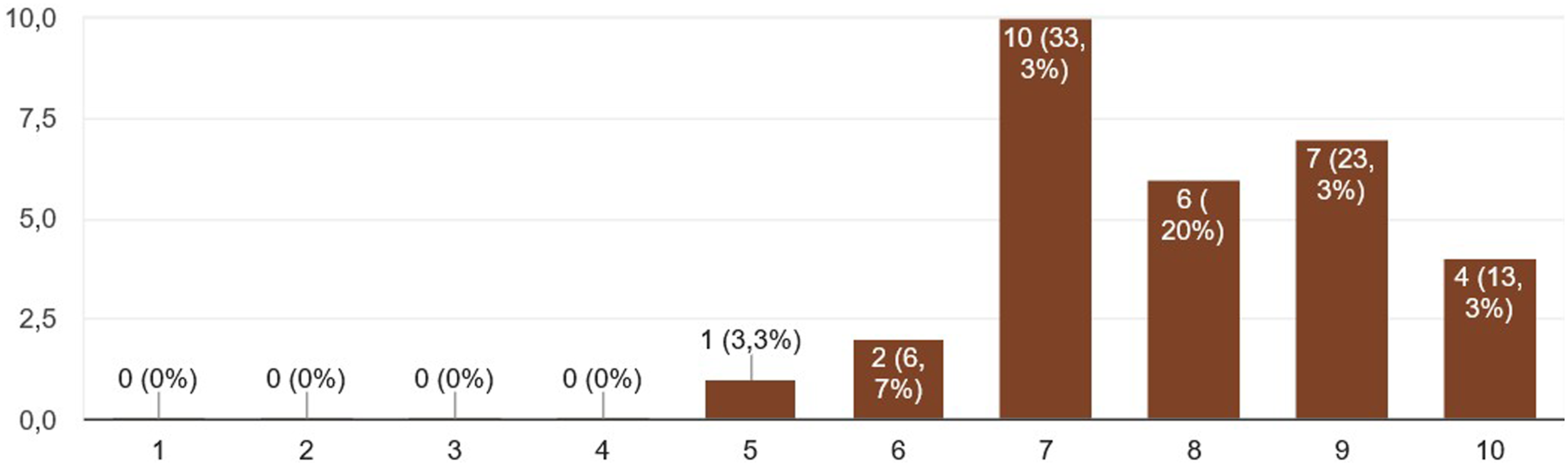
The podcasts appear to have a positive effect on the students’ motivation as well. On the question to what extent the podcasts increased students’ motivation, on a scale of 1 to 10 (1 expressed the podcasts did not increase motivation, and 10 meant the podcasts greatly increased motivation), 44.8% of the students positively indicated that the podcasts increased their motivation and for 41.3%, the podcasts greatly heightened their motivation. Two students were neutral (6.9%) and two students chose a slightly below neutral effect (6.9%). Some students indicated that the podcasts gave them the advantage of being able to listen and do the exercises at their own convenience and pace. One of them expressed: “[It was] really useful. I experienced less pressure because I could choose when I studied the podcasts by myself.” The interview confirms this view. One student shared: “I liked that I could pause and rewind the podcast, which of course is not possible during a live lecture, this helped me take better notes.” The interview further revealed that the podcast motivated students to engage with the course materials outside of assignments or in-class lectures: “Discussions on the podcasts arose spontaneously in our WhatsApp group.”
The overall APM Method that was applied throughout the course of following the steps “studying, listening, discussing” drew a positive reception (see Figure 5). When students were asked to rate how the step-by-step learning method worked for them on a scale from 1 to 10 (in which 1 meant it did not work at all for them, and 10 expressed it worked exceptionally well), 40% of the students indicated a positive response to the method, and 56.7% answered the method worked very well, to exceptionally well. One student (3.3%) submitted a neutral response. Students generally stuck to this order as their learning strategy, as 23% of the students said they always completed their preparatory work before starting the podcasts, 60% indicated that they had done this most of the times, and only 16.7% answered ‘sometimes.’ Asked to share their thoughts on these steps during the interview, students said that they enjoyed this set up because it minimized passive, one-directional knowledge transfer during class: “I felt like we could now use the in-class time for discussions […] which I think was valuable and helped with our final assignment.” “How well did the order of studying listening, discussing work for you?”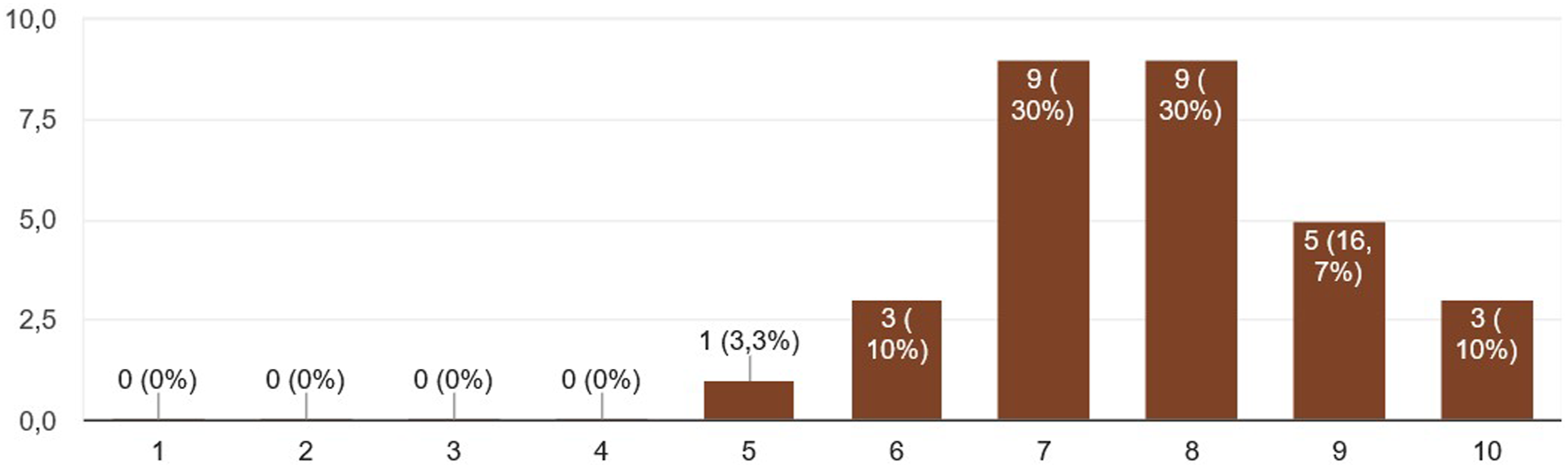
The questionnaire showed that students valued hearing other lecturers (from within and outside of the Film and Literary Studies bachelor) talk about their research area or field of interest. On a scale of 1 to 10 (in which 1 expressed that the participant did not care for it at all, and 10 meant that the participant thought hearing other teachers in the podcast was a great addition), 36.7% was positive, and 63.3% very positive about this. Generally, the students were also positive to very positive (53.4% and 19.9% respectively) about the added value of hearing fellow students feature in the podcast. 63% of the students was interested in featuring in a future episode themselves.
The questionnaire also assessed the students’ experiences of the activating exercises (quizzes and short open questions) during the podcasts, group assignments and final assignment. Students were asked to evaluate to what extent the individual exercises (which consisted of multiple choice ‘quiz’ questions and short open questions) helped them to actively engage with the course materials, on a scale of 1 to 10 (1 = not at all, 10 = exceptionally well) (see Figure 6). “These podcasts contain various individual assignments, meant to have you engage with the material actively. How did these assignments work in your experience?”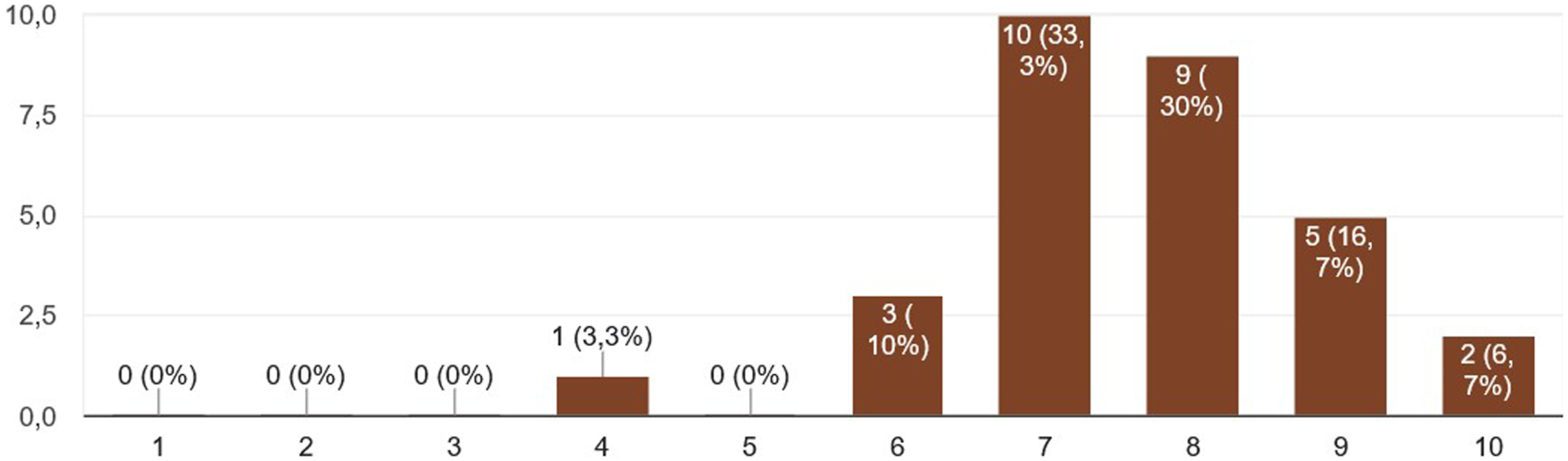
Overall, the great majority of students found the individual exercises in the podcasts helpful and stimulating. 43.3% of respondents expressed a positive experience, and 53.4% exceptionally positive. Participants answered the same question on the multiple-choice quizzes in the podcasts. Again, the great majority of students indicated that the quizzes were helpful: over 43% were positive to very positive, and over 43% of the respondents were rated the quizzes as exceptionally helpful. Participants clarified their rating in an open text question, explaining that the activating exercises increased their motivation compared to teaching methods that only require reading materials as preparation to class. The exercises helped students to actively engage with and memorize materials and kept them alert throughout the learning experience.
In the questionnaire, students indicated that the structure of weekly podcast exercises improves time management skills and allowed for an organic learning process that avoids last minute cramming of material. In the interview a student explained: “I prefer having to do course weekly […] because it is easier to keep track of. Also, because I have to work on it every week, it makes sure I stay involved continuously.” This student also added, however, that it was quite challenging to combine the weekly workload with other courses. For most students, the weekly assignments increased their reflection on and comprehension of the materials. In the interview, a student explained: By interactively working with the questions, researching things, I was able to remember this a lot better. Also in the way it was constructed: for instance, we first would get an assignment ‘find out more about this term,’ which was a term that turned out to be important later in the podcast. This way, we worked with the course material step-by-step.
While to some students, the exercises took too much time and effort, in general the evaluation shows that both the short exercises and quizzes increased the engagement of students with course materials and contributed to an active learning experience. In the interview, a student said about this: If I compare this [the podcasts] to the usual, dry articles we have to read normally, I preferred this because it was more interactive and therefore I got bored less easily. […] I liked that I could hear things — sounds, music, interviews, images — that worked a lot better than a chunk of text.
Another student agreed and added: It was easier to stay concentrated because of the interactive elements and I personally feel it helped me remember the materials more than just reading an article. Also, it was helpful that the language in the podcast was more accessible compared to most academic articles.
Students were generally moderately positive about the group assignments (see Figure 7). On a scale from 1 to 10 (in which 1 expresses that the participant did not like the group assignments and 10 indicates that the participants thoroughly enjoyed the group assignments), 73.3% of the students indicated a positive to very positive experience with regards to the group assignments and their effectiveness. Asked to elaborate on their score in a subsequent open question, students explained that they enjoyed working together on assignments with their peers, the group assignments helped them to get to know their peers and that the assignments increased comprehension of course materials: “It is a lot of fun to exchange opinions and interpretations”; “I liked the group assignments because frequently I had nice group members […]. I admit I personally thought most assignments were not that interesting, but many novels became a lot more enjoyable by discussing them with classmates”; “It felt really cool to discuss and write about a novel with classmates that are equally enthusiastic about it (or the opposite!). It was also a nice way to meet a lot of people from the bachelor.” “Each week, the podcasts contained a group assignment, meant stimulate collaboration and material engagement. How did these group assignments work for you?”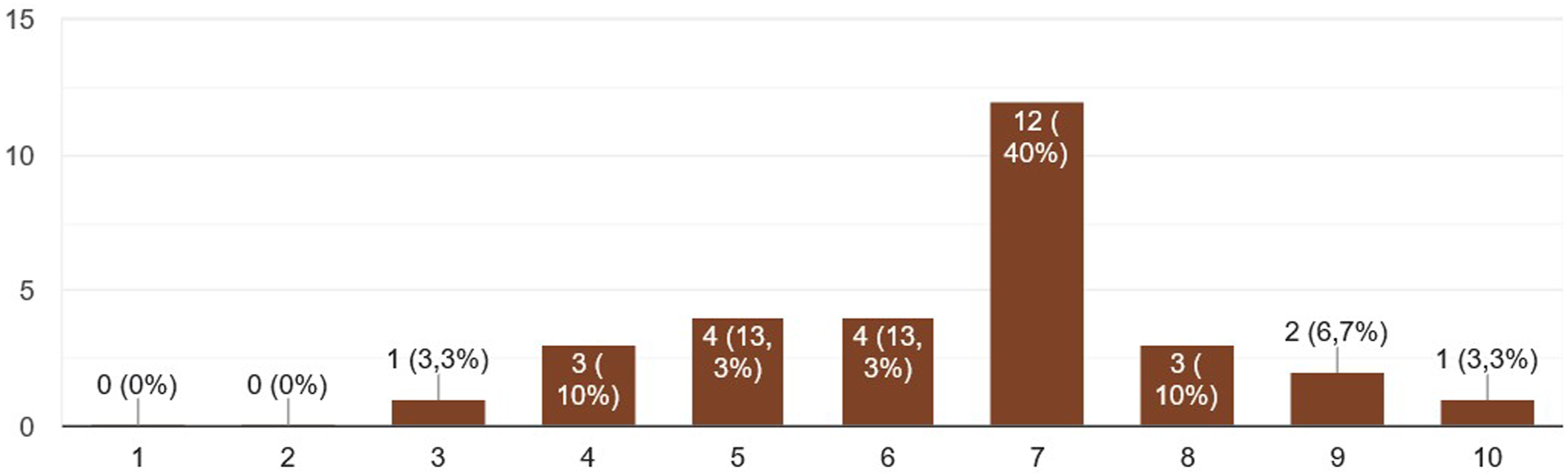
Additionally, the interview revealed that peer collaboration gives students an accessible, safe space to talk, ask questions and affirm their newly gained knowledge. One student expressed: I thought the group assignments were really helpful because of the conversations we had in which we discussed our ideas and thoughts on the materials together, and this makes it easier, or more accessible, to share something [during the in-class discussions] because I know I already talked about it with peers and they had similar ideas and therefore I’m assured I’m not saying anything weird.
Small-scale preparatory peer-conversations are fundamental first steps for students to be able to contribute to in-class discussions, which are often felt to be more intimidating because of the large group size and the presence of a lecturer.
The students who were less positive about the weekly group assignments generally answered that the process was too dependent on the motivation and work ethics of their peers. “Sometimes it was hard for me that not everybody was equally meticulous or willing to spend time on the assignments.” Some students also explained they found difficult to evaluate each other’s contribution to group work when they had to divide bonus points among their peers in the reflection reports, especially when they felt that they all worked hard so it would be unfair to give an advantage to only a select few. Though students sometimes found it challenging to work together with their peers, the impression is that they do see the benefit of peer-learning, for example: “It was awkward, but it did help to gain a better understanding of the material and to apply it.”
Although not all students were equally enthusiastic about the group work, the evaluations show that it did benefit their understanding of the course material and that it helped to create a sense of community. The results suggest that the original plan of weekly group assignments proved too ambitious. A main problem was that for the students it proved difficult to find the time to work together: “the group assignments took a lot of extra work”; “organizing to meet with your group members every week was difficult sometimes.” In the reflection reports, students also expressed that group projects are time consuming and require more organizational effort compared to individual assignments, which is why in general, they seemed to prefer individual assignments over group projects. Some students also brought up the problem that tasks were not always divided equally and that their peers did not always put in sufficient effort.
Overall, students were enthusiastic about the creative assignment of making a podcast themselves (see Figure 8). On a scale of 1 to 10 (where 1 indicated the participant did not enjoy creating a podcast, and 10 that the participant thoroughly enjoyed creating one’s own podcast in a group), 20% of the responses was positive, while 73% was extremely positive. No less than 30% of the students expressed their enthusiasm for creating their own podcast by rating the assignment 10/10 on the Likert scale. About the usefulness of creatively experimenting with digital and technical methods for their future career, interviewed students said: “I think we will have to create podcast more often in life, so it is a skill we already learned and put into practice so that is useful,” and “What I liked about the podcast assignment was the creative freedom.” Students also expressed that they feel that educational methods should consider that new developments in the work field require young professionals to master new skills: “In my opinion, it is important that lecturers think about education innovation, if not, we [students] might be disadvantaged compared to other students; we might miss the opportunity to learn something that is really important for our future.” “How much did you like creating a podcast yourself, in this course?”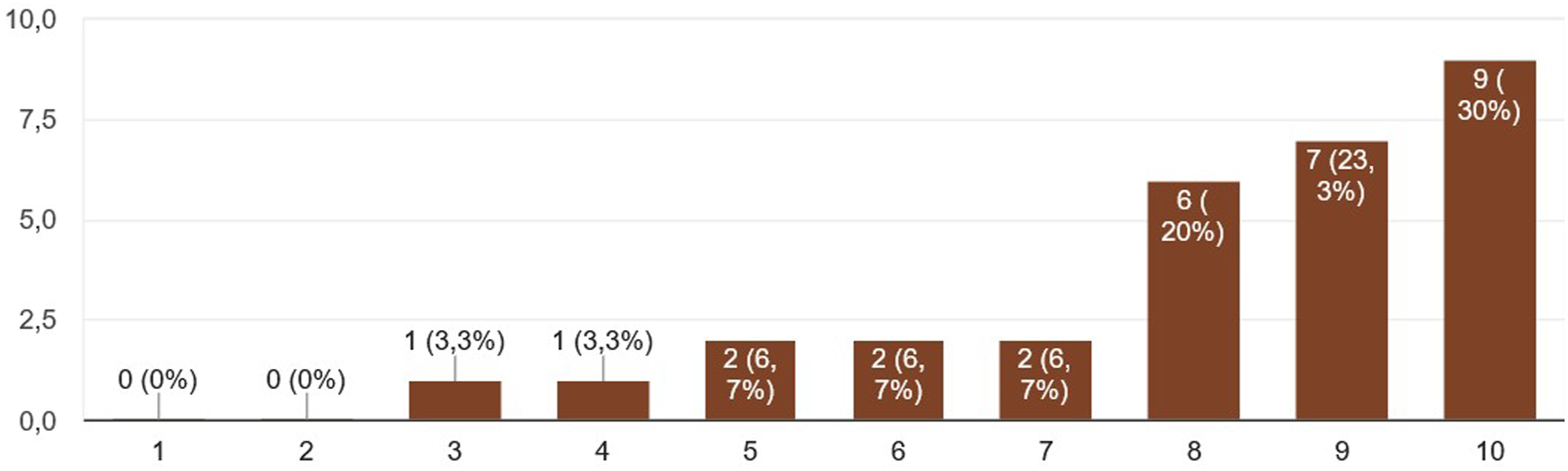
Finally, students were asked to what extent the podcasts improved their self-reliance and independence on a scale from 1 to 10 (1 indicated the podcasts did not improve the students’ self-reliance and independence, 10 expresses it improved greatly) (see Figure 9). The results suggest the podcast had a positive effect: 26.7% of the students answered that the podcasts benefitted their self-reliance and independence, and 70% expressed the podcasts improved it considerably. One student was neutral (3.3%) and there were no negative responses. These responses suggest the APM is beneficial to students’ personal responsibility and autonomy in learning, making them less dependent on lecturers to manage their learning and encouraging them to reflect on their personal learning needs and styles. “To what extent did the podcasts improve your self-reliance and independence in this course?”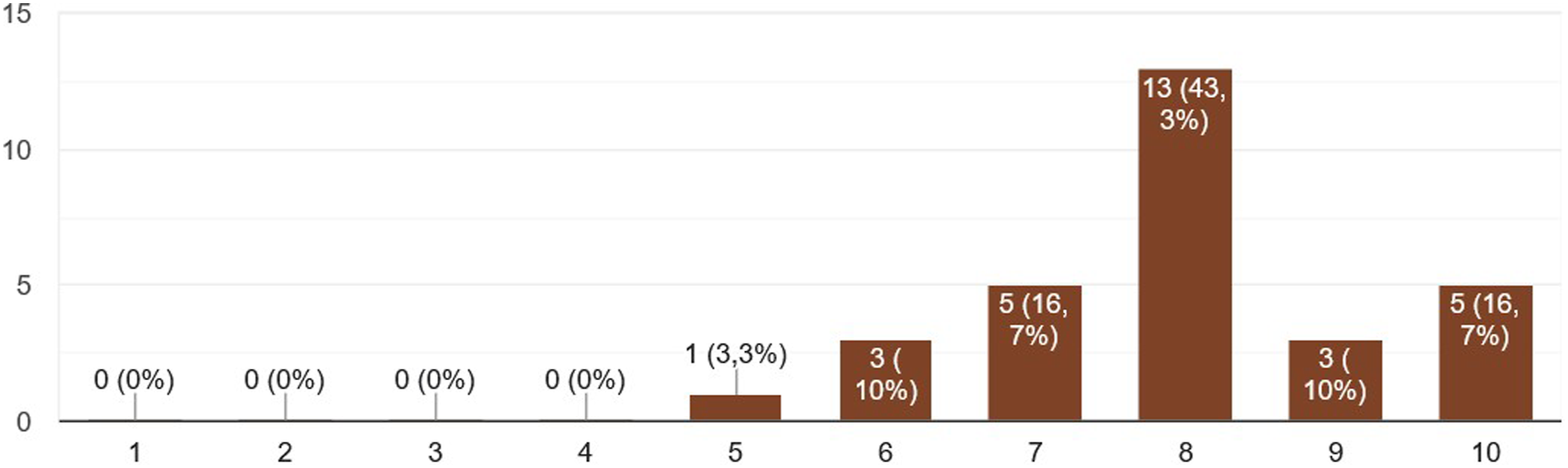
Qualitative data gives further insight on this topic. The APM helped the new students take up study practices that are fundamental to their academic education. In the interview, one student remarked: While reading articles, I was less inclined to make notes, but here [during the podcasts with short exercises] I was really compelled to start taking notes. The exercises in the podcasts also let us put our new knowledge into practice right away, this also made me feel much more prepared for class, during which the material is discussed again, helping me remember it even more. I liked this format.
A valuable additional advantage of the APM is that students experienced more self-confidence in their academic abilities, which is especially important for first-year students, who are at the start of their careers: This [APM] helped me, because in high school, I never dared to participate in group discussions in class, but now, before class, we were already familiar with some of the material, and therefore I dared to take part in the group discussion. This was really nice, that it gave me the self-confidence to do this.
Another student added: Yes, I share that opinion. […] Often, I feel I am not well-read enough to participate, so to me, it is daunting. I liked that we got this course [with the APM] in the first semester of our first year, so it gives you a bit of self-confidence right from the beginning, which is helpful in other courses as well, so maybe I can try to participate in group discussions there as well.
The improved participation struck students in the interview: “Right, if I compare this to other courses, really, a lot more students actively participated in the group discussions.”
Conclusion
The results show that having students engage with the course materials through a variety of media and approaches in the APM, increased their motivation and their engagement. Students appreciated that they were able to listen to the podcasts and do the individual exercises at their own convenience and pace. The great majority of students found the activating exercises in the podcasts stimulating and helpful for their comprehension of and reflection on the course materials. Students also felt that the structure of weekly exercises improved their time management skills. Moreover, in line with the findings of Bouwmeester et al. (2016) and Bergman and Sams (2012), the APM, as a specific application of active learning and blended learning, proved beneficial to students’ personal responsibility, autonomy and self-confidence in learning. The results further show that most students enjoyed working together on group assignments with their peers and that this collaboration gave them an accessible and safe space to talk and ask questions. However, students also found the peer-work challenging, because tasks were not always divided equally and it proved difficult to find the time to work together. Moreover, students did not appreciate being asked to evaluate each other’s contribution to group work. Overall, the results suggest that the APM leads to increased motivation, engagement and comprehension and can therefore help to address the risks that, as Caulfield warns (2011: 4) are involved in traditional teaching methods.
Discussion
In addition to our insights as researchers based on the results discussed above, we would like to place several comments from the perspective of us as lecturers of the course in which the APM was developed and implemented. Firstly, we found it encouraging that students were not only very enthusiastic about the creative assignment of making a podcast themselves, but that they were also very skilled at it.
Our second reflection is about the group work, which students found challenging, an experience we suggest is part of the interpersonal transferable skills that students practice in preparation for their future careers (Williams et al., 1991: 45–8). Based on the results we would, however, recommend reducing the amount of group assignments, to allow students sufficient time and attention for planning and organizing their collaborative work. Moreover, since students felt uncomfortable with evaluating each other’s contribution to group work, we recommend removing the peer-assessment method in future editions of the APM.
Thirdly, we wish to emphasise that the APM also benefited us, as lecturers, since the activating exercises allowed us to customize our instructions according to the students’ responses. This freed up time to have in-depth discussions and address remaining questions. The online and offline combination of weekly (individual and group) assignments and in-class discussions, allowed us to continually evaluate student comprehension and progress. It is primarily this aspect of the Activating Podcast Method, we feel, that can help lecturers to tailor their instructions to their students’ levels and needs. Admittedly, however, reading and evaluating the students’ contributions in preparation for class is a lot of work, which is why we would suggest to reduce the number of exercises in accordance to group size. In our experience, the APM also contributed to a higher level of in-depth discussions during class.
Finally, setting up the APM is, time-consuming, requiring lecturers to first master the specific skills of scripting, recording and editing podcasts, and then practice these skills within tight weekly deadlines. We feel that this relates to a broader problem concerning teaching innovation and teaching in general, we feel. Aware that the 21st century requires new educational methods and practices, many universities stimulate lecturers to develop various teaching innovation projects. Often, such projects rely on temporary funding, either from within the university or from external sources (which was also the case here), funding that lecturers need to apply (and write applications for) themselves. Despite many good intentions and the hard work and generous help of supporting staff, a substantial budget to free the time needed to structurally implement teaching innovations in the curricula is often lacking.
Within the Dutch academic context, moreover, many lecturers work on temporary contracts, without the opportunity to invest long-term in the courses that they teach. It goes without saying that this not only negatively impacts the careers of these lecturers, but teaching innovation as well. Lecturers who do hold permanent positions are under increasing pressure to obtain research grants, produce sufficient academic “output” and organize “valorisation” activities, while managing substantial teaching loads and numerous administrative duties. This poses the dilemma of how to integrate teaching innovation in our programmes in structural, sustainable ways, without having to compromise on our research activities. These problems aside, it was very stimulating for us to be able to learn new digital tools, to develop a 21st century method of teaching that gives students and lecturers the chance to be more creative, and to observe the enthusiasm this sparked. It was rewarding to find that the APM helped students practice with transferable skills in preparation for the labour market, have meaningful discussions, learn from each other and be active members of the academic community. On the basis of our students’ feedback, we will continue to improve our method in the years to come.
Limitations
There are several limitations to this study. Limiting factors are the sample size and the homogeneous educational discipline of the students, who were all first-year students within the Film and Literary Studies programme at Leiden University. Consequently, the study is based solely on a specific Dutch academic context. Whereas this study sheds light on educational podcasting in higher education, it does not provide sufficient data to be extrapolated to general conclusions about higher education. This study is based on students’ insights that were gathered from questionnaires and in interviews. The interpretation and collection of the questionnaire and interview data is potentially subject to unintended bias. Related to this, is a second limitation to this study: the dual role of the authors as lecturers and researchers. We acknowledge that it is impossible to fully separate these two roles and we have tried to balance our educational goals as lecturers with our research goals as scholars in a professional and ethical way. At the same time, we also feel that our dual role was beneficial, as it allowed us to design and study the APM as part of a course. Lastly, we are literary scholars who are not trained in Science Education. We wrote this study from the conviction that educators across all disciplines could make valuable contributions to the field.
Footnotes
Acknowledgements
The development of the APM was supported by the Gratama Foundation and the Leiden University Fund (LUF), who granted us the generous amount of €21,000. Sanne Arens, policy officer in teaching innovation at the Faculty of Humanities, helped us prepare the application for this grant. The financial support of the Gratama Foundation and the LUF enabled us to purchase the necessary technical equipment for our podcast studio: two microphones, two (combined) reflection and pop filters, an audio interface, and a small handheld recording device. Additional assistance was provided to us by Thomas Vorisek, an ICT&E representative at the Faculty of Humanities. The APM was created by Astrid Van Weyenberg, an Assistant Professor who was compensated for 0.2 fte (8 h weekly, for the duration of 1 year), and Nathalie Muffels, who worked as a Student Assistant for 0.2 fte (8 h weekly, for the duration of 1 year. 4 However, the APM is the result of a collaborative effort. We wish to credit the Film and Literary Studies staff members, past and present, who taught in previous editions of the Realism and Symbolism course and contributed to its content. Seven staff members at the Leiden University Centre for the Arts in Society participated in the podcast series, sharing their expertise in interviews, interpretations and debates. We thank Emeritus Prof. in World Art Studies Kitty Zijlmans, Dr Madeleine Kasten, Dr Liesbeth Minnaard and Dr Peter Verstraten from the Film and Literary Studies department, and Dr Lotte Fikkers, Dr Evert-Jan van Leeuwen and Dr Michael Newton from the English Language and Culture department. We thank Annebeth Simonsz, a specialist in education development at the Faculty of Humanities, for sharing her expertise on how to implement and assess collaborative learning in group assignments. Not only staff, but also students were involved in this project. We are grateful to the Film and Literary Studies students from the previous cohort (2020–2021) who recorded parts of the content and most of the assignments and who gave us a lot of helpful feedback on the pilot version: Marianne van Duijn, Wouter Dijkman, Eefje Hoekstra, Josefien Overeem, Warre Metzlar and Daan Sikkens. But also the feedback of the students from the current cohort (2021–2022), the first to study according to the APM, has proved indispensable for improving our project. The enthusiasm of our students continues to be a source of inspiration.
Declaration of conflicting interests
The author(s) declared no potential conflicts of interest with respect to the research, authorship, and/or publication of this article.
Funding
The author(s) disclosed receipt of the following financial support for the research, authorship, and/or publication of this article: Gratama Foundation and the Leiden University Fund (LUF); 2021-01/W213010-3-GSL.
