



Abstract
Background
In the present scenario of the textile industry is contributing significant environmental pollution for the use of different types of synthetic dyes which are mainly toxic, non-biodegradable, and use a lot of resources. As a result, there is a growing demand of natural dyes which can be a sustainable alternative because it offers eco-friendly and health-conscious solutions for textile colorations.
Method
This research highlighted the use of binary natural dye paste extracted from red sandalwood (Pterocarpus santalinus) and chamomile (Matricaria chamomilla) for the screen printing of cotton fabric. The dye was extracted using microwave treatment and the process was optimized using statistical design through central composite design (CCD) under response surface methodology. The printing variables was the concentration of plant powder (1-6 g), amount of thickener (1-8 g), pH (7-12), and the irradiation time for microwave rays (1-4.2). The concentration of the both chemical (Al³+, Cr³+, tannic acid) and bio-mordants (pomegranate, myrobalan, red sumac) were 0.5-1.5%. The final printed fabrics were checked using different tests including color strength (K/S), colorfastness (ISO standards), antioxidant, and antibacterial properties.
Results
The optimization conditions were observed using 2.5 g each of red sandalwood and chamomile, 2.5 min microwave treatment, 4 g thickener, pH 9 with the high color strength (K/S) value of 4.71. Both mordanting conditions, including chemical and bio-mordant, showed good colorfastness properties where the bio mordants had the outstanding performance due to the avoiding of heavy metal pollution. The printed cotton fabric also showed strong antioxidant activity up to 89% and higher antibacterial efficacy against Staphylococcus aureus and Escherichia coli, particularly using microwave treatment.
Conclusion
As a result, the combination of binary plant extract can be effectively used as an alternative of synthetic dyes for the ecofriendly screen printing of cotton fabric. The combination of statistical analysis, microwave treatment for natural dye extraction and use of bio-mordants are the alternatives of sustainable solutions which will reduce the reliance on synthetic dyes.
Introduction
The world is growing with the advancement of new technology and adaption of these era, where in the textile section is also being taken steps for the upgradation including the raw materials process to dyeing and finishing section. 1 The textile dyeing industry releases a significant amount of dye mixed wastewater into the water bodies which ultimately contaminating aquatic ecosystems. 2 The synthetic dyes are mainly non-biodegradable which cause long-term environmental pollution as well as health risks. The mechanism of azo dyes which often used in the textile dyeing industry are break down into carcinogenic aromatic amines that mainly cause the water pollution. 3 The persistent coloration caused by such dyes also blocks sunlight penetration in water, affecting photosynthetic aquatic organisms. Workers in dyeing industries are frequently exposed to hazardous chemicals, leading to respiratory issues, skin disorders, and long-term health complications. Certain dyes, such as those derived from benzidine, are classified as carcinogenic and mutagenic. 4 Shedding of effluent of textiles into water bodies reduces sunlight penetration, raises biochemical and chemical oxygen demand, hinders photosynthesis, restricts plant growth and imposes serious threats. The production of synthetic dyes is resource-intensive and environmentally unsustainable. 5 Similarly, the manufacturing of various dyes, reagents and allied pigments processes often involve the use of heavy metals, salts, and acids, resulting in significant chemical waste and energy consumption. 6 These factors collectively contribute to the substantial environmental footprint of textiles. Synthetic dyes are persistent, bio-accumulative, toxic, mutagenic, and carcinogenic. These dyes also pose challenges in wastewater management. Incomplete dye removal leads to residual contamination, further impacting soil fertility and agricultural productivity when such waste is improperly disposed. 7 Now the globe is demanding alternatives that have ecolabel, ecofriendly and healthy impacts for the consumers and ecosystem. 8
Among such alternatives in textiles, green dyes have gained much appreciation since last decade. These bio dyes are obtained from natural sources without the need of any special care. Mostly such colorants are bio actives of plant wastes which can be made useful in dyeing of fabric, yarn and allied fields. 9 After extraction of dyeing, the residues if dumped into soil can enrich the soil fertility. The disposal issue is not concerned with these dyes during the application and even after use, these dyes are easily biodegradable and possess no such serious health issues.10,11 Most of these colorants are useful in treating diseases such as cholera, fever, cancer, and typhoid etc and have many field characteristics such as fire retardant, insect-repellent, anti-allergic, anti-inflammation, anti-viral and anti-bacterial. 12 Another important aspect is the revisit of traditional art of dyeing and printing with a lot of sustainable and green benefits. Thus, such benefit has attracted people to return towards classic and now the global community is forcing the producers to include such healthy bio-actives dyes in coloration and printing of all fields. 13
Printing is the newly introduced art, where plant extracts in the presence of natural thickeners and allied auxiliaries are used to get new tints.
14
The revived art of eco-printing with plant extracts gives a new glory to the textiles where scarves, sleeves, bed sheets, pillows, decorative clothes etc, show attractive look.
15
Recent years have seen improved interest in eco-friendly practices within the textile industry, prompting the exploration of natural dyes from plant extracts.
16
Using these dyes in screen printing supports the total push to diminish the environmental effect of textile production. Screen printing, a versatile and widely used textile printing technique, involves the use of stencils and mesh screens to transfer designs onto various substrates.17,18 This method has gained significant popularity due to its ability to produce intricate and vibrant patterns. Screen printing is an excellent sustainable option for textile production, as it repurposes colored textile waste by incorporating waste powders as pigments in the printing paste.
19
Cotton, a natural fiber known for its comfort, durability, and breathability, is an ideal substrate for screen printing.20,21 However, conventional dyeing and printing processes often involve synthetic dyes and chemicals that pose environmental and health hazards.
22
Recent reports on cotton coloration with microwave-assisted plant extracts reinforce this sustainable approach. Jabar et al
23
used cashew bark extract and showed that microwave extraction shortened processing and raised dye yield; on cotton, both low-toxicity electrolyte mordants (CaCl2, FeSO4) and bio-mordants (Vernonia amygdalina, Sorghum bicolor) improved dye exhaustion/uptake and upgraded fastness to washing/rubbing (very good–excellent) and light (up to 6-7), with post-mordanting generally strongest. In a complementary study, Brazilian plume (Justicia carnea) leaf extract was optimized for mordant-functionalized cotton (time 10-90 min, pH 1-11, LR 1:5-1:30, 30-90 °C), identifying 50 min, pH 7, LR 1:20, 60 °C as optimal; Ca2+ tended to lighten/yellow shades whereas Fe2+ and herbal mordants (cashew bark, coconut husk) deepened/red-shifted shades and delivered excellent fastness in several cases.
24
These findings align with our bio-paste strategy and help contextualize our sandalwood–chamomile system; to our knowledge, systematic screen-printing using chamomile or red sandalwood pastes remains limited in the literature, underscoring the novelty of the present work. As a result, natural dyes, such as red sandal (Pterocarpus santalinus) and chamomile (Matricaria chamomilla), have great potential to act as source of dyes for printing. Red sandal wood (Pterocarpus santalinus), also known as Chandan wood contains santalin which impart deep red color onto fabric (

Main chemical structure (a) 6-[(3,4-Dihydroxyphenyl)methyl]-2,10 dihydroxy-5-(4-hydroxy-2- methoxyphenyl)-1,3-dimethoxy-9H-benzo[A]xanthen-9-one (Pterocarpus santalinus), (b) 4',5,7- trihydroxyflavone (Matricaria chamomilla).
As a result, this research explores the eco-friendly screen printing of cotton using a binary mixture of natural dyes extracted from red sandalwood and chamomile. By employing microwave-assisted extraction and response surface methodology with CCD, the study optimized dye isolation parameters, including plant powder concentration (2.5 g each), thickener (4 g guar gum), pH (9), and microwave irradiation time (2.5 min), achieving a high color strength (K/S = 4.71). The work introduced bio-mordants derived from pomegranate, myrobalan, and sumac as sustainable alternatives to conventional metallic mordants (Al3+, Cr3+), demonstrating comparable or superior colorfastness (wash: 4-5, rub: 4-5, light: 4) while eliminating heavy metal pollution. The assessment of antibacterial properties shows that dyes have microbial resistance, which are aligned with the phytochemical nature of the dyes. This approach integrates statistical optimization, green chemistry, and circular economy principles, offering a scalable model for reducing synthetic dye reliance in textile industries.
To address the challenges of environmental impact and sustainable textile coloration, this study explores the eco-friendly screen printing of cotton fabric using a binary natural dye extracted from Pterocarpus santalinus (red sandalwood) and Matricaria chamomilla (chamomile). The dyes were collected by microwave-assisted method, and the printing parameters were optimized using conventional CCD of response surface methodology. Bio-mordants from pomegranate, myrobalan, and sumac were employed as alternatives to the conventional metallic mordants. Accordingly, the objectives of this research are to:
optimize the printing parameters to enhance color strength (K/S) and printing performance of the binary dye paste. compare the effects of chemical and bio-based mordants on color strength and colorfastness properties. evaluate the antioxidant and antibacterial functionality imparted to cotton fabric by the printed natural extracts, and propose a sustainable coloration approach that reduces dependency on synthetic dyes and toxic mordants.
Therefore, this work aims to establish a scalable, low-impact printing pathway integrating statistical optimization, microwave extraction, and bio-mordanting for environmentally responsible textile production.
Experimental Details
Material Preparation
In this research studies, dried floral petals of chamomile (Matricaria chamomilla) and small chips of red sandalwood (Pterocarpus santalinus) was provided by Department of Textile Engineering, Yazd University, Yazd, Iran. The crude (red sandal and chamomile) powdered materials were boiled in aqueous medium for 30 min to extract completely. Tannin-based bio anchors were also extracted by boiling 2 g crude powder of pomegranate, myrobalan and red sumac with 100 mL of water, which were purchased from Herbal Market, Faisalabad, Pakistan. After boiling, the filtrate was separated, and the extract was stored as tannin mordants. Chemicals (Al3+, Cr3+ and tannic acid) used for printing and mordanting was of commercial grade. The cotton fabric with a specification of 110 GSM was provided by Yazdbaf Co., Yazd, Iran. These material preparation steps follow standardized natural dye extraction and treatment steps established in our laboratory and routinely applied in earlier research on plant-based textile coloration. 28
Selection of Printing Variables
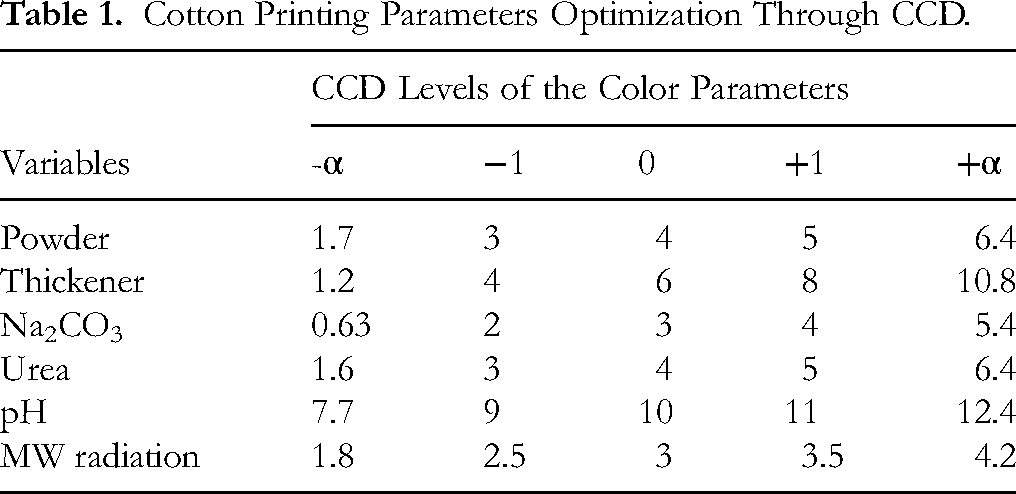
A series of 48 experiments was made through CCD under response surface methodology. 29 Each experiment was performed as designed. The results were analyzed using Two-way Anova. The following printing conditions were used to formulate the series of printing variables such as powder (1-6 g), thickener (1-8 g), Na2CO3 (1-5 g), Urea (1-6 g), pH (7-12) and MW radiation (1-3, 3.5 and 4.2 min). From isolation of color from binary mixture of chamomile and red sandal, the required amount of powder was used at boiling. After boiling, the binary extract and fabric was given MW treatment up to 5 min using high power irradiator by following CCD. The design of experiments was developed using a CCD within the response surface methodology framework for six independent variables: powder, thickener, Na2CO3, urea, pH, and microwave (MW) irradiation time. The CCD comprised a total of 48 experimental runs, which included 32 factorial runs (extreme points) from the 26–1 fractional factorial (resolution V) portion, 12 axial points (±α levels for each factor), and 4 center point replications to estimate experimental error and check model adequacy. The selected levels (−α, −1, 0, + 1, +α) of each variable are summarized in Table 1. This structure ensured efficient estimation of quadratic effects and reliable prediction of optimal printing conditions with minimal experimental redundancy. The minimum and maximum levels of the six independent variables (powder, thickener, Na2CO3, urea, pH, and microwave irradiation time) were selected based on prior laboratory-scale screening experiments and process feasibility. 30 Lower bounds were chosen to ensure sufficient colorant availability, paste viscosity, and fixation chemistry without under-performance, whereas upper bounds were constrained by excessive paste thickness, print-definition loss, and fabric harshness observed during preliminary trials.
Cotton Printing Parameters Optimization Through CCD.
Mordanting Conditions
The electrolyte solution of Al3+, Cr3+ and tannic acid was used as a chemical mordant. Additionally, pomegranate peels (Punica granatum), myrobalan (Terminalia chebula), and red sumac (Rhus typhina) were employed as sources of tannin-based bio mordants. For the purpose, 0.5 g of Alum (Al3+ salt), 0.5 g of Chromium (Cr3+ salt) and 0.5 g of Tannic acid were dissolved in 100 mL of lake warm water. Using mordant to fabric ratio, 25 mL of mordants were used for screen printing of cotton at given conditions. Same is the process of mordant solution formulation was done with 0.5% and 1.5% of these salts. For bio mordanting, the first bio mordant was extracted by boiling 0.5 g of myrobalan, red sumac and pomegranate with 100 mL of water. After boiling crude mixtures were filtered and 25 mL of each filter was added in paste formation. The bio mordant added paste was used for printing cotton at given condition. After printing, all the fabric were cured at 90 °C for 2–3 min and washed, dried and subjected for analysis. Same is the process of bio mordanting was added using 0.5 g and 1.5 g of crude plant materials by following above-described methods. For preparing bio-mordant the selected amount of mordants (0.5-1.5 g) was boiled with l00 mL of distilled water, filtered and filtrate was mixed in printing paste to develop new shades. Eco-friendly chemical mordant was also prepared by dissolving (0.5-1.5 g) of salts with 100 mL of distilled water, and as per weight of the fabric, the appropriate solution (25 mL) was mixed in paste formation and employed at given condition. The process mechanism for sustainable screen printing of cotton using bio-paste from Pterocarpus santalinus and Matricaria chamomilla is represented in

Schematic representation of the process mechanism for sustainable screen printing of cotton using bio-paste from Pterocarpus santalinus and Matricaria chamomilla.
Evaluation of the Characteristics of Printed and Unprinted Fabrics
Fourier transform infrared spectroscopy (FTIR) analyses were used to examine the chemical changes. For the evaluation of color strength (K/S), all the printed fabrics were subjected to the CIE Lab system in Spectra flash SF-600. The printed fabric was subjected to ISO standards to rate the colorfastness properties for observing the role of bio-mordants in comparison with chemical mordants. The color fastness properties were analyzed for washing (ISO 105 CO3), light (ISO 105 BO2), and rubbing (ISO 105 X12) as per ISO standards, and ratings were taken by comparing shade changes at a grey scale. 32 For antimicrobial using disc diffusion method and antioxidants activities using DPPH assay was determined. 33
Statistical Analysis
The experimental design was developed using CCD under the response surface methodology (RSM) framework to optimize color strength (K/S). Six variables; powder, thickener, Na2CO3, urea, pH, and microwave time were evaluated through 48 experimental runs (32 factorial, 12 axial, and 4 center points). Data were analyzed using Design Expert software, where analysis of variance (ANOVA) determined the significance of model terms (P < .05). Model adequacy was verified using R2, adjusted R2, predicted R2, and lack-of-fit tests, while response surface plots visualized variable interactions and optimal conditions.
Results
The printing of fabrics with plant pigments or dyes is an old art where modification in processing has made this cultural heritage more value additives and greener. 34 The addition of MW treatment for isolation of dyes from plants has not only saved solvent, energy and time but also has improved the shade quality. These rays have two sided actions. ie, on extract and on fabric. For fabric these rays modify the fiber surface by tunning to raise its sorption behavior. 35 The peeled surface shows that on printing, the paste sorption attitude might be enhanced which have given highest color depth (K/S = 4.71) shown in Table 2.
Experimental Data Using CCD for Selection of Optimal Values of Printing Variables Along K/S.

Matricaria chamomilla (chamomile) is a prominent cultivated medicinal plant, renowned for its diverse array of bioactive compounds with significant therapeutic value. Key constituents include sesquiterpenes, flavonoids, coumarins, and polyacetylenes, which contribute to its wide-ranging pharmacological properties.
36
In order to investigate the chemical interactions between the MW untreated and treated red sanders and chamomile extract, the FTIR spectra of them were recorded and are presented in

FTIR interpretation of extract (a) without MW radiation (b) with MW radiation.
The modification in the chemical nature of cellulosic unit before and after MW treatment has been seen through visualizing the spectral peaks displayed in
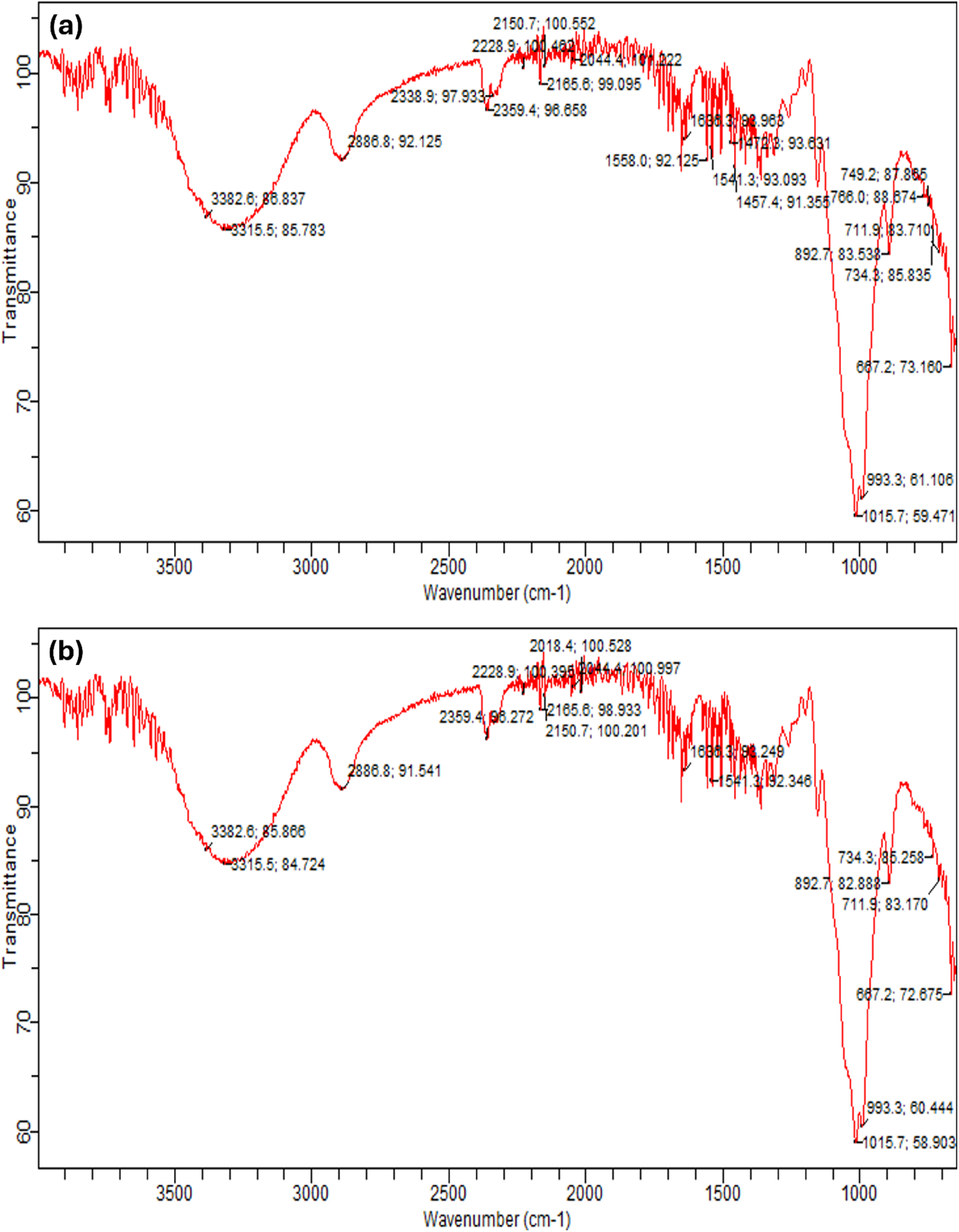
FTIR interpretation of control fabric (a) with MW radiation (b) without MW radiation.
Therefore,

FTIR Interpretation of printed fabric (a) with MW radiation (b) without MW radiation.
The statistical analysis in Table 3 shows that model used for analysis is fit (P-value = .00). The role of variation with powder in two-way interaction is highly signification at 1% of the level (P-value = .01). This shows that radiation is useful both for natural dyes and fabric to get acceptable results by printed stuff. Powder used for isolation of dye for making binary mixture is of great importance. The results given in Table 2 show that 5 g of binary mixture (2.5g = red Sandal and 2.5g = chamomile) has shown highest result (K/S = 4.71) on cotton fabric. Dye isolation using microwave treatment (2.5 min) requires a reduced powder amount.
Analysis of Variance for Data of Cotton Printing with Binary red Sandal and Chamomile.

Cost effective in nature and statistically it can be seen that both powder and radiation have great relation to give significant results (P-value = .01). The other factor is the inclusion of thickener amount for developing printing paste at high quality. In this study, guar gum as thickening agent (4 g) has been added to make the printing paste. On using this amount of thickener agent not only adsorption of colorant in form of binary mixture has been enhanced but also by adding stable interaction between dye and fabric after MW treatment up to 2.5 min high strength shade has been achieved. The statistical analysis in Table 3 shows that the role of guar gum (4 g) is highly significant (P-value = .000). Similarly, its role along with extract pH (pH = 9) has also been found highly significant (P-value = .001).
The model fit statistics indicated strong adequacy of the quadratic regression model, with R2 = 0.887, adjusted R2 = 0.764, and predicted R2 = 0.477. The lack-of-fit test was not significant (P-value = .732), confirming that the model sufficiently represents the experimental data (Table 3). These values demonstrate the reliability of the CCD derived quadratic model for predicting K/S.
The two-way interactions among the selected variables were further visualized using an interaction plot (

Interaction plot for color strength (K/S) and the fitted means of two-way interactions among key variables (powder, thickener, Na2CO3, urea, pH, and microwave radiation time).
To see how the different printing factors worked together, we plotted three dimensional response surfaces from the RSM model (Figure 7). Each plot shows the effect of two variables while the others were kept steady at their middle settings. The curved nature of the surfaces matched what the ANOVA results suggested that color strength (K/S) depends on both single factors and how they interact. Among all combinations, powder with thickener, Na2CO3 with pH, and urea with pH had the most noticeable impact on shade depth and evenness. These surfaces also confirmed that the fitted model was dependable and helped pinpoint the region where the strongest color appeared.

3D response surface plots for color strength (K/S) showing the interactive effects among the six printing parameters (powder, thickener, Na2CO3, urea, pH, and microwave radiation).
The statistical work did more than just rank variables by significance it also gave some practical clues for real printing conditions. The amounts of powder and thickener, which had the biggest influence on K/S, are directly related to paste thickness and how well the color soaks into the fabric. In practice, these are key factors for getting uniform prints. The Na2CO3 and pH pairing also stood out, showing that careful control of alkalinity can reduce shade variation from one batch to another. Taken together, these findings can guide industrial printing toward steadier results with less waste of dyes, chemicals, and energy.
The optimal combination of process parameters was determined using RSM based on the CCD. The optimization was performed by fitting the quadratic regression equation to the experimental data, followed by numerical and graphical optimization to maximize the color strength. The desirability function (D = 1.000) identified the following optimal levels: powder = 6.4 g, thickener = 1.2 g, Na2CO3 = 5.4 g, urea = 6.4 g, pH = 7.7, and microwave radiation = 1.8 min (

Response surface optimization graph showing the predicted maximum color strength (K/S = 8.8455) and the desirability function (D = 1.000) derived from the RSM model.
The role of extract nature (pH) has been observed individually as well as with the presence of other variables. Usually, the coloration of cotton is done at alkaline pH. Alkaline medium and MW treatment up to 2.5 min modify the fabric surface by causing face swelling. The swelled fibers provide maximum voids for entry of colorant molecules up to maximum extent. 41 This situation provides stable bonding of dye -OH site with -OH of cellulosic unit through adsorption to develop shade of high-quality print. The results show that dye obtained from 5 g of binary mixture of red sandal and chamomile, followed by isolation MW treatment up to 2.5 min in presence of 4 g of guar gum at 9 pH has given high strength printed shade. Statistically, guar gum (4 g) role as individuals (P = .00) and presence of extract pH (pH = 9) has been found highly significant also (P = .001). The role of Urea in printing cotton with binary plant extract has been found along with utilization of sodium carbonate. The results show that 3 g of urea and 4 g of sodium carbonate has develop color fast print shade. Urea (3 g) significantly improved results (P = .00), and a highly significant two-way interaction was observed between sodium carbonate (4 g) used for pH adjustment and pH (Na2CO3 x pH).
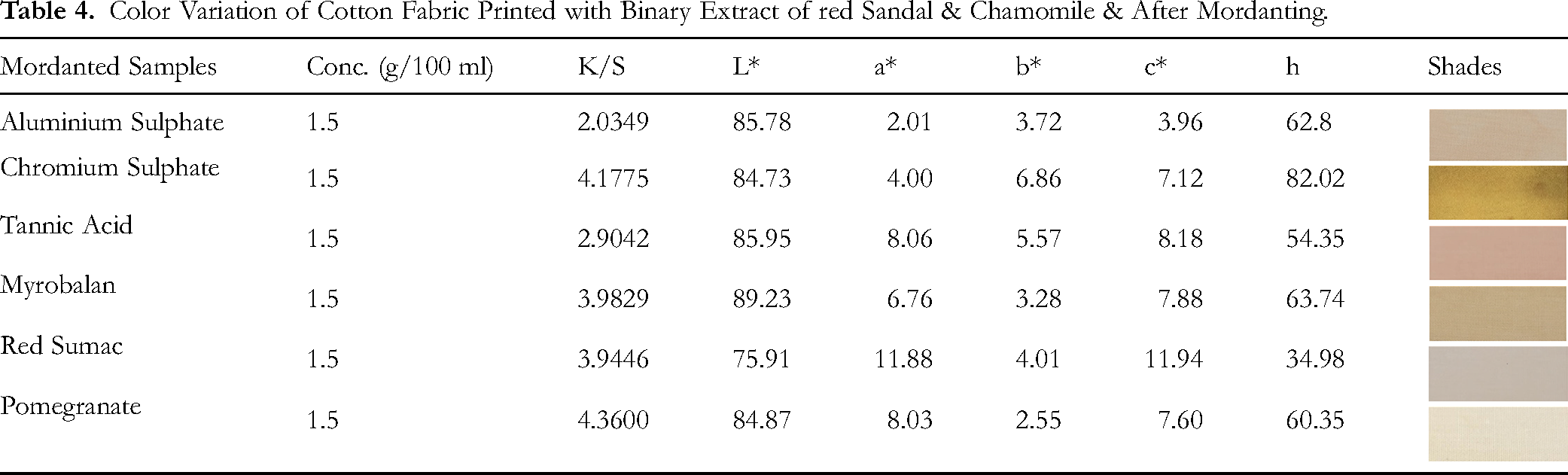
In printing of cotton to get colorfast new design, for binary mixture of natural dyes, mordanting whether with chemical (Inorganic) or biological (organic) elements is essential. The addition of ecofriendly additives during paste formulation helps in developing colorfast shades of high strength. Using chemicals salts, the formation of metal dye complex into paste followed by covalent interaction with fabric through adsorption forms stable hues. Depending upon nature of colorants, nature of fabric (usually cellulosic), power of metal used, the change in colorfast hues is observed. From the results displayed in Table 4 show that addition of 1.5% of Al 3+ salt, the brightening in shade was raised (L* = 85.78), reddish yellow tone was developed as well as hue saturation was also observed low (c* = 3.96). Similarly, 1.5% of Cr + 3 salt has given less bright, less reddish but more yellow hue (L* = 80.73, c* = 7.12). Using tannic acid 1.5%, the shade bright yellow (L* = 85.95, b* = 5.57) with was more reddish tone (a* = 8.06). Overall, the chemical mordants have developed good shades having reddish yellow hue. Thus, during printing of cotton with binary extract, inorganic additives have surface modified shown good shade strength. However, toxic additives such as salt of Cr + 3 etc need replacement because eco-standards do not permit their frequent usage in textiles.
42
The effluents shed having such carcinogenic metals are destroying fresh water potential to be used for anthropogenic and Agri activities. Now such salts have been replaced with organic mordants called bio sources. These sources have phenolic where their -OH form enter H-bonding with -OH of dye and -OH of cotton and develop new darker shades. In this study polyphenolic sources of organic mordants such as red sumac, myrobalan and pomegranate have been added in part formulation followed by screen printing of cotton. It has been found that 1.5% of red sumac extract has given dark reddish shade having yellowish tone of good Chroma city value. Similarly, 1.5% of myrobalan extract on addition in part formation has given bright red (L* = 75.91, a* = 11.88) having yellow tone of good chroma city. Similarly, 1.5% of pomegranate extract has given bright yield (L* = 84.87, a* = 8.03) shade with yellow chroma. Comparatively bio mordants have developed shades of high strength onto cotton using a binary mixture of natural dye in (

Effect of metallic and bio mordants on printing cotton fabric.
Color Variation of Cotton Fabric Printed with Binary Extract of red Sandal & Chamomile & After Mordanting.
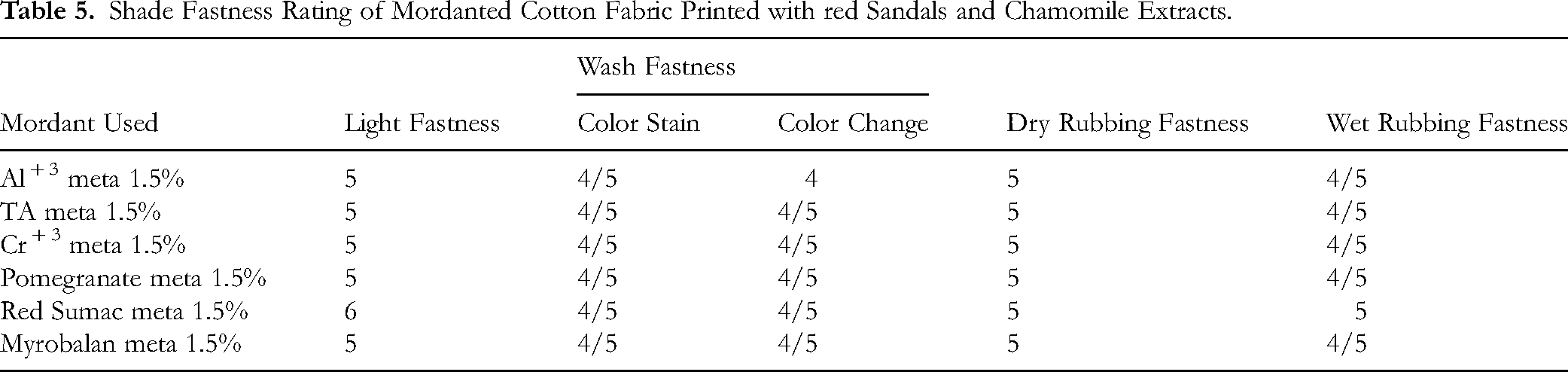
The colorfastness properties of mordanted cotton printed with a binary mixture of a red sandal and chamomile at selected conditions have been shown in Table 5. For natural dyes, it is essential to be colorfast in terms of light, washing, crocking, perspiration, etc, where the role of mordants, either chemical or bio is promising. 43 In this study, selected amounts of chemical mordants promoted firm binding via coordination between the metal ions (Al3+/Cr3+) and the oxygen-donor sites of the dye molecules (phenolic/carbonyl), while anchoring to the hydroxyl groups (–OH) of cellulose; bio-mordants (tannins) formed hydrogen bonding with cellulose and secondary interactions (H-bonding/π–π) with the dyes, yielding stable, colorfast shades. 44 Good light fastness at the blue scale is due to stable complex formation where additional resonance by binary site ie, red sandals and chamomile have added value in resistance towards fading. Similarly soaping also did not affect the shade too much due to printing at selected conditions followed by MW treatment and mordanting. Crocking in both dry and wet conditions also has been found good due to colorfast shades/tints. The bio-mordants having –OH group, as well as benzene ring in interaction with fabric and dye, valorized the shade. Hence, eco-friendly chemicals and green bio-mordants have been encouraged to be used at selected printing variables for cotton using a binary mixture of natural dye sources.
Shade Fastness Rating of Mordanted Cotton Fabric Printed with red Sandals and Chamomile Extracts.
The interaction between the natural dye molecules (from Pterocarpus santalinus and Matricaria chamomilla), mordants, and cotton cellulose plays a important role in color fixation and fastness performance. Cotton cellulose contains abundant hydroxyl (–OH) groups capable of forming hydrogen and coordinate bonds with metal ions or polyphenolic compounds present in the mordants. In chemical mordanting, trivalent metal ions such as Al3+ and Cr3+ act as bridging agents that coordinate simultaneously with oxygen atoms of phenolic or carbonyl groups in the dye molecules and with hydroxyl groups on the cellulose chain, creating a chelation complex that enhances dye retention and light stability. In bio-mordanting, tannin-rich plant extracts (pomegranate, myrobalan, red sumac) contain polyphenolic moieties that form hydrogen bonds and π–π stacking interactions with the aromatic rings of dye molecules while establishing secondary bonding with the –OH groups of cellulose. These interactions result in the formation of stable organic networks that increase shade depth and wash fastness without introducing heavy metals. The overall mechanism is represented schematically in

Proposed mordant-dye-fabric interaction mechanism.
The antioxidant activity results presented in Table 6 demonstrate a significant bioactive potential in both the binary extract and the printed fabrics. The extract exhibits concentration-dependent antioxidant activity, with radical scavenging increasing proportionally with concentration. At the highest concentration (100 μL), both the radiated and non-radiated extracts showed strong antioxidant activity—84% and 85%, respectively—highlighting the powerful free-radical-scavenging ability of the red sandalwood and chamomile blend. Interestingly, the non-radiated extract performed slightly better at every concentration level (36%, 52%, 85%) compared to the radiated one (33%, 47%, 84%). This small but consistent difference suggests that microwave radiation may slightly alter some of the bioactive compounds responsible for antioxidant effects, though the overall impact appears to be minimal. 45 The most striking observation is the exceptional antioxidant performance of the printed fabrics, with radiated and non-radiated samples showing 88% and 89% activity respectively. This represents a substantial improvement compared to control fabrics, which exhibit only 30–33% activity. This dramatic improvement (approximately 55-59% increase) confirms that the binary mixture of red sandalwood and chamomile successfully transfers its antioxidant properties to the cotton substrate during the printing process. 46
Antioxidant Activity of the Fabric and Binary Extract.

In addition, Table 7 reveals significant antibacterial efficacy against both Gram-positive (Staphylococcus aureus) and Gram-negative (Escherichia coli) bacteria. The binary extract demonstrates strong inhibitory action, with inhibition zones ranging from 25–28 mm, indicating broad-spectrum antimicrobial potential. Radiation treatment appears to enhance the antibacterial properties of both the extract and printed fabric. 47 The radiated extract shows increased inhibition against S. aureus (27 ± 0.266 mm vs 26 ± 0.432 mm for non-radiated) and more notably against E. coli (28 ± 0.109 mm vs 25 ± 0.349 mm for non-radiated). This enhancement is likely due to microwave radiation's ability to break down complex phytochemical structures into smaller, more bioactive molecules. 48 Similarly, the radiated printed fabric exhibits superior antibacterial performance (24 ± 0.311 mm for S. aureus and 26 ± 0.345 mm for E. coli) compared to its non-radiated counterpart (21 ± 0.349 mm for S. aureus and 23 ± 0.449 mm for E. coli). This represents approximately 14% and 13% improvement against S. aureus and E. coli respectively, highlighting the beneficial effect of microwave treatment in the printing process.
Antibacterial Action of Extract and Fabrics.

Discussion
The performance of the present binary natural dye system was compared with recent sustainable printing studies on cotton fabric, as summarized in Table 8. The optimized K/S value of 4.71 obtained from the red sandalwood–chamomile mixture is comparable to or higher than most reported natural dye systems, such as jute leaf (4.90 with FeSO4 mordant) and jujube bark (1.65). In addition to color strength, the present work demonstrated multifunctionality through strong antioxidant and antibacterial effects, while avoiding heavy-metal mordants. The use of bio-mordants and microwave-assisted extraction differentiates this study from conventional approaches, making it a reproducible and eco-efficient pathway for textile coloration.
Comparison of Recent Studies on Sustainable Printing of Cotton Fabric with Natural Dyes.

Limitation of the Study
Although the present CCD–RSM model effectively optimized color strength (K/S), the study was limited to a single-response approach and did not include additional practical variables such as paste rheology, print definition, or hand feel, which are also critical for commercial screen-printing performance. Future research should incorporate multi-response optimization to evaluate these parameters concurrently and provide a more comprehensive assessment of printing quality. Moreover, as the current work was conducted under laboratory-scale conditions, further pilot-scale or industrial trials will be necessary to validate the transferability of the optimized parameters—particularly powder concentration, thickener ratio, and pH control—to continuous or semi-automatic screen-printing systems. Such studies would strengthen the bridge between laboratory modeling and sustainable industrial implementation.
Conclusion
The current green scenario highlights green products with manifold benefits if formulated under sustainable developmental goals. Natural dyes from plant waste using sustainable techniques for printing cotton have always been welcomed due to their aesthetic and eco-friendly nature. The results of the current study showed that if chemical-mordanted or bio-mordanted cotton is printed at selected conditions, attractive colorfast shades are obtained with a binary mixture of natural dyes. The inclusion of statistical methods to find cost, energy, and time-effective printing variables, MW treated to sustainable printing process and eco-friendly mordants to develop colorfast shades is the new addition in the field of bio-coloration. If such processing is taken, new dye-yielding plants from their green wastes for printing of natural and synthetic fibers can be used and made acceptable for the global community with zero or less effluent load. This study is an example of having advanced statistical methods such as response surface methodology for finding optimal levels of printing variables and MW treatment to enhance the sorption behavior of fabric using waste plant materials such as fallen leaves, dry flowers and barks. The study demonstrates, for the first time, the effective use of a binary natural dye extract (sandalwood + chamomile) for sustainable screen printing of cotton, achieving color strength and fastness comparable to synthetic dyes while imparting antioxidant and antibacterial properties. This dual-source system highlights a novel direction for bio-mordant-assisted natural coloration and provides a foundation for expanding multi-component plant extract applications in eco-printing.
Footnotes
Acknowledgements
The authors express their appreciation to the Deanship of Scientific Research at King Khalid University, Saudi Arabia, for supporting work through a research group program under grant number RGP-2/693/46.
Ethical Considerations
Ethical Approval is not applicable for this article.
Consent to Participate
There are no human subjects in this article and informed consent is not applicable.
CRediT
Funding
The authors disclosed receipt of the following financial support for the research, authorship, and/or publication of this article: The work was funded by Deanship of Scientific Research at King Khalid University, Saudi Arabia, for supporting work through a research group program under grant number RGP-2/693/46.
Declaration of Conflicting Interests
The authors declared no potential conflicts of interest with respect to the research, authorship, and/or publication of this article.
Figures and Illustrations
All figures used in this manuscript, including Figure 1 and  , were created by the authors specifically for this study and do not contain copyrighted material.
Statement of Human and Animal Rights
This article does not contain any studies on human or animal subjects.