



Abstract
Wound healing is a sophisticated process that results in the repair of damaged tissues. Any impairment to this process can lead to non-healing (chronic) wounds. Since these can cause a massive burden on the healthcare system, alternative therapies that promote wound healing should be considered. Therapies of natural origins that are safe and with no adverse side effects are especially promising. Vietnam, a tropical-climate country, has many medicinal plants that possess the potential for healing wounds. This report explores the use of some common plants used in Traditional Vietnamese medicine and their molecular mechanisms.
Introduction
Wound healing is a physiological process comprising the collaboration of many cell types and their products to respond to the injury of tissues. 1 Generally, the wound healing process is divided into four overlapped stages: haemostasis, inflammation, proliferation, and matrix remodeling. 2 Impairment at any stage of this well-orchestrated healing process can result in non-healing wounds. A non-healing wound is generally defined as one that will not heal within twelve weeks. 2 This chronic condition puts patients at a significant health risk for impaired mobility, limb amputation, or even death. 3 To reduce the massive burden of non-healing wounds in the healthcare system, increased efforts are underway to explore alternative therapies that accelerate wound healing.3,4 Among them, natural wound healing products that have been used for thousands of years are receiving increased interest because of their efficacy and safety. 5
Wound healing medicinal plants have been used from the beginning of Traditional Vietnamese Medicine (TVM) practices. These practices were recorded in “Nam Dược thần hiệu” [Miraculous Medicines of the South] – one of the most ancient and famous TVM books written by Tuệ Tĩnh (1330-c. 1389), who was a Buddhist monk and also the Ancestor of Traditional Vietnamese Pharmacy. Most of these natural drugs are common and easily found in many areas from the north to the south of Vietnam.6,7 Wound healing medicinals also played an important role in treating burns in the Vietnamese – American war (1965-1975). 8 Since these traditional healing practices’ were largely transmitted verbally throughout the ages, many effective practices have been either lost or are now fading away. 9 In addition, patients in Vietnam tend to self-medicate using both Western and herbal medicines. 8 Furthermore, many practitioners, especially local healers, use self-collected plants according to their experience. 8 These reasons are partly responsible for the lack of clinical evidence-based supporting traditional healing practices, leading to exaggerated drug efficacy claims that are out of proportion in TVM practices. This is in stark contrast to Western medicine, which coexists in the Vietnamese healthcare system. 8
To provide an objective view about healing wound medicinal plants in Vietnam, in this review, we have summarized some of the common traditional herbal medicines used for healing wounds, the experience of using them in TVM, and some of their chemical components and the mechanisms that affect the process of wound healing.
Some Medicinal Plants Used for Wound Healing in Traditional Vietnamese Medicine
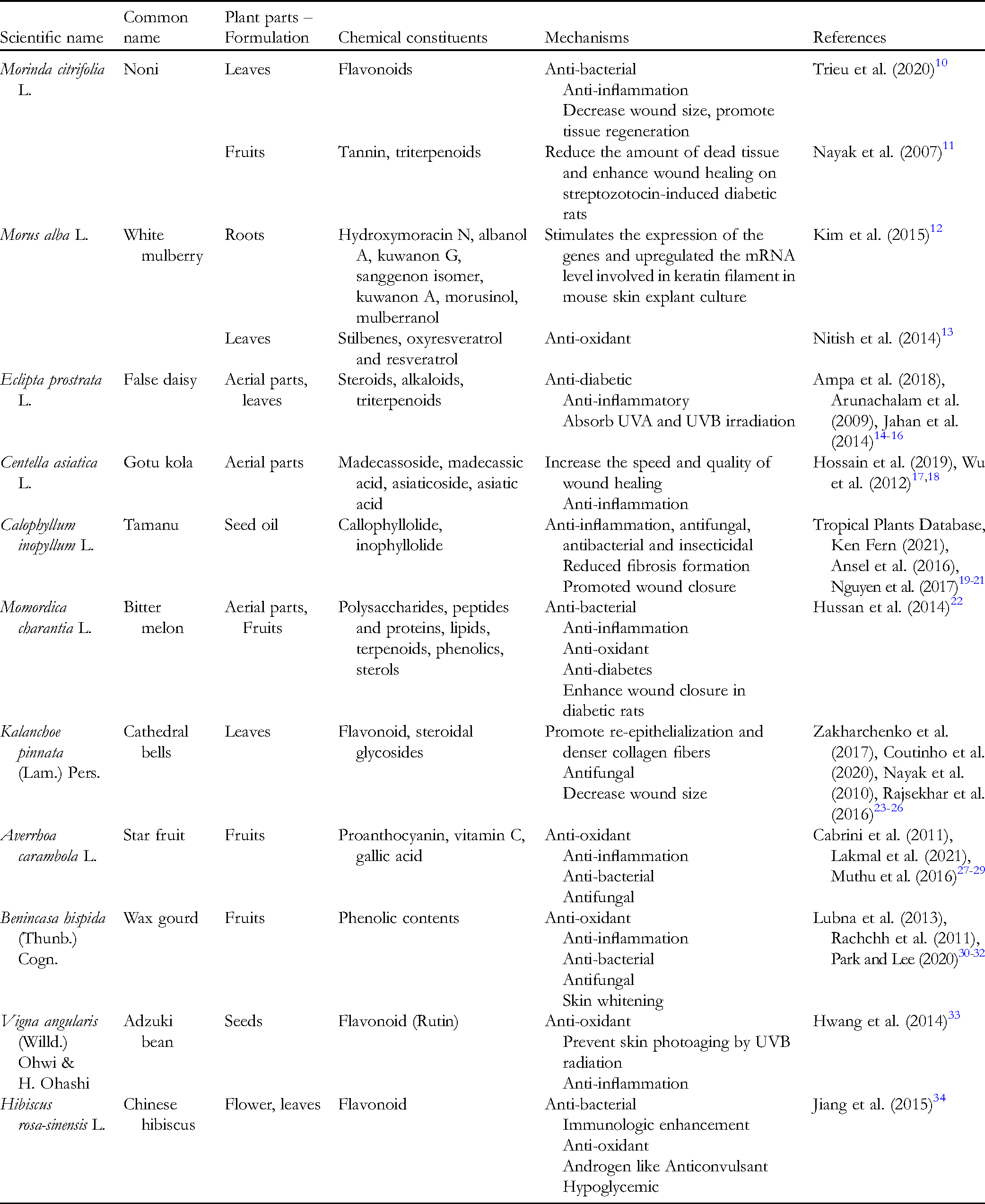
Table 1 provides information about the chemical constituents of some medicinal plants and their activities that affect the wound healing process.
Plant Components for Wound Healing.
Morinda citrifolia L. (Rubiaceae) – Common Name: Noni
Chemical Constituents
The major chemical constituents that have been isolated from this plant are anthraquinones, flavonol glycosides, iridoid glycosides, lipid glycosides, and triterpenoids. 10
According to a book on Malaysian medicinal plants, various chemical constituents have been found in different parts of M. citrifolia, such as: 5,7-acacetin-7-O-β-D-( + )-glycopyranoside, ajmalicine isomers, alizarin, asperuloside, asperulosidic acid, chrysophanol, damnacanthol, digoxin, 5,6-dihydroxylucidin, 5,6-dihydroxylucidin-3-β-primeveroside, 5,7-dimethylapigenin-4′-O-β-D( + )-galactopyranoside, lucidin, lucidin-3-β-primeveroside, 2-methyl-35,6-trihydroxyanthraquinone, 3-hydroxymorindone, 3-hydroxymorindone-6-β-primereroside, α-methoxyalizarin, 2-methyl-35,6-trihydroxyanthraquinone-6-β-primeveroside, mono-ethoxyrubiadin, morindadiol, morindin, morindone (15,6-trihydroxy-2- methylanthraquinone), morindone-6-β-primeveroside, nordamnacanthal, quinoline, rubiadin, rubiadin 1-methyl ether, saronjidiol, ursolic acid, alkaloids, anthraquinones and their glycosides, caproic acid, caprylic acid, fatty acids and alcohols (C5-9), flavones glycosides, flavonoids, β-D-glucopyranose, indoles, purines, and β-sitosterol.10,35 We report herein some representative compounds in the medicinal parts being commonly used in Vietnam: Asperulosidic acid, asperuloside tetraacetate, 2,6-di-O-(β-D-glucopyranosyl-1-O-octanoyl)-β-D-glucopyranose, 6-O-(β-D-glucopyranosyl-1-O-octanoyl)-β-D-glucopyranose, caproic acid, caprylic acid, ethyl caprylate, ethyl caproate, hexanoic acid, octanoic acid, quercetin 3-O-α-L-rhamnopyranosyl- (1-6)-β-D-glucopyranoside (from fruit); morindone, damnacanthal, 8-hydroxy-8-methoxy-2-methylanthraquinone, rubichloric acid, 1,3-dihydroxy-6-methyl anthraquinone, morenone 1, morenone 2, ruberythric acid, and rubiadin (from root). 35 The methanol extract of M. citrifolia fruit is rich in phenolic content, which was proven to be potent for antioxidant activity. 36
Till now, 51 volatile compounds have been identified in M. citrifolia ripe fruit, without clear specification of the fruit harvest locations and stage conditions. These compounds are organic acids (for example, octanoic acids, hexanoic acids), esters (for example, methyl octanoate, methyl decanoate), ketones, (E)-6-dodeceno—lactone, or alcohols, including 3-methyl-3-butene-1-ol. 37
Mechanism
Noni leaf juice (the juice obtained by pressing M. citrifolia leaves mechanically) was found to bind to both PDGF and A2A receptors, with the affinity of the juice to the PDGF receptors being higher than that to the A2A receptors. The juice seemed to be an agonist of ligand binding on the PDGF receptors. Noni leaf juice and the leaf extracts (ethanol extract and its n-hexane and MeOH fractions) promote wound healing by increasing ligand binding at the A2A and PDGF receptors and also by increasing the wound closure rate as its mechanisms of action. 38
Among compounds present in the leaf extract of M. citrifolia, rutin is a flavonoid that has been shown to act against Escherichia coli, Pseudomonas aeruginosa, Staphylococcus aureus, and other bacteria. The extract also showed anti-inflammatory activity by modulating cyclooxygenase-2 (COX-2), iNOS, p38 MAP kinase, and JNK, and inhibiting inflammatory cytokines, such as interleukin (IL)-4, IL-5, IL-10, IL- 13, IL-17, IL-31, IL-32, and interferon (INF)-γ. Rutin is formulated as a hydrogel to decrease wound size, reduce lipid peroxidation, increase catalase activity, and promote tissue regeneration. 10
The amount of dead tissue at the wound site of streptozotocin-induced diabetic rats that were orally treated with M. citrifolia was reduced and provided better wound healing. The observed enhancement of the hydroxyproline content of the granulation tissue in the excision wounds was indicative of increased collagen synthesis, which results in rapid healing of wounds. 11
From the fourth week of treatment with noni at a dose of 500 mg/kg, lesion growth was reduced. At the sixth week, when compared to the non-treated group, the lesion size was significantly reduced. After 60 days of M. citrifolia treatment, the parasite loads in the footpad and draining lymph node had significantly decreased in comparison to the non-treated control, corroborating the results of the lesion kinetics. 39
M. citrifolia has been used in traditional medicine for the treatment of various ailments. Pharmacological studies have shown that extracts of M. citrifolia leaves have extensive activities, including antibacterial, antifungal, antioxidant, antitumor, anti-inflammatory, wound healing, antidiabetic, analgesic, immunomodulatory, and others. Previous studies have also shown that M. citrifolia leaf extracts present wound healing activity. 10
Morus alba L. (Moraceae) – Common Name: White Mulberry
Chemical Constituents
Phytochemical investigation reports on M. alba indicate that the plant contains diverse chemical groups, including flavonoids, tannins, triterpenes, anthocyanins, anthraquinones, phytosterols, benzofuran derivatives, morusimic acid, oleanolic acid, alkaloids, steroids, saponins and phenolic compounds.40,41 Sixteen polyhydroxylated alkaloids were isolated from the root bark of the plant: 1-deoxynojirimycin, N-methyl-1-deoxynojirimycin, 2-O-α-D-galactopyranosyl-1-deoxynojirimycin, 2-O-α-D-glucopyranosyl-1-deoxynojirimycin, 3-O-β-D-glucopyranosyl-1-deoxynojirimycin, 4-O-β-D-glucopyranosyl-1-deoxynojirimycin, 6-O-β-D-glucopyranosyl-1-deoxynojirimycin, calystegine B1, calystegine B2, fagomine, 4-O-β-D-glucopyranosyl-fagomine, 3-epi-fagomine, 1,4-dideoxy-1,4-imino-D-arabinitol, 1,4-dideoxy-1,4-imino-(2-O-β-D-glucopyranosyl)-D-arabinitol, 1,4-dideoxy-1,4-imino-D-ribitol, and a new compound, (2R,3R,4R)-2-hydroxymethyl3,4-dihydroxypyrrolidine-N-propionamide. 42 Several bioactive compounds, including moracin Q, moracin T, artocarpesin, cycloartocarpesin, moracin R, moracin S, moracin U, moracin C, moracin, and kuwanon G were isolated from stem bark of M. mesozygia, another species of Morus. These compounds exhibited great antimicrobial potential against various species of microbe. 43
Mechanism
Previous studies reported that M. alba root extract had multiple impacts on mouse skin explant culture: Enhanced outgrowth of epithelial cells and up-regulation of the mRNA level keratin filaments, stimulation of the expression of the genes involved in keratin filaments, and induced alteration of genes involved in the CXCL12/CXCR4 signaling pathway. 12
A previous study suggested that a cream containing the aqueous extract of leaves of M. alba helped thermal burn wounds recover faster and reduced tissue damage in rats. This effect was attributed to the anti-oxidant activity of stilbenes, oxyresveratrol, and resveratrol in the leaf extract. 13
M. alba leaf extract has long been used as a beneficial ingredient for skincare. It contains antioxidant properties, which help prevent the formation of wrinkles, and slow down the aging process. 13
Resveratrol in M. alba is considered to be the main compound to protect the skin from being damaged by UV radiation and reduce melanin production. In addition, β-carotene, riboflavin (B2) compounds and vitamins A, C, and E contained in the extract help eliminate free radicals and prevent premature aging of the skin. 13
Eclipta prostrata L. (Asteraceae) – Common Name: False Daisy
Chemical Constituents
Phytochemical analysis of E. prostrata aerial parts (stems, leaves and flowers) led to the isolation of ethyl-2,6-dihydroxy-4-methoxybenzoate, merulinic acid C, wedelolactone, dimethyl wedelolactone and quercetin. Several interested phenolic compounds have also been isolated from this plant, such as luteolin-7-O-β-D-glucoside, 3,4-dihydroxy-benzoic acid ethyl ester, luteolin sulfate, apigenin sulfate, luteolin, wedelolactone, 7-O-methylorobol-4′-O-β-D-glucoside, apigenin, and 3′-hydroxybiochanin A.44,45
Further research led to the isolation and structural elucidation of a new isoflavonoid glycoside, 7-O-methylorobol-4′-O-β-D-glucopyranoside, together with seven known compounds, 3′-hydroxybiochanin A, echinocystic acid 28-O-β-D-glucopyranoside, ecliptasaponin A, eclalbasaponin I, eclalbasaponin IV, echinocystic acid, and 3-oxo-16α-hydroxy-olean12-en-28-oic acid. For the first time, echinocystic acid-28-O-β-D-glucopyranoside was obtained from this genus. 46
Mechanism
In traditional medicine, the leaves of E. prostata have been used to treat diabetes and wounds. The antidiabetic and wound healing properties of this plant have been proven to be successful. 14 It affects the proliferative phase and the epithelialization of the formation of granulation tissue process. 47 Numerous compounds are responsible for the healing capacity of E. prostrata. 48
In carrageenan and egg white induced hind paw edema in rats, oral administration of a 95% methanolic extract of leaves of E. prostrata at a dose of 100 mg/kg and 200 mg/kg showed a remarkable dose dependent anti-inflammatory activity. 15
The E. prostrata extract was also found to absorb UVA and UVB irradiation. A dose-dependent protection was demonstrated of HaCaT human keratinocytes and mouse fibroblasts 3T3 cells against UVB-induced cytotoxicity. The protective effect against skin cell damage was attributed to a synergistic effect between chlorogenic acid and other active components present in the extract. 16
Centella asiatica L. (Apiaceae) – Common Name: Gotu Kola
Chemical Constituents
Chong and Aziz 49 reported that Centella leaves contain triterpenes which have been shown in animal studies to have anti-inflammatory and wound healing activities.
The triterpenes isolated from C. asiatica are the most frequent pentacyclic triterpenic acids comprising asiatic acid, asiaticoside, madecassic acid, madecassoside, brahmoside, brahmic acid, and brahminoside; other triterpene glycosides of C. asiatica are of the ursane- and oleanane-type. 50 The most investigated compound of C. asiatica is asiaticoside. 51 Other constituents reported for C. asiatica include essential oil, flavonoids, such as quercetin and kaempferol,50-52 and sterols, such as campesterol, sitosterol, and stigmasterol. 51
Mechanism
Asiaticoside, madecassoside, asiatic acid, and madecassic acid are considered to be the principal constituents for treating skin conditions. Previous trials have confirmed their healing for conditions such as burns, wounds, cellulitis, leprotic infections, and skin ulcers. 53
Wu et al 18 reported that, in vitro, asiaticoside and madecassoside stimulated the synthesis of collagen type I and type III in primary human skin fibroblasts by activating the TGF-β/Smad signaling pathway. In vivo, these compounds enhanced the speed and quality of wound healing in mice. Furthermore, madecassoside was found to be more effective than asiaticoside (for procollagen type I and type III synthesis in vitro, for wound healing speed, and for wound healing pattern from the histological aspect, in vivo, correspondingly). 18
Hossain et al 17 reported that asiatic acid and madecassic acid showed anti-inflammatory and apoptotic effects, respectively, while asiaticoside and madecassoside stimulated collagen (I, II, III) synthesis, and new blood vessel formation that significantly helps to heal burn wounds.
In Vietnam, Centella sp. is used either as a powder of ground leaves or fresh juice to apply topically to scars (especially pitted or sunken scars caused by skin conditions, such as acne and chickenpox) for wound healing.
Calophyllum inophyllum L. (Calophyllaceae) – Common Name: Tamanu
Chemical Constituents
In a review by Susanto et al, 54 the major constituents of the plant include inophynone, canophyllol, canophyllic acid, calophyllolide, inophyllolide, inophyllum B, C, P, and E, jacareubin, ( + )-calanolide A, inocalophyllins A and B, calophynone, calophyllumin C, and inophyllin A. The different parts of C. inophyllum contain various constituents, including xanthones, coumarins, chromanones (flavonoids, biflavonoids), triterpenoids, and steroids. Two coumarin-type components of C. inophyllum are calanolides A and B. 54
The resinous compounds in tamanu oil, which are attributed to the healing activity of the oil, contain mostly secondary metabolites from neoflavonoids and pyranocoumarin derivatives. 55
Mechanism
The oil possesses cicatrizing properties, and anti-inflammatory, antifungal, antibacterial and insecticidal activity. Clinical tests indicated that the oil may reduce old scars. 19 The latex and pounded bark are applied externally on wounds and ulcers, and the resin is used to treat wounds and insect bites. 19
According to the study of Ansel et al, 20 tamanu oil emulsion accelerated wound closure in the scratched monolayer of keratinocyte and fibroblast cells, and this effect was faster than that of vitamin C-treated cells. 20
In 2017, Nguyen et al 21 reported that calophyllolide isolated from C. inophyllum reduced fibrosis formation and effectively promoted wound closure through anti-inflammatory activity in a mice model. The mechanisms for this anti-inflammatory activity were attributed to the down-regulation of the pro-inflammatory cytokines (IL-1β, IL-6, TNF-α) and up-regulation of the anti-inflammatory cytokine (IL-10), reduction in MPO, and switching of macrophages to an M2 phenotype. 21
In Vietnam, tamanu oil or latex (which is called “mu u”) is often topically applied to burns or scars to heal wounds or to treat acne.
Momordica charantia L. (Cucurbitaceae) – Common Name: Bitter Melon
Chemical Constituents
M. charantia contains cucurbitacins, polysaccharides, ascorbic acid, 56 triterpenoids,57-60 saponins,61-63 polypeptides, 64 flavonoids, 65 alkaloids 66 and sterols. 59
The fruits of M. charantia have been found to contain numerous bioactive compounds including carbohydrates, proteins, and lipids.67-69
Mechanism
Diabetes causes multiple abnormalities such as impaired immune response, neovascularization, growth factor deficiencies and decreased synthesis of collagen. All these conditions delay wound healing. 70 Treatment with M. charantia fruit ointment accelerates the wound closure speed by stimulating the expression of TGF-β in diabetic rats. Along with anti-diabetic properties (highly TGF-β expression), the plant is a potential alternative therapy for the treatment of diabetic wounds. 22
According to Sharma et al, 71 rats treated with M. charantia extract showed a remarkable reduction in wound size and epithelization time in an excision wound model.
In Vietnam and some other tropical countries, the leaf juice is applied externally to treat inflammation of the sole of the foot, scabies and itchy skin. A paste of the leaves is applied as a poultice on cuts and wounds. The leaves are used to make an antiseptic bath for children. The fruit is used externally for the treatment of chapped skin. 56
Kalanchoe pinnata (Lam.) Pers. (Crassulaceae) – Common Name: Cathedral Bells
Chemical Constituents
This plant contains organic acids, flavonoids, bufadienolides, triterpenoids and some ubiquitous compounds. The leaves contain malic acid. 72
In the crude extracts of leaves of K. pinnata, Pereira et al 73 identified flavonoids and organic acids, including quercetin-3-O-α-L-arabinopyranosyl-(1→2)-α-L-rhamnopyranoside, kaempferol-3-O-α-L-arabinopiranosyl-(1→2)-α-L-rhamnopyranoside, quercitrin, and trans-p-coumaryl glutaric acid.
Zakharchenko et al 23 reported that the constituents of K. pinnata comprised two phenolic glucosides (syringic acid β-D-glucopyranosyl ester and 4′-O-β-D-glucopyranosyl-cis-p-coumaric acid), nine flavonoids {including kaempferol, quercetin, myricetin, acacetin, and diosmetin glycosides, and flavonol glycosides, quercetin (3-O-α-L-arabinopyranosyl-(1→2)-α-L-rhamnopyranoside 7-O-β-D-glucopyranoside) and myricetin (3-O-α-L-arabinopyranosyl-(1→2)-α-L-rhamnopyranoside)}. 74 Four bufadienolides (bersaldegenin-1-acetate, bryophyllin A, bersaldegenin-3-acetate, and bersaldegenin-13,5-orthoacetate) were also reported in the plant. 74 In addition, K. pinnata possesses blood-agglutinating lectins with Mr 44–47 kDa containing ∼1.5% carbohydrate. 75 Of all the phytochemicals isolated from K. pinnata, bufadienolides like bryotoxin A, B, and C, which are very similar in structure and activity as two other cardiac glycosides, digoxin and digitoxin, possess antibacterial, antitumor, cancer preventative and insecticidal actions.76-78
Mechanism
Coutinho et al 24 reported that creams containing K. pinnata leaf aqueous extract (6%) and its major flavonoid, quercetin 3-O-α-L-arabinopyranosyl-(1→2)-α-L-rhamnopyranoside (0.15%), both result in better re-epithelialization and denser collagen fibers after 15 days of topical use in a rat excision model. The results from this research suggest that using K. pinnata crude extract should be more profitable than the isolated compound because the crude extract is low-cost and ready for use. 24
Zakharchenko et al 23 demonstrated, for the first time, that the aqueous extract of transgenic K. pinnata leaves, which contain the antimicrobial peptide cecropin P1 (CecP1), possesses activity against Caldida albicans in vivo. However, this effect was attributed to a synergy between the fungicide activity of CecP1 and wound healing, revascularization, and immunomodulating properties of the natural bioactive components of K. pinnata. 23
Rajsekhar et al 26 reported that the ethanolic extract of K. pinnata showed a significant wound-healing activity by decreasing the size of the affected site, as well as reducing edema in the wounded area. Nayak et al 25 indicated that the presence of steroidal glycosides and phenolic antioxidants may attribute to this phenomenon.
In Vietnam and many countries, the fresh leaves of K. pinnata are pounded and then applied to burns and used as poultices on boils and ulcers, or are placed on the soles of the feet in order to stop haemorrhages. 72 The leaves can be made pliable by being held over the fire, and are then applied as a treatment on wounds, bruises, and boils. 72
Averrhoa Carambola (Oxalidaceae) – Common Name: Star Fruit
Chemical Constituents
Star fruits are a good source of various minerals and vitamins, such as magnesium, potassium, and phosphorous, as well as β-carotene L-ascorbic acid (vitamin C) and gallic acid. 79
Phytochemical and pharmacological studies indicate that extracts of the leaves, fruits, and roots of star fruit contain saponins, flavonoids, alkaloids, and tannin. 29
Investigations characterizing the secondary metabolites of A. carambola have identified two O-glycosyl flavonoid components: quercetin-3-O-β-D-glucoside and rutin. Other compounds identified included: β-sitosterol, lupeol, anthraquinone glucoside, cyanidin-3-O-β-D-glucoside, cyanidin-3,5-O-β-D-diglucoside, β-amyrin, and C-glycoside flavones, such as apigenin-6-C-β-L-fucopyranoside and apigenin-6-C-(2″-O-α-L-rhamnopyranosyl)-β-L-fucopyranoside, apigenin6-C-(2″-O-α-L-rhamnopyranosyl)-β-D-glucopyranoside. 27
Ten undescribed dihydrochalcone C-glycosides, carambolasides R1‒R3, S1, S2, T1‒T3, 3-hydroxycarambolaside T1, and 3-hydroxycarambolaside P were isolated, along with carambolasides I and P from the leaves of A. carambola. 80
Mechanism
Studies have shown that star fruits contain compounds possessing an anti-oxidative effect, removing toxins from the body and supporting the immune system to protect against cancer, reactive oxidative species damage, and lipoperoxidation. 29
Research findings of Cabrini et al 27 indicated that, in croton oil-induced ear edema mice, topical treatment with A. carambola extracts showed an anti-inflammatory property by reducing edema and inhibiting MPO activity. The extracts also showed anti-bacterial activity against Staphylococcus aureus, Klebsiella spp., Escherichia coli, Pseudomonas aeruginosa and Bacillus cereus. 29
Treating diseases with star fruit leaves has its origin in local folklore. Bathing with star fruit leaves is useful in treating several skin disorders, such as urticaria, dermatitis, and diaper rash.
Benincasa hispida (Thunb.) Cogn. (Cucurbitaceae) – Common Name: Wax Gourd
Chemical Constituents
Benincasa hispida fruits contain volatile oils, flavonoids, glycosides, polysaccharides, proteins, carotenes, vitamins, minerals, β-sitosterin, and uronic acid. 81 Using thin-layer chromatography, four main sugars, galactose, glucose, xylose, and sorbose, have been found in B. hispida peels. 82
In B. hispida seeds, fatty acids accounted for 20.7% to 24.3% of total chemical constituents, with 75.4% of them being saturated fatty acids. Linoleic acid, accounting for 67.4% of total fatty acids, was the main fatty acid component in the seed extract.83,84 The seeds also contained 58.4% of total dietary fiber and 11.6% of crude protein. 78
Mechanism
In the rat model, both the light petroleum and methanol extracts of B. hispida fruit at a dose of 300 mg/kg induced dose-dependent inhibition of carrageenan- induced paw edema, histamine-induced paw edema, and cotton pellet-induced granuloma. 31
The seed oil of B. hispida demonstrated an antibacterial activity against Micrococccus luteus, Staphylococcus aureus, Bacillus subtilis, Escherichia coli, Pasteurella multocida and Pseudomonas aeruginosa. 30
A study in Korea, published in 2020, indicated that by inhibiting α-MSH, which is responsible for melanogenesis, and down-regulating the expression levels of MITF, TRP-1 and TRP-2, B. hispida seed extract possesses anti-oxidant, anti-inflammatory, and skin whitening activities. 32
According to traditional medicine, B. hispida has a sweet taste and cool properties, with the effect of clearing heat, diuretic, edema, and detoxification. B. hispida is very good for the skin, changing the moisture level, and blurring melasma, and dark spots caused by acne. It has been used to remove acne bran and blackheads.
Vigna angularis (Willd.) Ohwi & H. Ohashi (Fabaceae) – Common Name: Adzuki Bean
Chemical Constituents
Adzuki bean seeds contain water, amino acids, fatty acids, carbohydrates, dietary fiber, minerals, such as calcium, magnesium, phosphorus, ferrous, and zinc, and, vitamins (vitamin A, thiamin, riboflavin, niacin, vitamin B6, folate, ascorbic acid). The major amino acids in the beans are tryptophan, lysine, methionine, phenylalanine, threonine, valine, leucine, and isoleucin. The principal fatty acids are linoleic acid and oleic acid. 85
Liu et al 86 reported that in addition to rutin, 33 the flavonoid contents of adzuki bean include catechin, quercetin-3-O-rutinoside, quercetin-3-O-glucoside, and vitexin-4″-O-glucoside. The saponin extract of adzuki bean contains azukisaponin IV, azukisaponin VI, azukisaponin V, azukisaponin II, azukisaponin I and azukisaponin III. 86
Mechanism
Following Hwang et al, 33 in vitro study showed that the hot-water extract of V. angularis (VAE) significantly reduced the production of MMP-1 in UVB-exposed normal human dermal fibroblast cells. In vivo study in UVB-irradiated hairless mice, by enhancing elastin, procollagen type I and TGF-β1 expression, VAE that was both topically and orally administrated inhibited wrinkle formation and skin thickness. VAE can be effective in preventing skin photoaging accelerated by UVB radiation.
Collantes et al reported that VAE inhibited the progress of atopic dermatitis (AD)-like skin lesions by regulating immune mediators and cells. 87
According to traditional medicine, azuki beans have a sweet, sour taste, and have beneficial effects as a diuretic, to treat diarrhea, and for detoxification, and are often used to treat hydrocephalus, bloating, rheumatism, pain, boils, itching, cholera, and dysentery.
Hibiscus rosa-sinensis L. (Malvaceae) – Common Name: Chinese Hibiscus
Chemical Constituents
Phlobatannins, glycosides, saponins, flavonoids, and terpenoids, including vitamins such as thiamine, riboflavin and niacin, have been reported in the leaves, flowers, stems and roots of H. rosa-sinensis. 88
Although quercetin exists in all parts of H. rosa-sinensis, there is a slight difference in contents between each part of the plant. The phenotype yellow flowers contain numerous flavones such as cyanidin-3,5-diglucoside, cyanidin-3-sophoroside-3-5-glucoside, quercetin-3,5-diglucoside, and quercetin-3,7-diglucoside. The root barks contain cyclopropenoids. The flowers, stems, and leaves contain small amounts of cyanin and cyanidin chorides, and leaves contain β-sitosterol, teraxeryl acetate, and malvalic acids. 88
Mechanism
Jiang et al 34 studied the use of bud extract of H. rosa-sinensis to test skin healing and the mechanism of repairing efficacy in animal models. Using the boils and carbuncles model, the healing condition of all KM mice were observed. The extract of H. rosa-sinensis accelerated the recovery rate of skin boils and full-thickness loss. Compared to the ethyl acetate and chloroform extracts, the n-butanol extract showed the fastest rate of repairing wounds. This healing effect is attributed to the antibacterial and immunological enhancement activities of H. rosa-sinensis. 34
In induced excision, incision, and dead space wounds in rats, treatment with the ethanol extract of H. rosa-sinensis significantly promoted the rate of wound contraction, the wound-breaking strength, the rate of epithelialization, and increased the weight and hydroxyproline content of the granulation tissue. 89
According to TVM theories, hibiscus leaves are light in color, absorbent and neutral in nature. The leaves possess calming, sedative, anti-bacterial, anti-inflammation, and mild bleaching effect. It is commonly used in TVM to treat bloody stools caused by the inflammation of intestines and mucous membranes, lymphadenopathy, acne waves, scabies scar, dream crystal, and lower zone.
Fresh Hibiscus leaves and flowers are often used externally to treat boils, pyoderma, mastitis, and lymphadenitis.
Discussion
Tuệ Tĩnh said that Vietnamese bodies are more compatible with medicines derived from the tropical flora and fauna of Vietnam. 90 In Nam Dược Thần Hiệu, many folk medicines have been used for wound and burn healing, including red bean (Vigna angularis), sponge gourd (Luffa aegyptica), mulberry (Morus alba), and betel (Piper betle). With increased urbanization in Vietnam, only some select medicines are now more popular and available, especially in cities. This review highlights wound healing plants that are readily available in today's Vietnamese gardens. These include gotu kola, tamanu, bitter melon, catheral bells, and star fruit.
Many phytochemicals and herbs highlighted in this review show a high level of efficacy in wound management. In local culture, TVM is still being treated as an equal to modern science. It is inappropriate to label TVM as “old” in Vietnam. It is clear that “there are some illnesses that only our medicine can treat” (Tuệ Tĩnh). 91
Wounds and burns on the skin are very common, encountered in all places by people of all ages. In order to achieve high efficiency in the treatment of wounds and burns, it is necessary to provide an accurate diagnosis, select appropriate drugs, implement effective treatment methods for each wound and burn, and manage each stage of the wound healing progression.
Treatment methods for wounds and burns include local and systemic treatment. Drugs for the treatment of skin diseases can be temporarily divided into: topical drugs, antipruritic drugs, anti-infection drugs, antifungals, immunosuppressive modulators, traditional medicine, light therapy and a group of drugs to improve health. Along with modern medicine, TVM also plays an important role in the treatment of wounds and skin burns. This review introduces some medicinal plants that have been used for over a thousand years. These plants are available and convenient for treating wounds and skin burns. These plants include: Gotu kola, bitter melon, tamanu, red bean, wax gourd, rose mallow, and star fruit. Various herbal constituents have proven wound-healing properties. As an example, tannins could promote wound healing through free radical removal, increasing the contraction of the affected area and increasing the formation of blood vessels and fibroblasts. Other active principles, such as triterpenes, alkaloids, and flavonoids, have proven to be effective in this process.
However, large randomized clinical trials are necessary to provide concrete evidence supporting the use of TVM in wound management.
Footnotes
Declaration of Conflicting Interests
The author(s) declared no potential conflicts of interest with respect to the research, authorship, and/or publication of this article.
Funding
The author(s) received no financial support for the research, authorship, and/or publication of this article.
Ethical Approval
Not applicable, because this article does not contain any studies with human or animal subjects.
Informed Consent
Not applicable, because this article does not contain any studies with human or animal subjects.

Trial Registration
Not applicable, because this article does not contain any clinical trials.