



Abstract
Scutellaria baicalensis, commonly known as Chinese Skullcap, is a traditional herb with a long history of cultural use in Chinese medicines. This review focuses on a comprehensive summary of the morphological description, bioactive compounds, drug-herb interactions, and pharmacological activities of Scutellaria baicalensis, as well as its therapeutic applications. A wide-ranging search using databases such as PubMed, Scopus, Google Scholar, and advanced search on the Web was conducted for data collection from prior studies. The plant root contains major active constituents including flavonoids and flavo-glycosides such as wogonin, baicalein, baicalin, oroxylin A, scutellarein, and norwogonin. These compounds have demonstrated a variety of pharmacological activities, combating inflammation, oxidative stress, cancer, neuronal disorders, and liver disorders. Chinese Skullcap represents a promising avenue for potential pharmacotherapeutic formulation advancement, emphasizing the need for further scientific exploration and clinical trials.
This is a visual representation of the abstract.
Introduction
Historical and Contemporary Use of Medicinal Plants
For centuries, people have been using medicinal plants to add flavor to their food and to prevent or treat various ailments. Nowadays, many medical professionals are interested in herbal nutraceuticals as a form of primary healthcare. Noteworthy point is that the approved drugs are made from organic-based agents. 1
Scutellaria Genus and Scutellaria baicalensis
The genus Scutellaria consists of around 360 species, out of which approximately 98 are found in China. This genus is found within the Lamiaceae, or mint family, which consists of popular herbal plants including mints, basil, rosemary, and lavender. 2 Scutellaria baicalensis has been extensively researched and historically diversified and used to treat a diversity of health conditions for over 2000 years in Chinese medicines. The plant's stem leaves and roots are used to prepare tea for daily health maintenance.
Phytoconstituents and Traditional Uses
Scutellaria baicalensis, commonly referred to as Baikal or Chinese skullcap, belongs to the flowering plant species within the Lamiaceae family. 3 The plant root contains major active phytoconstituents such as flavonoids, glycosides, and polysaccharides, and in Chinese, it is known as Huang Qin. 4 Over the last few centuries, Huang Qin was listed in Chinese Materia Medica. Therefore, the roots of the plant were reported to detoxify the body, clear heat, and prevent miscarriage. Huang Qin officially has been listed as a medicinal plant in Chinese, European, and British Pharmacopoeia.
Pharmacological Characteristics and Traditional Chinese Medicine (TCM)
Scutellaria baicalensis exhibits various biological and pharmacological characteristics, and its dehydrated root serves as a notable element in the essential herb employed in Traditional Chinese Formulation. 5 Chinese formulations including Huang Qin Qingre Chubi capsule, decoction of San Wu Huangqin, Sanhuang tablet, and oral formulation of Shuanghaunglian were the most popular for body heat relievers, recovery from fever chills, detoxification.6–9
Pharmacological Impacts and Clinical Applications
The active constituents in Scutellaria baicalensis elicit substantial pharmacological impacts, covering antioxidant, antibacterial, antitumor, and anti-inflammatory properties. 10 Recently, Scutellaria baicalensis has been utilized in the management of diverse conditions, encompassing cancers, inflammation, hypertension, and immunologic disorders. 11 Currently, in contemporary clinical research, Scutellaria baicalensis is frequently employed for the treatment of diseases such as liver damage, acute pulmonary infection, gastrointestinal inflammation, diarrhea in infants, and pregnancy-related vomiting.5,10,12
Methodology and Review Objective
A comprehensive literature search was conducted using PubMed, Scopus, Google Scholar, SciFinder, and Web of Science to gather relevant publications on Scutellaria baicalensis and Chinese Skullcap from the last ten years. Keywords such as “baicalin,” “wogonin,” “baicalein,” “phytochemistry,” “pharmacology,” “clinicaltrials,” “traditional medicine,” “toxicity,” and “safety” were utilized. Database queries employed Boolean operators, focusing on peer-reviewed, English-language studies. Relevant publications were downloaded, and metadata was extracted and organized using EndNote. The literature was thematically categorized into phytochemistry, pharmacology, clinical trials, traditional uses, and safety. Documented methodology ensures reproducibility. Computers were used for searches, and EndNote was employed for reference management.
The aim and objectives of the review were to focus on the morphological description, bioactive compounds, drug–herb interactions, pharmacological activities, and therapeutic applications of Scutellaria baicalensis.
Plant Profile
Biological Name
Scutellaria biacalensis Georgi. 13
Family
Lamiaceae.
Common Name
Baikal skullcap, Chinese skullcap, Huang Qin, Hooded Skullcap, Escutelaria de Baikal, Escutelaria China, Chinesischer Helmkraut, Baikal-Helmkraut, and Hwanggeum. 14 The hierarchical classification of Huang Qin: a Chinese medicinal Herb has been listed in Table 1.
The Hierarchical Classification of Huang Qin: a Chinese Medicinal Herb.

Morphological Description
Plant
Scutellaria baicalensis is a tap root perennial herb whose roots are rhizomatous with elongated, branched, fleshy, and 2 cm wide in diameter. Volatile compounds are concentrated in the stem base and rhizomes.
Stem
The stem is glabrous, stalkless, and puberulent ranging from 35 to 140 cm in length, 3 mm in diameter, tetragonal in shape, and striped.
Leaves
The leaves are 1 to 4 cm in length, 0.7 cm in width, and lanceolate in shape. The leaf is bi-shaded on both surfaces with dark green on the upper side. 15
Inflorescences
Panicle shaped.
Florets
The corolla is varied from blue, purple, and blue-purple, stamens appear in pairs of 4, and the style is thin, disc-shaped with flat filaments and a brown ovary.
Fruits
Dark brown with a tumor, oblong shaped. 16
Geographical Distribution:
This plant is aboriginal to East Asian countries and Indigenous to Russia, Japan, South Korea, North Korea, China, Dauria, Manchuria, Mongolia, and Siberia. 17
Microscopy
The stem epidermis is composed of elongated cells. Easy thin-walled and hairy cells composed of 3 to 4 prosenchymal cells that are ambient on epidermal leaves surface. The leaves showed a diacytic stomatal complex, fleshy hairs with excretory glands, and essential oil globules. 18 The morphological characteristics of Scutellaria baicalensis ie plant with florets, dried yellow rhizomes, and plant picture in Materia Medica have been shown in Figure 1.

The morphological characteristics of Scutellaria baicalensis: (a) photograph of Scutellaria baicalensis plant with florets, (b) image of dried yellow rhizomes of Scutellaria baicalensis, and (c) picture of Scutellaria baicalensis plant in Materia Medica (attribute the source of all images to an open-access manuscript and another platform where the images are available copyright-free).
Bioactive Constituents
Scutellaria baicalensis has been reported to be rich in various chemical entities that have been secluded and recognized. The chemical entities shown in Table 1 that belong to flavonoids and flavo-glycosides were the ultimate resource of pharmacotherapeutic importance. Volatile oils are the phytoconstituents that impart aroma and flavors to the food. They account substantially for anti-microbial activity against Salmonella, Klebsiella, gram-positive and negative bacteria, Bacillus, and Enterococcal bacteria. 19 Hexadecanoic acid, germacrene D, β-caryophyllene, linalool, β-farnesene, nerolidol, tetradecanoic acid, cadinene, calamenene, bicyclo-germacrene, hexahydro farnesyl acetone, terpinolene, aromadendrene, β-funebrene, 1,4-benzenediol-2, 5-dimethyl, pipertone oxide, α-humulene, limonene, fenchone, and α-pinene are the essential volatile oils present in the Scutellaria baicalensis. 20 The list of essential oils components present in Scutellaria baicalensis has been shown in Figure 2.

Chemical structures of bioactive compounds present in Scutellaria baicalensis, including flavonoids, terpenoids, and other secondary metabolites.
The Scutellaria baicalensis also contains polysaccharides mainly composed of mannose, ribose, glucuronic acid, glucose, xylose, and arabinose were reported to have curative properties in amelioration of ulcerative colitis. 21 The secondary metabolites of the plant possess terpenoids with 25-C skeleton and analogues of cyclopentaphenanthrene structure and are responsible for anti-neoplastic activity, and insecticidal and antifungal properties. Many bioactive compounds have been discovered in Scutellaria baicalensis, most of which are evolved from the plant's roots and divided structurally into free, glycosidal, phenylethanoid-glycosides flavonoids, and other compounds. Baicalein, 5,6-dihydroxy-7-methoxyflavone, scutellarein, 56,7-trihydroxy-4'-methoxyflavone, oroxylin A, tenaxin II, 5,7,4'-trihydroxy-6-methoxyflavone, 5,7-dihydroxy-6,8-dimethoxyflavone, 5,7,2'-trihydroxy-6,8-dimethoxyflavone, 5,8,2'-trihydroxy-6,7-dimethoxyflavone, tenaxin I, 5,2′,5'-trihydroxy-67,8-trimethoxyflavone, skullcapflavone II, 5,4'-dihydroxy-6,7,3′,5'-tetramethoxyflavone, 5,2'-dihydroxy-6,7,8,3'-tetramethoxyflavone, chrysin, norwogonin, isoscutellarein, apigenin are the major flavonoids reported to be present in the plant parts of Scutellaria baicalensis and chemical structures have been listed in Figure 3(a) and (b). Apigenin 7-O-β-D-glucoside, baicalein 7-O-β-D-glucoside, oroxylin A 7-O-β-D-glucoside, 5,6-dihydroxyflavone 7-O-β-D-glucuronide, 5,2'-dihydroxy-6-methoxyflavone 7-O-β-D-glucuronide, wogonin 7-O-β-D-glucuronide, salidroside, darendoside B, stigmasterol, β-sitosterol, daucosterin, scutebaicalin, pellitorine, benzoic acid are the principal flavono-glycosides present in aerial parts of Scutellaria.
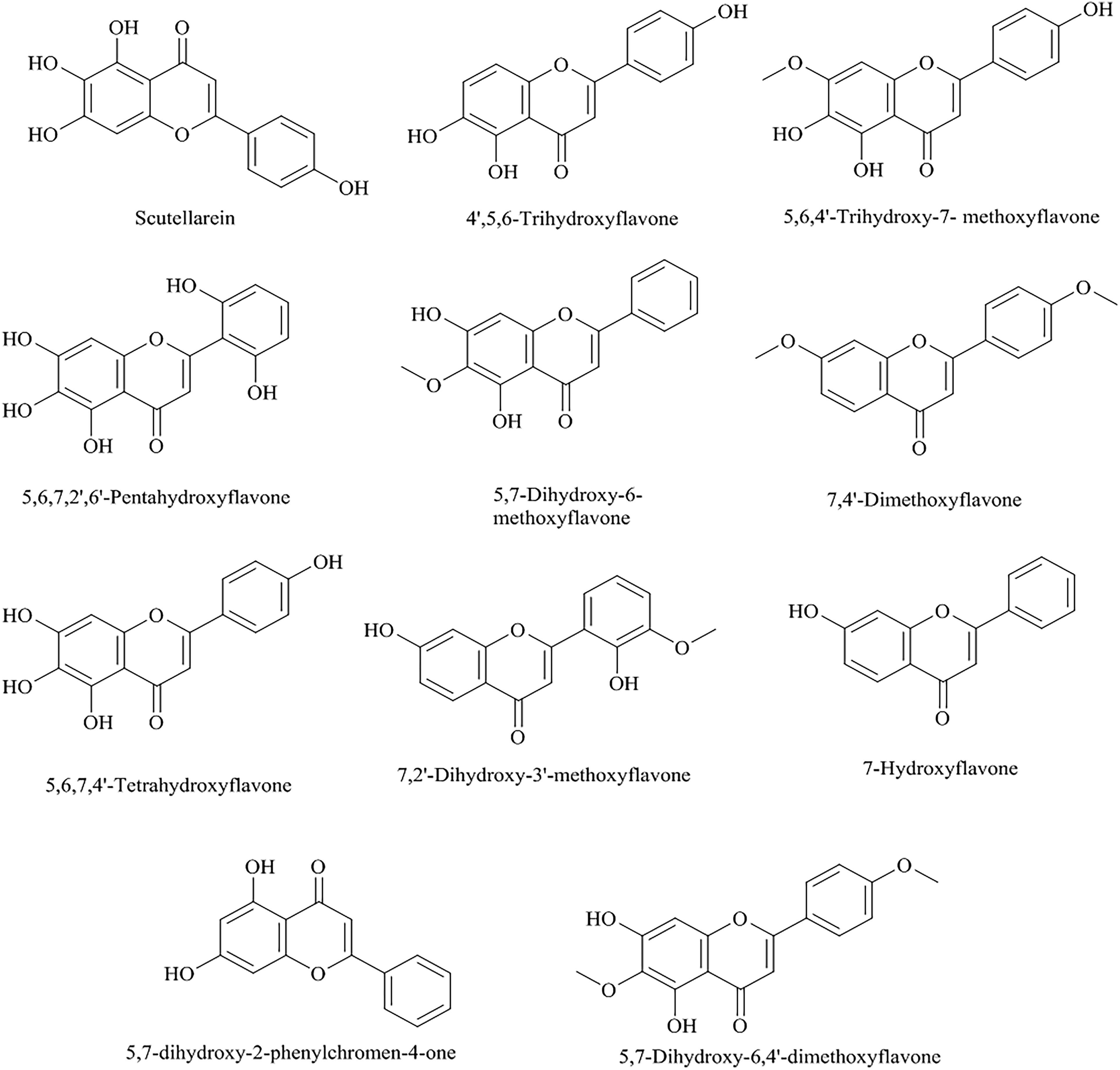
(a, b) The major flavonoids and flavoglycosides reported to be present in the plant parts of Scutellaria baicalensis.
Pharmacological Activities of Extracts and Major Compounds
In this segment, we compile literature findings on the anti-neoplastic, anti-inflammatory, antioxidant, neuronal, and hepatological effective properties of extracts and compounds derived from S baicalensis.
Anti-Tumor Activities
Scutellaria baicalensis extracts and compounds exhibit a broad spectrum of anti-tumor activities, spanning numerous categories of cancer, that is, hepatic, gastrointestinal, pulmonary, mammary glands, prostate, renal bladder, epithelial, blood, skin, and colorectal carcinoma. The plant contained major phytoconstituents such as baicalein, baicalin, wogonin, wogonoside, oroxylin A, and scutellarin reported to have anti-tumor activity via cellular apoptosis, suppression of metastasis, and p53 inactivation. 22 The anti-cancer effects of S baicalensis may be attributed to its capacity to inhibit inflammatory mediators (PGE2) production by suppressing the expression of cyclooxygenase-2 enzymatic activity and arachidonic acid metabolites. The primary flavonoids, namely baicalin, baicalein, wogonin, and wogonoside, emerge as the key phytoconstituents accountable for the anti-malignant activities, demonstrating inhibitory concentration (IC50) values ranging from 10 to 50 μM when evaluated for various cancer cell lines in the laboratory.23–25 These flavonoids demonstrate the ability to neutralize oxidative radicals, mitigate NF-κB activity, inhibit the expression of the COX-2 gene, and modulate the cell cycle. 26 Baicalin exhibits the capability to hinder the growth of mucoepidermal carcinoma Mc3 cells by 50% in a xenograft-murine model. 27 It has the potential to impede cell cycle development and trigger cellular apoptosis by reducing the potential in the powerhouse of the cell. Wogonin has chemotherapeutic activity and has been used synergistically with anti-cancer drugs (cisplatin, 5-fluorouracil, doxorubicin, and etoposide) via downregulation of epithelial-mesenchymal transition pathway in colorectal cancers.28,29 Cai et al 30 reported that the flavonoids such as wogonin, baicalein, baicalin, oroxylin A, and scutellarein would be used in the treatment of ovarian cancer when used synergistically with cisplatin. A collaborative study concluded that the plant extract containing baicalin, baicalein, wogonoside, and wogonin would be used therapeutically against inflammatory bowel disease and cancer after clinical trials. 31
Hepatoprotective Activity
Scutellaria baicalensis serves as the primary ingredient utilized for addressing liver-related issues such as hepatitis, hepatic fibrosis, and carcinoma.32–34 Another, prescribed treatment, Yang-Gan-Wan (YGW), also incorporates baicalin, recognized for its long-standing hepatoprotective properties. YGW hinders hepatic stellate cells (HSC) expression; the primary cells implicated in fibrogenesis, through epigenetic depression of PPAR-γ, thereby ameliorating hepatic fibrosis and cirrhosis. Baicalin, a prominent active compound in YGW, inhibits canonical Wnt expression and signaling, contributing to the epigenetic repression of PPAR-γ. 35 Numerous studies indicate that Scutellaria baicalensis efficiently inhibits fibrosis in hepatocytes and lipid peroxidation in the liver of rats. The consumption of Scutellaria baicalensis roots and shoots demonstrates inhibitory effects on mutagenesis induced by the aflatoxin-B1 which acts as mycotoxin in hepatocytes of experimental animals. The fibrinolytic properties of Scutellaria baicalensis root extracts are attributed to heightened cAMP phosphorylation via element-binding protein. 36 Additionally, extracts from Scutellaria baicalensis roots arrest the cell cycle, and caspase expression, and stimulate ERK-p53 pathways, inducing apoptosis in HSC-T6 cells, thereby preventing cirrhosis.
Shen et al 37 recently studied that the decoctions of Scutellaria baicalensis and Coptis chinensis were used separately and in combined formulations revealing that they are effective in the alleviation of acute liver injury in rats by regulation of lipid cholesterol profile in the bloodstream, lipid peroxidation, and combating oxidative stress.
Anti-Inflammatory Activity
In the realm of clinical applications, Scutellaria baicalensis (SB) is extensively utilized for its anti-inflammatory properties. Numerous diseases can trigger inflammatory responses, during which various inflammatory mediators such as iNOS, COX-2, IL-6, TNF-α, among others, are generated, exacerbating the inflammatory process and fostering a detrimental cycle. 38 Research has substantiated that the flavonoids present in SB effectively restrain the release of multiple inflammatory factors. 39 The extraction of a novel polysaccharide from SB has demonstrated significant inhibitory effects on cytokines release in the bloodstream, unequivocally together with TNF-α, IL-1β, and IL-18. 21 Baicalein, a phytocompound of Scutellaria baicalensis, causes induction of cellular death in inflammatory cells, thereby inhibiting inflammatory factors discharge and restricting the normal cells invasion in the presence of infiltrating inflammation in the local site. 40
Inflammation correlates with the stimulation of various proteins like COX-2, vimentin, annexin A1, annexin A2, etc. The flavonoids within Scutellaria baicalensis act to prohibit the protein's expression, consequently eliciting an inflammation response. 41 The activation of certain pathways that signal the body, such as PPARγ and NF-κB, is essential in the start of inflammation. Studies have shown that an extract called SB (SBE) can reduce the inflammatory response of AET II cells caused by LPS by inhibiting the signaling pathways of NF-κB, MAPK, and phosphatidylinositol-3 kinase. This helps to increase the viability of the cells. 42 In summary; Scutellaria baicalensis primarily exerts its anti-inflammatory role by impeding the inflammatory factors secretion and modulating the expression of proteins that results in inflammation.
In recent research, the ethanolic extracts of Scutellaria baicalensis were studied for the pathway of anti-inflammatory action by a CFA-induced inflammatory model and concluded that the NF-ҡB and ERK1/2 pathway inhibition results in P2X3 suppression and alleviation of inflammation by inhibiting cytokine release. 43 Ankylosing spondylitis is an auto-immune inflammatory disease in which baicalein, wogonin, and oroxylin A were found to be effective targets when studied in-sillico analysis of active compound-action network database and the aforementioned flavonoids compounds are present in roots extract of Scutellaria baicalensis. 44
Scutellaria baicalensis extract was used experimentally for the alleviation of psoriasis by mitigating the macrophages and keratinocytes action. The reduction of oxidative stress result in Nrf2 activation and HO-1 (Hem Oxygenase-1) which leads to amelioration of macrophages and keratinocyte proliferation with inhibition of cytokine release. 45
Antioxidant Effects
The extracts derived from Scutellaria baicalensis were investigated for their antioxidation effects on UV-induced oxidation. The research indicated that these extracts possess the capability to mitigate various diseases, particularly those related to skin damage caused by solar radiation. This protective effect is attributed to their ability to eliminate free radicals, as demonstrated by Gabrielska et al, 46 and their role in preventing lipid peroxidation. In a study by Gao, baicalein and baicalin were found to effectively scavenge –OH radicals, DPPH radicals (IC50 = 24, 32 µmol/L), and CH3 groups (IC50 = 10, 20 µmol/L) in a dose-dependent manner. Interestingly, these compounds showed no impact of anti-oxidant at a dose of 10 µmol/L. Furthermore, at this dose, baicalein and baicalin demonstrated significant inhibition of ferrous-ascorbic acid, AAPH, or NADPH-induced mitochondrial lipid peroxidation in the cortical region of experimental rats and provided marked protection against hydrogen peroxide-induced damage in human neuroblastoma cells (SH-SY5Y cell system). The study suggests that baicalein and baicalin could serve as effective free radical scavengers, offering potential therapeutic benefits for craniocerebral injuries associated with free radical attacks. Notably, the acetone crude extract of Scutellaria baicalensis exhibited the highest antioxidant activity in a dose-dependent manner among hexane, acetone, and methanol extracts. This finding suggests that the acetone extract could be a valuable natural antioxidant source in food processing, as proposed by Chen et al. 47
Scutellaria baicalensis, a usually used herb in the regular Chinese diet, was explored for its antioxidant capacity by Chan et al. 48 Three extracts (aqueous, ethanolic, and pet ether) were assessed for antioxidant activity using standard methods, with total phenolic content determined. The results indicated that Scutellaria baicalensis extracts displayed robust antioxidant activity, with a direct proportion observed between antioxidant activity and total phenolic content in the extract. This supports the potential use of Scutellaria baicalensis as an effective dietary antioxidant. Given the link between oxidative stress and complications in diabetes, Scutellaria baicalensis emerges as a hopeful regimen due to its potent antioxidant and free radical-eliminating properties. Li et al 49 proposed baicalin or baicalein as potential candidates for new anti-diabetic drugs. However, it is important to note that current methods for measuring antioxidant activity are considered nonreliable and incomplete, and the reliability of in-vitro antioxidant test results remains a subject of controversy. The pharmacological activities and mechanism of action of various phytoconstituents present in Scutellaria baicalensis have been listed in Table 2.
The Pharmacological Activities and Mechanistic Action of Phytoconstituents Present in Scutellaria baicalensis.

Other pharmacological Activities
Fang et al 56 studies revealed that roots of S baicalensis were used therapeutically in pregnancy-related disorders such as preeclampsia, premature fetal birth, gestational diabetes mellitus, and spontaneous miscarriages. The roots of Scutellaria baicalensis contain key phytochemical constituents such as baicalein, wogonin, oroxylin A, baicalin, and wogonoside. These bioactive compounds have been employed in addressing disorders associated with pregnancy.
Ma et al 57 studied that the Scutellaria baicalensis arial part flavonoids extracts at 100 mg/kg were found to be effective in cognitive impairment when compared with Ginko Biloba extracts (100 mg/kg). The okadiac acid was injected intracerebroventricular to induce memory deficits and flavonoid-rich extract was found beneficiary in ChAT modulation and tau expression.
Xu et al 58 studied that baicalein, wogonin, and wogonoside are the potential phyto-flavonoids that possess hypoglycemic and hypolipidemic activity as they targeted inhibit α-amylase and glucosidase, and pancreatic lipase activation.
Drug Herb Interactions (Anticancer Drugs)
Drug interaction is an alarming issue in clinical practice due to the increase in prescribed therapies and the wide application of herbal drugs. It is critical to recognize that physiological and pathological variations among individuals can cause significant plant–drug interactions. Failure to do so can result in potentially life-threatening outcomes. 59 Significant herbal–drug interactions arise from physio-pathological variations among individuals, including differences in pharmacokinetics, physiological variables including age, sex, and the occurrence of co-morbidities in geriatrics. 60 It's important to note that detecting when a patient is concurrently using a traditional drug and an herbal compound is challenging. Access to essential information often relies solely on patient interviews, as documented in various studies.
Cisplatin, a carboplatinum-complexed compound, is a primary chemotherapy employed in cancer regimens. Its mechanism of action involves the formation of DNA-platinum adducts, inducing p53-mediated genetic material damage, cellular arrest, and ultimately, cellular apoptosis. However, a significant drawback associated with prolonged cisplatin use is the development of drug resistance, characterized by declined cellular concentration, drug uptake inhibition, and a hike in efflux, attributed to various cellular self-defense mechanisms.61–63
Numerous studies have indicated that overcoming cisplatin resistance and enhancing its anticancer effects can be achieved through the regulation of various pathways that control the proliferation of cells, that is, the EGFR-dependent Akt pathway, and MAPK pathway. Furthermore, free radicals generation modulates the oxidative stress and intracellular calcium release might play a vital role in enhancing drug sensitivity.64–66
Multiple studies have demonstrated that simultaneous administration of Scutellaria baicalensis extract and cisplatin for the treatment of ovarian cancer resulted in improved efficacy and sensitivity while simultaneously reducing the side effects associated with cisplatin.
Scutellaria baicalensis, a medicinal plant, operates through a different molecular mechanism than cisplatin in cancer treatment. A combination of an ethanol extract of Scutellaria baicalensis and cisplatin has been found to enhance cisplatin's anti-cancer effect, particularly in chemo-resistant ovarian cancer cell lines. This combination triggers apoptosis through autophagy, unlike cisplatin's action through the p53 pathway. 67
In 2018, Hussain and his team conducted research that showed the aq. extract of Scutellaria baicalensis can reduce HIF-1α levels in ovarian malignant cells. This is achieved by inhibiting specific pathways, leading to decreased cellular growth in both normal and cancer cells. The extract's antioxidant properties can also help reduce the toxic effects of cisplatin. When administered together in rats, Scutellaria baicalensis extract and cisplatin resulted in a significant reduction in toxicity caused by administration of cisplatin therapy. This was evidenced by reduced pica and kaolin consumption caused by cisplatin. Scutellaria baicalensis extract's antioxidant activity also contributed to its anti-emetic effect. 68
The study found that bioactive compounds in S baicalensis can enhance the anti-cancer effect of carboplatin derivatives and prevail over drug resistance. Similarly, bioactive constituents, that is, apigenin and chrysin magnify the p53 signal of cisplatin. Baicalin attenuates cisplatin resistance in lung cancer cells. Baicalein reduces cisplatin resistance in pulmonary cancer cells.69–72 Scutellarin sensitized the anti-malignant effect of cisplatin on ovarian cancer cells, resulting in increased expressions of p53 and caspase-3. Wogonin promoted the expression of intracellular ROS, contributing significantly to enhanced cellular death in both A549 and HeLa cells treated with cisplatin. 73
The molecular-level interactions between 5-FU (5-fluorouracil) and bioactive constituents from Scutellaria baicalensis, such as oroxylin A, and wogonin, have been examined, resulting in an augmentation of cell death and a decrease in drug resistance. The specific molecular interactions of oroxylin A with 5-FU are not explicitly outlined in the provided information. However, oroxylin A, as a bioactive compound from Scutellaria baicalensis, may exert its effects through diverse mechanisms. Additional research is obligatory to uncover the precise molecular pathways and interactions contributing to enhanced apoptosis and declined drug resistance when combining oroxylin A with 5-FU. 74 The oroxylin A, a bioactive component had been shown to possess a pronounced anti-malignant effect that might act via cell cycle arrest, apoptosis, autophagy, invasion, and metastatic. 75
Wogonin boosts the generation of intracellular reactive oxygen species (ROS), significantly contributing to heightened apoptosis when combined with 5-FU. This increased apoptosis is a pivotal factor in overcoming drug resistance. The escalated levels of ROS induced by wogonin may interact with cellular processes or signaling pathways linked to cell survival, resulting in heightened sensitivity to 5-FU and, consequently, augmented cell death. The mechanism of action of Scutellaria baicalensis with 5-FU has been shown in Figure 4.
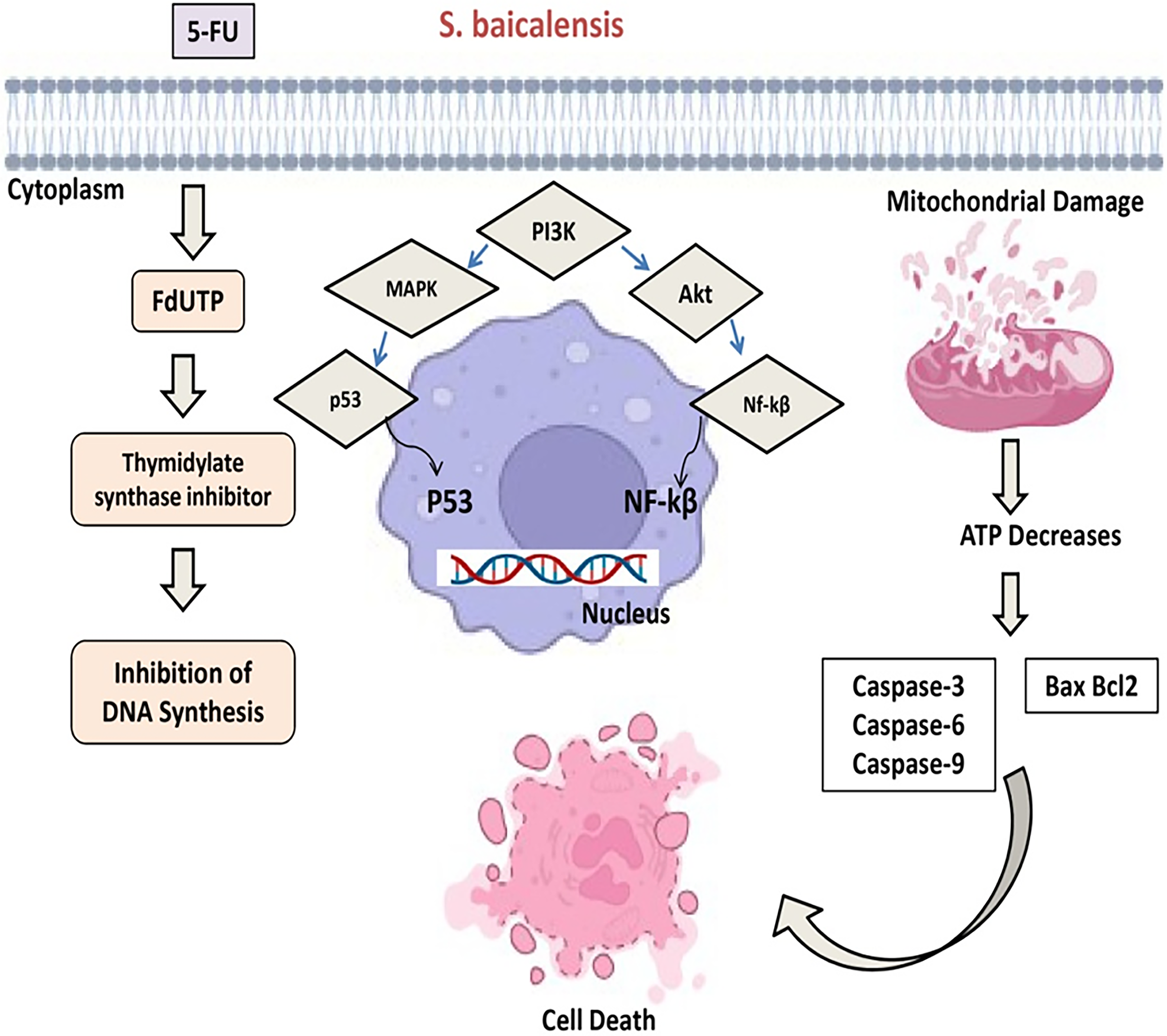
The mechanism of action of Scutellaria baicalensis with 5-fluoro uracil.
The collaboration of 5-FU with bioactive components from Scutellaria baicalensis, encompassing oroxylin A, and wogonin, demonstrates cooperative effects at the molecular level. These interactions involve pathways related to apoptosis, ROS production, and potentially other cellular processes. The detailed molecular mechanisms underlying these interactions may vary for each bioactive compound and necessitate further exploration through focused studies.
Discussion
Scutellaria baicalensis, commonly known as Baikal or Chinese skullcap, is a perennial herb belonging to the Lamiaceae family, recognized for its pharmacologically active constituents, primarily flavonoids and flavonoid glycosides such as wogonin, baicalein, baicalin, oroxylin A, scutellarein, and norwogonin. These compounds exhibit a wide range of therapeutic properties. The roots of S baicalensis have been extensively utilized in traditional Chinese medicine for their potent antioxidant, antibacterial, antitumor, antihyperglycemic, antihyperlipidemic, anti-aging, neuroprotective, and anti-inflammatory activities, as well as for managing pregnancy-related disorders.
Microscopic analyses of S baicalensis reveal unique structural features, including parenchymatous cells, thin-walled warty trichomes, and glandular hairs on the stems, as well as diacytic stomata complexes, warty trichomes, and capitate glandular hairs with essential oil globules on the leaves. These morphological characteristics are indicative of the plant's bioactive potential.
The major phytoconstituents—baicalein, baicalin, wogonin, wogonoside, oroxylin A, and scutellarin—demonstrate significant antitumor activity through mechanisms such as inducing cellular apoptosis, inhibiting metastasis, and inactivating the p53 pathway. Furthermore, combined decoctions of S baicalensis and Coptis chinensis have shown efficacy in mitigating acute liver injury in rat models by modulating lipid profiles, mitochondrial peroxidation, and ROS-mediated oxidative stress.
Baicalein is particularly notable for inducing apoptosis in inflammatory cells, thereby reducing the secretion of inflammatory mediators and preventing the invasion of normal cells in inflamed tissues. In the context of psoriasis treatment, baicalein reduces oxidative stress, leading to the activation of the Nrf2 pathway and the expression of HO-1, which collectively suppresses macrophage and keratinocyte proliferation and inhibits cytokine release.
Recent studies have highlighted the synergistic effects of combining S baicalensis extracts with conventional chemotherapeutic agents. For instance, the co-administration of S baicalensis and cisplatin in ovarian cancer treatment has been shown to enhance therapeutic efficacy and sensitivity while reducing cisplatin-associated side effects. Additionally, the combination of 5-FU with bioactive compounds such as oroxylin A and wogonin from S baicalensis has demonstrated synergistic effects at the molecular level, involving pathways related to apoptosis and ROS production, thereby potentiating the anticancer effects.
Overall, Scutellaria baicalensis and its bioactive compounds hold significant promise for the treatment of various diseases, including autoimmune disorders. The multiple targeting capabilities and broad-spectrum activities of these natural compounds, combined with their minimal side effects, position them as valuable candidates for modern therapeutic applications. The integration of S baicalensis into contemporary medical practices offers a multifaceted approach to disease management, leveraging its diverse pharmacological mechanisms for comprehensive health benefits. 76
Conclusion
Scutellaria baicalensis, with its rich composition of medicinally active components including essential volatile oils, polysaccharides, and flavonoids, offers a versatile array of pharmacological activities. These span from anti-neoplastic and anti-inflammatory effects to anti-hyperlipidemic, anti-hyperglycemic, antimicrobial, hepatoprotective, and neuroprotective actions. Key chemical constituents like Baicalin, Baicalein, Wogonin, and Oroxylin A have undergone extensive scrutiny for their therapeutic potential. Notably, Wogonin has recently earned approval from the State Drug Administration of China as a promising candidate for anticancer therapy.
Looking ahead, the exploration of biosynthesis through metabolic engineering emerges as an enticing frontier for future investigation. This approach holds the promise of cultivating novel drug molecules tailored to combat an array of ailments. Consequently, the quest for natural remedies in the treatment of diverse disorders, with minimal side effects, underscores the imperative of identifying and scrutinizing novel candidates sourced from botanical reservoirs.
Strengths of the review include its comprehensive synthesis of Scutellaria baicalensis data, an exhaustive literature search across multiple databases, and an in-depth analysis of bioactive compounds and their pharmacological potentials. However, limitations loom, encompassing potential data gaps from the exclusion of non-English sources, possible biases in study selection, and a dearth of clinical trial data. These facets accentuate the exigency for continued scientific exploration and robust clinical validation of the findings to propel the field forward in harnessing the therapeutic potential of Scutellaria baicalensis.
Footnotes
Abbreviations
Consent for Publication
All of the authors are aware of and agree to the content of the article and their being listed as a co-author of the article.
Declaration of Conflicting Interests
The author(s) declared no potential conflicts of interest with respect to the research, authorship, and/or publication of this article.
Funding
The author(s) disclosed receipt of the following financial support for the research, authorship, and/or publication of this article: This work was supported by Hebei Natural Science Foundation (H2022406056).
Ethical Approval
Ethical approval is not applicable to the article.
Informed Consent
Not applicable to the article.

Statement of Human and Animal Rights
Not applicable to the article.