



Abstract
Coronavirus disease 2019 (COVID-19), caused by severe acute respiratory syndrome-coronavirus 2 (SARS-CoV-2), is often accompanied by injury to pulmonary function and pulmonary fibrosis. Feiluoning (FLN) is a new Chinese medicine prescription which is available for the treatment of severe and critical convalescence of COVID-19 patients. FLN also has a positive effect on pulmonary function injury and pulmonary fibrosis. We explored the potential mechanism of FLN’s effect on the convalescent treatment of COVID-19. According to the pharmacodynamic activity parameters, we screened the active chemical constituents of FLN by comparing the Traditional Chinese Medicine Systems Pharmacology Database and Analysis Platform. The Uniprot database was used to querying the corresponding target genes, and Cytoscape 3.6.1 was used to construct a herb-compound-target network. Protein interaction analysis, target gene function enrichment analysis, and signal pathway analysis were performed using the STRING, DAVID, and Kyoto Encyclopedia of Genes and Genomes pathway databases. Molecular docking was used to predict the binding capacity of the core compound with COVID-19 hydrolase 3 Cl and angiotensin-converting enzyme 2 (ACE2). The herb-compound-target network was successfully constructed and key targets identified, including prostaglandin G/H synthase 2, estrogen receptor 1, heat shock protein HSP 90, and androgen receptor. The major affected metabolic pathways were pathways in cancer, pancreatic cancer, nonsmall cell lung cancer, and toll-like receptor signaling. The core compounds of FLN, including quercetin, luteolin, kaempferol, and stigmasterol, could strongly bind to COVID-19 3 Cl hydrolase, and other compounds, including 7-O-methylisomucronulatol and medicocarpin, could strongly bind to ACE2. Thus, it is predicted that FLN has the characteristics of a multicomponent, multitarget, and multichannel overall control compound. FLN’s mechanism of action in the treatment of COVID-19 may be associated with the regulation of inflammation and immune-related signaling pathways, and the influence of COVID-19 3 Cl hydrolase binding ability.
The coronavirus disease 2019 (COVID-19) pandemic caused by severe acute respiratory syndrome-coronavirus 2 (SARS-CoV-2) is a global health emergency. Although COVID-19 is under control in China, the global epidemic situation is still very serious. 1,2 The most common mode of COVID-19 transmission is the inhalation of infectious aerosols. Infected person will have an incubation period of approximately 3-14 days, and then, the infection symptom from asymptomatic develop to a fatal disease. In elderly patients, COVID-19 infects the lower respiratory tract, which may lead to the development of fatal pneumonia. Other nonspecific symptoms include fever, cough, myalgia, dyspnea, and sometimes diarrhea. In the second week of infection, the disease will progress to hypoxemia, which will lead to difficulty in breathing and acute respiratory distress syndrome (ARDS). Patients at this stage may require mechanical ventilation in an intensive care unit with quarantine facilities. Secondary bacterial infections may also occur which can lead to secondary bacterial pneumonia. 3
The main protease, 3 Cl hydrolase, is an attractive drug target in coronavirus (its clear structure is shown in Figure 1(A)). After being translated from the viral RNA, the polyproteins are processed by 3 Cl hydrolase. 4 Zihe et al of Shanghai University of Science and Technology designed a potentially active compound, N3, based on the 3 Cl hydrolase structure (the structure of N3 is shown in Figure 2(A)). 5 Furthermore, antiviral drugs, such as arbidol and remdesivir, can effectively treat COVID19. However, there is no effective drug treatment until now even patients are in great need of drug treatment. What is even more disappointing is that these previously discovered marketed drugs with the potential to treat COVID-19 have had unexpected side-effects during the clinical application, including liver damage and kidney damage. 6 -8 Immunohistochemical and special staining studies have demonstrated that the whole lung of critically ill patients with COVID-19 contains diffuse hyperemia and partial hemorrhagic necrosis, especially the lung section has shown severe hyperemia and bleeding. The main pathological changes include numerous pulmonary interstitial fibrosis, and some of them manifest as hyaline degeneration, small vessel hyperplasia, vessel wall thickening, lumen stenosis, occlusion, and micro-thrombosis. The alveolar cavity is congested and protruding; it contains mucus, edematous fluid, epithelial cell exfoliation, and inflammatory cells. Even if critically ill patients are treated effectively, the pulmonary damage and pulmonary fibrosis cannot be eradicated, 9 and thus, there is an urgent need to develop a vaccine or new drugs to treat COVID-19 and to effectively improve the functional damage and pulmonary fibrosis it causes.
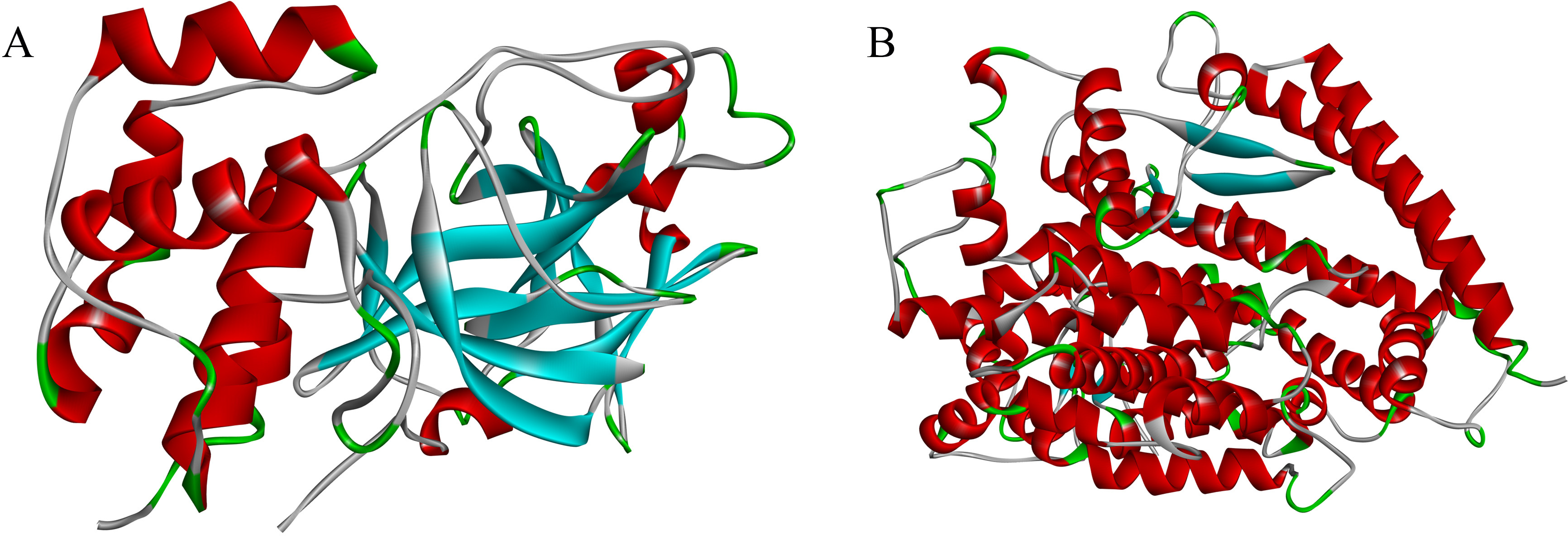
(A) Crystal structure of coronavirus disease 2019 3 Cl hydrolase (Mpro) (protein data bank [PDB]: 6LU7) and (B) crystal structure of angiotensin-converting enzyme 2 (PDB: 1R42).

Structure of some compounds. (A) Compound N3; (B) remdesivir; (C) chloroquine; (D) arbidol; (E) adenosine; (F) baicalein; (G) beta-sitosterol; (H) kaempferol; (I) luteolin; (J) medicocarpin; (K) quercetin; and (L) stigmasterol.
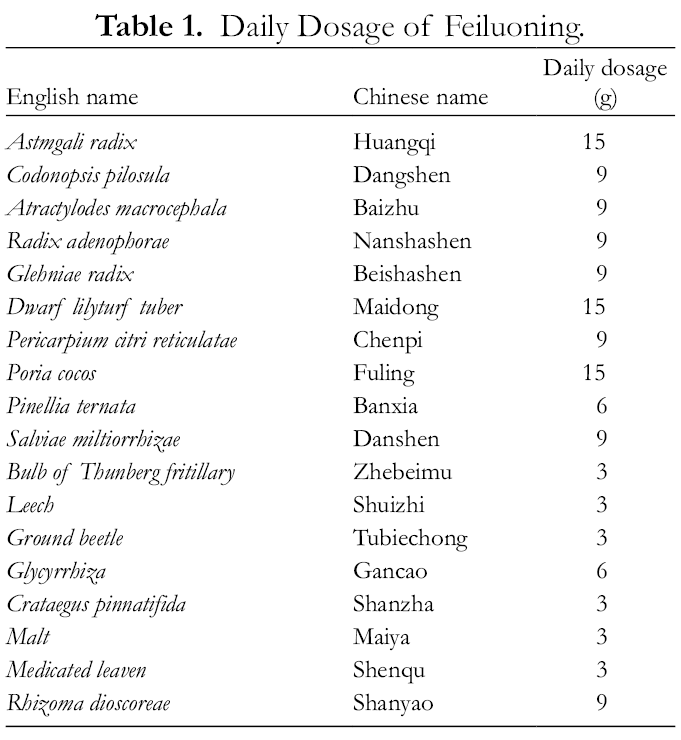
FLN, a traditional Chinese medicinal formula, has shown a significant effect against this new viral pneumonia, and clinical observation showed that the lung function was impaired and pulmonary fibrosis was significantly improved. FLN contains 18 Chinese herbal medicines (the composition and daily dosage of prescription herbs are shown in Table 1). It can invigorate the spleen, tonify the lungs, and exert an antifibrotic effect. FLN has shown good effectiveness in critically ill COVID-19 patients at the Hubei Provincial Hospital of TCM. Network pharmacology for TCM integrates the disciplines of system biology, multidirectional pharmacology, computational biology, and network analysis and explores the relationship between TCM and disease from a holistic point of view. It provides a novel strategy to systematically find the potential active components and action targets of TCM compound prescription, which is consistent with the multicomponent and multitarget philosophy of TCM. 10,11 Molecular docking plays an important role in revealing the interaction between components and target proteins. It can clarify the principle of herb’s effect on the molecular level and make TCM research microscopic and scientific. 12
Daily Dosage of Feiluoning.
In this study, we performed network pharmacological analysis on FLN and report an effective traditional Chinese herbal formula for using in the rehabilitation of COVID-19 patients, and we further predict its core active compounds and speculate on target biological pathways. The molecular docking technique was employed for predicting the activity of the key compounds in FLN against closely related COVID-19 targets, and signal pathway analysis was performed to elucidate the anti-COVID-19 mechanism of FLN.
Materials and Methods
We followed the methods of Zongchao Hong et al (2020). Specifically, we proceeded as described below. 13
Components Collection and Screening
Refer to previous studies 14 ; The Traditional Chinese Medicine Systems Pharmacology Database (TCMSP, http://tcmspw.com/index.php, Version 2.3) and Analysis Platform were utilized to collect the components of FLN, and these system and platform also provided the oral bioavailability (OB) and drug-likeness (DL) data of the compounds. The medicinal agents, which were not found in the TCMSP database, were searched through the literature. The chemical structures of the related components were obtained from the PubChem (https://pubchem.ncbi.nlm.nih.gov/) database. Furthermore, we screened each of the retrieved compounds based on their OB and DL properties (OB ≥30% and DL ≥0.18). Potentially active ingredients were obtained after screening.
Target Protein Screening
The target information of these compounds was downloaded from the TCMSP database, while the compounds not found in the TCMSP database, the SMILES of the FLN’s active ingredients were used for searching the relevant protein targets of the active ingredients in the Swiss Target Prediction (http://www.swisstargetprediction.ch/). The protein targets with probability ≥0.5 were included, then the duplicate data were deleted, and the name of the protein targets and their Uniprot ID was saved. Finally, the gene targets of the FLN’s active ingredient were retrieved by using the UniProt KB search function (http://www.uniprot.org/uniprot/).
The target related to viral pneumonia was obtained by searching “viral pneumonia” and “pulmonary fibrosis” as the keyword in the Genecard database (https://www.Genecards.org/). We removed the false-positive genes; an intersection with the predicted target of the obtained compound helped obtain the potential target of FLN to treat viral pneumonia and pulmonary fibrosis.
Network Construction
All networks were visualized in Cytoscape 3.6.1 software (https://cytoscape.org/download.html). To explain the latent pharmacological mechanism of FLN on the treatment of COVID-19 and improving pulmonary fibrosis, the herb-compound-target network was constructed. The visualization network is composed of nodes and edges. Nodes represent components, targets, herbs, and so on; edges represent connections between nodes. Moreover, the “network analyzer” plug-in was applied to calculate the network topology parameters of the nodes, mainly considering the Betweenness Centrality, Closeness Centrality, and degree.
Protein-Protein Interaction Network Construction
STRING database (https://string-db.org/) uses document content management to extract protein-protein interaction relationships derived from experimental data. In addition, the STRING database also stores some calculated and predicted interaction relationships. FLN’s potential targets of action for the treatment of viral pneumonia and pulmonary fibrosis were input into the STRING website, and the protein-protein interaction (PPI) network of the potential action targets was obtained. The genes interacting with ACE2 were also found through the STRING database.
Enrichment Analysis
Gene ontology (GO) enrichment analysis and Kyoto Encyclopedia of Genes and Genomes (KEGG) signaling pathway enrichment analysis are able to show the importance of biological processes and signaling pathways. DAVID (https://david.ncifcrf.gov/) provides systematic, comprehensive biofunctional annotations for many genes or proteins, enabling the identification of the most significantly enriched biological annotations. We utilized the DAVID database to perform GO and enrichment analysis. The most important KEGG pathway results for biological process (BP), cellular component (CC), molecular function (MF), were screened and stored, with a threshold of P < 0.05. OmishareTools (http://www.omicshare.com/tools/index.php/) was used to visualize the results.
Molecular Docking Method
The core components, selected from the active ingredients of FLN, were molecularly docked at COVID-19 coronavirus 3 Cl hydrolase and ACE2 (PDB: 1r42, crystal structure shown in Figure 1(B)). Subsequently, the structures of the related proteins were downloaded from the RSCB PDB database (https://www.rcsb.org/), and the compound structures were downloaded from the PubChem database (https://pubchem.ncbi.nlm.nih.gov/). The DiscoveryStudio (Discovery Studio 2016; BIOVIA; San Diego, USA) software was used to perform operations such as hydrogenation, dehydration, and ligand molecule removal of proteins. The higher the LiDock score, the higher the potential activity of the compound.
Results
Collected Compounds
The compounds in the 18 TCMs that make up FLN were put through the TCMSP database. With an OB ≥30% and a DL ≥0.18, 294 active compounds were selected, of which 20 were from Huangqi (Astmgali radix), 21 from Dangshen (Codonopsis pilosula), 7 from Baizhu (Atractylodes macrocephala), 5 from Nanshashen (Radix adenophorae), 8 from Beishashen (Glehniae radix), 20 from Maidong (Dwarf lilyturf tuber), 5 from Chenpi (Pericarpium Citri Reticulatae), 15 from Fuling (Poria cocos), 13 from Banxia (Pinellia ternata), 65 from Danshen (Salviae miltiorrhizae), 7 from Zhebeimu (Bulb of Thunberg fritillary), 9 from Shuizhi (Leech), 92 from Gancao (Glycyrrhiza), 6 from Shanzha (Crataegus pinnatifida), 18 from Maiya (Malt), and 16 from Shanyao (Rhizoma dioscoreae). Interestingly, a total of 21 ingredients were present in more than 2 herbal medicines (the schematic diagram of the distribution of recurring compounds is shown in Figure 3, and the information of recurring compounds is shown in Table 2). The basic information of the compounds found in FLN is shown in Supplemental Table S1 in the supplemental Materials.

Twenty-one ingredients are present in more than 2 kinds of herbs. The symbol in the outer circle represents the compound number, and the number in the fan leaf represents the number of botanicals.
Recurring Compounds Information in Feiluoning.

Topology Analysis Network
Figure 4 shows the 803 nodes included in the construction (18 herbs nodes, 294 compound nodes, 491 target nodes). Each compound of FLN interacted with multiple targets. Simultaneously, we observed that different compounds interacted with the same target and reflected the multicomponent and multitarget mechanism of interaction in FLN. By analyzing the betweenness centrality, closeness centrality, and degree between the compound and the target, we have found the top 20 core compounds. In Table 3, quercetin (degree = 154) shows the largest number of potential targets, along with adenosine (degree = 136), kaempferol (degree = 65), and luteolin (degree = 60), suggesting that these components with high degree values were the pharmacologically active compounds in FLN. We also selected the top 20 genes based on the degree value. Table 4 shows that many compounds can act simultaneously on PTGS2 (degree = 174), ESR1 (degree = 110), HSP90AA1 (degree = 109), AR (degree = 99), NCOA2 (degree = 96), and SCN5A (degree = 93), all suggest that FLN has multicomponent and multitarget biological activity characteristics.

Prescription-compounds-targets network constructed by Cytoscape. Purple represents herbs; green represents compounds, and light blue represents target genes.
Top 20 Compounds Information in the Prescription-Compound-Target Network.
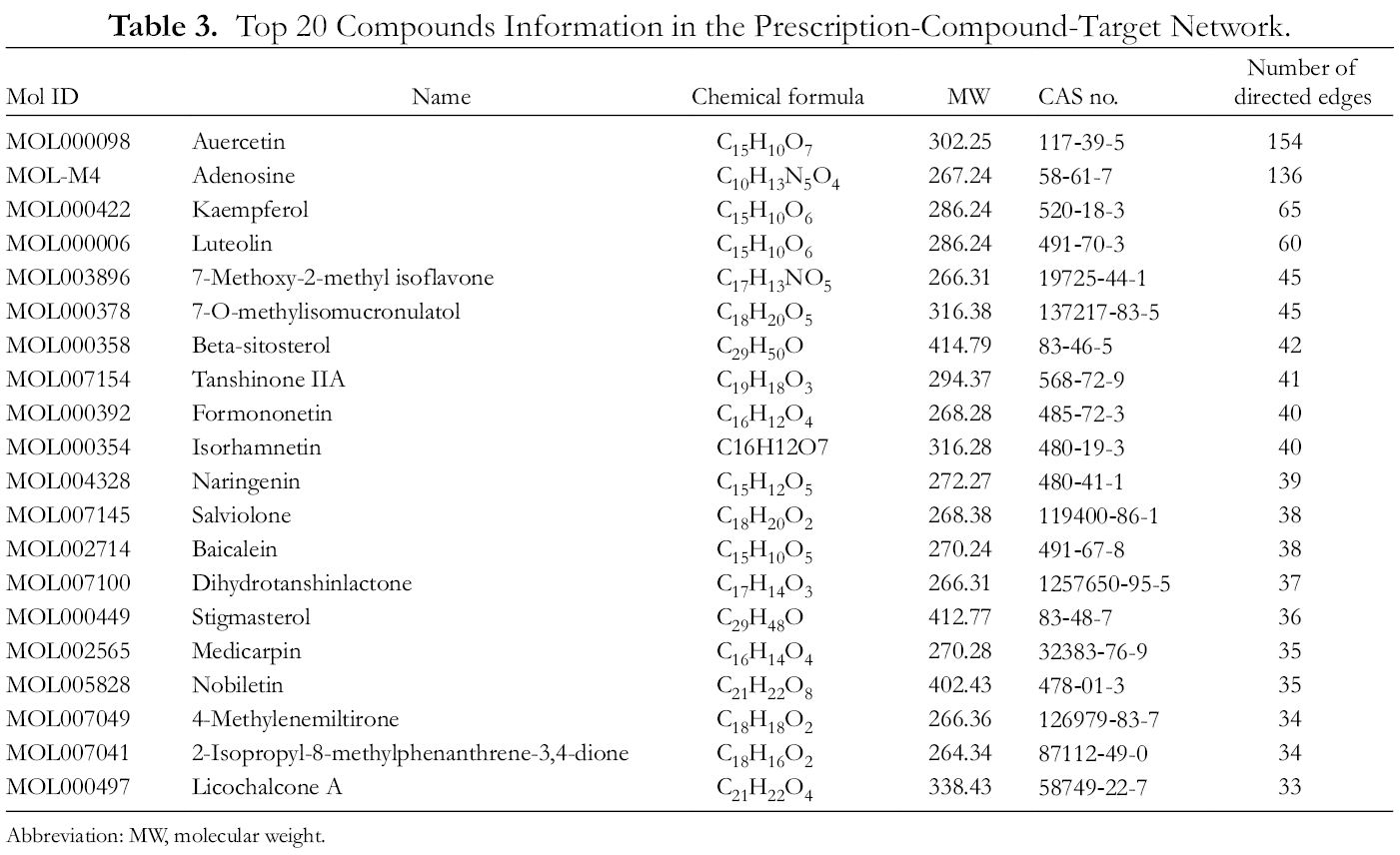
Abbreviation: MW, molecular weight.
Top 20 Targets Information in the Prescription-Compound-Target Network.

We also screened the top 200 genetic targets related to viral pneumonia and the top 300 genetic targets related to pulmonary fibrosis from the Genecard database and then, intersected them with the possible targets of FLN to obtain 56 common targets (Figure 5(A)). We used Cytoscape 3.6.1 software to construct the herb-compound-common target network (Figure 6). From the network analysis, 155 compounds were related to those 56 targets, but these 155 compounds were obtained from only 15 herbs, among which Huangqi (Astmgali radix), Gancao (Glycyrrhiza), Dangshen (Codonopsis pilosula), and Danshen (Salviae miltiorrhizae) contributed the most. The medicinal agents of the network are shown in Table S2.

(A) The Venn diagram of the target of the compound, the target related to viral pneumonia, and the target related to pulmonary fibrosis; (B) the PPI interaction network of 56 common targets in the Venn diagram; (C) the interaction map of the top 20 targets in the prescription-compounds-targets network; and (D) genes that interact with ACE2. ACE2, angiotensin-converting enzyme-2; PPI, protein-protein interaction.

Prescription-compound-common target network constructed by Cytoscape. Purple represents herbs; green represents compounds, and light blue represents target genes.
PPI Network
The obtained potential targets were analyzed by using the STRING website and finally obtain the PPI network (Figure 5(B)). In this network, a total of 967 interactions are identified among the 56 targets, with an average of 33.9 degrees was generated per node, and there is a very close relationship between the 56 targets. We also constructed a PPI network for the top 20 genes in the herb-compound-common target network (Figure 5(C)). The close interactions between genes are evident from the network diagram. We further detected interactions among AGT, AGTR1, AGTR2, DPP4, MET1A, MET1B, MME, PRCP, XPNPEP2, REN, and ACE2 (Figure 5(D)), whereas DPP4 was the target of calycosin, formononetin, isorhamnetin, kaempferol, etc.
While constructing the PPI network of the 56 common targets, we analyzed the GO and KEGG pathways by using the STRING, and obtained a total of 1418 GO entries were obtained. BP was involved in the cellular response to organic substances, cytokine, chemical stimuli, and cell surface receptor signaling pathways; MF was involved in the signaling receptor binding, cytokine activity, and protein binding. The signaling pathways to cancer, related IL-17 signaling, Th17 cell differentiation were also involved. The top 20 GO entries and KEGG path information are demonstrated in the Supplemental Table S3.
Module Analysis
Figure 7(A)-(C) shows that the common targets were related to cell proliferation, apoptosis, programmed cell death, response to an organic substance, response to nutrient levels, response to blood vessel development, and vasculature development. CC analysis demonstrated that the targets were mainly related to extracellular space, extracellular region part, cytosol, vesicle lumen, cell surface, and cell projection cytoplasm. MF analysis shows that the targets mainly involve cytokine activity, enzyme binding, identical protein binding, growth factor activity, protease binding, protein kinase activity, calcium ion binding, endopeptidase activity, cell surface binding, peptidase activity, protein phosphatase binding, and other molecular functions.

Bubble charts of GO function analysis and KEGG signal pathway analysis of 56 common targets. (A) Biological process; (B) cellular component; (C) molecular function; (D) KEGG pathways. GO, gene ontology; KEGG, Kyoto Encyclopedia of Genes and Genomes.
In Figure 7(D), KEGG pathway enrichment analysis suggested that the targets are mainly related to signaling pathways, such as cancer pathways, toll-like receptor (TLR) signaling pathway, nod-like receptor signaling pathway, T cell receptor (TCR) signaling pathway, MAPK signaling pathway, apoptosis, graft-versus-host disease, RIG-I-like receptor signaling pathway, nonsmall cell lung cancer, and neurotrophin signaling pathway. The results indicated that the key targets of FLN’s main bioactive components were distributed across different metabolic pathways. This suggests that mutual regulation of “multicomponents, multitargets, and multipathways” is a possible mechanism by which FLN succeeds as a COVID-19 rehabilitation therapeutic.
Molecular Docking Display
Generally, the lower energy of ligand and receptor binding, the higher the LiDock Score, the greater the possibility of interaction, and the stronger the potential activity of the compound. 15 In this study, molecular docking was performed with FLN core compounds, remdesivir, chloroquine, arbidol, and N3 (N3 was designed by Professor Rao’s group; the structure is shown in Figure 2). The results showed that the LiDock score of the FLN active compounds for COVID-19 3 Cl hydrolase was over 100. Although the potential activity of these compounds was inferior to that of remdesivir and N3, they are comparable to the activity of chloroquine and arbidol. Molecular docking showed that medicarcarpin and 7-O-methylisomucronulatol could stably bind to ACE2 (with activities much higher than those of chloroquine and arbidol). The details are shown in Table 5, Figures 8 and 9.
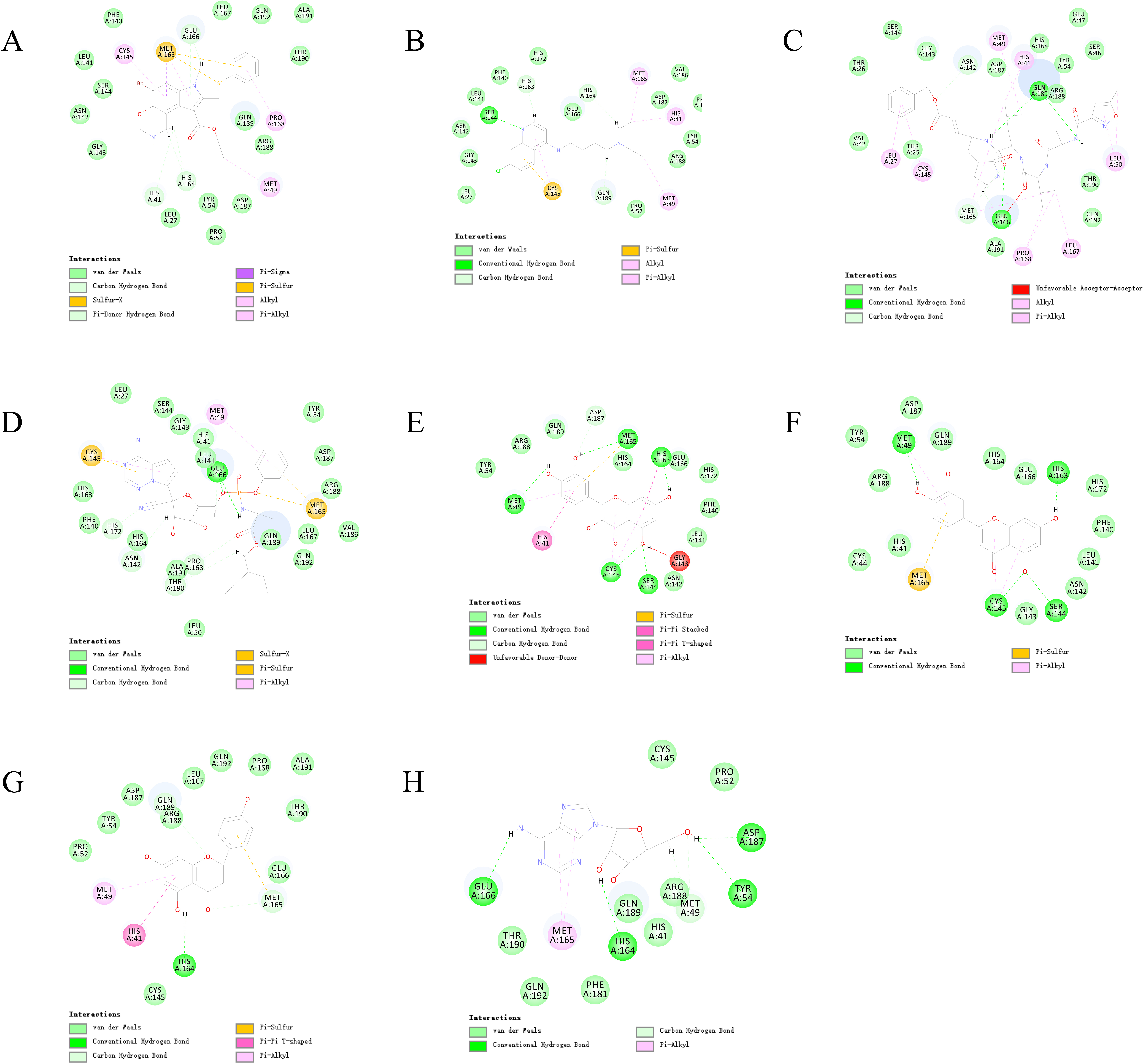
Results of docking of each compound with coronavirus disease 2019 3 Cl hydrolase. (A) Arbidol-6LU7; (B) chloroquine-6LU7; (C) N3-6LU7; (D) remdesivir-6LU7; (E) quercetin-6LU7; (F) luteolin-6LU7; (G) naringenin-6LU7; (H) adenosine-6LU7.

Results of docking of each compound with ACE2. (A) Chloroquine-1R42; (B) N3-1R42; (C) remdesivir-1R42; (D) 7-O-methylisomucronulatol-1R42; nd (E) medicocarpin-1R42.
Result of Molecular Docking.

Abbreviations: ACE-2, angiotensin-converting enzyme-2; MW, molecular weight.
Discussion
The current novel coronavirus epidemic is developing rapidly, although no specific drugs for the COVID-19 have been found. However, many clinical practice results show that traditional Chinese medicine plays an important role in the treatment of COVID-19, bringing new hope for the prevention and control of COVID-19. TCM has a long history and played an indispensable role in the prevention and treatment of several epidemic diseases. During the SARS epidemic in 2003, the intervention of TCM has also achieved a remarkable therapeutic effect. During the treatment period of COVID-19, more than 3100 medical staff of TCM were dispatched to Hubei province, and the TCM scheme was included in the guideline on diagnosis and treatment of COVID-19. 16 TCM has thousands of years of experience in regulating the body and enhancing resistance to epidemics, with unique insights and experience in prevention and control. For mild and ordinary patients, early intervention of TCM can effectively prevent the disease from turning into a severe and critical disease. In severe cases, TCM has won time to save them by improving symptoms. The treatment practice of COVID-19 also shows that early intervention of TCM is an important way to improve the cure rate, shorten the course of the disease, delay the disease progression, and reduce the mortality rate. In addition, TCM works can not only suppress the virus but also prevent infection, regulate the immune response, cut off the inflammatory storm, and promote body repair. 17 -19 During interventional treatment of COVID-19, several groups of patients with TCM prescriptions have shown significant curative effects, of which, FLN is one of the preparations.
We used the network pharmacology and molecular docking technique to screen the core compounds in FLN and predict its possible anti-COVID-19 mechanism for improving lung injury and fibrosis. Compared with the clinical drugs, the active compounds of FLN strongly bound with COVID-19 3 Cl hydrolase; particularly quercetin, luteolin, stigmasterol, and some other compounds exhibited very similar binding abilities to those of arbidol and chloroquine. Both SARS-CoV-2 and SARS-CoV virus infection invade the human body through their expressed S-protein and ACE2. 20,21 Therefore, the active compounds of FLN were docked on ACE2, and the results showed that compounds, such as 7-O-methylisomucronulatol and medicocarpin, could strongly bind to ACE2.
Analysis of the STRING database identified an interaction between DPP4 and ACE2, whereas the target of calycosin, formononetin, isorhamnetin, kaempferol, and some other compounds interacted with DPP4. DPP4 controls the expression of dipeptidyl peptidase 4, which is crucial for the T-cell receptor (TCR)-mediated T cell activation. Besides, DPP4 hydrolyzes cell cycle proteins of extracellular matrix (ECM), helping the migration and invasion of endothelial cells to ECM. 22 We predict that FLN can not only directly act on ACE2, but also regulate the activity of T cells by acting on DPP4, and then regulate the human immune function. By competitively combining with ACE2 and boosting immune function, FLN can prevent and treat COVID-19.
The KEGG results, analyzed by STRING and DAVID, showed that the nonsmall cell lung cancer, small cell lung cancer, and the cancer pathways, involving EGFR, AKT1, MAPK1, ERBB2, TP53, and EGF genes, are the most related pathways to the lungs; most of these genes are the targets of quercetin, luteolin, and kaempferol, indicating that FLN can regulate nonsmall cell lung cancer, small cell lung cancer, and other cancer signaling pathways. However, further studies need to fully understand whether the active components of FLN directly affect these gene targets to regulate those related pathways and thus treat COVID-19 and pulmonary fibrosis.
After SARS-CoV-2 infects the body, the immune system reacts quickly, and CD4+ T lymphocytes rapidly differentiate into helper T cells Th1 and Th2. Th1 secretes the granulocyte-macrophage colony-stimulating factor. These cytokines induce CD14+, and CD1+ monocytes are overactivated. When Th1, Th2, CD14+, and CD16+ enter the pulmonary circulation, numerous inflammatory cells infiltrate the lungs, and proinflammatory cytokines, chemokines, interleukin (IL)-1β, IL-6, interferon-γ, tumor necrosis factor-α, CCL2, CCL3, and CXCL10 form a “cytokine storm,” causing severe pneumonia. 23 In this excessive immune response, cytokines and white blood cells (including neutrophils and monocytes-macrophages) are uncontrollably increased in tissues and organs through a specific positive feedback regulation mechanism, resulting in ARDS, multiple organ dysfunction syndromes, and even death. 24 Cytokine storm has complex pathogenesis, rapid disease progression, and high mortality. Cytokine storms not only occur during COVID-19 infection but also in many other infectious/noninfectious diseases, such as influenza, SARS, dengue, multiple sclerosis, pancreatitis, etc. 25 -27 “Pneumonitis Diagnosis and Treatment Program for New Coronavirus Infection,” published in China, has reported that the severe and critical cases of COVID19 are mainly treated by respiratory support, circulatory support, plasma treatment from recovered patients, and appropriate administration of glucocorticoids. Intestinal microecological regulators can be prescribed for critically ill patients with high inflammatory reactions (ie, a cytokine storm). In vitro blood purification techniques, such as plasma exchange, adsorption, perfusion, and blood/plasma filtration, can also be considered. Also, it emphasizes the importance of TCM in COVID-19 treatment. 28 A few symptoms occur before the onset of the cytokine storm; the treatment is difficult after the attack, and the consequences are serious. The cytokine storm should be identified and treated early. In this aspect, TCM has unique advantages. TCM has a wide range of targets and has a certain effect on the occurrence, progress, and recovery stage of the cytokine storm. Among the signal pathways, related to the core compounds of FLN, the top 10 included the TLR signaling pathway, TCR signaling pathway, cytokine-cytokine receptor interaction, and MAPK signaling pathway. TLRs can recognize different pathogen-related molecular patterns and plays an indispensable role in the innate immune response. They are the first line of defense against pathogen invasion and play a key role in inflammation, immune cell regulation, survival, and proliferation. 29 The activation of the TCR can promote many signal transduction cascades and ultimately determine the fate of a cell by regulating cytokine products, cell survival, proliferation, and differentiation. 30 Through the enrichment analysis of signal pathways, we found that FLN can regulate multiple signal pathways related to immunity and restore immune homeostasis.
Apoptosis, the TGF-β signaling pathway, and the neurotrophin signaling pathway are related to cell growth, development, and metabolism. They regulate cell growth, differentiation, and development in many biological systems. KEGG enrichment analysis has identified that FLN can regulate these signal pathways. We have predicted that FLN can improve pulmonary fibrosis through apoptosis and the TGF-β signaling pathway. COVID-19 can not only damage the function of the human lungs but also attack the nervous system, kidney, and liver. 31 COVID-19 infection leads to immune disorder, metabolic decompensation, and nervous system diseases. For COVID-19 treatment, we should not only diagnose the symptoms but also comprehensively regulate the overall function of the body. Both the symptoms and the root causes of COVID19 can be cured by TCM. COVID-19 can be effectively treated by rationally applying TCM and combining traditional Chinese and modern medicine. TCM can comprehensively diagnose and treat rehabilitating COVID-19 patients.
In this study, we evaluated the chemical constituents, targets of action, and the binding ability of the core compounds of FLN to COVID-19 3 Cl hydrolase and ACE2 via network pharmacology and molecular docking. The research results show that FLN can exert its efficacy through multicomponent, multitarget, and multipathway. TCM treatment of diseases through the coordination of multicomponent, multitarget, and multipathway aims to achieve the curing of both manifestation and the root cause of a disease. We hope that through this preliminary study of FLN, more doctors will consider using it to treat COVID-19 patients during this epidemic.
Conclusion
Network pharmacology and molecular docking technology were used to explore the potential regulatory mechanism of FLN in the treatment of COVID-19 and pulmonary fibrosis. FLN can regulate multiple signaling pathways and play an important role in treating COVID-19, and it is effective in rehabilitating COVID-19 patients. In summary, we screened the active ingredients of FLN and explored its complex pharmacological mechanisms through network pharmacology to assist the development of new drugs and help to elucidate FLN’s mechanisms of action against COVID-19.
Supplemental Material
Table S1 - Supplemental material for Preliminary Analysis of the Therapeutic Mechanism of Feiluoning in Convalescent Patients With COVID-19
Supplemental material, Table S1, for Preliminary Analysis of the Therapeutic Mechanism of Feiluoning in Convalescent Patients With COVID-19 by Zongchao Hong, Maolin Hong, Bo Liu, Ying Zhang, Yanfang Yang and Hezhen Wu in Natural Product Communications
Supplemental Material
Table S2 - Supplemental material for Preliminary Analysis of the Therapeutic Mechanism of Feiluoning in Convalescent Patients With COVID-19
Supplemental material, Table S2, for Preliminary Analysis of the Therapeutic Mechanism of Feiluoning in Convalescent Patients With COVID-19 by Zongchao Hong, Maolin Hong, Bo Liu, Ying Zhang, Yanfang Yang and Hezhen Wu in Natural Product Communications
Supplemental Material
Table S3 - Supplemental material for Preliminary Analysis of the Therapeutic Mechanism of Feiluoning in Convalescent Patients With COVID-19
Supplemental material, Table S3, for Preliminary Analysis of the Therapeutic Mechanism of Feiluoning in Convalescent Patients With COVID-19 by Zongchao Hong, Maolin Hong, Bo Liu, Ying Zhang, Yanfang Yang and Hezhen Wu in Natural Product Communications
Supplemental Material
Table S4 - Supplemental material for Preliminary Analysis of the Therapeutic Mechanism of Feiluoning in Convalescent Patients With COVID-19
Supplemental material, Table S4, for Preliminary Analysis of the Therapeutic Mechanism of Feiluoning in Convalescent Patients With COVID-19 by Zongchao Hong, Maolin Hong, Bo Liu, Ying Zhang, Yanfang Yang and Hezhen Wu in Natural Product Communications
Supplemental Material
Table S5 - Supplemental material for Preliminary Analysis of the Therapeutic Mechanism of Feiluoning in Convalescent Patients With COVID-19
Supplemental material, Table S5, for Preliminary Analysis of the Therapeutic Mechanism of Feiluoning in Convalescent Patients With COVID-19 by Zongchao Hong, Maolin Hong, Bo Liu, Ying Zhang, Yanfang Yang and Hezhen Wu in Natural Product Communications
Supplemental Material
Table S6 - Supplemental material for Preliminary Analysis of the Therapeutic Mechanism of Feiluoning in Convalescent Patients With COVID-19
Supplemental material, Table S6, for Preliminary Analysis of the Therapeutic Mechanism of Feiluoning in Convalescent Patients With COVID-19 by Zongchao Hong, Maolin Hong, Bo Liu, Ying Zhang, Yanfang Yang and Hezhen Wu in Natural Product Communications
Footnotes
Declaration of Conflicting Interests
The author(s) declared no potential conflicts of interest with respect to the research, authorship, and/or publication of this article.
Funding
The author(s) disclosed receipt of the following financial support for the research, authorship, and/or publication of this article: This study was supported by the National Natural Science Foundation of China (No. 31570343).

Supplemental Material
Supplemental material for this article is available online.
References
Supplementary Material
Please find the following supplemental material available below.
For Open Access articles published under a Creative Commons License, all supplemental material carries the same license as the article it is associated with.
For non-Open Access articles published, all supplemental material carries a non-exclusive license, and permission requests for re-use of supplemental material or any part of supplemental material shall be sent directly to the copyright owner as specified in the copyright notice associated with the article.
