




Abstract
What prompted so many voters in Mexico to abandon the traditional parties and support MORENA and its candidate, Andrés Manuel López Obrador? This research relies on data from Mexico's National Electoral Study (2018). The results show that support for López Obrador is strongly associated with affective polarization and the perception that the PRI and PAN represented the same political alternative. In turn, retrospective evaluations and ideology were not associated with López Obrador's victory. This research note contributes to our understanding of Mexico's historical elections as well as to the broader literature on the Latin American left. The success of the political left in Mexico is not rooted on voters’ programmatic preferences. Similar to the decay of mainstream political parties in other Latin American countries, in 2018, Mexican voters rejected the mainstream political establishment by supporting Lopez Obrador's third bid for the Presidency.
The Mexican party system experienced a major electoral shock in the 2018 presidential election when the main opposition candidate, Andrés Manuel López Obrador—the candidate of the National Regeneration Movement (MORENA)—won the presidential election and his party won a majority in Congress. Prior to this election, the Mexican party system was considered highly institutionalized (Mainwaring, 2018). Since Mexico's transition to democracy in 2000, the Institutional Revolutionary Party (PRI), the National Action Party (PAN), and the Party of the Democratic Revolution (PRD) constituted the major contenders in each election. However, in 2018, the PAN, PRI, and PRD, the traditional major parties in Mexico, only received around 40% of the vote—compared to 90% in the previous presidential elections. What prompted so many voters in Mexico to support MORENA? Does Lopez Obrador's victory represent an ideology realignment toward the political left, a late episode of the “pink tide” in Latin America? Or does it represent a retrospective vote against the incumbent government or even a deeper rejection of the party system?
Relying on data from Mexico's 2018 National Electoral Study (Beltrán et al., 2020)—which is part of the Comparative Study of Electoral Systems—this study argues that López Obrador's victory was driven by affective polarization—loathing between parties (Druckman and Levendusky, 2019)—and represented a rejection of the political establishment in Mexico. In his third presidential campaign, López Obrador rejected the main parties in Mexico—the PRI and PAN—for being part of a corrupt elite that robbed him of the presidency in 2006 and 2012 (Bruhn, 2012) and impoverished Mexico with neoliberal policies and widespread corruption. Unlike during his two previous presidential campaigns, in 2018, Mexico's National Electoral Study shows that the electorate was quite critical of the country's direction, registering the most negative retrospective evaluations since the study was first conducted in 1997. In this context, Lopez Obrador was able to appeal to a broad coalition of voters (Aparicio and Castro Cornejo, 2020) that was ready to be mobilized against the political establishment and punish the major parties.
The results of this research note illustrate the increasing importance of out-party animus among Latin American voters (Haime and Cantú, 2022; Melendez and Rovira Kaltwasser, 2019), even structuring party systems in the region (e.g., Brazil, Samuels and Zucco, 2018). In Mexico's 2018 presidential election, the vote for López Obrador is strongly associated with affective polarization and the perception that the PRI and PAN represented the same political alternative. In turn, alternative hypotheses such as retrospective evaluations and voters’ ideological orientations were not associated with López Obrador victory. This research note also contributes to our understanding of Mexico's historical election and, more broadly, to the literature studying the left turn in Latin America. Consistent with previous studies on the left turn in Latin America (Arnold and Samuels, 2011), the left's success in Mexico is not rooted in voters’ programmatic preferences. Similar to other instances of decay of mainstream political parties (e.g., Brazil, Amaral, 2020), in 2018, voters in Mexico rejected the political establishment by supporting Lopez Obrador's third bid for the Presidency.
Left Turn in Latin America: The “Pink Tide”
Recent literature proposes alternative hypotheses to explain why Latin America moved to the left during the 2000s, when about two-thirds of Latin Americans lived under some form of left-leaning government, such as in Argentina, Bolivia, Brazil, Chile, Ecuador, El Salvador, Guatemala, Honduras, Nicaragua, Paraguay, Uruguay, and Venezuela. At the elite level, different studies have argued that the “pink tide” represented a backlash against neoliberal policies of the Washington consensus era (Cameron, 2009) exacerbated by the market-oriented reforms of the 1980–90s and the 1998–2002 economic crisis (Levitsky and Roberts, 2011). As pro-market reforms were increasingly perceived to be unable to address pervasive social inequality in the region, a new space for political alternatives disenchanted with the neoliberal model emerged (Madrid, 2010) allowing left parties and movements to politicize and advance a programmatic agenda focused on alleviating persistent inequality (Luna and Filgueira, 2009). Mexico nearly joined this group of countries when Andrés Manuel López Obrador campaigned in his first presidential campaign against the PRI and PAN's neoliberal model and promised to bring socioeconomic development to the country's poorest regions (Klesner, 2007). He lost the election by 0.57-percentage points.
At the mass level, the focus of this study, there are three main contending explanations about the left's electoral successes during the so-called “pink tide” in Latin America. Although Baker and Greene (2011) argue that the success was motivated by ideology (hypothesis 1) as voters’ enthusiasm for market reforms declined, Murillo et al. (2011) find that support for left candidates was rooted in evaluations of economic performance (hypothesis 2). Similarly, Panizza (2005) finds that economic downturns rather than resentment toward policies contributed to the growing support across the region. Arnold and Ross (2011) show that most voters’ decisions were not rooted in ideological beliefs but in pocketbook issues. Similarly, Wiesehomeier and Doyle (2013) find that support for the left was higher among the more unsatisfied voters—in terms of personal welfare and subjective well-being—under a right-wing incumbent. Overall, these findings suggest that retrospective voting rather than ideology offers the strongest explanation for supporting left-wing parties in the 1990s and 2000s.
As opposed to these examples, this study aligns with a third explanation; Latin American voters, while not ideological, looked for alternatives to traditional parties when the parties failed to address the countries’ problems and were increasingly seen as similar (hypothesis 3). As Lupu (2014) argues in the case of Venezuela, weak party differentiation between mainstream parties contributed to the loss of “party brands,” weakening their linkage to the electorate. This offered new parties a window of opportunity to appeal to voters that did not feel well represented by traditional parties.
Moreover, the present study argues that López Obrador's victory was driven by affective polarization (hypothesis 4) (Iyengar et al., 2012; Mason, 2018), which was exacerbated by his candidacy when relying on an “us against them” rhetoric, positioning himself against the political establishment. Affective polarization is fear and loathing between parties (Iyengar and Westwood, 2015), a tendency to view copartisans positively and opposing partisans negatively (Druckman and Levendusky, 2019). The affective responses toward opposing parties result from the increasing importance of partisan identities in Mexico (Castro Cornejo, 2021b) and across the world (Iyengar and Westwood, 2015). This trend has exacerbated both in-party favoritism and out-party animus. This means that polarization is not primarily rooted in ideology but in identity (Iyengar et al. 2012). Although partisanship constitutes a “perceptual screen” in information acquisition and processing (Lewis-Beck et al., 2008), it also represents a social divide that elicits extreme evaluations and behavioral responses to in-groups and out-groups (Iyengar and Westwood, 2015) and increases partisan prejudice (Iyengar and Krupenkin, 2018), which can affect voters’ behavior (Mason et al., 2021).
Recent elections offer good examples of how affective polarization affects voters. For example, the 2016 U.S. presidential election represents an example of a backlash driven by identity (Mutz, 2018). Donald Trump activated latent grievances in the electorate, particularly based on sexism (Valentino et al., 2018), racial resentment (Sides et al., 2019), and white identity (Jardina, 2019) in a context of strong affective polarization between Democrats and Republican voters (Mason, 2018). In fact, animus toward the Democratic-leaning social groups strongly predicted support for Trump's candidacy (Mason et al., 2021), which was activated by his racist comments during the campaign. In Latin America, the out-party animus increasingly affects social dissimilarity (Haime and Cantú, 2022), political identification (Meléndez and Rovira Kaltwasser, 2019), and even structures party systems (Samuels and Zucco, 2018; Meléndez, 2022). In Brazil, Bolsonaro's victory was rooted in strong anti-petismo sentiment (anti-Worker's Party feeling, Samuels and Zucco, 2018) as well as a strong disenchantment with political institutions amid corruption scandals involving major parties. Bolsonaro was able to mobilize anti-PT voters (Amaral, 2020) relying on a radical conservative rhetoric (Renno, 2020) and demographic polarization across gender, race, and religion (Layton et al., 2021).
When partisanship is strongly aligned with social identities, out-group animosity can be targeted against specific groups—for example, marginalized groups in the case of the U.S. The following section focuses on loathing between parties, an “us versus them” partisan perspective, which increasingly influences electoral politics in Mexico (Carlin and Love, 2018; Castro Cornejo 2021a). As other studies suggest, both in-group favoritism and out-group animus can influence voting behavior (Samuels and Zucco, 2018: 119–124), which was particularly activated during Mexico's 2018 presidential election as the main parties faced accusations of poor governance, including increasing levels of violence and corruption scandals. Although previous research has highlighted the important role of economic retrospective evaluations in the 2018 presidential election (Altamirano and Ley, 2020), this research note argues that the vote was not primarily driven by ideology or retrospective evaluations, but represented a major rejection of mainstream parties due to affective polarization.
The Mexican Party System and the 2018 Presidential Election
Although there have been some important signals of the decay of party roots in society (Greene and Sánchez, 2018), before 2018, the Mexican party system was considered a fairly institutionalized (Mainwaring, 2018). The three major parties had relatively strong party organizations, meaningful party labels, and partisanship levels were well above the regional average (Castro Cornejo, 2019). Relevant for this study, since Mexico's transition to democracy, affective polarization gradually increased, driven primarily by an increase of out-party animus; the average feeling thermometer (on a 0–10 scale) of the opposing parties was 4.1 in 2000 and had decreased to 2.4 by 2018 (Figure 1). 1
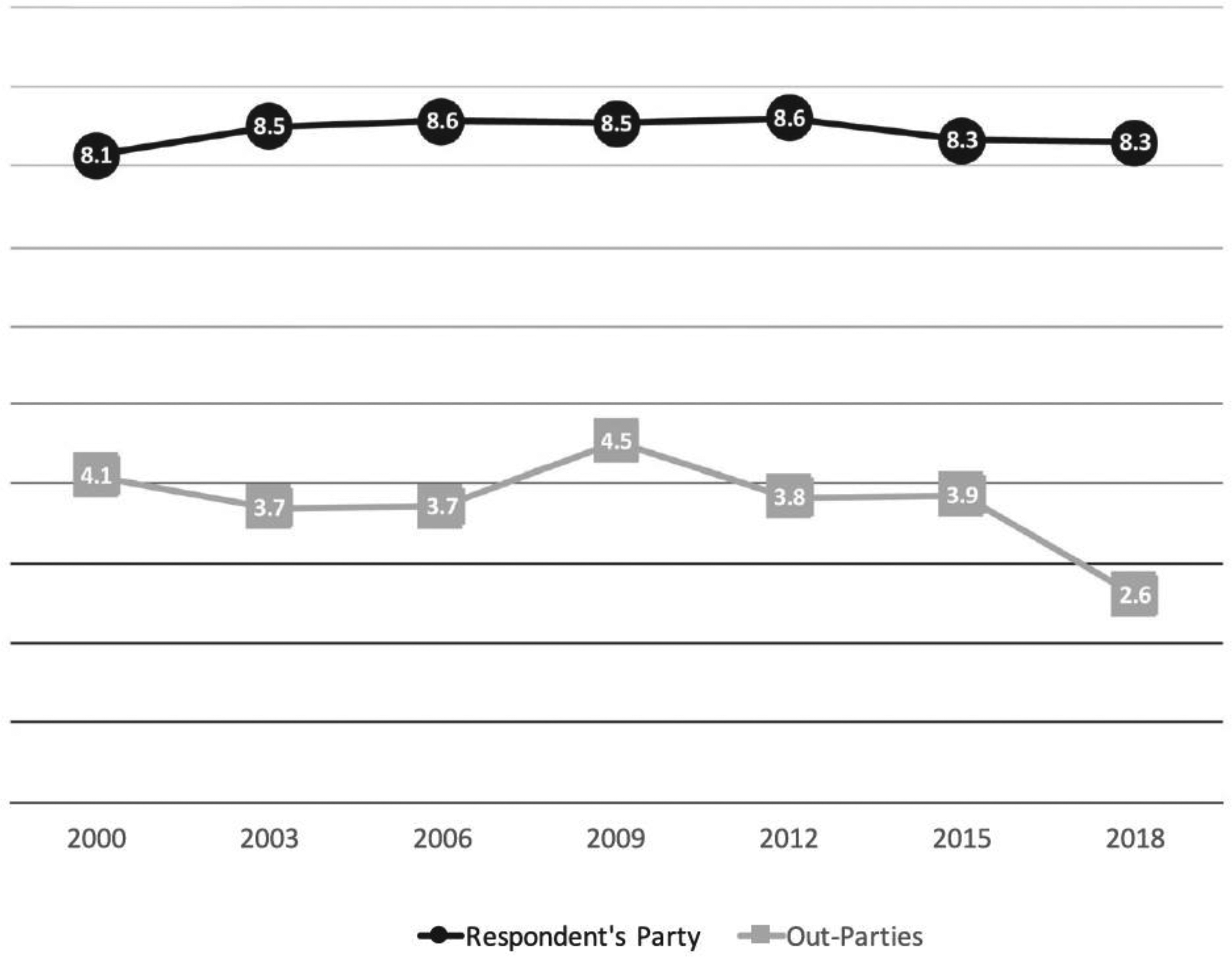
Affective Polarization in Mexico (2000–18). Average Feeling Thermometer Ratings (0: Very Bad; 10: Very Good). Among Voters who Self-Identify with a Political Party.
The 2018 presidential election represented a break from the traditional party system. López Obrador had already been a presidential candidate, for the PRD, in 2006 and 2012. In 2012, relations between López Obrador and his party deteriorated markedly after the PRD joined the “Pact for Mexico” (“Pacto por México,” in Spanish) with the PAN and the PRI. This agreement sought to bring together major political parties to approve various structural reforms in Congress. López Obrador denounced the PRD for betraying its members by approving such neoliberal reforms and joining the same corrupt elite, the “PRIAN,” the term he uses colloquially to conflate the PRI and the PAN. These reforms triggered grievances within the electorate. For example, data from the National Electoral Study (Beltrán et al., 2020) show that 46% of voters believed that the PAN and PRI represented the “same political alternative” (false, 36%) and 45% believed that it is true that the PAN, PRI, and PRD represented the same alternative (false, 37%). In other words, a sizable proportion of voters appears to agree with López Obrador about the existence of the “PRIAN.” In addition, 42% of voters reported that it was “very true” that there is a “political mafia” (mafia del poder, in Spanish) formed by PAN and PRI politicians as well as the business sector in Mexico (and 35% agreed that the statement was “somewhat true”) (Castro Cornejo et al., 2020).
Following López Obrador's resignation from the PRD, he and his allies founded MORENA, a personalist party, which backed his third bid for the presidency. Not unlike his previous campaigns, in 2018, Lopez Obrador avoided explicit policy-oriented programs. Instead, López Obrador championed valence issues such as attacking the corruption of the PRI and PAN governments and condemning the neoliberal economic model. He also avoided taking explicit positions on controversial topics such as abortion or gay marriage (Díaz Domínguez, 2020) hoping to build a broad anti-PRI-PAN coalition. In other words, we can observe both a populist rhetoric—denouncing corrupt elite—and a strong out-party animus targeted against the PRI and the PAN.
Unlike during the previous elections, 2018 offered an ideal environment to mobilize voters against the political establishment. Structural reforms approved by Congress faced implementation problems that led to protests against the PRI government (Flores-Macías, 2016). At the same time, during the second part of Enrique Peña Nieto's term (2015–18), the country experienced an escalation of violence and corruption scandals. Peña Nieto's term became the most violent in Mexico in recent history, particularly exacerbated by the disappearance of 43 students in Ayotzinapa (Altamirano and Ley, 2020). An unprecedented number of PRI governors were also prosecuted for corruption weakening the PRI's party brand as it was increasingly perceived as corrupt (Ang, 2020). Peña Nieto himself was also involved in corruption scandals when the media discovered that his wife had bought an underpriced house, the “Casa Blanca,” which had been built by a construction company that had received multiple contracts when Peña Nieto was the governor of the State of Mexico.
Not surprisingly, in 2018, the Mexican electorate was quite critical of the country's direction, registering the most negative results since the National Electoral Study was first conducted (Figure 2); two-thirds of respondents believed that corruption, public safety, and the economy were worse than under the previous government. In fact, Altamirano and Ley (2020) found that the evaluation of the country's economy was strongly associated with support for López Obrador. Likewise, the president's approval ratings were the lowest reported by the National Electoral Study: only 18% of voters approved of how Enrique Peña Nieto governed, well below previous presidents such as Vicente Fox (67%) and Felipe Calderón (54%).
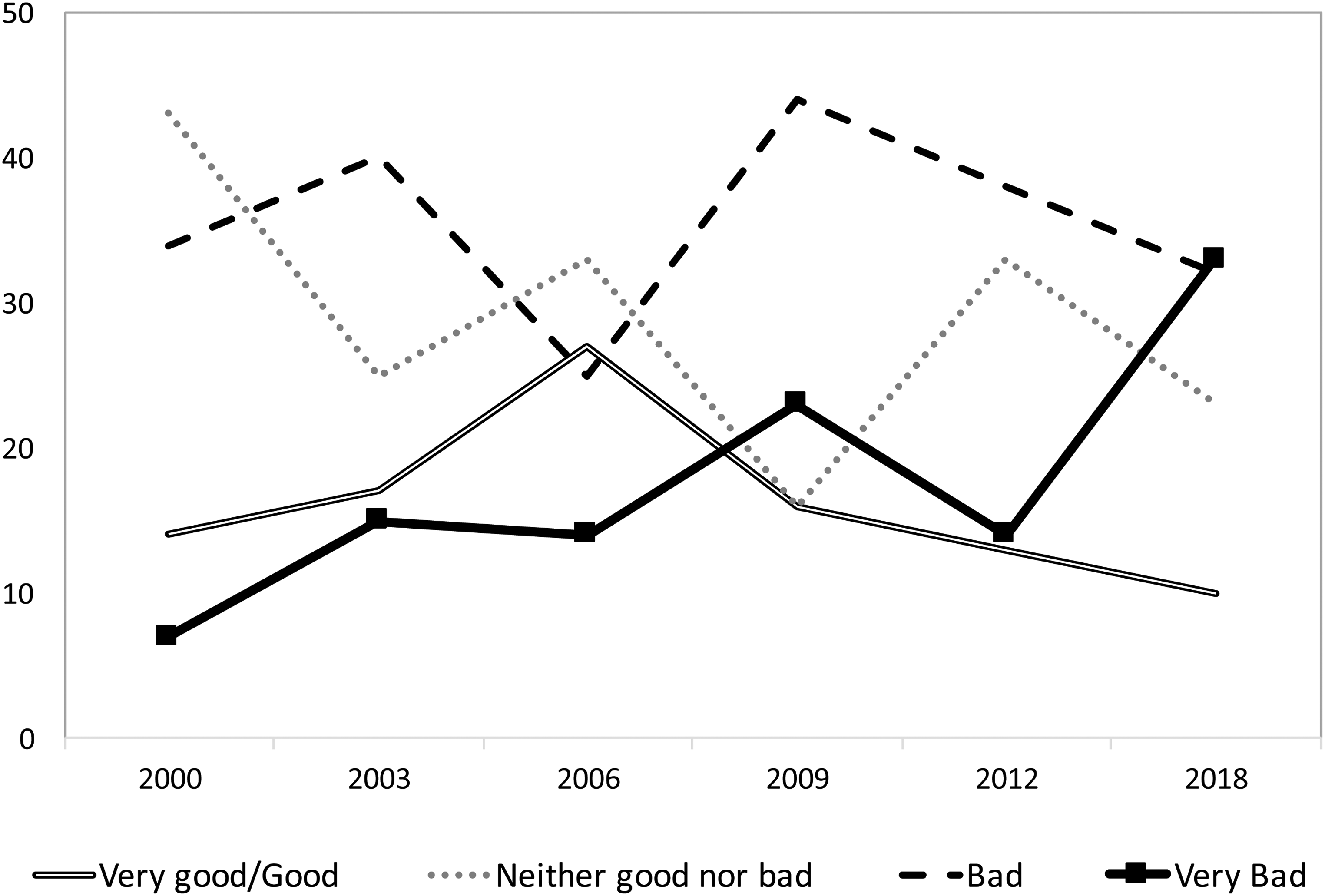
Perceived Economic Situation Compared to the Previous Government (2000–18).
In 2018, MORENA and López Obrador offered an alternative to the neoliberal governments of the PAN and the PRI (hypothesis 1: ideology) as voters perceived widespread corruption and failed governance under the incumbent PRI (hypothesis 2: negative retrospective evaluations). At the same time, such a negative context made the incumbent parties of the post-democratization era—the PAN and the PRI—increasingly perceived as the same political option (hypothesis 3: perceived convergence), making stronger the connection between out-party animus and the vote (hypothesis 4: affective polarization). The next section seeks to explain which individual-level factors were significantly associated with voters’ electoral decisions during the 2018 presidential election.
Empirical Strategy
This research relies on data from the 2018 National Electoral Study (Beltrán et al., 2020). The study was conducted as a nationally representative four-wave panel survey. See Table A1 in the Appendix for complete survey methodological information. Vote choice (1 = MORENA; 0 = PAN/PRI) is the dependent variable of the models reported in the next section, which was measured in the third wave, and conducted a few days after election day.
To measure the first hypothesis (ideology), the models rely on a battery of questions meant to measure voters' issue attitudes on traditional marriage, adoption rights for LGBT couples, abortion, euthanasia, taxing the rich, social spending, inflation, and the participation of private investment in Mexico's energy sector. The models include two indexes that identify a common underlying economic and sociocultural dimension within the Mexican electorate (complete wordings in Table A2 in the Appendix). In addition, the models include voters’ self-placement on the 0–10 ideological scale. To measure the second hypothesis (negative retrospective evaluations), the models include voters’ retrospective evaluations of the state of the national economy as well as presidential approval of the incumbent President Peña Nieto. Additionally, the models include retrospective evaluations of corruption and insecurity in Mexico since in young democracies, non-economic evaluations are also likely to affect retrospective voting (Altamirano and Ley, 2020). During periods of political upheaval, voters may shift their attention to other noneconomic issues (Singer, 2011) such as war, violence (Ley, 2017), or corruption scandals (Castro Cornejo, 2022), among other events, which generate attention or new worries within the electorate. The models also include voters’ perceptions on the most important problem facing the country to be sure that retrospective evaluations are driving the results.
To examine the third hypothesis (perceived convergence), the models include an additive index that combines two questions: if voters believe that a corrupt elite exists in Mexico and if they perceive that both parties are closely located on the 0–10 ideological scale. Finally, to examine the fourth hypothesis (affective polarization), the models include two variables that measure the distance between in-group and out-group attitudes. Following the literature on affective polarization (Iyengar and Westwood, 2015), such variables estimate the difference between respondents’ favorability of MORENA (in-group attitudes) and the favorability of the PAN and the PRI (out-group attitudes). Table A4 in the Appendix replicates the models including a single measure of affective polarization and the results do not differ.
Affective Polarization 1 = Opinion about MORENA– Opinion about the PAN Affective Polarization 2 = Opinion about MORENA– Opinion about the PRI
As López Obrador combined both an out-party animus and a populist rhetoric during the 2018 presidential election, the models control for voters’ populist attitudes to ensure that affective polarization, and not populism, is driving the vote.
2
The models also include control variables such as party identification, age, gender, level of education, if the respondent has been a victim of violence, and if the respondent is unemployed to make sure that third variables are not driving the results. The descriptive statistics of these variables are reported in Table A3 in the Appendix.
Results
The following logistic models (1 = support for Morena; 0 = support for the PAN/PRI) test the four competing hypotheses. Overall, Table 1 indicates that affective polarization is strongly associated with support for López Obrador compared to competing hypotheses. In terms of the adjusted r-squared, affective polarization (0.58) has a very strong explanatory power compared to other competing hypotheses such as partisan convergence (0.23), retrospective evaluations (0.12), and ideology (0.06). In terms of specific variables, the results follow the same direction: ideology and retrospective evaluations are weakly associated with support for López Obrador. Although voters’ ideological self-placement, retrospective evaluations about the economy, and presidential approval show some statistical significance in the restricted models (model 1), they lose statistical significance in the full model (model 5) when controlled for competing hypotheses. These results suggest that in-group/out-group partisan animosity drives voters’ perceptions about the economy (De Boef and Kellstedt, 2004; Evans and Pickup, 2010), presidential approval, and ideology, therefore, diminishing the relationship between the variables and vote choice.
Logistic Models.
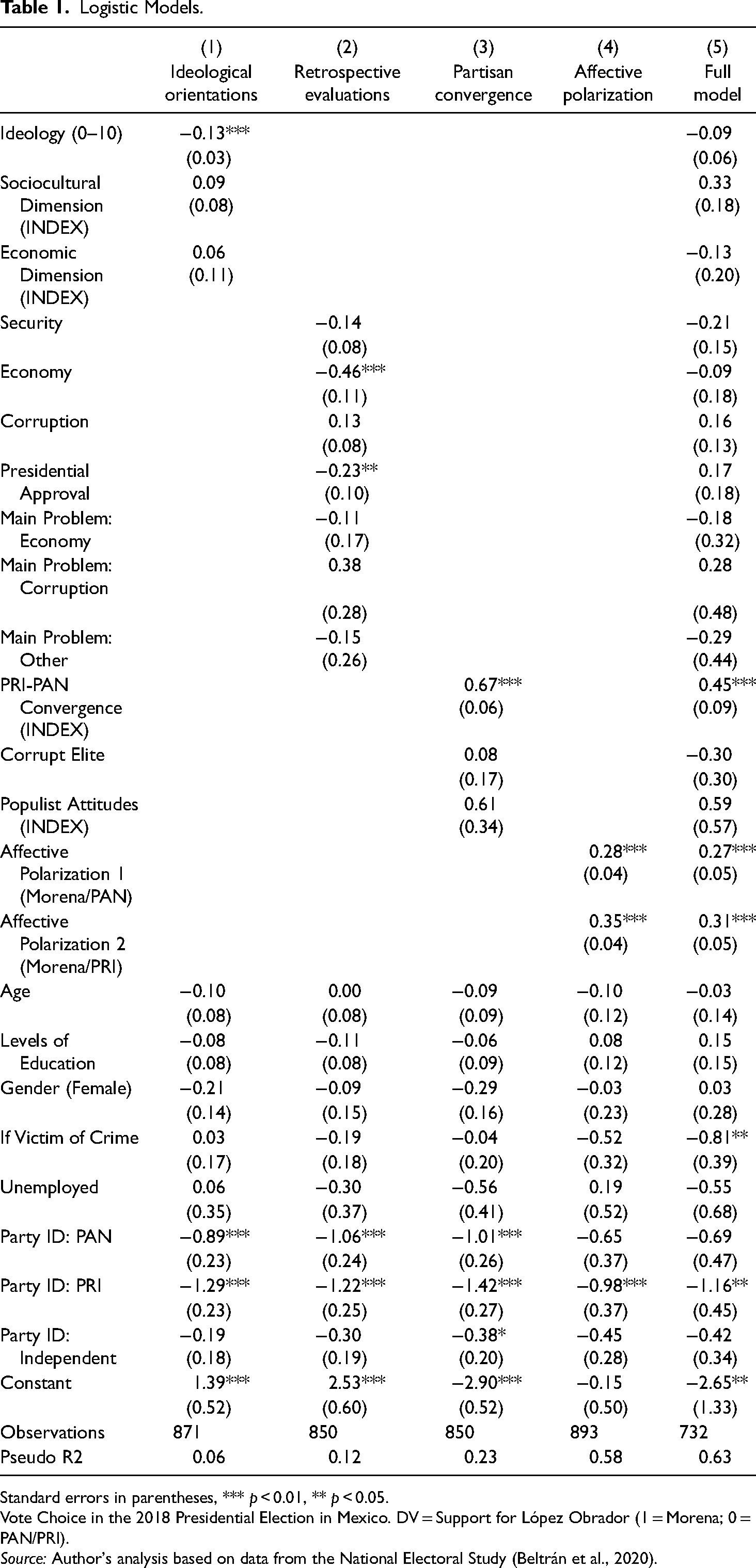
Standard errors in parentheses, *** p < 0.01, ** p < 0.05.
Vote Choice in the 2018 Presidential Election in Mexico. DV = Support for López Obrador (1 = Morena; 0 = PAN/PRI).
Source: Author's analysis based on data from the National Electoral Study (Beltrán et al., 2020).
It is also important to note that neither populist attitudes nor the belief in corrupt elite is associated with vote choice. Even though Lopez Obrador used some populist rhetoric during his campaign, it did not activate any populist attitudes in his favor at the individual level. Finally, while partisan convergence has a weaker explanatory power than affective polarization, it is also associated with the vote for López Obrador (p < 0.01) even when controlling for alternative hypotheses. In other words, in the 2018 presidential election, support for López Obrador was not driven by ideology (H1) or retrospective evaluations (H2) but associated with the perception about partisan convergence (H3) and, especially, affective polarization (H4).
Figures 3 and 4 report the substantive effects of the hypotheses of this study. As shown above, affective polarization has the strongest substantive effect; the probability of voting for López Obrador increases from around 0.15 to 0.80 (+65 percentage points, Figure 3) for both proxies of affective polarization when values go from low to high. Perceptions about partisan convergence between the PAN and PRI also report a strong substantive effect, albeit slightly smaller. The probability of voting for López Obrador increases from 0.32 to 0.73 (+41 percentage points, Figure 3). In contrast, Figure 4 shows that retrospective economic evaluations—one of the most important predictors of voting behavior in Mexican elections (Altamirano and Ley, 2020; Moreno, 2007; Singer 2009)—are not associated with voting choice when controlled for competing hypotheses. As mentioned above, in-group/out-group partisan animosity is driving voters’ perceptions about the economy. Similarly, ideology is not associated with the vote; both left and right-wing voters had a very similar probability of voting for López Obrador. These results are, in fact, consistent with recent work (Aparicio and Castro Cornejo, 2020), which find that López Obrador's coalition was very broad including voters from different levels of education, income, and ideological orientations.
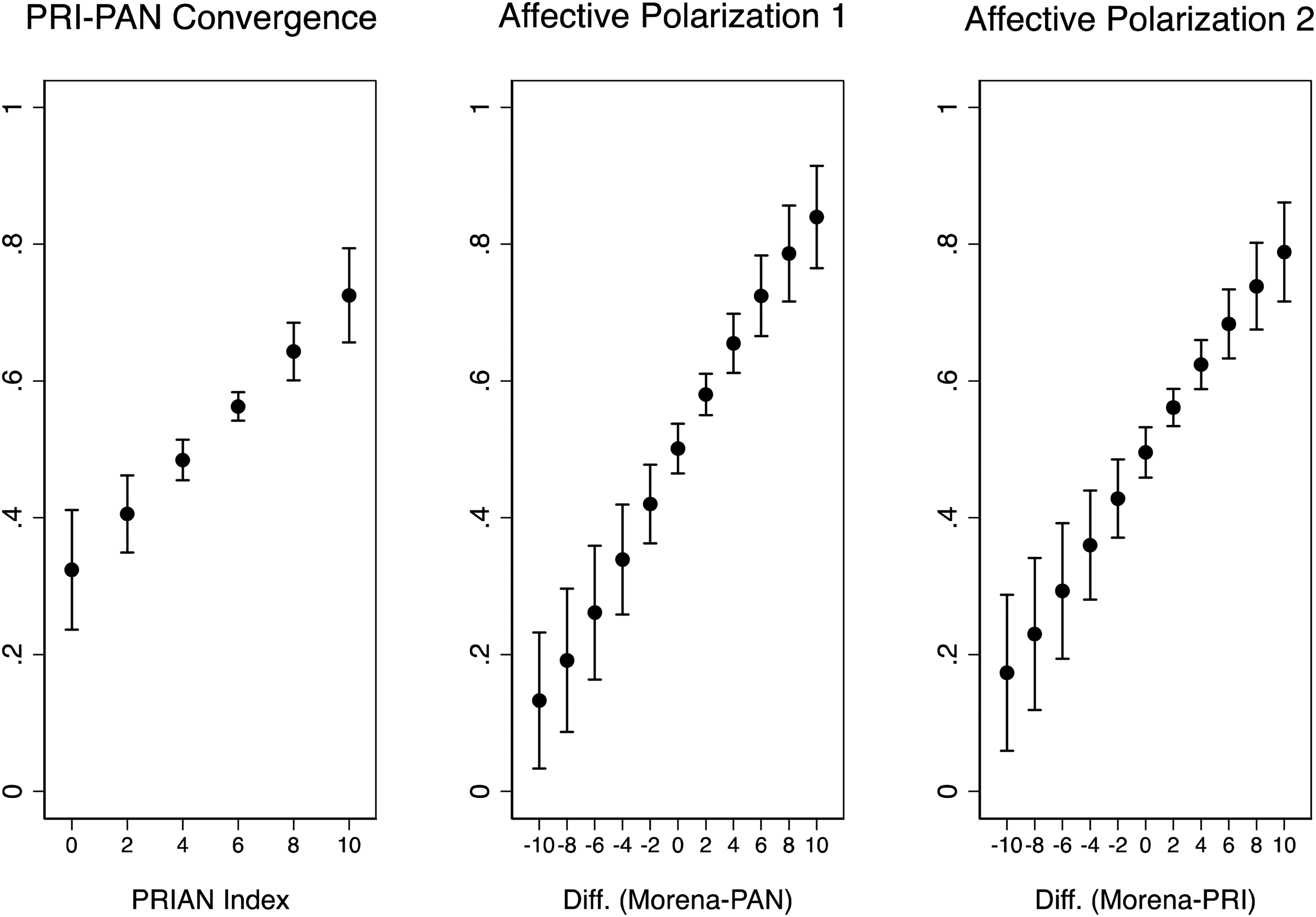
Probability of Voting for AMLO.
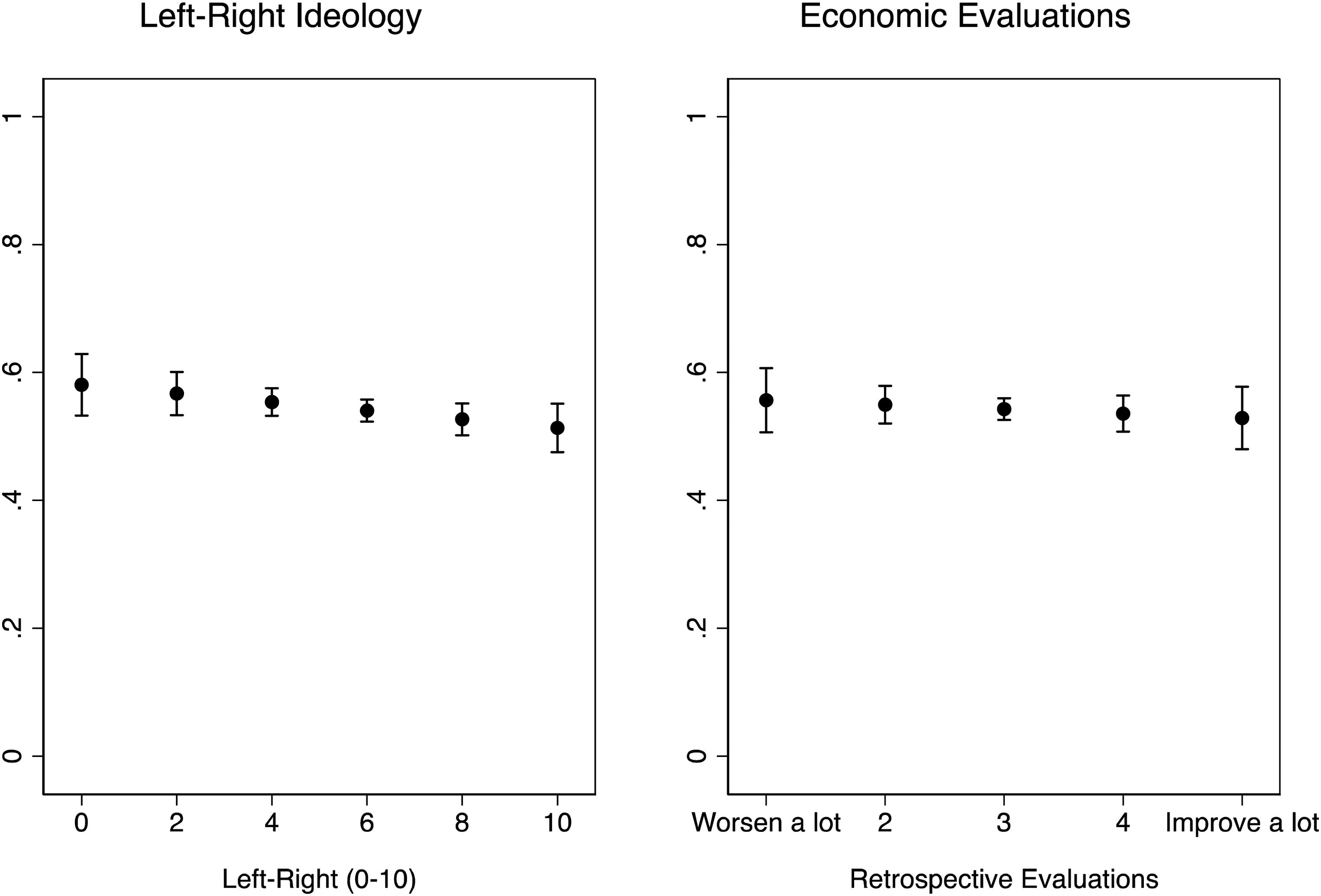
Probability of Voting for AMLO.
Conclusions
In contrast with prior cases in which Latin American countries “turned” to the left, the vote for López Obrador is not strongly associated with voters’ ideological orientations or even retrospective evaluations. Consistent with previous research about the left turn (e.g., Venezuela, Lupu, 2014), voters who perceive convergence between the PAN and the PRI and believe that both parties represent the same political alternative was more likely to vote for López Obrador. Moreover, the results of this research note illustrate that affective polarization is the strongest factor driving the vote for López Obrador. Simply put, this research note finds strong support that López Obrador's election was driven by political factors and represented a strong rejection of the political establishment in Mexico.
Although politics in Mexico have become increasingly polarized into an “us versus them” dynamic, future research should seek to better understand the bases of affective polarization in Mexico and how it influences voting behavior. Although this research identifies affective polarization as a strong explanatory factor of the vote for López Obrador, even when controlling for competing theories, future work should analyze if identity, ideology, or other factors (Rogowski and Sutherland, 2016; Webster and Abramowitz, 2017) tend to influence or reinforce citizens’ affective evaluations of Mexican parties. Although the literature has found that partisans display stronger affective biases than independents, future studies should also investigate this gap; in Latin American, a very important proportion of voters do not self-identify politically with parties but still report important levels of out-party animus (e.g., anti-PT in Brazil, anti-fujimorismo in Perú, and anti-uribismo in Colombia)—which are likely exacerbated by political environments that increasingly create homogenous informational bubbles (Suk et al., 2022).
Supplemental Material
sj-docx-1-pla-10.1177_1866802X221147067 - Supplemental material for The AMLO Voter: Affective Polarization and the Rise of the Left in Mexico
Supplemental material, sj-docx-1-pla-10.1177_1866802X221147067 for The AMLO Voter: Affective Polarization and the Rise of the Left in Mexico by Rodrigo Castro Cornejo in Journal of Politics in Latin America
Footnotes
Funding
The author(s) received no financial support for the research, authorship, and/or publication of this article.

Supplemental Material
Supplemental material for this article is available online.
Notes
Author Biography
References
Supplementary Material
Please find the following supplemental material available below.
For Open Access articles published under a Creative Commons License, all supplemental material carries the same license as the article it is associated with.
For non-Open Access articles published, all supplemental material carries a non-exclusive license, and permission requests for re-use of supplemental material or any part of supplemental material shall be sent directly to the copyright owner as specified in the copyright notice associated with the article.
