




Abstract
This article reports two studies evaluating the impact of moral intensity, work experience, and gender on the propensity (attitude, behavioral intention, and subjective norm) for unethical behavior of Venezuelan students and employees responding to different organizational scenarios, and controlling the effects of moral disengagement and empathy. One study singled out moral disengagement as a covariate, and the other did the same with empathy. In both studies, moral intensity, work experience, and gender acted as independent variables. Each study consisted of around 400 participants (totaling 801 participants in both studies): one-half were students without work experience and the other half were employees. For manipulating moral intensity, we used six scenarios describing ethically questionable situations. After reading each of the scenarios, participants answered the Multidimensional Ethics Scale to measure propensity for unethical behavior. After completing this phase, participants responded to the moral disengagement scale in Study 1 and the empathy scale in Study 2. This research did not find concluding, significant effects of moral intensity on the measures of the propensity for unethical behavior. Employees expressed higher intentions of acting unethically than students, though the effect was small (ε2 Study 1 = .016. ε2 Study 2 = .026). Gender had no significant effect on attitude and subjective norm; but, in behavioral intention, men's scores were significantly higher than women's in Study 1, but not in Study 2. Moral disengagement had a stronger effect than empathy on the propensity for unethical behavior (ε2 moral disengagement: attitude = .225, behavioral intention = .179, subjective norm = .159. ε2 empathy: attitude = .016, behavioral intention = .011, subjective norm = .010). The authors highlight the relevance of contrasting findings from less-developed countries with those from developed countries, commonly found in the literature, and suggest avenues for further research.
Keywords
Literature on factors influencing propensities for unethical behavior in organizations has been accumulating exponentially since, at least, the last 20 years, including diverse theories and models (Dane & Sonenshein, 2015; Kish-Gephart et al., 2010; Lehnert et al., 2014; Roulet, 2018; Ruiz-Palomino & Ruiz-Amaya, 2011). However, the variety of findings and explanations demands further research efforts; particularly in countries different from those where most of the studies take place, given cultural influences on moral decision-making (Nill & Schibrowsky, 2005; Wilhelm & Gunawong, 2016). For instance, behaviors’ ethicality tends to be lower in less-developed countries than in developed countries; when favoring a particular group, research shows, the probability of unethical decisions is higher in collectivist than in individualistic cultures (Lehnert et al., 2014), as is the Venezuelan case (Hofstede Insights, 2021). In this kind of culture, there is a high probability that employees make unethical decisions to benefit their organizations (Craft, 2013).
This research addressed the question of whether the situation's moral intensity and the subjects’ gender affect the propensity for unethical behavior, in responses to organizational scenarios, among Venezuelan groups of college students without work experience and business employees, by statistically controlling their propensities for moral disengagement and empathic tendencies. Specifically, the purpose was to simultaneously evaluate the potential effects of three variables (moral intensity, work experience, and gender), commonly studied but without conclusive evidence, on the propensity for unethical behavior (measured through variables derived from the Theory of Reasoned Action: attitude, intention, and subjective norm), by controlling the effects of two of the most studied variables in behavioral ethics research (moral disengagement and empathy).
This research contributes to broadening available knowledge on determinants of unethical decision-making, by contrasting the results obtained basically in the United States with those found in less-developed countries, culturally characterized by attributes associated with unethical behavior. Venezuela is a remarkable case given its place as one of the worst performers in the Corruption Perceptions Index 2020 (Transparency International, 2021). Additionally, the present research, differing from the literature's common studies, simultaneously evaluates the influence of situational and individual characteristics on the propensity for unethical behavior (PUB).
The propensity for unethical behavior (PUB)
The PUB refers to an individual expression of willingness or disposition to execute a transgressive behavior, given its ethical implications or its breaking of socially accepted rules (Baron et al., 2015; Detert et al., 2008; Kish-Gephart et al., 2010; Miska et al., 2018; Treviño et al., 2006). The Theory of Reasoned Action (TRA; Fishbein & Ajzen, 1975) offers a simple and, at the same time, sociopsychologically comprehensive way of conceptualizing and operationally defining the PUB. Examples abound in behavioral ethics literature of using the TRA for defining this kind of constructs (Barnett & Valentine, 2004; Buchan, 2005; Celuch & Dill, 2011; Flannery & May, 2000; Yoon, 2010). One of the most popular theoretical models of ethical behavior, Rest’s (1986) the Four-Component Model, assembles similar elements to those of the TRA. According to Rest's model, people facing a moral dilemma follow a rational sequence: (a) perceiving the situation's moral implications (moral recognition), (b) judging possible actions’ morality (ethical evaluation), (c) choosing a course of action (behavioral intention), and (d) acting (actual behavior). This model provides, in turn, the basis for another important explanation of ethical decision-making in organizations: Jones (1991) Issue-Contingent Model.
Fishbein and Ajzen (1975) posited that intentions explain behaviors and, in turn, are determined by attitudes and subjective norms. Accordingly, the PUB's concept becomes the same as that of a behavioral intention (the subjective probability of committing a specific unethical behavior), influenced by the attitude toward the behavior and the subjective norm concerning such a behavior. People's intentions of executing unethical behaviors are stronger when their attitudes towards those behaviors are more favorable and they feel stronger social pressures to execute such behaviors; and the stronger the intention the higher the probability of a behavior's execution.
The distinctive feature of an attitude is its evaluative nature: a function of the attributes associated with an object and the subjective value of these attributes (Ajzen, 2012). In moral terms, an attitude amounts to a judgment of a behavior's ethicality (right or wrong), which is a key component of the ethical decision-making models of both Rest (1986) and Jones (1991). Attitudes appear as significant predictors of intentions of executing unethical behaviors in varied organizational settings (Buchan, 2005; Celuch & Dill, 2011; Flannery & May, 2000; Yoon, 2010).
TRA's original formulation defined subjective norms as individuals’ beliefs that relevant actors expect them to execute (or not) certain behaviors (normative beliefs), and their motivation to comply with such expectations. Subjective norms also predict intentions of behaving unethically (Celuch & Dill, 2011; Flannery & May, 2000; Yoon, 2010). However, afterward, Ajzen (2012) widened the concept of subjective norm, by recognizing that people's normative beliefs result not only from inferring what relevant actors expect from them (prescriptive norms), but also from observing or inferring what relevant actors do (descriptive norms). In his Issue-Contingent Model, Jones (1991) includes significant others as determinants of ethical-behavior intentions, and such authors as Craft (2013) and Lehnert et al. (2014) remarked on the influences of peers and groups on ethical decisions: the attitudes and behaviors of those making up the organizational environment affect the individuals’ ethical behaviors (Belle & Cantarelli, 2017; Paterson & Huang, 2018; Ruiz-Palomino & Ruiz-Amaya, 2011; Treviño et al., 2006), and even job performance through deontic justice reactions (Gan et al., 2019). This research uses the descriptive-norm sense of the subjective norm construct, by defining it as the probability of executing unethical behaviors attributed by the individuals to their peers.
Literature review showed that (un)ethical decisions in organizations—whether conceptualized in terms of Rest's or Jones’ models—are influenced by: (a) individual characteristics, (b) features of the situation (or ethical dilemma), (c) organizational characteristics, and (d) societal values or culture (Askew et al., 2015; Barnett, 2001; Barnett & Valentine, 2004; Craft, 2013; Kish-Gephart et al., 2010; Lehnert et al., 2014; McMahon & Harvey, 2006, 2007; Miska et al., 2018; Nill & Schibrowsky, 2005; Paolillo & Vitell, 2002; Ruiz-Palomino & Ruiz-Amaya, 2011; Treviño et al., 2006). The present research focused on one characteristic of the situation (moral intensity), two demographic factors (work experience and gender), and two psychological tendencies or individual differences (moral disengagement and empathy). There is wide recognition of these variables’ theoretical and empirical relevance. However, the discrepancy of findings prevails and research is still lacking on the generalizability of findings to different cultural contexts (Mudrack & Mason, 2013); particularly those places where certain bias toward unethical behaviors seems to exist.
Moral intensity
A particularly relevant characteristic of a situation—or ethical dilemma—is its moral intensity (Craft, 2013; Fredin et al., 2019; Kish-Gephart et al., 2010; Lehnert et al., 2014; Miska et al., 2018; Ortiz-Elias, 2017; Treviño et al., 2006; Whittier et al., 2006). In Jones’ (1991) Issue-Contingent Model, the moral intensity of a situation affects each of the stages of the ethical decision-making process proposed in Rest’s (1986) Four-Component Model. According to Jones, moral intensity is the degree to which the intrinsic components of a situation induce people to ascribe a moral significance to this situation. Jones (1991) identified six components of a situation's moral intensity: magnitude of consequences (MC), social consensus (SC), probability of effect (PE), temporal immediacy (TI), proximity (PX), and concentration of effect (CE).
These components integrate a single factor (Jones, 1991), as confirmed by Frey (2000) and Valentine and Silver (2001). Some studies showed that students’ and managers’ intentions related to moral intensity as a one-dimensional construct (Nill & Schibrowsky, 2005; Paolillo & Vitell, 2002). However, other researchers (Singhapakdi et al., 1996; Sweeney & Costello, 2009) have found a two-factor structure: perceived potential harm (MC, PE, TI, and CE) and perceived social pressure (SC and PX). Most studies on moral intensity's role in ethical decisions evaluate how its components affect the stages of the decision-making process (Jones, 1991; Rest, 1986), with divergent results. For Frey (2000) and Singhapakdi et al. (1996), all MI's components predicted moral awareness: the exposition to high moral-intensity scenarios increases the probability that managers and business owners recognize the moral content of a problem. For other researchers, not all moral-intensity dimensions relate to moral awareness (Barnett, 2001; Barnett & Valentine, 2004; Lincoln & Holmes, 2011; May & Pauli, 2002; Singhapakdi et al., 1996). The predictive power of any component seems to depend on the scenario presented to subjects (Lincoln & Holmes, 2011; May & Pauli, 2002; Sweeney & Costello, 2009).
Moral judgment significantly relates to two factors of moral intensity: perceived potential harm and social pressure (McMahon & Harvey, 2007; Sweeney & Costello, 2009). However, for Barnett (2001) and May and Pauli (2002), only the magnitude of consequences and social consensus predicted the judgment. McMahon and Harvey (2007) found, in a second study, that none of the moral-intensity components predicted moral judgment.
The moral decision significantly relates to all moral-intensity components (except proximity): the higher the moral intensity perceived the lesser the intention of executing unethical behaviors (Frey, 2000; Singhapakdi et al., 1996). However, various studies agreed that not all components predicted intentions and their effects depended on the situations faced by the subjects (Barnett, 2001; Barnett & Valentine, 2004; Kish-Gephart et al., 2010; Lincoln & Holmes, 2011; May & Pauli, 2002; McMahon & Harvey, 2007; Sweeney & Costello, 2009).
Whereas research suggests an influential role of moral intensity on moral decision-making, and magnitude of consequences and social consensus seem to be the more relevant components, findings also show a certain dispersion. Agreeing with Craft (2013) and Ortiz-Elias (2017), knowledge development in this field demands further studies on moral intensity influence on ethical decision-making and its relations to other constructs belonging to its nomological network.
Work experience and gender
This research compares students without work experience with employees in diverse organizations. Various researchers have related work experience to ethical decision-making: more working years (Craft, 2013; Ortiz-Elias, 2017) and ethical expertise (Dane & Sonenshein, 2015) seem to induce more ethical decisions. Other findings suggested that more time spent in the world of labor can have a negative incidence: the longer the experience the lesser the scores on a moral judgment scale (Treviño et al., 2006). Whereas other authors have found no influence of this variable on ethical behavior (Lokman et al., 2018).
Gender is frequently included in studies on ethical decisions, with divergent results (Craft, 2013; Kish-Gephart et al., 2010; Lehnert et al., 2014; Nill & Schibrowsky, 2005; Sweeney & Costello, 2009). Women seem more likely to act ethically (Lehnert et al., 2014), tend to evaluate less favorable unethical behaviors (McMahon & Harvey, 2007, study 1), show lower moral disengagement (Detert et al., 2008), and obtain higher scores on empathy (Brown et al., 2010; Hildebrand & Shawver, 2016) than men. However, various studies found no differences between genders regarding (a) moral awareness (Lincoln & Holmes, 2011; Sweeney & Costello, 2009), (b) ethical judgment (McMahon & Harvey, 2007, study 2; Lincoln & Holmes, 2011; Sweeney & Costello, 2009), (c) unethical behavioral intention (Kish-Gephart et al., 2010; Moore, 2008a; Lincoln & Holmes, 2011; Nill & Schibrowsky, 2005; Sweeney & Costello, 2009), and (d) ethical behavior (Kish-Gephart et al., 2010; Lokman et al., 2018). Mudrack and Mason (2013) concluded that, although evidence is inconclusive, women tend to show a less favorable attitude toward unethical behavior than men.
Moral disengagement
Regarding the effects of individual differences on the propensity for unethical behavior, Social Cognitive Theory provides one of the most relevant explanations. Bandura (2002, 2016) conceptualized moral behavior as resulting from self-regulating processes related to moral standards acquired during socialization (Bandura et al., 1996), which become activated or deactivated through the interaction of cognitive, affective, and social influences (Bandura, 2002). People make unethical decisions when certain cognitive mechanisms deactivate the self-regulating processes governing their behaviors, enabling them to (a) redefine behaviors making them appear morally acceptable, (b) obscure responsibility and reinterpret the consequences of those behaviors, or (c) frame the victim (Bandura, 2002, 2016; Bandura et al., 1996; Moore, 2008a; Tillman et al., 2018).
This propensity for moral disengagement (PMD) is a gradual result of individual–environment interaction: as the frequency of immoral behaviors increases, self-censorship declines, perceived costs of unethical decisions decrease, and tolerance for transgressions augments (Bandura, 2002; Tillman et al., 2018). Thus, people become able to manage the negative emotions associated with realizing the damaging consequences of their behaviors (Tillman et al., 2018).
PMD is one of the psychological tendencies most frequently associated with unethical decisions (Barsky, 2011; Baron et al., 2015; Belle & Cantarelli, 2017; Detert et al., 2008; Moore, 2008a, 2008b, 2015; Moore et al., 2012; Treviño et al., 2006). The intention of committing immoral behaviors is stronger among individuals showing high PMD (Baron et al., 2015; Belle & Cantarelli, 2017; Detert et al., 2008; Knoll et al., 2016; Moore, 2008a; Moore et al., 2012; Zych & Llorent, 2018). Moreover, PMD seems to predict unethical behavior better than other individual characteristics (Moore, 2008a; Moore et al., 2012; Zych & Llorent, 2018). However, there is no consensus on whether all the moral disengagement mechanisms suggested by Bandura significantly predict unethical behaviors (Barsky, 2011).
Empathy
Another individual characteristic proposed as potentially related to the propensity to unethical behavior is empathy: people's ability to understand the needs of others, adopting their points of view (cognitive dimension), and emotionally putting themselves in their situations (affective dimension) (Brown et al., 2010; Detert et al., 2008; Hildebrand & Shawver, 2016; Kleinlogel & Dietz, 2014; Mencl & May, 2009; Moore et al., 2012; Munro et al., 2005; Takamatsu & Takai, 2019). Rest (1986) remarked on the relevance of imagining occupying the place of other, or adopting the other's perspective, both for moral awareness and moral judgment.
Mencl and May (2009) found empathy's cognitive dimension explained moral intentions and ethical evaluations, but no awareness of the situations’ ethical implications. Whereas Moore et al. (2012) reported negative correlations between both (cognitive and affective) dimensions and lying, cheating, and stealing behaviors, and Zych and Llorent (2018) observed an increase of immoral behavior like bullying as affective empathy decreased. Takamatsu and Takai (2019) found primary psychopathy, difficulty in identifying feelings, and reduced affective empathic concern predicted utilitarian judgment in sacrificial dilemmas. However, by using dilemmas with differing degrees of personal involvement, Gleichgerrcht and Young (2013) found no differences, in any empathy dimension, between utilitarian and non-utilitarian subjects facing impersonal dilemmas; but, when facing personal dilemmas, utilitarians showed lesser degrees of feelings associated to the affective dimension (e.g., kindness, compassion, care).
Measuring empathy as a one-dimensional construct augmented consistency: the higher the empathy the stronger the intention of behaving ethically (Hildebrand & Shawver, 2016) and the lesser the likelihood of making unethical decisions (Brown et al., 2010; Deter et al., 2008), or obeying an order damaging to others (Kleinlogel & Dietz, 2014). However, studies on the role of empathy in ethical decisions in organizations are still lacking (Hildebrand & Shawver, 2016). Kleinlogel and Dietz (2014) pointed out that empathy can positively influence ethical decisions by making people inclined to prosocial and altruist actions. But it can also lead to unethical decisions when mixed up with such a bias as favoritism; besides, an intense feeling of empathy can become a source of stress for a person, who then focuses on reducing it rather than on helping others.
Taking the above as starting point we conducted two studies to evaluate the impact of moral intensity, work experience, and gender on the propensity for unethical behavior, by controlling the effects of moral disengagement (Study 1) and empathy (Study 2). Following the pattern of results found in the literature, we propose the following hypotheses:
Figure 1 shows schematically the hypotheses tested through Studies 1 and 2.

Hypotheses tested across the two studies.
Method
Participants
Study 1 consisted of 400 participants: (a) 200 students from a private university in Caracas, Venezuela, during the last year of their studies, without work experience, 62% women, age 21 to 25 years (M = 22.37, SD = 1.28); and (b) 200 employees working in different organizations, 52% women, age 21 to 55 years (M = 25.55, SD = 3.36). Study 2 consisted of 401 subjects: (a) 201 students from a private university in Caracas, Venezuela, during the last two years of their studies, without work experience, 64% women, age 18 to 27 years (M = 21.41, SD = 1.54); and (b) 200 employees working in different organizations, 50% women, age 21 to 30 years (M = 25.86, SD = 2.50). Participation was voluntary and participants provided verbal consent and received the information that they could withdraw at any point without consequences. Participants did not receive any special incentive. Data treatment was confidential.
Research design and procedure
This research involved two studies using a between-subjects design. In both studies, we employ the same basic set of dependent (attitude, behavioral intention, and subjective norm) and independent variables: work experience (students without work experience, employees), gender (feminine, masculine), and moral intensity (low, high). The principal statistical analysis treated two individual characteristics as covariates for controlling their effects: moral disengagement in Study 1 and empathy in Study 2. The participants first rated six scenarios of either high or low moral intensity and then filled out a measure of moral disengagement (Study 1) or empathy (Study 2).
For manipulating moral intensity, we used six scenarios developed by McMahon (2002). The selected scenarios consisted of 62 to 118 words presenting probable organizational situations in the participants’ country, in which a character commits an ethically questionable action (Table 1). Subjects did not have to make decisions, which should reduce the ever-present social desirability bias. To avoid a potential gender bias, scenario protagonists received only name initials. Randomly assigned, one group responded to a low moral-intensity version (LMI) and the other to a high moral-intensity version (HMI) of the six situations. There was no manipulation check of the moral-intensity variable because such a check would require measuring the perceived moral intensity of each situation with the same participants, which could bias their responses and harm the study's validity (Ortiz-Elias, 2017). According to Ortiz-Elias (2017), including perceived moral intensity in the research might induce an unexpected inverse causality, because people would make their judgments (about the ethicality of the situation and about their behavioral intentions) within a time interval of a few seconds. Thus, the ethical judgments could affect respondent assessments of factors presumed to influence an action's ethicality (Mudrack & Mason, 2013). This can happen even if subjects are asked to make their ethical judgment last, as readers may form an initial impression of the “ethics” of the behaviors even before they are specifically asked about such issues (Mudrack & Mason, 2013). Moreover, according to Mudrack and Mason (2013), asking participants to evaluate a situation's moral intensity may reveal more about them than about situations. The way of avoiding such an effect consists in manipulating moral-intensity degrees (Ortiz-Elias, 2017), as in the present research.
Scenarios employed in the studies
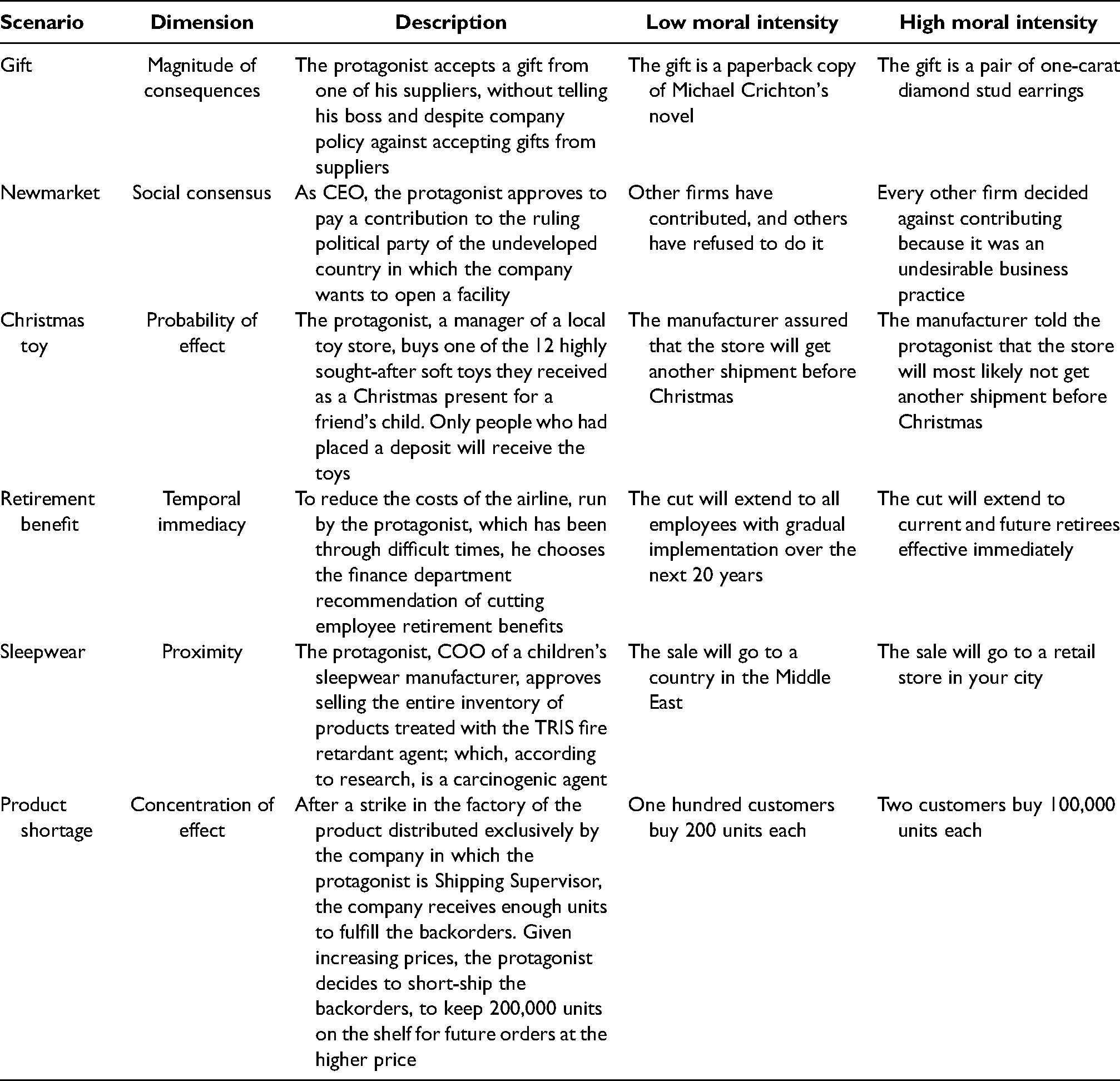
In both studies, the Multidimensional Ethics Scale (MES; Reidenbach & Robin, 1990) provided the measure of ethical evaluation of situations (attitude), behavioral intention, and subjective norm: higher scores indicated a greater propensity for unethical behavior. The words “ethic” or “moral” did not appear in the instructions, to avoid a possible framing of the situation as a moral evaluation of the participants, which could bias their answers toward the socially desirable. The instructions emphasized the importance of genuine, sincere opinions, and the existence of no right or wrong answers.
In Study 1 the scale developed by Moore et al. (2012) provided the measure of moral disengagement (PMD): a general average score (the higher the score the higher the PMD). In Study 2 the questions developed by Lewis Goldberg (used by Brown et al., 2010) allowed for measuring empathy: a general average score (the higher the score the higher the empathic tendency).
In each low and high moral intensity, group participants responded to the MES after reading each (randomly presented) scenario. This procedure repeated itself until the sixth scenario. After completing this phase, participants responded to the moral disengagement scale in the first study and the empathy scale in the second study.
Instruments
Multidimensional Ethics Scale
The MES (Reidenbach & Robin, 1988, 1990) evaluates the subjects’ adherence to principles established in moral philosophies (Casali, 2011; Gupta, 2010). The subjects express their evaluation (attitude) of diverse ethically charged situations, through semantic differential items. The Spanish version used in this study consisted of 12 items that allowed measuring (average score) attitudes toward the presented unethical behaviors: 3 for justice/moral equity (e.g., unfair-fair), 3 for relativism (e.g., culturally unacceptable-acceptable), 2 for egoism (e.g., unsatisfactory-satisfactory for me), 2 for utilitarianism (e.g., unprofitable-profitable), and 2 for contractualism (e.g., violate a promise–does not violate a promise). Besides, 2 (1 to 6) subjective probability items evaluated intention (“the probability that I would undertake the same action”) and subjective norm (“the probability that my peers would undertake the same action”).
The scale showed high internal consistency (α = .95), as found by different researchers (Cohen et al., 1993; Gupta, 2010; McMahon, 2002; Reidenbach & Robin, 1988; 1990). Corrected homogeneity coefficients were positive, item–total correlations varied between 0.69 and 0.83 (except one item), and removing any item would reduce or only slightly alter the Alpha coefficient. Regarding the scale's validity, as found by various researchers (Buchan, 2005; Celuch & Dill, 2011; Cohen et al., 1993; Flannery & May, 2000; Lincoln & Holmes, 2011; Reidenbach & Robin, 1990; Shawver & Sennetti, 2009; Yoon, 2010), attitude and subjective norm significantly predicted the intention of executing unethical behaviors (Study 1: R2 = 0.695, F = 450.710, p<.001; Study 2: R2 = 0.426, F = 147.856, p<.001). Attitude was a better predictor than subjective norm (Study 1: βAt = 0.592, t = 17.235, p<.001; βSN = 0.334, t = 9.736, p<.001; Study 2: βAt = 0.586, t = 12.301, p<.001, βSN = 0.102, t = 2.133, p = .034).
Moral Disengagement Scale
The Spanish version used in this study derived from the 24-item version developed by Moore et al. (2012), with three Likert items, from strongly disagree (1) to strongly agree (6), measuring each of the eight disengagement mechanisms defined by Bandura (2002, 2016): moral justification (e.g., “it is okay to spread rumors to defend those you care about”), euphemistic labeling (e.g., “taking something without the owner's permission is okay as long as you’re just borrowing it”), advantageous comparison (e.g., “damaging property is no big deal when you consider that others are assaulting people”), displacement of responsibility (e.g., “you can't blame people for breaking the rules if that's what they were taught to do by their leaders”), diffusion of responsibility (e.g., “in contexts where everyone cheats, there is no reason not to”), distortion of consequences (e.g., “taking personal credit for ideas that were not your own is no big deal”), dehumanization (e.g., “violent criminals don't deserve to be treated like normal human beings”), and attribution of blame (e.g., “people who get mistreated have usually done something to bring it on themselves”). The scale showed high internal consistency (α = .92). Corrected homogeneity coefficients were positive, item–total correlations varied from 0.48 to 0.67 (except one item), and removing any item would reduce the Alpha coefficient.
Empathy Scale
The questionnaire used is a Spanish version of the eight Likert items (from 1 = strongly disagree to 6 = strongly agree) of the scale originally developed by Goldberg (1999) and reproduced in Brown et al. (2010); for example, “I anticipate the needs of others.” The scale showed high internal consistency (α = .88). Corrected homogeneity coefficients were positive, item–total correlations varied from 0.43 to 0.73, and removing any item would reduce the Alpha coefficient.
Data analysis
Descriptive analyses of dependent variables provided such statistics as mean, standard deviation, coefficient of variation, asymmetry, and kurtosis. For testing the research hypotheses, we used ANCOVA for each dependent variable: behavioral intention, attitude (ethical evaluation), and subjective norm. According to the Theory of Reasoned Action, attitude, intention, and subjective norm are three different constructs; that is, it is not advisable to calculate a total score for unethical behavior propensity. In all ANCOVAs, the independent variables were: moral intensity of situations (low, high), participants’ work experience (students without work experience, employees), and gender (feminine, masculine). The propensity for moral disengagement entered as a covariate in Study 1 ANCOVA, and empathy entered as a covariate in Study 2 ANCOVA. We used the strategy proposed by Pardo et al. (2007) for analyzing and interpreting interactions, which avoids the disadvantages associated with other procedures frequently used. For instance, in the case of an interaction between two factors (A and B), each with two levels (A1, A2; B1, B2), the need for interpreting a significant interaction between them is satisfied by comparing each effect of B on each level of A or vice versa, that is, comparing the simple effects of B (or A) with each other. Pardo et al. (2007) proposed comparing the difference between μ11 y μ12 (or simple effect of B in A1) with the difference between μ21 y μ22 (or simple effect of B in A2); mathematically, ψ1 = (μ11–μ12) – (μ21–μ22) = μ11 – μ12 – μ21 + μ22. Assigning coefficients to each of the factor levels we have: ψ1 = (1)μ11 + (−1)μ12 + (−1)μ21 + (1)μ22. With this information, a new variable is created in SPSS whose values are the result of combining the values of the factors A and B. A one-factor ANOVA is performed, specifying in “Contrasts” the comparisons to be carried out. Student's t-statistic allows testing the hypothesis ψh = 0, with degrees of freedom equal to the number of cases minus the number of cells (Pardo et al., 2007). Finally, to compare the levels of one factor within each level of the other factor, we analyze the simple effects, adjusting the confidence intervals to control the probability of committing type I errors using the Bonferroni correction.
In the case of covariates, regression analyses showed the direction of their effect on each of the dependent variables.
Results
Study 1
Behavioral intention averaged 2.36 (SD = 0.96), with a heterogeneous (CV = 40.64%) and rather mesokurtic (Kurt = 0.611) distribution tending to low probabilities of committing the described, ethically questionable behaviors (Skew = 0.833). Table 2 shows the analysis of covariance (ANCOVA) results for Study 1. The moral intensity of situations affected behavioral intention: people exposed to low moral-intensity scenarios scored higher on intention. Participants’ work experience and gender also influenced intention: employees showed higher probabilities of committing unethical behaviors than students, and men's intentions were higher than women's. Moral disengagement also had a significant effect on intention: people with higher moral disengagement scores tended to attribute to themselves higher probabilities of executing unethical behaviors (see Table 3). There was no significant interaction (Table 2).
ANCOVA results: Study 1

Note: PMD: Propensity for moral disengagement. MI: Moral intensity. LMI: Low moral intensity. HMI: High moral intensity. WE: Work experience.
Regression analysis for evaluating the effect of the propensity for moral disengagement
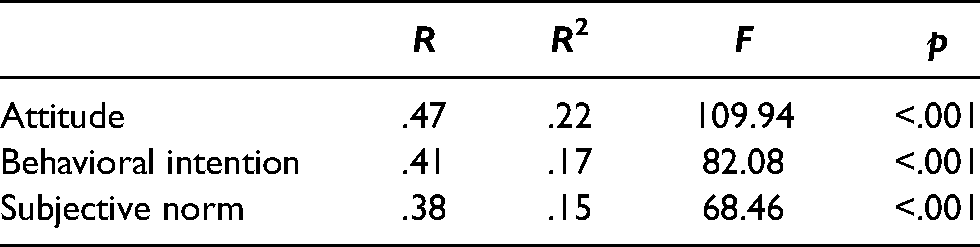
Ethical evaluation averaged 2.51 (SD = 0.79), with a heterogeneous (CV = 31.47%) and leptokurtic (Kurt = 2.445) distribution, tending to unfavorable attitudes toward ethically questionable behaviors (Skew = 1.061). The moral intensity significantly influenced ethical evaluation: people exposed to low moral-intensity situations showed more favorable attitudes toward unethical behavior. Neither gender nor work experience influenced ethical evaluation (Table 2). Moral disengagement explained the highest proportion of attitude variance: people with higher scores on the moral disengagement scale tended to show more favorable attitudes toward unethical behaviors (Table 3). There was no significant interaction (Table 2).
Subjective norm averaged 2.75 (SD = 1.04), with a heterogeneous (CV = 37.71%) and mesokurtic (Kurt = 0.044) distribution tending to low probabilities of peers committing the ethically questionable behaviors (Skew = 0.565). The moral intensity had a significant impact on the subjective norm (Table 2): participants exposed to low moral-intensity scenarios considered more likely their peers to commit unethical behaviors. Subjective norms varied according to work experience (Table 2): employees reported that their peers were more likely to engage in unethical behavior than students. There was a significant interaction between work experience and moral intensity (Table 2). The mean difference for LMI and HMI in the case of students was significantly different from these variables’ mean difference in the case of employees (t(396) = 3.737, p<.001). The interaction showed that the moral-intensity effect was significant only in the case of students; students: MLMI = 2.72, MHMI = 2.07; F(1, 391) = 20.929, p<.001; employees: MLMI = 3.13, MHMI = 3.05; F(1, 391) = 0.322, p = .571. The effect of gender and other interactions was not significant (Table 2). Participants with high scores in moral disengagement considered more likely their peers committing unethical behaviors (Table 3).
Study 2
Behavioral intention averaged 2.53 (SD = 1.02), with a heterogeneous (CV = 40.24%) and mesokurtic (Kurt = −0.284) distribution, slightly tending to low probabilities of executing unethical behaviors (Skew = 0.550). Table 4 shows ANCOVA results for Study 2. Moral intensity influenced intention; but, unexpectedly, subjects facing high moral-intensity situations showed higher probabilities of behaving unethically. Work experience also had a significant influence: employees showed higher unethical intentions than students. Besides, there was a significant interaction between moral intensity and work experience (Table 4). The mean difference for LMI and HMI in the case of students was significantly different from these variables’ mean difference in the case of employees, (t(397) = 5.405, p<.001). The interaction showed that the moral-intensity effect was significant only among employees; employees: MHMI = 3.21, SD = 1.14; MLMI = 2.26, SD = 0.97; F(1, 392) = 54.222, p<.001; students: MHMI = 2.46, SD = 0.81; MLMI = 2.43, SD = 0.80; F(1, 392) = 0.012, p = .913.
ANCOVA results: study 2.

Note: MI: Moral intensity. LMI: Low moral intensity. HMI: High moral intensity. WE: Work experience.
Gender did not affect intention, but it did interact with work experience (Table 4). The mean difference between men and women in the case of students was significantly different from the mean difference between men and women in the case of employees, t(397) = 2.030, p = .043): among students, men showed higher unethical intentions than women, Mmasc = 2.63, SD = 0.84; Mfem = 2.25, SD = 0.77; F(1, 392) = 4.515, p = .034; but among the employees, there was no significant difference between genders, Mmasc = 2.68, SD = 1.05; Mfem = 2.80, SD = 1.27; F(1, 392) = 0.776, p = .379. The threefold interaction moral intensity–work experience–gender was significant (Table 4): work experience and gender interact significantly only in high moral-intensity situations; high moral intensity: F(1,189) = 7.826, p = .006; low moral intensity: F(1,204) = .002, p = .964. The interaction moral intensity–gender was non-significant (Table 4). Empathy had a significant effect on behavioral intention; but, against expectations, the higher the empathic tendency the higher the unethical behavior intention (Table 5).
Regression analysis for evaluating the effect of empathy

Ethical evaluation averaged 2.57 (SD = 0.76), with a heterogeneous (CV = 29.69%) and leptokurtic (Kurt = 1.386) distribution, tending to unfavorable attitudes toward ethically questionable behaviors (Skew = 0.597). Neither moral intensity nor gender influenced attitude (Table 4). Work experience had a significant effect (Table 4): students showed a more favorable attitude than employees toward unethical behaviors. Empathy had a significant effect on ethical evaluation; but, against expectations, the higher the empathic tendency the more favorable the attitude toward unethical behaviors (see Table 5). There was no significant interaction (Table 4).
Subjective norm averaged 2.98 (SD = 1.01), with a heterogeneous (CV = 33.79%), mesokurtic (Kurt = −0.315), and positively skewed (Skew = 0.285) distribution. Moral intensity significantly affected the perceived probability that peers commit unethical behaviors: subjects attributed higher probabilities under low moral-intensity conditions (Table 4). Work experience influenced subjective norm: students attributed higher probabilities of behaving unethically to their peers than did employees (Table 4). Besides, work experience and moral intensity significantly interacted (Table 4). The mean difference for LMI and HMI in the case of students was significantly different from these variables’ mean difference in the case of employees (t(397) = −3.065, p = .002). The interaction showed that the effect of moral intensity was significant only among employees; employees: MLMI = 3.26, SD = 1.08, MHMI = 2.59, SD = 0.84; F(1, 392) = 23.779, p<.001; students: MLMI = 3.17, SD = 0.99, MHMI = 3.13, SD = 1.00; F(1, 392) = 0.252, p = .616.
Gender did not influence subjective norm, but it did interact with work experience (Table 4). The mean difference for students and employees in the case of men was significantly different from the mean difference for students and employees in the case of women, t(397) = 2.770, p = .006. This interaction showed that among men, students attributed higher transgressing probabilities to their peers than employees, MStud = 3.29, SD = 1.08; MEmpl = 2.84, SD = 1; F(1, 392) = 9.145, p = .003. However, the difference between students and employees was not significant among women, MStud = 2.91, SD = 0.91; MEmpl = 3.01, SD = 1.02; F(1, 392) = 0.796, p = .373. The effect of empathy (Tables 4 and 5) and other interactions was non-significant.
Additional analysis
To further clarify the observed inconsistencies in both studies, regarding the effects of the moral intensity of situations on the measures of the propensity for unethical behavior, an additional analysis of variance (ANOVA) ran jointly both studies’ data (n = 801), disregarding potential effects of moral disengagement and empathy. Results showed that moral intensity neither significantly influenced attitudes toward ethically questionable behaviors nor significantly interacted with work experience and gender (Table 6).
Reevaluation of the effect of moral intensity through joint analysis of both studies data (n = 801)

Note: MI: Moral intensity. LMI: Low moral intensity. HMI: High moral intensity. WE: Work experience.
The effect of moral intensity on behavioral intention was not significant. This is due to the significant interaction of moral intensity with work experience (Table 6). The mean difference for LMI and HMI in the case of students was significantly different from these variables’ mean difference in the case of employees, t(797) = 4.505, p<.001: in the case of students, the intention to execute unethical behaviors did not vary significantly depending on the moral intensity of the situation, MLMI = 2.40, SD = 0.81; MHMI = 2.21, SD = 0.80; F(1, 796) = 3.364, p = .067. In the case of the employees, the effect of moral intensity on behavioral intention was contrary to the expected: the intention of executing unethical behaviors was higher when respondents faced high moral-intensity situations, MLMI = 2.40, SD = 0.99; MHMI = 2.85, SD = 1.20; F(1, 796) = 21.611, p<.001.
Finally, moral intensity significantly affected the probability of executing unethical behaviors attributed to peers (Table 6). Thus, as expected, respondents attributed higher probabilities of behaving unethically to their peers when facing low moral-intensity situations. However, such an effect changed depending on the work experience and gender of subjects since the interaction moral intensity–work experience–gender was significant (Table 6). Specifically, the interaction between moral intensity and work experience was significant only among men; men: F(1, 340) = 3.790, p = .05; women: F(1, 453) = 0.519, p = .472. In the case of men, the moral-intensity effect was significant only in students; students: MLMI = 3.18, SD = 1.00; MHMI = 2.53, SD = 1.00; F(1, 340) = 14.552, p<.001; employees: MLMI = 3.13, SD = 1.00; MHMI = 2.92, SD = 1.11; F(1, 340) = 2.057, p = .152.
Discussion
Participants showed, in general, a low propensity for unethical behavior (PUB). In both studies, subjects expressed unfavorable attitudes toward questionable behaviors and low probabilities of executing those behaviors. Study 1 registered a tendency to attribute to peers low probabilities of executing unethical behaviors. The expression of low PUB by this study's participants might be an effect of a social desirability bias, inescapable in this kind of research. However, it could also be a fortunate result, given the consistency of responses through the construct's different perspectives: attitude, intention, and subjective norm.
This study does not allow concluding about the effect of moral intensity on the propensity for unethical behavior, because Study 1 and Study 2 produced differing observations. By jointly analyzing the data collected for both studies, without controlling the influence of moral disengagement and empathy, the result was contrary to the expected according to results obtained in Ireland (Sweeney & Costello, 2009), United States (McMahon & Harvey, 2007, Study 1; Singhapakdi et al., 1996), New Zealand (Frey, 2000), and Peru (Ortiz-Elias, 2017, Study 1) but consistent with those reported by McMahon and Harvey (2007, Study 2) and Ortiz-Elias (2017, Study 2). The situation's moral intensity did not significantly affect the participants’ ethical evaluations of the unethical behaviors.
The moral intensity had no significant effect on the intentions of executing unethical behaviors, which is contrary to findings reported in such countries as New Zealand (Frey, 2000), United States (Nill & Schibrowsky, 2005; Paolillo & Vitell, 2002; Singhapakdi et al., 1996), and Peru (Ortiz-Elias, 2017, study 1), but is consistent with the finding in Ortiz-Elias. (2017) second study. However, by considering work experience, the student's intention was significantly higher when facing low moral-intensity situations, as hypothesized. Unexpectedly, among employees, the result was completely different: higher intention when facing high moral-intensity situations. A possible explanation requires considering Venezuela's situation as a country immersed in a deep crisis, in every political, economic, institutional, and humanitarian sense (see Instituto de Investigaciones Económicas y Sociales, 2021; Zambrano-Sequín, 2021). In this environment, organizations face multiple problems and must find solutions, without supports and constraints provided by common institutions, and employees may resort to ethically questionable practices, particularly in situations characterized by high moral intensity, that have become “normalized” in an adaptive struggle. Thus, unlike students without work experience, employees have learned that certain unethical (though not illegal) behaviors may be acceptable because they allow organizations to solve problems that are unsolvable through regular channels. This would explain why high moral-intensity situations might be more believable, familiar, or excusable to employees than low moral-intensity situations, which would lead to their higher behavioral intention ratings.
Finally, as hypothesized, participants attributed higher probabilities of behaving unethically to their peers, when facing low moral-intensity situations, especially in male students. The results confirm the difficulty, pointed out in the literature, of establishing the relevance of moral intensity in the explanation of unethical behavior. On the one hand, the impact of moral intensity seems to depend on the specific content of the presented scenario. On the other hand, not all the moral-intensity theoretical dimensions seem relevant for predicting different aspects of unethical behaviors, as observed by a variety of researchers (Barnett, 2001; Barnett & Valentine, 2004; Kish-Gephart et al., 2010; Lincoln & Holmes, 2011; May & Pauli, 2002; Singhapakdi et al., 1996; Sweeney & Costello, 2009).
Regarding work experience, unlike findings reported by Craft (2013) and Treviño et al. (2006) in their literature reviews, in both studies, employees expressed higher intentions of acting unethically than students, though the effect was small according to Cohen’s (1988) criteria. In Study 1 employees’ perceived probabilities of peers acting unethically were higher than those of the students. However, in Study 2, students’ scores were higher than those of employees, particularly among men. Ethical evaluation bore no influence on work experience in Study 1; but in Study 2, students’ attitudes toward unethical behaviors were more favorable than those of employees.
The relatively higher intention of behaving unethically among employees suggests that, at least in this case, work experience might increase people's propensity to transgress moral limits or, from a theoretical point of view, decrease the power of self-regulating mechanisms. A variety of factors, beyond the scope of this study, could explain this phenomenon; for example, the organizations’ ethical culture or climate, the existence (or not) of ethical or behavioral codes, and, above all, the implementation (or not) of procedures for rewarding (or punishing) compliance (or not) with such codes. Diverse studies assign a relevant role in promoting (or controlling) ethical (or unethical) behaviors to these organizational characteristics (Askew et al., 2015; Belle & Cantarelli, 2017; Craft, 2013; Gan et al., 2019; Kish-Gephart et al., 2010; Lehnert et al., 2014; Miska et al., 2018). Considering that Venezuela is one of the most corrupt countries in the world and the most corrupt in the Americas, along with Haiti and Nicaragua (Grisanti-Belandria, 2015; Transparency International, 2021), it is likely to find in this country's organizations unethical behavior inducing (or normalizing) practices (Ashforth & Anand, 2003).
Gender was not related to the propensity for unethical behavior. Consistent with findings reported in United States, Canada, and Ireland (Lincoln & Holmes, 2011; Lehnert et al., 2014; McMahon & Harvey, 2007, study 2; Moore, 2008a; Nill & Schibrowsky, 2005; Sweeney & Costello, 2009), in both studies, gender had no significant effect on attitude and subjective norm. Regarding behavioral intention, as reported by Lehnert et al. (2014), men's scores were significantly higher than women's in Study 1, but not in Study 2, even though the groups’ composition was very similar. Study 2 results suggest that gender could be relevant in certain circumstances due to its interaction with work experience: among students, women attained lower scores than men in behavioral intention. But, among employees, gender did not significantly affect these variables. Interestingly, gender significantly interacted with work experience regarding intention, only among those facing situations with high moral intensity.
The propensity for moral disengagement (PMD) was the best predictor of the propensity for unethical behavior (PUB) and, according to Cohen’s (1988) criteria, it had a strong effect: as expected, and consistent with findings in such countries as China, the United States, Germany, and Spain (Baron et al., 2015; Detert et al., 2008; Knoll et al., 2016; Moore, 2008a; Moore et al., 2012; Zych & Llorent, 2018), the higher the PMD the higher the PUB. Consistent with findings reported by Moore et al. (2012) in the United States and Zych and Llorent (2018) in Spain, PMD had greater explanatory power than empathy.
The empathic tendency had a significant, though small, effect on attitude and intention, and no significant effect on the subjective norm. Against expectations, based on reported findings in the United States, Germany, and Spain (Brown et al., 2010; Detert et al., 2008; Hildebrand & Shawver, 2016; Kleinlogel & Dietz, 2014; Moore et al., 2012; Zych & Llorent, 2018), in Venezuela, the higher the empathic tendency the more favorable the attitude toward unethical behaviors, and the higher the intention of committing them.
This finding suggests that, at variance with reports from other cultural contexts, in Venezuela, the empathic patterns of behavior might negatively influence ethical decision-making. Belle and Cantarelli (2017) and Kleinlogel and Dietz (2014) remarked that empathy and the will to help others could lead to poor ethical decision-making. When people have a strong empathy feeling and look at a person in need, they can experience a strong negative emotion that leads them to reduce their distress rather than helping those in need (Kleinlogel & Dietz, 2014). On the other hand, the empathic feeling for a particular person could lead an individual to focus on helping that person, exclusively, even at the expense of other equally affected persons.
Such biases as favoritism (Kleinlogel & Dietz, 2014) might be stronger in such cultures as the Venezuelan that, unlike those of the United States, Germany, and Spain, tend to obtain high scores on collectivism and uncertainty avoidance (Hofstede Insights, 2021). Thus, Venezuelan culture favors interpersonal relations, group belonging and loyalty, and conflict avoidance. This collectivist feature explains that people try to help those perceived as in-group members, not those considered out-group members, which might appear as “competitors” or even “enemies” (Hofstede Insights, 2021). Besides, due to the tendency to uncertainty avoidance, following rules would depend on whether the group members feel that the rules apply to them (Hofstede Insights, 2021). Thus, commonly, it is by belonging to certain groups that people obtain benefits and privileges (Hofstede Insights, 2021). Testing this kind of hypothesis, as explanations of this research's discrepant findings regarding empathy's effect, would require cross-cultural studies specifically aimed at evaluating whether the magnitude and direction of the relationship between empathy and the measures of PUB depend on the values obtained by different countries in Hofstede's cultural dimensions.
At an individual level of analysis, highly empathic Venezuelans may show characteristics associated with what Brazilians call Jeitinho Simpatico (Akira-Miura et al., 2019): persons that, in their quest for personal benefit and solving problems experienced in environments characterized by inequality and bureaucratic dysfunctions, strategically use the form of social influence known as Jeitinho, leading others to break laws, rules, or social norms (Akira-Miura et al., 2019; Pilati-Rodrigues et al., 2011) through their sympathy. In this context, sympathy means an enjoyable, agreeable, and pleasant way of interacting (Pilati-Rodrigues et al., 2011). Individuals tend to establish positive social relations, avoid conflicts, and maintain harmony, by emphasizing cooperation and interpersonal help (Akira-Miura et al., 2019). However, it is also possible that the Jeitinho Simpatico does not possess a genuine empathic tendency, but simply hypocritically uses sympathy as an instrument for manipulating others. This conjecture points to the need for future research on the possible relation between empathy and such a phenomenon as the Jeitinho, defined as an individual difference variable. The authors are unaware of the existence of studies on the occurrence of this kind of phenomenon in Venezuela.
Kleinlogel and Dietz (2014) considered a limitation of the research on empathy the use of different measures of the construct, which imply different conceptualizations and hamper comparability of findings. The present study defined empathy as a one-dimensional construct and measured it through Goldberg's scale, which does not allow discriminating empathy's cognitive and affective components. Although different researchers attest to the relevance of empathy as a one-dimensional construct through such instruments as Goldberg's empathy scale (Brown et al., 2010; Hildebrand & Shawver, 2016), Mencl and May (2009) found that only the cognitive dimension predicted moral intention and ethical evaluation, using the Interpersonal Reactivity Index. However, by employing the same instrument, Moore et al. (2012) confirmed the predictive ability of both dimensions.
This research is a first step toward assessing the effects of different individual, organizational, and situational variables on the propensity for unethical behavior among Venezuelan subjects. It contributes to broadening available knowledge on determinants of unethical behavior, by contrasting results obtained basically in the United States with those obtained in a less-developed and with cultural characteristics that might favor the execution of ethically questionable behaviors. The next steps require more careful research designing (for controlling the effects of relevant variables and the processes of data collection) and developing instruments that more precisely reflect local culture, for triggering authentic responses. Many findings show that ethical judgments are context-dependent, and this fact demands more scale development efforts to capture the specificity of situations and expressions (Mudrack & Mason, 2013). As Bandura (2016, p. 26) warned, developing moral disengagement measures “requires a thorough understanding of how disengagement mechanisms are manifested in given spheres of activity.” The development of this line of research promises contributions not only to behavioral ethics knowledge, in different cultural settings, but also to the search for instruments capable of measuring ethical orientations with a very practical interest: diagnosing propensities of students and workers and designing intervention programs for overcoming ethically toxic environments.
Footnotes
Declaration of conflicting interests
The author(s) declared no potential conflicts of interest with respect to the research, authorship, and/or publication of this article.
Funding
The author(s) received no financial support for the research, authorship, and/or publication of this article.
