




Abstract
The theory of planned behavior (TPB) has received its fair share of criticism lately, including calls for it to retire. We contribute to improving the theory by testing extensions such as the model of goal-directed behavior (MGDB, which adds desire and anticipated positive and negative emotions) applied to physical activity (PA) intention. We also test the inclusion of a descriptive norms construct as an addition to the subjective norms construct, also applied to PA, resulting in two additional models: TPB including descriptive norms (TPB + DN) and MGDB including descriptive norms (MGDB + DN). The study is based on an online survey of 400 young adult Internet users, previously enrolled in a subject pool. Confirmatory factor analysis (CFA) showed that TPB and TPB + DN were not fit for purpose, while MGDB and MGDB + DN were. Structural equation modelling (SEM) conducted on MGDB and MGDB + DN showed that the inclusion of descriptive norms took over the significance of injunctive norms, and increased the model's account of total variance in intention to be physically active.
Despite widespread awareness of the benefits to health of moderate physical activity (Cragg, Wolfe, Griffiths & Cameron, 2007; Malik, Willett & Hu, 2013), the prevalence of physical activity (PA) remains low (Brownson, Boehmer & Luke, 2005; Irwin, 2004). Public health campaigns have tried to increase levels of PA with varying degrees of success (Latimer et al., 2008; Randolph & Viswanath, 2004). Better evidence of the factors that drive people to be physically active might not be a guarantee for a successful public health campaign. However, it does facilitate more targeted and focused, and therefore perhaps more effective, campaigns (Gallagher & Updegraff, 2012; Latimer, Brawley & Bassett, 2010). This paper aims to contribute to this improved understanding.
The theory of planned behavior (TPB; Ajzen, 1991) has been the preeminent theoretical approach guiding research on health behavior generally and PA in particular (Downs & Hausenblas, 2005; Hales, Evenson, Wen & Wilcox, 2010; Hamilton & White, 2008; Plotnikoff et al., 2011). Theoretically, TPB posits that intention influences behavior. In turn, attitudes, subjective norms, and perceived behavioral control (PBC) influence intention (with PBC also directly influencing behavior, see Figure 1). The relationships between these factors in the model have been supported when applied to PA (Hagger, Chatzisarantis & Biddle, 2002). TPB had promise for obesity prevention, including increasing PA as a key component of energy balance (Baranowski, Cullen, Nicklas, Thompson & Baranowski, 2003). Indeed PA is the best predicted health-related application of this theory (23.9% of the variance explained, according to a meta-analysis by McEachan, Conner, Taylor & Lawton, 2011).
The Theory of Planned Behavior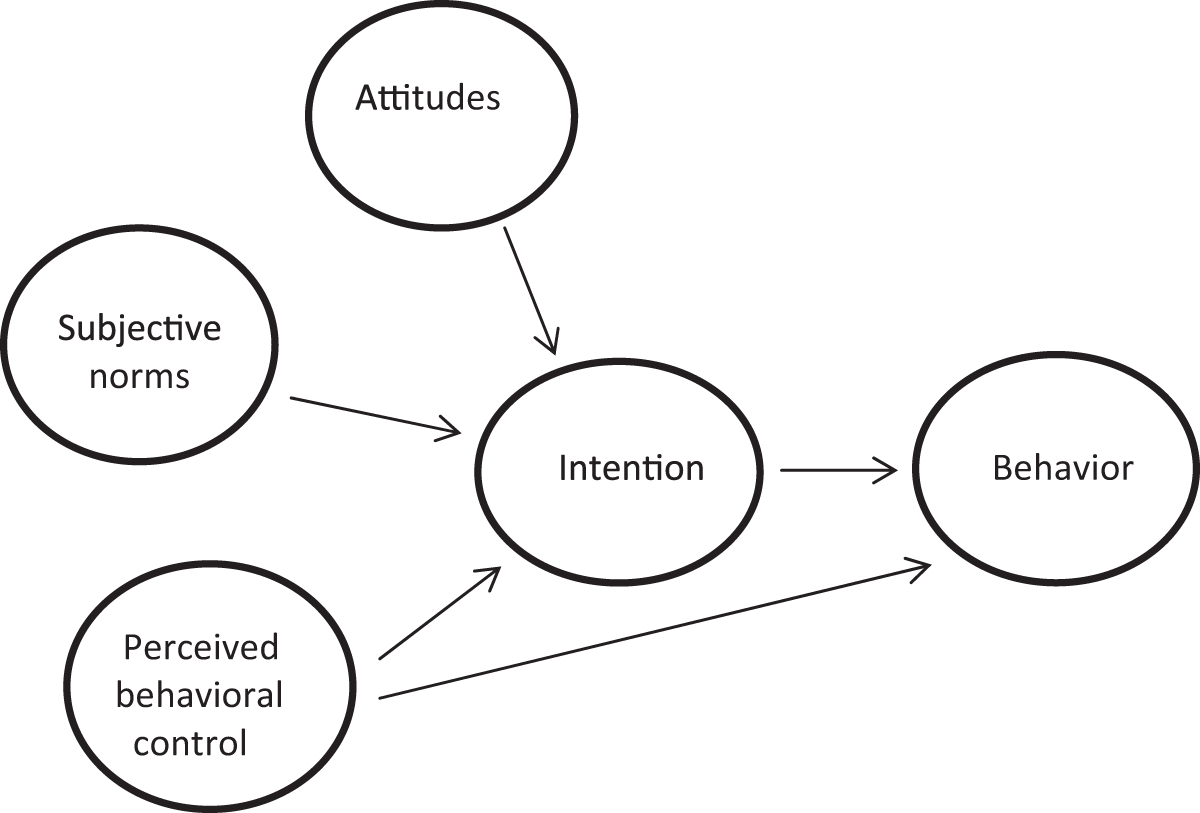
TPB has been criticized recently due to concerns over its validity and utility, with some arguing that the theory should be retired (Sniehotta, Presseau & Araújo-Soares, 2014). Others, however, aware of the possible shortcomings of TPB, have sought to extend and improve. New constructs and new relationships between them are continuously being sought (Baranowski & Lytle, 2015). The model of goal-directed behavior (MGDB) is a case in point. It acknowledges that the variables in TPB do not capture whether people really want to do something, which is linked to the emotions they expect to feel if they do it. Therefore, MGDB adds desire (to capture whether people want to do something, out of joy or a feeling of satisfaction, as opposed to out of obligation or because it is “the right thing to do”) and the perceived anticipated emotional consequences of a targeted behavior. Desire is presumed to mediate the influence of attitudes, subjective norms, and PBC on intention. Anticipated emotions appear in the model as factors that also influence desire (and, eventually, intention and behavior, see Figure 2).
The Model of Goal-Directed Behavior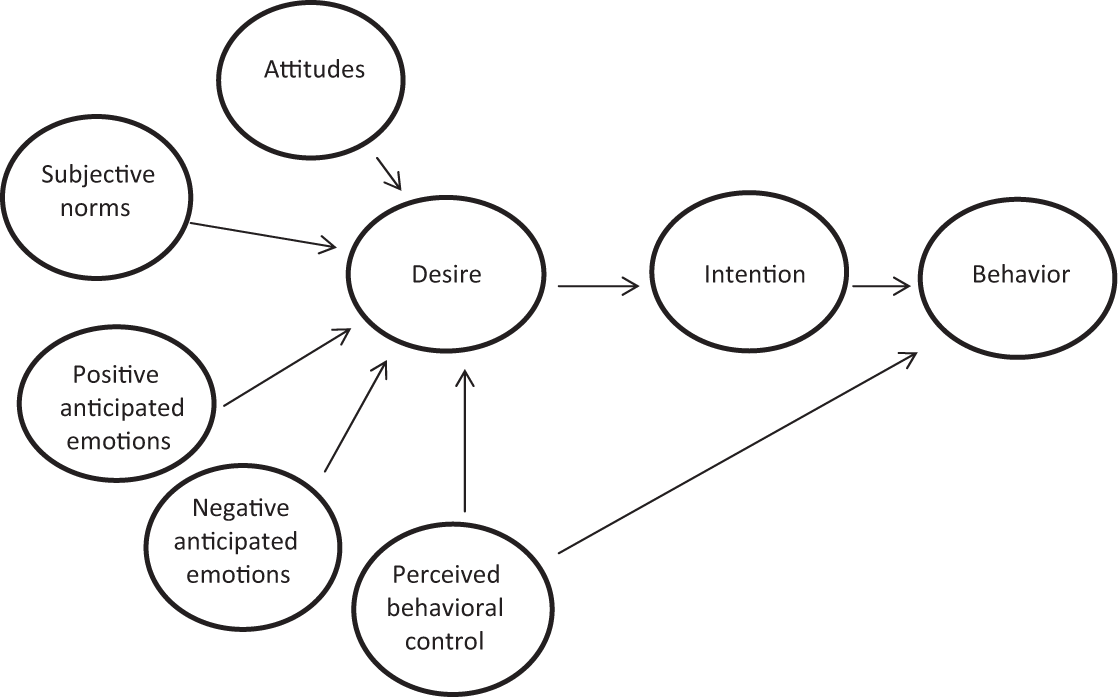
The model explained significantly greater amounts of variance in intentions and behavior in comparison to the TPB in other behavioral domains (Perugini & Bagozzi, 2001; Perugini & Conner, 2000; Taylor, Bagozzi & Gaither, 2005). With regard to health behaviors, a recent TPB-based study showed that the only significant moderator of the intention-behavior relationship was the extent to which intentions were based on anticipated affective reactions (Conner, McEachan, Lawton & Gardner, 2015). Finally, in the field of behavioral nutrition and physical activity, MGDB has been applied to parents' practices for getting their children to eat and enjoy vegetables (Baranowski et al., 2013; Hingle et al., 2012).
This study is based on the conviction, reflected in MGDB, that, when seeking to understand young adults' levels of PA, desire and anticipated emotions are important explanatory variables that should be included. It therefore presents the first attempt – to the best of our knowledge – at applying MGDB to PA.
The role of subjective norms in TPB also merits closer scrutiny. In a meta-analysis of TPB studies, the link between subjective norms and intention was weaker than other links in the model, perhaps because it is often measured with single item constructs instead of more reliable multi-item constructs (Armitage & Conner, 2001). However, the narrow conceptualization of subjective norms in TPB may also play a role (Rivis & Sheeran, 2003; Sheeran & Orbell, 1999). The subjective norms construct attempts to bring the element of social influence into the equation by capturing an individual's perception of what significant others think he or she ought to do. In the social influence literature, these are referred to as injunctive norms. However, the subjective norm construct neglects the influence of descriptive norms, which refer to what significant others themselves do (Cialdini, Reno & Kallgren, 1990; Lee, 2011).
In this study, we introduce descriptive norms in TPB and MGDB models as an additional construct which influences intention (similar to what the subjective – or injunctive – norm construct does) out of the conviction that, at least in PA, what significant others do has at least as much of an influence on people's behavior (because it is taken as a cue) as what significant others think people ought to do. This belief is supported by popular wisdom, hence the need for the saying “do as I say, not as I do”, and by the scientific literature. Descriptive norms have been shown to correlate with intention (Rivis & Sheeran, 2003). Their persuasive impact has also been demonstrated, experimentally, in the study of towel re-use in hotel rooms (Goldstein, Cialdini & Griskevicius, 2008). With regard to PA, descriptive norms associated with friends' PA are among the strongest correlates of behavior (Priebe & Spink, 2011). In this study, we first tested TPB and MGDB with the traditional subjective norms construct (referred to as injunctive norms in this paper), and then added descriptive norms. The hypotheses guiding the research were the following: Hypothesis 1. TPB will be a plausible model. Hypothesis 2. TPB including descriptive norms (TPB+DN) will be a plausible model. Hypothesis 3. MGDB will be a plausible model. Hypothesis 4. MGDB including descriptive norms (MGDB+DN) will be a plausible model Hypothesis 5. MGDB will account for more total variance in intention to be physically active than TPB. Hypothesis 6. TPB including descriptive norms (TPB+DN) will account for more total variance in intention to be physically active than TPB. Hypothesis 7. MGDB including descriptive norms (MGDB+DN) will account for more total variance in intention to be physically active than MGDB. Hypothesis 8. MGDB+DN will account for more total variance in intention to be physically active than TPB+DN
Confirmatory factor analysis (CFA) was conducted on the constructs of the models to evaluate if they were fit for purpose. Then, structural equation modelling (SEM) was conducted to assess the total variance in intention accounted by the model, as measured by the R2.
Method
Participants
An online survey was conducted among 400 young adults (18-24 yr.) in Bulgaria, Croatia, and Romania. The focus on young adults was due to their being particularly vulnerable to weight gain (Huang et al., 2003; Mokdad et al., 2003) and difficult to reach through public health campaigns (Poobalan, Aucott, Clarke & Smith, 2012).
The survey was part of a larger project with an experimental design testing the impact of normative messages, where a total of 1200 participants were studied (drop-out rate: 24%; van Bavel, Esposito & Baranowski, 2014). These were split into three equal groups of 400: two receiving a normative message before filling out scales pertaining to TPB, TPB + DN, MGDB and MGDB + DN, and one receiving no such message (the control group). To avoid contamination from the treatments, the sample of 400 participants analysed in this paper was that of the control group.
The 400 participants were equally split by country (133 in Croatia, 133 in Romania, and 134 in Bulgaria) and by gender (192 females vs. 208 males). The average age was 20.3 yr. (SD = 2.5).
Measures
Loading Factors of Confirmatory Factor Analysis.

The MGDB-specific constructs were previously validated in studies on MGDB generally (Perugini & Bagozzi, 2001; Perugini & Conner, 2000) and as applied to other health-related behavior (Hingle et al., 2012). They were modified only minimally to refer to PA as the targeted behavior. These constructs were desire, positive anticipated emotions and negative anticipated emotions. Desire included the incomplete statement ‘Finding the motivation to do physical activity at least 30 minutes on most days is …’ followed by several binary adjective items such as ‘rewarding' vs. ‘not rewarding'. Positive anticipated emotions asked: ‘Now imagine you are trying to do a physical activity that you like on a regular basis. How would you feel if you actually did it on a regular basis?’ Negative anticipated emotions asked: ‘Now imagine you are trying to do a physical activity that you don’t like on a regular basis. How would you feel if you actually did it on a regular basis?’ Both were followed by binary adjective items such as ‘happy' vs. ‘unhappy' or ‘proud' vs. ‘not proud'.
Finally, the descriptive norms construct, added to both TPB and MGDB, also mentioned people who were important to the respondent (same as those in the injunctive norms scale, except for ‘most of my physicians'), but simply asked whether they ‘did physical activities at least 30 minutes on most days'. As with injunctive norms, the replies ran along the category response form ‘yes, I think so’ vs. ‘no, I don’t think so'.
Binary adjective items were chosen over Likert-type items (such as ‘strongly agree', ‘somewhat agree', ‘not sure', etc.) since they minimize discrepancies in the interpretation of these items between participants, especially between those speaking different languages (Friborg, Martinussen & Rosenvinge, 2006). Moreover, the distance between values can more justifiably be inferred to be equal by respondents, making them better suited for treatment as an interval scale than Likert-type items (Jamieson, 2004).
Procedures
Data were collected by Block de Ideas, a social research company based in Barcelona. An internal Evaluation Committee at the Institute for Prospective Technological Studies approved the study and required it follow the appropriate ethical guidelines for conducting questionnaires (in this case, those of ESOMAR, the World Association for Social, Opinion and Market Research). All participants gave informed consent. The questionnaire was translated into Bulgarian, Croatian, and Romanian, with a back-translation quality check. The survey was launched in March 2013. The sample was taken from survey panels (or subject pools) in which participants were formally enrolled. In order to mitigate potential risks associated with online questionnaires (e.g. not knowing who lies behind an IP address), these panels adhered to a number of quality control measures. For example, people had to log in securely using username and passwords, and duplicates and e-mail addresses that did not function properly were automatically detected and removed. The data were made anonymous, kept confidential and used only for the purpose of this research.
Analysis
Confirmatory factor analysis (CFA) was used to assess the validity of constructs. A cut-off point of 0.4 was taken for the standardized coefficients, opting for a slightly more conservative threshold than the 0.3 proposed by Nunnally (1978). This was done to prevent the risk of items loading onto more than one factor. To assess goodness of fit, Hu and Bentler's two-index presentation strategy was used (Hu & Bentler, 1999). Means, standard deviations, and ranges of scores for each scale were computed and reported, as well as Cronbach’s alphas and average inter-item correlations. For the latter, values between 0.15 and 0.50 were considered acceptable (Clark & Watson, 1995).
Structural equation modelling (SEM) was then conducted to examine the relationships among constructs. The estimation procedure was an adjusted maximum likelihood method, which is robust to non-normality in the data (Satorra & Bentler, 2001). The software used was STATA Version 14 (StataCorp LP, College Station, Texas, USA).
Results
Forty items were initially included in the CFA, from which 36 items (and 8 constructs) were retained. Four initially included items did not load on their related constructs and were omitted from the final list of 36 items: two hypothesized to belong to the attitude scale and two to the PBC scale. The item ‘doing regular physical activity is … childish vs. not childish’ was less established in the literature: it was inspired by previous work suggesting 11-to-16 year-old girls considered physical activity ‘babyish' (Poobalan et al., 2012). The item ‘doing regular physical activity is … tiring vs. not tiring' also did not load on the attitudes scale. In hindsight, this stands to reason: people can still hold positive attitudes towards something that makes them tired. Of the two discarded items hypothesized to belong to PBC, one specifically mentioned ‘physical activities which make you out of breath’, which could explain the relatively poor fit of this item. It nevertheless was almost acceptable, with a factor loading of 0.38. The other item was a bit ambiguous in the combination between the incomplete initial statement (‘there is very little I can do to make sure …’) and the binary adjective item (‘agree’ vs. ‘disagree’). Some of the participants may have been puzzled as ‘agree’ is associated to a negative statement.
Model Fit Indices of Confirmatory Factor Analysis.
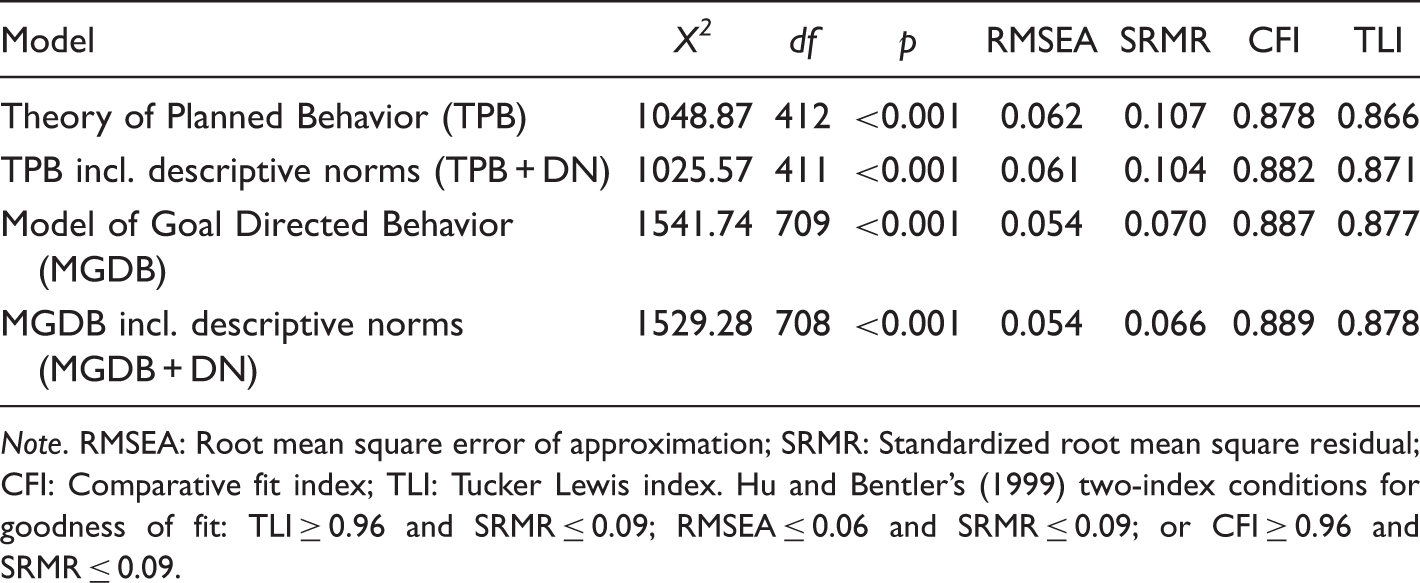
Note. RMSEA: Root mean square error of approximation; SRMR: Standardized root mean square residual; CFI: Comparative fit index; TLI: Tucker Lewis index. Hu and Bentler's (1999) two-index conditions for goodness of fit: TLI ≥ 0.96 and SRMR ≤ 0.09; RMSEA ≤ 0.06 and SRMR ≤ 0.09; or CFI ≥ 0.96 and SRMR ≤ 0.09.
In the case of MGDB and MGDB + DN, CFI was also lower than 0.90 (0.89 in both cases). However, their values for RMSEA (0.054 in both cases) and SRMR (0.070 and 0.066 respectively) confirmed the model was fit for purpose following Hu and Bentler's (1999) two-index criteria. Hypotheses 3 and 4 were supported.
Since MGDB had an adequate fit, but not TPB, it was not possible to compare the total variance accounted for in intention to be physically active. Thus, Hypothesis 5 was not supported. Since TPB and TPB + DN did not have an adequate fit, we could not conduct a structural assessment and therefore could not determine whether TPB + DN accounted for more total variance in intention. Thus, Hypothesis 6 was not supported. MGDB and MGDB + DN did have adequate fit, allowing for a SEM analysis of the amount of variance in intention they each accounted for (next section). Finally, MGDB + DN had adequate fit while TPB + DN did not, and so a comparison of the amount of variance they each accounted for was not possible. Hypothesis 8 could not be supported.
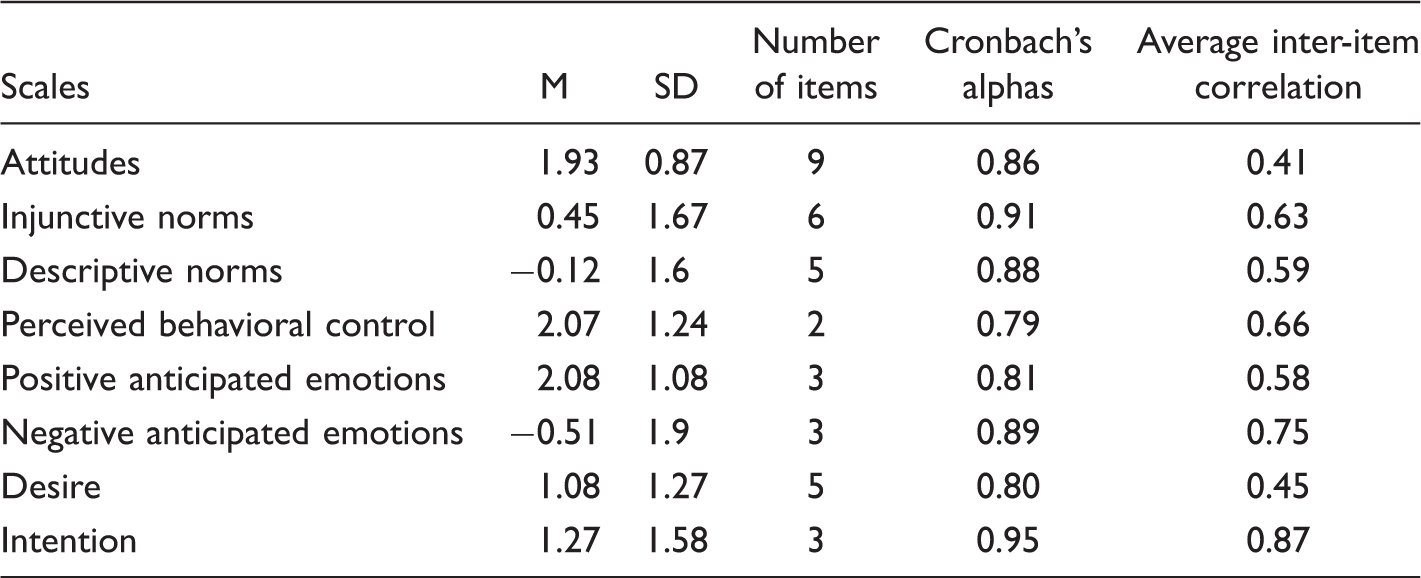
Summary of Statistics for Model of Goal-Directed Behavior Constructs (incl. Descriptive Norms).
A structural assessment of MGDB showed that attitudes, injunctive norms and PBC correlated with desire, and desire with intention (as predicted by the theory). Positive and negative anticipated emotions, however, did not correlate with desire as predicted (Figure 3). For MGDB + DN, attitudes and PBC correlated with desire. Interestingly, descriptive norms also correlated significantly with desire, but not injunctive norms. As with MGDB, neither positive nor negative anticipated emotions correlated with desire, but desire did correlate with intention (Figure 4). Further research along these lines is warranted on the role of descriptive norms and the effect its inclusion might have on other constructs in the MGDB model.
SEM results for the Model of Goal-Directed Behavior. SEM results for the Model of Goal-Directed Behavior (incl. Descriptive Norms).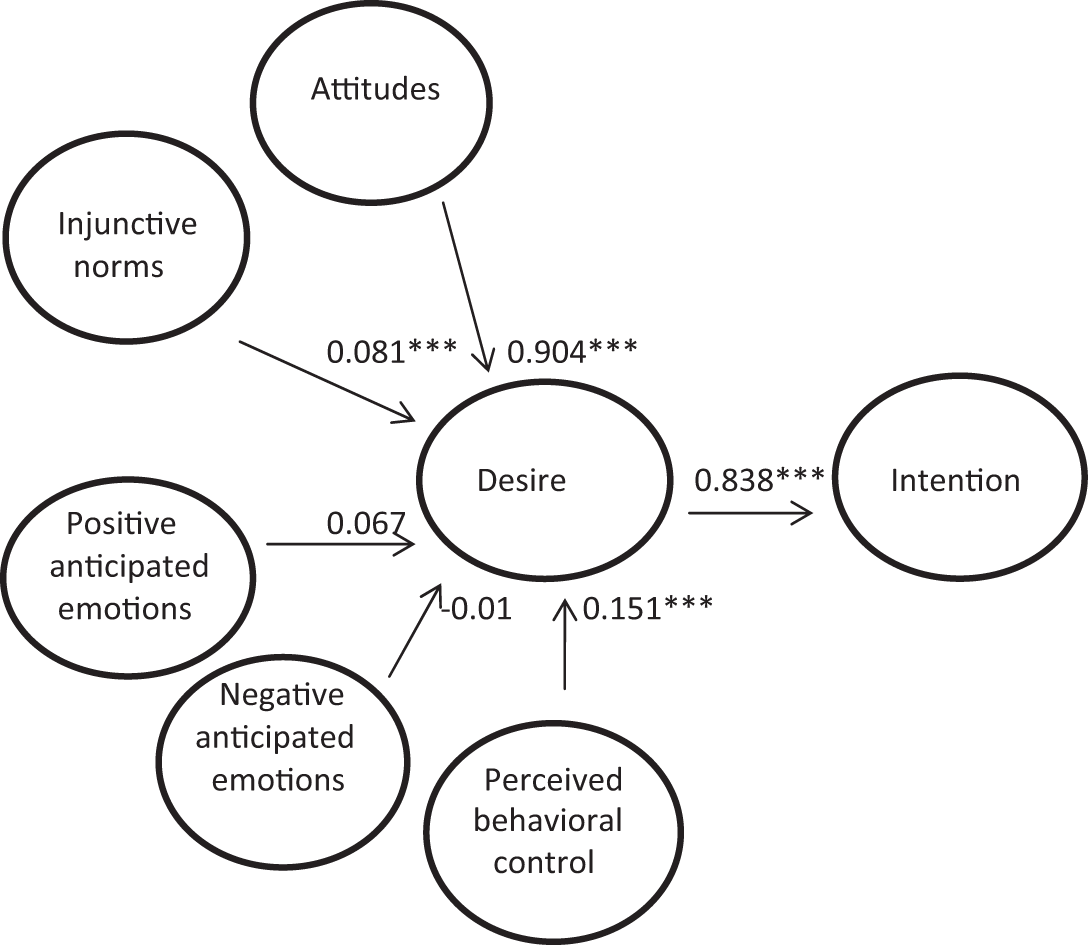
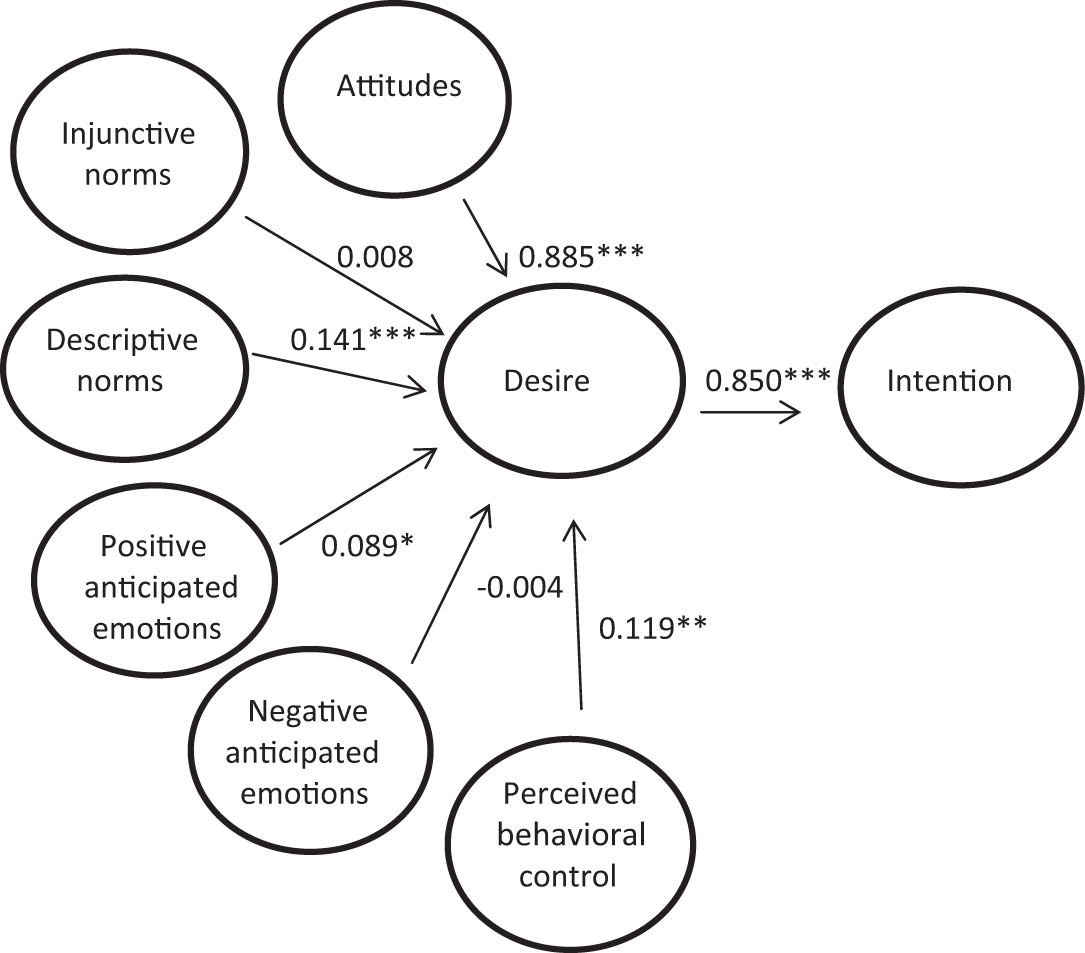
Hypothesis 7 referred to the amount of total variance in intention explained by MGDB and MGDB + DN models. Results show that, for MGDB, the percentage of explained variance in intention, measured by the R2, was 0.34 (in desire it was 0.56). For MGDB + DN it was 0.35 (for desire: 0.58). Hypothesis 7 was supported.
Discussion
This study assessed the addition of desires and positive and negative anticipated emotions to TPB applied to PA intentions, guided by the literature's suggestion that what people want to do (which in turn is related to how they expect to feel about doing it) is a key variable to include in models explaining intention. It also assessed the addition of descriptive norms, based on the belief and evidence that what significant others do has an influence on intention. MGDB and MGDB + DN, which incorporate these additions, had an acceptable fit, with the direction of correlation of coefficients as expected from the theory and with substantial amounts of variance in intention accounted for. These results add to previous findings on the ability of MGDB to account for greater variance in intention and behavior than TPB (Perugini & Bagozzi, 2001; Taylor, Bagozzi & Gaither, 2005; Perugini & Conner, 2000). To the best of our knowledge, this is the first reported attempt at applying MGDB to PA in the literature.
The fact that MGDB and MGDB + DN were fit for purpose, and TPB and TPB + DN not, suggest that emotions and desire should be taken into account when studying young adults' levels of PA. Simply put, young adults will intend to be physically active if the emotions they anticipate from doing PA are positive, which in turn will drive their desire. To neglect this aspect of young people's motivation to do sports is to miss a big part of the picture, and might result in suboptimal public health policies.
Similarly, the results showing that descriptive norms were significant instead of injunctive norms in MGDB + DN highlight the influence, on young adults, of what their peers and significant others do. In fact, the inclusion of descriptive norms as a construct displaced injunctive norms as the relevant measure of subjective norms, suggesting that, at the very least, descriptive norms should be considered alongside injunctive norms in MGDB studies (and possible TPB studies too). For public health policies, this finding suggests that campaigns aimed at increasing PA could highlight its prevalence in the community. If young adults get a sense that “everybody's doing it”, they might just be encouraged to abandon their sedentary lifestyles. Further research should continue to explore the role of descriptive norms in PA levels.
This study has some limitations which further research could overcome. First, the questionnaire was online and self-administered; therefore some limitations of these kinds of surveys might apply (such as self-selection bias and a high drop-out rate).
Second, all scales showed high values in average inter-item correlation except for attitudes. Although the scale is nevertheless adequate and detects a real dimension, research should further improve it as applied to PA.
Third, the study aimed at capturing general attitudes towards PA, but in doing so violated Ajzen's (2005) compatibility principle. In particular, while all other TPB scales referred to doing ‘physical activities at least 30 minutes on most days', the attitude scale referred to doing ‘regular physical activity’. However, since this imperfect attitude construct was part of TPB, TPB + DN, MGDB and MGDB + DN the comparison between these theories, while hampered, was still possible.
Finally, differences by sex, age and country of residence may have affected the responses. In particular, participants in Croatia had a lower score for desire (p < 0.001) and intention and (p < 0.05). We cannot identify an explanation for these differences.
Despite these limitations, this paper contributes to the ongoing debate about the role of TPB and possible additions in explaining PA intentions. Specifically, MGDB – by including desires and anticipated emotions – can account for greater amounts of variance in intention to be physically active. Moreover, the inclusion of descriptive norms, as a complement to injunctive norms, improves MGDB's model fit. These are contributions that improve the ability of TPB, as the dominant approach to guiding research on PA, to account for the differences in intention to be physically active and so remain a relevant theory for explaining health-related behavior.
Footnotes
Acknowledgments
We are grateful to Tzu-An Chen and Michail Batikas for help in the SEM analysis; Maite Bocanegra, Rosa Dalet and Giuseppe Veltri for conducting the survey in the frame of the project Health-Related ICT Use by Young People in Enlargement & Integration Countries (JRC-SEV-2012-J03-28); Patricia Farrer, Francisco Lupiáñez Villanueva and Ioannis Maghiros for support; to Sandra Caldeira, Benedikt Hermann and Antonios Proestakis for initial guidance; and to all participants at the Joint Research Centre's workshop Countering Obesity by Combining Behavioural Insights and Novel ICT Tools in Varese, Italy (3-4 October 2012) for their patience and advice. The views expressed in this article are purely those of the authors and may not in any circumstances be regarded as stating an official position of the European Commission.