




Abstract
Practical knowledge, acquired subconsciously, requires analysis and reflection for reconstruction, fostering its evolution into practical thinking. This study explored the practical knowledge of 104 first-year students in the early childhood education programme at the University of Malaga, aiming to scrutinise how it evolves through the lens of practical thinking following their participation in Lesson Study (LS) training. Using qualitative research methods, the data collection involved reflexive drawing, narratives, and discussion groups. The findings revealed that students’ practical knowledge predominantly revolved around teaching as cultural transmission, highlighting master classes and teacher-centric teaching-learning processes, with an adult-centric view of childhood and an underestimation of student capacities. Following the LS experience, significant reconfiguration occurred. Students developed a newfound appreciation for mentorship, recognising discrepancies between conceptualisations and implementations, and acknowledging the pivotal role of children. The study highlights the efficacy of reflexive drawing and discussion as tools for uncovering subconscious thoughts and facilitating reconstruction. To facilitate this evolution, training programs and participatory strategies are imperative for transforming practical knowledge.
Keywords
Introduction
In today’s fluid society, characterised by uncertainty, complexity, and perpetual change, as noted by Bauman and Leoncini (2018), Beijaard (2019), and Molina-Pérez et al. (2021), traditional methods of training individuals are becoming obsolete. With the pervasive interconnectedness through social networks, the landscape of education is constantly evolving, necessitating a shift in how future teachers are prepared (Beard, 2019; Pérez Gómez, 2019). Thus, the task facing prospective educators is multifaceted: they must develop professionally to meet current educational needs, construct their professional identity, and acquire the necessary competencies (Correa et al., 2018; Falcón & Arraiz, 2020; Olave, 2020; Vanegas & Fuentealba, 2019). As students embark on their initial teacher training journey, reflecting on their life history becomes paramount. This introspection allows them to understand their conceptions regarding teaching practice, teaching-learning processes, the role of students in their learning journey, and their motivations towards the profession (Domínguez et al., 2018; Falcón & Arraiz, 2020). From the onset of their careers, it is crucial for them to be aware of the identity they are beginning to construct, its theoretical underpinnings, and the process of reconstructing it. This construction process is influenced by cognitive frameworks, interpretations, and actions (Pérez Gómez, 2012), as well as by theories and personal beliefs (Colén & Castro, 2017; Cruz, 2011) that shape teaching practices and constitute the foundational professional knowledge (Cuevas, 2013).
In understanding the role of a teacher, it is imperative to recognise that it goes beyond merely transmitting theoretical content (Charris et al., 2016). Teaching demands independent, creative, and higher-order thinking (Pérez Gómez, 2019), influenced by various factors such as emotions, lived experiences, contextual elements, and human behaviour (Crespo, 2019; Damasio, 1999; Echarte & de Erquiaga, 2019). These elements intricately interconnect to shape professional identity long before one enters university, drawing from experiences garnered throughout schooling (Cuadra-Martínez et al., 2021; Sánchez & González, 2019).
From Practical Knowledge to Practical Thinking
It is essential to consider that the integration of cognitive and higher-order socio-educational skills transforms information into knowledge (Pérez Gómez, 2017). However, this integration often occurs subconsciously (Grazzaniga, 2010), with implicit theories shaping teachers’ actions (Liston & Zaichner, 2003). This results in disparities between teachers’ thoughts and actions (Rodríguez & Alamilla, 2018), stemming from subconsciously experiences accumulated throughout their schooling. According to Schön (1998), these cognitive frameworks are termed practical knowledge: intuitive, somewhat automatic, and lacking reflection. It encompasses beliefs, skills, emotions, attitudes, and values that teachers employ in the teaching-learning process, often automatically and influenced by biases and personal experiences (Pérez Gómez & Soto, 2019). Practical knowledge entails an automatic interpretation of the world without examining the lenses through which we perceive, feel, act, speak, and imagine (Byung, 2017; Giroux, 2020; Sennet, 2018). This phenomenon arises as the brain is shaped by lived experiences, their impulses, and ensuing emotions (Barret, 2018). Consequently, this type of knowledge is deeply intertwined with emotions and affects, manifesting as a situated and holistic phenomenon (Argyris, 1993; Bargh & Fergusson, 2000; Greeno et al., 1996; Pérez Gómez et al., 2010; Rogoff, 1990; Soto et al., 2015).
However, when this practical knowledge is rationalised, it becomes conscious; it transforms into practical thinking, which can consciously guide educational action (Soto et al., 2021). In this context, practical thinking can be defined as a type of cognition that necessitates a comprehensive understanding and application of knowledge, coupled with reflective awareness of this application (Peña & Pérez, 2019). Essentially, it involves knowledge generated through individual and collective reflection by the learner (Alonso et al., 2017), as this knowledge becomes invaluable for the prospective teacher (Rosiek & Gleason, 2017). Along these lines, to transition from practical knowledge to practical thinking, one must understand both the collective, prevailing educational norms and the unique embodied habits of trainee students (Soto et al., 2022). This entails uncovering the unconscious cultural rituals inherent within individuals and ascending to a level of reflective consciousness that can inform educational practice.
To facilitate the transition from practical knowledge to practical thinking within the Early Childhood Education Degree’s initial teacher training, it is imperative to design authentic activities and tasks. These activities should offer students experiences that reshape their cognitive frameworks (Barrett, 2018). A noteworthy approach in this regard is the Lesson Study (LS) methodology (Calvo et al., 2021; Caparros, 2015; Hevia et al., 2018; Huang et al., 2021; Mayorga et al., 2021; Sepúlveda et al., 2022). This methodology holds considerable pedagogical value as it fosters a continuous cycle of theorising practice and experimenting with theory (Soto, 2022). Within this cycle, teaching-learning processes are tailored to address the realities of the teaching profession, with a specific focus on the developmental journey of future educators. This is achieved through collaborative processes that entail reflection, construction, and analysis of relevant experiences (Vermunt et al., 2019), all of which are facilitated by a flexible curriculum.
This study emerges from the necessity to explore innovative avenues for enhancing and reshaping the practical knowledge held by students embarking on the Early Childhood Education Teaching Degree. It underscores the importance of bridging the teaching-learning process with the trainees’ lived experiences (Cifuentes, 2022) to achieve a genuine reconstruction of the professional identity and teaching role of future Early Childhood Education educators. Furthermore, it seeks to provide initial insights into the transformation of practical knowledge into practical thinking, a process inherent in the training received by prospective Early Childhood Education teachers from the outset of their careers. As such, this paper aims to comprehend the process of deconstructing, co-constructing, and reconstructing students’ practical knowledge in alignment with their professional profiles, employing a didactic strategy rooted in sociocultural foundations (Alsina et al., 2019).
This study forms part of the project entitled “Lesson Studies, School and University: Investigating the reconstruction of practical knowledge in initial teacher training,” supported by the Spanish Ministry of Economy, Trade, and Enterprise (MINECO), reference: EDU2017-86082-P. The founders played no role in the design, data collection, analysis, interpretation, or writing of the report, nor in the decision to submit the article for publication.
Objective
The aim of this study was to evaluate the practical knowledge held by first-year students enrolled in the Early Childhood Education Degree when entering university. Furthermore, our objective was to explore the transformation of this practical knowledge into practical thinking as a result of the students’ participation in a formative experience utilising the LS methodology.
Methodological Story
This study has been conducted using qualitative research methods (Aberasturi-Apraizen et al., 2020; Lather & Pierre, 2013), employing a narrative design. This approach aims to explore, acknowledge, and deconstruct individuals’ ideas, beliefs, and discourses through the analysis of their perceptions, with the ultimate goal of achieving transformation (Cifuentes, 2022). Importantly, this transformation is not solely achieved through data collection but also through the active production of data (Mannay, 2017). As outlined by Carrasco & Villanueva (2019), “It involves unravelling a network of connections where discourse and materiality intersect, mutually informing and shaping each other in the creation of knowledge. In this context, research is perceived as a domain where material, discursive, virtual, human, non-human, and other-than-human phenomena intertwine both within and throughout.” (p. 164).
Hence, the study employed a triangulation of instruments to gather data. This included the production of data through visual analysis via reflective drawing and the narrative accounts linked to them (Malchiodi, 1998), alongside information collection through focus groups.
The technique of visual analysis through reflective drawing is a qualitative research strategy widely utilised in the social sciences, particularly with children across various contexts and thematic areas (Copeland & Agosto, 2012; Foncillas et al., 2020; Gómez & Gavidia, 2015; Moskal, 2010; Salazar & Fernández-Castillo, 2016; Trigueros et al., 2022; Vázquez & Fernández, 2016). However, it has not previously been employed as a strategy to explore the practical knowledge of future Early Childhood Education teachers. In this study, it was chosen because it enables the exploration and articulation of thoughts that may otherwise remain unexpressed (Rovetta, 2016). Being an unstructured technique that encourages reflection and the creation of drawings (Bagnoli, 2009), it allows participants to express their deeply rooted thoughts, akin to the way the adult mind operates, much like in childhood (Thomas & Jolley, 1998), thereby revealing their mental representations through drawing.
Through the implementation of focus groups, the objective was to achieve a social reconstruction of the participants’ subjective thinking (Benavides-Lara et al., 2022; Escobar & Bonilla-Jiménez, 2017). This collaborative process, managed jointly by the focus group facilitator and all participants involved (Creswell & Poth, 2018; Nyumba et al., 2018), aimed to delve into the collective perceptions and experiences. This research strategy provides access to layers of meaning not attainable through other methods, owing to the rich interaction and dialogue it fosters (Freidin, 2016; Stewart & Shamdasani, 2015). All focus group sessions were recorded and subsequently transcribed for analysis.
All of this has been analysed through what Waller and Simmons (2009, p. 61) refer to as “the vulture’s eye perspective”. We meticulously examined the images, read and re-read the narratives repeatedly until thematic patterns emerged. These emergent themes were then compared with the findings from the focus groups. Building upon this preliminary analysis, the images were systematically structured and categorised according to the strategies delineated by Rose (2012): • composition (related to space and placement of images), • semiology (the study of symbols) • and finally, the discursive level, i.e., the narrative that the participants brought to the images.
Utilising these elements, we conducted a comprehensive examination of the practical knowledge held by aspiring educators, uncovering valuable insights into various facets such as their perceptions of the teaching role, preferred teaching methods, conceptions of childhood, learning approaches, and contextual influences on the teaching-learning processes. It’s crucial to note that these analytical elements were not treated as rigid or closed categories; instead, they were viewed as dynamic and holistic components contributing to our understanding of the studied reality (Moreno, 2015). Throughout this study, we intentionally avoided fragmenting the data into predefined categories. Instead, we adopted an approach that recognises the partial and incomplete nature of interpretations, allowing for continuous re-evaluation and refinement of insights throughout the research process (Jackson & Mazzei, 2012). This approach is in line with the “vulture’s eye perspective” technique, facilitating a comprehensive and adaptable analysis.
Participants
This research involved the participation of 104 students from the first year of the Bachelor’s Degree in Early Childhood Education at the University of Malaga: 45 students took part in the study during the academic year 2020–2021, and 59 students during the academic year 2021–2022. It is noteworthy that out of the total participants, only 5 were male, with 2 in the 2020–2021 academic year and 3 in the 2021–2022 academic year. For the purpose of this study, the results from two focus groups, each comprising six students, are presented as the control group—one for each academic year.
Procedure and Instruments for Collecting Information
This study spanned two academic years (2020–2021 and 2021–2022), during which the students were enrolled in the subjects Didactics and School Organisation of Early Childhood Education. Both subjects are typically taken in the second quarter of the year as part of the first year of the Bachelor’s Degree in Early Childhood Education. The curriculum of these subjects is designed to foster the development of professional competences and, consequently, the cultivation of the students’ professional identity as teachers. Throughout the research process, strict adherence to the Code of Research Ethics of the University of Malaga was maintained, with careful attention paid to obtaining informed consent from the participants, ensuring anonymity, confidentiality, respect, and the provision of research reports to all involved parties.
The data collection procedure was conducted in two stages: 1. At the outset of each academic year, students were individually tasked with creating a drawing depicting their ideal teacher in a teaching-learning scenario. Following this, they were required to articulate their interpretation of this image. This initial phase generated data pertaining to the students’ practical knowledge. For this study, reflective drawings were executed individually, accompanied by a narrative account elucidating the participants’ perspectives on the depicted images. Narrative accounts facilitated an exploration of the subjectivity inherent in the participants' experiences. Importantly, these accounts were not influenced by predetermined researcher biases or guided questions, aiming to prevent the imposition of colonialist viewpoints (Rivas, 2009). Thus, participants articulated their accounts based on their own experiences and perceptions, providing the researcher with a profound understanding of the students’ viewpoints (Delgado-García, 2018). It is worth noting that both the reflective drawings and the students’ narrative accounts were completed prior to commencing the subject. 2. Throughout each academic year, a Lesson Study cycle was executed with the students. Within this cycle, students were tasked with collaboratively designing, implementing, and evaluating a didactic workshop tailored for children in early childhood education, drawing from their prior conceptions and the subject matter covered in their courses. Throughout this process, the subjects’ content was approached in a holistic, emergent, and adaptable manner, enabling students to study at their own pace and in response to their current formative requirements. 3. Following the collaborative training process and upon thorough examination of the subject syllabus, students were prompted to compare their initial drawings and narratives with the concepts they currently held. This exercise involved engaging in individual and collective dialogues to juxtapose their prior conceptions with the knowledge acquired throughout the course. These group sessions were conducted in a semi-structured format, featuring open-ended questions. The sessions took place in the students’ regular classroom environment and lasted approximately 1.5 hours, with an average of six participants per group. This data collection strategy was chosen because focus groups serve as a valuable tool for eliciting discourse, particularly within the framework of contextual constructivism (Barbour, 2013; Escobar & Bonilla-Jiménez, 2017; Gutiérrez, 2008). During these sessions, the moderator and participants interacted, facilitating the exploration of their evolving conceptions of the subject matter. In total, 18 focus groups were conducted—eight in the 2020–2021 academic year and ten in the 2021–2022 academic year. The objective was to analyse the extent to which participants’ perceptions had developed over time, and to potentially compare these insights with their initial drawings from the beginning of the semester. This approach provided valuable insights into participants’ individual perspectives as well as facilitating group discussions and shared understanding.
The design employed in this study has enabled students to explore their practical knowledge and, following their engagement with the subject, to gain awareness of it, thereby initiating the process of reconstructing this practical knowledge into practical thinking.
Rather than organising the information into rigid categories, the approach involved sketching out a discourse among the emergent and holistic data. This approach aligns with qualitative research principles, where data interpretation is viewed as partial and incomplete, allowing for ongoing refinement and reinterpretation throughout the research process (Jackson & Mazzei, 2012). By avoiding fragmentation into categories, the study aimed to capture the richness and complexity of the students’ experiences, providing a nuanced understanding of the studied reality (Moreno, 2015).
Experiential Story
Upon scrutinising the content and significance of the reflective drawings, we have been able to delve into the practical knowledge of the participating students, extracting insights related to their actions, emotions, and school experiences. These encompass a spectrum of ideas and beliefs concerning teaching, the role of educators, student learning, and their perceptions of childhood. Despite this convergence, it is worth noting that there is a considerable heterogeneity in the missions, visions, beliefs, and values of the individuals involved, making it challenging to comprehensively depict the diversity observed.
Following the analysis of all the images, it becomes evident that over half of the students (64.4%) depicted early childhood education pupils within their drawings. This suggests an attempt to recreate scenes from the teaching-learning process wherein the primary actors, namely students and teachers, are depicted. In instances where this portrayal occurs, the following scenarios are observed:
Teacher Protagonist of the Teaching/Learning Process
The drawings reveal an adult-centric perspective on educational dynamics, where the teacher’s viewpoint is dominant and they retain a position of authority, portraying traditional teaching methods. As one student expressed, “she is confident in her abilities and what she has accomplished, and will continue to accomplish, in the classroom!”
Additionally, there is an emerging notion of the teacher as a skilled technician, responsible not only to the families of the students but also to society at large: “Maintaining strong relationships and effective communication with families is crucial, not just for the students’ wellbeing, but also for their learning outcomes,” remarked ML.
LV emphasised the importance of teachers delivering their knowledge dynamically and efficiently, ensuring they capture their audience’s attention and achieve optimal results.
Both the verbal contributions and the visual representations (Figure 1) suggest that students are subconsciously adhering to a teaching model focused on cultural transmission, centred on the traditional master class methodology. This observation is further supported by various students’ narratives: “Maintaining order is paramount when working with children,” remarked MS. “I understand the importance of establishing boundaries when needed,” stated VS. Classroom layout in Pre-School Education.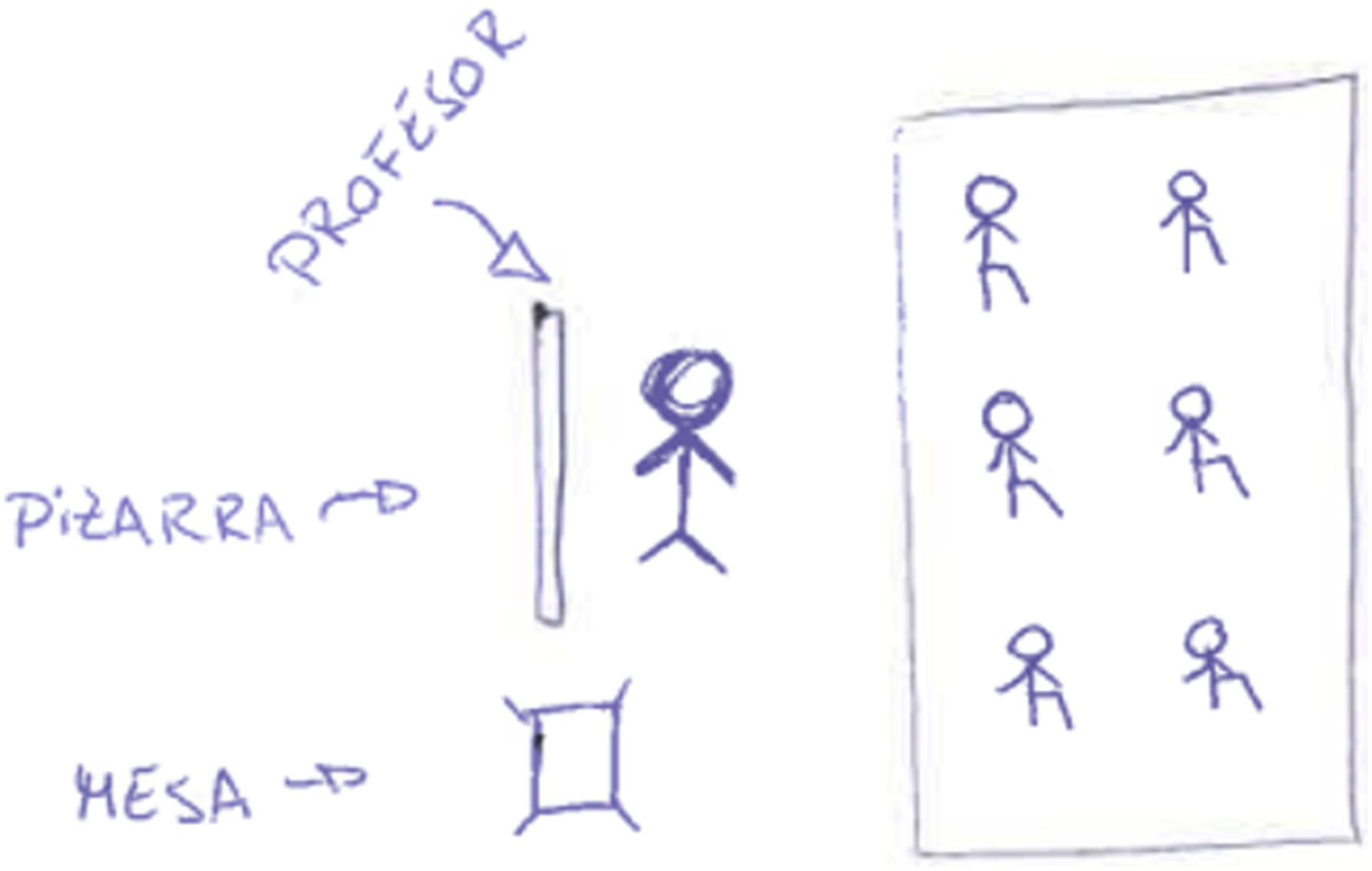
MP expressed a desire to impart positive values and behaviours to students, while also acknowledging the necessity of enforcing limits when behaviour is inappropriate.
CM highlighted the expectation for teachers to strike a balance between being engaging and fun, while also maintaining a level of seriousness and ensuring lessons are dynamic and well-paced for students.
According to one student, “the teacher always has to be respected and maintain order in the classroom” (MM), suggesting a subconscious perception of the teacher as an authoritative figure responsible for orchestrating the teaching-learning processes to ensure students achieve positive outcomes. Consequently, the teaching role appears to embody a blend of authority and technical proficiency. Figure 2 illustrates that the teacher remains the central figure in the teaching-learning process, positioned at the core of the dynamic. This positioning signifies that the teacher is viewed as the possessor of knowledge, with the role of transmitting it to students, as depicted in the illustration. The teacher assumes the role of guiding the student, serving as an intermediary between the content and the student’s learning process, given her possession of knowledge. Agents of the teaching-learning process.
During the post-course discussion groups, a notable transformation in students’ practical knowledge into practical thinking became apparent. They began to exhibit a heightened awareness of their role as educators, the methodological approaches they could employ, and the abilities of the children they would teach.
Following their training, students began to recognise that the key focus should not solely be on the teacher’s role or the effectiveness of outcomes. Instead, there was a growing recognition of the importance of prioritising processes and adapting them to meet the needs of the children. This sentiment was echoed by students during the focus group discussions: “Before, I considered the teacher to be at the centre of relationships, and the source of knowledge.” (G.F. MP). “Previously, our focus was solely on sourcing activities. However, through this experience, we came to understand that many of these activities weren’t feasible as the children are the main actors, each with their unique pace,” shared G.F.EG during the focus group. “It’s crucial to prioritise the process over the outcomes, as they hold more significance. The results naturally follow... I struggled to grasp this concept initially, given my perfectionist tendencies,” remarked G.F. MS during the focus group. “Through this type of experience, you come to realise that you’re never fully prepared to be a teacher. It's an ongoing process of constant construction and learning; you have to continually strive to improve and give your best,” reflected G.F. VS. “The teacher should accompany and the children should be the protagonists of their own learning [...] they should not only be taught content, but they should be given experiences with which to learn, in contact with their classmates, families, other spaces, leaving the monotonous classroom environment.” (G.F. CV).
Idealisation of relationships
Another notable finding from the study is the tendency to idealise the teacher-pupil relationship. Figure 3 illustrates this dynamic, depicting the child positioned in a manner suggesting idolisation of the teacher, evident through his expression and body language, which exude total admiration. Conversely, the teacher appears entirely satisfied, reflecting a reciprocal sentiment. Teacher-student relationship.
In various images (Figures 4–7), the teachers are depicted with infantilised features. One student even openly acknowledges this by stating that they are “connecting with her inner child" (IN). They all sport attire and hairstyles typical of teachers, and the accompanying semiotics, such as hearts and flowers (Figures 5 and 6), further reinforce this portrayal. Additionally, musical notes are a recurring motif in many drawings (Figures 6 and 7), suggesting an association between early childhood education and themes of movement, joy, and happiness that can be conveyed through music. Figure 6 includes rainbows and a rabbit, while Figure 7 portrays children in early childhood education as babies, highlighting a perception of total infancy. Similarly, another prevalent symbol in the images is teachers dressed in “smocks,” evoking a role of assistance, custody, or care rather than education. This portrayal reflects a lingering perception of children as vulnerable beings, lacking autonomy and full capacities, with the teacher seen as responsible for their holistic development. Teacher “grandma”. “Perfect” teacher. Idealised teacher. Childhood infantilised.

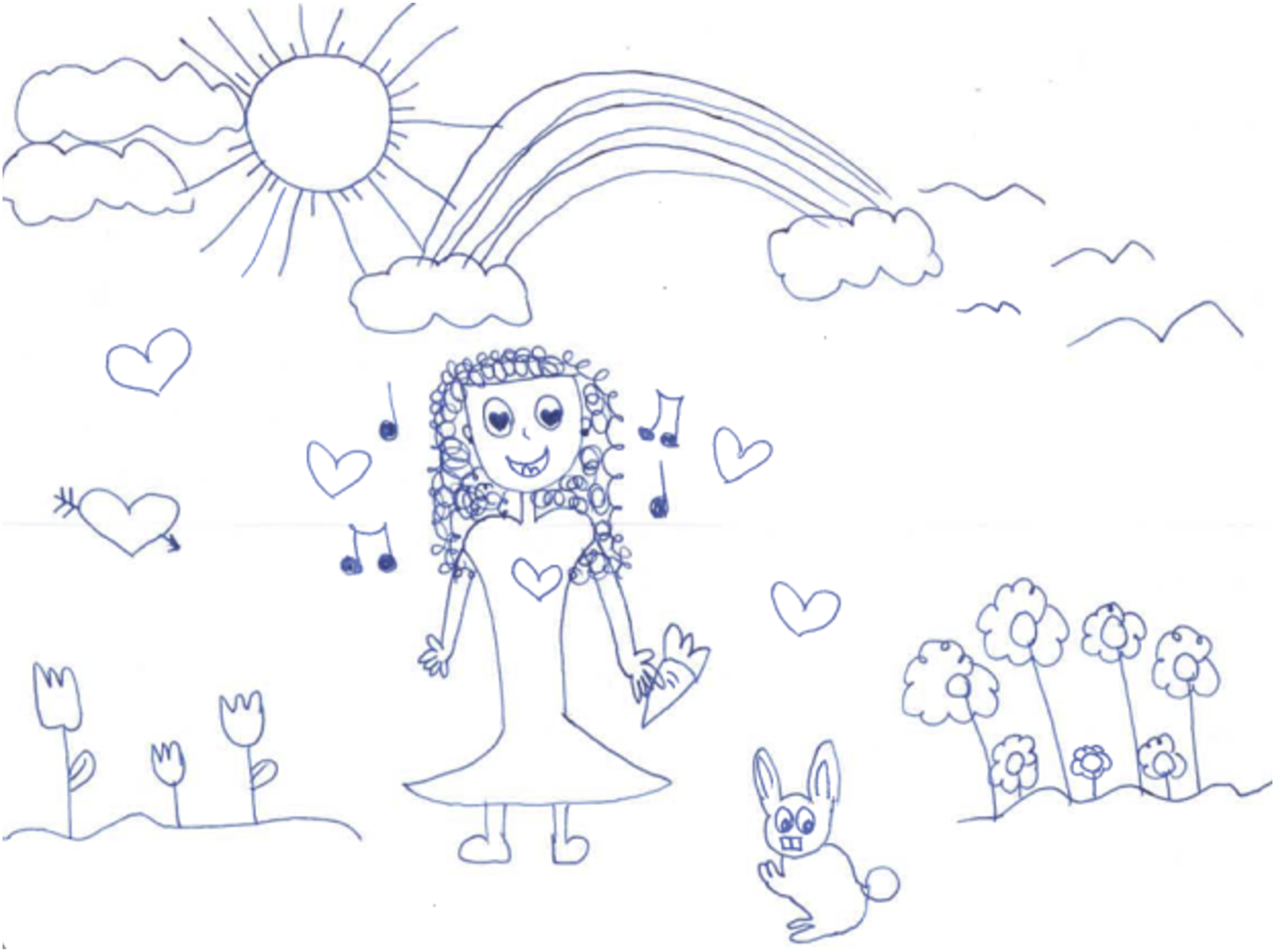

Furthermore, relationships are stereotyped, particularly in reference to childhood love and the typical “boogers” of childhood. The depictions suggest that childhood is a stage characterised by the flow of “love” in all aspects, and that children require meticulous attention to their personal hygiene from adults. This portrayal reflects a perception of childhood as a phase marked by fragility and dependency, where children are not viewed as autonomous and capable individuals.
This idealised relationship is further highlighted by the prominent symbols in all the compositions, especially those linked with emotions, such as the hearts (Figures 8 and 9). This implies that the students involved in the study view teachers as needing to be caring and affectionate towards their pupils. The belief that “everything is perfect in the infant classroom” endures, illustrated by calm children engrossed in desk activities (Figure 8), and affectionate children forming close bonds with their teacher (Figure 9), seemingly oblivious to the possible challenges that could arise in an educational environment. Teacher-student relationship. Idealised teacher.
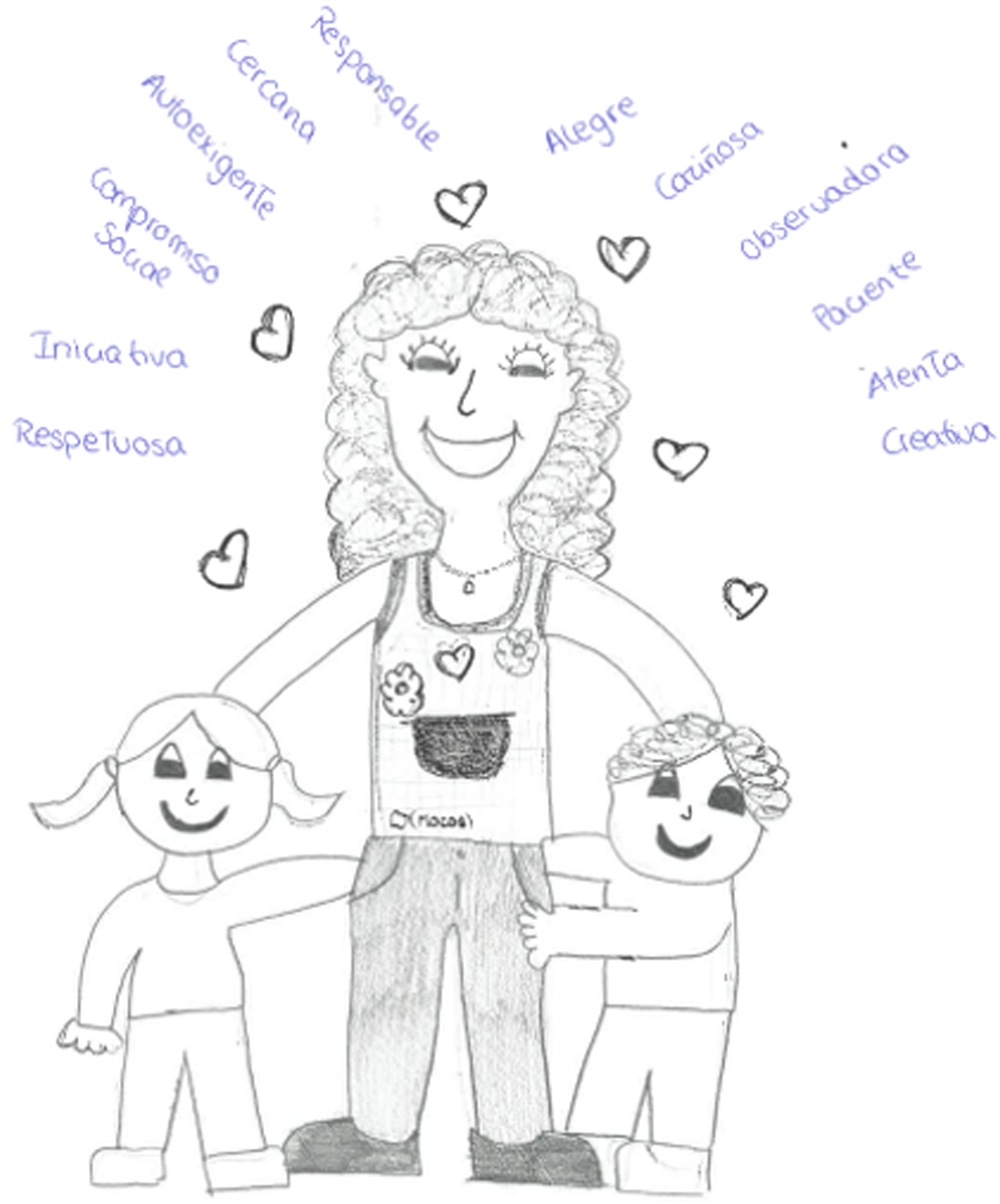
The following evidence clearly shows the evolution of a student’s practical knowledge and its reconstruction into practical knowledge. The first fragment shows a synthesis of the explanatory account contributed to reflective drawing: “As they are young children who are beginning their first stage of learning (Infant Education), I think that you have to be very attentive to them, help them whenever they encounter certain difficulties when carrying out an activity and show them a lot of affection and love (AR).”
The experience of Lesson Study (LS) prompted the students involved in the study to reconstruct their practical knowledge regarding the perception of childhood, as evidenced by the following instances: “I used to think that working with children was quite straightforward, given their sweetness. However, I’ve come to realise this is not the case. They experience their own emotions, each being unique individuals with their own circumstances, which can sometimes even test your patience. Despite being naturally calm, I’ve learnt this first-hand,” shared G.F. LV. “The reason I chose this profession was my fondness for children, and that fondness remains... However, my perspective has shifted. Previously, I viewed them as tender and adorable beings... Now, I see them as independent individuals, with whom I may share varying degrees of affinity,” reflected G.F. MP.
Divergence Between Theory and Action
When scrutinising the discursive level, a disparity emerges between the students’ verbal assertions and the implicit messages conveyed through their reflective drawings. In their narratives, they openly express the belief that teachers should serve as mentors, guides, advisors, and emotionally skilled professionals. This viewpoint resonates with the fundamental tenets delineated by Pérez Gómez (2012): a thirst for knowledge and a commitment to facilitating learning. Prospective Early Childhood Education educators affirm their intention to encourage experimentation, foster curiosity, and primarily, carefully observe educational processes to refine them. However, the illustrations depict the teacher as the central figure orchestrating these educational processes, which appear to revolve around the children faithfully carrying out the teacher’s directives. Figures 10 and 11 exemplify how the students strive to emulate the teacher, be it through their actions or even their physical appearance. Teacher imitation. Pupils as young adults.

The children present as mere imitators (Illustration 10), seemingly identifying themselves as miniature adults (Illustration 11). It appears that future educators are replicating the same image ingrained in them throughout their educational journey, perpetuating a notion of childhood defined by obedience. The concept of guiding and accompanying is blurred with directing activities, with the teacher positioned as the primary active agent rather than the children, who are still perceived as objects rather than active participants in the teaching-learning process. This suggests that future teachers may lack a certain level of confidence and assurance in their interactions with children, overlooking the multitude of factors involved in designing, implementing, and evaluating educational processes.
It is evident that teachers still wield authority and occupy a superior position within the educational dynamic, as one student suggests, “maintaining a distinction between work and personal life... occasionally, when they need to express anger or dissatisfaction, they will do so in front of their pupils, allowing them to witness the consequences from an early age” (AT). Thus, the onus remains on the child to conform to the teacher’s expectations.
Furthermore, students openly convey their perception of childhood as a period characterised by activity, play, freedom, and movement. They assert that children are independent, capable, and empowered individuals who should be afforded the autonomy to act and make decisions within educational settings. However, despite espousing this perspective, it is evident that they still uphold traditional lecture-based teaching methods, where children are expected to maintain silence, remain seated, and adhere to predetermined tasks assigned by the teacher. Moreover, there appears to be a lack of confidence in children’s abilities and a tendency towards overprotection, as evidenced by the following statements: “Children need us to repeat things over and over again.” (RN) “One more, but set a limit.” (CVl) “Speak clearly to parents and children.” (SM)
The experience enabled the students to gain insights into children’s capabilities, their learning journey, and to regard them as individuals with complete rights, as articulated by these students: “Although in theory we affirm that yes, children are capable, unconsciously we are always limiting them, because we think they are not going to be able to do it... it has not been until this experience that I have been able to see that they can, they have surprised me.” (G.F. VL). “At times, we tend to underestimate the abilities of the youngest children. It has been eye-opening to witness first-hand how mistaken we can be in assuming that a 3-year-old won’t manage to peel a banana, or that a 5-year-old will struggle to cut an apple independently. We often act as a hindrance to their developmental journey, either out of fear they might harm themselves or simply because we assume they’re incapable. In doing so, we inadvertently impede the physical and cognitive development of today's children, influenced by a societal norm where most families treat them with extreme caution,” reflected G.F. MP. “I’ve also come to understand that with children, you have to go with the flow. Not everything can be meticulously planned out, as we tend to impose limitations on them—thinking they can or cannot do certain things... Yet, if you truly listen to them, you'll realise they have a wealth of insights to offer,” remarked G.F. VS. “Children should be treated as great human beings, capable of doing great things, as they are at one of the most important stages of their lives, where they can show that potential, and teachers are responsible for helping them to develop these skills to the maximum, providing them with situations that they like and that are in accordance with their needs” (G.P. LP).
Teacher or Carer?
The portrayal of children as inherently immature beings with limited abilities, dictated by their age and needing to develop these abilities to progress within the educational system, is perpetuated not only in the Spanish curriculum but also in educational systems globally (Cantos & Paida, 2020). This concept has been internalised by future teachers throughout their educational journey and unconsciously persists, as evidenced throughout this study.
In subsequent images (Figures 12 and 13), the teacher adopts a caretaker role, displaying excessive protectiveness towards her pupils, cradling them in her arms as if they were infants, and showering them with affection. This reinforces the image of “a nurturing, compassionate teacher driven by vocation, treating children as small, delicate, and vulnerable beings” (LP). The idealisation of teacher-pupil relationships persists, characterised by a maternal perspective and excessive overprotection. Teacher as carer. Overprotection.

The participating students came to the realisation that the role of an early childhood teacher goes beyond that of a mere caregiver. Instead, they understood that they serve as guides and companions for the children, tasked with nurturing and supporting them throughout their learning journey: “One of the reasons I chose this career was because I envisioned myself caring for, looking after, and protecting children, as childhood holds great significance for me. However, I soon came to understand that while caring for them is essential, the role of a teacher extends far beyond that of a caregiver. A teacher is a guide, a mentor who fosters learning and encourages growth,” shared G.F. VL. “I used to think that the teacher should be an authority figure, but now I realise that the teacher should be a guide for the child, who is able to put herself at his level and give him the importance he requires because both the pupil learns with the teacher and vice versa.” (G.F. AR).
The role of the teacher as a competent professional, who must unite mind and heart, and who, as one student says, “is capable of facing the situations that may arise, the easiest and the most chaotic” (G.F. RA), i.e., they are becoming aware that “human beings are not thinking beings who feel, but feeling beings who think” (Pérez Gómez, 2019, p. 6), and that they have to show all of this in their teaching identity.
Educational Spaces
Despite the students’ assertions that they should strive to break away from traditional teaching methods and view all spaces within the school as educational, their depictions portray a stereotypical, conventional school environment. In these illustrations, emphasis is placed on elements such as blackboards, meticulously arranged furniture, academic posters adorning the walls, and children lined up neatly in rows, highlighting a sense of order and uniformity (Figures 14–20). Although some images depict educational settings beyond the traditional classroom, such as the playground, they still convey the same rigid and repetitive layout, characterised by a lack of dynamism and diversity. Organised classroom. Classwork. Assembly. Classroom activity. Daily activity. Classroom activity. Teaching-learning process.


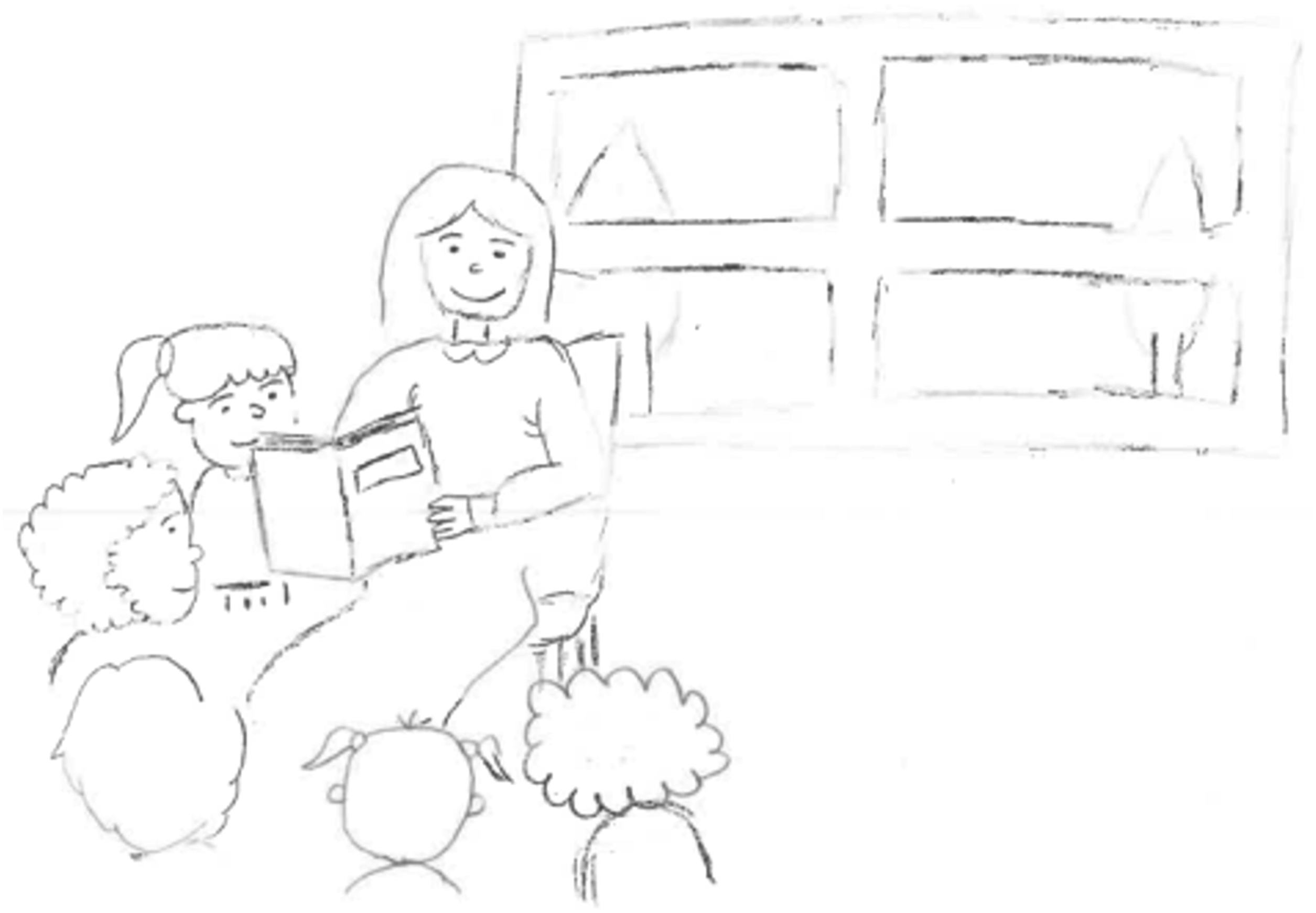
In certain instances, students convey through their illustrations the idea that knowledge should be a collaborative construction (Figures 21 and 22), rather than simply absorbing content, suggesting that learning can take place beyond the classroom walls. Knowledge as a collaborative process of construction. Knowledge as a shared construction.

Learning Outdoors
Likewise, a stereotypical image of the teacher is also depicted: a compassionate, caring, and nurturing figure, often shown with a book or storybook nearby. Her primary goal is described as “fostering the desire to learn, to inquire, and to experiment” (AQ), along with emphasising the importance of not only academic subjects but also the arts (AQ), while her stereotypical “ability to offer hugs” (CR) is emphasised. As mentioned earlier, students assert that teachers should possess emotional competence, yet refrain from becoming emotionally entangled to the point of compromising their personal lives. “She assists the pupils, but without carrying their burdens, maintaining a boundary between her personal and professional lives” (MM). However, this portrayal of the teacher may not accurately reflect the reality of education, as each educational setting is unique, with its own nuances, encompassing a broad spectrum of relationships and situations that may deviate from this idealised image.
Through LS, prospective early childhood education teachers have had the opportunity to explore educational moments and environments beyond the confines of the traditional classroom. They have engaged with everyday materials and opened their minds to educational scenarios beyond those envisioned within their existing practical knowledge: “We conducted our workshop outdoors, and it was a fantastic experience. It provided the children with freedom of movement, and we came to realise that learning can take place in various settings, not just within the confines of a classroom,” expressed G.F. EL.
Teaching Competencies
A more in-depth analysis of the narrative accounts provided by the study participants reveals that, in their opinion, the skills required for Early Childhood Education teachers are primarily socio-personal in nature, with technical-professional skills considered secondary (Bisquerra & Pérez, 2007). The most valued trait was empathy, closely followed by patience, affection, creativity, and responsibility. Vocation, cheerfulness, dynamism, and open-mindedness were also seen as crucial. Moreover, teachers were expected to be versatile, innovative, and hard-working to the same extent. Furthermore, they should possess strong listening skills, be skilled motivators, and exhibit sympathy, all while maintaining emotional balance and versatility. To a lesser extent, participants indicated that teachers should also demonstrate enthusiasm, tolerance, perseverance, and assertiveness. Overall, these skills were deemed essential by the study participants for effective teaching.
Regarding technical-professional skills, as previously mentioned, they are not as prominent in the students’ narratives, although they are evident in their visual representations. The most notable skills include organisational abilities, the capacity to foster a positive classroom atmosphere, dedication to and concern for students, effective communication skills—all of which are closely linked to socio-personal competencies. To a lesser extent, students also recognise skills such as adaptability, emotional intelligence, being a role model, valuing student input, conflict resolution, acting as a protective figure, being fair and cultured, and effective teaching. Upon comparing the narrative accounts with the visual illustrations, it becomes apparent that among all these skills, the ability to show affection and to organise the classroom are particularly highlighted.
Other trainees say that they already had adequate practical thinking skills before starting the training, but that the training has allowed them to further strengthen their practical thinking: It was clear to me that the role of a teacher is not only to teach and care for children. Now, I have realised that the pre-school stage, and therefore the teacher, is a very important element in the lives of these children (ZZ).
This same pupil, later in the discussion group, stated that “children should be left to experiment and discover on their own and should be helped only when necessary, not always when something is difficult for them" (G.F. ZZ). It can be seen how both the role of the teacher and the conception of her image of childhood have changed, crediting children with abilities that she did not previously identify.
In the discussion groups, the students have realised that the figure of the teacher should not be a rigid figure of authority, but that they should be a competent professional who educates, observes, allows their students to have freedom, and allows them to develop curiosity in a context that does not have to be exclusively the classroom. “I thought that the teacher’s role was to transmit content, teach the class, do some dynamic activity and go home, but I have realised that the teacher's role is to facilitate experiences so that they can develop.” (G.F. RM).
They have also become aware of the importance of both initial and in-service teacher training for their profession: “I have been able to observe the role of the teacher more closely and this has made me understand throughout this course how important and fundamental it is to train teachers correctly and to understand the conditions that govern their behaviour.” (G.F. AP).
Conclusions
Research of this nature allows for deeper exploration in social research by blending data production with data collection from subjective and intersubjective perspectives. In this study, both reflective drawing and narrative accounts have aided in comprehending the underlying meanings within the subconscious of aspiring Early Childhood Education teachers, engaging with the intersubjectivity of the participants. Through their training, they have been reconstructing this knowledge and shaping a practical mode of thinking, resulting in the cultivation of a strong professional identity crafted through collective construction.
The findings of this study have uncovered that after engaging in LS, the participating students have progressed from a technical comprehension of teaching to a more constructivist viewpoint. This shift in paradigm has reoriented the teaching-learning dynamic from teacher-centred to student-centred, prioritising the process over mere outcomes. As a result, children are no longer perceived as passive receptors of knowledge to be filled, but rather as active contributors in their own educational voyage, nurturing competence and autonomy.
Prior to the training experience, teacher-student relationships often carried an idealised tone, marked by an infantilised and stereotyped outlook rooted in ideals of empathy and affection. However, subsequent to this experience, students have gained a newfound understanding of the pivotal role of early childhood education as the bedrock of the educational journey, alongside the importance of robust teacher preparation to navigate this profession adeptly. In essence, early childhood education teachers are no longer solely perceived as caregivers confined to the classroom; rather, they are acknowledged as competent professionals capable of transforming any environment into a realm of learning. Consequently, they require comprehensive training to meet the evolving demands of the educational landscape. In essence, faculties of education must strive to cultivate reflective and proficient professionals, thus prioritising a robust educational curriculum to equip them for holistic educational endeavours, as exemplified in this experience.
Students have also acknowledged the discordance between their conscious intentions and their subconscious actions (Pozo et al., 2006), laying the groundwork for reflection and analysis of teaching practices (Gómez, 2019).
Conducting this type of study from a qualitative epistemological standpoint allows for a comprehensive understanding of students’ initial assumptions. This understanding informs decisions regarding the design and implementation of training proposals aimed at influencing and facilitating the transformation of those conceptions or practical knowledge deeply rooted in their memory. These assumptions are influenced by their autobiographical, academic, and personal history. Therefore, it is essential to employ strategies that foster students' awareness of their interpretive frameworks. Through this process, future early childhood education teachers can evolve into educational professionals who actively contribute to their students’ development, thereby ensuring the provision of quality education.
Footnotes
Declaration of Conflicting Interests
The author(s) declared no potential conflicts of interest with respect to the research, authorship, and/or publication of this article.
Funding
The author(s) received no financial support for the research, authorship, and/or publication of this article.
