



Abstract
Higher education institutions often stress extracurricular programs enhance the moral development experienced within college. Within athletics, athlete's morality is tied to their actions, which are frequently recognized as either sportspersonlike or unsportspersonlike. Instances of unsportspersonlike behaviors are often covered across the media, enhancing the belief that athletes need to act out to gain recognition. This study assesses the impact that coaching behaviors have on the development of sportspersonship behaviors in college athletes and evaluates the impact that those coaching behaviors have on students’ intent to return to the institution. The results of the study indicate that within college athletics, athletes perceive five coaching behaviors (emphasizes, instructs, models, rewards, and punishes) that directly relate to the development of sportspersonship and that those behaviors do impact students intent to return to the institution.
Introduction
The moral development of college students has been a concern for college administrators since the beginning of the American Higher Education system (Patton et al., 2016; Mayhew et al., 2016). Within sports, an athlete's morality is frequently tied to their actions, which are characterized as either sportspersonlike or unsportspersonlike (Bolter & Weiss, 2013). Participation in sport activities, is one of the most popular out-of-classroom activities that college students engage in, with over 2 million students participating annually (Pennington, 2008; “student-athletes”, n.d.). Prior research indicates that coaches have a considerable impact on their athlete's behaviors, moral development (sportspersonship), and motivations (Caron et al., 2018; Horn, 2002; Vella et al., 2013).
Due to the number of hours spent together in practice and games, researchers have investigated the impact that coaches’ behaviors have on the character development of their athletes (Beldon & Walker, 2022; Caron et al., 2018; Horn, 2002). Bolter and Kipp (2018) found that coaches who modeled good sportspersonship had an increase in prosocial behaviors and coaches that punished poor sportspersonship behaviors had fewer antisocial behaviors, which both are indicative of overall sportspersonship. Furthermore, prior research utilizing the Sportsmanship Coaching Behaviors Scale (SCBS) found additional specific coaching behaviors within youth sports that foster the development of sportspersonship within athletes (Beldon & Walker, 2022; Bolter & Kipp, 2018; Bolter et al., 2018; Bolter & Weiss, 2013). Recently, Beldon et al. (2022) compared varsity and club athletes on their perceptions of coaching behaviors and their perception that coaches care about sportspersonship behaviors, showcasing that sportspersonship is still a desired outcome within collegiate sports. In collegiate sports, sportspersonship, or sportsmanship as historically referenced, as athletes, coaches, game officials, and fans displaying behaviors based on values of being respect, civility, and integrity (NCAA, 1997; NIRSA Communications, 2015).
Literature Review
For several decades, researchers examined how coaches influence their athletes through their coaching behaviors (Horn, 2002). Despite the depth of research conducted on coaching behaviors, researchers have focused on the general impact of coaching behaviors on student-athletes and the development of sportspersonship separately. Little research has been done to assess the role that college coaches play in the development of student-athlete's sportspersonship behaviors (Beldon et al., 2022).
The Impact of Coaching Behaviors on College Student-Athletes
Within the sports industry, coaches acknowledge the need to approach coaching from a holistic mindset (Cassidy, 2013). The holistic approach to coaching is one where a coach does not focus solely on the sport and skills necessary for the sport, rather they approach their athletes in a holistic form of coaching to aid athletes in all parts of their life. Connolly (2017) found that successful coaches utilize observational learning techniques for athletes to “learn appropriate behaviors from individuals who model good behavior” (p.2). Connolly (2017) highlighted that coaches who utilize a holistic approach to the development of their athletes, have the greatest impact through modeling desired behaviors, as athletes observe those behaviors and mimic those behaviors. Coaches have been recognized as one of the most important models within the sports system, because of their legitimate authority over athletes (Yukhymenko-Lescroart et al., 2007). This legitimate authority extends for coaches beyond the playing surface because they are responsible for laying the foundation for acceptable ethical behaviors throughout the organization (Doherty & Johnson, 2001). Numerous studies have acknowledged that ethical behavior development is a necessary outcome for athletes within collegiate sports programs (Beldon & Walker, 2022; Doherty & Johnson, 2001; Putler & Wolfe, 1999; Trail & Chelladurai, 2000).
Researchers have set out to gain an understanding of how coach's actions affect the development of athlete's morals through sportspersonship. Bolter and Weiss (2012) developed a survey instrument, which assesses the impact that various coaching behaviors have on an athlete's sportspersonship development. The Sportsmanship Coaching Behaviors Scale (SCBS) was developed using an extensive literature review, focus groups, expert panel reviews, and a pilot study. Historically, the SCBS includes 24 items that evaluate six common coaching behaviors that foster sportspersonship development. The six coaching behaviors that are assessed through the SCBS are a) modeling good sportspersonship, b) punishing athletes for poor sportspersonship, c) instructing good sportspersonship, d) setting expectations for good sportspersonship, e) rewarding good sportspersonship, and f) emphasizing being a good sport (Bolter & Kipp, 2018; Bolter et al., 2018). However, subsequent validation of the SCBS instrument has led to the removal of the setting expectations coaching behavior due to the multicollinearity within the survey, leaving the SCBS to assess the five remaining coaching behaviors (Beldon & Walker, 2022; Bolter et al., 2018; Bolter & Kipp, 2018; Bolter & Weiss, 2013).
Currently, the SCBS is validated as a five-factor scale that evaluates the coaching behaviors’ influence on developing sportspersonship in youth athletes (Bolter & Kipp, 2018), youth sport coaches and physical education teachers (Bolter et al., 2018), and parents (Beldon & Walker, 2019, 2022). Furthermore, Bolter and colleagues (Bolter & Kipp, 2018; Bolter et al., 2018; Bolter & Weiss, 2013) found that the behaviors that are assessed through the SCBS are also connected to the development of prosocial and antisocial behaviors towards both an athletes’ teammates and their opponents.
Sportspersonship in College
Regardless of the level of sports competition, there is an inherent expectation that all individuals involved in the sport will act in a sportspersonlike way (Beldon et al., 2022; Schwab et al., 2010). Despite this expectation, athletes’ views on sportspersonship can vary based on their sport background. Within college sports, little research has been conducted assessing coaches and sportspersonnship development (Beldon et al., 2022; Beyer & Hannah, 2000). Prior research has found that there is a difference in ethical values based on student involvement and years in college (Preist et al., 1999). Regarding sportspersonship, Kampf (2006) found a difference in behaviors displayed between season-type (regular season vs post-season), with post-season play having more instances of bad behaviors than the regular season. Recently, Beldon et al. (2022) assessed the prevalence of sportspersonship development coaching behaviors across different collegiate sports competition types (varsity and intramural) and found that varsity athletes perceived the behaviors as more predictive that their coach cares that they act appropriately. While Beldon et al. (2022) found differences between collegiate sporting type, this study seeks to identify the overall impact coaching sportspersonship behaviors have on student retention across all student-athletes.
Retention of Students
Student retention is arguably one of the primary goals within higher education institutions (Renn & Reason, 2013). There are many reasons why students may stop going to an institution, ranging from academic performance to students own personal reasoning (Aljohani, 2016). For decades researchers have been studying student retention and persistence (Renn & Reason, 2013).
Due to student-athletes participation in organized sports, college athletes have unique experiences that impact an institutions retention of those students (Berg et al., 2021). Recently, researchers have started to separate athletes from the rest of the student population (Berg et al., 2021; Le Crom et al., 2009; Weiss & Robinson, 2013). Researchers have found that student that participate in any form of organized sports program are more likely to graduate than students not enrolled in a sport program (Kampf & Teske, 2013; NCAA, 2022). Weiss and Robinson (2013) found several unique factors that contribute to student-athletes retention or withdrawal from an institution, including relationship with coaches, player development, satisfaction with the sport program, and personal reasons.
Tinto's (1993) Institutional Departure Model is one of the most popular theoretical models employed to understand student departure from an institution. During a student's time in college, they engage in a continual and interactive process during which they evaluate how their values align with the institution (Renn & Reason, 2013). Tinto's (1993) Institutional Departure Model starts before students arrive on campus, and evaluates their pre-entry attributes which consists of familial background, skills and abilities, and prior schooling experiences. These pre-entry attributes work together to form the students’ goals and commitments of their college experiences. These goals and commitments then get broken up into one of the two systems identified within an institution, academic and social. For many students, a main source of social experiences at an institution is through organized sports programs.
Tinto's model identifies that one of the biggest reasons a student departs from an institution is because of a lack of connection between their educational and social goals and commitments and their experiences during their time in college. In fact, Braxton et al. (2001) found that the more socially integrated a student was at an institution, the more committed a student would be to their institution and would therefore stay at that institution. Seeing as sportspersonship behaviors are a common expectation amongst sport participants throughout competition levels, it is expected that coaches that encourage their athletes to act in a sportsmanlike way would have greater retention of athletes.
Purpose
The overall purpose of this study is to identify the relationship that coaching behaviors of sportspersonship has on college student's intent to return to the institution. To assess the impact that the behaviors have on student retention, we first must confirm that the shortened SCBS instrument for college athletes is a valid instrument for evaluating the coaching behaviors used to emphasize the development of sportspersonship behaviors. After evaluating the validity of the scale, we will evaluate the relationship between the displaying of those behaviors and students’ intent to return to the institution. The specific research questions that will guide this study are:
What factors construct the development of sportspersonship through coaching behaviors from the responses of all college student athletes? To what extent do the identified coaching behaviors influence intent to return to the institution?
By answering these questions, we seek to identify the extent that coaching behaviors have on the development of sportspersonship in college sport participants, and what impact those behaviors have on the student's intent to return to the institution.
Methods
Data was collected from 180 participants from the researched institution that participated in an organized sports competition. The collected sample was not intended to be reflective of only varsity or club sports; rather the sample is designed to examine collegiate student-athletes that participate in any coach-directed organized sports competition. All students were enrolled at a large, public, flagship state institution that is recognized as minority serving and competes at the highest levels amongst NCAA and club sports competitions.
Sample
Five hundred students were identified as either club or varsity sport athletes during the 2019–2020 academic school year, and 180 participants returned the completed survey instruments, a response rate of 36%. Students were enrolled at a large public research-focused institution that had an overall enrollment of over 36,000 students at the time of the study. Participants ages ranged from 18 to over 23 years old, with most respondents identifying between 20 and 21 years old (n = 78, 47.6%). The sample consisted mostly of female (n = 98) participants. The most identified race within the respondents, identified as white participants (n = 73).
Data Collection
After obtaining consent through the researchers’ institutional review board, data was collected through a mixture of physical and electronic versions of the survey instrument. Participants were recruited through QR codes posted around the school campus, word of mouth, and in-person announcements made during practices. In-person announcements were more effective at recruiting participants, accounting for 110 (61%) of the completed survey.
Instrument
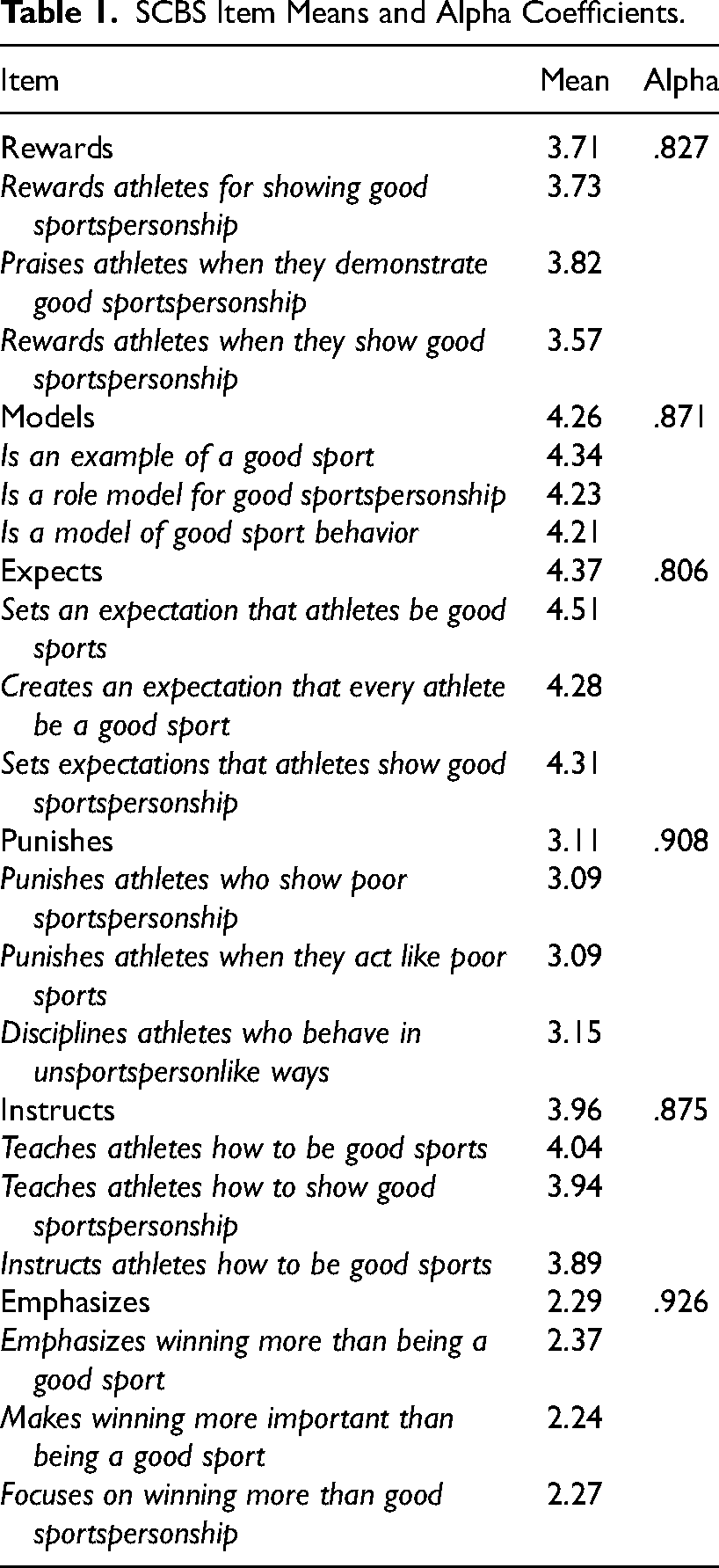
Participants completed a 30-question survey instrument with 15 questions from the Sportsmanship Coaching Behaviors Scale (SCBS; Beldon & Walker, 2022; Beldon et al., 2022), that inquired about their experiences with their coaches, questions relating to other sport experiences and demographic variables. The 15-questions inquired about their experiences with the five different coaching behaviors associated with the development of sportspersonship (Beldon & Walker, 2022; Bolter et al., 2018; Bolter & Kipp, 2018). The five coaching behaviors assessed were emphasizing being a good sport, instructing how to be a good sport, modeling good sportspersonship, rewarding good sportspersonship, and punishing poor sportspersonship. Prior research has validated these behaviors within youth sports with alpha coefficients ranging from .81 to .94 (Beldon & Walker, 2022; Bolter et al., 2018; Bolter & Kipp, 2018; Bolter & Weiss, 2015). An additional item was added asking about students’ intent to return to the institution and continue playing, followed by demographic variables such as sport environment (club or varsity), sport identification, age, gender, ethnicity (Table 1).
SCBS Item Means and Alpha Coefficients.
Data Analysis
To address this study's purpose, data was first input into IBM SPSS 25.0 to assess data normality. After confirming normality, to answer our first research question, data was analyzed via a Confirmatory Factor Analysis (CFA) technique in IBM AMOS Software. To answer our second research question, a multiple regression analysis was conducted within IBM SPSS 25.0 software. Utilizing similar approaches to analyses utilizing the SCSB framework, factor composite scores were utilized when conducting the regression analysis (Beldon & Walker, 2022; Bolter & Kipp, 2018; Bolter & Weiss, 2013). The composite factor scores were simultaneously regressed to the intention to return variable.
After completing the standard multiple regression analysis, we computed the structure coefficient and the squared structure coefficients to assess each factors’ independent contribution to predicting the dependent variable. Structure coefficients were evaluated in combination with the beta weights, to address each factors’ unique contribution to predict the dependent variable, due to the predictor variables being moderately correlated amongst each other (Yeatts et al., 2017). Structure coefficients were calculated as the Pearson's correlation between each predictor variable and the predicted dependent variable (Yeatts et al., 2017). Squared structure coefficients identify each items unique contribution to the overall effect observed in the multiple regression analysis and is calculated by squaring the structure coefficient.
Results
Confirmatory Factor Analysis
Similar to prior confirmatory factor analyses utilizing the SCBS framework (Beldon & Walker, 2022; Bolter & Kipp, 2018, Bolter et al., 2018; Bolter & Weiss, 2012, 2013), the CFA of this study consists of 5 latent variables that are covaried amongst each other and are equally formed from the items with the SCBS. Using the entire collected sample (n = 180), the five-factor confirmatory factor model revealed a good fitting model X2 (80) = 128.066, p = .001, CFI = .98, TLI = .97, RMSEA = .06 (CI: .04-.06), SRMR = .04. All factor loadings were statistically significant (p < .05) and ranged from .78 to .99. Subscale alpha coefficients proved to be acceptable across all factors with Rewards α= .84, Models α= .86, Punishes α= 91, Instructs α= .88, and Emphasis α= .92. With the five-factor model holding acceptable model fit and all subscale alpha coefficients proving to be high, the five-factor model was adopted for subsequent analysis (Figure 1). Table 1 indicates the correlation matrix of the five latent factor model Table 2.
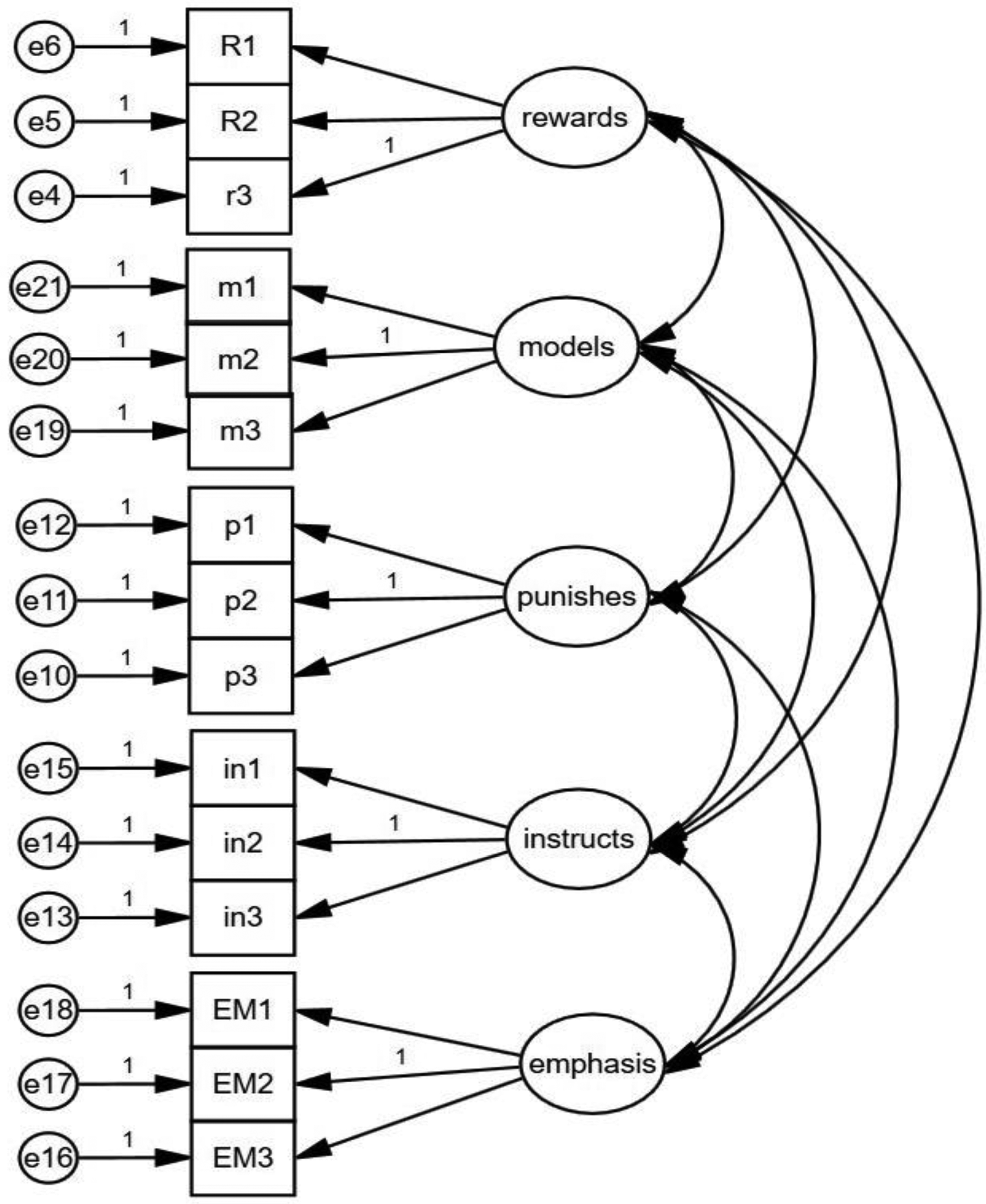
Proposed model for the SCBS-college students.
Five Factor SCBS Covariance Matrix.
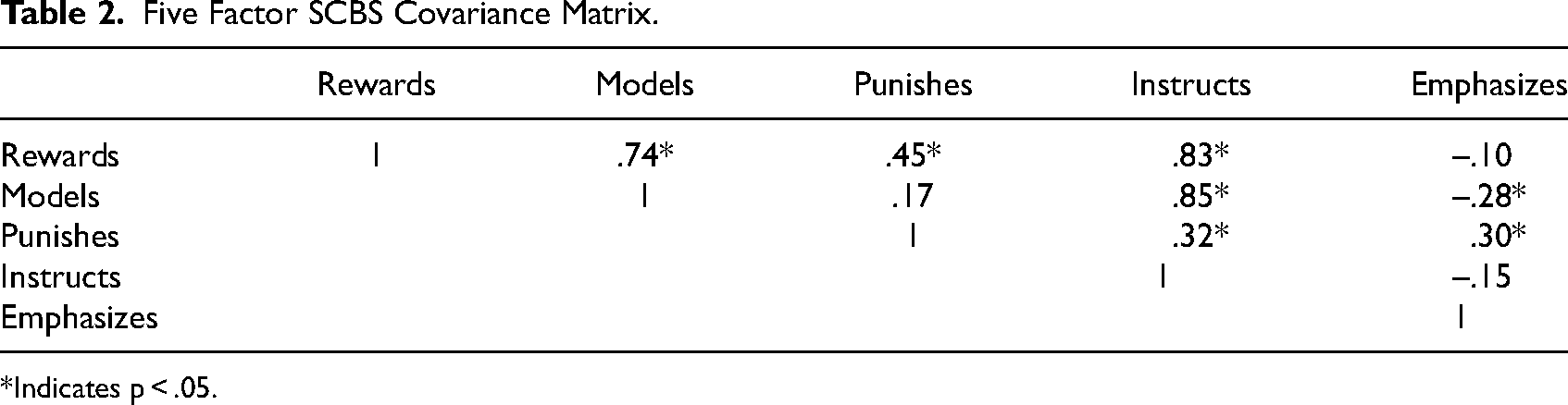
Indicates p < .05.
Multiple Regression
A simultaneous regression analysis was conducted to evaluate the impact that the five identified coaching behaviors have on students’ intent to return to the institution. The result of the regression analysis was statistically significant at α=.05, F (5,49) = 2.926, p = .023, with a small effect size of R2=.250, and an adjusted R2=.164. Upon inspection of item beta weights, only the emphasizes and models coaching behaviors were statistically significant predictors, both which were negative. Evaluation of structure coefficients identified that the model's behavior had the most unique contribution to the observed effect, by contributing 48.6% of the observed effect by itself. The coaching behavior of rewarding athletes was the only other predictor variable to obtain greater than 10% of the observed effect by itself Table 3.
Regression Results for Predicting Intention to Return.
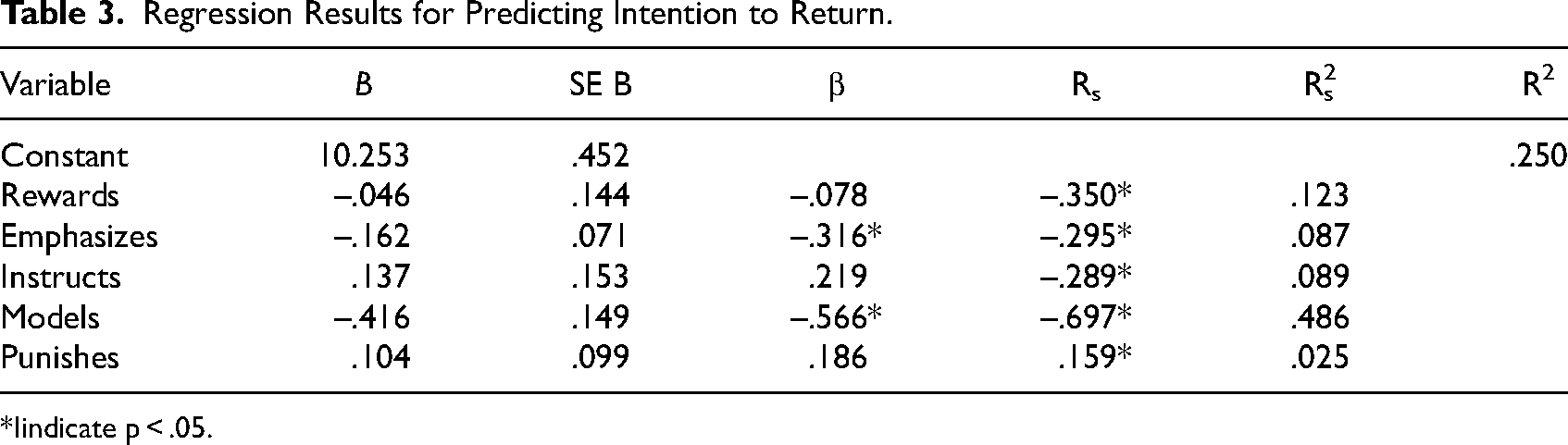
Iindicate p < .05.
Discussion
The overall purpose of this study is to identify the relationship between college athletes’ experiences with different coaching behaviors, the impact those behaviors have on developing sportspersonship behaviors, and the impact those behaviors have on student retention. To address the purpose of the study, a confirmatory factor analysis was conducted to validate the SCBS within college athletes, and a simultaneous multiple regression analysis was conducted to identify the relationship between the existence of sportspersonship developing coaching behaviors and students’ intention to return to the university. This study validated the shortened SCBS instrument is acceptable for evaluating coaching behaviors associated to the development of sportspersonship. Additionally, we found that the existence of those coaching behaviors is mildly associated to students’ intention to return to an institution.
Validating Coaching Behavior Structure
The results of the present study revealed that the proposed 15-item, 5-factor SCBS instrument performed well in assessing the multidimensional construct of developing sportspersonship in college athletes. Particularly, the results of the CFA revealed that the reduced version of the SCBS maintained factorial validity and internal consistency within a new sample of college student-athletes. Additionally, the Cronbach alphas and factor loading coefficients identified were relatively consistent with previous validations of the SCBS instrument in youth athletes (Bolter & Kipp, 2018; Bolter et al., 2018; Bolter & Weiss, 2013) and youth athlete parents (Beldon & Walker, 2022). The result from this study further extends prior research by providing further reliability and validity for the scale within college student athletes. With college coaches identifying that sportspersonship is based on the surrounding environment (Beller & Stoll, 1993), the findings indicate that the presented reduced version of the SCBS, is acceptable and valid to measure the impact that coaching behaviors have on the development of college student's character.
Although Bolter and colleagues found a better statistical model fit within their studies of youth athletes (Bolter & Kipp, 2018; Bolter & Weiss, 2013), the five-factor model identified in this study had better model-fit than the five-factor model originally evaluated for use in parents of youth athletes (Beldon & Walker, 2022). While Beldon and Walker's (2022) analysis found that the five-factor SCBS model is a valid measure within parents of youth athletes, our results indicated that statistically, the model better fits within college student athletes. Thus, indicating that although college student athletes are often recognized as young adults, they still perceive coaching behaviors similarly to youth athletes. Therefore, the SCBS model is best used on athletes and coaches than on spectators of sport. The similarities in model fit and factor loading values between college athletes and youth athletes could be explained by the fact that they are directly involved with the coach on a day-to-day basis, whereas parents only view coaches’ behaviors from far away when they attend practices and games. Despite the structural differences between youth sports and collegiate sports participants, where collegiate sports competitions are more focused on winning rather than development and fun, collegiate athletes still perceive their coaches’ behaviors similarly to youth athletes. Future researchers should continue to use a further reduced version of the SCBS when evaluating college athletes and should continue to utilize the 15-item survey instrument.
Predicting Intention to Return
When predicting students’ intention to return to an institution, the regression model reveled a significant moderate effect size (R2 = .250) that decreased slightly when correcting for theoretical sampling error (Adj. R2 = .164). Indicating that coaches’ behaviors towards developing sportspersonship behaviors are moderately related towards students’ intention to return to the institution. Overall, the standardized weights and structure coefficients clearly indicated that coaches who model sportspersonship behaviors was the most predictive in retaining students at the institution. While the standardized weight and structure coefficient of punishing students for unsportspersonlike behaviors was a poor predictor of their intention to return.
Findings from this study reveal a direct relationship between coaching behaviors towards sportspersonship and students’ intention to return. It has been reported that coaches who successfully utilize a holistic approach to their behaviors, do so by modeling their desired behaviors (Connolly, 2017). Bolter and Weiss (2012) identified modeling behaviors as one of the most powerful mechanisms for athletes to learn about desired sportspersonship behaviors. Due to the amount of time that athletes spend with their coaches and the fact that coaches have a legitimate authority over their athletes and teams, coaches are some of the most significant models in the lives of their athletes (Yukhymenko-Lescroart et al., 2017). Connolly (2017) identified that observational learning is a vital learning technique for athletes to acquire the desired behaviors, which is done through the modeling of appropriate behaviors by their coaches. Therefore, the behaviors that coach's model throughout practices and games will affect how their athletes behave, because they witness those behaviors regularly.
Since sportspersonship is an expectation of college students (Beldon et al., 2022), results here indicate that coaches who model desired behaviors are matching the goals and commitments that students are creating upon entering college and therefore maximizing the likelihood that the students will continue through college. The fact that coaching behaviors are related to intention to return, supports Tinto's 1993 Institutional Departure Model and establishes a connection between the importance of sportspersonship development, coaching behaviors, and intention to return. The establishment of this connection illustrates that athletes are aware of what their coach is focusing on and how their coach wants them to act ethically and morally, and as a result, influences the athlete's intention to stay at the institution, because of those behaviors. For example, a basketball player may realize that their coach may oppose helping a player up if they commit a hard foul and the expectation that they ignore a player on the court could deter them from wanting to continue to play at the school and even be affiliated with the school. Through this recognition of coaches’ behaviors, athletes are now analyzing their ethics and moral alignments with the institution and weighing that connection in decided whether or not to stay at the school.
Implications
Given that model fit was acceptable, and factor and reliability scores were reliable, this reduced version of the SCBS provides sport administrators a simpler and less invasive instrument to evaluate athletes’ perceptions of their coach. Sport administrators can use this instrument to gain feedback about their coaches from athletes and utilize the responses within end-of-year evaluations. Specifically, varsity sport administrators can use this with students who indicate their intention to transfer or drop-out of college to see how a coach's behaviors may have factored into the decision. Recreational sport administrators could also use the survey instrument to evaluate if the students are perceiving their coach is properly focusing on modeling sportspersonship. Additionally, coaching seminars can utilize the findings to enhance a coach's understanding of the best behaviors to maximize holistic development and student retention.
Limitations
This study is not without limitations. Most notably, the sample has limited generalizability due to data collection at one institution, therefore future researchers should seek to replicate the study at multiple institutions to compare different sport competition levels. Additionally, similar to previous SCBS-based studies (Beldon & Walker, 2022; Bolter & Kipp, 2018; Bolter et al., 2018; Bolter & Weiss, 2013) this study did not factor in athlete or coach gender within the model, nor did the study factor in athlete or coach race. Future researchers should seek to purposely collect data to analyze the role these demographics play in the model.
Conclusions
Overall, this study validates the shortened SCBS instrument for usage within college students and indicates a direct relationship amongst the coaching of sportspersonship and students’ intention to return to the institution. Therefore, indicating that the development of sportspersonship is important to collegiate student athletes and should not be overlooked.
Footnotes
Declaration of Conflicting Interests
The authors declared no potential conflicts of interest with respect to the research, authorship, and/or publication of this article.
Funding
The authors received no financial support for the research, authorship, and/or publication of this article.
