




Abstract
The aim of study was to review studies on the reusability of filter respirators and to evaluate their quantitative fit with respect to different respirator models and decontamination methods. We planned a search strategy according to the PICOT approach. We to find relevant publications, searched the electronic databases comprising Web of Science, Scopus and PubMed with appropriate keywords .After searching through 648 records in the databases, we found that 36 original studies met our eligibility criteria. Findings indicated that the UV, VHP , dry heat , and moist heat were the most investigated decontamination methods across included studies. The selected studies assessed 60 different respirator models. Results suggest some decontamination methods may work better on a certain model of respirator. However, we found that respirators decontaminated with VHP (also AHP and IHP, but based on limited studies), moist heat, and EtO or PAF (also based on limited studies) were the best performance in the fit factor. Furthermore, we observed some variation in fit factor between respirators and/or within individuals using dry heat, microwave, UV, ethanol immersion, MBL, and CIO2 methods. On the other hand, upon decontaminating the respirator models using autoclave, HPGP, VHP + O3, and LTSF methods, we found the fit performance unacceptable. Based on the change in fit performance, this study suggests that VHP and moist heat are the most promising ways to clean respirators for reuse. However, to account for individual differences, more research is necessary, particularly in clinical field studies with a larger number of participants.
Keywords
Introduction
During the COVID-19 pandemic, research into masks and medical systems revealed that their production was severely strained, leading to a shortage of personal protective equipment.1,2 The World Health Organization justified that many healthcare facilities worldwide do not have a consistent supply of N95 FFRs or FFP2 respirators that have been certified by the National Institute for Occupational Safety and Health (NIOSH). 3 In this instance, the WHO and other organizations,4,5 including The Centres for Disease Control and Prevention (CDC), 6 CDC-NIOSH, 7 The U.S. Food and Drug Administration (FDA-EUAs), 8 FDA-CDC, 9 and the other expert groups10,11 have created plans to preserve FFRs in order to protect the health of frontline health care workers (HCWs), One practical solution during the mask shortage was to disinfect and reuse disposable N95/FFP2 respirator masks. The CDC has provided guidelines for decontaminating conventionally single-use FFRs. 12 These guidelines state that any method used must not impair respirator functions, such as filtration and fit performance, inactivate bacteria and viruses, and have off-gassing of decontamination chemicals below the allowable range. To date, some physical and chemical decontamination techniques have been studied to determine the most promising approaches for reprocessing respirators.13–26 These techniques include heat-based techniques, electromagnetic fields (EMFs)-based techniques, hydrogen peroxide (HP)-based techniques, and others (ethanol, EtO, PAF, VHP+O3, , etc.). Recent research has emphasized the significance of fit performance, even if these early investigations concentrated on the germicidal attenuation and the filtrating effectiveness of the reprocessed respirators.27–30 The respirators’ fit performance can be evaluated in some ways, including manikin fit testing using a realistic manikin by NIOSH/National Personal Protective Technology Laboratory (NPPTL) or qualitatively/quantitatively by Occupational Safety and Health Administration (OSHA) guidelines 1910.134.31,32 Unlike qualitative fit testing, which is based on the user’s subjective assessment, quantitative fit testing provides a numerical measure of the degree of mask adhesion to the user’s face, called the fit factor, and provides an objective measure of facial fit. Furthermore, quantitative methods are suitable for all disposable and reusable half-face masks and full-face masks, while qualitative testing does not apply to full-face masks. Finally, Because of its dependability and sensitivity to even the smallest leaks, the quantitatively fit performance attracted greater attention among the fit test methodologies. 33 The efficiency of various decontamination techniques for reprocessing respirators has been examined in a number of review articles thus far.13,15,18–22 These researches primarily compared the germicidal attenuation power of the various decontamination techniques and examined how they affected respirator function, particularly filter efficiency. While fit performance was taken into account in the other research, a particular kind of decontamination technique—such as UV,14,16,34,35 heat-based techniques,36,37 or HP-based techniques38,39 was examined. Additionally, the majority of pertinent investigations were published after 202027–30,40–59 that did not into account in these review studies. Additionally, recent published studies used a quantitatively fit testing that has more sensitive. Accordingly, we evaluated the existing scientific literature in this review in order to investigate applicability of reprocessed filtering facepiece respirators for reuse in terms of quantitatively fit testing with emphasis on decontamination methods and respirator models.
Methods
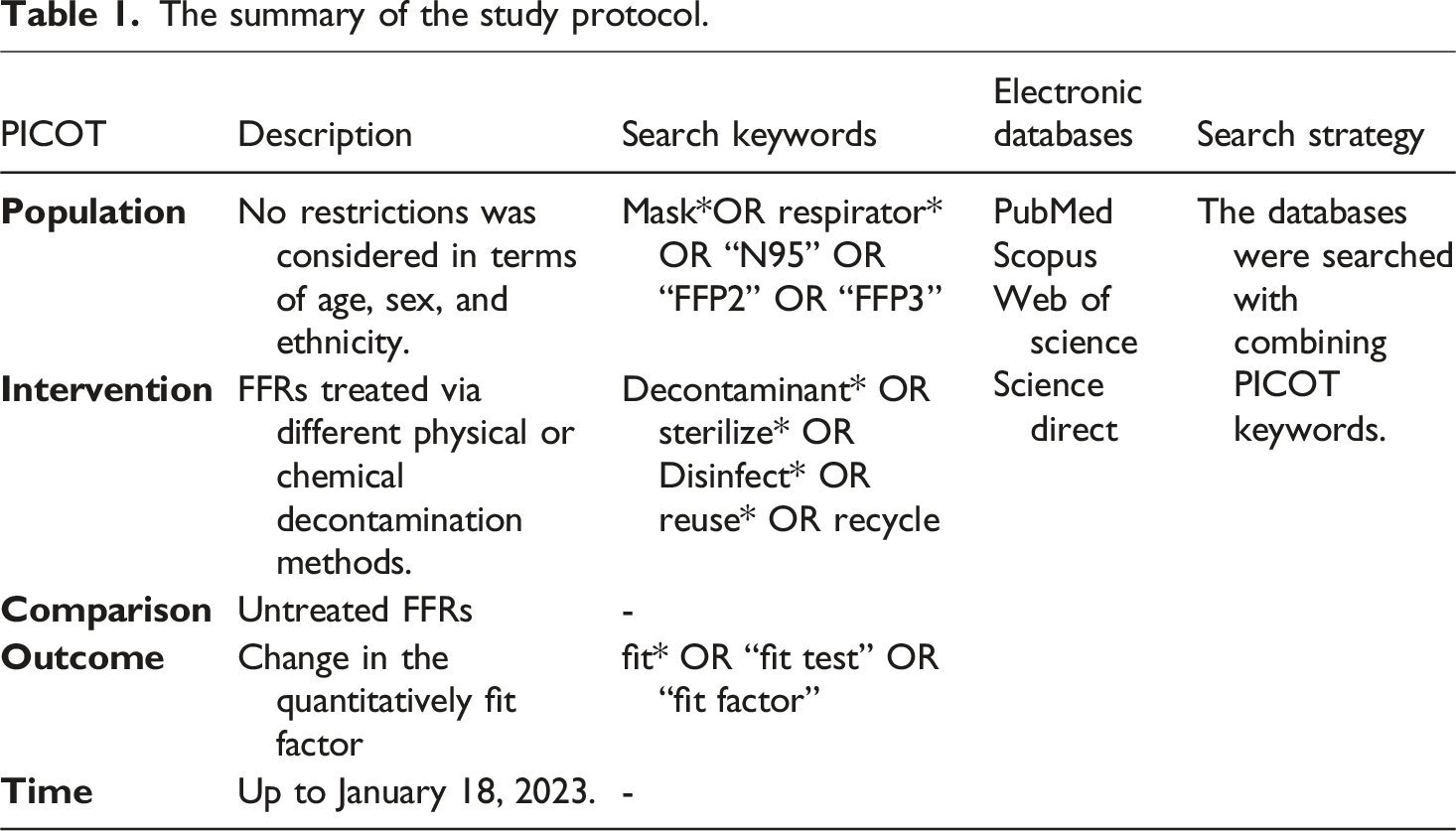
Search strategy
The summary of the study protocol.
Study selection
Figure 1 shows the flow chart of the selected studies. In this study, all studies that investigated the effect of different disinfection methods on the proper performance of processed respirators (inclusion criteria) were reviewed. The initial number of studies retrieved using the aforementioned keywords was 648, and 36 articles were finally reviewed according to the specified inclusion criteria. We examined the titles and abstracts of the records retrieved from the specified databases after removing duplicate entries. Then, to obtain the final articles for review, review articles, editorials, and letters to the editor, conference papers, and reports were excluded from the present study. Also, given that translating non-English articles can be challenging, that the main meanings or specific details of studies may be mistranslated, and that non-English articles are often stored in limited scientific databases that are difficult for international researchers to access, only English articles were reviewed in the present study. Also, no time limit was imposed on this study. The full text of the selected records was then obtained. After thorough analysis, we excluded studies that did not report the effect of disinfection methods on the proper function of respirators. In addition, studies that used qualitative or quantitative mannequin fit tests to assess the proper function of respirators were excluded. In addition, we reviewed existing research references to identify any studies that may not have been found through searching electronic databases. The flow diagram related to select studies.
Data collection
The summary characteristics of the included studies.

Study synthesis process
Decontamination methods
The effectiveness category of decontamination methods according to the respirator models.

N, number of decontamination methods; Green color, the effectiveness category 1; Orange color, the effectiveness category 2, and red color, the effectiveness category 3.
Physical methods
(1) (2)
Chemical methods
(1) (2)
The fit performance of respirators
As indicated in Table 3 and supplemental figures, we initially categorized the included studies by respirator model to examine the impact of various cleaning procedures on the respirators. Subsequently, we categorized the research into each respirator type based on the decontamination procedures employed. The consensus among studies was evaluated on the alteration in the fit factor for the treated respirators. Ultimately, based on the agreement evaluations and the fit testing outcomes, we established an efficacy category as follows:
Category 1 (high effectiveness)
All examined studies for a particular respirator model demonstrated a consistent outcome (strong concordance) with satisfactory fit performance (fit factor > 100).
Category 2 (moderate to substantial)
There was moderate to substantial concordance among the investigations. While a limited number of research indicated considerable inter-individual variability (with an average fit factor over 100), the majority of studies presented a consistent outcome demonstrating acceptable fit performance (fit factor greater than 100).
Category 3 (low to medium effectiveness)
The studies exhibited moderate to low consensus. Most research indicated an undesirable alteration in fit performance (fit factor < 100), however, a few studies noted inter-individual variability (average fit factor > 100).
We also examined the overall efficacy of decontamination among the studied respirator types. We analyzed the inter-respirator variability associated with each decontamination procedure. Subsequently, we evaluated the efficacy of each decontamination approach in relation to the other ways for each examined respirator model and across other respirator models.
Results
Study selection
Figure 1 illustrates the flow chart of the systematic review procedure. The search in the specified databases resulted in 648 results. After the elimination of identical publications, we evaluated the titles and abstracts of the remaining records (n = 328) according to the inclusion criteria. We selected all potential papers that examined the connection of interest by screening (n = 151). To facilitate subsequent investigations with additional details, the whole texts of these papers were acquired. We omitted certain studies that did not examine the impact of decontamination on the fit performance of respirators or employed qualitative or manikin-based quantitative fit testing. Additionally, review articles, editorials, and conference papers were excluded. This systematic review was conducted on 36 qualifying original studies.27–30,40–71
Study characteristics
The major characteristics of the included studies, such as study ID, respirator models, decontamination methods, fit test protocols, and key findings, are summarized in Table 2. Except for a study published in 2011, the remaining studies were released in 2020 (n = 11), 2021 (n = 14), and 2022 (n = 10). Approximately half of the studies were conducted in the United States of America (USA). Most of the studies included were experimental and laboratory-based, although a few field studies were also present. Various physical and chemical decontamination methods (n = 17) were utilized for the reprocessing of respirators across studies. Figure 2 and supplemental Table 1 present detailed information indicating that UV (n = 10), VHP (n = 9), dry heat (n = 9), and moist heat (n = 8) were among the most used decontamination methods. Recent studies indicate a shift in decontamination methods, with a focus on UV and VHP techniques, contrasting with earlier research that predominantly utilized dry heat and moist heat. In the analysis of 60 distinct respirator models, the 3M 1860/1860s (n = 19), 3M 1870/1870+ (n = 12), and 3M 8210/8210+ (n = 7) exhibited the highest frequencies, as detailed in Table 3. Apart from this, the fit performance of the respirators was primarily assessed using the OSHA 1910.134 standard method, with some studies employing EN 14 and CSA Z.94.4–11 standard methods, utilizing PortaCount Pro equipment. Physical and chemical decontamination method.
Synthesis of results
We initially categorized the included studies according to the respirator models. Subsequently, studies investigating either identical or alternative decontamination methods for each respirator were identified, as outlined in Supplemental Table 2. The findings from additional studies assessing a particular respirator model are detailed in Supplemental Table 3.
Physical decontamination methods
Heat-based methods
The dry heat versus the other methods
Supplemental Figure 1 illustrates the effectiveness of dry heat in reprocessing the different respirator models, comparing the change in fit performance to other methods. For the 3M 1860/1860s model, the effectiveness of dry heat ranged from medium to good. This effectiveness was similar to that of the UV and MBL methods, but it was higher than that of the autoclave, HPGP, and VHP + O3 methods. However, in comparison to the other methods, including moist heat, microwave, VHP, AHP, IHP, ethanol, EtO, and PAF, the dry heat had a lower effectiveness. For the 3M 1870/1870+ respirator model, the dry heat demonstrated excellent effectiveness. This performance was comparable to that of the moist heat, VHP, AHP, EtO, and PAF, but it was superior to that of the autoclave, microwave, UV, HPGP, ethanol, VHP+O3, and MBL. For the 3M 8210/8210+ respirator model, the dry heat, along with the microwave, UV, and IHP, demonstrated excellent effectiveness. However, its performance was better than the moist heat, autoclave, and HPGP. For the AOSafety N9504 C respirator model, the dry heat, as well as the ethanol, had medium-to-good effectiveness, but its performance was lower than the UV and VHP methods. For the Bacou Willson 801 and BLS 120B respirator models, the dry heat had a low effectiveness, the same as the autoclave method. For the Halyard Fluidshield 3 respirator model, the dry heat demonstrated medium-to-good effectiveness, outperforming the autoclave method. For the Uniair San Huei SH3500 respirator model, the dry heat had low effectiveness, the same as the autoclave method. For the combined 3M 8110s, 9105s, 8210s, and 1860s respirator models, the dry heat had satisfactory effectiveness as well as the moist heat method. In addition, the dry heat method demonstrated excellent effectiveness when applied to the Kimberlee Clark K300 Fluid Shield respirator model. In conclusion, our research on various respirators suggests that the dry heat method may not be a suitable choice for reprocessing the 3M 1860/1860s and AO Safety N9504 C respirator models.
We also investigated the effectiveness of dry heat about other decontamination methods across various respirator models. Overall, the dry heat had better performance than the autoclave, boiling, HPGP, VHP + O3, and MBL methods, although its performance was similar to the moist heat, microwave, UV, and ethanol methods. In contrast, the VHP, AHP, IHP, EtO, and PAF methods had better effectiveness than the dry heat across the different types of respirators.
The moist heat versus the other methods
The summary results of the moist heat effectiveness compared with the other decontamination methods, in terms of the change in the fit performance based on the respirator models, are tabulated in Supplemental Figure 2, which provides more detail. For the 3M 1860/1860s respirator model, the moist heat performed as effectively as the microwave, VHP, AHP, IHP, ethanol, EtO, and PAF methods, but it outperformed the dry heat, autoclave, UV, HPGP, VHP + O3, and MBL methods. For the 3M 1870/1870+ respirator model, the moist heat had as good effectiveness as the dry heat, VHP, AHP, ethanol, and PAF methods, but its performance was better than the autoclave, microwave, UV, HPGP, ethanol, VHP + O3, and MBL methods. For the 3M-8210/8210+ respirator model, the moist heat had a medium-to-good effectiveness that was better than the autoclave and HPGP methods but lower than the dry heat, microwave, UV, and IHP methods. For the 3M 9210 respirator model, the moist heat method performed as effectively as the autoclave, UV, and VHP methods, but it outperformed the HPGP method. For the KN95 respirator model, the moist heat method had a low effectiveness, the same as the ethanol and CIO2 methods, but its performance was lower than the UV method. For the Pleats Plus, 1054/1054s respirator mode, the moist heat had a satisfactory effectiveness that was higher than the autoclave, UV, and HPGP methods but similar to the VHP, EtO, and PAF methods. We observed a good effectiveness for the moist heat in the 3M 1804/1804s respirator model, which was comparable to the autoclave, VHP, EtO, and PAF methods. However, its performance was higher in comparison to the UV and HPGP methods. For the 3M 8000 respirator model, the moist heat had medium-to-good effectiveness, the same as the microwave and UV methods. For the Moldex 2200 respirator model, the moist heat has medium-to-good effectiveness, the same as the UV method but lower than the microwave method. For the PFR95-270 respirator model, the moist heat showed medium-to-good effectiveness, the same as the microwave and UV methods. For the 3M 8110s, 9105s, 8210, and 1860s respirators, we found the same performance for the moist heat and the dry heat methods. Moreover, for the 3M 1802s and 3M 1862+ respirator models, the moist heat method demonstrated a high level of effectiveness, surpassing both the LTSF and VHP methods. Overall, our research on various respirators suggests that moist heat may not be a viable option for reprocessing the 3M 8210/8210+, KN95, and Moldex 2200 respirator models.
We also assessed the effectiveness of moist heat in comparison to other decontamination methods across different types of respirators. We found the moist heat had a better performance than the autoclave, UV, VHP, HPGP, ethanol, VHP + O3, MBL, and LTSF methods. However, its performance was the same as the dry heat, AHP, EtO, PAF, and CIO2 methods and lower than the microwave and IHP methods.
The autoclave versus the other methods
Supplemental Figure 3 presents the summary results of the autoclave’s effectiveness compared to other decontamination methods, focusing on the change in fit performance based on the respirator models. For the 3M 1860/1860s respirator model, the autoclave had low effectiveness, the same as the HPGP and VHP + O3 methods but lower than the other methods involving dry heat, moist heat, microwave, UV, VHP, AHP, IHP, ethanol, EtO, PAF, and MBL. For the 3M 1870/1870+ respirator model, the autoclave demonstrated medium to good effectiveness, comparable to that of the microwave, UV, ethanol, VHP + O3, and MBL methods. Although its performance was lower than the dry heat, moist heat, VHP, AHP, EtO, and PAF methods, it was better than the HPGP method. The autoclave method demonstrated low effectiveness for the 3M 8210/8210+ respirator model. This was the same as the HPGP method but lower than the dry heat, moist heat, microwave, UV, and IHP methods. The autoclave had low effectiveness for the Bacou Willson 801 and BLS 120B respirator models. This performance was the same as the dry heat for the Bacou Willson 801 respirator but lower than the dry heat for the BLS 120B respirator. For the 3M 9210 respirator model, the autoclave demonstrated good effectiveness, comparable to that of the moist heat, UV, and VHP methods, but outperformed the HPGP method. The Pleats Plus, 1054/1054s respirator model demonstrated medium to good effectiveness for both the autoclave method and the HPGP method. Although the autoclave had better performance than the UV method, it was lower than the moist heat, VHP, EtO, and PAF methods. In addition, the 3M 1804/1804s respirator model demonstrated good effectiveness for both the autoclave and the moist heat, VHP, EtO, and PAF methods. Furthermore, we observed a higher performance compared to the UV and HPGP methods. In sum, our findings indicated that the autoclave method may not be a good option for most investigated respirator models except for the 3M 9210 and 3M 1804/1804s respirator models.
We also investigated how effective the autoclave method was overall compared to other decontamination methods across different types of respirators. We found that the autoclave method performed similarly to the UV and VHP + O3 methods, but it outperformed the HPGP method. In contrast, the autoclave had a lower effectiveness than the most investigated decontamination methods, including the microwave, UV, VHP, AHP, IHP, ethanol, EtO, and PAF methods.
Electromagnetic fields based methods
The microwave versus the other methods
Supplemental Figure 4 illustrates the effectiveness of the microwave method in reprocessing the various respirator models, comparing the change in fit performance with the other methods. For the 3M 1860/1860s respirator model, there wFor the 3M 1860/1860s respirator model, the microwave method demonstrated good effectiveness, comparable to the most investigated methods such as moiHowever, we observed that the microwave method performed better than the dry heat, autoclave, UV, HPGP, VHP + O3, and MBL methods. For the 3M 1870/1870+ respirator model, we classified the microwave as a medium-to-good effective method. Although its performance was lower than the dry heat, moist heat, VHP, AHP, EtO, and PAF methods, it was higher than the HPGP method. Furthermore, we found that the microwave method performed similarly to the autoclave, UV, ethanol, VHP + O3, and MBL methods. The microwave method, along with the dry heat, UV, and IHP methods, demonstrated good effectiveness for the 3M 8210/8210+ respirator model. Furthermore, its performances were better than the moist heat, autoclave, and HPGP methods. For the 3M 8000 and PFR95-270 respirator models, there was medium to good effectiveness for the microwave method, as well as the moist heat and UV methods. In addition, for the Moldex 2200 respirator model, the microwave method demonstrated good effectiveness, outperforming both moist heat and UV methods. In sum, our findings indicated that the microwave method may not be a good option for the 3M 1870/1870+ respirator model.
Overall, we observed that the microwave method outperformed the autoclave, UV, HPGP, VHP + O3, and MBL methods across all investigated respirator models. However, its performance was lower than the VHP, AHP, EtO, and PAF methods. Furthermore, its performance was the same as the dry heat, moist heat, IHP, and ethanol methods.
The UV versus the other methods
Supplemental Figure 5 presents the summary results of the UV effectiveness assessment compared to other methods, focusing on the impact on the fit performance of the respirator model. For the 3M 1860/1860s respirator model, the UV method demonstrated a medium to good effectiveness, which was comparable to that of the dry heat and MBL methods. Despite outperforming the autoclave, HPGP, and VHP + O3 methods, the UV method performed less well than other methods such as moist heat, microwave, VHP, AHP, IHP, ethanol, EtO, and PAF. For the 3M 1870/1870+ respirator model, wFor the 3M 1870/1870+ respirator model, we demonstrated a medium to good effectiveness for the UV method, which was comparable to that of the autoclave, microwave, ethanol, VHP+O3, and MBL mHowever, the UV method’s effectiveness was lower than that of the dry heat, moist heat, VHP, AHP, EtO, and PAF methods. The UV method, along with the dry heat, microwave, and IHP methods, demonstrated good effectiveness for the 3M 8210/8210+ respirator model. Although its performance was lower than the moist heat method, it was higher than the autoclave and HPGP methods. For the 3M 9210 respirator model, we observed that the UV method, along with the moist heat, autoclave, and VHP methods, demonstrated good effectiveness. Furthermore, this performance was superior to that of the HPGP method. For the Duckbill 46,727 respirator model, the UV method performed at a medium to good level, which was consistent with the MBL method. However, the UV method outperformed the VHP and VHP + O3 methods. For the KN95 respirator model, the UV method had a medium-to-good performance that was better than the moist heat, ethanol, and CIO2 methods. For the Pleats Plus, 1054/1054s, and 3M 1For the Pleats Plus, 1054/1054s, and 3M 1804/1804s respirator models, the UV method performed poorly compared to other methods such as moist heat, autoclave, VHP, HPGP, EtO, and PAF, except for the HGPG method for the 3M 1804/1804s respirator. The UV method had a good performance, as did the VHP method. Besides, this performance was better than the dry heat and ethanol methods. For 3 M 1860, 1870+, and 8511 respirator mFor the 3M 1860, 1870+, and 8511 respirator models, the UV method performed at a medium to good level, comparable to the ethanol method. In addition, the UV method demonstrated a similar level of effectiveness to the moist heat method for the 3M 8000, Moldex 2200, and PFR95-270 respirator models. In sum, our findings indicated that the UV method may not be a good option for the 3M 1860/1860s, 3M 1870/1870+, Pleats Plus, 1054/1054s, 3M 1804/1804s, and 3M 1860, 1870+, and 8511 respirator models.
We also demonstrated how the UV method outperformed the other methods in terms of altering the respirators’ fit performance. Accordingly, we found the UV methods had the same performance as the dry heat, autoclave, and MBL methods. Furthermore, although the UV has better performance than the HPGP, ethanol, VHP + O3, and CIO2 methods, its performance was lower than the moist heat, microwave, VHP, AHP, IHP, EtO, and PAF methods.
Chemical decontamination methods
The VHP versus the other method
Supplemental Figure 6 provide a detailed depiction of the effectiveness of the VHP compared to other decontamination methods based on respirator models. Except for the Duckbill 46,727 respirator model, we observed the VHP had a gWith the exception of the Duckbill 46,727 respirator model, we observed that the VHP performed well for the other respirator models. The moist heat, microwave, AHP, IHP, ethanol, EtO, and PAF methods. Moreover, the VHP method outperformed the dry heat, autoclave, UV, HPGP, VHP + O3, and MBL methods. For the 3M 1870/1870+ respirator model, there was the same performance betwFor the 3M 1870/1870+ respirator model, the performance of the VHP method was comparable to that of the dry heat, moist heat, AHP, EtO, and PAF methods. On the other hand, the VHP method outperformed the autoclave, microwave, UV, HPGP, ethanol, VHP + O3, and MBL methods. s the AHP and ethanol methods. For the 3M 9210 respirator model, the VHP had the same performance as the moist heat, autoclave, and UV methods but higher than the HPGP method. We found that the VHP method performed lower for the Duckbill 46,727 respirator model than the UV and MBL methods did. Furthermore, we observed that the performance of the VHP and VHP + O3 was identical. For the Pleats Plus and 1054/1054 respirator models, although the VHP had the same performance as the moist heat, EtO, and PAF methods, it was higher than the autoclave, UV, and HPGP methods. Although the VHP method had the same performance as the moist heat, autoclave, EtO, and PAF methods for the 3M 1804/1804s respirator model, it was better than the UV and HPGP methods. For both AOSafety N9504 C respirator models, there was a better performance in the VHP method compared with the dry heat and ethanol methods. Moreover, the VHP and UV methods demonstrated the same performance. For the 3M 1860, 1870+, and 8511 respirator models, the VHP method had a higher performance compared with the dry heat and ethanol methods. Apart from this, the VHP method had better performance than the moist heat for the 3M 1862+ respirator model. In sum, our findings indicated that the VHP method may be a good option for most investigated respirator models except for the Duckbill 46,727 and 3M 1862+ respirator models.
We also investigated the overall effectiveness of the VHP method compared to the other methods, focusing on the change in fit performance across various types of respirators. As provided, the VHP had the same performance as the AHP, IHP, EtO, and PAF methods. Although the VHP had better performance than the dry heat, autoclave, microwave, UV, HPGP, ethanol, VHP+O3, and MBL methods, its performance was relatively lower than the moist heat method.
The AHP versus the other method
Supplemental Figure 7 shows the overall results of how well the AHP worked compared to other methods, with a focus on how it affected the fit performance of the respirator model. We found that the AHP method was effective for respirators such as the 3M 1860/1860s, 3M 1870/1870+, and 3M 8511. The AHP method had the same performance as the moist heat, microwave, VHP, IHP, ethanol, EtO, and PAF methods for the 3M 1860/1860s. Moreover, the AHP method outperformed the dry heat, autoclave, UV, HPGP, VHP + O3, and MBL methods. For the 3M 1870/1870+ respirator model, the AHP had better performance than the autoclave, microwave, UV, HPGP, ethanol + O3, and MBL methods. Furthermore, the same performance was Furthermore, the dry heat, moist heat, VHP, AHP, ETO, and PAF methods all performed similarly. The AHP method demonstrated the same performance as the VHP and ethanol methods for the 3M 8511 respirator model. In sum, our findings indicated that the AHP method may be a viable option for an investigated respirator.
We also presented the summary results of the AHP effectiveness method in comparison to other decontamination methods across the respirator models. Overall, the AHP had better performance than the dry heat, autoclave, microwave, UV, HPGP, ethanol, VHP + O3, and MBL methods. Furthermore, the AHP had the same performance as the moist heat, VHP, IHP, EtO, and PAF methods.
The HPGP versus the other method
Supplemental Figure 8 demonstrates the effectiveness of the HPGP in comparison to other decontamination methods, with a particular focus on the fit of the cleaned respirator models. The HPGP method performed poorly for the other respirator models, except for the Pleats Plus, 1054/1054s respirator model, which demonstrated medium to excellent performance. The HPGP method didn’t work as well as the others we looked into. The autoclave and VHP + O3 methods worked better on the 3M 1860/1860s respirator model, the autoclave method worked better on the 3M 8210/8210+ and the Pleats Plus, 1054/1054s respirator models, and the UV method worked just as well on the 3M 1804/1804s respirator model as it did on the Pleats Plus, 1054/1054s respirator model. In sum, our findings indicated that the HGPG method may not be a viable option for investigated respirator models.
We also presented the summary results of the HPGP effectiveness method in comparison to other decontamination methods across the respirator models. Overall, the HPGP had lower performance in comparison to the other methods, including the dry heat, moist heat, autoclave, microwave, UV, VHP, AHP, IHP, ethanol, EtO, PAF, VHP + O3, and MBL methods.
The IHP versus the other method
Supplemental Figure 9 presents the summary results of the IHP effectiveness compared to other methods, focusing on the change in fit performance. For both 3M 1860/1860s and 3M 8210/We found that the IHP method performed well for both the 3M 1860/1860s and 3M 8210/8210+ respirator models. This performance was comparable to that of the moist heat, microwave, VHP, AHO, ethanol, EtO, and PAF methods, but it outperformed the dry heat, autoclave, UV, HGPG, VHP + O3, and MBL methods for the 3M 1860/1860s respirator model. However, for the 3M 8210/8210+ respirator model, while it performed similarly to the dry heat, microwave, and UV methods, it outperformed the moist heat, autoclave, and HGPG methods. The IHP method may be a viable option for most investigated respirator models.
The summary results of the IHP effectiveness method compared with the other decontamination methods across the respirator models were also presented. Overall, the IHP had better performance than the dry heat, moist heat, autoclave, UV, HPGP, VHP + O3, and MBL methods. Furthermore, the IHP had the same performance as the microwave, VHP, AHP, ethanol, EtO, and PAF methods.
The ethanol versus the other method
Supplemental Figure 10 presents the summary results of ethanol effectiveness compared to other methods, focusing on the change in fit performance using the respirator model. For the 3M 1860/1860s respirator model, we observed good effectiveness for the ethanol method as well as the moist heat, microwave, VHP, AHP, IHP, EtO, and PAF methods. Furthermore, we found that the ethanol method performed better than the dry heat, autoclave, UV, HPGP, VHP + O3, and MBL methods. For the 3M 1870/1870+ respirator model, the effectiveness of the ethanol method was medium to good, comparable to that of the autoclave, microwave, UV, VHP + O3, and MBL methods. Although its performance was better than the HPGP method, it was lower than the dry heat, moist heat, VHP, AHP, EtO, and PAF methods. Apart from this, the ethanol method, along with the VHP and AHP methods, demonstrated good performance for the 3M 8511 respirator model. The UV method yielded a higher performance for the KN95 respirator model compared to the low effectiveness of the ethanol method. In contrast, the ethanol method’s performance was the same as the moist heat and CIO2 methods. Ultimately, the ethanol method demonstrated a medium to good performance for both the AOSafety N9504 C and the 3M 1860, 1870+, and 8511 respirator models. This performance was similar to that of the dry heat method, but it was lower than that of the UV and VHP methods for the AOSafety N9504 C respirator. Furthermore, while the performance of the 3M 1860, 1870+, and 8511 respirator models was lower than the VHP method, the UV method demonstrated the same performance. In sum, our findings indicated that the ethanol method may not be a good option for the 3M 1870/1870+, KN95, AOSafety N9504 C, and 3M 1860, 1870+, and 8511 respirator models.
We also investigated the overall effectiveness of the ethanol method compared to other methods, focusing on the change in fit performance across various types of respirators. As illustrated, the ethanol had the same performance as the dry heat, microwave, and IHP methods. Furthermore, although the ethanol method had better performance than the autoclave, HPGP, VHP + O3, and MBL methods, its performance was lower than the moist heat, UV, VHP, AHP, EtO, and PAF methods.
The EtO and PAF versus the other method
Supplemental Figure 11 provides a detailed depiction of the effectiveness of EtO and PAF compared to other decontamination methods based on respirator models. There was good effectiveness for the EtO and PAF across investigated respirators, including the 3M 1860/1860s, 3M 1870/1870+, Pleats Plus, 1054/1054s, and 3M 1804/1804s. We determined that the EtO and PAF methods outperformed the dry heat, autoclave, UV, HPGP, VHP + O3, and MBL methods for the 3M 1860/1860s respirator model. Moreover, we observed the same performance for the moist heat, microwave, VHP, AHP, IHP, ethanol, EtO, and PAF methods. For the 3M 1870/1870+ respirator model, the same performance was found for the dry heat, moist heat, VHP, AHP, ETO, and PAF methods. However, the EtO and PAF performed better than the autoclave, microwave, UV, HPGP, ethanol, VHP + O3, and MBL methods. For the Pleats Plus, 1054/1054s, and 3M 1804/1804s respirator models, the EtO and PAF methods demonstrated the same performance as the moist heat, VHP, and PAF methods. Besides, the EtO and PAF methods are more effective than the UV and HPGP methods.
We also investigated the overall effectiveness of the EtO and PAF methods compared to the other methods, focusing on the change in fit performance across various types of respirators. The EtO and PAF methods had the same performance as the moist heat, VHP, AHP, and IHP methods. Furthermore, the EtO and PAF methods had better performance than the dry heat, autoclave, microwave, UV, HPGP, ethanol, VHP + O3, and MBL methods.
The VHP + O3 versus the other method
Supplemental Figure 12 shows a full breakdown of how well the VHP + O3 method worked compared to other methods. However, the VHP + O3 method did not work as well as the most researched methods, like the dry heat, moist heat, microwave, UV, VHP, AHP, IHP, ethanol, EtO, PAF, and MBL ones. It was about the same as the autoclave and HPGP methods for the 3M 1860/1860s respirator model. In the 3M 1870/1870+ respirator mode, the performance of the VHP + O3 method was medium to good, similar to that of the autoclave and microwave. While the VHP + O3 method performed less well than the dry heat, moist heat, VHP, AHP, EtO, and PAF methods, it outperformed the HGPG method. In addition, the effectiveness of the VHP + O3 method for the Duckbill 46,727 respirator model was similar to that of the VHP method, but it outperformed the UV and MBL methods. In sum, our findings indicated that the VHP + O3 method may not be a viable option for the investigated respirators.
We also presented the summary results of the VHP + O3 method’s effectiveness compared to other decontamination methods across the respirator models. Overall, the VHP + O3 method performed less well than the most investigated decontamination methods, including the dry heat, moist heat, microwave, UV, VHP, AHP, IHP, ethanol, EtO, PAF, and MBL methods. In contrast, the VHP + O3 had the same performance as the autoclave method and even better than the HPGP method.
The MBL versus the other method
Supplemental Figure 13 provides a detailed depiction of the MBL’s effectiveness compared to other decontamination methods based on respirator models. The MBL showed medium to good effectiveness in the investigated respirator models, which included the 3M 1860/1860s, 3M 1870/1870+, and Duckbill 46,727. This means that the MBL method had a lower performance than the moist heat, microwave, VHP, AHP, IHP, ethanol, EtO, and PAF methods for the 3M 1860/1860s. In contrast, there was the same performance for the dry heat and UV methods as the MBL method. Furthermore, the MBL performance was higher compared with the autoclave, HPGP, and VHP + O3 methods. For the 3M 1870/1870+ respirator model, the MBL method had the same performance as the autoclave, microwave, UV, and VHP + O3 methods. Besides, although the MBL method had a lower performance than the dry heat, moist heat, VHP, AHP, EtO, and PAF methods, its performance was higher than the HPGP method. Apart from this, we observed the same performance in the UV and MBL methods for the Duckbill 46,727 respirator model. Moreover, there was better performance in comparison to the VHP and VHP + O3 methods. In summary, our findings suggest that the MBL method may not be a suitable choice for the respirators under investigation, except for the Duckbill 46,727 respirator model.
We also investigated the overall effectiveness of the MBL method compared to other methods, focusing on the change in fit performance across different types of respirators. As depicted, the effectiveness of the MBL method was medium to good across all types of respirators. This performance was comparable to that of the UV method. Although its performance was better than the autoclave, HPGP, and VHP + O3 methods, it was lower than the other methods, including the dry heat, moist heat, microwave, VHP, AHP, IHP, ethanol, EtO, and PAF methods.
The CIO2 versus the other method
Supplemental Figure 14 presents the summary results of the CIO2 method’s effectiveness compared to other methods, focusing on the impact on the fit performance of the respirator model. For the KN95 respirator model, the effectiveness of the CIO2 method was low, similar to that of the moist heat and ethanol methods. Conversely, the CIO2 method performed less well than the UV method. On the other hand, both the CIO2 method and the LTSF method demonstrated good effectiveness for the 3M 9320+ respirator model. In sum, our findings indicated that the CIO2 method may not be a viable option for the KN95 respirator model.
The LTSF versus the other method
Supplemental Figure 15 provide a summary of the LTSF effectiveness compared to other decontamination methods, focusing on the change in fit performance using respirator models. In the 3M 1802s respirator mode, the LTSF method demonstrated a lower effectiveness compared to the moist heat method. Conversely, the 3M 9320+ respirator model demonstrated good effectiveness with both the LTSF method and the CIO2 method. In sum, our findings indicated that the CIO2 method may not be a viable option for the 3M 1802s respirator model.
Discussion
This review study evaluates the effectiveness of various decontamination methods regarding the quantitative performance of reprocessed respirators, both for specific models and across different types of respirators. Seventeen distinct physical and chemical decontamination methods were utilized for the reprocessing of respirators. The methods encompassed heat-based techniques (dry heat, moist heat, boiling, and autoclave), electromagnetic field methods (microwave and UV), high-pressure methods (VHP, AHP, HPGP, and IHP), and additional methods (ethanol, EtO, PAF, VHP+O3, MBL, CIO2, and LTSF). The analysis identifies UV (n = 10), VHP (n = 9), dry heat (n = 9), and moist heat (n = 8) as the predominant decontamination methods in the reviewed studies. This finding aligns with previous review studies examining the effectiveness of various decontamination methods on N95/FFR2 respirators.14,15,18–20 Recent studies published between mid-2021 and 2022 have concentrated on UV and VHP as decontamination methods, contrasting with earlier research that primarily utilized dry heat and moist heat. This change may be attributed to the enhanced performance of UV and VHP concerning various factors, including efficiency in germicidal reduction, decontamination time, residual presence on decontaminated respirators, method complexity, operational costs, and the reusability of decontaminated respirators.14,19,20,26,35 In addition, while the selected studies examined a diverse range of respirator models, the most frequently investigated were the 3M 1860/1860s (n = 19), 3M 1870/1870+ (n = 12), and 3M 8210/8210+ (n = 7). Furthermore, for these respirator models, unlike others, there exists at least one study for nearly all examined decontamination methods that assessed the fit performance of the reprocessed respirators. Our findings on the overall effectiveness of various decontamination methods for different respirator types may be biased by the specific respirator types examined. Most prior review studies assessed the effectiveness of various decontamination methods across different aspects, neglecting to consider the respirator model as a primary factor.
The results of the investigation into the effectiveness of various decontamination methods for the respirator model indicate that certain methods may perform better with specific respirator models. Some studies indicate that the effectiveness of various decontamination methods is dependent on the respirator model.18,34,39 The moist heat method demonstrated greater effectiveness for the 3M 1860/1860s and 3M 1870/1870+ respirator models compared to the dry heat method. The dry heat demonstrated superior performance for the 3M 8210/8210+ compared to moist heat. A comparable scenario existed for the microwave and UV methods. However, certain methods maintained their effectiveness across the various respirators more than others. For instance, a comparison of the 3M 1860/1860s and 3M 1870/1870+ respirator models demonstrated that moist heat, VHP, AHP, EtO, and PAF exhibited inter-respirator stability in their performance.
Among the heat-based methods, moist heat demonstrated superior performance compared to dry heat, boiling, and autoclave methods. A review study conducted by Bergman et al. (2020) indicated that reprocessing respirators using autoclave and dry heat methods exceeding 100°C resulted in diminished performance compared to NIOSH criteria. 13 In a related study by Gertsman et al. (2020), 37 good performance was observed for moist heat, except the autoclave and dry heat above 90°C. Our observations indicated that respirators decontaminated using EMF-based methods, such as microwave and UV, exhibited a slight reduction in fit performance. In summary, while the average fit factor exceeded 100, significant inter-individual variability was observed for most of the respirators examined. This finding aligns with a review study conducted by Thaper et al., 2021. 22 The study indicated that decontaminating respirators using the microwave method could adversely affect fit performance due to potential damage to certain components, especially the nose cushion. Additionally, there was concern regarding the inconsistency of the disinfectant applied to the treated respirator surface. The degradation of the respirator material was also noted in a study conducted by Su-Velez et al. (2020). 21 Additionally, the review conducted by Bergman et al. (2020) 13 indicated that respirators decontaminated using dry microwave methods did not meet NIOSH criteria. Gertsman et al. (2020) reported in their review study that the microwave method demonstrated effective decontamination of respirators, as evidenced by changes in fit performance. 37 The controversial findings may be attributed to the limited studies examining the fit performance of respirators decontaminated using the microwave method. Further research is required to provide a thorough understanding of the efficacy of the microwave method in decontaminating respirators. Conversely, the majority of prior review studies identified the UV method as a promising approach for respirator decontamination.14,19–22,35 Some studies have raised concerns regarding the fit performance of respirators decontaminated using the UV method. A review study by Gerist et al. (2021) 34 indicated that the fit performance of the UV method varies according to the respirator model and the strap stretch observed in certain respirators following UV decontamination. O'Hearn et al. (2020) conducted another review study that highlighted concerns regarding the fit performance of respirators decontaminated using the UV method. 72
In the context of HP-based methods, while the VHP, AHP, and IHP methods demonstrated satisfactory performance, the HPGP method yielded an unacceptable fit performance for the reprocessed respirators. This finding aligns with the review conducted by Rampel et al. (2021). 39 In the study referenced, the effectiveness of HP-based methods for decontaminating N95/FFP2 respirators was examined. With the exception of the HPGP method, no significant changes in fit performance were observed in respirators decontaminated using the other methods. Additionally, the updated study by Berger et al. (2022) 38 indicates that VHP and AHP demonstrated superior effectiveness in respirator decontamination, as evidenced by improved filtration performance compared to the HPGP method. The findings for the other methods, including EtO, PAF, Ethanol, VHP + O3, MBL, CiO2, and LTSF, were derived from a limited number of studies. In most cases, only one study investigated the quantitative performance of the specific respirator. Additionally, the EtO and PAF methods demonstrated strong performance. This finding aligns with the study by Su-Velez et al. (2020), 21 which reported no effects on respiratory functions following decontamination via the EtO method. However, some studies did not recommend the use of EtO 16 or Ethanol.16,26 Further research is necessary to examine the effectiveness of these decontamination methods concerning changes in fit performance.
Limitations
Given that this study combined several studies to examine the effectiveness of different disinfection methods for a specific respiratory model, as well as to assess inter-respiratory variability for each disinfection method compared to other methods, this may lead to challenges that should be considered when interpreting the findings. Another limitation was that the initial methods of a particular decontamination method varied across studies, but due to the limited number of studies using the same method and disinfection procedure, differences were not considered. Thirdly, only a limited number of studies employed a clinical field design therefore the results of this study may not apply to actual working conditions. Fourth, most studies examined the fit performance of reprocessed respirators on a limited number of subjects, thereby neglecting inter-individual variability. Furthermore, the investigated studies did not provide sufficient information regarding participant characteristics, including sex, age, respiratory function status, smoking habits, physical activity, prior experience with respirators, and occupation. The included studies did not account for the effects of donning and doffing, nor their frequency and duration. Seventh, while the majority of selected studies employed the OSHA 1910.134 method for fit testing, various procedures were utilized in some studies, including NIOSH, EN 149, and CAS. Eighth, the studies overlooked the impact of bioaccumulation of physical soil in respirators due to inhalation, such as the bioaccumulation of protein, which can affect decontamination efficiency 18,. 73 Lastly, the variability in reporting fit performance results rendered meta-analysis unfeasible. Some studies reported the results of quantitatively assessed respirator performance in qualitative terms (i.e., passed or not). Conversely, certain studies focused on a single subject, while others examining inter-individual variability reported fit performance results in diverse manners. In addition, the studies utilizing the same fit test reporting exhibited variations in decontamination methods and respirator models. Consequently, it was necessary to examine the studies using a semi-quantitative approach.
Conclusion
Our findings indicate that the effectiveness of different disinfection methods depends on the respirator model and some disinfection methods may work better on a specific mask model. Overall, VHP and moist heat methods were found to be the most effective disinfection methods in terms of the quantitative performance of processed masks, but it should be noted that most of these evaluations were conducted in laboratory settings and field studies and practical evaluations in healthcare facilities and industries are necessary to confirm their performance in real-world conditions. Therefore, additional field studies are needed before these methods can be widely used. By conducting field studies in industries and healthcare facilities, appropriate and safe methods for mask reuse can be definitively identified and implemented.
Future studies Perspectives
Given the perceived limitations of the study, several issues are suggested for future studies that can fill some of the research gaps in this area:
Most of the studies were conducted in laboratory conditions, so conducting such research in real and field conditions is highly recommended. There have been various studies on the feasibility of using decontamination methods in masks, but there is little information on the long-term effects of repeated disinfection cycles and comparing the useful life of masks from various aspects such as fit, efficiency, quality factor, etc. during long-term use with different decontamination methods. Different standard protocols were used for fit testing in various studies. It is suggested that a single fit test protocol be used for different mask models and different decontamination methods and the results be compared with each other.
Supplemental Material
Supplemental Material - A systematic review of the challenge of quantitative fit coefficient of reprocessed filter respirators: The role of respirator models and disinfection methods
Supplemental Material for A systematic review of the challenge of quantitative fit coefficient of reprocessed filter respirators: The role of respirator models and disinfection methods by Azam Biabani, Elnaz Rahimi, Farideh Golbabaei and Maryam Ghaljahi in Journal of Industrial Textiles
Footnotes

Author contributions
All authors contributed to the conception and design of the work. A.B. contributed to the acquisition of data. A.B. contributed to the analysis and interpretation of data for the work. A.B. drafted the manuscript. All authors critically revised the manuscript. All authors gave final approval and agreed to be accountable for all aspects of the work ensuring integrity and accuracy.
Funding
The authors received no financial support for the research, authorship, and/or publication of this article.
Declaration of conflicting interests
The authors declared no potential conflicts of interest with respect to the research, authorship, and/or publication of this article.
Supplemental Material
Supplemental material for this article is available online.
References
Supplementary Material
Please find the following supplemental material available below.
For Open Access articles published under a Creative Commons License, all supplemental material carries the same license as the article it is associated with.
For non-Open Access articles published, all supplemental material carries a non-exclusive license, and permission requests for re-use of supplemental material or any part of supplemental material shall be sent directly to the copyright owner as specified in the copyright notice associated with the article.
