




Abstract
Insoles as devices for plantar pressure reduction have developed and undergone many clinical experiments to deliver better performance, helping patients with diabetic foot ulceration. Elastomer foams are used as the base material in commercial diabetic foot insoles. However, their energy absorption capacity degrades because of microclimate in footwear and their shape deform during usage. Therefore insoles with better-cushioning properties and durability are required. In this paper, a novel insole with 3D spacer fabric with superelastic nitinol monofilaments (NiTi) is introduced. The fabricated insole and commercial Plastazote insoles (PLT) are experimentally compared on five healthy persons with measuring plantar pressure right after wearing and 1 month after. The temperature increase is also measured after 15 min of walking. Statistical analysis is used to evaluate insoles performance. Although NiTi and PLT showed a reduction in peak plantar pressure (PPP) right after wearing, after one month, 48.5% and 43.8% reduction in mean PPP for NiTi and 28% and 23.9% for PLT were observed compared to without-insole condition on the right and left foot respectively. NiTi delivered 11.8% and 13.9% PPP increases on right and left foot compared to 61% and 61.8% respectively in PLT after 1 month. Lower temperature increase and homogenous plantar surface pressure distribution were also seen on NiTi. Eventually, the proposed NiTi insole delivered higher cushioning properties, enhanced breathability, more uniform pressure distribution, and superior endurance compared to PLT as a commercial insole. Therefore, it is a promising device for protecting the diabetic foot against pressure, impact and preventing ulceration.
Introduction
Throughout several years, insoles have undergone many designs, material selection, experimental and clinical researches in order to deliver reduction in peak planar pressure. Actis et al. 1 have designed a multi-plug insole using Plastazote as the base material for insole and Poron as softer plugs in areas where the peak plantar pressure (PPP) was seen. They succeeded to decrease the peak plantar pressure by 13.6% compared to standard Plastazote insole. Ghasemi et al. 2 performed tests on four single layers and 18 combinations of three-layer insoles which were fabricated out of silicone gel, Plastazote, Ethyl vinyl acetate, and Polyfoam. They reported the maximum reduction in Peak Plantar Pressure in the structure composed of Plastazote-Silicone gel-EVA. Lavery et al. 3 focused on the shear stress reduction in his work and introduced an insole composing of Plastazote as top cover, shock absorbing layer and two thin woven fiberglass sheets coated with Teflon as shear stress reducing elements and eventually Plastazote as the base layer. This novel insole showed a 57% reduction in shear force compared to the same insole without low friction layers. In another experimental study, Belmont et al. 4 compared a regular multilayer insole with modified one (DFO) 5 with free-floating distal segment using a silicone layer at the metatarsal head and two separated orthotic layers on the anterior section that slide over each other to reduce the shear force. By measuring the shear stiffness, the DFO insole demonstrated 2.7 times reduction of shear stiffness in the forefoot area compared with the regular insole and showed a significant reduction in shear stress. Such attempts have always been of great importance for their wide application such as prevention of diabetic foot ulcer development.
Number of results of studies on the effect of footwear on ulceration recurrence prevention.

Effect size defines the percentage reduction of ulceration for the intervention group compared to the control group. A quick look on the table clearly shows that 44.2% mean effect size is obtained thru utilizing footwears which is significant progress in the prevention of ulceration recurrence. Apparently, the main component of footwear which is influential to this reduction rate is incorporated insoles to the footwear.
Most of the reported researches have utilized foams as the main material in the insole structure. The characteristics of elastomer foam materials highly depend on the exposing temperature and this might cause degradation of their properties. Due to the environment temperature and the individual’s body temperature as the result of repetitive friction compression and applied forces while walking, the temperature increases inside the footwear. 16 Additionally, the semi-isolated footwear interior environment and poor heat transferability of foam elastomer materials worsens the condition. The rise in temperature can lead to bottom-out phenomenon because of the great extent of elastomer foam softening in high temperatures which eventually degrades insole cushioning properties. The other negative point which can be attributed to elastomer foam insoles are that they might undergo shape changes specifically in areas where the maximum stress is applied over the time which causes losing elastic properties and energy absorption capacity of the structure. As can be seen, the dependency on temperature and changes in properties of foam structures, highlight the importance of finding structures with more robust and independent characteristics.
With the recent growth in textile engineering, spacer fabrics are introduced to the industry and have been utilized in medical and health-care products for a great variety of cushioning applications. Spacer fabrics are three-dimensional structures in which separate outer layers are connected by spacer yarns as the core of the structure and because of this spatial geometry, they demonstrate descent compressibility, porosity, and excellent planar elasticity which provide capabilities such as shock absorption, cushioning and breathability. Such key properties along with being light-weighted, serve them as a better option for insole structures compared to the regular elastomer foam materials.
Lo et al. 17 performed an extensive experimental study on three samples of insoles which two of them were taking advantage of spacer fabrics in their structure. The first sample was made of EVA in the top, middle and bottom layer whereas the structure for insole 2 and 3 was polyester spacer fabric-polyurethane-EVA and polyester spacer fabric-polyester spacer fabric-EVA respectively. In straight line walking and turning, insole 2 and 3 showed a reduction in peak plantar pressure compared to the first insole. Although the experiments prove the privilege of spacer fabrics for cushioning applications, still some improvements are required to be performed on such structures cushioning properties.
Since the load bearing element of the introduced developed spacer fabrics are spacer yarns made of polymeric monofilaments with low bending rigidity, the bottom and top layers of spacer structure slide over each other under body weight and the structure densifies and subsequently loses cushioning and elastic properties. Although it has been attempted to reach to structures with better cushioning behavior i.e. Yu et al. 18 by inlaying silicone tube in connective layer of weft-knitted spacer fabric, however the need for durable fabric structures with insole application being capable of effectively reducing plantar pressure on foot justifies further research and development.
According to the results Hamedi et al. obtained in, 19 the cushioning properties of a 3D weft knitted spacer fabric was improved using nitinol monofilaments. Nitinol, a smart material based on nickel-titanium alloys, is able to remember its original shape while showing superplastic and shape memory behavior. Such behavior together with its high bending rigidity make nitinol monofilaments unique as spacer yarns for enhanced cushioning properties of spacer fabrics in insole application.
Having mentioned above downsides of design and manufacturing of available insoles, it is inferred that a more robust solution should be in place in terms of enhanced cushioning properties delivery along with better durability. Therefore, in this paper, a novel insole is introduced using spacer fabrics with monofilaments made of biocompatible NiTi wires to allow better elastic behavior and maintaining cushioning properties due to its unique superelastic behavior. The idea is to use this specific characteristic in insole applications for remarkable and durable reduction of PPP. To do this, a Plastazote insole as a commercial reducing PPP insole and knitted spacer fabric insoles with nitinol monofilaments are designed, fabricated and evaluated by measuring the relevant plantar pressure in the preliminary pilot study right after usage and 1 month after first use for five healthy persons. As mentioned earlier, since temperature increase counts as an important factor in tissue resistance to breakdown, the rate of foot temperature increase after utilizing each insole is also evaluated after 15 min walking.
Spacer fabrics
Spacer fabrics behavior under compression
Spacer fabrics as cushioning material, protect the target object through absorbing the kinetic energy of impacting mass under compression at merely constant stress over a wide range of strain. The behavior of 3D spacer fabrics under compression is illustrated in Figure 1 displaying three stages. The stages are called as linearly elastic, plateau and densification. In the first stage, the deformation force increases linearly with increased deformation. In the second stage, the deformation force remains nearly constant in a wide range of deformation causing higher absorbed energy under constant stress which this characteristic is considered as the key factor of cushioning capabilities of such fabrics. With increased compression in the last stage, a rapid increase is observed in deformation force. Stress–strain curve for a typical 3D spacer fabric under compression.
19

Spacer fabrics design criteria in insole applications
In spacer fabrics, the wider plateau stage and higher plateau stress show higher energy absorbing capacity and compression resistance which is the reason why the main criteria of designing a suitable spacer fabric for cushioning applications is plateau stress. However, in insole applications, excess amounts of plateau stress might cause the loss of spacer fabric flexibility towards the applied force during gait cycle resulting into formation of a stiff surface beneath the foot. Stiff insole not only reduces the level of footwear comfort but also prevents increasing of insole-foot contact area due to insole-foot contour lack of conformity. On the other hand, lower values of plateau stress are not desired since the insole might become compressed after wearing causing the loss of its cushioning behavior hence making it incapable in the reduction of plantar pressure. Therefore, the optimum value of plateau stress in a knitted spacer fabric is essential for efficient utilization of such fabrics in insole applications.
Measured mean plantar pressure for five individuals.

Knitting specifications and spacer material selection
Hamedi et al.
19
performed a study on improving the energy absorption capability of weft knitted spacer fabrics using different spacer monofilaments as a load-bearing element. They have utilized two knitted spacer fabrics with the same structure and knitting settings with a 0.1 mm diameter of Polyamide and nitinol yarns (as superelastic material with high bending rigidity compared to the Polyamide monofilament with the same diameter). The quasi-static compression test was performed on samples which according to the results depicted in Figure 3, the plateau stress for spacer fabric with polyamide spacer yarn was lower than the spacer fabric using nitinol yarns as spacer monofilaments. It can be inferred from Figure 2 that on the contrary to the polyamide yarns which showed very low plateau stress compared to our design criteria (140 kPa), knitted fabric with nitinol monofilaments showed better agreement with our design factor in this study. Therefore, weft knitted spacer fabric using nitinol wires with 0.1 mm diameter as spacer monofilaments with depicted pattern in Figure 3 is utilized in insole structure in the current study. The specification of knitted spacer fabric along with knitting machine parameters are listed in Table 3. During the knitting process, the feeding tension (input tension) is controlled using electronic tension meter (ET Series) manufactured by SCHMIDT control instruments. The setting of the machine while knitting was consistently checked and changed to keep the average tension uniform during the whole process. In order to avoid deformation of knitted insole while exiting the machine, the exiting rollers were bypassed and instead, a set of one comb and two weights with estimate of 1.5 kg (pull out force equivalent to 15 N) were utilized to pull the fabric out of knitting machine. Quasi-static test result for knitted spacer fabrics using polyamide and nitinol monofilaments as spacer yarns.
19
(a) Nitinol spacer fabric sample (b) nitinol spacer fabric coursewise cross section (c) nitinol spacer fabric knitting pattern.
19
Spacer fabric specifications and knitting machine parameters.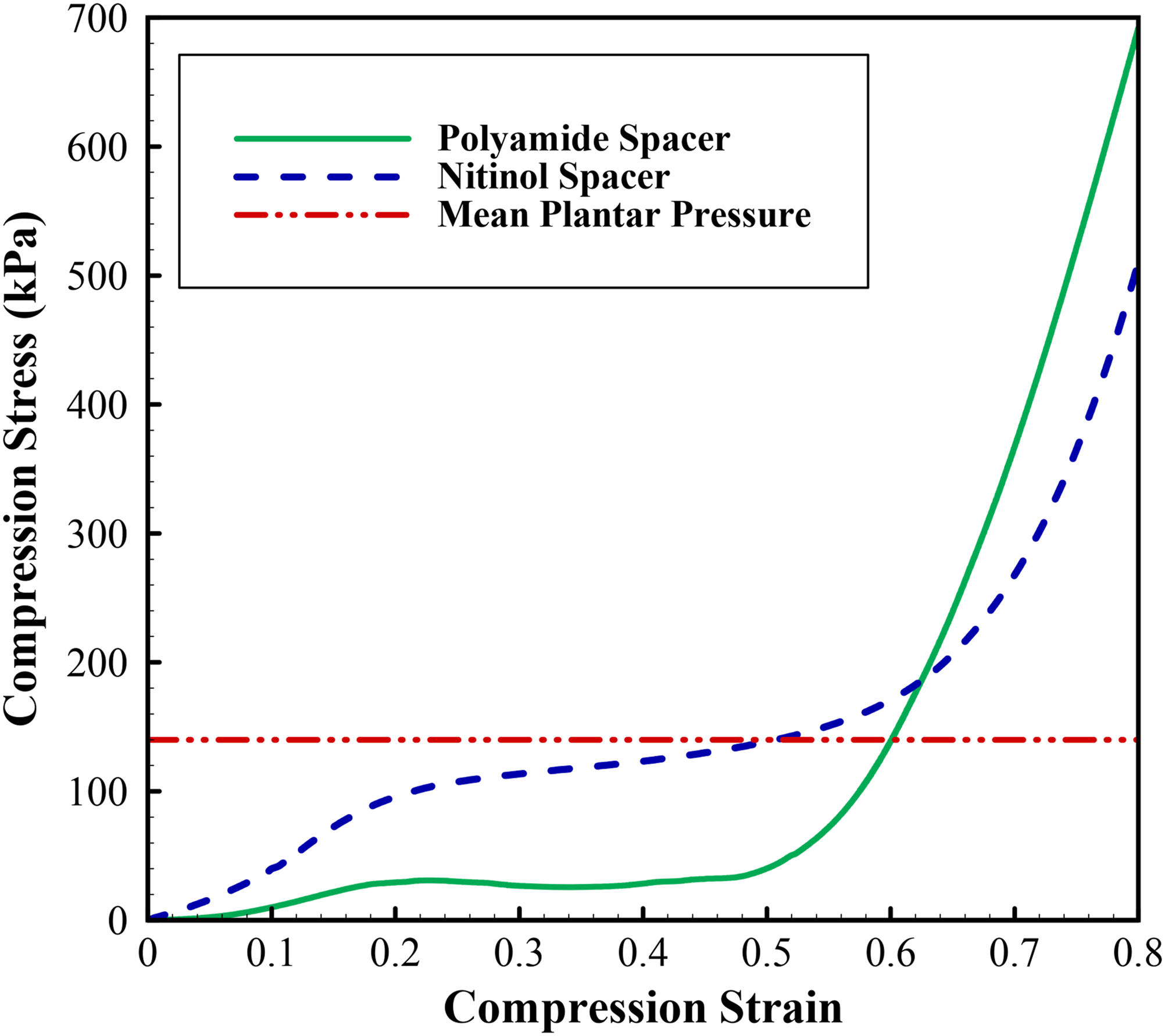


The structural properties of knitted samples. 19


The hysteresis and recovery of the NiTi spacer fabric in loading/unloading cycle. 19
Methods and experiments spacer fabrics
Experiment protocol
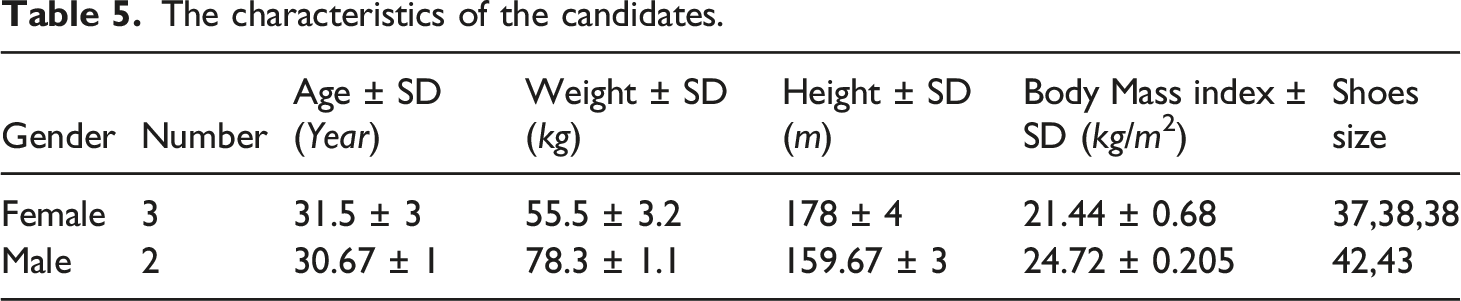
The characteristics of the candidates.
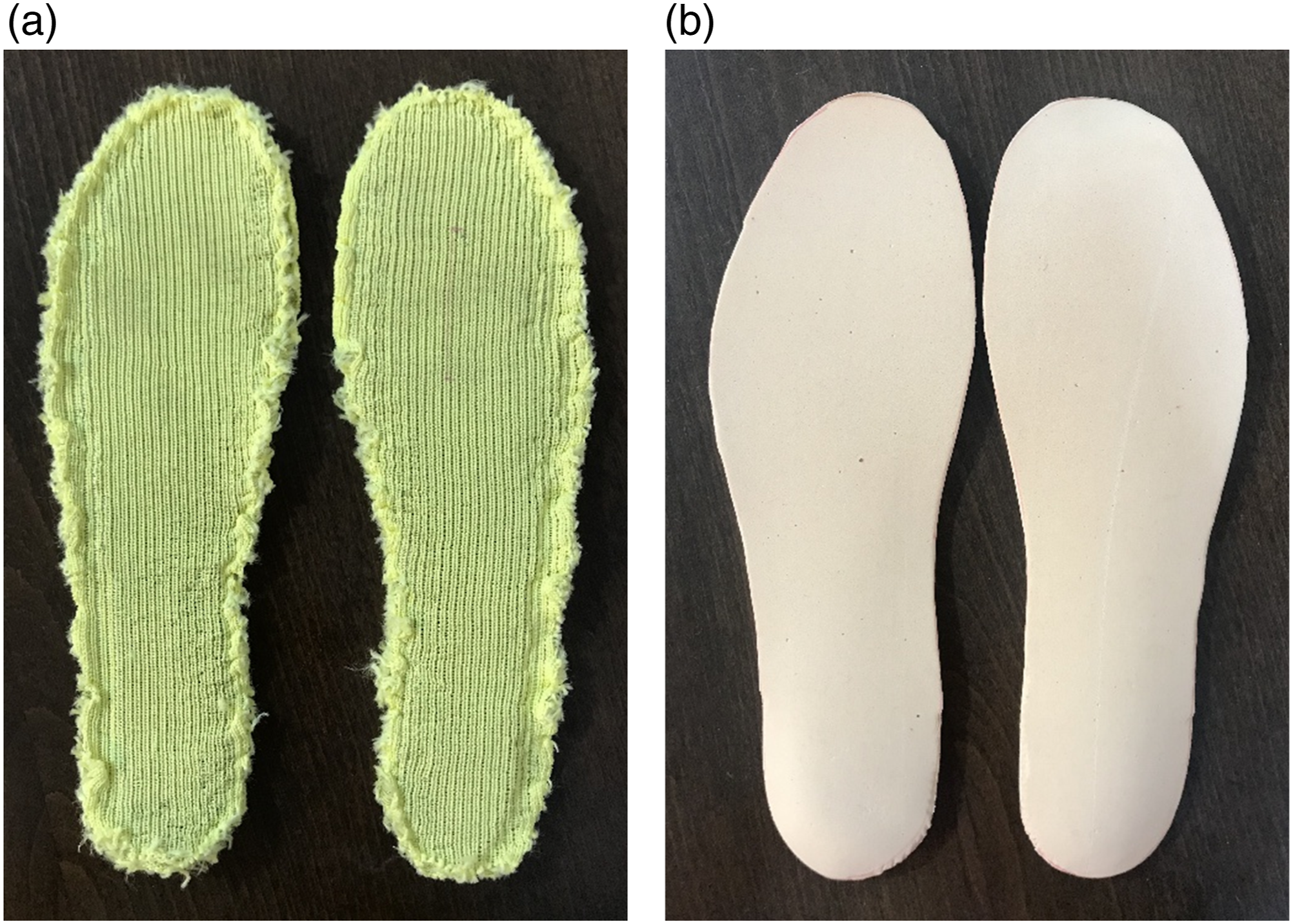
Insole samples (a) Weft knitted insole with nitinol spacer yarn (b) Plastazote insole.
Plantar temperature measurement
Because of the in-shoe microclimate temperature considered an influential factor in tissue breakdown and footwear comfort, it was necessary to perform plantar temperature measurement. In order to do this, the candidate sits for 20 min in rest position then the plantar temperature was measured and recorded as initial temperature using thermography camera. Then the candidate walked for 15 min with the normal speed in 23°C room temperature. Immediately after this stage, the secondary plantar surface temperature was recorded. This procedure was applied for WOI condition as well as NiTi and PLT insoles.
Statistical analysis
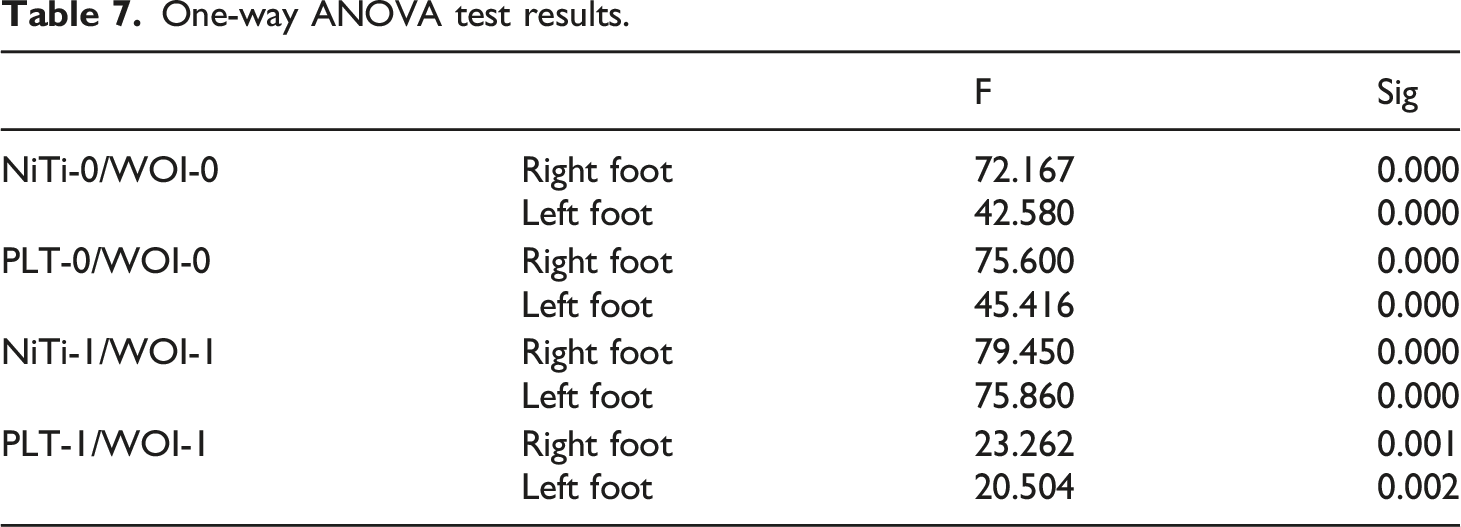
Statistical analysis was utilized to firstly evaluate the effectiveness of NiTi and PLT insoles in reduction of peak plantar pressure right after use and 1 month later compared to without-insole results and secondly monitor performance preserving for each type of insole after 1 month of usage. To do this, the IBM SPSS™ software was used for one-way analysis of variance (ANOVA) and Bonferroni post hoc test was used for the cases of significant difference in one-way ANOVA test. In all tests, p < 0.05 means that the difference is significant.
Results and discussion
Insole performance evaluation
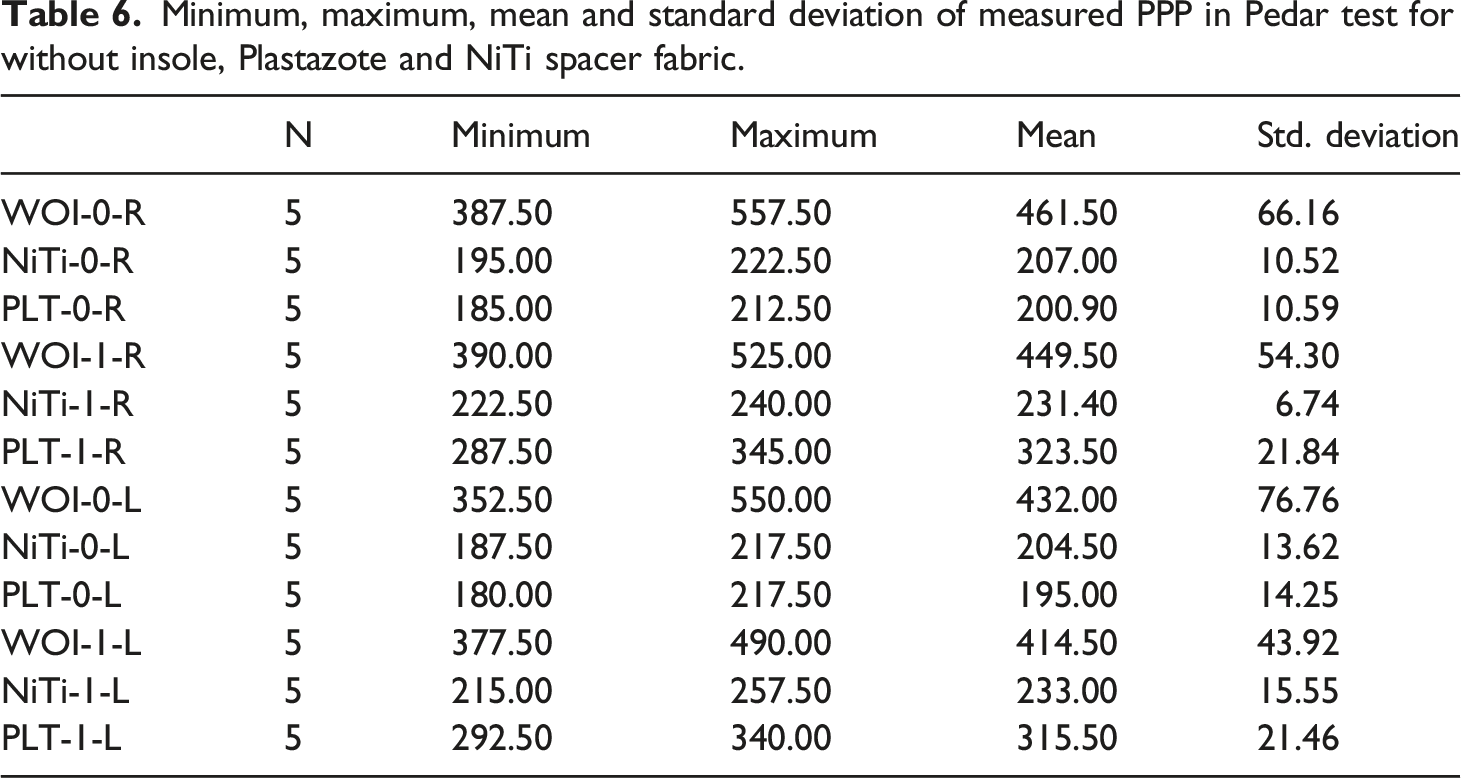
Minimum, maximum, mean and standard deviation of measured PPP in Pedar test for without insole, Plastazote and NiTi spacer fabric.
One-way ANOVA test results.
When it comes to insoles, durability is one of the critical differentiators to compare performance and efficiency. Nitinol fibers have a temperature- dependent microstructure and consequently different mechanical behavior. These fibers show a super-elastic behavior if they are loaded at a temperature higher than the finish of martensitic transformation (Mf) temperature. This has led the authors to use these fibers with an operating temperature higher than Af (end of austenitic transformation) to ensure the superelastic behavior of these materials. On the other hand, the insole fabric has a three-dimensional structure equipped with nitinol fibers as a spacer layer. When the insole is exposed to the person’s weight, the fibers undergo buckling that causes the super-elastic behavior of the nitinol. These fibers have a significant elastic modulus along a strain recovery capability of more than 10% that significantly strengthens their buckling resistance. This buckling resistance is a factor that can ensure that the insole does not deform permanently and have a durability in supporting the person’s weight.
Bonferroni post hoc test results.
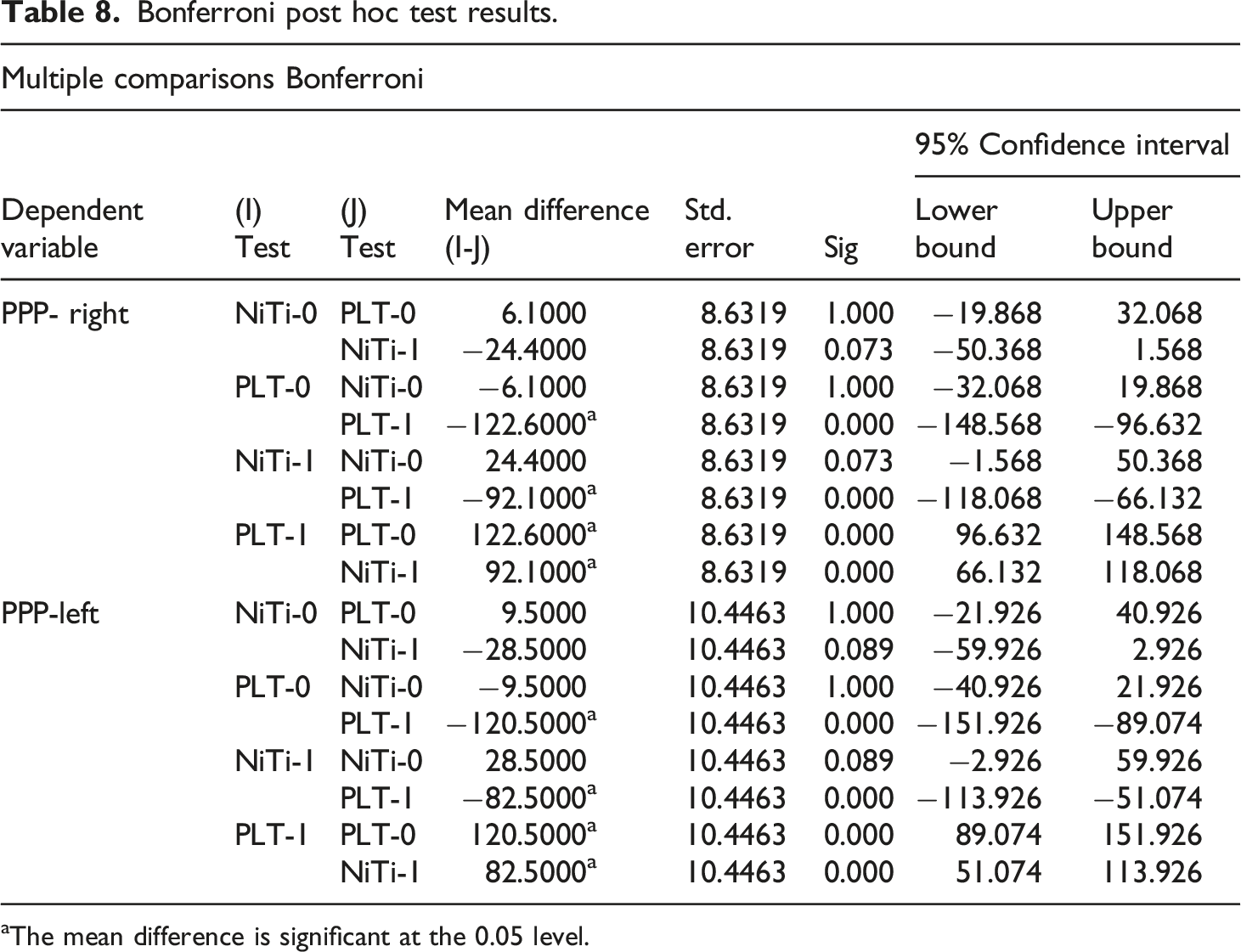
aThe mean difference is significant at the 0.05 level.
Looking at the pairwise comparison and considering the fact that after 1 month, the mean PPP for PLT (mean PPP = 323.5 for right foot and 315.5 kPa for left foot) was obviously higher than mean PPP for NiTi (mean PPP = 231.4 kPa for the right foot and 233 kPa), it can be inferred that PLT and NiTi performed similarly in the reduction of PPP right after usage whereas after 1 month, this was the NiTi insole which rendered better performance and durability compared to Plastazote one. It is obvious that NiTi insole could be considered as one of the competitive replacement options for PLT and similar foam-based insoles.
Repeated measurement analysis
Since each candidate performed the test of all three conditions, repeated measurement analysis is utilized. This analysis is performed in 3 levels of without-insole, NiTi, and PLT insole on right and left foot right after usage and 1 month after usage. According to the results of the test, a significant difference in PPP was observed right after the usage of both PLT and NiTi insole for the right and left foot compared to the WOI condition (Right foot: p = 0.003 < 0.05 for PLT and p = 0.002 < 0.05 for NiTi; Left foot: p = 0.012 < 0.05 for PLT and p = 0.009 < 0.05 for NiTi). In addition to this, a significant difference in PPP right after usage was not observed in PLT and NiTi insoles (p = 0.507 > 0.05 for the right foot and p = 1 > 0.05 for the left foot). However after the test period, the results obtained as per followed; in PPP measurement for the right foot, PLT and NiTi compared to WOI condition showed significant difference (p = 0.014 < 0.05 for PLT and p = 0.004 < 0.05 for NiTi). The same measurements on the left foot showed different results (p = 0.058 > 0.05 for PLT and p = 0.005 < 0.05 for NiTi). This clearly shows that PLT degrades over time. Additionally, a comparison between PLT and NiTi showed p = 0.004 < 0.05 and p = 0.009 < 0.05 for right and left feet consecutively. Therefore, it can be inferred that after usage of the suggested insole, the NiTi type is able to maintain its properties and represented better durability.
Subarea evaluation
As a complementary study, different areas on the insole were analyzed to evaluate the plantar pressure distribution after usage. To do this, the candidate that showed higher PPP in measurements (a sample of Pedar test output is shown in Figure 6(a)) was selected as a reference for collecting the data set and also the area on Pedar instrument insole was divided into four subareas in accordance with anatomic areas on the foot i.e. rear-foot, mid-foot, fore-foot and toes as illustrated in Figure 6(b). (a) Sample of pedar test output (b) Area divisions on Pedar instrument insole.
Maximum plantar pressure in subareas and variations rate.

Evaluation of temperature variations
The mean measured temperature of five candidates’ foot plantar surface before and after 15 min of walking are illustrated in Figure 7. The foot skin temperature was measured using infrared thermography camera in a laboratory with controlled experimental environment (temperature: 23°C, humidity: 65%). In this condition, to reduce the environmental effects and also isolating the tiredness of the candidates, causing any potential change in the gait pattern, a walking cycle with a minimum period (15 min) was selected to measure the skin temperature variations. In this test each candidate was required to walk once with PLT and once with NiTi insole with a 15 min relaxation time to reset for foot skin temperature. The clothing for all candidates were casual type according to the laboratory environment without socks. Also It was requested from all candidates to keep their normal gait speed without any attempt to increase/decrease their normal speed. The mean foot skin temperature before walking for NiTi and PLT insoles were 34.3 (1.1) degC and 34.5 (1) degC consecutively and after walking were 35.3 (1.3) degC and 36.4 (1.7) degC consecutively. The results showed that the rate of temperature increase versus initial temperature for NiTi insole was 2.92% (1°C) after 15 min of walking whereas this value found to be 5.51% (1.9°C) for Plastazote insole. This is explained due to the breathability and ventilation properties of the insole which was made of spacer fabric. The mean measured temperature of five candidates’ foot plantar surface before and after 15 min of walking.
Conclusion
The objective of this research was to show how a new weft knitted spacer fabric, as a structural material replacement for foam-based commercial insoles, can demonstrate stress reduction and high energy absorption capacity. Superelastic nitinol wires with high bending rigidity were used as spacer yarn and eventually, insoles made of 3D spacer fabric with nitinol monofilaments were knitted to carry out the tests.
The evaluation of measured PPP of candidates and the calculation of the rate of change in PPP in a pairwise comparison showed that although both nitinol and Plastazote insoles reduced PPP in comparison with a without-insole condition, nitinol insole rendered better performance after 1 month which was the end of the test period (48.5% and 43.8% reduction in mean PPP for nitinol and 28% and 23.9% for Plastazote compared to without-insole condition on the right and left foot respectively). Moreover, by comparing the mean PPP of nitinol and Plastazote insoles in two test stages, it can be inferred that Plastazote insole degraded remarkably versus nitinol insole over the test period (61% and 61.8% increase in PPP for Plastazote and 11.8% and 13.9% increase in PPP for nitinol on right and left foot respectively). On the other hand, foot subarea analysis indicated that nitinol insole yielded homogeneous distribution of pressure on foot plantar surface and on the contrary to Plastazote insole maintained its cushioning properties over time. After the evaluation of temperature increment rate in footwear microclimate, nitinol insoles exhibited lower temperature increase and provided a more convenient in-shoe environment which can be promising in preventing tissue breakdown which helps as a preventive treatment of diabetic foot ulcer development.
Footnotes
Declaration of conflicting interests
The author(s) declared no potential conflicts of interest with respect to the research, authorship, and/or publication of this article.
Funding
The author(s) received no financial support for the research, authorship, and/or publication of this article.
