




Abstract
Private tutoring refers to additional instruction out of school. With its determinants and effects, private tutoring has received increasing attention from scholars over the past decades. Because of the increasing role of school and high-stakes exams, the demand for private tutoring has increased tremendously in Turkey. The purpose of this study is to examine whether private tutoring mediates the effects of socio-economic status (SES) on students’ mathematics performance in the country. This study also addresses how this dynamic varies across types of tutoring: one-on-one tutoring versus tutoring in groups. The findings show that private tutoring partially mediates the effect of SES on students’ mathematics performance, and that this dynamic varies across different private tutoring services.
Introduction
The term “private tutoring” refers to additional instruction occurring outside of standard contact hours. The main goal of private tutoring in general is to increase students’ academic performance in school and on high-stakes exams, specifically in secondary and post-secondary programs. Demand for private tutoring tends to increase in the countries where public schools do not meet students’ needs and desired goals (Dang, 2007), and in which nationwide exams, such as college entrance exams, are utilized to determine whether students may advance in their academic career (Stevenson and Baker, 1992). Private tutoring in such cases provides extra opportunities to students who wish to increase their chances of acceptance into these coveted and potentially career-changing programs (Bray, 2006).
Much of the existing research on private tutoring examines the direct effects of private tutoring on educational outcomes. This study takes a different perspective by casting private tutoring as a factor that mediates the effect of socio-economic status (SES) on achievement. Unlike previous studies, we simultaneously estimate SES effects on private tutoring and the effects of tutoring on performance, accounting for the direct effect of SES along with a variety of controls.
By treating private tutoring as a direct predictor of educational outcomes, past research misconstrues the role that private tutoring plays in academic performance. Previous studies have failed to account for factors that predict access to private tutoring in the first place, particularly SES, and that has caused less accurate results about the effect of private tutoring on educational outcomes. Many studies using empirical analysis on data from different countries either do not consider SES as an explanatory variable or, when they do, they treat it only as a control variable in predicting the direct effect of private tutoring on educational outcomes (Dang, 2007; Lee et al., 2004; Liu, 2012; Ono, 2007; Southgate, 2013; Tansel and Bircan, 2005; Zhang, 2013). Such studies involve empirical models where SES and private tutoring are essentially specified as non-interacting factors. In this study, we aimed to investigate whether private tutoring partially or fully mediates the effects of SES on students’ mathematics performance.
The Turkish education system and private tutoring in Turkey
The prevalence of private tutoring is high in countries where high-stake testing plays a significant role in educational stratification (Davies, 2004), as in Japan, South Korea, Hong Kong, Egypt, and Turkey (Bray, 2006; Bray and Kwok, 2003; Tansel and Bircan, 2006). Private tutoring to prepare students for high-stake exams has been increasing over the past several decades in Turkey. Entrance exams for both high school and university are highly competitive in the Turkish educational system. The first step of this competition for Turkish students is the high school entrance exam, administered by the Ministry of National Education once a year. Students are supposed to take this exam in the last year of primary education (8th grade), and they are accepted to prestigious high schools only if they obtain high scores on the test. Entrance into prestigious high schools is important in the country because the students’ probability of achieving high scores in university entrance exams is greatly increased based on attendance at these high schools (Tansel and Bircan, 2008).
Additionally, university programs in Turkey are in high demand, and can accommodate only a limited number of students. Scores on university entrance exams play a primary role for students’ entrance to exclusive university programs in the country. In other words, high exam scores typically ensure a path to university acceptance. Thus, students, parents, and teachers have come to recognize the critical importance of private tutoring for students’ success on the university entrance exam (Turkish Educational Society, 2005). A recent study conducted by Berberoğlu and Tansel (2014) found that private tutoring plays a significant role in increasing students’ performance in mathematics and Turkish language, which constitute important sections of high-stake exams in Turkey. Another study, by Atalmis and colleagues (2016), found that private tutoring has a positive and significant impact on students’ performance in high school entrance examinations, while it does not significantly influence their performance in Trends in International Mathematics and Science Study (TIMMS) exam results as international assessment. These results supported the fact that private tutoring in Turkey meets students’ needs and desired goals with regard to high-stake exams; goals that public schools generally do not meet.
One of the most significant reasons why public schools generally fail to meet the needs of students for achievement in high-stake exams is that the constructivist approach has been adopted in Turkey since the 2004–2005 academic year. The constructivist approach requires students to take an active part in the educational process, to interpret and transfer knowledge into life experiences on their own, and to become critical thinkers. However, high-stake exams are mostly comprised of questions intended to assess the lowest level of learning in the cognitive domain according to Bloom’s Taxonomy (Demir, 2015). So, the students are supposed to have sufficient knowledge about exam types and problem solving strategies, and to practice these skills on a satisfactory number of tests. However, it is quite hard to implement this approach in public schools because of the educational policies adopted in the country. Consequently, students and parents in Turkey are endeavoring to overcome this pitfall by receiving services from private tutoring centers.
Although private tutoring in Turkey is implemented in various forms, two forms are particularly designed to facilitate students’ success on entrance exams: one-on-one private tutoring and tutoring centers. One-on-one tutoring involves a single student receiving instruction from a tutor, who typically specializes in tutoring or is an active or retired school teacher, or a university student. The courses are held either at the student’s house, the tutor’s house or in the tutor’s office on a flexible schedule. Therefore, this form of private tutoring is more comfortable and expensive when compared with tutoring centers. The cost of each session is determined based on the agreement between the tutor and the student’s parents, the length of each session, and the tutor’s teaching and educational experience. Tansel and Bircan (2008) expressed that the cost of one-on-one tutoring is correlated to the degree of efficiency of tutoring in terms of students’ success at the exam. This means that the tutors who play a significant role in increasing students’ exam success charge significantly more than the ordinary tutors per session. This could be considered as an indicator of the importance of one-on-one tutoring, since efficient tutoring helps not only low-achievement students to increase their performance but also high-achievement students to be satisfied by learning advanced-level knowledge during the tutoring (Bray, 2013).
The second type of private tutoring is provided by tutoring centers. These centers are educational institutions privately owned and operated according to the national educational regulations in Turkey (Tansel and Bircan, 2008). This means that they are officially inspected by civil servants based on the suitability of their environment for students and orient curricula to those implemented in public schools. Courses in tutoring centers are provided by experienced and/or specialist teachers in classes with a smaller size than those in public schools. Tutoring centers provide courses in a fixed schedule for each cohort, as in public school classrooms. The cost of these centers (per hour) is lower than one-on-one tutoring, which is why they are more desirable and utilized by students more frequently than one-on-one tutoring, and why they have become widespread across the country in the last 50 years.
The effect of private tutoring on students’ performance in a world-wide context
Studies on the effect of private tutoring on student achievement are undermined not only by the scarcity of rich data (Bray, 2006), but more importantly by how control measures are utilized in estimation. The key control measure is SES, which also mediates the effect of private tutoring on achievement. While some studies fail to account for SES (Lee et al., 2004; Ono, 2007; Sohn et al., 2010), many others treat SES simply as a control variable (Dang, 2007; Gurun and Millimet, 2008; Kang, 2007; Tansel and Bircan, 2005; Ünal et al., 2010).
An approach which uses SES as a control variable might be viewed a factor in the prevailing pattern of contradictory findings in the literature. For example, Tansel and Bircan (2005) and Gurun (2008) found that the manner in which private tutoring affects achievement is greater than the effect of SES on achievement, while Kang (2007) reported exactly the opposite. Ünal et al. (2010), on the other hand, reported that SES and private tutoring have similar effects on student achievement. Finally, Stevenson and Baker (1992) concluded that receiving private tutoring has an insignificant effect on achievement while SES has a significant effect. All in all, no consensus has been reached among scholars on the effect of SES on students’ academic performance. Therefore, this study adopts a different approach and utilizes SES as the predictor of private tutoring rather than considering its complementary role in the empirical analysis, because in many empirical studies SES is already defined as the primary explanatory variable of access to private tutoring in the first place (Berberoglu and Tansel, 2014; Dang, 2007; Davies, 2004; Kim and Lee, 2010; Stevenson and Baker, 1992; Tansel and Bircan, 2006). We aim to examine whether private tutoring mediates the relationship between SES and students’ mathematic achievement. Unlike existing studies, we address the indirect effect of SES on achievement by modeling SES as a mediating factor of private tutoring rather than specifying SES as a mere control variable. Another contribution of this study is that it measures how the dynamics change across one-on-one tutoring and tutoring in groups (private tutoring centers). We examine the indirect effect of these two types of private tutoring by addressing the following research questions.
Is students’ SES associated with their access to private tutoring? Does private tutoring mediate the effect of SES on achievement? Does the mediating effect of private tutoring vary by the type of the tutoring: one-on-one versus tutoring in groups?
Access to private tutoring
Existing studies generally indicate that access to private tutoring is positively associated with SES factors, such as higher income, higher parental educational level, and smaller household size. These have strong effects, particularly in countries where high-stake testing plays a significant role in educational stratification (Davies, 2004). They also indicate that well-educated parents with higher income have greater access to private tutoring in Vietnam, Japan, Turkey, and Korea (Dang, 2007; Kim and Lee, 2010; Stevenson and Baker, 1992; Tansel and Bircan, 2006). Household size, on the other hand, is negatively related to private tutoring expenditures conducted in these countries (Dang, 2007; Kim and Lee, 2010; Tansel and Bircan, 2006). These results are consistent with Silova’s (2010) comprehensive study of private tutoring in 12 countries in East Europe and Central Asia.
Private tutoring as a mediator of SES’s effect on achievement
While SES is strongly and positively associated with achievement (Sirin, 2005; White, 1982), recent studies show that SES also has indirect effects on achievement. Indeed, it seems that a number of factors mediate the relationship of SES and achievement (Baron and Kenny, 1986; Frezier et al., 2004; Ozturk and Singh, 2006). These include both tangible resources, such as education based technologies (Chiu, 2007; Espinosa, 2006; Schacter and Jo, 2005) and the physical environment at home (Parcel and Dufur, 2001), and intangible resources such as parental involvement (Domina, 2005; Keith, 1986), parent–school interaction (Grolnick and Slowiaczek, 1994), cultural capital (DiMaggio, 1982), and academic expectations (Hoy et al., 2006). Therefore, the effect of SES needs to be modeled as an indirect force, operating together with other intermediary factors.
A perspective that considers the effect of SES on private tutoring is instrumental in studying private tutoring effects on achievement because, while it improves students’ performance, access to private tutoring is contingent on SES in the first place (Dang, 2007; Kim and Lee, 2010; Stevenson and Baker, 1992; Tansel and Bircan, 2006). However, at the time of writing only one study, conducted by Buchmann and colleagues (2010), has addressed private tutoring as a mediating factor. Instead, most previous studies tested the effect of private tutoring on achievement by means of conventional models where private tutoring is considered as an independent variable that competes with SES, which is treated as a control variable (Berberoğlu and Tansel, 2014; Dang, 2007; Liu, 2012; Tansel and Bircan, 2005; Zhang, 2013). The primary limitation of these studies is that they fail to account for the relationship between private tutoring and SES. So, the current study posits private tutoring as a mediator of SES, as shown in Figure 1.
Private tutoring as a mediator of socio-economic status (SES).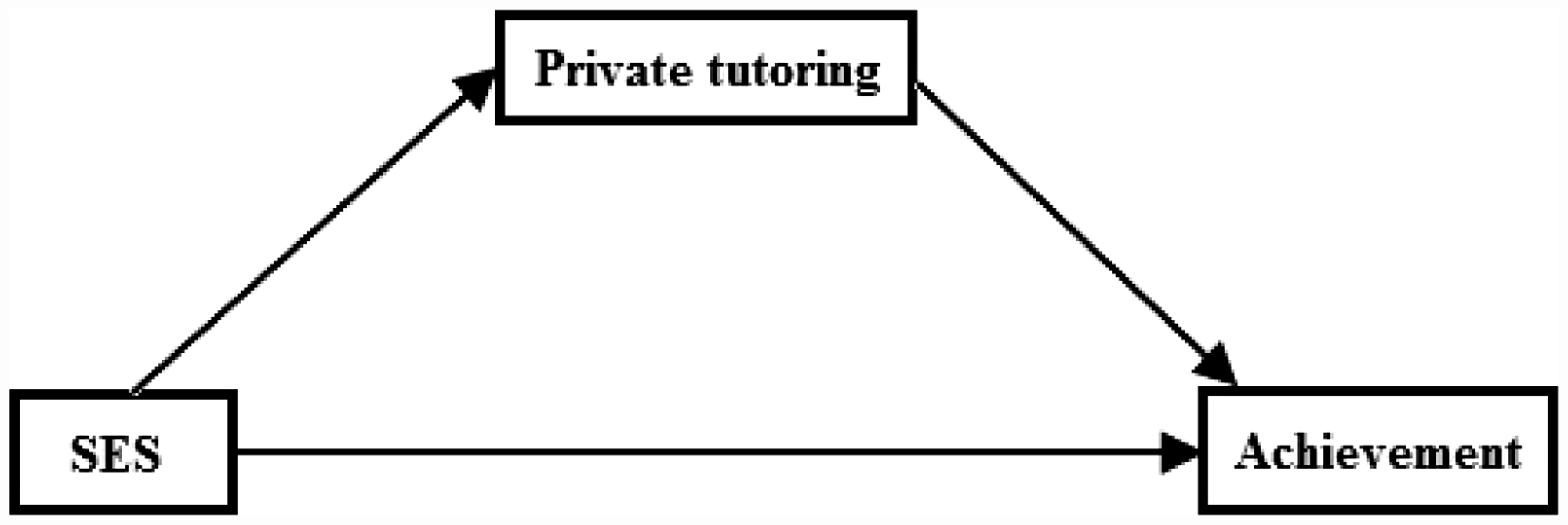
This study is intended to contribute to the literature on private tutoring in two ways. First, it connects seemingly unrelated studies of SES and private tutoring by proposing a model where private tutoring mediates the effect of SES on achievement. Second, it also aims to predict the effect of private tutoring on students’ achievement, which is likely to reveal more plausible estimates than those reported in the relevant literature.
Does the effect of private tutoring vary by tutoring type?
A majority of existing studies on private tutoring operationalize receiving private tutoring services as a dichotomous variable, where students either have access to private tutoring or not (Bray, 2010). Only one study to date has empirically considered the type of private tutoring (Buchmann et al., 2010). This is critical because some students may have access to one-on-one tutoring while others use private tutoring centers. The central factor that determines this variation is SES (Silova and Bray, 2005). As expected, the higher SES students are those who have access to one-on-one tutoring rather than private tutoring centers.
The study by Buchmann et al. (2010) shows that the effect of one-on-one private tutoring on achievement is greater than that of private tutoring centers in the United States, where usage of private tutoring is low (Southgate, 2013). Buchmann and colleagues (2010) also identified one-on-one tutoring as the highest level of private tutoring and empirically tested that higher SES parents have a greater advantage in providing their children with access to one-on-one private tutoring. In this study, we aim to empirically compare the effect of one-on-one tutoring (high level of private tutoring) and private tutoring centers (low level of private tutoring) on students’ mathematics achievement in Turkey, where private tutoring is highly desirable (Southgate, 2013). We also aim to examine whether higher SES parents provide their children with access to one-on-one tutoring.
Methodology
Data
Data for this study were collected in Manisa, a mid-size metropolitan city located on the west coast of Turkey. The reasons why it was selected are as follows. First, it has one of the top 10 industrial zones in Europe and has received many awards in different international competitions, such as “the most cost effective city in Europe,” “the best investment city in the world,” and “the city of the future for Turkey.” (Manisa Organized Industrial Zone, 2016) In accordance with the reports launched by the Ministry of Development (2013) and the Ministry of National Education (2014), in addition to the above-mentioned economical advantages, the overall educational, socio-economic, and cultural environment of the city were above national average (Ministry of Development, 2013; Ministry of National Education, 2014). This suggests parents will be able to provide their children with better opportunities. For example, the percentage of students attending private tutoring centers in Manisa is greater than those in other cities in Turkey. Tansel (2013) recently reported that a total of 30.8% of high school students have access to private tutoring centers in Manisa, while the average percentage of high school students attending private tutoring is 27.1% in Turkey. The higher proportion of high school students accessing private tutoring strengthens the city’s representativeness for this research.
The data were collected from nine out of 40 junior high schools located in the city center by using convenience method sampling, which is an easy and quick method of gathering data (Marshall, 1996). Seventh graders were chosen for the study because they were scheduled to take their first high-stake exam the following year, which potentially intensifies their academic concerns.
Junior high schools in Manisa have 12 classes on average, one-third of which is 7th grade (Ministry of National Education, 2014). After at least two classes from each of the nine schools were selected, the survey was administered in one class period, approximately 40 minutes. The survey administered to the students concerned was composed of two sections. The first section addressed demographic information, including SES variables such as family background, parental education level, and technological devices available at home (Anon, 2013). The second section included 29 multiple-choice mathematics questions to measure students’ performance on the current curriculum. A total of 1095 observations were held after eliminating the missing data (3%), which generally included the participants’ incomplete responses regarding SES variables.
A questionnaire on economical and educational resources was administered to examine how schools, which are considered to play a significant role in students’ performance, influence students’ academic performance. The survey questions included school size, the number of teachers and students in the school, the school’s yearly income (the sum of donations from parents and any revenue from non-profit activities organized by the school), the school’s average scores in high school entrance examinations in the past several years, and the number of parents’ meetings each semester.
Variables
Summary statistics of factors of socio-economic status (SES).
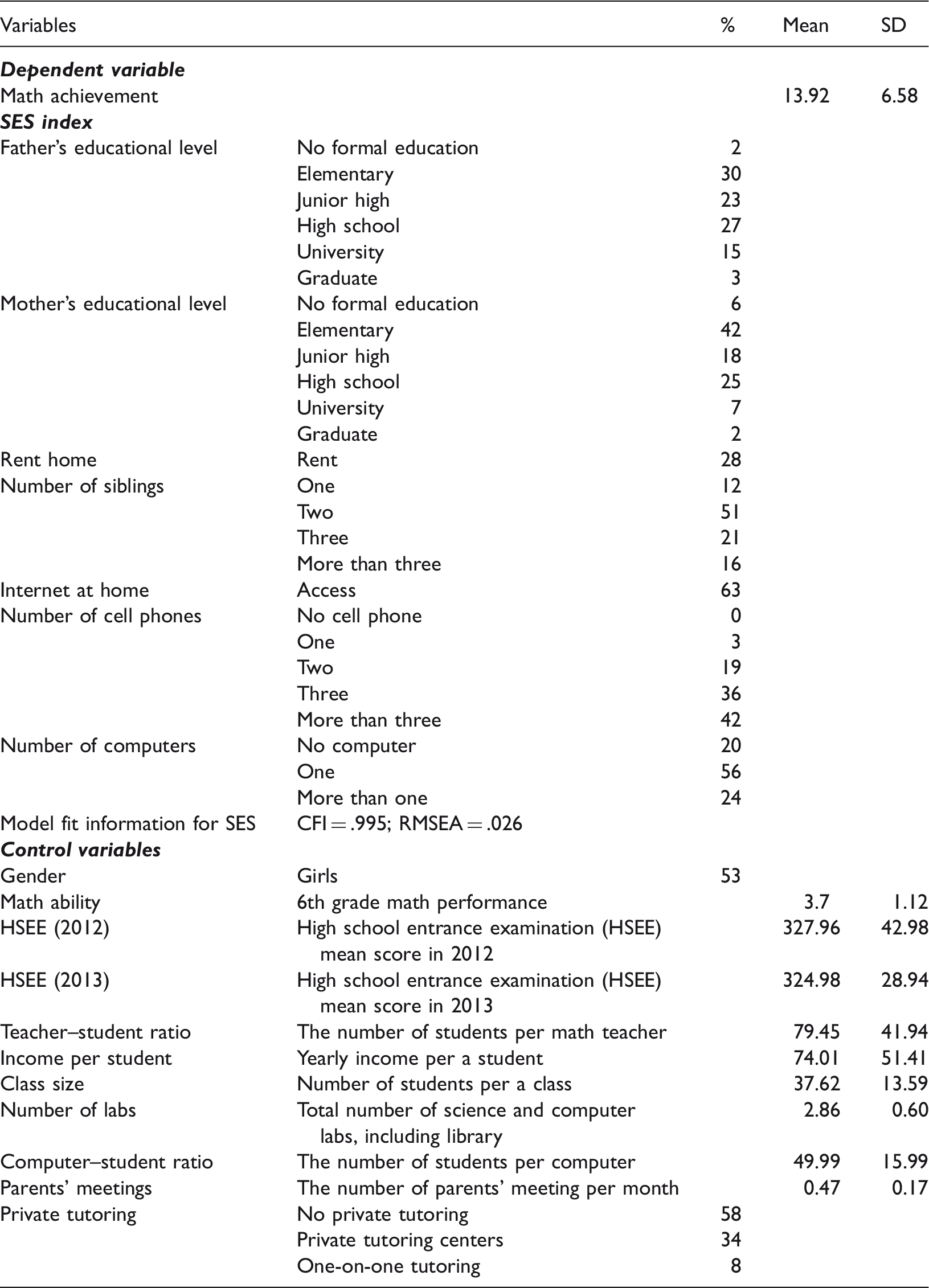
Mathematics achievement is the dependent variable measured after administering a test with 29 multiple-choice mathematics questions which was prepared taking the national curriculum into consideration. The internal consistency coefficient of the reliability of the mathematics test is equal to 0.74, which indicates a significant confidence for the test’s reliability (Nunnally and Bernstein, 1994).
The SES index is a continuous latent variable constructed based on information obtained in the survey relating to SES variables such as parental educational level, home possessions, household size, and residential location. These variables are used to create the SES index because they are accepted variables in measuring SES at an international level (Anon, 2013). After structural equation modeling (SEM) was implemented to construct the SES index, a mean-standardized version of the SES index was calculated to use in analysis. Table 1 reports the description and summary statistics of the SES components.
Data analysis
Unstandardized coefficients for regressions predicting mathematics performance.

p < .05; **p < .01; ***p < .001 (two tailed test) (Model fit indexes (Little, 2013): Acceptable Fit Indexes: CFI > .90, TLI > .90, RMSEA < .08; Good Fit Indexes: CFI > .95, TLI > .95, RMSEA < .05)
SES: Socio-economic status
Findings
In the following section, the access to and dynamics of private tutoring will be discussed, along with the mediating effect of private tutoring, by using the information about the empirical analysis given in Table 2. Before the analysis in concern, we tested goodness of fit for each individual model and found that all models have significant Comparative fit index (CFI), Tucker Lewis index (TLI), and Root Mean Square Error of Approximation (RMSEA) index values, as suggested in some pioneering studies (Hu and Bentler, 1999; Kline, 2011; Little, 2009).
Private tutoring as mediator of SES’s effect on achievement
This section reports only the mediation effect of private tutoring on the relationship between SES and mathematics achievement regardless of the type of private tutoring. The first two models presented in Table 2 are conducted to test whether private tutoring mediates the relationship between SES and achievement. Model 1 examines the effect of student SES on academic achievement controlled by school measurements and two individual level variables: gender and mathematics ability. Some economical and educational resources in schools are used in the model, as suggested by previous studies (Greenwald et al., 1996). It was expected that these variables would be associated with students’ performance in Turkey because the variance in schools’ performance is the largest among all OECD countries (Alacacı and Erbas, 2010). The results indicate that the effect of SES on students’ mathematics achievement is positive and statistically significant (βSES = 0.927, SESES = 0.301, p < 0.01). Students with a higher SES are likely to be more successful at mathematics as opposed to those with lower SES. This result is consistent with the majority of the studies conducted on the effect of students’ SES on their academic achievement.
Students’ mathematics ability and the school average high school placement test results in 2013 as a school measure were also found to be significant (βmath_ability = 2.455, SEmath_ability = 0.185, p < 0.001; βplacement_2013 = 0.074, SEplacement_2013 = 0.016, p < 0.001). The rest of the school measures and the student’s gender are not found to be statistically significant in the model. However, they were kept in the model to sustain the goodness of fit of the model, which was tested by running the model with school dummy variables. The findings showed that about 17% of the changes in students’ achievement could be associated with the differences across schools (R2 = .17, p < 0.001), which are not reported here. The same results were also reached when the model was run with the school measures shown in Table 2 instead of the school dummies.
Model 2 addresses whether and how the positive effect of SES on students’ achievement changes by casting private tutoring as a mediating factor. Baron and Kenny’s (1986) approach of applying a mediation effect was used to investigate our model by analyzing the two sub-models shown in Model 2 as the mediator and the outcome. In the first sub-model, we tested whether there is a significant association between students’ SES and their attending private tutoring. Private tutoring attendance is categorized as no private tutoring, tutoring center, or a one-on-one tutoring service. The findings revealed that SES is significantly associated with attending private tutoring (βSES = 0.202, SESES = 0.029, p < 0.001). This means that every one-point increase in a student’s SES level affects his or her private tutoring attendance by about 20%, regardless of the student’s current position in receiving private tutoring services, after controlling for students’ previous year mathematics score and school variables, which are important determinants to having access to private tutoring (Jelani and Tan, 2012; Kim and Park, 2010).
The second sub-model, the “outcome model,” includes the variable of private tutoring as well as the variables used in the original Model 1. The findings demonstrated that the effect of SES on achievement remains significant, but effect size decreased by 15% when compared with Model 1 (Model 1: βSES = 0.927, SESES = 0.301, p < 0.01; outcome model: βSES = 0.788, SESES = 0.307, p < 0.05). This means that private tutoring, regardless of its type, partially mediates the effect of SES on students’ mathematics achievement. To see how effective the type of the private tutoring service is on students’ achievement, a detailed analysis of the mediation effect by the private tutoring types will be conducted in the next section.
Access to and dynamics of private tutoring by type
This section begins by examining how SES influences students’ access to private tutoring centers and one-on-one private tutoring. The result of the test for this influence is provided in the mediator segment of Models 3B and 4B, respectively. We also examined whether the dynamic of mediation effect varies by the type of private tutoring services. The reference group consists of students who do not receive any private tutoring. The mediation effects were examined between the reference group and those who have access to private tutoring centers (low level of private tutoring) in Model 3, and those who have access to one-on-one tutoring (high level of private tutoring) in Model 4.
Both Models 3B and 4B indicate the positive strong impact of the students’ SES on their attending private tutoring services, which is consistent with the findings in Model 2. The effect size of SES in Model 3B was more than double that of Model 4B (Model 3B: βSES = 0.145, SESES = 0.022, p < 0.001; Model 4B: βSES = 0.062, SESES = 0.017, p < 0.001). This means that SES has a greater effect on students’ attendance at private tutoring centers as opposed to one-on-one tutoring, or low level private tutoring over high level private tutoring. There could be several reasons for these particular findings. First, the sample size of students who have access to private tutoring centers is almost seven times larger than those who have access to one-on-one private tutoring (nprivate tutoring centers = 313; none-on-one private tutoring = 43). Second, SES distributions of students who have access to private tutoring centers and those who have access to one-on-one private tutoring are likely to be different. To examine this claim, two logistic regressions were run and the predicted probability of choosing private tutoring services as opposed to not receiving private tutoring was measured for two samples in Models 3 and 4. Then, these predicted probabilities were associated with students’ standardized SES level as illustrated in Figure 2.
Probability of having access to private tutoring.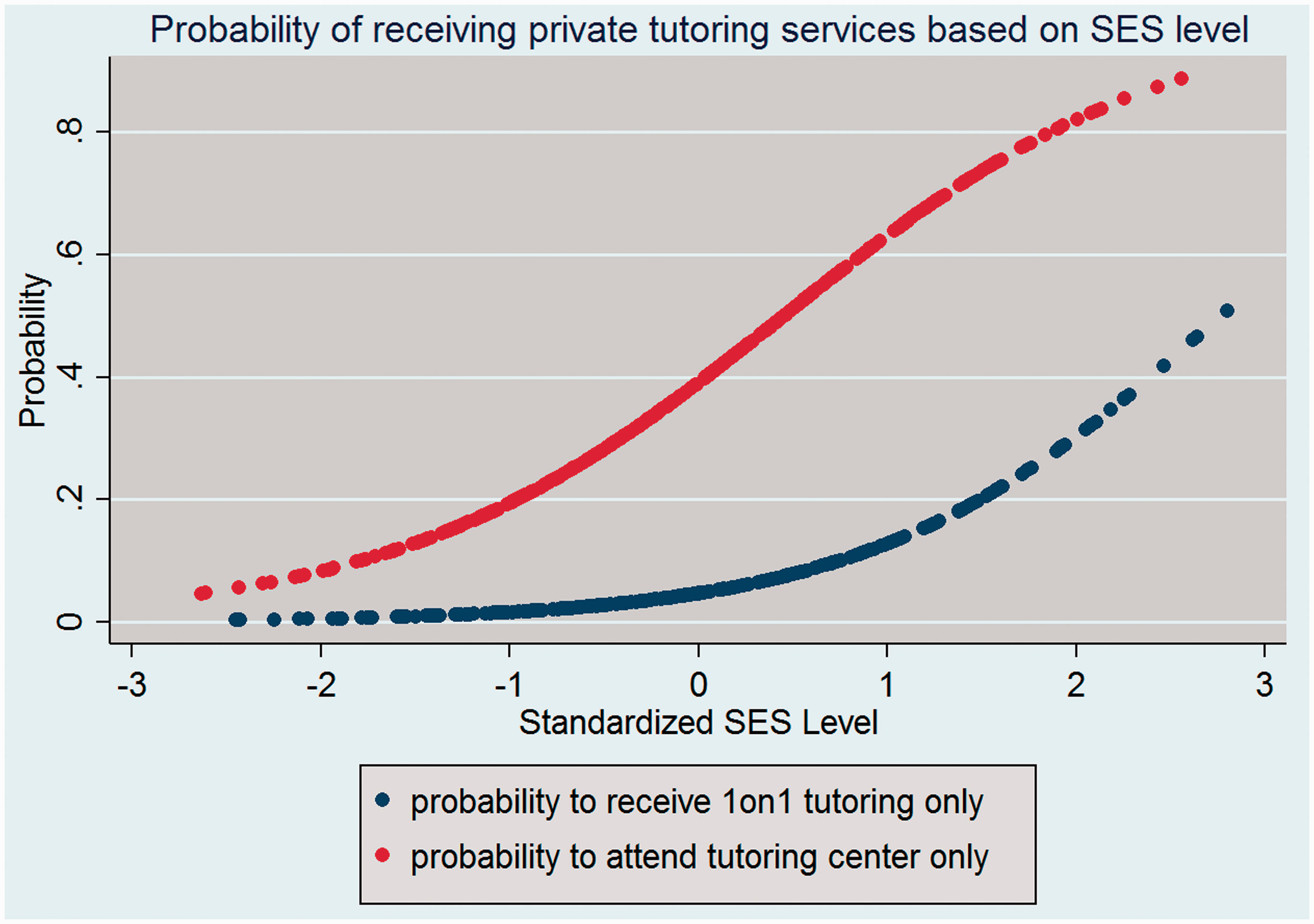
Figure 2 shows that students whose standardized SES is below −1 are more likely not to access any tutoring services. In the meantime, for those whose SES is between −1 and about 1.5 private tutoring centers are more preferable than one-on-one tutoring since the slope for tutoring centers is bigger than that for one-on-one tutoring in that boundary of SES. Finally, for the student whose SES is above 1.2 one-on-one tutoring services are preferable to tutoring centers. This is evidence of the stratified structure of high level and low level private tutoring services in the country, which favors high-SES students in receiving high level private tutoring services. Moreover, when we check for the marginal effect of students’ SES on their attending different private tutoring services, we see a larger effect on the first sub-sample (Model 3) compared to second sub-sample (Model 4). This is further evidence of the stratified structure of private tutoring, where one-on-one tutoring is mostly used by upper level SES students while the private tutoring centers are used by relatively lower SES students. These findings are consistent with previous studies that showed SES is a significant determinant of private tutoring (Dang, 2007; Kim and Lee, 2010; Stevenson and Baker, 1992; Tansel and Bircan, 2006).
Concluding that students’ private tutoring attendance is affected by their SES level, we examined if these differences would change the mediation effect of private tutoring on the relation between their SES and mathematics achievement. In Model 3, the mediator effect of private tutoring is clearly seen (see the change of βSES from 1.106 to 0.886 in Models 3A and 3B, respectively), but not as clearly as in Model 2. Nonetheless, the positive effect of tutoring centers on students’ mathematics achievement was also calculated to be about 1.43 times larger than the effect of private tutoring in general. The results obtained from Model 3 show that the dynamics of private tutoring services vary by type.
Model 4 reveals relatively less intuition in the correlation between SES, one-on-one tutoring, and mathematics achievement compared to results obtained in Model 3. This might be attributed to the positive effect of student SES on their achievement without controlling for the fact that private tutoring is less distinct in Model 4A in comparison with Models 1 and 3A (see βSES = 0.976, SESES = 0.383 in Model 4A). Therefore, the change in Model 4B is not as distinctive as in Models 2 and 3B (see βSES = 0.854, SESES = 0.388). However, we are still able to claim a mediation effect of private tutoring when we consider that the relation between the SES and private tutoring is statistically significant, and the βSES in Model 4B is diminished compared to the one in Model 4A. Model 4B also reveals a positive effect of one-on-one tutoring on the math performance of students which is not statistically significant at the 5% critical level, but is at 10% (see βSES = 1.669, SESES = 0.914 in Model 4B). This result is consistent with those reported in other studies in the literature. Kang (2007) also found similar results, while Buchmann et al. (2010) found contradictory ones: the impact of one-on-one private tutoring on performance was found to be less than that of parents’ educational level and greater than family income. The reason could be that students who receive one-on-one tutoring equal only 17% of students who do not take any tutoring services, which we found highly consistent with the picture of private tutoring services in Turkey.
Summary and discussion
The purpose of this study was to examine whether private tutoring partially or fully mediates the effects of SES on students’ mathematics performance in Turkey, where private tutoring is a driving element of formal education. Our findings show that private tutoring partially mediates the effect of SES on students’ mathematics performance. Private tutoring services decrease the direct effect of students’ SES on their mathematics performance, but the effect remains significant. However, SES increases students’ mathematics achievement when its direct and indirect effects are considered together. These results indicate that SES has a positive direct and indirect effect on mathematics achievement through the mediating variable of private tutoring.
This dynamic varies by the type of private tutoring service. It remains the same for private tutoring centers; however, the mathematics performance of students who have access to one-on-one tutoring was not found to be statistically different from those who do not have access to any private tutoring service. This result could be explained in different ways. First, the sample in this study was chosen using convenience sampling, and so may not be representative of the entire population, and this might have caused inaccurate, results. Second, the number of observations of students who receive one-on-one tutoring was very limited, although this may have been representative of the ratio for this population. Third, this study did not address the characteristics of one-on-one tutoring activities, such as how much it costs for each session and who provides it. For example, one-on-one tutoring which is provided by a college student is probably cheaper than that provided by an experienced teacher. Such characteristics might influence the quality of tutoring, which might have resulted in a decrease or increase in students’ mathematics performance.
The study also shows that SES plays a significant role in students’ having access to private tutoring in Turkey. This dynamic remains the same for one-on-one tutoring and private tutoring centers, meaning that high-SES students are more likely to have access to one-on-one tutoring or a private tutoring center compared to low-SES students. However, the study did not address a comparison of students’ access to private tutoring centers and one-on-one tutoring services based on their SES because of the limited number of observations of students who receive one-on-one tutoring.
As suggested by Dang and Rogers (2008), and taking into consideration the finding that students with a high SES have the opportunity to receive private tutoring services, it is believed that the presence of private tutoring centers violates the principle of equality of opportunity in education. For this very reason, on 1 September 2015, tutoring centers which offered tuition at a primary and secondary level of education were converted into private schools and basic high schools, respectively, and those which offered education at undergraduate level remained private educational institutions. This was done with the intention of eliminating the inequality of opportunity in education (Boran et al., 2015). Furthermore, the students attending these institutions began to be financially supported by the government.
Considering the preliminary results of the study, further research should hold more observations in classes of different grades and different cities in Turkey to increase the power of the empirical analysis. This study also indicated that it would be helpful to have a more detailed survey, particularly with regard to identifying more definite features of one-on-one tutoring, such as the fee for each tutoring session and the characteristics of providers.
Footnotes
Declaration of conflicting interests
The author(s) declared no potential conflicts of interest with respect to the research, authorship, and/or publication of this article.
Funding
The author(s) received no financial support for the research, authorship, and/or publication of this article.