



Abstract
The article presents the results of a study of the influence of the type and concentration of nitrile butadiene rubber on the main physical and mechanical properties of polymer compositions based on compatibilized ethylene/1-hexene copolymer (EHC*). SKN-18, SKN-26, and SKN-40 were used as nitrile butadiene rubber. The compatibilizer – polyethylene-graft-methacrylic acid was used to improve the compatibility of the mixed components of the mixture. At the first stage, the task of the study was to investigate the effect of the concentration of the considered nitrile rubbers on such properties of the compositions as yield strength, tensile strength, elongation at break, flexural strength, melt flow rate and heat resistance. It was found that, regardless of the type of used nitrile butadiene rubber, with an increase in its content in the composition of the ethylene/1-hexene copolymer, a regular decrease in strength parameters, heat resistance, and melt fluidity is observed. It is shown that with the loading of 30 wt% SKN-18 or 40 wt% SKN-26 and SKN-40 into the composition of the ethylene/1-hexene copolymer phase inversion occurs in the composite materials, according to which the dispersed phase becomes a dispersed medium. The thermomechanical properties of the considered samples were studied. It was found that in those samples in which phase inversion occurred, a region of a highly elastic plateau is formed, which increases with an increase in the content of the rubber component. This area indicates the formation of elastomer with rubber properties. The regularities of crystallization of the compositions depending on the content of the amorphous component were studied by the method of stepwise dilatometry. The mechanism of crystal formation was studied depending on the content of the amorphous component. The influence of the crosslinking agent concentration – dicumyl peroxide on the main properties of dynamically vulcanized elastomers has been studied.
Keywords
Introduction
With the development of such industries as mechanical engineering, shipbuilding, aviation, automotive, as well as military and space technology, the issue of obtaining new types of polymeric materials that meet high operational requirements is becoming more and more acute.1,2 And this is quite understandable, since the polymers synthesized in the industry cannot simultaneously meet the increased requirements of modern engineering and technology. In this regard, most scientists and specialists give preference to modifying the structure and properties of basic industrial grades of polymers by introducing various mineral fillers, plasticizers, and other polymers into their composition.3,4 In this case, it seems possible to change the main physical and mechanical characteristics of polymer compositions in a fairly wide range. One of these methods is the dynamic vulcanization of polymer mixtures on rollers or an extruder. 5 However, in this option, the compatibility of the mixed components of the mixture acquires a significant role. Of course, in the real conditions of polymer processing, we are not talking about thermodynamic, but about technological compatibility.6,7 As a rule, polar and non-polar polymers are incompatible. The lack of compatibility in mixed polymers adversely affects the basic properties of the compositions, which do not allow them to be used as structural products. In this regard, a significant role is assigned to the selection of compatibilizers, which play a significant role in improving the technological compatibility of polymer blends.8–11
In this work, we used compatibilized ethylene/1-hexene copolymer EHC* and nitrile butadiene rubber (SKN) with different contents of nitrile groups as mixing components of the mixture. These polymers are among the clearly expressed incompatible polymer systems.
Therefore, the purpose of this work was to use the most effective compatibilizer designed to improve the technological compatibility and final properties of polymer blends EHC*+SKN.
Materials and methods
Materials
The following industrial polymers were used in the research process: EHC, SKN.
EHC – ethylene/1-hexene copolymer grade of PE6438R, is produced by the Public Joint Stock Company (PJSC) Nizhnekamskneftekhim, Republic of Tatarstan, Russian Federation. It is characterized by the following properties: density – 0.932 g/sm3, tensile strength – 37.4 MPa, elongation at break – 810%, flexural modulus – 712 MPa, melting point – 127°C, Vicat softening point – 115°C, melt flow rate (MFR) – 5.12 g/10 min, crystallinity degree – 75%.
SKN – nitrile butadiene rubber, manufactured by SIBUR LLC (Russian petrochemical company) – synthetic rubber, product of radical copolymerization of butadiene with acrylonitrile (AAN) in aqueous emulsion. The following grades are produced in industry: SKN-18, SKN-26 and SKN-40. SKN molecules consist of statistically alternating units of butadiene and AAN: —[-CH2-CH=CH-CH2-]n — [-CH2-CH(CN)-]m—
Dicumyl peroxide (DP), manufactured by “ATAMAN CHEMICALS” Turkey, Istanbul – С6Н5-С-(СН3)2-О-О-(СН3)2-С-С6Н5 – white crystalline powder, melting point 312–315 K, density 1530 kg/m3. DP was used as a crosslinking agent in an amount of 0.25–2.0 wt% to obtain dynamically vulcanized polymeric materials.
The compatibilizer (methacrylic acid functionalized polyethylene – PE-g-MAA) was obtained in the process of mechanochemical synthesis: HDPE was melted on a roller at a temperature of 150°C and methacrylic acid (MAA) was added. Processing on rollers lasted 8 min. The resulting modified HDPE was, according to IR spectral analysis, a graft copolymer (PE-g-MAA) with 6.0 wt% MAA content. The concentration of MAA in the composition of PE-g-MAA was determined according to the data of IR spectral analysis according to the formula: Sv = 38.4D, where D is the relative optical density of the absorption band, which is the ratio of the optical density of the absorption band at 1720 cm−1 to the optical density of the absorption band at 4310 cm−1. The absorption band at 1720 cm−1 characterizes the carbonyl group in the MAA composition, and the absorption band at 4310 cm−1 appears in the spectra of various crystalline polyolefins and copolymers of the olefin series. The calculation of the MAA concentration in the composition of PE-g-MAA was carried out similarly to the procedure given in work. 12
Mechanochemical synthesis of DVEP
Mechanochemical synthesis of dynamically vulcanized elastoplastics (DVEP) was carried out as follows: After melting EHC on hot rollers at 170°C was introduced 2.0 wt% compatibilizer – PE-g-MAA. Further, in the process of mixing the EHC + PE-g-MAA (EHC*) mixture on rollers, various types of SKN were introduced in the following amounts – 10, 20, 30, 40, 50 wt%. After preparing the mixture, DP was introduced into the melt with constant stirring in the range of 0.25–2.0 wt%, as a result of which DVEP was obtained in the process of mechanochemical synthesis.
The ratio of components and the designation codes of the obtained DVEP samples.
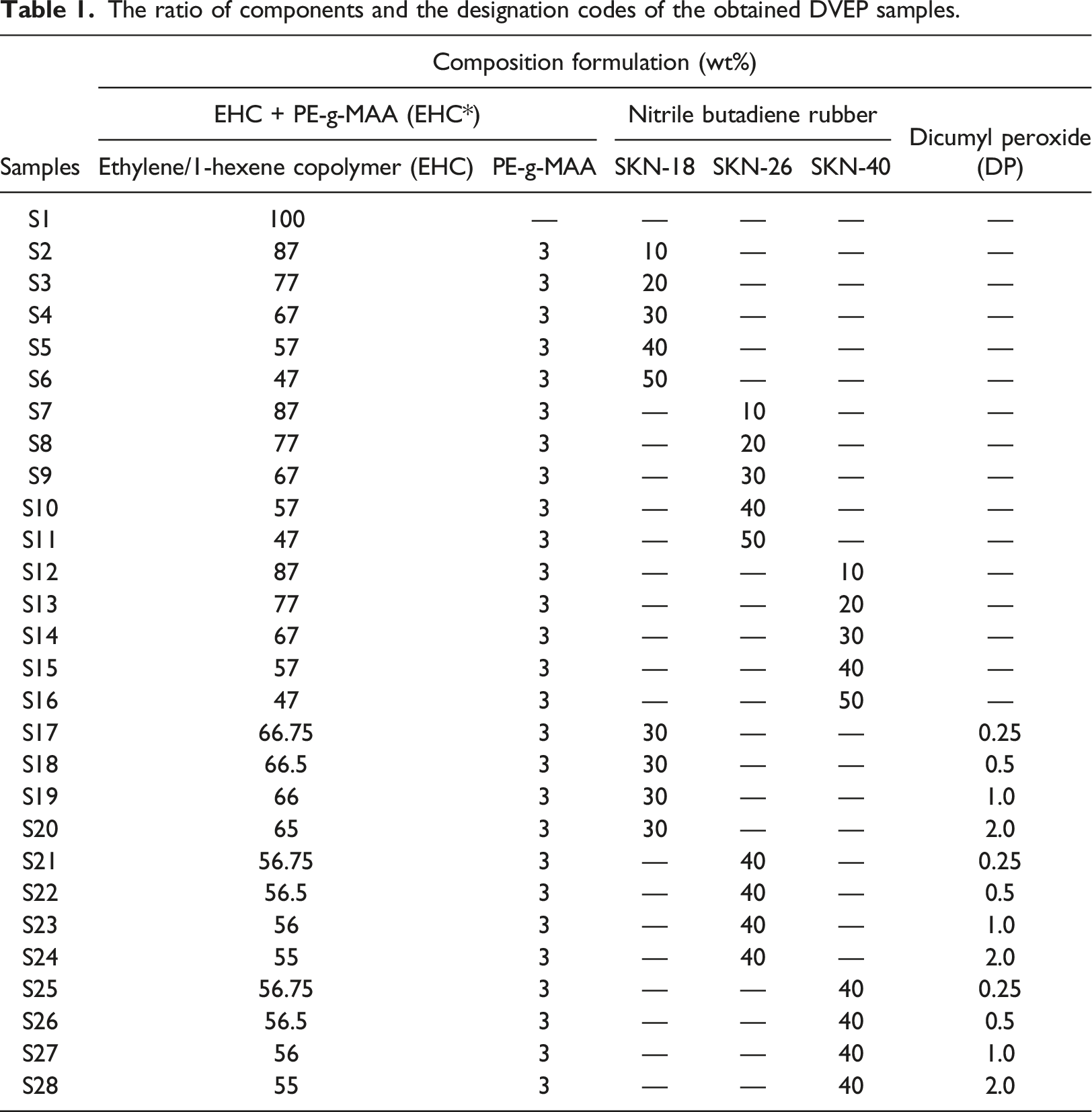
The obtained DVEP samples were subjected to pressing at a temperature of 190°C to obtain a plate 1 mm thick, from which dumb-bell specimens were cut to study the physical and mechanical characteristics of polymer composite systems.
Physical and mechanical properties
Strength properties – yield strength, tensile strength and elongation at break of composite samples were determined in accordance with ASTM D638, flexural modulus in accordance with ASTM D790. The yield strength characterizes the maximum value of strength in the area of elastic deformation, and the tensile strength characterizes the destruction at the moment of rupture of the polymer sample in the area of plastic deformation after the formation of a “neck” in it.
Heat resistance was evaluated according to the method of Vicat.
The melt flow rate (MFR) was determined on a MELT FLOW TESTER CEAST MF50 (INSTRON, Italy) at 190°C and a load of 5 kg.
The relative measurement error of the above indicators is: yield strength and tensile strength – 1–2%, elongation at break – 1%, flexural strength – 1–2%, Vicat softening point – 1%, MFR – 2%.
Thermomechanical properties
Thermomechanical properties were determined on the Kanavets plastometer. The deformation was measured at successively changing temperatures (T) at a load of 0.3 kg/cm2 and a heating rate of 50°C/hour. When constructing the thermomechanical curve of the polymer ∆ = f(Т), it was very important to cover, as far as possible, the entire temperature range of the existence of the polymer – glassy (crystalline), highly elastic and viscous-flow states. Thermomechanical curves reflect all possible physical, physicochemical and chemical changes that occur in the sample in the process of changing the temperature of the experiment and, thus, allow obtaining reliable information about temperature transitions that are significant for polymer processing.
Dilatometric studies
Dilatometry was carried out on an IIRT-1 device in the mode of slow stepwise cooling at a load of 5.3 kg and in the temperature range from 210°C to room temperature. At various fixed temperatures, the value of the specific volume of the sample was determined. The change in the volume of the sample was determined by a dial test indicator with a division value of 10−2 mm. The kinetics of isothermal crystallization of polymer compositions was studied by changing the sample volume in a dilatometer at the crystallization temperature and a constant load.
Results and its discussion
Physical and mechanical properties
In the process of carrying out this work, we proceeded, first of all, from the need to increase the polarity of EHC by introducing into its composition such a polar group as methacrylic acid (MAA). This was achieved by introducing the PE-g-MAA graft copolymer into the EHC composition. In what follows, compatibilized EHC samples will be referred to as EHC*. After the polarization of the composition of the initial EHC, studies were carried out on mixing various grades with SKN. It was important to compare the effect of the crosslinking agent on the basic physical and mechanical properties of dynamically vulcanized polymer blends (DVEP). It seemed interesting to carry out a comparative analysis of the properties of thermoplastic elastomers before and after vulcanization and thereby determine the advantageous features of DVEP.
To study dynamically vulcanized polymer systems, the most preferable method is thermomechanical and dilatometric studies, which make it possible to make a fairly substantiated scientific approach for interpreting processes occurring in the region of a first-order phase transition, as well as solid and viscous states. At the same time, an important role should be assigned to the study of the type of compatibilizer and its role in improving the miscibility and compatibility of the mixture components. 13 It is quite obvious that we are not talking about thermodynamic, but technological compatibility of the components of the mixture. It should also be taken into account that the mixture of neutral crystalline EHC with highly polar synthetic rubber (SKN) is used as the object of study. Of no small importance is the problem of studying the effect of the concentration of nitrile groups on the technological compatibility of mixed components in a mixture with SKN-18, SKN-26 and SKN-40.13–15
Physical and mechanical properties of unvulcanized EHC* + SKN polymer blends.
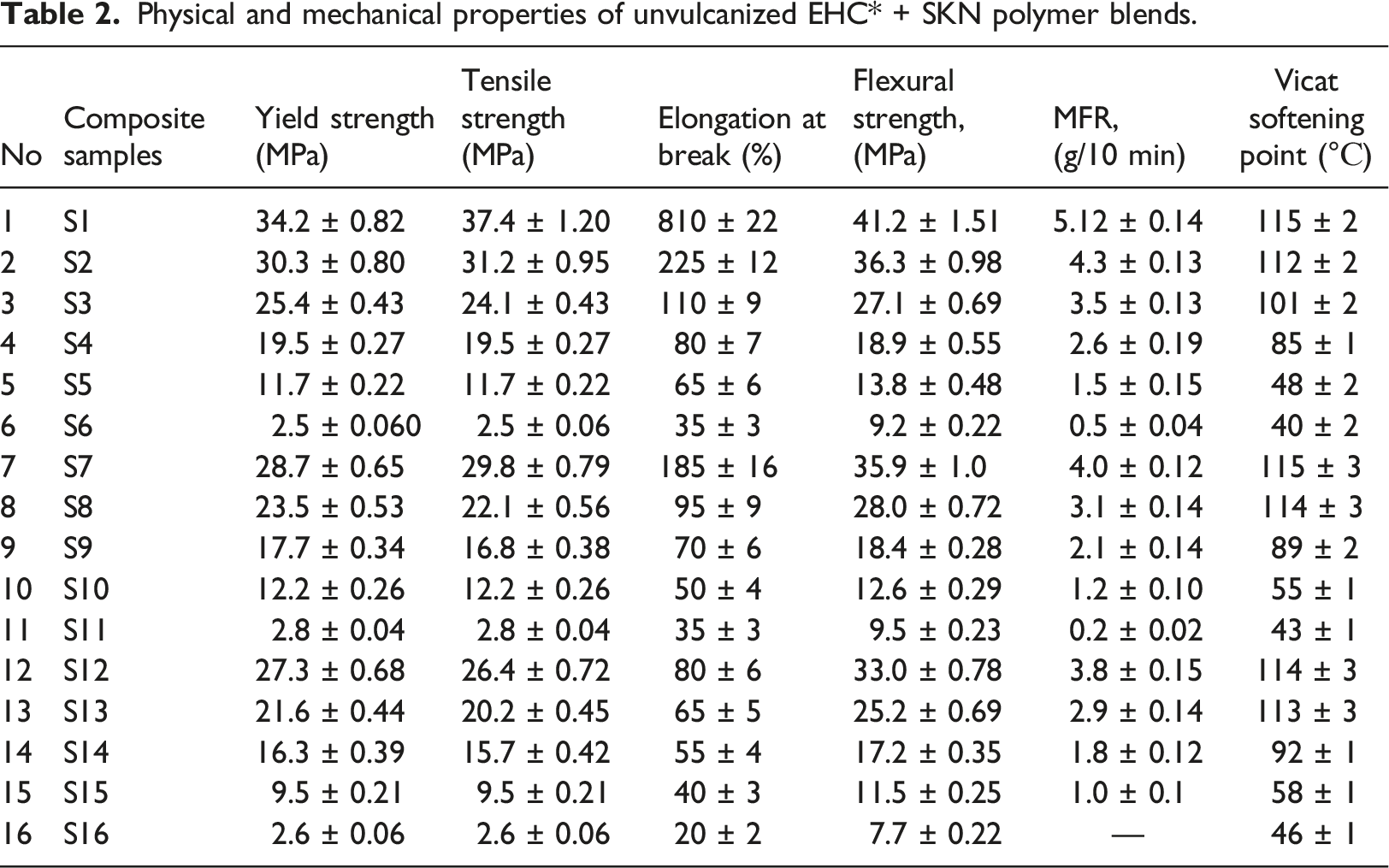
Analyzing the data given in this table, it can be seen that, regardless of the type of SKN, with an increase in the concentration of the rubber component, a regular decrease in the strength characteristics of polymer mixtures is observed. However, there is one interesting feature that you should pay attention to. It consists in the fact that with the introduction of 30% wt. SKN-18 yield strength coincides with the tensile strength. The equality of these two strength indicators clearly indicates phase inversion, according to which the dispersed phase becomes a dispersed medium and vice versa. In addition, in this state, the polymer mixture begins to acquire the properties of rubber, which is expressed in the appearance of a region of highly elastic deformation. It is noteworthy that when using SKN-26 and SKN-40, phase inversion occurs at 40 wt% content in the composition of EHC. As expected, with an increase in the concentration of SKN in the composition of EHC and the content of nitrile groups in it, a noticeable decrease in the MFR of polymer mixtures is observed. At the same time, a decrease in the heat resistance of composite materials with an increase in the content of the amorphous component was found. The difference is manifested in the fact that with the same content of rubber, the more nitrile groups in the composition of SKN, the lower the strength properties, elongation at break, MFR, but the higher the heat resistance. This is interpreted by the fact that with an increase in the number of nitrile groups in the composition of the SKN, the polarity of the rubber becomes higher, which in a certain way affects a certain decrease in the compatibility of the mixed components of the mixture.
To obtain more complete information about the mechanism of deformation of thermoplastic elastomers, it seemed interesting to consider the stress-strain curves in Figure 1 Influence of SKN-18 concentration on the pattern of change stress-strain curves of thermoplastic elastomers based on EHC*: 1 – EHC*; 2 – 10 wt% SKN-18; 3 – 20 wt% SKN-18; 4 – 30 wt% SKN-18; 5 – 40 wt% SKN-18; 6 – 50 wt% SKN-18.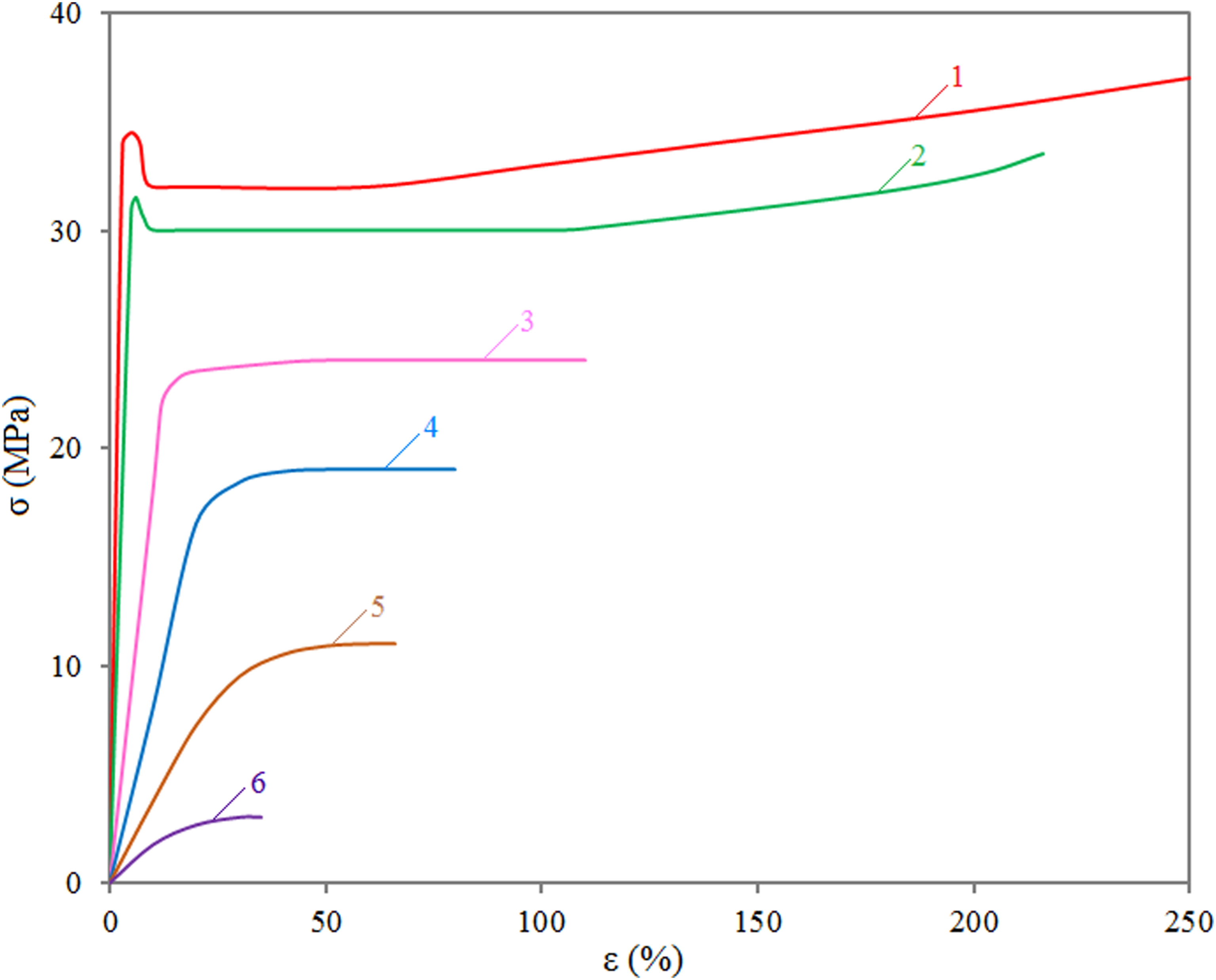
Effect of DP concentration on the physical and mechanical properties of DVEP based on EHC* + SKN.
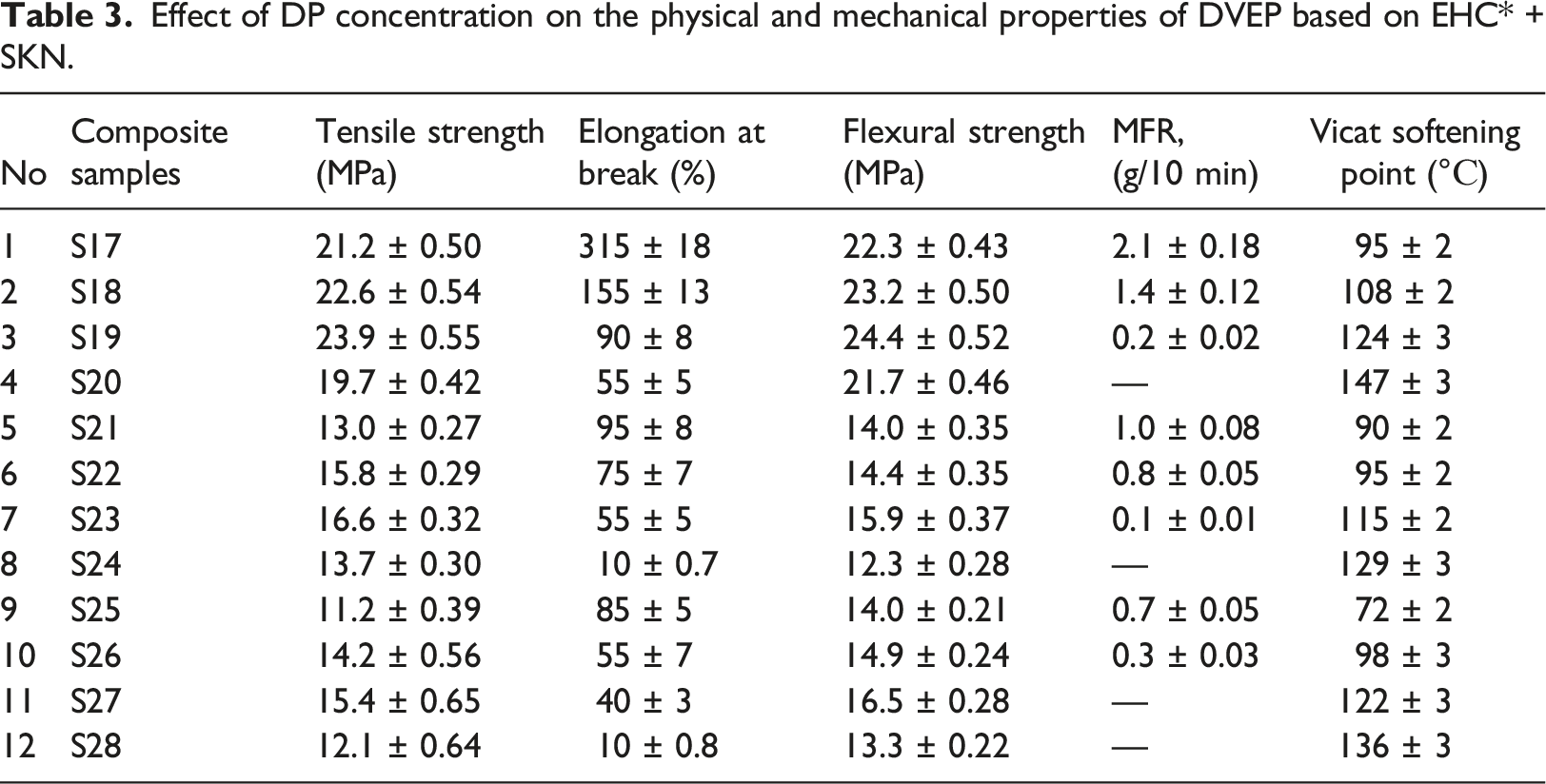
In the process of studying the physical and mechanical characteristics of dynamically vulcanized thermoplastic elastomers, a very important circumstance is the study of issues related to the analysis of stress-strain curves. For the example in Figure 2 Influence of DP concentration on the pattern of change stress-strain curves of dynamically vulcanized thermoplastic elastomers based on EHC* + 30 wt% SKN-18: 1 - 0.25 wt% DP; 2 – 0.5 wt% DP; 3 – 1.0 wt% DP; 4 – 2.0 wt% DP.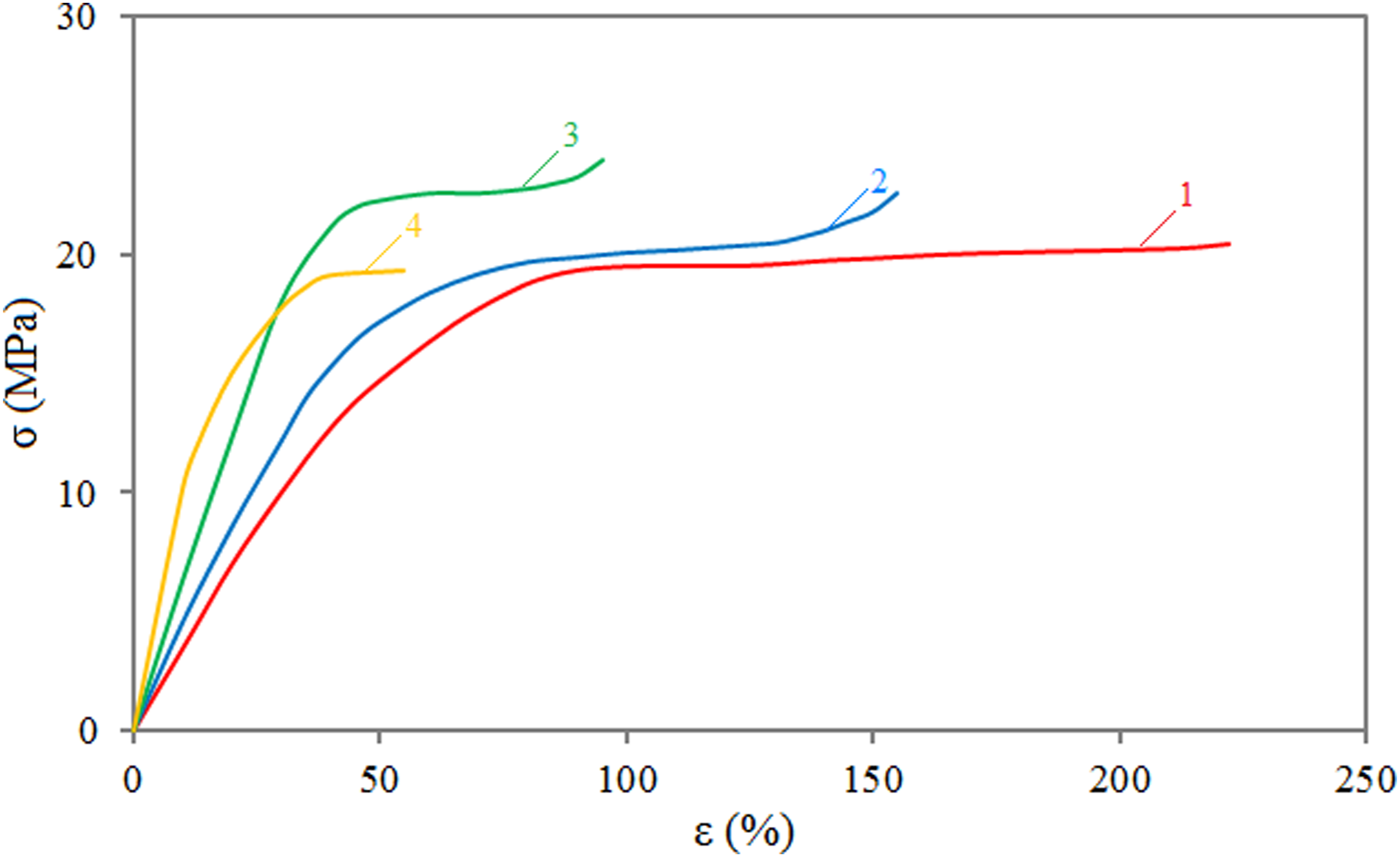
Thermomechanical properties
One of the effective methods for studying the processes occurring in polymer mixtures is the method of thermomechanical studies. Figures 3–5 show thermomechanical curves for the dependence of deformation on temperature depending on the concentration and type of SKN: SKN-18, SKN-26, and SKN-40. Figure 1 shows thermomechanical dependence curves for blends based on EHC + SKN-18 + 3.0 wt% PE-g-MAA. For synthetic rubber SKN-18, the maximum deformation mark (0.2 cm) ends at 72°C (Figure 3). As the content of SKN-18 in the composition of EHC increases from 10 to 40 wt%, noticeable changes in the patterns of thermomechanical curves are observed. The introduction of even 10 wt% into the composition of HDPE is marked by a decrease in the softening point from 132 to 116°C. A further increase in the content of SKN-18 within the limits of 20, 30 and 40 wt% is accompanied by a decrease in the softening temperature of the polymer mixture in the following sequence: 100, 84 and 40°C. The data obtained unambiguously support the fact that, in the presence of a compatibilizer, an increase in the SKN content is accompanied by a regular and expected decrease in the softening point of polymer blends. The data obtained unambiguously support the fact that, in the presence of a compatibilizer, an increase in the SKN content is accompanied by a regular and expected decrease in the softening point of polymer blends. In this case, a characteristic region of highly elastic deformation appears in the form of a plateau. The greater the content of the rubber component, the wider the area of highly elastic deformation and the lower the temperature at which the maximum deformation temperature is reached at the 0.2 cm mark. Influence of SKN-18 concentration on thermomechanical curves of polymer mixtures based on EHC*: 1 – initial SKN-18; 2 – initial EHC*; 3 – 10 wt% SKN-18; 4 – 20 wt% SKN-18; 5 – 30 wt% SKN-18; 6 – 40 wt% SKN-18. Influence of SKN-26 concentration on thermomechanical curves of polymer mixtures based on EHC*: 1 – initial SKN-26; 2 – 10 wt% SKN-26; 3 – 20 wt% SKN-26; 4 – 30 wt% SKN-26; 5 – 40 wt% SKN-26. Influence of SKN-40 concentration on thermomechanical curves of polymer mixtures based on EHC*: 1 – initial SKN-40; 2 – 10 wt% SKN-40; 3 – 20 wt% SKN-40; 4 – 30 wt% SKN-40; 5 – 40 wt% SKN-40.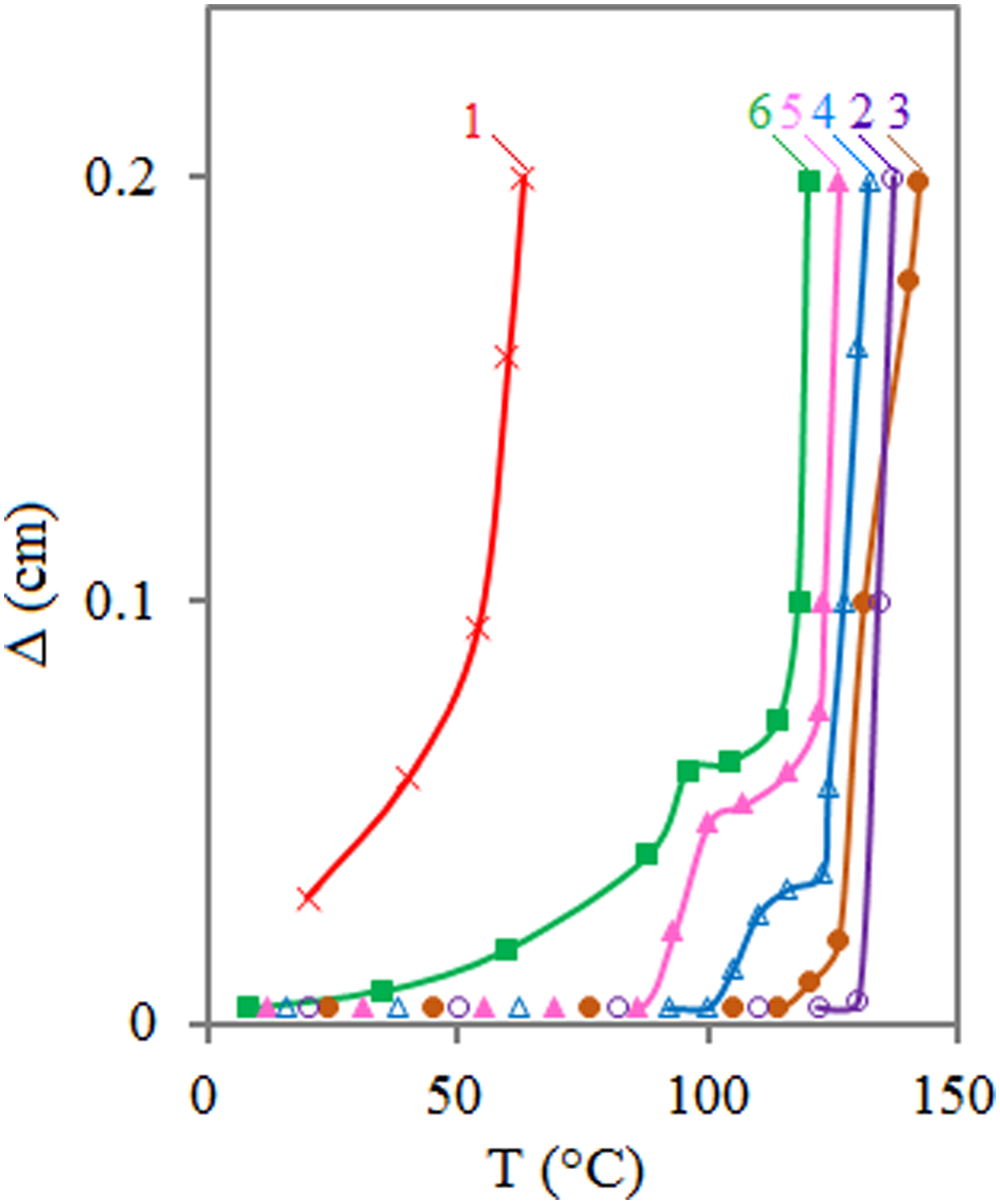
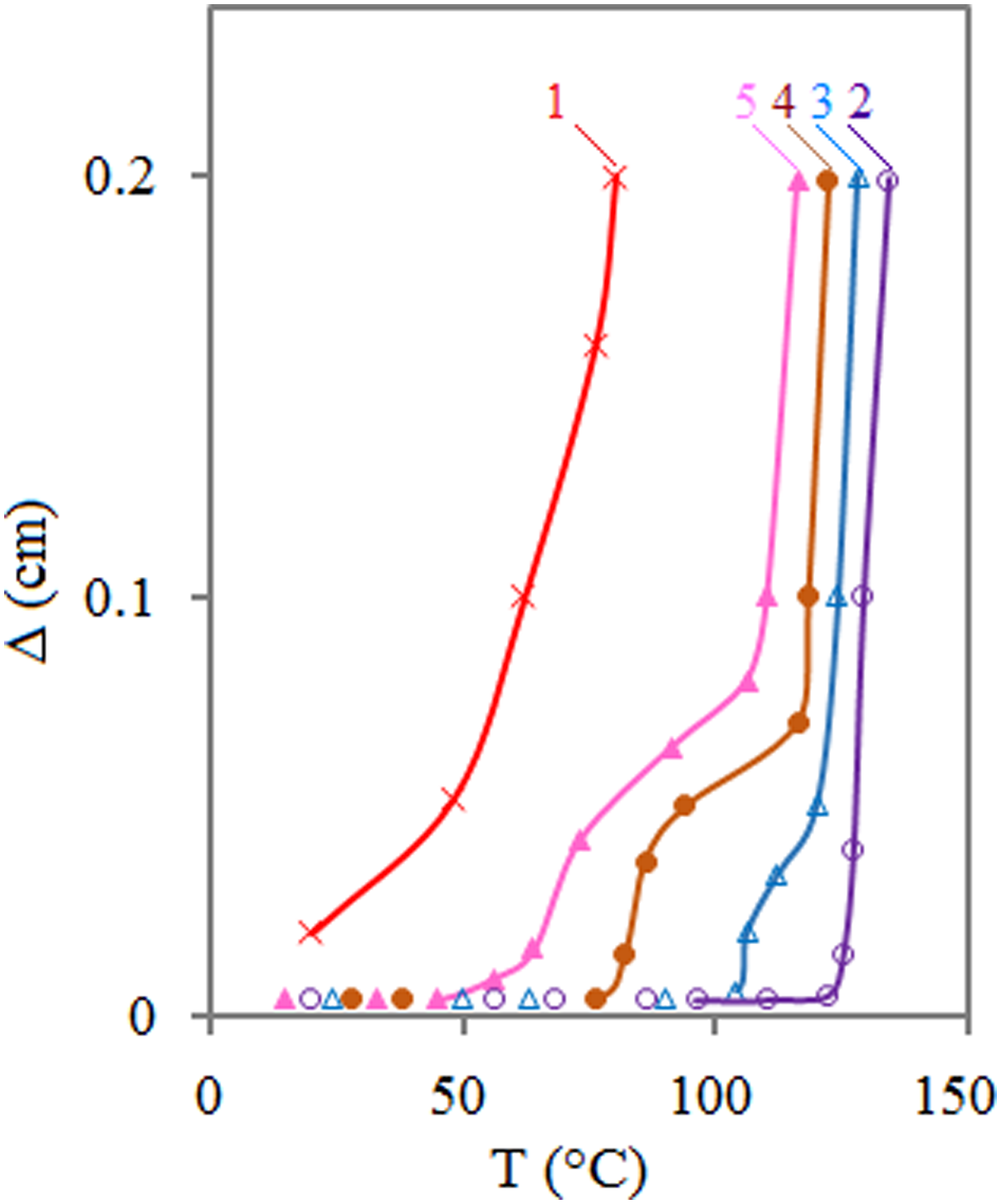
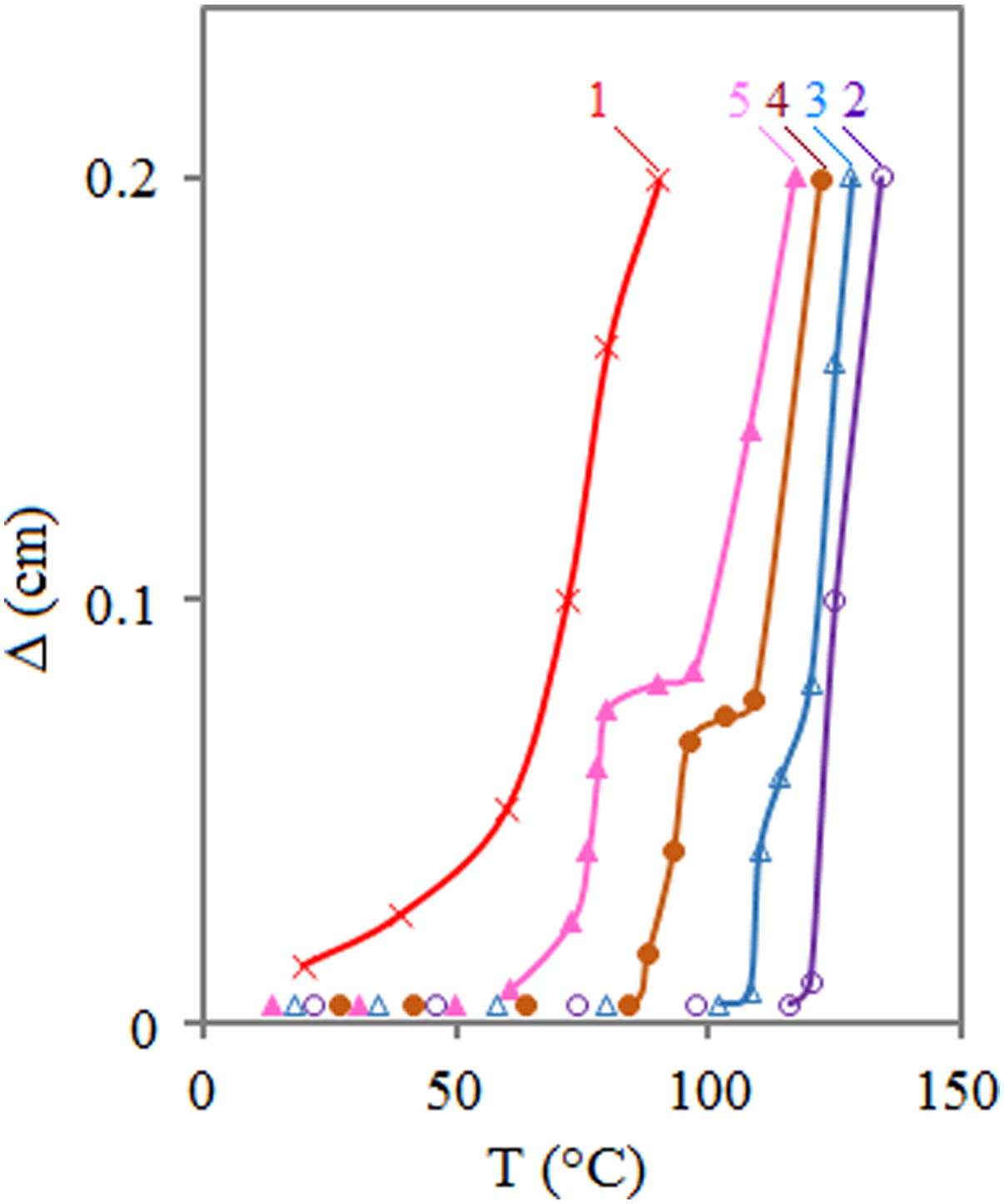
The thermal deformation characteristics of mixtures with SKN-26 and SKN-40 were studied in a similar way (Figures 4 and 5).
The commonality in the regularity of changes in thermomechanical curves is manifested in the fact that with an increase in the content of the rubber component, a decrease in the onset temperature of softening of the samples and the appearance of a region of highly elastic deformation at relatively low temperatures is observed. Differences are manifested in temperature transitions from solid to highly elastic and viscous-flow states. It is noteworthy that with an increase in nitrile groups’ concentration in the SKN composition, temperature transitions are observed at relatively high temperatures. Undoubtedly, in this case, the fact is manifested that with an increase in nitrile groups, the rigidity and temperature range of softening of the SKN increase.
Dilatometric studies
For a clear understanding of the processes occurring in two-phase heterogeneous systems, which include a mixture of EHC + SKN, it seemed interesting to identify and establish the characteristic features of the crystallization of polymer systems by the method of dilatometric studies. To do this, in Figure 6, using the example of a polymer mixture EHC* + SKN-26, the regularity of changes in the dilatometric curves of the dependence of the specific volume on temperature is considered. Influence of SKN-26 concentration on dilatometric curves of specific volume versus temperature for polymer mixtures based on EHC*: 1 – initial SKN-26; 2 – initial EHC*; 3 – 10 wt% SKN-26; 4 – 20 wt% SKN-26; 5 – 30 wt% SKN-26; 6 – 40 wt% SKN-26; 7 – 50 wt% SKN-26.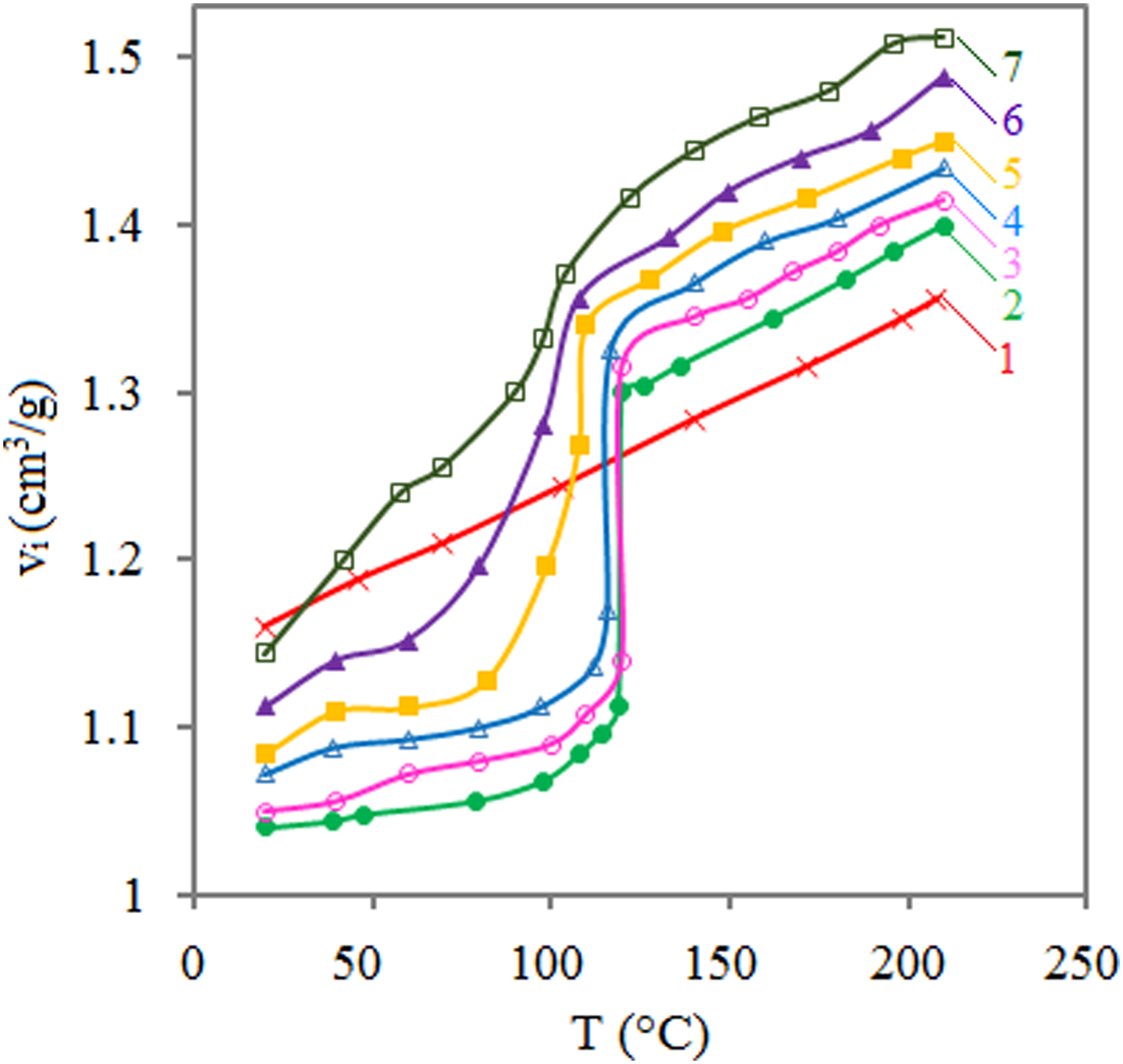
As can be seen from this figure, with an increase in the concentration of SKN in the composition from 10 to 50 wt%, notable changes are observed in the nature of the curve of the dependence of the specific volume on temperature. For example, the introduction of 10 wt% SKN into the polymer composition, the dilatometric curve differs little from the original EHC*. The important point is that the phase transition occurs at the same temperature equal to 120°C. With a further increase in the content of the rubber component to 20 wt % in the mixture, not only the dilatometric curves shift to the region of relatively high values of the specific volume, but also the temperature of the first-order phase transition decreases from 120 to 118°C. This circumstance is extremely important, since it indicates not only the amorphization of the EHC structure, but also the occurrence of complex physicochemical processes in polymer mixtures. As will be shown below, the decrease in the temperature of the onset of crystallization is evidence that, during the formation of crystal structures, the mechanism of crystal growth changes from large spherulitic to relatively simple crystalline formations. If you pay attention to the nature of the change in the dilatometric curves, you can see that for samples containing 30 wt% SKN a small area of crystallization still remains. At a concentration of SKN equal to 40 wt%, the crystallization process, which characterizes the phase transition region, is practically absent. The obtained results of the study are in good agreement with the data given in Table 2 and Figure 1, according to which, at this concentration of SKN, phase inversion occurs. Amorphization of the polymer mixture is accompanied by a sharp increase in the specific volume, i.e., a decrease in the density of the composition. A similar pattern in the region of the viscous state is typical for a mixture of thermoplastic elastomers, since with an increase in the concentration of the rubber component, an increase in the free specific volume and, accordingly, a decrease in the density of the melt is observed. A similar effect is also observed in the region of the solid state.
In the previous work,
18
we showed the applicability of the Avrami theory for studying the crystallization process of polymer composite materials in the region of a first-order phase transition. According to this theory, the crystallization process proceeds in accordance with the empirical Kolmagorov-Avrami equation:
The double logarithm of the Avrami equation allows us to obtain the following relationship:
To obtain sufficiently complete information about the process of formation of the crystal structure of polymer mixtures, let us turn to Figure 7. Influence of SKN-26 concentration in the composition of the EHC*+SKN mixture on the kinetics of their crystallization in double logarithmic Avrami coordinates: 1 – initial EHC*; 2 – 10 wt% SKN-26; 3 – 20 wt% SKN-26; 4 – 30 wt% SKN-26.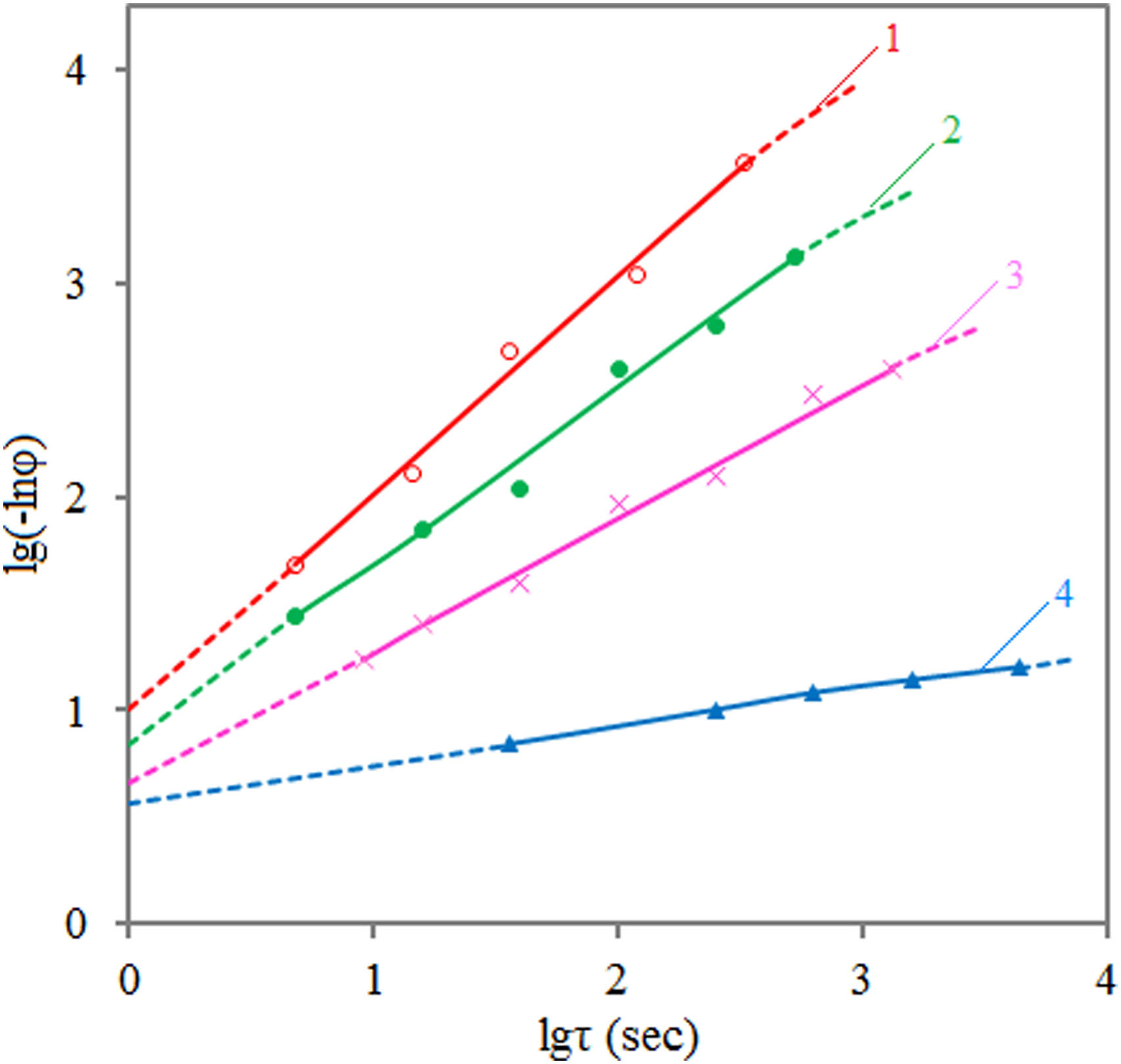
In this figure, for EHC*+SKN-26 polymer mixtures in double logarithmic Avrami coordinates in the region of the first-order phase transition, the kinetic regularities of crystallization are given. From the graphs in Figure 7, it can be established that with an increase in the content of the rubber component in the composition of the EHC*, a decrease in the slope of these curves with respect to the abscissa is observed. All this indicates that synthetic rubber helps to slow down the rate of the crystallization process of polymer mixtures and thereby reduce the value of the index n. These regularities were established only for the composition of EHC*+30 wt% SKN-26. This is due to the fact that more than 30 wt% concentration of SKN-26 in the mixture, as a result of phase inversion and complete amorphization of the structure of the polymer mixture, there was no first-order phase transition. Therefore, this circumstance did not allow us to study the kinetic regularities of crystallization of polymer mixtures at a higher concentration of SKN-26.
Thus, for a functionalized EHC*, the value of n is 4.0, which indicates the growth of a three-dimensional spherulite structure in it from sporadic nuclei with the continuous formation of homogeneous crystallization centers. Loading of 10 and 20 wt% SKN contributes to the fact that the value of n is 3.3 and 2.6, respectively. Such values of n correspond to two-dimensional disk-shaped crystal growth. Finally, at 30 wt% content, the value of n = 0.7, which indicates the simplest form of growth of crystalline formations – one-dimensional rod-like crystals.
Conclusion
This study investigated some properties of dynamically vulcanized polymer systems based on ethylene/1-hexene copolymer and nitrile butadiene rubber. Key findings from the experimental results are summarized as follows: 1. The physical and mechanical properties of EHC*+SKN polymer mixtures were studied depending on the brand of rubber and its concentration in the range of 10–50 wt%. According to physical and mechanical studies, it was found that at a concentration of SKN-18 (30 wt%), as well as SKN-26 and SKN40 equal to 40 wt% in the composition of the polymer mixture of EHC*+SKN, it acquires the properties of thermoplastic elastomers, expressed in the equality of the values of the tensile strength and the yield strength. This state is characterized by the appearance of a region of highly elastic deformation, which is typical for rubbers. 2. As a result of using the PE-g-MAA compatibilizer, it seems possible to achieve technological compatibility of the mixed components of the mixture based on EHC* and SKN. 3. The use of the thermomechanical method for the analysis of polymer mixtures showed how the pattern of thermomechanical curves changes significantly depending on the content of the amorphous component. It seems possible to fix the region of the solid, highly elastic and viscous state. 4. Dilatometric curves of specific volume versus temperature for EHC*+SKN-26 thermoplastic elastomers, in which the elastomer component concentration was varied from 10 to 50 wt%, are presented, which make it possible to record a first-order phase transition. The results of the study of the kinetic regularities of crystallization in double logarithmic Avrami coordinates showed that with an increase in the concentration of SKN-26 in the EHC* composition from 10 to 30 wt%, a change in the mechanism of crystal structures growth from three-dimensional spherulitic to one-dimensional rod-like is observed. Over 30 wt% SKN concentration in the EHC* composition there is no phase transition of the first order. 5. As a result of vulcanization of polymer mixtures EHC* with 30 and 40 wt% SKN concentration in a dynamic mode, DVEP were obtained, which are distinguished by relatively high values of strength indicators and elongation at break. It was found that for DVEP, the value of DP equal to 0.5 wt % is the most optimal, since in this case their high strength and rheological properties are ensured at a satisfactory level. The latter circumstance allows DVEP to be processed on standard equipment by injection molding and extrusion.
Thus, it becomes obvious that the loading of SKN into the composition of the EHC* leads to a significant change in the mechanism of growth of crystalline formations, which generally has a significant effect on the formation of the physico-mechanical and thermal deformation characteristics of polymer mixtures. Carrying out a set of studies in this direction allowed the authors to obtain fairly complete information about the processes that take place in polymer mixtures based on a crystalline and amorphous component. It was important to identify those main criteria that have a significant impact on the process of formation of the supramolecular structure of heterogeneous polymer mixtures. By implementing a systematic approach to the analysis of the structure and properties of polymer mixtures, we have in fact obtained elastoplastics that combine the properties of rubber, but are processed as thermoplastics.
Footnotes
Declaration of conflicting interests
The author(s) declared no potential conflicts of interest with respect to the research, authorship, and/or publication of this article.
Funding
The author(s) received no financial support for the research, authorship, and/or publication of this article.
