




Abstract
Thermoplastic vulcanizates (TPVs) based on acrylonitrile–butadiene–styrene terpolymer (ABS)/nitrile butadiene rubber (NBR) blends were prepared by dynamic vulcanization where ABS matrix was plasticized by dioctyl phthalate (DOP), and the influences of DOP plasticizer dosage on mechanical properties, Mullins effect, and morphological properties of the TPVs were investigated systematically. Experimental results indicated that the mechanical properties of ABS/NBR TPVs were improved significantly with the incorporation of DOP. Compared with ABS/NBR TPVs, the tensile strength and the elongation at break went through maximum values at a plasticizer content of 10 phr, while the Shore A hardness was decreased apparently. Mullins effect results showed that the TPVs incorporated with DOP had relatively lower stress-softening effect, residual deformation, and internal friction loss than that of the ABS/NBR TPVs, indicating the improvement of elasticity. Morphology studies showed that the fracture surface of ABS/NBR/DOP TPVs was relatively smoother, indicating the significantly improved elastic resilience ability.
Keywords
Introduction
Thermoplastic elastomers (TPEs) are rubbery materials that exhibit properties similar to those of conventional vulcanized rubbers but are processable at an elevated temperature; the thermoplastic vulcanizates (TPVs) are a special class of TPEs produced via dynamic vulcanization in the presence of a vulcanizing system. 1 –3 Dynamic vulcanization was first described by Gessler 4 in 1962 and then developed by Fischer, 5 Coran and Patel, 6 and Abdou-Sabet and Michael. 7 During dynamic vulcanization, the curing agents are used to in situ cross-link an elastomer during its mixing with molten plastics. 8 Morphologically, the resulting TPVs are characteristic of finely dispersed, cross-linked rubber particles distributed in a continuous thermoplastic matrix. 9 This technology led to a significant number of new thermoplastic elastomer products commercialized during the mid-to late-1980s. 10 –12
Because of their unique characteristics, TPVs play a very important role in the applications of automotives, buildings and constructions, wires and cables, and so on. Since the TPVs generally have the problems of relative large Shore A hardness and tension set at break, which will inevitably limit their application. However, the further improvement of TPVs properties can be achieved by addition of a higher content of processing oil, which can effectively lower the Shore A hardness and improve the melt processability. Lei et al. and Jayaraman et al. 13,14 reported the distribution coefficient of oil and curing agent in polypropylene (PP)/ethylene–propylene–diene monomer TPV. Nakason and Kaewsakul 15 investigated the influence of oil contents in dynamically cured natural rubber and PP blends. Most of the publications on oil-extended TPVs are mainly concerned about lowering the Shore A hardness and tension set at break while sacrificing the mechanical strength.
Acrylonitrile–butadiene–styrene (ABS) is widely used in automotives, instrumentations, and industrial and domestic appliances due to its excellent mechanical properties, dimensional stability, and chemical resistance performances. Nitrile butadiene rubber (NBR) presents excellent oil resistance character. Studies of TPVs based on ABS and NBR had been reported by Coran et al. and Anandhan et al. 16,17 They typically exhibit superior mechanical, such as, high mechanical, and excellent oil resistance properties. However, we know of no reports of the effect on dynamic vulcanizates based on mixtures of ABS and NBR TPVs incorporated with dioctyl phthalate (DOP) plasticizer. The ABS/NBR TPVs were prepared by dynamic vulcanization in our previous work. 18 Usually, higher elongation at break, lower tensile set at break, and Shore A hardness of an elastomer correspond to higher elasticity; thus, the elastic property of the ABS/NBR TPVs was expected to be improved by the plasticization of DOP plasticizer. In this article, we report the preparation of the ABS/NBR TPVs which was plasticized with different DOP dosages via dynamic vulcanization. The influences of the DOP plasticizer dosages on the mechanical properties, Mullins effect, and morphological properties of the ABS/NBR TPVs were investigated systematically.
Experimental
Materials
ABS copolymer, injection grade EX18 T, was supplied by UMG ABS Ltd (Japan) with a melt flow index (MFI) of 14 g 10 min−1 (230°C, 5.0 kg). NBR rubber (3305 type, with acrylonitrile content of 35 wt% and ML1+4(100°C) = 45) was commercially manufactured by Lanzhou Petrochemical Co. Ltd (China). DOP plasticizer was produced by Tianjin Guangcheng Chemical Industry Co. Ltd (China). Sulfur, used as a vulcanizing agent, was obtained from Hengye Zhongyuan Chemical Co. Ltd (China). N-Cyclohexyl-2-benzothiazole sulfenamide (CZ) and tetramethyl thiuram monosulfide (TS), used as accelerators, were manufactured by Northeast Auxiliary Chemical Industry Co. (China). Zinc oxide (ZnO) was used as an activator and obtained from NewLe Qinshi Zinc Co. Ltd (China). Stearic acid was used as an activator and obtained from Wanyou Co. Ltd (China). Poly(1,2-dihydro-2,2,4-trimethyl-quinoline) (antioxidant RD) was used as an antioxidant and obtained from Shengao Chemical Co. Ltd (China).
Preparation of dynamically vulcanized ABS/NBR/DOP blends
Commercially available ABS, NBR, and DOP, as mentioned above, were used for the TPVs. The concentrations for cross-linking the NBR system are expressed in parts per hundred NBR rubber by weight (phr). The sulfur-containing accelerating system recipe for cross-linking the NBR consisted of the following ingredients: 100 phr NBR, 1.0 phr sulfur, 1.5 phr CZ, 1.2 phr TS, 5.0 phr ZnO, 1.5 phr stearic acid, and 1.0 phr antioxidant RD.
The dynamically vulcanized ABS/NBR/DOP TPVs were produced via a two-step mixing process. In the first step, the preblends containing NBR and the cross-linking ingredients were compounded in a two-roll mill (X(S) K-160, Shanghai Qun Yi Rubber Machinery Co. Ltd, China) at room temperature. The roller speed ratio was 1:1.35 and the line speed of the front roller was 11.91 m min−1, and the roller distance was 0.2 mm during mixing. The charging sequence was NBR, CZ, ZnO, stearic acid, antioxidant RD, sulfur, and TS, respectively. After 3 min of mixing time, the preblends were removed from the mixer. In the second step, the TPV compounds were prepared by melt mixing the NBR preblends with ABS resins and DOP plasticizer using a Brabender PLE 331 Plasticorder (Brabender Gmbh, Germany). The mixer temperature was kept at 160°C with a constant rotor (cam type) speed of 80 r min−1. The ABS/NBR blending ratio was fixed at 30/70, and the DOP amount was varied from 0 to 30 phr. The requisite quantities of ABS resin and DOP were charged into the mixer and allowed to melt. After 3 min, the NBR-based preblend was added. The mixing was continued for another 8 min to allow the dynamic vulcanization. Finally, the compound was removed from the mixer and passed through a cold two-roll mill (X(S) K-160, Shanghai Qun Yi Rubber Machinery Co. Ltd) in the molten state to obtain a sheet. The roller distance was kept at 1.0 mm. The sheet, about 2 mm thick, was compression molded in a plate vulcanizing machine (50 T, Shanghai Qun Yi Rubber Machinery Co. Ltd) under a pressure of 15 MPa at 180°C for 5 min, followed by cold compression in another molding machine(25 T, Shanghai Qun Yi Rubber Machinery Co. Ltd) under a pressure of 15 MPa for 8 min at room temperature. Test specimens were die-cut from the compression-molded sheet and used for testing after 24 h.
Measurement and characterization
For the measurement of tensile properties, dumbbell-shaped specimens were prepared according to ASTM D412 standard. The tearing strength was tested according to ASTM D624 using unnotched 90° angle test pieces. Both tensile and tearing tests were performed on a universal testing machine (TCS-2000, GoTech Testing Machines Inc., China) at a crosshead speed of 500 mm min−1. The average value of tensile strength was calculated for five test specimens and that of tearing strength was calculated for three test specimens. The Shore A hardness was determined using a hand-held Shore A Durometer (LX-A, Shanghai Liu Ling Instrument Factory, China) according to ASTM D2240 standard. The average values of Shore A hardness was calculated for three test specimens. All tests were carried out at 23°C.
In order to illustrate the material softening resulting from the Mullins effect, cyclic uniaxial tension tests were performed on ABS/NBR (30/70 weigh ratio) and ABS/NBR/DOP (30/70/10 weigh ratio) TPVs. Flat tensile samples were cut from the compression-molded sheets. Uniaxial tension tests were performed on a TCS-2000 tensile machine (GoTech Testing Machines Inc., China) operated in a local strain control mode. Tests were run at a low constant strain rate of 0.042 s−1. For a given sample, one sample was submitted to a simple uniaxial tension test, while another one was submitted to a cyclic uniaxial tension test with the maximum stretching increasing every five cycles. The stress–strain curves during the loading and unloading period were measured.
Morphological study was carried out using field-emission scanning electron microscopy (FESEM, JEOL-6700F, Japan Electron Co. Ltd, Japan). For the etched TPV specimens, the ABS phase was extracted by immersing the blends into acetone for 4 h at room temperature. Then, the samples were dried in vacuum oven at 30°C for 24 h. The etched surfaces and the fracture surfaces of the specimens were sputtered with thin layers of gold and imaged using FESEM.
Results and discussion
Influence of DOP on the mechanical properties of the ABS/NBR TPVs
Figure 1 illustrates the stress–strain behaviors of the dynamically vulcanized 30/70 (weigh ratio) ABS/NBR TPVs with different loading levels of DOP plasticizer, and the mechanical properties results of ABS/NBR/DOP TPVs are presented in Table 1. The stress–strain curves of ABS/NBR/DOP TPVs were similar in the shape of their curves. Initially, an obvious increase in tensile stress and modulus could be observed (for 10% strain). Upon further deformation, the slope of the curves decreased with the stress increasing almost linearly until fracture occurred. Moreover, it can be seen that the slope at initial linear region of the curves (i.e., Young’s modulus) gradually decreased with an increasing DOP loading. All the stress–strain curves showed the representative elastomeric character of being soft and tough, particularly at the higher loading levels of DOP plasticizer. From Figure 1, it can also be seen that the tensile strength and the elongation at break of ABS/NBR/DOP TPVs were improved greatly when the dosage of DOP plasticizer was 20 phr below.
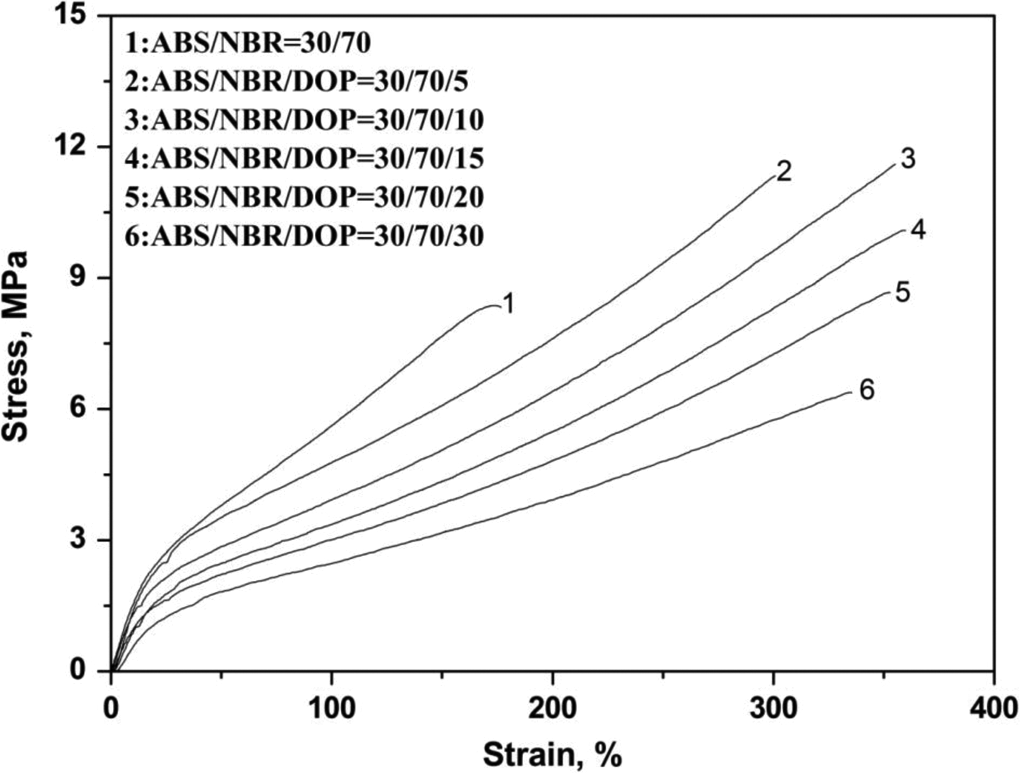
Stress–strain curves of dynamically vulcanized ABS/NBR/DOP TPVs.
Influence of DOP content on the mechanical properties of ABS/NBR TPVs.
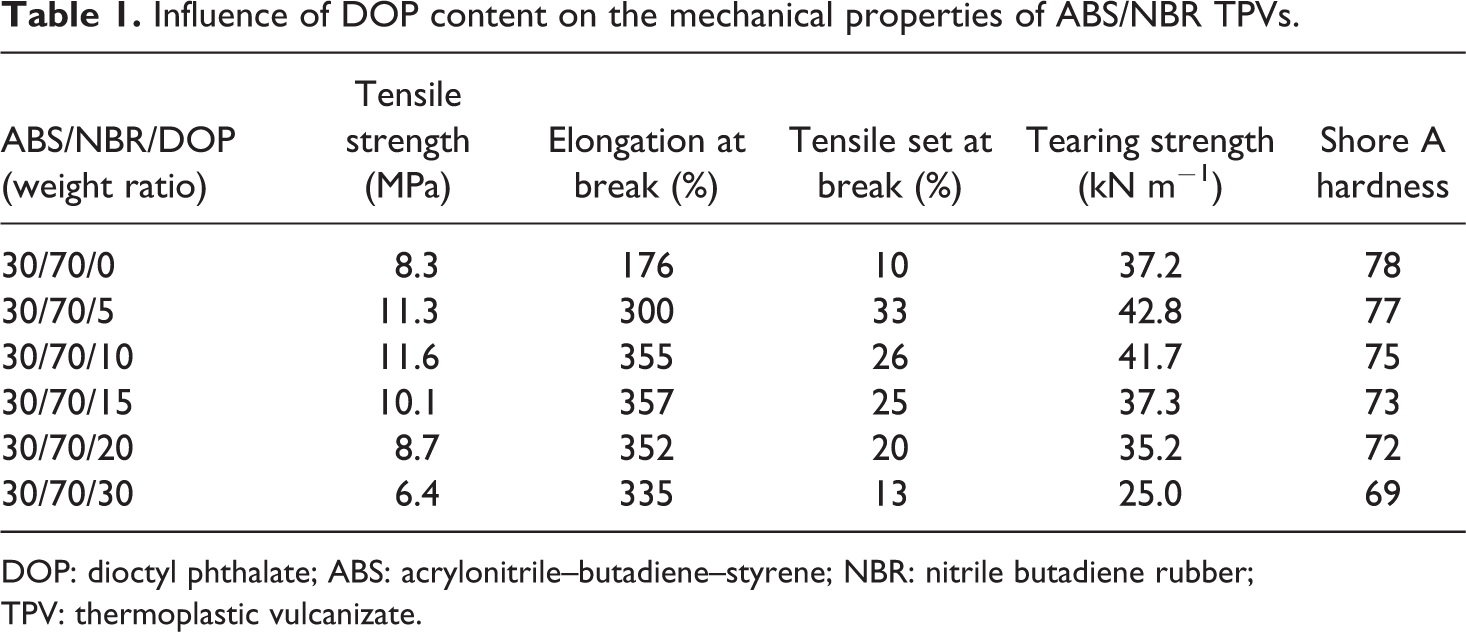
DOP: dioctyl phthalate; ABS: acrylonitrile–butadiene–styrene; NBR: nitrile butadiene rubber; TPV: thermoplastic vulcanizate.
The tensile strength, Shore A hardness, elongation at break, tensile set at break, and tearing strength of ABS/NBR TPVs mixed with various DOP dosages are shown in Figures 2 to 4, respectively. As shown in Figure 2, when the DOP dosage in TPVs was approximately in the range of 5–15 phr, the tensile strength improved significantly and reached a maximum value at 10 phr DOP incorporation. However, when the content of DOP was above 20 phr, the tensile strength was lower than that of ABS/NBR TPVs. As expected, the Shore A hardness properties of the TPVs decreased with increasing DOP dosage.
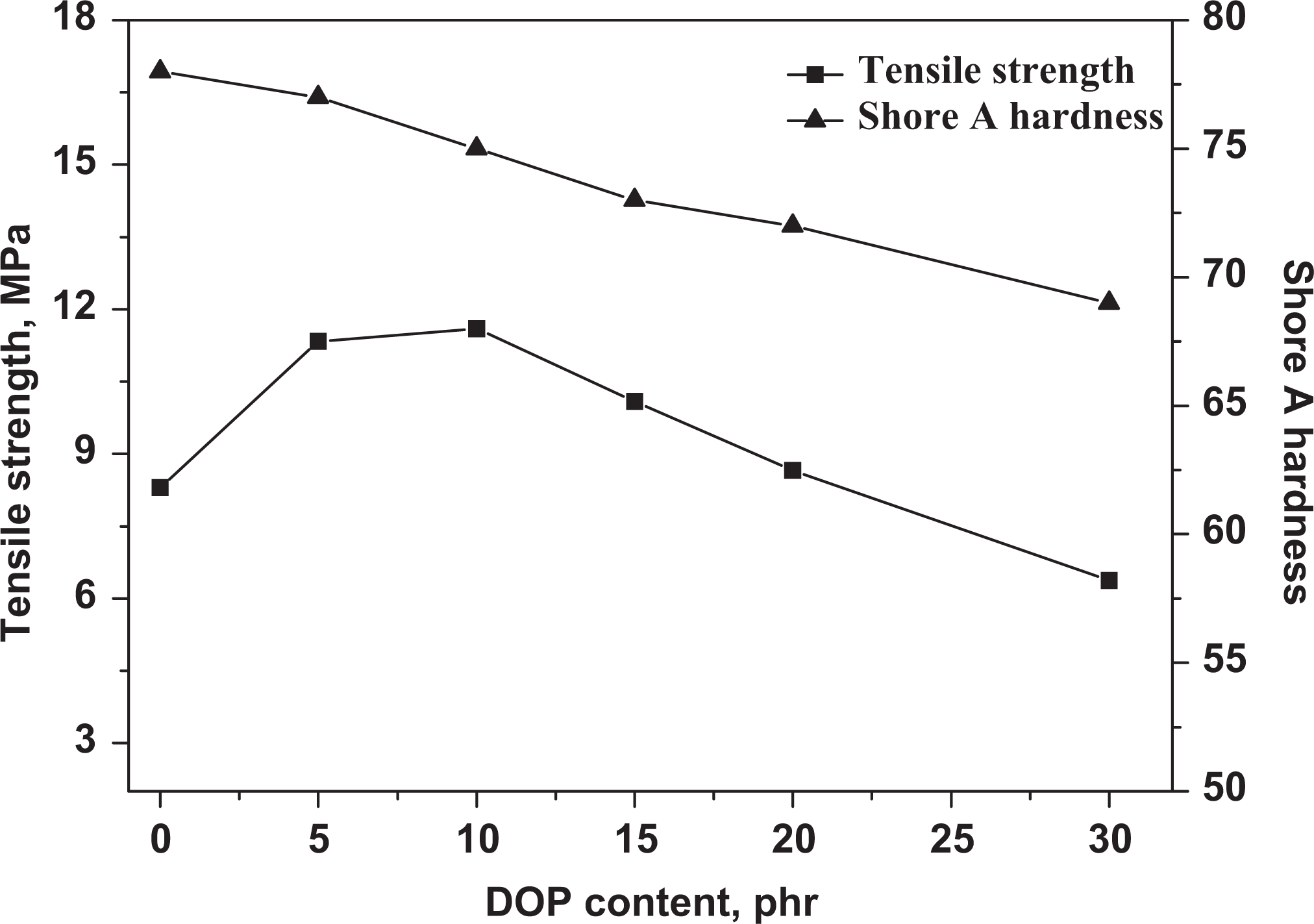
Effect of DOP content on tensile strength and Shore A hardness of dynamically vulcanized ABS/NBR/DOP TPVs.
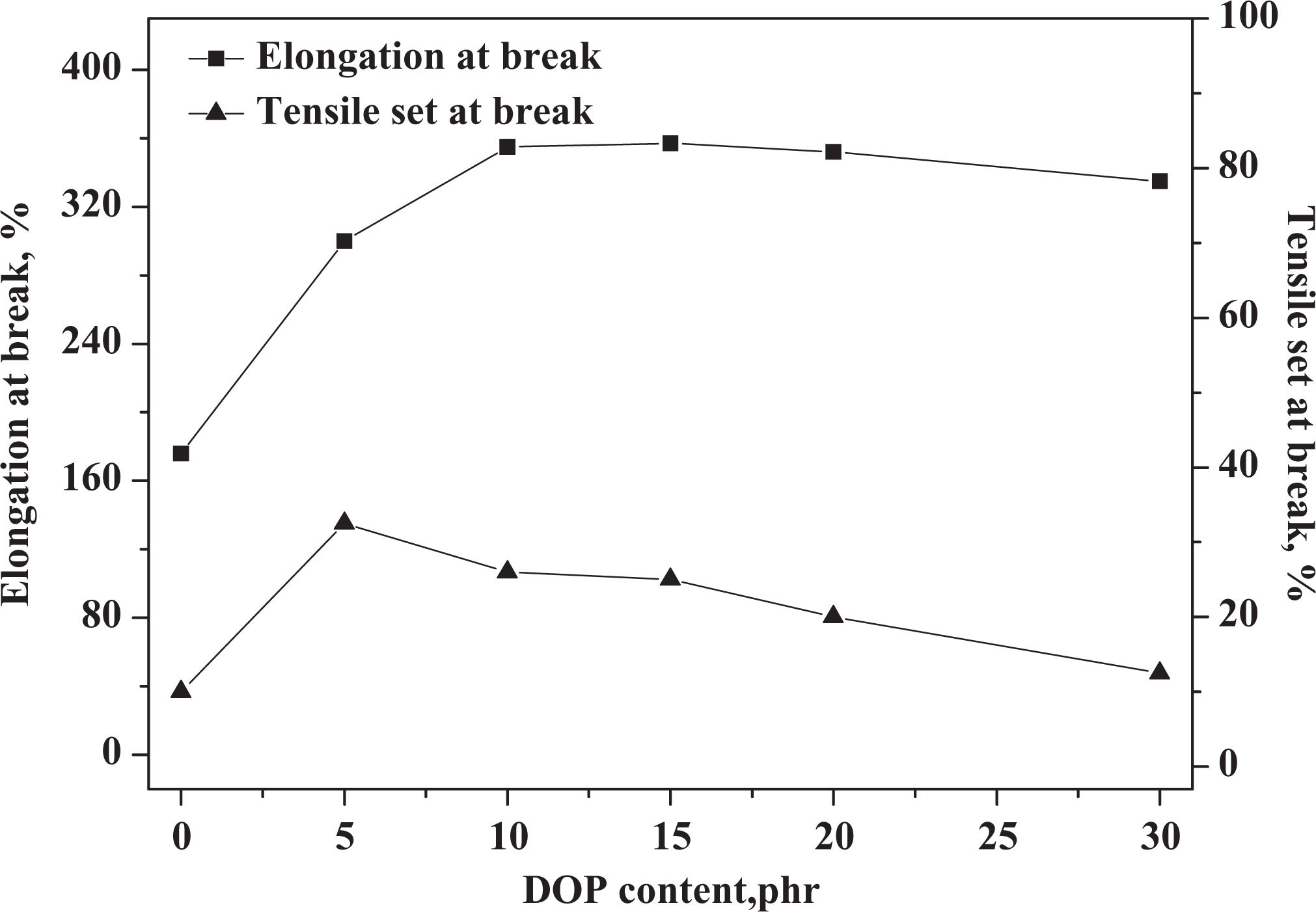
Effect of DOP content on elongation at break and tensile set at break of dynamically vulcanized ABS/NBR/DOP TPVs.
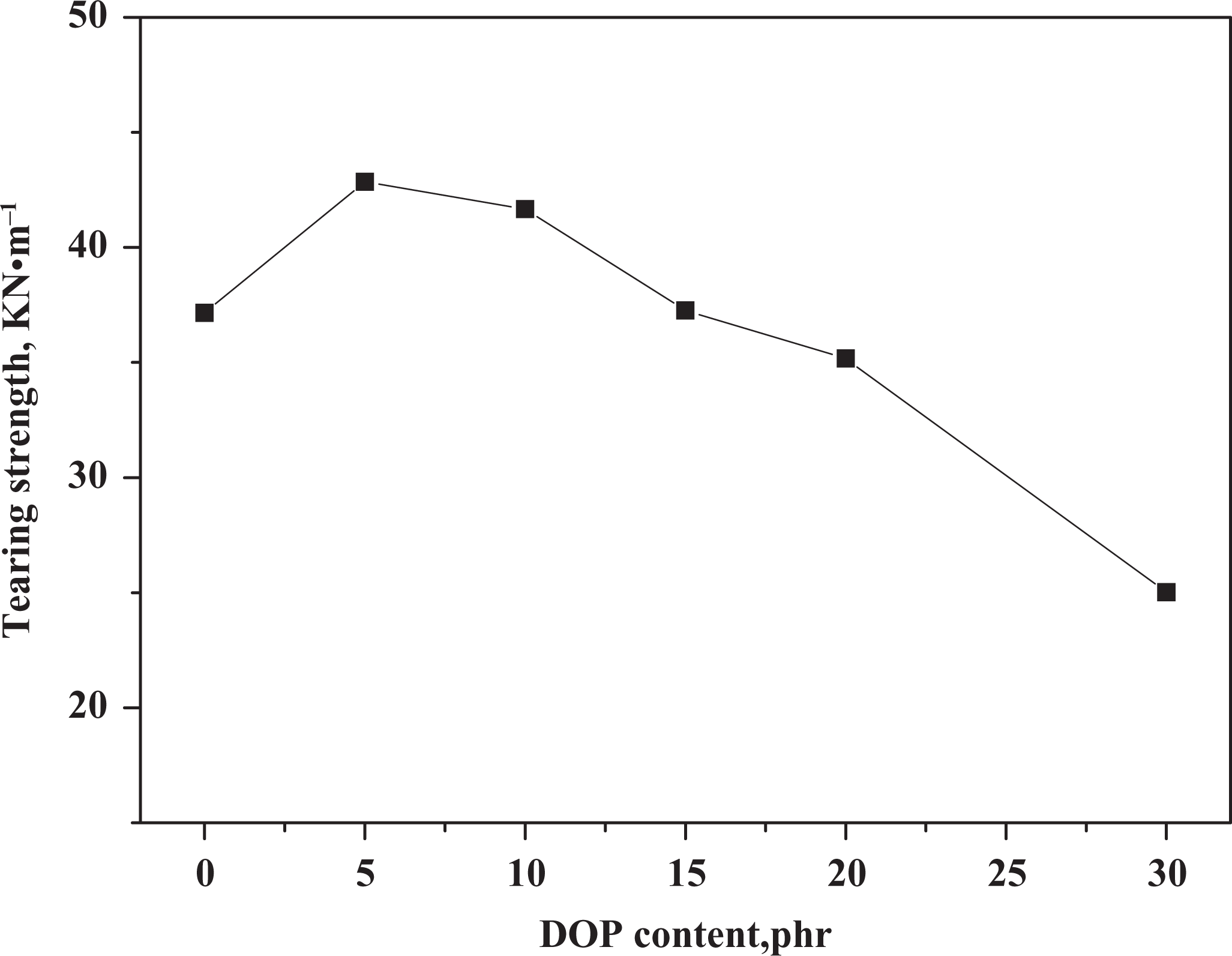
Effect of DOP content on tearing strength of dynamically vulcanized ABS/NBR/DOP TPVs.
With increasing DOP loading, the elongation at break (Figure 3) was also substantially improved and reached a maximum value at 10 phr DOP incorporation, increasing from 170% (at 0 phr DOP) to 350% (at 10 phr DOP). The influence of DOP loading on tension set at break was similar with that on elongation at break; moreover, the larger elongation at break led to the larger tension set at break. However, the tension set at break decreased gradually with the increasing of DOP loading when the DOP dosage was above 5 phr, indicating the improvement of the elastomeric nature.
The loading of DOP also affected the tearing strength. As shown in Figure 4, the tearing strength substantially increased when DOP content was 15 phr below, and then the tearing strength decreased gradually as the DOP loading.
Generally, the addition of oil in combination with cross-linked rubber phase of TPVs allows the production of soft compositions with good processability and elastic recovery. 19 Due to the small polarity difference between ABS, NBR, and DOP, the DOP was dispersed in both ABS matrix and NBR phase of ABS/NBR TPVs during dynamic vulcanization, which was similar with that of the paraffin oil-filled PP/rubber TPVs. 20 Usually, the existence of oil in the matrix of TPVs could inevitably enhance the plastic deformation ability of resin phase, 21 leading to the remarkably increase of elongation at break. For the tensile testing, upon elongation, the thin thermoplastic layers at the equator of the rubber particles are subjected to plastic yielding; upon relaxation, they are drawn back by the elastic rubber domains effectively. 22,23 It is obvious that deformation reversibility of ABS/NBR TPVs was improved due to the enhanced plastic deformation of ABS matrix, resulted in the relative low tension at break, as shown in Figure 3. It should be noted that the existence of DOP located in the interface layer would promote the mutual diffusion and penetration of both ABS and NBR chain segments of interface phase, led to the improved interface interaction and the remarkable improvement of the tensile strength and elongation at break, as shown in Figures 2 and 3.
Mullins effect of NBR/ABS and ABS/NBR/DOP TPVs
Figure 5 illustrates the stress–stretch curves of ABS/NBR and ABS/NBR/DOP TPVs submitted to 5 uniaxial loading–unloading cycles with given stretch λ = 1.5, 2.0, 2.5, and 3.0 (5 cycles of loading–unloading from zero stress up to the maximum stretch down to zero stress). In Figure 5, during loading–unloading cycles, a softening phenomenon could be observed, which was characterized by a lower resulting stress for the same applied strain, appeared remarkably after the first loading. However, when the extension exceeded the maximum stretch previously applied, the stress–strain response followed the same return path as that of the monotonous uniaxial tension test, indicating that previous stretches had little influence on the stress–stretch properties at greater stretch.
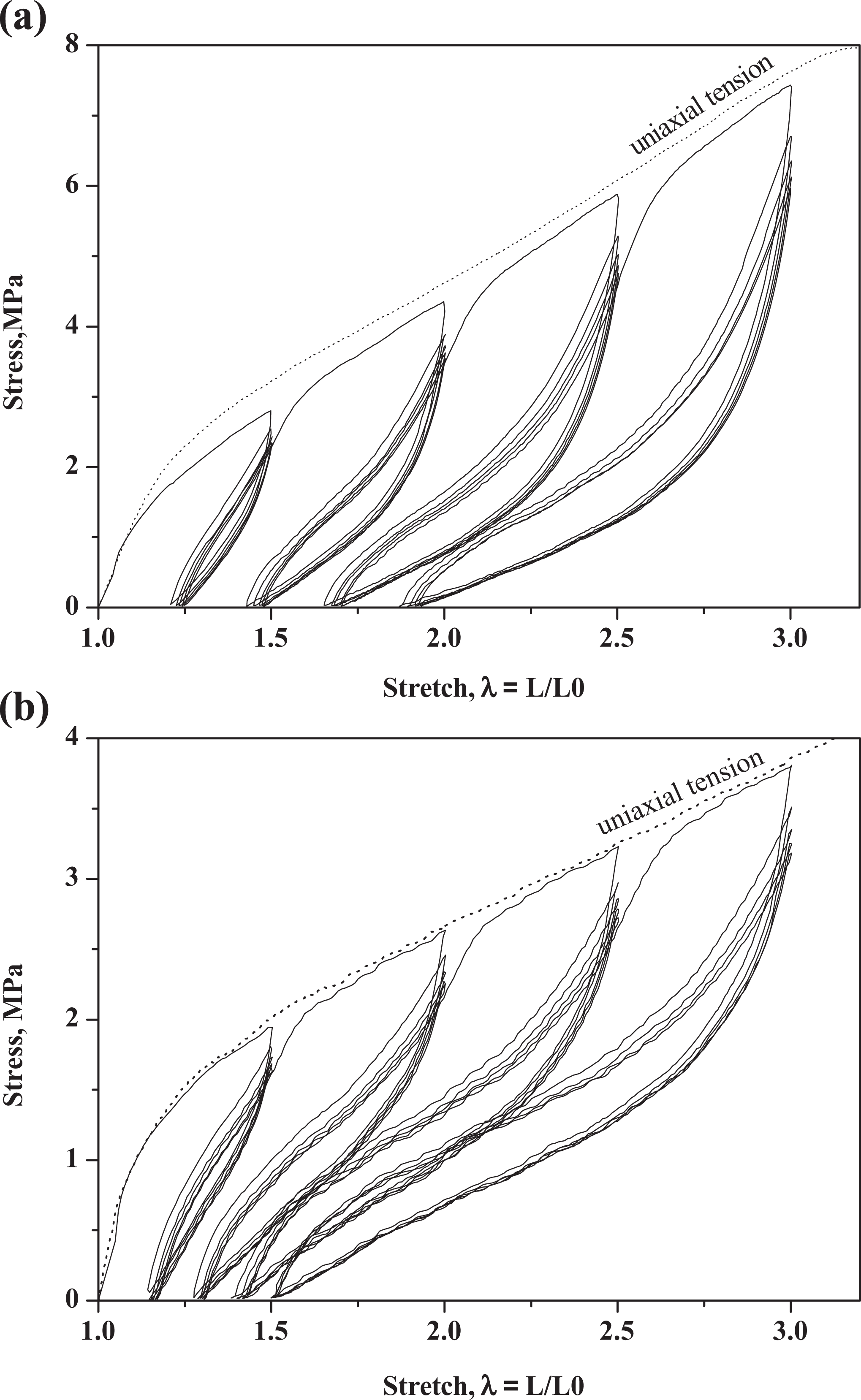
Stress–stretch responses of TPVs submitted to a simple uniaxial tension and to a cyclic uniaxial tension with increasing maximum stretch every five cycles. (a)ABS/NBR = 30/70, (b) ABS/NBR/DOP = 30/70/10.
Figure 6 shows the maximum stress values of ABS/NBR and ABS/NBR/DOP TPVs as a function of the number of loading–unloading cycles under different stretches; the stress decreased obviously after the first loading–unloading, while it only decreased slightly at the later loading–unloading cycles. Nevertheless, the residual deformation results of the TPVs in uniaxial loading–unloading cycles, which were calculated according to the deformation remaining immediately after unloading period, as shown in Figure 7, were much higher than that of Mullins effect of conventional filled and unfilled vulcanizates. 24 Besides the results of the residual deformations were increased with the increasing stretches while they were almost unchanged with the number of loading–unloading cycles.
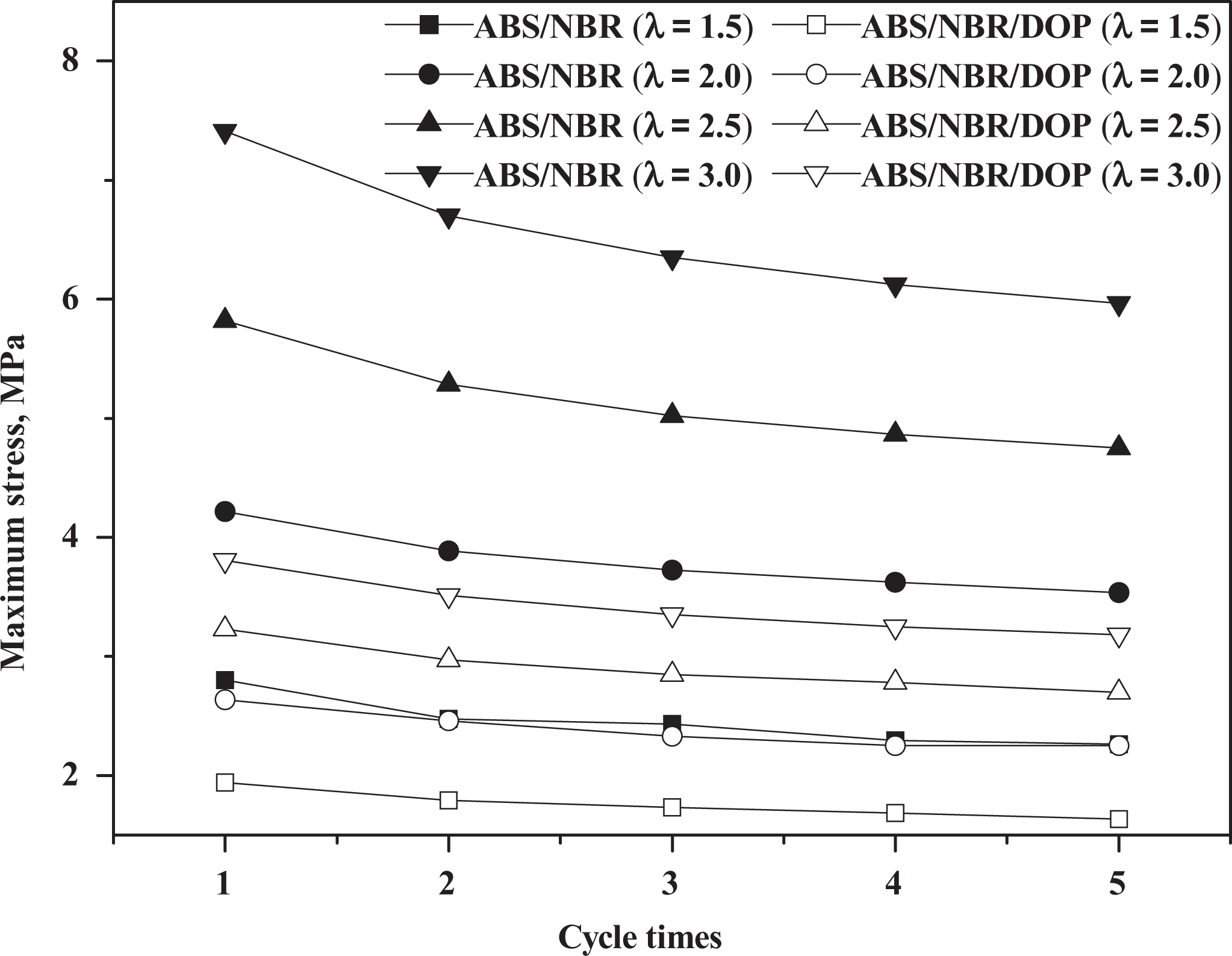
Maximum stress of ABS/NBR and ABS/NBR/DOP TPVs as a function of the number of loading–unloading cycles.
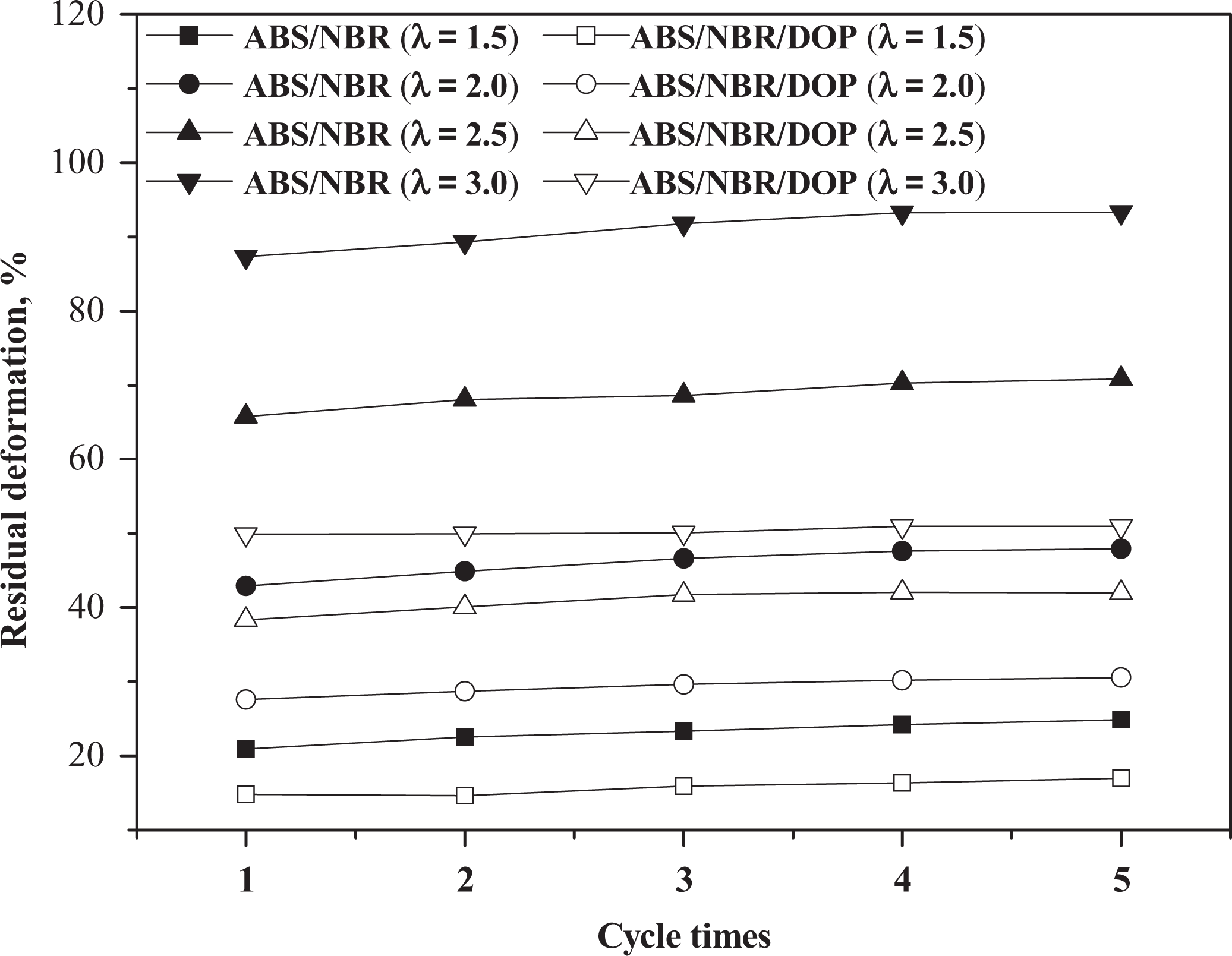
Residual deformation of ABS/NBR and ABS/NBR/DOP TPVs as a function of the number of loading–unloading cycles.
In order to investigate the internal friction loss during the loading–unloading cycles, the integral results of the hysteresis rings were calculated by Origin 8.0 software (OriginLab Corporation, USA); the results are shown in Figure 8. We can understand that the internal friction loss was increased obviously with the increasing stretches and the maximum internal friction loss was generated in the first loading–unloading cycles under the specific stretch; however, the hysteresis loss in the second cycle was much lower than that of the first cycle and then only decreased slightly. It should also be noted that, compared with that of ABS/NBR TPVs, the ABS/NBR/DOP TPVs had the relatively lower residual deformations and internal friction loss for a specific stretch, indicating the improvement of elasticity.
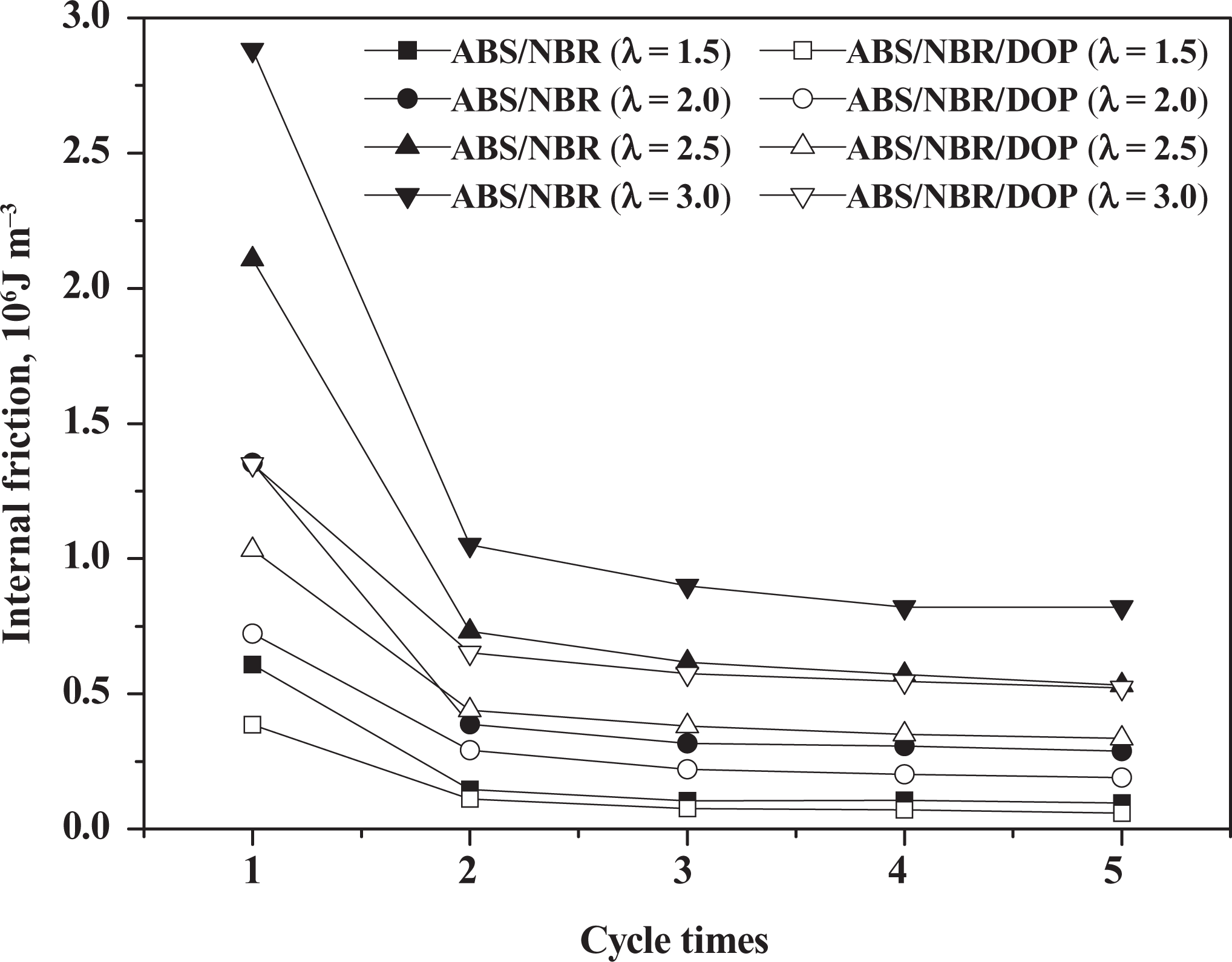
Internal friction of ABS/NBR and ABS/NBR/DOP TPVs as a function of the number of loading–unloading cycles.
To illustrate more directly the difference of stress softening between ABS/NBR TPVs and ABS/NBR/DOP TPVs, the integral results of the strain energy were calculated by Origin 8.0 software and the degree of stress-softening effect (Ds) can be expressed using following equation:
25

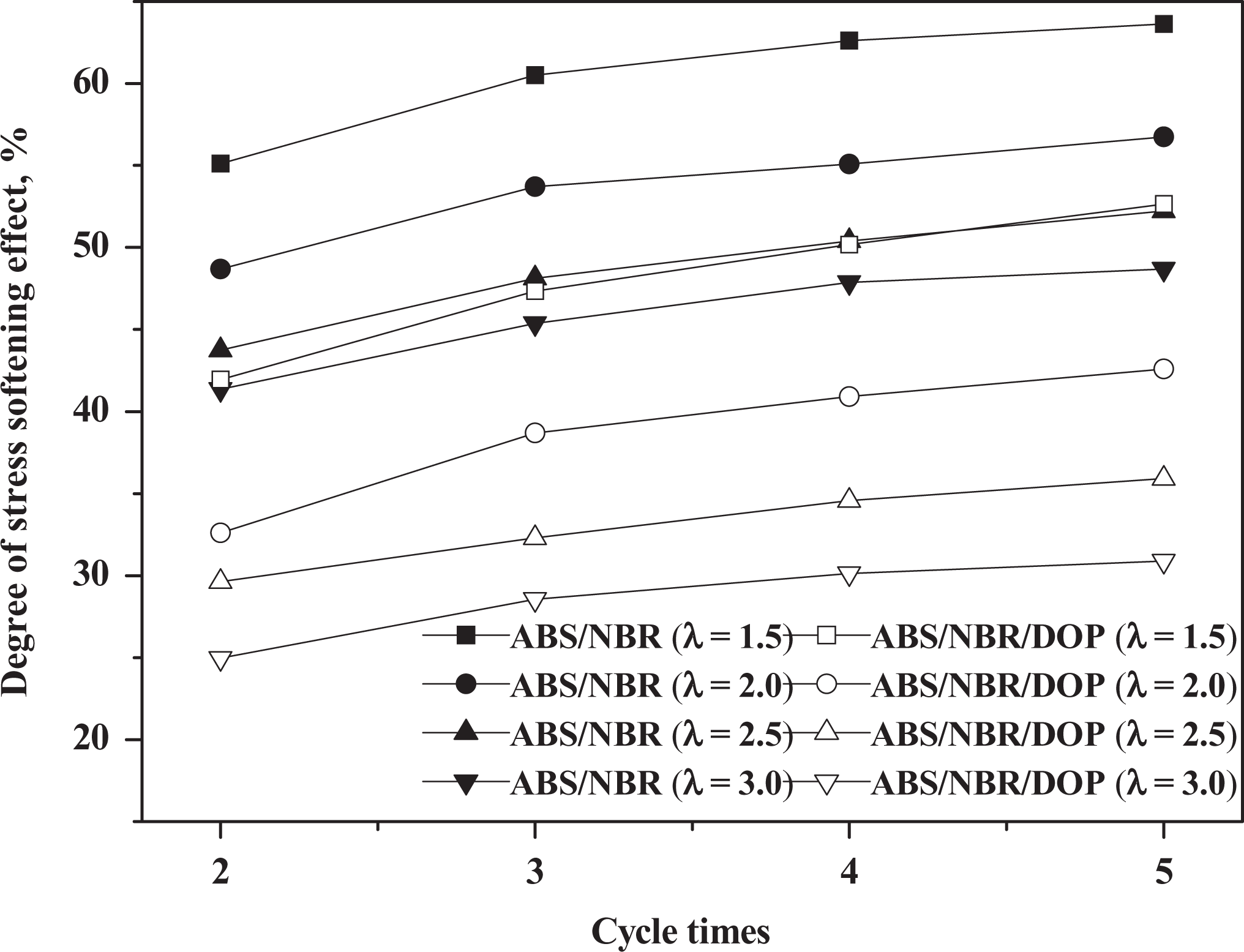
Degree of stress-softening effect of ABS/NBR and ABS/NBR/DOP TPVs as a function of the number of loading–unloading cycles.
In general, the existence of DOP plasticizer in ABS/NBR TPVs decreased the Mullins effect, residual deformation, internal friction obviously, and the degrees of stress-softening effect, while the resilience of TPVs was enhanced.
Morphology and microstructure of ABS/NBR and ABS/NBR/DOP TPVs
FESEM micrographs of the tensile fracture surfaces of ABS/NBR and ABS/NBR/DOP TPVs prepared by dynamic vulcanization are shown in Figure 10. Figure 10(a) and (b) showed the fracture surfaces of ABS/NBR TPVs at 30/70 weight ratio. The rough fracture surfaces can be observed in Figure 10(a). Some irregular structures were exposed on the surface, implying the relatively weak elasticity of ABS/NBR TPVs. Compared with fracture morphology in Figure 10(a) and (b), the fracture surfaces in Figure 10(c) and (d) were relatively smooth indicating that the elastic resilience property was improved by the incorporation of DOP, which was consistent with Figure 7.
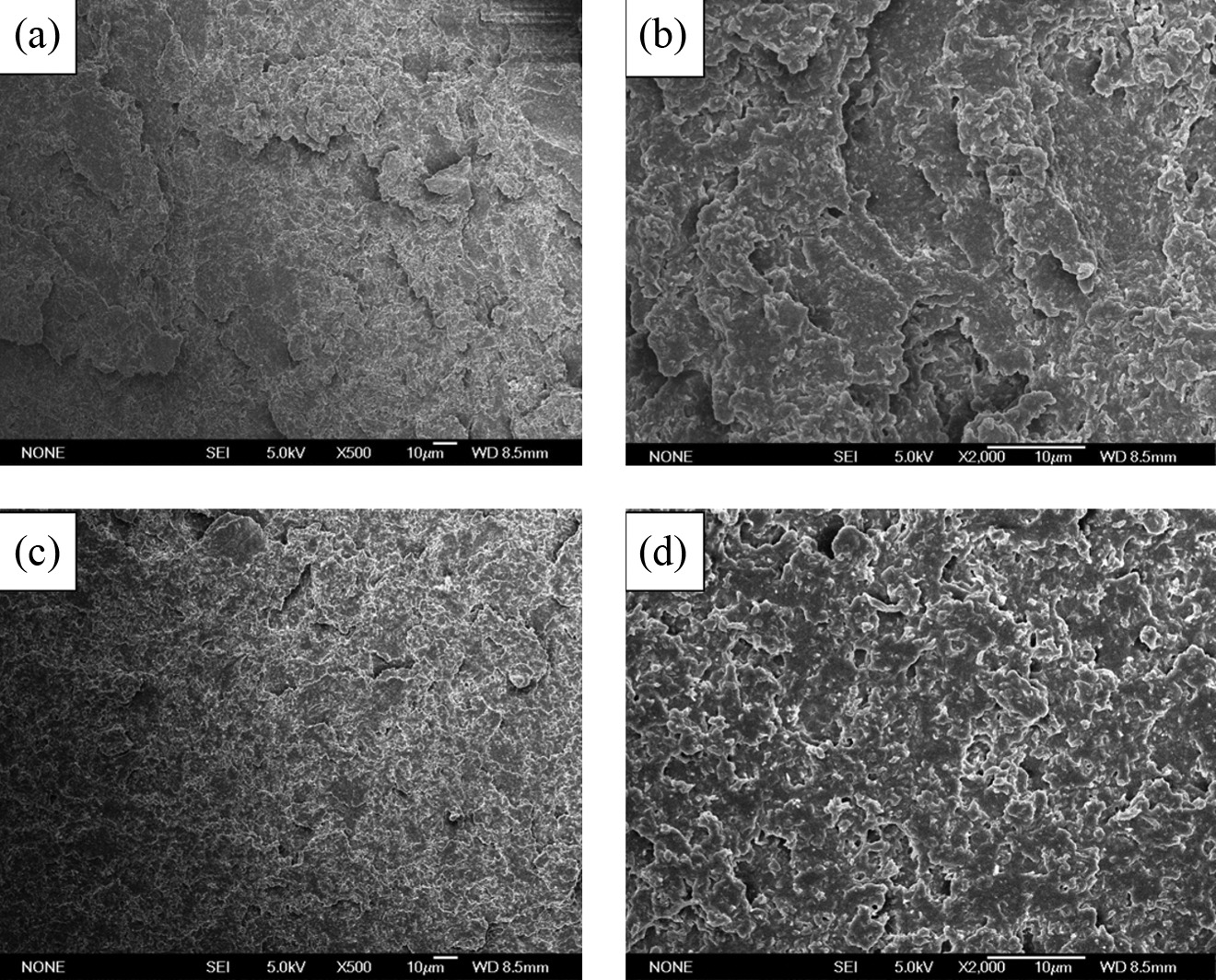
Fracture surfaces of dynamically vulcanized ABS/NBR/DOP TPVs (weight ratio): (a) 30/70/0, at low magnification; (b) 30/70/0, at high magnification; (c) 30/70/10, at low magnification; and (d) 30/70/10, at high magnification.
In order to provide a better insight into the microstructure of ABS/NBR and ABS/NBR/DOP TPVs, the FESEM images of the etched surfaces of TPVs were presented in Figure 11. The ABS phase was etched from the sample surfaces, while the vulcanized NBR domains remained undissolved and adhered to the surfaces. As it can be seen from Figure 11, the cross-linked NBR particles are different in size and dispersed evenly in the thermoplastic matrix; moreover, they have irregular shape. The dimensions of the discrete NBR particles were in the range of 10–20 µm.
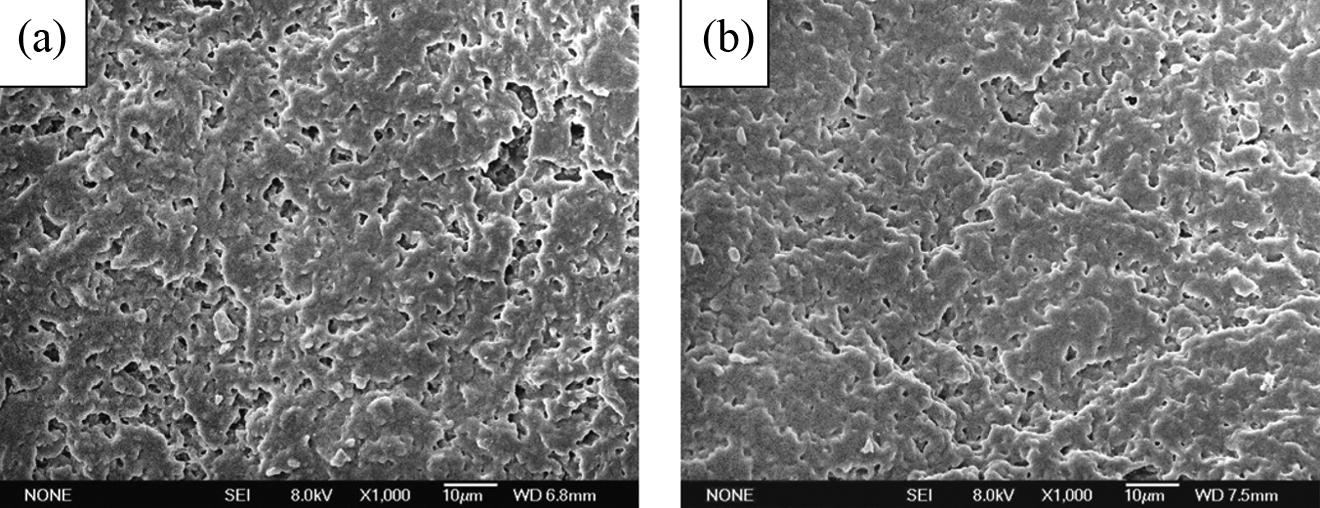
FESEM photos of etched specimens of dynamically vulcanized ABS/NBR/DOP TPVs (weight ratio): (a) ABS/NBR/DOP = 30/70/0; (b) ABS/NBR/DOP = 30/70/10.
Conclusions
Dynamic-vulcanized ABS/NBR TPVs were prepared by melt mixing in the presence of a conventional sulfur vulcanization system, and the elasticity of the TPVs was improved by the incorporation of the DOP plasticizer. Compared with ABS/NBR TPVs, significant improvement of mechanical properties of TPVs incorporation with DOP was achieved; the tensile strength and the elongation at break went through maximum values at a plasticizer content of 10 phr, while the Shore A hardness was decreased apparently. Mullins effect results showed that the NBR/ABS TPVs incorporation with DOP had relatively lower residual deformation and internal friction loss than NBR/ABS TPVs, indicating the improvement of elasticity; moreover, the existence of DOP in TPVs decreased the stress softening effect obviously. Morphology studies showed that the fracture surface of ABS/NBR/DOP TPVs was relatively smoother, indicating the significantly improved elastic resilience ability; moreover, the cross-linked NBR particles, with irregular morphologies, were dispersed evenly in the thermoplastic matrix.
Footnotes
Declaration of Conflicting Interests
The author(s) declared no potential conflicts of interest with respect to the research, authorship, and/or publication of this article.
Funding
The author(s) disclosed receipt of the following financial support for the research, authorship, and/or publication of this article: This work was supported by a Project of Shandong Province Higher Educational Science and Technology Program (grant numbers J12LA15); the Science and Technology Development Project of Qingdao (grant numbers 12-1-4-3-(9)-jch); the Natural Science Foundation of Shandong Province (grant number ZR2012EMM002), China; and the National Natural Science Foundation of China (grant number 51272115).