



Abstract
In recent years, scholars and educators have emphasized the importance of equipping psychology students in higher education with the ability to apply psychological principles to personal, societal, and professional issues. There have also been efforts to define and assess psychology graduate attributes, seeking consensus across degree programs. “Psychological literacy” is the dominant framework of graduate attributes in psychology. However, the vast majority of scholarly literature has been conducted in the UK, US, and Australia. There have been recent calls to consider how psychological literacy, and psychology undergraduate outcomes more broadly, are conceptualized in other countries, especially in the global majority. This scoping review aimed to understand how psychology undergraduate outcomes are conceptualized in low- and middle-income countries (LMICs). Our scoping review identified 34 articles across countries such as Argentina, South Africa, Indonesia, and Brazil, which discuss psychology undergraduate outcomes relative to their local context. We identified nine broad psychology outcomes across this literature, including the ability to work interdisciplinarily, engage with ethics, psychology knowledge, communication skills, and social commitment. The findings are intended to inform policymakers, educators, and practitioners on how to better align psychology education with local needs and global standards.
Keywords
Psychology is one of the most popular disciplines in higher education worldwide (Cary et al., 2024). However, despite its well-documented popularity with undergraduate students, there is no agreed-upon international consensus on the expected attributes for psychology graduates (Cranney et al., 2022a). There have been recent efforts to unify conceptualizations of psychology education in order to work toward greater internationalization (Cranney et al., 2025; Nolan et al., 2025). However, this is challenging because the function of psychology education differs across contexts and cultures (Cranney et al., 2025). To work toward better unification, in recent years, psychology educators have proposed different frameworks to consider the core outcomes, attributes, or competences of psychology undergraduate education (Cranney et al., 2025). “Psychological literacy” has emerged as the dominant framework for undergraduate outcomes in psychology, especially in the UK, US, and Australia (Harris et al., 2021).
Scholars have broadly conceptualized psychological literacy (or “psychologically literate citizenship”; McGovern et al., 2011) as the ability for students and graduates to apply their psychological knowledge to address global challenges and to use psychology to meet personal, professional, and societal objectives. Psychological literacy has been integrated as a pedagogical approach in psychology accreditation and curricula in some countries (e.g., Newell et al., 2020). Initiatives are also currently underway to advance psychological literacy as an international pedagogical philosophy, aiming to provide educators with opportunities to cultivate this approach and establish a process for achieving consensus on undergraduate psychology attributes (Cranney et al., 2022a, 2025; Nolan et al., 2024). For the purposes of this study, we conceptualize psychological literacy as the graduate attributes or outcomes that students acquire during their psychology training, which allows them to apply their subject-specific skills and knowledge to solving global, personal, and professional problems. In this sense, our definition of psychological literacy is informed too by “global citizenship education” (Pownall et al., 2022), and we conceptualize psychological literacy as the subject-specific instantiation of global citizenship education. We conceptualize psychological literacy, therefore, as a series of attributes or outcomes that can be measured and promoted; however, there are different approaches to the operationalization of psychological literacy. For example, psychological literacy may also be conceptualized as a set of values or principles (Newell et al., 2021; Pownall & Harris, 2025). Similarly, psychological literacy may be considered a set of specific pedagogies that guide teaching and learning decisions (Fernandes-Jesus et al., 2024). Our focus on psychological literacy as a way of thinking about graduate outcomes is motivated by recent calls to consider how the goals of psychology education across contexts and cultures may be shared (e.g., Cranney et al., 2025; Nolan et al., 2024).
In parallel to conversations about the nature of psychological literacy conceptualization, there have also been ongoing efforts to explicitly develop psychological literacy across diverse settings, perspectives, and domains. For example, Horn et al. (2024) describe how attention has been paid, in a German teaching and learning context, to integrating a theory–practice learning environment into the psychology curriculum for teachers. According to the authors, this movement emerged from the need to equip future teachers to be psychologically literate, enabling them to promote positive changes to individuals and society. Another study by Tick et al. (2024) outlines the integration of psychological literacy into the psychology undergraduate curriculum under development in the Netherlands, emphasizing the application of psychology subject knowledge to society. Thus, there are notable (and increasing) examples of efforts to integrate psychological literacy in countries outside of the US, UK, and Australia.
However, the vast majority of the existing pedagogical literature on psychological literacy is from high-income countries (HICs), particularly from the UK, US, and Australia, where efforts have been concentrated, with very little comparable discussion of the concept in low- and middle-income countries (LMICs). There have also been recent calls to consider the internationalization of psychology education, to work toward better mobility of psychology qualifications, and to facilitate learning across cultural and geographical boundaries (e.g., Nolan et al., 2024). The disparity in efforts between HICs and other parts of the world is evident in the literature review conducted by Cranney et al. (2022b), which found that only one study on psychological literacy had first authors from LMICs, while the remaining 108 studies were produced by authors from HICs, and 88% originated from English-speaking countries. Due to this, the authors emphasize the need for further studies on psychology education in nations, including in the Global South and in LMICs (see also Cranney et al., 2025).
It is important that psychological literacy research considers the context of LMICs. Given that psychological literacy articulates the capacity for students to use their disciplinary knowledge to contribute to solving global problems, it is problematic if scholarship about the outcomes of education does not reflect geographical and cultural breadth. Many LMICs are currently facing significant social challenges that necessitate intervention, such as mental health literacy (e.g., Renwick et al., 2022). Psychology undergraduate education should be sensitive to the needs and context of LMICs, in order to train a workforce that can meaningfully and sensitively contribute to solving such problems (e.g., see Pownall et al., 2022). For this to be achieved, a unified pedagogical philosophy for the outcomes or graduate attributes of psychology education is necessary to support the implementation of psychological literacy. This is complicated, however, by differences in how psychology as a discipline has been established in different cultural contexts. For example, in some countries (e.g., Argentina, Brazil, and Chile) studying a psychology undergraduate degree allows graduates to practice as psychologists, in other countries (e.g., Indonesia, the UK, and Ukraine), postgraduate study is required. Therefore, to inform efforts to internationally unify psychology educators, it is important to first establish how psychological literacy outcomes are discussed and conceptualized in the existing literature outside of the Australian, British, and American silos that dominate the pedagogical scholarship. Psychological literacy, as an explicit pedagogical term for graduate attributes and outcomes, has emerged in HICs as a way of conceptualizing undergraduate outcomes. However, it is unclear whether LMICs have also adopted this language or whether psychology outcomes are conceptualized differently in these cultural contexts. Therefore, we aimed to conduct a scoping review to synthesize the existing literature.
Method
Research Question
This scoping review was guided by the following research question: How are psychology undergraduate outcomes conceptualized in LMICs? This research question followed the PICO format (Richardson et al., 1995) and had the following composition: psychology graduates from LMICs as the population (P); conceptualization of undergraduate outcomes as the intervention (I); and description and understanding of the educational outcomes of psychology graduates in LMICs as the outcome (O).
Search Strategy
After conducting a preliminary literature review on psychological literacy in LMICs, we noted that the literature was limited. Therefore, a scoping literature review was considered appropriate to identify the extent of the existing literature surrounding the psychology undergraduate outcomes in LMICs. According to Davis et al. (2009), scoping reviews involve synthesizing and analyzing a broad range of research to provide greater conceptual clarity on a topic. Kastner et al. (2012) further describe this process as valuable for mapping the literature and identifying potential gaps. Consequently, scoping review is considered a method that delivers broad insights, in a way that is useful for literature that is emerging (Levac et al., 2010).
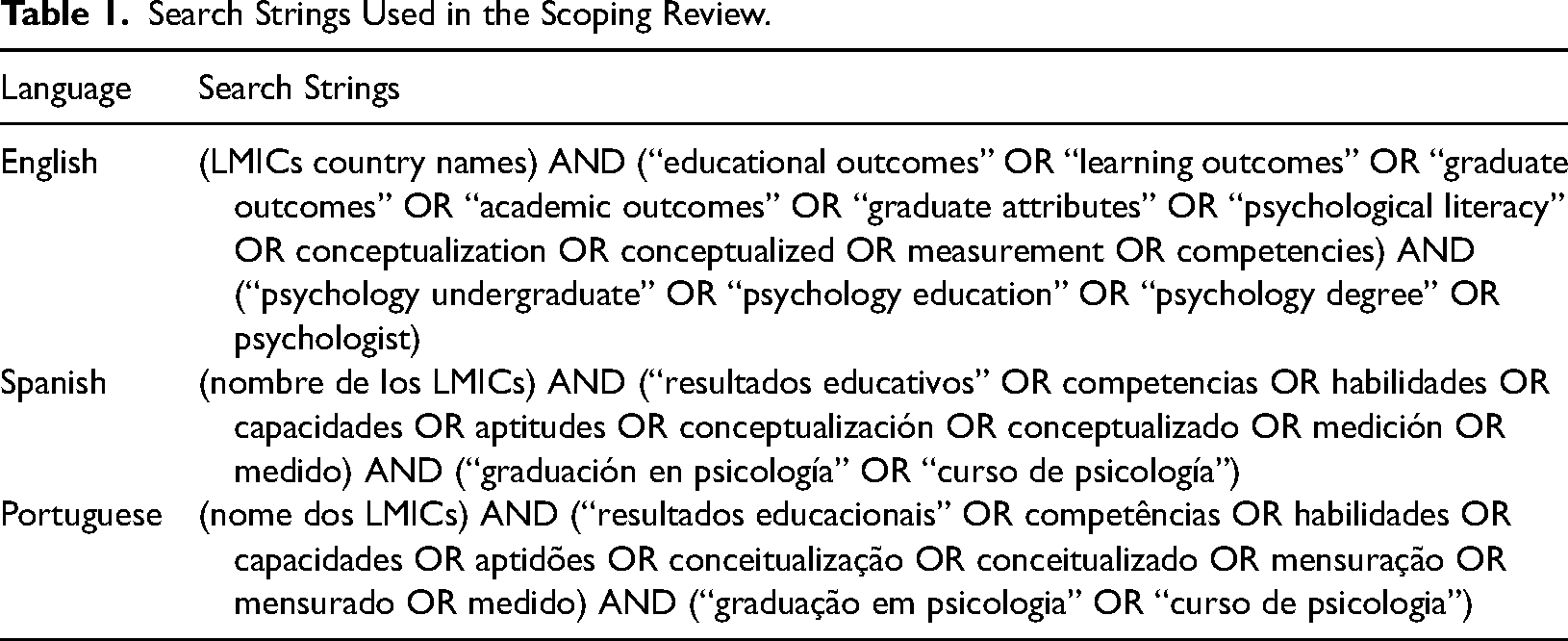
In view of this, we performed a scoping review search between June and July 2024 through the following indexed electronic databases: Scopus, PsycInfo, Scielo, BVS (Virtual Health Library), Redalyc, and SCI (Web of Science). Note that while BVS is a virtual library, it was integrated because it indexes articles from Lilacs, Medline, Medcarib, and Wholis. To obtain a broader range of results, and considering the lead authors’ proficiency, studies were searched in English, Spanish, and Portuguese. No restrictions were placed on the publication year. Since “psychological literacy” does not have a direct translation in Spanish and Portuguese, we anticipated that studies may not use this language explicitly. As such, terms in these languages that approximate the concept's meaning were used. For example, we used “psychological literacy” as well as “educational outcomes” and “graduate attributes” to capture this literature. The search terms are displayed in Table 1.
Search Strings Used in the Scoping Review.
Inclusion Criteria
The inclusion criteria included theme (i.e., studies describing expected outcomes of undergraduate psychology courses in LMICs), language (i.e., studies with full texts in English, Spanish, or Portuguese), and accessibility (i.e., studies with full access in the selected indexed electronic databases). We defined LMICs using Wellcome's (2025) list, which is informed by the Organisation for Economic Co-operation and Development (OECD) definition. The OECD defines country income by the Gross National Income (GNI) per capita; low-income countries are defined as countries with a GNI per capita of US$1,135 or less, LMICs have a GNI per capita between US$1,136 and US$4,465, and upper-middle-income countries have a GNI per capita between US$4,466 and US$13,845 (as of 2024). We limited our search to LMICs.
Study Selection
Based on the established criteria, a search was conducted across the search engines, which identified an initial 6,463 papers. It is noteworthy that 5,626 of the selected studies (90.14% of the total) came from the Redalyc database, which lacks advanced search capabilities. Many of the studies contained only one or a few of the keywords established in the search strings, leading to a higher volume of results. However, this platform was used because it is one of the largest indexers of articles in Latin America, and it was considered important to cover studies from this source.
During all selection stages (see Figure 1), the StArt tool was used, facilitating the execution and summarization process (see Fabbri et al., 2016). The StArt tool is a software that supports the systematic review process by providing a platform for researchers to organize and screen identified literature. This software helped streamline reference management, data extraction, and reporting. Firstly, duplicates from multiple databases were removed (n = 195). Then, the reading of the title, abstract, and keywords of the studies was carried out following the established inclusion criteria. By this, 6,179 studies were rejected because they did not meet the criteria; for example, the paper did not study or refer to psychology outcomes explicitly (n = 5,736), were not based in an identifiable LMIC (n = 436), or could not be accessed (n = 7).
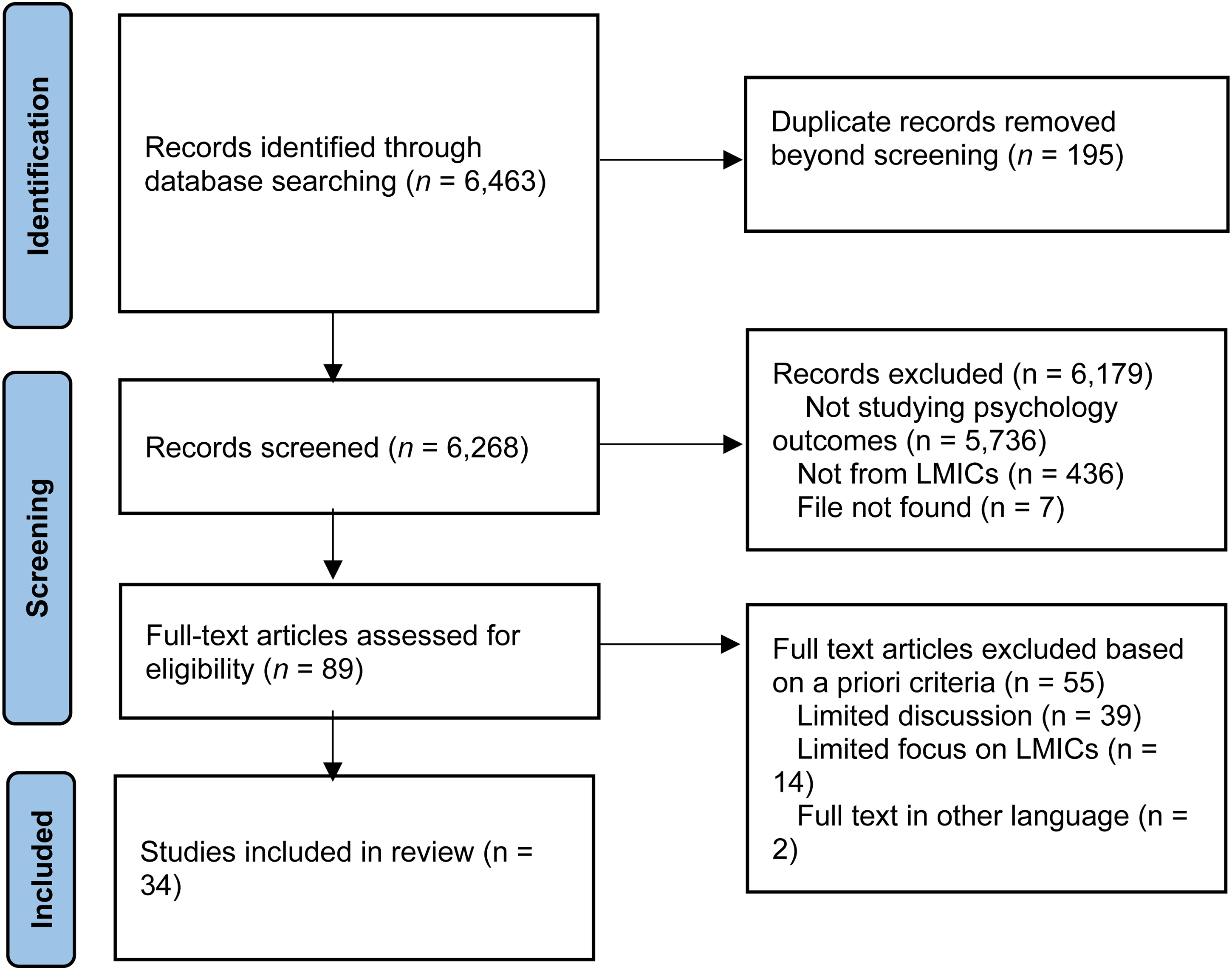
Study selection and inclusion.
Screening was conducted by the lead author in consultation and discussion with the entire research team. After the initial screening, 89 studies were approved for a full-text analytical reading to ensure they met the inclusion criteria. Of these, 55 studies were then removed, because they did not describe psychology outcomes explicitly (n = 39), did not focus specifically on LMICs (n = 14), or the full text was not in English, Spanish, or Portuguese (n = 2). Therefore, 34 papers were included in our scoping review. Figure 1 summarizes all study selection processes.
Analytical Approach
After we had reviewed the studies and established the final 34 papers, we then conducted a full-text analysis. Firstly, key excerpts from the selected articles were underlined to highlight important aspects of how undergraduate psychology outcomes are conceptualized in LMICs.
This led to a framework of nine attributes that reflect the most prominent psychology outcomes across the reviewed literature. These attributes were created by a categorical analysis method described by Minayo (2009), which included grouping terms with similar or related themes and definitions; analyzing to identify coherent patterns; and assigning a common term. One author (GSR) who led the analysis originally proposed a framework of attributes, which were discussed with the rest of the research team to synthesize and condense. This involved a series of discussions with the team, and efforts were made to ensure that the categories were well defined and captured the nuances of the aspects described in the papers. Some attributes in our original list were condensed for clarity; for example, we originally had a category of “writing skills” and “presentation skills,” which were condensed into “communication skills.” We also originally had a category of “professional conduct,” which was synthesized with the other categories. We work iteratively until a final set of nine attributes is grouped, which we felt covered the breadth of the papers identified by the review. The papers were then described quantitatively in terms of language, publication year, geographic origin, and frequency of citation. Following this, summaries were created for each attribute, addressing (a) its conceptual framework, (b) its significance for psychology training, and (c) the particularities associated with specific countries. In each attribute summary, cited analyzed papers illustrate the key points. Finally, the information was examined in relation to the research objectives and initial questions. We then determined the frequency of these attributes (Table 1).
Results
A table containing descriptions of the 34 studies included in the review can be openly accessed in the supplementary materials (https://osf.io/agr8f/).
Of the 34 final identified studies, 13 were written in Spanish (38.2%), 11 in English (32.4%), and 10 in Portuguese (29.4%). Additionally, 31 (91.2%) were academic journal articles, two (5.9%) were book chapters, and one (2.9%) was a conference report. The majority of the studies were published after 2010 (n = 32). In total, 67.6% papers were from countries in the Americas, 20.6% from Africa, and 11.8% from Asia. Figure 2 illustrates the number of studies citing expected psychology outcomes in each LMIC; only two papers reference more than one country.
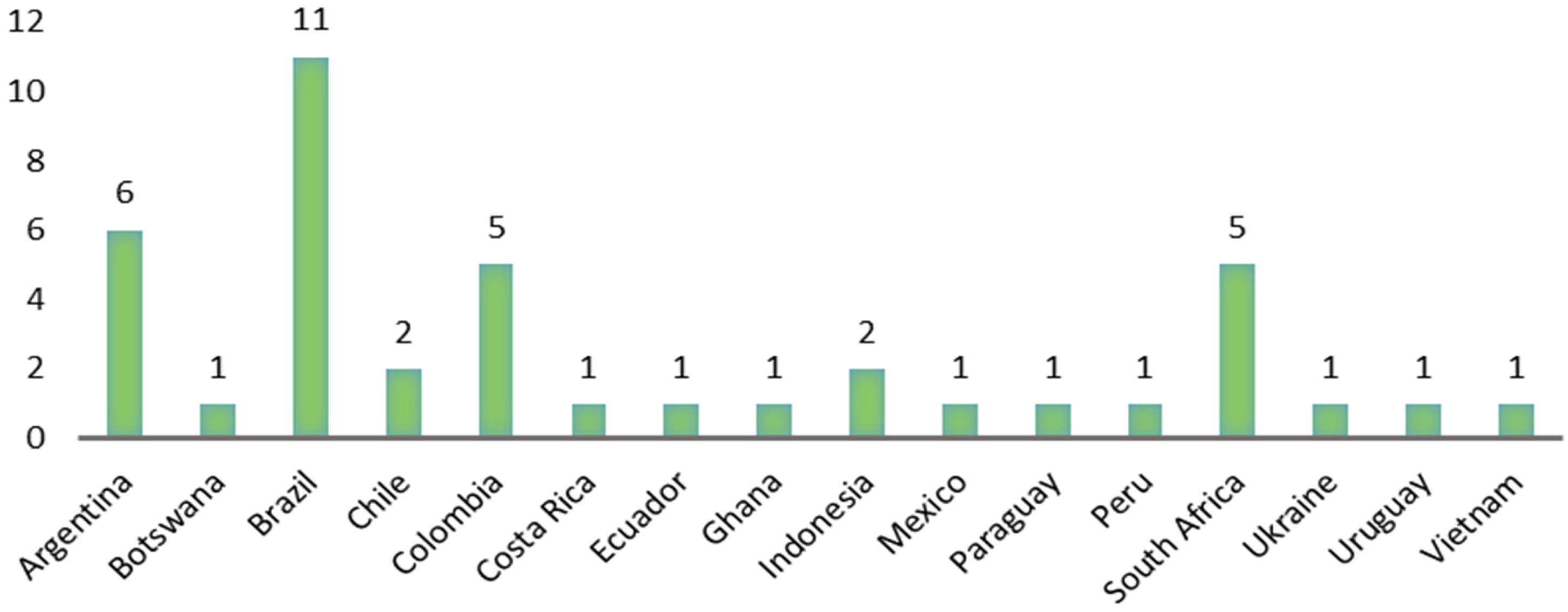
Number of studies discussing the topic by each low- and middle-income country (LMIC).
Overview of Undergraduate Psychology Attributes
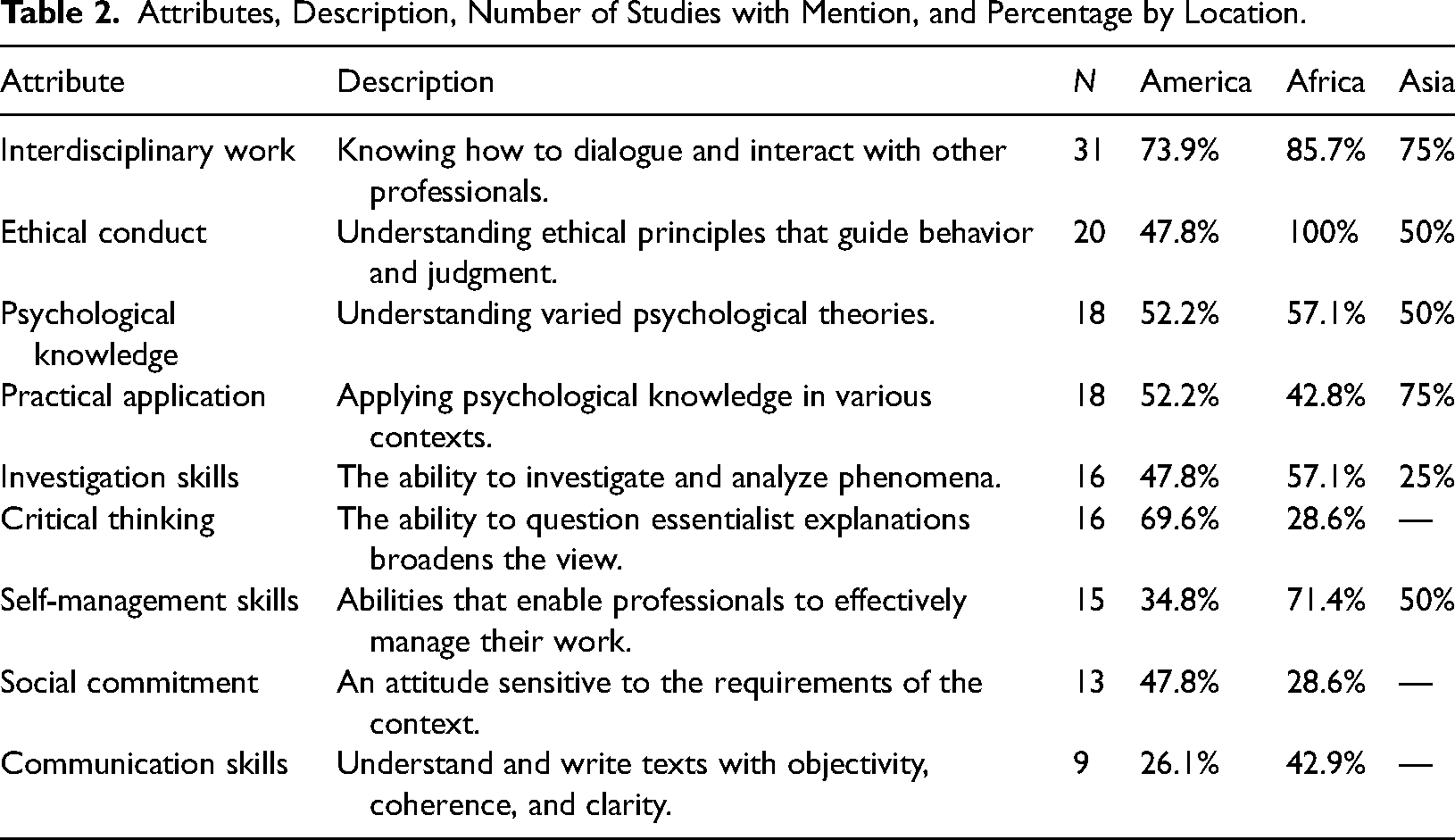
Table 1 presents the attributes, a brief description, the number of studies mentioning them, and the percentage of each attribute relative to the total number of studies by location (Table 2).
Attributes, Description, Number of Studies with Mention, and Percentage by Location.
Interdisciplinary Work
The most common attribute that our review identified was “interdisciplinary work,” which is characterized by aspects related to dialogue, communication, and interaction, particularly with other professionals in different areas (Greeff & Els, 2024; Le et al., 2021; Ortiz et al., 2011a; Souto et al., 2014). This highlights that knowing how to work in a team is considered an important attribute for psychology undergraduates, as it enables professionals to detect their own and others’ errors, seek shared solutions, and learn from one another (Arboleda & Arboleda, 2012; Bastos et al., 2011; Cruz & Schultz, 2009; Le et al., 2021; Ortiz et al., 2011b; Solano, 2004; Vázquez et al., 2021).
This concept encompasses the recognition of the diversity of perspectives and fields of knowledge necessary to analyze human mind and behavior (Mourão et al., 2019), as well as the acquisition of abilities specific to other fields (e.g., understanding legislation; Mora et al., 2015). For example, we identified that, in Brazil, integration of psychology with disciplinary contexts, including the health and social care health system is thought to develop student' critical thinking (Seixas et al., 2016). In Chile, interdisciplinary collaboration and the development of professional ties are among the most relevant factors for the job market (Ortiz et al., 2011b). For example, the study by Mora et al., (2015) explicitly highlights the necessity of interdisciplinary work as a psychology outcome in Costa Rica, as it is closely related to other competencies, such as the ability to lead processes and to leverage knowledge from other disciplines. In the context of Costa Rica, multidisciplinary dialog is valued for its ability to enable more comprehensive and integrated interventions, leading to more effective outcomes. Similarly, Poppe and Batista (2012) argue that interdisciplinary work is valued in Brazil because it integrates psychological knowledge with the practices and knowledge of other professions.
Among the reviewed studies, Baima and Guzzo (2015) highlighted the importance given in Brazil of integrating topics such as historical determinants, political factors, and other interdisciplinary subjects into psychology training. Similarly, Ngcobo & Edwards (2008) emphasized that a comprehensive grasp of culture is essential for comprehending human behavior in South Africa. We observed that, in Ghana, there is a local need for professionals who are sensitive to cultural knowledge regarding family and social life (Aikins et al., 2019). Similarly, the Ukrainian context demands cross-cultural knowledge and intercultural skills to work with representatives from various ethnic and cultural backgrounds (Kozubovska, 2019). On the other hand, in Colombia, it is considered important to have the capacity to manage numerical data, as well as to understand the applicability and limitations of technologies in professional practice (Ortiz et al., 2011a).
Ethical Conduct
The second most common attribute found during our review was “ethical conduct,” described as the student's understanding of the ethical principles guiding one's behavior and judgment. According to the reviewed papers, this attribute encompasses respect for diversity, integrity, and human dignity, in which the professional acts without judgment, suspending all prejudices to help everyone without discrimination. Acting ethically demonstrates one's sensitivity to social issues and assumes responsibility for their work (Akhurst, 2020; Bastos et al., 2011; Cruz & Schultz, 2009; Ebersöhn et al., 2017; Hermosilla et al., 2013; Ngcobo & Edwards, 2008; Ortiz et al., 2011b; Seixas et al., 2016; Sudrez, 2011). Our review revealed that, in Argentina, ethical conduct is viewed as the most important skill to be developed throughout the psychology undergraduate program. In contrast, in Peru, there are few spaces for explicit ethical supervision or monitoring. In Ecuador, while most students demonstrate competence in moral judgment, there is still a need to better understand the specifics of ethical practice (Ortiz et al., 2011b). In both Indonesia and South Africa, knowledge of the professional code of ethics for psychologists is considered essential as an undergraduate outcome (Ebersöhn et al., 2017; Ningdyah et al., 2016).
Additionally, we identified that ethical conduct is considered particularly relevant in Colombia, as it influences all the actions by psychologists and strengthens the professional decisions in favor of public well-being (Arboleda & Arboleda, 2012; Valderrama et al., 2021). In Brazil, ethical conduct is also emphasized (Torres & Ecker, 2016), while in Ukraine, it is important for fostering empathy, tolerance, and intercultural understanding (Kozubovska, 2019).
Psychological Knowledge
“Psychological knowledge” is characterized by the understanding of the historical, epistemological, methodological, and theoretical foundations of psychology, encompassing theories, tools, interventions, and psychometric principles. We identified that this attribute involves specialized knowledge of psychology applied to different sub-fields (such as academic, clinical, industrial, etc.), along with the demonstration of positive attitudes toward acquiring knowledge (Bastos et al., 2011; Greeff & Els, 2024; Le et al., 2021; Mourão et al., 2019; Ningdyah et al., 2016; Ortiz et al., 2011a; Travassos & Mourão, 2018).
Psychological knowledge is considered important for adapting psychological theories to other disciplines (e.g., in South Africa; Akhurst, 2020) and for facilitating the development of skills such as problem identification, solution design, and effective communication (e.g., in Colombia; Ortiz et al., 2011b). Travassos and Mourão (2018) and Cruz and Schultz (2009) describe how psychological knowledge in Brazil is considered essential for professional performance in contexts requiring investigation, analysis, evaluation, prevention, guidance, mediation, monitoring, and intervention in psychological processes. Baima and Guzzo (2015) in Brazil emphasize this attribute as important for psychology graduates, as it offers opportunities for analyzing individuals and society from social, concrete, and historical perspectives.
We also observed that the reviewed studies highlight the importance of psychological knowledge for the professional practice of psychologists across various fields, which shifts focus depending on the locality. For example, in the Brazilian context, the undergraduate courses place a strong emphasis on clinical processes (Beato & Neto, 2016; Mourão et al., 2019). In contrast, South African programs prioritize organizational and industrial psychology (Oosthuizen et al., 2023; Greeff & Els, 2024). Despite these regional differences, our study noted that movements linked to critical psychology, which focus on addressing social demands and needs, are evident in all locations.
Practical Application
“Practical application” entails applying psychological knowledge in various contexts, integrating theory with practical experience (Arboleda & Arboleda, 2012; Baima & Guzzo, 2015; Bastos et al., 2011; Greeff & Els, 2024; Ortiz et al., 2011b; Travassos & Mourão, 2018). We found that practical application involves individual and group psychological interventions, applicable in educational, clinical, organizational, and other settings (e.g., in Chile; Sudrez, 2011), beyond the ability to respond effectively in situations of catastrophe, crisis, and emergencies (e.g., in Argentina; Solano, 2004; in Brazil; Travassos & Mourão, 2018).
Moreover, our review identified the study from Brazil by Cruz and Schultz (2009), which emphasizes the importance of psychologists being able to apply psychological theories in their professional practice, as developing processes for guidance, treatment, monitoring, analysis, and intervention necessitates a solid theoretical foundation. Baima and Guzzo (2015) argue that not separating theory from practice is crucial for the development of society and psychological science.
We noted that countries such as Indonesia recognize the high value and social relevance of knowledge application, making it one of the most crucial competencies for psychology undergraduates (Sawono, 2011). Likewise, in South Africa, psychology students and graduates are expected to demonstrate ability and confidence in conducting a range of psychological assessments and developmental interventions at the individual, team, and organizational levels (Oosthuizen et al., 2023). In Chile, undergraduate psychology programs focus on training professionals to address practical needs across various fields and aspects (Sudrez, 2011).
Investigation Skills
“Investigation skills” is defined as the ability to systematically and critically organize, analyze, and interpret information to understand psychological phenomena (Arboleda & Arboleda, 2012; Bastos et al., 2011; Espinosa & Aguiar, 2017; Plattner & Moagi-Gulubane, 2010). According to the reviewed literature, this skill can be applied in various contexts, including clinical (e.g., in Argentina; Crocamo & Benatuil, 2022), organizational (e.g., in South Africa; Oosthuizen et al., 2023), and academic (e.g., in Indonesia; Ningdyah et al., 2016).
Investigation skills encompass research competencies; for example, studies articulated how formulating research methodologies tailored to specific problems (e.g., in Colombia; Rodríguez & Rodríguez, 2012) and systematically solving problems (e.g., in Colombia; Ortiz et al., 2011a) are both key psychology outcomes. Additionally, psychology students should be educated to be capable of explaining, diagnosing, and prognosticating, considering multiple levels of analysis and variables (e.g., in Brazil; Travassos & Mourão, 2018).
We identified that, in Chile, problem analysis and evaluation skills are recognized as crucial for the labor market (Ortiz et al., 2011b). In South Africa, psychologists are expected to conduct research effectively, including performing needs analyses to examine and evaluate information and identify the needs of individuals, groups, or organizations (Greeff & Els, 2024). Furthermore, in Paraguay, research skills are valued for analyzing texts, interpreting research findings, comparing data, synthesizing information, and formulating analyses and conclusions (Espinosa & Aguiar, 2017).
Critical Thinking
“Critical thinking” refers to students’ ability to question their discipline in an informed and structured way. Based on the reviewed studies, critical thinking encompasses the understanding of multiple perspectives that capture the breadth of psychological phenomena, including comprehensive and humanizing care for the population. We noted that this attribute involves the development of an understanding of cultural and individual differences, avoiding generalizations and stereotypes (Crocamo & Benatuil, 2022; Mourão et al., 2019; Ngcobo & Edwards, 2008; Souto et al., 2014). Also, it includes an orientation toward social transformation, requiring a critical examination of the psychologist's role in either collaborating with or challenging the existing social reality experienced by individuals and communities (Baima & Guzzo, 2015; Espinosa & Aguiar, 2017; Poppe & Batista, 2012; Seixas et al., 2016; Torres & Ecker, 2016).
Among the reviewed studies, Valderrama et al. (2021) conceptualize critical thinking as a fundamental condition for professional ethical conduct in Colombia. Similarly, Espinosa and Aguilar (2017; in Paraguay) describe how critical thinking facilitates the development of skills to identify, understand, plan, and act on problems (see also Cataldo et al., 2018; Argentina). In Costa Rica, psychologists are expected to have a critical perspective that is open to diversity due to the multiplicity of theories, techniques, and instruments available for professional practice (Mora et al., 2015). In Paraguay, critical thinking is considered to be one of the main outcomes of undergraduate psychology education (see also Vázquez et al., 2021; Mexico).
Self-Management Skills
“Self-management skills” is defined as a set of abilities and practices that allow professionals to, for example, effectively manage their time, make decisions, negotiate, and resolve conflict. This attribute is linked to career management (Akhurst, 2020; Arboleda & Arboleda, 2012; Bastos et al., 2011; Crocamo & Benatuil, 2022; Ortiz et al., 2011b; Poppe & Batista, 2012; Travassos & Mourão, 2018; Vázquez et al., 2021). For example, Ortiz et al. (2011a; in Colombia) propose that self-management skills, including students' self-control in managing emotions in adverse situations, self-confidence to solve problems and carry out interventions, responsibility in performing their duties, and perseverance at work and in performances even under pressure, are key outcomes. This is echoed by Ngcobo and Edwards (2008; in South Africa), who described the capability to address one's own prejudices to effectively assist others with their problems. Greeff and Els (2024) also highlight the importance of students' ability to perform multiple tasks simultaneously, think strategically, and work independently in a South African context.
Our review revealed that, in Vietnam, developing self-improvement capacity is a key component of psychology training programs (Le et al., 2021). In Indonesia, an important attribute for psychologists is managing professional practice (Ningdyah et al., 2016). In Mexico, proactive professionals who demonstrate confidence, flexibility, and tolerance for frustration are highly valued (Vázquez et al., 2021). In Brazil, there is a movement to train psychologists with autonomy and discernment to ensure comprehensive care and the quality and humanization of practices (Poppe & Batista, 2012). Also, in Costa Rica, professionals must possess negotiation skills, conflict resolution abilities, and the capacity to offer well-founded criteria to guide decision-making (Mora, Vargas & Prado-Calderón, 2015).
Social Commitment
“Social commitment” refers to a professional attitude that is attuned to the demands of the local context, leading to responsible and ethical actions (Arboleda & Arboleda, 2012; Mora, Vargas & Prado-Calderón, 2015; Seixas et al., 2016; Valderrama et al., 2021). In Brazil, psychology curricula are designed with the goal of addressing local social demands, highlighting the importance of this issue in the country's psychology training (Beato & Neto, 2016). In Brazilian undergraduate programs, there is significant discussion about the profession's commitment to social policies (Seixas et al., 2016).
This was particularly prominent in discussions surrounding clinical psychology careers. For example, in Argentina, the ability to compassionately consider patients receiving care was considered a key outcome (Cataldo et al., 2018). In Colombia, it is important for psychology students to understand a biopsychosocial and spiritual perspective of the human being, ensuring that all dimensions are meaningfully taken into account (Rodríguez & Rodríguez, 2012). Similarly, in South Africa, students need to understand the importance of socially grounded assessment and intervention methodologies and strategies (Ngcobo & Edwards, 2008). Also, in South Africa, psychologists are trained to address the needs of the population, including supporting the mental health of individuals facing poverty-related educational, health, and socioeconomic challenges (Ebersöhn et al., 2017).
Communication Skills
“Communication skills” is described as abilities in reading, interpreting, writing, narrating, and describing texts (Akhurst, 2020; Arboleda & Arboleda, 2012; Bastos et al., 2011; Espinosa & Aguiar, 2017). We found that this attribute encompasses the ability to write psychological reports and communication through graphs, tables, and statistics (Solano, 2004; Oosthuizen, Niekerk & Coetzee, 2023). It also includes the capacity for learning a second language to read scientific texts abroad, participate in international events, manage information, among other benefits (Ortiz et al., 2011a).
Through the reviewed studies, we discovered that, in Colombia, the ability to communicate effectively in written forms is an important skill for psychology graduates. Proficiency in English is also considered beneficial for professionals in this location (Ortiz et al., 2011b). In Botswana, being able to produce written reports is considered one of the main skills expected as a result of a degree in psychology (Plattner & Moagi-Gulubane, 2010). Similarly, our review identified that having good written communication skills is considered beneficial to psychologists in the South African setting (Greeff & Els, 2024).
Discussion
Overall, this scoping review aimed to understand how undergraduate psychology outcomes are conceptualized in LMICs. Although there is no agreed-upon consensus on a single pedagogical philosophy guiding the training of psychologists in LMICs, the reviewed studies contribute to ongoing discussions about educational frameworks and graduate attributes in undergraduate psychology. Our review broadly demonstrated that undergraduate psychology outcomes in psychology are conceptualized as: students have a theoretical grasp of psychology, show an appreciation of how psychology can be practically applied (including in interdisciplinary contexts), show an appreciation of ethics and social context, can investigate and critically consider problems, manage themselves as professionals, and communicate their psychology effectively. Importantly, while all the reviewed literature discussed the psychology graduate attributes and outcomes, studies do not explicitly refer to this as “psychological literacy.” Indeed, of the analyzed studies, only Sawono (2011) directly mentioned psychological literacy, noting how this construct in Indonesia differs in its conceptualization and scope from that in countries, especially the US, UK, and Australia.
While this review was not intended to directly compare and contrast outcomes from HICs and LMICs (although this may be a useful avenue for future work), it is important to note that there is some conceptual overlap between the nine attributes generated from this review and existing conceptualizations of psychological literacy in HICs. In particular, “psychological knowledge,” “investigation skills,” and “practical application” of knowledge are consistent with some capabilities described by McGovern et al. (2011). Similarly, consideration of ethics and socio-cultural knowledge, and the ability to take multiple perspectives, is also present in the British Psychological Society (BPS, 2019) graduate attributes in the UK. Therefore, these may represent important outcomes that are universally relevant for psychology graduates to develop, irrespective of culture or context.
However, attributes that are more unique to the literature from LMICs include “social commitment,” which is not explicitly present in the BPS (2019) attributes. Further, while the ability for students to integrate and apply their knowledge to real-world problems is a key outcome in both HIC and LMIC psychology outcomes (e.g., see Harris et al., 2021), our review suggests that interdisciplinary integration may be particularly important in LMICs. That is, the papers identified in our review explicitly discussed the need for psychology students to apply their psychology knowledge and skills in the context of working with and understanding the perspectives of colleagues in different disciplines. Similarly, a distinguishing aspect identified in our review that differentiates psychological literacy between HICs and LMICs is the recommendation to learn a second language, which was included within the “communication skills” attribute highlighted by this review. Due to the linguistic diversity among nations in LMICs, proficiency in another language is considered an important aspect for psychology students and graduates. It enables them to access research from other countries and establish collaborations with professionals globally. This crucially differentiates the core outcomes of psychology students in this geographical and cultural context.
Importantly, some of the core attributes, such as “Psychological Knowledge,” were not frequently mentioned explicitly in the papers in our review (n = 18). In some cases, foundational knowledge may be considered implicit or assumed, and therefore not explicitly stated in institutional documents or study descriptions. Additionally, the variation in emphasis across attributes may reflect local or national priorities, such as a stronger focus on applied or socially responsive skills in certain LMIC contexts. Further, the BPS (2019) attributes of psychological literacy, and indeed conceptualizations from the UK and US more broadly, typically place greater emphasis on core psychological knowledge, highlighting theoretical understanding with attributes such as “understanding mind” and “understanding theory” (see Harris et al., 2021). This may suggest that HIC outcomes may also be more focused on the intellectual and theoretical grasp that students have of their discipline, alongside other skills such as ethical and socio-cultural knowledge. In contrast, the nine attributes generated from this review prioritize practical skills and professional conduct, whilst also noting a need for students to understand the specific conceptual and empirical foundations of psychology.
Limitations of the Review
Only studies published in English, Spanish, and Portuguese were included in our scoping review. This represents a limitation, given the extensive linguistic diversity in LMICs and the potential for studies on the topic to be available in languages other than those included in the search strategy. Additionally, the potential for studies indexed in databases beyond those utilized should be considered, particularly those related to countries situated in Asia and Oceania.
Another point relates to the absence of an established translation of psychological literacy into Spanish and Portuguese. Due to this, terms broadly related to psychological literacy were used in our search strategy, allowing for different interpretations of these constructs. Efforts were made to employ appropriate descriptors in Spanish and Portuguese to convey the notion of psychological literacy. However, it is possible that other papers may be found using different terms. One further aspect is the limited focus on the methodologies used in the reviewed papers. As this is a scoping review, which aims to map and describe the existing literature on a specific topic, methodological consistency of the studies was not set as an inclusion criterion. The goal was to provide an overview of the outcomes of psychology education in LMICs, given the small number of studies on psychological literacy in these regions.
Furthermore, it should be acknowledged that almost all the published work that shares the authors’ definition of psychological literacy (as equivalent to undergraduate psychology expected learning outcomes/attributes) is in the USA, UK, and Australia, where, at the undergraduate level, foundational rather than professional psychology attributes are taught. That is, graduates of such undergraduate programs in these countries are not eligible to become licensed/registered psychologists (this requires further graduate training). This contrasts with that of many LMICs. For example, nine of the 16 countries have undergraduate programs that lead to licensure/registration as a professional psychologist. Indeed, if a similar analysis of HIC publications (even with the broad and questionable search terms of “psychology education,” “psychology degree,” and “psychologist”) were undertaken, it is unlikely that there would be frequent mention of the term “psychologist” or of the work of professional psychologists (i.e., professional psychology attributes; IPCP, 2016) or of the professional psychology specializations (e.g., clinical and organizational).
As such, this difference is an alternative explanation of some of the differences between HIC and LMIC discussed above. We have theorized that psychological literacy is aligned to the learning outcomes/attributes of undergraduate psychology (e.g., see Harris et al., 2024; Pownall & Harris, 2025). What neither we nor those HIC psychological literacy authors have acknowledged, however, is that within some undergraduate programs (mostly HIC), only foundational psychology attributes are taught, whereas in other undergraduate programs (mostly LMIC), both foundational and professional attributes are taught. Discussion of the relative merits of these different models of undergraduate education is beyond the scope of this paper; however, an examination of the Supplementary materials table reveals that articles about countries not requiring postgraduate training, compared to countries requiring such training, were more likely to include mention/discussion of critical thinking and of social commitment, and less likely to include mention of ethical conduct or self-management skills. Clearly, further research is required.
It should also be acknowledged, however, that psychological literacy is not always defined in terms of equivalency with expected undergraduate psychology attributes, and is often defined in a more “general” manner, for example, as the “general capacity to intentionally apply psychology to achieve personal, professional, and societal goals” (Morris et al., 2021, p. 2). With this definition, PL could partly be acquired through pre-tertiary psychology programs, would normally be acquired through programs emphasizing foundational psychology attributes, and should be advanced along one career trajectory during training for professional psychology attributes. Moreover, with this definition, psychological literacy could be acquired through informal self-study.
Finally, it should be acknowledged that many studies of expected undergraduate psychology attributes, whether in low-, middle-, or high-income countries, look at the “status quo,” that is, existing program attributes, which may not meet the future needs of that country in terms of application of psychological knowledge, skills, and values/attitudes to decrease suffering and increase well-being of the local population. Despite these self-criticisms of our study and the psychological literacy literature in general, we assert that there are many similarities in foundational attributes for HICs and LMICs, and that some of the unique attributes found in this analysis of LMICs would also be relevant and should be considered by HICs to be included in their foundational psychology attributes, for example, social commitment, interdisciplinary integration, and the learning of a second language (or a broader concept—cultural responsiveness).
Implications of the Review and Future Directions
The US, UK, and Australia have historically led the development of the literature on psychology outcomes worldwide (Cranney & Dunn, 2011). This scoping review highlights how the expected outcomes for psychology undergraduates in regions that are typically underrepresented may align with, and also differ from, the dominant framework in the literature. Recently, scholars have argued for the importance of seeking and reaching consensus on the attributes of psychological literacy as a pedagogical philosophy, since it is essential for the quality and effectiveness of international psychology training (Cranney et al., 2022b; Newell et al., 2020). For this to be achieved, the literature should extend beyond a sole focus on HICs.
Our review also suggests that educators and psychology scholars in LMICs may not recognize the concept of psychological literacy, at least by this term explicitly. This reflects work which shows that, while it is a useful way of conceptualizing psychology outcomes, undergraduate students also typically do not recognize it explicitly (Harris et al., 2021). As a result, there is a need to identify what is understood about psychological literacy in these regions. This can be done through interviews with educators (as per Mora et al., 2015) and psychology students (e.g., Harris et al., 2021). These insights, coupled with the results of this review, can then inform policymakers, educators, and practitioners on how to more effectively align psychology education with local needs and international standards.
Finally, it is also worth noting that psychological literacy in the UK and US has been proposed as a way to rebut criticisms about the discipline's relevance and worth. In HICs, graduates’ economic contribution (i.e., their earnings) is used in policy as a proxy for the pedagogical and societal value of their undergraduate studies (e.g., Office for Students, 2022), although this has been disputed among pedagogical scholars. This framing is problematic, then, when psychology graduate earnings are low, and when the majority of psychology graduates do not enter professional psychology occupations. Psychological literacy thus provides an alternative way of conceptualizing the value of higher education in HICs. For psychological literacy to be relevant to LMICs, the unique contextual and cultural needs of psychology as a discipline should be considered too. This is currently under-researched, primarily because psychology has only recently emerged as a distinct discipline in some LMICs. Indeed, in better understanding the cultural, social, and economic needs of LMICs, this could help to explain the differences in psychology graduate outcomes between LMICs and HICs. Therefore, future research should also consider what function psychological literacy may have in the context of LMICs. This will also ensure that outcomes that have been designed with the context of HICs in mind are not simply inappropriately translated to LMICs, and instead will promote a more locally responsive and culturally sensitive conceptualization of psychology graduate outcomes.
Footnotes
Acknowledgments
The authors are grateful for the constructive and kind feedback from the anonymous reviewers, whose insights strengthened the paper.
Declaration of Conflicting Interests
The authors declared no potential conflicts of interest with respect to the research, authorship, and/or publication of this article.
Funding
The authors disclosed receipt of the following financial support for the research, authorship, and/or publication of this article: Geovane dos Santos da Rocha was supported by a scholarship from the Coordination of the Improvement of Higher Education Personnell, CAPES, Brazil.
