




Abstract
There is a growing body of research on participation in shadow education (SE), reflecting the global growth of this sector. However, less is known about the topic from an intersectional perspective. Drawing on TIMSS 2019 and PISA 2012 data for European countries, this paper explores the way in which social background, gender and migration background interact to shape participation in mathematics SE. Our findings show that across European Economic Area (EEA) countries, migrant females from socioeconomically disadvantaged families have the highest probability of participating in SE at the primary school level, while native males from socioeconomically advantaged families have the lowest probability of doing so. At the secondary school level, regardless of their socioeconomic background, migrant female students have the highest likelihood of participating in SE compared to other groups. Our research reveals that contrary to common understanding, participation in SE is not solely determined by high socioeconomic status, especially for specific demographics like migrant girls, indicating the need for future studies to delve deeper into the various factors influencing such involvement beyond just financial means.
Introduction
The growing focus of national policy discourses on student achievement has increasingly highlighted the role of shadow education (SE), whereby families invest in out-of-school supplementary tutoring that aims to mirror mainstream education to enhance the academic outcomes of their children (Bray, 1999). Despite the cost of SE in terms of fees and extra time needed to attend private tuition, the practice is now strongly established across the world.
Much of the existing literature on participation in SE originates from the USA and Asia (Byun, 2014; Byun and Park, 2012; Choi and Park, 2016; Entrich, 2015; Lee and Shouse, 2011; Matsuoka, 2018; Ryu and Kang, 2013; Zhang, 2014). This article focusses on European Economic Area (EEA) countries, as ‘cultural closeness’ (vs ‘cultural distance’) may make it easier to understand the patterns of participation in SE in this region. Across Europe, as elsewhere, shadow education is widespread and growing (Bray, 1999, 2021; Christensen and Zhang, 2021); however, the extent of this varies across countries (Bray, 2021), between different levels of education (Clerkin et al., 2020) and between urban and rural environments (Bray, 2021).
Considering the largely fee-based nature of SE, there have been concerns about SE contributing to social inequalities, with participation in SE being more prevalent among more advantaged social groups (Bray, 1999; Park et al., 2016). However, less attention has been given to the way in which social background interacts with other dimensions of group membership, such as gender and, even less so, migration background. The latter dimension is increasingly more important, considering increased migration flows across Europe, and often lower levels of educational outcomes among this group, despite high aspirations of some migrants (Heath and Brinbaum, 2014; McGinnity et al., 2023; OECD, 2018; Salikutluk, 2016). Considering migrant patterns in take-up of SE is important, as to date, studies of SE take-up have focused on its role in maintaining the advantage of more middle-class groups. The perspective shifts somewhat when we consider migrant-origin students. Like others, they may take SE to boost achievement and, given the high level of aspirations among migrant families for their children, we might expect take-up to be less differentiated by social background than native-origin youth. Alternatively, disadvantages in the form of host language difficulties and/or lack of family knowledge of the educational system may lead migrants to take SE to make up for these disadvantages.
A relatively new line of research documents the multidimensional nature of educational inequalities, meaning that when multiple individual characteristics constitute dimensions of inequality, they are likely to intersect, leading to intensification of (dis)advantages (Codiroli Mcmaster and Cook, 2019; Gross et al., 2016). For example, while evidence suggests that boys perform better in mathematics than girls, more detailed analyses show that girls with advantaged socio-economic backgrounds perform significantly better in mathematics (therefore, similar to comparable boys) than girls with disadvantaged backgrounds (Dronkers and Kornder, 2014, 2015). Some evidence suggests gender gaps in educational outcomes among migrants (Baert et al., 2016; Dollmann, 2017; Ferrara and Brunori, 2023). Crucially, it is likely that intersectional patterns in educational outcomes also manifest themselves in participation in SE. The contribution of the study lies in demonstrating how three axes of inequality (socio-economic status (SES), gender and migration background) play out in accessing SE at primary and secondary level of schooling in European countries. The paper focusses on participation in SE in mathematics as it is an examinable subject as part of the core curriculum and is an important criterion for university admission in some jurisdictions (Zhang and Bray, 2020).
This paper aims to answer the following questions:
To what extent does the prevalence of participation in SE in mathematics vary across European countries?
Are the patterns of taking up SE in mathematics different for primary and secondary school children?
How does take-up of SE in mathematics vary across European countries in terms of intersectionality (gender, migrant status and social origin)?
Theoretical framework
There is now a wealth of literature on inequalities in education systems by social groups, shaped by primary and secondary effects of social origin (Boudon, 1974). Primary effects pertain to variations in academic achievement that are primarily influenced by an individual’s social origin. Secondary effects relate to how an individual’s social origin shapes their educational decision-making at specific points during educational transitions, considering their level of academic performance. Both the process of learning and the decision-making regarding education can be analysed through the lens of rational choice theory (RCT), where individuals weigh the costs and benefits against their own set of resources and limitations (Breen and Goldthorpe, 1997). Consequently, the lower educational attainment observed in groups with disadvantaged social origins can be attributed to several factors. Students from disadvantaged backgrounds typically have fewer financial resources at their disposal to compensate for disadvantages within the educational system. They also possess fewer resources that can foster a conducive learning environment. This lack of resources may be accompanied by a reduced perception of the benefits associated with higher educational tracks and a heightened expectation of failure.
Given that resources and decisions on how to utilise available resources vary between different social groups, take-up of SE is also likely to vary. Middle- and upper-class families seek to ensure a competitive advantage for their children through education (Bourdieu, 1986; Reay, 2018; Reay and Lucey, 2003). Thus, participation in SE tends to be driven by the aspirations of such parents for their children (Entrich, 2018), with more advantaged families also better positioned to pay the fees for SE. From this perspective, investment in SE can be seen as part of ‘concerted cultivation’ (Lareau, 2003) by parents with higher SES. While migrant families often tend to possess limited resources, many migrant students have high aspirations and make ambitious choices in the education system (Dollmann, 2021; Fernández-Reino, 2016). Participation in SE among migrants may be observed as a result of their aspirations for upward mobility, especially among female migrants given that women with a migration background have seen an increase in attendance in educationally ambitious paths over time (Glauser and Becker, 2023).
Crucially, unequal access to SE, considering its generally fee-based nature, can exacerbate pre-existing inequalities. To understand what shapes educational disadvantage, one needs to consider separate dimensions of inequality simultaneously. Factors such as gender, social origin and migration background intersect in various ways in affecting individuals’ social behaviour and experiences (Crenshaw, 1989; Gross et al., 2016). For example, the experiences of low-SES migrants may differ from their native, more privileged peers (Tefera et al., 2018). RCT and existing SE research points to the primacy of social background as a driver to take-up. However, intersectionality challenges the notion that class/SES groups are homogenous and shifts attention to the way in which migrant background and gender interact with SES in complex ways. Intersectionality can be seen as a useful lens for providing a more nuanced description of the processes of advantage and disadvantage that operate to shape an individual’s experience (Sibbett, 2020). Depending on the nature of the issue investigated, one can employ different approaches, namely anticategorical complexity, intercategorical complexity or intracategorical complexity (McCall, 2005). The anticategorical approach criticises the application of fixed social categories as overly simplistic and rigid and challenges the basis of categorisation itself. In contrast, the intracategorical approach acknowledges the validity of social categories while emphasising the diversity within them, exploring varied experiences among groups such as women of different races, classes or sexual orientations. The intercategorical approach recognises social categories as potentially meaningful and emphasises the importance of investigating the interactions among these categories. To examine how migration background, gender and socioeconomic status intersect and influence unique experiences of advantage or disadvantage, we employed an intercategorical approach. This methodology is crucial for highlighting complex intersections in empirical research, revealing that analyses focused on a single category may lead to misleading or incomplete conclusions (Bauer and Scheim, 2019b; Emerek, 2017). Typically utilising quantitative methods, this approach examines how these intersections affect social outcomes, such as educational inequalities. The approach is instrumental in identifying and analysing disparities among various social groups, which are often cross-classified by more than one category. This enables the development of targeted interventions by pinpointing groups at higher risk due to their intersecting identities (Bauer and Scheim, 2019a).
Literature review
Students tend to participate in SE in order to enhance their learning outcomes, particularly in case of ensuring entry to higher education (Lee and Shouse, 2011), but also to ‘keep up’ with their studies (Clerkin et al., 2020; Benz et al., 2024). Students avail of private tutoring across different subject areas, with the most popular being mathematics, followed by national languages and foreign languages – subject areas needed for advancement (Byun et al., 2018: 31). Despite the mixed results of SE on students’ academic performance (Guill et al., 2022; Ömeroğulları et al., 2020; Wiseman, 2021), take-up of supplementary tutoring is widespread with approximately one in three 15-year-old students in the more than 60 countries covered in the 2012 Programme for International Student Assessment (PISA) study availing of some form of SE (Baker and LeTendre, 2005; Byun et al., 2018; Zwier et al., 2020).
Take-up of SE tends to be more prevalent among South-Eastern and Eastern Asian students (Byun et al., 2018). In Europe, Southern European countries have exceptionally high rates of students participating in SE compared to Scandinavian countries (for an overview, see Bray, 2021). Considering the mostly fee-paying nature of SE participation, there has been growing concern about SE contributing to inequality in education (Byun and Baker, 2015).
Axes of inequality in participation in shadow education
To understand which groups are most affected by limited access to SE, it is necessary to consider different axes of inequality. Existing studies report differences in participation in SE among students with different socioeconomic backgrounds. Drawing on data from PISA 2012 for 54 countries, Zwier et al. (2020) note that higher SES students are more likely to participate in SE compared to their less advantaged peers. Family SES also closely relates to parental expectations, drive for status maintenance and aspirations for their children (Entrich, 2018). Such families can afford more and better-quality tutoring and are more engaged in their children’s education and post-school options, thus reproducing their advantage (Bray, 1999, 2011; Byun et al., 2018; Jansen et al., 2023; Park et al., 2016).
Several European studies have explored gender differences in participation in SE, with generally mixed results. In Germany, Entrich and Lauterbach (2021) note that take-up of SE is often used to bolster academic achievement in school and is more prevalent among boys from non-academic but high-income families. In the Czech Republic, girls were found to be more likely to participate in private tutoring, reflecting the generally higher ambitions and academic aspirations of Czech girls compared to boys (Šťastný, 2023). Participation in SE is also higher among secondary school girls in Ireland compared to their male counterparts (McCoy and Byrne, 2022).
Participation in SE has also been found to vary by students’ ethnic background. In the UK, there is higher uptake of tutoring by non-white ethnic groups compared to white Europeans (Cullinane and Montacute, 2023; Ireson and Rushforth, 2011). To date, however, relatively little research is available about participation in SE among migrant-origin young people, particularly in the European context. Research by Zwier et al. (2020) using PISA 2012 data indicates that both first- and second-generation migrant students are more likely to participate in SE compared to their native peers. Combined, these findings may be a reflection of higher aspirations among some migrant groups considering the consistent findings regarding higher educational and occupational aspirations among immigrants and their descendants (Kao and Tienda, 1995; Salikutluk, 2016).
Apart from background characteristics, students’ place of residence has also been shown to relate to participation in SE. Research to date has shown that children living in urban areas are more likely to avail of SE compared to their peers living in rural areas (Zhang and Bray, 2016). This could be explained by the presumably greater supply of SE offered in urban areas.
Intersectionality
A relatively new line of research highlights the multidimensional nature or, in other words, the intersections along the dimensions of gender, SES and migration background, leading to intensification of educational (dis)advantages (Gross et al., 2016). Many studies highlight pronounced disadvantages among male students from low-SES families compared to female students from low-SES families in the educational system (Lühe et al., 2017; Mensah and Kiernan, 2010; Zimmermann and Seiler, 2019). Furthermore, gender and migration background are also found to be two individual characteristics leading to intensification (dis)advantages in the educational system once they intersect. In Germany, men with a migration background are more likely to enrol in a university compared to native women (Lörz, 2020). However, in Italy, migrant boys are less likely to choose academic tracks (Ferrara and Brunori, 2023). Studies focussing on the intersection of the dimensions of social origin and migration background reveal that disadvantageous educational outcomes among low-SES migrants can be attributed to both the overlap and the intersection of the dimensions of low-SES and migration background (Dollmann, 2017; Kristen and Granato, 2007).
Research on intersectionality along all three dimensions (gender, SES, migrant background), however, is still relatively scarce (Strand, 2014). Research from Germany shows that native female students with at least one highly educated and high occupational status parent obtain the highest reading scores (Keller et al., 2023). A cross-national comparative study shows a three-way interaction of social origin, gender and migration background on reading and mathematics skills of adolescents, with the interaction between gender and migration background playing a subordinate role (Gottburgsen and Gross, 2012). However, the authors show that the effects of gender, social origin and migration status hardly vary across education systems (Gottburgsen and Gross, 2012).
While a growing number of studies focus on patterns of educational inequalities from an intersectional perspective, intersectional inequalities in participation in SE have not received similar attention. Based on the evidence of intersectional inequalities in academic achievement, we expect that participation in SE will vary across students who are members of multiple social groups. Crucially, participation in SE of certain intersectional groups may imply their existing (dis)advantages, which may further widen the achievement gap between them and less (dis)advantageous intersectional groups if SE affects academic achievement (Ku et al., 2022).
Data and methodology
Data and variables
To explore the pattern in participation in SE among students at the primary school level in Europe, we used data from the 2019 wave of Trends in International Mathematics and Science Study (TIMSS) (IEA, 2021). TIMSS provides information on students in mathematics and science in grade 4 and grade 8 achievement every 4 years (Mullis et al., 2020). It also includes information on students’ background characteristics.
Rather than using TIMSS data for 8th grade students who have just started secondary school, we opted for an older age group right at the end of lower secondary education and used the 2012 wave of the OECD Programme for International Student Assessment (PISA) (OECD, 2014). PISA is a large-scale assessment administered every 3 years to a representative sample of 15-year-old students in OECD countries. Using PISA 2012 data is preferred since it provides comparability to previous studies (Entrich, 2020; Zwier et al., 2020) and because later instalments suffer from inconsistencies in measures SE (Bray et al., 2020).
The use of TIMSS and PISA data in SE research is not without critique as stated above. Cross-country comparisons are often problematic. Referring to cross-national studies such as PISA or TIMSS, Bray and Kobakhidze (2014) and Bray et al. (2020) document inconsistencies and ambiguities in phrasing and survey item translations in international questionnaires, leaving the conceptual equivalence of SE across different cultural regions open to different interpretations. Furthermore, take-up of SE can also be influenced by cultural characteristics of the countries. Focussing on countries with closer ‘cultural distance’, that is, countries that are culturally more similar, may provide a clearer understanding of participation in SE among different social groups across Europe.
To align how SE is measured in the PISA 2012 and TIMSS 2019 data, we define SE as ‘participation in extra lessons/tutoring in mathematics outside school’. Unlike its classical conceptualisation (Bray, 1999), this definition is not necessarily confined to fee-based forms of SE, which helps accounting for the diversity of SE prevalent in different European countries but may undermine its discriminatory power.
In our study, we focus on EEA countries 1 that took part in TIMSS 2019 and PISA 2012. 2 Countries with more than 45% of missing values in variables that were used in our analysis were excluded. Different techniques were used to reduce missing data in our sample. 3 Only the cases with complete information were included in our analysis. Overall, our sample from TIMSS 2019 used in this paper comprises 96,376 students from 3646 schools in 21 countries with an average of 39 students in each school, while our sample from PISA 2012 used in this paper includes 103,673 students from 6137 schools in 22 countries with an average of 33 students in each school.
For this paper, we chose participation in mathematics tutoring as a measure for SE as this is part of the core curriculum in most countries and a subject that many children may find difficult and likely to seek most help with (Byun et al., 2018: 31). Participation in mathematics tutoring also tends to be more common compared to other subjects. We have utilised the information given by the parents to the following question in the home questionnaire of TIMSS 2019 to measure participation of primary school students in math tutoring: ‘During the last 12 months, has your child attended extra lessons or tutoring not provided by the school in mathematics?’. We have then grouped the following answers ‘Yes, to excel in class’ and ‘Yes, to keep up in class’ into the ‘Yes’ category (Kroezen and Alieva, 2022). To measure participation in math tutoring by secondary school students, we have utilised the information given by the students in PISA 2012 to the following question: ‘How many hours do you typically spend per week attending in the following subjects? (Mathematics)’. We have assigned the following answer to the ‘No’ category: ‘I do not attend <out-of-school time lessons> in this subject’ and grouped all other answers into the ‘Yes’ category. The dependent variable of our model, therefore, is a dummy variable that takes a value of 1 if the student participates in mathematics tutoring, 0 otherwise.
At the student level, we control for gender, migration background, SES using parental education as a proxy, language spoken at home and number of books at home, while at the school level, we control for urbanisation. We prefer linear probability models (LPM) over generalised linear mixed-effects regression models for binary outcomes as the estimates offer a more intuitive interpretation, are easier to compare across model specifications and require less computational power, especially when estimating multiple random slopes. We repeated the analyses using generalised linear mixed-effects regression models for binary outcomes, and the results were substantively consistent with the results from the LPMs. 4 The gender variable takes a value of 1 for females and 0 for males. The SES variable is based on the highest level of both parents, and it takes the value of 1 for high SES where the highest educational level of both parents is tertiary education or higher (ISCED 5+) or 0 for low SES where the highest educational level of both parents is below tertiary education (ISCED level 0–4). Migration background takes the value of 1 when the student or one of their parents is born abroad. While this approach does not employ the common distinction of first- and second-generation migrants (Bauer and Riphahn, 2007; Becker, 2019), it stresses the shared difficulties that contribute to a collective experience distinct from that of natives who typically benefit from more established support networks and a deeper familiarity with local systems (Rumbaut, 2004). Data limitations due to privacy considerations prohibit a distinction of migration backrground by region of origin, which has proven particularly insightful in some European countries (Alba, 2005; Levels and Dronkers, 2008; van Tubergen et al., 2004).
Using available data on gender, SES and migration background of students, we have generated intersectional group dummies for descriptive purposes. Each group represents a combination of one gender, one SES level and one migration background specification. This method aligns with the intercategorical approach, which is essential for identifying and analysing disparities among diverse social groups that often intersect across multiple categories. Overall, eight intersectional groups were generated: (1) High SES Native Male, (2) Low SES Native Male, (3) High SES Migrant Male, (4) Low SES Migrant Male, (5) High SES Native Female, (6) Low SES Native Female, (7) High SES Migrant Female and (8) Low SES Migrant Female.
The empirical model
The data we used concerns students nested in schools nested in countries. To account for the hierarchical data structure, we use three-level mixed-effects linear probability models (LPMs) (Hox et al., 2018; Rabe-Hesketh and Skrondal, 2023). 5
Following an intercategorical approach (McCall, 2005: 1773), which is often defined and operationalised by multiple overlapping categories (Bauer and Scheim, 2019b; Emerek, 2017), we introduce interaction terms into our analysis to investigate how intersections along the dimensions of SES, migration background and gender impact participation in SE in maths. The models used in this paper include random intercepts at both the school and country level. We then allow the model to have different slopes for each country to allow the effect of the intercategorical variable to differ between countries and to avoid downward biased standard errors when estimating interactions (Heisig and Schaeffer, 2019).
Results
Descriptive analyses indicate that the take-up of maths SE varies markedly by country and between primary and secondary level as well as across intersectional groups (see Figures 1 and 2). Across all the countries analysed, take-up is 13% at primary level, increasing to 38% at secondary level (see Supplemental Table 1). Considering the ongoing global growth of SE and the timing of data collected, it can be assumed that participation rates in SE are even higher nowadays. At primary level, take-up is higher in Malta, Latvia and Portugal while rates are highest for Greece, Italy and Portugal at secondary level. Our findings show that SE participation is generally more common in Central and Eastern European and Southern European countries and less common in Northern European countries. This echoes the results of previous studies (Entrich, 2020; Silova, 2010; Zwier et al., 2020).
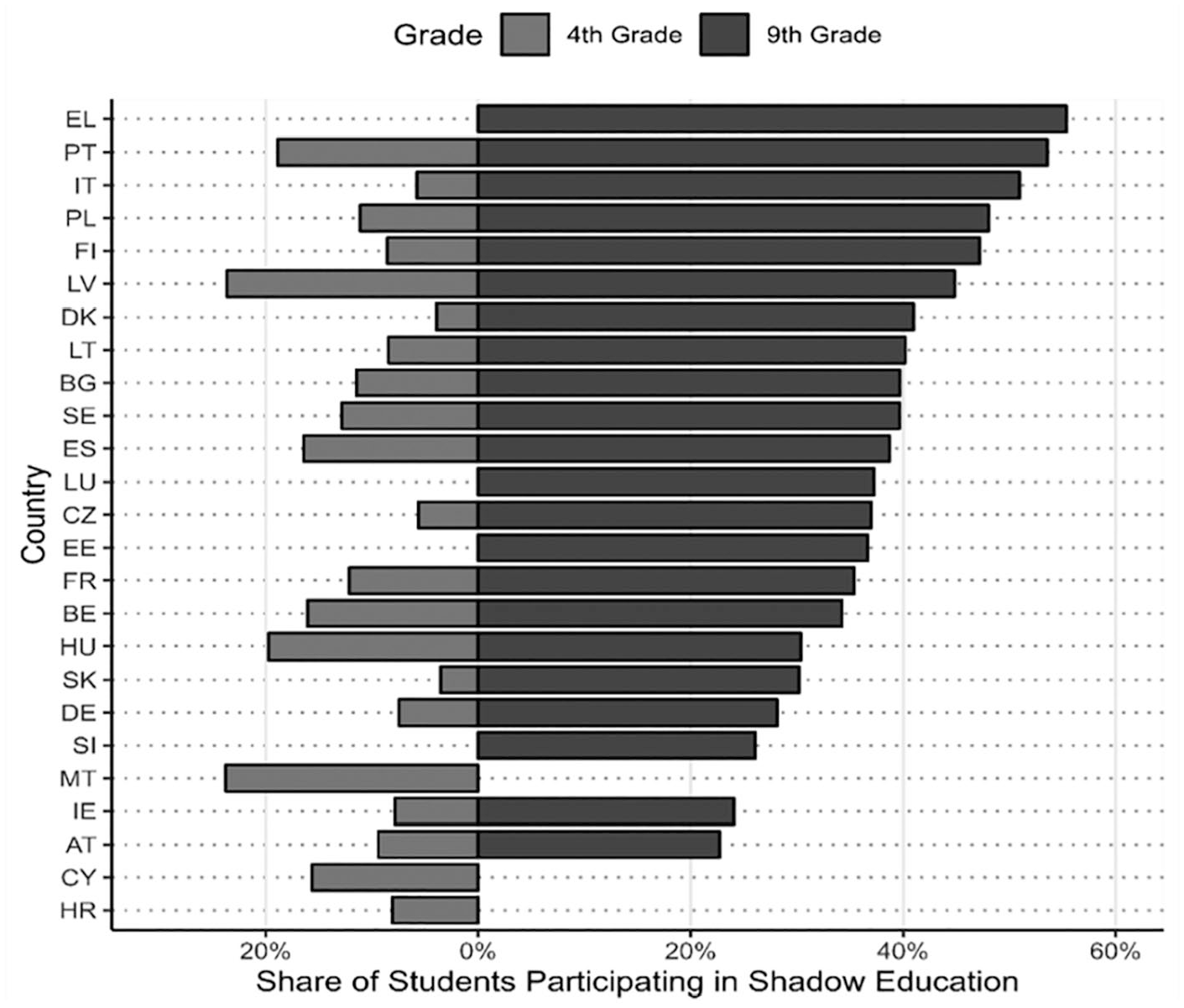
Share of students participating in shadow education at fourth and ninth grades.
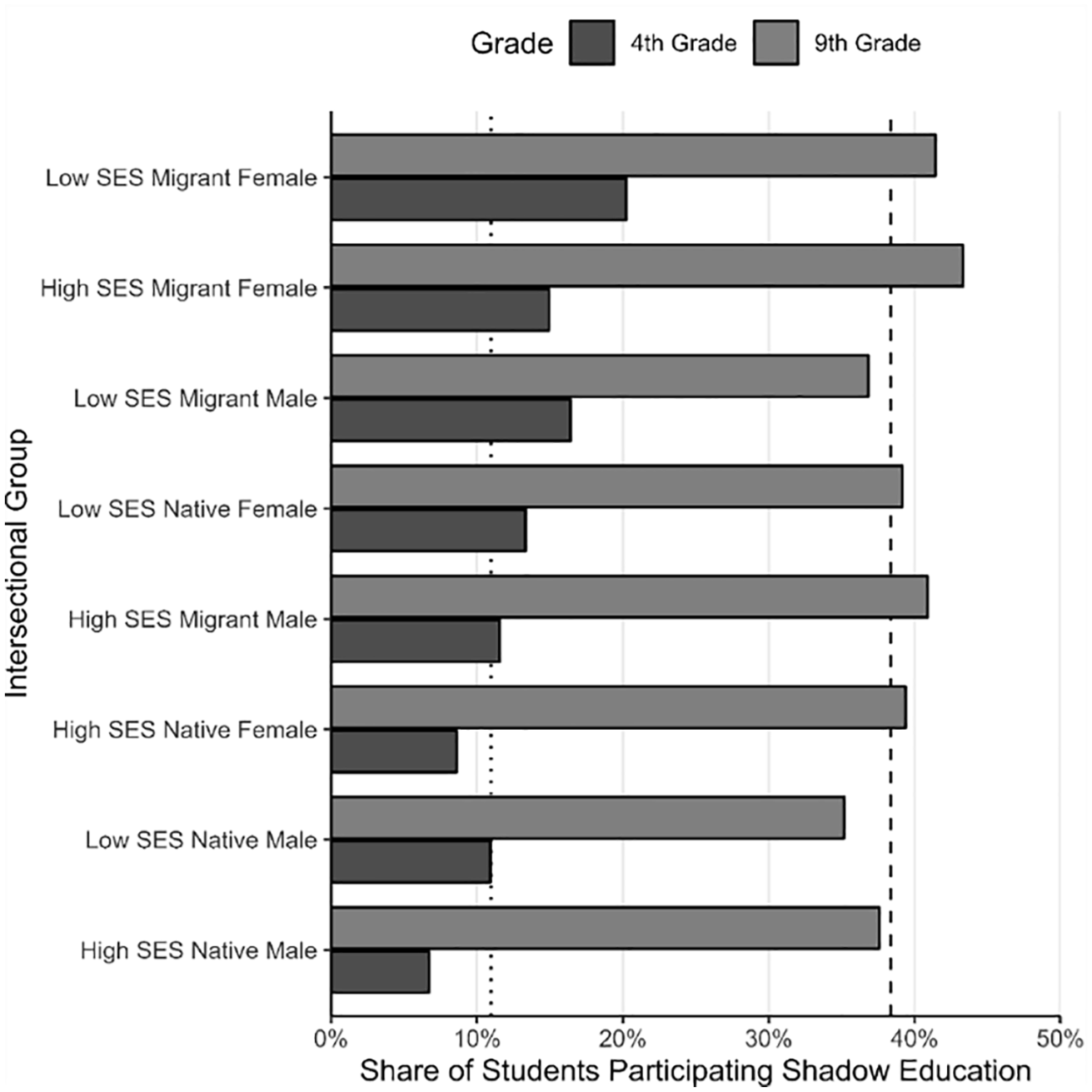
Share of students participating in SE at fourth and ninth grades by intersectional group.
Significant disparities exist in SE participation across intersectional groups, particularly at the primary level (see Figure 2). At the primary education level, the participation rate in SE is notably higher among low SES migrant female students, almost twice the average rate observed among students. Additionally, participation rates among high SES migrant females, low SES migrant males and low SES native females is also above average.
However, at the secondary level, these differences diminish, which is not surprising given the significantly higher overall participation compared to primary education. This suggests that factors influencing participation may vary between primary and secondary levels.
Furthermore, it is noteworthy that female students, regardless of their migration background or SES level, tend to participate more than their male counterparts. This trend is consistent across both primary and secondary education levels. Specifically, in primary education, it is the low SES migrant females who participate the most. However, once they reach secondary education, it shifts to high SES migrant females who participate the most. Conversely, the lowest participation rates are observed among high SES native males in primary education, while in secondary education, it is the low SES native males who participate the least.
These observations underscore the complex interplay of socioeconomic status, gender and migration background in shaping shadow educational participation patterns. In the next step, we run several regression models to understand the underlying factors driving these trends.
The regression models include SES, gender and migrant background as separate dimensions before testing the significance of all interactions between these factors (see Supplemental Tables 3 and 4). As a next step, we explore whether the effects of intersectional group membership vary across the European countries analysed (Table 1, random slope models).
LPM – random slope models of take-up of shadow education at primary and secondary level.
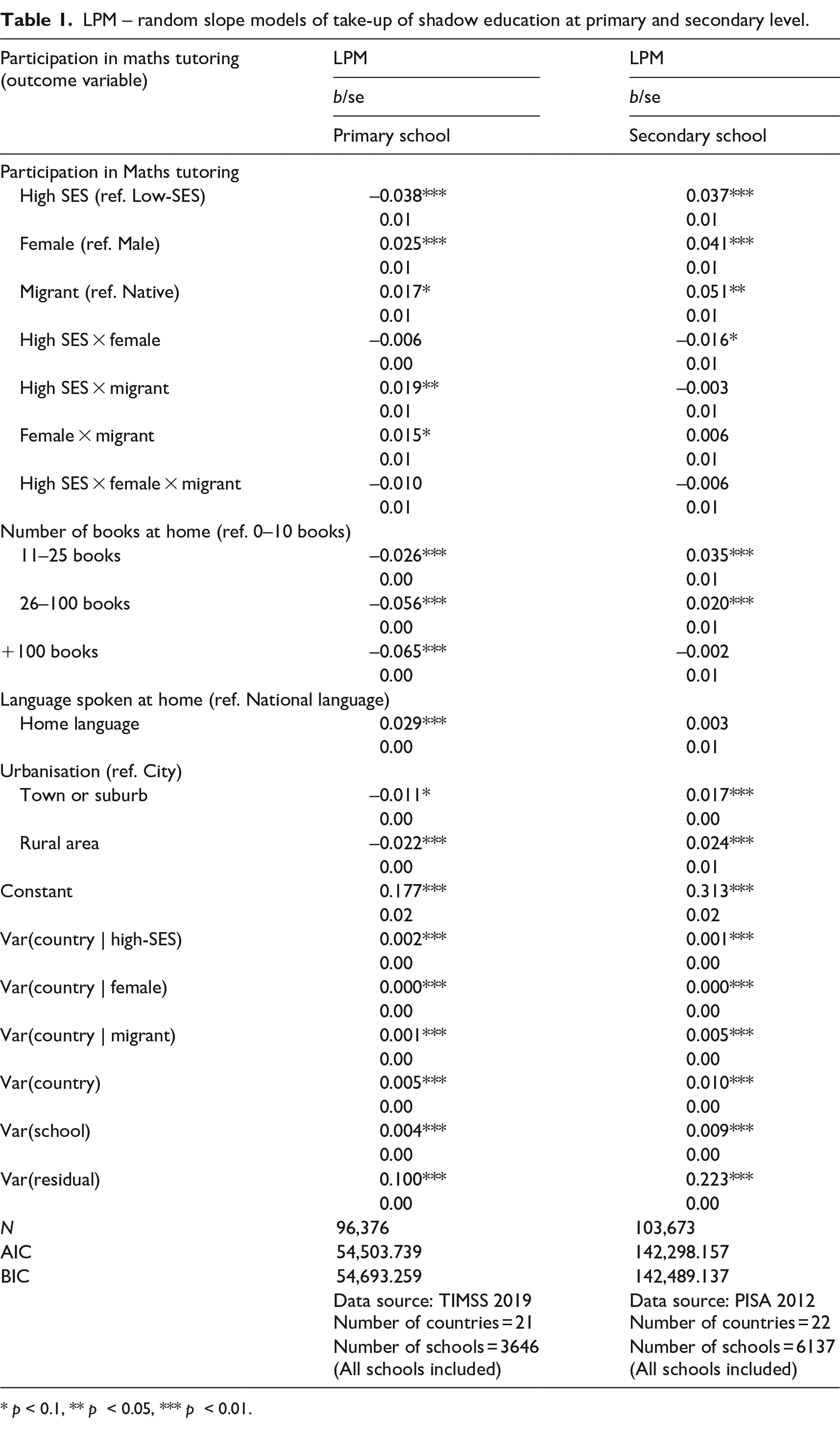
p < 0.1, ** p < 0.05, *** p < 0.01.
Analyses of both TIMSS and PISA data indicate that countries differ significantly in their take-up of SE and individual schools within countries vary significantly. At the primary school level, 10% and 20% of the total variance was accounted for by the country- and school-level differences, respectively. The corresponding values are 3% for the country- and 7.5% for the school-level differences at the secondary school level.
Drawing on TIMSS data for 4th grade students, the analyses show that overall, low SES migrant females have the highest probability of participating in SE at primary school level, while high SES native males have the lowest probability of doing so (See Figure 3). Regardless of their SES, native males are the least likely to participate in shadow education at primary school level. Regardless of their SES, migrant females are most likely to participate in shadow education in mathematics.
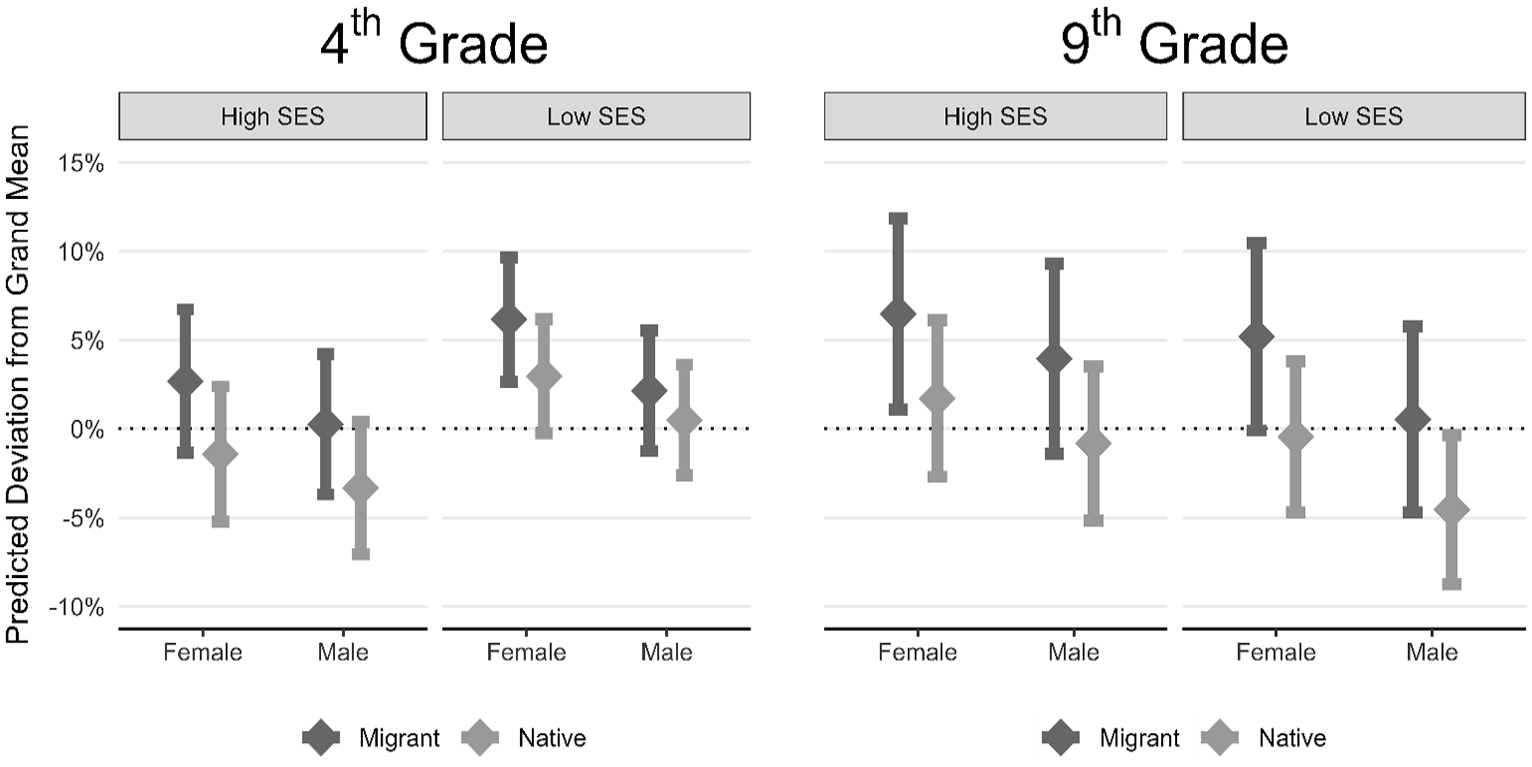
Predicted take-up of SE by SES, gender and migrant origin.
Turning to secondary school students, the analysis of PISA data shows that low SES native males are less likely to participate in mathematics tutoring compared to their high SES native counterparts (See Figure 3). When considering migration background, the results show that high SES migrant males are more likely to avail of SE compared to high SES native males. Regardless of SES or migration background, female students are more likely to participate in SE than their male counterparts. Again, regardless of their SES, migrant female students have the highest likelihood of participating in SE.
Turning to cultural resources, the analysis shows that the more books primary school students have at home, the less likely they are to participate in SE. The number of books partially mediates the effect of parental education. Those who speak a language other than the national language at home are more likely than others to take part in SE, which partially mediates the effect of migrant background. The location where children live also matters, with children attending schools in a city showing a higher probability of participating in SE than their counterparts attending schools in town or rural areas.
At the secondary school level, the probability of participation in SE increases the more books students have at home, but only up to 100 books. Students attending secondary schools in a town or a rural area have a higher probability of participating in SE than those attending schools in a city (see Supplemental Material).
Next, we test whether the intersectionality effects vary between countries. The results show that the probability of attending mathematics tutoring is significantly associated with parental education, gender and migration background, with the three-way intersectionality effect being not significant. 6
Furthermore, there are country outliers in the effects of SES, gender and migrant background on SE take-up (see Figure 4). At primary level, the role of SE in ‘catching up’ appears stronger in Malta, Spain, France, Belgium and Sweden, for parental education, and Malta and Germany for migration background. The intercept panel shows that even taking account of intersectional groups, there is considerable variation in overall take-up levels across European countries. At secondary level, the selection of higher SES groups into SE is stronger in Greece and Italy, while migrant-origin teenagers are more strongly represented in SE in the Nordic countries (Finland, Sweden and Denmark). Again, there is considerable inter-country variation in overall take-up rates.
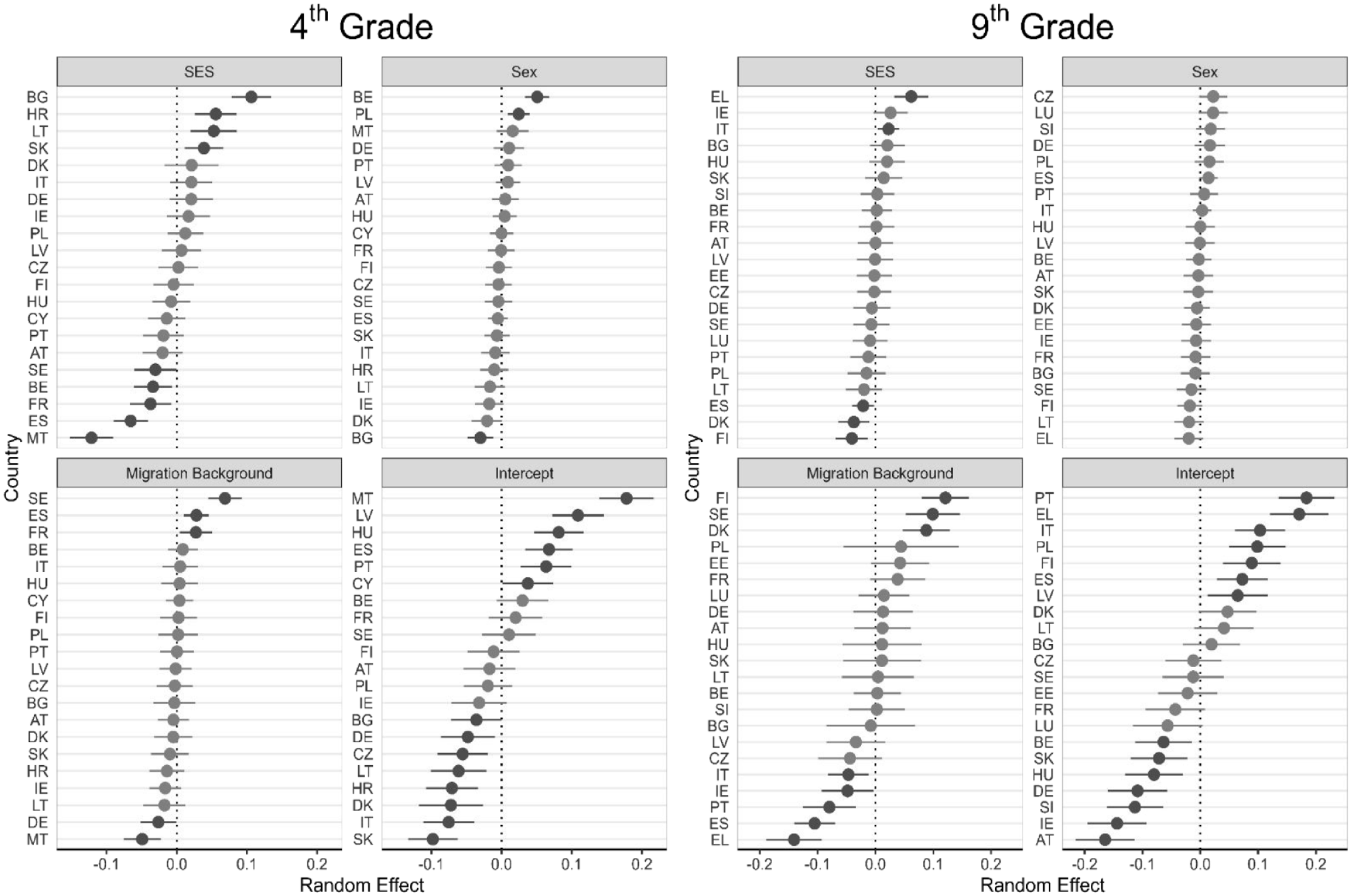
Country residuals in the predicted effect of SES, gender and migration background on the take-up of SE.
Discussion
Drawing on PISA and TIMSS data, this paper focusses on participation in mathematics SE in Europe. Taking an intersectional approach, this paper considers three axes of inequality: socio-economic background, gender and migration background, thus contributing to the existing research in the field. This study has highlighted disparities in participation in SE in mathematics across Europe, with higher prevalence of SE take-up in Southern Europe compared to Scandinavian countries.
In line with other studies, our results show that the level of uptake of SE varies by educational level, being much higher among secondary school students. This is not surprising, considering the relevance of secondary school grades for post-school pathways, especially regarding entry to tertiary level. Lower participation at the primary school stage could be indicative of ‘lower stakes’ at this level, apart from countries characterised by ‘high stakes’ exams at the end of primary school.
In this study, we have shown that SES, gender and migrant background intersect with participation in SE in complex ways and operate differently at primary and secondary level. Concerning family background (parental education), SE appears to play a compensatory role at primary level, mostly being availed of by students whose parents have lower levels of education. At secondary level, in contrast, patterns of take-up are more consistent with the rational choice and concerted cultivation approaches, suggesting that more highly educated families invest in SE to enhance the academic prospects of their children. In contrast to the pattern for parental education, gender and migration background operate in a similar way across primary and secondary levels, with higher take-up of SE among females and among migrant-origin young people. It is not possible to establish the motivations for take-up using the available data. However, some insights can be gained from a study by Clerkin et al. (2020) drawing on TIMSS 2015 data, which shows that participation in mathematics tutoring among primary school children is driven by keeping up in class with excelling in class mentioned less frequently. At secondary school level, on average across TIMSS countries, attending extra lessons in order to excel in class was relatively more common (Clerkin et al. 2020).
Taking an intersectional approach, the uptake of SE in mathematics is highest among low SES migrant females at primary level, while lowest among high SES native males. Our study offers some new insights into participation in SE: while it is commonly understood that students from high SES families are more involved in SE activities, our findings show that this is not always true, especially for certain groups like migrant girls. This suggests that the determinants for participating in SE are not just about having the financial means. Therefore, future research should further explore this area to understand what influences this participation beyond just financial resources. However, if available comparative data would allow clear distinctions between fee-based and non-fee-based forms of SE as well as the intensity of participation, the role of SES may be more pronounced for specific types of SE. On the other hand, since TIMSS data reflects primary school children’s participation in SE relying on parents’ reports, our findings might potentially mirror biased responses by migrant parents – that is, positive migrant selection – whereby families that have decided to migrate might have strong expectations for academic success.
At secondary school level, we show that the effect of SES and gender do not vary by migration background, while the gender gap in favour of females is somewhat smaller in high-SES families. Studies indicate that there has been a notable rise in academic involvement among female migrants over time (Glauser and Becker, 2023). In line with this, our research suggests a high level of participation by female migrants in SE evident in both primary and secondary educational stages. This potentially mirrors broader patterns within European educational systems, where female migrants may find more supportive environments or enhanced opportunities for academic pursuits. Thus, the encouraging settings in these educational systems could be a significant factor influencing this increased engagement.
There are some limitations to the current analyses. First, it is possible to distinguish between paid and unpaid tuition in PISA 2012 dataset but not in TIMSS 2019. However, it is reasonable to believe that out-of-school tutoring is generally provided by private agencies and involves a fee. In addition, the cross-sectional nature of both datasets means that there is an absence of information on prior achievement, potentially an important determinant of SE participation. Previous research shows the role of parental expectations in the use of private tutoring (Lee et al., 2009), but this cannot be captured across both datasets. Participation in SE might also depend on students’ availability (school holidays) and the timing of exams. Both datasets do not allow accounting for these dimensions of participation. The TIMSS sample capture participation in SE in the last 12 months. The PISA sample is limited to 15-year-old students, while high-stakes exams usually take place at the end of secondary education when students are approximately 17–19 years old (OECD, 2014). Against the backdrop of scholars repeatedly underlining the increasing importance of SE in education systems across the globe, more precise and comprehensive measures of SE – including its costs, intensity and quality – in cross-country comparative studies are much needed.
A limitation of our study is the inability to account for differences in migration backgrounds. Crucially, some migrant groups face more difficulties than others in their host countries. This distinction is important, as research highlights the need to consider generation, period and cohort effects for migrants (Rumbaut, 2004). Even migrants from the same country of origin may differ significantly in terms of class background, ethnic composition, migration motives and reception in the host country (Rumbaut, 2004). Future research should more thoroughly consider these differences and investigate the nuanced effects of migration background on SE participation.
Finally, there are determinants of participation in SE at school and country levels that we cannot capture in the current study. Curriculum, student-teacher ratio and school quality as perceived by parents are known as school level determinants of participation in SE (Zhang, 2014). Furthermore, the quality of the national system and the competition between public and private higher education are country-level characteristics that are potentially important for participation in SE (Dang and Rogers, 2008).
Nonetheless, the findings contribute to the growing literature on the complex way in which different dimensions of inequality interact in shaping SE take-up across European countries. Our findings highlight cross-national differences in the patterns of inequality (by SES, gender and migration background). Further research could usefully explore the relationship between country-level characteristics (relating to the educational system and broader societal factors) and the scale of such inequalities.
Supplemental Material
sj-docx-1-eer-10.1177_14749041241285494 – Supplemental material for Inequality in participation in shadow education in mathematics in Europe: An intersectional perspective
Supplemental material, sj-docx-1-eer-10.1177_14749041241285494 for Inequality in participation in shadow education in mathematics in Europe: An intersectional perspective by İrem Karaçay, Audrey Bousselin, Robin Benz, Merike Darmody and Emer Smyth in European Educational Research Journal
Footnotes
Declaration of conflicting interests
The author(s) declared no potential conflicts of interest with respect to the research, authorship and/or publication of this article.
Funding
The author(s) disclosed receipt of the following financial support for the research, authorship, and/or publication of this article: This work has received funding from the European Union’s 2020 research and innovation program under grant agreement No. 101004392 (PIONEERED).

Supplemental material
Supplemental material for this article is available online.
Notes
Author biographies
References
Supplementary Material
Please find the following supplemental material available below.
For Open Access articles published under a Creative Commons License, all supplemental material carries the same license as the article it is associated with.
For non-Open Access articles published, all supplemental material carries a non-exclusive license, and permission requests for re-use of supplemental material or any part of supplemental material shall be sent directly to the copyright owner as specified in the copyright notice associated with the article.
