




Abstract
Introduced in 1907, the ‘real photo’ postcard destabilized the boundaries between private and public life, enabling people to perform identity in ways that anticipate contemporary social media practices. In this visual essay, the author explores one particular phenomenon – the sharing of food – drawing comparisons with ‘foodstagramming’ in terms of its compositional structure, social objectives and communicative functions. In doing so, she challenges the supposed novelty of modes of self-presentation on social media, embedding them in a broader historical trajectory.
Introduction
In today’s increasingly digitized society, social media has become a key platform on which to share food-related images and their associated ideas, beliefs and values. ‘Foodstagramming’, as the practice is known on Instagram, is highly bound up with concepts of selfhood, social relations and embodiment (Lupton, 2018: 66). Users post images to perform identity and sociocultural belonging, to monitor, reflect on and share their habits and preferences with others, and to act as ‘expert’ voices in food discourse (Rousseau, 2012), all of which help them to gain what Naccarato and LeBesco (2012) call ‘culinary capital’ – a strong cultural knowledge of food that leads to high social status. However, how novel is this practice? Perhaps not as novel as we might think.
In 1907, the first ‘real photo’ postcards were produced in Britain. Consisting of actual photographs created from negatives, these postcards enabled people to experiment with photography and send personalized images of their family, friends, hobbies, work and food – the focus of this visual essay. Just as with social media, ‘real photo’ postcards transformed the relationship between people and objects as their tastes, interests and identities were shared across broad social networks and often heavily edited through chemist-bought tinting kits and decals to look more aesthetically appealing (Edwards, 2004: 29). The ‘real photo’ postcard can, thus, help us place foodstagramming within a longer lineage of self-presentational practices. This ‘transhistorical’ approach is in keeping with the growing body of research in media and communication studies that traces the broader historical trajectory of seemingly new communicative phenomena (Gillen, 2016; Herring, 2013; Tagg and Evans, 2020).
Food for Thought: Photographic Practices Then and Now
Data
 500 early 20th-century postcards gathered from a manual search of the Edwardian Postcard Project digital archive, as well as digitized postcard collections from four UK-based archives and two private collections.
5,000 Instagram posts collected using the hashtag #foodstagram (first 5,000 of 54,021,113 identified)
Methodology
Visual content analysis and comparative visual social semiotic analysis
Image Categories
Intimate shots that tightly frame the food as a whole served up in a dish or on a plate
 Postcards Instagram
Tight shots where only a small detail of the food is captured
 Postcards Instagram
Food is secondary to the accompanying props that ‘set the scene’
Postcards Instagram
Hand-hugging crockery on which the food or drink is presented
Postcards Instagram
A particular food item is presented to others, often to promote where it was purchased
Postcards Instagram
Shows part of the prepared dish tantalizingly displayed on a fork
Postcards Instagram
Portrays an element of the food production or food-making process
Postcards Instagram
Person holding or consuming a particular item of food or drink
Postcards Instagram
Depicts working-class people in everyday environments consuming food
Postcards Instagram
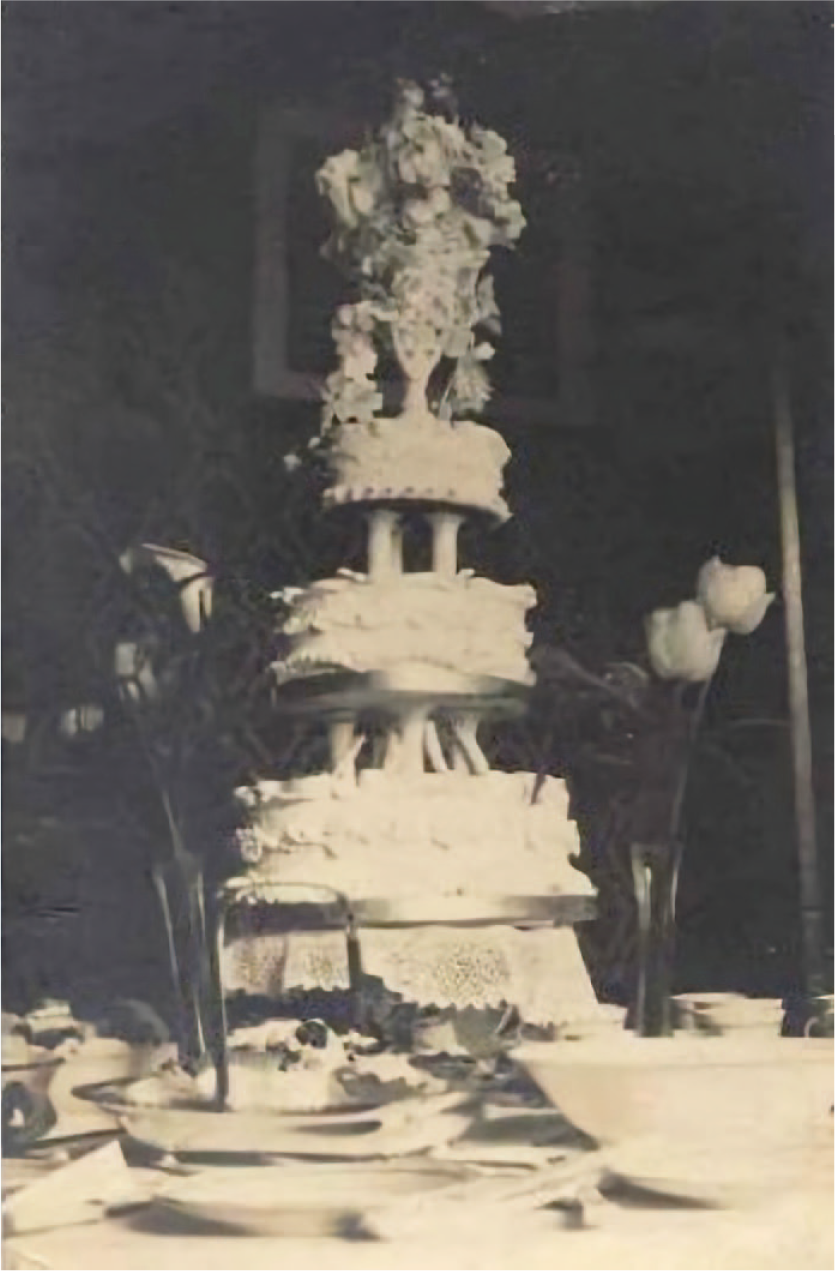
Wedding cake of Stanley Richards and Grace Pitt, 1919, Hooper Collection, Swindon Central Library.
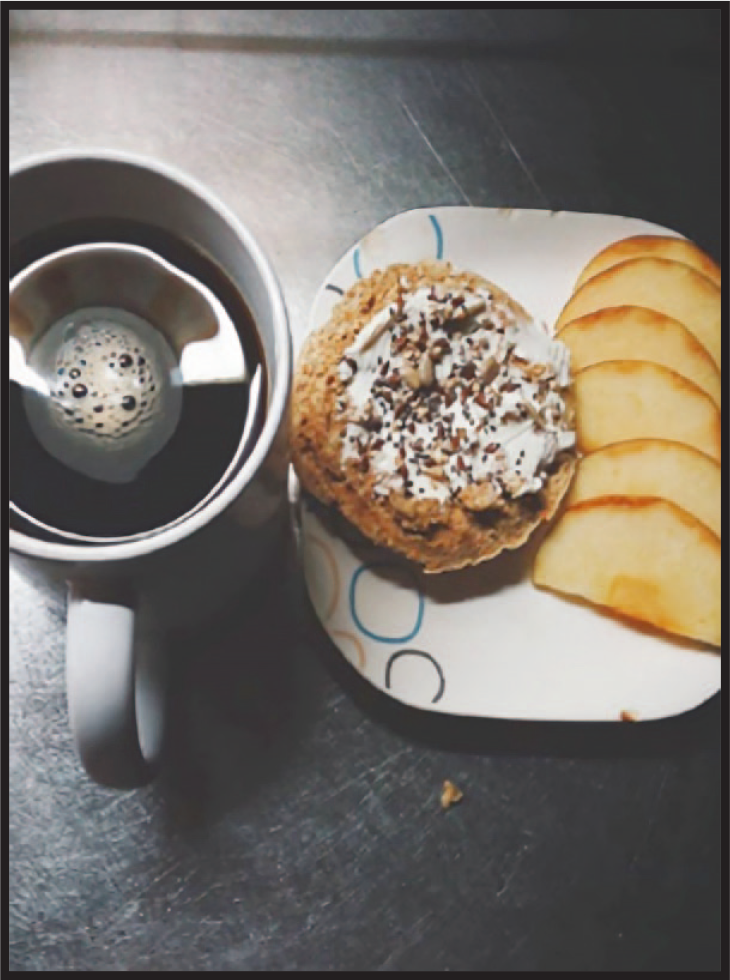
Cheese bread and apple, 2021, @enproceso_ok Reproduced with permission.
1. Close-Ups
This ‘real photo’ postcard shows the wedding cake of Stanley Richards (a railway operator) and Grace Pitt who married in 1919 in Swindon. Early 20th-century close-ups were reserved for special occasions only, with a particular emphasis on desserts or extravagant food displays. As it was challenging for amateurs to configure the correct camera settings for indoor photographs, professional photographers were usually hired to mark formal events like birthdays and weddings (Phillips, 2004: 201). The images were then sent to family and friends as mementos. These postcards were typically produced for and sent by the middle and upper classes, although some members of the working classes (such as Stanley and Grace) saved up specifically in order to afford a professional photographer for their wedding.
Instagram close-ups, on the other hand, are not unique to one food type, or one type of user. Not only does this reflect the increasing democratization of photography in the age of the camera phone, but it also indicates how Instagram food images are linked to the intensification of daily life and aimed at a wider public interested in the aesthetics of food rather than the maintenance of family or domestic memories (Serafinelli, 2020). In short, unlike ‘real photo’ postcards, they tend to capture emotional rather than purely visual memories, serving as snapshots of the everyday rather than markers of remembrance.
Instagram close-ups are characterized by bright colour palettes, emphasized by serving food on white or neutral-coloured crockery. Although early 20th-century close-ups are monochrome, the varied range of blacks, greys and whites create pseudo-depth and texture, thereby acting as ‘multisensorial taste experiences’ (Perullo, 2018: 178) for viewers. While most Instagram close-ups are taken from high angles, ‘real photo’ postcard close-ups favour front angles. This is reflective of the limited functionality of cameras at the time and generates less intense emotions in viewers than more intimate perspectives (Zulli, 2018: 139). In both forms of media, symmetry is a key feature, used to create a sense of balance, harmony and order, which our brains are programmed to recognize easily because of its frequent occurrence in the natural world (Roos, 2017).
2. Extreme Close-Ups
Extreme close-ups are noticeably absent from early 20th-century ‘real photo’ postcards because, at that time, cameras were still not sufficiently advanced to be able to shoot with zooms. Although some models offered variable focal lengths, this technology did not become widespread until the 1950s.
Extreme close-ups trigger a strong emotional response in viewers as their attention is turned fully towards a specific object of focus and is not distracted by any external items in the background (Bordwell and Thompson, 2006: 31).
Furthermore, extreme close-ups are the ‘distances when freckles and moles become known, where embarrassing stray hairs cannot be hidden’ (McDonnell, 2015: 258). Thus, viewers are invited to enjoy the sensual dimensions of food as carnal pleasure, or ‘food porn’.
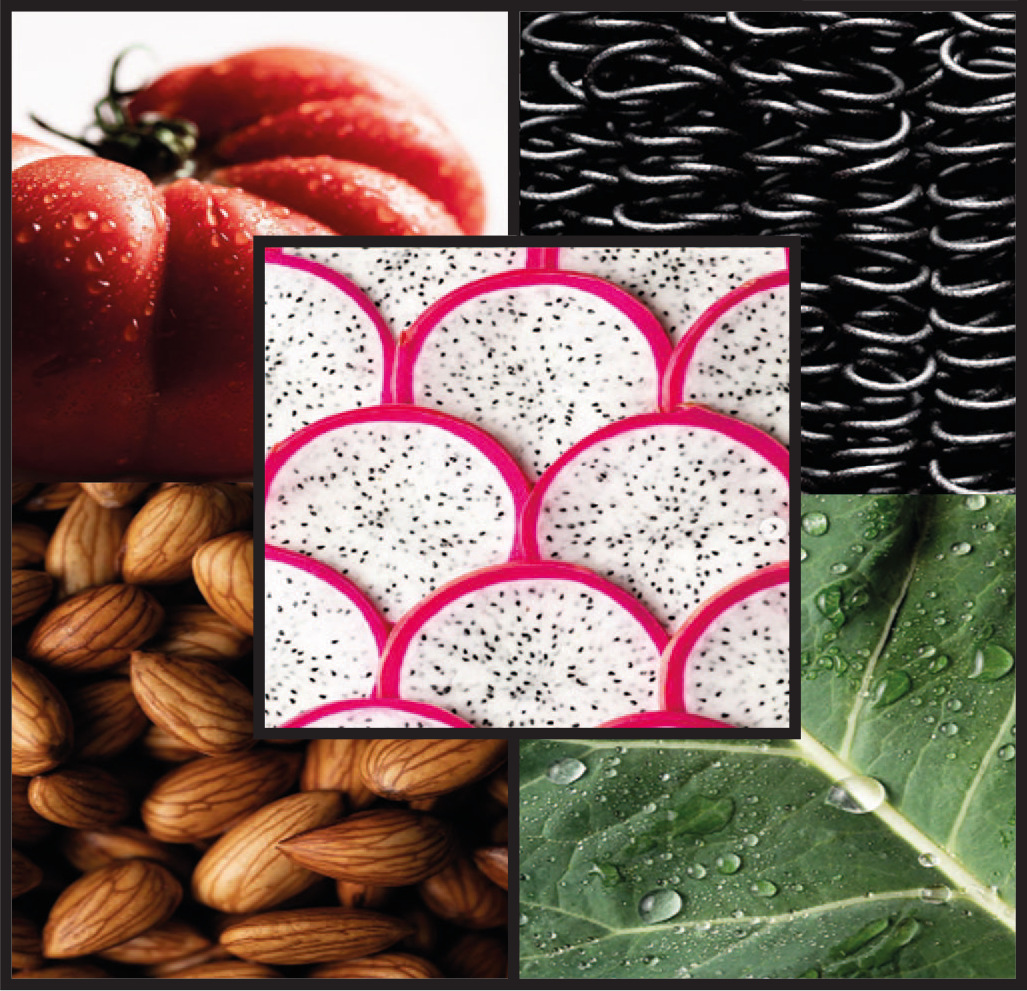
The extreme close-ups on Instagram explored in this study were predominantly of fruit and vegetables; as shown in the example below by @sproutsandkrauts, the bright colours convey succulence, while the emphasis on texture and moisture has a quasi-sexualizing effect, enabling a clear form of fetishization (Greene, 2013).
These types of images are produced mainly by professional food photographers for promotional purposes and are interacted with by other photographers, health and fitness gurus and foodie influencers, who Mapes (2021: 48) terms a ‘fetishising audience’. Here, the perfectly shaped fruits and vegetables act as symbols of the work required to perform privilege, with any actual evidence of that work removed (p. 82). Thus, they signal orderliness and staging, capturing a mood that encourages desire and emulation in followers.
(clockwise) Tomato, black rice ramen, kale, almonds, pitaya, 2021, @sproutsandkrauts Reproduced with permission.
3. Props
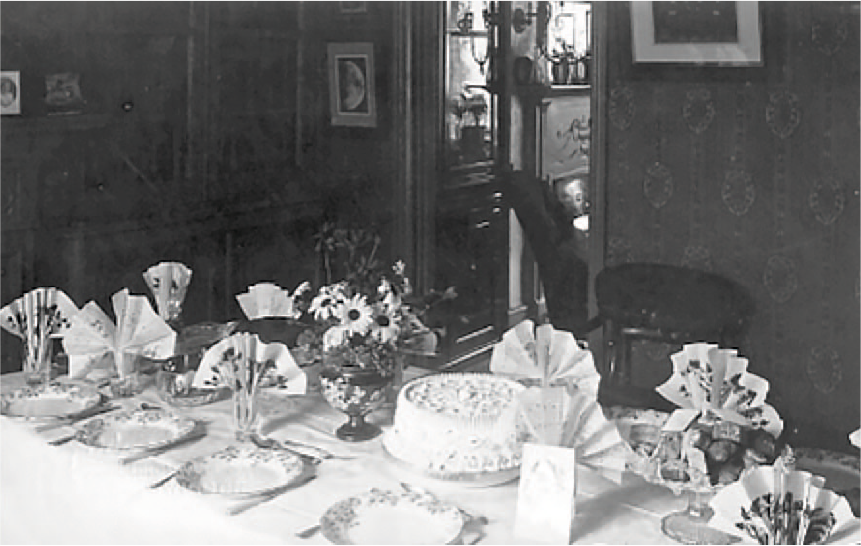
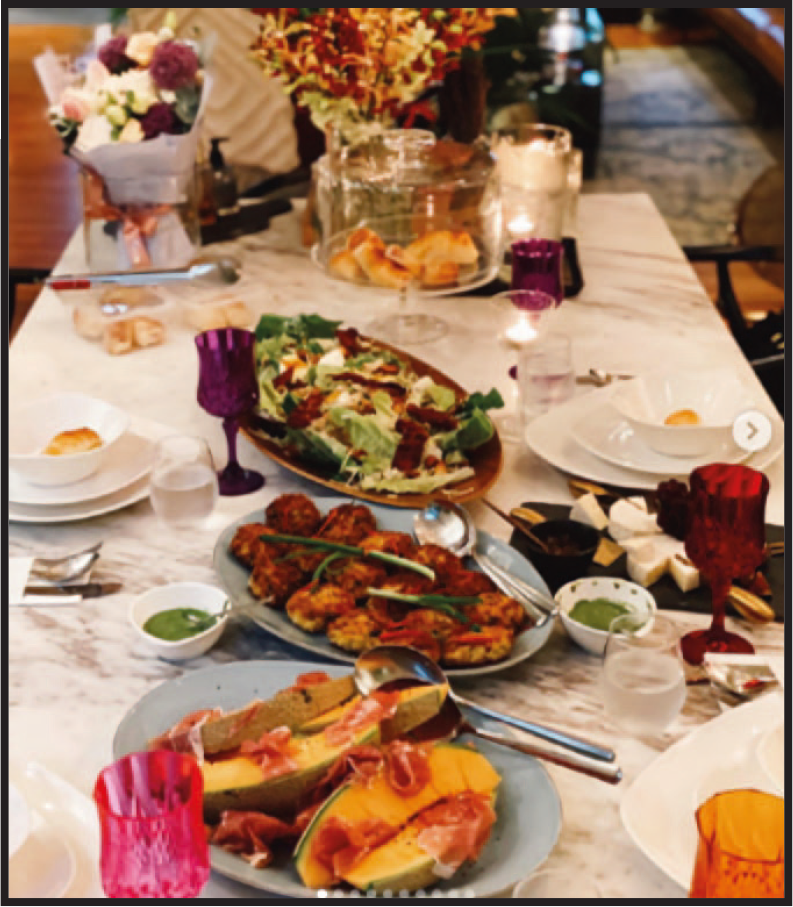
In both postcards and Instagram, prop images draw upon the conventions of still life, with objects arranged in a deliberate way that carries symbolic or ritualistic meaning (Holmberg et al., 2016: 126). Photos often show a laid table with a complete ‘equipage’ of food-related items surrounding the main dish (e.g. drinks, cutlery, serviettes). Wide-angle shots are favoured, inviting viewers into the full scene and allowing them to piece together meaning from the way the objects are positioned, as well as the scenery in the background (e.g. wallpaper, paintings).
On Instagram, these props imbue the food with a ‘back to basics’ homemade quality, further emphasized by the choice to display food on top of a bare table rather than a tablecloth. In some cases, non-food props are used to convey ethics related to the environment and healthy eating (e.g. flowers, plants, pebbles, Buddha statues) or to set a mood of intimacy (e.g. candles, rose petals). Mapes (2021) sees these combinations of ‘rough’ and ‘refined’ as a way of transmitting palatable forms of eliteness to followers. Through the blending of typically low and highbrow cultural artefacts and practices, class privilege is asserted, but in a neoliberalist way that emphasizes individual work ethic and meritocratic reward over pecuniary wealth.
For early 20th-century middle and upper classes, table layouts were guided by informal rules passed down from generation to generation and could be consulted in household management books. There was often a friendly rivalry between those in the same social circle; thus, when postcards were circulated to friends, the subtle details of the dinner table would have been scrutinized thoroughly. An incorrectly laid table reflected badly on the household. Therefore, it was essential that the positioning of crockery and cutlery, its design and brand, as well as the presence of a white tablecloth, conformed to well-established guidelines (Campbell, 1893: 131).
In these postcards, non-food props tended to be flowers and were, again, guided by etiquette books, which stated that flowers should be ‘white with plenty of foliage’ and decorations ‘should admit an uninterrupted view of the assembled guests’ (Mrs Beeton, 1861: 1696). Under no circumstances were artificial flowers to be used because they were ‘not in good taste’ for houses where ‘refinement prevails’ (Cassell, 1880: 243). Thus, we see how attention to audience reception was particularly important when dealing with a semiotic domain (e.g. table setting) in which the meaning of signs was fixed by precise rules. To stray from these guidelines risked looking unrespectable and uncultured.
Dinner table of Thomas and Alice Richards, 1919, Hooper Collection, Swindon Central Library.
Dinner table, 2021, @dennischongofficial Reproduced with permission.
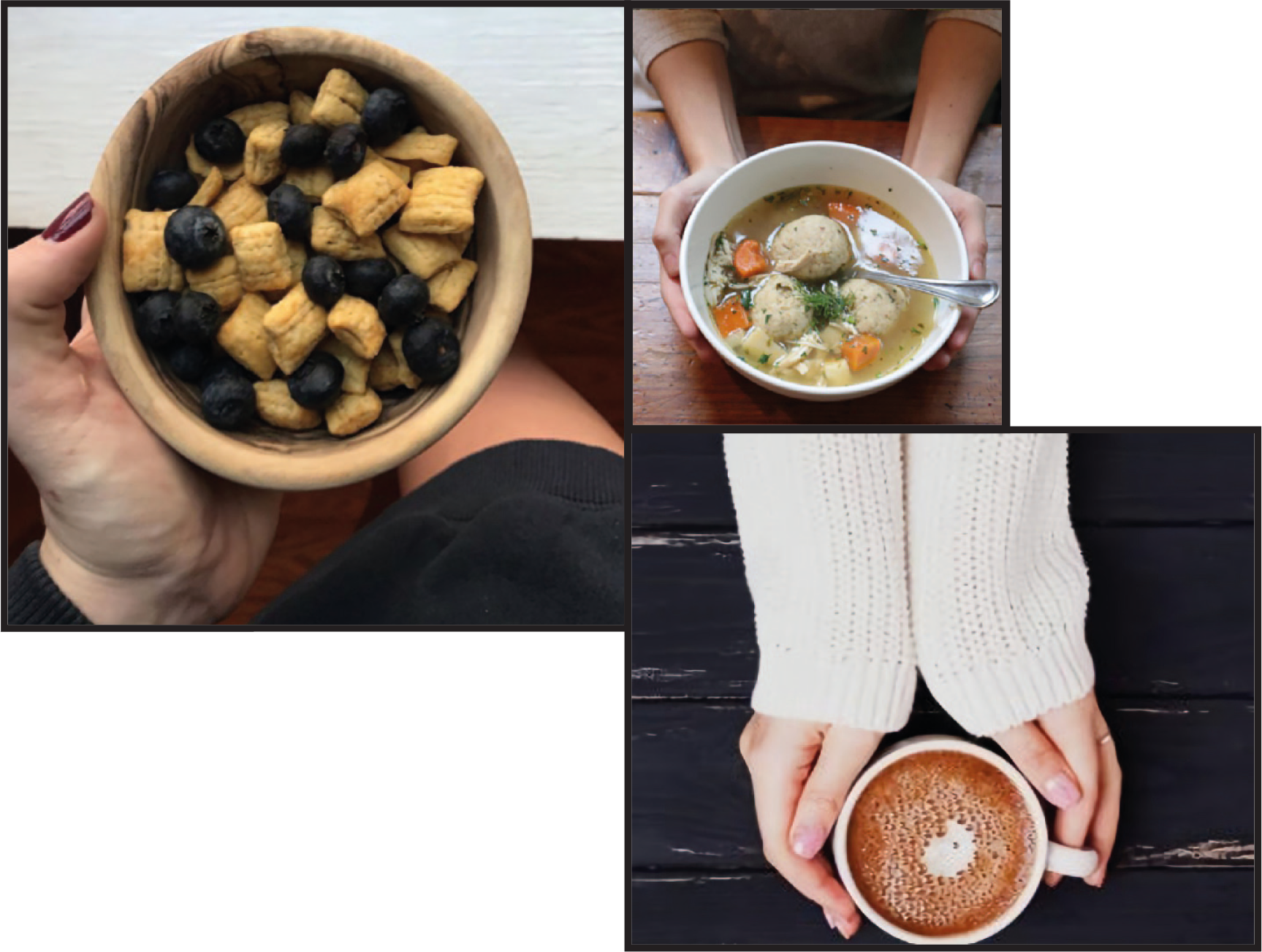
(Clockwise) Embraces of cereal and berries @berryme.bygres, vegetable soup @bubbys and hot chocolate @waectersbachus Reproduced with permission.
4. Embraces
‘Embrace’ images are conspicuously missing from early 20th-century postcards. On a practical level, at a time when photo processing was expensive, it may have been considered wasteful to develop a photograph of a hand holding a mug. Equally, people of this era had a less intimate relationship with food: Humphry’s (1897) etiquette book advises that food ‘must be handed around quickly without delay’ (p. 64) and efforts must be made ‘to distance diners from food’ (p. 66) by the use of selected utensils and their immediate removal as soon as a course is finished.
On Instagram, most ‘embrace’ images tend to show cups, glasses, bowls and dishes rather than plates as they are easier to grasp. Moreover, many of the foods and drinks in the containers being held are hot (e.g. coffee, soup), tapping into the cultural connotation of warmth as something comforting (Locher et al., 2005: 287). As mugs and bowls are part of our cosy routines, we feel an emotional attachment to them beyond what they hold inside (Wasmer Andrews, 2016). Warm mugs have also been found to have a positive effect on mood, with people holding cups of coffee tending to perceive other people in their presence as friendlier and kinder (Williams and Bargh, 2008). Thus, these types of images serve to capture a mood rather than an overt feeling of eliteness, used by everyday users to share a moment in their daily lives with others. This is accentuated by their accompanying captions (e.g. ‘nothing that hot tea can’t fix’), which instantly prompt followers to ask about their users’ wellbeing.
In most shots, only the hands are shown, making viewers feel as if they are entering the image and that the hand is, in fact, their own reaching out to embrace the food or drink in question. Here, food moves beyond its role as a nourishing necessity and even as a sensuous item; instead, it becomes something to be protected, nurtured and cherished. This is accentuated by the cradling gesture that almost resembles the way that a mother would hold a newborn child. Nonetheless, the hands betray the authenticity of the image because users pay deliberate attention to the way that they are presented. Nail varnish, watches and bangles are all paraphernalia used to creative effect and to add a touch of colour to the image (see @berryme.bygres and @waectersbachus). This ‘sketch of personhood’ enables viewers to experience the conveyed spatiotemporal meaning more deeply, thereby turning the hands, rather than the food, into objects of desire and consumption (Mapes, 2021: 85).
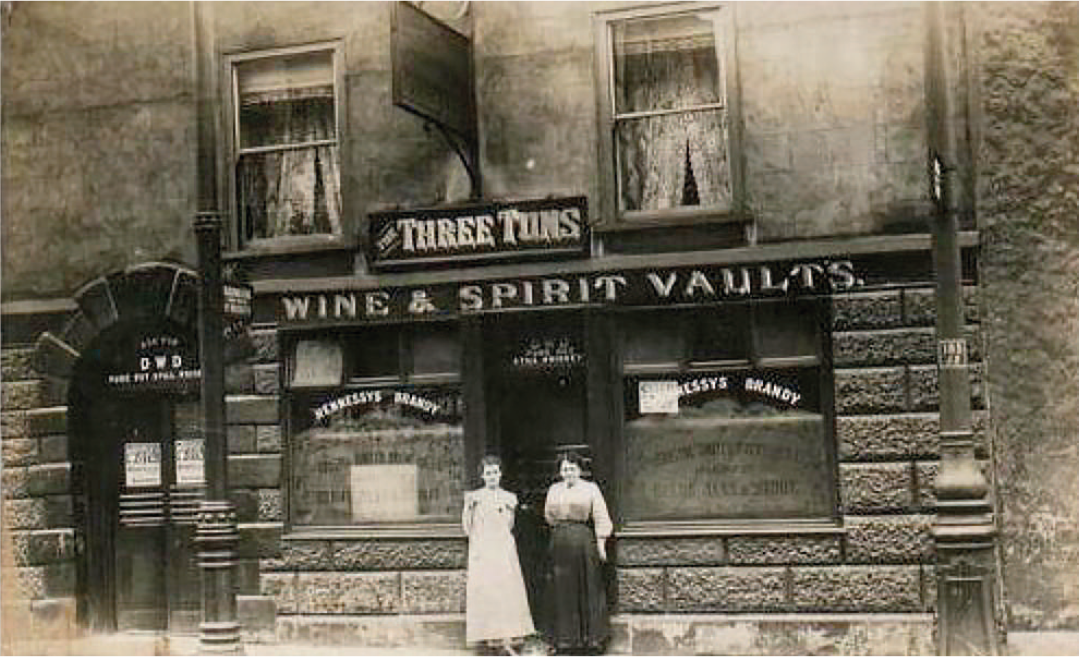
The Three Tuns, St George’s Rd, Bristol, 1912 Bristol Archive.
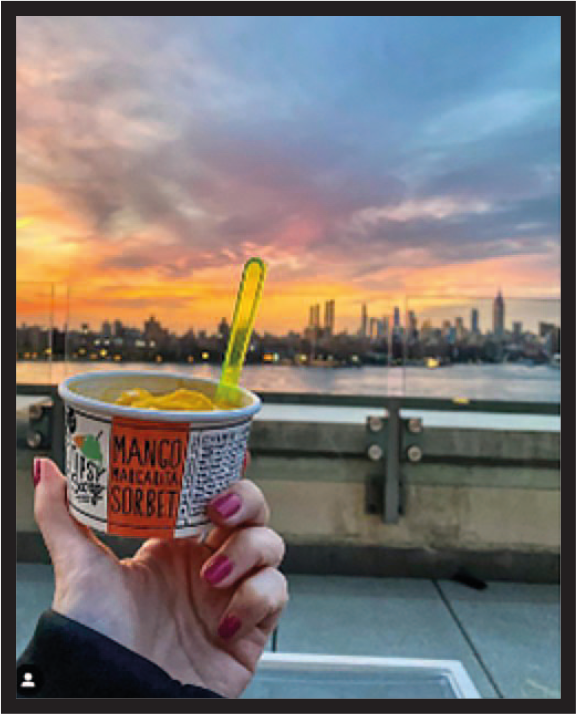
Tipsy Scoop ice cream, @bknyeats Reproduced with permission.
5. Promotions
Although ‘promotion’ images were used in early 20th-century Britain, their mode of presentation and communicative function differ substantially from Instagram ‘promotion’ images.
On Instagram, this type of image bears some similarity to the ‘embrace’ in that the user’s hand is foregrounded. However, it differs in the way that the food is raised high in the air away from the user and the image is taken with a low-angle shot, as seen in the image above by @bknyeats; here, the focus is less on the intimate relationship between the user and the food, and more about the self-promotion of a particular value, belief or lifestyle choice. Users often geotag the establishment in their posts, thereby indexing locality and seeking to gain instant gratification from them and, in turn, culinary capital from their peers (Mapes, 2021: 68).
Most of the foods and drinks in these images tend to be items that are portable and can be consumed ‘on the go’ (e.g. ice creams, soft drinks, sandwiches). They are often held up in front of the place from where they were bought or deliberately include the brand name on the packaging, turning users into unofficial ambassadors and granting them superiority as being ‘in the know’. Similarly, many users also ‘present’ food in iconic places (e.g. macaroons on the Eiffel Tower, slice of pizza at the Colosseum), thereby creating their own form of nation-branding steeped in informal advertising.
Due to the technological constraints of early 20th-century cameras, users were unable to hold up items of food or drink in front of themselves and photograph them. Moreover, whereas today it is trendy to eat ‘street food’, then, consuming food from a portable food booth was strongly associated with the working classes (with the exception of ice cream) and carried public health risks. It was more common for ‘promotion’ images to be taken by itinerant photographers who captured food-sellers outside their establishments and turned them into promotional postcards. In some cases, the people alongside the proprietors were actors who were paid a small sum to act as customers. Once commercialized, these images were purchased in shops by locals of all classes and circulated to family and friends with comments that praised or critiqued the establishment, serving as an early form of Tripadvisor. Thus, the postcard operated on several levels: as a promotional tool for the establishment, as a feedback form for customers and as a means of visually sharing a part of daily life with others.
Despite their differences, both the postcards and Instagram images inject a sense of dynamism into an otherwise static image, capturing movement through a specific place and moment in time. In doing so, users create ‘pseudo-sociality’ (Thurlow, 2013), performing access and participation yet depriving others of any real connection with them or the space.
6. Tastes
‘Taste’ images are not found in early 20th-century postcards. As with the ‘embrace’ images, their absence is linked to the different relationship that people had with food. While it was deemed acceptable to take photos of a table setting at a formal dinner party, it was considered insulting to take photographs of guests as they were eating (Jameson, 1987: 60). The table was seen as a ‘stage where an exact routine was required’ (Campbell, 1893: 145). To stop and take photographs would disrupt this performance.
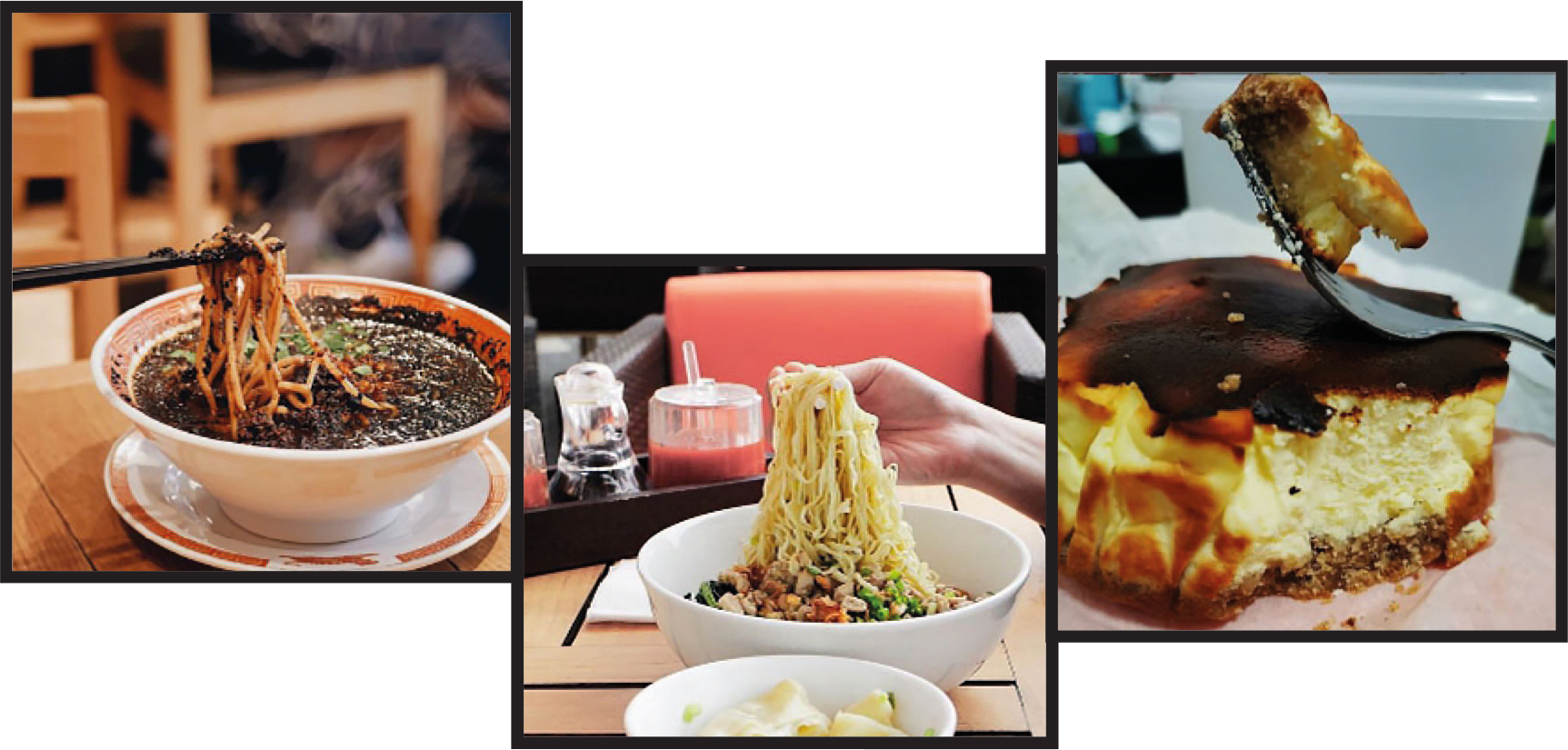
No one particular food is favoured on Instagram in these types of images. A ‘mysterious’ hand (@mianne86) or a floating fork (@smashpop, @yummie_id) is often depicted as the food is held out to viewers directly, urging them to try it. The offered food is made salient through the use of a close frontal angle. ‘Taste’ images also carry a heavy pornographic element to them in the way that the offered food is shown deliberately connected to the food below as it drips and oozes, sometimes over the edges of the plate or bowl (McDonnell, 2015: 240). This type of display would have been deemed unacceptable in early 20th-century Britain, not only because of its inadherence to rules of etiquette but also due to tight morals around sexuality.
Rousseau (2014) has found a dangerous trend between these types of images on social media and an unhealthy relationship with food. She claims that social media users believe that ‘consuming food porn may be safer than consuming real food’, which may particularly affect ‘sufferers of eating disorders who rely on images of food as a substitute (within limits) for eating’. Likewise, Mejova et al. (2016) have claimed that food porn contributes to an unrealistic view of food and is ‘indecent when there is so much hunger in the world’.
However, these images can also be seen as creating feelings of commensality, virtual togetherness and new contexts of sociability with followers, particularly if we consider that they are most commonly posted by everyday users rather than professional chefs, brands or influencers. In this way, they bear a striking resemblance to mukbangs – Korean livestreaming eating shows – which enable multimodal and collaborative performances of eating and particularly help combat the stigma of eating alone in Korea (Choe, 2020).
(From left to right) Tastes of noodles @smashpop and @mianne86, cheesecake @yummie_id Reproduced with permission.
7. Processes
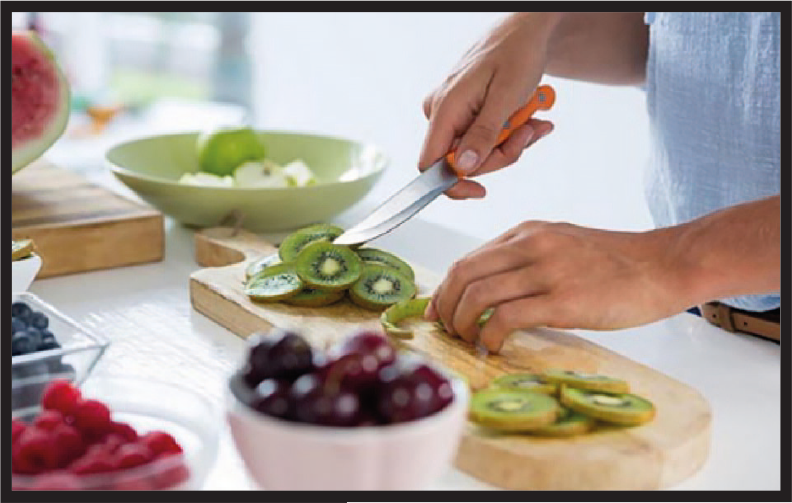
Although ‘process’ images exist in postcard and Instagram formats, there is a substantial difference in the way the process is displayed and its broader meanings. On Instagram, ‘process’ images show how food is prepared rather than produced. They are often taken in restaurant kitchens (accompanied by geolocations) to encourage potential diners to eat there and the chef is shown to convey that the food is fresh and natural. In contrast, food processes at home, such as the image below by @nourishmovelovebali, are typically taken from a front angle and show a pair of ‘mystical’ hands cooking. This ‘visible performed labour’ serves to idealize the food-making process with an ‘implausibly tidy aesthetic’, turning the ‘shadow subject’ into an object of contemplation that serves as a figure of aspiration for viewers (Mapes, 2021: 70).
Furthermore, ‘process’ images on Instagram are also highly sensuous and deliberately titillate viewers by capturing the exact moment that syrup is dripped onto a pancake or a runny fried egg lands on a piece of toast. This highly sensory experience creates a rhetoric of excess, offering viewers an ‘escape from and into the ordinary as idealised’ (Greene, 2013: 98).
The unspoken rules of early 20th-century society on sexuality and morality would have prohibited such an overt sexualization of food in photographs.
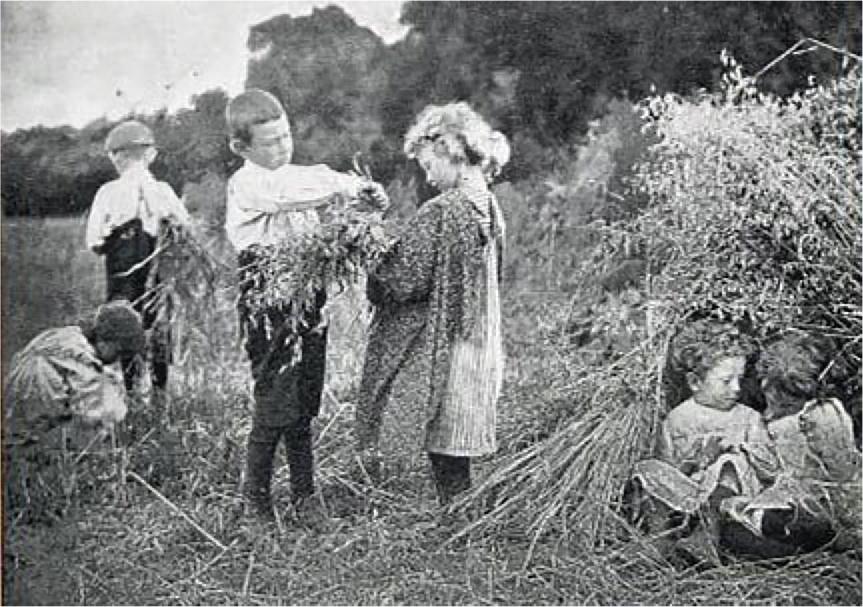
In ‘real photo’ postcards, the reverse trend can be found: food production is favoured over food-making. While today it is trendy to capture the cook in their natural setting, this was deemed highly inappropriate in the early 20th century; cooking was strongly associated with the working classes and took place below stairs away from sight. Therefore, historical ‘process’ images are more concerned with the origins of food and how it was grown/sourced before reaching the kitchen.
These ‘process’ images were often taken by itinerant photographers and capture the harsh conditions in which many working-class people laboured. While Instagram ‘process’ images are planned and individuals pose especially for them, their historical counterparts very clearly did not. Thus, we see cockle gatherers on the beaches, fisherman in their boats or farmers in their fields involved in their daily work and often not paying attention to the camera. These images were then commercialized and circulated on postcards bought by middle- or upper-class tourists bemused at this ‘spectacle of the other’ (Hall, 1987: 223).
Children collecting crops at harvest time (c. 1910). Private collection, with thanks to Ann Wilson.
Chopping fruit, 2021, @nourishmovelovebali Reproduced with permission.
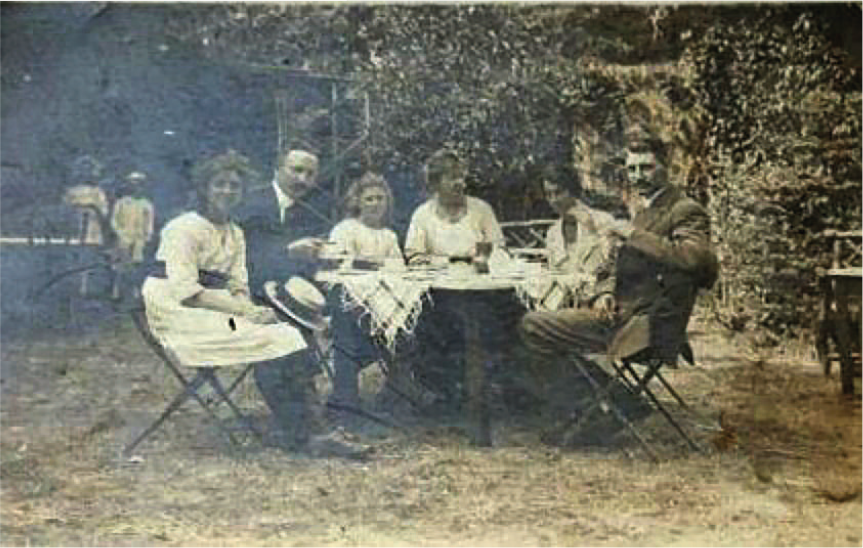
Edwardian family having tea in their garden, c. 1910, author’s private collection.
@fitmuminIreland Reproduced with permission.

@jon_the_food_don Reproduced with permission

8. Selfies
While technological constraints meant that ‘real photo’ postcard users could not take selfies in the modern sense, some images subscribe to the general definition of this category in that they capture a person eating, drinking or presenting food to the camera.
In most cases, these selfies are reserved for informal, outdoor settings only, such as picnics or tea parties. These unusual occasions outside one’s normal routine were considered more worthy of documenting with photos. Furthermore, unlike the dinner table, outdoor eating had fewer rules of etiquette pertaining to appropriate behaviour. These photos were mainly taken by amateur photographers because the outdoor conditions allowed for more generous apertures and faster shutter speeds (Phillips, 2004: 211). This means, however, that surviving selfies almost exclusively capture life from a middle-class perspective: girls and women dressed in white, boys in sailor suits and men in boater hats alongside a blanket laden with food, drink, cutlery and crockery – the epitome of the ‘long, golden summer’. These images served as a memento of a family outing and were often sent to other family members or friends to share a visual memory of the occasion.
The Instagram images explored in this study show a clear division between two types of users who post food selfies: those who seek to perform and display ‘clean eating’ and physical fitness and its associated values of control and self-discipline; and those who focus on ‘food porn’, excess and the carnivalesque potential of enjoying foods that are culturally coded as fattening or unhealthy (Lupton, 2018: 72). These two types of users fit with the ‘gourmand’ and ‘glutton’ dichotomy, identified by Greene (2015) and in existence since at least the late 18th century, and showcase the clash between restraint and excess found on Instagram.
The health-conscious user is often depicted in sports clothes and generally tends to be female (see @fitmuminIreland image above). The images are frequently composed in pale, neutral colours. In line with these values, the foods promoted are smoothies, salads, fruits and vegetables, and tend to be displayed rather than eaten. In contrast, the junk-food user (see @jon_the_food_don image above) is typically male, more dishevelled in appearance and is often shown enjoying food excessively. Food is consumed in large portions rather than displayed and tends to be unhealthy choices, such as hamburgers, hot dogs and cake. The act of consumption is typically accompanied by an exaggerated facial expression to emphasize the excess. Although these two users clearly appeal to different followers in their posts, they share a common goal of showcasing eliteness, whether through virtue signalling and moral superiority or exuberance and jocularity.
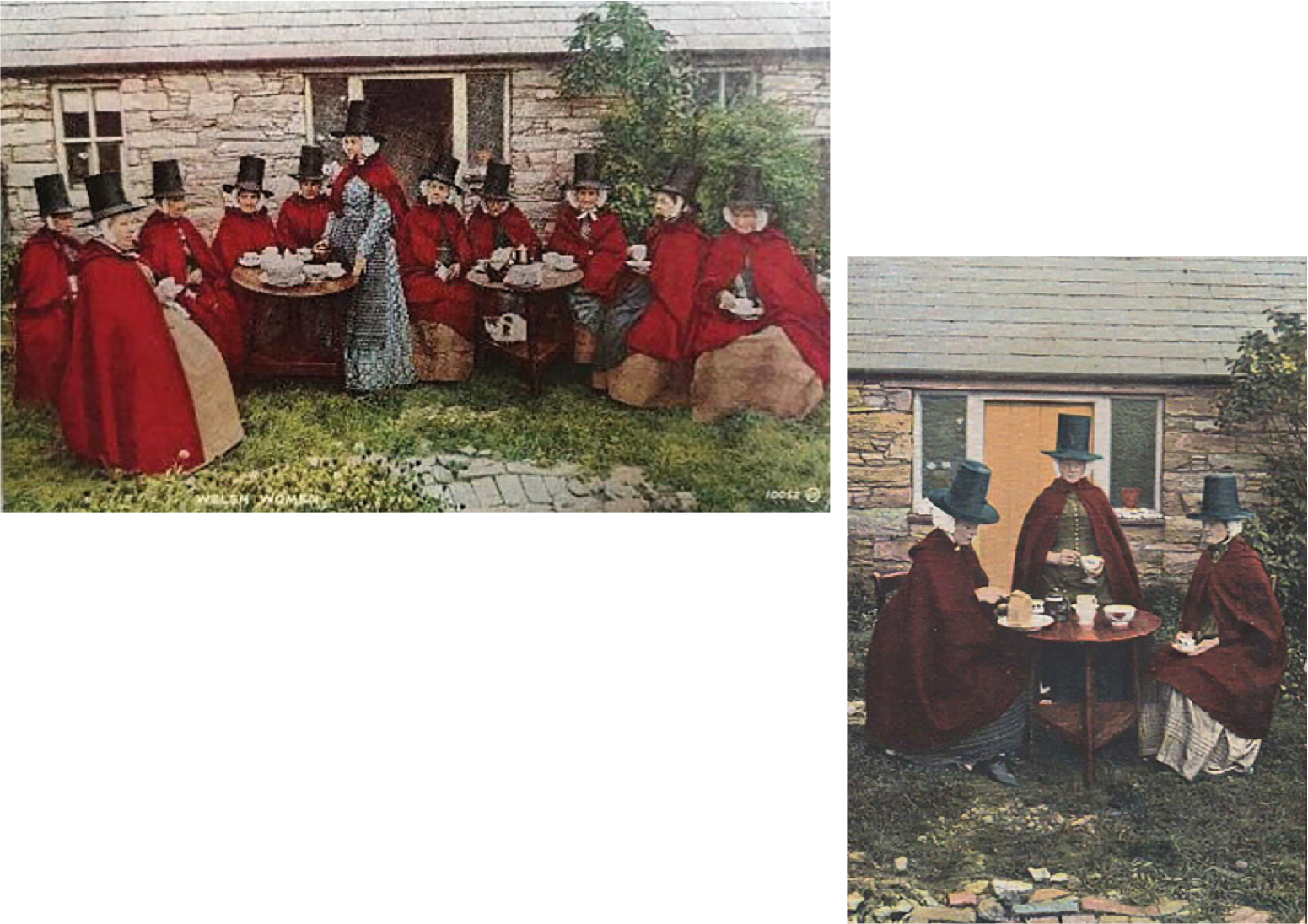
Welsh women in traditional dress, c. 1910 Edwardian Postcard Project and author’s private collection.
9. Ethnographic Gazes
Ethnographic gaze images are unique to early 20th-century postcards. Like ‘process’ photos, these images depict working-class people in their natural environment, captured by itinerant photographers. This time, however, those photographed are consuming food rather than producing it. In this type of image, the people placed before the lens exist outside the cultural framework of the photographer and are often considered the repository of a societal ideal that is now lost to the creators and consumers of the image (Madden, 2017: 96). Thus, they offer a window into an early form of ‘ethnic tourism’, motivated by a middle-class desire to experience ‘exotic’ cultures through interaction with distinctive groups.
Often the groups look unkempt and dirty, and are making the most of the limited food they have available to them or are dressed in traditional clothing sitting on makeshift chairs and using cheap cooking utensils and pots to eat. These groups were simply carrying out their everyday lives, yet became captured on film and turned into postcards that were commoditized for the benefit of others (note the hand-tinted colours added to make them more vivid and attractive for potential consumers).
These ‘ethnographic gazes’ operate through binary relations of ordinary versus extraordinary and self versus other in order to accommodate a sense of ‘us’ from a sense of ‘them’ (Urry, 1990: 1). This crude, reductionist way of establishing meaning gives the photographers a sense of power over their subjects, which is further strengthened by the fact that the postcard was shared with others, thus making a spectacle of something that was once a traditional practice. Marking difference can lead people to close ranks and single out anything which is defined as impure or abnormal, but it paradoxically makes difference strangely attractive precisely because it is taboo. This may explain why the ‘ethnographic gaze’ was such a popular ‘real photo’ image in early 20th-century Britain.
While there were no ‘ethnographic gaze’ examples in the collected Instagram sample, they can still be found on food and travel TV, which serves to exoticize foreign cultures and contribute to myths of Western exceptionalism (Kelly, 2017).
Conclusion
Social media has changed the pace and method by which food is communicated today. However, the ‘real photo’ postcard brought about a similar change in the early 20th century. Like Instagram, food images on postcards served as a form of currency that could be used to perform and enhance one’s status by sharing them with others. Despite the years that lie between them, users of both media took advantage of their semi-public nature, making use of close camera angles, props, colour and symmetry to show off food consumption, promote particular food establishments, emphasize the food production/preparation process and, ultimately, convey a particular lifestyle to the outside world.
While these two formats generally share striking resemblances in their modes of presentation, significant contrasts can be found in their social objectives and communicative functions. In both cases, these differences lie largely in three important factors: technological limitations, social conventions and sociocultural beliefs:
Early 20th-century cameras did not allow for extreme close-ups, while image type was limited by access to a professional photographer (close-ups, props), itinerant photographer (promotions, processes, ethnographic gazes) or personal camera (selfies).
Early 20th-century food displays were always created in accordance with etiquette guides and an awareness of the boundaries of respectability (e.g. no images of cooks preparing meals or food being sexualized)
Early 20th-century food was not to be played with or dwelled over; hence, the absence of lighthearted images, such as ‘embraces’ or ‘tastes’, or why images of food consumption tend to be restricted to informal environments like family picnics.
Ultimately, financial and educational restrictions meant that ‘real photo’ food postcards were a largely middle-class phenomenon. The widespread use of camera phones and less stringent rules of social conduct enable Instagram to be more democratic and for users from all social backgrounds to share food-related images or appropriate alternative identities. Today, validation is not based on wealth, but rather on what food reveals about lifestyle choices. Thus, it encourages a new ‘elite authenticity’ (Mapes, 2021) that supports class privilege, but through sustainability, simplicity and aestheticism rather than money and possessions.
Overall, this comparative transhistorical study shows the importance of moving beyond a fascination with the ‘new’ to identify the historical antecedents of seemingly novel communicative practices.
Footnotes
Funding
The author received no financial support for the research, authorship and publication of this article, and there is no conflict of interest.

Biographical Note
Sources
Amgueddfa Cymru – National Museum Wales
Bristol Archives
Edwardian postcard dataset of Ann Wilson
Edwardian Postcard Project Digital Archive
Private collection of author
Swindon Central Library
Victoria & Albert Museum