



Abstract
In the current work, through applying the mixed-ligand generation method, [Bi4Cl8(PDC)2 (2,2′-bpy)4]·2MeCN (
Keywords
Introduction
Mycoplasma pneumoniae is a common pathogen of respiratory system infections. It is mainly transmitted through respiratory droplets and can infect throughout the year, and the incidence is relatively high in winter and spring. 1 Mycoplasma pneumoniae can cause respiratory diseases in children and can cause extrapulmonary complications. In recent years, the incidence of Mycoplasma pneumoniae pneumonia (MPP) in children has been increasing year by year, which has attracted more and more scholars' attention.2,3 The pathogenesis of MPP in children has been understood, but the mechanism is still not very clear. Understanding the pathogenesis of MPP could provide a theoretical basis for clinical prevention and treatment.
For the supramolecular structures including the metal in view of crystal engineering, their design and the architecture are causing widespread concern in the coordination and supramolecular chemistry areas. The reason why people pay increasing attention to these areas is because of their significant unit in architecture; at the same time, they have extensive application prospects in luminescence and biochemistry along with the catalysis field, especially in the areas of modern pharmaceutical chemistry.4–6 In the various compounds we have created, the functional complexes have gained extensive interest because of their great pharmaceutical value. As a result, in design of architecture and drug therapy along with the clinical employment, the key factor is to choose an efficient, safe, as well as biocompatible ligand.7–9 The polydentate ligands involving the heterocyclic ligands containing N atoms and the polycarboxylic acids have been widely exploited in these multifunctional complexes’ controlled synthesis along with their reasonable design. In the last few years, the nitrogen-heterocyclic carboxylic acid ligands have been extensively studied by biologists and chemists on the account of their various functional performances and coordination fashions, together with their H-bonding acceptors and donors with the conditions of solution.10–15 Nevertheless, bismuth along with the materials based on bismuth is widely employed in photocatalysts, pharmaceuticals, as well as other materials in solid condition on account of their fascinating characteristics such as low cost and high thermodynamic stability, together with non-toxicity.
16
In the current work, by applying the mixed-ligand generation method, [Bi4Cl8(PDC)2 (2,2′-bpy)4]·2MeCN ( The chemical draws for the ligands used in this work.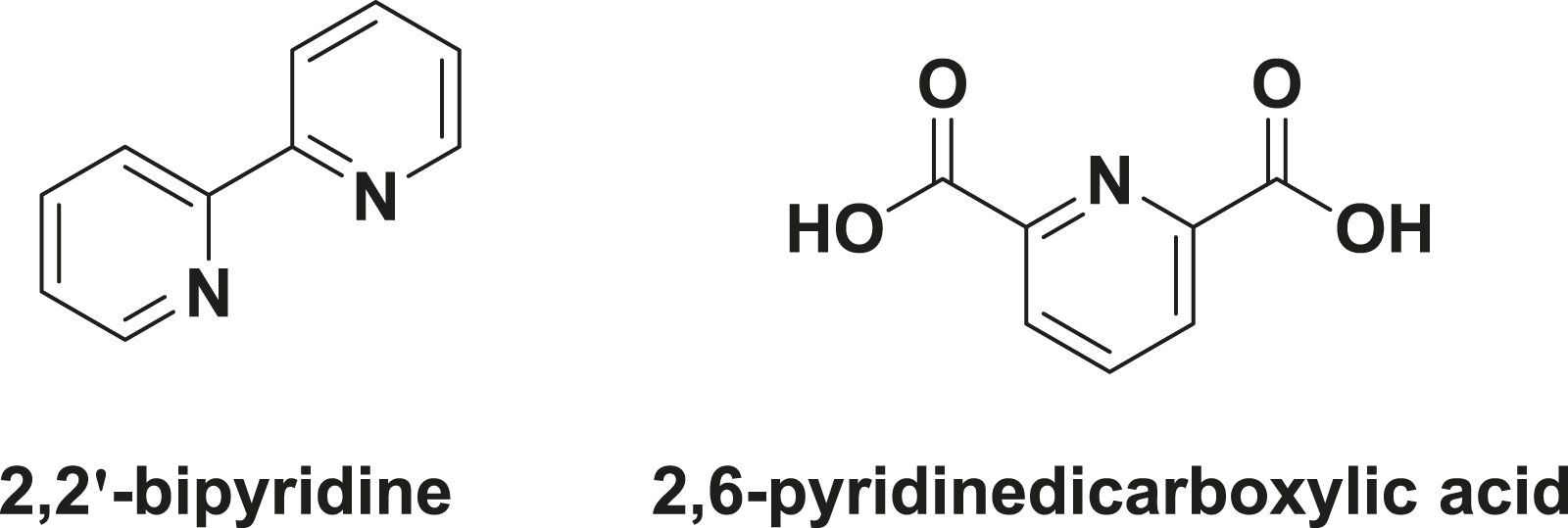
Experimental
Chemicals and measurements
All of the reagents along with solvents employed in our investigation could be acquired from the market, and they were used without processing. The FT-IR spectra could be performed utilizing KBr pellets (with the sample of 5 mg in 500 mg KBr) with the infrared spectra region ranging from 400 cm−1 to 4000 cm−1. By utilizing the analyzer of PerkinElmer 2400 C, the analysis of hydrogen, nitrogen, and carbon elements was implemented.
Preparation and characterization of [Bi4Cl8(PDC)2(2,2′-bpy)4]·2MeCN (1)
0.0313 g and 0.1 mmol of bismuth chloride; 2.6–0.1 mmol and 0.0165 g of pyridinedicarboxylic acid; 0.0150 g and 0.1 mmol of 2,2′-bipyridine; and 3 mL of acetonitrile were put into a stainless-steel autoclave lined with polytetrafluoroethylene. The autoclave was heated in an oven at a constant temperature statically for 24 hours at 150°, and then this autoclave was removed from the oven; and finally, it could cool gradually to environmental temperature for more than 4 h. The container of reaction was allowed to stand for a week to harvest the product; the product was then cleaned by using ethanol and then it was dried under environmental conditions. The complex 1’s colorless crystals with thick needles’ shape were formed. The complex 1’s estimated yield is 36% (according to Bi). Elemental analysis for the C56H41Bi4Cl8N11O8: Calc. (Obs.): N, 7.28% (7.17%); C, 34.79% (34.95%); and H, 1.95% (1.74%). IR (KBr pallet, cm−1, Supplementary Figure S1): 3354 (s), 2836 (m), 1600 (s), 1551 (s), 1506 (m), 1490 (m), 1455 (s), 1433 (m), 1386 (m), 1366 (m), 1337 (s), 1312 (s), 1180 (w), 1149 (m), 1108 (s), 1008 (w), 947 (w), 907 (w), 843 (m), 769 (m), 737 (m), 707 (m), 687 (m), 613 (w), 598 (w), 562 (w), and 491 (m).
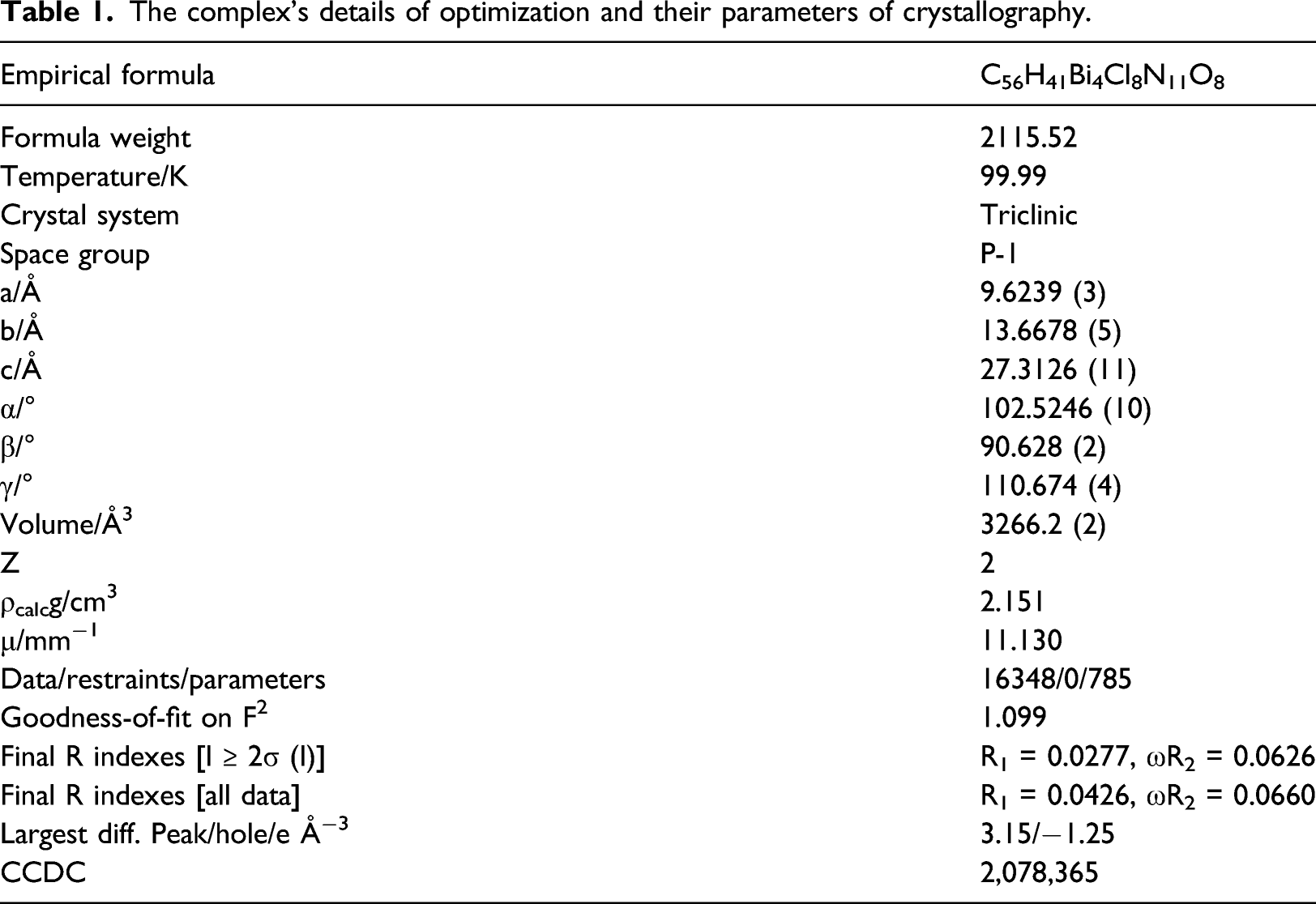
The complex’s details of optimization and their parameters of crystallography.
ELISA assay
ELISA was implemented in our investigation to detect the inflammatory cytokines released into the alveolar lavage fluid after treatment with the compound. This implementation was finished fully according to the instructions’ guidance with minor modifications. 17 Shortly, the animals used in this research were provided via the Model Animal Center of Nanjing University (Nanjing, China). Before performing this treatment, all of the mice were kept between 20°C and 25°C temperature, with free water and food. The pediatric pneumonia animal model was constructed by infection with Pseudomonas aeruginosa, and the compound was exploited to accomplish treatment at 1, 2, and 5 mg/kg concentration. The fluid of alveolar lavage was harvested and the inflammatory cytokine content (i.e., TNF-α and IL-1β) was measured. This experiment was implemented more than three times. Finally, the acquired information was reflected as mean ± SD
Real-time RT-PCR
The in-depth real-time RT-PCR was completed in the investigation in order to explore the AMPK signaling pathway activation in alveolar epithelial cells after the treatment with this compound and the generation of the animal model of pediatric pneumonia. This investigation was also implemented in line with the instructions with some modifications. 18 Shortly, the animal model of pediatric pneumonia was established by infection with Pseudomonas aeruginosa, and the treatment was finished after adding this compound with 1, 2, and 5 mg/kg concentration. Afterward, in the mice, alveolar epithelial cells could be isolated and in alveolar epithelial cells, the overall RNA could be extracted by utilizing the reagent TRIzol. After the measurement of the entire RNA quantity and quality, it was reverse transcribed into cDNA. In alveolar epithelial cells, the AMPK signaling pathway activation was explored, and the gapdh was exploited as a control gene.
Simulation methods
For implementing the molecular docking simulation, a family member of AMP-activated protein kinase (AMPK) has been employed; the corresponding PDB ID is 3KH5, and it possesses a fresh AMP-binding position which has been referred to as site E. Site E is situated in the small binding pocket between alpha-helices. 19 The structure is downloaded from the protein data bank, the existing water molecules, and other ligands.
Then AutoDockTools (1.5.6) has been utilized to construct the binding grid parameter file, in which the grid center is defined as the center of mass of 3KH5 receptor protein and the length of the grid is 60 Å. Next, the docking parameter file has also been prepared with the help of AutoDockTools, although the Bi complex has been set as semi-flexible ligand; however, none of the rotating dihedrals has been presented. 50 possible binding poses have been allowed during the scoring procedure. All molecular docking simulations were performed by AutoDock (4.2).
Results and discussion
Structural characterization
The (a) The coordination surrounding view of Bi2 and Bi1 in complex 1. (b) The coordination surrounding view of B4 and Bi3 in the complex 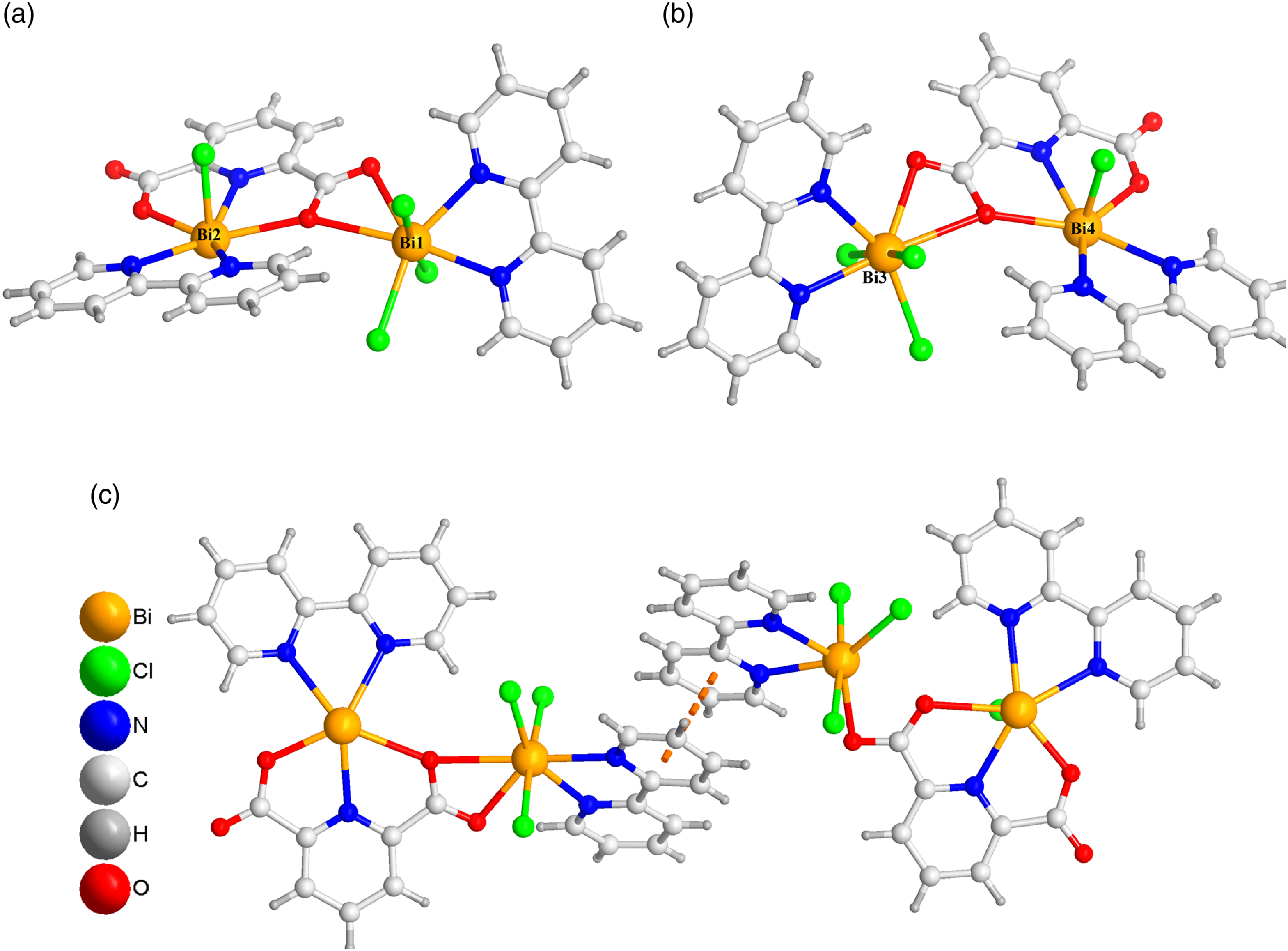
Compound could significantly reduce the release of the inflammatory cytokines into the alveolar lavage fluid
After creating the fresh compound with new architecture, the novel compound’s treatment and nursing application values against pediatric pneumonia were explored. As a result, the ELISA detection kit was used, and the content of inflammatory cytokines released into the alveolar lavage fluid was determined. As the results reflect in Figure 2, it can be observed that the model group has a higher content level of the inflammatory cytokines released into the alveolar lavage fluid in contrast to the control group. After the treatment with the compound, the inflammatory cytokine levels in the alveolar lavage fluid were reduced in a dose-dependent manner. Significantly reduced inflammatory cytokines levels’ release into alveolar lavage fluid. The animal model of pediatric pneumonia was created and the treatment was carried out after adding this compound with 1, 2, and 5 mg/kg concentration. The alveolar lavage fluid was harvested and the inflammatory cytokines content was determined. * means p < 0.05, ** means p < 0.01, and *** means p < 0.005.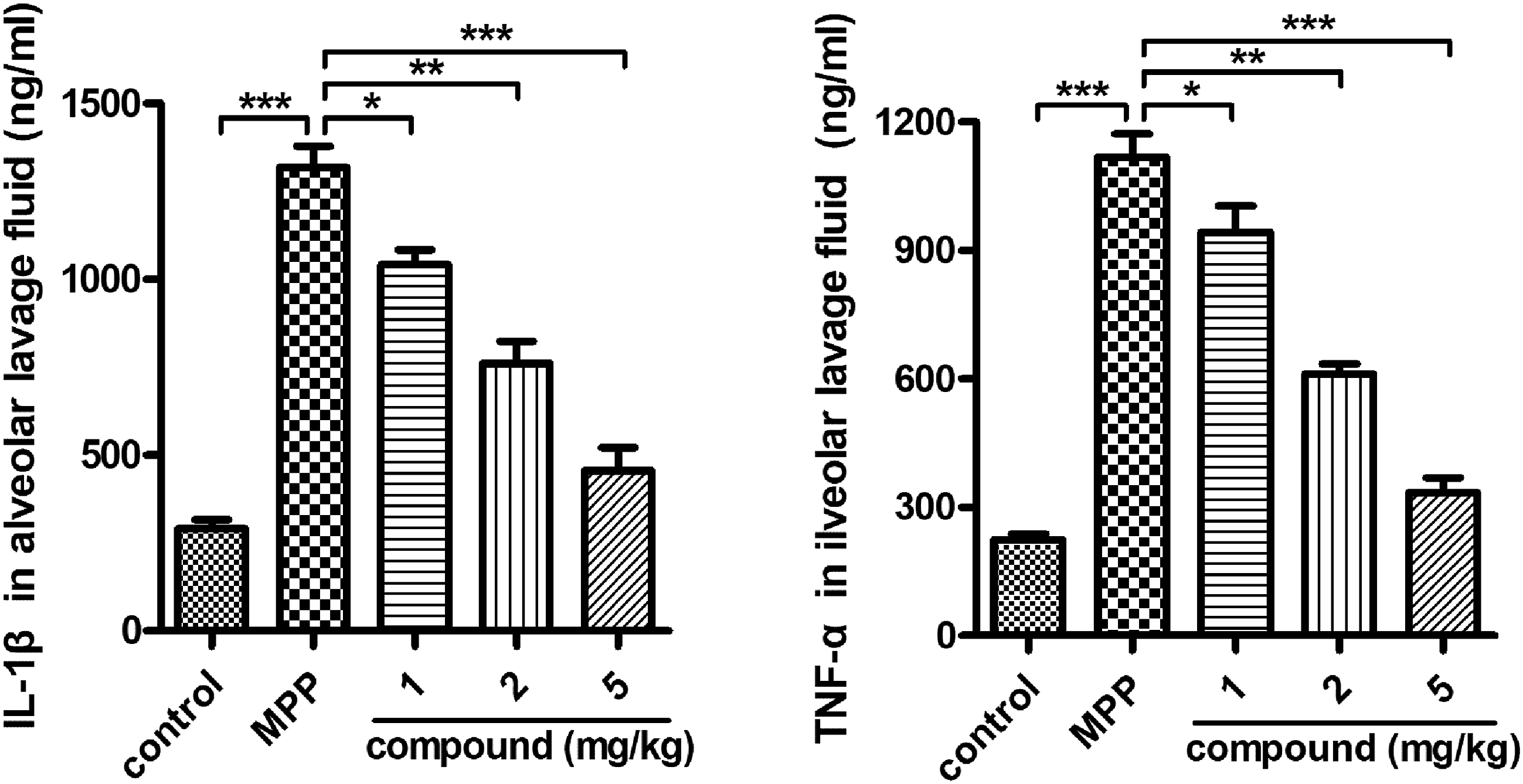
Compound obviously inhibited the activation of the AMPK signaling pathway in the alveolar epithelial cells
In the previous exploration, we have demonstrated that this compound could evidently reduce the inflammatory cytokine levels released into alveolar lavage fluid. As the signaling pathway of AMPK regulates the inflammatory cytokines release, the real-time RT-PCR was carried out for the detection of the AMPK signaling pathway activation in alveolar epithelial cells. The data in the Figure 3 reflect that the model group exhibits much higher levels of AMPK activation in comparison with control group, with p value less than 0.005. After treating with this compound, the AMPK signaling pathway activation level in alveolar epithelial cells was down-regulated in a dose-dependent manner. Obviously inhibited AMPK signaling pathway activation in alveolar epithelial cells after treating with this complex. The pediatric pneumonia animal model was constructed and the compound was employed in order to finish the treatment at 1, 2, and 5 mg/kg concentration. The alveolar epithelial cells were harvested, and the AMPK signaling pathway activation in alveolar epithelial cells was measured via applying the real time RT-PCR. * means p < 0.05, ** means p < 0.01, and *** means p < 0.005.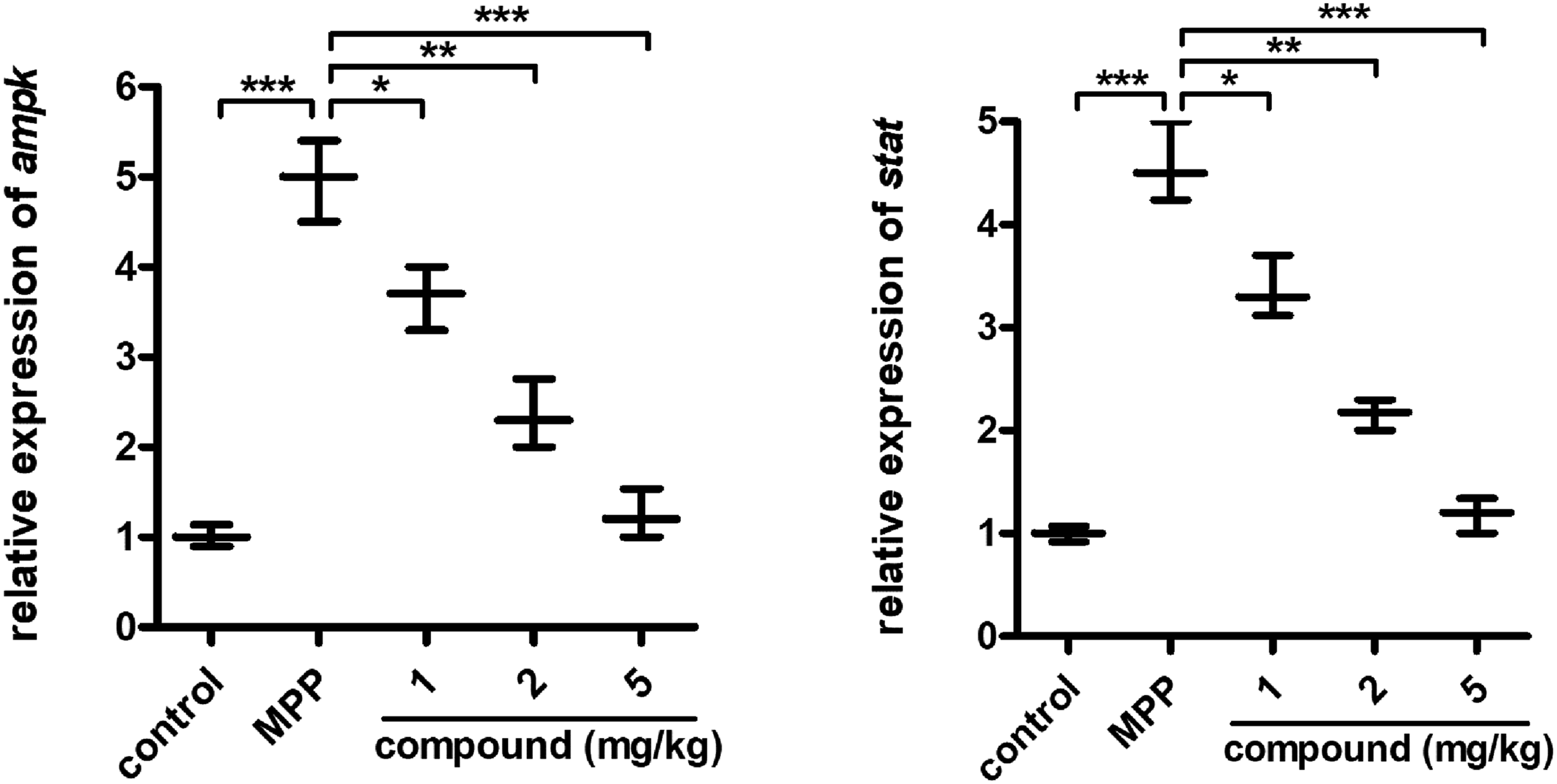
Molecular docking
On account of the protein of AMP-activated protein kinase (AMPK) including two regulatory subunits and a kinase subunit, it has been frequently used as receptor protein for signaling and screening biological capabilities of the proposed pharmaceutical molecules.
17
Thus, as a family member of the AMPK protein family, 3KH5 has been utilized for investigating the biological activity of the synthesized Bi complex. The calculated binding conformation that has the lowest affinity energy has been displayed in Figure 4; the estimated affinity energy is −6.95 kcal/mol, with a measured inhibition constant of 8.0 μM. The local view of the environment of the captured binding conformation that exhibited the lowest affinity energy from 50 given binding poses. The interacting active residue and the potential active residues are listed explicitly.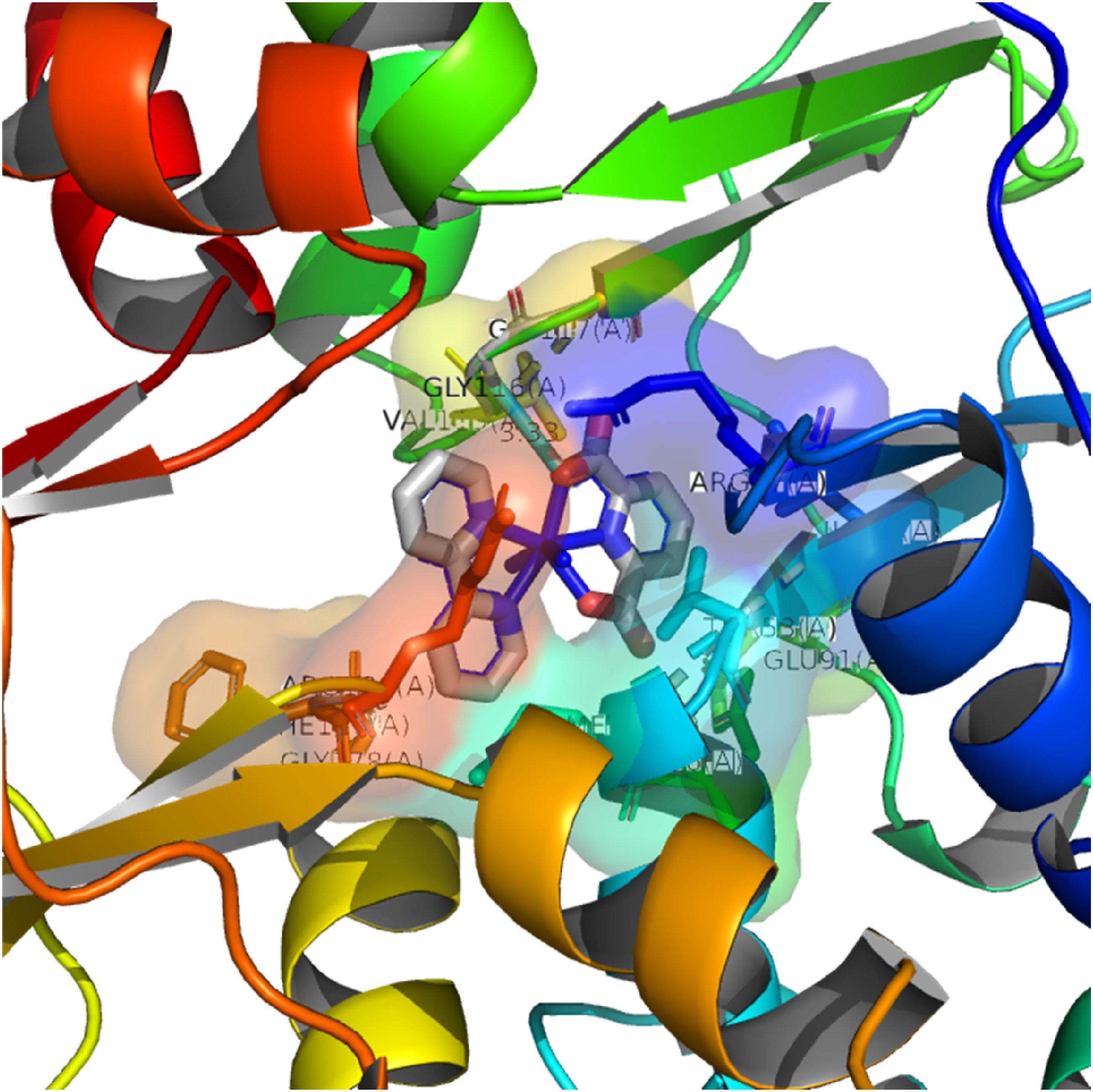
From the binding conformation, it can be observed that only one binding interaction is formed between the Bi complex and 3KH5 receptor protein. The interacting active residue is GLY116 and the length of the formed hydrogen bond is 3.33 Å. Further, it can be seen that the oxygen from the carboxyl group is the donator of the hydrogen bond. Besides the carboxyl groups, there are three pyridine groups on the Bi complex; however, none of them could form binding interaction with the active residues like GLY117, MET55, VAL115, etc. It can be explained that all the nitrogen atoms in the pyridine groups have strong interaction with the central Bi ion and therefore cannot further interact with the surrounding active residues. The above results demonstrated that only the carboxyl groups have been observed to interact with the active residues and can be viewed as the origin of the biological capabilities.
Conclusion
Overall, we have produced [Bi4Cl8(PDC)2 (2,2′-bpy)4]·2MeCN, the bismuth (III)-organic compound via using the solvothermal reactions between 2,2′-bipyridine; 2,6-pyridinedicarboxylic acid; and bismuth chloride. The
Supplemental Material
sj-pdf-1-prk-10.1177_14686783211045834 – Supplemental Material for A new Bi(III)-based coordination complex: Treatment and nursing application values on pediatric pneumonia
Supplemental Material, sj-pdf-1-prk-10.1177_14686783211045834 for A new Bi(III)-based coordination complex: Treatment and nursing application values on pediatric pneumonia by Jianli Lu, Hong Han, Bo Li and Yanjun Han in Progress in Reaction Kinetics and Mechanism
Footnotes
Declaration of conflicting interests
The author(s) declared no potential conflicts of interest with respect to the research, authorship, and/or publication of this article.
Funding
The author(s) received no financial support for the research, authorship, and/or publication of this article.
Data Availability

Supplemental Material
Supplemental material for this article is available online.
References
Supplementary Material
Please find the following supplemental material available below.
For Open Access articles published under a Creative Commons License, all supplemental material carries the same license as the article it is associated with.
For non-Open Access articles published, all supplemental material carries a non-exclusive license, and permission requests for re-use of supplemental material or any part of supplemental material shall be sent directly to the copyright owner as specified in the copyright notice associated with the article.
