




Abstract
This study investigates the propagation of both fractional and non-fractional ion-acoustic cnoidal waves (IACWs) in a magnetized degenerate Thomas-Fermi electron-positron-ion (e − p − i) plasma, incorporating the effects of magnetic fields on wave dynamics. Using the reductive perturbation method (RPM), the planar integer Korteweg-de Vries (KdV) equation is derived, accounting for the influence of the magnetic field on nonlinear wave structures. The analysis reveals the existence of positive potential (compressive) cnoidal waves, which, in the limiting case, reduce to solitary waves. The characteristics of these waves, which demonstrate how the electron-to-positron Fermi temperature ratio, positron concentration, and obliqueness affect their profile. The study’s findings are relevant to astrophysical environments and dense plasmas generated in laser-produced plasmas. For the second objective of this investigation, the integer planar KdV equation is converted to the planar fractional KdV equation (FKdV) using a suitable transformation to study the impact of the fractional order parameter on the fractional IACW profile. To this end, the planar FKdV equation is solved using the Tantawy technique and the Laplace residual power series method (LRPSM). Some approximate analytical solutions to the planar FKdV equation are derived using the two proposed approaches. The generated approximations are numerically examined and compared with the exact solution for the integer case to assess the accuracy of the derived approximations. Numerical results are constructed based on parameters relevant to dense astrophysical environments, such as white dwarfs, highlighting the significant role of the magnetic field in modifying wave behavior.
Keywords
Introduction
The study of dense quantum plasmas1–3 has gained significant momentum recently, driven by its applicability to various relevant technological and astrophysical domains. Examples include nanoscale electromechanical systems,4,5 laser-atom interactions,
6
and the physics of dense astrophysical objects
7
like neutron stars and white dwarfs.8,9 Quantum plasmas differ substantially from classical plasmas due to their high particle density and low temperature, contrasting with the lower density and higher temperature characteristics of classical plasmas. When particles in a plasma are packed close together, to the point where the space between them is similar to or smaller than their de Broglie wavelength
Conventional plasmas consist of electrons, ions, and neutral particles. However, high-energy plasmas can generate positrons, the electron antiparticles, through pair production. The presence of positrons considerably changes the behavior of typical electron-ion (e − i) plasmas. As a result, electron-positron-ion (e − p − i)17–21 plasmas have become a hot topic in research, mainly because they’re commonly found in active galactic nuclei 22 and various astrophysical settings. These include neutron star atmospheres, 23 the early universe, 24 solar atmospheres, 25 and pulsar magnetospheres. 26 Laboratory experiments have demonstrated the production of the electron-positron (e − p) pair through relativistic superthermal electron interactions with high Z − materials, 27 and the existence of positrons has also been confirmed in laboratory plasmas.28–30 Recent experiments using intense lasers interacting with solid targets have successfully generated pairs of e − p, creating high-density plasmas that exhibit quantum effects.31,32 This widespread existence of e − p − i plasmas in several cosmic settings has motivated substantial research efforts focused on understanding how plasma waves, both linear and nonlinear, propagate through these environments, as demonstrated by a significant number of investigations.33–36
Differential equations play a crucial role in modeling both linear and nonlinear phenomena found in various natural systems, such as oceans, shallow waters, nonlinear optics, plasmas, and Bose–Einstein condensates.37–39 One fascinating area of study in plasma physics focuses on how linear and nonlinear acoustic waves propagate through e − p − i plasmas. In these plasmas, one can observe a range of nonlinear wave patterns, including envelope structures, solitons, and cnoidal waves (CWs). A soliton, specifically, is a localized self-sustaining wave pulse formed by the equilibrium between nonlinear steepening and dispersive broadening. 40 Localized wave packets with both slow and rapid oscillations, known as envelope structures, form because nonlinear effects balance the spreading of waves. These structures are mathematically described by nonlinear Schrödinger equation (NLSE).41,42 Solitary waves (SWs), also known as solitons, are explained by the Korteweg-de Vries (KdV) equation, 43 which was first introduced by Korteweg and Vries in 1895.44,45 When the right boundary conditions are applied, the periodic solution of the KdV equation gives rise to CWs. The profiles of these CWs are represented using Jacobian elliptic functions, which is why we refer to them as “cnoidal.” These waves are characterized by their periodic nature, featuring sharp peaks that are separated by wide flat troughs. 46 These waves can occur in plasma regimes, with applications in areas like nonlinear transport processes.47,48
The nonlinear CWs in different plasma systems have been thoroughly explored, both in theory and through experiments.49–51 For instance, Schamel 52 looked into small-amplitude Langmuir waves in e − i plasmas, taking into account the influence of trapped electrons by utilizing CW solutions. Meanwhile, 53 investigated various nonlinear wave structures, such as ion-cyclotron and IA periodic waves, in warm plasmas under an oblique magnetic field, assuming a Maxwellian electron distribution. Ichikawa and Konno et al. 54 explored compressive IACWs, which they modeled using the KdV equation, specifically in single-electron plasma environments. Wang et al. 55 not only built on previous research but also took a closer look at how IACWs propagate at an angle in magnetized plasmas that have kappa-distributed electrons and Maxwellian positrons. Additionally, Jovanovic and Shukla 56 applied CW techniques to analyze coherent electric field patterns within Earth’s magnetosphere. Meanwhile, El-Shamy 57 explored IACWs in dense magnetized plasmas with degenerate electrons, using the pseudopotential approach. Additionally, Rehman and his team 58 delved into the linear and nonlinear dynamics of fast magnetohydrodynamic CWs in warm, collisionless, magnetized e − p plasmas through a two-fluid MHD model. Khalid and colleagues 59 conducted a theoretical analysis of nonlinear electrostatic IA waves (IAWs) in magnetized e − p − i plasmas, which include nonextensive electrons and thermalized positrons. Alrowaily et al., 60 studying IACWs in e − p − i magnetoplasmas found that their model supported only compressive nonlinear CWs and SWs. Khan et al. 61 explored how electrostatic CWs and solitons move through a magnetized electron-proton-ion plasma, taking into account factors like ion pressure anisotropy and superthermality.
Our motivation for this study is inspired by the seminal work of Rahman et al. 62 They explored how electrostatic IACWs and solitons behave in a degenerate Thomas-Fermi plasma made up of cold inertial ions, along with degenerate electrons and positrons. Although their work provided significant insights into the nonlinear wave structures in unmagnetized quantum plasmas, it did not account for the influence of magnetic fields, which are prevalent in many astrophysical and laboratory plasma environments. Recognizing the importance of magnetic effects in shaping wave dynamics, particularly in contexts such as magnetized white dwarfs, 9 neutron stars, and laser-produced plasmas, 6 we aim to extend their model by incorporating magnetic field effects. This extension will allow us to explore the interplay between magnetic fields and quantum degeneracy on the propagation characteristics of IACWs and solitons, thereby providing a more comprehensive understanding of nonlinear phenomena in magnetized quantum plasmas.
The growing interest in fractional-order differential equations over the last few decades is quite remarkable. These equations have proven to be incredibly useful for understanding various aspects of nonlocality and spatial heterogeneity. The careful development of fractional calculus theory has greatly helped its use in many scientific fields, such as control theory, electrical circuits, image processing, biology, viscoelasticity, and plasma waves, among others.63–72 Integrating fractional calculus into our model gives us a more comprehensive and accurate understanding of how waves move through complex plasma systems, especially those that show non-local interactions and memory effects. 73 Unlike the traditional integer-order differential equations that suggest the rate of change of a variable depends solely on its current state, many real-world phenomena—particularly in dispersive and dissipative media like plasmas—are shaped by their past states and spatial history. Fractional derivatives, with their non-local characteristics, are perfect for capturing these memory effects and non-local interactions. For example, the long-range forces or the cumulative impact of particle collisions over time can create a sort of “memory” in the system, where the current state is influenced not just by the immediate past but by the entire history of the system. 74 When it comes to plasma waves, using fractional derivatives allows us to represent dispersion and damping mechanisms in a more detailed way than integer-order models can. This method has been effectively applied to various nonlinear wave structures across different plasma configurations, providing deeper insights into phenomena like anomalous diffusion, non-ideal fluid behavior, and complex transport processes.75–77 By taking the integer planar KdV equation and extending it to its fractional form, we’re looking to understand how the fractional order parameter influences the dynamics and features of IACWs, ultimately improving the predictive power and physical accuracy of our model in degenerate astrophysical quantum plasmas. Thus, fractional derivatives can be employed to formulate various phenomena in different scientific fields, to try to understand their dynamics, and to reveal some of the mysterious behaviors surrounding them. Therefore, fractional differential equations (FDEs) can be used to formulate many physical and engineering problems, and the pursuit of their solutions has been the subject of numerous intriguing investigations. There are plenty of effective methods out there for analyzing different types of FDEs. Some of the most popular ones include the homotopy perturbation method (HPM) family,78–80 the Adomian decomposition method (ADM),81,82 the variational iteration method (VIM),83–85 the new iterative method (NIM),86,87 the residual power series method (RPSM),88–90 etc. Moreover, one of the most prominent of these methods, the recently discovered Tantawy technique (TT),91–96 has successfully overcome many challenges facing many researchers, especially physics researchers, in analyzing various complicated nonlinear fractional evolutionary wave equations (EWEs). Recently, this technique has been used to analyze Burgers-type equations, 91 derive some highly accurate analytical approximations, and compare their results with the approximations derived by both NIM and RPSM. Comparative analysis revealed that the approximations obtained by the TT surpassed those generated by NIM and RPSM. 91 In addition, the TT was employed to examine the fractional family of Fokker–Planck equations (FP), 92 and its results were juxtaposed with the approximations produced by the optimal auxiliary function method (OAFM). The approximations generated by the TT were found to surpass those derived by the OAFM. 92 Additionally, the TT was applied to analyze various nonlinear wave structures emerging and propagating in diverse plasma configurations,94–96 such as studying the fractional KdV-soliton in non-Maxwellian electronegative plasmas 94 and studying electron-acoustic waves described by the KdV equation, which arises in a special kind of nonthermal plasma composed of two types of electrons: cold ones that have inertia and nonthermal ones that are inertialess. 96 Additionally, as an extension to the work studied in Ref. 94, the El-Tantawy team took a closer look at fractional IA solitons concerning the fractional modified KdV (FmKdV) equation, particularly focusing on the critical value of the nonthermal parameter as noted in Ref. 95. More recently, El-Tantawy and colleagues explored IASWs influenced by an electron beam with a nonthermal distribution in Ref. 97 alongside the TT. Their findings showed that the TT is a simple and effective approach for analyzing various fractional EWEs, making it easier for researchers to navigate potential challenges. A standout feature of this straightforward technique eliminates the need for linearization, decomposition, perturbation, or any other limitations that are often found in similar methods. Consequently, the present work employs the TT to model fractional-order periodic wave phenomena propagating in the considered a plasma system.
Another objective of this study involves an analytical examination of the planar FKdV equation utilizing the RPSM with the Laplace transform to produce analytical approximations for modeling and simulating periodic waves that arise in the current plasma model and to compare the results with those derived by the TT. This method was also used in the analysis of several FDEs,88–90 providing highly precise analytical approximations, and all researchers recognize its superiority over numerous other methods in the examination of differential equations. For example, this method successfully analyzed numerous fractional differential equations that are commonly employed in modeling nonlinear phenomena in fluid mechanics and plasma physics, including the FKdV equation, 98 fractional Burgers equation, 99 fractional Kawahara equation,100,101 and Zakharov-Kuznetsov (ZK) equations,102,103 among others.
Physical problem and fluid equations
In this study, we examine a collisionless magnetized plasma consisting of inertial cold ions and inertialess Thomas-Fermi-distributed positrons and electrons, immersed in a uniform external magnetic field


The variables m, e, Z, and n denote the ion mass, electron charge magnitude, ion charge state (in units of e), and ion number density, respectively.
Poisson’s equation is defined by

Here, n e and n p represent the number densities of electrons and positrons, respectively.
Now, by considering three-dimensional (3D) perturbations in a magnetized plasma, the normalized equations (1)–(3) describing the ion dynamics take the following form





While normalizing equations (1)–(3), we have adopted the following re-scaling

In (9),
The Thomas-Fermi distributions that describe the number densities of inertialess electrons and positrons in their normalized forms are outlined by
62

Here, σ = T
Fe
/T
Fp
indicates the ratio of the Fermi temperature of electrons (T
Fe
) to that of positrons (T
Fp
). According to the Taylor series, the equations in equations (8)–(10) can be simplified to the following form


Derivation of the planar integer KdV equation
In this scenario, we use the RPM to derive the planar integer KdV equation from the fluid equations that are relevant to the current plasma model. This model helps us explore the characteristics of planar CWs. To do this, we transform the independent variables (x, y, z, t) using a set of stretching coordinates

In this context, the direction cosines l
x
, l
y
, l
z
correspond to the x, y, and z axes, respectively. This means that

By plugging the expansion (14) into equations (4)–(8) and applying the stretching method (13), we can derive the first-order physical perturbation quantities for the lowest-order of ɛ.





By solving equations (15) and (19), the expression for the phase velocity is obtained

Proceeding to the following order of the perturbation parameter ɛ and eliminating the second-order physical perturbation quantities from the resulting expressions, we ultimately arrive at the following planar integer KdV equation


The planar KdV-CW solution
To derive the CW solution for the planar integer KdV equation (21), we introduce the transformation ζ = (ς − uτ), where u is the nonlinear wave velocity. Accordingly, equation (21) reduces to the following the ordinary differential equation

Now, by integrating equation (23) over ζ twice and using suitable conditions (ψ → 0, d
ζ
ψ → 0, and so on |ζ| → ∞), the following quasi-energy integral equation is obtained


In this context, “ρ0” and “




To find the nonlinear periodic wave solution, the following inequalities must be fulfilled, k2 ≤ γ1 ≤ k1 or k1 ≤ γ1 ≤ k2. Putting equations (25) and (27) in equation (24), the following CW velocity is obtained

The nonlinear CW solution of equation (24) is followed by


Upon examining this aspect, we identify two scenarios: Case 1: When m1 → 0, the JEF turns into a triangular or trigonometric function, that is, cn(kζ, m1 ) = cn(kζ, 0) = cos(kζ), and hence the CWs turn into sinusoidal waves having an unalterable shape, which was first observed by Stokes.
108
Case 2: When m1 → 1, then cn(kζ, m1) = cn(kζ, 1) = sech(kζ), and hence the CWs lose their periodicity, and the CW solution of KdV becomes the localized soliton solution.
Considering the current plasma scenario, for A > 0, the inequalities γ1 > γ2 ≥ γ3 and for A < 0 the inequalities γ1 < γ2 ≤ γ3 to hold.
The wavelength “λ1” of CWs reads

Now, for ρ0 = E0 = 0, then γ2 = γ3 = 0, then, m1 → 1, and the CW solution reduces to the SW solution. Therefore, the solution in reference 31 simplifies to the following SW solution


Fractional planar KdV-CWs
In this section, we follow the same methodology as in Refs. 83–85 to convert the planar integer KdV equation (21) to its fractional counterpart to study how fractionality impacts the dynamics of periodic wave propagation in our considered plasma system. Accordingly, the following fractional planar KdV equation is obtained



Here,
First, let us briefly mention some definitions that we will use in our study.
The FCD of order p to the function The subsequent relation is satisfied according to the definition (39)


Laplace transform (LT) “L” to the function


Tantawy technique (TT) for modeling planar FKdV-CWs
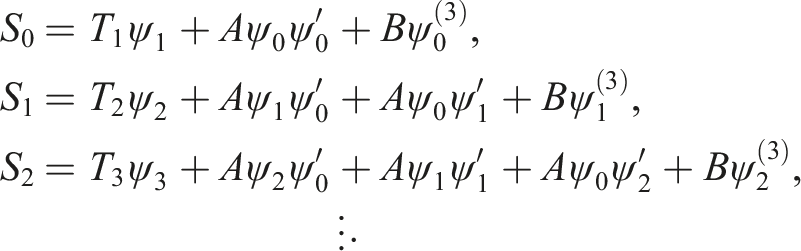
Here, the TT method is used to analyze the planar FKdV equation (36) and to create an approximate analytical solution that models the propagation of KdV-CW in the current plasma model.91–94 This technique can be broken down into a few simple steps: Step (1) Based on the TT, the solution for any fractional PDE is expressed as a convergent series solution, as follows Step (3) By using the definition for FCD given in equation (40) Step (4) By collecting various coefficients of τ
ip
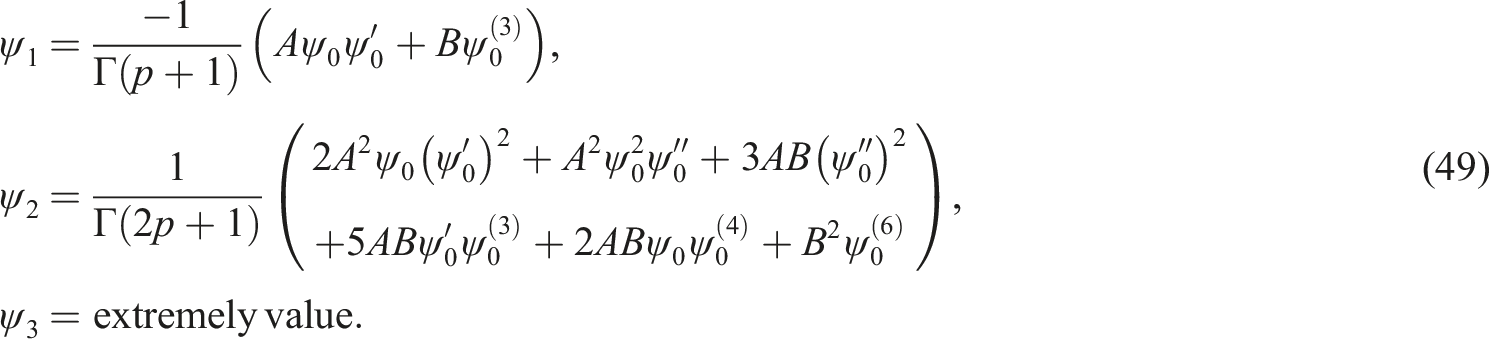
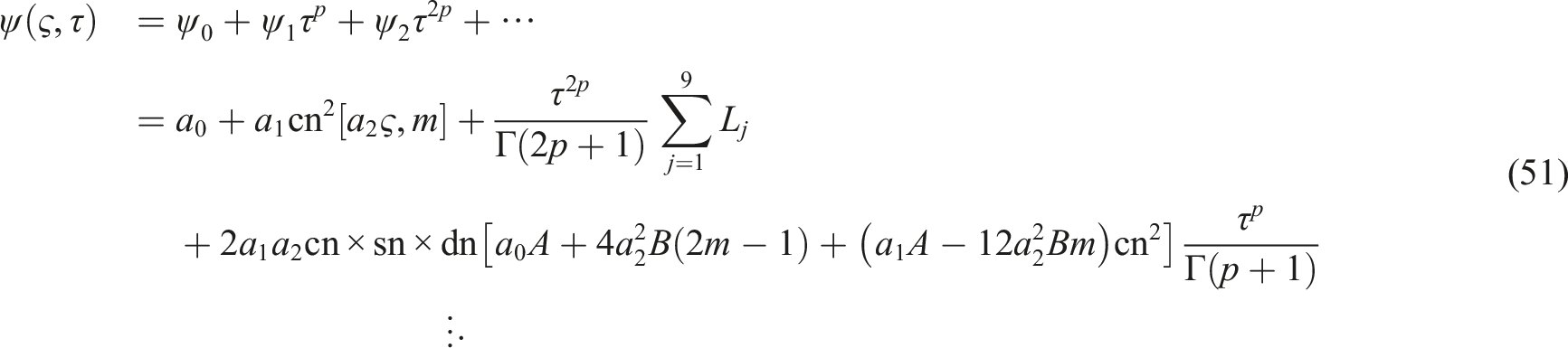
∀ i = 0, 1, 2, ⋯ , we finally obtain: Step (5) Equating the coefficients W0, W1, W2, …, to zero, the following system of ordinary differential equations is obtained Step (6) By solving system (48) in the functions Step (7) Using the IC (38) for the planar CW solution in system (49), the following values of ψ1 and ψ2 are obtained Step (8) By substituting the derived values of ψ1, ψ2 , ⋯ , into Ansatz (43), we ultimately get the analytical CW approximation to the planar FKdV equation (36) up to the 2
nd
-approximation as follows










LRPSM for modeling planar FKdV-CWs
Here, the following brief steps are presented to analyze equation(36) using LRPSM: Step (1) Applying LT to equation (36) yields Step (2) According to our problem (k = 0), thus, the definition (42) of Laplace FCD can be reduced to the following form Step (3) The truncated k
th
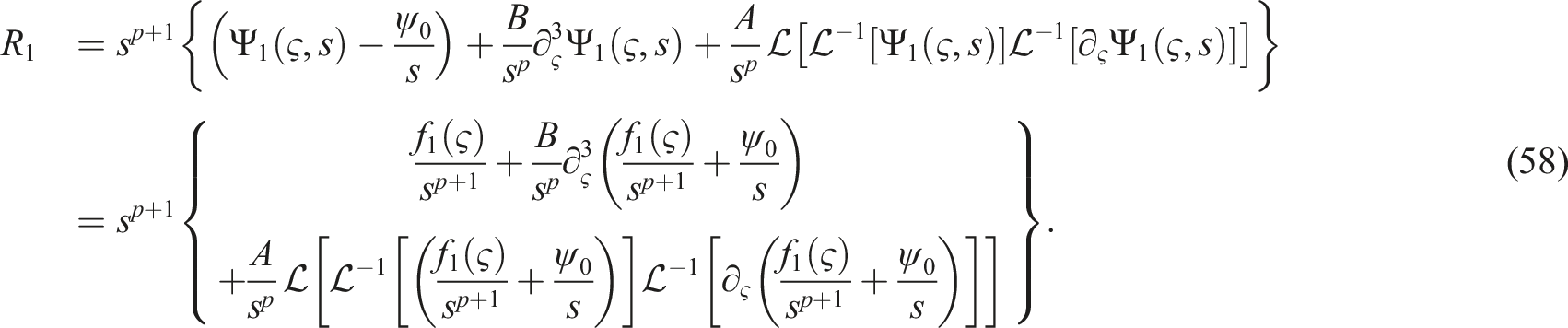
series solution based on the results of LRPSM reads Step (5) By substituting equation (55) into equation (57) and multiply both sides of the obtained results by srp+1, and for using Step (6) Taking the limit s → ∞ for R1, and solving the obtained result using the MATHEMATICA command “Solve[],” Step (7) By repeating Step (5) with using the value of Step (8) By repeating Step (6) on R2 given in equation (60), we can get the value of








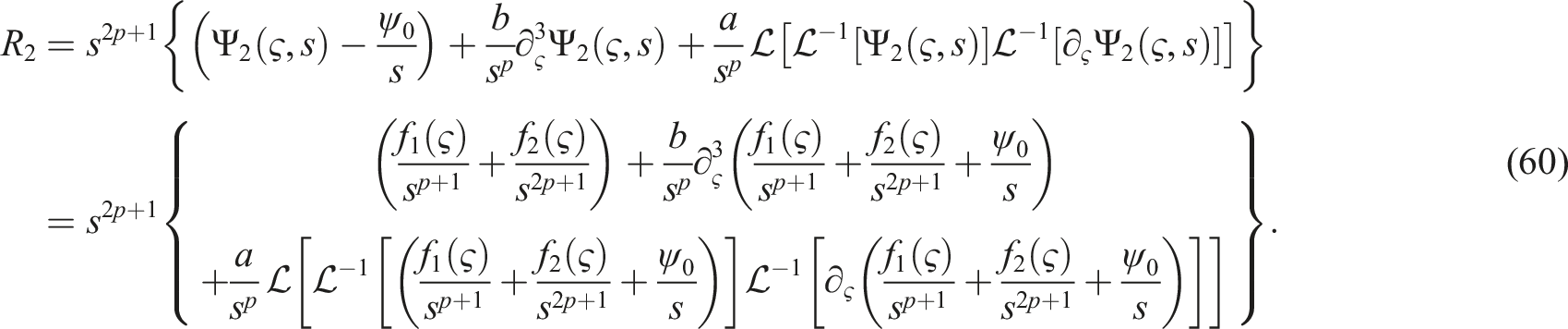


Also, we can find higher-order values of Step (9) Now, by collecting the obtained values of Step (10) By applying inverse LT to equation (62), the subsequent analytical approximate solution to equation (36) is derived


Parametric analysis
Our numerical findings show that both the nonlinear coefficient A and the dispersion coefficient B in the current plasma model are consistently positive. This indicates that the model exclusively supports compressive (positive potential) nonlinear structures, like CWs and SWs. In this numerical analysis, we focus on how different plasma parameters—specifically, the positron concentration α, the ratio of electron to positron Fermi temperatures σ, and the cosine obliqueness direction l z —affect the propagation characteristics of both integer and fractional IACWs. Additionally, we discuss the possibility of the existence of IASWs as a limiting case of the IACWs. In our present work, we recall that all relevant physical information is encapsulated within the coefficients A and B, as defined in equation (21). These coefficients, which depend on various plasma parameters, play a crucial role in shaping the structural characteristics of the nonlinear structures. It is crucial to note that the numerical simulations discussed here are performed using plasma parameters corresponding to mass densities between 103 gm/cm3 to 104 gm/cm3 which are typical of astrophysical environments such as red dwarf stars. 8 These density ranges provide a realistic framework for analyzing IACW dynamics in extreme plasma conditions.
Figure 1 illustrates the SP W(ψ) (given in equation (25)) as a function of the electrostatic potential ψ as well as the SW and CW solutions, providing insights into the nonlinear dynamics of IACWs and IASWs in the considered plasma system. A key observation is that the SP does not vanish at ψ = 0 for IACWs, that is, W(ψ = 0) ≠ 0, under conditions ρ0 = E0 ≠ 0 indicating the presence of periodic wave structures governed by the balance between nonlinearity and dispersion. These CW solutions exist within a bounded potential well, which determines their periodic nature and stability. In contrast, for SWs, the SP satisfies W(ψ = 0) = 0 under conditions ρ0 = E0 = 0, as indicated by the dashed curve. This characteristic signifies the presence of a localized soliton-like structure, where the nonlinear steepening effect is precisely counterbalanced by dispersion, resulting in a stable SW that maintains its shape while propagating without spreading (see Figure 1(b)). The figure highlights the fundamental difference between IACWs and IASWs. The existence of a potential well in the IACW case ensures a periodic wave nature, whereas the separatrix profile in the SW case implies a transition to an isolated pulse structure. Both (a) the SP W(ψ) for the SWs and CWs, and (b) the SWs and CWs profiles are examined. Here, 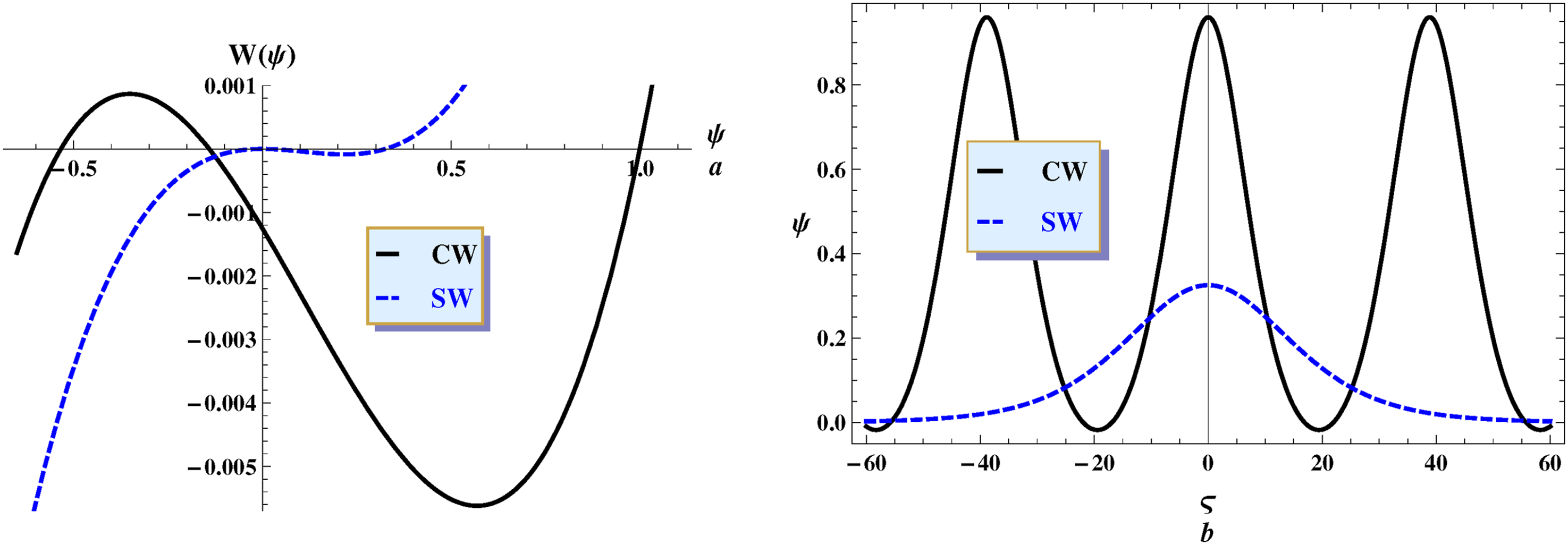
The inclusion of the magnetic field (MF) introduces significant changes in wave dynamics compared to the unmagnetized case studied by Rahman et al. 62 Our findings specifically show that the magnetic field influences the wave’s phase velocity, changes the height and breadth of the solitons, and imposes new limitations on the parameter ranges where CWs can exist. For example, we observe that stronger MF leads to a reduction in the amplitude of the soliton. Furthermore, the orientation of the MF significantly impacts the wavelength of the CWs. These outcomes underscore the crucial role of magnetic fields in dense astrophysical plasmas, where their presence is familiar.
To analyze the characteristics of CW structures, the three real roots of the SP W(ψ), denoted as γ1, γ2, γ3, are determined for non-zero values of ρ0 and E0. In the case of CWs, the SP W(ψ) restricts the pseudoparticle to oscillate between the real roots γ1 and γ2, while the potential barrier at γ prevents escape and ensures a periodic trajectory. This intrinsic behavior reinforces the stability of CW solutions in nonlinear plasma systems. In Ref. 62, only the effect of α on the amplitude, width, and phase shift of IACWs was discussed without including the impact of the MF. However, in this study, we extend the analysis by considering the impact of the MF on the behavior of nonlinear structures in the current plasma model. Figure 2 illustrates the influence of positron concentration α on both the SP W(ψ) and profile of the IACWs, showing variations in wave amplitude, width, and phase shift. The three curves represent different values of α, with all other plasma parameters kept constant. We observe that as α increases, both the amplitude and width of the IACWs diminish. This behavior arises due to the influence of positrons on the plasma environment, where a higher positron concentration reduces the ion density to maintain charge neutrality. Since the IAWs primarily depend on ion dynamics, weaker nonlinear interactions result in lower wave amplitudes. Furthermore, the phase shift is observed to be large with increasing α suggests that positrons modify the effective wave speed by altering dispersion properties. These effects are crucial in astrophysical and laboratory plasmas, where positron populations significantly impact wave dynamics and energy transport. Rahman et al.
62
investigated how the ratio of electron to positron Fermi temperatures σ affects the profile of IACWs without the impact of the MF. Their study indicated that as σ increases, the CWs become taller and steeper, and SWs become more peaked (higher amplitude and smaller width). However, in the current investigation, which includes the influence of the MF, reveals a contrasting behavior. As depicted in Figure 3, we find that the increase of σ results in a reduction in both the amplitude and the width of the IACW structure. Physically, a higher value of temperature ratio σ corresponds to an increase in the positron population’s thermal energy relative to electrons, which reduces both nonlinearity and dispersion. The weakened nonlinear effects lead to lower wave amplitudes, while reduced dispersion causes the wave to contract spatially, leading to a narrower profile. This contrasting behavior highlights the significant influence of the MF on wave dynamics, as it alters the balance between nonlinearity and dispersion. This new analysis provides deeper insights into the role of σ in magnetized e − p − i plasmas, revealing their crucial influence on wave characteristics, energy transport, and wave stability in astrophysical and laboratory environments, which was not explored in previous work and represents a significant advancement in understanding wave propagation in such systems. Both (a) the SP W(ψ) for the CWs and (b) the CWs profile are examined against the positron concentration α. Here, Both (a) the SP W(ψ) for the CWs and (b) the CWs profile are examined against the ratio of electron to positron Fermi temperatures σ. Here, 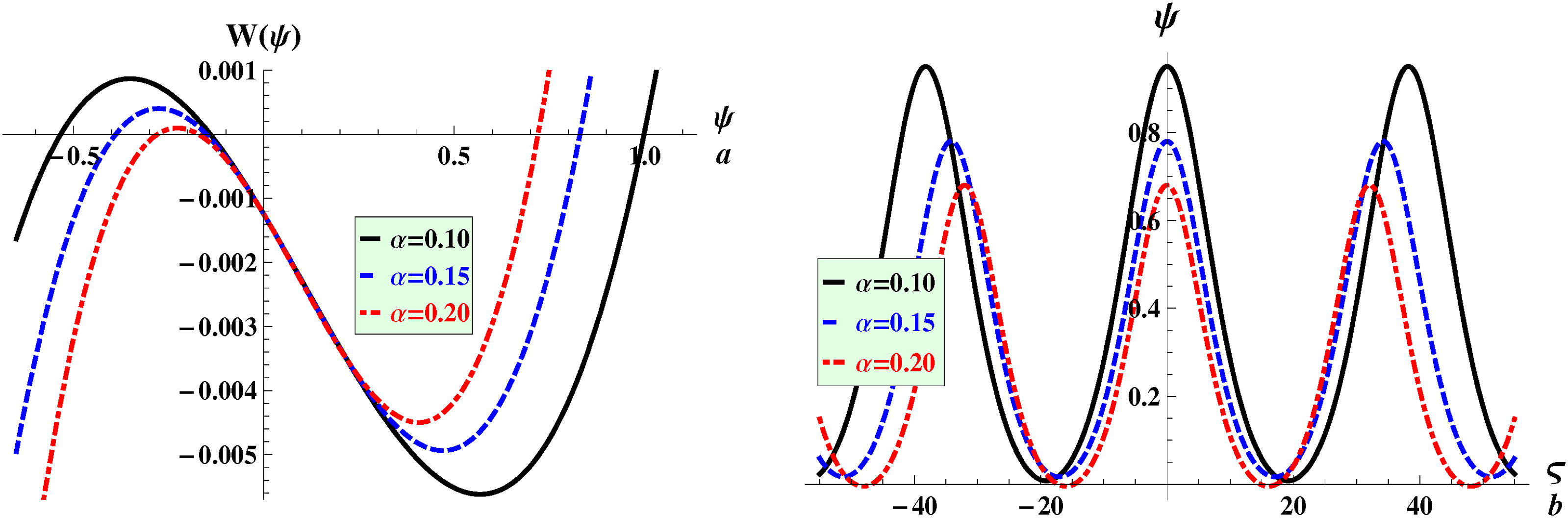
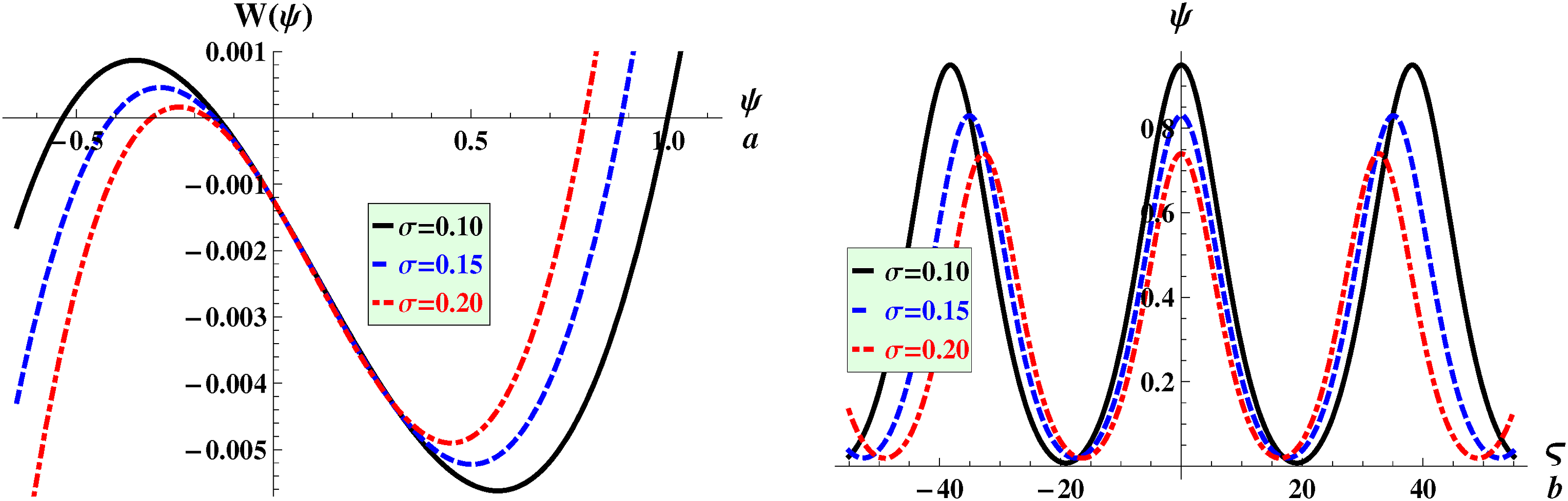
Figure 4 illustrates the influence of cosine obliqueness direction l
z
on the SP W(ψ) of CWs and the profile of the IACWs. The figure shows the wave profile for three different values of l
z
, with all other plasma parameters held constant. It’s interesting to note that as l
z
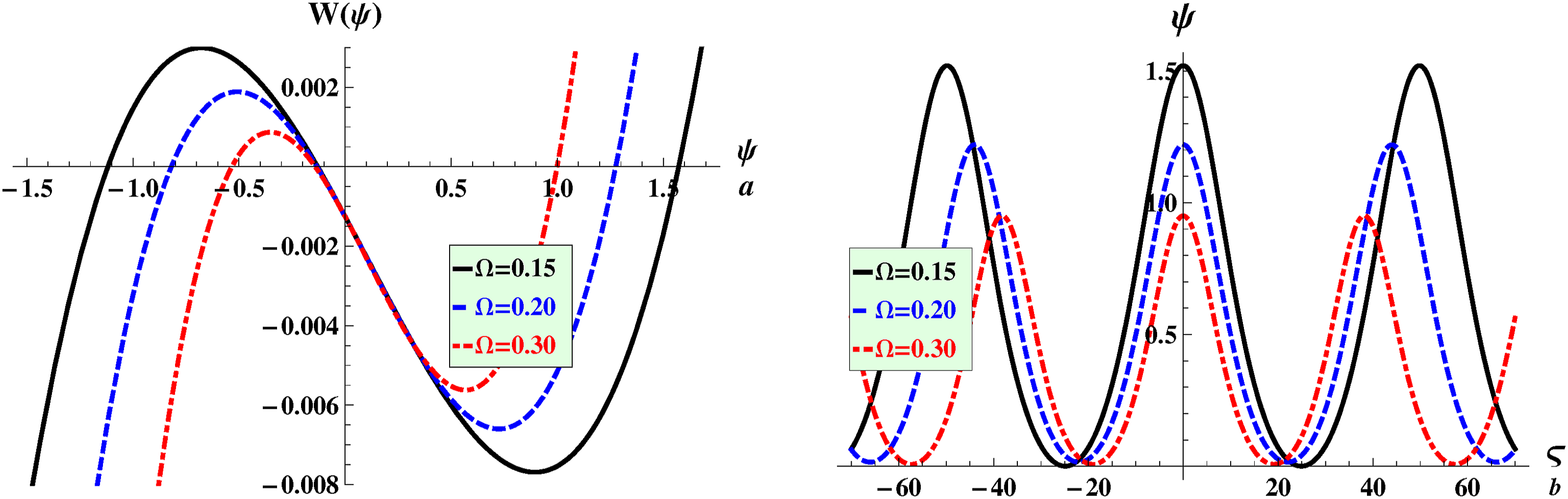
increases, both the amplitude and width of the IACWs decrease. Figure 5 shows the effect of the strength of the MF Ω on both the SP W(ψ) of CWs and the profile of the IACWs. This graphic clearly illustrates the significant impact of the MF Ω on the amplitude and width of the IACWs, as well as their sensitivity to even the most minor variations in the magnetic field. Both (a) the SP W(ψ) for the CWs and (b) the CWs profile are examined against the cosine obliqueness direction l
z
. Here, Both (a) the SP W(ψ) for the CWs and (b) the CWs profile are examined against Ω. Here, 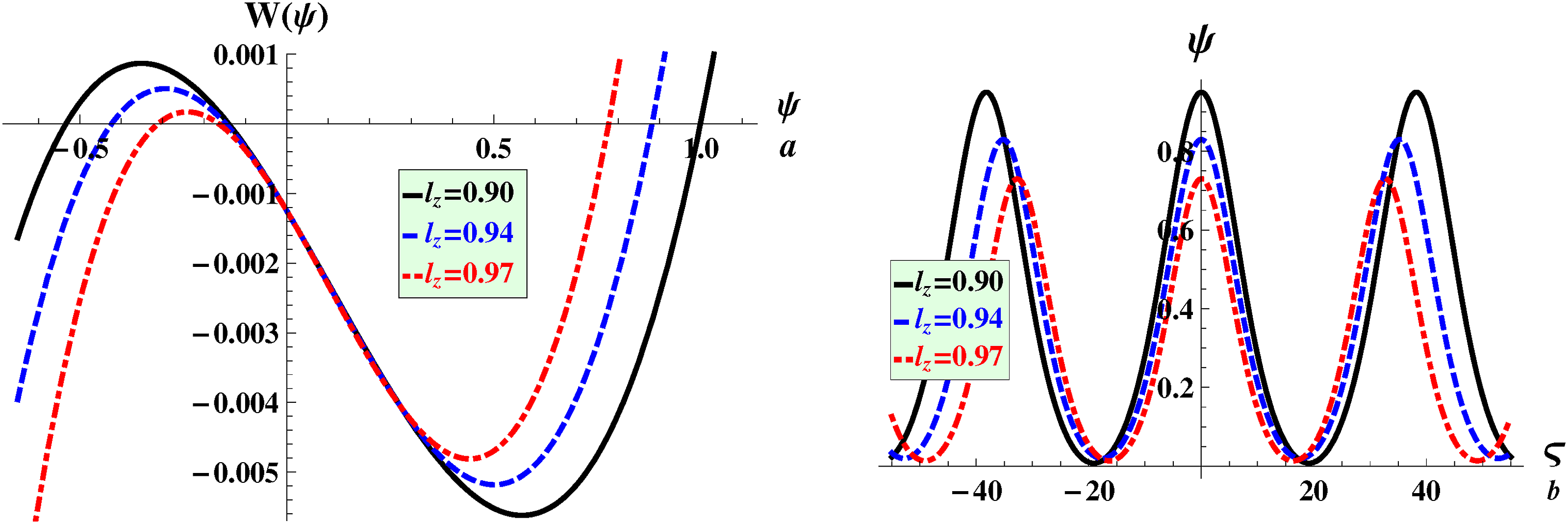
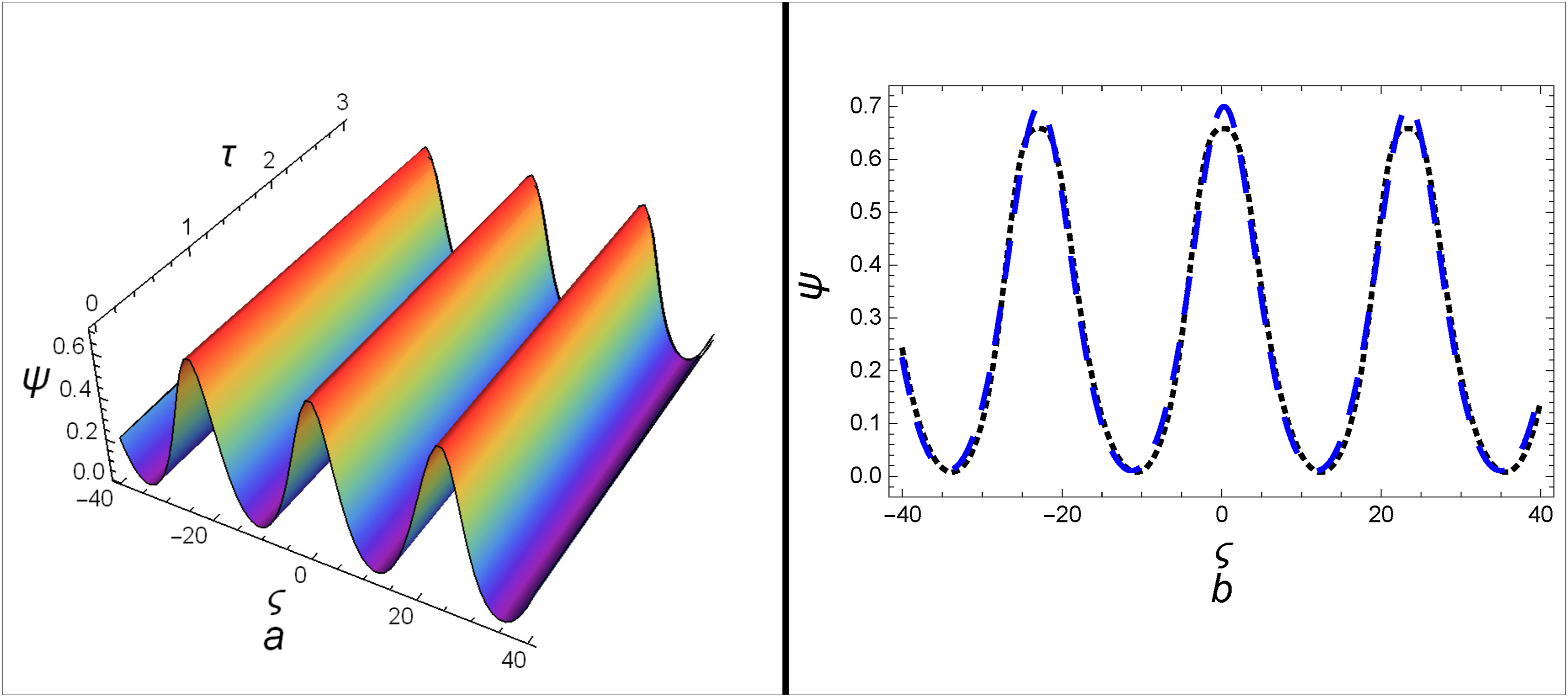
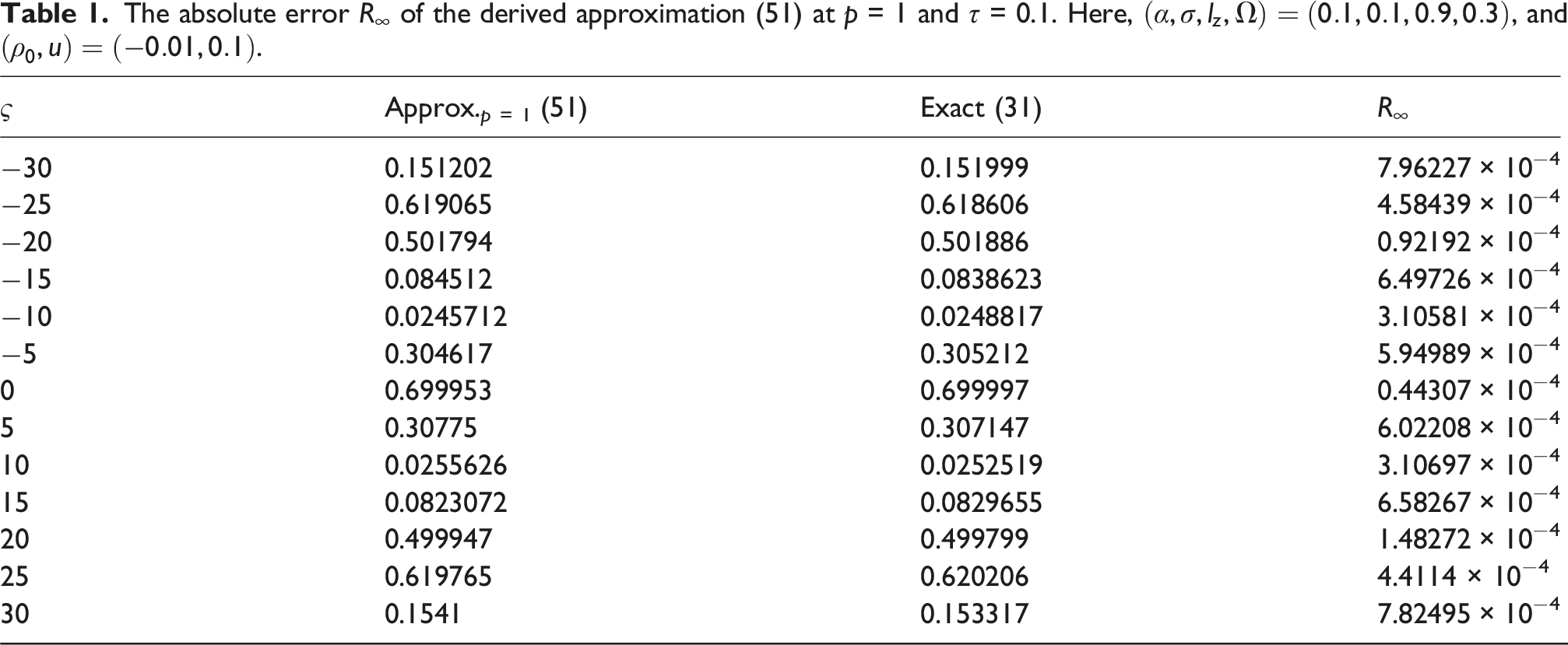
Fractional calculus often reveals the behaviors associated with memory or temporal properties of the phenomenon under study. In many cases, studying the properties of fractional waves may reveal behaviors that have been observed in laboratory experiments or astronomical observations, and these results are inconsistent with theoretical studies based on the analysis of the integer evolutionary equations. Thus, the fractional parameter p (fractionality) is not an abstract mathematical construct but a physical parameter that measures: (I) The memory length of the plasma model, (II) The degree of non-locality in time, (III) The effective damping or retardation due to collective effects, the temporal evolution in complex, dense plasmas exhibits a fractal or anomalous character. From this starting point, the idea of studying the properties of fractional waves emerged, which may explain some of the deviations in observed phenomena that conventional integer evolutionary equations fail to account for. From this perspective, the effect of the fractional-order parameter p on the dynamics of the IACW propagation that arises and propagates in the current plasma model. Before examining the impact of fractionality p on the IACW profile, it is essential to recognize that all derived approximations (51) and (63) using the TT and LRPSM are completely congruent. Unlike the analysis presented in Ref. 95, a discrepancy exists between the estimates derived from the TT and the NIM. Figure 6 illustrates a graphical representation of the generated approximations (51) and shows the influence of fractionality p on the behavior of the IACWs. In addition, Figure 7 compares the derived approximations (51) with the exact solution (31) for the integer case (p = 1). It’s evident that there’s a strong agreement between the two solutions, even though our derivation is based on a second-order approximation. Furthermore, the absolute error The profile of fractional ion-acoustic cnoidal wave ψ against fractional-order parameter p: (a) 3D plot for ψ in the The absolute error R
∞
of the derived approximation (51) at p = 1 and τ = 0.1. Here, 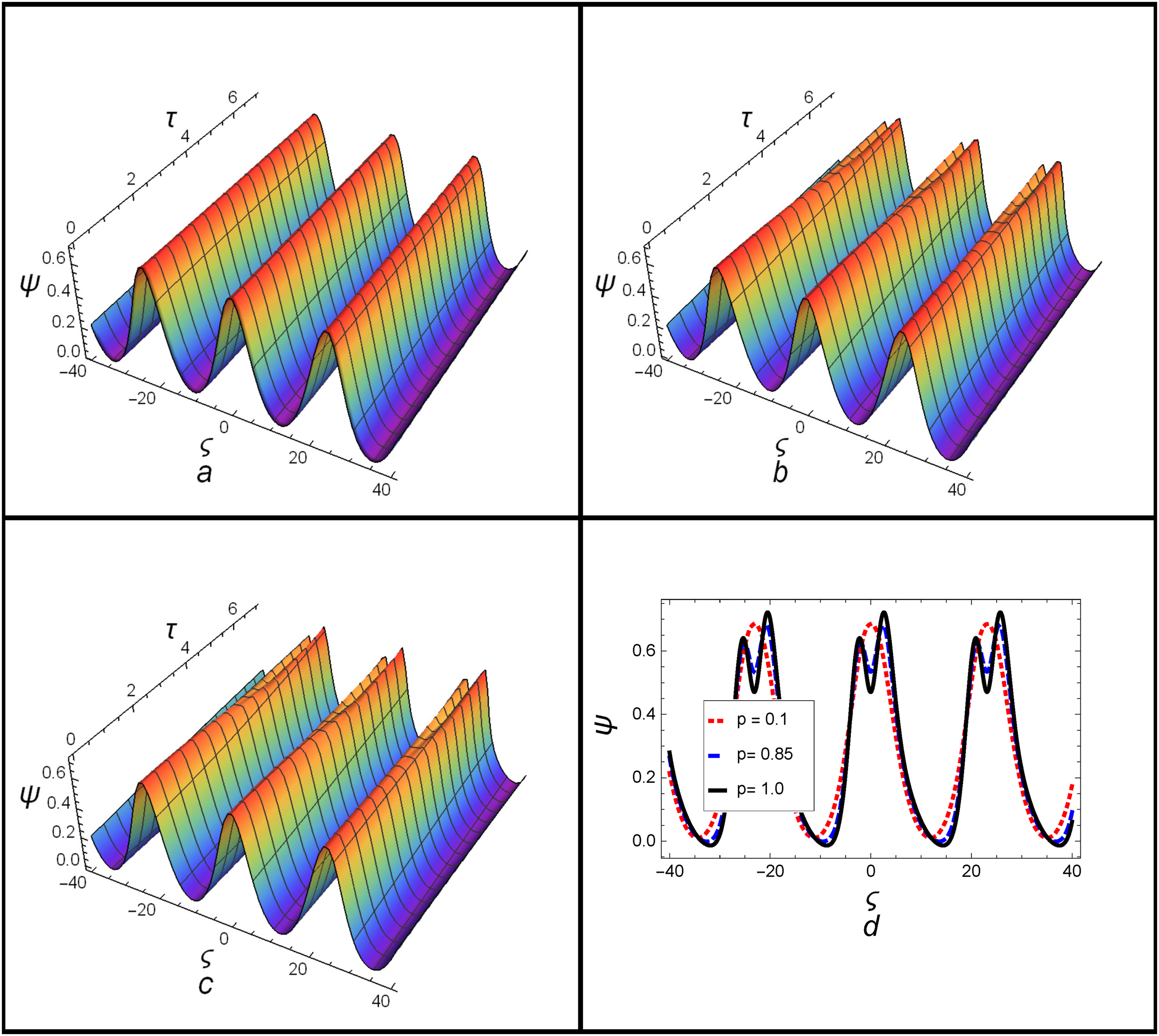
We can conclude that the TT is one of the most straightforward methods to apply, regardless of the complexity of the problem under study. However, the RPSM requires professionalism in dealing with complex problems to avoid making computational errors that would result in approximations derived by this method being incorrect. Moreover, the TT does not require any transforms to facilitate the calculations, unlike the RPSM, where several transforms, such as the Laplace transform, Elzaki transform, and Mohand transform, may be used to facilitate the integration and calculations while generating various order approximations. In addition, up to this point, Tantawy’s technique can be applied to analyze any fractional differential equation (homogeneous and non-homogeneous) without any challenge. Conversely, we may encounter difficulties when analyzing certain non-homogeneous FDEs that depend on a specific initial solution. Additionally, both the TT and the RPSM are not computationally expensive. However, the TT is faster than the RPSM when calculating higher-order approximations.
Conclusion
This investigation extends previous studies
62
by providing a comprehensive understanding of the characteristics of nonlinear IACW propagation in degenerate magnetoplasmas, with potential applications in astrophysical and laboratory plasma systems.
112
Our study is split into two key sections. First, we tackled the basic fluid equations of the magnetized degenerate Thomas–Fermi e − p − i plasma, simplifying them down to the planar integer KdV equation using the RPM method. By examining the nonlinearity coefficient, we discovered that our current model only supports positive potential structures, particularly in dense astrophysical settings like white dwarfs. In the second part of our research, we transformed the planar integer KdV equation into the planar fractional KdV (FKdV) equation to explore how the fractionality p influences the dynamics of fractional IACWs. We solved the planar FKdV equation using two effective and precise methods: the Tantawy technique (TT) and the Laplace residual power series method (LRPSM). Based on our analysis, the key findings can be summarized as follows: • It was observed that for vanishing the charge density ρ0 and electric field E0, that is, E0 = ρ0 = 0, the CW structures disappear, converting to solitary wave (SW) pulses. • Boosting the positron concentration (α) results in a decrease in both the amplitude and width of the planar IACWs. • The parameter σ significantly affects the IACW profile by reducing both amplitude and width as σ increases. This behavior results from a weak nonlinearity and dispersion due to higher positron thermal energy. • The direction of cosine obliqueness (l
z
) plays a crucial role in shaping the IACW profile by reducing both the amplitude and the width as l
z
increases. This effect arises because of the weakening of nonlinearity and dispersion, leading to a more localized and steeper wave structure. • It was found that the magnetic field (MF) Ω has a significant impact on the profile (amplitude, width, and phase shift) of the planar IACWs, and even slight changes in the MF value result in substantial changes to the properties of the IACWs. • When it comes to the fractional part, it turns out that the approximations derived from both the TT and RPSM are exactly the same. • The effect of fractionality (p) on the behavior of IACWs was examined to get a clearer picture of their propagation within the plasma. • In order to verify the approximations, we compared them graphically to the exact solution for the integer case where p = 1. The high level of agreement and consistency between the two solutions confirms that our approximations are very accurate. We also calculated the absolute error and found it to be very small, which further proves the effectiveness of our methods.
Our results demonstrate significant differences from previous studies in unmagnetized plasmas, 62 particularly in the behavior of wave structures under the influence of a magnetic field, highlighting the importance of magnetic effects in dense astrophysical environments. It is important to note that this research is particularly significant for extremely dense plasma environments, where the effects of degeneracy are substantial and must be considered. Additionally, the outcomes of this study could be relevant in regions surrounding compact stellar objects and in dense e − p − i plasmas created through the interaction of very intense, very short laser pulses with solid materials, resulting in high-density plasma conditions that exhibit quantum behavior.32,113 Moreover, the theoretical results we have obtained contribute to a better understanding of acoustic-type modes 112 in physical scenarios where ultra-dense plasmas are present.
Future work: The analysis of various evolutionary wave equations (EWEs) in their fractional forms remains a significant challenge due to their ability to reveal some of the behaviors that accompany various nonlinear phenomena arising and propagating not only in plasma physics but also in many different scientific media. Given the promising results of the used techniques in the current study, these approaches can be used for analyzing multidimensional fractional damped/nonplanar EWEs to study the effect of transverse perturbations on the dynamical behavior of various fractional nonlinear phenomena that arise in various plasma systems, such as the analysis of the fractional damped/nonplanar KdV-type equations,114–116 the fractional damped/nonplanar ZK/Kadomtsev–Petviashvili equation-type equations,117,118 and the fractional damped/nonplanar Kawahara-type equations.119–121 In addition, their ability to analyze the fractional damped/nonplanar Schrödinger-type equations for modeling the fractional rogue waves and breathers.122–125
Footnotes
Acknowledgments
The authors express their gratitude to Princess Nourah bint Abdulrahman University Researchers Supporting Project number (PNURSP2025R229), Princess Nourah bint Abdulrahman University, Riyadh, Saudi Arabia.

Authors contributions
Each author made equal contributions and gave their approval for the final version of the manuscript.
Funding
The authors received no financial support for the research, authorship, and/or publication of this article.
Declaration of conflicting interests
The authors declared no potential conflicts of interest with respect to the research, authorship, and/or publication of this article.
Data Availability Statement
This study didn’t involve creating or analyzing any new datasets, so data sharing isn’t applicable for this article. El-Tantawy has handled all the fractional calculations, derived approximations, Mathematica codes, and figures.
AI tools declaration
The authors confirm that no artificial intelligence tools were employed in the development of this article.
Appendix
The values of the coefficients L
j
∀ j = 1, 2, 3, …, 9 of approximation (50)