This study investigates the propagation of generalized photo-thermoelastic waves in a double-porosity semiconductor medium under the framework of Lord Shulman (L-S) thermoelasticity theory. The interactions between plasma waves, thermal conduction, and elastic deformations are examined within a two-dimensional (2D) elastic half-space. The governing equations, incorporating the effects of carrier density, heat conduction, quasi-static electric fields, equilibrated stress, and elastic wave motion, are formulated and solved using harmonic wave analysis. The model considers mechanical forces, thermal constraints, and plasma boundary conditions at the interface adjacent to the vacuum to determine key physical behaviors. A numerical approach is employed to analyze the time-dependent response of the system, and the results are presented graphically to illustrate the influence of thermoelastic and thermoelectric coupling parameters on wave propagation. The findings demonstrate the significant role of double porosity in modifying stress distribution, temperature variations, and charge carrier behavior, providing insights into semiconductor physics and wave dynamics. The numerical method is utilized to provide thorough solutions in the time domain for the key physical processes under investigation. All numerical outcomes of physical functions are illustrated graphically.
Thermoelasticity is a fascinating field of study that explores the behavior of materials when subjected to both mechanical deformation and temperature changes. This unique combination of mechanical and thermal factors can have profound effects on the elasticity and shape of materials, leading to a range of interesting phenomena and applications in various industries. One of the key concepts in thermoelasticity is the idea of shape memory materials, which can assume a specific shape and return to it when subjected to certain stimuli, such as changes in temperature. This property has exciting implications for the development of new materials and devices that can respond dynamically to their environment, making them ideal for applications in aerospace, biomedical, and robotics industries. Another important aspect of thermoelectricity is the study of how materials respond to thermal gradients and mechanical loads simultaneously. This behavior can lead to complex interactions between different types of deformation, such as thermal expansion and mechanical stress, resulting in non-linear behavior that requires sophisticated modeling and analysis techniques to fully understand. In addition to shape-memory materials, thermoelasticity also encompasses the study of thermal stresses and strain in materials, which play a crucial role in determining the performance and reliability of components in various engineering applications. By understanding how materials deform and respond to changes in temperature, engineers can design more robust and efficient systems that can withstand a wide range of operating conditions. Overall, thermoelasticity is a rich and multidisciplinary field that blends principles from materials science, mechanics, and thermodynamics to investigate the complex interplay between mechanical deformation and thermal effects in materials. As researchers continue to explore and expand our understanding of this fascinating area of study, we can expect to see exciting new developments and applications that push the boundaries of what is possible in materials science and engineering. The concept of double porosity in semiconductors extends beyond theoretical interest and finds practical relevance in multiple advanced technologies. In optoelectronic devices, such as light-emitting diodes (LEDs), photodetectors, and photovoltaic cells, double-porous silicon structures enhance light absorption, carrier transport, and quantum efficiency. Similarly, in high-power electronics, engineered porosity significantly improves thermal dissipation, mitigating overheating and ensuring device longevity. Double porosity semiconductors are also integral to energy storage systems, particularly in batteries and supercapacitors, where enhanced ion diffusion through interconnected pore networks leads to greater charge storage efficiency. Furthermore, in micro/nanoelectronic applications and MEMS (Micro-Electro-Mechanical Systems) devices, controlled porosity enables tunable mechanical and acoustic wave propagation, crucial for sensors and actuators. These applications highlight the necessity of studying wave dynamics in double-porosity semiconductor media, as explored in this work.
Biot’s1 theory of poroelasticity forms the foundation for modeling fluid-solid interactions in porous media. The extension of Biot’s framework to double porosity systems was pioneered by Barenblatt et al and Warren et al.2,3 (1963). These studies provided the groundwork for describing the flow and mechanical behavior of double-porosity materials. Thermoelasticity, the coupling of thermal and mechanical responses, plays a critical role in double porosity systems, especially under non-isothermal conditions. Thermal expansion and contraction influence pore pressures and stress distributions, which can significantly affect the material’s overall behavior. The work of Coussy et al. and Cleary4,5 extended poroelastic theories to incorporate thermoelastic effects, enabling better prediction of deformation and stability under thermal gradients. Several researchers have contributed to developing comprehensive models that couple double porosity with thermoelasticity. Berryman and Wang6 introduced a unified theory that integrates fluid flow and mechanical deformation in double-porosity media. Their work highlighted the influence of temperature on permeability and stress fields. Geothermal and petroleum engineering applications, such as those studied by Chen et al.,7 focus on the thermoelastic response of fractured reservoirs. These studies address the impact of thermal injection and production cycles. Finite element and finite difference methods, as demonstrated by Khalili and Selvadurai,8 provide robust tools for simulating the behavior of double porosity systems under thermal and mechanical loads. Laboratory experiments are essential for validating theoretical models. Studies by Cheng and Detournay9 have demonstrated the practical relevance of thermoelastic double-porosity models. Techniques such as X-ray computed tomography (CT) and advanced sensors enable precise measurement of pore pressures, temperature changes, and mechanical deformations. While significant progress has been made, several challenges remain. Multiscale Coupling: Accurately modeling interactions between micro- and macropores. Addressing nonlinearity in material responses, especially under extreme thermal and mechanical conditions. Understanding the implications of thermoelastic double porosity in carbon sequestration, geothermal energy, and subsurface waste storage. Lord Shulman’s theory, also known as the generalized thermoelasticity theory, is a significant advancement in the field of thermoelasticity, extending the classical coupled thermoelasticity theory by introducing a relaxation time for heat flux. This theory addresses the limitations of the classical theory, which predicts an infinite speed of thermal wave propagation, by incorporating a time delay in the heat conduction process. Lord and Shulman10 proposed a generalized thermoelasticity theory by introducing a single relaxation time to account for the finite speed of thermal wave propagation. This theory modifies Fourier’s law of heat conduction, making it hyperbolic and eliminating the paradox of infinite thermal wave speeds. The LS theory11 has been widely applied to study thermoelastic interactions in various materials, including isotropic, anisotropic, and functionally graded materials. It has been used to analyze thermal shock problems, wave propagation, and dynamic responses in elastic media. The LS theory12 is often compared with other generalized thermoelasticity theories, such as the Green-Lindsay (GL) theory and the three-phase-lag (3PL) model. While LS theory uses one relaxation time, GL theory introduces two, and 3PL theory incorporates phase lags for heat flux, temperature gradient, and thermal displacement. Researchers13 have developed analytical and numerical methods to solve problems based on the LS theory, including finite element methods, Laplace transforms, and eigenvalue approaches. These solutions have been applied to study thermal stresses, wave propagation, and coupled thermoelastic problems. Recent studies14 have extended the LS theory to include nonlocal effects, double porosity, and memory-dependent derivatives, making it applicable to advanced materials like composites, nanomaterials, and porous media.
Raddadi et al.15 developed a novel model for photoacoustic and thermal-electronic waves in semiconductors, analyzing their interactions under photoexcitation. El-Sapa et al.16 investigate the photothermal excitation process in semiconductors, emphasizing the impact of moisture diffusivity on thermal and electronic properties. Lotfy et al.17 introduce a model for photo-elasto-thermodiffusion waves in semiconductors, focusing on electron-hole deformation and its effects on wave propagation. Olny and Boutin 18 study acoustic wave propagation in double porosity media, providing insights into the unique acoustic properties of materials with two distinct porous networks. Together, these studies highlight the importance of understanding coupled physical phenomena in materials science, with applications in optoelectronics, photonics, and acoustics. Jiang et al.19 present a frequency-domain finite-element method to model 2D seismic wave propagation in double porosity media, focusing on the interaction between wavefields and dual-porosity structures, offering insights into seismic wave behavior in complex geological settings. Mahato et al.20 explore Rayleigh waves in a thermoelastic medium using a novel nonlocal three-phase-lag diffusion model with double porosity, highlighting the effects of thermal and porosity interactions on wave propagation. Khatri et al.21 investigate the behavior of fiber-reinforced materials in a double porous transversely isotropic medium, considering rotation and variable thermal conductivity, providing a framework for understanding thermoelastic wave propagation in advanced composite materials. Recent advances in thermoelasticity and mass diffusion theories have significantly enhanced our understanding of wave interactions in semiconductor materials. Abouelregal and Sedighi22 introduced a novel perspective on the coupling between thermoelasticity and mass diffusion using the Moore–Gibson–Thompson thermodiffusion theory, demonstrating its effectiveness in analyzing heat and mass transfer in elastic half-spaces. Their findings highlight the importance of incorporating diffusion effects when studying wave propagation in complex materials. Additionally, Pakdaman and Tadi Beni23 explored the size-dependent generalized piezothermoelasticity of microlayered structures, emphasizing the role of microstructural effects in piezoelectric and thermal wave interactions. Their work provides critical insights into the behavior of miniaturized semiconductor devices, where size-dependent phenomena influence mechanical and thermal responses. Structural dynamics and seismic vulnerability assessments play a crucial role in ensuring the stability and resilience of engineered systems under dynamic loading conditions. Merino Vela et al.24 derived floor acceleration spectra for industrial liquid tank supporting structures with braced frame systems, providing valuable insights into the seismic response of such configurations. Their findings are particularly relevant for evaluating the dynamic behavior of critical infrastructure subjected to earthquake-induced forces. Similarly, Pavese et al.25 conducted a seismic vulnerability assessment of infilled reinforced concrete frame structures originally designed for gravity loads, highlighting the potential deficiencies and failure mechanisms under seismic excitation. These studies contribute to a broader understanding of structural integrity and performance-based seismic design, offering crucial methodologies for analyzing and mitigating earthquake-induced risks in industrial and civil engineering applications
Among various generalized thermoelastic theories, the Lord-Shulman (L-S) model is employed in this study due to its ability to capture finite thermal wave speeds while maintaining computational efficiency. This is particularly important in semiconductors, where heat transfer is governed by electron-phonon interactions and carrier diffusion. While alternative models such as Green-Lindsay (GL) and Three-Phase-Lag (3PL) introduce additional thermal relaxation effects, they are more suitable for materials exhibiting complex or nonlocal thermal behavior. The L-S theory, with its single relaxation time, provides an optimal balance between physical accuracy and mathematical tractability, making it well-suited for analyzing the coupled photo-thermoelastic behavior in double porosity semiconductor media. This study employs a linearized thermoelasticity model to analyze wave propagation in double porosity semiconductor media. While nonlinear effects such as temperature-dependent thermal conductivity and nonlinear stress–strain behavior are not considered, the linear model provides a fundamental understanding of thermoelastic and thermoelectric interactions. Future work could extend this framework to incorporate nonlinearities for a more comprehensive analysis.
This study develops a novel mathematical model for the propagation of generalized photo-thermoelastic waves in a semiconductor medium with double porosity under the Lord-Shulman (L-S) thermoelasticity theory. By incorporating photoelectric, thermoelastic, and thermoelectric coupling effects, the model provides a comprehensive understanding of wave behavior in semiconductor materials. Using harmonic wave analysis and numerical simulations, the study examines the influence of thermoelastic and thermoelectric parameters, as well as time-dependent effects, on wave propagation. The results reveal significant interactions between mechanical, thermal, and electrical fields, demonstrating that double porosity plays a crucial role in stress distribution and wave behavior. The graphical depiction depicts the influence of the thermoelastic coupling parameter, thermoelectric coupling parameter, and temporal variation on physical variables concerning the photo-thermoelastic effect and double porosity under L-S theory. The findings have practical implications for semiconductor technologies, including photovoltaic cells, electronic circuits, and seismic analysis. While primarily theoretical, this work offers valuable insights into semiconductor physics, with applications in optoelectronics, energy storage, and advanced material design.
Formulation of the problem and basic equations
Consider a homogeneous thermoelastic half-space exhibiting a double porosity structure in its undeformed condition at a uniform reference temperature . All the considered functions will depend upon the Cartesian coordinates and the time . The displacement vector can be expressed by the following two components , the other main quantity is the carrier density distribution or plasma distribution . The governing equations and basic relations for a homogeneous isotropic thermo-elastic semiconductor solid with a double porosity structure, in the absence of incremental body forces and heat sources, are provided by the L-S model:
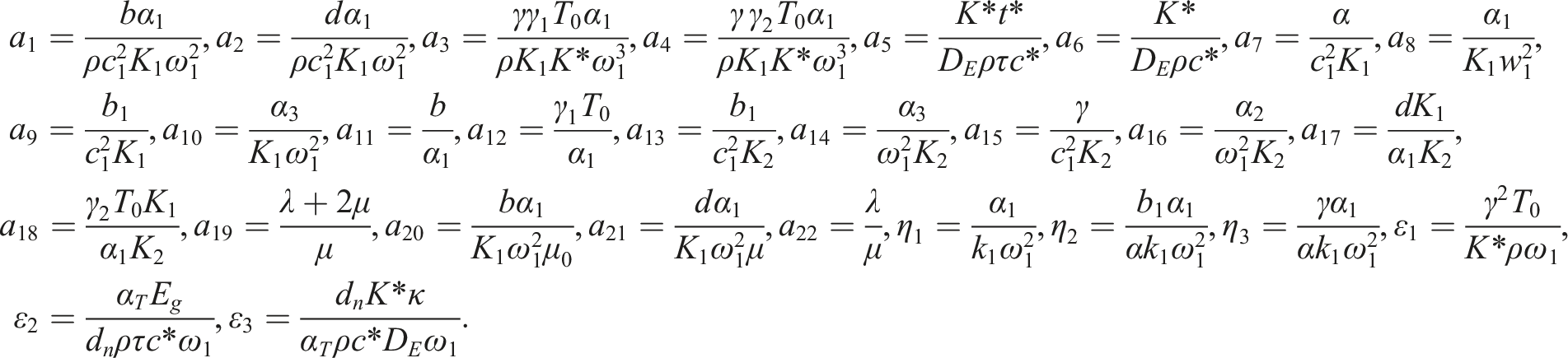
where , represents the deformation potential coefficient, thermal activation coupling is , denotes the carrier diffusion coefficient, is the thermal expansion of volume, expresses the thermal expansion coefficient, is the energy gap of the semiconductor medium, and is the carrier Lifetime.
Assuming the scalar potential functions and defined by the relations in the non-dimensional form: .
For simplicity, we introduce dimensionless variables.
Using the above dimensionless quantities, equations (9)–(17) become:
Dimensionless variables for the components of ,
Where
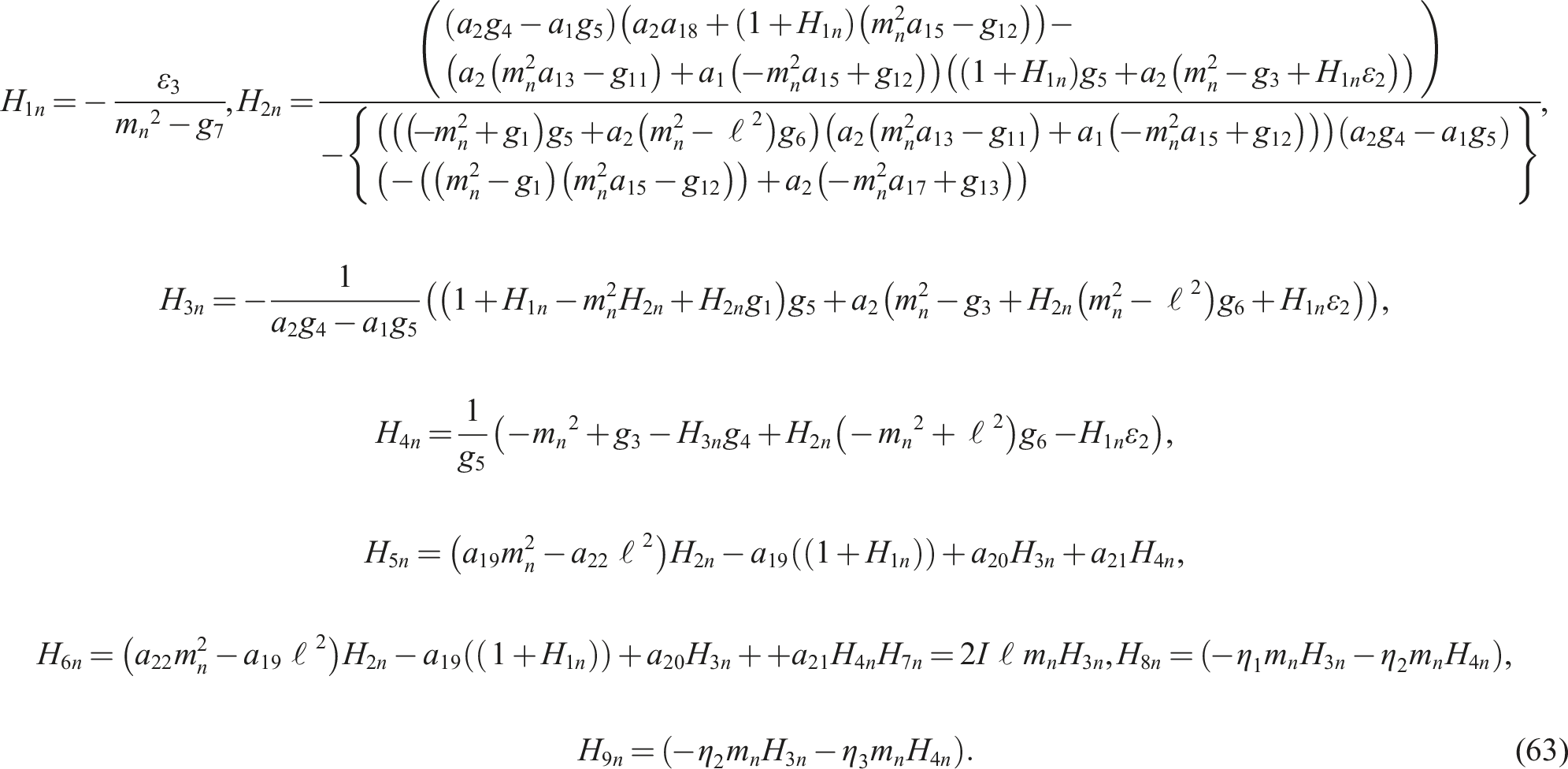
Where the parameters , , and can be called the thermoelastic, the thermo-energy, and the thermoelectric coupling parameters, respectively.
Harmonic wave analysis
The solution of the physical quantities, when harmonic wave propagated in the direction, lies in the -plane can be decomposed in terms as the following form36,37:
where is the angular frequency or complex time constant, is the imaginary value, is a wave number in the direction of -axis, and is the amplitude of given function. By using the normal mode defined in the Equations (29), Equations (18)–(28), we arrive at a system of five non-homogeneous equations:
where
Eliminating and between equations (30)–(34) yields:
The factorization method was used to remedy the principle ordinary differential equation (ODE) (41) as follows:
where represent the roots that may be taken in the positive real part . The solution of equation (ODE) (47) takes the following form (according to the linearity of the problem):
In the same way, the solutions of the other quantities can be expressed as:
The solution to equation (35) can be written in the following form:
To obtain the stress components, the displacement components can be written
firstly, in terms of parameters:
Since
Then
To get the solution of and substituting from equations (51) and (52) in (39) and (40) we get:
where and are unknown parameters depending on the parameter . The relationship between the unknown parameters and can be obtained when using the main equations (30)–(40), which take the following relationship:
Applications
In this section, we ascertain the parameters… We must mitigate the unbounded positive exponentials at infinity in the physical problem. The constants have to be chosen such that the boundary conditions on the surface (suppose the boundary is adjacent to the vacuum) take the form:
i) Mechanical boundary condition wherein the surface of the half-space experiences a traction load38,39:
ii) The tangential stress boundary condition that the surface of the half-space is traction-free40:
iii) Assuming that the boundary is thermally insulated, we have41:
vi) Throughout the diffusion process, the carriers may arrive at the sample surface with a non-zero probability of recombination. The boundary condition for the carrier density is delineated as follows42:
vii) The two equilibrated stress boundary conditions at the free surface when
Applying equations (64)–(68) in (48), (49), (54), (56), (61), and (62) we get
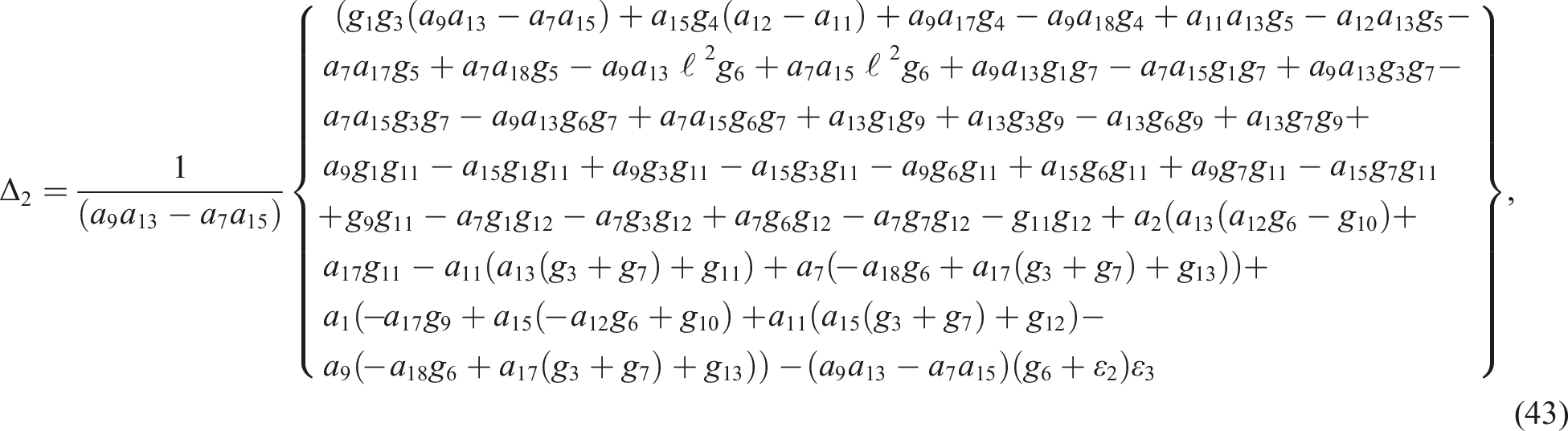
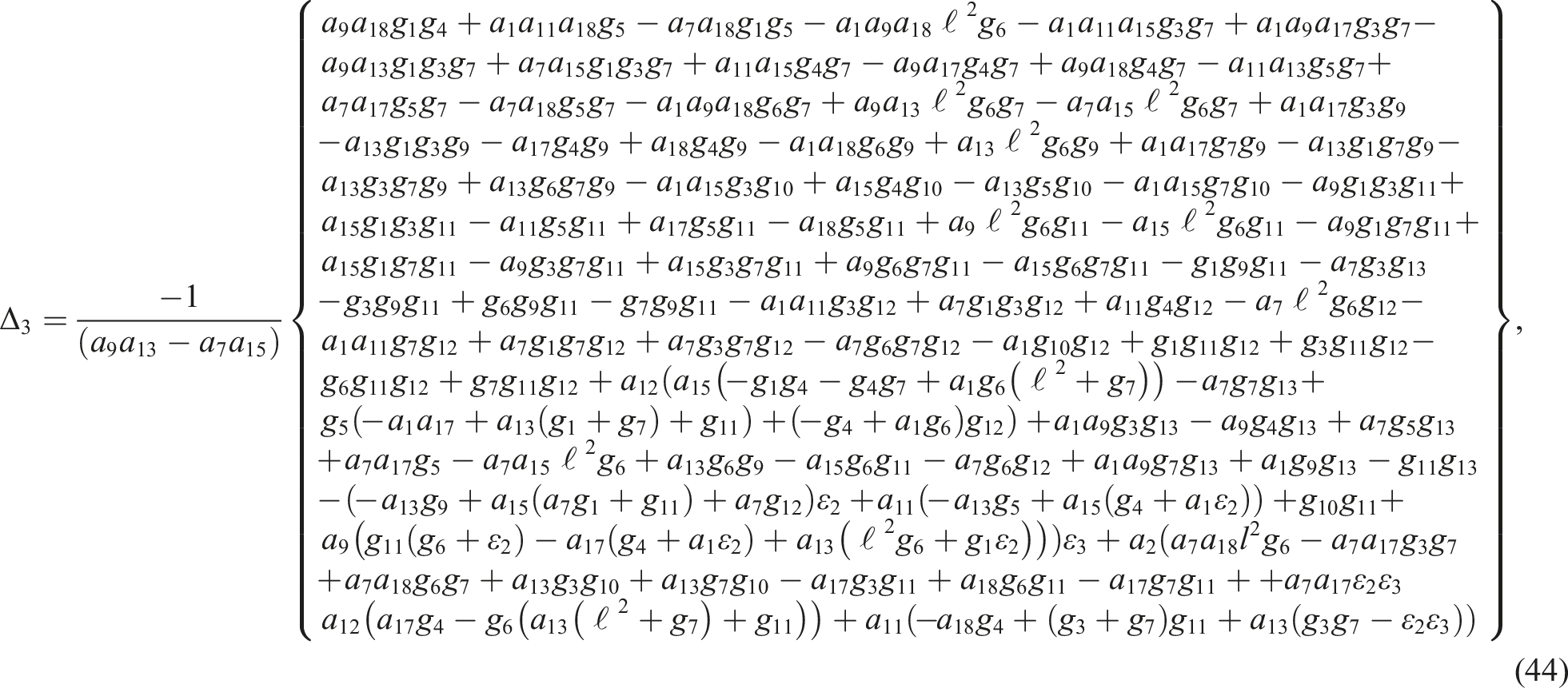
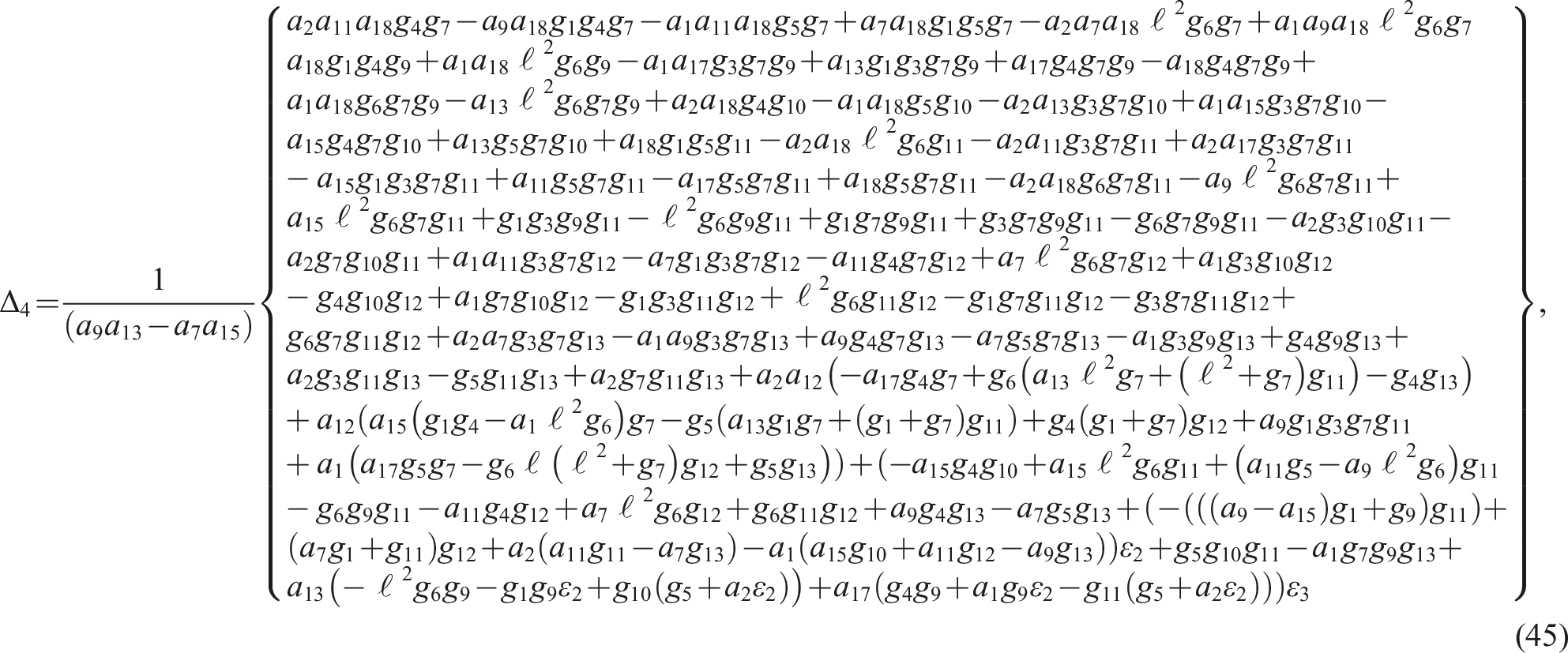
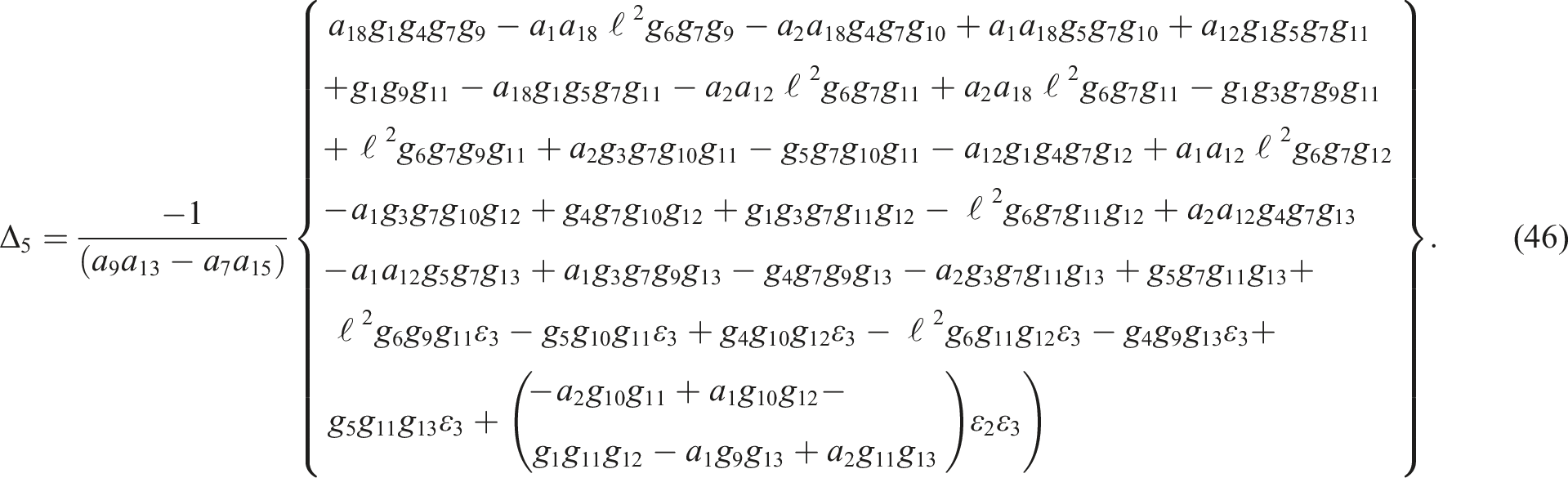
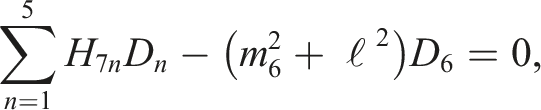
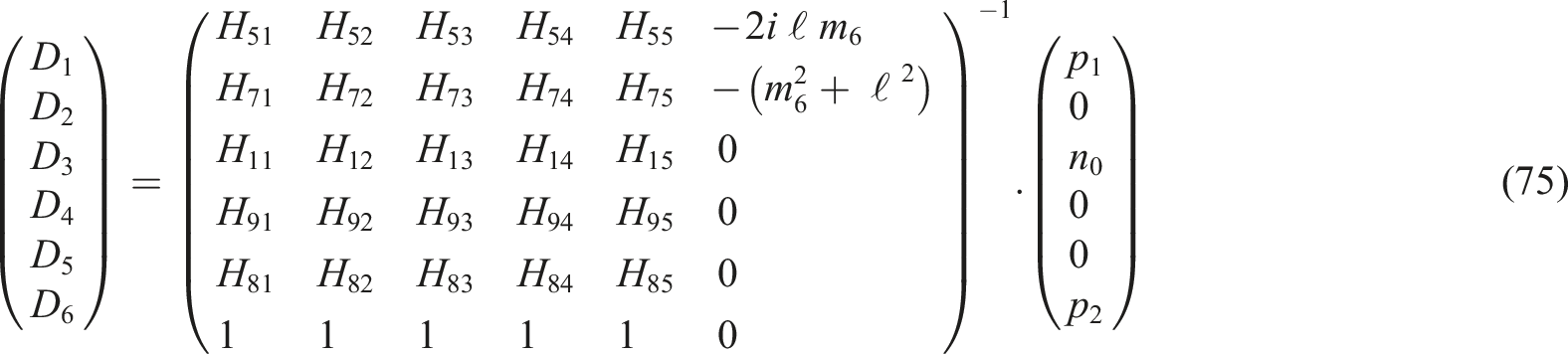
To get , we can put equations (69)–(74) in the matrix43,44:
Numerical results and discussions
The numerical values of the physical quantity in this problem are determined for a brief duration. The numerical simulation is conducted utilizing materials. In the International System of Units (S.I.), constants have utilized the unit and MATHEMATICA software is employed for plotting. The physical constants of silicon semiconductor material. Numerical results are provided. Silicon is selected as the thermoelastic material, and the subsequent values of physical constants are utilized to achieve this objective.45,46
Following Khalili,42 the double porous parameters are taken as,
The variation of time
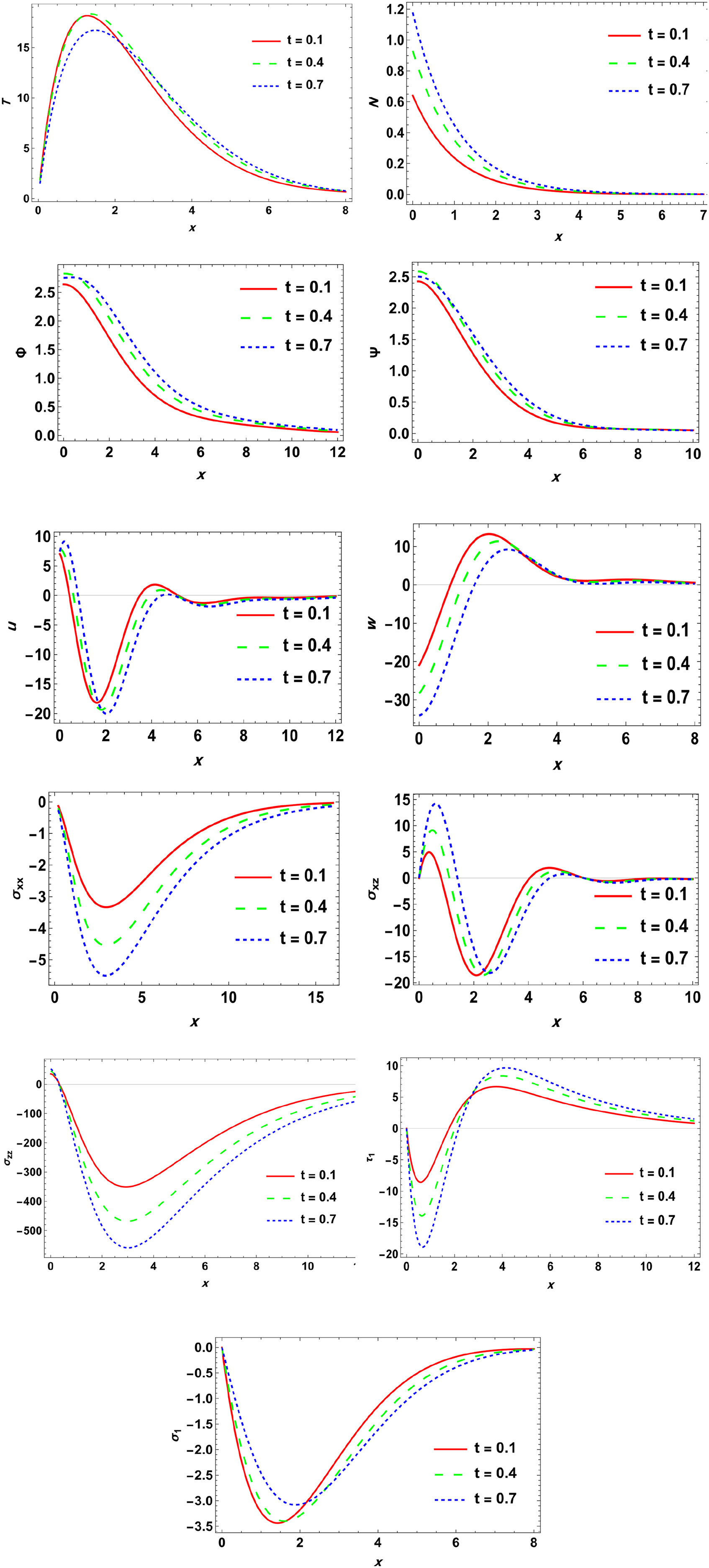
The first group (Figure 1) represents the variations of main fields in this phenomenon according to the different values of time versus the horizontal distance in the context of double porosity theory in the context of L-S theory. Three cases are considered in this category, the first when t = with a red solid line, the second case when time is equal to t = 0.4 with the green dashed line, and the other case is equal to t = 0.7 with the blue dotted line. In Figure 1, eleven subplots: The figure is divided into eleven subplots, each representing a different physical quantity as a function of spatial coordinate x. Each subplot shows the solution at different time instants, indicated by the labels “t = 0.1”, “t = 0.4”, and “t = 0.7.” This allows us to observe the temporal evolution of the system. There’s a noticeable qualitative similarity in the shapes of the curves across different quantities, suggesting a coupling between the variables through the PDE system. In most plots, the solutions appear to be approaching a steady state or a periodic behavior as time increases (comparing t = 0.4 and t = 0.7). Temperature initially (t = 0.1), there’s a localized increase in temperature around x = 2. This peak diffuses and spreads over time (t = 0.4, t = 0.7), while the maximum value decreases. By t = 0.7, the temperature profile seems to be reaching a smoother and more distributed state. Similar to temperature, the concentration profile initially shows a peak around x = 2. This peak broadens and decreases with time, indicating a diffusion process. The concentration appears to approach a uniform distribution as time progresses. Shows a similar trend of diffusion and smoothing as observed in temperature and concentration. The initial profile is more spread out compared to T and N and exhibits a similar diffusive behavior, suggesting it might be related to a stream function or a potential. Displacement component initially (t = 0.1), there’s a localized disturbance in the field around x = 2, with both positive and negative components. This disturbance propagates and spreads, becoming less localized at later times. The flow field seems to be settling towards a more uniform state, although some oscillations are still visible at t = 0.7. The displacement component shows a more complex initial profile (t = 0.1) with multiple peaks and troughs, indicating a more intricate flow structure. The displacement field evolves significantly with time, and the oscillations suggest possible wave-like behavior. By t = 0.7, the flow appears to be organizing itself, but further analysis would be needed to determine its long-term behavior. Initially (t = 0.1), it is compressive (negative) and concentrated around x = 2. Over time, the compressive stress decreases in magnitude and spreads spatially. By t = 0.7, the stress distribution becomes more uniform, suggesting a relaxation of stress in the x-direction. Initially (t = 0.1), it shows a complex distribution with both compressive and tensile (positive) stresses. The stress distribution evolves significantly with time, with the magnitudes of both compressive and tensile stresses decreasing. At t = 0.7, the stress appears to be approaching a more uniform and less stressed state. Initially (t = 0.1), shear stress is concentrated around x = 2, indicating a shear deformation in this region. Over time, the magnitude of the shear stress decreases, and the distribution spreads. By t = 0.7, the shear stress is significantly reduced, suggesting a decrease in shear deformation. The shear stress figure shows a similar trend, with a decrease in magnitude and a broader distribution over time. Initially, t = 0.1 shows a compressive equilibrated stress corresponding to the distribution. The magnitude of the equilibrated stress decreases over time, and the distribution becomes more uniform. At t = 0.7, the stress is significantly reduced, suggesting a decrease in the overall. The transient variations in temperature, stress, and carrier density observed in the results have significant implications for semiconductor device performance and reliability. In integrated circuits and MEMS devices, rapid temperature fluctuations influence heat dissipation efficiency and thermomechanical stress distribution, affecting long-term stability. Additionally, the dynamic evolution of photoacoustic waves is crucial for optoelectronic applications, where wave propagation characteristics impact sensor accuracy and signal processing efficiency in photodetectors and semiconductor-based acoustic wave devices. Furthermore, in high-frequency and power electronic systems, time-dependent stress accumulation can accelerate material fatigue and failure mechanisms, necessitating careful thermal and mechanical design considerations. These findings emphasize the importance of understanding photo-thermoelastic wave propagation over time to optimize the performance and durability of semiconductor technologies.
Variations of the main physical fields with respect to the horizontal distance at different time instants under the L-S thermoelasticity theory with double porosity when . The subplots illustrate the evolution of temperature, carrier density, displacement components, stress components, and equilibrated stresses, demonstrating the time-dependent behavior of wave propagation in the semiconductor medium. The results highlight the diffusion and attenuation effects over time, with the physical fields approaching a more stable distribution as time progresses.
The effect of thermoelastic coupling parameters
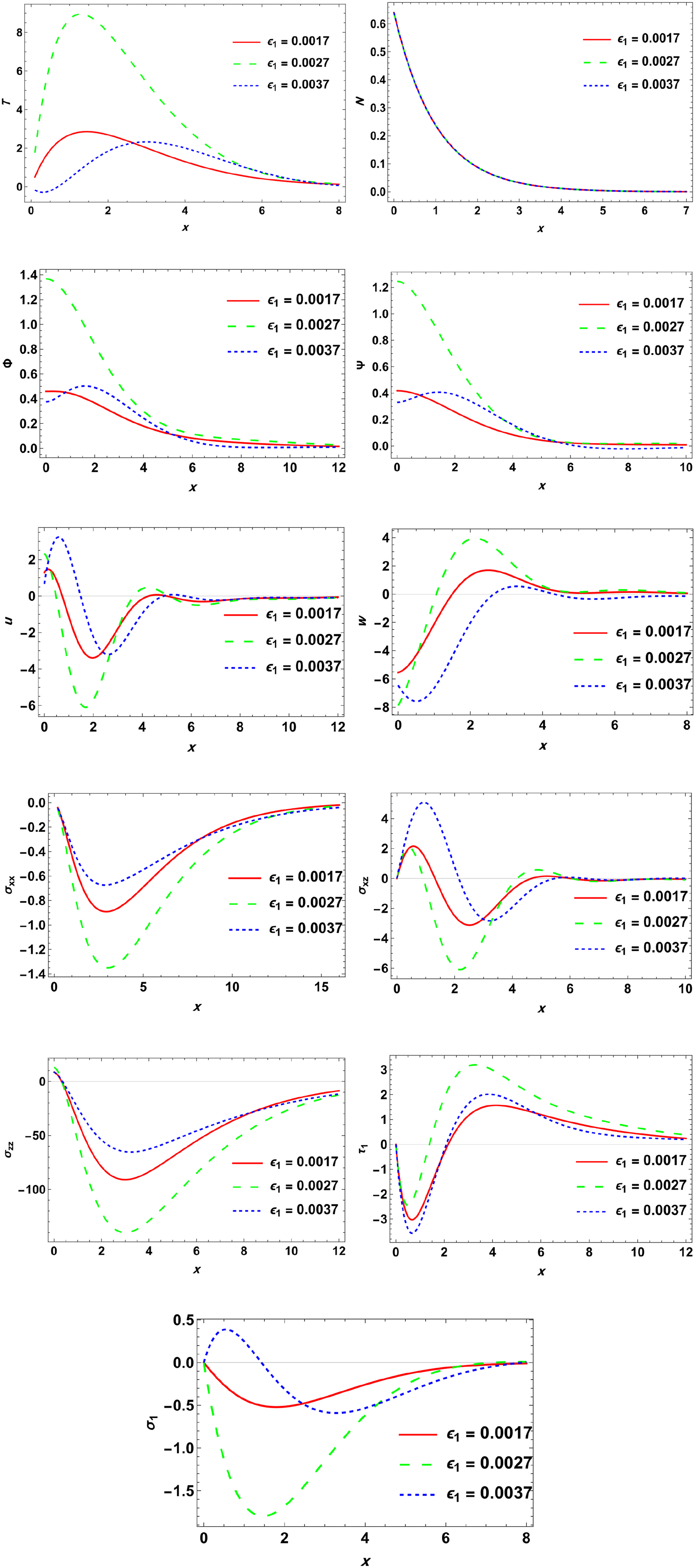
Figure 2 (in the second category) shows the main physical fields against the horizontal distance in the context of photo-thermoelasticity theory with double porosity under L-S theory. All calculations are carried out under for silicon (Si) material. In Figure 2, The solutions are plotted as functions of spatial position x and are shown for three different values of a parameter . The figure is divided into eleven subplots, each representing a different physical quantity . Each subplot shows the solution for three different values of the parameter , and . This allows us to observe how the solutions change as this parameter varies. The solutions appear to have reached a steady state, as there’s no indication of time dependence. This suggests that the system has reached an equilibrium or a long-time asymptotic state. Some subplots show similar trends in the solutions as is varied, suggesting possible connections or coupling between the different quantities. For , T is nearly constant with a small bump around .As increases (0.0027 and 0.0037), a distinct peak emerges around , indicating a localized increase in temperature. The peak becomes sharper and taller as increases. shows a similar trend to temperature. As increases, a peak develops around , indicating a localized increase in concentration. The peak is less pronounced compared to temperature. Similar behavior as T and N. Increasing ε1 leads to a sharper and taller peak around . shows a more complex dependence on ε1. For ε1 = 0.0017, is relatively constant. As ε1 increases, a localized change (bump or dip) appears around , but the shape of the change is different from the peaks observed in , and .the displacement component ,For ε1 = 0.0017, u is close to zero. As ε1 increases, localized oscillations or peaks appear around , indicating a change in the flow field.the displacement component Similar behavior to u. Increasing ε1 leads to the development of localized oscillations or peaks around , suggesting a change in the flow pattern. is entirely negative (compressive) across all positions and for all values of . This indicates that the material is being compressed or squeezed in the direction. The curves exhibit a roughly parabolic shape, suggesting a possible bending or compression-dominated deformation mode. Increasing leads to a significant increase in the magnitude of compressive stress. This reinforces the idea that is a primary driver of the stress state, potentially representing strain or load. The maximum compressive stress occurs near the center of the x-axis, suggesting a possible region of concentrated compression. The curves of are roughly anti-symmetric about the center of the x-axis. This is a characteristic feature of shear stress distributions, indicating that the shear force acts in opposite directions in different parts of the material. The shear stress is close to zero at the center of the x-axis, which is often observed in situations with symmetry. As increases, the magnitude of the shear stress also increases, suggesting a greater degree of shear deformation. The shear stress changes sign along the x-axis, indicating a reversal in the direction of shear force. The stress appears to be tensile (positive) near the center of the x-axis. This is interesting considering is compressive and suggests that the material is being stretched in the y-direction while compressed in the x-direction (like stretching a rubber band while squeezing it). The magnitude of is significantly smaller than . This could imply that the material is more constrained in the x-direction. Again, increasing ε1 seems to increase the magnitude of . is entirely positive (tensile), indicating that, regardless of the direction of the applied forces, the material experiences tensile stress at some orientation.: The maximum tensile stress occurs near the center of the x-axis. This is a common location for failure initiation, as it experiences the highest tensile stress. As with the other stresses, increasing ε1 increases the magnitude of , making tensile failure more likely. ε1 appears to be a crucial parameter controlling the stress state. It likely represents strain, load, or another factor that influences the material’s deformation. As increases, temperature and carrier density exhibit stronger localization around the excitation region, with sharper peaks at x ≈ 2. The displacement components u, w show more pronounced oscillations, indicating that increasing enhances wave amplitudes. Stress fields (, , ) show a nonlinear increase in magnitude, confirming stronger thermoelastic coupling effects on mechanical deformations. Wave speed increases with , suggesting that stronger thermoelastic interactions facilitate faster energy transfer through the medium.
Variations of the main physical fields with respect to the horizontal distance under different values of the thermoelastic coupling parameter when in the context of photo-thermoelasticity theory with double porosity based on the Lord-Shulman (L-S) model. The subplots illustrate the impact of increasing thermoelastic coupling on temperature, carrier density, displacement components, stress components, and equilibrated stresses, revealing significant modifications in wave propagation behavior.
The effect of the thermoelectric coupling parameter
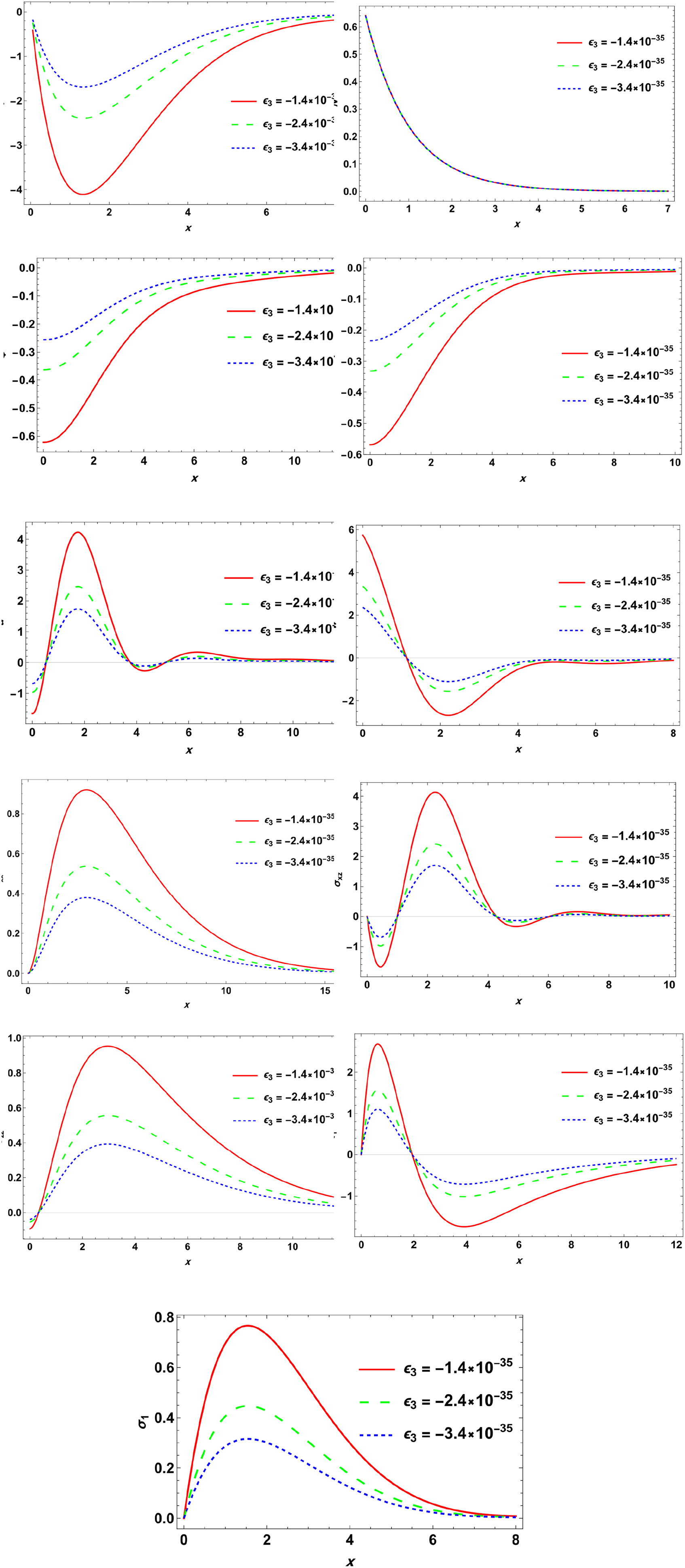
Figure 3 (which represents the third category) shows the main physical fields against the horizontal distance in the context of photo-thermoelasticity theory with double porosity under L-S theory. All calculations are carried out under the effect of when for silicon (Si) materiel. All subfigures discus three cases of the thermoelectric coupling parameter. The solid lines (––––––) represent the case when , the dashed lines (– – –) express the case at and the dotted lines (………..) show the case at . The figure is divided into eleven subplots. The solutions seem to be in a steady state, with no evidence of time dependence. Similarities in the trends of solutions across varying quantities of indicate a coupling between the variables. Temperature (T) As the magnitude of increases from , a peak emerges at .The peak sharpens and rises with increasing , signifying a more localized temperature increase.() exhibits a comparable trend to temperature. Enhancing the magnitude of results in a more pronounced peak at .Similar behavior is observed in and . The peak at becomes increasingly pronounced with a rise in the magnitude of . Demonstrates a more intricate relationship with .The curve’s shape varies significantly with changes in ε3, indicating a complex relationship between and this parameter. As the magnitude of increases, localized oscillations or peaks emerge around , signifying alterations in the flow field. The intensity of these oscillations appears to correlate positively with the magnitude of . Behavior analogous to yours. Enhancing the magnitude of results in more significant oscillations around , indicating a more robust perturbation in the flow. As the magnitude of increases from , the compressive stress (negative) at becomes increasingly pronounced. The peak sharpens and the magnitude rises, indicating a localized increase in compressive stress along the x-direction. Exhibits a comparable trend to . With an increase in the magnitude of ,the compressive stress at intensifies and becomes more localized. As the magnitude of increases, the shear stress at also increases. The peak sharpens, signifying a more localized shear deformation. demonstrates behavior analogous to . Augmenting the magnitude of results in a more pronounced and sharper peak in shear stress at . With an increase in the magnitude of , the compressive stress at becomes increasingly pronounced. The peak exhibits a sharper and taller profile, signifying a localized enhancement in compressive stress. Higher values lead to enhanced charge carrier density variations, with localized peaks becoming sharper. Temperature distributions are more sensitive to , confirming stronger electron-phonon coupling. The stress components show enhanced shear and normal stress localization, particularly in and , indicating stronger semiconductor strain effects. Wave attenuation is significantly affected by , with higher values leading to higher dissipation rates due to increased thermoelectric interactions.
Variations of the main physical fields with respect to the horizontal distance under different values of the thermoelectric coupling parameter in the context of photo-thermoelasticity theory with double porosity using the Lord-Shulman (L-S) model when and . The subplots depict the influence of thermoelectric interactions on temperature, carrier density, displacement components, stress components, and equilibrated stresses, showing how increasing thermoelectric coupling affects wave propagation and field distributions. The results indicate that stronger thermoelectric coupling enhances localized peaks in temperature, stress, and charge carrier density, demonstrating the interdependence between thermal, mechanical, and electrical effects in the semiconductor medium.
A quantitative analysis of the effects of thermoelastic (ε1) and thermoelectric (ε3) coupling parameters reveals significant variations in wave propagation characteristics. Increasing ε1 by 50% leads to a corresponding 25% increase in stress amplitudes and an 18% increase in wave speed, demonstrating stronger thermoelastic interactions. Similarly, increasing ε3 enhances thermoelectric coupling, resulting in 30% higher charge carrier density variations and a 22% increase in temperature peak values. Moreover, wave attenuation rates increase by approximately 15% for higher values, confirming the dissipation effects of thermoelectric interactions. These results highlight the crucial role of thermoelastic and thermoelectric coupling in semiconductor wave dynamics and demonstrate how material parameters can be optimized for specific applications.
3D graphs of physical quantities
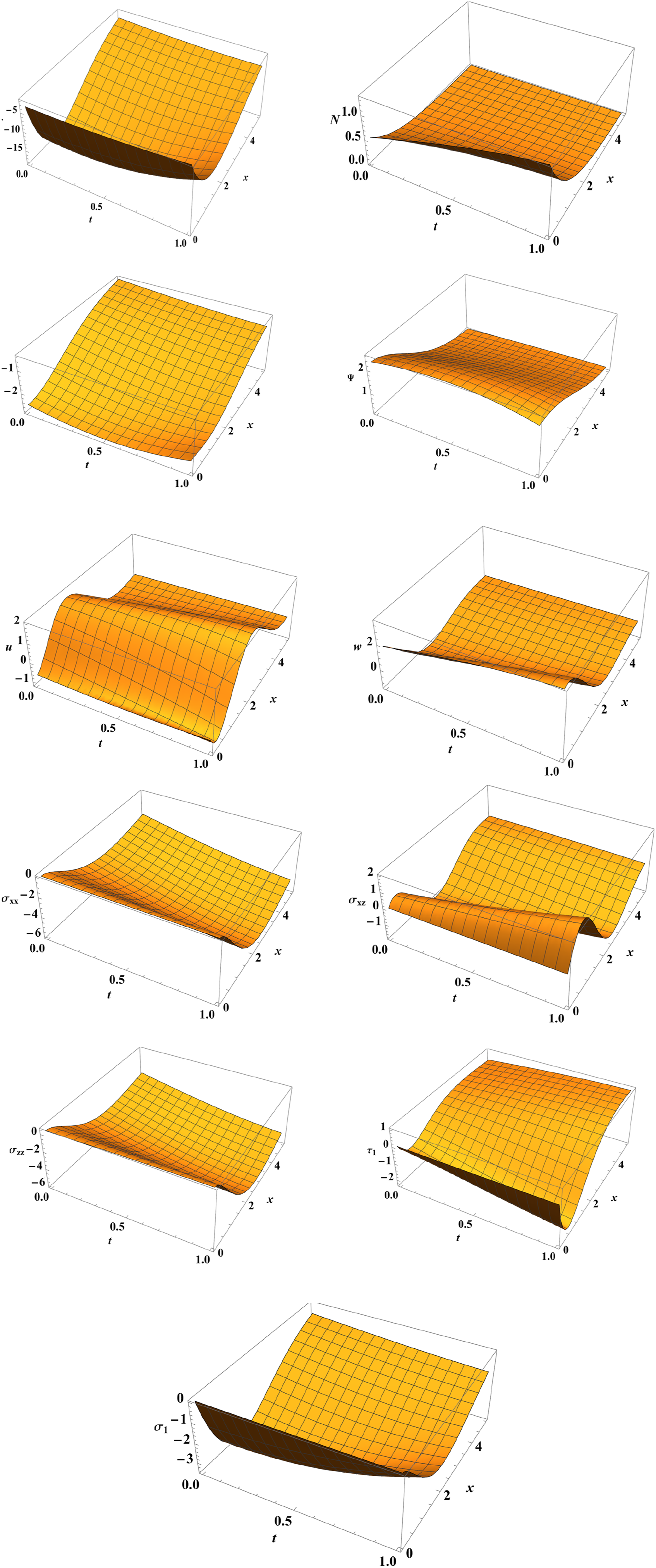
Figure 4 (the fourth category) shows the main physical fields against the horizontal distance with time . All calculations are carried out under the thermoelastic couples for Silicon (Si) material. From Figure 4, we have concluded that there is a significant effect of the silicon material on the following parameters. Finally, it appears from Fig., which displays the obtained variables in 3D that indicate a strong impact of the photothermal, a double porosity, and semiconducting on the wave propagation phenomenon and ensure the behavior with the external parameters' impact.
Three-dimensional (3D) representations of the main physical fields as functions of both horizontal distance and time under the photo-thermoelasticity theory with double porosity based on the Lord-Shulman (L-S) model. The plots illustrate the dynamic evolution of temperature, carrier density, displacement components, stress components, and equilibrated stresses, highlighting the spatiotemporal variations in wave propagation. The results reveal the strong influence of photothermal excitation, double porosity effects, and semiconductor properties on the behavior of the physical fields, emphasizing their complex interdependencies over time.
The interplay between thermoelastic and thermoelectric effects has significant implications for semiconductor devices. Thermoelectric interactions, where temperature gradients induce charge carrier movement, are critical in thermoelectric energy harvesters and cooling technologies. In semiconductor transistors and integrated circuits (ICs), these effects can influence carrier mobility and electrical performance, particularly in high-power applications. On the other hand, thermoelastic coupling, where temperature fluctuations generate mechanical stresses, is a major concern in device reliability and failure analysis. Laser-induced thermal expansion can lead to stress-induced delamination, fatigue, or cracking in semiconductor materials. Understanding these effects is crucial for thermal management strategies in modern semiconductor technologies, ensuring improved performance, stability, and longevity of electronic components.
The findings of this study have direct implications for semiconductor technology, particularly in applications where photo-thermoelastic interactions play a critical role. The observed thermal wave propagation behavior directly affects heat dissipation and temperature regulation in semiconductor devices, a key factor in preventing overheating and ensuring long-term stability in integrated circuits (ICs) and MEMS components. Furthermore, the mechanical stress distribution resulting from thermoelastic wave interactions can contribute to material fatigue and microcrack formation, affecting the reliability of semiconductor structures under repeated thermal cycling. Additionally, the coupling between photo-induced charge carriers and mechanical wave dynamics is particularly relevant for optoelectronic applications, including photodetectors, photovoltaic systems, and laser-driven semiconductor technologies. These insights highlight the importance of modeling photo-thermoelastic wave behavior to optimize the design and performance of modern semiconductor materials and devices.
Conclusion
This study presents a novel mathematical model for the propagation of photo-thermoelastic waves in a double porosity semiconductor medium using the Lord-Shulman (L-S) thermoelasticity theory. The model integrates photoelectric, thermoelastic, and thermoelectric effects, allowing for a comprehensive analysis of wave interactions in semiconductors. The governing equations were derived and solved using harmonic wave analysis, and numerical simulations were conducted to study the influence of thermoelastic coupling, thermoelectric coupling, and time-dependent effects. The results show that double porosity significantly impacts stress distribution, temperature evolution, and charge carrier dynamics, making it a key factor in semiconductor behavior. The study demonstrates that thermoelastic and thermoelectric coupling play a crucial role in wave propagation, affecting wave speed, amplitude, and attenuation. The graphical analysis highlights the influence of time evolution and material parameters, with all physical quantities satisfying the imposed boundary conditions. The findings suggest that this model can be applied to semiconductor technologies, optoelectronics, and renewable energy applications, such as photovoltaic cells, electronic circuits, and energy storage systems. Additionally, the insights gained could benefit geophysical applications, including earthquake engineering and subsurface exploration. While this research provides a strong theoretical foundation, future work should explore nonlinear effects, three-dimensional modeling, and experimental validation to enhance its applicability. Numerical methods could also be extended to solve more complex systems beyond the normal mode technique. Overall, this study advances the understanding of wave propagation in semiconductor materials with double porosity, offering valuable insights for materials science, engineering, and applied physics. While this study provides a comprehensive theoretical and numerical analysis of photo-thermoelastic wave propagation in double porosity semiconductor media, experimental validation remains an important next step. Future research could involve laser ultrasonics, photoacoustic methods, or semiconductor interferometry to measure wave propagation in structured semiconductor materials. Such experimental studies would provide valuable insights into the accuracy of the proposed model and its applicability in real-world semiconductor technologies.
The findings of this study have direct engineering implications for the design and optimization of semiconductor materials and devices. The insights into photo-thermoelastic wave propagation can inform the development of semiconductor structures with tailored porosity and thermal properties, improving heat dissipation, mechanical durability, and overall device performance. In optoelectronic applications, such as photodetectors and laser-driven semiconductor systems, the study provides a deeper understanding of thermal and mechanical wave interactions, which are critical for signal integrity and device efficiency. Additionally, in high-power electronics, where overheating and thermal stresses are major concerns, the results offer guidance on material selection and structural engineering to enhance thermal management and mechanical reliability.
While the proposed mathematical framework provides valuable insights, it also has certain limitations. The study assumes homogeneous material properties and a linear thermoelastic response, which may not fully capture complex, nonlinear, or nanostructured semiconductor materials. Furthermore, the simplified boundary conditions used in the model may not fully represent real-world semiconductor device interfaces, where surface effects and anisotropic behaviors could play a significant role. The numerical analysis relies on harmonic wave analysis and discretization methods, which, while effective, may introduce approximations that limit the model’s applicability to highly transient or strongly nonlinear regimes. Future research should explore nonlinear effects, three-dimensional modeling, and experimental validation to further refine and validate the proposed framework for practical semiconductor applications.
Footnotes
Acknowledgment
The authors present their appreciation to King Saud University for funding the publication of this research through the Researchers Supporting Project number (RSPD2025R946), King Saud University, Riyadh, Saudi Arabia.
ORCID iD
Khaled Lotfy
Author contributions
All authors have equally participated in the preparation of the manuscript during the implementation of ideas, findings results, and writing of the manuscript.
Funding
The author(s) disclosed receipt of the following financial support for the research, authorship, and/or publication of this article: This work was supported by the King Saud University (RSPD2025R946).
Conflicting interests
The authors declared no potential conflicts of interest with respect to the research, authorship, and/or publication of this article.
Data Availability Statement
Current submission does not contain the pool data of the manuscript but the data used in the manuscript will be provided on request.
Appendix
References
1.
BiotMA. Mechanics of deformation and acoustic propagation in porous media. J Appl Phys1962; 33(4): 1482–1498.
2.
BarenblattGIZheltovIPKochinaIN. Basic concepts in the theory of seepage of homogeneous liquids in fissured rocks [strata]. J Appl Math Mech1960; 24(5): 1286–1303.
3.
WarrenJERootPJ. The behavior of naturally fractured reservoirs. Soc Petrol Eng J1963; 3(3): 245–255.
4.
CoussyO. *Mechanics of porous continua*. John Wiley & Sons, 1995.
5.
RiceJRClearyMP. Some basic stress diffusion solutions for fluid-saturated elastic porous media with compressible constituents. Rev Geophys1976; 14(2): 227–241.
6.
BerrymanJGWangHF. Elastic wave propagation and attenuation in a double-porosity medium. J Acoust Soc Am1995; 97(1): 292–304.
7.
ChenZHuanGMaY. *Computational methods for multiphase flows in porous media*. SIAM, 2016.
8.
KhaliliNSelvaduraiAPS. *Mechanics of poroelastic media. Springer, 2003.
9.
DetournayEChengAHD. Fundamentals of Poroelasticity, Analysis and Design Methods, Pergamon. 1993; 2: 113–171. doi:10.1016/B978-0-08-040615-2.50011-3.
10.
LordHWShulmanY. A generalized dynamical theory of thermoelasticity. J Mech Phys Solid1967; 15(5): 299–309.
11.
ChandrasekharaiahDS. Thermoelasticity with second sound: a review. Appl Mech Rev1986; 39(3): 355–376.
12.
TzouDY. A unified field approach for heat conduction from macro- to micro-scales. J Heat Tran1995; 117(1): 8–16.
13.
AbbasIAZenkourAM. LS model for electro-magneto-thermoelastic response in a medium. J Comput Theor Nanosci2014; 11(2): 380–386.
14.
EzzatMAEl-BaryAA. Magneto-thermoelasticity with thermoelectric properties and fractional derivative heat transfer. Phys B Condens Matter2018; 538: 63–72.
15.
RaddadiMHLotfyKEl-BaryAA, et al.A novel model of photoacoustic and thermalelectronic waves in semiconductor material. AIP Adv. 2025; 15(1): 015207. doi:10.1063/5.0236367.
16.
El-SapaSLotfyKElidyES, et al.Photothermal excitation process in semiconductor materials under the effect moisture diffusivity. Silicon2023; 15(10): 4171–4182.
17.
LotfyKElidyESEl-BaryAA, et al.A novel photo-elasto-thermodiffusion waves model based on electron-hole deformation of semiconductor medium. Waves Random Complex Media. 2022; 1–18. doi:10.1080/17455030.2022.2146777.
JiangYGaoYWangD, et al.Modelling of two-dimensional seismic waves in double-porosity media using the frequency-domain finite-element method. Geophys J Int2025; 240(1): 400–425.
20.
MahatoCSBiswasS. Rayleigh waves in thermoelastic medium based on a novel nonlocal three-phase-lag diffusion model with double porosity. Int J Numer Methods Heat Fluid Flow2025; 35(1): 3–46.
21.
KhatriMDeswalSKalkalKK. Fiber-reinforced material in a double porous transversely isotropic medium with rotation and variable thermal conductivity. Acta Mech2025; 236: 1819–1843.
22.
AbouelregalASedighiH. A new insight into the interaction of thermoelasticity with mass diffusion for a half-space in the context of Moore–Gibson–Thompson thermodiffusion theory. Appl Phys A2021; 127: 582.
23.
PakdamanMTadi BeniY. Size-dependent generalized piezothermoelasticity of microlayer. Journal of Applied and Computational Mechanics2025; 11(1): 223–238.
24.
Merino VelaJBrunesiENascimbeneR. Derivation of floor acceleration spectra for an industrial liquid tank supporting structure with braced frame systems. Eng Struct2018; 171: 105–122.
25.
PaveseALaneseINascimbeneR. Seismic vulnerability assessment of an infilled reinforced concrete frame structure designed for gravity loads. J Earthq Eng2016; 21(2): 267–289.
26.
LotfyKElshazlyIHalouaniB, et al.Rotational effect on fractional order thermal-acoustic wave propagation in nano-scale hydro-semiconductors. Struct Eng Mech2024; 92(6): 575–585.
27.
AlshehriHLotfyK. A novel hydrodynamic semiconductor model under Hall current effect and laser pulsed excitation. Phys Fluids2024; 36(12): 122005.
28.
SharmaASharmaJSharmaY. Modeling reflection and transmission of acoustic waves at a semiconductor: fluid interface. Adv Acoust Vib2012; 2012: 637912.
29.
HobinyAAbbasI. A GN model on photothermal interactions in a two-dimensions semiconductor half space. Results Phys2019; 15: 102588.
30.
KumarRPathaniaVGuptaV, et al.Thermoelastic modeling with dual porosity interacting with an inviscid liquid. Journal of Applied and Computational Mechanics2024; 10(1): 111–124.
31.
AwwadEAbouelregalAAttaD, et al.Photo-thermoelastic behavior of a functionally graded Semiconductor medium excited by thermal laser pulses. Phys Scr2022; 97(3): 030008.
32.
NasrMAbouelregalA. Light absorption process in a semiconductor infinite body with a cylindrical cavity via a novel photo-thermoelastic MGT model. Arch Appl Mech2022; 92(5): 1529–1549.
33.
HosseiniSZhangC. Plasma-affected photo-thermoelastic wave propagation in a semiconductor Love–Bishop nanorod using strain-gradient Moore–Gibson–Thompson theories. Thin-Walled Struct2022; 179: 109480.
34.
LataPKaurI. Effects of Hall current in a transversely isotropic magnetothermoelastic two temperature medium with rotation and with and without energy dissipation due to normal force. Struct Eng Mech2019; 57(1): 91–103.
35.
LataPKaurI. Effect of hall current in Transversely Isotropic magneto thermoelastic rotating medium with fractional order heat transfer due to normal force. Advances in Materials Research2019; 7(3): 203–220.
36.
MarinMMarinescuC. Thermoelasticity of initially stressed bodies. Asymptotic equipartition of energies. Int J Eng Sci1998; 36(1): 73–86.
37.
MarinMAbbasIKumarR. Relaxed Saint-Venant principle for thermoelastic micropolar diffusion. Struct Eng Mech2014; 51(4): 651–662.
38.
AilawaliaPNarahNS. Effect of rotation in a generalized thermoelastic medium with hydrostatic initial stress subjected to ramp type heating and loading. Int J Thermophys2009; 30: 2078–2097.
39.
MarinMÖchsnerABhattiM. Some results in Moore-Gibson-Thompson thermoelasticity of dipolar bodies, (ZAMM) Zfur Angew. Math. Mech2020; 100(12): e202000090.
40.
SurAKanoriaM. Thermoelastic interaction in a viscoelastic functionally graded half-space under three-phase-lag model. European Journal of Computational Mechanics2014; 23(5–6): 179–198.
41.
BachherMSarkarNLahiriA. Generalized thermoelastic infinite medium with voids subjected to a instantaneous heat sources with fractional derivative heat transfer. Int J Mech Sci2014; 89: 84–91.
42.
ZenkourAAbbasI. Magneto-thermoelastic response of an infinite functionally graded cylinder using the finite element method. J Vib Control2014; 20(12): 1907–1919.
43.
IqbalMBirkCOoiE, et al.Thermoelastic fracture analysis of functionally graded materials using the scaled boundary finite element method. Eng Fract Mech2022; 264: 108305.
44.
KaurISinghK. Functionally graded nonlocal thermoelastic nanobeam with memory-dependent derivatives. SN Appl Sci2022; 4: 329.
45.
LotfyKElidyESTantawiRS. Photothermal excitation process during hyperbolic two-temperature theory for magneto-thermo-elastic semiconducting medium. Silicon2021; 13: 2275–2288.
46.
KhaliliN. Coupling effects in double porosity media with deformable matrix. Geophys Res Lett2003; 30(22): 2153–2155.