




Abstract
This study investigates the propagation of coupled waves in a nonlocal hygro-piezo-photo-thermoelastic semiconductor medium subjected to dual-moisture diffusion and fractional-order heat conduction. The mathematical model incorporates the effects of long-range nonlocal interactions, piezoelectric coupling, photothermal excitation, and dual-moisture transport mechanisms. A time-fractional Caputo derivative is introduced into the energy equation to account for memory-dependent heat conduction. The coupled system of partial differential equations governing displacement, temperature, carrier density, electric potential, and moisture concentration is analytically solved using the normal mode analysis. Numerical results are presented for cadmium selenide (CdSe) semiconductor material to evaluate the impact of fractional order, nonlocal parameter, pulsed laser excitation, and dual-diffusion effects on wave characteristics. The findings reveal that fractional and nonlocal effects significantly influence wave speed, attenuation, and coupling behavior, offering essential insights for the design of next-generation MEMS, sensors, and optoelectronic devices operating in humid or thermally transient environments.
Keywords
Introduction
The analysis of wave propagation in semiconductor media under the combined influences of thermoelastic, piezoelectric, photothermal, plasma, and moisture diffusion mechanisms is of vital importance in the development of modern microelectronic, optoelectronic, and MEMS/NEMS technologies.1–3 These devices often operate under multiphysical loading conditions, including thermal gradients, moisture absorption, mechanical vibrations, and photonic excitation. The dynamic behavior of such systems becomes particularly intricate when interactions among thermal, electrical, photothermal, piezoelectric, and hygrothermal fields are considered simultaneously. These systems typically operate in complex environments, where mechanical vibrations, heat loads, photonic excitations, and moisture exposure act simultaneously. The mutual coupling between mechanical, thermal, electrical, and diffusive processes in such media gives rise to intricate wave behaviors that directly affect device functionality, reliability, and service life. This complexity is especially pronounced under extreme conditions, including transient heating, high-frequency oscillations, and moisture infiltration. The accurate modeling of these interactions is essential for predicting device performance, enhancing reliability, and minimizing failure under real-world conditions.4–6
Significant advancements have been made in the study of hygrothermal and thermoelastic interactions within solid media. Earlier investigations focused on the interplay between temperature and moisture transport in materials such as composites, polymers, and geomaterials, where the coupling of heat and moisture fluxes was found to play a critical role in stress generation and redistribution.1–6 The foundational principles of thermoelasticity were first introduced by Biot, 7 forming the basis for analyzing thermomechanical responses in solids. These principles were later extended through generalized thermoelastic theories proposed by Lord and Shulman 8 and Green and Lindsay, 9 which allowed for more accurate modeling of wave propagation involving thermal, electromagnetic, and mechanical fields.10–14 The integration of piezoelectric effects into thermoelastic models was pioneered by Nowacki15,16 and subsequently enhanced by Mindlin17,18, leading to a broader understanding of electro-thermo-mechanical coupling in piezoelectric media. Chandrasekharaiah 19 contributed further by introducing models with finite thermal wave speeds, facilitating more realistic representations of transient heat conduction. In the context of modern microscale applications, these classical theories are being revisited with the inclusion of fractional-order heat conduction models, which incorporate memory-dependent behavior into the energy transport process. This extension, along with the consideration of a thermal decay parameter, enables improved representation of non-Fourier and relaxation phenomena under high-frequency or pulsed thermal loading conditions.
The mechanical behavior of semiconductor materials has been widely investigated due to their critical role in electronic and optoelectronic applications. One of the early seminal works by Mindlin 20 emphasized the impact of piezoelectric coupling in semiconductors, which laid the foundation for subsequent analyses exploring the dynamic effects of photothermal excitation and plasma wave interactions on wave behavior in such materials.21–25 Advances in this field were further made by Khamis et al. 22 and Lotfy, 26 who analyzed wave propagation under dual-phase-lag heat conduction and memory-dependent thermal models, 27 emphasizing the need to account for non-Fourier effects. Building on this, Hobiny and Abbas 28 extended the theoretical framework by employing fractional-order thermoelasticity, allowing the description of heat conduction with memory effects and anomalous diffusion, which are particularly relevant at micro- and nanoscales. Despite the contributions of these studies, many of them relied on classical elasticity assumptions and did not address nonlocal elastic effects, which are critical for modeling wave dispersion and attenuation in miniature semiconductor structures.
To overcome these limitations, the present work introduces an advanced theoretical framework that integrates nonlocal elasticity into a fractional-order piezo-photo-hygrothermoelastic model for orthotropic semiconductors.29–31 This model captures the intricate interplay between elastic deformation, piezoelectric coupling, photothermal excitation, plasma oscillations, and moisture transport, while incorporating the scale-sensitive features of nonlocal continuum mechanics. 32 The addition of a nonlocal kernel in the stress-strain relations allows for more accurate prediction of dispersive wave modes, which is particularly relevant in the design of MEMS/NEMS devices with characteristic micro- or nanoscale dimensions.33–35 Although prior models have addressed thermoelastic or hygrothermal effects in semiconducting or composite media, the full coupling of nonlocal elasticity with fractional-order heat conduction and moisture diffusion remains scarcely addressed in the literature.36,37 The present study fills this critical research gap by formulating a unified model that combines nonlocality, thermal memory, and decay behavior to more accurately represent wave propagation in complex semiconductor environments. 38
In recent years, the propagation of waves in semiconductor and elastic media has been widely studied, particularly in the presence of multiphysics phenomena such as porosity, scale effects, nonlocal behavior, and thermo-piezoelectric coupling. Investigations into single- and double-porosity structures have revealed their substantial influence on shear-horizontal (SH) wave characteristics in periodic porous lattices, significantly modifying wave profiles through porosity-induced heterogeneity. 39 Similarly, the effect of dual pore connectivity in micropolar thermoelastic materials has been examined, where wave dispersion and attenuation were found to be strongly dependent on microscale geometry and material parameters. 40 Coupled moisture and thermal transport in orthotropic hygrothermo-piezoelastic media has also received attention, offering important insights into moisture-temperature interaction mechanisms in engineered materials. 41 The role of nonlocal effects in shear wave propagation has been particularly emphasized in fiber-reinforced poroelastic composites, showing that interfacial discontinuities and nonlocality greatly impact stability and wave speed. 42
Further, the influence of thermal memory on wave dynamics in advanced semiconductors has been explored through memory-dependent frameworks such as the Moore–Gibson–Thompson photo-thermoelastic model, highlighting the delay characteristics in energy transport under rapid excitations. 43 Additional work on double-porosity magneto-thermoelastic media incorporating microtemperature effects and initial stress conditions has underscored the significance of relaxation time and structural non-uniformity in thermal stress prediction. 44 Rayleigh wave behavior in nonlocal piezo-thermoelastic solids with voids under thermal memory has been studied as well, revealing complex interactions between nonlocal stress distribution and delayed heat conduction. 45 Other studies have considered the role of flexoelectric phenomena and viscoelastic coatings on surface waves in geomaterials, demonstrating how surface-bound effects and material damping alter wave dispersion. 46 Notably, fractional-order and memory-based models have also been applied to evaluate wave reflection in pre-stressed solids with dual porosity, reinforcing the need to account for both material heterogeneity and thermal relaxation in wave modeling. 47
Although the present model assumes material homogeneity and ideal boundary conditions, these simplifications enable clear assessment of coupled field interactions, serving as a foundational framework for analyzing multiphysical behavior in realistic semiconductor applications.
The modeling of wave propagation has been greatly enhanced through the incorporation of micropolarity, microstretch elasticity, and moisture diffusion effects, enabling more comprehensive descriptions of wave behavior in complex elastic environments. Despite this progress, integrated models that consider the simultaneous impact of nonlocal elasticity, fractional-order heat conduction, decay behavior, and anisotropic piezoelectricity in semiconductor systems remain relatively scarce. 48 The current study addresses this gap by developing a hybrid theoretical framework that brings together nonlocal stress effects, memory-based thermal conduction, and dual-moisture diffusion mechanisms in an orthotropic semiconductor setting. 49 This formulation is well-suited for micro- and nanoscale applications where classical theories fail to accurately predict dynamic responses. While earlier efforts have examined piezo-photo-thermoelastic and hygrothermoelastic wave interactions, they have typically neglected the vital role of nonlocal stress and fractional-order thermal diffusion in shaping wave speed, damping, and field coupling.
By integrating these advanced effects into a unified model, the present work offers a more realistic representation of wave propagation behavior in semiconductor devices subjected to combined hygrothermal, photothermal, and piezoelectric excitations. This approach captures the inherent physics of microstructured media more effectively and provides refined tools for analyzing wave dispersion, attenuation, and field interactions under short-duration or high-frequency excitations. The present study aims to develop a comprehensive framework that captures the influence of fractional-order heat conduction and nonlocal elasticity on the dynamic behavior of semiconductor materials subjected to coupled thermal, photothermal, piezoelectric, and moisture diffusion effects. A key novelty of this work lies in the integration of fractional derivatives into the heat conduction equation, enabling the model to account for memory-dependent thermal relaxation and decay phenomena, critical under transient heating or laser excitation. Unlike previous models limited to classical Fourier or dual-phase-lag formulations, the current approach introduces both nonlocal spatial interactions and thermal memory effects, offering a more realistic depiction of wave propagation in micro- and nanoscale semiconductors. To analytically solve the coupled field equations governing displacement, temperature, carrier density, moisture concentration, stress, and electric potential, a normal mode technique is employed. Numerical simulations are performed using the material properties of cadmium selenide (CdSe) to examine the effects of the fractional order, nonlocality, and decay rate on wave profiles. One major advantage of the proposed model is its ability to capture dispersive and attenuated wave behavior that cannot be adequately explained by traditional theories. The results demonstrate that both nonlocal elasticity and the fractional heat decay parameter significantly influence wave amplitudes, propagation speeds, and energy dissipation across the coupled fields. Notably, as the fractional order decreases or the decay parameter increases, the system exhibits slower thermal diffusion, stronger attenuation, and enhanced coupling between thermo-mechanical and moisture effects. These findings underscore the importance of considering scale-dependent and memory-driven effects in the design and analysis of advanced semiconductor devices operating under multiphysical stimuli. The proposed model thus bridges a key gap in the literature by capturing physical behaviors overlooked in earlier studies, particularly in high-frequency and miniaturized applications.
Basic equation
This section presents the fundamental governing equations for the propagation of coupled piezo-photo-hygrothermoelastic disturbances in an orthotropic nonlocal semiconductor, incorporating the effects of fractional-order heat conduction and a thermal decay parameter. The analysis considers a semi-infinite, homogeneous orthotropic semiconductor medium that simultaneously responds to mechanical stress, thermal fields, electric charges, and moisture diffusion. The surface of the material is subjected to external photothermal stimulation and moisture flux, introducing complex multiphysical interactions. The medium is assumed to possess piezoelectric properties and to be both electrically and thermally conductive, with its thermal conductivity varying with temperature. To more accurately capture heat transport phenomena in such environments, the classical heat conduction law is generalized using a fractional time derivative, accounting for memory effects and nonlocal thermal responses. Additionally, a decay parameter is introduced to reflect the relaxation behavior of thermal disturbances over time. The coordinate system is defined such that the x-axis is oriented normal to the material surface and the z-axis lies along the plane of the surface, forming a semi-infinite geometry with (x ≥ 0) (see Figure 1). The main physical fields governing the behavior of the system include the displacement components Schematic of the problem.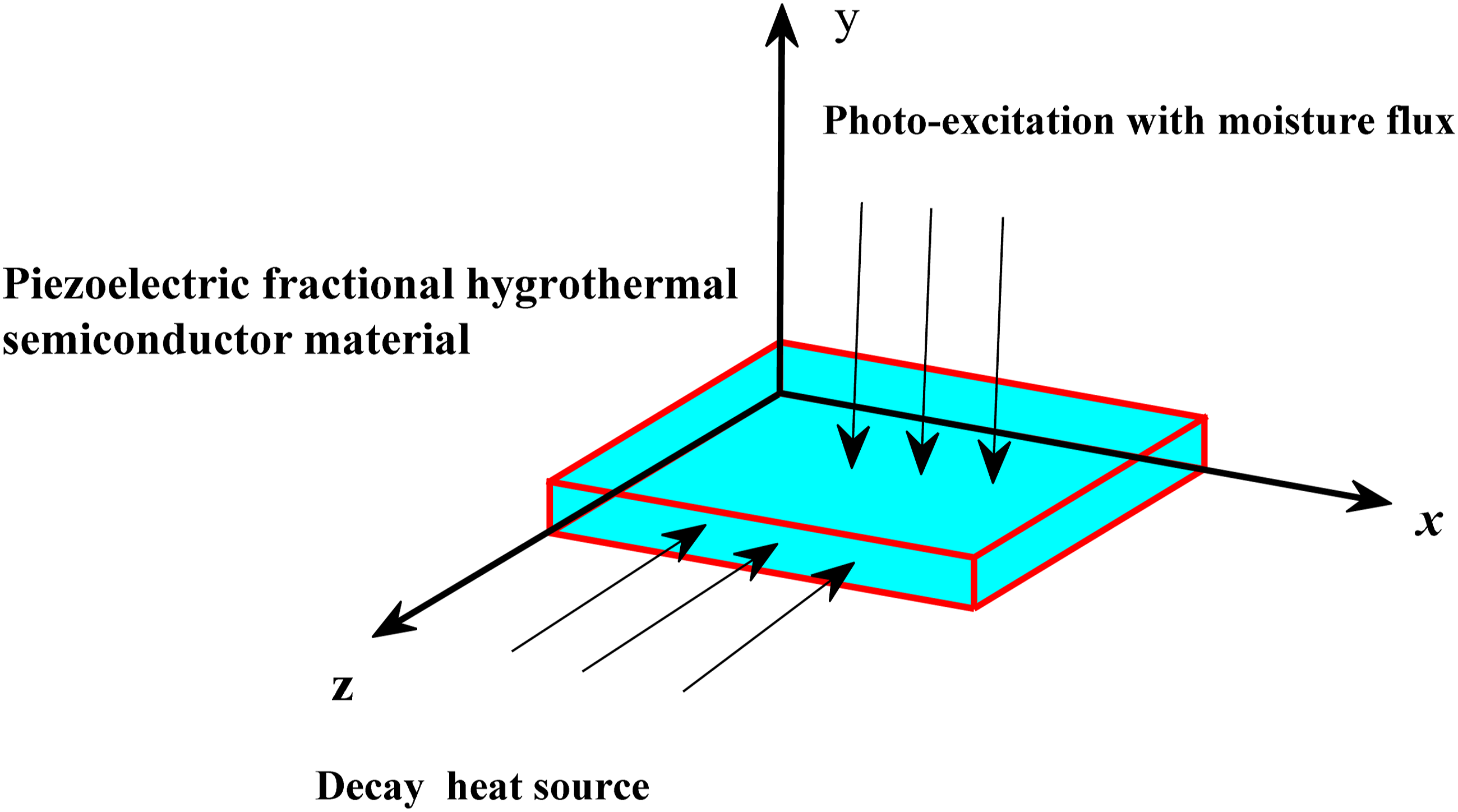
The constitutive relationship linking stress, strain, temperature, and moisture in an orthotropic nonlocal semiconductor with piezo-hygrothermoelastic coupling is expressed as follows:


Nonlocal stress contribution modeling small-scale effects via the strain is • The Dufour effect represents the influence of moisture concentration gradients on the heat flux. • The Soret effect characterizes the influence of temperature gradients on the moisture flux.
Accordingly, the expressions for the total heat flux
Modified Heat Flux (Including Dufour Effect):

Modified Moisture Flux (Including Soret Effect):

These generalized flux laws indicate that temperature and moisture fields are interdependently coupled through the cross-diffusion phenomena. Incorporating these terms significantly improves the accuracy of predictive models for moisture and heat transport in semiconducting and porous hygroscopic media.
Here,


Equations (5) and (6) lead to the following result:

By incorporating the Thomson effect into Fourier’s heat conduction law and accounting for the impact of plasma on thermal transport, while neglecting the Peltier effect, the heat conduction model for semiconductors can be reformulated as follows51,52:

Upon taking the derivative of equation (8) concerning

The thermal equation is influenced by both plasma and moisture content, while the plasma transport is affected by temperature and moisture gradients, suitable for piezo-hygro-photo-semiconductor systems. The combination of equations (9) and (10) provides the fundamental relation for thermal and plasma transport in the piezoelectric hygrothermal semiconductor framework or the fractional-order heat conduction equation with Caputo derivative is
54
:

Similarly, the equation governing moisture and plasma diffusion within the piezoelectric hygrothermal semiconductor medium can be formulated as follows or fractional-order moisture-plasma diffusion equation
31
:

These equations generalize classical heat, moisture, and carrier transport by incorporating fractional-order time derivatives, which capture the memory effects relevant in nanoscale, heterogeneous, or nonlocal media. In modern semiconductor technologies, especially those involving MEMS/NEMS, flexible electronics, and optoelectronic systems, environmental factors such as humidity play a critical role in device behavior and reliability. Moisture ingress can alter material properties, induce hygrothermal stresses, and degrade electronic performance by affecting carrier mobility and dielectric integrity. These effects become even more pronounced under localized heating, such as laser pulse excitation, which enhances moisture diffusion and thermo-mechanical coupling. Therefore, incorporating dual-moisture diffusion into the theoretical framework is essential for accurately capturing the complex interactions among thermal, photothermal, piezoelectric, and hygrothermal fields. This addition ensures that the proposed model remains applicable to real-world operating conditions, particularly in high-precision micro/nanoscale semiconductor environments where environmental sensitivity is a major concern.
When


Equation of motion for heterogeneous piezoelectric nonlocal semiconductor material is32,33:

Problem formulation
To reformulate the governing equation of motion equation (14) for the fractional-order nonlocal wave propagation in hygro-piezo-photo-thermoelastic semiconductors with dual-moisture diffusion under 2D deformation when


Photoexcited carriers’ equation in 2D is
56
:

Fractional-order heat conduction (Caputo form) equation (10) in 2D is

The moisture-plasma diffusion equation that characterizes the coupled response in a piezoelectric hygrothermal semiconductor medium, derived from equation (11), can be expressed as follows:


Solution of the problem
The analytical solution in this study is obtained using the normal mode method, which assumes a linear, homogeneous, and semi-infinite domain. While this method effectively captures the core multiphysics coupling phenomena, it is limited in handling complex geometries, nonlinear field dependencies, or material heterogeneities that are prevalent in modern device architectures. To investigate the behavior of harmonic wave propagation in the medium under consideration, attention is given to waves traveling within the xz-plane. In order to derive analytical solutions for the coupled system described by equations (15)–(20), the normal mode approach is adopted. This technique involves expressing the physical field variables in a specific functional form, simplifying the analysis. The normal mode method is particularly effective for addressing wave propagation in Multiphysics settings, as it transforms the system of partial differential equations into a more manageable algebraic form. This transformation facilitates a direct examination of wave dispersion, damping, and interaction between the thermoelastic, piezoelectric, photothermal, and plasma-related phenomena, making it an ideal tool for complex semiconductor problems that incorporate nonlocal elasticity and hygrothermal coupling effects57–59:







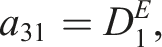


S

The detailed forms of the coefficients

Here,

Likewise, the corresponding solutions for the remaining physical variables can be expressed in the following form:










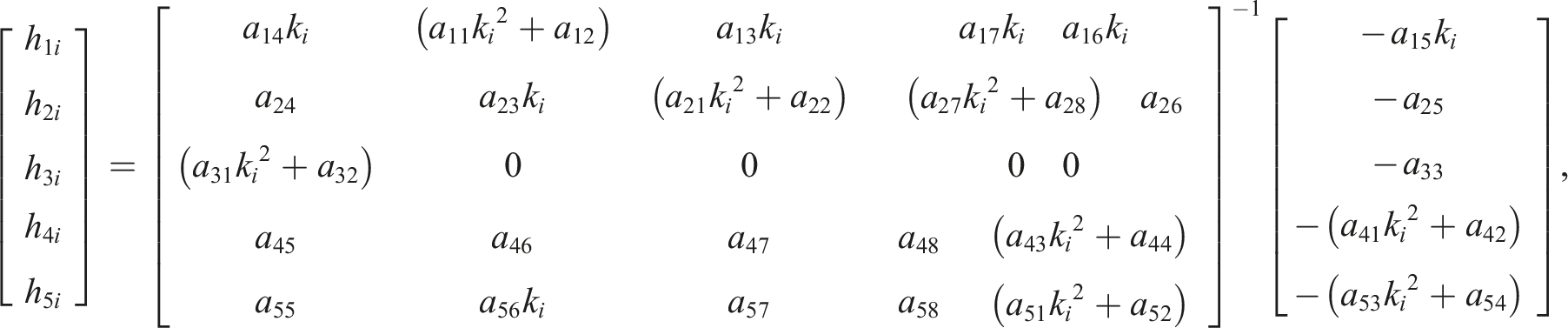




Boundary conditions
To solve the governing equations, it is essential to impose boundary conditions that accurately represent the physical scenario under investigation. In this study, the surface of the piezoelectric hygrothermal semiconductor medium is influenced by combined mechanical, thermal, plasma, moisture, and electrical effects. As a result, the boundary conditions are carefully designed to incorporate external influences such as heat and plasma excitation, moisture fluctuations, and mechanical loads. These conditions are fundamental in capturing the interplay among temperature, moisture concentration, charge carrier density, electric potential, and stress, critical factors in the analysis of real-world applications like thermal regulation, optoelectronic systems, and humidity-sensitive semiconductor technologies. The selected boundary conditions ensure the model’s physical validity and the attenuation of wave disturbances away from the excitation zone. To determine the integration constants
(I) Pulsed laser excitation induces rapid temperature variations in the target medium, often resulting in negligible heat loss to the surroundings due to the short interaction time. This makes pulsed laser stimulation particularly advantageous for absorption-based investigations. When a laser beam strikes the surface of a solid, it can initiate various energy-dependent physical phenomena. A fraction of the laser energy is absorbed and converted into heat, leading to localized thermal expansion and the generation of photothermal and photoacoustic effects. These thermal disturbances propagate through the material, causing measurable responses across multiple coupled fields. In this study, it is assumed that laser pulses are applied along the plane surface of the medium (e.g., at

The laser pulse energy per unit length is denoted by

(II) In the case of an electrically insulated surface, no electric flux is allowed to pass through the boundary. This condition is particularly relevant in semiconductor and piezoelectric devices where the surface is not in electrical contact with an external circuit or electrode. Physically, it implies that the normal component of the electric displacement field vanishes at the surface. Mathematically, this translates to a zero-gradient condition for the electric potential at the boundary, expressed as


This boundary condition ensures that the electric field remains tangential to the surface, preserving the charge neutrality of the boundary and accurately modeling insulated configurations commonly encountered in MEMS and microelectronic systems.
(III) Under laser excitation, a significant number of charge carriers (electrons and holes) can be generated near the surface of the semiconductor due to photon absorption. This phenomenon is especially prominent in optoelectronic and photoresponsive materials where the energy of the incident laser exceeds the semiconductor band gap. To accurately represent this effect, a boundary condition is imposed on the carrier density at the irradiated surface. It assumes a spatially and temporally localized carrier injection, typically modeled using a Gaussian pulse:


(IV) Traction-free surface condition is typical in many semiconductor and MEMS applications where the top surface is free-standing or exposed to air. In this scenario, the mechanical stress components normal and tangential to the surface must vanish at the boundary. Mathematically, this is expressed as


These boundary conditions ensure that no normal or shear forces act on the surface, allowing the material to deform naturally in response to internal thermal, piezoelectric, and diffusive effects. This assumption is critical for accurately capturing surface wave propagation, stress redistribution, and field interactions in the absence of external mechanical confinement.
(IIV) On the other hand, the surface tangent mechanical condition is




Numerical results and discussions
The CdSe medium physical constants.
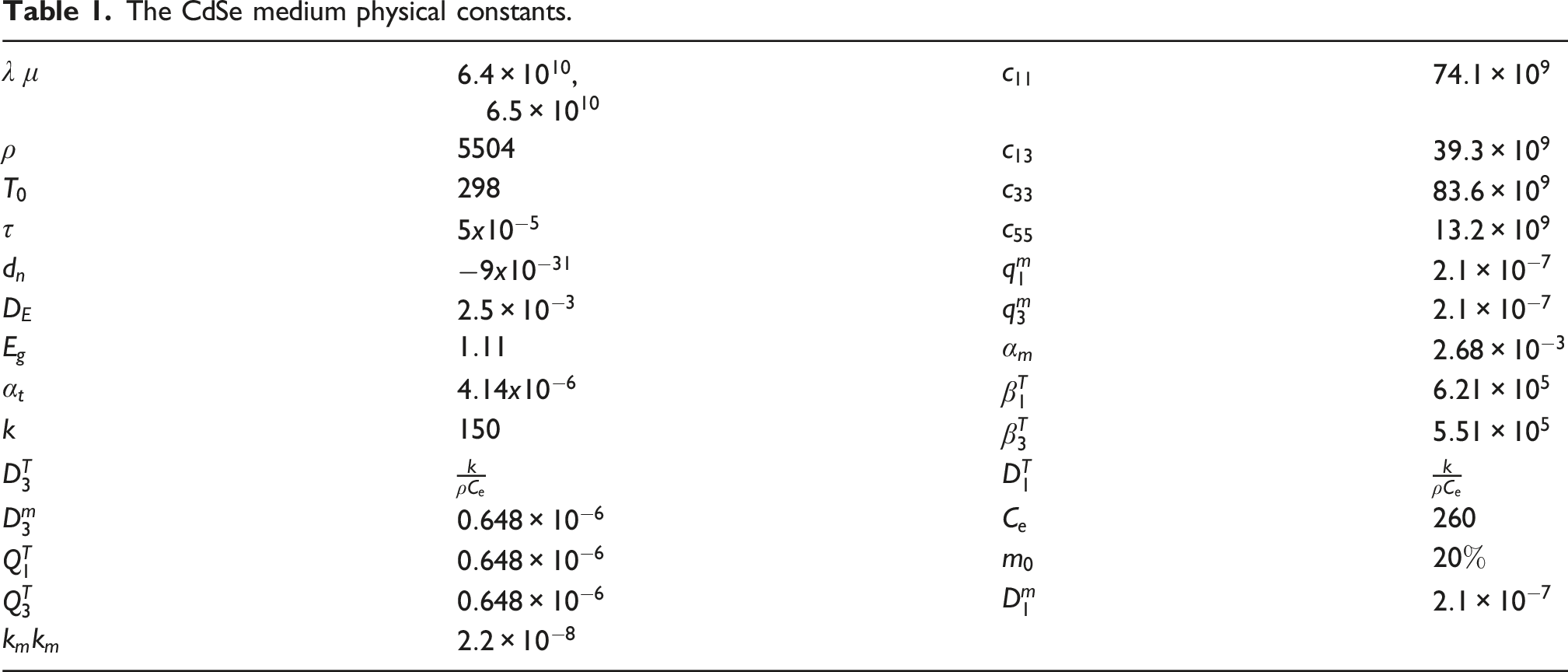
The laser parameters used in this problem can be represented by
Recent advancements in thermoacoustic and piezoelectric energy harvesting have demonstrated promising strategies for converting waste heat into usable electrical energy. Zhao 63 introduced a convection-driven Rijke–Zhao thermoacoustic-piezo system for efficient thermal energy harvesting, highlighting the potential of integrating thermal and acoustic fields in closed-loop devices. Further extending this concept, Zhao and Chew 65 developed a thermoacoustic engine that harnesses convective flow to amplify energy conversion performance, offering a foundation for compact and scalable energy systems. In a related study, Liu et al. 64 presented a theoretical model for a two-degree-of-freedom piezoelectric harvester with mechanical stoppers, illustrating how nonlinear constraints can enhance output stability and energy capture across varying frequencies. Collectively, these studies emphasize the value of multiphysics coupling—particularly thermo-piezoacoustic interactions, in advancing the design of efficient and responsive energy-harvesting devices.
Impact of fractional-order parameter
Figure 2 presents the spatial distribution of key physical fields in a nonlocal piezo-hygrothermal semiconductor medium exposed to pulsed laser excitation, illustrating the effect of the fractional-order parameter α\alphaα on wave propagation. Three cases are compared: Spatial profiles of the primary physical fields in a nonlocal piezo-hygrothermal semiconductor medium subjected to pulsed laser excitation for different values of the fractional-order heat conduction parameter α\alphaα (α = 0: classical theory, α = 0.5: fractional case, α = 1: Lord–Shulman model).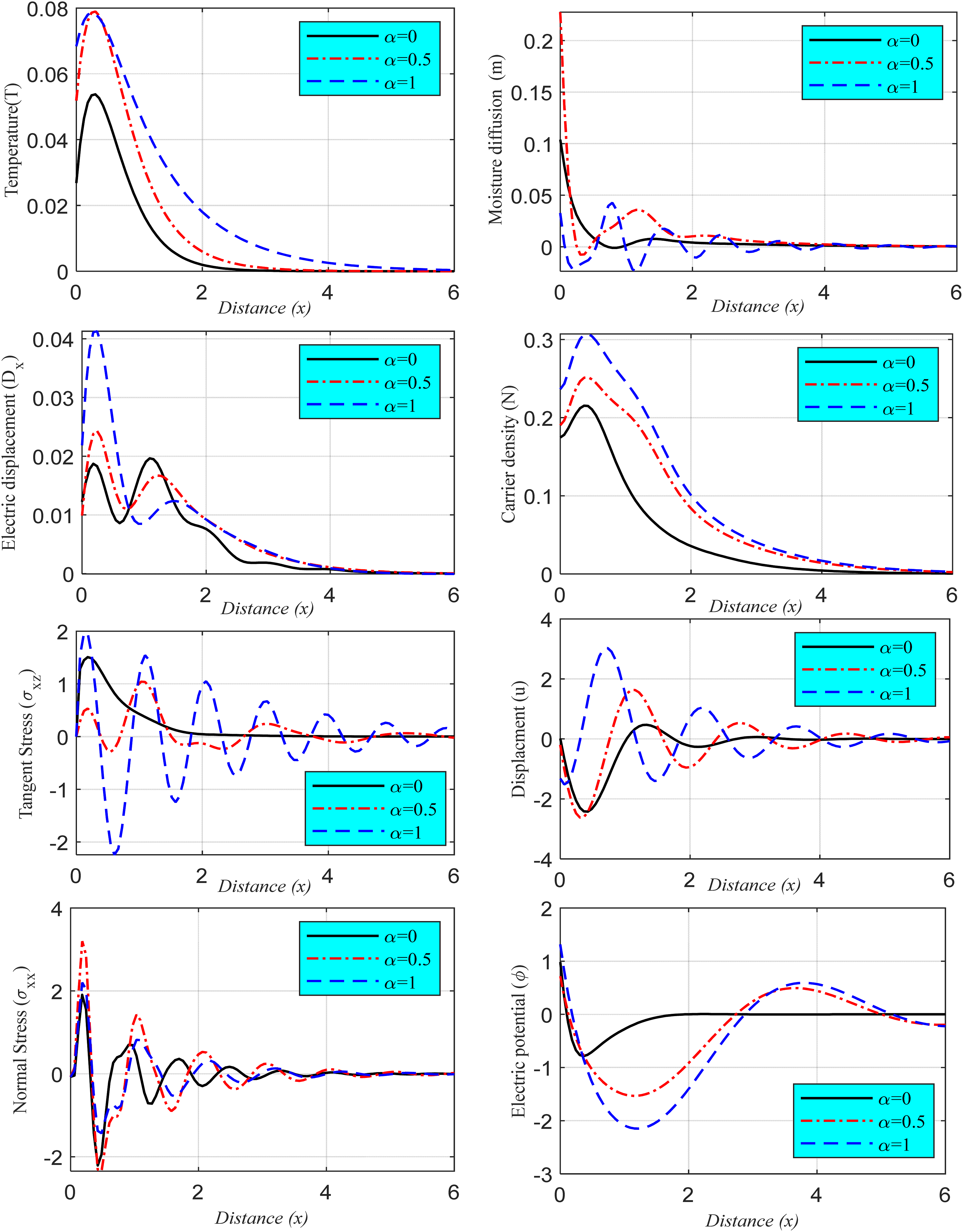
Impact of laser excitation
The provided Figure 3 illustrates the spatial variation of the primary physical fields in a nonlocal piezo-hygrothermal semiconductor medium under fractional-order heat conduction (α = 0.5), comparing cases with and without laser pulse excitation. Each subplot represents a key field quantity, temperature, moisture concentration, carrier density, current density, displacement, and electric potential, plotted against the normalized distance x. The subfigures illustrate the responses of temperature, moisture concentration, carrier density, current density, displacement, and electric potential with respect to normalized distance. The results reveal that laser excitation significantly enhances wave amplitudes, alters decay behavior, and strengthens the coupling between thermal, electrical, mechanical, and moisture fields due to the combined effects of photothermal input, nonlocal elasticity, and thermal memory. In the top-left subplot, the temperature distribution shows a significant rise when laser excitation is introduced, indicating localized heating near the surface and slower decay due to the thermal memory effect introduced by the fractional order. The moisture concentration (top-right) responds similarly; laser heating intensifies thermo-hydro coupling, leading to stronger oscillations and more pronounced diffusion behavior near the excitation zone. In the second row, carrier density and current density reveal the direct impact of photo-excitation, laser energy generates additional electron-hole pairs, raising both the carrier population and current magnitude. With laser input, the carrier density increases sharply near the surface and sustains a higher value over a greater depth, while the current density shows a steeper initial peak and more gradual decay, reflecting enhanced plasma mobility. The displacement field (third row, right) experiences more pronounced oscillations in the presence of laser excitation due to the additional photothermal stress and charge-driven deformation, which enhances elastic wave propagation in the medium. Without laser, the mechanical response is much milder, indicating reduced coupling among thermal, piezoelectric, and elastic components. Finally, the electric potential (bottom-right) is significantly amplified under laser excitation. The higher field amplitude and extended wave reach reflect increased carrier activity and electric field generation due to photothermal and piezoelectric effects. These observations affirm that laser excitation introduces energy that strengthens multiphysical coupling and wave dispersion in all fields. The thermal memory incorporated via the fractional parameter (α = 0.5) allows for non-instantaneous heat diffusion, which in turn prolongs thermal–mechanical–electrical interactions. Overall, the figure demonstrates that laser excitation enhances wave amplitudes, alters decay rates, and intensifies the coupling among the governing physical fields, all of which are essential for modeling realistic semiconductor behavior under dynamic thermal and optical loading. Spatial distributions of the main physical field variables in a nonlocal piezo-hygrothermal semiconductor medium under fractional-order heat conduction (α = 0.5), comparing the effects with and without laser pulse excitation.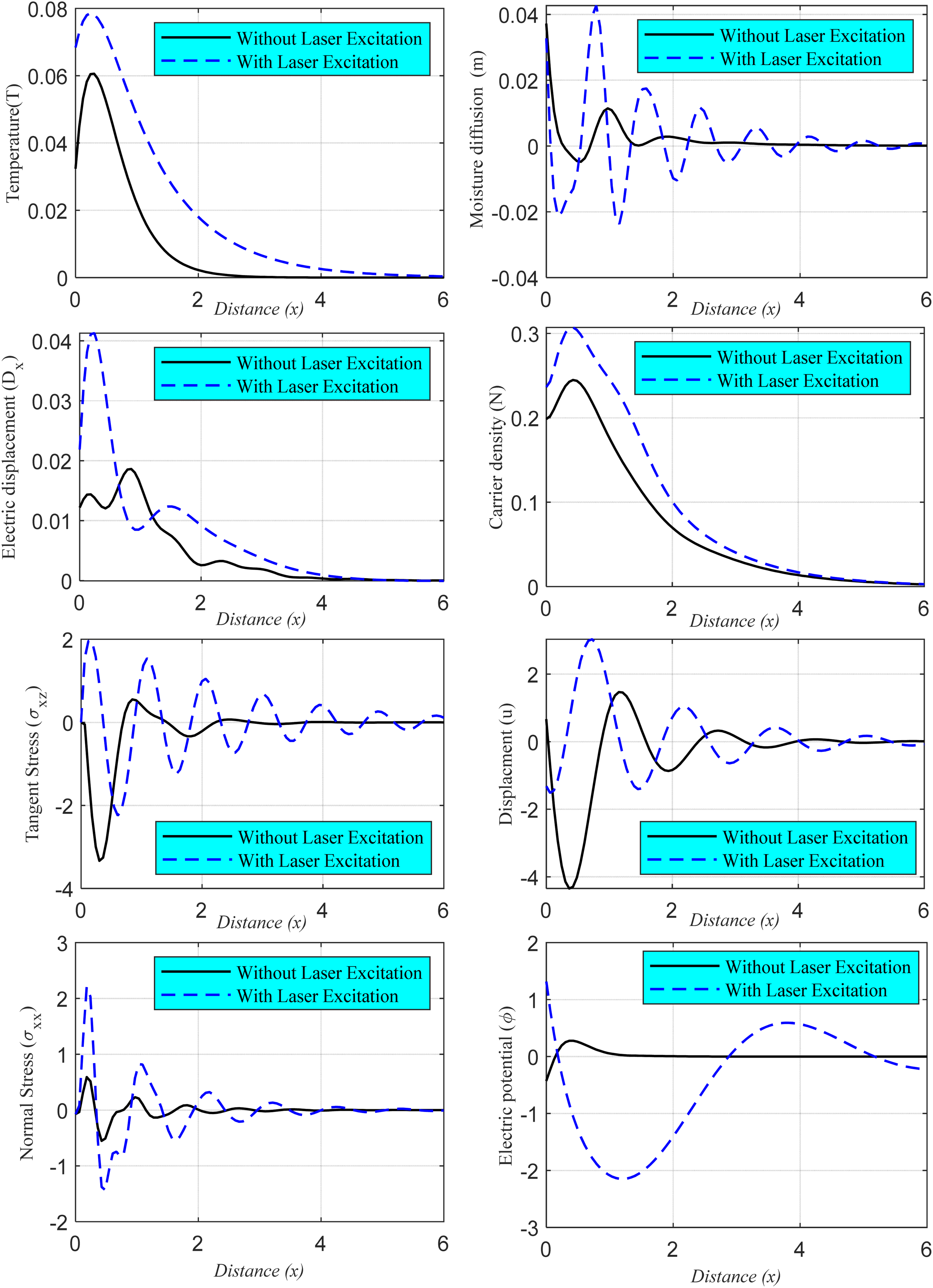
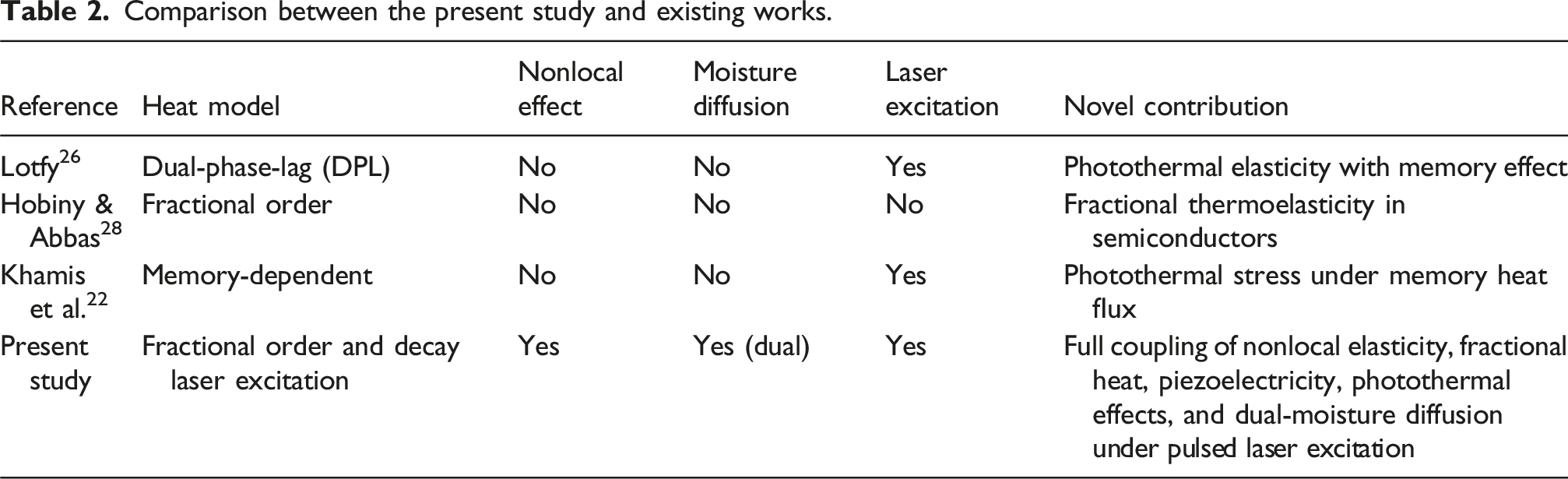
Comparison between the present study and existing literature
Comparison between the present study and existing works.
Although numerical simulations in this study focus on CdSe, the theoretical model is material-agnostic and can be extended to other semiconductors by adjusting the material constants; differences in piezoelectric, thermal, and moisture properties would quantitatively alter field responses, but the underlying coupled behavior remains consistent.
Limitations and future work
Despite the comprehensive nature of the proposed fractional-order nonlocal piezo-photo-hygrothermoelastic model, certain idealizations have been adopted to facilitate analytical tractability and focus on the core multiphysical interactions. For instance, the semiconductor material is considered homogeneous and orthotropic, which omits the effects of grain boundaries, doping heterogeneities, or anisotropies beyond the orthotropic level. Similarly, boundary conditions, such as traction-free surfaces, prescribed moisture levels, and laser-induced heat flux, are formulated in a controlled and idealized manner to mimic common experimental setups but may not capture all the intricacies of practical device geometries and interfaces.
Furthermore, the nonlocal elasticity parameter is treated as a tunable quantity, with values guided by theoretical and simulation-based precedent rather than direct experimental measurement for CdSe. While this does not compromise the physical validity of the results, it highlights the need for experimental calibration or high-resolution simulation (e.g., molecular dynamics or finite element analysis) to quantitatively fine-tune the model for specific materials and devices.
In future work, the model may be extended to include material heterogeneity, porosity, anisotropic moisture diffusivity, or complex geometrical domains such as thin films and multilayered structures. Additionally, the influence of boundary contact conditions, temperature-dependent material properties, and time-varying environmental loads may be explored to improve alignment with real-world operational scenarios. Numerical methods, such as the finite element or spectral approaches, could also be employed to validate and generalize the findings beyond the assumptions imposed in the current normal mode analysis framework.
The current analysis assumes linear material behavior and harmonic excitation, which may not capture strongly nonlinear, transient, or damage-driven phenomena such as plastic deformation, carrier recombination nonlinearity, or moisture-induced interface failure. Future research may incorporate nonlinear constitutive laws, rate-dependent thermal transport, or progressive failure models to extend the applicability of the current theory to conditions involving laser ablation, thermal shock, or mechanical fatigue in high-performance micro/nanoscale devices.
The moisture diffusion model used in this study is based on established coefficients and assumes idealized boundary conditions representative of equilibrium-controlled environments. While this is appropriate for early-stage analysis, micro/nanoscale devices may exhibit additional phenomena such as interface resistance, diffusion hysteresis, or surface-driven transport that require refined modeling. Incorporating nonlinear or humidity-dependent diffusion laws, as well as validating predictions with experimental or molecular simulation data, remains an important direction for future work.
Extending the current framework using numerical methods, such as FEM or spectral Galerkin approaches, would enable application to more realistic device configurations and allow for the inclusion of geometric constraints, boundary discontinuities, or interface effects.
The simulations in this work are limited to an idealized 2D geometry with simplified boundary conditions that reflect common experimental setups. While these assumptions facilitate analytical modeling, they may not fully capture the geometric complexity, boundary interactions, and heterogeneities present in practical device designs. To extend the applicability of the results, future studies may employ numerical approaches to simulate finite, layered, or patterned geometries and incorporate realistic surface constraints and material interfaces encountered in semiconductor fabrication and packaging.
Conclusion
This study has developed a generalized fractional-order, nonlocal model to analyze wave propagation in piezo-photo-hygrothermoelastic semiconductor media subjected to pulsed laser excitation. The governing equations incorporate the effects of thermal memory via fractional-order heat conduction, nonlocal elasticity for size-dependent behavior, and dual-moisture diffusion for hygrothermal coupling. Through normal mode analysis and numerical simulation, the influence of the fractional parameter α, and laser excitation on various field variables, temperature, moisture concentration, carrier density, current density, displacement, and electric potential, was thoroughly examined. The results presented in the two figures highlight several key findings. First, fractional heat conduction significantly alters the diffusion behavior, where lower values of α result in enhanced wave attenuation, delayed thermal response, and stronger coupling among the physical fields. Second, laser excitation introduces an additional energy source, dramatically increasing field amplitudes and wave penetration, particularly in the temperature, displacement, and electric potential profiles. These enhancements are evident in both steady-state and transient responses and are amplified by the interaction of laser-induced heat with nonlocal and memory-dependent effects. This shows the critical role of fractional thermal modeling in accurately describing semiconductor behavior under optical, electrical, and mechanical stimuli.
While the present work is primarily theoretical, the model’s parameters are selected based on experimentally reported physical constants for CdSe semiconductors,36,37 ensuring realistic simulation outcomes. The predicted trends are consistent with previously validated behaviors in simplified limiting cases of thermoelasticity, photo-thermoelastic wave propagation, and fractional-order heat conduction.26,28,43 As such, this model serves as a predictive platform to guide future experimental and computational validation efforts, especially for micro/nanoscale semiconductor systems subjected to coupled thermal, electrical, and environmental stimuli.
Applications
The proposed model and findings have direct applications in the design and analysis of advanced micro/nano-electronic and optoelectronic devices, particularly those operating under high-frequency, short-pulse, or thermally dynamic environments. Potential applications include thermal management in microchips, performance optimization of piezoelectric sensors and actuators, laser-assisted fabrication of semiconductor devices, and the development of moisture-sensitive components such as MEMS/NEMS-based humidity sensors. Furthermore, the model serves as a predictive tool for reliability assessment in laser-irradiated semiconductor materials, where understanding the coupled multiphysical interactions is essential for durability and functionality in modern device engineering.
The results provide guidance for tailoring material selection and geometric scaling in photothermal and humidity-sensitive semiconductor devices, highlighting that optimizing fractional thermal parameters and nonlocal effects can improve energy efficiency, wave control, and device stability under multiphysical loading.
Supplemental Material
Supplemental Material - Fractional-order nonlocal wave propagation in hygro-piezo-photo-thermoelastic semiconductors with dual-moisture diffusion and laser excitation
Supplemental Material for Fractional-order nonlocal wave propagation in hygro-piezo-photo-thermoelastic semiconductors with dual-moisture diffusion and laser excitation by Ahmed M. Alshehri1 and Khaled Lotfy in Journal of Low Frequency Noise, Vibration and Active Control.
Footnotes
Author’s Note
Khaled Lotfy: National Committee for Mathematics, Academy of Scientific Research and Technology, Cairo, Egypt.

Author contributions
All authors have equally participated in the preparation of the manuscript during the implementation of ideas, findings, result, and writing of the manuscript.
Funding
The author(s) received no financial support for the research, authorship, and/or publication of this article.
Declaration of conflicting interests
The author(s) declared no potential conflicts of interest with respect to the research, authorship, and/or publication of this article.
Data Availability Statement
Current submission does not contain the pool data of the manuscript, but the data used in the manuscript will be provided on request.
Use of AI tools declaration
The authors declare they have not used Artificial Intelligence (AI) tools in the creation of this article.
Supplemental Material
Supplemental material for this article is available online.
Appendix
References
Supplementary Material
Please find the following supplemental material available below.
For Open Access articles published under a Creative Commons License, all supplemental material carries the same license as the article it is associated with.
For non-Open Access articles published, all supplemental material carries a non-exclusive license, and permission requests for re-use of supplemental material or any part of supplemental material shall be sent directly to the copyright owner as specified in the copyright notice associated with the article.
