



Abstract
Keywords
Introduction
The transformation of the smart healthcare system has received increasing attention in recent decades. Multiple studies have discussed the feasibility of transforming towards the smart healthcare system.1,2 The development of the smart healthcare system was stimulated by not only by the increasingly serious aging population, chronic diseases, but also by the necessity for emergency response. 3 With the outbreak of COVID-19, the shortage of healthcare resources and the untimely health information sharing among healthcare institutions become imminent to address. The smart healthcare system offers significant advantages for responding more effectively to emergency events.
In the realm of digitalization, ontology serves as a vital research subject, exploring the interconnections between knowledge domains and acting as a fundamental technology for building a comprehensive knowledge system. In the field of smart healthcare, entities also play a crucial role. The utilization of the Semantic Web is employed to delineate the challenges encountered within the healthcare sector, while also offering a benchmark for the prospective management of unstructured data. 4 Drawing upon ontological principles, an in-depth examination is conducted into the security and privacy challenges inherent in remote monitoring systems within the domain of health technology systems. 5
Natural Language Processing (NLP) is an investigative approach that leverages computational linguistics to facilitate the understanding and interpretation of human language, which can make computers respond to human language. 6 NLP can facilitate the development of an ontology framework for a smart healthcare system. By leveraging this ontological framework, researchers can provide solutions for impending complexities and challenges.
Existing studies on the transformation of smart healthcare in hospitals primarily emphasizes the study of the concept of smart healthcare, the exploration of medical models, and the application of new technologies throughout the transformation process, nevertheless, few examined the ontology framework that guide the smart transformation of healthcare systems and the challenges existed in the transformation process. The ontological approach facilitates a thorough comprehension of the smart healthcare system, thereby establishing a robust theoretical foundation for the investigation of future iterations. Meanwhile, the establishment of the ontology framework will improve the internal workflow of healthcare institutions, make the management content of healthcare institutions clear, accelerate the promotion of digital management, and be conducive to emergency response. Thus this paper aims to develop the ontology framework of the smart healthcare system transformation, and address the following research questions: (1) What is the ontological framework applicable to the smart transformation of healthcare systems? (2) What are the challenges faced by healthcare systems during the transformation towards smart healthcare system? (3) What are the implementable transformation strategies for healthcare systems?
This study overcomes the limitation of fragmented traditional healthcare knowledge by developing an ontological framework for the smart healthcare system. At the theoretical level, by analyzing LDA and NLP, the dispersed knowledge is consolidated into a systematic framework with semantic links, exposing the internal relationships within the system. At the practical level, this ontological framework identifies key challenges such as poor system interoperability, data security and data sharing, low adoption of data standards and data scalability in the transformation of traditional healthcare systems, offering targeted insights for various practitioners and aiding in accurately pinpointing transformation obstacles. The paper may offer practical solutions and strategic recommendations to hospitals in assisting their transition towards smart healthcare.
Background
Due to the uneven healthcare resources in the traditional healthcare system, facing emergencies, the traditional healthcare system faced huge challenges in providing sufficient medical resources and personnel. The term ‘smart healthcare system’ was first introduced in 2005. 7 Numerous studies have reviewed the literature on smart healthcare to explore its research cluster and development trends. For instance, Dhanvijay and Patil reviewed the network architecture topology and its applications in healthcare based on the Internet of Things (IoT). 8
Tian et al. reviewed the key technologies and current status of smart healthcare. 9 Mathkor et al. provided a comprehensive overview of the application and development trends of Internet of Medical Things (IoMT) in biomedical systems. 10 With respect to technological progression, the research domain of intelligent healthcare systems has reached an advanced state of maturity. Yaqoob et al. studied the main prospects of blockchain technology in the field of smart healthcare. 11
Other studies developed the conceptual framework and ontology in the area of smart healthcare. Among of which, several studies developed the ontology of smart healthcare system from the perspective of information technology. For instance, Li et al. established the ontology of tele-healthcare and developed a telecare information platform to promote a diversified telecare service. 12 Others have developed ontology frameworks in the aspect of facility management (FM). For example, Kang and Choi developed an ontology framework of Building Information Modeling (BIM) assisted FM for intuitive and effective FM. 13 BIM perspective definition metadata was developed in the study to support data extraction and conversion in BIM-based FM. Akhtar et al. developed the ontology of an IoT-based healthcare framework using Belief-Desire-Intention (BDI) based reasoning agents. 14
Despite the existence of certain studies related to the framework theory of smart healthcare, the theoretical foundations of this domain are somewhat antiquated, further exploration is warranted. Especially in the post-epidemic stage, there has been a noticeable increase in public interest in the smart healthcare, requiring a renewed analysis of the managerial challenges faced by this field. Consequently, the ontological inquiry within the realm of smart healthcare remains necessary. Concentrating on the ontological methodology and analyzing the impediments encountered in the smart healthcare paradigm shift are imperative. The ontology provides a practical reference for subsequent managers and researchers to address the challenges of the smart healthcare system.
Methodology
The methodology adopted in this paper consists of five steps, as shown in Figure 1. The methodology road map.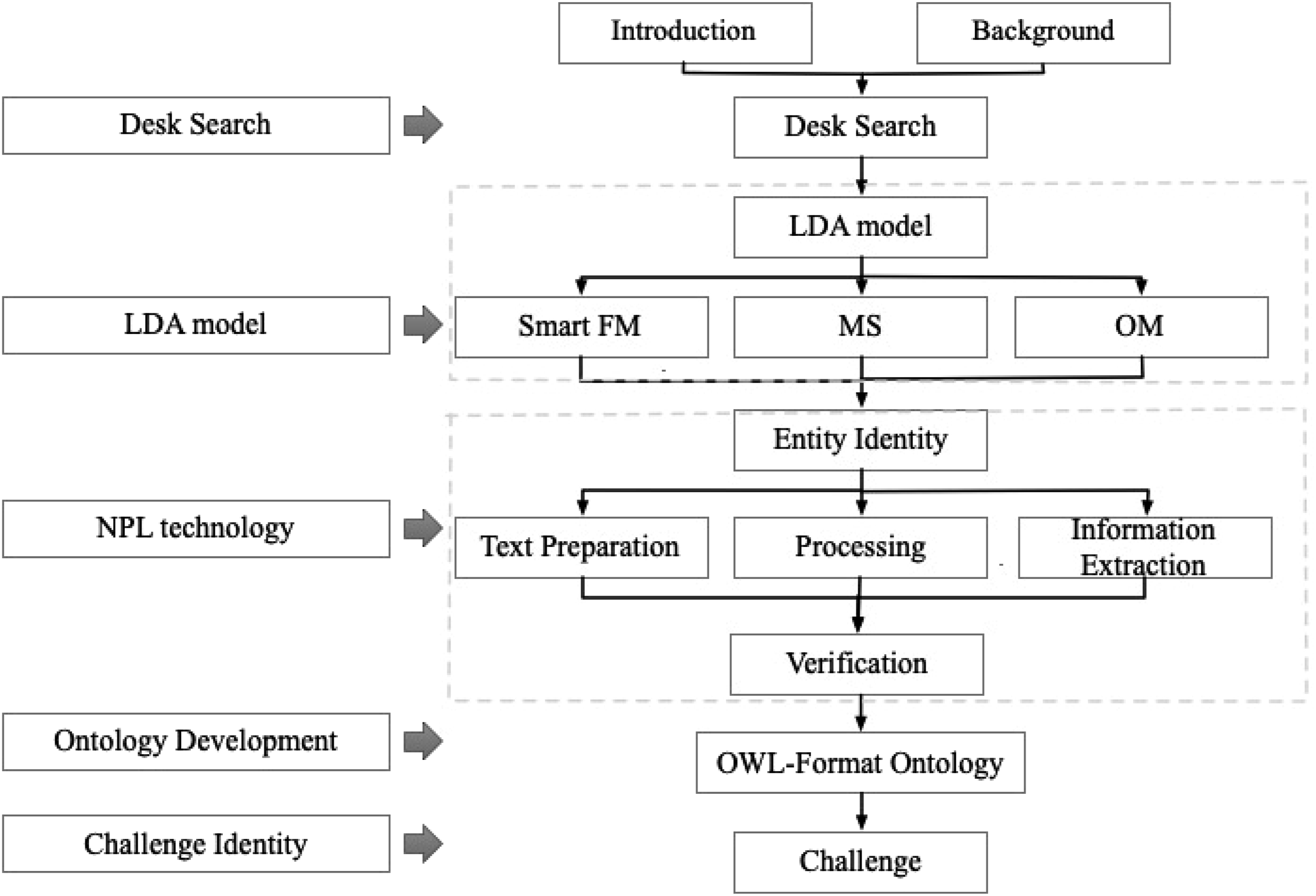
First, a comprehensive desk search was conducted under the “subject” field of the WOS core collection database. In the healthcare context, “Smart” and “Digit*” highlight the use of digital, interconnected, and intelligent methods that enhance the efficiency and quality of healthcare services, lower costs, and offer patients more convenient, personalized smart healthcare options. “Intelligent” is more closely linked to Artificial Intelligence (AI). It has a broader scope and may encompass general intelligent technologies in non-healthcare fields, resulting in search results straying from the central theme of “smart healthcare transformation.” The literature topics surrounding smart healthcare primarily emphasize “smart transformation” rather than just “intelligent technology.” Based on the WoS core collection database, the paper searched the publications related to smart healthcare system transformation using keywords “smart/digit*” & “hospital/healthcare system/medical system” and finalized 3539 core journals. The specific types of publications are mainly journal articles and conference papers. The content of journal has undergone rigorous academic screening, demonstrated substantial theoretical depth and practical guidance, and effectively reflected cutting-edge trends in transformation of smart healthcare.
This paper conducts LDA and NLP analyzed the titles and abstracts of the selected core papers. The abstract served as a concise summary of the complete text, focusing on essential information, including the primary research questions, methods, and conclusions. Thus, this method prevented interference from redundant content, and its standardized structure also supported unified processing by NLP. Additionally, the abstract’s data volume was significantly smaller than that of the full text, significantly reduced the computational costs of word segmentation, topic modeling, and other processes, which made it suitable for analyzing a large number of papers.
Secondly, the LDA model was used to identify the primary topics of the smart healthcare system. The topics of the text are extracted using word segmentation. Assume there are T topics in total.

Thirdly, NLP technology was employed to develop the ontology for modelling the overall structure of the smart healthcare system. The analysis process of the employed NLP approach is shown in Figure 2. The system architecture of the employed NLP approach.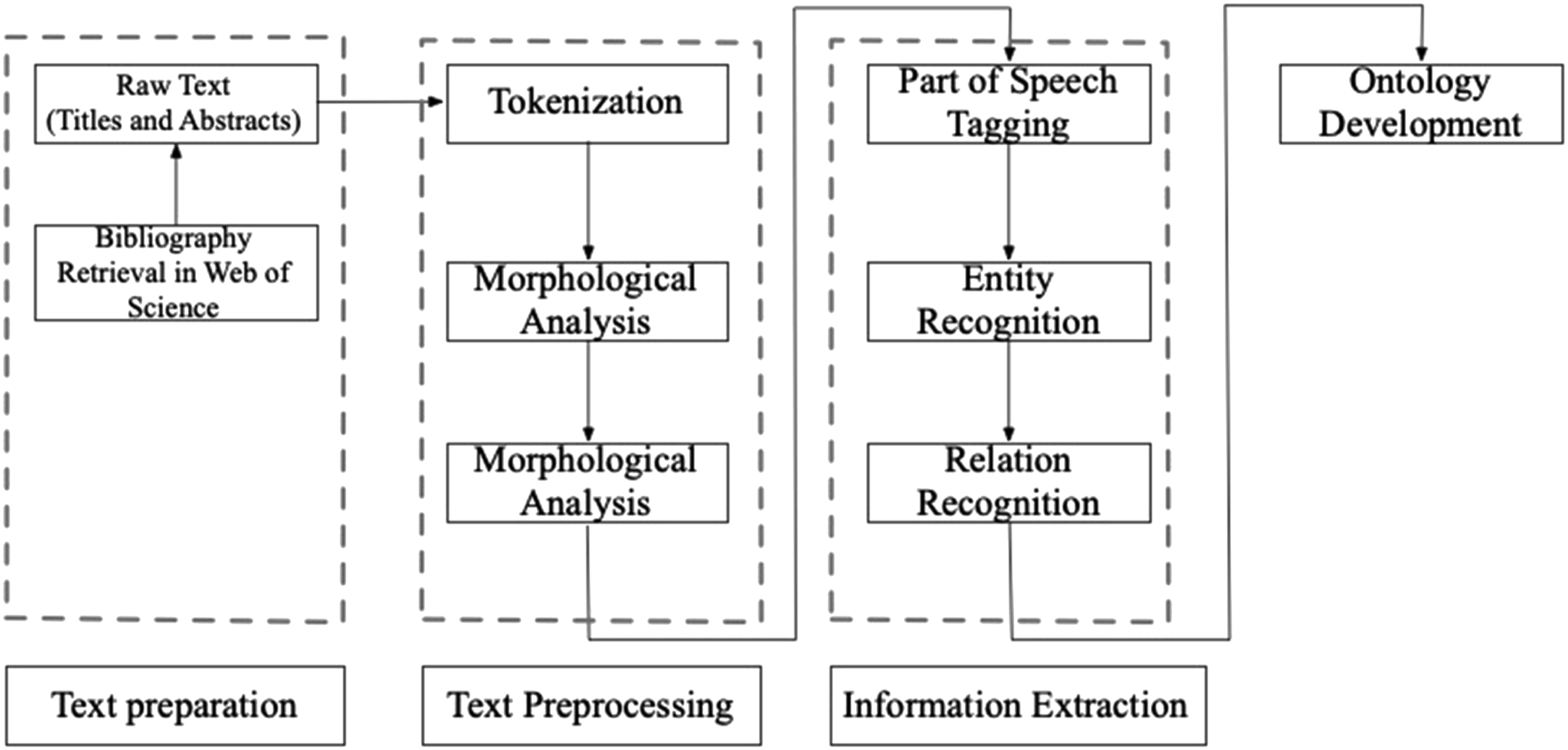
Fourthly, the trained model conducted entity recognition and relation recognition to obtain the optimal combination of boundaries and categories using the Resource Description Framework (RDF), RDF Schema, and OWL. This article presents the entities identified from the text document in RDF/OWL format. The recall rate, precision rate and F-measure were evaluated to verify the analysis results. Precision rate (P) measures the percentage of correctly extracted entities or activities relative to the total number extracted. Recall rate (R) measures the percentage of correctly extracted entities/activities relative to the total number of entities existing in the source text. F-measure is calculated using equation (2):

Finally, among the 3539 research papers selected using NLP methods within the constructed ontology framework, 7 documents that analyzed the challenges of smart healthcare transformation or had a high citation rate were chosen. Through discussions and expert research, the challenges faced by hospitals and healthcare institutions during the transformation to smart healthcare systems are identified, and proposed key points and measures for the future.
Data analysis results
Main topics of the smart healthcare system generated by LDA
As an unsupervised machine learning method, the topic mining effect is related to the numbers of iterations. The higher the number of iterations, the better convergence effect of the model. The number of iterations was set as 500. The extraction of topics is repeated until convergence or reaching the maximum number of iterations. The accuracy (F) value was tested for different iterations with 300, 400 and 500. The test results showed that the accuracy value is slightly higher with the condition of 500 iteration, thus 500 iteration was selected in the study. The iteration 500 was also applied in the text clustering studies using LDA such as Shao and Wang 15 and Hao et al. 16 And the final number of topics was determined based on the confusion and consistency curves as three. Firstly, in identifying the topic names using the LDA model, this paper extracted high-probability keywords for each topic through the algorithm. Secondly, it summarizes the semantic relevance by analyzing words. In the results, conceptual overlap is common due to core terminology from various fields. Finally, it is essential to ensure consistency between the names and the content by reviewing the original text and creating accurate topic names that integrate both technical features and smart healthcare application scenarios.
The research topics of the smart healthcare system transformation generated by LDA.
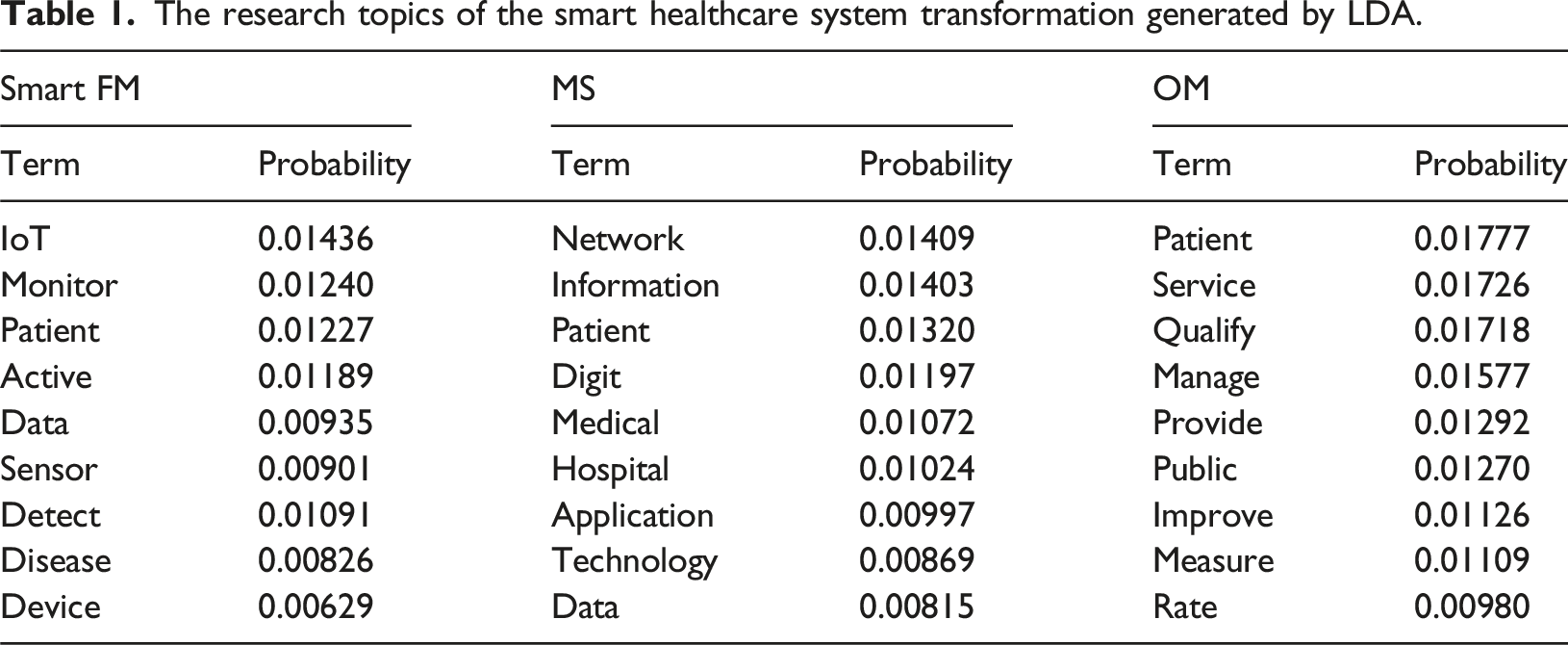
The smart FM of the smart healthcare system generated by LDA
Research on Topic 1 highlighted the intelligence of healthcare functions and the flexibility of clinical care and remote monitoring with digital technologies, such as IoT, mobile internet, cloud computing, big data, 5G, wireless sensor networks, and artificial intelligence. These technologies support retrieving patients’ real-time information and providing healthcare services from diagnosis and treatment, health decision-making to healthcare management. The monitoring systems collect physiological information which is stored and analyzed in the cloud. The identification of the emergency condition according to individual’s specialty becomes easier using the IoT-assisted system. Therefore, topic 1 is briefed as “Smart Facility Management”.
The MS of the smart healthcare system generated by LDA
The terms of topic 2 focus on the comprehensive optimization of the healthcare process from the perspective of the Management System (MS). The allocation of resources and information across functional is essential for maximizing the synergy of MS function. The innovative management framework coordinated with the integrated information platform is required for smart MS based on real-time monitoring of healthcare processes.17,18 The IoT-based healthcare network platform model and the cloud computing platform are trending research topics in MS. 8 Some key issues identified in this stream of research include the interoperability of sub-systems and gateways, patients’ information privacy, and secure communication between gateways and caregivers.
The OM of the smart healthcare system generated by LDA
Although smart healthcare requires advanced IT technologies, becoming a smart hospital is not an IT project. Instead, it is a holistic, deeply embedded, system-wide process that requires the participation of all participants, including physicians, nurses, and management staff. The adoption of innovation in an organization starts at the strategic change. OM clarifies personnel responsibilities in the organization, establishes and enhances the corresponding organizational departments, and organizes healthcare services in normal and emergency situations. Literature on the organizational structure of the smart healthcare system can be briefly categorized into two areas: daily hospital operation and service, and hospital emergency response. Corresponding management issues that have been identified include: lack of professionals, difficulty in adopting information technology, security problems, financial difficulty, etc. 19 The innovative management mode and administrative measures for the emergency response have received increasing attention in the post-epidemic era, such as Alkhafajiy et al. 20
Entities about the smart healthcare system extracted by NLP
NLP analysis is conducted on the text, the analysis process of the exemplar chosen text is illustrated in Figure 3. After the named entities extraction process, the tree structure generated from shallow parsing was presented in Figure 4. An illustration of inputs and outputs of main NLP steps. Output from the chunking.

The entities of extracted entities of smart healthcare system.
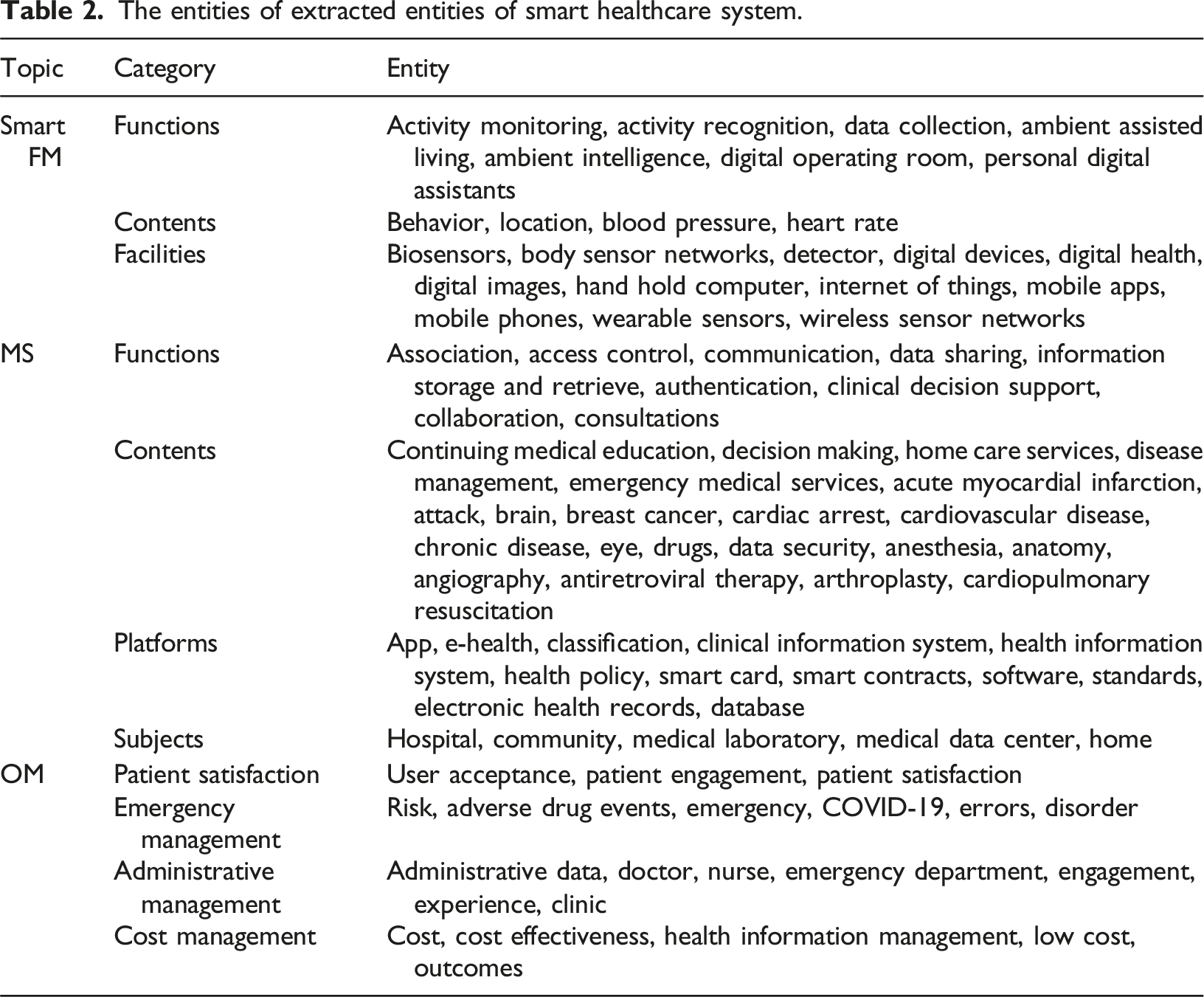
Entities of smart FM extracted by NLP
Terms of the first category refers to functions of Smart FM, and mainly includes monitoring and identifying patients’ physical conditions, providing an intelligent environment for patients and healthcare staff.21,22 The terms of the second category suggest the main task of data collection is to monitor and diagnose patients’ physical condition information and location. The terms of the third category indicate that facilities support the implementation of Smart FM.23,24
Entities of the MS extracted by NLP
The first category includes terms such as “association,” “access control,” “communication,” “data sharing,” and so on. Obviously, the functions of the MS are information sharing, digital healthcare services, and telemedicine services.12,18,25 The terms of the second category reflect the content of MS tasks, including assisting disease diagnosis and treatment, health management, disease prevention and risk monitoring, drug excavation. 12 The terms of the third category show the medical information platform includes software, web pages and in-hospital systems.26,27 National policies and medical industry initiatives affect the standards and performance assessment of information platform construction. 28 In addition, the extracted subjects of the MS include hospital, community, medical laboratory, medical data center, etc. 29
Entities of OM extracted by NLP
Terms of the first category refllect that patient satisfaction is one of the evaluation indicators of the smart healthcare system. 30 The evaluation factors of the patient satisfaction include: ubiquity, speed, reliability of the message transmission, ease of use, staff responsiveness, time waiting for response, etc. Improving patient satisfaction will further promote the quality of healthcare service. The terms of the second category include “risk”, “adverse drug events”, “emergency”, “COVID-19”, “errors”, “disorder”, etc. Emergencies such as fire, flood, and epidemic situations will impact the smart healthcare system. When healthcare institutions are in disorder or facing healthcare disputes, addressing the challenges of crowding, waiting times, and cost containment requires a comprehensive revision of the entire emergency department process and demands the integration and collaboration of all healthcare professionals involved within the organization levels. 31 The third category reflects that human-centered intervention, which recognizes the value of people, patients, and workers, was identified as one of the key approaches in the OM changes. Furthermore, strong leadership and support from top management were necessary to foster motivation, implement changes, and guide improvement projects. Resistance to changes and the lack of collaboration between roles are barriers frequently mentioned in the literature. 32 Terms of the fourth category mean that number of previous studies indicate that the smart healthcare system helps reduce the cost of healthcare services, which further promotes the transition towards smart healthcare for medical institutions. 33
The OWL-format ontology of the smart healthcare system
The boundaries of three classes are identified shown in the section. All components of the core healthcare services belong to the MS, such as clinical healthcare services, drug information system, patient electronic healthcare record, regional healthcare services, etc. All the non-organizational aspects except the core healthcare services belong to Smart FM. Additionally, the Smart FM can also be described as the maintenance and management of the healthcare environment, including the operation and maintenance of both building equipment and healthcare equipment. All the organizational aspects except core healthcare services belong to OM, such as asset management, risk management, emergency management, personnel management, etc. Figure 5 represents a screenshot of the smart healthcare system transformation ontology graph framework implemented in the Protégé software. As is shown in Figure 5, the relationship base includes information retrieve, information store, activity recognition, activity monitoring, and collect, etc. The ontology graph of smart healthcare system transformation.
The subclasses of the Smart FM include facility information and patient physical information. The purchased and recorded facilities monitored and recognized the physical and activity information of the patients. Additionally, the subclasses of MS are information, platform, and institution.
The information on medicine, diseases and patient health records was stored and retrieved by the information platform, including applications, web platform, and tele-health platform, etc. The subclasses of OM include asset management, personnel management, resource management, performance management, department management, and security management. The smart healthcare system transformation class tree generated from input text was then exported on an ontology editor, as shown in Figure 6. Partial view of smart healthcare system reconstruction ontology.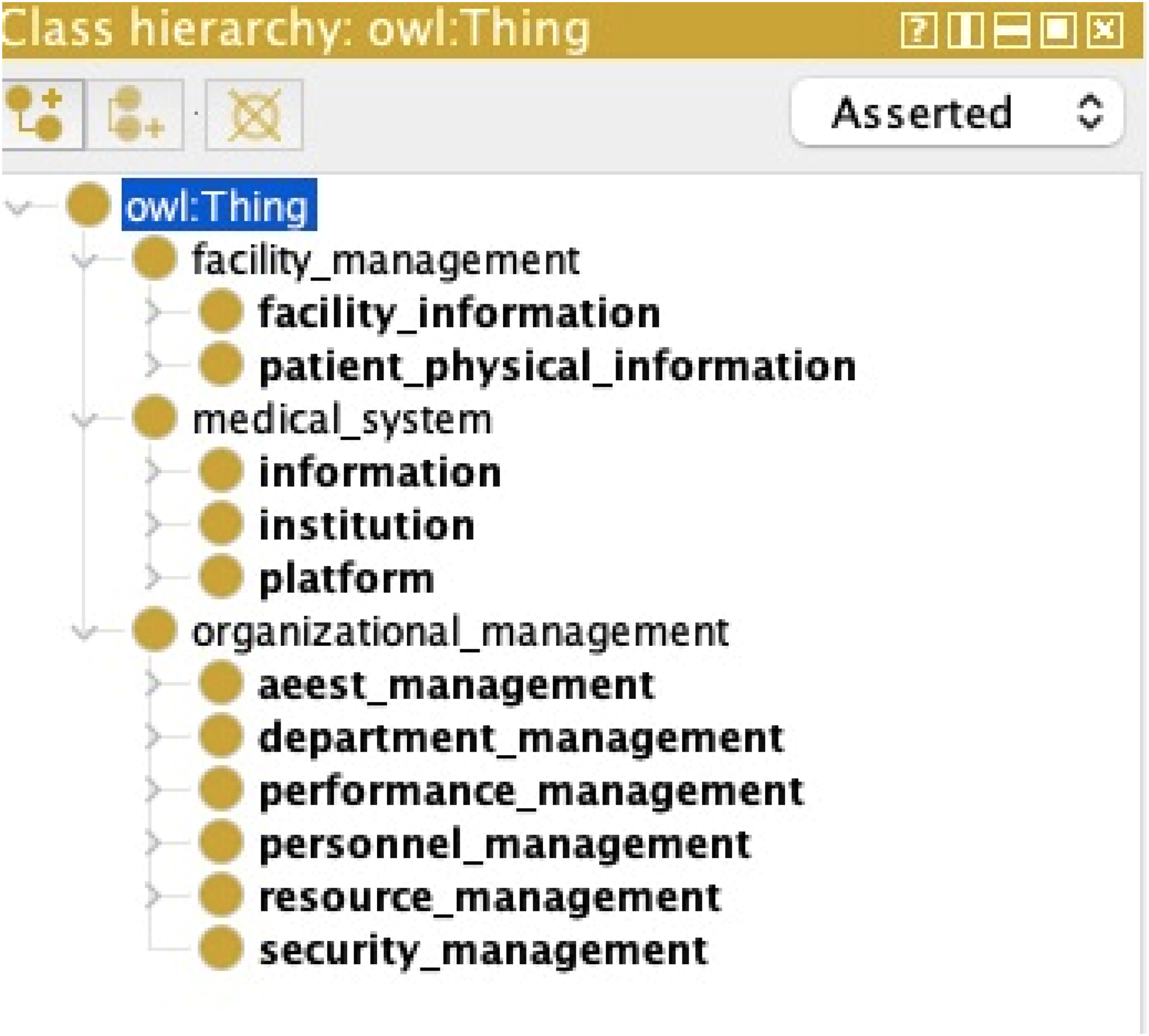
Validation
Results of NLP in extracting entities from text document.

Challenges of transformation healthcare system
Challenges of transformation towards smart healthcare system.

Technological issue of transformation healthcare system
For Smart FM and MS, most identified challenges were focused on technological issues of smart healthcare facilities and platforms. Poor system interoperability and low adoption of data standards are the most mentioned challenges. System interoperability is the capacity for multiple devices and systems to exchange and interpret data. The healthcare data structures from multiple sources are different, including structured, unstructured, and semi-structured data, which hampers the system interoperability. 32 However, the adoption rate of the data standards remains low. Additionally, data security and privacy involve protecting digital information from unauthorized access, corruption, or theft throughout its entire lifecycle. Patients’ privacy risks mean the leakage or sharing of patients’ information to unauthorized parties. 40 The login/sign-up option should be provided to allow patients access to their own records, while on the healthcare side, it allows doctors complete access to only their patients. Authentication, encryption, and data masking techniques like Advanced Encryption Standard and Data Encryption Standard have been used to secure the data being shared.14,41
Organizational management of transformation healthcare system
The main challenges from organizational management aspect are high technology conversion cost, imperfect infrastructure, shortage of professionals and resistance of new technologies adoption of staff. Alkraiji et al. examined the challenges of transforming the healthcare system through expert interviews and found that it will be costly to map issues from the old information infrastructure to the new standardized one. 28 Moreover, many major processes and functions rely on legacy systems, making the discarding of these old systems a significant concern. Current infrastructures must be considered whenever adopting a new system. Vichitkraivin & Naenna found the negative correlation between staff resistance of new technology and adoption of robots using structural equation modeling, while aging factor is correlated with the staff resistance. 42
Policies and regulations issue of transformation healthcare system
The main challenges from government regulations and polices include a lack of national regulatory agencies, data exchange plans, and national policy support. Lack of national regulatory agencies caused the confusion amongst healthcare providers regarding the required national standards and few could take the lead to develop and promote such standards. 28 Lack of national plan for medical data exchange also affected the adoption rate of the data standards. Medical institutions prefer to invest in their IT infrastructure rather than focusing on standardization from which they cannot benefit directly, especially in low-income countries. 28 However, the national policy rarely clarifies the detailed standards and principles for implementing the reconstruction of healthcare system.
Discussion
The developed ontology framework consists of three categories with three hierarchies: Smart FM, MS and OM. Different from previous studies on the ontology at the healthcare system,14,43,44 the developed ontology framework constructed the system of smart healthcare from the functional, content, and management aspect. Aside from the technical aspect, the service-oriented organizational management model is emphasized in the ontology framework of smart healthcare transformation. Traditional hospital operations and management emphasize daily management tasks while neglecting the quality of service provided to doctors and patients.
Previous studies have integrated many aspects of non-core healthcare services within the Smart FM, which makes it difficult to determine the service boundaries of Smart FM. The OWL-format ontology developed in this paper defines the components of Smart FM, including building equipment and healthcare equipment, which provide information about both the building environment and the healthcare environment, and will collectively guide the implementation of Smart FM. The body information of the patient acquired through healthcare devices is also a crucial component of Smart FM. The relationship between the patient’s physical condition and the healthcare environment can guide Smart FM to provide more appropriate and higher quality healthcare services.
Due to the complexity and significance of MS, the transformation of healthcare facilities is challenging due to service boundaries and performance evaluation standards.45,46 Demirkan proposed a smart healthcare system for conceptualizing data-driven and cloud-based payments. 47 This system is being used to improve the quality of healthcare care. A user-centered smart healthcare system can significantly enhance the efficiency and accessibility of the system. 48 The proposal of MS is a key factor in the construction of smart healthcare system, and is one of the indispensable factors in the future research of smart healthcare.
In the previous developed ontology, little attention was paid to the impact of OM on the reconstruction of the smart healthcare system. However, Cimellaro et al. showed that cooperation and training management, organizational operation procedures will affect the emergency response ability of medical institutions. 49 The good leadership of medical institutional managers is considered to be one of the key factors affecting the function of the smart healthcare system. 50 The developed OWL-format ontology framework of the smart healthcare system in this paper included OM, which could refine the management module of medical institutions, clarify the management content and boundary, and promote the efficiency of OM of the smart healthcare system. Meanwhile, the establishment of the ontology framework will improve the internal workflow of medical institutions, make the management content of medical institutions clear, accelerate the promotion of digital management, and be conducive to emergency response.
Several measures have been implemented to address these challenges. Firstly, the application of digital technology in healthcare institutions should be enhanced.51,52 The digital transformation of the smart healthcare system offers stronger support for the national healthcare system. In particular, the widespread application of digital technology has made significant contributions at the epidemic stage. 53 Secondly, to facilitate smoother information sharing among medical institutions, joint measures should be implemented in three areas: technological, organizational, and governmental. With the rapid development of healthcare technologies and the continuous update of smart healthcare system, policies and regulations will adapt.
Conclusions
This paper has developed an ontology framework in OWL-format using LDA and NLP for transformation of the smart healthcare system, which includes Smart FM, OM, and MS. Firstly, using the WoS core database, LDA was employed to conduct topic modeling on the titles and abstracts of literature, aiming to extract the core research themes in the smart healthcare field, including Smart FM, OM, and MS. Secondly, NLP analysis was integrated to perform entity recognition and relation extraction. Facility information and patient physical information are subclasses of the Smart FM. Additionally, information, platform, and institution are the subclasses of MS. Asset management, personnel management, resource management, performance management, department management, and security management are the subclasses of OM. The relationship base includes information retrieve, information store, activity recognition, activity monitoring, collect, etc. Finally, key challenges in the transformation of healthcare systems were identified from the ontological framework through an extensive literature review. 14 challenges of smart healthcare system transformation have been identified.
The ontology developed in this paper outlines the composition of the smart healthcare system and defines the boundary of each component, improving the efficiency and accuracy of future research work. Concurrently, the establishment of an ontology framework facilitates systematic analysis of the conceptual structure underlying the smart healthcare system by subsequent researchers, potentially yielding favorable outcomes in future practical applications. However, there are some limitations in the paper. The input data of the study are solely retrieved from the WoS core collection database, while the healthcare industry reports and practice real cases were not included. In-depth case studies are needed for quantitative analyzing the relationship between ontologies of smart healthcare system in the next stage of research. In the future, research will integrate the advanced technological advantages like Large Language Models with the practical requirements for transforming smart healthcare. It will conduct thorough empirical research and theoretical summarization by combining real-world cases that arise during the development of future smart healthcare.
Footnotes
Acknowledgements
Data generated or analyzed during the study are available from the corresponding author by request.

Ethical considerations
All data in this study are publicly available and strictly follow the principles of medical ethics, with no ethical implications.
Author contributions
Conceptualization: Xiaojing Zhao; Data curation: Hua Zhong; Formal analysis: Beibei Ge; Funding acquisition: Xiaojing Zhao; Investigation: Hua Zhong; Methodology: Xiaojing Zhao; Project administration: Xiaojing Zhao; Resource: Hua Zhong; Software: Shuyan Zhao; Supervision: Xiaojing Zhao; Validation: Shuyan Zhao; Visualization: Beibei Ge; Writing-original draft: Beibei Ge; Writing-review & editing: Shuyan Zhao.
Funding
The authors disclosed receipt of the following financial support for the research, authorship, and/or publication of this article: The authors acknowledge and appreciate that this study is funded by the Seed Funding scheme for young scholars in Beijing Institute of Technology (No: 3210012222005) and Beijing Social Science Foundation Decision Project (No: 22JCC117).
Declaration of conflicting interests
The authors declared no potential conflicts of interest with respect to the research, authorship, and/or publication of this article.
Data Availability Statement
The datasets related to this study can be found at Web of Science Core Collection. Data generated or analyzed during the study are available from the corresponding author by request.