



Abstract
Objective
This study aimed to evaluate the current situation of Chinese mobile apps for hypertension management and explore patients’ real requirements for app use, providing a theoretical basis for the future improvement of hypertension apps.
Methods
We reviewed hypertension management apps from mobile app platforms, and summarized their functional characteristics. In addition, we conducted an online survey among 1000 hypertensive patients, collected valid responses, and analyzed the feedback data.
Results
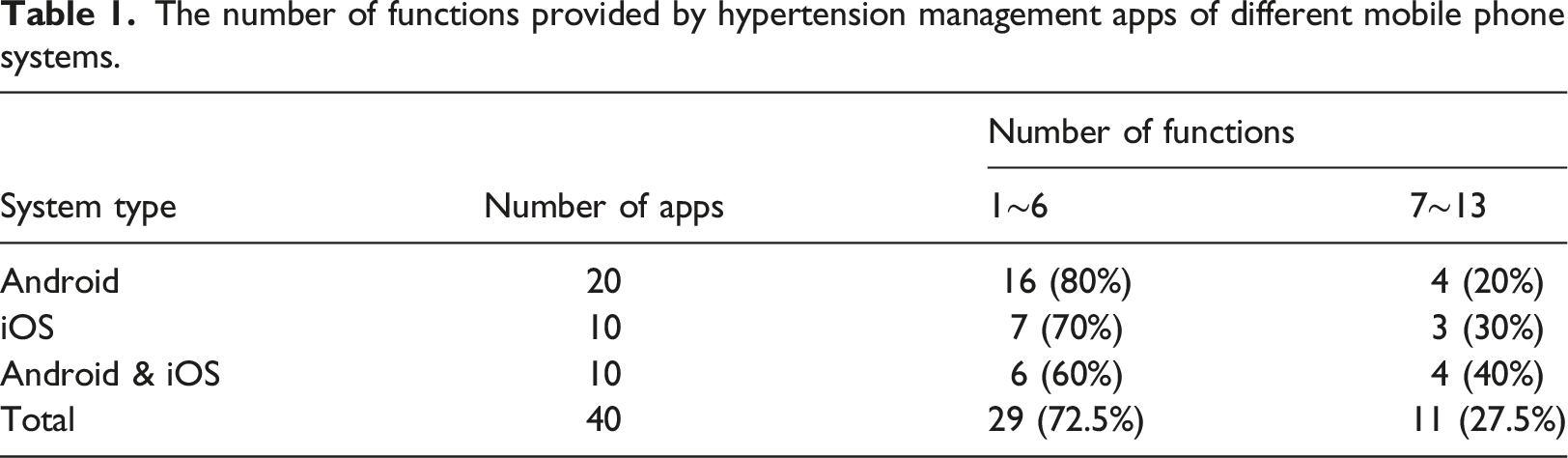
Forty hypertension management apps were analyzed, with 72.5% offering no more than six functions, indicating limited coverage of advanced and comprehensive functionalities. Among the 934 valid survey responses, patients emphasized four main functions in apps for hypertension management: long-term dynamic blood pressure monitoring, scientific lifestyle management, strict medication management and systematic health knowledge delivering.
Conclusion
The existing hypertension management apps mainly serve as “Digital Health” tools with unclear clinical efficacy. The future development of these apps lies in how they transition to “Digital Therapeutics” solutions to better meet patients' needs and provide clear clinical advantages.
Background
Hypertension is one of the most common chronic diseases in China, with a prevalence of 245 million, 1 and is a major risk factor for death from cardiovascular and cerebrovascular diseases. 2 Controlling blood pressure to the target level by improving lifestyle and using antihypertensive drugs can effectively reduce the risk of cardiovascular and cerebrovascular diseases and mortality. However, the overall prevention and control of hypertension in China is not optimistic, with low awareness rate (51.6%), low treatment rate (45.8%) and low control rate (16.8%). 3 The quality of hypertension management is poor due to the relative inadequacy of medical resource allocation, patients’ lack of health awareness and disease knowledge, poor adherence to treatment, and economic factors.
In recent years, the high incidence of chronic diseases such as hypertension has led to an increasing demand for health management among the public. With the wide application of technologies such as the Internet of Things, cloud computing, mobile Internet and the popularity of smartphones, mHealth provides a new form of health management for hypertension. Hypertension management app is a mobile phone application for health management purposes, the main service objects are hypertensive patients or high-risk groups, etc. Through health education, data collection, risk assessment, online consultation, etc., it provides patients with health advice or personalized management plans. Studies have shown that the use of relevant software systems for daily intervention and management of hypertension patients can improve their blood pressure control 4 and increase their medication compliance. 5 Hypertension management app develops a new mode of health management and provides a new platform for doctor-patient communication. However, with the massive influx of chronic disease management apps into the market, various problems have emerged. There is a serious phenomenon of product homogeneity and lack of practicality and convenience, 6 which affects the use of users and hinders the development and promotion of the value of “Internet + medical care”.
Digital Health (DH) refers to the field of developing and utilizing digital technologies to popularize health literacy and related practices, and encompasses the application of digital technologies, such as the Internet of Things, artificial intelligence, and big data, to health management. As a subset of DH, Digital Therapeutics (DTx) is an evidence-based therapeutic intervention driven by high quality software programs for the prevention, management, or treatment of medical disorder or disease. DH products typically do not require clinical evidence of effectiveness, while DTx products require not only clinical evidence but also Real World Outcomes (Figure 1). The relationship between Digital Health, Digital Medicine, and Digital Therapeutics.
7
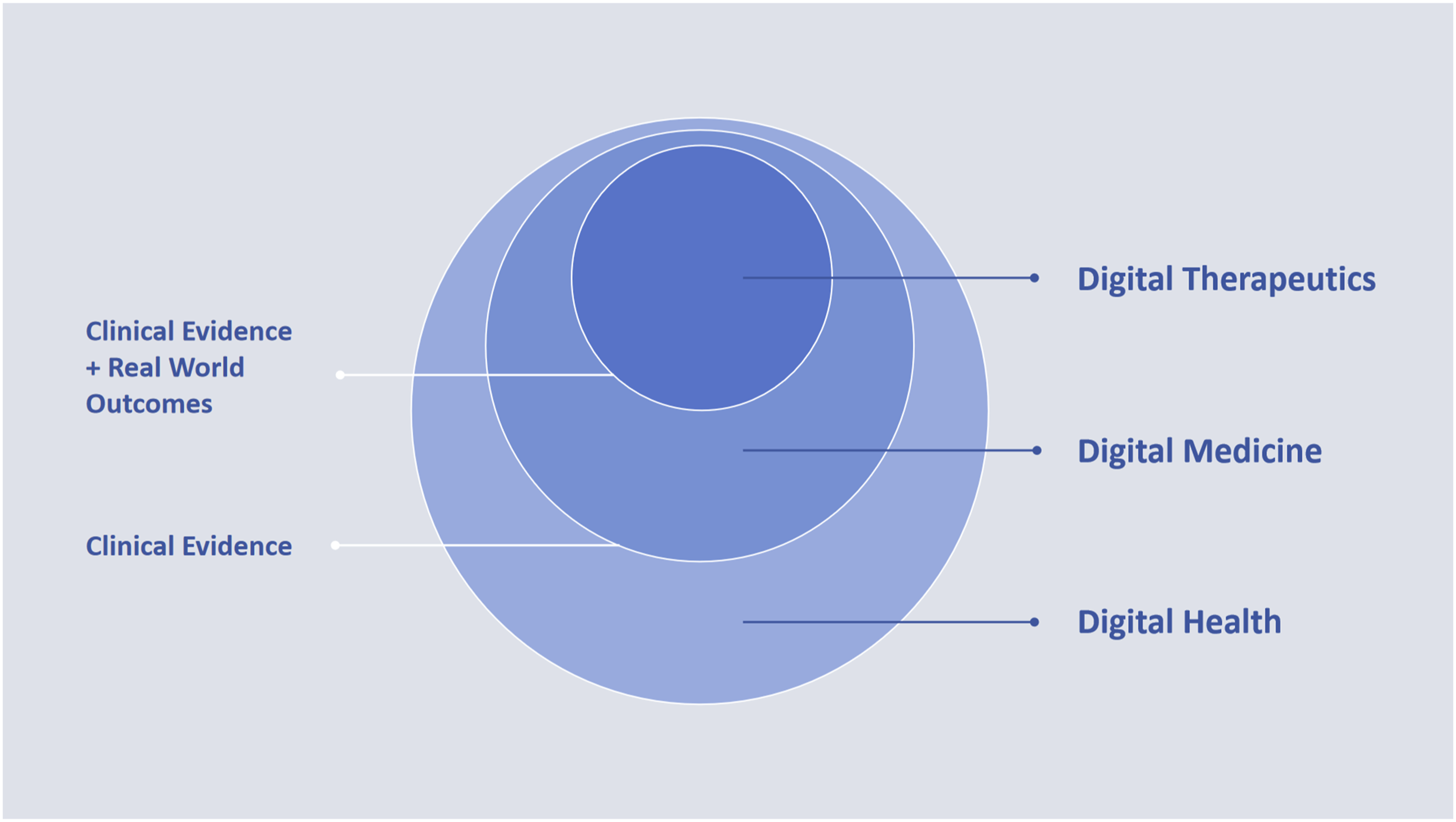
The concept of Digital Health (DH) is the most widespread, it includes Digital Medicine (DM), and DM includes Digital Therapeutics (DTx). DH products encompass all technologies, platforms, and systems that help consumers improve their lifestyles and health. These products capture, store, or transmit consumer health data and/or support life science and clinical operations. DM products encompass software or hardware products based on clinical evidence that can be used to measure or intervene in human health. DTx products are software products that are clinically proven to prevent, manage and treat medical disorders and diseases.
While there are already many apps for tracking and managing high blood pressure in China, there is relatively little comprehensive information on the content and functions of these apps. This study aims to conduct a statistical analysis of existing hypertension apps in China, summarize their relationship with DH and DTx, and investigate the needs of hypertensive patients in terms of home treatment. This study may provide a reference for the future development of hypertension management apps in China, and help patients to obtain clear clinical benefits by using these apps.
Method
The current status of Chinese hypertension management apps were deeply investigated from two dimensions: product and user, respectively. In the product dimension, we selected representative apps from mobile software platforms as research objects, and then classified and counted their main function types to reveal their commonalities and differences. In the user dimension, we conducted a survey on hypertension patients to obtain their real feedback on the use experience and functional requirements of the hypertension management app. Through the study of these two dimensions, we were able to understand the function features of the current hypertension app, the actual needs of patients and their expectations for app functions, which in turn provides valuable references for future product design and improvement.
Part 1. Statistics on the current status of functional development of hypertension self-management apps in China
Retrieval platform and method
In September 2023, mobile phone terminals with Apple and Android systems were selected to search for relevant blood pressure self-management apps in the respective “App Store” and “App Market” with the keywords “blood pressure”, “hypertension”, and “anti-hypertensive”. The apps were downloaded and registered, and the corresponding functions were tested and used. Then, the name of the same blood pressure management app was retrieved in both systems to fully count the common software of the two systems and avoid omission.
Screening criteria
Inclusion criteria: (1) app with hypertension related information as the main content; (2) Chinese interface.
Exclusion criteria: (1) app cannot be opened, registered or logged in normally; (2) app has flashback phenomenon; (3) for apps with different names or different versions of the same model, only one app will be retained; (4) server-side or medical care edition app.
Data extraction and analysis
The researcher summarized the type and number of functions of the blood pressure management apps based on the previous literature study8–11 and conducted the actual trial on this basis. Each system was downloaded and tested by two researchers, who recorded the type and number of functions of the apps, with a third person deciding in case of disputes. In the end, 13 main self-management functions of blood pressure management apps were summarized, including: blood pressure monitoring and recording, analysis report, medication management, diet management, exercise management, body weight management, health education, health plan, community interaction, doctor-patient communication, external device, online shop, and alarm or reminder. The functions of each app were recorded, and SPSS 18.0 statistical software was used for statistical analysis. Count data were described by frequency and percentage (%).
Part 2. Online survey on the current use and functional requirements for self-management software for hypertensive patients in China
Research objects
A total of 1000 hypertensive patients with medical records in Zhiyun Health Internet Hospital in 2023 were randomly selected. Participants in the study were required to be 18-70 years of age, with confirmed hypertension, other comorbidities not restricted, and basic literacy skills.
Survey content
The survey content mainly covered the patients’ willingness to engage in self-management, and the use rate of hypertension management app, the use effect of hypertension management app, the problems or difficulties in self-management, and the functional requirements for hypertension management app.
Survey time
The survey was conducted online from September 8, 2023 to September 20, 2023.
Data extraction and analysis
Survey responses with complete information were verified as valid surveys by the medical staff of Zhiyun Health Internet Hospital, the data and information returned by the participants were recorded, and SPSS 18.0 statistical software was used for statistical analysis. Count data were described by frequency and percentage (%).
Results
Functional development status of hypertension management apps
Screening results of hypertension management apps
A total of 40 blood pressure management apps were finally included, containing 20 proprietary apps for the Android system, 10 proprietary apps for the Apple system, and a total of 10 apps for both systems.
Functional features of hypertension management apps
The number of functions provided by hypertension management apps of different mobile phone systems.
Functional composition of hypertension management apps
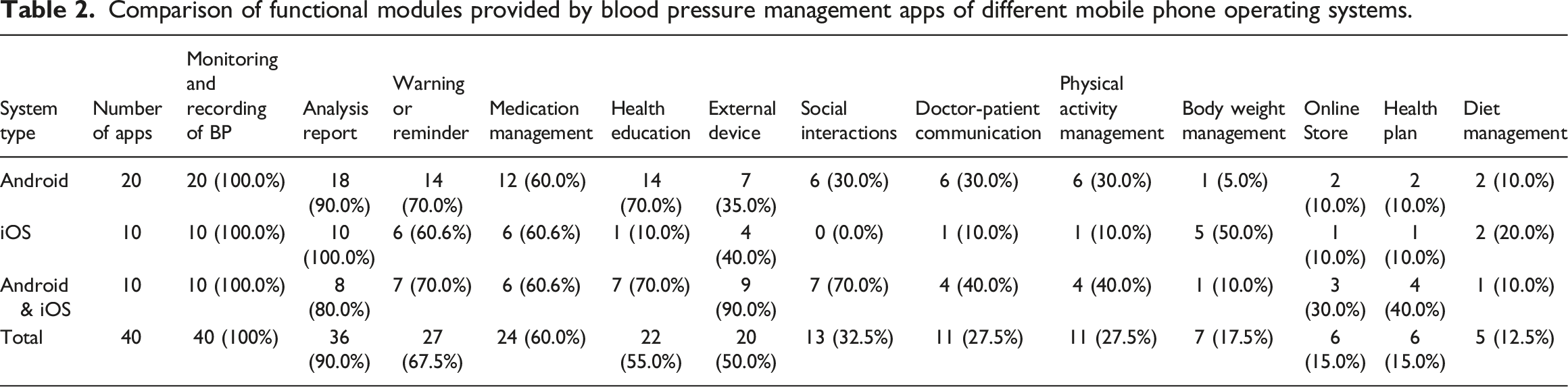
Among all the functional modules, blood pressure data monitoring and recording is the core function of the hypertension management apps with a relatively fixed pattern. However, other functions such as lifestyle management, medication management, and health education vary greatly among different apps. In addition, doctor-patient communication, online shop, external device, and alerts are the four functions that can appear profitable.
Comparison of functional modules provided by blood pressure management apps of different mobile phone operating systems.
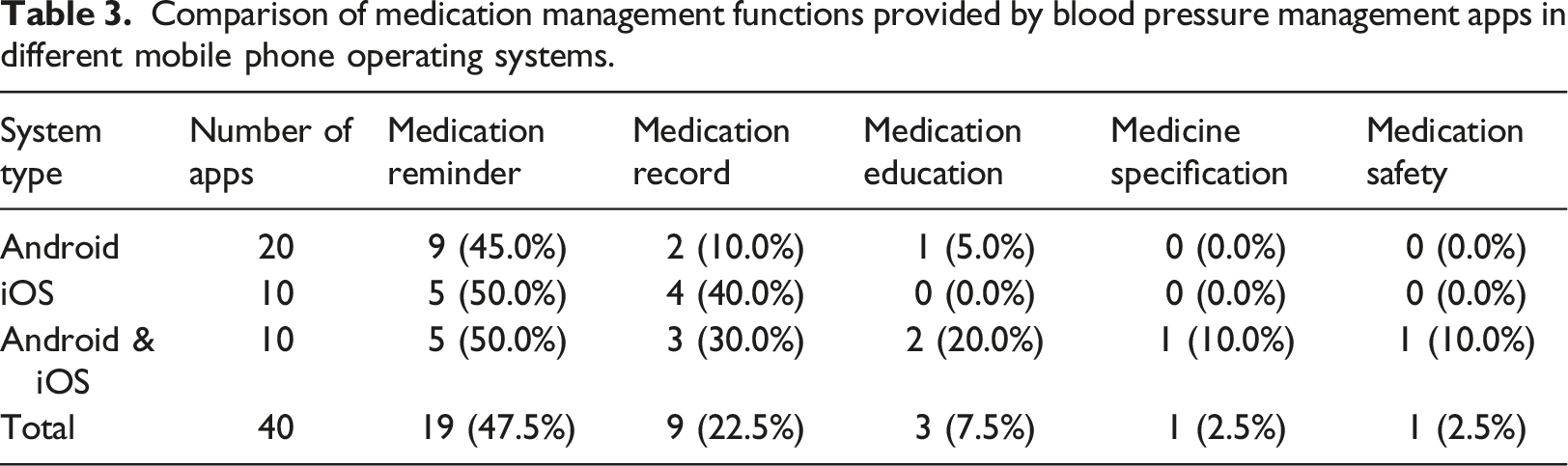
Comparison of medication management functions provided by blood pressure management apps in different mobile phone operating systems.
Results of the survey
A total of 934 usable responses were collected. The mean age of the survey participants was 54.3 ± 12.4 years, and 56.2% were male.
Experiences of hypertensive patients with self-management apps
Of the 934 patients who submitted valid survey responses, 883 (94.5%) thought that daily self-management of hypertension was very important, 30 (3.2%) thought it was optional, and 21 (2.3%) thought it was not important. 833 out of 934 (89.2%) said they were very or more willing to use hypertension management app for self-management, 76 (8.1%) said they could consider it, and 25 were less willing or reluctant (2.7%). 623 out of 934 (66.7%) were using hypertension management software, 172 (18.4%) had used it, and 139 (14.9%) had never used it. In 795 patients with experience in using apps, 462 (58.1%) thought that using a hypertension management app had an obvious effect, 262 (33.0%) thought that it had an effect but was not obvious, and 71 (8.9%) thought that it had no effect (Figure 2). Feedback from hypertensive patients on their experiences with self-management apps. (a). Importance of daily management of chronic diseases according to hypertensive patients; (b). Willingness to use health management app in hypertensive patients; (c). The usage rate of health management app by hypertensive patients; (d). Application effect of health management app for patients with hypertension.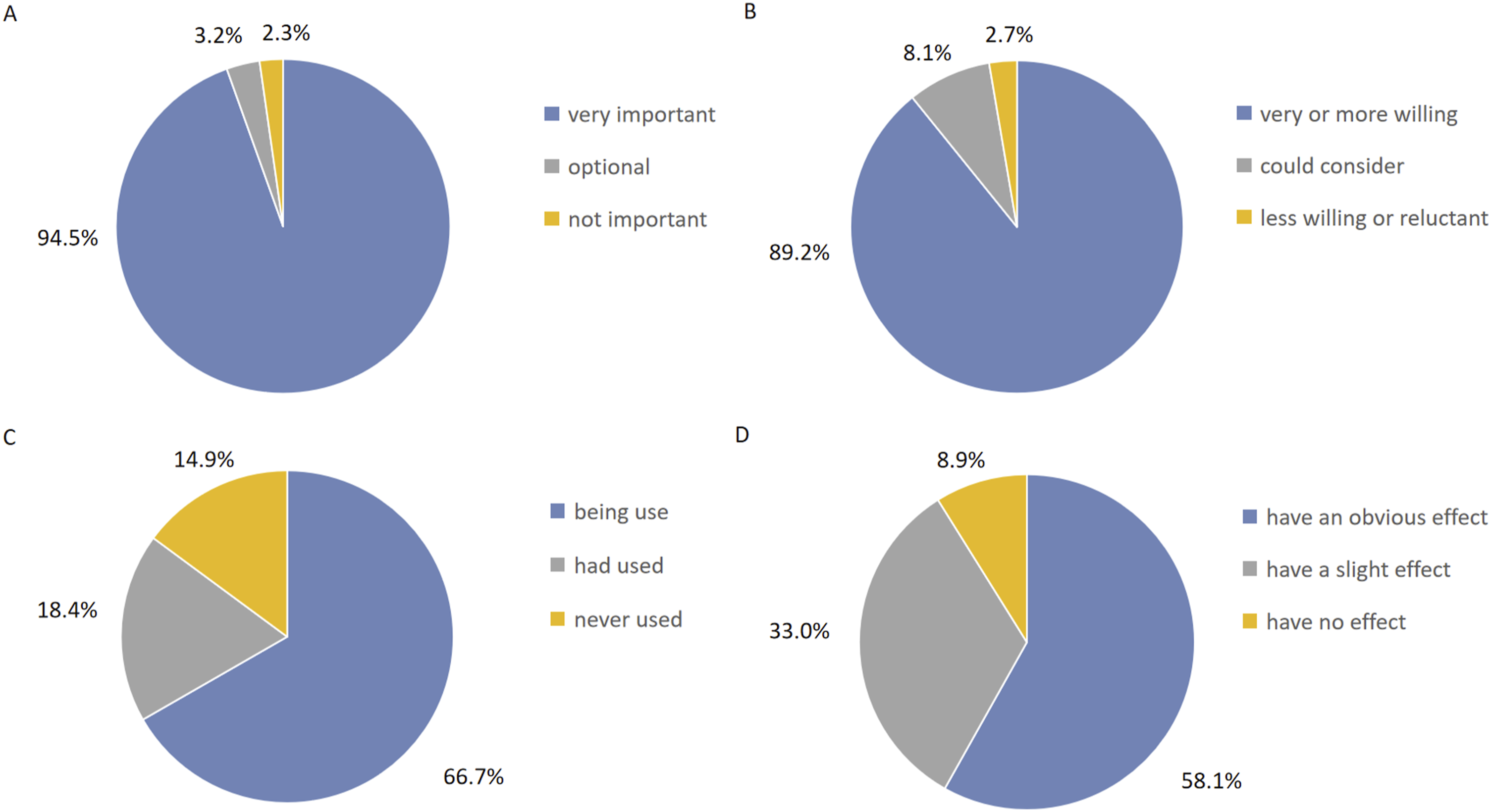
Problems or difficulties in self-management of hypertension patients
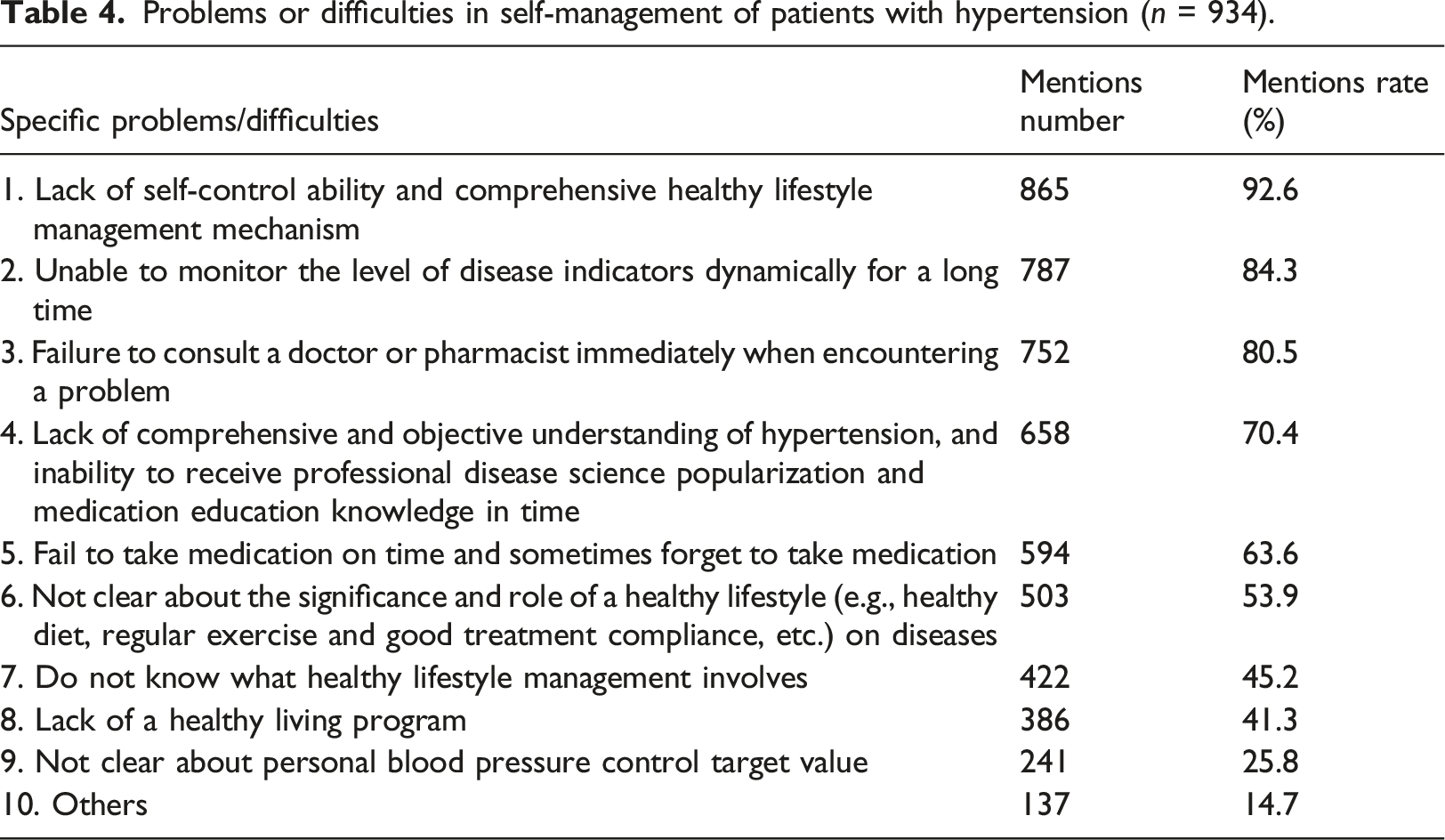
Problems or difficulties in self-management of patients with hypertension (n = 934).
Functional requirements of hypertension patients for self-management apps
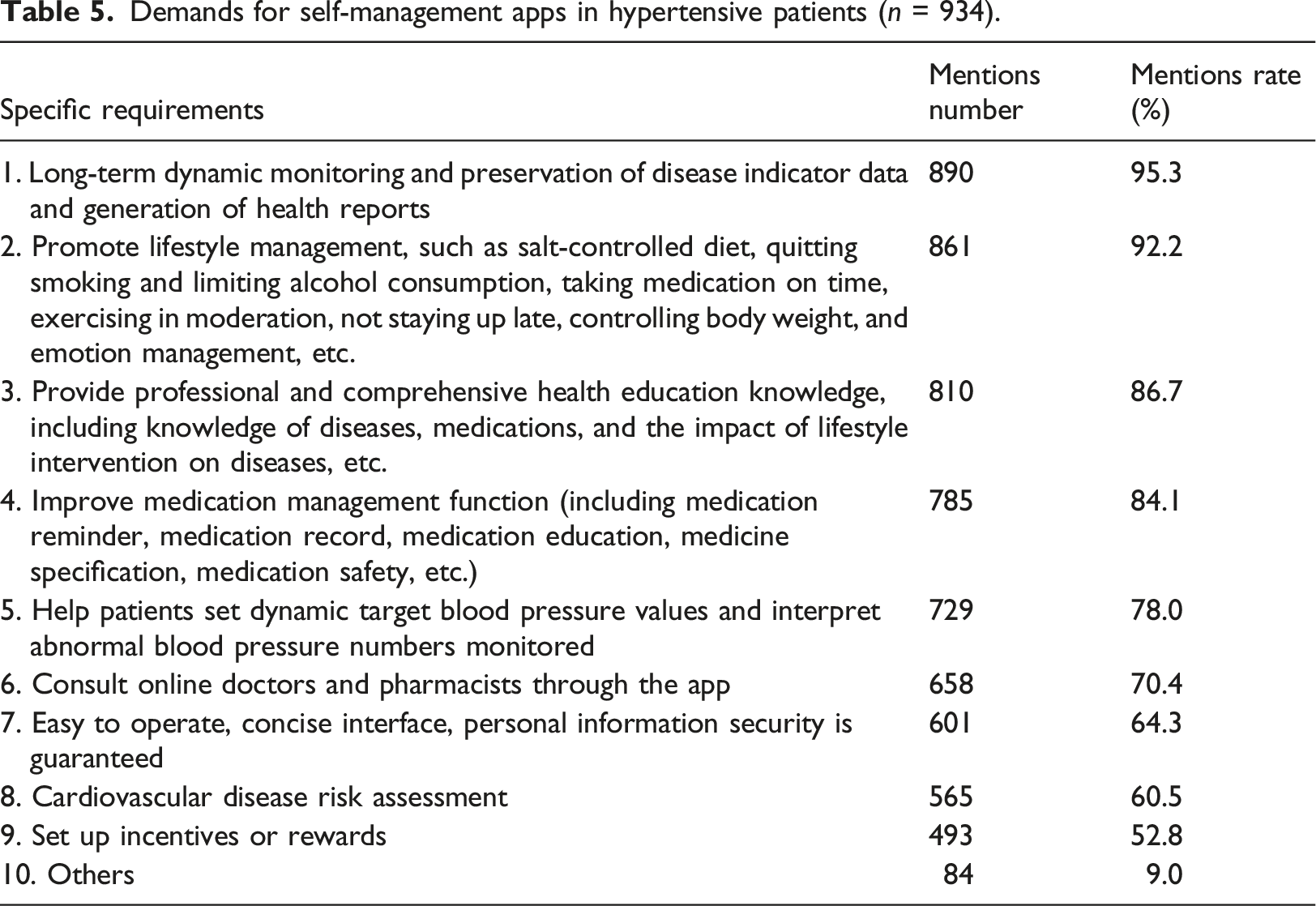
Demands for self-management apps in hypertensive patients (n = 934).
Discussion
The use of mHealth and eHealth technologies to help achieve health-related outcomes and behaviors has become a growing focus in healthcare, particularly with the rise in the utilization of mobile health apps since the COVID-19 pandemic. 12 At present, a considerable number of hypertension patients are using mobile phone apps to manage their health. For example, the usage rate of hypertension management apps among hypertensive patients in Guangzhou has exceeded 70%. 13 However, the functional modules of existing Chinese hypertension apps are too simple and far from meeting the needs of patients with hypertension. Among the 40 apps included in this study, the number of high-quality apps that can provide multiple functions at the same time is small. Most hypertension management apps can only provide relatively basic and simple functions, such as blood pressure monitoring and recording, analysis report, while more advanced and complex functions, such as lifestyle management, medication management, doctor-patient communication, are poorly covered. This seriously affects the patients’ experience and management outcomes.
Existing Chinese hypertension apps are digital health products, lacking specificity and specialization, and difficult to prove clinical benefits
Existing Chinese hypertension apps in China are often developed from the concept of “general health” and target a wide range of populations, but lack in-depth research and development on specific body types or symptoms, so the assistance provided to patients may lack specificity and specialization, and the benefits to patients may not be clear. In addition, the efficacy and clinical benefits of these apps are difficult to fully substantiate due to the lack of clinical evidence-based evidence. Existing hypertension apps in China are actually DH products that mainly provide functions such as blood pressure monitoring, recording and analysis reports, as well as some basic health education and medication reminders, but the clinical benefits are not significant because they do not provide more in-depth solutions for individualized hypertension management.
Unlike digital health, Digital Therapeutics is a patient-centric, evidence-based, AI-driven approach to advanced therapies
DTx is distinguished from DH by the following key features: 1). For patients with specific diseases; 2). Based on evidence-based medical evidence; 3). Driven by AI-enabled software programs; 4). Provide professional treatments or intervention measures.
For example, the DTx intervention (HERB system) developed by CureApp Company in Japan has been proven effective and safe in clinical trials and has received regulatory approval for the treatment of essential hypertension in adults. The HERB-DH1 study demonstrated that HERB system lowered patients morning systolic blood pressure at home by 10 mmHg, and reduced the risk of cardiovascular disease by 10.7%. In the absence of anti-hypertensive medication, DTx offers advantages over standard lifestyle changes alone in reducing 24-h outpatient, home and office blood pressure. 14 In addition, this kind of private application could also collect big data from the real world, leading to some kind of medical evidence generation. 15
Digital Therapeutics should replace digital health as the future of hypertension apps in China
Focusing on the actual needs of users and enhancing functions that favour patients’ home treatment practices
Currently existing apps in China cannot meet users’ requirements for hypertension management. Developers should focus on users, fully understand the actual needs of hypertensive patients, and continue to improve and innovate at all stages from development to operation to enhance personalized management functions and improve the professionalism of management. This includes health service solutions, patient disease and medication Q&A, patient dietary and exercise interventions, and medication adherence management. Using big data, artificial intelligence and other technologies to analyze information on patients' conditions, living habits, physiological indicators and other information to provide targeted management solutions for each patient. Strengthen doctor-patient communication and follow-up mechanisms, and establish a comprehensive system to ensure that patients can obtain timely guidance and support from doctors. In addition, the scientific principle of service provision should be applied throughout to strengthen users’ trust and willingness to use the apps.
Conducting clinical trials and evidence-based research, validating the effectiveness of apps versus conventional management
Clinical trials and evidence-based research are important steps in demonstrating the effectiveness and safety of DTx app products and are the gold standard for validating the effectiveness and safety of a therapy or intervention. Large amounts of real-world data can be used to train and validate the evidence-based effectiveness and clinical benefit of DTx app products. For example, a recent Italian study 16 using a mobile app (Heartaway®) as an adjunctive intervention to standard clinical care for patients with hypertension. The study was designed to validate the app’s efficacy in reducing global cardiovascular risk and improving related clinical outcomes. Its findings will help provide reliable data on the clinical effectiveness of current app products. Through rigorous scientific research, the therapeutic efficacy of future hypertension apps can be assessed, indications and contraindications can be determined, and potential adverse effects can be identified. By conducting clinical trials and evidence-based studies to build a direct bridge between DTx app products and clinical practice, the results of these studies will provide physicians and patients with a scientific basis for deciding whether to use a particular hypertension app as a tool for blood pressure management.
Co-operation of all parties to achieve online and offline integrated services
To achieve greater dissemination and adoption, DTx-based hypertension apps should collaborate with healthcare organizations and health insurance providers. This partnership would yield medical support, technical guidance, and insurance reimbursements, thereby boosting patient acceptance and usage. Besides, medical institutions and management departments can learn from the “online + offline” service model and take the initiative to participate in the service, management or operation of hypertension apps. This could facilitate the provision of regular health management in an innovative manner and promote the practice of “Internet + Healthcare”.
Limitations
There are some limitations to this study. Firstly, we can’t guarantee that the analysis covers all hypertension app products. There is a wide variety of hypertension app products in the real world in China, and the 40 apps included in the study were selected by keywords on specific platforms. Although we tried to include all the representative app products on the market in the analysis, there is still a possibility of missing some products. Secondly, there are certain flaws in the design of the patient survey. The survey used in this study was not based on an off-the-shelf, widely validated questionnaire scale, but was developed based on feedback from previous users. Although this approach may more directly reflect users’ experiences and functional needs for hypertension apps, the survey has not been pilot-tested or validated, which may make the survey results more subjective and biased. Future research should be better designed and conducted using authoritative professional scales for analysis. Thirdly, the sample size of patients participating in the survey is limited, and their background information, such as age, gender, disease history, and education level, may not cover the diversity of all hypertensive patients. Although they have some representativeness of the hypertensive population, there is still some sampling bias.
Conclusion
The Chinese hypertension application market is currently flooded with various healthcare apps. Although these apps can partially meet patients’ health needs, they are mainly digital health products that cannot bring clear clinical benefits to patients, such as achieving long-term stable blood pressure control. The future development of hypertension apps should continue to be based on digital therapeutics. The application of digital therapeutics for hypertension should effectively meet patients’ expectations and clinical needs, and play a key role in supporting a wide range of long-term treatments for hypertension. Promising apps should be closely consistent with patients' self-management practices, provide clear clinical benefits, and be registered as medical devices. In the future, professional clinicians may prescribe hypertension apps to patients in the hospital, and patients could use the app for self-management of hypertension outside of the hospital, based on the advice of the doctors.
Footnotes
Acknowledgements
Not applicable.
Author contributions
The first and second authors: Conceptualization, Methodology, Data curation, Writing - original draft. The third and forth authors: Project administration, Supervision, Writing - review & editing. All the authors read and approved the final manuscript.
Declaration of conflicting interests
The author(s) declared no potential conflicts of interest with respect to the research, authorship, and/or publication of this article.
Funding
The author(s) received no financial support for the research, authorship, and/or publication of this article.
